Catalogue > Liste par artiste
Parcourez la liste complète des artistes présentés dans le cadre des Rencontres Internationales depuis 2004. Utilisez le filtre alphabétique pour affiner vos recherches.
Sarah Vanagt
Catalogue : 2023Les Porteurs | Documentaire | dcp | couleur et n&b | 31:0 | Belgique | 2022
Sarah Vanagt
Les Porteurs
Documentaire | dcp | couleur et n&b | 31:0 | Belgique | 2022
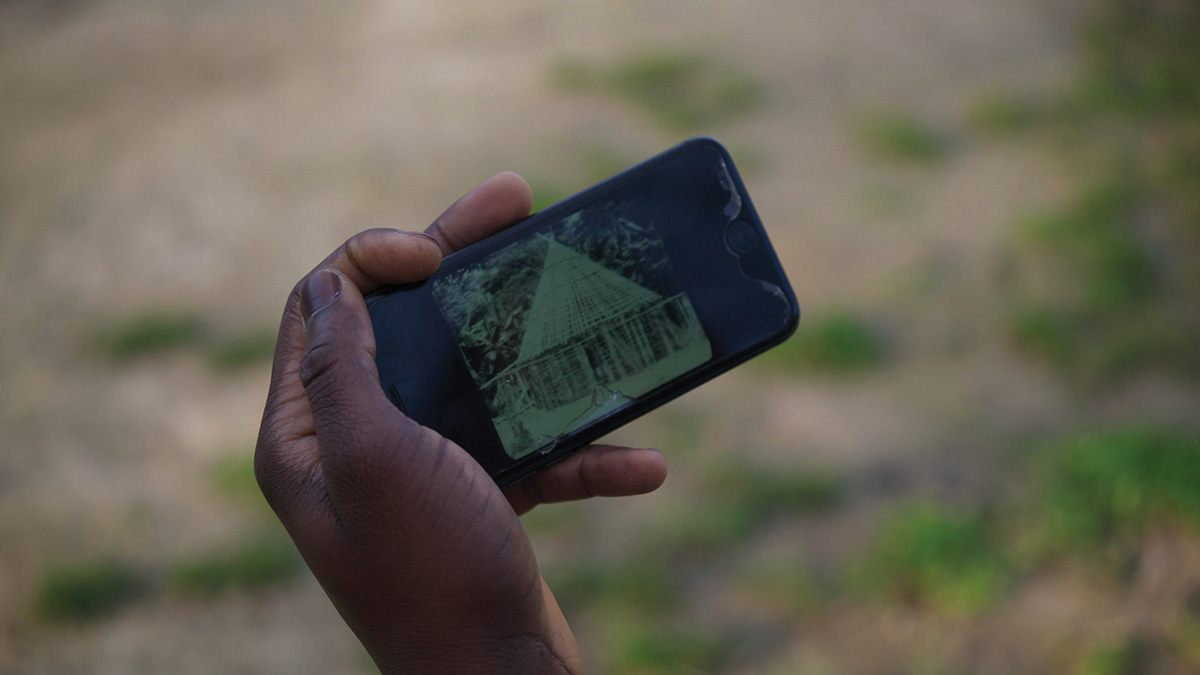
Je pars en voyage et j'emporte avec moi : un os d'éléphant pour remuer la nourriture, une plume pour attraper les termites ailées, huit papillons, une corde faite de racines odorantes... et 150 mètres de film exposé mais pas encore développé destiné au ministère des Colonies.
Sarah Vanagt (1976) makes documentaries, video installations and photos, in which she combines her interest for history with her interest for (the origins of) cinema. Her work includes films such as After Years of Walking (2003), Little Figures (2003), Begin Began Begun (2005), Boulevard d'Ypres (2010), The Corridor (2010), Dust Breeding (2013); and video installations such as Les Mouchoirs de Kabila (2005), Power Cut (2007), Ash Tree (2007). Her work is shown at film festivals (FidMarseille, Viennale, Doclisboa, Idfa Amsterdam, Rencontres Internationales Paris/Madrid/Berlin, Hors Pistes Centre Pompidou), and in museums (Frankfurter Kunstverein, Fact Liverpool, NGBK Berlin, Shedhalle Zürich). The silent short film Girl with a fly (2013) was first shown at the 5th Biennale of Moscow. The films In Waking Hours (2015) and Still Holding Still (2015) premiered at the International Film Festival Rotterdam. The installation Showfish was presented in M HKA, the Museum for Contemporary Art of Antwerp in October 2016. Vanagt's new film DIVINATIONS had its Belgian avant-première at the opening night of the festival Courtisane in Ghent (3 April 2019).
Catalogue : 2014Elevage de poussière | Documentaire | hdv | couleur | 47:0 | Belgique | 2013
Sarah Vanagt
Elevage de poussière
Documentaire | hdv | couleur | 47:0 | Belgique | 2013
Quelle est la valeur des images en tant que témoignages objectifs d`un conflit? En inscrivant son nouveau film au sein du Tribunal pénal international pour l`ex-Yougoslavie de la Haye, Sarah Vanagt se penche sur un chapitre important de l`histoire européenne récente. Élevage de poussière / Dust breeding puise sa matière dans les témoignages de spécialistes comme dans la multitude des documents (photos et images vidéo) issus du procès, toujours en cours, de Radovan Karadzic. Parallèlement, la réalisatrice adapte à la salle du tribunal le processus « révélateur » du frottage: le mouvement de sa main et les empreintes révélées par le crayon sur du papier nous dévoilent un paysage de détails jusque-là imperceptible. Cette exploration interroge les faits, les preuves matérielles de ces faits, les images qui les représentent, tout comme l`interprétation de celles-ci.
Née en 1976, Sarah Vanagt vit et travaille à Bruxelles. De 1994 à 1998, elle a étudié l?histoire à l?Université d?Anvers, du Sussex et de Groningen. Elle s?est ensuite inscrite au département documentaire de la National Film and Television School (UK).
Sarah Vanagt
Catalogue : 2020Divinations | Documentaire | hdv | couleur | 30:0 | Belgique | 2019
Sarah Vanagt
Divinations
Documentaire | hdv | couleur | 30:0 | Belgique | 2019
Des enfants de Bruxelles, d’Athènes et de Sarajevo déploient des bandes transparentes de ruban adhésif dans les rues où ils grandissent. Quand ils les enlèvent, une empreinte de la ville se dessine : poussière, sable, emballages de bonbons, insectes, verre, peluche... Un journal ultra-réaliste qui s’anime à travers une vieille lanterne magique. Toutes ces formes et ces images nous renseignent-elles déjà sur l’avenir ?
Sarah Vanagt a d’abord étudié l’histoire à Anvers, dans le Sussex et à Groningen, puis le cinéma à la National Film and Television School de Londres. Dans ses documentaires et ses installations vidéo, elle essaie toujours d’approcher l’histoire avec poésie et imagination. Des questions telles que la façon dont nous traitons (les traces du) le passé, comment nous le mettons en image et comment nous gérons notre mémoire collective deviennent tangibles. Palpables.
Catalogue : 2012The Corridor | Documentaire | hdcam | couleur | 6:45 | Belgique | 2010
Sarah Vanagt
The Corridor
Documentaire | hdcam | couleur | 6:45 | Belgique | 2010
For five days Sarah Vanagt and cinematographer Annemarie Lean-Vercoe followed a donkey during its weekly visits to old people in nursing homes in England. From home to home, from room to room. Time and again the donkey was welcomed with open arms, with songs, gentle strokes, childhood stories, poems, and laughter. It was only when the donkey entered the room of Norbert, a man who had lost his ability to speak, that an altogether different encounter took place. Even though Vanagt initially followed the donkey?s steps in search of reminiscences brought about by the animal?s mute presence, she came home with an altogether different film. While editing, the film became shorter and shorter, as if the words that had accompanied the donkey?s visits became a distraction. What is left is perhaps a bas-relief disguised as a painting, disguised as a film. The donkey visits to residential homes are an initiative of The Donkey Sanctuary in Sidmouth, England.
Sarah Vanagt (1976) studied history at the universities of Antwerp, Sussex and Groningen, and film at the National Film and Television School (UK). She makes documentaries, video installations and photos. Her graduation film AFTER YEARS OF WALKING (2003) looks at the rewriting of Rwandan history after the genocide of 1994. In LITTLE FIGURES (2003), a short experimental documentary film, three immigrant children in Brussels play the role of three historical statues. The documentary film BEGIN BEGAN BEGUN (2005) and the video-installation LES MOUCHOIRS DE KABILA (2005) both focus on the play-world of children growing up in the war-torn border zone between Rwanda and the Democratic Republic of Congo, and look at the way in which children deal with death, the recent wars and elections. The short film FIRST ELECTIONS (2006) is a single-screen version of LES MOUCHOIRS DE KABILA. In 2007 Vanagt first presented POWER CUT at the Kunstenfestivaldesarts in Brussels. The installation consists of short videos and photos made by three Congolese street children, and of voice-recordings by two young soldiers who took part in the recent wars in Congo and Rwanda. The single-channel version of this installation is called SILENT ELECTIONS (2009). In HEAD (2007), the installation Vanagt made for the Young Belgian Painters Award, she combined super 8 footage of the ancient city of Pompei with images of newborn babies. The video installation ASH TREE (2007) is based on Mary Shelly`s childhood. A 5-year old girl wanders on a graveyard in London while she spells the letters on the graves. The child`s first contact with the alphabet is at once her first contact with death. Since 2006 Vanagt works on a series of photos of special graveyards and monuments in Europe. The photo series SOLAR CEMETERY (2009), about solar panels on a Spanish cemetery, was made with a camera obscura, and presented on solar-powered light boxes. BOULEVARD D`YPRES / IEPERLAAN (2010) is an experimental documentary shot in the street where Vanagt lives. She turned an empty storehouses into a film studio, and invited her neighbours ? a mix of refugees, shopkeepers, newcomers ? to come and tell a story, a fairy tale. Vanagt`s most recent film, the short piece THE CORRIDOR (2010) focuses on the mute encounter between a donkey and an old man in an English nursing home. Currently Vanagt is working on a film based on pencil rubbings made in the International Criminal Tribunal for the Former Yugoslavia.
Sarah Vanagt
Catalogue : 2016In Waking Hours | Doc. expérimental | hdv | couleur | 18:13 | Belgique | 2015
Sarah Vanagt, Katrien Vanagt
In Waking Hours
Doc. expérimental | hdv | couleur | 18:13 | Belgique | 2015
With the publication of the Ophthalmographia in 1632, the Amsterdam physician Vopiscus Fortunatus Plempius sheds new light on the age-old question of how seeing works. His answer is an invitation to experiment: Enter with me into a darkened room and prepare the eye of a freshly slaughtered cow. He emphasizes that anyone may carry out this experiment, at home, "demanding little effort and expense." “And you, standing in the darkened room, behind the eye, shall see a painting that perfectly represents all objects from the outside world,” promises Plempius. In the short film In Waking Hours we see historian Katrien Vanagt - who studied the Latin writings of this Plempius - cloaked in the skin of a 21st-century disciple of Plempius. Her cousin, filmmaker Sarah Vanagt, is there and captures how this modern "Plempia" meticulously follows her teacher`s instructions. Thus, in a dark kitchen in Brussels, they become witnesses at the birth of images upon the eye.
Sarah Vanagt (1976) makes documentaries, video installations and photos, in which she combines her interest for history with her interest for (the origins of) cinema. Her work includes films such as After Years of Walking (2003), Little Figures (2003), Begin Began Begun (2005), Boulevard d`Ypres (2010), The Corridor (2010), Dust Breeding (2013); and video installations such as Les Mouchoirs de Kabila (2005), Power Cut (2007), Ash Tree (2007). Her work is shown at film festivals (FidMarseille, Viennale, Doclisboa, Idfa Amsterdam, Rencontres Internationales Paris/Madrid/Berlin, Hors Pistes Centre Pompidou), and in museums (Frankfurter Kunstverein, Fact Liverpool, NGBK Berlin, Shedhalle Zürich). The silent short film Girl with a fly (2013) was first shown at the 5th Biennale of Moscow. The film In Waking Hours (2015) premiered at the International Film Festival Rotterdam. Vanagt`s most recent film Still holding still (2015) was first shown at Idfa Amsterdam, after its Belgian première on 22 October 2015 (Beursschouwburg, Brussels).
Catalogue : 2007Little Figures | Fiction expérimentale | dv | couleur et n&b | 15:47 | Belgique | 2003
Sarah Vanagt
Little Figures
Fiction expérimentale | dv | couleur et n&b | 15:47 | Belgique | 2003
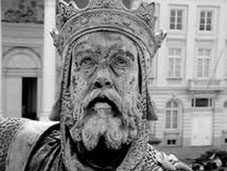
Dans ?Little Figures?, Sarah Vanagt s?amuse encore une fois avec sa passion pour l?histoire, la perspective et l?engagement social. A partir d?un lieu, le ?Kunstberg?, et plus spécialement les trois statues qui s?y trouvent, Vanagt élabore une histoire dans laquelle des enfants immigrés inventent une conversation entre les statues, souvent avec un ton surprenant et plein d?esprit, étant (in)capable de déterminer de quelle époque elles datent. Ce n?est pas une coïncidence s?il est fait référence au colonialisme et aux croisades. On a l?impression que l?action de la scène ralentit de plus en plus, s?arrête, ce qui renforce le sentiment de souvenir et fait avancer les associations d?idées qui surviennent.
Sarah Vanagt est née en 1967 et a étudié l?histoire dans les universités d?Anvers, de Groningen et de Brighton. En plus de sa passion pour l?histoire elle a également une passion pour le cinéma. Sarah Vanagt a cherché un moyen de combiner les deux et elle y est parvenue en effectuant des recherches historiques à partir de films. Afin de développer son propre langage cinématographique, elle a commencé une formation à la London National Film and Television School dans le département de réalisation documentaire. Pendant cette période, elle a travaillé principalement avec des enfants réfugiés du Rwanda
Sarah Vanagt
Catalogue : 2019Alle de tranen / Toute larme / Every Tear | Doc. expérimental | hdv | couleur | 30:0 | Belgique | 2017
Sarah Vanagt
Alle de tranen / Toute larme / Every Tear
Doc. expérimental | hdv | couleur | 30:0 | Belgique | 2017
In the 17th century, Antoni Van Leeuwenhoek, a draper from Delft, begins to make glass lenses, in order to better study the quality of his textile. He melts, drips and grinds small beads of glass. His tiny lenses are so bright and have such magnifying power that the draper seems to have entered a new dimension. Is he the first to see little moving “animals” in a drop of water? How to describe something that nobody ever saw before? In the film `Every Tear`, Sarah Vanagt starts a journey into her home city of Brussels, with Leeuwenhoek’s microscope in hand. She picks up bits and pieces on her road, and tries to find out what the first microscopic images may have looked like. She replaces the lens of her camera by the 17th-century lens. As she is filming, she wonders why we always look for shapes that we already know, whenever we are in the eye of the unknown.
Home News Work & Screenings Online Films About Contact Balthasar produces and presents the work of filmmaker Sarah Vanagt. Sarah Vanagt (1976) makes documentaries, video installations and photos, in which she combines her interest for history with her interest for (the origins of) cinema. Her work includes films such as After Years of Walking (2003), Little Figures (2003), Begin Began Begun (2005), Boulevard d`Ypres (2010), The Corridor (2010), Dust Breeding (2013); and video installations such as Les Mouchoirs de Kabila (2005), Power Cut (2007), Ash Tree (2007). Her work is shown at film festivals (FidMarseille, Viennale, Doclisboa, Idfa Amsterdam, Rencontres Internationales Paris/Madrid/Berlin, Hors Pistes Centre Pompidou), and in museums (Frankfurter Kunstverein, Fact Liverpool, NGBK Berlin, Shedhalle Zürich). The silent short film Girl with a fly (2013) was first shown at the 5th Biennale of Moscow. The films In Waking Hours (2015) and Still Holding Still (2015) premiered at the International Film Festival Rotterdam. The installation Showfish was presented in M HKA, the Museum for Contemporary Art of Antwerp in October 2016. Vanagt`s new film DIVINATIONS (2019) has it`s Belgian avant-premiere during the festival Courtisane in Ghent (3 April 2019)
Catalogue : 2013The Wave | Doc. expérimental | hdv | couleur | 20:0 | Belgique, France | 2012
Sarah Vanagt, Vermeire Katrien
The Wave
Doc. expérimental | hdv | couleur | 20:0 | Belgique, France | 2012
In "The Wave" the archaeological gaze of the viewer is set in motion: a mass grave from the Spanish Civil War (1936?39) opens and closes itself. In 2011 we placed a camera above the spot where nine victims were buried after their execution by Franco?s supporters in June 1939. On day one of the excavation, a digging crane gently loosened the top layer of soil, until the archaeologists came across a skull with a bullet hole. Then the archaeologists continued their work by hand. The skeletons appeared, then disappeared, as if a strong wind blew that removed the sand and uncovered death, a primal truth.
Katrien Vermeire (°1979 - Ostend, Belgium) Lives and works in Brussels, Belgium The Flemish Community awards her grants since 2003 Exhibitions - Projects - Collections - Awards Exhibitions UNSEEN AMSTERDAM, Kahmann Gallery, 2012 ALL OUR RELATIONS, 18th Biennale of Sydney (AU), 2012 ART BRUSSELS, Crown Gallery, 2012 EMPHATIC IMAGES - PART I, GROUPSHOW with Jose Maria Mellado , Katrien Vermeire and Wim De Schamphelaere, Crown Gallery, 2012 FLIP COLLECTION II, Side programme of the International Film Festival Rotterdam, PrintRoom, Rotterdam (NL), 2012 TALENT 2011, Exhibition presented by Foam Magazine, Amsterdam, 2011 GODSPEED (solo), Crown Gallery, Brussels, 2011 SCOPE BASEL, Crown Gallery, 2011 ART AMSTERDAM, Crown Gallery, 2011 MADRID FOTO International Photography Fair, Crown Gallery, 2011 ART BRUSSELS, Crown Gallery, 2011 KATRIEN VERMEIRE (solo), Museum M, Leuven, 2010-2011 DISTURBED SILENCE, Campus Psychiatrisch Centrum, Duffel, 2010 WATERLAND, Alexandre Cadain Gallery, Paris, 2009 POINT ZERO, Marijke Schreurs Gallery, Brussels, 2008 FOTOFOTO: Contemporary photography from the Province of East Flanders Collection, Voormalige Bank van de Arbeid, Ghent, 2007 FREESTATE, Militair Hospitaal, Ostend, 2006 BREUGEL REVISITED: with Hans Op De Beeck, Herman Asselberghs, Angelo Vermeulen, Arno Roncada, Anne Daems, Vincent Meesen, Dirk Zoete, Building Transmissions & Douglas Park, National Botanic Garden of Belgium, Meise, 2006 PRIX MEDIATINE, Centre culturel Wolu-Culture La Médiatine, Brussels, 2006 ERFGOED IN BEELD, Stedelijk Museum voor Volkskunde, Bruges, 2005 CONTOUR II 2005: Mechelen, City in Female Hands, 2005 Andre Simoens Gallery (solo), Knokke-Zoute, 2005 Annemie Augustijns ? Katrien Vermeire, Vlaamse Opera Foyer Ghent & Antwerp, 2005 CC de doos ? de Cirk (solo), Hasselt, 2005 ENTR`ACTE: with Fien Muller, Annemie Augustijns, Jan Lauwers, Muse & Charlus, Hanne Lamon, Maarten Vanden Abeele..., De Zaal, Ghent, 2004 OORD: duo-exhibition Katrien Vermeire & Hans Op de Beeck, CC Strombeek, Brussels, 2004 DOUBLE EXPOSURE: with Vanessa Beecroft, Rineke Dijkstra, Nan Goldin, Justine Kurland, Orlan, Cindy Sherman, Hellen Van Meene & Sarah Jones, ING, Kortrijk, 2004 Huis van Winckel (solo), CC Belgica, Dendermonde, 2004 CONTEMPORARY FLEMISCH PHOTOGRAPHY: with Geert Goiris & Mekhitar Garabadian, Caravasla Art Gallery, Tbilisi, Georgia, 2003 PINK PERFECTION: with Virginie Bailly & Ria Verhaeghe, CC Belgica, Dendermonde, 2003 JOE DUGGAN, JEM SOUTHAM, KATRIEN VERMEIRE, GREET VLEGELS, Koraalberg Art Gallery, Antwerp, 2003 2002 Fine Arts Award of the Province of West-Flanders, CC Sharpoord, Knokke Heist, 2003 2002 Fine Arts Award of the Province of West-Flanders, Groeningekapel, Kortrijk, 2003 COLLECZIE, Museum van Deinze en de Leiestreek, Deinze, 2002 BLEND: Contemporary photography in Belgium, Caermersklooster, Ghent, 2002 Group Exhibition Graduates KASK, Eskimo, Ghent, 2001 Projects The Wave, a film and a photo wall by Sarah Vanagt & Katrien Vermeire, 2012 Godspeed, commissioned by Ter Bleeke (Malle) & The Flemish Government Architect`s Team, 2010 BOULEVARD D`YPRES/IEPERLAAN, a documentary film by Sarah Vanagt, camera by Katrien Vermeire, 2010 Something to Tell You, commissioned by Ten Kerselaere (Hallaar) & The Flemish Government Architect`s Team, 2009 North Sea project commissioned by The Flemish Government, Shipping Assistance Division, Ostend, 2009 ERFGOED IN BEELD, Pictures inspired by West-Flemish folk-tales, Stedelijk Museum voor Volkskunde, Bruges, 2005 SONGBOOKS - JOHN CAGE: in cooperation with Heleen Van Haegenborgh (prepared piano), 2005 Lightbox for music club 4AD, Diksmuide Commissioned by 4AD & The Flemish Government Architect`s Team, 2005 THE FLEMISH OPERA, commissioned by "The Flemish Opera", Illustrations full poster campaign & libretto, 7 Posters, Season 2003-2004 IN OPDRACHT: ANTWERP 1993-2003, Portraits, commissioned by the PhotoMuseum, Publication in the PhotoMuseum magazine, september 2003 THE SCHELDT FROM SOURCE TO ESTUARY, Illustrations for the annual of "The Port of Antwerp", The Scheldt from source to estuary, 21 Landscapes, commissioned by Catapult & Antwerp Port Authority, 2002 Collections Private collections in Belgium, France, Luxembourg & Switserland Province of East Flanders Collection Flemish government Arts & Heritage Collection National Bank of Belgium Contemporary Art Collection Awards 2011: FOAM MAGAZINE #28 `TALENT` 2006: Selection Prix Médiatine, Brussels 2003: Finalist Photo Festival Arles (Fr), Prix du Festival Off 2002: Fine Arts Award of the Province of West-Flanders
Robin Vanbesien
Catalogue : 2020The Wasp and the Weather | Doc. expérimental | 4k | couleur | 18:45 | Belgique | 2019
Robin Vanbesien
The Wasp and the Weather
Doc. expérimental | 4k | couleur | 18:45 | Belgique | 2019
From an archive of poetry written by youngsters at the former youth centre Rzoezie (Amazigh for “wasp”, ‘78-‘06) in Mechelen (Belgium), the original authors and contemporary poets revisit, recite and discuss their selection of poems, probing their resonance in today’s social and political “weather”.
Robin Vanbesien is a Brussels based filmmaker, artist and cultural worker whose films, installations and performances inhabit an explorative search for a ‘co-elaborative’ feeling and thinking that is social and material. His debut film, Under These Words (Solidarity Athens 2016), and the associated book, Solidarity Poiesis: I Will Come and Steal You, constitute an account of the social poetics of solidarity work. His work has been shown at various venues internationally (a.o. Contour Biennale, transmediale, Lumiar Cité, Athens Biennale, Sculpture International Rotterdam).
Loic Vanderstichelen, Loïc Vanderstichelen | Jean-Paul Jacquet
Catalogue : 2023OK boomer | Fiction | 4k | couleur | 10:15 | Belgique | 2022
Loic Vanderstichelen, Jean-Paul Jacquet
OK boomer
Fiction | 4k | couleur | 10:15 | Belgique | 2022
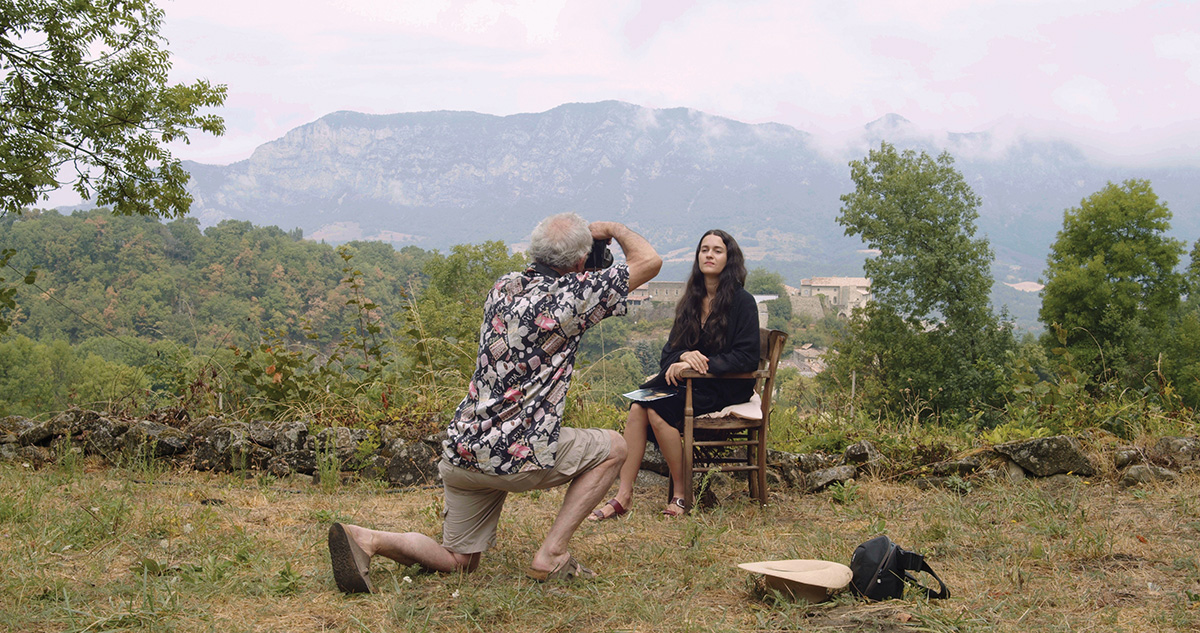
C'est de l'été dernier que date le retour probable du lyrisme. Personne n'y pensait plus, on lui avait substitué la forme épique, on s'en était vite lassé et depuis on pataugeait dans celle dont je ne sais plus qui avait eu la pas très bonne idée de l'appelé dramatique. Tellement dramatique que tout était calme, jusqu'à cette après-midi à la campagne où nous pûmes constater les signes avant-coureurs de ce lyrisme tant convoité de quand l'artiste pre?sente son objet en rapport imme?diat avec lui-me?me. Il nous incombait dès lors d'adapter cette intuition remarquable vers quelque chose de plus rationnel et trouver un titre était la première chose à faire pour authentifier tout cela. D'où le trajet à la poste.
Loïc Vanderstichelen est un cinéaste qui vit et travaille à Bruxelles. Il réalise des films seuls ou en collaboration depuis 1993. Jean-Paul Jacquet est un historien de l’art qui vit et travaille à Bruxelles.
Catalogue : 2016La cascade | Fiction expérimentale | 4k | couleur | 17:40 | Belgique | 2015
Loic Vanderstichelen, Loïc Vanderstichelen | Jean-Paul Jacquet
La cascade
Fiction expérimentale | 4k | couleur | 17:40 | Belgique | 2015
Norbert Piron, chercheur à l`IRPA (Institut Royal du Patrimoine Artistique), est mandaté par le musée des Beaux-Arts de Verviers afin de répertorier la collection destinée au nouveau Musée en construction et de préparer l`exposition inaugurale. Proche de la retraite, il fait de cette commande le point d`orgue de sa carrière. Épaulé par son assistant, l`universitaire Randy Paniandy, il analyse minutieusement les œuvres et tire des conclusions. Face au pragmatisme de Géraldine Leroy, responsable de la communication des Musées de Verviers, son point de vue scientifique se heurte à des sentiments émotionnels exacerbés qui le conduiront à une confusion mentale. Alors qu`il se trouve dans le creux de la vague, déstabilisé face à La Cascade de Gustave Courbet, une nymphe, vient lui apporter la solution à tous ses problèmes : une technologie révolutionnaire qui offre au regardeur l`ubiquité, la possibilité d`une hyper vision réaliste.
Loïc Vanderstichelen est un cinéaste indépendant qui vit et travaille à Bruxelles. Jean-Paul Jacquet un historien de l`art qui vit et travaille à Bruxelles.
Catalogue : 2012Singulier Pluriel | Fiction expérimentale | 0 | couleur | 22:0 | Belgique, France | 2011
Loic Vanderstichelen, Azilys Romane
Singulier Pluriel
Fiction expérimentale | 0 | couleur | 22:0 | Belgique, France | 2011
"Singulier Pluriel" est le nom d`un foyer pour personnes en situation de handicap situé à Roubaix dans le nord de la France. Un personnage anachronique erre au milieu des habitants dans les espaces colorés de l`institution. C`est un film de fiction composé de séquences de huis-clos.
Azilys Romane,née à Dourdan le 13 mars 1978, vit et travaille à Bruxelles. Azilys Romane étudie la photographie à La Cambre à Bruxelles et s`oriente vers la vidéo, qui lui permet d`associer l`image et l`écriture. Son travail intimiste et contemplatif est essentiellement constitué de portraits. Le temps y est suspendu et une grande attention est accordée aux détails (dans l`attente d`une révélation, d`un échange entre celui qui filme et celui qui est filmé. Loïc Vanderstichelen, né à Ieper le 1er août 1973, vit et travaille à Bruxelles. Loïc Vanderstichelen réalise des films seul ou en collaboration (avec Simon Backès, Michel François,...) depuis 1994. Ses films sont généralement auto-produits. Loïc Vanderstichelen enseigne à La Cambre et à l`Ecole d`Art D`Uccle. Il travaille parallèlement comme monteur dans les institutions européennes.
Catalogue : 2011L'ILE MYSTÉRIEUSE | Fiction expérimentale | | couleur | 19:0 | Belgique, France | 2009
Loic Vanderstichelen, MICHEL FRANCOIS
L'ILE MYSTÉRIEUSE
Fiction expérimentale | | couleur | 19:0 | Belgique, France | 2009
"Des amis nous ont dit qu`ils les auraient vu sur le continent`
Loïc Vanderstichelen Né en 1973 Vit et travaille à Bruxelles Réalise seul ou en collaboration des films sur support vidéo depuis 1994 Travaille parallelement comme monteur dans les institutions européennes ------------------- Michel François Né en 1956 Vit et travaille à Bruxelles
Catalogue : 2008La Ricarda | Film expérimental | 0 | couleur | 20:0 | Belgique, Espagne | 2006
Loic Vanderstichelen, Joerg Bader, Joël Benzakin, Lucia Bru, Jordi Colomer, François Curlet, Jos de Gruyter & Harald Thys, Pierre Droulers, Michel François, Ann Veronica Janssens, Simon Siegmann, Loïc Vanderstichelen, Richard Venlet, Angel Vergara
La Ricarda
Film expérimental | 0 | couleur | 20:0 | Belgique, Espagne | 2006
En juillet 2006, à l?initiative de Michel François, 13 artistes sont invités à vivre à la Casa Gomis, et à y filmer, chacun librement, avec ou sans acteurs, les séquences d?images que le lieu leur inspire. 0euvre architecturale majeure des années 50, bâtie par l?architecte Antoni Bonet, au milieu d?une fôret de pins,sur le domaine de la Ricarda, ce haut lieu de rencontres (Tapiès, John Cage, Miro?) s?est retrouvé progressivement enclavé entre la mer, la banlieue grandissante de Barcelone et son aéroport qui ne cesse de s?étendre. Impossible aujourd?hui d?y vivre encore. Un enjeu réunit les artistes : expérimenter la possibilité d?une ?uvre commune au-delà des styles ou des disciplines propres à chacun des intervenants (plasticiens, chorégraphes, vidéastes, scénographes) ; explorer une autre manière de faire un film dont la trame s?écrirait dans la dynamique d?un montage ingérant toutes les images. Sans autre cadre directif, les tournages se succèdent de manière à nourrir à flux tendu un montage intra-muros qui se poursuit, plus tard, à Bruxelles. Et à mesure que s?essaye, se fait, se défait, se refait la fusion des séquences singulières de chacun des artistes invités, des échappées fictionnelles se dessinent, un film se construit, « La Ricarda », au cours duquel le récit se cherche dans la résistance même que lui oppose la diversité du matériel composite dont il procède. Petit à petit, des personnages naissent et, dans un chassé-croisé de destins fantômes, s?approprient la villa, lui réinsufflent la vie, l?animent d?une fiction sans récit, d?une fluidité hypnotique, qui s?offre comme autant de possibles histoires, de narrations incertaines, d?éclats visuels et sonores.
Loïc Vanderstichelen est un artiste, né en 1973 à Ypres (Belgique), qui vit et travaille à Bruxelles. Son travail est principalement axé autour du cinéma et de la vidéo. Il a réalisé de nombreux films dont une série de films de fictions à très faible budget destinés à être montrés sur téléviseur (téléfilms) coréalisée avec Simon Backès sous les pseudonymes de Ruud Verlaert et Stepan Novak (entre 2002 et 2005)
Loic Vanderstichelen, Jean-Paul Jacquet
Catalogue : 2023OK boomer | Fiction | 4k | couleur | 10:15 | Belgique | 2022
Loic Vanderstichelen, Jean-Paul Jacquet
OK boomer
Fiction | 4k | couleur | 10:15 | Belgique | 2022
C'est de l'été dernier que date le retour probable du lyrisme. Personne n'y pensait plus, on lui avait substitué la forme épique, on s'en était vite lassé et depuis on pataugeait dans celle dont je ne sais plus qui avait eu la pas très bonne idée de l'appelé dramatique. Tellement dramatique que tout était calme, jusqu'à cette après-midi à la campagne où nous pûmes constater les signes avant-coureurs de ce lyrisme tant convoité de quand l'artiste pre?sente son objet en rapport imme?diat avec lui-me?me. Il nous incombait dès lors d'adapter cette intuition remarquable vers quelque chose de plus rationnel et trouver un titre était la première chose à faire pour authentifier tout cela. D'où le trajet à la poste.
Loïc Vanderstichelen est un cinéaste qui vit et travaille à Bruxelles. Il réalise des films seuls ou en collaboration depuis 1993. Jean-Paul Jacquet est un historien de l’art qui vit et travaille à Bruxelles.
Catalogue : 2016La cascade | Fiction expérimentale | 4k | couleur | 17:40 | Belgique | 2015
Loic Vanderstichelen, Loïc Vanderstichelen | Jean-Paul Jacquet
La cascade
Fiction expérimentale | 4k | couleur | 17:40 | Belgique | 2015
Norbert Piron, chercheur à l`IRPA (Institut Royal du Patrimoine Artistique), est mandaté par le musée des Beaux-Arts de Verviers afin de répertorier la collection destinée au nouveau Musée en construction et de préparer l`exposition inaugurale. Proche de la retraite, il fait de cette commande le point d`orgue de sa carrière. Épaulé par son assistant, l`universitaire Randy Paniandy, il analyse minutieusement les œuvres et tire des conclusions. Face au pragmatisme de Géraldine Leroy, responsable de la communication des Musées de Verviers, son point de vue scientifique se heurte à des sentiments émotionnels exacerbés qui le conduiront à une confusion mentale. Alors qu`il se trouve dans le creux de la vague, déstabilisé face à La Cascade de Gustave Courbet, une nymphe, vient lui apporter la solution à tous ses problèmes : une technologie révolutionnaire qui offre au regardeur l`ubiquité, la possibilité d`une hyper vision réaliste.
Loïc Vanderstichelen est un cinéaste indépendant qui vit et travaille à Bruxelles. Jean-Paul Jacquet un historien de l`art qui vit et travaille à Bruxelles.
Catalogue : 2012Singulier Pluriel | Fiction expérimentale | 0 | couleur | 22:0 | Belgique, France | 2011
Loic Vanderstichelen, Azilys Romane
Singulier Pluriel
Fiction expérimentale | 0 | couleur | 22:0 | Belgique, France | 2011
"Singulier Pluriel" est le nom d`un foyer pour personnes en situation de handicap situé à Roubaix dans le nord de la France. Un personnage anachronique erre au milieu des habitants dans les espaces colorés de l`institution. C`est un film de fiction composé de séquences de huis-clos.
Azilys Romane,née à Dourdan le 13 mars 1978, vit et travaille à Bruxelles. Azilys Romane étudie la photographie à La Cambre à Bruxelles et s`oriente vers la vidéo, qui lui permet d`associer l`image et l`écriture. Son travail intimiste et contemplatif est essentiellement constitué de portraits. Le temps y est suspendu et une grande attention est accordée aux détails (dans l`attente d`une révélation, d`un échange entre celui qui filme et celui qui est filmé. Loïc Vanderstichelen, né à Ieper le 1er août 1973, vit et travaille à Bruxelles. Loïc Vanderstichelen réalise des films seul ou en collaboration (avec Simon Backès, Michel François,...) depuis 1994. Ses films sont généralement auto-produits. Loïc Vanderstichelen enseigne à La Cambre et à l`Ecole d`Art D`Uccle. Il travaille parallèlement comme monteur dans les institutions européennes.
Catalogue : 2011L'ILE MYSTÉRIEUSE | Fiction expérimentale | | couleur | 19:0 | Belgique, France | 2009
Loic Vanderstichelen, MICHEL FRANCOIS
L'ILE MYSTÉRIEUSE
Fiction expérimentale | | couleur | 19:0 | Belgique, France | 2009
"Des amis nous ont dit qu`ils les auraient vu sur le continent`
Loïc Vanderstichelen Né en 1973 Vit et travaille à Bruxelles Réalise seul ou en collaboration des films sur support vidéo depuis 1994 Travaille parallelement comme monteur dans les institutions européennes ------------------- Michel François Né en 1956 Vit et travaille à Bruxelles
Catalogue : 2008La Ricarda | Film expérimental | 0 | couleur | 20:0 | Belgique, Espagne | 2006
Loic Vanderstichelen, Joerg Bader, Joël Benzakin, Lucia Bru, Jordi Colomer, François Curlet, Jos de Gruyter & Harald Thys, Pierre Droulers, Michel François, Ann Veronica Janssens, Simon Siegmann, Loïc Vanderstichelen, Richard Venlet, Angel Vergara
La Ricarda
Film expérimental | 0 | couleur | 20:0 | Belgique, Espagne | 2006
En juillet 2006, à l?initiative de Michel François, 13 artistes sont invités à vivre à la Casa Gomis, et à y filmer, chacun librement, avec ou sans acteurs, les séquences d?images que le lieu leur inspire. 0euvre architecturale majeure des années 50, bâtie par l?architecte Antoni Bonet, au milieu d?une fôret de pins,sur le domaine de la Ricarda, ce haut lieu de rencontres (Tapiès, John Cage, Miro?) s?est retrouvé progressivement enclavé entre la mer, la banlieue grandissante de Barcelone et son aéroport qui ne cesse de s?étendre. Impossible aujourd?hui d?y vivre encore. Un enjeu réunit les artistes : expérimenter la possibilité d?une ?uvre commune au-delà des styles ou des disciplines propres à chacun des intervenants (plasticiens, chorégraphes, vidéastes, scénographes) ; explorer une autre manière de faire un film dont la trame s?écrirait dans la dynamique d?un montage ingérant toutes les images. Sans autre cadre directif, les tournages se succèdent de manière à nourrir à flux tendu un montage intra-muros qui se poursuit, plus tard, à Bruxelles. Et à mesure que s?essaye, se fait, se défait, se refait la fusion des séquences singulières de chacun des artistes invités, des échappées fictionnelles se dessinent, un film se construit, « La Ricarda », au cours duquel le récit se cherche dans la résistance même que lui oppose la diversité du matériel composite dont il procède. Petit à petit, des personnages naissent et, dans un chassé-croisé de destins fantômes, s?approprient la villa, lui réinsufflent la vie, l?animent d?une fiction sans récit, d?une fluidité hypnotique, qui s?offre comme autant de possibles histoires, de narrations incertaines, d?éclats visuels et sonores.
Loïc Vanderstichelen est un artiste, né en 1973 à Ypres (Belgique), qui vit et travaille à Bruxelles. Son travail est principalement axé autour du cinéma et de la vidéo. Il a réalisé de nombreux films dont une série de films de fictions à très faible budget destinés à être montrés sur téléviseur (téléfilms) coréalisée avec Simon Backès sous les pseudonymes de Ruud Verlaert et Stepan Novak (entre 2002 et 2005)
Loic Vanderstichelen, Azilys Romane
Catalogue : 2023OK boomer | Fiction | 4k | couleur | 10:15 | Belgique | 2022
Loic Vanderstichelen, Jean-Paul Jacquet
OK boomer
Fiction | 4k | couleur | 10:15 | Belgique | 2022
C'est de l'été dernier que date le retour probable du lyrisme. Personne n'y pensait plus, on lui avait substitué la forme épique, on s'en était vite lassé et depuis on pataugeait dans celle dont je ne sais plus qui avait eu la pas très bonne idée de l'appelé dramatique. Tellement dramatique que tout était calme, jusqu'à cette après-midi à la campagne où nous pûmes constater les signes avant-coureurs de ce lyrisme tant convoité de quand l'artiste pre?sente son objet en rapport imme?diat avec lui-me?me. Il nous incombait dès lors d'adapter cette intuition remarquable vers quelque chose de plus rationnel et trouver un titre était la première chose à faire pour authentifier tout cela. D'où le trajet à la poste.
Loïc Vanderstichelen est un cinéaste qui vit et travaille à Bruxelles. Il réalise des films seuls ou en collaboration depuis 1993. Jean-Paul Jacquet est un historien de l’art qui vit et travaille à Bruxelles.
Catalogue : 2016La cascade | Fiction expérimentale | 4k | couleur | 17:40 | Belgique | 2015
Loic Vanderstichelen, Loïc Vanderstichelen | Jean-Paul Jacquet
La cascade
Fiction expérimentale | 4k | couleur | 17:40 | Belgique | 2015
Norbert Piron, chercheur à l`IRPA (Institut Royal du Patrimoine Artistique), est mandaté par le musée des Beaux-Arts de Verviers afin de répertorier la collection destinée au nouveau Musée en construction et de préparer l`exposition inaugurale. Proche de la retraite, il fait de cette commande le point d`orgue de sa carrière. Épaulé par son assistant, l`universitaire Randy Paniandy, il analyse minutieusement les œuvres et tire des conclusions. Face au pragmatisme de Géraldine Leroy, responsable de la communication des Musées de Verviers, son point de vue scientifique se heurte à des sentiments émotionnels exacerbés qui le conduiront à une confusion mentale. Alors qu`il se trouve dans le creux de la vague, déstabilisé face à La Cascade de Gustave Courbet, une nymphe, vient lui apporter la solution à tous ses problèmes : une technologie révolutionnaire qui offre au regardeur l`ubiquité, la possibilité d`une hyper vision réaliste.
Loïc Vanderstichelen est un cinéaste indépendant qui vit et travaille à Bruxelles. Jean-Paul Jacquet un historien de l`art qui vit et travaille à Bruxelles.
Catalogue : 2012Singulier Pluriel | Fiction expérimentale | 0 | couleur | 22:0 | Belgique, France | 2011
Loic Vanderstichelen, Azilys Romane
Singulier Pluriel
Fiction expérimentale | 0 | couleur | 22:0 | Belgique, France | 2011
"Singulier Pluriel" est le nom d`un foyer pour personnes en situation de handicap situé à Roubaix dans le nord de la France. Un personnage anachronique erre au milieu des habitants dans les espaces colorés de l`institution. C`est un film de fiction composé de séquences de huis-clos.
Azilys Romane,née à Dourdan le 13 mars 1978, vit et travaille à Bruxelles. Azilys Romane étudie la photographie à La Cambre à Bruxelles et s`oriente vers la vidéo, qui lui permet d`associer l`image et l`écriture. Son travail intimiste et contemplatif est essentiellement constitué de portraits. Le temps y est suspendu et une grande attention est accordée aux détails (dans l`attente d`une révélation, d`un échange entre celui qui filme et celui qui est filmé. Loïc Vanderstichelen, né à Ieper le 1er août 1973, vit et travaille à Bruxelles. Loïc Vanderstichelen réalise des films seul ou en collaboration (avec Simon Backès, Michel François,...) depuis 1994. Ses films sont généralement auto-produits. Loïc Vanderstichelen enseigne à La Cambre et à l`Ecole d`Art D`Uccle. Il travaille parallèlement comme monteur dans les institutions européennes.
Catalogue : 2011L'ILE MYSTÉRIEUSE | Fiction expérimentale | | couleur | 19:0 | Belgique, France | 2009
Loic Vanderstichelen, MICHEL FRANCOIS
L'ILE MYSTÉRIEUSE
Fiction expérimentale | | couleur | 19:0 | Belgique, France | 2009
"Des amis nous ont dit qu`ils les auraient vu sur le continent`
Loïc Vanderstichelen Né en 1973 Vit et travaille à Bruxelles Réalise seul ou en collaboration des films sur support vidéo depuis 1994 Travaille parallelement comme monteur dans les institutions européennes ------------------- Michel François Né en 1956 Vit et travaille à Bruxelles
Catalogue : 2008La Ricarda | Film expérimental | 0 | couleur | 20:0 | Belgique, Espagne | 2006
Loic Vanderstichelen, Joerg Bader, Joël Benzakin, Lucia Bru, Jordi Colomer, François Curlet, Jos de Gruyter & Harald Thys, Pierre Droulers, Michel François, Ann Veronica Janssens, Simon Siegmann, Loïc Vanderstichelen, Richard Venlet, Angel Vergara
La Ricarda
Film expérimental | 0 | couleur | 20:0 | Belgique, Espagne | 2006
En juillet 2006, à l?initiative de Michel François, 13 artistes sont invités à vivre à la Casa Gomis, et à y filmer, chacun librement, avec ou sans acteurs, les séquences d?images que le lieu leur inspire. 0euvre architecturale majeure des années 50, bâtie par l?architecte Antoni Bonet, au milieu d?une fôret de pins,sur le domaine de la Ricarda, ce haut lieu de rencontres (Tapiès, John Cage, Miro?) s?est retrouvé progressivement enclavé entre la mer, la banlieue grandissante de Barcelone et son aéroport qui ne cesse de s?étendre. Impossible aujourd?hui d?y vivre encore. Un enjeu réunit les artistes : expérimenter la possibilité d?une ?uvre commune au-delà des styles ou des disciplines propres à chacun des intervenants (plasticiens, chorégraphes, vidéastes, scénographes) ; explorer une autre manière de faire un film dont la trame s?écrirait dans la dynamique d?un montage ingérant toutes les images. Sans autre cadre directif, les tournages se succèdent de manière à nourrir à flux tendu un montage intra-muros qui se poursuit, plus tard, à Bruxelles. Et à mesure que s?essaye, se fait, se défait, se refait la fusion des séquences singulières de chacun des artistes invités, des échappées fictionnelles se dessinent, un film se construit, « La Ricarda », au cours duquel le récit se cherche dans la résistance même que lui oppose la diversité du matériel composite dont il procède. Petit à petit, des personnages naissent et, dans un chassé-croisé de destins fantômes, s?approprient la villa, lui réinsufflent la vie, l?animent d?une fiction sans récit, d?une fluidité hypnotique, qui s?offre comme autant de possibles histoires, de narrations incertaines, d?éclats visuels et sonores.
Loïc Vanderstichelen est un artiste, né en 1973 à Ypres (Belgique), qui vit et travaille à Bruxelles. Son travail est principalement axé autour du cinéma et de la vidéo. Il a réalisé de nombreux films dont une série de films de fictions à très faible budget destinés à être montrés sur téléviseur (téléfilms) coréalisée avec Simon Backès sous les pseudonymes de Ruud Verlaert et Stepan Novak (entre 2002 et 2005)
Loic Vanderstichelen, Joerg Bader, Joël Benzakin, Lucia Bru, Jordi Colomer, François Curlet, Jos de Gruyter & Harald Thys, Pierre Droulers, Michel François, Ann Veronica Janssens, Simon Siegmann, Loïc Vanderstichelen, Richard Venlet, Angel Vergara
Catalogue : 2023OK boomer | Fiction | 4k | couleur | 10:15 | Belgique | 2022
Loic Vanderstichelen, Jean-Paul Jacquet
OK boomer
Fiction | 4k | couleur | 10:15 | Belgique | 2022
C'est de l'été dernier que date le retour probable du lyrisme. Personne n'y pensait plus, on lui avait substitué la forme épique, on s'en était vite lassé et depuis on pataugeait dans celle dont je ne sais plus qui avait eu la pas très bonne idée de l'appelé dramatique. Tellement dramatique que tout était calme, jusqu'à cette après-midi à la campagne où nous pûmes constater les signes avant-coureurs de ce lyrisme tant convoité de quand l'artiste pre?sente son objet en rapport imme?diat avec lui-me?me. Il nous incombait dès lors d'adapter cette intuition remarquable vers quelque chose de plus rationnel et trouver un titre était la première chose à faire pour authentifier tout cela. D'où le trajet à la poste.
Loïc Vanderstichelen est un cinéaste qui vit et travaille à Bruxelles. Il réalise des films seuls ou en collaboration depuis 1993. Jean-Paul Jacquet est un historien de l’art qui vit et travaille à Bruxelles.
Catalogue : 2016La cascade | Fiction expérimentale | 4k | couleur | 17:40 | Belgique | 2015
Loic Vanderstichelen, Loïc Vanderstichelen | Jean-Paul Jacquet
La cascade
Fiction expérimentale | 4k | couleur | 17:40 | Belgique | 2015
Norbert Piron, chercheur à l`IRPA (Institut Royal du Patrimoine Artistique), est mandaté par le musée des Beaux-Arts de Verviers afin de répertorier la collection destinée au nouveau Musée en construction et de préparer l`exposition inaugurale. Proche de la retraite, il fait de cette commande le point d`orgue de sa carrière. Épaulé par son assistant, l`universitaire Randy Paniandy, il analyse minutieusement les œuvres et tire des conclusions. Face au pragmatisme de Géraldine Leroy, responsable de la communication des Musées de Verviers, son point de vue scientifique se heurte à des sentiments émotionnels exacerbés qui le conduiront à une confusion mentale. Alors qu`il se trouve dans le creux de la vague, déstabilisé face à La Cascade de Gustave Courbet, une nymphe, vient lui apporter la solution à tous ses problèmes : une technologie révolutionnaire qui offre au regardeur l`ubiquité, la possibilité d`une hyper vision réaliste.
Loïc Vanderstichelen est un cinéaste indépendant qui vit et travaille à Bruxelles. Jean-Paul Jacquet un historien de l`art qui vit et travaille à Bruxelles.
Catalogue : 2012Singulier Pluriel | Fiction expérimentale | 0 | couleur | 22:0 | Belgique, France | 2011
Loic Vanderstichelen, Azilys Romane
Singulier Pluriel
Fiction expérimentale | 0 | couleur | 22:0 | Belgique, France | 2011
"Singulier Pluriel" est le nom d`un foyer pour personnes en situation de handicap situé à Roubaix dans le nord de la France. Un personnage anachronique erre au milieu des habitants dans les espaces colorés de l`institution. C`est un film de fiction composé de séquences de huis-clos.
Azilys Romane,née à Dourdan le 13 mars 1978, vit et travaille à Bruxelles. Azilys Romane étudie la photographie à La Cambre à Bruxelles et s`oriente vers la vidéo, qui lui permet d`associer l`image et l`écriture. Son travail intimiste et contemplatif est essentiellement constitué de portraits. Le temps y est suspendu et une grande attention est accordée aux détails (dans l`attente d`une révélation, d`un échange entre celui qui filme et celui qui est filmé. Loïc Vanderstichelen, né à Ieper le 1er août 1973, vit et travaille à Bruxelles. Loïc Vanderstichelen réalise des films seul ou en collaboration (avec Simon Backès, Michel François,...) depuis 1994. Ses films sont généralement auto-produits. Loïc Vanderstichelen enseigne à La Cambre et à l`Ecole d`Art D`Uccle. Il travaille parallèlement comme monteur dans les institutions européennes.
Catalogue : 2011L'ILE MYSTÉRIEUSE | Fiction expérimentale | | couleur | 19:0 | Belgique, France | 2009
Loic Vanderstichelen, MICHEL FRANCOIS
L'ILE MYSTÉRIEUSE
Fiction expérimentale | | couleur | 19:0 | Belgique, France | 2009
"Des amis nous ont dit qu`ils les auraient vu sur le continent`
Loïc Vanderstichelen Né en 1973 Vit et travaille à Bruxelles Réalise seul ou en collaboration des films sur support vidéo depuis 1994 Travaille parallelement comme monteur dans les institutions européennes ------------------- Michel François Né en 1956 Vit et travaille à Bruxelles
Catalogue : 2008La Ricarda | Film expérimental | 0 | couleur | 20:0 | Belgique, Espagne | 2006
Loic Vanderstichelen, Joerg Bader, Joël Benzakin, Lucia Bru, Jordi Colomer, François Curlet, Jos de Gruyter & Harald Thys, Pierre Droulers, Michel François, Ann Veronica Janssens, Simon Siegmann, Loïc Vanderstichelen, Richard Venlet, Angel Vergara
La Ricarda
Film expérimental | 0 | couleur | 20:0 | Belgique, Espagne | 2006
En juillet 2006, à l?initiative de Michel François, 13 artistes sont invités à vivre à la Casa Gomis, et à y filmer, chacun librement, avec ou sans acteurs, les séquences d?images que le lieu leur inspire. 0euvre architecturale majeure des années 50, bâtie par l?architecte Antoni Bonet, au milieu d?une fôret de pins,sur le domaine de la Ricarda, ce haut lieu de rencontres (Tapiès, John Cage, Miro?) s?est retrouvé progressivement enclavé entre la mer, la banlieue grandissante de Barcelone et son aéroport qui ne cesse de s?étendre. Impossible aujourd?hui d?y vivre encore. Un enjeu réunit les artistes : expérimenter la possibilité d?une ?uvre commune au-delà des styles ou des disciplines propres à chacun des intervenants (plasticiens, chorégraphes, vidéastes, scénographes) ; explorer une autre manière de faire un film dont la trame s?écrirait dans la dynamique d?un montage ingérant toutes les images. Sans autre cadre directif, les tournages se succèdent de manière à nourrir à flux tendu un montage intra-muros qui se poursuit, plus tard, à Bruxelles. Et à mesure que s?essaye, se fait, se défait, se refait la fusion des séquences singulières de chacun des artistes invités, des échappées fictionnelles se dessinent, un film se construit, « La Ricarda », au cours duquel le récit se cherche dans la résistance même que lui oppose la diversité du matériel composite dont il procède. Petit à petit, des personnages naissent et, dans un chassé-croisé de destins fantômes, s?approprient la villa, lui réinsufflent la vie, l?animent d?une fiction sans récit, d?une fluidité hypnotique, qui s?offre comme autant de possibles histoires, de narrations incertaines, d?éclats visuels et sonores.
Loïc Vanderstichelen est un artiste, né en 1973 à Ypres (Belgique), qui vit et travaille à Bruxelles. Son travail est principalement axé autour du cinéma et de la vidéo. Il a réalisé de nombreux films dont une série de films de fictions à très faible budget destinés à être montrés sur téléviseur (téléfilms) coréalisée avec Simon Backès sous les pseudonymes de Ruud Verlaert et Stepan Novak (entre 2002 et 2005)
Loïc Vanderstichelen, Simon BACKES
Catalogue : 2007Gregoire House | Fiction expérimentale | dv | couleur | 31:30 | Belgique | 2005
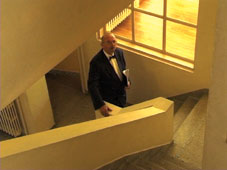
Loïc Vanderstichelen, Simon BACKES
Gregoire House
Fiction expérimentale | dv | couleur | 31:30 | Belgique | 2005
GREGOIRE HOUSE est un téléfilm proposant des variations hypothétiques sur la vie du Docteur Charles Grégoire, praticien bruxellois. Basé à l`origine sur quelques documents biographiques, le film propose en réalité une reconstitution purement fictionelle, dans l`authentique maison individuelle, de style moderniste, que le docteur s`était fait construire à Uccle, aux environs de Bruxelles, dans le courant des années trente, et qui est l`?uvre du célèbre architecte Henry Van De Velde.
Loïc Vanderstichelen est né en Belgique en 1973. Il est diplômé de l`Ecole de Recherche Graphique (ISLAP-ERG, Bruxelles) en 1998. Il a ensuite effectué un post-graduat à la "Jan van Eyck Akademie" (Maastricht, Pays-Bas). Il a réalisé de nombreux films et vidéos, seul ou en collaboration. Il a récemment contribué au film collectif "La Ricarda - A flux tendu", coréalisé avec Michel François, Ann Veronica Janssens, François Curlet, Harald Thys & Jos De Gruyter, Jordi Colomer,... Simon Backès est né en France en 1972. Il est sorti diplômé de la section Réalisation de l`Institut National Supérieur des Arts du Spectacle (INSAS, Bruxelles) en 1999. Il a réalisé de nombreux films et vidéos, seul ou en collaboration. Il tourne actuellement "Stolen Art, une collection particulière", un long métrage documentaire.
Loic Vanderstichelen, Loïc Vanderstichelen et Jean-Paul Jacquet
Catalogue : 2023OK boomer | Fiction | 4k | couleur | 10:15 | Belgique | 2022
Loic Vanderstichelen, Jean-Paul Jacquet
OK boomer
Fiction | 4k | couleur | 10:15 | Belgique | 2022
C'est de l'été dernier que date le retour probable du lyrisme. Personne n'y pensait plus, on lui avait substitué la forme épique, on s'en était vite lassé et depuis on pataugeait dans celle dont je ne sais plus qui avait eu la pas très bonne idée de l'appelé dramatique. Tellement dramatique que tout était calme, jusqu'à cette après-midi à la campagne où nous pûmes constater les signes avant-coureurs de ce lyrisme tant convoité de quand l'artiste pre?sente son objet en rapport imme?diat avec lui-me?me. Il nous incombait dès lors d'adapter cette intuition remarquable vers quelque chose de plus rationnel et trouver un titre était la première chose à faire pour authentifier tout cela. D'où le trajet à la poste.
Loïc Vanderstichelen est un cinéaste qui vit et travaille à Bruxelles. Il réalise des films seuls ou en collaboration depuis 1993. Jean-Paul Jacquet est un historien de l’art qui vit et travaille à Bruxelles.
Catalogue : 2016La cascade | Fiction expérimentale | 4k | couleur | 17:40 | Belgique | 2015
Loic Vanderstichelen, Loïc Vanderstichelen | Jean-Paul Jacquet
La cascade
Fiction expérimentale | 4k | couleur | 17:40 | Belgique | 2015
Norbert Piron, chercheur à l`IRPA (Institut Royal du Patrimoine Artistique), est mandaté par le musée des Beaux-Arts de Verviers afin de répertorier la collection destinée au nouveau Musée en construction et de préparer l`exposition inaugurale. Proche de la retraite, il fait de cette commande le point d`orgue de sa carrière. Épaulé par son assistant, l`universitaire Randy Paniandy, il analyse minutieusement les œuvres et tire des conclusions. Face au pragmatisme de Géraldine Leroy, responsable de la communication des Musées de Verviers, son point de vue scientifique se heurte à des sentiments émotionnels exacerbés qui le conduiront à une confusion mentale. Alors qu`il se trouve dans le creux de la vague, déstabilisé face à La Cascade de Gustave Courbet, une nymphe, vient lui apporter la solution à tous ses problèmes : une technologie révolutionnaire qui offre au regardeur l`ubiquité, la possibilité d`une hyper vision réaliste.
Loïc Vanderstichelen est un cinéaste indépendant qui vit et travaille à Bruxelles. Jean-Paul Jacquet un historien de l`art qui vit et travaille à Bruxelles.
Catalogue : 2012Singulier Pluriel | Fiction expérimentale | 0 | couleur | 22:0 | Belgique, France | 2011
Loic Vanderstichelen, Azilys Romane
Singulier Pluriel
Fiction expérimentale | 0 | couleur | 22:0 | Belgique, France | 2011
"Singulier Pluriel" est le nom d`un foyer pour personnes en situation de handicap situé à Roubaix dans le nord de la France. Un personnage anachronique erre au milieu des habitants dans les espaces colorés de l`institution. C`est un film de fiction composé de séquences de huis-clos.
Azilys Romane,née à Dourdan le 13 mars 1978, vit et travaille à Bruxelles. Azilys Romane étudie la photographie à La Cambre à Bruxelles et s`oriente vers la vidéo, qui lui permet d`associer l`image et l`écriture. Son travail intimiste et contemplatif est essentiellement constitué de portraits. Le temps y est suspendu et une grande attention est accordée aux détails (dans l`attente d`une révélation, d`un échange entre celui qui filme et celui qui est filmé. Loïc Vanderstichelen, né à Ieper le 1er août 1973, vit et travaille à Bruxelles. Loïc Vanderstichelen réalise des films seul ou en collaboration (avec Simon Backès, Michel François,...) depuis 1994. Ses films sont généralement auto-produits. Loïc Vanderstichelen enseigne à La Cambre et à l`Ecole d`Art D`Uccle. Il travaille parallèlement comme monteur dans les institutions européennes.
Catalogue : 2011L'ILE MYSTÉRIEUSE | Fiction expérimentale | | couleur | 19:0 | Belgique, France | 2009
Loic Vanderstichelen, MICHEL FRANCOIS
L'ILE MYSTÉRIEUSE
Fiction expérimentale | | couleur | 19:0 | Belgique, France | 2009
"Des amis nous ont dit qu`ils les auraient vu sur le continent`
Loïc Vanderstichelen Né en 1973 Vit et travaille à Bruxelles Réalise seul ou en collaboration des films sur support vidéo depuis 1994 Travaille parallelement comme monteur dans les institutions européennes ------------------- Michel François Né en 1956 Vit et travaille à Bruxelles
Catalogue : 2008La Ricarda | Film expérimental | 0 | couleur | 20:0 | Belgique, Espagne | 2006
Loic Vanderstichelen, Joerg Bader, Joël Benzakin, Lucia Bru, Jordi Colomer, François Curlet, Jos de Gruyter & Harald Thys, Pierre Droulers, Michel François, Ann Veronica Janssens, Simon Siegmann, Loïc Vanderstichelen, Richard Venlet, Angel Vergara
La Ricarda
Film expérimental | 0 | couleur | 20:0 | Belgique, Espagne | 2006
En juillet 2006, à l?initiative de Michel François, 13 artistes sont invités à vivre à la Casa Gomis, et à y filmer, chacun librement, avec ou sans acteurs, les séquences d?images que le lieu leur inspire. 0euvre architecturale majeure des années 50, bâtie par l?architecte Antoni Bonet, au milieu d?une fôret de pins,sur le domaine de la Ricarda, ce haut lieu de rencontres (Tapiès, John Cage, Miro?) s?est retrouvé progressivement enclavé entre la mer, la banlieue grandissante de Barcelone et son aéroport qui ne cesse de s?étendre. Impossible aujourd?hui d?y vivre encore. Un enjeu réunit les artistes : expérimenter la possibilité d?une ?uvre commune au-delà des styles ou des disciplines propres à chacun des intervenants (plasticiens, chorégraphes, vidéastes, scénographes) ; explorer une autre manière de faire un film dont la trame s?écrirait dans la dynamique d?un montage ingérant toutes les images. Sans autre cadre directif, les tournages se succèdent de manière à nourrir à flux tendu un montage intra-muros qui se poursuit, plus tard, à Bruxelles. Et à mesure que s?essaye, se fait, se défait, se refait la fusion des séquences singulières de chacun des artistes invités, des échappées fictionnelles se dessinent, un film se construit, « La Ricarda », au cours duquel le récit se cherche dans la résistance même que lui oppose la diversité du matériel composite dont il procède. Petit à petit, des personnages naissent et, dans un chassé-croisé de destins fantômes, s?approprient la villa, lui réinsufflent la vie, l?animent d?une fiction sans récit, d?une fluidité hypnotique, qui s?offre comme autant de possibles histoires, de narrations incertaines, d?éclats visuels et sonores.
Loïc Vanderstichelen est un artiste, né en 1973 à Ypres (Belgique), qui vit et travaille à Bruxelles. Son travail est principalement axé autour du cinéma et de la vidéo. Il a réalisé de nombreux films dont une série de films de fictions à très faible budget destinés à être montrés sur téléviseur (téléfilms) coréalisée avec Simon Backès sous les pseudonymes de Ruud Verlaert et Stepan Novak (entre 2002 et 2005)
Loic Vanderstichelen, MICHEL FRANCOIS
Catalogue : 2023OK boomer | Fiction | 4k | couleur | 10:15 | Belgique | 2022
Loic Vanderstichelen, Jean-Paul Jacquet
OK boomer
Fiction | 4k | couleur | 10:15 | Belgique | 2022
C'est de l'été dernier que date le retour probable du lyrisme. Personne n'y pensait plus, on lui avait substitué la forme épique, on s'en était vite lassé et depuis on pataugeait dans celle dont je ne sais plus qui avait eu la pas très bonne idée de l'appelé dramatique. Tellement dramatique que tout était calme, jusqu'à cette après-midi à la campagne où nous pûmes constater les signes avant-coureurs de ce lyrisme tant convoité de quand l'artiste pre?sente son objet en rapport imme?diat avec lui-me?me. Il nous incombait dès lors d'adapter cette intuition remarquable vers quelque chose de plus rationnel et trouver un titre était la première chose à faire pour authentifier tout cela. D'où le trajet à la poste.
Loïc Vanderstichelen est un cinéaste qui vit et travaille à Bruxelles. Il réalise des films seuls ou en collaboration depuis 1993. Jean-Paul Jacquet est un historien de l’art qui vit et travaille à Bruxelles.
Catalogue : 2016La cascade | Fiction expérimentale | 4k | couleur | 17:40 | Belgique | 2015
Loic Vanderstichelen, Loïc Vanderstichelen | Jean-Paul Jacquet
La cascade
Fiction expérimentale | 4k | couleur | 17:40 | Belgique | 2015
Norbert Piron, chercheur à l`IRPA (Institut Royal du Patrimoine Artistique), est mandaté par le musée des Beaux-Arts de Verviers afin de répertorier la collection destinée au nouveau Musée en construction et de préparer l`exposition inaugurale. Proche de la retraite, il fait de cette commande le point d`orgue de sa carrière. Épaulé par son assistant, l`universitaire Randy Paniandy, il analyse minutieusement les œuvres et tire des conclusions. Face au pragmatisme de Géraldine Leroy, responsable de la communication des Musées de Verviers, son point de vue scientifique se heurte à des sentiments émotionnels exacerbés qui le conduiront à une confusion mentale. Alors qu`il se trouve dans le creux de la vague, déstabilisé face à La Cascade de Gustave Courbet, une nymphe, vient lui apporter la solution à tous ses problèmes : une technologie révolutionnaire qui offre au regardeur l`ubiquité, la possibilité d`une hyper vision réaliste.
Loïc Vanderstichelen est un cinéaste indépendant qui vit et travaille à Bruxelles. Jean-Paul Jacquet un historien de l`art qui vit et travaille à Bruxelles.
Catalogue : 2012Singulier Pluriel | Fiction expérimentale | 0 | couleur | 22:0 | Belgique, France | 2011
Loic Vanderstichelen, Azilys Romane
Singulier Pluriel
Fiction expérimentale | 0 | couleur | 22:0 | Belgique, France | 2011
"Singulier Pluriel" est le nom d`un foyer pour personnes en situation de handicap situé à Roubaix dans le nord de la France. Un personnage anachronique erre au milieu des habitants dans les espaces colorés de l`institution. C`est un film de fiction composé de séquences de huis-clos.
Azilys Romane,née à Dourdan le 13 mars 1978, vit et travaille à Bruxelles. Azilys Romane étudie la photographie à La Cambre à Bruxelles et s`oriente vers la vidéo, qui lui permet d`associer l`image et l`écriture. Son travail intimiste et contemplatif est essentiellement constitué de portraits. Le temps y est suspendu et une grande attention est accordée aux détails (dans l`attente d`une révélation, d`un échange entre celui qui filme et celui qui est filmé. Loïc Vanderstichelen, né à Ieper le 1er août 1973, vit et travaille à Bruxelles. Loïc Vanderstichelen réalise des films seul ou en collaboration (avec Simon Backès, Michel François,...) depuis 1994. Ses films sont généralement auto-produits. Loïc Vanderstichelen enseigne à La Cambre et à l`Ecole d`Art D`Uccle. Il travaille parallèlement comme monteur dans les institutions européennes.
Catalogue : 2011L'ILE MYSTÉRIEUSE | Fiction expérimentale | | couleur | 19:0 | Belgique, France | 2009
Loic Vanderstichelen, MICHEL FRANCOIS
L'ILE MYSTÉRIEUSE
Fiction expérimentale | | couleur | 19:0 | Belgique, France | 2009
"Des amis nous ont dit qu`ils les auraient vu sur le continent`
Loïc Vanderstichelen Né en 1973 Vit et travaille à Bruxelles Réalise seul ou en collaboration des films sur support vidéo depuis 1994 Travaille parallelement comme monteur dans les institutions européennes ------------------- Michel François Né en 1956 Vit et travaille à Bruxelles
Catalogue : 2008La Ricarda | Film expérimental | 0 | couleur | 20:0 | Belgique, Espagne | 2006
Loic Vanderstichelen, Joerg Bader, Joël Benzakin, Lucia Bru, Jordi Colomer, François Curlet, Jos de Gruyter & Harald Thys, Pierre Droulers, Michel François, Ann Veronica Janssens, Simon Siegmann, Loïc Vanderstichelen, Richard Venlet, Angel Vergara
La Ricarda
Film expérimental | 0 | couleur | 20:0 | Belgique, Espagne | 2006
En juillet 2006, à l?initiative de Michel François, 13 artistes sont invités à vivre à la Casa Gomis, et à y filmer, chacun librement, avec ou sans acteurs, les séquences d?images que le lieu leur inspire. 0euvre architecturale majeure des années 50, bâtie par l?architecte Antoni Bonet, au milieu d?une fôret de pins,sur le domaine de la Ricarda, ce haut lieu de rencontres (Tapiès, John Cage, Miro?) s?est retrouvé progressivement enclavé entre la mer, la banlieue grandissante de Barcelone et son aéroport qui ne cesse de s?étendre. Impossible aujourd?hui d?y vivre encore. Un enjeu réunit les artistes : expérimenter la possibilité d?une ?uvre commune au-delà des styles ou des disciplines propres à chacun des intervenants (plasticiens, chorégraphes, vidéastes, scénographes) ; explorer une autre manière de faire un film dont la trame s?écrirait dans la dynamique d?un montage ingérant toutes les images. Sans autre cadre directif, les tournages se succèdent de manière à nourrir à flux tendu un montage intra-muros qui se poursuit, plus tard, à Bruxelles. Et à mesure que s?essaye, se fait, se défait, se refait la fusion des séquences singulières de chacun des artistes invités, des échappées fictionnelles se dessinent, un film se construit, « La Ricarda », au cours duquel le récit se cherche dans la résistance même que lui oppose la diversité du matériel composite dont il procède. Petit à petit, des personnages naissent et, dans un chassé-croisé de destins fantômes, s?approprient la villa, lui réinsufflent la vie, l?animent d?une fiction sans récit, d?une fluidité hypnotique, qui s?offre comme autant de possibles histoires, de narrations incertaines, d?éclats visuels et sonores.
Loïc Vanderstichelen est un artiste, né en 1973 à Ypres (Belgique), qui vit et travaille à Bruxelles. Son travail est principalement axé autour du cinéma et de la vidéo. Il a réalisé de nombreux films dont une série de films de fictions à très faible budget destinés à être montrés sur téléviseur (téléfilms) coréalisée avec Simon Backès sous les pseudonymes de Ruud Verlaert et Stepan Novak (entre 2002 et 2005)
Wanda Vanderstoop
Catalogue : 2007Vtape | 0 | 0 | | 0:0 | Canada | 2007

Wanda Vanderstoop
Vtape
0 | 0 | | 0:0 | Canada | 2007
Fondé en 1980 à Toronto, V tape est un centre international de ressources, de distribution et d?exposition sur l?art vidéo et les arts nouveaux. Au fil des ans, V tape a amassé une quantité impressionnante d??uvres. Aujourd?hui, sa collection regroupe plus de 5000 titres, du début des années 70 jusqu?à nos jours, et 900 artistes. V tape est une association, une organisation dirigée par des grands noms de la scène artistique canadienne, dont Kim Tomczak et Lisa Steele. Une association, créée par des artistes pour des artistes, dont la véritable vocation est de soutenir la création et les artistes. Un soutien qui passe par la diffusion et la distribution des ?uvres, par la vulgarisation des arts nouveaux au près du public, amateur et professionnel. En 1994, V tape s`est associé à l`Aboriginal Film & Video Art Alliance pour la promotion et le développement d`artistes aborigènes. Depuis, V tape, en partenariat avec d`autres associations, a multiplié les projets de soutiens à la scène aborigène, organisant des ateliers et un festival, l`Aboriginal Media Arts Festival, imagineNative. Depuis 1995 et son déménagement dans de nouveaux locaux, V tape a commencé à mettre l?accent sur une nouvelle fonction, exposer les arts vidéo et nouveaux. En plus des expositions régulières dans ses locaux, V tape expose sa collection à l`international, dans des musées, des galeries, des universités, des librairies et des festivals. V tape possède également un important centre de recherche accessible à tous (commissaires, universitaires, étudiants, artistes?) et spécialisé dans la vidéo et les arts nouveaux ainsi qu?une base de données en-ligne (http://vtape.org/). Depuis peu, l?association offre la possibilité, en coopération avec le Virtual Museum Canada (VMC), d?avoir accès à des expositions virtuelles sur le site Internet Video Art in Canada (http://videoart.virtualmuseum.ca/).
En 1990, Wanda Vanderstoop rejoint l?équipe de V tape en tant que Directrice de la Communication. Elle y apprend une nouvelle façon de promouvoir son travail et celui des autres, une façon organique et décentralisée, loin des canons des corporations. Si aujourd`hui, Wanda est devenue Directrice Générale de V tape, elle est aussi chanteuse et musicienne pour Mad Love, un groupe de folk urbaine dans lequel elle se partage la scène avec ses deux s?urs, Audrey et Linda.
David Varela
Catalogue : 2013Último Retrato | Doc. expérimental | dv | couleur | 10:0 | Espagne | 2011
David Varela
Último Retrato
Doc. expérimental | dv | couleur | 10:0 | Espagne | 2011
Epilogue for an unknown man. On the way to Nirvana.
DAVID VARELA, scriptwriter, director, poet, worked as a lighting technician and cameraman in cinema, television and advertising. After starting his first documentary, Deconstruction / Deconstrucción, he spent a year in India shooting Banaras me (2010), and the shorts Last portrait and No Men´s Children (2011). He also started Ganguiana, a diary shaped documentary, currently in progress.
Noémi Varga
Catalogue : 2018A legvidámabb barakk (The Happiest Barrack) | Doc. expérimental | 4k | couleur | 15:53 | Hongrie, Royaume-Uni | 2017
Noémi Varga
A legvidámabb barakk (The Happiest Barrack)
Doc. expérimental | 4k | couleur | 15:53 | Hongrie, Royaume-Uni | 2017
The Happiest Barrack is an experimental documentary, a chronicle of my maternal grandmother`s life in Soviet Hungary. It serves as a memento of times past and as a reminder of how socialism colonized the soul`s of a generation.
Noemi Varga is a filmmaker based between London and Budapest. She is a recent graduate of the Royal College of Art, where she specialised in Moving Image. Her work is mainly preoccupied with exploring the boundaries of conventional documentary filmmaking, applying the tools of cinematic storytelling to all her subjects.
Rolando Vargas, Catherine CELY
Catalogue : 2007Automovil | Doc. expérimental | dv | noir et blanc | 3:51 | Colombie | 2004
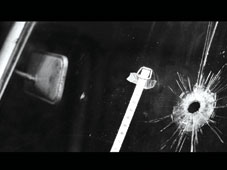
Rolando Vargas, Catherine CELY
Automovil
Doc. expérimental | dv | noir et blanc | 3:51 | Colombie | 2004
"Automóvil" est le premier d'une série appelée "M.I." composé de sept fragments d'art-vidéos qui travaille avec du matériel d'archives photograpiques , en plaques d'acétate de cellulose de l'institution légale Colombienne datée de 1953 à 1979 et qui tourne autour de deux questions fondamentales: Comment établir une relation avec du matériel d'archive, produit de conséquence de notre violence? Comment rendre visibles les petits fragments ayant pour fonction la conservation de la mémoire? Les séries de "M.I." est une histoire alternée, antagoniste à l'histoire de la télévision, due au fait qu'elle ne s'intéresse pas aux histoires criminelles, au sens réduit du terme. Son réel intérêt réside dans les Restes, les sens multiples présents de réserve qui a résisté la capacité probante, sont capables d'intégrer une catégorie plus vaste qui permet la compréhension d'autres situations et d'autres représentants. Les oeuvres des séries "M.I." avec leurs interstices de documents historiques, où l'événement criminel est abandonné et qui par ailleurs, s'intéresse plus en détails, à la particularité, au signe, relaté ou non à un fait ou à un évènement spécifique. L'image traitée en ce sens devient indépendante de son expédient, retrouve sa vie propre dû à son lien perdu avec l'histoire ancienne, et se prouve elle-même dans sa propre existence.
Catherine et Rolando, travaillent ensemble depuis 2001, dans leurs projets ils utilisent du matériel d'archive produisant ainsi des travaux expérimentaux du genre art-vidéo. Leur première oeuvre est un film documentaire intitulé "Exiliados en Exilio", qui a recu desrécompenses du gouvernement Colombien et Français ,sur les camps de concentration durant la Seconde Guerre Mondiale en Colombie. La série "M.I" a été projetée dans les festivals suivants: "EMAF", "Transmediale", "MediaArt Friesland", "II inter-american Biennial of video art" parmi d'autres .
Helena Estrela Vasconcelos
Catalogue : 2017Heroísmo | Fiction | 4k | couleur | 21:38 | Portugal | 2016
Helena Estrela Vasconcelos
Heroísmo
Fiction | 4k | couleur | 21:38 | Portugal | 2016
Un garçon vit seul, la nuit, dans un centre commercial abandonné.
Helena Estrela Vasconcelos was born in 1993, in Porto. Finished in 2015 a degree in Cinema in Escola Superior de Teatro e Cinema de Lisboa. She was the co-producer in the film “A Rapariga de Berlim” which won the section “Novi?ssimos” at IndieLisboa 2015. “Heroismo”, her first film, premiere at Nacional Competition in Indie Lisboa 2016. She currently lives in Porto, where she is developing research for future film projects.
Miguel Clara Vasconcelos
Marlon Vasquez, David SANCHEZ
Catalogue : 2007Doña Ana | Animation | dv | couleur | 1:44 | Colombie | 2005
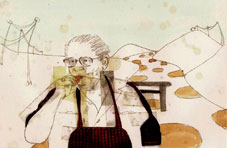
Marlon Vasquez, David SANCHEZ
Doña Ana
Animation | dv | couleur | 1:44 | Colombie | 2005
Mme Ana est une femme âgée qui vend des plantes médicinales dans la ville de Medellin en Colombie. Le fait de manger des fraises et de parler de leurs propriétés montre l?étendue des connaissances présentes dans la culture populaire.
Marlon Vasquez est un réalisateur colombien de 26 ans. Il a obtenu son diplôme en arts visuels à l?université nationale de Colombie et a réalisé depuis plusieurs courts-métrages indépendants et des projets artistiques visuels. Il a obtenu une mention spéciale à la troisième Biennale Interaméricaine d?art vidéo, banco Interamericano de Desarrollo à Washington en 2006 ainsi qu?au Slow Food Film Festival 2006 en Italie. Il a été sélectionné en tant que talent 2006 pour la Berlinale Talent campus #4 à Berlin en Allemagne. Il a également été sélectionné pour représenter la Colombie à la rencontre artistique ?Dream Project Public Art for Equality? en 2005. Sa vidéo?Golfie? a été nommée meilleure vidéo au deuxième International Sample of Electronical Art de Bogota en 2004. Et enfin sa vidéo ?Homeless? a été nommée dans la catégorie meilleure vidéo au Medellin Vision Festival organisé par Universidad Pontificia Bolivariana en 2003.
Lesia Vasylchenko
Catalogue : 2022Postcard From A Nonexisting City | Animation | mov | couleur | 8:32 | Ukraine | 2021
Lesia Vasylchenko
Postcard From A Nonexisting City
Animation | mov | couleur | 8:32 | Ukraine | 2021
“Postcard From a Nonexisting City” is a video work that explores the Soviet imaginary and its relation to the future. The work features a virtual rendering of an architectural landscape that contrasts physical and temporal scales and stamps function as graphic messengers of a political and cultural transition. Constructed between the frameworks of speculative architecture, philately and the politics of time, “Postcard From a Nonexisting City” is a work that reflects on temporal arrangements and geopolitical effects produced by space communication technologies.
Lesia Vasylchenko is a Kyiv-born artist based in Oslo. Her practice spans between installation, moving image and photography. Vasylchenko is a co-curator of the artist-run gallery space Podium and a founder of STRUKTURA. Time, a cross-disciplinary initiative for research and practice within the framework of visual arts, media archaeology, literature, and philosophy. She holds a degree in Journalism from the Taras Shevchenko National University of Kyiv and Fine Arts from Oslo National Academy of the Arts. Her works have been shown among others at Louvre Museum, Paris; Haus der Kulturen der Welt, Berlin; Haugar Art Museum, Tønsberg; Tenthaus Gallery, Oslo; The Wrong New Digital Art Biennale.
Lesia Vasylchenko
Catalogue : 2021Zaraz | Fiction expérimentale | mov | couleur et n&b | 15:46 | Ukraine, Norvège | 2020
Lesia Vasylchenko
Zaraz
Fiction expérimentale | mov | couleur et n&b | 15:46 | Ukraine, Norvège | 2020
"ZaraZ" est un essai vidéo de science-fiction, expérimental, de la chronopolitique et de la philosophie. À l'ère post-communiste, après la chute du mur de Berlin et l'effondrement de l'Union soviétique, des discours à propos de la fin de l'Histoire ont émergé. Au lieu de la structure passé-présent-avenir, nous assistons à un glissement temporel vers le Maintenant, qui se coule continuellement dans le présent du futur. "ZaraZ" réfléchit aux conséquences de l'accélération et de l'aliénation dans les sociétés modernes. Y sont dépeints des sites d'architecture brutaliste, construits pour concrétiser dans les espaces publics la "promesse" d'un avenir meilleur, et des paysages urbains endommagés par l'industrialisation et la croissance économique. La nostalgie de l'avenir s'exprime dans la désintégration des formes architecturales des espaces publics et privés, et dans la possibilité que de multiples présents émergent de passés multiples. "ZaraZ" interroge les temporalités spéculatives de la ville et explore les relations entre le temps et l'architecture; entre le virtuel, le réel et le véritable; entre les modes actuels d'instrumentalisation de l'histoire et la mémoire. Dans un monde où il n’y a qu’une seule synchronicité temporelle urbaine, la question demeure: quels sont les Temps responsables de la création de futurs imaginés?
Lesia Vasylchenko est artiste. Née à Kiev (Ukraine), elle vit à Oslo (Norvège). Sa pratique s’étend de l'installation à l'image en mouvement et à la photographie. Elle est co-curatrice de la galerie d'art autogérée Podium, Oslo (Norvège) et fondatrice de STRUKTURA.Time, une initiative transdisciplinaire de recherche et de pratique en arts visuels, archéologie des médias, littérature et philosophie. Elle est diplômée en journalisme à la Taras Shevchenko National University de Kiev (Ukraine) et en arts plastiques à la Oslo National Academy of the Arts (Norvège). Ses œuvres ont été présentées, entre autres, au Haugar Art Museum, Tonsberg (Norvège); à la Tenthaus, Oslo (Norvège); au Transnational Queer Underground, Berlin (Allemagne); à la Wrong New Digital Art Biennale, São Paulo (Brésil) et au Korea Queer Film Festival, Séoul (Corée du Sud).