Catalogue > Liste par artiste
Parcourez la liste complète des artistes présentés dans le cadre des Rencontres Internationales depuis 2004. Utilisez le filtre alphabétique pour affiner vos recherches.
Alterazioni Video
Catalogue : 2023Notes for an Unfinished Park | Film expérimental | 4k | couleur | 25:15 | Italie | 2022
Alterazioni Video
Notes for an Unfinished Park
Film expérimental | 4k | couleur | 25:15 | Italie | 2022
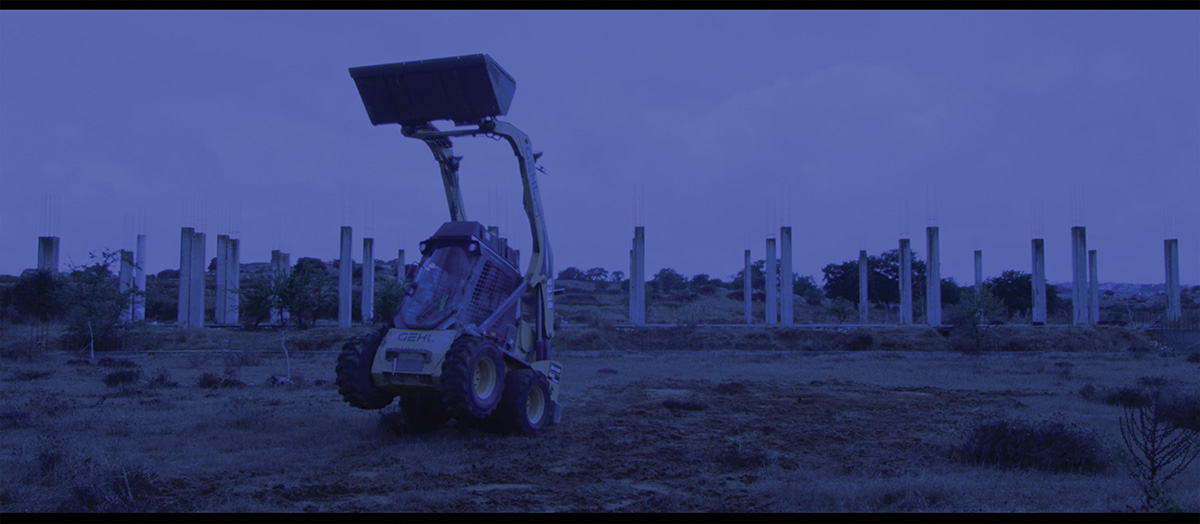
Nuoro's unfinished sports hall, a scenic ruin lost in the countryside beyond the last urban offshoots, is the film's protagonist. The undisputed star. Planned during the late 1990s, contracted out in 2012, the project was finally shelved in 2017: what remains is a forest of concrete hubbed pylons, with its mammoth entrance gate, a barren esplanade surrounded by piles of debris and wild vegetation. Through this movie, Alterazioni Video depicts the “Incompiuto” (Unfinished) through a new interpretative key which overturns the scornful conception surrounding Italian unfinished public works. The phenomenon is explored on all its complexity; thanks to a plurality of registers, references to ancient Greek mythology, youtube flavored neorealism, spaghetti western stereotypes with with Sci-Fi twists and turns which will eventually end up flirting with a meta-documentaristic approach. Among Nuoro’s Palasport, different characters roam freely; there is the grumpy guardian who time travels, a young tiktoker lost in the brambles, 4 red necks musician tourists, and a dowsing surveyor fond of monologues and digging. They all have different desires which lead them to different actions, almost as if they were willing characters driven around the concrete stage by that humoungus deus ex machina that is none other than the forgotten ruins of the unfinished sports hall.
Alterazioni Video is a group of five artists founded in Milan in 2004 and now based in New York, Berlin, Faro and Palermo. The members of the group are Paololuca Barbieri Marchi, Alberto Caffarelli, Matteo Erenbourg, Andrea Masu and Giacomo Porfiri. Their work has been exhibited internationally in museums and art institutions such as: Künstlerhaus Bethanien, Berlin 2005, 52nd International Art Exhibition Venice Biennale 2007, Manifesta 7 Rovereto 2008, Shenzhen & Hong Kong Bi-city Biennale of Urbanism\Architecture 2009, Fondazione Sandretto Re Rebaudengo Turin 2010, Museo Maxxi, Rome 2010, Performa 09 and 11 New York, MoMA PS1 Performance Dome New York 2012, Greene Naftali Gallery, New York 2013, PAC Milan 2014, Hamburger Bahnhof Museum Berlin 2015, Quadriennale di Roma 2016, Film Retrospective at Spazio Oberdan Milan 2016, Manifesta 12 Palermo 2018, Galleria Campoli Presti Paris 2019, VAC Foundation Venice 2019 and, Triennale Milan 2020, Museo Nivola Nuoro 2021 In 2007, for the 52nd Venice Biennale, in the main exhibition curated by Robert Storr, they presented "Painting" a work documenting the continuous layering of writing and erasures on the exterior walls of the San Vittore prison in Milan. Writings, images and attempts at censorship become the linguistic elements of one work, one large "painting" that documents, as it progresses, the life of a community. They are also known for creating "Unfinished." For more than 15 years, the art collective Alterazioni Video has been investigating the phenomenon of unfinished public works in Italy, documenting and mapping more than 750 buildings scattered throughout the country, works that were never completed and therefore had no function, becoming monuments to something that never existed. These unfinished works are the ruins of the contemporary era, the perfect interpretive paradigm for understanding our country's recent history. This study led to the definition of a new architectural style: Unfinished. In 2009 the group was invited together with Icelandic artist Ragnar Kjartansson to participate in the performing art biennial Performa 09 NY to perform Symphony No. 1. In 2015 for the exhibition "Dieter Roth und die Musik," curated by Gabriele Knapstein at the Hamburger Bahnhof museum in Berlin they presented Symphony No. 2 Since 2009, the collective has produced a series of 12 docu-films called TurboFilm. TurboFilm is a filmic system or methodology, which refers to the continuous reconfiguration of experience in everyday life and social relations, work, economics, and politics. It aims to raise questions about problematic issues through a cross-format multi-format production that can circulate through different media platforms. In 2016, Cineteca Italiana dedicated a retrospective at Spazio Oberdan in Milan. They have recently collaborated with renowned fashion designer Virgil Abloh as art directors for Off-White's fashion show in Paris for the 2019 menswear collection, as well as collaborating on works inspired by the Incompiuto project presented at the Campoli Presti Gallery. They have published two volumes: Turbo Film - the uncertain future of moving images published by Lupetti Editore Incompiuto - the birth of a style published by Humboldt Books
João Vieira Torres
Catalogue : 2017Crianças fantasmas | Doc. expérimental | hdv | couleur | 16:0 | Brésil | 2016
João Vieira Torres
Crianças fantasmas
Doc. expérimental | hdv | couleur | 16:0 | Brésil | 2016
Ghost Children, presents seven reminiscences of early childhood, read in seven different voices, as the camera presses close against the faded dye and exaggerated grain of family photographs from the early 1980s. Whose faces and memories are those The film encourages the audience to interrogate assumptions about gender, memory, performance, and death.
Joao Vieira Torres is a Brasilian-French artist/filmmaker, born in Recife, Brazil. Lives and works in between Brazil and France . He has shown his work among other places at: New York Film Festival 2016(US) / Kinoforum Sao Paulo (BR) / Edinburgh International Film Festival (UK) / Uniondocs New York (US) / Art of the Real Lincoln Center (US) / Ann Harbor Film Fest (US) / FIDMarseille(FR) / Olhar de Cinema (BR) / Rencontres Int. du Documentaire de Montreal (CA) / Rencontres Internationales Paris/Berlin (FR/DE) / Museu da Imagem e do som de Sao Paulo (BR) / Anthology Film Archives(US) / CentrePompidou(FR) / Palais de Tokyo (FR) / MIS Sao Paulo (BR) / LABoral (ESP) / IndieLisboa(PT) / Tampere Short Film Fest (FI) / Vilnius CAC(LT) / Alexandrina Arts Center (EG)’
Catalogue : 2016Toré | Doc. expérimental | hdv | couleur | 15:0 | Brésil | 2015
João Vieira Torres, Tanawi Xucuru Kariri
Toré
Doc. expérimental | hdv | couleur | 15:0 | Brésil | 2015
Il y a ce que je vois ce qui m`est montré ce que je ne vois pas ce que je ne peux pas voir On m`invite à filmer un rituel. Celui qu`on peut montrer aux étrangers. Un enfant de la tribu regarde Fantasia de Disney à la télé. On l`interrompt. Qu`est-ce qui habite l`enfant lorsqu`il danse ? Qu`est-ce que je peux voir de ce qu`on me montre ?*Filmé dans la Tribu Xucuru-Kariri, État d`Alagoas, Brésil
João Vieira Torres, artiste/cinéaste franco-brésilien est né à Recife, Brésil, en 1981. Il vit et travaille entre le Brésil et la France. Son travail a été présenté dans de nombreux festivals, galeries et musées, parmi lesquels FIDMarseille (FR) / RIDM (CA) / Olhar de Cinema (BR) / Anthology Film Archives(US) / CentrePompidou (FR) / Palais de Tokyo (FR) / Villa Arson(FR) / MIS São Paulo (BR) / LABoral (ESP) / CPH:Dox (DK), IndieLisboa (PT) / Tampere Short Film Fest (FI) / Vilnius CAC(LT) / Alexandrina Arts Center (EG), St Petersburg Mus. of Photo (RU), Pingyao Photo Fest. (CN). Tanawi Xucuru Kariri, l`un des leaders de la communauté, notamment en tant qu`éducateur, a co-réalisé Toré (2015), son premier film.
João Vieira Torres, Tanawi Xucuru Kariri
Catalogue : 2017Crianças fantasmas | Doc. expérimental | hdv | couleur | 16:0 | Brésil | 2016
João Vieira Torres
Crianças fantasmas
Doc. expérimental | hdv | couleur | 16:0 | Brésil | 2016
Ghost Children, presents seven reminiscences of early childhood, read in seven different voices, as the camera presses close against the faded dye and exaggerated grain of family photographs from the early 1980s. Whose faces and memories are those The film encourages the audience to interrogate assumptions about gender, memory, performance, and death.
Joao Vieira Torres is a Brasilian-French artist/filmmaker, born in Recife, Brazil. Lives and works in between Brazil and France . He has shown his work among other places at: New York Film Festival 2016(US) / Kinoforum Sao Paulo (BR) / Edinburgh International Film Festival (UK) / Uniondocs New York (US) / Art of the Real Lincoln Center (US) / Ann Harbor Film Fest (US) / FIDMarseille(FR) / Olhar de Cinema (BR) / Rencontres Int. du Documentaire de Montreal (CA) / Rencontres Internationales Paris/Berlin (FR/DE) / Museu da Imagem e do som de Sao Paulo (BR) / Anthology Film Archives(US) / CentrePompidou(FR) / Palais de Tokyo (FR) / MIS Sao Paulo (BR) / LABoral (ESP) / IndieLisboa(PT) / Tampere Short Film Fest (FI) / Vilnius CAC(LT) / Alexandrina Arts Center (EG)’
Catalogue : 2016Toré | Doc. expérimental | hdv | couleur | 15:0 | Brésil | 2015
João Vieira Torres, Tanawi Xucuru Kariri
Toré
Doc. expérimental | hdv | couleur | 15:0 | Brésil | 2015
Il y a ce que je vois ce qui m`est montré ce que je ne vois pas ce que je ne peux pas voir On m`invite à filmer un rituel. Celui qu`on peut montrer aux étrangers. Un enfant de la tribu regarde Fantasia de Disney à la télé. On l`interrompt. Qu`est-ce qui habite l`enfant lorsqu`il danse ? Qu`est-ce que je peux voir de ce qu`on me montre ?*Filmé dans la Tribu Xucuru-Kariri, État d`Alagoas, Brésil
João Vieira Torres, artiste/cinéaste franco-brésilien est né à Recife, Brésil, en 1981. Il vit et travaille entre le Brésil et la France. Son travail a été présenté dans de nombreux festivals, galeries et musées, parmi lesquels FIDMarseille (FR) / RIDM (CA) / Olhar de Cinema (BR) / Anthology Film Archives(US) / CentrePompidou (FR) / Palais de Tokyo (FR) / Villa Arson(FR) / MIS São Paulo (BR) / LABoral (ESP) / CPH:Dox (DK), IndieLisboa (PT) / Tampere Short Film Fest (FI) / Vilnius CAC(LT) / Alexandrina Arts Center (EG), St Petersburg Mus. of Photo (RU), Pingyao Photo Fest. (CN). Tanawi Xucuru Kariri, l`un des leaders de la communauté, notamment en tant qu`éducateur, a co-réalisé Toré (2015), son premier film.
Prokop Vignon
Catalogue : 2012sans titre | Vidéo | hdv | couleur | 3:36 | France | 2010
Prokop Vignon
sans titre
Vidéo | hdv | couleur | 3:36 | France | 2010
Dans la banlieue enneigée de Paris, des jeunes s?aventurent dans une friche industrielle. Leur passage dans ce tas de ruines redonne peu à peu un nouveau souffle de vie dans ce refuge.
Jean-luc Vilmouth
Catalogue : 2007White Building | Doc. expérimental | dv | couleur | 25:0 | France, Cambodge | 2005
Jean-luc Vilmouth
White Building
Doc. expérimental | dv | couleur | 25:0 | France, Cambodge | 2005
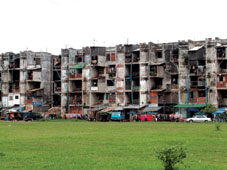
En passant par le front du Bassac, dans Phnom Penh, si l?on est un voyageur attentif, on sera surpris de voir surgir une construction qui pourrait avoir l?air d?un immeuble, mais qui ressemble davantage à un grouillement architectural étonnant. On ne perçoit tout d?abord qu?un enchevêtrement de lignes bleues, de points verts et d?étoffes colorées, en suspension sur ce qui devait être autrefois une façade blanche d?architecture moderne.On apprend alors que ce grand organisme vivant a été construit par l?architecte cambodgien Van Molyvann sur le modèle de l?utopie de la Cité radieuse...
Jean Luc Vilmouth was born in Moselle and is now living in Paris. Since 1978, he has been exhibiting his works throughout the world. He also works for art and architecture magazines and writes books on art. He realised several public works. As a director, he made several short films and video installations.
Barbara Visser
Catalogue : 2014Herbarium | Doc. expérimental | hdv | couleur | 7:25 | Pays-Bas | 2013
Barbara Visser
Herbarium
Doc. expérimental | hdv | couleur | 7:25 | Pays-Bas | 2013
?Herbarium? is a cinematographic observation based on the changes in the classification of plants. Going from classical taxonomy to genetic data-storage, Visser wonders what is left when the plant its separated from its physical features. What is a plant to us, without the sensation of smell, texture and its visual appearance? In a long abandoned tropical greenhouse formerly used by the biology faculty of Wageningen University, during a full moon night, the dry plants are reanimated, in a visual language where nature is shown as an artefact, devoid of any natural context.
Barbara Visser researches the relationship between registration and dramatization. Her work is driven by fascinations around original and copy, historical narratives and constructed biographies, which she translates into subjective documentaries. By questioning the authenticity of images and their interpretation by the viewer, she influences the shape and the content of the work simultaneously. Projects are executed in an array of media: photography, film, video, text, printed matter and performance. Infiltrating into existing systems leads to a wide diversity of works. Visser has participated in the Bienal de Sao Paulo, Brazil (2006), Manifesta, Trento, Italy (2008), Architecture Biennale, Dutch Pavillion, Venice, Italy (2010), Art Biennale, Dutch Pavillion group show (2011). In 2011 and 12 she?s written and directed the film C.K. (2012). Awards for her work include the Dutch Cultural Media Fund Documentary Award (2010), the dr. A. H. Heineken Award for art and science (2008) , David Roell Prize 2007, Prins Bernhard Foundation (2007) Barbara Visser studied photography and audiovisual arts at the Gerrit Rietveld Academie in Amsterdam, the Cooper Union in New York and the Jan van Eyck Academie in Maastricht. Since 1992 her work is shown internationally. Her work is represented by Annet Gelink Gallery, Amsterdam.
Elena Vogman, Clemens von Wedemeyer
Catalogue : 2019Actors of Profane History | Vidéo | hdv | noir et blanc | 17:0 | Russie, Allemagne | 2017
Elena Vogman, Clemens von Wedemeyer
Actors of Profane History
Vidéo | hdv | noir et blanc | 17:0 | Russie, Allemagne | 2017
"Actors of Profane History" includes a series of recently discovered casting images from Sergei Eisenstein’s destroyed film "Bezhin Meadow," (1935-1937) preserved today at the Russian State Archive of Literature and Arts. It questions the interrelation between the cinematographic use of film extras, who usually appear only in the background of major cinema productions, and the possibility of acting in political history, in itself closely connected to the history of representation. In his films, Eisenstein worked almost entirely with non-professional actors, the so-called "tipazhes." Deriving from the French word "typage," the Russian “tipazh” was a concept for denoting a typical appearance, giving an immediate visual presence to the palpable characteristics of a social type. This reading of human appearance as evidence of social and political conditions elucidates parallels between cinema and criminalistic as well as physiognomic paradigms. Yet, in 1935, when Eisenstein was commissioned to shoot Bezhin Meadow, such “irregular types” were already banned from official screens. The censured and destroyed film tells the story of Pavlik Morozov, a fourteen year old pioneer who lived in the village of Gerasimovka and was killed in 1932 by his family after denouncing his father for being opposed to the collectivisation of the land. After the editing of the film went through at least two different versions, the production was definitively stopped in March 1937. The film was withdrawn and disappeared in the deposits of Mosfilm, where it was eventually destroyed in the bombing of Moscow during the Second World War. In 1967, Naum Kleiman and Sergei Jutkevic reconstructed a version of Bezhin Meadow based on a surviving sequence of individual frames.
Elena Vogman is an author, independent curator and postdoctoral fellow in the research project “Rhythm and Projection” at the Freie Universität in Berlin. Her book on "Sinnliches Denken: Eisensteins exzentrische Methode" (2018) has been published by diaphanes. Currently, she finishes her next book, "Dance of Values: Eisenstein’s Capital Project," which is forthcoming in the Fall of this year. Together with Marie Rebecchi and Till Gathmann she curated the exhibition “Sergei Eisenstein: The Anthropology of Rhythm” in 2017 at Nomas Foundation in Rome. In 2018, the trio curates the exhibition “Eccentric Values after Eisenstein” together at Espace Diaphanes in Berlin. Clemens von Wedemeyer, born in 1974 in Göttingen, Germany, currently lives and works in Berlin and holds a professorship for media art at the Academy of Fine Arts Leipzig. Solo exhibitions include: 2016 Hamburger Kunsthalle; P.O.V. - Neuer Berliner Kunstverein; 2015 MCA Chicago; 2013 MAXXI, Museo nazionale delle arti del XXI secolo, Rom with the project “The Cast”, curated by Giulia Ferracci
Mathias Volz, Bijan DAWALLU
Catalogue : 2006Ducks & Cars | Art vidéo | dv | noir et blanc | 142:23 | Allemagne | 2005
Mathias Volz, Bijan DAWALLU
Ducks & Cars
Art vidéo | dv | noir et blanc | 142:23 | Allemagne | 2005
Ducks & Cars joue de l'attente du spectateur. Lentement, comme une goutte de pluie qui se forme, une image se construit et disparaît dans le même instant. Doucement et calmement, de cette lenteur et de cette tension latente, nous apparaît un sujet enfantin : Ducks & Cars. La vidéo est pensée pour être projetée en arrière plan comme par exemple la prestation d'un groupe de musique ou lors de tout autre événement. Cela fait d'avantage référence à la conception classique de la peinture qu'à l'animation. Les symboles qui construisent l'image dérivent des caractères utilisées pour le tricot. Pas d'ASCII.
Bijan Dawallu termine en 2003 ses études de communications graphiques à l'UdK (Ecole des Beaux arts)de Berlin. Avec son collaborateur Andreas Eberlein, il intervient dans l'agence "Aroma", à Berlin. Mathias Volz: Mathias Volz achève ses études de multimédia en 2002. Après deux années d'activité pour une agence internet à Barcelone il travaille actuellement à Berlin en indépendant.
Friedl Vom Gröller
Catalogue : 2014Ich auch, auch, ich auch | Film expérimental | 16mm | noir et blanc | 2:0 | Autriche | 2012
Friedl Vom GrÖller
Ich auch, auch, ich auch
Film expérimental | 16mm | noir et blanc | 2:0 | Autriche | 2012
The three-minute film, a snapshot of an encounter, is based on concrete experience. In an accompanying note, the filmmaker writes: ?For years, weeks, I have had to visit my mother and am regularly overwhelmed by the purpose of life, compassion, and anticipation of my own passing.? This experience is condensed in the film.
*1946 in London. She spent her childhood in Vienna and Berlin. From 1965-1969 she studied photography at the School of Graphic Arts. 1971 Masters certificate and commercial atelier for photography. 2005 National award for photography. 1990 Founder and director of School for Artistic Photography, Vienna until 2010. 2006 Founder and director of School for Independent Film, Vienna. First films in 1968. Screenings/Exhibitions (Selection): Centre Pompidou, Paris; Frankfurter Kunstverein; Generali Foundation, Wien; Anthology Filmarchives, New York; documenta 12, Kassel; Österreichisches Filmmmuseum, Wien; International Film Festival Toronto; International Film Festival Hong Kong; Berlin Biennale; Diagonale, Graz; Viennale; Lentos, Linz; Media-City, Windsor, HGB-Leipzig, Mumok Wien.
Catalogue : 2014Meine psychoanalytischen Notizen | Film expérimental | 16mm | noir et blanc | 3:0 | Autriche | 2013

Friedl Vom GrÖller
Meine psychoanalytischen Notizen
Film expérimental | 16mm | noir et blanc | 3:0 | Autriche | 2013
Fire ravages relentlessly through paper. Individual words, ragged sentences, loose thoughts have broken free of their contexts and flare up once again before melting away forever: ?unfaithful,? father,? ?on 17 October, K. complained of overwork,? ?I also think about incest and wanting to save sister.? The clearly legible handwriting on white sheets of paper has given up its search for meaning and surrenders to the flames. Artist Friedl von Gröller hands over several-page-long psychoanalytical protocols from her professional practice as psychoanalyst to the funeral pyre flaring in the middle of a snow-covered landscape. The notes from hundreds of hours of ?talking cure? extinguish silently, almost blithely. They abdicate their cognizance of the long therapy sessions between analyst and patient. But the burning paper is not the only storage medium that knows of Groller?s notes. The short film My Psychoanalytic Notes begins with close-ups of people?s faces?psychoanalysts?reading, intently studying Gröller?s protocols. Only then does the camera turn away from the faces?with an increasingly faster pan?toward a snowy forest landscape and the pile of burning books: As though the filmmaker wanted to once again call up her own profession as witness, which will remember her work even after the cold fire destroys all traces. The camera moves in an extreme close-up across the pages, leafs through once again. Yet it is just as fascinated by the bizarre ash formations that arise from the act of burning as it is by the notes and sentences dying on them. In the end, the camera digresses once more, wanders across the snow and wood, and ultimately turns to the backlight of the sky. The image fades, becomes white like snow?or white like a clean sheet of paper, on which a new stage of life can be recorded. (Alexandra Seibel) Translation: Lisa Rosenblatt
1946 in London. She spent her childhood in Vienna and Berlin. From 1965-1969 she studied photography at the School of Graphic Arts. 1971 Masters certificate and commercial atelier for photography. 2005 National award for photography. 1990 Founder and director of School for Artistic Photography, Vienna until 2010. 2006 Founder and director of School for Independent Film, Vienna. First films in 1968. Screenings/Exhibitions (Selection): Centre Pompidou, Paris; Frankfurter Kunstverein; Generali Foundation, Wien; Anthology Filmarchives, New York; documenta 12, Kassel; Österreichisches Filmmmuseum, Wien; International Film Festival Toronto; International Film Festival Hong Kong; Berlin Biennale; Diagonale, Graz; Viennale; Lentos, Linz; Media-City, Windsor, HGB-Leipzig, Mumok Wien.
Christina Von Greve, C-SCHULZ
Catalogue : 2008Flicker | Film expérimental | 35mm | noir et blanc | 10:0 | Allemagne | 2006
Christina Von Greve, C-SCHULZ
Flicker
Film expérimental | 35mm | noir et blanc | 10:0 | Allemagne | 2006
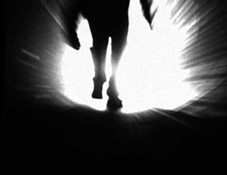
Ouvrez les yeux et continuez de regarder l'aveuglante source de lumière qui réduit, dans ce film, les personnages et les objets en minces silhouettes. Il y a seulement de la lumière ...
Christina von Greve est née est 1968 à Bonn. De 1996 jusqu'à ce qu'elle obtienne son diplôme en 2001, elle a étudié à l'Académie des Arts Médiatiques à Cologne. En 2002-2003 elle a été artiste résident au MAP, un programme mis en place par la Pépinières européennes pour jeune artistes à Madrid en Espagne. Elle vit et travaille à Cologne en Allemagne. C-Schulz est né en 1968 à Cologne. Il travaille en tant que musicien et réalisateur depuis 1990. De 1996 à 2001, année où il a obtenu son diplôme, il a étudié à l'Académie des Arts Médiatiques de Cologne. Depuis 2002, il travaille en tant qu'auteur, directeur et compositeur pour la WDR (Westdeutscher Rundfunk, une station de radio) dans le domaine du 'featuring', de l'Ars Acustica et de la musique expérimentale. Il vit et travaille à Cologne, en Allemagne.
Catalogue : 2006Swelan | Vidéo expérimentale | dv | couleur | 5:10 | Allemagne | 2005
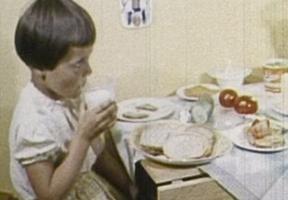
Christina Von Greve
Swelan
Vidéo expérimentale | dv | couleur | 5:10 | Allemagne | 2005
Scènes familiales avec poisson.
Christina von Greve est née en 1968 à Bonn . 1996-2001 études à la Kunsthochschule für Medien Köln (école supérieure d'arts des médias) 2002/2003 résidence à la Pépinières européennes pour jeunes artistes (MAP), Madrid, Espagne. Travaille comme artiste indépendante et cinéaste à Cologne.
Christina Von Greve
Catalogue : 2008Flicker | Film expérimental | 35mm | noir et blanc | 10:0 | Allemagne | 2006
Christina Von Greve, C-SCHULZ
Flicker
Film expérimental | 35mm | noir et blanc | 10:0 | Allemagne | 2006
Ouvrez les yeux et continuez de regarder l'aveuglante source de lumière qui réduit, dans ce film, les personnages et les objets en minces silhouettes. Il y a seulement de la lumière ...
Christina von Greve est née est 1968 à Bonn. De 1996 jusqu'à ce qu'elle obtienne son diplôme en 2001, elle a étudié à l'Académie des Arts Médiatiques à Cologne. En 2002-2003 elle a été artiste résident au MAP, un programme mis en place par la Pépinières européennes pour jeune artistes à Madrid en Espagne. Elle vit et travaille à Cologne en Allemagne. C-Schulz est né en 1968 à Cologne. Il travaille en tant que musicien et réalisateur depuis 1990. De 1996 à 2001, année où il a obtenu son diplôme, il a étudié à l'Académie des Arts Médiatiques de Cologne. Depuis 2002, il travaille en tant qu'auteur, directeur et compositeur pour la WDR (Westdeutscher Rundfunk, une station de radio) dans le domaine du 'featuring', de l'Ars Acustica et de la musique expérimentale. Il vit et travaille à Cologne, en Allemagne.
Catalogue : 2006Swelan | Vidéo expérimentale | dv | couleur | 5:10 | Allemagne | 2005
Christina Von Greve
Swelan
Vidéo expérimentale | dv | couleur | 5:10 | Allemagne | 2005
Scènes familiales avec poisson.
Christina von Greve est née en 1968 à Bonn . 1996-2001 études à la Kunsthochschule für Medien Köln (école supérieure d'arts des médias) 2002/2003 résidence à la Pépinières européennes pour jeunes artistes (MAP), Madrid, Espagne. Travaille comme artiste indépendante et cinéaste à Cologne.
Burkhard Von Harder
Catalogue : 2013DIE NARBE DEUTSCHLAND | Vidéo | hdv | couleur | 930:0 | Allemagne | 2012
Burkhard Von Harder
DIE NARBE DEUTSCHLAND
Vidéo | hdv | couleur | 930:0 | Allemagne | 2012
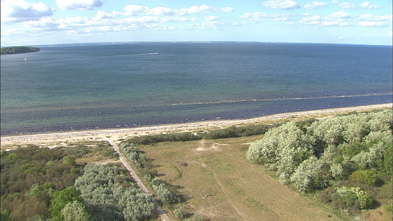
Die Narbe / The Scar is a film project in two parts by Burkhard von Harder ? in both cases helicopter flights following the remnants of the former inner German divide and demarcation line 20 years after the reunification. Part I ? Westberlin follows the former death strip in 76 minutes, part II takes the viewer in 16 hours realtime from the Czech border to the Baltic Sea up North along 1378 km through four seasons in three years: a line becomes a circle that turns into a spiral. The pod version of Part II (Von Prex bis Priwall) is envisioned as 28 volumes representing 28 years of oppression, covering 50 km each. So far 4 double volumes condense the experience.
Burkhard von Harder wurde 1954 auf der Nordseeinsel Sylt geboren. Fruehe Auseinandersetzung mit den Medien Photographie und Film. Studium an der Filmschule der New York University (1977), Student von Prof. Willy Fleckhaus (1983). Die anfaenglich widerstrebende Auseinandersetzung mit der deutschen Vergangenheit und deutschen Schuld fuehrt zu einer Reihe fotografisch-filmischer Projekte, was bis in die Jetztzeit anhaelt. Das Cold War Projekt, das auf mehreren tausend verwitterten und anonymen Negativen aus der Zeit des Kalten Krieges in der ehemaligen USSR basiert, wird im Fruehsommer 2013 zentraler Bestandteil der ersten Photo Art Biennale der Ukraine. bvh, 2012
Till Nikolaus Von Heiseler, Michaela CASPAR
Catalogue : 2006Ein sehr kurzes Stück für Bankdirektoren | Doc. expérimental | dv | couleur | 32:20 | Allemagne | 2001
Till Nikolaus Von Heiseler, Michaela CASPAR
Ein sehr kurzes Stück für Bankdirektoren
Doc. expérimental | dv | couleur | 32:20 | Allemagne | 2001
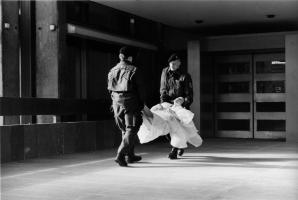
Ein sehr kurzes Stück für Bankdirektoren (fr: une très courte pièce pour directeurs de banque)est un opéra solo, monté sans autorisation dans une banque; une pièce d'une extrême sensibilité, qui traite d'une manière de "humer la folie" et du retour à "l'ennui, à l'odeur de tisane au tilleul, de l'adaptation raisonnable". (Critique du TAZ). Une autre pièce, celle du Libretto, est mise en scène et superposée à un métaniveau, à l'instar d'un titre: comme le chant n'est, dans les banques, toléré que dans des limites très restreintes, la police est alertée en très peu de temps. Des commandos des forces spéciales, qui interviennent généralement sur des prises d'otages ou des gros cambriolages, attaquent le bâtiment. Ils ne trouvent en face d'eux qu'une unique actrice à la sensibilité apparemment à fleur de peau, dont la fragilité est portée à son comble par sa tenue,une simple robe de papier. Si on la touchait brutalement ou si on la saisissait, elle se retrouverait nue (ce que, bien sûr, personne ne souhaite.)C'est le début d'une chorégraphie qui se trouve entre mise en scène et réalité... ...que la banque ait retiré sa plainte pour intrusion (dans les 8 cas) par souci de son image de marque, montre comment on peut , à l'aide de (méta-)planification, utiliser les mécanismes du marché dans un but artistique et politique, ainsi que pour sa propre protection... En tout, environ une demi-douzaine de projets du même type ont été jusqu'ici réalisés et montrés grâce à des caméras vidéo (manifestations comme forme d'art, installation d'une boîte d'informations " au nom du gouvernement fédéral" dans la zone piétonne de Potsdam, par laquelle nous présentions le grand projet (fictif) "nouveaux Länder - nouvelles identités ", avec pour fonction de développer pour les personnes des nouveaux Länder des identités adaptées au marché, entre autres) Ce projet a été financé par le Ministère de la Culture et de la recherche scientifique du Brandebourg.
Till Nikolaus von Heiseler, né à Braunschweig. Méningite suivie de séquelles neurologiques. Résistance éducative. Puis Wolfsburg, ville frontalière, ville de la Volkswagen. A neuf ans, première publication (dans le Zeit). Certificat d'incapacité scolaire, internat chrétien-fascisant. Sept renvois. Membre du groupe d'action artistique Head Resonance (devenu plus tard : Ponton Art Lab). Concert troyen: apparition avec musique "concept noise" au festival de jazz de Wolfsburg. Création du `lyrik werkstatt Göttingen`. Lecture à la NDR (radio Nord-Allemagne). Soutien du Dr. Walther Killy. Publications dans un manuel scolaire, chez Beltz, Rowohlt, edition Sisyphos et dans des revues littéraires. Formation de réalisateur avec John Costopoulos (N.Y.C.), Dominique De Fazio (L.A.) und Jack Garfein (N.Y.C. / Paris). Travail en tant que réalisateur à partir de ses propres textes à Berlin, Bâle, Francfort sur l'Oder et à la radio, et en tant que professeur de comédie (système Stanislavski) et coach pour acteurs de cinéma. Essai d'une nouvelle transmission de la littérature (fragment d'opéra, performance littéraire, installation textuelle, action publiques)- toujours en étroite collaboration avec des compositeurs et/ou des plasticiens. Fondateur des groupes interdisciplinaires d'artistes hai gorgai et du µ5-project.2 livres, 8 pièces de théâtre, scénariste et concepteur. En 1994, naissance de jumeaux, Anton et Emilia. Concepts expérimentaux en relations publiques. 5 années (1995-2000)d'expérimentation du roman à format média (3000 pages non éditées). Depuis l'hiver 1999/2000 travaux vidéo, co-fondateur du collectif des NEUEN METHODIKER (fr: nouveaux méthodiciens)avec entre autres Janus von Abaton, Andres Fuentes-Cannobbio et Michaela Caspar. Depuis l'automne 2002 séminaires dans le domaine de la théorie des médias avec le Dr. Bernd Ternes. Début du projet métathéorique ?Toward an Integral Theory of Media? couplé à des expérimentations pratiques dans différents médias (radio, vidéo, internet, installations sonores)et des interventions artistiques (performances dans l'espace public). Domaines de recherche formes de collectivité en réseaux, application de la théorie des médias, formats scientifiques, artistiques et des médias de masse. Colloques sur internet à l'Université Libre de Berlin en collaboration avec l'Université Humboldt et l'école supérieure des arts de Berlin. En 2005 création du formatLabor.
Clemens Von Wedemeyer
Catalogue : 2020Transformation Scenario | Vidéo | 4k | couleur | 20:0 | Allemagne | 2018
Clemens Von Wedemeyer
Transformation Scenario
Vidéo | 4k | couleur | 20:0 | Allemagne | 2018
In the background of blockbuster films, algorithms have been employed to replace extras in post-production. Since years we are used to scenes in which masses of automated characters fill the screen, animated by algorithms that let them interact, similar to computer games and agents in computational sociology. Such artificial masses are stepping in the foreground. Simulating life began in the movies and computer games, but is influencing many fields today. In architecture, city planning and traffic navigation as well as in predictions of markets and trade, virtual scenarios influence society and change the way we live. Transformation Scenario (2018) by Clemens von Wedemeyer creates a speculative narration on the impact of emulated group behaviour in society. It follows an idea that could be inspired by Jean Luc Godards film Le Gai Savoir: “To find the solution to a problem, be it a chemical or political problem, one has to dissolve it: dissolve hydrogen, dissolve the parliament. Therefore we will now dissolve images and sounds.“ The film is part of a long term project by the artist making reference to the work Mass and Power (1960) by Elias Canetti, shifting the view on imageries of society, crowd control and potentials of masses today. This is especially relevant in times of populism, when numbers are used to construct power, and demonstrations and mass events form moments of resistance.
Clemens von Wedemeyer, born in 1974 in Göttingen, Germany, currently lives and works in Berlin and holds a professorship for media art at the Academy of Fine Arts Leipzig. The artist and filmmaker participated in group shows such as the 1st Moscow Biennale (2005), the 4th Berlin Biennale (2006), Skulptur Projekte Münster in 2007, the 16th Biennale of Sydney (2008), and dOCUMENTA (13) (2012). He had solo shows among others at MoMA PS1, New York, ARGOS Centre for Art and Media, Brussels, the Barbican Art Centre, London, Frankfurter Kunstverein, Museum of Contemporary Art, Chicago, Neuer Berliner Kunstverein and Hamburger Kunsthalle. His works can be found in major collections such as The Museum of Modern Art, New York; Museum Ludwig, Cologne; Tate Modern, London.
Clemens Von Wedemeyer
Catalogue : 2025Surface / Composition | Doc. expérimental | digital | couleur | 22:0 | Allemagne | 2023

Clemens Von Wedemeyer
Surface / Composition
Doc. expérimental | digital | couleur | 22:0 | Allemagne | 2023
Container ships, infrastructures of the digital economy, mines and cityscapes of contemporary California are brought into an associative montage that expands via the soundtrack of improvisational musician Zsolt Sorés. In a film without dialogue, landscape images and music produce a raw and psychedelic anti-effect in which musical delays reflect on the surfaces of the images and support the montage: Individuals are networked, but Silicon Valley's digital enterprises are inaccessible, public space closed off by smart fences.
The artist and filmmaker Clemens von Wedemeyer, currently lives and works in Berlin and holds a professorship for media art at the Academy of Fine Arts Leipzig. Mass (1999), Otjesd(2004), From the Opposite Side(2007), Muster / Rushes (2012), The Horses of a Cavalry Captain (2015), Esiod 2015 (2016), Transformation Scenario (2018)
Clemens Von Wedemeyer, Paula Ábalos, Emerson Culurgioni, Charlotte Eifler, Deborah Jeromin, Mikhail Tolmachev
Catalogue : 2023Ausbeutung, oder wie man die Oberfläche durchbricht | Vidéo | 0 | couleur | 14:30 | Allemagne, Chili | 2021
Clemens Von Wedemeyer, Paula Ábalos, Emerson Culurgioni, Charlotte Eifler, Deborah Jeromin, Mikhail Tolmachev
Ausbeutung, oder wie man die Oberfläche durchbricht
Vidéo | 0 | couleur | 14:30 | Allemagne, Chili | 2021
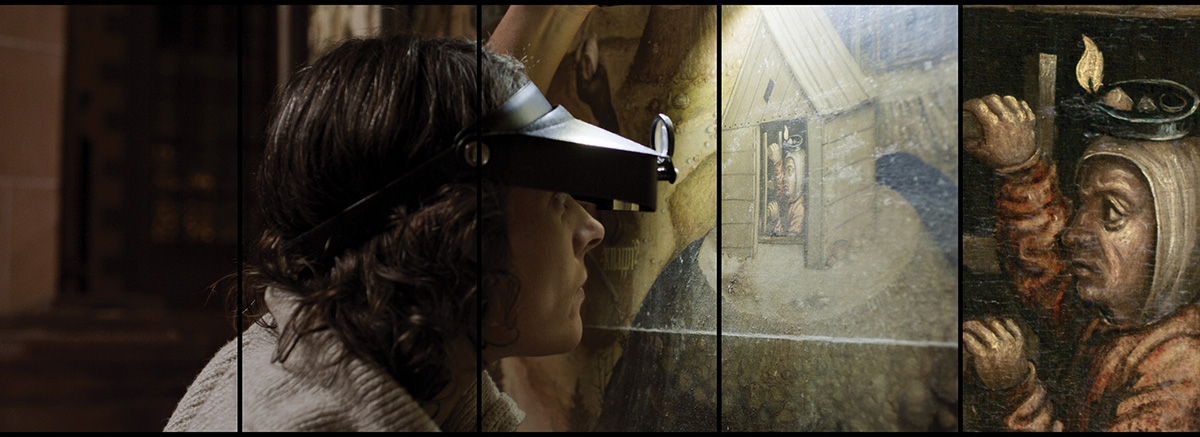
Ausbeutung oder wie man die Oberfläche durchbricht (Exploitation or How to Break Through the Surface) tells the story of a restorer who studies the history of mining, guided by Hans Hesse's painting on the back of the mountain altar in St Anne's Church in Annaberg-Buchholz. The protagonist sinks deeper and deeper into her research, trying to get behind the surface of the painting and into the present of extraction of new resources.
PAULA ÁBALOS Born in 1989 in Santiago, Paula Ábalos lives and works in Leipzig (Germany). Her work has been presented at the 18th Videonale of the Kunstmuseum Bonn (2021), at the 37th Kasseler Dok Fest (Kassel, 2020), at the City Screen of the LOOP Barcelona festival (2017), at the Kunst-Film-Festival of the GEH8 (Dresden, 2020) and at the Galería Concreta Matucana 100 (Santiago, 2019). In 2020, she received the GOLDEN CUBE award from the 37th Kasseler Dok Fest, as well as the Rundgang 50Hertz award from the Hamburger Bahnhof Museum (Berlin, 2021). In 2021, one of her video works was acquired by the Kulturstiftung collection of Freistaats Sachsen. EMERSON CULURGIONI Born in 1986 in Munich (Germany), Emerson Culurgioni lives and works between Berlin and Leipzig (Germany). Director and visual artist, iI recently completed his second feature film. Trained in photography and classical documentary, he developed a research based mode of filmmaking that includes actors and non-actors. CHARLOTTE EIFLER Born in 1986 in Rostock (Germany), Charlotte Eifler lives and works between Leipzig (Germany), Berlin and Karlsruhe (Germany). Her work is located at the intersection of cinema, sound and technology. In her videos and multimedia installations, she questions the politics of representation, abstraction and computation. With a focus on feminist approaches and elements of science fiction, Charlotte Eifler explores the processes of image production and the imaginaries of alternative futures. She currently teaches image politics and editing practice at the Hochschule für Gestaltung in Karlsruhe. Her work was presented: at the Short Film Festival in Oberhausen (2021), at the International Art Festival in Sapporo (2020), at the Siggraph Congress (Los Angeles, 2020 and 2015), at the Ann Arbor Film Festival (2020), ISCP (New York, 2019), IMPAKT (Utrecht, 2019), Grassi Museum (Leipzig, 2016), Haus der Kulturen der Welt (Berlin, 2015; to come in 2022), at the Museum of Literature in Tblisi (2015), at the Folkwang Museum (Essen, 2014), among others. DEBORAH JEROMIN Born in 1987 in Flensburg (Germany), Deborah Jeromin lives and works between Leipzig (Germany) and Crete (Greece). She develops a research on mainly historical topics and makes them accessible through different media. She focuses on textile handcraft processes, feminist history and sites of National Socialism. MIKHAIL TOLMACHEV Born in 1983 in Moscow, Mikhail Tolmachev lives and works between Leipzig (Germany) and Moscow. After studying photojournalism in Moscow and media arts in Leipzig, he began to develop a research-based practice and became interested in the ever-changing status of a document and the politically mediated production of truth and reality. He collaborates with writers, historians and artists to explore the fractures of representation and to rethink the conventions of spectatorship. His practice encompasses sound installations, videos, photographs and spatial interventions. CLEMENS VON WEDEMEYER Born in 1974 in Göttingen (Germany), Clemens von Wedemeyer lives and works between Berlin and Leipzig (Germany). He has participated at the Chicago Architecture Biennial in 2020, the Cologne Film Festival in 2008, documenta 13 in Kassel (2012), the Berlin Biennale (2006) and the first Moscow Biennale (2005). Monographic exhibitions have also been devoted to him, notably at Haus der Kulturen der Welt, Berlin (2021), at the Auditorium du Louvres, Paris (2019), at MIEFF, Moscow (2019), at Tate Modern, London (2015), at MAXXI, Rome (2013-2014), at MoMA, New York (2007), and at ARGOS Centre for Art and Media, Brussels (2007).
Clemens Von Wedemeyer, Maya SCHWEIZER
Catalogue : 2007Rien du tout | Fiction | 35mm | couleur | 30:0 | France | 2006
Clemens Von Wedemeyer, Maya SCHWEIZER
Rien du tout
Fiction | 35mm | couleur | 30:0 | France | 2006
Une réalisatrice veut tourner un film médiéval dans la banlieue de Paris. Pendant le casting, elle se concentre sur une seule personne. Le parking, devant le théâtre, sur lequel les jeunes acteurs attendent leur tour, devient vite le décor de la nouvelle scène. Pendant qu´à l´intérieur, l´aliénation entre la réalisatrice et son assistant, atteint son paroxysme, commence à l´extérieur, la danse des « superflus ».
Maya Schweizer, née le 10 janvier 1976 à Maisons-Alfort,vit et travaille à Berlin En juin 1998 Licence d´arts plastiques à l´ Université d´Aix-en-Provence. De 2000 à 2002 elle entre à la Hochschule für Grafik und Buchkunst (HGB), de Leipzig puis entre en équivalence à l´ Universität der Künste(UdK) de Berlin où elle est diplômée en janvier 2005.
Clemens Von Wedemeyer
Catalogue : 2017Die Pferde des Rittmeisters | Doc. expérimental | hdv | noir et blanc | 10:0 | Allemagne | 2015
Clemens Von Wedemeyer
Die Pferde des Rittmeisters
Doc. expérimental | hdv | noir et blanc | 10:0 | Allemagne | 2015
Born in 1974 in Göttingen, Germany. He lives and works in Berlin. Between 1996 and 1998 he studies photography and media at the Fachhochschule Bielefeld. In 1998 he transfers to the HGB Academy of Visual Arts Leipzig and graduates from Astrid Kleins’ class in 2002, followed by a master in 2005. In the same year he receives the Kunstpreis der Böttcherstrasse in Bremen. In 2006 he wins the German competition at Internationale Kurzfilmtage Oberhausen as well as the Karl-Schmidt-Rottluff-Stipendium. Wedemeyer exhibits at the Moscow Biennial in 2005 and at the Berlin Biennial in 2006. In 2008 he participates in Skulptur Projekte Münster. Solo exhibitions include Kölnischer Kunstverein and MoMA PS1, New York, in 2006, the Barbican Art Centre London in 2009 and the Frankfurter Kunstverein in 2011. He participates in documenta 13 in 2012.
Matthijs Vuijk
Catalogue : 2022With the Whole World Crumbling, We Pick This Time to Fall In Love | VR expérimental | 0 | couleur | 7:0 | Pays-Bas, Afrique du sud | 2021
Matthijs Vuijk
With the Whole World Crumbling, We Pick This Time to Fall In Love
VR expérimental | 0 | couleur | 7:0 | Pays-Bas, Afrique du sud | 2021
This immersive experience includes three-dimensional scans combined with voice-memos, images, videos and WhatsApp messages which together form an assemblage of distant yet intimate encounters with friends and subjects. The viewer is able to walk through a personal and emotional digital landscape, creating their own non-linear narrative between dream and reality, a liminal space of longing.
Matthijs Vuijk (1995, NL) is an independent new media artist and filmmaker who has been studying photography at the Royal Academy of the Arts in Ghent, Belgium, from which he graduated with distinction. After doing an internship with Dutch filmmaker Lara Verheijden, Matthijs moved to Johannesburg, South Africa. There Matthijs finished a Bachelor Honours in Film & Television at the University of the Witwatersrand (WITS) with distinction and participated in a collaborative VR project between the Filmuniversität Babelsberg and WITS. Matthijs’ background in visual art, film and VR encompass his passion, which lies in the creation of captivating worlds through a strong visual atmosphere. He is formally and technically interested in different mediums while the important narrative factors within his work have a strong emphasis on emotions, intimacy and connection. His recent collaborative film What do I see when I see me with Sammie Straub has been selected at the Rencontres Internationales Paris/Berlin 2021, while Matthijs’ newest immersive experience With the Whole World Crumbling, We Pick this Time to Fall in Love participates in the 2021 edition of the Fak’ugesi Digital Innovation Festival in Johannesburg, South Africa. His collaborative graduation film Sikelela Tapes was selected for the ‘Frontlight’ competition of the renowned International Documentary Festival Amsterdam (IDFA) and had its world premier at the Zanzibar International Film Festival (ZIFF) in Tanzania. Matthijs is currently involved in different cultural initiatives in both Johannesburg and Amsterdam.