Catalogue > Faire une recherche
Résultats pour : Tout le catalogue
Benjamin Ramírez Pérez
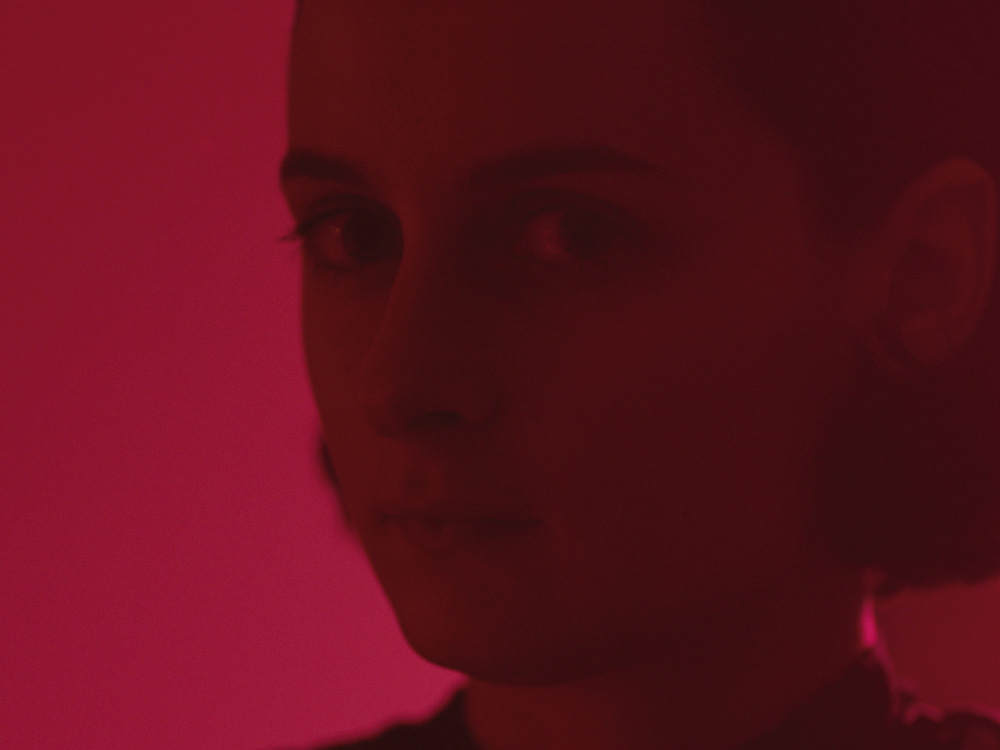
A Fire in My Brain That Separates Us
Film expérimental | hdv | couleur | 17:10 | Allemagne | 2015
In an initially deserted room objects slowly begin to move; they are manipulated from the off-screen space, being pulled and dragged by strings, cables or the carpet. Thus a ‘ghostly’ choreography emerges, with the objects taking on a life of their own, vanishing and reappearing. The control of these processes from the off-screen is made visible, by showing the strings attached to the objects as well as parts of the acting persons on the edge of the frame. This is accompanied by superimposed subtitles, which consist of a collage of existing film dialogue: Lines from the sub-genre of ‘gaslighting’ films are combined, taking the eponymous Gaslight (1944) as a starting point. A text assemblage on seduction and betrayal unfolds. At the same time the ambient lighting of the room gradually becomes increasingly colored, reaching an almost excessive saturation point as off- and on-screen space become reversed and a muffled pop music penetrates the room. A kind of karaoke video comes into being with the music – like many elements of the film – taking on the notion of a copy of something vaguely familiar.
Benjamin Ramírez Pérez, born in Hutthurm, Germany. Lives and works in Cologne. Studied at the Academy of Media Arts Cologne from 2009–2015. His works have been screened at Locarno, Edinburgh and Toronto International Film Festival, among others. In 2013, he was awarded the Prize of the German Federal Association of Film Journalists for Best Experimental Short. In 2015, he received the Chargesheimer Scholarship for Media Arts by the City of Cologne.
Benjamin Ramírez Pérez
Body Snatcher
Film expérimental | 16mm | couleur | 17:18 | Allemagne | 2016
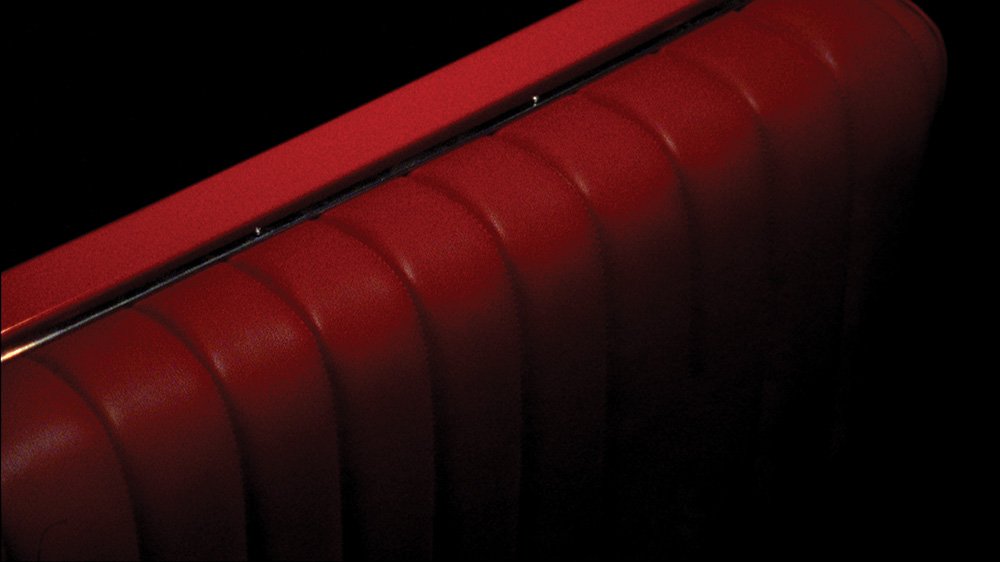
Body Snatcher conflates new 16mm material and found footage from Barbara Loden‘s film Wanda (1970) into an abstract narrative. Loden‘s film shows a character that seemingly passively navigates the world, but at the same time fights for her own identity and challenges social norms through her refusal to function as expected: „Life is a mistery to her. She doesn’t know what she wants but she knows what she doesn’t want.“ Taking fragments of the film as a starting point, objects, props and surfaces from the film were recreated, visually isolated and filmed anew. In a kind of vacuum, an abstract and associative narration touching on emptiness, failure, and identity construction slowly unfolds. A sort of parasitic science fiction remake of Wanda emerges - a layer of meaning that lies behind the film‘s plot and surface is imagined and constructed, positioning disparate elements in relation to each other and forging connections between them.
Benjamin Ramírez Pérez lives and works in Amsterdam. He studied at the Academy of Media Arts Cologne from 2009 - 2015. He was awarded the German Film Critics’ Prize for Best Experimental Short in 2013. In 2015, he received the Chargesheimer Scholarship for Media Arts of the City of Cologne. Currently, he is a participant at De Ateliers in Amsterdam (2016 – 2018).
Benjamin Ramírez Pérez
Summer Heat an Early Frost
Doc. expérimental | 16mm | couleur | 13:45 | Canada, Allemagne | 2021
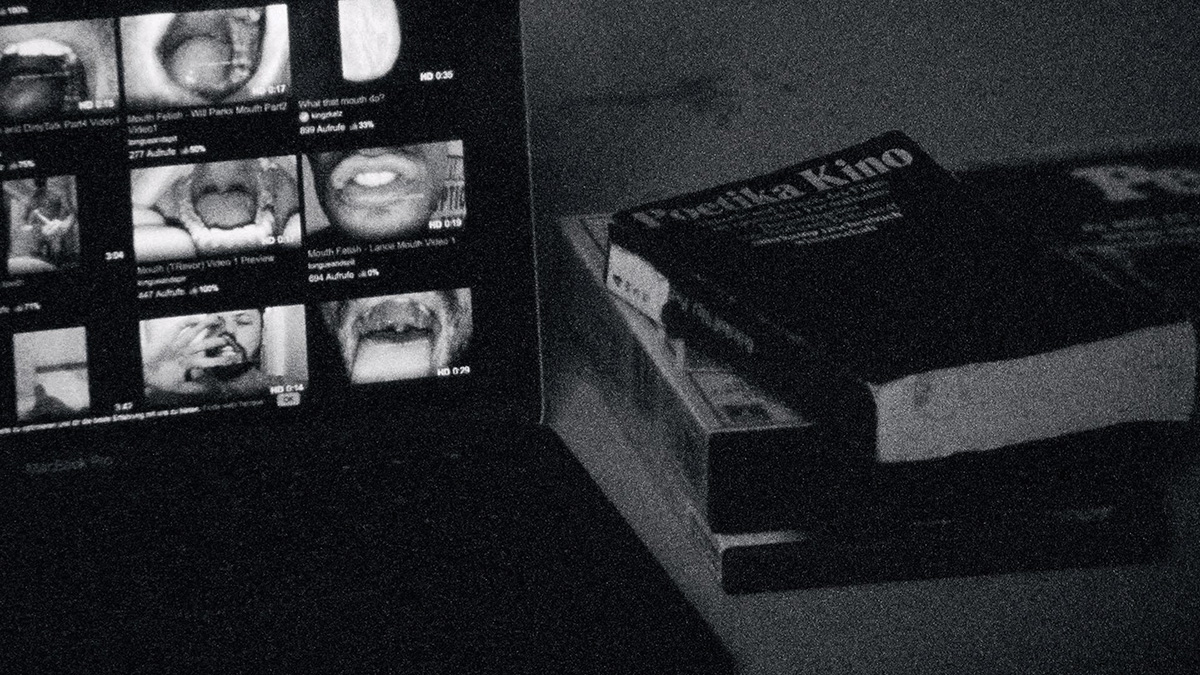
Created based on research conducted during a 2018 residency at LIFT (Liaison of Independent Filmmakers of Toronto), SUMMER HEAT AN EARLY FROST combines the narrative structures of film, documentation, photography, cinematographic staging, and interview into a collage on the organizational principles of our perception. Similar to a stream of consciousness formed of constantly expanding recordings that proceed as the common denominator between a partially sensory, partially mechanically narrative voice and a screen text that fluctuates in intervals between narration, commentary, and subtitle, the image flow comprises a number of visual resources: arranged rhythmically behind an archival setup of vintage pornographic magazines from the University of Toronto’s Sexual Representation Collection, the marked text passages on film theory are taken from a collection of essays by Russian formalists. A multi-layered and narrative complement is present in the form of excerpts from “An Early Frost” (1985)—the first mainstream TV feature film to address the emerging public, social, and political crisis surrounding the spread of HIV/AIDS as part of the everyday life of a US family. Quietly and with an almost static austerity, set pieces from early silent films of the 1920s such as those from Jean Epstein and Dziga Vertov are superimposed across from sexually fetishized sequences of self-produced montages from tooth and mouth recordings, only to be expanded upon in the form of a new cut expounding on the pornographic industry’s digital infrastructure. Massed like a cluster of findings from a multimedia, multi-thematic search for the internal logics of filmic and documentary mechanisms of production and affect—whose focus potentially also stretches to include the representation and repression of queer desire, longing, and craving—the montage opens up a different access to images and their language; a language whose essence is concealed in the multiplicity of the information gathered and which, transferred via data-mining technology into the artistic process of the film, facilitates the recognition of patterns of regularity and of hidden interrelations.
Benjamin Ramirez Perez, is visual artist working primarily with film, video and installation based in Cologne, Germany. He was a participant at De Ateliers Amsterdam from 2016-2018 and studied at the Academy of Media Arts Cologne from 2009–2015 with Julia Scher, Phil Collins and Matthias Mueller. His works have been screened at IFFR Rotterdam, Locarno, Edinburgh and Toronto International Film Festival, as well as Julia Stoschek Collection Du?sseldorf, Kurzfilmtage Oberhausen and Visions du Réel Nyon among others. He had group and solo exhibitions at Artothek Cologne, Kunstmuseum Bonn, Museum of Contemporary Art Belgrade, de Ateliers Amsterdam, Gallery Markus Luettgen Duesseldorf, and more. In 2015 he was awarded the Chargesheimer Scholarship for Media Art by the City of Cologne and in 2013 he received the Prize of the German Association for Film Journalists.

Benjamin Ramírez Pérez
Despair
Film expérimental | 16mm | couleur | 21:50 | Allemagne | 2019
DESPAIR works with cinematic reenactments, which are connected in an associative collage-like layering into an experimental film, taking Rainer Werner Fassbinder’s film of the same title from 1977 as its starting point. Drawing on and digressing from various complementary sources such as Fassbinder’s contribution to "Germany in Autumn", David Cronenberg’s "Dead Ringers", the 1970s "Mission Impossible" TV-series as well as cel-animation, the theme of the cinematic double is explored and questions of identity, identification and alienation are raised alongside an inquiry into the political and cultural legacies of the German Autumn.
Benjamin Ramírez Pérez (*1988, Germany) lives and works in Cologne. He studied at the Academy of Media Arts Cologne from 2009–2015. He undertook the residency programme at de Ateliers from 2016 - 2018. His works have been screened at Locarno, Edinburgh, Toronto and Rotterdam International Film Festival, among others. He had recent Group and Solo shows at Artothek Cologne, Kunsthalle Recklinghausen, Kunstmuseum Bonn, Museum of Contemporary Art Belgrade and Alternative Space LOOP, Seoul.
Marco Raparelli
Abandoned Dog
Animation | dv | couleur | 4:31 | Italie | 2008
Le récit constitue la caractéristique principale des animations de Marco Raparelli. Néanmoins, celui-ci n'est pas un point de départ, mais plutôt la conséquence d?une déviation de thèmes, provoqués par les sensations transmises à partir d'autres images ou dessins. Les animations sont des déviations d?images libres et improvisées, qui se relient les unes aux autres afin de créer des microcosmes infinis. L?animation la plus récente de Raparelli raconte l?histoire d?un chien abandonné qui, alors qu?il marche au bord de la mer, fait différentes aventures, rencontres des amis et ennemis et se confronte à de multiples situations abstraites. La vidéo fonctionne comme une sorte de métaphore de la vie dont le chien joue le protagoniste. Il est un paria qui doit faire face pour survivre au jour le jour. La bande-son de la vidéo consiste en une partition pour piano de Cosme McMoon. Dans les années 1940, McMoon a souvent accompagné la soprano américaine Florence Foster Jenkins, une riche héritière qui, tout en ayant des qualités vocales fort médiocres, a pu se produire grâce à sa richesse immense. McMoon et Foster Jenkins ont été de véritables phénomènes et leurs chansons absurdes ont servi comme bande-son aux images de la vidéo.
Marco Raparelli est né à Rome en 1975. Il a obtenu son diplôme à l'Accademia di Belle Arti de Rome (Italie) et a étudié l'animation au College of Art de Loughborough de Londres (Royaume-Uni). Il a collaboré à l'hebdomadaire satirique « Cuore », et travaillé ensuite pendant un temps comme auteur de bandes dessinées. Dans sa pratique artistique, il emploie la peinture, le dessin et les animations tridimensionnelles . De nombreuses expositions, tant collectives qu?individuelles, ont été consacrées à son travail, citons notamment « Clearly Invisible » à Consulta, Centre d?Art Santa Monica de Barcelone (Espagne) en 2007, « Animotion » à la Gallery F15 de Moss Norway (Norvège) en 2007, « Pina ti amo Catania » à Galerie Ugo Ferranti de Rome (Italie) en 2005, « As a drop of water on a K-way » au Careof de Milan (Italie) en 2007. Son livre « As a drop of water on a k-way », a été publié chez Fine Arts Unternehmen Books. Sa prochaine exposition individuelle aura lieu en janvier 2009, à la Galerie Umberto di Marino, à Naples (Italie).
Marco Raparelli
Ristorante Italia
Animation | dv | couleur | 4:36 | Italie | 2007
La narration est la caractéristique principale de la vidéo d'animation de Raparelli. Cependant, plutôt qu'un point de départ, c'est la conséquence de la déviation thématique qui est représentée par des images précises et des dessins qui transmettent ou évoques des sensations. La narration est une déviation libre et intemporelle d'une image qui est connectée à d'autres pour créer des micros-mondes infinis. Ristorante Italia - 2007 animation 4 minutes 36 secondes Une suite d'évènement inattendus, parfois rébarbatif, prend place dans un restaurant insalubre. Le spectateur est témoin de l'occurrence du roulement et activités quotidiennes qui se passe sans début ni fin. Seul l'éventuel arrivée de la soirée suggère un possible relâchement ou d'une trêve.
Marco Raparelli was born in Rome on 12 July 1975. He graduated at the Accademia di Belle Arti di Roma and studied animation at the College of Art of Loughborough, London. He collaborated to the satiric weekly magazine ?Cuore?, and afterwards worked for a period of time as author of comics. In his artist practice he employs drawing painting and stop-motion animation. He has exibited widely. Group show include ?Emporio? Via Farini(2001) Milan, ?Lavori in corso? curated by Roberto Pinto (2002) Milan, ?3500 cm? Rialto S.Ambrogio, Rome curated by Lorenzo Benedetti, Grand1th:Cult media ?Bastart contemporary, Bratislava (2006) , "Clearly Invisible", Consulta - Centre d`Art Santa Monica, Barcelona, (2007)curated by Filipa Ramos, ?Animotion? Gallery F15, Moss Norway curated by Bjorn Hegardt(2007), New Entry CareOf Milan curated by Chiara Agnello. Solo show include : ?Pina ti amo Catania? gallery Ugo Ferranti Rome, ?Restroom and other stories? gallery Sergio Tossi Firenze Curated by Raffaele Gavarro, ?As a drop of water on a K-way? Careof Milan, project with Norberto Dalmata and Scintilla Robina.

Paulo Raposo
Verbatim
Vidéo expérimentale | dv | couleur | 2:0 | Portugal | 2005
??Verbatim?? A. Adjectif 1 direct, verbatim précisément les mêmes mots utilisés par un écrivain ou un locuteur ??un direct citation ?? ;??répété leur dialogue verbatim?? B Adverb 1 verbatim, mot à mot utilisant exactement les mêmes mots ; ??il répétait sa remarque verbatim?? ?verbatim? prend source dans le texte court de Marice Blanchot : ??La folie du jour??.
Paul Raposo est un artiste sonore et média basé à Lisbonne, au Portugal. Né en 1967, après des études de philosophie et de cinéma à Lisbonne, il a travaillé dans le médium de la performance live électronique et informatique, enregistrant et présentant ses ?uvres en France, en Allemagne, aux Etats-Unis, au Royaume-Uni, en Espagne, en Italie, aux Pays-Bas, au Portugal, dans les États Baltes. Il explore les déplacements ainsi que les interrelations entre les procédés numériques et les espaces architecturaux en utilisant des ordinateurs et des logiciels reconstruit par ses soins afin de créer des pédoncules sonores abstraits et délicats. Depuis la fin des années 90, il a commencé aussi à explorer les intersections entre le son et l?image et prenant avantage des possibilités du médium numérique Realtime aussi bien pour ses travaux individuels que pour ses ?uvres collectives. Il a "composé" des images pour de nombreux médias : installations, danse, performances, théâtre et projets intermédias. Raposo a réalisé des performances et collaboré avec de nombreux artistes dont Janel Schæfer, Jason Khn, Kaffe Mathews, Marc Behrens, Jgrwinch Zbiggniew Karkowski, Matt Rogalski, Carlos Santos, Carlos Zíngaro, Christopher Murphy, Koji Asano, Sara Kolster entre autres.
Oday Rasheed
Underexposure
Fiction | 35mm | couleur | 67:0 | Iraq | 2004
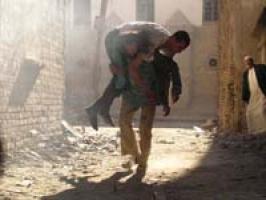
"Underexposure, a title that refers not only to the outdated film stock that was used to make the film, but also to the generation of Iraqis that have been isolated from the world for decades, takes an unprecedented, uncensored look into the lives, hearts, and minds of those living in Iraq during the tumultuous days after the fall of Saddam. Director Oday Rasheed has created a vivid world set against a real backdrop of war and upheaval. Friends, lovers, strangers and family members are woven together by the complexities of their new reality. The past is only a moment behind them, with the presence of death a constant companion into the future. Maysoun, the object of her brother and lover`s affections, finds solace in her sexuality. Hassan finds comfort in the belief that his films will outlive the cancer taking over his body. Homeless and alone with only his sacks of brightly colored rags, Nassir experiences his first taste of companionship and responsibility with the discovery of a dying Iraqi soldier. The first feature length film shot on location in Baghdad after the war, Underexposure blends reality and fiction to create a lyrical and textured work that captures the dizzying atmosphere of life during war and fiercely illuminates a part of the world long left in the dark."
Elise Rasmussen
A Poetic Truth in a Pathetic Fallacy
Doc. expérimental | hdv | couleur | 16:0 | Canada, Afrique du sud | 2017
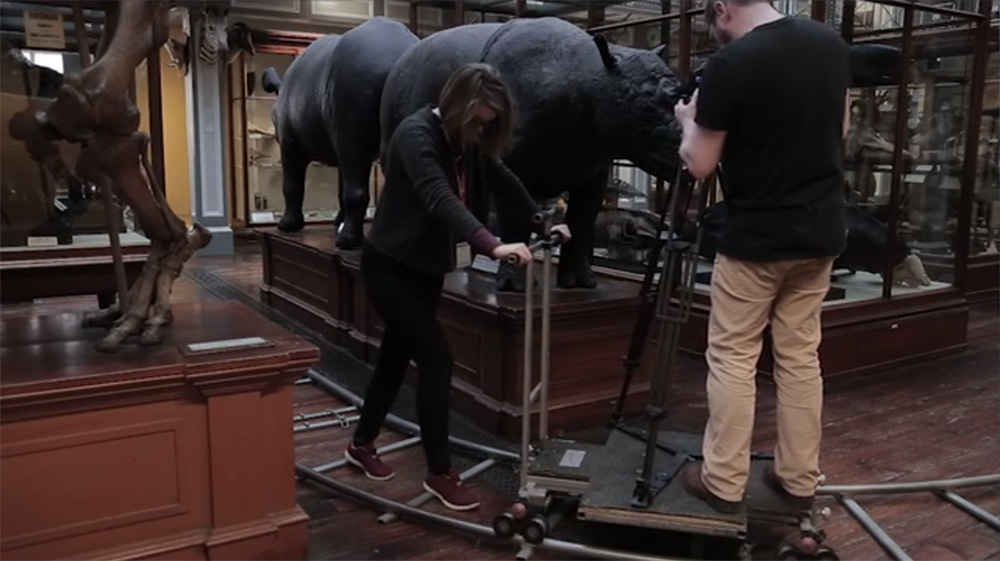
A Poetic Truth in a Pathetic Fallacy considers ways in which human-kind has been fascinated by and has misinterpreted the rhinoceros, exploring the urgency to keep this genus from extinction while considering the lingering effects of colonialism and collection. Over the past decade the trafficking of rhino horns has gained popularity and both poaching and theft of vintage horns has risen dramatically. Horns were traditionally used in Eastern medicine and although scientists have concluded they have no health benefit, this has not dissuaded the market and its value has risen due to its newfound status as a luxury good. This is not the first time that the rhino has been misconstrued. In 1515 Albrecht Dürer created his famous woodcut based off of a written description of the rhinoceros. Although grossly inaccurate, his artwork served as the prototype for future depictions of rhinos up until the mid-19th century. In South Africa today, the lingering effects of colonialism and apartheid are at the root of poaching. In the male-dominated industry of wildlife protection, the Black Mambas [all female] Anti-Poaching Unit has been gaining international recognition for their efforts. Although beloved by the media, the Mambas risk their lives and struggle to support their families while protecting the wildlife that serves the interests of white landowners. This project is a multi-layered investigation into the link between globalization and extinction, using the poaching of the rhinoceros and its horn to speak about the relationship between bodies, labor, desire and the contested territory of representation.
Elise Rasmussen (born 1977, Edmonton, Canada; resides in Brooklyn, NY) is a research-based artist working in photography, video and performance. Her work has been exhibited, performed and screened at international venues including the Brooklyn Museum (NY), the Irish Museum of Modern Art (Dublin), CCS Bard Hessel Museum (Annandale-on-Hudson), Night Gallery (LA), Pioneer Works (NY), and Erin Stump Projects (Toronto). Elise received her MFA from the School of the Art Institute of Chicago on a Merit Scholarship (2007) and is a 2017-2018 artist in residence at LMCC’s Workspace program in Manhattan.
Birgit Rathsmann
White Out
Art vidéo | dv | couleur | 3:15 | Allemagne, USA | 2006
"White Out" est un film d'animation en single channel réalisé à partir de photographies numériques. Il s'agit d'une expérience minimaliste dans laquelle les images d'une rencontre nocturne dans un parc de Brooklyn rappellent celle d'un film noir. Un blizzard en image numérique vient peu à peu envahir le cadre, jusqu'à ce que l'écran soit entièrement blanc.
Birgit Rathsmann a reçu des bourses de la NYSCA, de l'Illinois State Arts Council, du Colombia College, de la MacDowell Colony, de la Skowhegan School of Painting and Sculpture et de l'Atlantic Art Center. Ses vidéos ont remporté des prix au South by Southwest Film Fest, au Palm Springs Film Fest, au Telluride IndieFest, à Raindance et ont été montrées dans de nombreux festivals internationaux et dans de nombreux centres. Ses installations vidéo ont pu être vues au Bemis Center, à Omaha et à Kamiyama, au Japon. Elle enseigne l'animation numérique à la New York University et vit à Brooklyn, NY.
Miguel Rato
Meeting Point
Doc. expérimental | hdv | couleur | 10:4 | Portugal | 2014
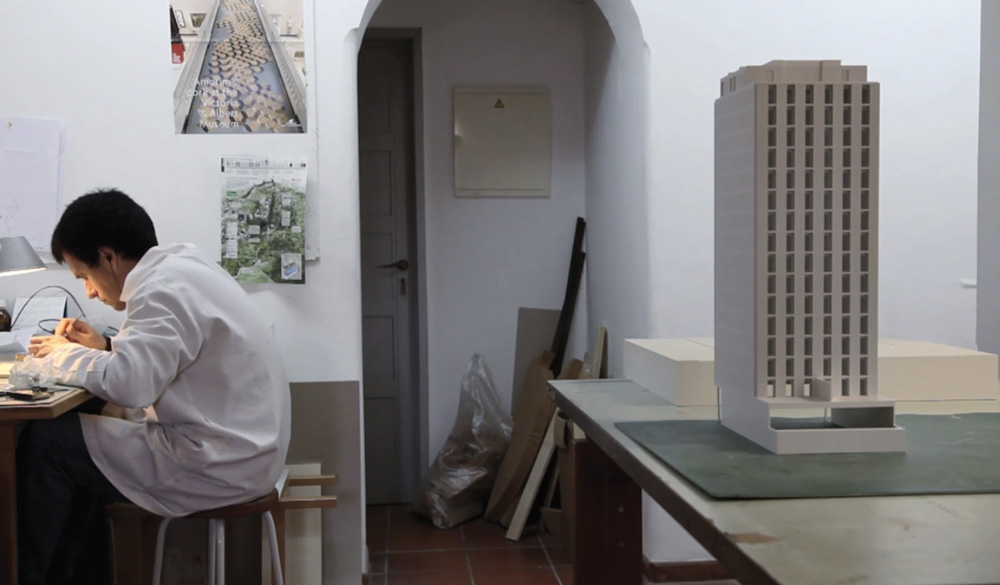
The imagined city as a simulation takes over the real one. Desire and reality meet creating a new space with its own rules. Ever sprawling suburban areas, anonymous landscapes generated by computers, places with no memory, landmarks, residential projects. Staged scenery for action to take place. Mostly filmed in London, Meeting Point is a study of urban space and of its representations, the virtuality of contemporary public space and landscape.
Miguel Rato (1986, Lisbon) studied Sound and Image at ESAD Arts and Design School (Portugal) and Documentary Film at London College of Communication, University of the Arts London. His film and photography work has been exhibited in the United Kingdom, Peru, United States, Spain, Canada, Holland and Portugal.

Nassif Rawane
Sokun Al Sulhufat (Turtles Are Always Home)
Doc. expérimental | hdv | couleur | 11:39 | Liban | 2016
I left Lebanon in 2006. For the past 10 years I lived in 7 countries, 10 cities, and 21 homes. I slept in 21 beds, cooked in 21 kitchens, cleaned 21 bathrooms, wrote on 21 desks and locked 21 doors behind me. I packed all of my life into two suitcases and a backpack. The rest stayed behind. Somebody somewhere uses my bed, somebody somewhere has my shoes, somebody somewhere maybe remembers me in those fragmented traces of mine. I was there. But now I am here. In Qatar. In a fake Venice with colorful houses. Houses have memories too. They hide them under their windowsills, tuck them in layers of paint and sometimes whisper them to birds passing by. I wonder whose memories will these houses keep. I live here but I am unable to leave a trace. I try to attach myself to the walls, dirty them, mark them… but I fail. They are constantly cleaned, watched and protected. I caress them instead. And I film them, lest I forget. Home is where the heart is, they say. I disagree. My heart is everywhere. It left with the music. Like a turtle, I am always home.
Rawane Nassif is a Lebanese/Canadian filmmaker and anthropologist. She works in research and films often addressing subjects such as space, traditions, identities, displacement and memory. Rawane has directed social documentaries and wrote a book on the politics of memory in Lebanon, worked with immigrants and indigenous people in Canada, conducted visual research on nomadic traditions in Kyrgyzstan, taught anthropological courses in Tajikistan, wrote children’s books based on oral histories in Honduras and worked as a film researcher with the Doha Film Institute and the National Museum of Qatar. Her short film, “ Turtles are Always Home ” screened at numerous film festivals including the Berlinale, AFI Docs, Toronto, Camden, and RIDM. She is currently completing a mentorship with the “ Masters in Experimental Cinema, Creative Documentaries, and Video Creation ” Program at the Transforming Arts Institute in Madrid.
Mohd Naguib Razak
Glass enclosure: Tokyo invisible
Doc. expérimental | dv | couleur | 80:0 | Malaisie | 2005
Comme plongé dans un rêve récurrent, l'écrivain se réveille encore et encore dans une enceinte de verre. Il abaisse le regard et observe le flot de gens microscopiques circulant ici et là. Observant l'appel pressant de la nature, son va-et-vient. Est-ce ici son enceinte de vie? Est-ce là la leur? Et quand le crépuscule s'installe, ses émotions en font de même, elle montent, descendent, espèrent, souhaitent, entendent, écoutent. Cette ville, cette super grande ville. Tokyo. toh-kyoh. Il ne sait pas ce qu'il fait là, ne se rappelle pas si l?idée qui l'a amené jusqu'ici était bonne ou mauvaise. Ce n'est pas amusant d'être perdu tout seul à Tokyo. Il réfléchit. Puis des voix se font entendre. Elles parlent de solitude, de détresse, de calme désespoir. Rien de perdu dans la traduction, leur solitude résonne fort et clair. La même solitude qui étrangle son âme. Ces voix sont toujours là, mais voilà que certaines s'attardent, parlent d'espoir, de changement ou de gentillesse inattendue, diminuant d'intensité. L'écrivain se calme, il se rend. jusqu'à ce qu?il ne reste que...
MOHD NAGUIB RAZAK écrivain, réalisateur, producteur Après avoir débuté comme rédacteur publicitaire et journaliste pour des magazines, Mohd Naguib Razak s?implique dans la création artistique, se lançant dans tous genres de travaux avant-gardistes, allant de l'écriture poétique à la composition de romans graphiques, en passant par les performances de rue improvisées et les théâtres de jazz expérimentaux, avant de se résoudre à une carrière dans le film et la télévision. Il n?arrive toujours pas à se décider entre devenir écrivain, réalisateur ou producteur. Après avoir travaillé quatre ans dans la production télévisuelle, comme réalisateur et scénariste dans ASTRO, la première émission télévisée émise par satellite par la compagnie de réseaux malaisienne, et comme écrivain de long métrage dans Astro Shaw, il décide d'avancer à la recherche de nouveaux défis. Un petit film documentaire expérimental appelé « Anak Duyung » (L?Enfant de Sirène) l'emmène au Festival international du film documentaire de Yamagata en 1999 et cette expérience lui ouvre des portes sur le monde merveilleux du documentaire. 2001 est un tournant pour sa carrière : il est choisi pour écrire, produire et diriger un documentaire pour Discovery Channel. Le film, intitulé « The Boat-maker and the Sea » (Le Constructeur de navires et la Mer), a finalement été diffusé dans 80 millions de foyers à travers toute l'Asie et ultérieurement récompensé Meilleur Film-documentaire au Festival du film Malaisien en 2003. En 2002, il fait un séjour de six mois au Japon en 2002 en tant qu'artiste-résident de la Fondation de la Compagnie Japonaise. C'est là qu'il conçoit et filme « Glass Enclosure: Tokyo Invisible », documentaire de long métrage qui a participa à trois compétitions internationales (au 4ème Festival International du Documentaire de Taiwan en 2004, le 10ème It's all true-Festival du Film Documentaire de Sao Paulo et Rio de Janeiro en 2005, et la 2ème Documenta du Festival du film documentaire de Madrid en 2005). En 2005, il est brièvement Directeur Général au service des programmes de diffusion de l'union Asie-Pacific (ABU) à Kuala Lumpur. Responsable de l?organisation et de la coordination des différentes coproductions internationales, il s?occupe également des programmes d'échanges tels que les Prix ABU Télévision & Radio. Il fait partie à présent de la Fondation de la Compagnie Nippone pour le Public des Intellectuels d'Asie (API) et résidera un an à Tokyo afin de poursuivre des recherches pour un documentaire sur le thème de la spiritualité dans l'Utopie matérielle au Japon.
Maria-leena Räihälä
sans titre
Animation | | noir et blanc | 4:0 | Finlande, Allemagne | 2006
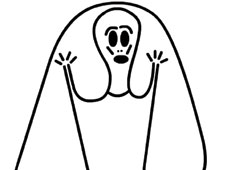
The artist presents ten minimalist flash-animated drawings, trying to respect the original handmade ones. Together they build a series, but every small loop definitely has its own story: 001 is a female figure trying to fly out of his monitor 002 is a another female with a ghost in her head 003 in this third one she is trying to find a balance for her hat (or maybe better: her head) while her hands are only sticks 004 is a morning bird living in a spruce 005 is a female figure from the series "flirting with flowers". Her head is communicating with... 006 ...basil, which the artist saw last spring growing in his garden. He had the feeling that while coming trough the earth they were like small babies opening their mouths, hungry for life 007 is a girl who merges with her chair so that she looks like a strange animal (the artist thinks it might just be him sitting too much at home) 008 is the only male figure, he is called Boxer. He has a very sad end by a brave young woman 009 is a very angry young woman 010 is called "blähungen" (flatulence). These animations have a very simple self-made sound in the background (even some stolen pieces from Finnish folk-songs were used as a loop).
Maria-Leena Räihälä was born on July 16, 1964. After her art studies at the "Nordic Art School" (Kokkola, Finland 1984-87) she moved to Berlin and hit the underground art scene (e.g. her exhibition "Electric Angel" at the Fischbüro in 1988). The beginning techno movement both fascinated and inspired her. In the early 90s, for example, she made a lot of exhibitions at the legendary club "Ständige Vertretung". That brought her to experiments with electric pictures and multimedia installations with projections and huge photocopies of her drawings fitted perfectly with the music of the best DJs in the city. The base of her work was and continues to be drawings. For their digital versions Flash is still her favourite program no.2. Beside these she works with computer prints and large photocopies in order to produce room-filling installations. An example for this is last summer's "Morgenvogelstation", a sort of an audio-visual Gesamtkunstwerk. Huge prints of her drawings went together with pictures of historical bird song transcriptions by Heinz Thiessen (1887-1971). At the same time you could hear bird recordings by Veikko Neuvonen (Finland 1997). Eventually there were several concerts by the Berlin experimental group The RotTT under the name of "The Birds, Too". They played with all sorts of bird sounds and wore bird masks, which the artist had tailored for them. A select list where her exhibitions have been held includes: 2006 - Multimedia Happening, Berlin; Joint Exhibition, Neues Problem, Berlin 2005 - L.O.F.T, Berlin; Neues Problem, Berlin; Joint Exhibition, Gutleut 15 Ausstellungsraum, Frankfurt/Main, and Glue, Berlin; Joint Exhibition, 'Nothing except drawings Vol.2', QUARTAIR, Den Haag 2. Berliner Kunstsalon, Berlin 2004 - Joint Exhibition,Haus am Lützowplatz, Studiogalerie, Berlin; Joint Exhibition, Gallery Christa Burger, München; Hinterconti Gallery, Hamburg 2003 - Joint Exhibition, Neues Problem Gallery, Berlin 2002 - Emil Bock Institut, Berlin 2000 - Joint Exhibition, Pussy Galore, Berlin; Joint Exhibition, Neues Problem Gallery, Berlin 1999 - Joint Exhibition, Berlin Brandenburg Exhibition, Radio-Berlin 1998 - Haus am Lützowplatz, Studiogalerie, Berlin; Fruchtig Gallery, Frankfurt am Main; Walden Gallery, Berlin 1997 - Congress for Performance and Visual Art, Berlin 1995 - HTC Gallery, Berlin; Installation at Friseur, Berlin 1989 - Vanhan Galleria, Culture-Center, Helsinki, Finland; Kunsthaus Tacheles, Berlin 1988 - SoToDo Gallery, Berlin; Vincenz Scala Gallery, Berlin
Marc Rees, Neil DAVIES
Comfort Zone
Performance | 0 | | 60:0 | Royaume-Uni | 2006
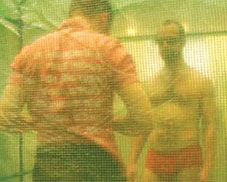
Deux hommes enfermés dans une petite maison verte, transparente, en plastique bas de gamme, isolés de leurs environnements, dans une architecture provisoire, privée et légère leur appartenant. Ils se tiennent debout sur un lit couvert de leurs propres habits en désordre, s?habillant et se déshabillant alternativement à plusieurs reprises, de façon méthodique jusqu?à ce que leur respiration obscurcisse la vue à travers les parois et que leurs habits soient imbibés par le mélange de leur transpiration. Il y a moins d?une longueur de corps qui les séparent. Qu?est ce qui se trouve entre eux, mis à part assez de vêtements pour habiller toute une piste de danse remplie d?hommes ? Imaginez un rythme battant d?une soirée disco maintenant. Imaginez danser toute la nuit exactement à cette distance. Imaginez maintenir cette distance d?espace érotique particulier qui se trouve entre nous. Imaginez que nous ne brisions jamais ce volume d?air magique pour se serrer les bras, se bloquer les épaules et combattre brièvement, nu de la ceinture jusqu?en bas, les manches retroussées et capuchons relevés, les têtes légèrement inclinées rageusement l?une envers l?autre.
Marc Ree est l?un des principal exposant au Pays de Galles d?installation et de performance contemporaines. Ses ?uvres d?arts pluridisciplinaires et innovatrices sont connues pour leurs interprétations flamboyantes, humoristiques et souvent radicales de l?histoire, la culture et de l?expérience personnelle. Il a vécu et travaillé à Amsterdam, Montréal et Berlin et a entamé par le biais de son entreprise R.I.P.E plusieurs accords artistiques à succès avec des dessinateurs-modelistes de meubles, cinéastes, auteurs, compositeurs et chorégraphes en Europe et aux Etats-Unis. En plus de travailler avec des compagnies théâtrales corporelles de renom en Grande-Bretagne (Brith Gof, Earthfall and DV8) et les principaux chorégraphes allemands, (Angela Guerreiro, Thomas Lehmen and Tanz Compagnie Rubato) son ?uvre considérable comprend les ?uvres d?étapes solos ?Iddo Ef?/ ?Caligula Disco?, le lauréat installation/performances ?The House Project?/?RevolUn?/?Shed*light? et le film paru sur la BBC ?A Very Gladys Night? Ses commissions internationales les plus récentes étaient des événements d'installation, Shed*light: "Norman Behaviour" pour ARCO 05, Madrid ,"Adagietto Ara Deg" pour le 51ème Biennal de Venise 2005,"Vaseline Machine" pour VERBO, Galeria Vermehlo, Sao Paulo 2006 et "S x 3", SINOPALE, Turkey 2006.
Jeremie Reichenbach
La mort de la gazelle
Documentaire | dv | couleur | 45:0 | France | 2009
Quelque part aux confins du Sahara, des hommes se tiennent prêts à la guerre. Sous la menace d`un ennemi invisible, isolés du monde, ils vivent dans l`attente du combat. Tourné au nord du Niger, ce film est une plongée dans l`improbable quotidien des rebelles du MNJ.
JÉRÉMIE REICHENBACH Maîtrise de Cinéma Université Paris 8, sous la direction de J.L Comolli. Réalisations Teshumara, les guitares de la rébellion touareg (51 minutes) Hibou production 2005 /2006 Grand prix Sacem 2006. L?histoire Touareg à travers la musique et la poésie. Aide à l?écriture et au développement (CNC), diffusion Mezzo, Image+, France O. Festival Radio France 2005, Bilan du Film Ethnographique 2006, Nafa 2006,Traces de vie 2006,Astra film festival ?. Exploitation en salle le 23-08-2006 sur Paris et en novembre 2006 sur la province. Tinariwen (10 min) Hibou Production 2004 Film de présentation du groupe de musique moderne Touarègue « Tinariwen ». Diffusion Paris première ,Canal +. Un monde plus propre. (30 min) Les Films du Monstre / Iskra 2000. En Janvier 98 les nettoyeurs du métro de la société Comatec se mettent en grève? Festivals Cinéma et racisme 2000 Paris Berlin 2001 Cinéma social-le monde initiative 2002. Salut Vazaha. (40 min) Hibou Production 2000. Des jeunes « en difficulté » partent en mission humanitaire à Madagascar pour aider la population à construire une route. Au fur et à mesure, des tensions naissent entre le groupe des Français et celui des locaux....Diffusion Téléssonne, Zaléa TV 93700 Drancy Animation d?un atelier documentaire au collège JB Clément 93440 Dugny 2002/2003 et réalisation d?un film collectif autour de la mémoire du camp de Drancy. 1er prix du festival rencontres mémoire de la jeunesse européenne 2003. Diffusion TFJ En développement La France d ?Abou. projet de série fiction documentaire de 12 x 13 minutes. Fond d?aide à l?innovation du CNC. Le Génie Tchatcheur projet de film documentaire de 52 minutes Niamey, et le travail comment ca va ? un documentaire de 26 minutes
Mark Reid
Park sky split
Vidéo | dv | couleur et n&b | 5:14 | Australie | 2010
Park Sky Split is a study of temporal abstraction and rhythmic structures in video. The film presents an ambiguous black and white image, fragmented into small sections and repeated in seemingly random sequences. Brief moments of repeated rhythms and patterns are quickly broken as the film traverses back and forth across the timescale of the original footage. The film is comprised of a single piece of footage, copied and superimposed upon itself at half speed. Using digital compositing, the differences between the two videos are manifested in the frame as light, while the areas that remain the same across both images are represented by darkness. As the film progresses and this difference becomes greater, the dark areas of the frame appear to tear, filling with light. The rhythmic repetition creates a tension with the audience`s expectations of temporality in film as linear, while investigating the possibilities of visual interpretations of time.
Mark Reid is a new media artist who lives and works in Melbourne, Australia. He completed a Bachelor of Fine Arts (Honours) majoring in Media Arts at RMIT University in 2010. In 2011, Mark is moving to the United Kingdom to further explore his current body of work, which focuses on studies of place in artists` video.
Patricia Reinhart
Ein Nachtstück
Installation vidéo | | noir et blanc | 5:10 | Autriche | 2012
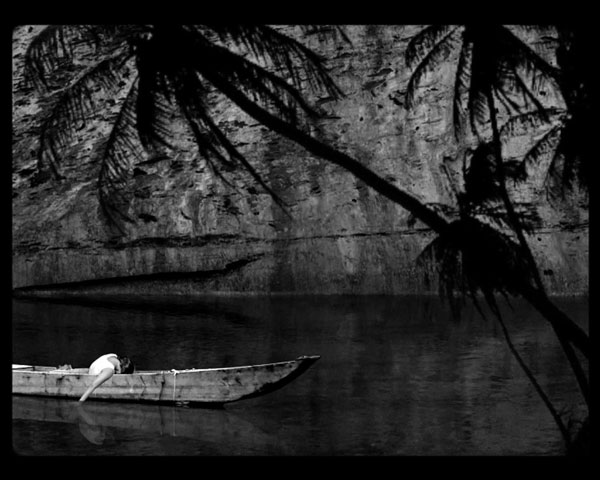
An end. Impasse. The ciné collages, 3 screenings parallel, only in black and white, without tone. The dialogue takes place between the individual scenes. By using different imaging sequences and lengths a new conflict, a new language, a new image is created. Ein Nachtstück is created in great detail from still photographs. Reinhart uses a technique to make her film loops which she has named ciné-collage. Multiple still photographs of characters and location details are collaged together in painterly layers and given just enough movement to provide a depth of colour and space. Architectural elements and public spaces of Paris are montaged together to present a destroyed, post-apocalyptic world. By using the bilateral symmetry of a building and its surroundings, or seen in the tradition of the Rorschach test, perspectives change. The world reflects itself, and seems to break and collapse. Patricia Reinhart created a world full of darkness, fear and the feeling of oppression. The disaster of the present has become an irrevocable reality. Lautréamont`s " Les Chants de Maldoror " and Max Ernst`s collages "Une semaine de Bonté" influenced Reinhart during the process of developing this work.
Patricia Reinhart studied painting at the Academy of Fine Arts in Vienna/AT and currently lives in Paris/FR. She has exhibited widely throughout Europe, including solo exhibitions at Gallery Lisa Ruyter/AT, Gallery Dana Charkasi/AT, marks blond project/CH, as well as public screenings at the beach in Venezuela and Spain. Her work has been shown in group exhibitions at Kunst im Tunnel/DE, Eglise Saint-Merry Paris/FR, Kerstin Engholm Gallery/AT, Essl Museum/AT and she also showed video work at Paris Nuit Blanche 2013. Works of her`s are included in many collections such as CCA Andratx/ES, Essl Museum/AT and Ursula Blickle Archiv - Kunsthalle Wien/AT.
Steve Reinke
Rib Gets In the Way
Documentaire | hdv | couleur | 52:15 | Canada | 2014
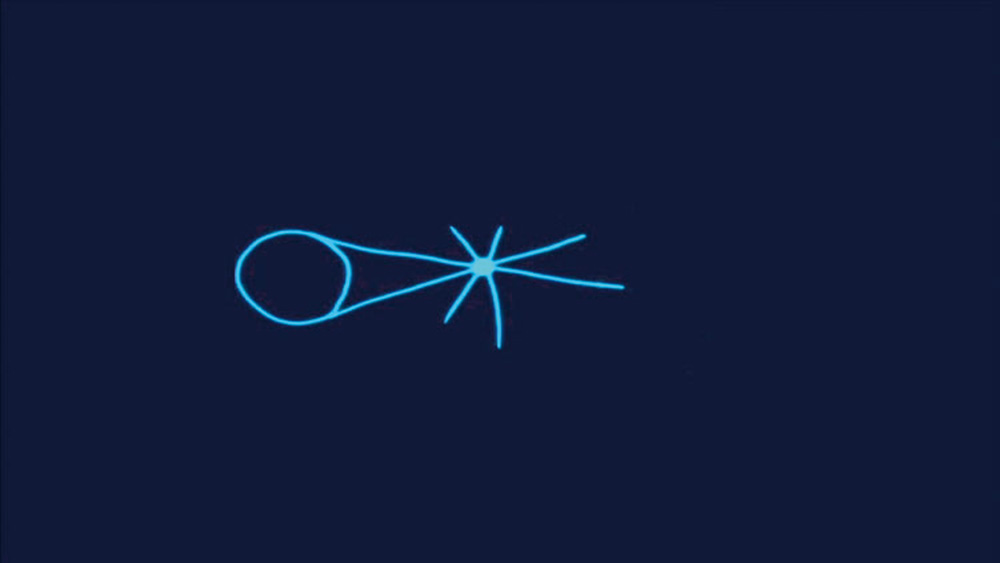
Rib Gets in the Way is narrated in the first person by Reinke and addresses mortality, the body, the archive, and the embodiment of a life’s work. The final and longest section of the video presents an animated children’s adaptation of Friedrich Nietzsche’s philosophical novel Thus Spoke Zarathustra (1883–85). The hand-drawn animations in this and earlier sections of the video are by Jessie Mott, a visual artist and writer whose work consistently engages a menagerie of human, animal, and celestial forms and with whom Reinke has collaborated on several previous videos.
Steve Reinke has long been lauded for his irreverent, philosophical, and often acerbic works, which typically adopt the form of personal essays to wryly bend and reread wide-ranging topics from pop culture to sex to theories of visual perception and beyond.
Remi
Auto_facing
Performance | 0 | | 25:0 | Autriche | 2005
_________
______________
Zhu Renjie
Fare Thee Well
Fiction | mp4 | couleur | 25:0 | Chine | 2024
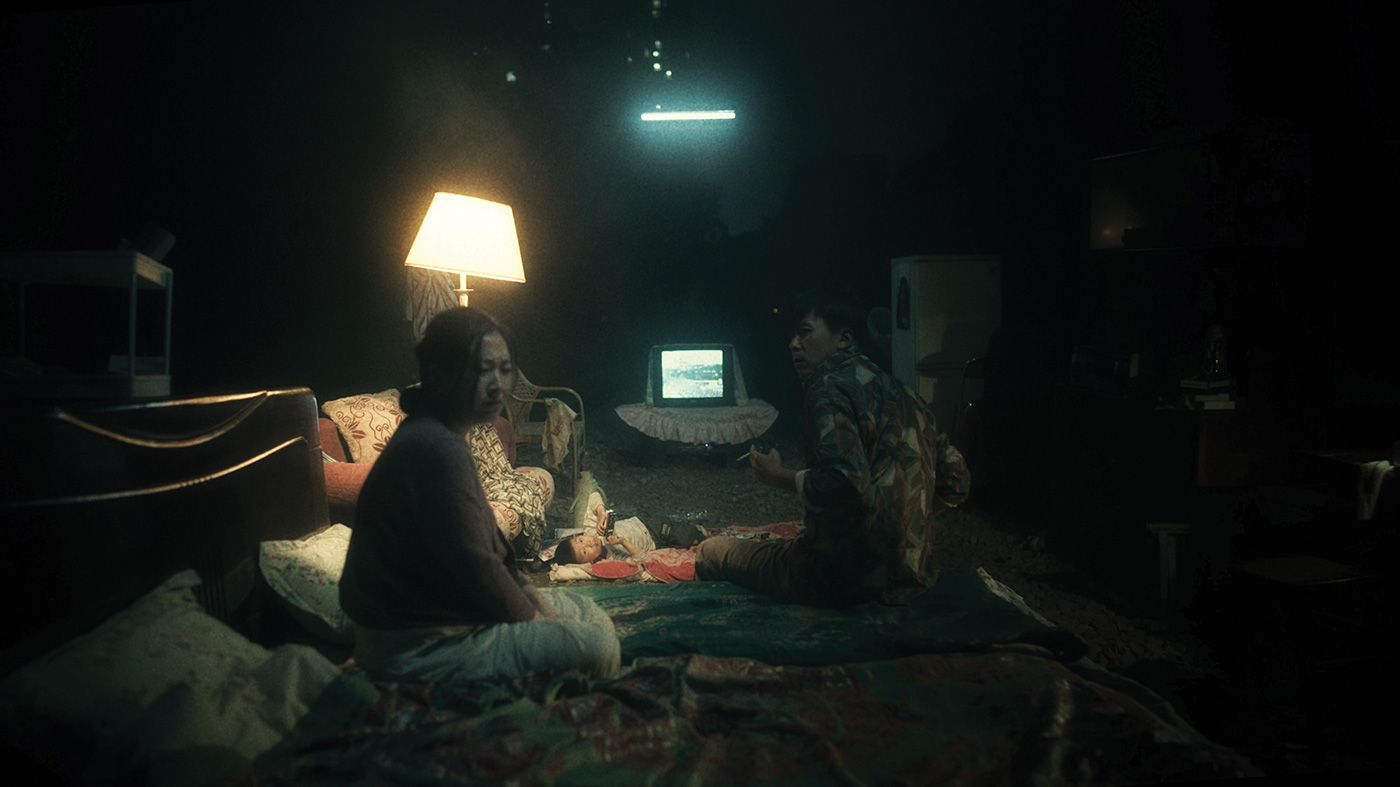
Sous l’effet papillon déclenché par la deuxième vague de réformes et d’ouverture de la Chine, une petite famille se retrouve prise dans un ouragan continu. De nombreuses années plus tard, Yang Xiaolong reçoit quatre lettres de son père, disparu de sa vie depuis longtemps. Ainsi, le fil textuel — « le pays grandit et la famille se brise » — déverrouille en lui des souvenirs d’enfance longtemps enfouis…
Renjie ZHU, réalisateur et directeur de la photographie né en 1992, a vécu dans l’ancienne ville d’Anyang puis dans la métropole de Shenzhen en raison de circonstances familiales. Il réside aujourd’hui à Hangzhou. Diplômé de l’Académie des arts de Chine, où il a obtenu sa licence et son master, il y poursuit actuellement un doctorat en création filmique. Son travail a remporté le New Wings Promotion Award lors de la Golden Rooster Youth Short Film Season, ainsi que le prix Qilin Outstanding Short Film au In Moment Film Festival. Ses films ont également été sélectionnés au Beijing International Short Film Festival, au Light My Fire Youth Film Festival, entre autres.