Catalogue > Faire une recherche
Résultats pour : Tout le catalogue
Norman Richter
Vali Asr - Juli 2006
Doc. expérimental | 0 | couleur | 13:47 | Allemagne, Iran | 2007
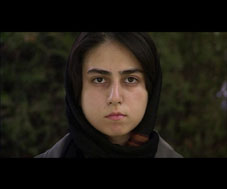
VALI ASR ? JUILLET 2006 Ce film a été tourné en sept jours durant l?été 2006, à Téhéran, capitale de la République islamique d?Iran. Le tournage se passe dans la rue Vali Asr, la plus longue et ancienne de Téhéran. Elle court sur 24 km, du nord au sud de la ville en passant par le centre et dévoile une image d?idéologies et de classes sociales très différentes. Le nom Vali Asr signifie « loi des temps » et se réfère à l?imam Muhammad al-Mahdi. En accord avec le dogme shiite, l?imam Mahdi est le vingtième et dernier successeur direct du prophète. Il est dit qu?il vécu pendant des siècles dans la clandestinité, sans donner de signes publics. La constitution de la République islamique d?Iran de 1979 désigna à la tête de l?état le vingtième Imam al-Mahdi. Les érudits islamiques, les Ayatollahs, ne sont que les représentants de l?Imam, attendant sa sortie de la clandestinité. Douze visages sont présentés. Un objet personnel est associé à chacune de ces douze personnes, excepté pour la dernière, une jeune fille. Ces personnes avaient ces objets avec eux au moment où ils ont été filmés.
Norman Richter was born in Heide in 1979. He has been studying directing at the "Konrad Wolf" Hochschule für Film und Fernsehen in Potsdam-Babelsberg. He works above all in the area of documentary and experimental film and video art. His film, "Sun in an Empty Room" was shown at the European Media Art Festival in Osnabrück along with "lobenden Erwähnung", from the German Filmkritik collective in the experimental film category. The film "Vali Asr - July 2006" filmed in Tehran was shown during the International Short Film Days in Oberhausen. Norman Richter's works have been exhibited in various international film and media art festivals, including: International Short Film Days, Oberhausen, 2007; European Media Art Festival, Osnabrück, 2005/2007; 25fps - International experimental Film and Video Festival, Zagreb, 2006; and the Ausstellung zum Marler Video-Kunst-Preis, 2006.
Julia Charlotte Richter
You Are the Center of the World
Fiction expérimentale | 4k | couleur | 16:45 | Allemagne | 2015
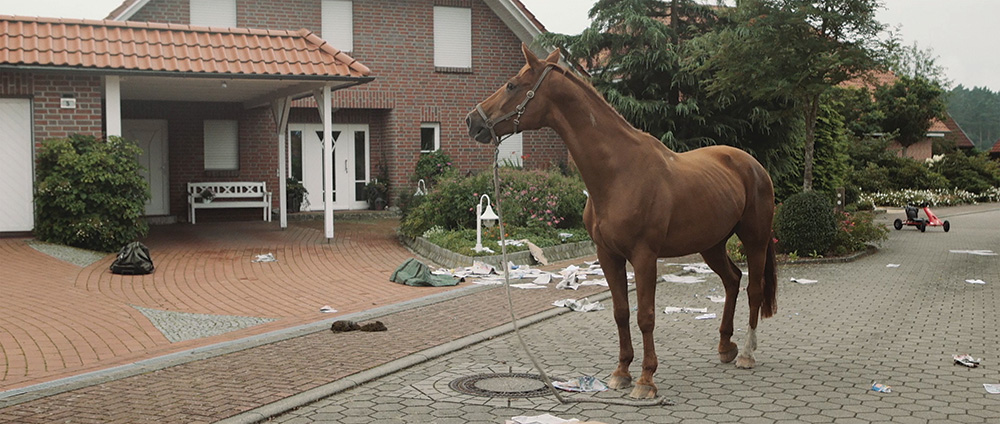
“And all, all, all was nice and good” is the last sentence sung by a chorus of middle aged men that opens “You are the Center of the World”. A horse walks around, the hooves clatter in the courtyard of a pretty detached house. The three young men look around, wander through the deserted streets. Finally, they find themselves in a living room and remain in there. All they can do is wait and listen to the silence. Where are all the other people? Out there, something is wrong, for sure. The small town becomes a stage for the three local teenagers, who are looked at by the camera and „act acting“. Explicitly cinematic visual references are created, where the characters move and perform in.
Julia Charlotte Richter (*1982 in Gießen, Germany) is a video artist. She studied Fine Art in Kassel (Germany), Portsmouth (UK) and Braunschweig (Germany). Julia Charlotte Richter’s works have been shown internationally in numerous screenings and exhibitions, including Museum Folkwang Essen, Manege Moscow, Georgian National Museum Tbilisi, Goethe Institute Chicago, Toronto, Ankara etc., Filmfestival “Max-Ophüls- Preis” Saarbrücken and the “B3 Biennial of the Moving Image” Frankfurt. She received different scholarships such as the residency “Young Art in Essen” (Kunstring Folkwang/Kunsthaus Essen) in 2012 or a working grant by the Stiftung Kunstfonds in 2014. Her film “You are the Center of the World” (2015) was funded by the Bösenberg-Foundation. In 2017 she received a project grant by the Kunststiftung NRW as well as a travel grant by the Hessische Kulturstiftung.

Mykola Ridnyi
The Battle over Mazepa
Vidéo | 4k | couleur | 26:43 | Ukraine | 2023
The Battle Over Mazepa conceptualises the historical significance and contemporary perception of Ivan Mazepa, a political and military leader of the Zaporizhian Sich and Left-bank Ukraine in the late-17th and early-18th century. Addressing codes of hip-hop culture, Ridnyi borrows the popular form of a rap battle to collide two great works of world literature associated with this historical figure: Mazeppa by Lord Byron in 1819 and Poltava by Alexander Pushkin in 1828–29. While Byron envisions Mazepa as a romantic hero, seized by love, Pushkin portrays him as a traitor in accordance with the colonial attitude of the Russian Empire. Highlighting the confrontation of these two texts, Ridnyi invited four rappers from different national and cultural backgrounds to write and perform their response to the poets’ lyrics.
Mykola Ridnyi (born in Kharkiv, Ukraine) is an artist, filmmaker and educator. He lives and works in Berlin where he holds a guest professorship in the Lensbased class at the Berlin University of the Arts (UdK). His works reflect social and political realities by drawing on the contrast between fragility and resilience of individual stories and collective histories. The body of his work created within the last decade address the question of how to talk about violence and war but not multiply its brutality in the visual language. Ridnyi's works has been shown internationally including the Schinkel pavilion, Transmediale and DAAD gallery in Berlin, Albertinum in Dresden, Museum of Modern Art in Warsaw, Bonniers Konsthall in Stockholm, the 56-th Venice Biennale, The Kyiv Biennale and other venues and events.

Janet Riedel, Katja Pratschke, Gusztáv Hámos
FIASKO
Fiction expérimentale | 35mm | | 30:0 | Allemagne | 2010
Photographic Essay based on the eponymous novel by Imre Kertész ? Steinig did survive his own death. Stranded at an unfamiliar nameless airport of a big though strangely familiar city, he is looking for a way to ensure his survival in a system which condemns everyone who has not yet lost faith in individuality and freedom.
Janet Riedel (1978) ist Fotografin und Grafikerin. Seit 2003 als freie Fotografin, Redakteurin und Herstellerin für Magazine (Du, corso), Werbeagenturen (JVM, Grabarz & Partner), Verlage (Carlsen, Rowohlt) und Theater (Kampnagel) tätig. Realisierung von Buch- und Ausstellungskonzepten. 2005 Gründung des Netzwerks für Neue Subjektive Fotografie ABSAGE AN DIE WIRKLICHKEIT; dreijährige Ausstellungstour durch Deutschland, nach Sydney, Hanoi. 2004?2007 Aufbaustudium für Visuelle Kommunikation/Medien an der HfBK Hamburg. 2008?2010 entstand der Fotoessayfilm FIASKO nach dem Roman von Imre Kertész in Zusammenarbeit mit Katja Pratschke/Gusztáv Hámos. Gusztáv Hámos (1955) und Katja Pratschke (1967)sind Medienkünstler. Ihre künstlerische Praxis umfasst Arbeiten mit Fotografie, Film, Video, Installation, interaktiven Skulpturen, wie auch die Kuration von Ausstellungen, Symposien, Filmreihen, und die Herausgabe von Publikationen. Aktuelle Ausstellungen und Projektionen: Tate Modern, Arsenal Berlin, Muzéum Ludwig Budapest, ZKM. Seit 2000 experimentieren sie mit dem Stillbild im kinematografischen Kontext - im Kino wie im Ausstellungsraum - untersuchen das Verhältnis von Stillstand und Bewegung. Seit 2006 kuratieren sie die Filmreihe VIVA FOTOFILM, die u.a. im Arsenal Berlin,in der Cinémathèque Quebeocoise Montreal, dem Múzeum Ludwig Budapest und der Tate Modern London zu sehen war. Parallel dazu initiierten und organisierten sie vier Symposien, dessen Ergebnisse in der Publikation »VIVA FOTOFILM bewegt/unbewegt«, 2010 veröffentlicht wurden.
Astrid Rieger, Zeljko VIDOVIC
Apple on a tree
Art vidéo | dv | couleur | 4:50 | Allemagne | 2006
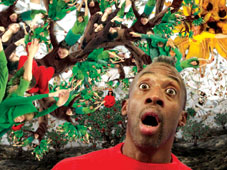
C'est une pomme sur un arbre, joyeusement accrochée en compagnie d'autres pommes, qui profite du soleil et de la caresse du vent. Cependant une pensée ne lui laisse aucun répit: elle aimerait savoir ce que c'est d'être un humain.
Astrid Rieger est née en 1979 à Kronstadt, Roumanie. Elle vit depuis 1990 en Allemagne. En 1999 elle commence ses études à la Hochschule für Gestaltung (école supérieure de design), option "communication visuelle" à Offenbach . Elle obtient son diplôme en 2006. Zeljko Vidovic est né en 1975 à Livno ? Croatie . Depuis 1998 il étudie à la Hochschule für Gestaltung (école supérieure de design) à Offenbach.

Elli Rintala
Väylä
Doc. expérimental | 16mm | couleur | 25:5 | Finlande | 2008
Un pétrolier navigue le long du golfe de Finlande. Après avoir vogué en haute mer, le navire change de cap pour une raffinerie de pétrole sur la côte. Lors de ce passage, l?homme, la technologie et la nature se confrontent les uns aux autres.
Elli Rintala est née en 1978. Elle étudie à l?Université des Arts et du Design d?Helsinki (Finlande) depuis 2004. Parmi ses récentes réalisations, citons notamment le documentaire « Eilisen eväät » (2005).

Simon Ripoll-hurier
Age of Heroes
Documentaire | hdv | couleur | 18:30 | France | 2020
À l'est de Skopje se trouve une petite place tranquille, où l'on peut parfois entendre l’écho d'une musique orchestrale. Si vous suivez le son, il vous mène à un grand studio. Le "Film & Music Ensemble" (FAME’s project) de Skopje se spécialise dans la musique de film. Une centaine de musiciens, ingénieurs du son, et autres participants viennent tous les jours enregistrer des musiques du monde entier. Les compositeurs assistent généralement aux séances par visioconférence. En une seule journée, on peut passer d'une série télévisée française à une production de Bollywood. Suivant un mécanisme sans faille, l'orchestre produit en permanence de la musique pour accompagner les images et leur donner une tonalité émotionnelle. Sur la petite place qui jouxte ce grand studio, la vie suit son cours dans une indifférence tranquille.
Simon Ripoll-Hurier (né en 1985) travaille dans le champ des arts visuels et développe une pratique à la frontière entre la musique, la radio et le cinéma, traque les situations d'écoute. De 2014 à 2017, il a développé "Diana", un projet de recherche qui inclut film, vidéo, performance et radio. Il travaille actuellement sur un film reliant la Silicon Valley d'aujourd'hui aux expériences parapsychologiques menées autrefois par la CIA. Son travail a été présenté dans divers festivals, biennales, musées, galeries, et diffusé à la radio. Il joue également avec Les Agamemnonz, un groupe de surf music instrumentale, et a cofondé *DUUU, une webradio gérée par des artistes.
Dominik Ritszel
Film o szkole
Fiction expérimentale | hdv | couleur | 8:59 | Pologne | 2014
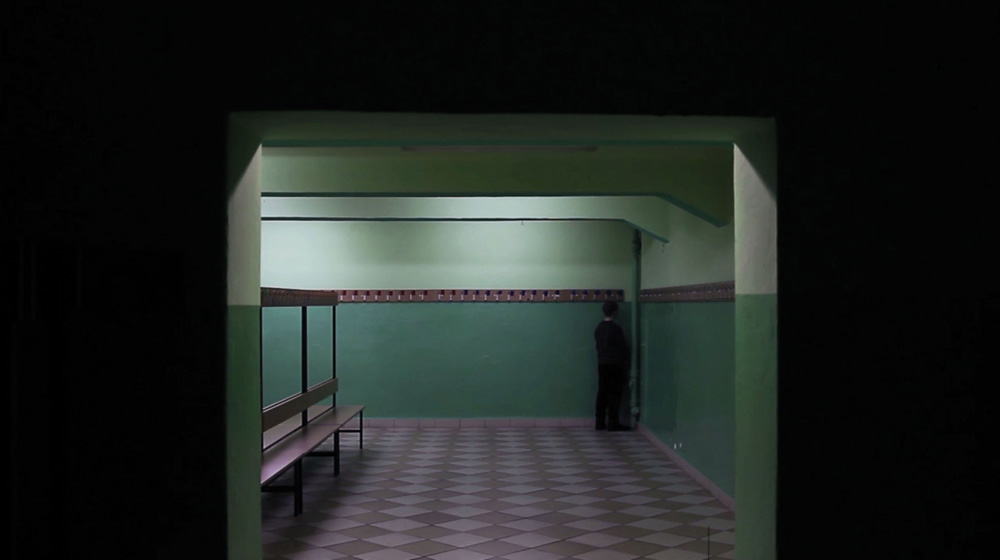
The video was recorded in primary school, which I graduated in 2003. This work is inspired by architectural elements in space of the school. I am mainly interested about functionality of certain spaces of the school, for example halls, passages, gyms, dressing room and also how institutional rules and statutes can take a form of game.
Dominik Ritszel was born in 1988 in Rybnik. He studied at the Faculty of Graphics in the Institute of Arts at the University of Silesia in Cieszyn and at the Academy of Fine Arts in Katowice, where he did graphic arts. His works were exhibited, among others, at international video art festivals Les Rencontres Internationales (Gaîté Lyrique, Palais de Tokyo, Paris) and Video Art Review THE 02 Spaces as a tool for shaping social attitudes. He participated in group exhibitions - in the Show Off Section at the Krakow Photomonth Festival (2013), Curators Network in the Museum of Contemporary Art (MOCAK) in Krakow (2012), Mum, I just really need to focus on my art right now in the Arsenał Gallery in Poznan (2012), among others, and in a joint exhibition presenting works of young Silesian artists Mleczne Zęby (Milk Teeth) in the BWA Contemporary Art Gallery in Katowice (2013). He had individual exhibitions in the Centre for Contemporary Arts Kronika in Bytom and in the Silesian Museum in Katowice. He was chosen among the three finalists of the Talenty Trójki 2013 contest in the Visual Arts category, he was short-listed for the Grey House Foundation Prize. In 2014 he was granted the Young Poland Programme scholarship. In spring 2014 as an artist in residence he stayed in the A-I-R Laboratory in the Centre for Contemporary Art Ujazdowski Castle where he produced Versus, showed in Ujazdowski Castle in Bank PEKO Project Room (Warsaw).
Dominik Ritszel
Pogłos
Vidéo | hdv | couleur | 14:30 | Pologne | 2015
Ritszel in his movie Reverb cleans view of audial perception. He introduce the viewer to his laboratory, spread through whole city. Process of the civilization has been reverse and for a moment, receiver gain privilege of sharpen hearing,. Sounds act on the same rules as they act in horror movies. They grow from what is known. They grow stronger and stronger, minute after minute. They become powerful and than they spread. Dynamic of the horror movie shows, that what scarry the most are not perfectly design monsters but minor, accumulative sounds. Creak of slowly opening wordrobe doors,expending floor planks under footsteps, TV which swich on itself, scraping, grating, crashing, and the most, sudden, ominous, dead silent.
Dominik Ritszel was born in 1988 in Rybnik. He studied at the Faculty of Graphics in the Institute of Arts at the University of Silesia in Cieszyn and at the Academy of Fine Arts in Katowice, where he did graphic arts. His works were exhibited, among others, at international video art festivals Les Rencontres Internationales (Gaîté Lyrique, Palais de Tokyo, Paris), Proyector, International Video Art Festival (Spain, Italy, Portugal) and Video Art Review THE 02. He participated in group exhibitions - in the Show Off Section at the Krakow Photomonth Festival (2013), The increased Difficulty od Concretation in Prague (2015), What’s Hidden in National Gallery of Art (2015), Curators Network in the Museum of Contemporary Art (MOCAK) in Krakow (2012), Mum, I just really need to focus on my art right now in the Arsenał Gallery in Poznan (2012), among others, and in a joint exhibition presenting works of young Silesian artists Milk Teeth in the BWA Contemporary Art Gallery in Katowice (2013). He had individual exhibitions in the Centre for Contemporary Arts Kronika in Bytom, in Grey Gallery in Cieszyn, Grey House Gallery in Krakow and in the Silesian Museum in Katowice. He was chosen among the three finalists of the Talenty Trójki 2013 contest in the Visual Arts category, he was short-listed for the Grey House Foundation Prize. In 2014 he was granted the Young Poland Programme scholarship. In spring 2014 as an artist in residence he stayed in the A-I-R Laboratory in the Centre for Contemporary Art Ujazdowski Castle where he produced Versus, showed in Bank Pekao Project Room in Warsaw. In 2015 he participated in group exhibition Waiting for better times Curatorated by Magda Kardasz (Zachęta Project Room, Warsaw). During of the 8th edition of Biennale of Young Artists RYBIE OKO his video Reverb received special award. He has been crowned the 2015 winner of the Young European Artist Trieste Contemporanea Award. His next individual exhibition will take place in Studio Tomaseo (Italy) 26th of March.
Dominik Ritszel, Dominik Ritszel
Preludium
Vidéo | hdv | couleur | 7:57 | Pologne | 2013
Video explore the relations between son and father (student/master), which is bring to inconspicuous, childish game. Situation plays in family house, where actors are my father, brother and myself. ?Preludium? is a memoir of my request to my father, who refused to teach me play piano, saying, that is too late.
In 2008 I began study on Academy of Fine Arts in Katowice. My first individual exhibition ?See you all? took place in CSW Kronika in Bytom. In 2012 I took part in group exhibition; ?Whoever seen, whoever knows?, (CSW Kronika, Bytom). I was invited to take part in project ?Public space as tool for shaping social attitudes? in Chisinau (Moldova) where I made film ?Campers?. My second individual exhibition was in Częstochowa (Centrum Promocji Młodych); entitled ?No fun?. In collaboration with French curator Lore Gablier, I was co-create film ?D?eux?, based on two weeks traveling through France and England. I was chosen, as one of 20 polish artist, in polish edition of project Curators Network, which intend to promote selected artists by international group of curators in Poland and abroad. In 2013 I was participant in group exhibition young Silesian artists ?Milk Teeth? in BWA (Katowice) where I showed my film ?Preludium?. I was chosen, as one of 10 artist, in project Showoff?13. On behalf on project Showoff (cooperating with Photo Month in Krakow) I was showing my works in gallery Grey house Exhibition was entitled ?Eine kleine Werke?.
Paul Ritt
Connected
Vidéo | hdv | noir et blanc | 2:2 | Pays-Bas | 2014
Connected,a video/drawing of a short journey through fragments of intuitive moments. The work is about following, exploring known/unknown directions, registering, leaving traces,emerging into patterns, maps of the free spirit.
Paul Ritt was born in the Netherlands (1957). He studied monumentale vormgeving at the Academie Beeldende Kunst, Maastricht, (1980-1984). He lived and worked in Australia from 1984 -1999. After studying for the Advanced diploma of Arts in Electronics, design and interactive media at the Royal Melbourne Institute of Technology Melbourne (1997-1998), he started making short films.

Jorge Rivero
La presa
Doc. expérimental | 35mm | couleur | 20:0 | Espagne | 2009
Ben Rivers
Ah, Liberty!
Doc. expérimental | 16mm | noir et blanc | 16:0 | Royaume-Uni | 2008
La maison d?une famille dans le désert, en dehors du temps ; des animaux élevés en plein air et des enfants, un bric-à-brac et la nature, le tout dans un paysage des plus sublimes. Le travail vise à représenter l?idée de liberté, qui se reflète dans l?utilisation manuelle du format scope, affaiblie par une sorte de mauvais pressentiment. Il n'y a pas d'histoire particulière, seulement des fragments de vie vécue, de rites effectués.
Ben Rivers a étudié les Beaux-Arts à la Falmouth School of Art (Royaume-Uni). Il a travaillé ensuite principalement sur des films en format 16mm. Ses ?uvres sont montrées dans des galeries et des festivals internationaux, qui lui ont décerné de nombreux prix. Parmi ses expositions récentes, signalons notamment « If » au Bloomberg Space de London, « Nought to Sixty » à l?ICA de Londres, ou encore « On Overgrown Paths » à la Permanent Gallery de Brighton.
Ben Rivers
Look Then Below
Film expérimental | 16mm | couleur | 22:30 | Royaume-Uni | 2019
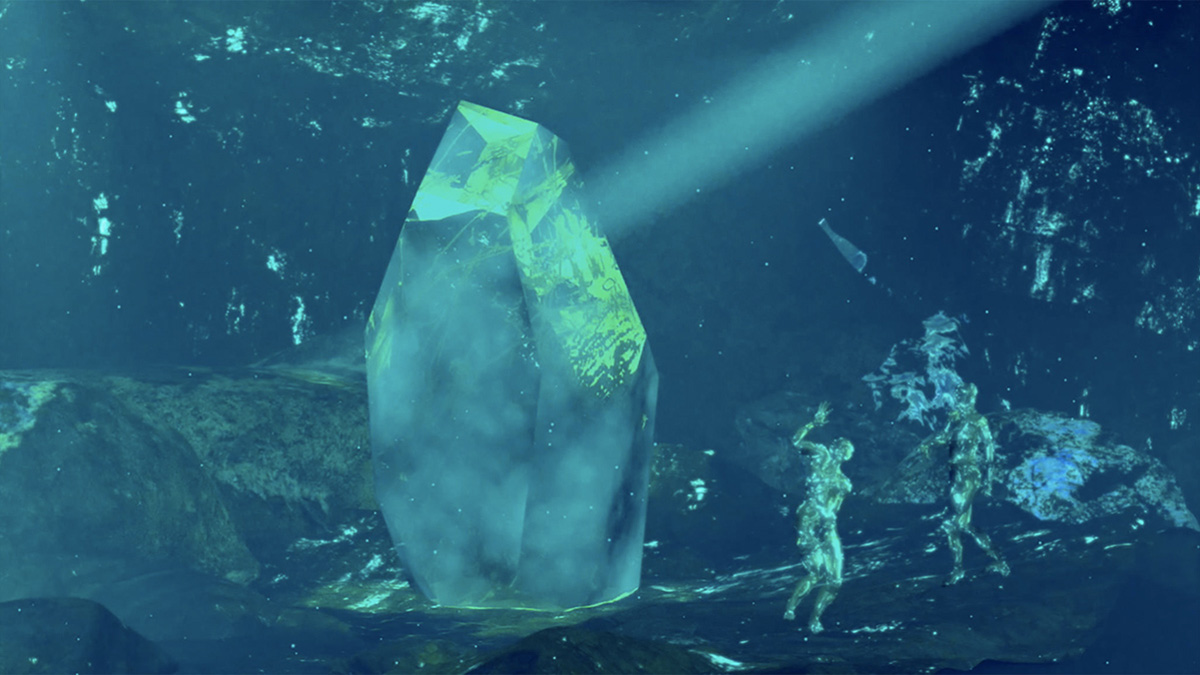
Les films de Ben Rivers étudient ce qui semble venir d’un autre monde, à la recherche de lieux et d'histoires échappant aux conventions quotidiennes de la réalité. "Look Then Below" a été filmé dans un Somerset transformé en une île colorée et envahie par la brume, sur une mer d’huile, et avec une grotte baignée par une lueur souterraine. Là, le temps semble s'arrêter. Après "Slow Action" et "Urth", il d’agit du dernier volet d'une trilogie développée avec Mark von Schlegell, auteur américain de science-fiction.
Ben Rivers a étudié les beaux-arts à la Falmouth School of Art (Royaume-Uni): après la sculpture, il s’est tourné vers la photographie et le film en super8. Après avoir obtenu son diplôme, il a appris par lui-même la réalisation et le traitement manuel des films 16mm. Sa pratique en tant que réalisateur se situe entre le documentaire et la fiction. Souvent, il suit et filme des personnes qui, d'une manière ou d'une autre, se sont séparées de la société. Des images brutes lui fournissent un point de départ pour créer des récits obliques, imaginant des existences alternatives dans des mondes marginaux. Il a remporté de nombreux prix, dont le FIPRESCI International Critics Prize, 68e Mostra de Venise (Italie), pour son premier long métrage, "Two Years At Sea"; le Baloise Art Prize, Art Basel 42, Bâle (Suisse) [2011]; la présélection pour le Jarman Award, Londres (Royaume-Uni) [2010/2012]; et le Paul Hamlyn Foundation Award for Artists, 2010. Parmi ses expositions récentes, citons: "Slow Action", Hepworth Wakefield, Wakefield (Royaume-Uni) [2012]; "Sack Barrow", Hayward Gallery, Londres (Royaume-Uni) [2011]; "Slow Action", Mattâ's Gallery, Londres (Royaume-Uni), et Gallery TPW, Toronto (Canada) [2011]; et "A World Rattled of Habit", A Foundation, Liverpool (Royaume-Uni) [2009]. Il a notamment participé au Courtisane and Film Fest, Gand (Belgique); à la Mostra internazionale del Nuovo Cinema di Pesaro (Italie); au London Film Festival, Londres (Royaume-Uni); au Tirana International Film Festival, Tirana (Albanie); à Punto de Vista, Pampelune (Espagne); à Indielisboa, Lisbonne (Portugal); et au Milano Film Festival, Milan (Italie). En 1996, il a co-fondé la Brighton Cinematheque (Royaume-Uni), dont il a ensuite été co-programmateur jusqu'à sa fermeture, en 2006. Cette institution était réputée pour sa programmation unique de films, depuis ses débuts jusqu'aux derniers films et vidéos d'auteur.
Ben Rivers
Trees Down Here
Doc. expérimental | 16mm | couleur | 13:56 | Royaume-Uni | 2018
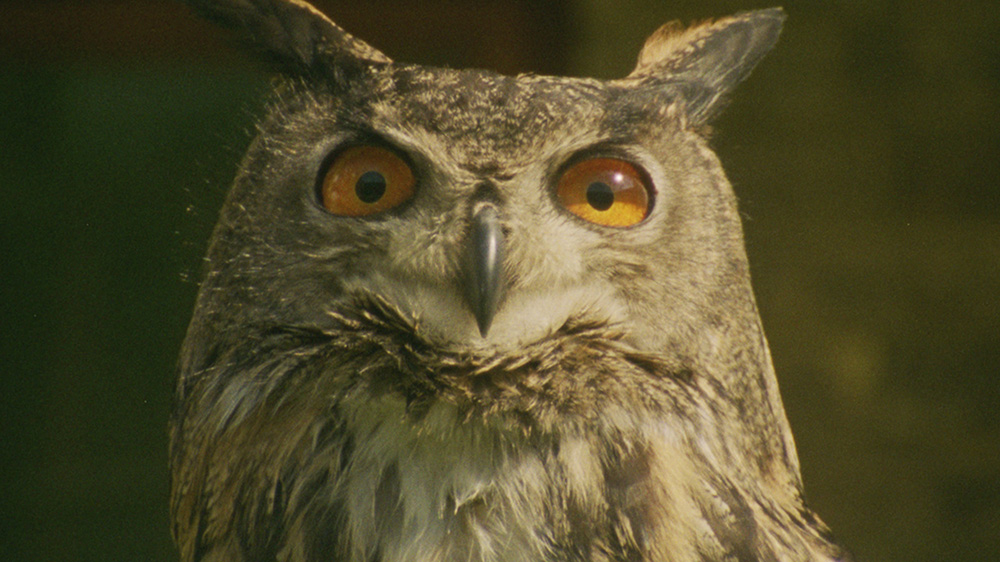
Trees are the silent characters, narrating the architecture and life of Churchill College (opened in 1960) through its natural history. 6’s Cowan Court (completed in 2016) inverted the spatial and material order of the picturesque Brutalism of the original college, shifting its mineral world of brick and shuttered concrete to timber. Cowan Court’s oak, both new and old, defines its structure and in turn encloses a central court filled with recently planted birch trees. The analogue materiality of Churchill College is matched by the film which, like the architecture and landscape, leaves traces of its own development. The human habitat is seen through nature ‘ swaying trees, lost animals, birds of prey, the seasons “ to create a new dreamlike environment in which any distinction between human life, architecture and nature is erased.
Ben Rivers studied Fine Art at Falmouth School of Art, initially in sculpture before moving into photography and super8 film. After his degree he taught himself 16mm filmmaking and hand-processing. His practice as a filmmaker treads a line between documentary and fiction. Often following and filming people who have in some way separated themselves from society, the raw film footage provides Rivers with a starting point for creating oblique narratives imagining alternative existences in marginal worlds. He is the recipient of numerous prizes including: FIPRESCI International Critics Prize, 68th Venice Film Festival for his first feature film Two Years At Sea; the Baloise Art Prize, Art Basel 42, 2011; shortlisted for the Jarman Award 2010/2012; Paul Hamlyn Foundation Award for Artists, 2010. Recent exhibitions include: Slow Action, Hepworth Wakefield, 2012; Sack Barrow, Hayward Gallery, London, 2011; Slow Action, Mattâ’s Gallery, London and Gallery TPW, Toronto, 2011; A World Rattled of Habit, A Foundation, Liverpool, 2009. Artist-in-focus include Courtisane Festival; Pesaro International Film Festival; London Film Festival; Tirana Film Festival; Punto de Vista, Pamplona; Indielisboa and Milan Film Festival. In 1996 he co-founded Brighton Cinematheque which he then co-programmed through to its demise in 2006 “ renowned for screening a unique programme of film from its earliest days through to the latest artistâ’s film and video.
Ben Rivers
Ghost Strata
Doc. expérimental | 16mm | couleur | 45:44 | Royaume-Uni, 0 | 2019
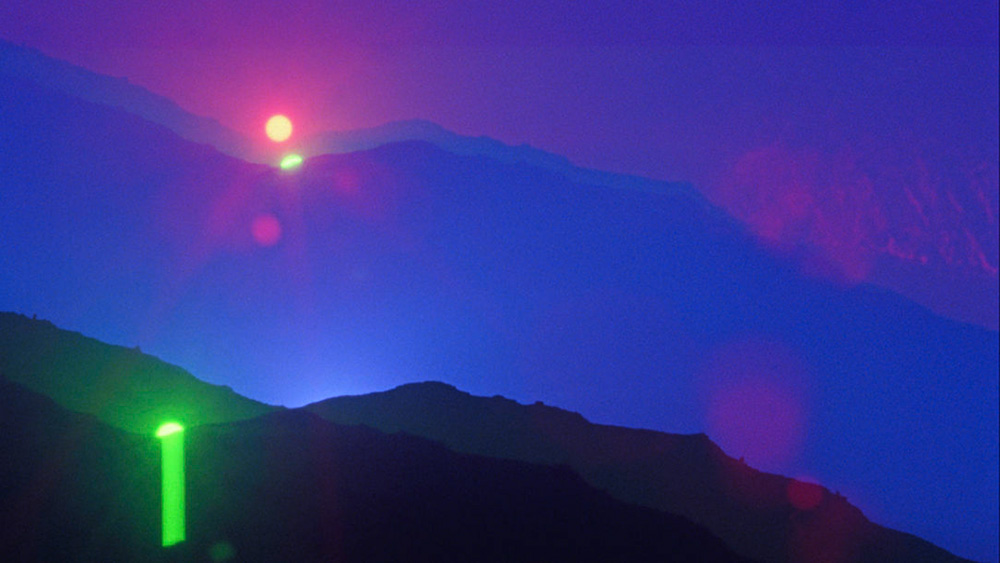
Le terme “Ghost Strata” désigne les éléments manquants des strates rocheuses qui, malgré leur absence, offrent des indices de ce qui s’y trouvait autrefois. Le film est divisé en fonction des mois de l’année au cours desquels les images ont été filmées. Filmé en divers endroits du globe, retraçant les divers mouvements personnels du cinéaste, Ghost Strata explore les différentes échelles d’impact de la présence de l’humanité sur la terre dans le passé, le présent et l’avenir. Les sons et les textes trouvés créent une méditation sur le temps, la mémoire, les restes et l’extinction.
Né en 1972, Ben Rivers est un artiste britannique primé pour ses films dans de nombreux festivals. Il est notamment lauréat du Grand Prix à Art Basel pour son film Sack Barrow et a été sélectionné à la Mostra de Venise en compétition officielle pour Two Years at Sea en 2011. En 2013, il a fait l’objet d’un focus lors du festival Hors Pistes au Centre Pompidou. Ben Rivers tourne en 16mm et s’intéresse à des individus ou communautés vivant en marge de la société et propose un travail à la lisière du documentaire, frôlant l’ethnographie, doté d’une grande puissance visuelle. Ainsi, empruntant une voie plus picturale que narrative, son œuvre se place au cœur des enjeux contemporains où l'on constate l'émergence sensible d'une approche documentaire expérimentale, qui se nourrit d'apports artistiques multiples. Cette forme hybride lui a notamment permis de se déplacer de la traditionnelle salle de cinéma pour s'exposer dans les centres d'art à travers des installations.
Ben Rivers
Origin of the Species
Doc. expérimental | 16mm | couleur | 16:0 | Royaume-Uni | 2008
?Some things didn?t really matter, you know, some mutations didn?t matter all that much?they were neither beneficial to survival nor detrimental to survival?but if they just hung on, there?d come a time when?that was the thing that saved the day.? Charting the beginnings of the time, through the descent of man, on to an uncertain future - all shot throughout the seasons in the garden of S, who lives in the wilderness and builds contraptions.
Born 1972. Studied Fine Art at Falmouth School of Art. Co-founded and programmed Brighton Cinematheque from 1996-2006. He has exhibited at many international film festivals and galleries, winning various awards, including Tiger Award, IFF Rotterdam 2008. He has been the recipient of a number of commissions, most recently a London Artist?s Film and Video Award. Recent shows include; ?A World Rattled of Habit? A Foundation, Liverpool; ?An Entangled Bank? Talbot Rice Gallery, Edinburgh; and artist-in-focus screenings in Courtisane Festival; Pesaro International Film Festival, London Film Festival, Punto de Vista, and upcoming at Tirana Film Festival and Indielisboa.
Ben Rivers
The House Was Quiet
Film expérimental | 16mm | couleur | 4:25 | Royaume-Uni | 2020
Les éléments d'une maison: une porte, le plafond miteux, les planchers de bois, le portrait d'une petite fille. Et le crépitement de la pellicule 16mm sur laquelle elles sont imprimées, aussi "concrète" que les objets qu'elle filme, et en opposition à l'effacement des choses dans les pixels du numérique. Les vers d'un poème de Wallace Stevens accompagnent les images: "La maison était tranquille et le monde était calme/ le lecteur devint le livre/ et la nuit d'été fut comme l’être conscient du livre". Dans la succession des vers - et dans la répétition des jours enfermés dans la maison pendant le confinement - le lecteur, le livre, la maison et la nuit d'été ne font plus qu'un, bercés par le crépitement du film.
Ben Rivers a étudié les beaux-arts à la Falmouth School of Art (Royaume-Uni): d'abord la sculpture, avant de se tourner vers la photographie et le film super8. Après avoir obtenu son diplôme, il a appris en autodidacte la réalisation et le traitement manuel des films 16 mm. Sa pratique de réalisateur se situe entre le documentaire et la fiction. Souvent, il suit et filme des personnes qui, d'une manière ou d'une autre, se sont séparées de la société. Les images brutes lui fournissent un point de départ pour créer des récits obliques, imaginant des existences alternatives dans des mondes marginaux. Il est le lauréat de nombreux prix, dont le Prix de la critique internationale FIPRESCI, 68e Mostra de Venise (Italie) pour son premier long métrage, "Two Years At Sea"; le Baloise Art Prize, Art Basel 42, Bâle (Suisse) [2011]; la présélection pour le Jarman Award 2010/2012, Londres (Royaume-Uni) ; et le Paul Hamlyn Foundation Award for Artists, Londres (Royaume-Uni) [2010]. Parmi ses expositions récentes, citons: "Slow Action", Hepworth Wakefield (Royaume-Uni) [2012]; "Sack Barrow", Hayward Gallery, Londres (Royaume-Uni) [2011]; "Slow Action", Mattâ's Gallery, Londres (Royaume-Uni), et Gallery TPW, Toronto (Canada) [2011]; et "A World Rattled of Habit", A Foundation, Liverpool (Royaume-Uni) [2009]. Il a notamment participé au Courtisane Festival, Gand (Belgique); au Festival international du nouveau cinéma de Pesaro (Italie); au London Film Festival, Londres (Royaume-Uni); au Tirana International Film Festival (Albanie); à Punto de Vista, Pampelune (Espagne); à Indielisboa, Lisbonne (Portugal); et au Milano Film Festival, Milan (Italie). En 1996, il a co-fondé la Brighton Cinematheque (Royaume-Uni), dont il a ensuite été co-programmateur jusqu'à sa fermeture, en 2006. Cette institution est réputée pour sa programmation unique de films, depuis ses débuts jusqu'aux plus récents films et vidéos d'artistes.
Ben Rivers
The Coming Race
Film expérimental | 16mm | noir et blanc | 5:0 | Royaume-Uni | 2006
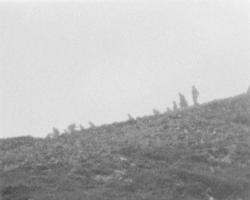
Ce film retravaillé à la main montre des milliers de personnes faisant l'ascension d'un terrain sur une montagne rocheuse. La destination et l'objet de leur ascension restent obscurs. Un pèlerinage incertain, mystérieux et troublant pavé d'intentions inconnues. Le titre "The Coming Race" est tiré d'un roman de l'époque victorienne de E.G.E Bulwer-Lytton portant sur un peuple vivant sous une montagne.
Studied Fine Art at Falmouth School of Art. Co-founded and programmed Brighton Cinematheque from 1996-2005, while developing his artistic practice -predominantly working with moving-image. He has exhibited at many international film festivals and galleries, and won various awards, most recently Jury Prize at IFF Rotterdam. He has been the recipient of a number of commissions, most recently a London Artists Film and Video Award, for which he will make a new work: « Origin of the Species ». Current/upcoming shows include 'If' Bloomberg Space, London, 'Art with Strangers' Turnpike Gallery, Leigh, and solo show with Measure, London, and retrospective screenings in Chicago, Hull IFF and Courtisane, Ghent.
Ben Rivers
There is a Happy Land Further Awaay
Film expérimental | 16mm | couleur et n&b | 20:0 | Royaume-Uni | 2015
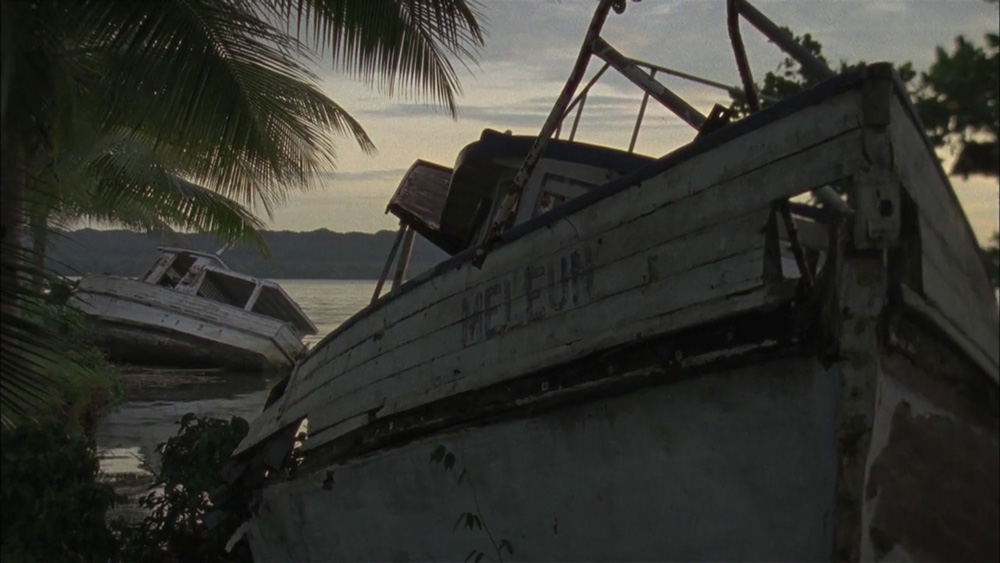
THERE IS A HAPPY LAND FURTHER AWAAY (20 mins, S16, col/b+w, 2015) There Is A Happy Land Further Awaay (2015), captures the landscapes of the remote volcanic Republic of Vanuatu archipelago, before they were devastated by Cyclone Pam in early 2015, the footage becoming a ghostly document of an ecosystem now irrevocably altered. A hesitant female voice reads a poem by Henri Michaux, recounting a life lived in a distant land, full of faltering and mistakes. Island imagery of active volcanoes, underwater WW2 debris, children playing, and wrecked boats transform into intangible digital recollections of the island, made on the opposite side of the world. Images of the eroded land merge with eroding film, a lone figure on a boat drifts at sea.
Ben Rivers (born in 1972) is an artist and experimental filmmaker based in London. His work has been shown in many film festivals and galleries around the world and has won numerous awards. His work ranges from themes about exploring unknown wilderness territories to candid and intimate portrayals of real-life subjects. Rivers`s practice as a filmmaker treads a line between documentary and fiction. Often following and filming people who have in some way separated themselves from society, the raw film footage provides Rivers with a starting point for creating oblique narratives imagining alternative existences in marginal worlds. Rivers uses near-antique cameras and hand develops the 16 mm film, which shows the evidence of the elements it has been exposed to – the materiality of this medium forming part of the narrative.
Ben Rivers
The Hyrcynium Wood
Film expérimental | 16mm | noir et blanc | 3:0 | Royaume-Uni | 2005
Un récit fragmenté et l'exploration d´espaces abandonnés, utilisant les sons et la musique pour créer un suspense et jouer avec les attentes des spectateurs.
Ben Rivers a étudié les Beaux Arts à l´Ecole des Arts des Falmouth. Depuis lors il travaille essentiellement des films 16mm qui sont projetés lors de festivals internationaux, dans des galleries et des cinémas britanniques. En 1996 il co-fonda la Cinémathèque de Bighton qu´il co-dirige/prgramme depuis.