Catalogue > Search
Results for : Tout le catalogue
Noe Sendas
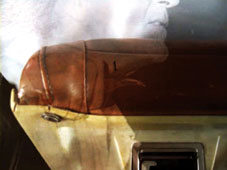
Take Off
Experimental video | dv | color | 4:2 | Portugal | 2005
The starting point of this work is the battle between a fictional character's visions and fears versus memories in a plane during take off. It combines a collection of photographs and original footage of a plane crash with a re-filmed and re-edited fragment of the last sequence of Michael Powell's Peeping Tom. The Metaphors of Fear Written by Nuno Crespo We might take refugee in an image when we feel we are in danger, giving it the power to minimize the pain, to soften our imagination, this is something that has always been known: the old catharses concept can prove it. Certain objects that have this quality become talismans and have the power to untie internal knots: the ones felt in one's chest or in one's heart - we might call these internal knots fear, anguish, or strange feelings that one does not know how to deal with but wants to untie and dominate. It's the fear of being in a plane, of its unexpected metallic and roaring noises, to be in it, in the sky, something not so appropriated for an earthly body to whom the earth is its natural habitat. With the take off the fall becomes present, the fall into an unknown land where only destiny with its mysterious and invisible powers is able to determine and to anticipate. To crystallize these fears and anguishes into an image belongs to the field of the arts, and results in the construction of meaning to which we can tribute certain evidences, or if we prefer, illuminations: as a result, to become aware of one's fear can become a deeper understanding of one's own intimacy. Fear presents itself as an aesthetic category - to find its mirror image will always be an incomplete task: no image can correspond to it entirely; it is always a mediation trial, being more precise, a domestication tryout. The strategy of not overrunning fear, but to go along living with it, is the artist's task. What makes Noé Sendas keep working is the dynamic and always incomplete process, the not knowing when and if the roaring motor of the plane stops, to give form to the suspicion that something might happen.
Noé Sendas was born in Brussels in 1972 and studied at Ar.Co, in Lisbon. His education also involves periods of study at foreign schools such as the Royal College of Arts, in London, and the school of the Art Institute of Chicago, as well as residencies, particular note given to the one in the Kunstlerhaus Bethanien. Halfway through the nineties he began presenting his work, and the last two years have witnessed the blossoming of his career. He has participated in several exhibitions, a notable one being En Garde!, Porto 2002-03, a solo exhibition with an anthological matrix that allowed an understanding of the artist's trajectory and realized a personal inclination previously only indicated. Sendas uses various means of expression, including video, sculpture, sound, drawing, and sound. Explicit and implicit references to artists and literary, and cinematic or musical creations are part of his raw materials. He employs quotes from Shakespeare and Beckett as well as from different movie directors, Godard and Coltrane among them. Specific concerns about the reflection and practice of visual arts can also be added to his repertoire. These include: the body, as an entity that is simultaneously theoretical and material; the observer's perception mechanisms; or the discursive potential of exhibition methods. Sendas's creative process is rooted in an intellectual device based on an association of materials of different origins. However, the subjacent logic isn't merely one of appropriation, but the definition of a new authorship. This methodology shares elective affinities with strategies employed by DJs and with a common instrument in current pop music, the sampler, since it configures an appropriation of themes that will be used to construct new sounds rather than an eventual collage.
Shireen Seno
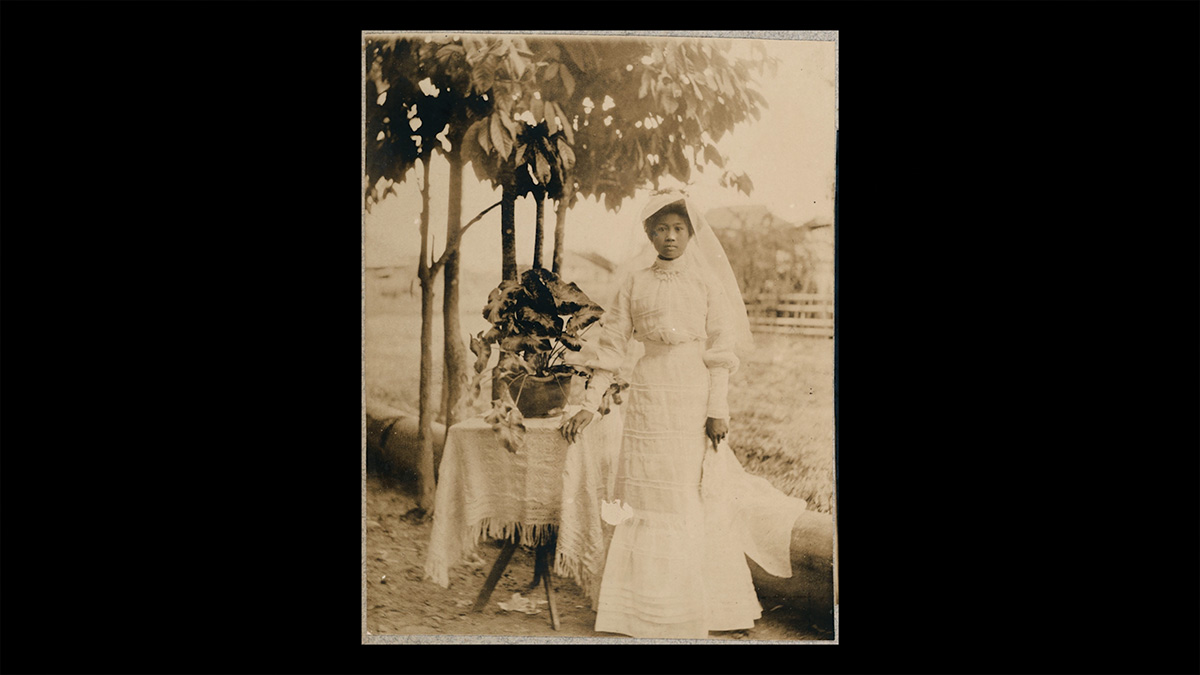
To Pick a Flower
Experimental doc. | hdv | color and b&w | 16:57 | Philippines | 2021
My mother used to tell me that our dining table was as old as I am. I wonder how old the tree was when it was cut down to be turned into our table. I am fascinated in this kind of transmutation from the natural world to the human one, and how a tree takes on new lives long after it has been cut down. This video essay incorporates archival photographs from the American Colonial Era in the Philippines (1898–1946), exploring the sticky relationship between humans and nature and their entanglements with empire. Taking plants and trees as starting points, it aims to reflect on the intertwined roots of photography and capitalism in the Philippines.
Shireen Seno is an artist and filmmaker based in Manila whose work addresses memory, history, and image-making, often in relation to the idea of home. A recipient of the 2018 Thirteen Artists Award from the Cultural Center of the Philippines, she is known for her films which have won awards at Rotterdam, Shanghai, Olhar de Cinema, Vladivostok, Jogja-Netpac, and Lima Independiente and have screened at festivals including New Directors/New Films, Yebisu International Festival of Art & Alternative Visions, NYFF Currents, and institutions such as Tate Modern, UCCA Center for Contemporary Art, NTU Center for Contemporary Art Singapore, National Museum of Modern and Contemporary Art, Korea, and Portikus.
Shireen Seno
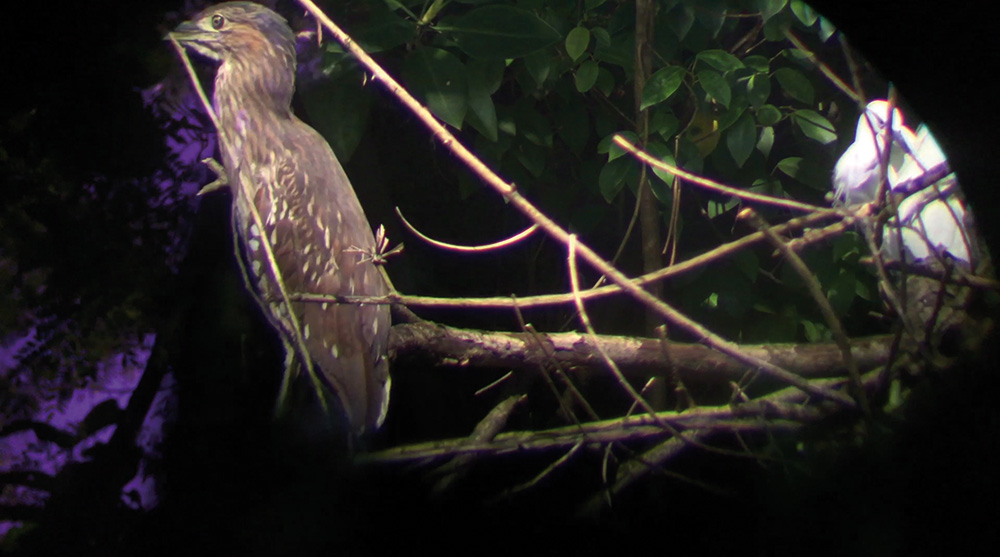
A Child Dies, a Child Plays, a Woman is Born, a Woman Dies, a Bird Arrives, a Bird Flies Off
Video | hdv | color | 4:46 | Philippines | 2018
"A child dies, a child plays, a woman is born, a woman dies, a bird arrives, a bird flies off", is a voyeuristic glimpse of both local birds and migratory ones that make the Philippine marshlands their home for a time.
Shireen Seno is a lens-based artist whose work addresses memory, history, and image-making, often in relation to the idea of home. She was born to a Filipino family in Japan, where she spent most of her childhood. She has had two solo exhibitions and is a 2018 recipient of the 13 Artists Award from the Cultural Center of the Philippines. Her photo zine Trunks, produced while in residency at Objectifs Centre for Photography and Filmmaking, has been exhibited widely. She started out in film shooting stills for Lav Diaz before going on to direct her debut feature, Big Boy (2012), shot entirely on Super 8. It premiered at Rotterdam and won Best First Film at the Festival de Cine Lima Independiente. Her second film, Nervous Translation (2018), is about a girl who finds out about a pen that can translate the thoughts and feelings of nervous people. It premiered in Hivos Tiger Competition in Rotterdam and won the NETPAC Award for Best Asian Film. Other awards include: Critics’ Prize at Olhar de Cinema - Curitiba International Film Festival, Asian New Talent Award for Best Script Writer at Shanghai International Film Festival, Jury Special Mention at Pacific Meridian International Film Festival of Asia-Pacific Countries in Vladivostok, and Silver Hanoman at Jogja-Netpac Asian Film Festival. It also screened at MoMA as part of New Directors/New Films, Tate Modern as part of their Artists’ Cinema program, and at the Tokyo Photographic Art Museum for Yebisu International Festival for Art & Alternative Visions.
Anne Katrine Senstad
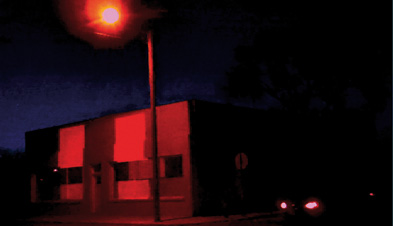
The Locker Plant Projections
Experimental video | hdv | color | 8:21 | Norway, USA | 2011
The Locker Plant Projections is part of a site specific projection video series of my video-installation piece Colour Kinesthesia. The Projections of the abstract colors and the act of projecting in itself become the vehicle for the merging of colors with the environment and that existential and poetic narrative of enlightening our surroundings. In this piece the known Donald Judd building in Marfa, TX - The Locker Plant, is subject to the projections, as well as the South Western Texas Railroad and local trees. In merging the movement of colors with an archetypal architectural form, passing people and natural life activity during the night, we experience an added level to the notion of spatial relations, time and volume. The music of J G Thirlwell, known from Foetus, Manoriexia and Wiseblood - creates a cinematic mood to the minimalist references. The Locker Plant is a former butcher and meat packing plant, one of a group of buildings Donald Judd acquired in Marfa, TX - it is now part of The Chinati foundation.
Anne Katrine Senstad is a multidisciplinary Norwegian artist who lives and works in New York. She works with light, installation, photography, video, site specific and land art. She was educated at Parsons School of Design and The New School for Social Research in New York. She is currently working with the internationally renowned architecture firm Snøhetta, where she has been awarded the public art commission for their first completed U.S. building ? a performing arts center in Bowling Green, Ohio, The Wolfe Center for the Arts at BGSU. Senstad will be creating a monumental mural consisting of 39 photographic, aluminum and Plexiglas panels extending over 28 feet high and 86 feet long (8 x 28 meters). The monumental mural piece entitled The Eternal is scheduled to officially open December 2011. She has exhibited widely internationally at Zendai Moma in Shanghai, ThisisNotAgallery in Buenos Aires, Utsikten Kunstsenter and Stiftelsen 3,14 in Norway, Bjorn Ressle Gallery, Gallery Nine5 and Elga Wimmer Gallery in NY, Pink Gallery in Seuol and KK Projects in New Orleans amongst others. Her work is represented in Gallery, Institutions, corporate and private collections.
Kevin Sepp
GOODBYE REGINA
Experimental doc. | 16mm | | 8:48 | Germany | 2025
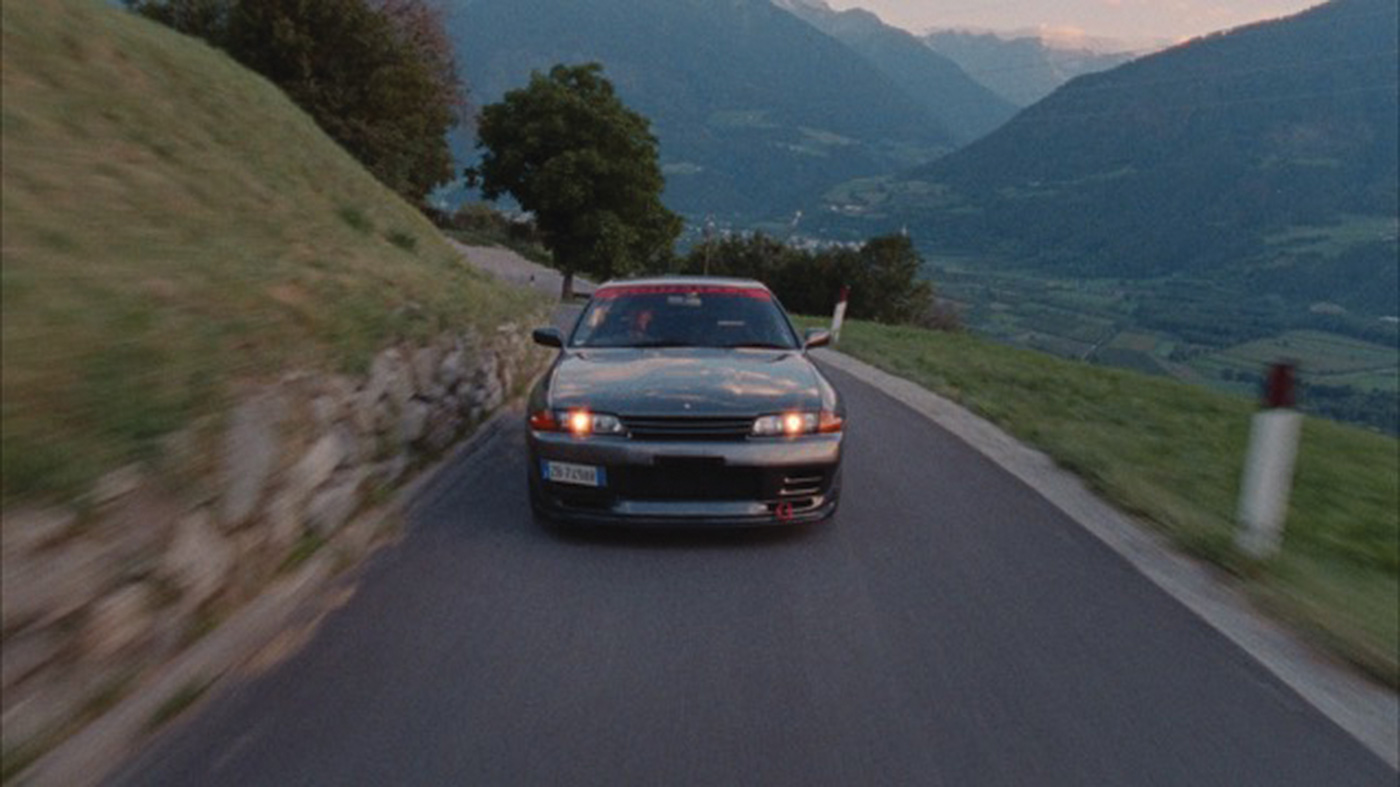
The Italian Alpine region of South Tyrol is not known for its tuning scene, but it does exist. A small group of young men have found each other to express their love of their home in their own way. Their Japanese sports cars glide oddly through historic villages, along the Alpine slopes and through breathtaking nature. GOODBYE REGINA is a farewell letter from the director to his grandmother, who grew up in these mountains. It explores the connection between the old and the new, without juxtaposing the two. In a landscape where seemingly nothing changes, the machines seem to be part of the creatures that emerge from this nature. The result is some kind of nature documentary, a collection of impressions away from the tourist postcard images.
Kevin Sepp is a director and editor based in Berlin. Coming from a humanities background, he is a self-taught filmmaker whose interest in short, visually rich storytelling led him to work in commercial film. Alongside commissioned projects, he continues to explore new possibilities through independent work. Collaborations with musicians and other artists strongly influence his sense of sound on screen and shape the atmosphere of his work. His films have been featured at festivals such as the Berlin Commercial and Berlin Music Video Awards, as well as on platforms like Directors’ Library, Sleek Magazine and Crack Magazine.
Gleb Sereda
Kros
Experimental film | 0 | color | 52:0 | Russia | 2023
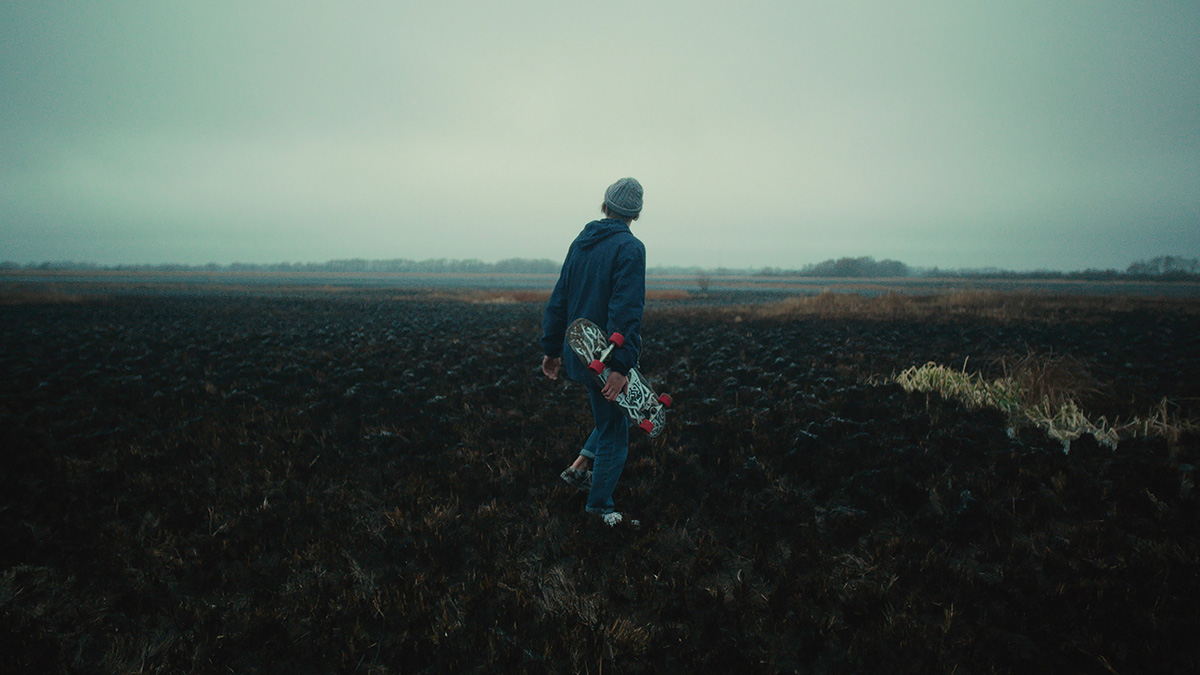
This is a metaphorical story about two young skaters who are trying to make sense of themselves in the world.

Marta Serna
BLACK WINGS
Animation | dv | color | 2:7 | Spain | 2010
BLACK WINGS Black Wings is the third video that complete ?Power Trilogy?. The main theme is the transference to the character of the spiritual and magic nature that bestows on it special powers, focussing on mental and crerative facets. Story tells about a black crow flying over the sky. Down on earth, a little girl is waiting for him. The bird goes down to alighted on her arm. Between them exist a secret language. The girl turns her body and gives back to spectator. We don?t know what?s happend, but suddenly she is very convulsioned and begans to grow a smooth down on her shoulder blade. In a few seconds, she has a new couple of sparkling black wings.She is ready to take off? Black Wings is connected to one of the most ancient wishes of human been: Possibility of fly. The black crow is the driver of the transference. The bird gives her the opcion to explore the world of the ideas, dreams, fantasy, illusions?..the stranger world of imagination and creativity.
Biographical note Marta Serna. Visual artist. Graduated from Complutense University of Madrid (1993) with a degree in Fine Arts, majoring in Painting. She also studied Classical Dance at the Royal College of London, Spanish Dance at the Royal Conservatory of Córdoba and Oriental Dance. She has created stage sets for films, theatre and television, and has taken part with diferent dance companys In worshops and performances, including Contemporary Stage. As a visual artist she is concentrated on illustration, traditional animation video, mural Installations in vinyl and plastics sculptures . She has shown her work in Spain, U.K, Mexico and USA. Now she is currently working with Espacio Marzana Gallery in Bilbao, Spain. Serna?s latest solo exhibition are ? Winter Tale? Espacio Frágil, Madrid., ?Black Sparkle?, Espacio Marzana, Bilbao and ?Black Wings?, Domus Artium, Salmanca, all in Spain (2010). ?Dark Delicate?, Cubo Azul Gallery, León (2009). ?Cruel but Fair?, Rosa Santos Gallery, Valencia and ? Blood Breath?, NO-ID Gallery, London (2008). ?Havoc Amazing Cosmic Trip?, Proyect 142, London ( 2007). And Colectives like ?Merrie Melodies?, Domus Artium, Salamanca (2010) ? ARCO 2009 Premios Creación Artística Comunidad de Madrid? ?Bloody Boots? ARCO 2008, and the visual proyect ?Bloody Little Creatures? for the goup The Cure in London.
Marta Serna
BLOODY BOOTS
Animation | dv | color | 1:10 | Spain | 2008
BLOODY BOOTS Bloody Boots is a traditional animation video and the first one about ?Power Trilogy?, whose mission is to reflect on our human, animal, artificial and spiritual nature and on the ritual of compensation we have to undertake to ensure that we adapt to our surrounding environment. The story tells about a normal pair of boots turns, by the vital and regenerator effect of blood, in autentic magic object of power. The blood that flows from earth transform the boots in protectives and magics. The ?new? boots gives the girl a big power. Now she is mentally and physically prepared to croos any territory. The blood is portrayed as the vital fluid that serves as a conduit for the realisation of the ritual and confers a special power on the object. Blood gives people a human condition and bestows an inheritance, a genetic nature. The content of the video is anchored in the earthly, working wih the human.
Biographical note Marta Serna. Visual artist. Graduated from Complutense University of Madrid (1993) with a degree in Fine Arts, majoring in Painting. She also studied Classical Dance at the Royal College of London, Spanish Dance at the Royal Conservatory of Córdoba and Oriental Dance. She has created stage sets for films, theatre and television, and has taken part with diferent dance companys In worshops and performances, including Contemporary Stage. As a visual artist she is concentrated on illustration, traditional animation video, mural Installations in vinyl and plastics sculptures . She has shown her work in Spain, U.K, Mexico and USA. Now she is currently working with Espacio Marzana Gallery in Bilbao, Spain. Serna?s latest solo exhibition are ? Winter Tale? Espacio Frágil, Madrid., ?Black Sparkle?, Espacio Marzana, Bilbao and ?Black Wings?, Domus Artium, Salmanca, all in Spain (2010). ?Dark Delicate?, Cubo Azul Gallery, León (2009). ?Cruel but Fair?, Rosa Santos Gallery, Valencia and ? Blood Breath?, NO-ID Gallery, London (2008). ?Havoc Amazing Cosmic Trip?, Proyect 142, London ( 2007). And Colectives like ?Merrie Melodies?, Domus Artium, Salamanca (2010) ? ARCO 2009 Premios Creación Artística Comunidad de Madrid? ?Bloody Boots? ARCO 2008, and the visual proyect ?Bloody Little Creatures? for the goup The Cure in London.
Marta Serna
CAT POWER
Animation | dv | color | 1:44 | Spain | 2009
CAT POWER Cat Power, the second video of ?Power Trilogy?, is the title that served as a source of inspiration for the underlying argument of the video: a girl gains the confidence of a little kitten by petting and them??eats it! In just a few seconds she gets a new projecting appendix. Cat Power refers to the recovery of wild untamed power through a ritual of appropiation. The central character appropiates the intuitive and wild part of the animal. The death of the cat is not in vain, it is necessary to recover a lost and forgotten wild nature. A mutation is produced. Both, human and animal coexist in the same body. They are no longer who they used to be and have become a new hybridised being gifted with new characteristics that make it more complete and fit for survival. The conduit in that video is the cat, whose sacrifice transmits a savage instinct and nature to the central character. This video explores the atavistic underpinnings of intuition.
Biographical note Marta Serna. Visual artist. Graduated from Complutense University of Madrid (1993) with a degree in Fine Arts, majoring in Painting. She also studied Classical Dance at the Royal College of London, Spanish Dance at the Royal Conservatory of Córdoba and Oriental Dance. She has created stage sets for films, theatre and television, and has taken part with diferent dance companys In worshops and performances, including Contemporary Stage. As a visual artist she is concentrated on illustration, traditional animation video, mural Installations in vinyl and plastics sculptures . She has shown her work in Spain, U.K, Mexico and USA. Now she is currently working with Espacio Marzana Gallery in Bilbao, Spain. Serna?s latest solo exhibition are ? Winter Tale? Espacio Frágil, Madrid., ?Black Sparkle?, Espacio Marzana, Bilbao and ?Black Wings?, Domus Artium, Salmanca, all in Spain (2010). ?Dark Delicate?, Cubo Azul Gallery, León (2009). ?Cruel but Fair?, Rosa Santos Gallery, Valencia and ? Blood Breath?, NO-ID Gallery, London (2008). ?Havoc Amazing Cosmic Trip?, Proyect 142, London ( 2007). And Colectives like ?Merrie Melodies?, Domus Artium, Salamanca (2010) ? ARCO 2009 Premios Creación Artística Comunidad de Madrid? ?Bloody Boots? ARCO 2008, and the visual proyect ?Bloody Little Creatures? for the group The Cure in London.
Marta Serna
Misty Eyes
Animation | dv | color and b&w | 1:10 | Spain | 2011
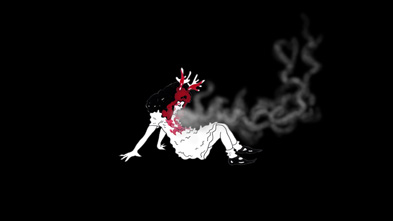
Presentation of the work and sinopsis Marta Serna?s current work is driven by her interest in the chaotic states of the mind, dreams, lethargy,myths,the boundary between reality and fiction, the subconscious adn their influence on human behaviour. In 2011, she developed the proyect ? Misty Eyes & Mourning Stones?, alluding firstly to the English expression of having the eyes blurred, as with tears, and secondly to the shiny, jet black jewels and stones used during the Victorian era, wich were primary elements in the mourners? attire between the seventeenth and nineteenth centuries. The combination of both expressions evokes the feeling of mourning and crying for oneself. The origin of the proyect is a restless interest for the chaotic state of the mind, when it feels confused and dreams with the possibility of getting rid of our internal mist. This leads to an open reflection about a mental space torn between lucidity and darkness, a lethargic state of the brain with magical, enchanted and supernatural connotations. The videos that I presented to Rencontres Internationales are part of this work. The first one, ?Misty Eyes? (2011),is a reflection about the nature of evil, whether it si produced by oneself or by our environment. The protagonist, combining human and animal characteristics, seems to be unprotected and lost, abandoned in the middle of nowhere and plunged into the immensity of the mist. When the landscape starts to become clear and the blur fades away, we can finally see that the mist comes from her mouth,plunging the forest into darkness again. She is held in her own environment and wilderness.
Marta Serna. Visual artist. Graduated from Complutense University of Madrid (1993) with a degree in Fine Arts, majoring in Painting. She also studied Classical Dance at the Royal College of London, Spanish Dance at the Royal Conservatory of Córdoba and Oriental Dance. She has created stage sets for films, theatre and television, and has taken part with diferent dance companys In worshops and performances, including Contemporary Stage. As a visual artist she is concentrated on illustration, traditional animation video, mural Installations in vinyl and plastics sculptures . . She likes drawing disfunctional caracters without scene and checking the roles of power on childhood. The mission on her work is to reflect on human, animal, spiritual and artificial natures and on the ritual of compensation we have to do to adapt ourselves to the surrounding environment. She has shown her work in Spain, U.K, France, Germany, Bulgary, Yugoslavia, Lebannon, Jordan, Algeria Mexico and USA. Now she is currently working with Asm28 Gallery in Madrid and Espacio Marzana Gallery in Bilbao, Spain. Serna?s latest solo exhibition are: ? Misty Eyes & Mourning Stones? Galeria Asm28 , Madrid ( 2011), ?Winter Tale? Espacio Frágil, Madrid . ?Black Sparkle?, Espacio Marzana, Bilbao, and ?Black Wings?, Domus Artium, Salamanca, all of them in Spain (2010). ?Dark Delicate?, Galeria Cubo Azul, León (2009) ?Blood Breath?, NO-ID Gallery, London, and ?Cruel butFair?, Galeria Rosa Santos, Valencia (2008) ?Havoc Amazing Cosmic Trip?, Proyect 142, London (2007) ?Havoc Oddity?, Galeria Cubo Azul, León. 2006) And collectives like ? The Noise of Bubbles?, Red Bull Academy, Matadero, Madrid. ?Gráfica. 30 Artists from young Spain? Cervantes Institute of Lebanonn, Jordan, Bulgary, Algiers, (2012 ). ?Rencontres Internationales?, with the video proyection ?Power Trilogy?? at Pompidou in Paris , Haus der Kulturen der Welt in Berlín and the Auditorio del Ministerio de Cultura in Madrid (2011_2010) ?Merrie Melodies?, Domus Artium, Salamanca (2010) ?Premios Creación Artistica Comunidad de Madrid?, ARCO 2009 ?Bloody Boots?, ARCO 2008, and the visual proyect ?Bloody Little Creatures? in London for the musical group The Cure. In 2008 receives the Prize of Artístical Creation for the Madrid Community for the creation of traditional video animation Cat Power.
Marta Serna
SnakeBoy
Animation | hdv | black and white | 0:34 | Spain | 2014
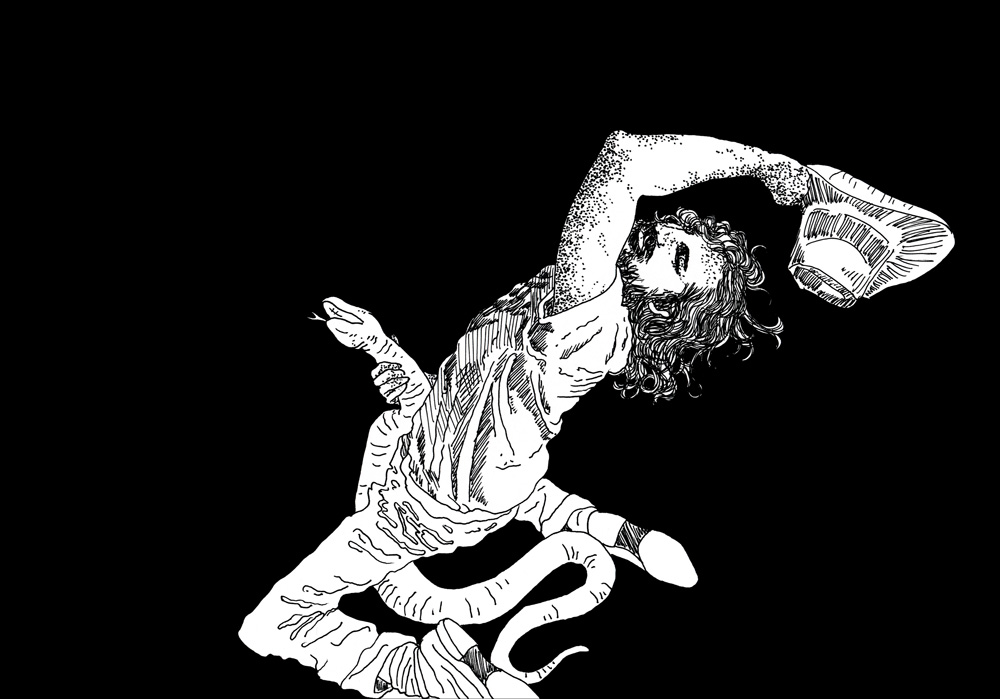
SnakeBoy is the first video of the serie Immaculate Dreams. It’s an animated portrait of a real person who creates a fictionalised version of himself, in what represents a journey through his own dreams. It features SnakeBoy riding a snake as a cowboy, truly enjoying being in control of the situation. Immaculate Dreams is about the possibility of turning a dark or unpleasant journey into something luminous and flawless through the exorcism of staging. The main characters will have to stage some of their dreamlike experiences in order to carry out their own “animated portrait of their dreams” and hence portraying themselves in a more intimate, personal way.
Marta Serna. Visual artist. Graduated from Complutense University of Madrid (1993) with a degree in Fine Arts, majoring in Painting. She also studied Classical Dance at the Royal College of London, Spanish Dance at the Royal Conservatory of Córdoba and Oriental Dance. She has created stage sets for films, theatre and television, and has taken part with diferent dance companys In worshops and performances, including Contemporary Stage. As a visual artist she is concentrated on drawings and illustration, traditional animation video, mural Installations in vinyl and plastics sculptures . She has shown her work in Spain, U.K, France, Germany, Bulgary, Yugoslavia, Lebannon, Jordan, Algeria Mexico and USA. Serna’s latest solo exhibition are: “SnakeBoy”Open Studio, Madrid (2014),”Abecedario para Monstruitos” Rita Castellote Gallery, Madrid(2012)” Misty Eyes & Mourning Stones” Gallery Asm28 , Madrid ( 2011), “Winter Tale” Espacio Frágil, Madrid . “Black Sparkle”, Espacio Marzana, Bilbao, and “Black Wings”, Domus Artium, Salamanca, all of them in Spain (2010). “Dark Delicate”, Galeria Cubo Azul, León (2009) “Blood Breath”, NO-ID Gallery, London, and “Cruel butFair”, Rosa Santos Gallery, Valencia (2008) “Havoc Amazing Cosmic Trip”, Proyect 142, London (2007) “Havoc Oddity”, Cubo Azul Gallery, León. 2006) and the visual proyect “Bloody Little Creatures” in London for the musical group The Cure. In 2008 receives the Prize of Artístical Creation for the Madrid Community for the creation of traditional video animation Cat Power.
Toni Serra, Ali ABU
Last night dikr
Experimental doc. | dv | color | 7:0 | Spain, Morocco | 2005
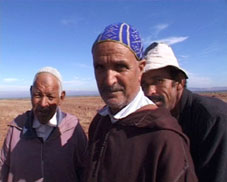
Inspired by a poem of the same name by Najmudin Kubra, a Sufi master of the XII century, "Last Night Dikr", a 'documentary of the author', shows the route of a thirsty group of men searching for water in the desert plains of Morocco. Minute after minute, image after image, this trail, full of metaphors and symbols, seems to lead us to this interior world that, according to the poet, every human being carries within himself. A man with a naked torso, with a gaping open chest, invites us to know ourselves, to understand ourselves and our desires. "Last Night Dikr" is a beacon, a compilation of documents destined to help, to steer the traveller on the path of spirituality.
Toni Serra lives in both Duar Msuar, Morocco, and Barcelone. He studied the history of art philosophy at the Universidad de Barcelona, and video and photography at the School of Visual Arts in New York. Toni Serra is the director of archives of the OVNI, l'Observatoire de la Vidéo Non Identifiée. His works question the excess of images, simulations, and the spectacular. Getting rid of uneccessary material, he reveals to the spectator what has remained dissimulated until today. Parallel to "Retroyou" by Joan Leandre, he developed "Babylon Archive", a project of archaeology media. He has compiled diverse cycles of videos, such as "Malestar a les Ciutats" and "TransArab ? Nou Vídeo Àrab", as well as the video program of MACBA 1996-97. In 2002 he received the Prix d'Arts Plastiques of the City of Barcelona for his installation "Fes Ciutat Interior", and in 2004, le Prix du Patrimoine de Catalogne for the project "Arxius" from the OVNI.
Anne-lise Seusse
De la guerre, Mont royal , fragments
Video | hdv | color | 15:16 | France, Canada | 2011
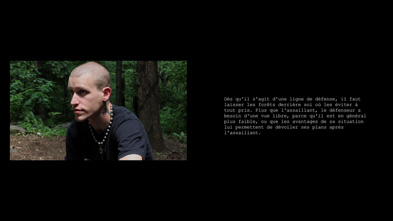
De la guerre, Mont Royal,fragments 2011 présentée est une double projection qui se focalise sur un parc de Montréal connu pour regrouper différentes activités de loisir et de plein air. En position centrale, situé sur une colline dominant la ville, le parc du Mont Royal cristallise par son esthétique tout un imaginaire tenant à l?idée de ré-ensauvagement dans la ville. Anne-Lise Seusse s?intéresse à ce lieu comme générateur de liens, et aux personnes qui y évoluent, dont elle tire cependant des portraits solitaires. De manière synchrone, apparaissent lentement des vues de l?environnement, où se gravent des restes de rituels, et les portraits, saisis dans des moments de repos, d?inaction. Mêlant la nature aux bruits de la ville proche, le son restitué des lieux contribue à une atmosphère d?attente vaguement menaçante. L?un des deux écrans de projection est en outre ponctué de textes extraits du célèbre traité de stratégie militaire De la guerre de Von Clausewitz, paru à titre posthume à partir de 1832 et qui gardera une certaine actualité en matière de réflexion politique et économique. Les descriptions implacables et les raisonnements dialectiques donnent alors une coloration et un rythme particuliers au scénario créé par Anne-Lise Seusse, entre réalité fantasmée et hostilité anticipée.
Photographe et vidéaste, Anne-Lise Seusse s?intéresse à des territoires situés aux lisières des villes et investis par des activités de loisirs (ball-trap, moto-cross, cérémonies de communautés de Second Life?). Espaces périphériques indéfinissables, entre l?urbain et le naturel, ces zones a priori sans qualité ni identité se marquent peu à peu d?un relief et d?un imaginaire bien particuliers. En position d?anthropologue, l?artiste « zoome » sur ces espaces porteurs de récits et se rapproche de leurs occupants en réalisant des portraits à la fois objectifs et rêveurs. Les lieux portent les empreintes des interventions humaines, parfois évocatrices d?une nouvelle forme de « earth art » (trous creusés dans la terre, rampes de planches de bois, couleurs des matériaux?). Les personnes revêtent les signes distinctifs de personnages (costumes de jeux de rôles?) et se prêtent sobrement à la pose, à la prise de vue extrêmement précise de l?artiste, qui travaille à la chambre, dans le paysage même.
Igor Sevcuk
Gravity
Experimental doc. | dv | color | 13:20 | Bosnia & Herzegovina, Netherlands | 2005
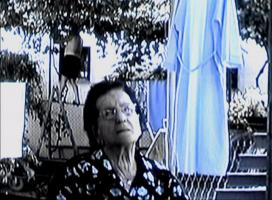
Gravity considers a tension between love (as the supposed subject of the film) and the traumatic remembrance of an old woman (the central figure of the narrative). She tells a story of a little boy who liked to climb trees and fell from one. In her background a man is climbing a ladder to prune grapevines. This seemingly ritual act contrasts with the oppressive shots of airplanes and cloudy skies. Gradually, the story of maternal love is transformed into an all-conquering totalitarian force. The video is occasionally underlined by music of Laibach / NSK (`Nova Acropola` 1983). "There is a more or less ignored fact that the historical object under discussion, the earth, has its metaphysical peculiarities, which like to hide behind an everyday appearance. We are dealing with a geographical-philosophical bastard here, the logical and physical particulars of which are not easy to fathom." Peter Sloterdijk, Theory of Globalisation.
Igor Sevcuk is born in 1972, Bosnia and Herzegovina/ ex-Yugoslavia. Since 1991 he lives and works in the Netherlands. He got a master degree of visual arts at Piet Zwart institute in Rotterdam. During Dutch art award, ?Prix de Rome? 2002, Sevcuk won the first price in the category of film and video. Sevcuk is since 1999 involved with a series of interrelated video installations, documentary and filmic narratives. Here he looks for a tension between the concepts of freedom and actual limitations of human structure. His work includes: Looking for Rebels (2000), Kalle (2004), Gravity (2005), Haso (2007).
Masha Sha
Clamp
Experimental video | dv | color | 3:0 | Russia | 2006
The tightness of grey banal reality clamps, at least there is still strength to come up for air.
Masha Sharafutdinova Education: 2003 ? 2005 Pro Arte Institute, Foundation for Art and Culture, St.-Petersburg New Media Art Studies Program 2000 ? 2005 St.-Petersburg State University of Art and Culture Social and Cultural Technologies 2000 ? 2001 St.-Petersburg College of Optics and Mechanics. Photography Prizes: First prize, "New Generation" young artist, Russian state competition of contemporary art, March 2006.
Tejal Shah, Natasha MENDONCA
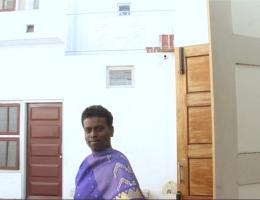
Anando's Door
Art vidéo | dv | color | 4:57 | India | 2005
Tejal Shah
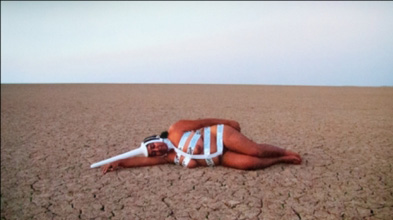
Between the Waves
Video | hdv | color | 26:14 | India | 2012
.
Tejal Shah (b. 1979) is a multi-disciplinary artist primarily working with video, photography, performance, sound and installation. Her work, like herself, is feminist, queer and political. She has exhibited widely in museums, galleries and film festivals. Recent presentations include, Paris-Delhi-Bombay?, Centre Pompidou, Paris, 2011, Where Three Dreams Cross, Whitechapel Gallery, London, 2010; Lost and Found - Queerying the Archive, Nikolaj Contemporary Art Center, Copenhagen, 2009; Global Feminisms, Brooklyn Museum, NY, 2007 and Saturday Live, Tate Modern, London, 2006. Solo exhibitions include The Incidental Self, Barbara Gross Gallery, Munich, 2011; There is a spider living between us, La Centrale, Montreal, 2011; Pentimento, Kashi Art Gallery, Cochin, 2009; ?What are You??, Thomas Erben Gallery, New York and Galerie Mirchandani + Steinruecke, Bombay, 2006 and The Tomb of Democracy, Alexander Ochs Gallery, Berlin, 2003. Her work is in the collection of Centre Georges Pompidou, Paris; Devi Art Foundation, New Delhi and several other private collections in India and abroad. Tejal Shah is a multi-disciplinary artist working primarily with video, photography, performance, sound and installation. Her work, like herself, is feminist, queer and political. She has exhibited widely in museums, galleries and film festivals. Her photography, video work and installation art questions the normal and the queer, bringing to light the dissonance between norm and, perception of the norm.
Shake
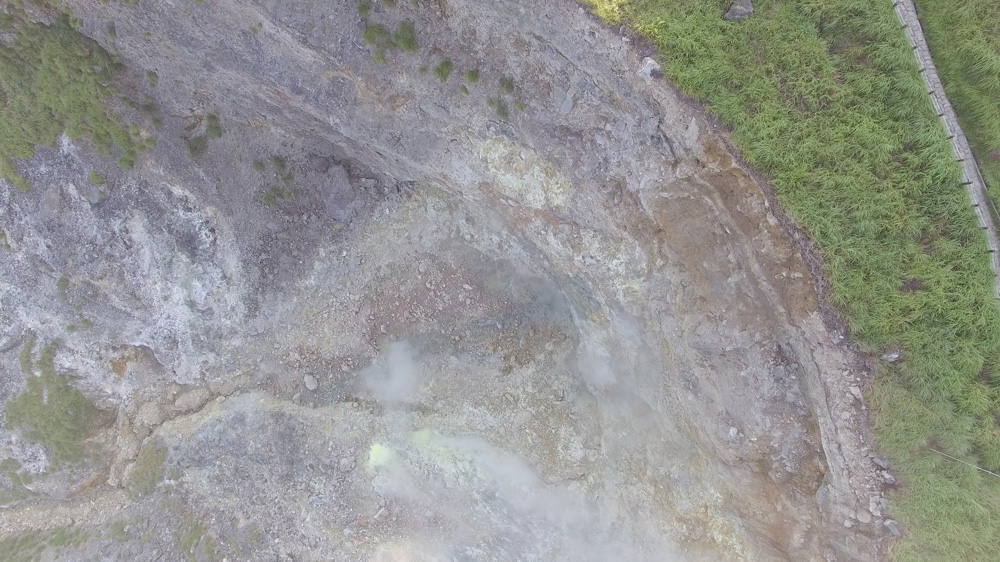
Subduction Zones: Our Status Quo
Experimental film | 4k | color | 4:8 | Taiwan | 2016
Located at the subduction zone where the Eurasian Plate converges with the Philippine Sea Plate, the island of Taiwan has developed a unique topography as a result of the downwelling tectonic activity. Similarly, Taiwan’s position at the boundaries of different political forces within the global geography, and the hidden forces exerted by political, economic, cultural, and ideological plates, have shaped its national identity. Taiwan’s unique landscape and geopolitical history serves as a theme for The Subduction Zone by Shake. Comprised of three short films entitled Our Status Quo, Our Story and Our Suite de Danses, the work traces the intersection of the tectonic plates and travel to Taipei’s Tatun Volcanoes; the Yuli to Antun section of the old railway line in Hualian that traverses the Eurasian Plate and Philippine Sea Plate; and to the Jili Badlands in Taitung. In the eyes of a geologist, these locations are ideal textbook examples of plate tectonics; but what Shake contemplates is whether these landscapes enable an imagining of the political struggles that have taken place on this island. How does an individual find a resting place within the conflicts of divergent social structures, political systems, and ideological modes? How can the status of the self be reimagined and the story of the self be told? In addition to landscapes, Shake also includes constructions of narrative elements in the film, such as archived historical documents, personal memoire, school activities, and cultural rituals, in the artistic practice of cinematic writing.
Cinematic writing (écriture cinématographique), is the initial creative approach that inspired Shake’s work. In order to experiment the possibility of narrative form, she plays with the plasticity of moving image to liberate the sense of sound and image, and then make them derived. Meanwhile, so as to resist the film’s rigid institutional mode of representation, in addition to the filming as the only manner, she also tries to work with other different medium and expression form to experiment. Recently, she tries to study Asian geopolitical history in her works. She has participated many international artist residency program, and presented her works in different countries.
Lior Shamriz
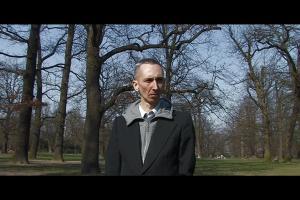
Before the Flowers of Friendship Faded Friendship
Experimental film | dv | color | 7:0 | Israel, Germany | 2007
This short experimental work, led mainly by dialogues, tells the story of an encounter between three old friends. The aim was to create an unusual emotional effect by constructing a realistic picture after a much darker sountrack which was prepared prior to shooting. The actors were later lip-syncing the fully edited soundtrack.
Born in Ashkelon, Israel, 1978 Studied Film at the Jerusalem Film School (2002-2005) Currently attending the Institut for Time-Based Media at the University of Arts (UdK) Berlin. Makes movies and music.
Lior Shamriz
Tiru Et Mi Hikhnasti Habaita
Documentary | dv | color | 20:0 | Israel | 2004
At 19, after dismissing himself from a brief army service, Lior Shamriz left his parents' home. He soon became an "immoral fag" and they became "old-fashioned provincials". By March 2004, after his older brother had moved in with his Catholic girlfriend in Madrid, and his younger brother had enrolled as a volunteer with the Israeli ground forces despite health problems, his parents were living alone. At that time, the situation in Israel, as almost always, was not that great. Suicide bombers hit Israeli towns despite the newly built "Fence" or "Wall" which was supposed to disable such attempts. Shamriz' father was very fragile, continuously listening to old music from Iran, which he had left at the age of 14. His mother was becoming addicted to the stories of the Telenovelas on TV, watching them day and night. Shamriz wanted to portray that period of time in the life of his parents by documenting one visit to their house, his home. A small mini-dv camera hung in his hands, enabling him to somewhat shoot his point of view, sometimes acting like a candid camera and other times taking an active part in the situation.
Born in 1978, Ashkelon, Israel, Lior Shamriz currently lives in Berlin. He studied at the Jerusalem Film School and is now attending the UdK Berlin in the Experimentelle Medien department. Selected works include: 2005, "Return to the Savanna", 75 mins program of 6 short films; 2006, "Ho! Terrible Exteriors" 30 mins short movie, "The Farewell" - a 50 minutes cooperation with the street theater group Zaza; "Japan Japan" (in editing) - an experimental featurette.
Sangam Sharma
Strings
Experimental video | 0 | color and b&w | 3:39 | Austria | 2005
Strings (3:39): Basé sur la théorie des cordes, qui dit que les particules élémentaires (comme les protons, les nucléons, les quarks...) sont produits par les vibrations de ce que l'on appelle les cordes. La matière sonore est un enregistrement du choc d'origine (la fréquence est multipliée par 100000).
Courte biographie: Je vis et travaille à Vienne, en partie aussi à Londres. Depuis 2000: Etudes de sciences du théâtre, du cinéma et des médias depuis 2003: Etudes à l'académie d'arts plastiques, masterclass de Peter Kogler (art vidéo infographie) également en 2005: séjour d'un semestre à Londres à la Slade School of fine Art, département: "fine art media". Depuis 2001 en parallèle avec une réflexion théorique sur le cinéma, une approche pratique a suivi. De nombreux travaux ont depuis vu le jour (voir la sélection dans la partie filmographie). En-dehors de mes travaux vidéo, je produis aussi entre autres de plus en plus de photographies, des travaux graphiques (sur ordinateur), des dessins et des images. Ci-joint une liste détaillée des mes participations à des festivals de cinéma ainsi qu'à des expositions. En outre je travaille dans le journalisme spécialisé dans le cinéma pour divers médias. En ce moment je travaille à une installation vidéo ainsi qu'à différents projets photographiques, et à un magazine.