Catalogue > Search
Results for : Tout le catalogue
Justin Schmitz
Away from Here
Fiction | hdv | color | 6:47 | USA | 2013
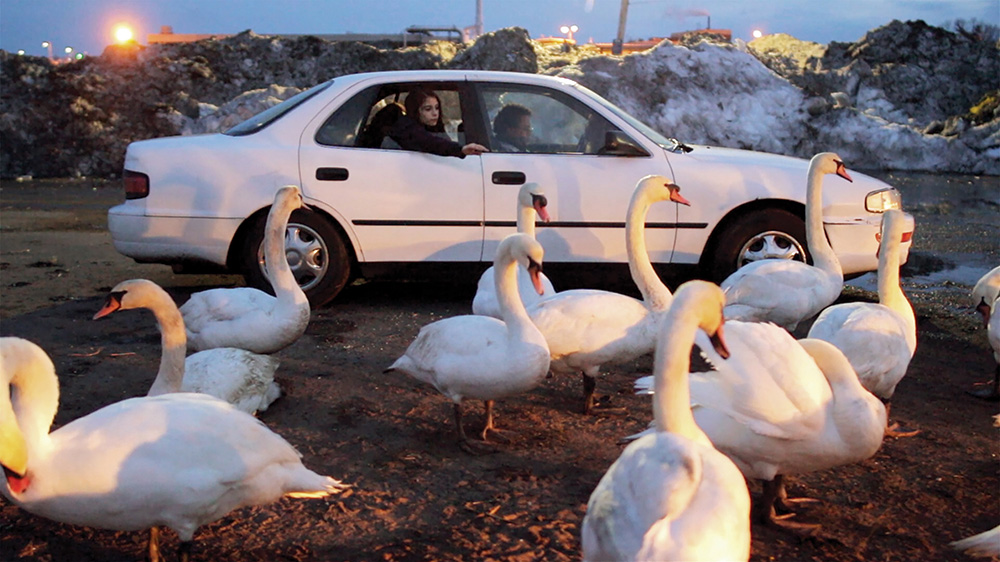
Away From Here is a look at young people growing up in the strip malls, skate parks, back seats, and empty parking lots of the American suburban landscape. This film explores the chasm between childhood and adulthood. In this film a young girl describes a dream in which she can fly. The description of her dream is the basis for exploring the world she and her peers inhabit. This film is a meditation on the reality of dreaming.
Born Peoria, Il 1981 Justin Schmitz is an artist living and working in Chicago, Il USA. He received a MFA from Yale University in 2013 and a BFA from Columbia College Chicago in 2004. He was awarded the Toby Devan Lewis Fellowship by the Yale University School of Art and the Tierney Fellowship for Excellence in Photography by the Tierney Family Foundation. Justin is also the recipient of The City of Chicago Community Artist Assistance Program Grant, The Union Civic and Art League Scholarship, and The Albert P. Wiesman Scholarship. He was a finalist for the Honickman First Book Prize at Duke University’s Center for Documentary Studies and the Photography Book Now Prize. His work has been included in The Museum of Contemporary Photography’s Midwest Photography Project and the Indie Photo Book Library. Schmitz has exhibited throughout Chicago at Johalla Projects, Gardenfresh, Heaven Gallery, the Evanston Biennial, and Version Festival. His work as also been exhibited at M+B Gallery in Los Angeles, The Aperture Foundation in New York, and Les Rencontres Internationales New Cinema and Contemporary Art Festival in Paris and Berlin.

Justin Schmitz
Mercury Black Magic
Video | 4k | color | 13:14 | USA | 2021
Mercury Black Magic is a meditation on being young and restless. A young man transfers his grief into the reconstruction of a 1980’s muscle car. His description of this restoration parallels the coming to terms with the emotions related to the loss of his father. This piece follows him through the landscape in which he and his friends hangout, together. This work is created amongst the young people of Salina, Kansas. They were hanging out at lookouts, parking spaces, and park shelters, doing seemingly nothing, but to them (and me) everything: listening to music, gossiping, relaxing, being. These moments are often described as nothing or as boredom or as inconsequential, but these are the moments with the most potential. Maybe these instances will not be recounted or thought of as memorable but, to me these moments feel the most intense. Before there is time for reflection these times are over, exhausted without ceremony. This is less a full understanding of a place, but my impression, a trace of a series of moments or an attempt to understand the world. This is an attempt to make something with the participation of the young people I met in Salina.
Justin Schmitz is and photographer and video artist working outside of Chicago, Il USA. He completed his Master of Fine from Yale University in 2013. He is the recipient of the Toby Devan Lewis Fellowship, The Tierney Fellowship, City of Chicago CAAP Grant, Albert P. Weisman Scholarship, and The Union League Civic and Arts Foundation Scholarship. A collection of his work is part of the Mid-West Photographers Project at the Museum of Contemporary Photography. He was runner-up for the Photography Book Now Prize, and a finalist for the Honickman First Book Prize.
Justin Schmitz
What Else Could This Be
Experimental doc. | hdv | color | 20:9 | USA | 2013
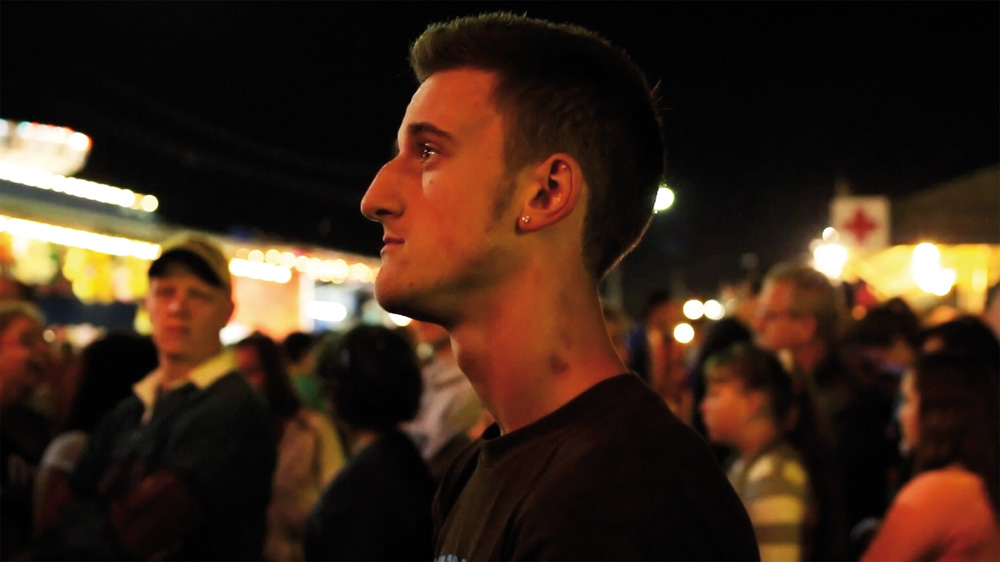
What Else Could This Be is a portrait of a world that exists between childhood and adulthood. This is a view of American youth as seen in the strip malls, the backseats of cars, and the empty parking lots. These youth idly bide their time, waiting to grow up. This film is a meditation on youth, transition, and wanting to connect in the world.
Justin Schmitz is an artist living working in the Midwestern United States. He received a MFA from Yale University in 2013 and a BFA from Columbia College Chicago in 2004. He was awarded the Toby Devan Lewis Fellowship by the Yale University School of Art and the Tierney Fellowship for Excellence in Photography by the Tierney Family Foundation. Justin is also the recipient of The City of Chicago Community Artist Assistance Program Grant, The Union Civic and Art League Scholarship, and The Albert P. Wiesman Scholarship. He was a finalist for the Honickman First Book Prize at Duke University’s Center for Documentary Studies and the Photography Book Now Prize. His work was part of The Museum of Contemporary Photography’s Midwest Photography Project and the Indie Photo Book Library. Schmitz has exhibited around Chicago at C33, The Coat Check Gallery, Gardenfresh, Heaven Gallery, the Evanston Biennial, and Version Festival. His work has been exhibited elsewhere including The Aperture Foundation, Belfast School of Art, and Yale University School of Art. Schmitz is Currently the Photography Fellow at the Lamar Dodd School of Art at the University of Georgia.
Ira Schneider
A Weekend at the Beach with Jean-luc Godard
Documentary | dv | | 9:59 | USA | 2009
?A Weekend at the Beach, w. Jean-Luc Godard? Del Mar, Calif., USA 1978/1984/2009, 10min. with Godard, Wim Wenders, Heiner Müller and others. In 1978 I shared a house with Jean Pierre Gorin on the beach in Del Mar, California. We were both professors at the University of California, San Diego. Gorin once worked with Godard on a film and invited him to give a lecture at our school. Godard came and stayed at our house. Other filmworld & creative people came to hear Godard. They also stayed at our house. Among them Wim Wenders, Heiner Müller and Jim McBride. I videotaped some of our time at our house on the pacific ocean beach. By 1984 friends who saw it pressured me to make the tape public. Shortly before I edited it, I had seen some Godard political/very wordy films which I couldn?t stand. I therefore spoke a rather cynical narration. In 2009 I was asked to include an introductory verbal statement explaining the above & the sarcastic tone of the ?A Weekend at the Beach, w. Jean-Luc Godard? Del Mar, Calif., USA 1978/1984/2009, 10min. with Godard, Wim Wenders, Heiner Müller and others. In 1978 I shared a house with Jean Pierre Gorin on the beach in Del Mar, California. We were both professors at the University of California, San Diego. Gorin once worked with Godard on a film and invited him to give a lecture at our school. Godard came and stayed at our house. Other filmworld & creative people came to hear Godard. They also stayed at our house. Among them Wim Wenders, Heiner Müller and Jim McBride. I videotaped some of our time at our house on the pacific ocean beach. By 1984 friends who saw it pressured me to make the tape public. Shortly before I edited it, I had seen some Godard political/very wordy films which I couldn?t stand. I therefore spoke a rather cynical narration. In 2009 I was asked to include an introductory verbal statement explaining the above & the sarcastic tone of the video. With it the video now runs 10 minutes.
Schneider, born in New York, 1939. Lives in Berlin. Between 1962 and 1968 produced 8 short experimental films including "Lost in Cuddihy" and "The Ghost of Wittgenstein". The installation "Wipe Cycle" produced with Frank Gillette presented in the first video art group show, also including Nam June Paik, N.Y. 1969. Schneider was co-originator & editor of the video journal, "Radical Software". He co-edited "Video Art, an Anthology", N.Y. 1976, with Beryl Korot. The video installation "Time Zones" (in which one could see all around the earth at the same time) was shown in the Whitney Museum 1981 and over the next years in the Palais de Beaux Arte, Brussels and four other museums in Europe. He has been the recipient of Guggenheim and Fulbright Fellowships. He is the Hannah Hoech Prize winner for 2006, Berlin. His ?Manhattan is an Island? installation was presented at the Reina Sofia Museum, Madrid, 2006/2007. 2008 he has participated in group shows at the Les Rencontres Internationales, Pompidou Centre, Paris & 2009 in Madrid. 2009 he was one of the winners of the Celeste Prize, adjacent to the Venice Biennale and videos and installation were shown at Hamburg Documentary Film Weeks Festival. In 2009 he had solo screenings at the Anthology Film Archives, NYC and a one man show Groznjan, Istria, Croatia.

Ira Schneider
Lost in Cuddihy
Experimental film | 16mm | color and b&w | 12:0 | USA | 2010
An experimental, non-narrative film and an information collage of experiences in America of the middle 1960. Juxtaposed are the worlds of politics, anti-Vietnam war protests, the Rock`n Roll scene, and transcendental meditational influences from Asia. The film was purchased by the New York Museum of Modern Art Archive in 1967.
Schneider, born in New York, 1939. Lives in Berlin. Between 1962 and 1968 produced 8 short experimental films including "Lost in Cuddihy" and "The Ghost of Wittgenstein". The installation "Wipe Cycle" produced with Frank Gillette presented in the first video art group show, also including Nam June Paik, N.Y. 1969. Schneider was co-originator & editor of the video journal, "Radical Software". Schneider`s "Manhattan is an Island" a video installation was exhibited in the Kitchen, Everson Museum in 1974, and at the Whitney Museum, N.Y. in 1977. In 2006 it was purchased by the Reina Sofia Museum in Madrid & exhibited until April 2007. He co-edited "Video Art, an Anthology", N.Y. 1976, with Beryl Korot. The video installation "Time Zones" (in which one could see all around the earth at the same time) was shown in the Whitney Museum 1981 and over the next years in the Palais de Beaux Arte, Brussels, Kunsthalle Mannheim, Museum of Modern Art, Vienna, Nouvelle Museum, Lyon and the Barbican Center, London. He has had exhibitions at the Museum of Image & Sound, Sao Paulo, ZKM, Karlsruhe and has been the recipient of Guggenheim and Fulbright Fellowships. He is the Hannah Hoech Prize winner for 2006. In 2007 & 2008 he has had solo exhibitions at the Wewerka, Lecoq Galerie and Kunstpunkt, Berlin and at the Emily Harvey Foundation, NYC. In 2009 he had solo screenings at the Anthology Film Archives, NYC and Image Movement, Berlin a one man show Groznjan, Istria, Croatia. 2008 he has participated in group shows at the Les Rencontres Internationales, Pompidou Centre, Paris Caixe, Spain Viva Festival, Spain U.FO, Hamburg, Germany ?Inseln ? Archipelle ? Atolle Symposium?, Mannheim Kunstsalon, Berlin photo edition berlin, Berlin L.A. Center for Digital Art, California. 2009 he has participated in group shows Celeste Prize adjacent to the Venice Biennale Les Rencontres Internationales (also included 2010), Madrid and Hamburg Documentary Film Weeks Festival. 2010 Emily Harvey Foundation, video presentation MUMOK, Vienna featured in the "Changing Channels" video history exhibition "Schuster/Schneider 2" group show, Berlin 2010
Ira Schneider
More or less Related Incidents in Recent History
Experimental video | 16mm | color and b&w | 37:54 | USA | 2008
?More or Less Related Incidents in Recent History? started as film in 1968 about the painting of a boutique in Greenwich Village, Manhattan, New York City and the scene that evolved around it, it contrasted the News of the Viet Nam war from its origins in the 1950s with the fashion scene of the late 60s. A free, but bad transfer from film to video in 1975 destined the work to the film bin until P. Weibel from ZKM Karlsruhe, Germany supported the transfer of the film to Digital Betacam at Das Werk, München in 2003 and restoration of all the necessary video tapes. I filmed the rock n?roll sequences in 1967 and 1968 with reversal Ektachrome pushed to 1600 ASA (earlier these were passed through an analog video echo in 1975). The original Greenwich Village site was recorded in 1976 and 2004. I retrieved a video of Abbie Hoffman shot in 1969 and included some images of George W. Bush in the final editing process in June 2008 in Berlin, Germany. All along I contrast the notion of wars in distant lands with the day to day bourgeois concerns in relatively safe land.
Schneider, born in New York, 1939. Lives in Berlin. Between 1962 and 1968 produced 8 short experimental films including "Lost in Cuddihy" and "The Ghost of Wittgenstein". The installation "Wipe Cycle" produced with Frank Gillette presented in the first video art group show, also including Nam June Paik, N.Y. 1969. Schneider was co-originator & editor of the video journal, "Radical Software". Schneider`s "Manhattan is an Island" a video installation was exhibited in the Kitchen, Everson Museum in 1974, and at the Whitney Museum, N.Y. in 1977. In 2006 it was purchased by the Reina Sofia Museum in Madrid & exhibited until April 2007. He co-edited "Video Art, an Anthology", N.Y. 1976, with Beryl Korot. The video installation "Time Zones" (in which one could see all around the earth at the same time) was shown in the Whitney Museum 1981 and over the next years in the Palais de Beaux Arte, Brussels, Kunsthalle Mannheim, Museum of Modern Art, Vienna, Nouvelle Museum, Lyon and the Barbican Center, London. He has had exhibitions at the Museum of Image & Sound, Sao Paulo, ZKM, Karlsruhe and has been the recipient of Guggenheim and Fulbright Fellowships. He is the Hannah Hoech Prize winner for 2006. In 2007 & 2008 he has had exhibitions at the Wewerka, Lecoq Galerie and Kunstpunkt, Berlin and at the Emily Harvey Foundation in New York City.
Ira Schneider
Somewhere on Orchard Street
Experimental doc. | 16mm | color | 8:6 | USA, Germany | 2015
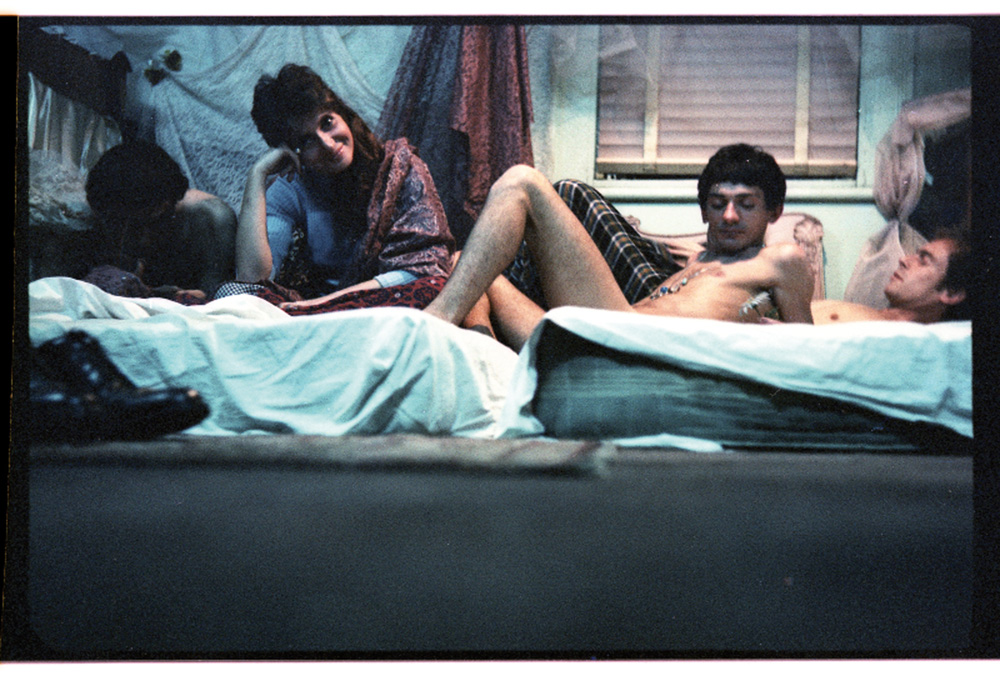
I was a member of the Max`s Kansas City club 1966-1974.Andy Warhol hung out there until he got shot in 1968.The Velvet Underground continued to go there.Lou Reed & I often said hello.Larry Rivers,Mel Brooks,Janis Joplin, Lauren Hutton,Julian Schnabel sometimes talked.The maitre d`invited me to film an evening with his friends above a bridal gown shop on Orchard St.They somehow got fabrics from the shop. I brought my Bolex.
Ira Schneider made experimental films in the 60s, than independent video in `69, participated in the “First Group Video Art Exhibition” in NYC May `69 with “Wipe Cycle” video installation, makes his own kind of non-narrative videos, video performances, comedies and multi- monitor video installations. Recipient of Guggenheim Fellowship 1977, National Endowment for the Arts 1978, “Time Zones” video installation, Whitney Museum, NYC 1981, Fulbright Advanced Fellowship 1993. One of winners, Mediakunstpreis, ZKM, 2003. Recipient of the Hannah Hoech Prize, 2006, Berlin Exhibitions: “Video Skulptur” Cologne, Berlin 1989; “Max`s Kansas City Club Show”, Nikolaj Gallery, Copenhagen, 2004; Reina Sofia Museum, Madrid 2006 with “Manhattan Is An Island” video installation; Galerie Walden, Berlin 2007; Kunstpunkt, Berlin 2008; Rencontres International Film Festival, Paris, Madrid, Berlin 2008, 2009, 2010, 2011; “Changing Channels”, MuMoK, Vienna 2010; Prima Center and Freies Museum, both Berlin 2011. “Remote Control” ICA London; “The Whole Earth” exhibition, Haus der Kulturen der Welt, Berlin, April - July 2013; Zagreus Gallery, Berlin, 2014 video- and photo installation and cooking exotic menus. Award “Best Short Short Film” at the Paris Short Film Festival 2015 and award “Best Short Film” at the Berlin Short Film Festival 2015,best Experimental short film at the Paris IndependentFilm Festival,2015 Schneider has published two eBooks and two photography books 2014/15 and produced the video H2O #18.
Annelore Schneider, Claude Piguet
White Shadow
Experimental fiction | mov | color | 10:24 | United Kingdom | 2021
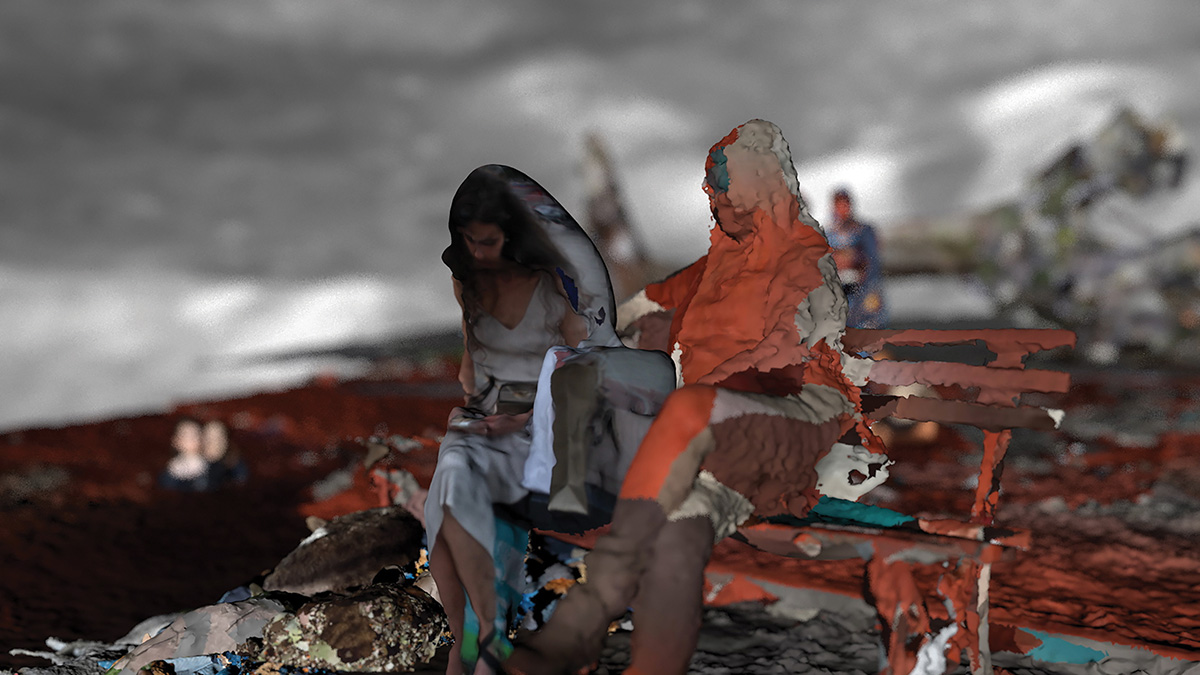
In this speculative fiction, all the world’s photographs have suddenly turned into the objects they represent. The video “White Shadow” depicts a vertiginous architecture, so devastating that it created new uncontrollable borders and isolated people. Piles of selfies, cats, and meals are scattered everywhere. Text messages evoke a new society living with limitations and suffering from media saturation, sensory overload, and crushing ecological impact. A world where images have taken over, invading and transforming space. They become the only reality that is still visible, as the whole world is turning inwards.
The collectif_fact comprised Annelore Schneider and Claude Piguet. They live and work between London and Geneva. Their work investigates how narrative and cinematic codes can expand our relation to space and objects. Their research considers storytelling, editing and filming as a tool to speculate and critically reflect on the habits that condition our perception of reality. Their film frequently uses the spectator’s ability to construct stories from ruptured narrative fragments and their desire to be gripped and even deceived by images and stories. collectif_fact’s films have been shown internationally in art festivals and exhibitions, including Maison européenne de la photographie, Paris, Centre d’art contemporain, Geneva Centre Culturel Suisse Paris, Hiroshima Museum of Contemporary Art, Lianzhou Foto Festival, Metropolis Art Center, Beijing, Fotomuseum Winterthur. They received numerous awards such as the Swiss Art Award and recently Grand Prix Culturel Migros, Swiss Art Council Pro Helvetia Production Grant and residency Art + Tech Space Studios, London.
Corinna Schnitt
Von einer Welt
Experimental video | 35mm | color | 9:34 | Germany | 2007
In ?Von einer Welt? [?About a World?], Corinna Schnitt?s latest work, the world is an idyllic Alpine landscape of forests and meadows. A man is striding through it, alone, to stand in the next scene on a meadow with a dozen nude women lying in high grass; each is draped as they would be if drawn from life by a painter. The man, whose uncertainty an loneliness are palpable, approaches each woman individually, one after the other, caressing and making erotic overtures, at times tenderly, at others more overtly. His attempts at making contact remain futile, however, as they produce no reaction at all. The women seem to have become part of nature, as if ?from another world?. Again a long shot of the scenery appears, this time with passages fromJu_rgen Habermas? The Theory of Communicative Action, which can be read on the lower edge of the picture.The excerpts dealing with ?communicative rationality? shift the sensory/sensual image to an abstract plane while also providing the work with its title. With minimalist staging devices, the artist opens a discourse on the forms of aphasia between the sexes, between body and intellect, between the emotional and the rational, between nature and culture, between one world and another. Anke Hoffmann
Corinna Schnitt, born in Duisburg, studied art and film at the University of Visual Communications in Offenbach and at the Art-Academy in Düsseldorf, Germany.
Corinna Schnitt
Vollendete Zukunft (Future Perfect)
Experimental fiction | hdv | color | 9:0 | Germany | 2016
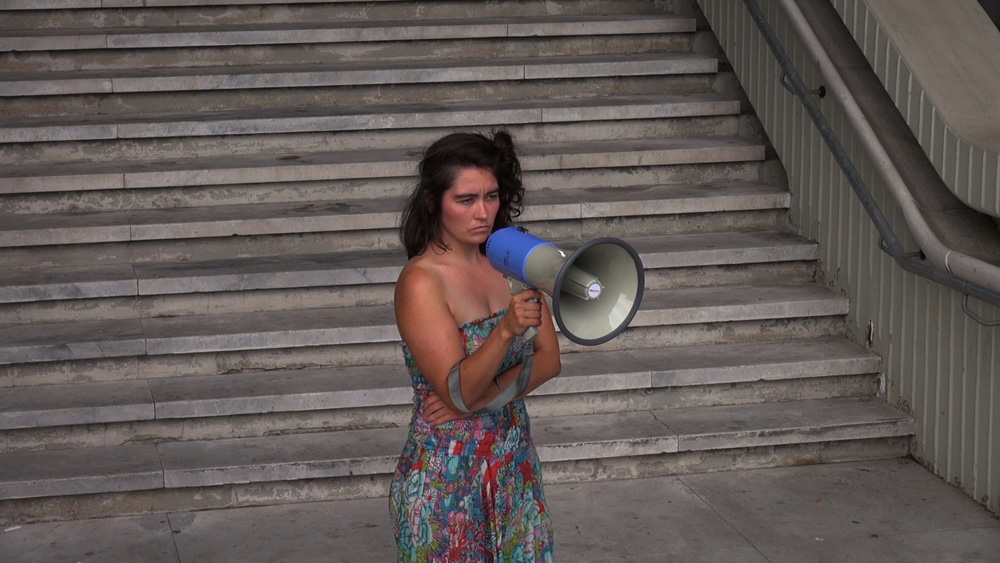
Eight protagonists distributed over Marls central Rathausplatz in front of the Skulpturenmuseum use megaphones to call out everyday phrases to each other as if they were carrying out a conversation: “ Do you think he will have won the Lotto ” or “ You will have told me much about your experiences“. Formulated in future perfect, these shouts play with the expectation that certain events will have happend by a certain time in the future. This construction has a distancing effect on the here and now and on the ease of normal everyday conversation, showing the extent to which a present experience is determined by expectations of the future. The use of megaphones seems antiquated today and thus deals ironically with present-day forms of communication. Like on the Web, banal experiences from one`s own life are communicated to an imaginary public without controls or personal contact. Marl`s Rathausplatz and the Skulpturenmuseum were constructed in the 1970s and document the city`structural rebirth, carried out with the goal of turning the urban core into a vibrant place and optimally combining diverse functions. Previously regarded as amuch lauded model solution, it is now obvious that the utopian promise of a city that radically deviates from traditional urban structures has not been fulfilled in the long run.
Born in Duisburg, Germany, lives and works in Braunschweig. From 1986 to 1989 apprenticeship as a carver (diploma), Michelstadt, from 1989 to 1996 studies at the Hochschule für Gestaltung (Academy for Visual Communication), Offenbach, as well as at the Kunstakademie (Art Academy) in Düsseldorf (1995 Masterstudent). Since 2009 Professor for Film/Video at the University of Art Braunschweig.
Corinna Schnitt
Hänschen klein
Experimental video | | color | 7:0 | Germany | 2009
In a single shot the film shows different time-periods and creates a fairytaile atmosphere. A stillife is presented in an outside garden in front of a modern architecture, that has a fake- wooden-outside design.The paradox longing for both experiencing adventure and wanting to feel at home is part of the children-song.
CV Corinna Schnitt was born in Duisburg,Germany. From 1989-96 she studied art and film at the Hochschule für Gestaltung, Offenbach and the Kunstakademie Düsseldorf
Corinna Schnitt
Once Upon a Time
| | color | 22:0 | Germany | 2006
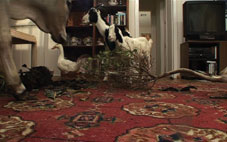
In a living room, a camera is slowly turning round, about thirty centimetres above the carpet. There is no one to be seen. A cat suddenly appears and moments later a second one enters the room. A dog drinks water from a fish bowl, a bird joins the assembled company, a rabbit hops in, a goose waggles its way among them, somewhere a pig is grubbing about, and there is a goat, and there is a lama, and there is no end to it. Gradually the room fills up with more and more animals which are sniffing each other, startling each other, or munching on a house plant together. In the intro to "Living a Beautiful Life" (2003), an earlier work by Corinna Schnitt, we saw all kinds of very young children sitting, lying, walking, and playing naked together in an idyllic landscape. The religious or romantic association with a primeval world in which living creatures would once have co-existed, also emerges from "Once Upon a Time". The natural habitat in which these animals once lived has been replaced by the interior of a house. Does the word "natural" have any meaning left in connection with animals that, in our culture, have practically all been domesticated? They are simply pets and domestic animals, so they are not really out of place here. As is often the case in Schnitt's work, here too, it seems to be about the artificiality or neurotic quality of human behaviour and the problematic contrast between 'nature' and 'culture'. Although man is absent in this work, in that absence he is still part of the representation. Observing these animals that will not often be found together in this sort of setting easily makes one think about how we would behave in this kind of room.
Corinna Schnitt was born in 1964. Artist and director, she has evolved in the artistic milieu as much in Germany as internationally. After an apprenticeship in wood sculptures, she studied at the Hochschule für Gestaltung in Offenbach and at the Art Academy of Düsseldorf. For a number of years now she has resorted to the medium of cinema fo her artistic creations. She has thus made a series of experimental short films in which daily phenomena are pushed to the absurd, like a spiral with no end. Besides a number of video installations projected in museums and galleries, Corinna unveils her works in the framework of film festivals as well as on German television.
Susanna Schoenberg
Garage|Katze
Experimental video | dv | color | 7:0 | Italy, Germany | 2005
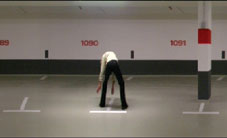
The longest parking garage in Germany as a metric metaphor of the history of thought; a masked figure running after herself as a poetic metaphor of the sovereign subject; the trivial gesture of the cat-woman who does not know any evolution apart from her own caprice.
Susanna Schoenberg was born in 1967 in Italy. She grew up in Bolzano/Bozen, lived and studied in Milan and Berlin, and since 1999 has been living in Cologne (Germany). She studied social sciences, cinematographic techniques, and media arts, and her artistic production since 1990 has mainly been in the fields of video, photography and installation. Focus points of her work include media oriented arts, in particular computer supported installations, experimental video, documentary, and photography.
Gianna Felicita Scholten
At Night by Horse
Experimental fiction | hdv | color and b&w | 11:48 | Switzerland | 2023
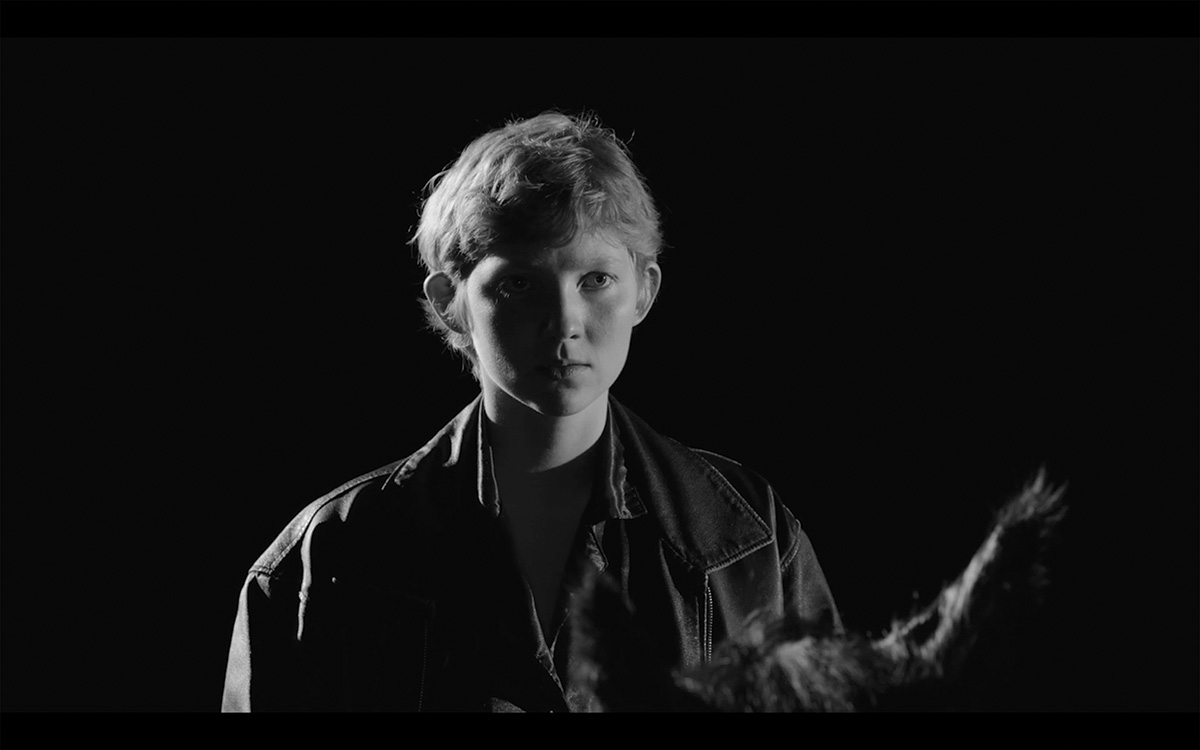
Micki rides across the night through a palm forest. With the quiet and the loneliness, the repressed heartbreak pushes to the surface and Cassi becomes real. Like two homopolar magnets charged with their tangled traumas, they fail to find each other this time once again. But at dawn the wounds heal. Cassi disappears and the last video is deleted. But you can't force goodbyes, because feelings are real.
Gianna Scholten is a writer and filmmaker from Switzerland and Germany. She graduated from the German Film and Television Academy Berlin (dffb) in 2020 and continued her studies at the Academy of Media Arts Cologne (khm). During her time at the khm, she dedicated herself to creating film projects and radio plays. Her work has been awarded the Prix Alice Guy Prize of the FID Marseille and the New Signs Award of the Film Fest Lago.
Sabine Schöbel
GRUNSKE
Experimental film | | color | 5:0 | Germany | 2009
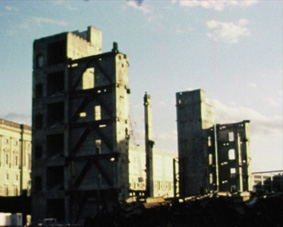
The demise of the `Palace of the Republic` in Berlin, at sunset. This is a portrait of a powerful symbol of nostalgia for the GDR that was re-used, restored and then, eventually, demolished, becoming a changing, magical emblem of the new centre of the city. The last glimpses of its `skeleton` evoke thought-provoking experiences: the last bits of stairwells are reminiscent of other images of ruins, such as Berlin in the 1940s, when it was a bombed-out city, or of the World Trade Center in New York. It also conjures notions of the Romantic era in the 17th and 18th centuries, when ruins where expressly built. "GRUNSKE" is, in an odd way, the name of the sculptor responsible for this accidental monument: it`s the name of a company that recycles metal. Over the course of months, their machinery carried out the contract of dismantling the Palace, for the public good in a public space.
Sabine Schöbel was born in 1962. She works in architecture/design, set design, and film studies. Her first film, LUPINEN LÖSCHEN, premiered in 2007 at Forum expanded. Presently she is managing director at Arbeitskreis Film Regensburg / Regensburger Kurzfilmwoche.
Sabine Schöbel
Lupinen löschen
Experimental film | super8 | color | 6:0 | Germany | 2006
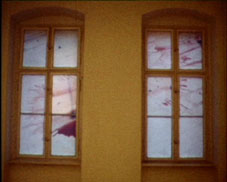
"Lupinen löschen" shows both the beauty and the frightening character of a small and not so banal incident: bottles of red wine fall and smash to smithereens. They create superb red stains on the white floor, and reflect the light coming in through the windows. The camera then very slowly continues to film as it moves back from this image, first filming the ground, then the windows, the stucco on the ceiling, the wallpaper, then returns to the floor and the two windows. In a single sweep the floor is clean and the stains are now outside instead. This work refuses any and all clearly defined explanations. It repeats an experience that stretches within this languorous manner of filming everyday life, of light and movement, and images full of meanings of horror and various misfortunes. According to Sabine Schöbel, "Lupinen löschen" remains, outside this 'game' of appearances, the realization of souvenirs and memories in space.
Sabine Schöbel was born in Bayreuth. Elle studied in Ratisbonne, Grenade, Madrid, Frankfurt-Am-Main, and Potsdam. She did her thesis in the area of theatre, cinema, and the media at the University of Frankfurt. She creates works in architecture/design, filmmaking, and cinematography. She has worked as a scientific collaborator at the media sciences department at the University of Paderborn from 2003-05, and as a filmmaking assistant for the movie "Herr Lehman", Germany 2002. Among her personal productions are "les lumières de la villa Tiedka" in Potsdam, 2003; the Claudia Heser House project in Warmensteinach, 2005; as well as the preparing and making of the televised game "Die Überflüssigen", ZDF 2006. "Lupinen löschen" is her first film.
Floris Schönfeld, Frank Chu
The Richest Family; The Early Episodes
Experimental doc. | hdcam | color | 15:0 | Netherlands, USA | 2013
The Richest Family; The Early Episodes is a project by artist Floris Schönfeld in collaboration with Frank Chu. At the center of The Richest Family; The Early Episodes is the internal world of Frank Chu, intergalactic movie star and well-known San Francisco Bay Area protestor. Frank believes that he is the victim of an intergalactic conspiracy that is based around him being the star of a popular television sitcom called The Richest Family. This show features him and his family and is recorded without his consent and broadcast to huge audiences in a number of alternate galaxies known as the 12 Galaxies. He can often be found at large public demonstrations in the San Francisco Bay Area protesting for impeachment of various public figures who he sees as complicit in this conspiracy. For the work The Richest Family; The Early Episodes two bootleg episodes of the television show The Richest Family were made. As well as staring in the episodes Frank was instrumental in the co-directing, and scripting of the pieces together with artist Floris Schönfeld. The Richest Family; The Early Episodes will be the first episodes of The Richest Family to be seen on Earth that have Frank?s full consent.
Frank Chu (b. 1960, Oakland, California, US; based in Oakland) is a professional protester and intergalactic television and movie star. He studied Business Administration at the University of California, Berkeley; California State University, Hayward; Merritt College, Oakland; and Laney College, Oakland, before receiving an Associate?s Degree in Business Administration from The College of Alameda, California, US. Since 1998, Chu has presented his ongoing series of signs in daily protests throughout the San Francisco Bay Area. His work is the subject of "Jretdrostrenikal Exhibitions", an ongoing and undefined solo exhibition at Objectif Exhibitions, Antwerp (2012-ongoing); and he has recently participated in group exhibitions including "Portable Holes", San Francisco Pavilion, 9th Shanghai Biennale, China (2012); "Sõida tasa üle silla (Ride gently over the bridge)", Galerii Noorus, ART IST KUKU NU UT Festival, Tartu, Estonia (2012); and "Psymulation: Reenactments of the Present", Photo Epicenter, San Francisco, US (2008). Floris Schönfeld (1982) is a visual artist currently based in London and San Francisco. He works mainly with film and performance. The focus of his work in the last years has been the relationship between fiction and belief. In his work he is constantly trying to find the line between defining his context and being defined by it. In 2010, Floris completed the multi-disciplinary project ?u? in which he reconstructed the first ever authentic Klingon opera on Earth and made the film The QiH Act based on the performance of the opera for an entirely Klingon audience. In 2011, he made the film Discours de Fou as part of the International Ghetto Biennale in Port-au-Prince, Haiti and in 2012 he was commissioned to make work for the San Francisco Pavilion at the 12th International Shanghai Biennale. Schönfeld?s work has been shown at many film festivals and intsitutions throughout the world including the Amsterdam Film Biennale, Rencontres International Paris/Madrid/Berlin, the Rotterdam International Film Festival, the Haus der Kulturen der Welt Berlin, the Kassel Documentary & Film Festival (where it was nominated for the A38-Prodcution Grant) and the Kadist Foundation in San Francisco. Floris is currently a graduate fellow at the Headlands Center for the Arts in the San Francisco Bay Area.
Floris Schönfeld, Michaël SEWANDONO
WEIGHT - End of the World
Video | dv | color | 5:0 | Netherlands | 2009
Weight is a series of short films that are each based on different excerpts from literature. The selected excerpts served as the scenario for the films, and demonstrate the moments of subtle tension that precede a significant event in the plot. A search for the moment, and for the physical state of the decision making. Removed from the context of the original story these excerpts are enigmatic, but retain the same tension inherent to their former position. As they start to interact on a suggestive level a new, highly tense, charged story emerges. The project strives to convey the `weight` of the moments without the context of their original narratives. The series currently consists of four films; 1. Oracle Night based on Oracle Night by Paul Auster 2. Miso Soup based on In the Miso Soup by Rui Murakami 3. End of the World based on Hard-boiled wonderland and the End of the World by Haruki Murakami 4. The Outsider based on The Outsider by Albert Camus
Floris Schönfeld (Houston, VS, 1982) is a visual artist and filmmaker working in Amsterdam and The Hague. He studied time-based arts at the Gerrit Rietveld Academy in Amsterdam and has recently completed a masters at the Interfaculty ArtScience at the Royal College of the Arts/Royal Conservatoire The Hague. In his film and performance work he is primarily concerned with the awesome power of fiction and it?s effects on humanity. Michaël Sewandono (1979) studied audiovisual art at the Gerrit Rietveld Academy in Amsterdam and he studied at the Escuela Internacional de Cine Y Television de Cuba, Havana. Between 2005 and 2008, he has been working on film projects, commercials and music videos. Sewandono currently works on the completion of short films and the development of two feature films.
Volker Schreiner
Cycle
Experimental film | betaSP | color and b&w | 4:14 | Germany | 2010
?Clips from Curtiz to Lynch, from A Place in the Sun to White Noise. Assembled under the aspect of the dominating light source in each particular excerpt, which in this unsettling four minutes work shows off as the merciless ruler over the sound. Or, in the words of found-footage-virtuoso Volker Schreiner: ?Rooms illuminated by oscilling light, lightened up in rhythmic intervals by lamps and neon signs or irregular flashes of light . People are waiting, awaiting, pondering, searching, worrying.?? (catalogue Viennale 10, 2010)
VOLKER SCHREINER 1988/89 grant Cité Internationale des Arts Paris, 1993 lectureship HfG Karlsruhe, 1994-98 lectureship HBK Braunschweig, 1998/99 grant Deutsche Akademie Villa Massimo Rome, 2000/01 visiting professor HBK Braunschweig, 2002/03 visiting professor Johannes-Gutenberg-Universitaet Mainz, lectures, workshops and seminars a.o. in Rome, Istanbul, Ankara, Casablanca, Jerusalem, Bangkok, participation in numerous festivals and tours, works owned a.o. by the NBK Berlin, the ZKM Karlsruhe, the Ludwig Museum Cologne, the Museum fuer Neue Kunst Karlsruhe, the Amsterdam Film Museum www.volkerschreiner.de
Volker Schreiner
Counter
Art vidéo | dv | color and b&w | 6:30 | Germany | 2004
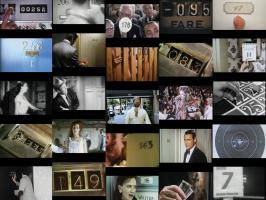
?This is a work based on found footage. Schreiner extracted sequences with numbers from many movies, both classic and obscure. Using these short fragments he compiled a countdown starting from the number 266. A strong effect of suspense is created, the tight-paced montage holding the viewer`s attention.? (catalogue Invideo, Milan 2004)
Volker Schreiner
Cell
Experimental film | dv | color | 4:27 | Germany | 2006
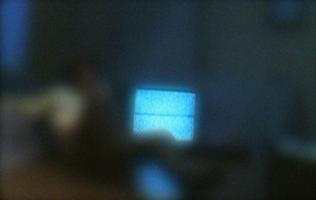
"Living rooms coolly lit by white noise on TV screens are a familiar harbinger of approaching doom in most feature films. In Cell, just this one unheimisch cinematographic element is put under the magnifying glass. A concentrated montage of countless fragments with flickering and spooky snow-covered screens from Hollywood films. This is the ultimate meta-cinema. No message, just medium." (catalogue International Film Festival Rotterdam 2007)
Volker Schreiner, since 1988 videos, video-installations and video sculptures/ a.o. grant Villa Massimo Rome, grant Cité des Arts Paris, grant Kunstfonds Bonn, prize winner of the 5th Marl Video-Kunst-Preis/ lectureships at the HfG Karlsruhe and the HBK Braunschweig, associate professor at the HBK Braunschweig and the Johannes Gutenberg-University Mainz/ works owned a.o. by NBK Berlin, ZKM Karlsruhe, Museum Ludwig Cologne, Museum fuer Neue Kunst Karlsruhe, Film Museum Amsterdam