Catalogue > Search
Results for : Tout le catalogue

Liina Siib
25.02._26.02.
Experimental doc. | hdv | color | 9:28 | Estonia | 2020
The video “25.02._26.02.” is part of Liina Siib's tragicomical installation “Huldufólk”. “Huldufolk” means “hidden people” in Icelandic – these are supernatural beings who look and behave like normal people but have their own activities in their own parallel world. They can make themselves visible for humans who can see them through a colourful glass. The video is filmed on Sunday night and Monday morning in the streets and backyards in the centre of Reykjavik. The inspiration came from the short story “Sunday evening to Monday morning” of Ásta Sigurðardóttir (1951) who describes a journey of a drunken woman in the streets of Reykjavik and her alienation. The precise geographical location does not really matter in the video much more than perhaps recognizing longer lasting nights, cold and strong wind; depicted activities and related attributes can be found anywhere in the world. The film material has been collected in 2018 when the artist worked in the residency at The Steina and Woody Vasulka Archive at the National Gallery of Iceland.
Liina Siib has studied printmaking and photography at the Estonian Academy of Arts. In her artistic practice, she uses the means of film, video, photography and installation. Liina Siib is intrigued by various manifestations of people's everyday practices and social space. Her works deal with characters, spaces and situations that tend to go unnoticed due to their ordinariness or are silenced or ignored. Siib combines her field observations with archival sources, historical accounts and various narratives circulating in the society as well as with psychoanalytic approaches and contemporary art and film theories. Liina Siib has held personal exhibitions in Estonia, Germany, Belgium, France, Sweden, Finland and Latvia. In 2011 her art project “A Woman Takes Little Space“ represented Estonia at the 54th Venice Art Biennale. Her recent exhibition and film projects include Linda Vilde Museum at the E. Vilde Museum in Tallinn (2021), Huldufólk / Hidden People, Hobusepea Gallery, Tallinn (2020), Politics of Paradise, Tallinn Art Hall (2019), RIBOCA1 Riga Biennial (2018), Urban Symphony in E-minor, Sinne Gallery, Helsinki (2018). Since 2015, she works as the head and professor in the department of Graphic art at the Estonian Academy of Arts.

Liina Siib
UNSOCIAL HOURS
Experimental video | dv | color | 10:2 | Estonia | 2011
The video Unsocial Hours (2011) explores the model of the cycle of women?s work and social life through food in contemporary Estonia; to be more specific, cheap pastries produced in a bakery that works through the night and which are sold in the kiosks at Tallinn Railway Station, and eaten in cafes in Lasnamäe or during breaks by doctors and nurses working at Pelgulinna Maternity Hospital. Along with a focus on space, there is also a strong emphasis on time ? the circling of time, and a certain element of ritual repetition and ?not getting anywhere?.
Liina Siib was born in 1963 in Tallinn, Estonia, where she currently lives and works. She studied graphic art and photography at the Estonian Academy of Arts, where she also earned an MA in photography. In her photo, video and site-specific room installations, she explores various topics, ranging from femininity and social space to different representations of people in their everyday activities. She has had thirty solo exhibitions in Estonia, Germany, Belgium, France, Finland, Latvia and Italy. Her works have been presented at a number of exhibitions and festivals in Estonia, Europe, Asia and the USA. Her works are in the collections of the Art Museum of Estonia, the Tartu Art Museum, the Moderna Museet in Stockholm, the Neues Museum für Kunst und Design in Nuernberg etc. In 2011 her project ?A Woman Takes Little Space? represented Estonia at the 54th Venice Biennale.

Liina Siib
August Procession
Experimental doc. | 4k | color | 11:0 | Estonia | 2022
“August Procession” is about different tempos co-existing at the same time. The light from windows registers the passing of time in the abandoned factory building, the speed of the bus determines the length of the passengers’ conversation. The minutes have been counted until sunset. And then there’s memory time. Time to recall. Perhaps to celebrate together and feel a sense of belonging. “August Procession”, filmed in Narva area, enters into a mental dialogue with events that occurred at the eastern border of Estonia and the European Union in August 2022. The central theme in local news was the plan of the removal of the tank monument to the Soviet ‘liberators’, erected 52 years ago. Local habitants were used to see the tank on the plinth nearby the road while driving to the beach. The tank was removed on 16 August by the Estonian government, due to various tensions, caused by the Russian war in Ukraine and dramatically changed geopolitical situation. Several Russian speaking people in Narva fell into mourning because the tank was an important souvenir for them. The religious procession took place a week later, from a retreat to a famous orthodox monastery in the area.
Liina Siib is a visual artist, filmmaker, educator and curator from Tallinn, Estonia. She has studied printmaking and photography at the Estonian Academy of Arts, photography and video in exchange at the University of Westminster in London. Currently she works as the Professor of Graphic Art at the Estonian Academy of Arts. Film, photography and installation as her main interests, she explores various manifestations of people’s everyday practices and social space. Her works deal with characters, spaces and situations that tend to go unnoticed due to their ordinariness or are silenced or ignored. She has made experimental documentary videos and staged short films that have been shown mostly in the gallery and exhibition context, sometimes using the format of expanded cinema. In 2011, her project “A Woman Takes Little Space” represented Estonia at the 54th Venice Art Biennale. Besides that her works have been shown at the international art biennales in Riga, Tallinn, Moscow, Rauma, Cerveira, Ljubljana and Rijeka. Recently, she has been artist at residence at the NART Narva Art Residency. Her work has been included in several public and private collections. In 2006 she received the Annual award of the Estonian Cultural Endowment. Full CV at: liinasiib.com/biography/

Henrique Silva
Cerveira Bienal
0 | 0 | | 0:0 | Portugal | 2007
The Biennial of Cerveira is an event that was created in 1978 by a group of artists to promote contemporary art and create a meeting place for creators, where it would be possible to exchange experiences and equally promote research in traditional arts and new technologies. Over the last thirty years, the Biennial has become International and has conquered a place of relief among independent young artists and established partnerships with other national and international institutions. Today the Biennial of Cerveira has a permanent committee; a museum of modern art open year round; print, serigraphy, lithography, photography, and ceramic workshops, and a laboratory dedicated to digital arts. The Biennial possesses an Artist House open all year long, with four bedrooms and seventeen beds that allows for internships for professionals as well as introductory courses. The XIVth Biennial of Cerveira is going to have a representation of the Maeght Foundation; an homage to the Portugese artist Julio Resende; a competition open to artists of all nationalities with a present-day theme, "Les nouvelles croisées", (crossed news reports), in relation to the North African and Iraq wars; an international representation of architects; the participation of poets of visual poetry, organized by Pedro Oliver from the Canary Islands; a representation of Portuguese universities; and musical and performance activities. Because of its geographic situation, bordering Galicia, the Spanish participation is very relevant, and there are ramifications on the plan of exhibitions and cooperation with the Vigo University and the Cultural Centre of Ourense.
Born in 1933, Henrique Silva graduated in plastic arts at the University of Paris VIII, where he lived from 1957-77, as well as in Zurich, Basel, Brussels, and Belfast. He has taken part in international seminars and meetings, among which "savoir faire formation" in Cicopa, Brussels 1986, and at the international seminar on territorial politics and development at the invitation of OCDE in Crète, Greece - the network of cultural centres in Europe and which organized the first meeting of the European centres in Porto. He is a member of several national and international juries that refer to more than ten Portuguese and international publications, and have realized more than 140 exhibitions in Europe. Currently he is the Director and Administrator of the Contemporary Art Museum of the Biennial of Cerveira, and Director of the Design Course of the Gallaecia College of Arts.
Fern Silva
The Watchmen
Experimental film | 16mm | color | 10:0 | USA | 2017
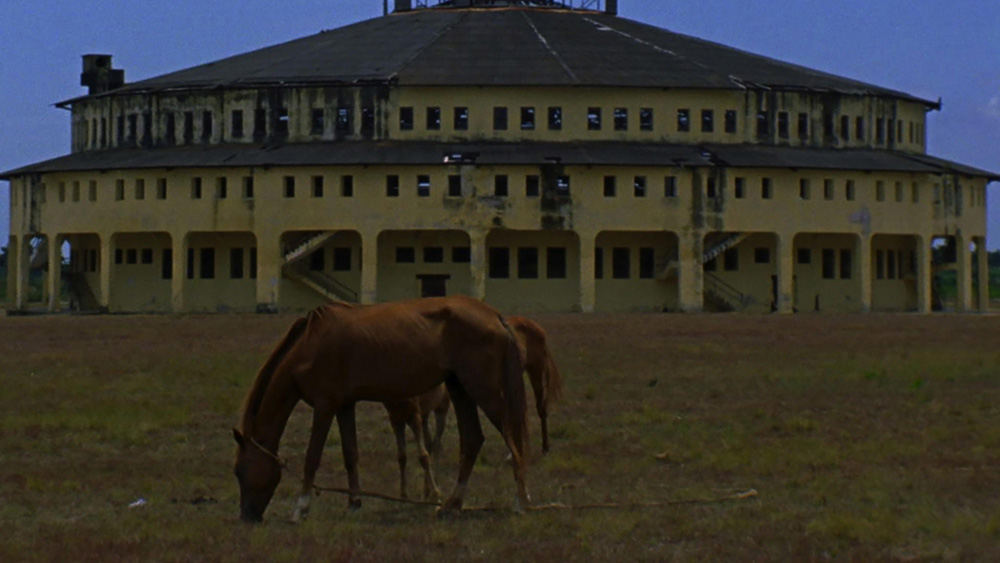
In The Watchmen, pulsating orbs, panopticons, roadside rest stops, and subterranean labyrinths confront the scope of human consequences and the entanglement of our seeking bodies. Regressions in missing time, caught in the act of captivity, confined to the carceral and perpetuated by movie sets, television sets, and alien encounters at bay. The corporeal cycle of control revolves as steadily as the sight of those who watch from above.
Fern Silva (b. 1982, USA/Portugal) is an artist who primarily works in 16mm. His films consider methods of narrative, ethnographic, and documentary filmmaking as the starting point for structural experimentation. He has created a body of film, video, and projection work that has been screened and performed at various festivals, galleries, museums and cinematheques including the Toronto, Berlin, Locarno, Rotterdam, New York, London, Melbourne, and Hong Kong International Film Festivals, Anthology Film Archives, Gene Siskel Film Center, Cinemateca Boliviana, Museum of Art Lima, Brooklyn Academy of Music, Museum of Contemporary Art Chicago, New Museum, Greater New York at MOMA P.S.1, and Cinema du Reel at the Centre Georges Pompidou. He has organized and curated screenings at venues including the Nightingale Cinema, Gallery 400, and DINCA Vision Quest in Chicago. His work has been featured in publications including Film Comment, Cinema Scope, Filmmaker Magazine, Millennium, and Senses of Cinema. He studied art and cinema at the Massachusetts College of Art and Bard College. He is Visiting Faculty at Bennington College and is based in New York.

André Silva
Spam letter + google image search = video entertai
Experimental video | dv | color | 3:0 | USA | 2005
Each word of a spam letter is matched with one of hundreds of available online images that have been linked, in some way, to that word. A text-to-voice-program narrates the letter.
Andre Silva is a third year M.F.A. Candidate in Film & Video Production at the University of Iowa. His films have screened at about 30 festivals within the past year and have won awards at the Ann Arbor Film Festival, the Humboldt International Short Film Festival and Atlanta Underground Film Festival. Currently, he is working on his thesis, a 7-minute animated film, Ichthyopolis , which is a fantastical journey into the material and immaterial lives of fish. The film will utilize 16mm stop-motion, live action video and computer generated 3-D animation. Aside from working on his films, Andre recently taught film and video production courses at the University of Iowa. For the past two summers, he taught digital animation at Northwestern University's National High School Institute. He was also one of the co-founders of Iowa City Microcinema, a local organization dedicated to bringing visiting artists to Iowa City and hosting filmmaking events such as the "24-hour video race." Beginning in the Fall of 2006, Andre will teach film production courses at the University of Wilmington at North Carolina as a Guest Artist.
Rui Silveira
Ni Dilli
Experimental video | dv | color | 0:55 | Portugal | 2008
With a New Delhi photography slide and classical Indian music as a starting point, this video creates a space for experimental soundscapes, associating certain sounds (detached from their musical context) to implicit actions of the image. Using the digital processes of capturing sound and image, this video attempts to explore the way these elements can suggest a specific geographical place, as well as a personal universe, avoiding, nevertheless, a subjective vision.
I recently graduated in Communication Design and although my training generally focused on graphic design, I always tried to solve my assignments using audiovisual media. The relations between sound and image (video or photography) were since the beginning the core of my formation and interests. At the present I am preparing a documentary that follows a survey I did in Labé, Guinea-Conakry, centered in a building under construction using local resources in a chaotic urban environment and in a society with strong identity traits. Ultimately filmmaking represents to me the possibility of telling a story that I create from the observation of objective elements filtered by my own vision. Experimental video, specifically, is the perfect medium for the stories I need to tell.
Shelly Silver
This Film
Experimental film | 16mm | black and white | 6:53 | USA, Germany | 2018
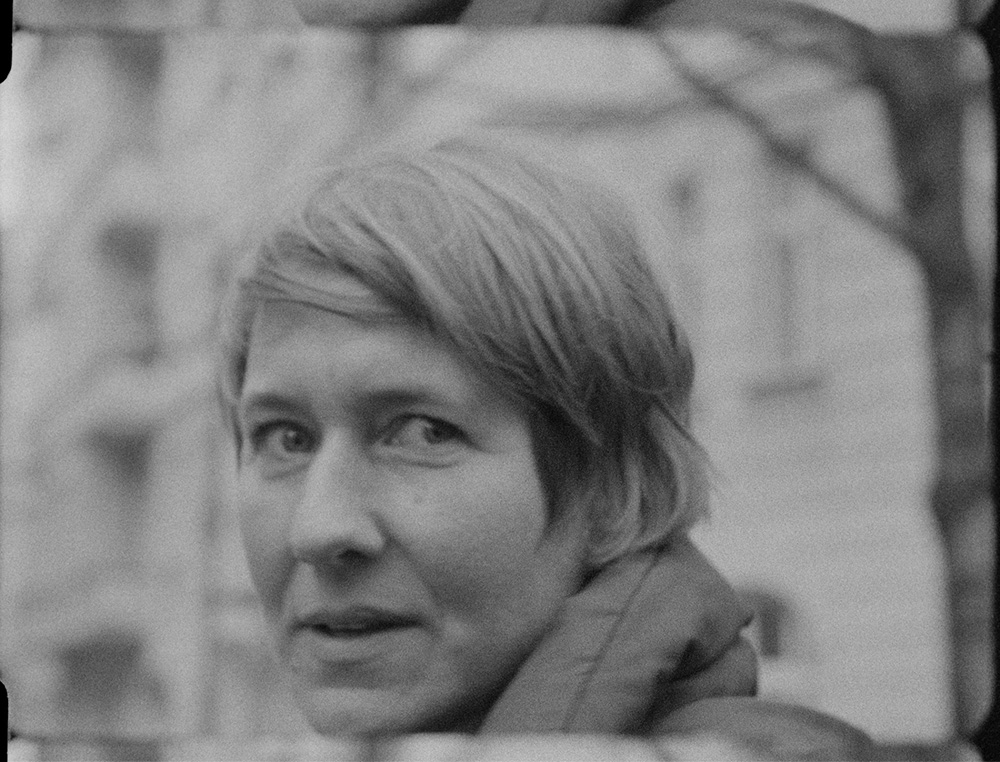
Filming is alchemy; preserving, seeing, devouring, cutting. Chopping the flow of images with a push of a button. It privileges a solitary unseen protagonist, choosing this over that and then that, it eats anything, not everything. The world hacked into fragments, jumps, frames. Kidnapped buildings gestures people animals happening now, again now, again now. The displacement of what was once to what is now seen carries the odor of end, regardless of the incessant movement of one frame to the next, a machine forcing the celluloid frames forced to run, jump, trip, turning it all into a sad slapstick -- slapstick also embodies heartbreak. A meeting with an old friend, possibly for the last time. [Or] a throwback to a kind of film I never made. But if I did, it would be a noisy film with silence.
Shelly Silver is a New York based artist working with the still and moving image. Her work explores contested territories between public and private, narrative and documentary, and--increasingly in recent years--the watcher and the watched. She has exhibited worldwide, including at the Museum of Modern Art in New York, Tate Modern, Centre Georges Pompidou, the Museum of Contemporary Art in Los Angeles, the Yokohama Museum, the London ICA, and the London, the Singapore, New York, Moscow, and Berlin Film Festivals. Silver has received fellowships and grants from organizations such as the John Simon Guggenheim Foundation, the NEA, NYSCA, NYFA, the Jerome Foundation, the Japan Foundation and Anonymous was a Woman. Her films have been broadcast by BBC/England, PBS/USA, Arte/Germany, France, Planete/Europe, RTE/Ireland, SWR/Germany, and Atenor/Spain, among others, and she has been a fellow at the DAAD Artists Program in Berlin, the Japan/US Artist Program in Tokyo, Cité des Arts in Paris, and at the Lower Manhattan Cultural Council. Silver is Associate Professor and Director of Moving Image, Visual Arts Program, School of the Arts, Columbia University.

Shelly Silver
in complete world
Experimental doc. | dv | color | 56:0 | USA | 2008
in complete world is a feature-length video made up of street interviews done throughout NYC. Mixing political questions (`Are we responsible for the government we get? `) with more broadly existential ones (`Do you feel you have control over your life?`) the video centers on the tension between individual and collective responsibility. in complete world can be seen as a user`s manual for citizenship in the 21st century, as well as a glimpse into the opinions and self-perceptions of a diverse group of Americans. It is a testament to the people of New York City in this new millennium, who freely offer up thoughtful, provocative and at times tender revelations to a complete stranger, just because she asked.
Shelly Silver is a New York-based filmmaker. Her work, which spans a wide range of subject matter and genres, explores the personal and societal relations that connect and restrict us; the indirect routes of pleasure and desire; the stories that are told about us and the stories we construct about ourselves. Silver?s work has been exhibited widely throughout the US, Europe and Asia, at venues such as Centre Georges Pompidou, Paris; Museo Reina Sofia, Madrid; Shanghai Doulon Museum; Yokohama Museum of Art; as well as The New York, London, Berlin, Singapore and Moscow Film Festivals. Her films have received prizes from the Moscow Film Festival, Woodstock Film Festival, Chicago Film Festival, Atlanta Film Festival and the Leipzig Documentary Film Festival. Her work has been broadcast on PBS, USA; Planete, Europe; BBC, England, Sudwestfunk, Germany; Arte, Germany/France, Atanor Television, Spain; Kunstkanaal, The Netherlands, RTE Television, Ireland; among others. She has received grants and fellowships from the National Endowment for the Arts, The Japan Foundation, Anonymous was a Woman, NYSCA, NYFA and the John Simon Guggenheim Foundation. Silver currently teaches at The Cooper Union and the MFA Department of Photography, Video and Related Media, School of Visual Arts, both in New York.
Shelly Silver, Frances Richard
Lewitt Hesse Richard Silver
Experimental film | 0 | color | 0:0 | USA | 2010
The assignment was to make a gift for the artist Sol Lewitt (1927-2007). Legendarily generous to other artists, Lewitt exchanged works with anyone who sought him out, from famous peers to admirers who sent him unsolicited objects and images. Filmmaker Shelly Silver asked her close friend, writer Frances Richard, to collaborate by contributing text for a short film. The text chosen is a series of quotations from Lewitt?s close friend Eva Hesse (1936-1970): ?All order is ephemeral ? chaos eats into order ? yet it has its own order ? if order could be chaos, chaos can be structured as non-chaos.? On Mosco Street in New York City?s Chinatown, a not-quite fixed camera tracks the ephemeral order composed on a warm afternoon by a fence, some trees, a set of shadows, and the passage of pedestrians and traffic. The image is nearly monochrome though filmed without manipulation in broad daylight. Preoccupied with abstract propositions including the grid as a delineator of space and the modulation of light on unlike surfaces, the 6-minute film is also a mini-vérité, its extremely quiet chaos structured by ambient sound and tiny urban incident.
Frances Richard is the author of See and the chapbooks Anarch. and Shaved Code; a new volume of poems, The Phonemes, is forthcoming in 2011. In 2005, with Sina Najafi and Jeffrey Kastner, she co-curated the exhibition Odd Lots: Revisiting Gordon Matta-Clark?s ?Fake Estates"; a study of Matta-Clark?s language-use, currently in progress, has been supported by a grants from the Warhol Foundation/Creative Capital, the Canadian Centre for Architecture. She writes frequently about contemporary art, teaches at Barnard College and the Rhode Island School of Design, and lives in Brooklyn. Shelly Silver?s work, which spans a wide range of subject matter and genres, explores the personal and societal relations that connect and restrict us; the indirect routes of pleasure and desire; the stories that are told about us and the stories we construct about ourselves. Her work has been shown internationally at such venues as MoMA, MoCA, Yokohama Museum, Pompidou Center, London ICA, Museo Reina Sofia, and London, Singapore, New York, Moscow, and Berlin film festivals. She has received grants from the Guggenheim Foundation, the NEA, NYSCA, NYFA, the DAAD, Jerome Foundation, Japan Foundation and Anonymous was a Woman. She is an Associate Professor of Visual Arts in the School of the Arts, Columbia University.
Shelly Silver
A Tiny Place That is Hard to Touch
Experimental fiction | hdv | color | 39:40 | USA, Japan | 2019
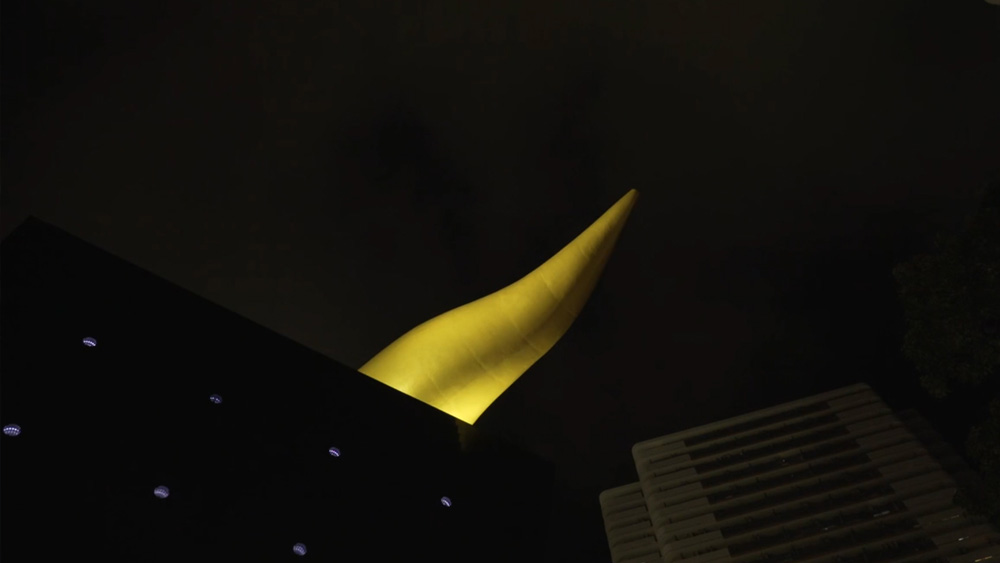
In a faceless apartment in Tatekawa, Tokyo, an American woman hires a Japanese woman to translate interviews about Japan’s declining birthrate. The American woman is presumptuous in her knowledge of Japan; the Japanese woman suffers from a self-professed excess of critical distance. They grate, fight, and crash together in love or lust, at which point their story gets hijacked into science fiction territory, as the translator interrupts their work sessions with stories from a world infected with the knowledge of its own demise. This neighborhood has already known devastation, having been wiped out the night of 9 March 1945 by American bombs. The third protagonist is the Tatekawa itself, the canal covered by an elevated highway that runs past the translator’s apartment, which gives the neighborhood its name. Reflecting back the concrete world in distorted patterns of blue, green, or glittering black, the Tatekawa transports a shifting procession of birds, shoes, condoms, crabs, plastic bags, flowers, big fish, little fish, death, life.
Shelly Silver is a New York based artist working with the still and moving image. Her work explores contested territories between public and private, narrative and documentary, and--increasingly in recent years--the watcher and the watched. She has exhibited worldwide, including at the Museum of Modern Art in New York, Tate Modern, Centre Georges Pompidou, the Museum of Contemporary Art in Los Angeles, the Yokohama Museum, the London ICA, and the London, the Singapore, New York, Moscow, and Berlin Film Festivals. Silver has received fellowships and grants from organizations such as the John Simon Guggenheim Foundation, the NEA, NYSCA, NYFA, the Jerome Foundation, the Japan Foundation and Anonymous was a Woman. Her films have been broadcast by BBC/England, PBS/USA, Arte/Germany, France, Planete/Europe, RTE/Ireland, SWR/Germany, and Atenor/Spain, among others, and she has been a fellow at the DAAD Artists Program in Berlin, the Japan/US Artist Program in Tokyo, Cité des Arts in Paris, and at the Lower Manhattan Cultural Council. Silver is Associate Professor and Director of Moving Image, Visual Arts Program, School of the Arts, Columbia University.
Shelly Silver
What i'm Looking For
Experimental video | dv | color | 15:0 | USA | 2004
A woman sets out to photograph moments of intimacy in public space. She takes to hanging out with her camera on the streets of NYC, and since so much of the social has moved to the Internet, she starts approaching people through a profile on an Internet dating service. In this ad she states ?I am looking for people who would like to be photographed in public revealing something of themselves??
Shelly Silver is a New York based artist utilizing video, film and photography. Her work, which spans a wide range of subject matter and genres, explores the connections that bind and restrict us; the varied routes of pleasure and desire; the stories that are told about us and the stories we construct about ourselves. She has been exhibited throughout the US, Europe and Asia at venues such as MoMA, NYC; MoCA, LA; The Pompidou Center, Paris; The Kyoto Museum, Japan, The ICA London; The London Film Festival; The Singapore Film Festival and has won many awards including The Golden Dove for Best Long Form Documentary at The Leipzig International Documentary Festival, Best Narrative at The Australian Int`l Film & Video Festival and The Houston Int`l Film Festival and Jury Prize at the Moscow International Film Festival Media Forum. Her work has been broadcast on such stations as BBC/England, PBS/USA, Arte/Germany, France, Planete/Europe, RTE/Ireland, SWR/Germany, Atenor/Spain. Silver has received numerous fellowships and grants including from the NEA, the DAAD, NYSCA, NYFA, the Jerome Foundation, the Japan Foundation and Anonymous Was a Woman Foundation. She is a 2005 John Simon Guggenheim Fellow. She currently teaches at The Cooper Union and the MFA Department of Photography and Related Media, The School of Visual Arts.

Chi Yin Sim
The Garden of No Return
VR 360 video | 4k | | 10:36 | Singapore | 2023
Garden of No Return is a new hand-tracked VR experience by Sim Chi Yin and Dan Archer which chronicles the depletion of sand from Vietnam’s Mekong Delta and across Asia. The world is running out of sand. The insatiable demand for this non-renewable resource has led to large-scale environmental impact driven by rapid urbanisation and land reclamation. In Vietnam’s Mekong Delta, land about the size of a football field is melting away into the river every day. For local residents, the land snaps off suddenly, sometimes in the dark of night, and robs them of their homes, shops and ancestral shrines. This work weaves together lullabies, laments, and poetry narrated by Vietnamese writer Kh?i ??n to speak about the erosion of both memory and site as the consequence of large-scale global sand mining. It combines reconstructed 3D terrain using photogrammetry and filmed sequences to allude to communal losses and extreme precarity in the global business flows of sand mining. It brings viewers to the site of the landslides and see, hear, and feel firsthand the landscape of the Mekong Delta where large-scale erosion is taking place, and convey the human cost of sand mining in a visceral and experiential manner.
Sim Chi Yin (b. 1978, Singapore) is an artist whose research-based practice uses artistic and archival interventions to contest and complicate historiographies and colonial narratives. She works across photography, film, installation, performance and book-making. She is participating in the 60th Venice Biennale (2024) and has exhibited at the Gropius Bau, Berlin (2023); the Barbican, London (2023); Harvard Art Museums, Boston, USA (2021); Les Rencontres d’Arles, France (2021); Nobel Peace Museum, Oslo (2017), Arko Art Centre, Seoul (2016); Zilberman Gallery Berlin (2021); Hanart TZ Gallery, Hong Kong (2019). She has also participated in the Istanbul Biennale (2022, 2017) and the Guangzhou Image Triennial ( 2021). Her work is in the collections of Harvard Art Museums, The J. Paul Getty Museum, M+ Hong Kong, Singapore Art Museum, and the National Museum Singapore. She was an artist fellow in the Whitney Museum’s Independent Study Program (2022-3) and is completing a PhD at King’s College London. Dan Archer is a creative technologist, computer scientist and immersive storyteller who co-founded Empathetic Media, an XR production studio, in 2014. EM leverages augmented, mixed and virtual reality to foster stronger connections and perspective-taking between the subjects in its stories and its audiences. A leading thinker and practitioner in the immersive space, Archer has researched and written about the link between empathy, impact and immersive story-telling. He was a 2016 fellow at the Tow Center at Columbia University, a Reynolds Journalism Institute Fellow (University of Missouri, 2014) and a Knight Journalism Fellow at Stanford University (2011). He is currently completing a PhD at UCL focusing on evaluating embodiment and performance using biological signals in virtual reality environments, and exploring persuasive immersive technologies as a researcher at the Hong Kong Polytechnic University.
Siska
EDL
Experimental film | 0 | | 21:0 | Lebanon | 2011
Lost in time and translation, images transport us on a journey behind the modernist façade of Beirut?s electricity building. The images shot on Super 8 are accompanied by droning noises reminiscent of the experimental, electronic sounds of the 1950s and 60s.
Pascual Sisto
28 years in the implicate order
Experimental video | dv | color | 1:0 | Spain, USA | 2004
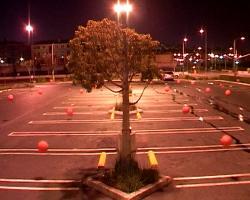
Work based on the concepts of Quantum Theory as described by David Bohm. The video consists of a fixed locked off shot of an empty parking lot. A centered sodium vapor light illuminates the night landscape. 28 red balls bounce up and down in a chaotic random order. Each ball signifying an individual entity bouncing at its own rate and speed. As the video progresses towards its mid point, the balls align themselves in a harmonious blanket. Breathing in and out as a cumulative frequency, they reach the point where they all bounce at the same precise moment and then resume to go back into chaos.
Raised in Barcelona, Spain, Pascual Sisto graduated with a BFA in film from the Art Center College of Design in California. He began working as a freelance visual FX artist and animator, before signing with Satellite Films for music video representation until its closure in 2001. His first short film Océano (2002) was screened at festivals worldwide and won several awards before debuting on TVE in Spain. In 2004 he founded Swift Gallery, an artist-run non -profit exhibition and performance space for provocative art and culture based in Los Angeles. His own video and installation work has been exhibited around Los Angeles as well as internationally.

Walid Siti
The Troubled Bear and the Palace
Experimental doc. | hdv | color | 10:53 | United Kingdom, Iraq | 2019
The Troubled Bear and the Palace. 11 minuets. Walid Siti 2019. At the 7,000 ft peak of the Gara mountains in Kurdistan of Iraq, the remains of Saddam's palace, built in 1989, still stand. 29 years later, in March of 2018, two caged bears were escorted by a group of local media and Kurdish women forces to be ceremoniously freed at the helipad adjacent to the palace. Having lived dependently and in captivity throughout its life, the bears struggled to survive in the wild. One vanished whilst the other was at the mercy of the personnel that guard the telecommunication towers erected at the palace. The surreal juxtaposition of the stressed bear and the dilapidated palace, set amongst the magnificent mountains, encapsulates the tragedy of the people of this land throughout history, from the time of Gilgamesh to the present.
Walid Siti (b. 1954, Duhok, Kurdistan-Iraq). After graduating in 1976 from the Institute of Fine arts in Baghdad, Siti left Iraq to continue his arts education in Ljubljana, Slovenia before seeking political asylum in the UK in 1984 where he now lives and works. The work of Walid Siti traverses a complex terrain of memory and loss, in a world, which for him has been a place of constant change. The narrative of Siti’s experience, of a life lived far from but still deeply emotionally connected to the place of one’s birth, is one he shares with many exiles.
Sumugan Sivanesan, Duran QUEZ
G' Pupils
Experimental video | dv | black and white | 2:0 | Australia | 2005
Goebbels? Pupils Digital film, specially made for the Cronica 021-2005 DVD: "Can I have 2 minutes of your time?". All Images by Sumugan Sivanesan Audio by Durán Vázquez
Sumugan Sivanesan is based in Sydney, Australia. Having played in various rock bands in the early nineties, he became involved with experimental music and electronic arts through his association with new media and digital video. His video/audio works have received international exposure having been presented at various international festivals, including the International Symposium for Electronic Art (ISEA), in Nagoya, Japan 2002.
Emilija Skarnulyte
Kapinynas
Documentary | hdv | color | 60:0 | Lithuania, Norway | 2022
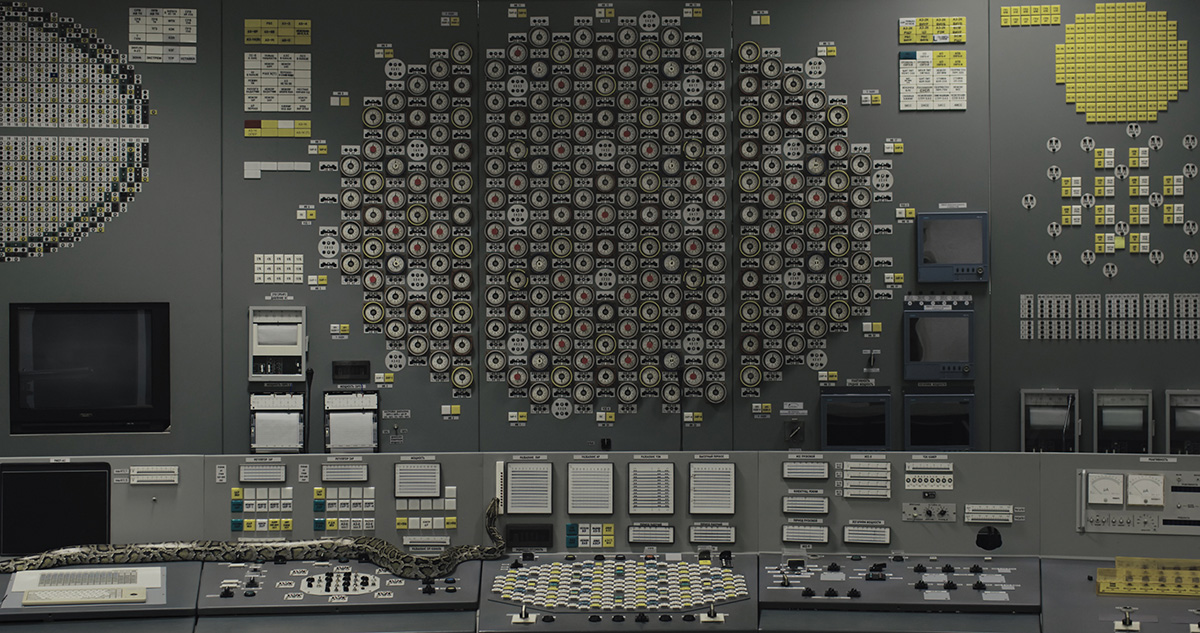
A python slithers and curls over the abandoned control room of Chernobyl’s sister, the Ignalina Nuclear Power Plant, its radioactive core an unleashed monster that will slither through time for a million years. From Etruscan ruins and sunken cities to the most modern of underground repositories, director Emilija Škarnulyt? follows our attempts to bury the immortal. Addressing the epochal effects of nuclear technology on all levels, Burial follows the cycle of power, an eternal return, another serpent eating its tail.
Emilija Škarnulyt? (b. Vilnius, Lithuania 1987) is an artist and filmmaker. Working between documentary and the imaginary, Škarnulyt? makes films and immersive installations exploring deep time and invisible structures, from the cosmic and geologic to the ecological and political. Winner of the 2019 Future Generation Art Prize, Škarnulyt? represented Lithuania at the XXII Triennale di Milano. Recent solo exhibitions include Tate Modern (2021), Kunsthaus Pasquart (2021), and the National Gallery in Vilnius (2021). Her films are in the IFA, Kadist Foundation and Centre Pompidou collections and have been screened at the Serpentine Gallery, The Museum of Modern Art, New York, and numerous film festivals. She is a founder and co-director of Polar Film Lab, and a member of artist duo New Mineral Collective.
Natalia Skobeeva
Do You Speak Peking Opera?
Video | hdv | color | 6:5 | Belgium, United Kingdom | 2017
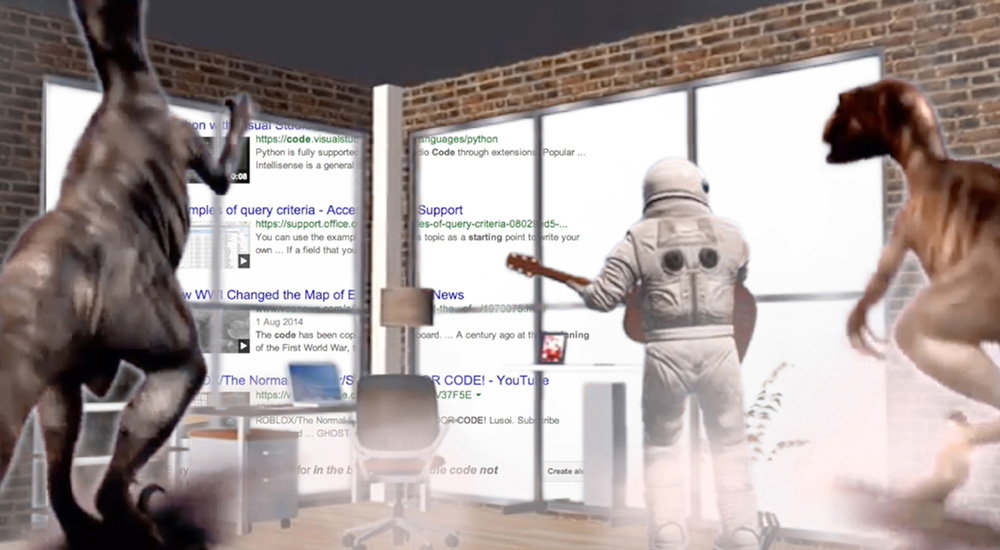
How post-contemporary critique of post-truth post-index post-everything could look or sound like? What tools are available when language renders meaning sense-less? Do You Speak Peking Opera? is an enquiry in the state of pre-emptive post-contemporaneity, open ended, delivered to you by artificial intelligence, provoking genuine physical reaction.
Natalia Skobeeva is an internationally recognised award winning artist, based in Deptford, whose hybrid experimental practice explores ideas of transnational and multicultural existence in the post-truth society. She is a graduate of MA Fine Art, Royal College of Art, London, UK Solo shows include ” This Territory is Time ” Espronceda Art Centre, Barcelona, “ Horrors of Archiving ” in Objectief Exhibitions, Antwerp, “ Carpets in St Petersburg, former Leningrad, former St Petersburg”in the State Museum of Political History of Russia, St Petersburg, Camera Club London and Viewfinder gallery London, solo projects in Moscow, Istanbul, Brussels, Berlin and London. Recent group exhibitions include Manifesta 11, LOOP festival Barcelona 2017, Tenderflix 2016, Bristol Biennale 2016, Vision in the nunnery 2016, 4th Moscow Biennale of Contemporary art, 15th WRO Media Art Biennale, Miden 2013 Festival of Video art, Retrospective of Now&After Video art festival among others.
John Skoog
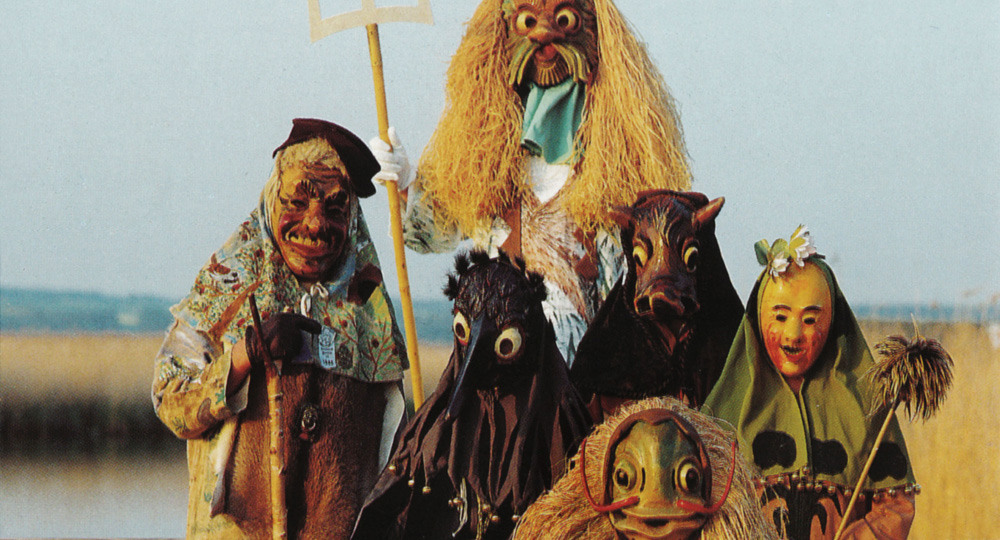
Federsee
Experimental doc. | hdv | color | 8:2 | Sweden, Germany | 2014
A film that looks at the traditional folklore surrounding the celebration of Fasnet (carnival) in the small Schwabian town of Bad Buchau.
Working with film and video John Skoog follows in the tradition of Scandinavian film making through the use of stark landscapes and slow pacing. The poetic use of the Swedish landscape and powerful studies of character and emotion evoke memories of film works by cinema greats such as Victor Sjostrom and Mauritz Stiller. Skoog has been awarded the Baloise Art Prize, Art Basel (2014), ’1KM film scholarship’ from Stockholm Film festival (2013), the Hessische Kulturstiftung travel grant (2013), the ARS-VIVA Prize (2013/14), Malmö Art Museum 2013 Art Grant, Aase & Richard Björklund fund, and the ARTFILM Prize, Lichter International Film Festival (2013) and a one year working grant from Stiftung Kunstfonds, Bonn (2014). As part of winning the Ars-Viva Prize 2013/14, Skoog has shown at Neues Museum Weimar, MMK Museum fur Moderne Kunst Frankfurt am Main and GAM – Galleria civica d’arte moderna e contemporanea Torino. In 2015, as the winner of the Baloise Art Prize, Skoog will have two major solo exhibitions at Museum für Moderne Kunst (MMK), Frankfurt am Main and Museum Moderner Kunst Stiftung Ludwig Wien (MUMOK). Born in Kvidinge 1985, Skoog graduated from the Staedelschule, Frankfurt in 2012. Selected shows and festivals include: Real DMZ Project 2014, Cheorwon-gun, Gangwon-do & Artsonje Center, Seoul (2014); Redoubt, Towner Contemporary Art Museum, Eastbourne (2014); A Time for Dreams: 4th Moscow International Biennale for Young Art, National Centre for Contemporary Arts (NCCA), Moscow (2014); Ars Viva Preis: Truth/Reality – Björn Braun, John Skoog and Adrian Williams, MMK Museum fur Moderne Kunst Frankfurt am Main – DE; GAM – Galleria civica d’arte moderna e contemporanea, Turin – IT (2014); Taming the Narrative, Basis as a part of b3 Biennale, Frankfurt am Main (2013); Echo Release, NKV Nassauischer Kunstverein Wiesbaden, Wiesbaden (2013); Internationale Kurzfilmtage Oberhausen (2014 & -13); Weltkulturen Museum, Frankfurt am Main (2013); Video_Dumbo, Eyebeam Art + Technology Center, New York (2013); Spectrum Rotterdam International Film Festival, Rotterdam (2013); Sent på Jorden, Art Lab Gnesta, Gnesta (2013); Indielisboa, Lisbon International Film Festival, Lisbon, (2014 & -12), Onde, Torino International Film Festival, (2011), Rencontres Internationales: Paris, Centre Pompidou, Paris, (2014 & -11), En passant (with et al.*), Schirn Kunsthalle, Frankfurt am Main, (2011), In the absence of Glenn Gould, Ludlow 38, Goethe Institute, New York City (2008) and PS1 Contemporary Art Center, Long Island City, New York, (2007), Malm1, Malmö Konsthall, Malmö (2004). John Skoog lives and works in Frankfurt.
John Skoog
Förår
Experimental fiction | hdv | color | 18:0 | Sweden | 2013
Förår is loosely based on the news-story about an 11-year old girl that stole her fathers hunting rifle and paraded down main-street in the small town she lived in. Captured is the memory of a day re-collected. Things happened but its hard to remember exactly the right order, how you got to one place from another, what someone said.
John Skoog, b. 1985, in Kvidinge, Sweden, started making experimental video as a teenager. His photography and film installations have been shown at museum and film festivals around the world. In 2013 he was, as the youngest person ever, awarded the prestigious Ars-Viva Kunstpreis. John studied fine arts at Staatliche Hochschule für bildende Kunst, Städelschule in Frankfurt am Main.