Catalogue > Search
Results for : Tout le catalogue
Chen Hung Chiu
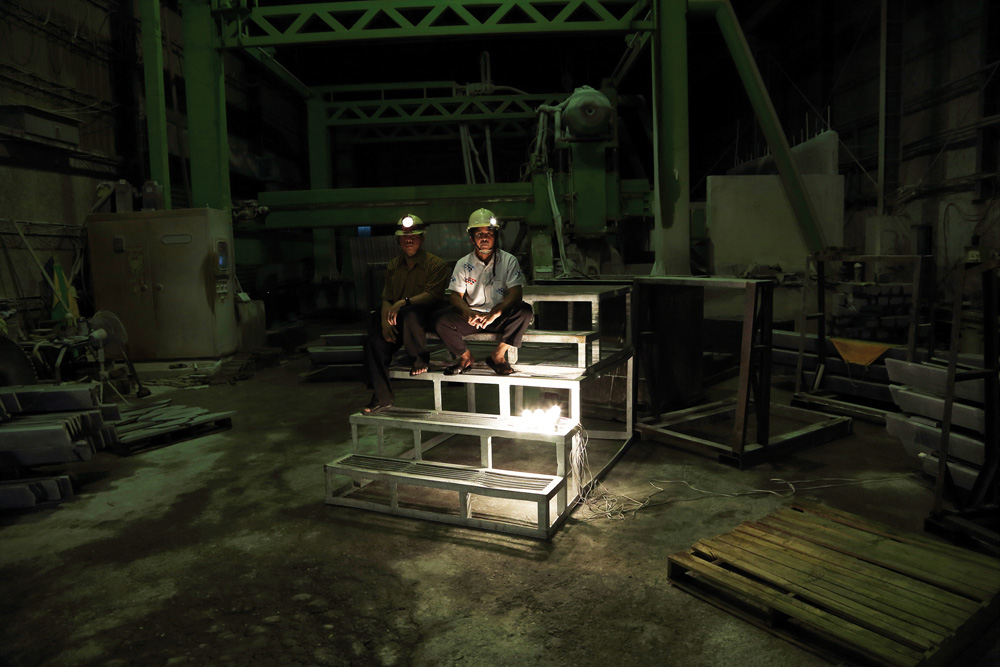
大理石廠工人
Experimental doc. | hdv | color | 7:30 | Taiwan | 2013
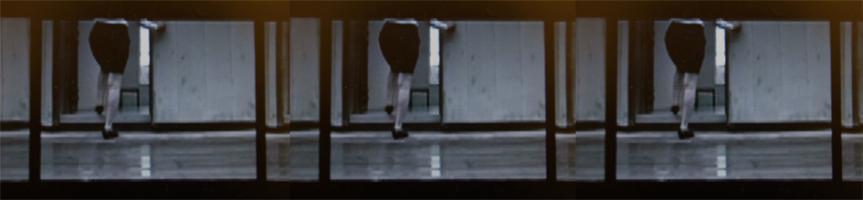
The video shows two Tai labors in Hualien marble factory pushed a trolley used in the past particularly for mine district, today , this old style trolley has been replaced by the new style crane, Artist invites two labors walking back and forth through the old trolley that he gilded by covering gold leaves as a divinized presentation. This work therefore has blended and mixed the reality and memory in life like the layers of wrinkles and folds in the stratum, the viewer could create an archaeological journey from the imaginations in many aspects.
Chen-Hung Chiu creative works revolve around collecting those inadvertently hidden objects / people and legends surrounding him, as well as rewriting the ambiguous ties between these "anonymous identities" and the locality, in a sense analogous to the connections between body and building, city and cells, monuments and intimacy. Comparable to the process of remodeling monuments, he strips away the logic designed and rationalized by social structures in attempt to rename those that offer significance and meaning to each material. Yet, unlike the citations made through reminiscing in the past, his works are instead sincere observations which explore personal experience and logic. Important exhibitions Chiu participated in include the Liverpool Biennial: City States(2012), ThaiTai:A Measure of Understanding, Bangkok Art and Culture Centre(2012), Une terrible poetique, La Biennale de Lyon, Galerie Olivier Hong(2011), Arte da Taiwan, Museo di Arte Contemporanea di Villa Croce, Genova(2011), Taiwan Calling-The Phantom of Liberty, Mucsarnot Museum, Budapest(2010), etc. in 2012, he was also chosen as an artist in residence at Cite internationale des arts Paris for the 12th Visual Arts Talent Exchange Program conducted by the Taiwan Ministry of Culture.
Seoungho Cho
buoy
Video | dv | color | 6:21 | Korea, South, USA | 2008
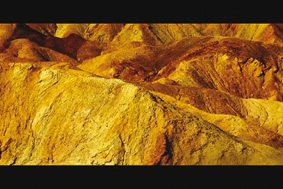
BUOY/ SEOUNGHO CHO 6:21 MINUTES, COLOR, SOUND, 2008 The golden, barren landscape of Death Valley, California, recorded by Cho from a moving car, provides the luminous and mysterious texture of Buoy. As the title suggests, this work reflects on the polar extremes of this desert, which was once the floor of a vast sea, now traversed by sight-seeing tourists. In contrast to the horizontal landscape, which floats ceaselessly past Cho`s camera, vertical "strata" pattern the imagery, creating an axis between natural landscape and Cho`s composition. Cho accumulated his Death Valley footage over several years; the vertical patterning further represents the collapse of this footage into what appears to be a continuous drive through the desert.
Seoungho Cho was born in 1959 in Pusan, South Korea, and currently lives and works in New York. He received a BA and an MA in graphic arts from Hong-Ik University, Korea, and an MA in video art from New York University. He has had solo exhibitions in many prestigious venues such as the Museum of Modern Art in New York and his videos have been shown in biennales and group screenings throughout Europe and North America. Cho has received various awards and grants, including ones from the Jerome and Rockefeller foundations. Cho uses digital image processing techniques to manipulate simple, everyday objects, scenes or landscapes into highly lyrical sound and image collages. Cho`s videos are often very painterly in their use of rich, saturated colour and exquisite composition of the space on the screen. The works sometimes involve subtly developed, open-ended narratives that emphasize the embodied nature of perception and experience. The formal aspects of Cho`s videos are closely tied to explorations of how nature is represented through technology, specifically how representation is constituted by traces of contact between bodies, technology and the environment.
Seoungho Cho
I left my silent house
Art vidéo | dv | color and b&w | 8:51 | Korea, South, USA | 2007
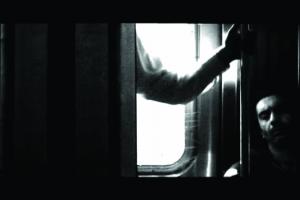
I LEFT MY SILENT HOUSE/ SEOUNGHO CHO 8:51 MINUTES, COLOR, B&W, SOUND, 2007 Selected as ?Grand Prize? at the 27th (2008) Black Maria Film and Video Festival. Jersey City, NJ Seoungho Cho`s latest work, I Left My Silent House, begins in a meditative mood with black and white images of people in the subway and then transforms itself into a colorful journey across dramatic open spaces, until it returns once again to the city. The video`s driving electronic soundtrack and dramatic image processing give it an intense yet somber quality. It is a visceral investigation of the tensions and pleasures of travel and, ultimately, metamorphosis.
Lyrical and visually striking, the video works of Korean artist Seoungho Cho are distinguished by a unique confluence of complex image processing and sound collage. Resonating with a highly metaphorical sensibility, Cho`s single-channel tapes and installations are formalist, almost painterly explorations of subjectivity and the subconscious. The urban landscapes that Cho often depicts move with a continuous fluidity, shifting from dreamlike abstractions of light to fleeting reflections of the city. Figures, cars, and trains are mirrored and diffused through one another, silhouetted with a haunting anonymity that is echoed in the poetic texts and soundscapes that accompany each piece. These often tense meditations focus on the nature and cost of isolation and loneliness while integrating into a culture, landscape and language other than one`s own. Seoungho Cho was born in 1959 in Pusan, South Korea. He received his B.A. and M.A. in Graphic Arts from Hong-Ik University, Korea, and an M.A. in video art from New York University. In 1998 he received a Rockefeller Foundation Media Arts Fellowship and in 2003 he received a Jerome Foundation grant. He has received the "Grand Prize" at the 27th Annual Black Maria Film and Video Festival as well as the International Award for Video Art from ZKM. Cho`s one-person exhibitions have included The Museum of Modern Art, New York; The Philip Feldman Gallery, Oregon; the Contemporary Art Museum, Honolulu, Hawaii; Samsung LeeUm Museum of Modern Art, Korea; the Pusan Metropolitan Museum of Art, Korea; Montevideo, Amsterdam; and the Cinematheque Ontario, Toronto. His work has been shown in numerous international festivals and exhibitions, including the Philadelphia Museum of Art, Philadelphia; Museum of Contemporary Art, Chicago; the 58th Edinburgh International Film Festival; Pandaemonium `98, Lux Centre, London; Centro d`Art Santa Monica, Barcelona, Spain; the National Gallery of Art, Washington, DC; Stedelijk Museum, Amsterdam; Mori art Museum, Tokyo; the Festival Nouveau Cinema, Nouveaux Medias, Montreal, Canada; the Valencia Biennial, Spain; the Kwangju Biennial, Korea; the Palm Beach Institute of Contemporary Art, Florida; the Robert Flaherty Film Seminars; Artists Space, New York; the International Film Festival Rotterdam; and the New York Video Festival, Lincoln Center, New York. Cho`s tapes have been broadcast nationally and internationally. He lives in New York.
Seoungho Cho
snap
Art vidéo | | color and b&w | 4:32 | Korea, South, USA | 2006
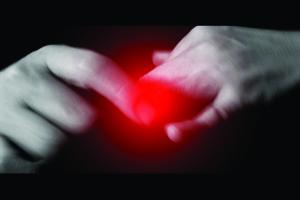
2006, 4:32 min, color and b&w, sound Snap is a taut, minimalist work that explores the aesthetics of digital video production. Fingers and hands in close-up move fast, then slowly, to a soundtrack of stylized clicks and snaps, while intermittent flares of color burn through the original black and white footage. Snap pushes figure and sound toward abstraction in an inventive, considered, and pleasurable exploration of moving image technology.
- Seoungho Cho was born in 1959 in Pusan, South Korea. He received his B.A. and M.A. in Graphic Arts from Hong-Ik University, Korea, and an M.A. in video art from New York University. In 1998 he received a Rockefeller Foundation Media Arts Fellowship and in 2003 he received a Jerome Foundation grant. He has received the "Juror`s Citation" at the 18th Annual Black Maria Film and Video Festival as well as the International Award for Video Art from ZKM.
Eun Woo Cho
GATE
Multimedia installation | dv | color | 1:20 | Korea, South, USA | 2008
Gate is a point of entry or turning point for the psychological space enclosed in and created by a specific architectural form within the human body. It represents an opening, with different types of human encounters and separations. Gate may prevent extreme control entry or free exit to one`s self and others. The gesture of encounter and separation is a form of psychotherapy that emerged with interpersonal communication and the intensification of psychological experience of the viewer and audience. When the separation process occurs, it transforms a mixture of substances, relative to several physical spaces, into different architectural and psychoanalytic components. Often, power pressure and political force cause unavoidable human travels, immigration, encounters, and separation. These separations and encounters are extremely relative to the natural life cycle. The pressure or power structure forces existent boundary situations, such as political power structure; specifically, the present separation situation in North and South Korea.
Resume & Short Bio
Eun Woo Cho was born in Seoul Korea and earned her BFA at Ontario College of Arts & Design.
She has been involved in several different site specific performances and shows in Canada, Italy
and the United States. She recently obtained her M.F.A from the School of Visual Art in New York and attends in Institute for Doctoral Studies in the Visual Arts Main, Portland.
Education
2008-2013 Institute for Doctoral Studies in the Visual Arts Main, Portland
2007-2005 School of Visual Arts, MFA, Fine Arts in New York
2005-2004 Rasara Fashion Academy in Seoul, Korea
Seoungho Cho
Snap
Experimental video | dv | color and b&w | 4:32 | Korea, South, USA | 2006
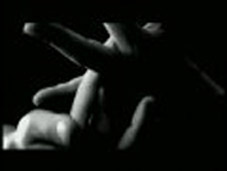
"Snap" is a taut, minimalist work that explores the aesthetics of digital video production. Fingers and hands in close-up move fast, then slowly, to a soundtrack of stylized clicks and snaps, while intermittent flares of color burn through the original black and white footage. "Snap" pushes figure and sound toward abstraction in an inventive, considered, and pleasurable exploration of moving image technology.
Seoungho Cho was born in 1959 in Pusan, South Korea. He received his B.A. and M.A. in Graphic Arts from Hong-Ik University, Korea, and an M.A. in video art from New York University. In 1998 he received a Rockefeller Foundation Media Arts Fellowship and in 2003 he received a Jerome Foundation grant. He received the "Juror's Citation" at the 18th Annual Black Maria Film and Video Festival as well as the International Award for Video Art from ZKM.
Seoungho Cho
Show your tongue
Experimental video | dv | color | 6:8 | Korea, South, USA | 2006
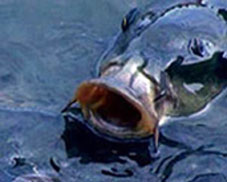
The water's surface, as it were, forms the first layer of this work by Seoungho Cho. We see it from above and close by. It moves in tiny ripples and is deep blue in colour. Just as thin and lively as this graceful membrane is the sound, which is present as a second layer. Now and then, with a sonorous tone and a soft tick, it is hardly distinguishable from the water. Then we slowly begin to perceive the monsters that are living beneath the skin. Their scales and fins slither closely past each other, their gaping mouths snap upwards through the surface of the water. Cho subtly but effectively manipulates the images of these beasts into a living pattern of forms and motives that overflow into each other and are covered by a watery layer of shiny icing. In this way, he weaves a transparent structure between the two dimensions of the image surface; a fabric which builds itself up, layer by layer, and which could keep on growing in your imagination until it even consumes the camera lenses and filters, the film that records the image, and the viewer's retina.
Stanley Cho
Nevertheless
Fiction | 16mm | black and white | 20:40 | USA | 2004
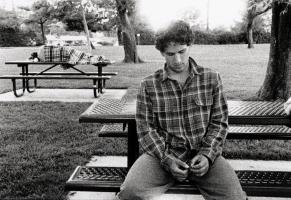
Joseph is on a meandering journey. His uncle, Henry, is a widower, who lives alone. Joseph arrives at Henry`s door. Gisela, who reads Neruda, is Henry`s housekeeper. Sam, who plays the piano, lives next door and is Henry`s only friend. Joseph has his sadness, but it leads Henry to revisit his own dark memories.
Stanley Cho lives and works in Los Angeles, California. He graduated from the UCLA School of Art and Architecture in 2001. Nevertheless is his second short film.
Seoungho Cho
WS.2
Art vidéo | dv | color | 8:6 | Korea, South, USA | 2004
There are many aspects of the act of looking that make the experience of an image subjective. Seoungho Cho highlights a few of the important ones and emphatically omits various others that are also important. We are not offered any narrative, context, or extensive colour palette, no 'whole', no 'things'. These restrictions largely enable him to determine the viewer's way of looking as an action in itself. "WS.2" has a moving framework, which allows the viewer to become conscious of the workings of the eye, light, distance, space, and reflection, and the analogies of these with the camera, registration, and projection. The image, shifting at well-chosen moments, causes changes in our spatial experience. This leads to a feeling of transposition, of looking for something ? like travelling behind the window of a vehicle being driven by someone else ? forwards, then backwards again, as if there has to be a reason to look back at something. The motion is so precise and controlled that it becomes unnatural and unphysical in a robot-like way; as if someone is controlling your head and eyes with a joystick. And yet, what we see refers to the world, to capriciousness, and to beauty. Undulating lines reminiscent of dunes, close-ups of bodily curves, micro-shots of textiles or macro-shots of vast landscapes: Cho creates associations that are aroused and intensified by the music, or are sometimes even undermined by it. And ultimately you are helped precious little by language to define this, because the image always remains 'material'. What you see is a reason to give Cho a director's chair in your head.
Seoungho Cho was born in 1959 in Pusan, South Korea. He received his B.A. and M.A. in Graphic Arts from Hong-Ik University, Korea, and an M.A. in video art from New York University. In 1998 he received a Rockefeller Foundation Media Arts Fellowship and in 2003 he received a Jerome Foundation grant. He received the "Juror's Citation" at the 18th Annual Black Maria Film and Video Festival as well as the International Award for Video Art from ZKM. Cho's one-person exhibitions have included The Museum of Modern Art, New York; The Philip Feldman Gallery, Oregon; the Contemporary Art Museum, Honolulu, Hawaii; the Pusan Metropolitan Museum of Art, Korea; Montevideo, Amsterdam; and the Cinematheque Ontario, Toronto. His work has been shown in numerous international festivals and exhibitions, including the Philadelphia Museum of Art, Philadelphia; Museum of Contemporary Art, Chicago; the 58th Edinburgh International Film Festival; Pandaemonium '98, Lux Centre, London; Centro d'Art Santa Monica, Barcelona, Spain; the National Gallery of Art, Washington, DC; Stedelijk Museum, Amsterdam; Samsung Museujm of Modern Art, Korea; the Festival Nouveau Cinema, Nouveaux Medias, Montreal, Canada; the Valencia Biennial, Spain; the Kwangju Biennial, Korea; the Palm Beach Institute of Contemporary Art, Florida; the Robert Flaherty Film Seminars; Artists Space, New York; the International Film Festival Rotterdam; and the New York Video Festival, Lincoln Center, New York. Cho's tapes have been broadcast nationally and internationally. He lives in New York.
Pip Chodorov
Rooftop Flicker
Experimental film | super8 | color | 3:20 | USA, Korea, South | 2022
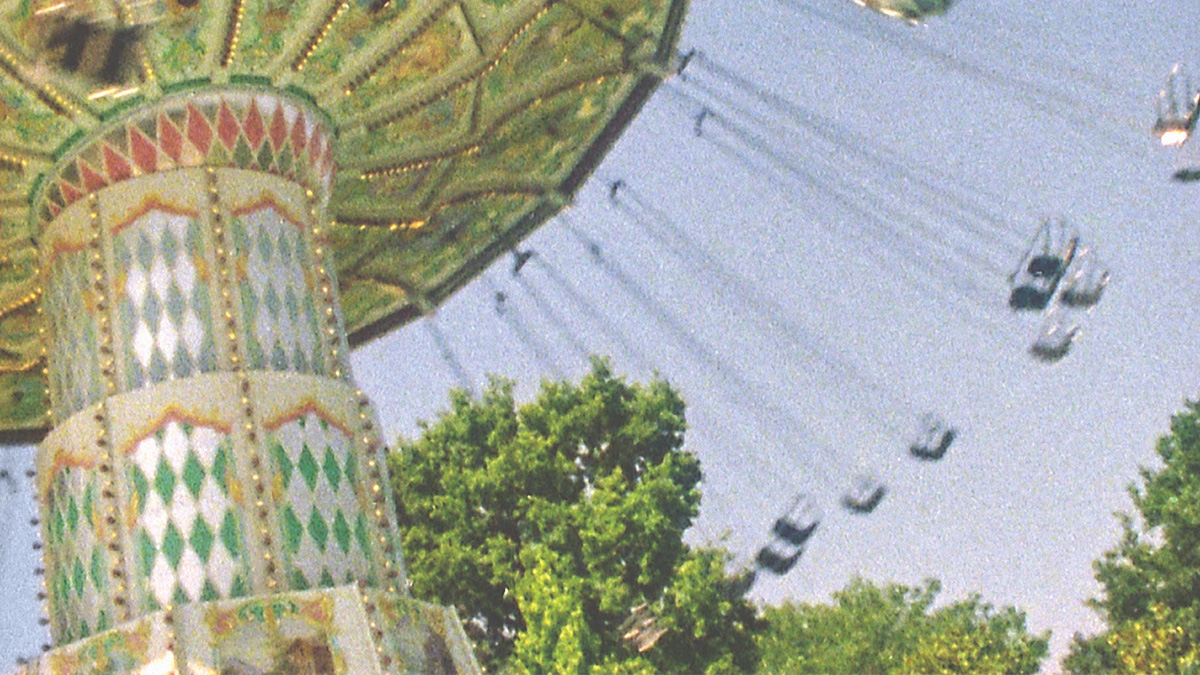
Super-8 flicker film shot and hand-developed in Seoul in spring 2022 with jazz soundtrack from a Jonas Mekas centennial tribute in Busan.
Pip Chodorov. Born April 13, 1965 in New York. Filmmaking and music composition since 1972. Studied cognitive science at the University of Rochester, NY and film semiotics at the University of Paris, France. Work in film distribution - previously Orion Classics, NYC; UGC, Paris; Light Cone, Paris; and, currently, Re:Voir Video, Paris, which he founded in 1994 and The Film Gallery, the first art gallery devoted excusively to experimental film. He is also co-founder of L'Abominable, a cooperative do-it-yourself film lab in Paris, and the moderator of the internet-based forum on experimental film, FrameWorks.
Pip Chodorov
The Stranger
Experimental fiction | 16mm | color | 9:19 | USA, Romania | 2018
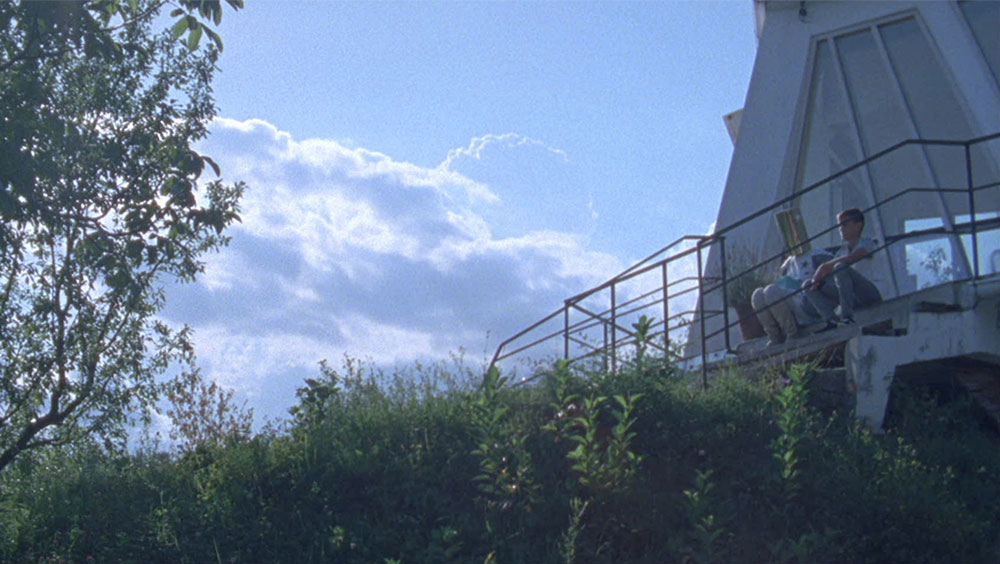
Romanian fairy tales usually start with the sentence: “Once upon a time something happened, if it hadn’t happened it couldn’t be told”. In this fairy tale, a stranger visits the remote mountain village of Slon. This film was made at an annual ten-day filmmaking residency in Slon. As a stranger myself, first time to Romania, with only four days to shoot and four days to edit, I wrote this modern-day fairy tale to coincide with my fantasy idea of what my unpredictable visit to the village would be like.
Pip Chodorov. Born April 13, 1965 in New York. Filmmaking and music composition since 1972. Studied cognitive science at the University of Rochester, NY and film semiotics at the University of Paris, France. Work in film distribution - previously Orion Classics, NYC; UGC, Paris; Light Cone, Paris; and, currently, Re:Voir Video, Paris, which he founded in 1994 and The Film Gallery, the first art gallery devoted excusively to experimental film. He is also co-founder of L`Abominable, a cooperative do-it-yourself film lab in Paris, and the moderator of the internet-based forum on experimental film, FrameWorks.
Adam Chodzko
Knots
Experimental fiction | hdv | color | 8:5 | United Kingdom | 2013
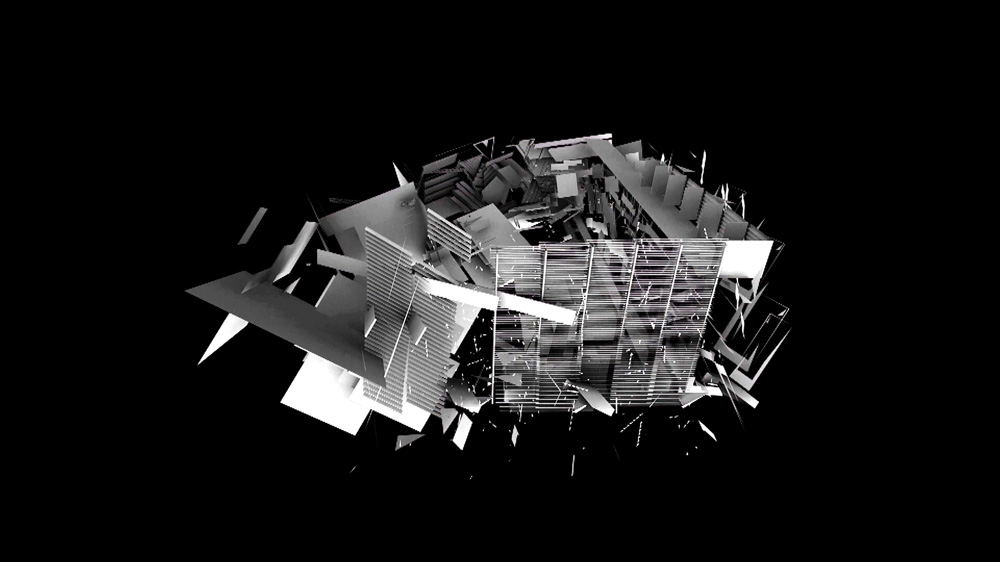
In Knots, Adam Chodzko focuses on the remote but important relationship between the artist Kurt Schwitters, in the final years of his life in the late 1940’s, living in poverty and exile in England’s Lake District, and J. Edgar Kaufmann, the wealthy owner of the Kaufman Department Store in Pittsburgh, USA. Kaufmann had arranged for money to be wired to Schwitters so that he could develop a new Merz structure. Chodzko plays with the desire to conclude and tie up the loose and disparate ends of this narrative. He imagines the now empty Merzbarn (Schwitters final work having been removed to a Newcastle museum in 1965) as a vacuum, sucking in thoughts, desires and matter; all caught up in the vortex of a dream-like surreality. Kaufmann had commissioned Frank Lloyd Wright to design his Pittsburgh office, a structure that itself was also later displaced from its source when donated to the Victoria & Albert Museum, London. Chodzko sees the interior spaces that Schwitters and Kaufmann worked within as unstable, flowing, collaged together, as though becoming a Merz themselves, whilst the form of the video also echoes this process of construction and deconstruction. Knots is a mesmerizing combination of fact and fiction, text and moving image building a story about longing, creation and fragmentation, endings and beginnings, networks of people and isolated individuals, separations and notions of home. It was commissioned by Tate Britain in 2012.
Adam Chodzko’s art explores the interactions and possibilities of human behaviour by investigating the space between how we are and how we could be. Working across media, from video installation to subtle interventions, with a practice that is situated both within the gallery and the wider public realm, his work investigates and invents the possibilities of collective imagination through using a poetics of everyday life. By wondering how, through the visual, we might best engage with the existence of others he reveals the realities that emerge from the search for this knowledge. Chodzko's art proposes new relationships between our value and belief systems, exploring their effect on our communal and private spaces and the documents and fictions that control, describe and guide them. Working directly with the networks of people and places that surround him, often using forms of anthropology, Chodzko focuses on the relational politics of culture's edges, endings, displacements, transitions and disappearances through a provocative looking in the 'wrong' place; a search for knowledge through instability. His art is catalysed by imagining a collapse of the category of Art, requiring not only a new audience but also a new status for the art object. Chodzko’s practice operates in the tight, poetic spaces he evolves between documentary and fantasy, conceptualism and surrealism, and public and private space, often engaging reflexively and directly with the role of the viewer. Intimate collections and ephemeral communities are frequently generated through his works; assemblies of owners of a particular jacket and a reunion of the children 'murdered' in a Pasolini film; a god look-alike contest; lighting technicians asked to advise on the light in heaven; a London gallery's archive given to a group of Kurdish asylum seekers to edit and hide outside the capital; the multi-faceted Design for a Carnival, the evolution of a ritual event for the future including Settlement, the legal purchase of a square foot of land as a gift to a stranger, Nightshift, a late night parade of nocturnal animals to the Frieze Art Fair, London and M-path, the collection and distribution of perception-changing footwear for gallery visitors. More recently a trilogy science fiction video and mixed media works, Hole, Around and Pyramid, have all explored, the idea of art becoming a vehicle for a community’s collective mythology, whilst Echo, The Pickers and Ghost elaborate these themes through excavating processes of memory, empathy and the imaginary. Because, 2013 (at Tate Britain) and We are Ready for your Arrival, 2013 (at Raven Row) further develop these ideas through manifestations of the unconscious relationships between individuals and groups; their excesses and disappearances. Born in 1965. Lives and works in Whitstable, Kent, UK. Since 1991 Chodzko has exhibited extensively in international solo and group exhibitions including: Raven Row, London; Tate Britain; Tate, St Ives; Museo d'Arte Moderna, Bologna (MAMBo); The Benaki Museum, Athens; Athens Biennale, Istanbul Biennale, Venice Biennale; Royal Academy, London; Deste Foundation, Athens; PS1, NY; Ikon Gallery, Birmingham, Kunstmuseum Luzern etc. Recent projects include commissions by Creative Time, New York, The Contemporary Art Society, Frieze Art Fair, and Hayward Gallery. In 2002 he received awards from the Hamlyn Foundation and the Foundation for Contemporary Art, New York, and in 2007 was awarded an AHRC Research Fellowship in the Film Department at the University of Kent, Canterbury. His work is in the collections of the Tate, The British Council, The British Film Institute, The Arts Council, APT, Auckland City Art Gallery, Contemporary Art Society Collection, The Creative Foundation, Frac Languedoc-Rousillon, GAM - Galleria d’Arte Moderna, Turin, Grizedale Arts, MAMBo - Museo d’Arte Moderna di Bologna, Plains Arts Museum, North Dakota, USA, Saatchi Collection, South London Gallery, Towner Gallery Eastbourne, and international private collections.

Oleg Chorny
Kyiv in the Days of War
Documentary | 4k | color | 3:9 | Ukraine | 2022
On the 24th of February 2022 Russia launched a large-scale invasion of Ukraine. In the beginning of April the first massive attack of Russian troops was repulsed, but Kyiv is still suffering by air strikes. There are traces of war on the streets of the city. Defensive structures are ready, because the enemy could attempt to occupy the capital of Ukraine again. Despite this the residents of Kyiv are trying to maintain habits of peaceful life, but the war continues.
Born in 1963. Graduated from the film director’s department of the State Institute of Theatre and cinema in 1985. Worked at the Olexander Dovzhenko State Film Studio in Kyiv, various governmental and non-governmental film and video studios. Shot a number of feature shorts, documentaries, ecological and promo films and musical video clips. He is member of the Ukrainian Filmmakers Union. His short feature movies and documentaries participated at the programs at the Ukrainian and international festivals. In 1996 Oleg Chorny and Gennady Khmaruk (w.b. 1972) has founded the non-profit creative unit “SAMPLED PICTURES”. A number of videos created by “SAMPLED PICTURES” were presented at the various film and video festivals, exhibitions and club screenings.
Oleg Chorny, Gena KHMARUK
Pershe Karaoke
Experimental doc. | dv | black and white | 3:0 | Ukraine | 2005
The true story about the first karaoke invention.
OlEG CHORNY. W.b. in 1963. Graduated from the film director`s department of the Kiev State Institute of Theatre and Cinema in 1985. Worked at number of governmental and non-governmental film and video studios. Together with Gena Khmaruk founded the non-governmenatal creative unit "Sampled Pictures". GENA KHMARUK. W.b. in 1972. Graduated from the director`s department of the Ukrainian State Academy of Culture in 1996. Worked as an editor at different TV studios. Also works as a vj and computer graphics designer.
Isoje Chou
anne (the assumption)
Experimental video | dv | color | 3:0 | Nigeria, Canada | 2006
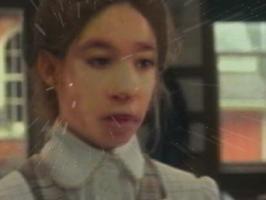
In "Anne (The Assumption)", found footage is an act of remembering, death and bodily elevation. By inserting my "native" face onto that of the character "Anne" of the quintessentially Canadian movie, "Anne of Green Gables", the mild pleasure of the made for television movie/nation is transformed into disconcerting memory that is as fictional as it is historical.
Isoje Chou was born in Kano, Nigeria to a mixed Chinese Manchurian/Nigerian Cape Verdian heritage. She received her Masters of Arts from York University, Toronto.

Davy Chou
Cambodia 2099
Experimental fiction | hdv | color | 21:0 | France | 2014
Phnom Penh, Cambodia. On Diamond Island, the country`s pinnacle of modernity, two friends tell each other about the dreams they had the night before.
Davy Chou is a French filmmaker. His first documentary feature film, Golden Slumbers, was selected at Forum Berlinale 2012 and at Busan International Festival 2011. Cambodia 2099 premiered in Directors’ Fortnight at Cannes 2014, and received the best prize at Curtas Vila do Conde 2014. He is now developping a feature film entitled Diamond Island.
Ijosé Chou
Bullfight (acts of war)
Experimental video | dv | color | 1:0 | Western Sahara, Liberia | 2004
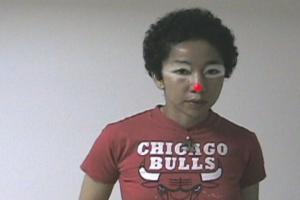
"Bullfight" touches into spaces that are psychic, personal, private, /displaced ?where the body is at once raw and mediated, and as clown, matador and bull...
Born and raised across West Africa. Lives in North America.
Ijosé Chou
Anne
Experimental video | dv | color | 1:25 | Western Sahara, Canada | 2003
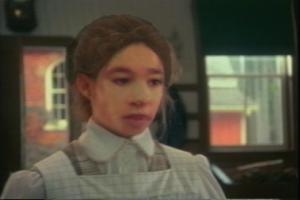
In "anne", found footage is an act of remembering. By inserting my face (and as such, ?my body?), onto that of the character in the movie, "Anne of Green Gables", I start a process of memory that is as fictional as it is historical.
Born and raised across West Africa, lives currently in North America. Practice included painting, drawing and video and video performance.
Saddie Choua
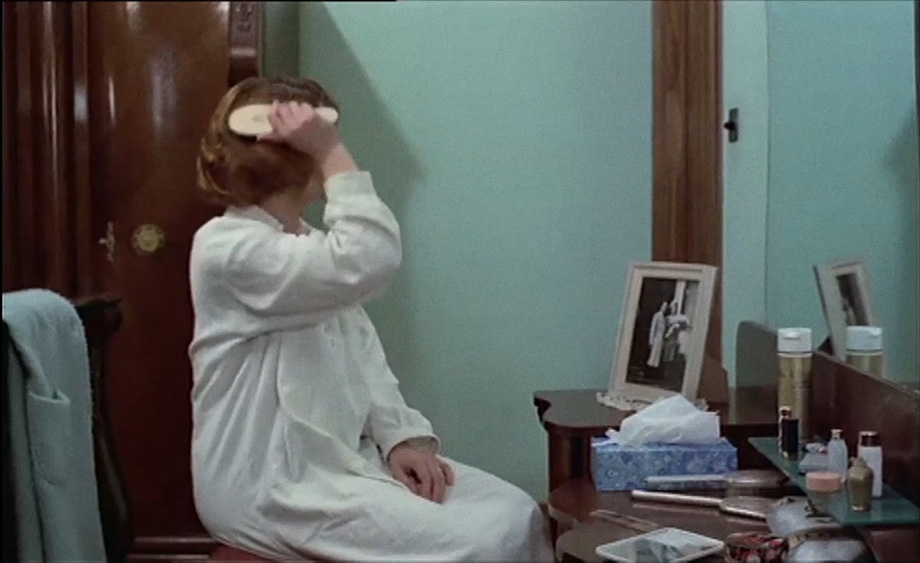
Today is the Shortest Day of the Year But Somehow Hanging Around With You All Day Makes it Seem Like the Longest
Video | super8 | color | 11:45 | Belgium, Germany | 2018
Dans ses films, Saddie Choua combine son propre matériel cinématographique avec des images trouvées, des documents d’archives visuels et textuels, provenant de diverses sources, telles que la télévision nationale, des programmes de loisirs, des vidéos musicales et des magazines. Dans sa pratique, Saddie Choua se concentre sur le rôle de l’image en mouvement dans les loisirs et la politique et leur influence sur l’image commune de l’Autre. Dans certains de ses projets, elle introduit du matériel autobiographique pour rechercher le rôle entre elle et cet Autre. Dans ses films et installations, Saddie Choua simule la conception des médias de masse vus du salon, créant ainsi une situation familière pour transmettre de nouvelles images qui suggèrent les complexités de l’Autre. Saddie Choua montre les structures de pouvoir derrière l’industrie de l’image actuelle et les préjugés et malentendus qu’elles provoquent.
Saddie Choua a étudié la sociologie à la VUB de Bruxelles. Elle participe actuellement au projet international de recherche et de discussion intitulé “Décolonisation perverse”, à l’Akademie der Künster der Welt à Cologne. Saddie Choua a été invitée pour les expositions personnelles suivantes (une sélection) : Le Joli Mois de Mai, Ten Weyngaert, Bruxelles, 2017 ; The Chouas - Work in Progress, MU.ZEE, Ostende, 2016 ; Great News. J’ai été élu félin de l’année, WIELS, 2014. Ses œuvres ont également été présentées dans les expositions de groupe, festivals et projections suivants (une sélection) : Festival Concreto, Fortaleza, 2017 ; Montrez-moi vos archives et je vous dirai qui est au pouvoir, KIOSK, Gand, 2017 ; Je crois qu’il y a une confusion chez vous. Vous croyez que moi je veux vous imiter, Kaaistudio’s, Bruxelles, 2017 ; The Chouas - A work in progress Episode #3, Human(art)istic festival, Beursschouwburg, Bruxelles, 2016 ; L’acte de fixer le soleil, Zwart Wild, Gand, 2016 ; Biënnale de Marrakech, Marrakech, 2016 ; Festival d’égalité, Vooruit, Gand, 2015 ; Été de la photographie, BOZAR, Bruxelles, 2014.
Omar Chowdhury
The Colonies at Dusk
Video | hdv | color | 12:49 | Bangladesh, Australia | 2014
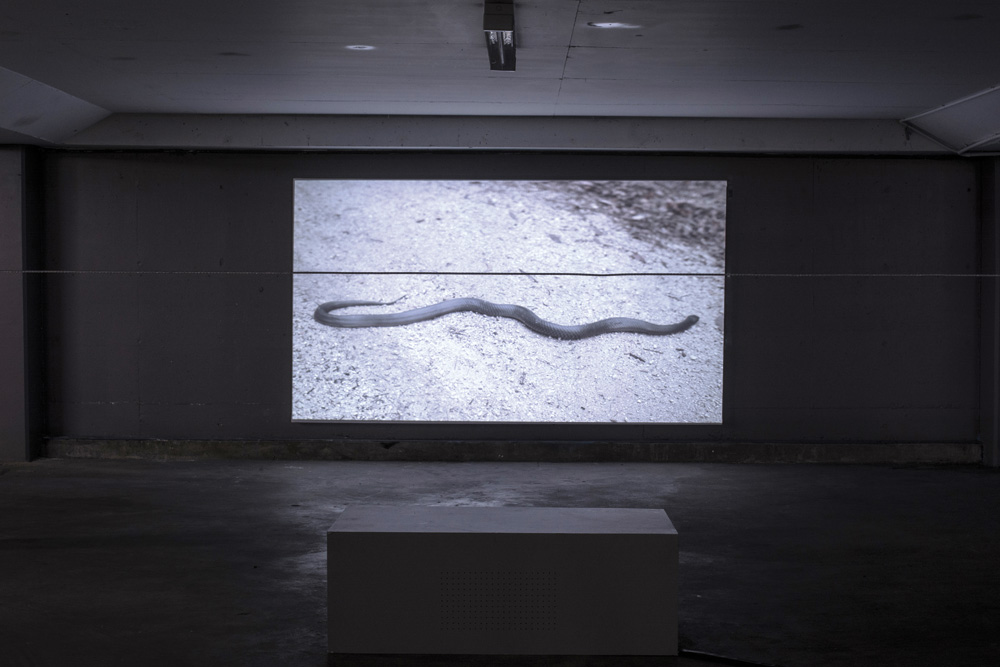
To make the moving-image work for Means the recently returned Australian-Bangladeshi artist Omar Chowdhury headed out into the Australian bush seeking a form of simple and focused sensing. Carrying stills and cinematic cameras, he ventured into the Southern Highlands of New South Wales, crossed the Great Dividing Range, and wandered out to the remnant Victorian gold towns, searching. Haunted by the ‘weirdness’ of the trees, the totemic termite mounds, the warbling creeks and dirt packed roads, he felt himself and his thinking seep into the darkening landscape. The traces of this spiritual ethereality inhere in his strange and occult video footage of animals, rocks, branches, burnings, machines and the silence of the isolate people. In it, somewhere, lie the means of his being.
Bangladeshi-Australian artist Omar Chowdhury makes moving-image, photographic, conceptual and textual installations based on immersions into contested spaces and their histories. Often mixing notions of ontology, political economy, and the spirit, they hold in uneasy tension various polarities: facts and the surreal, humour and melancholia, rhythm with chaos, weakness and power, and memory with forgetting. Out of these cohesions and frictions he produces densely woven languages and environments of moral and psychic inquiry. In 2016 he has an upcoming solo presentations at Bengal Gallery (Dhaka) and Dhaka Art Summit 2016 and screenings at the Queensland Gallery of Modern Art (Brisbane) for Asia Pacific Triennial 8. Recently he has had solo exhibitions at 4A Centre for Contemporary Asian Art (Sydney), ALASKA Projects (Sydney) and MOMENTUM (Berlin). He was a finalist in the 2015 John Fries Award (Sydney) and the 2015 and 2016 Blake Prize Award (Sydney). He is the recent recipient of a Bengal Foundation Practice Grant, Keir Foundation/4A Commission, Australia Council Skills and Development Grant, Edward M. Kennedy Grant for the Arts, and an Australian Cinematographer`s Society Gold Award. He also founded and often programs the Bengal Cinematheque in Dhaka.
Jasmina Cibic
Framing the Space
| | | 11:31 | Slovenia | 0
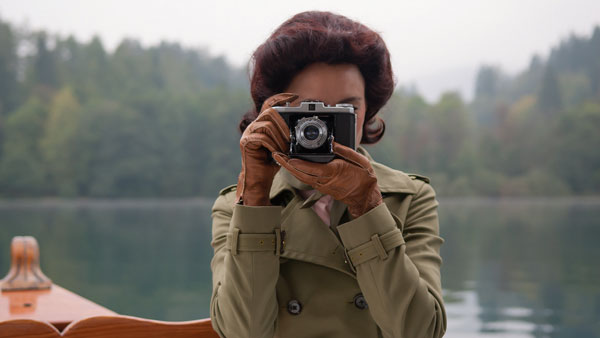
?Framing the Space? was shot at the summer residency of former Yugoslavia`s president Tito. The Vila underwent numerous redesigns concurrent with national cultural and political imperatives throughout its life, culminating in its 1950s redesign by Tito?s official state architect, who had the task of translating the existing Austro Hungarian castle into a new, modernist architecture, fit to illustrate a new national formation. The film presents philosophical and architectural theories of purpose, form, function and aesthetic priorities through a staged interview between the architect and a journalist questioning his possible successes and failures. The script is based on documents from Slovenian Parliament?s archives from 1950s. The theoretical debate around ideological vision lies in opposite to the period/melodrama-style delivery and aesthetic and points to the exoticism that historical and geopolitical revisitations are subjected to in the eyes of the contemporary viewer. The recontextualising of issues around the ideas of national representativeness, dramatises not only the power paradigms inherent in systems of authority, but also the explicit contradictions present in the transmutation of a national identity from past to present, place to place. Framing the Space was produced specifically for Cibic?s project ?For Our Economy and Culture? representing Slovenia at the 55th Venice Biennial.
Jasmina Cibic was born in Ljubljana, Slovenia in 1979. She completed her MA in Fine Art at Goldsmiths College in London in 2006. She has taught at the Accademia di Belle Arti in Venice and regularly holds artist talks and lectures internationally. Jasmina Cibic?s recent projects and exhibitions include ?For Our Economy and Culture?, Slovenian pavilion, 55th Venice Biennial, ?Disturbances?, Musée national d`histoire et d`art, Luxembourg, 3oth International Graphics Biennial Ljubljana, ?October Salon?, Belgrade, ?U3 ? 7TH Triennial of Contemporary Art?, MSUM, Ljubljana, ?Monitoring?, Dokfest, Kassel, ?Borderline?, Joanneum Museum Graz, ?The Secret of the Ninth Planet?, California College of the Arts, San Francisco, ?Museum on the Street?, Museum of Modern Art Ljubljana, ?The Object of the Spectacle?, Galerija ?kuc, Ljubljana, ?Present State?, Five Years Gallery, London, ?Tourists Welcome?, Ljubljana International Airport and ?Landescape?, Künstlerhaus Graz. Her upcoming exhibitions include ?Fruits of Our Land?, LMAKprojects, New York and Ernst Museum (Capa Contemporary Photography Center), Budapest. Jasmina Cibic? s moving image work has recently been screened at Copenhagen International Documentary Film Festival, Museum of Modern Art Ljubljana and KORO, Oslo. Her upcoming screenings include 14th GOEAST - FESTIVAL OF CENTRAL AND EASTERN EUROPEAN FILM, Wiesbaden, ?Art and Power?, Museum of 25th of May, Belgrade.