Catalogue > Search
Results for : Tout le catalogue
Amber Bemak, Amber Bemak, Nadia Granados
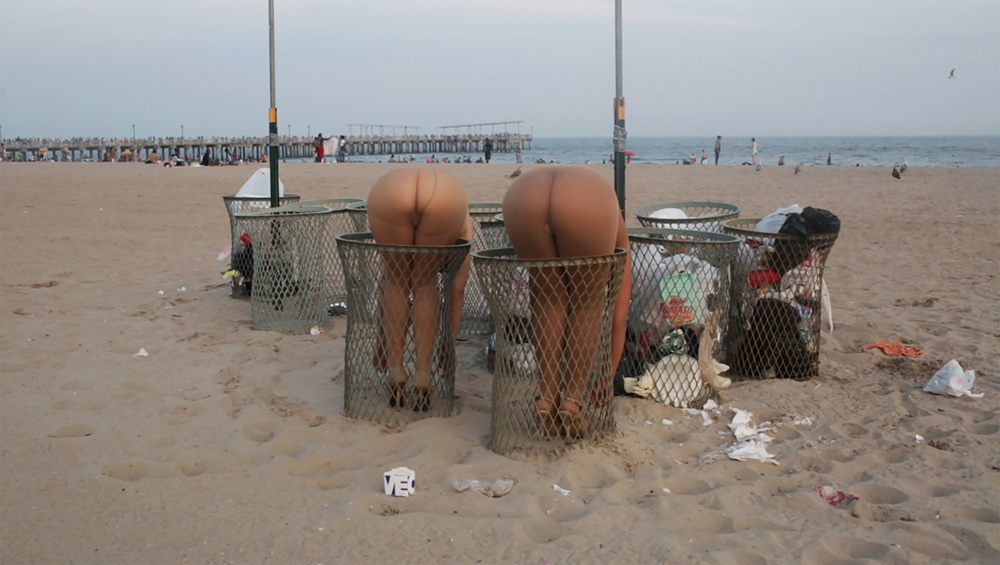
Borderhole
Video | hdv | color | 14:0 | USA, Mexico | 2017
Borderhole takes place on a mythical border area between Colombia and the United States. We investigate the relationship between North and South America through the lens of the American Dream and the illumination of multiple tensions in and around the border. The piece explores imperialism, globalization through pop music, gender mutation in an international context, and the choreography of women’s bodies in relation to sociopolitical and ecosystems.
Nadia Granados is originally from Bogotá, and currently based in Mexico City. Her work explores the relationships between traditional pornography and violence and is both performative and technological, art and activism, and a mix of cabaret, intervention, and streaming video. In all of her work, she uses her body to detonate, opening up new pathways of action and shift consciences. Among the many awards she has received are the Franklin Furnace Fund, the 3rd Visual Arts Biennial Bogotá Prize, and the FONCA award for Colombia-Mexico artist residencies. Her work has been presented extensively and internationally. Amber Bemak teaches filmmaking at Southern Methodist University in Dallas, Texas, and her creative work is based in experimental and documentary film, as well as performance art. Amber’s work focuses on themes of Buddhist culture, performative explorations of the body in relation to greater political systems, and cross-cultural encounters in the context of globalization. Her feature and short films have played in numerous festivals internationally, and have been seen at venues including the Brooklyn Museum’s Elizabeth A. Sackler Center for Feminist Art, SculptureCenter, and Oberhausen Film Festival. She has taught film theory and practice in India, Nepal, Kenya, Mexico, and the United States.
Amber Bemak, Minax, Madsen
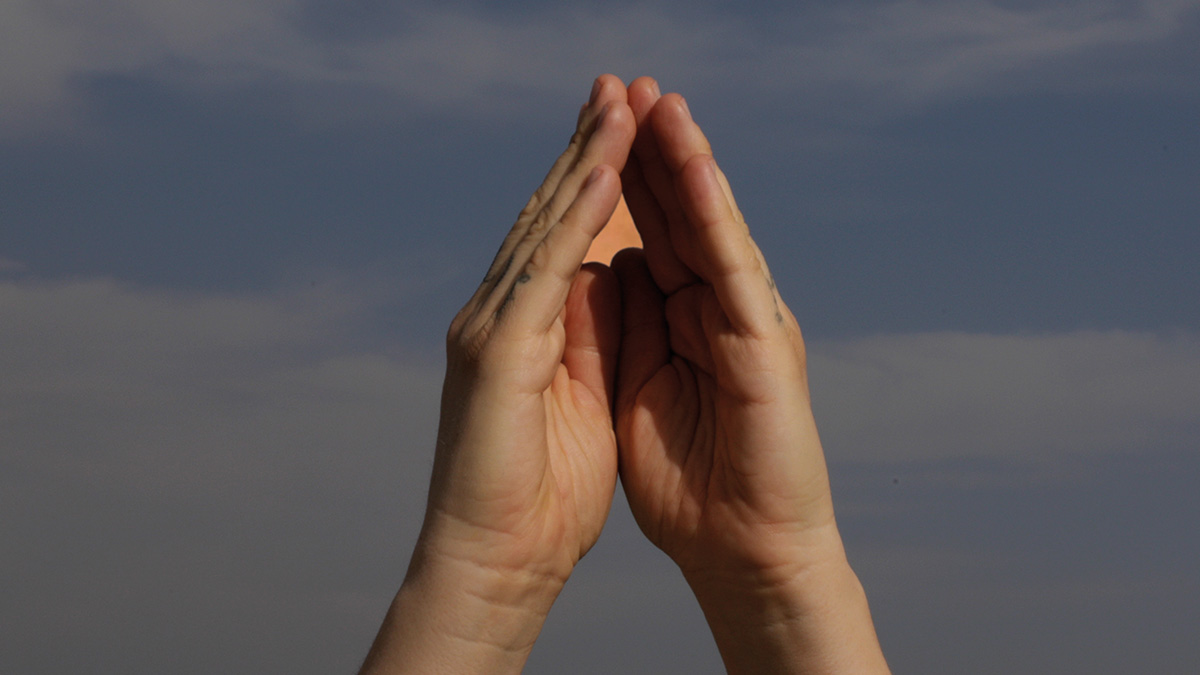
Two Sons and a River of Blood
Experimental film | mov | color | 10:23 | USA, Mexico | 2020
A queer woman is pregnant. The self-made family unit of two dykes and a trans man imagine a kind of erotic magic that will allow for procreation based solely on desire. Together they enact a public sex ritual to symbolize their hopefulness for multiplicity, acknowledging their cyborg bodies as technological interventions. When the queer woman miscarries her child, the three begin to build their own mythic understanding of where bodies live when they are not inside us. They create a story to trace movement of the non-body, from a hole, to a river, to a room. Images of an imaginary white room, an ikea-esque torture chamber of stillness, haunt them. As a parallel emerges between the pregnant body and the trans body, the techno-sex act becomes the key and a pyramid becomes the portal to access this other world of non-bodied existence.
Minax works in documentary and hybrid filmmaking formats. Madsen is a recipient of the Samuel Edes Prize for Emerging Artists (2017), the Tribeca Film Institute's All-Access Fellowship (2019), the Sundance Institute's Documentary Production Fund (2019), and the Bay Area Video Coalition’s Media-maker Fellowship (2020). Bemak is a filmmaker, artist, and educator. Her work is based in experimental and documentary film. Her award-winning work has been shown at venues including the Brooklyn Museum’s Elizabeth A. Sackler Center for Feminist Art, Museo Tamayo, and SculptureCenter, as well as Oberhausen, DocLisboa, Ann Arbor, Morelia, and the European Media Art Festival.
Jonathan Ben Efrat, Jonathan Ben Efart
Shesh Komot Le'Gehenom
Documentary | betaSP | color | 52:0 | Israel | 2008
Geha Junction, one of the busiest in the Tel Aviv area, hundreds of Palestinians live underground. Young and old, they slip into Israel to find work and bring a small wage home. Their hiding place is in the underground parking garage of an abandoned, unfinished shopping mall, hidden from view despite its location. They pass most nights of the week here, six floors below ground. One of the mall``s residents is Jalal who puts up with this hell in order to save money for his wedding while Nisrin, his fiancé, is waiting for him to finish the roof of their new house at Salem in the West Bank. From the darkness emerge still darker forms and ghostly voices. Under subhuman conditions, the men try to preserve their humanity. "In the dark", says Jalal, "the only thing left is to think about is love".
2008: script and directed, Six floors to hell (52min) full length film about "The Mall". won the best editing award at the Docaviv international FF 2008. won the RAI3 award at the CMCA Prize Turin Italy 2008. Leipzig FF 2008. Doclisboa FF 2008 Med FF Rome 2008 2005: script and directed, "The Mall" (12min) a short documentary commissioned by the World Health Organization; it shows the living conditions of Palestinian workers who defy checkpoints and roadblocks in order to find jobs in Israel. Israel?s documentary channel (Channel YES DOCO) Festivals: cinema du reel (Paris 07) Rotterdam (07) documenta (Madrid 07) Oxdox (Oxford 07) Doclisboa (Lisbon 07) won special MENTION for best short documentary 2003: wrote and directed,"Breaking Walls" (50min) documentary; it studies the connection between art and labor rights. At El Festival de Cine de Granada, ?Breaking Walls? won first prize for Integral Realization. Israel?s documentary channel (Channel 8) Labor film festivals: Sun Francisco Laborfest 2005 Ankara Labor film festival 2006 Seoul Labor film festival 2006 Globale06 film festival Berlin 2006
Yosr Ben Messaoud
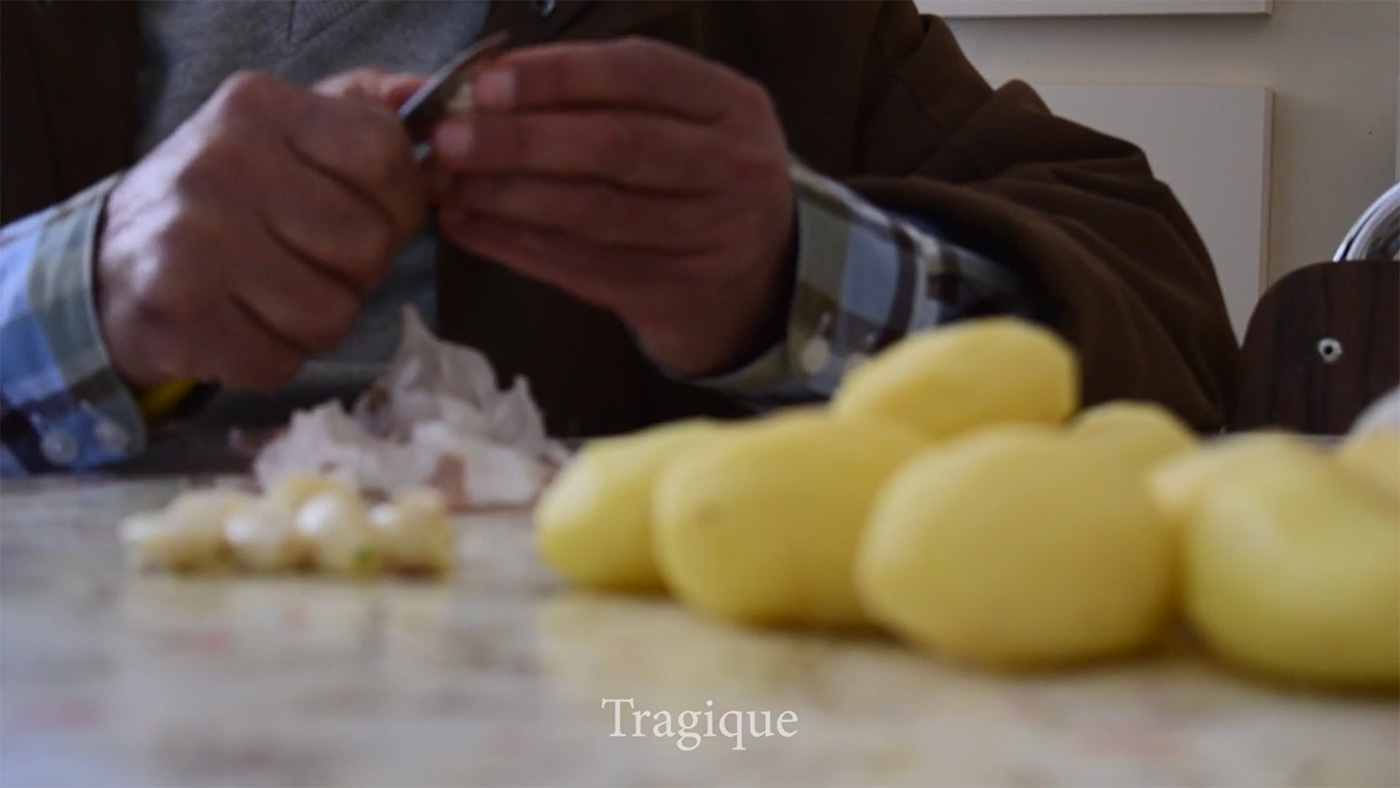
Envol
Video | hdv | color | 4:12 | Tunisia, France | 2024
In the dim light, the hand emerges like a fragment of presence, suspended between appearance and disappearance. It becomes a sensitive territory, brushed by a silent intimacy, unfolding like an open landscape, a place that welcomes what passes through without ever fully allowing itself to be grasped. The video then becomes a space of slowing down, where the gaze encounters a partial yet inhabited presence, crossed by a world in motion.
Yosr Ben Messaoud is a visual artist working between France and Tunisia. She is currently studying at the École des Beaux-Arts de Paris, after completing a degree in contemporary art and the humanities at the University of Vincennes. Her work includes video, photography, drawing, and installations, as well as hybrid forms that move between these different modes of expression. The variety of operative forms conveys an aesthetics of openness and suspension, where one is called upon to become a bridge, to welcome alterity in order to allow a new form of communion to emerge. In her practice, she examines questions related to the displacement of narratives and their survival, beginning from the intimate, through the creation of dispositifs conceived both as systems of reception, containers of experience, and circuits of narration—structures that become inhabited by what surrounds them. The axes shift incessantly between lived experience and affective facts, collected images and those that persist, the intimate and the collective voice, in order to reflect on the human condition—understood not as humanity at the centre of the world, but as part of its sensitive order, material, and social
Haim Ben Shitrit
No Johny no
Experimental video | dv | color and b&w | 3:36 | Israel | 2006
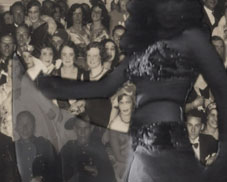
"Anonymous soldiers", the anthem of the "Shtern gang", an anti- British extreme Jewish Underground which operated in the forties, translated to French with spelling mistakes. The text is being recited by a man and a woman, the father and mother of the artist, who are not familiar with the text and who are trying to please their son who has come for a visit. The recitation is interrupted by their corrections of the spelling, by the mother insisting on giving her son something to eat, and other sounds and oriental rhythms. The sound is orchestrated to characters camouflaged by desert landscapes digitally sculpted onto their faces. "no johny no" is a virtual belly dance, with a dreamy French-Arab, for English soldiers from a family photo album.
Born in Jerusalem, Haim Ben Shitrit studied with Christian Boltonsky at the Academy of Fine Arts in Paris. He graduated with distinction from the Bezalel Academy of Art and Design in Jerusalem. Over the years he has been awarded grants from the Manet-Katz Foundation, America-Israel Fund, and the Pollock-Krasner Foundation New York. His video installations and projects have been exhibited in Israel, France, England, Belgium, and Canada. Ben Shitrit is currently the director of the art department at the Israel Arts and Science Academy in Jerusalem.

Younes Ben Slimane
Images de Tunisie
Experimental doc. | mov | color and b&w | 14:39 | Tunisia | 2025
Images de Tunisie reclaims and recontextualizes archival footage from 1940s newsreels produced by Les Actualités Françaises, and combines it with new footage filmed at the same vernacular architecture sites in the Berber villages of southern Tunisia. These 1940s black-and-white documentaries were created to serve French propaganda in and about the colonised countries of North Africa, including Tunisia. Ben Slimane explains: ‘The title of the film comes from the ethnographic documentary filmed by Georges Barrois, Images de Tunisie (1946), which interested me because of its ability to create images and shape narratives. I went back to the sites presented in the archive films to reappropriate the scenes from a personal point of view, using a hand-held camera to explore the ruined sites. " The film functions as a counter-ethnography. Navigating between archive documents and personal images, an interaction unfolds. This interaction becomes the keystone of the film, transforming it into a commentary on the evolution of the medium of cinema, illustrating its ability to redefine narratives.
Younès Ben Slimane is a Tunisian visual artist and filmmaker. He graduated in architecture from the National School of Architecture and Urbanism in Tunis before completing postgraduate studies at Le Fresnoy – Studio National des Arts Contemporains (FR). His work has been showcased at the Mucem in Marseille (FR), the Biennale de l’Art Africain Contemporain in Dakar (SN), the Museum of Contemporary Art in Skopje (MK), the Institut du Monde Arabe in Paris (FR), the Beirut Art Center (LB), ETH Zurich – gta exhibitions in Zurich (CH), the Versailles Architecture Biennale in Versailles (FR), the Art Explora Museum Boat, and the Wexner Center for the Arts in Ohio (US), the Zaha Hadid Foundation in London (UK) and the Galeria de Arte Cinemática in Vila do Conde (PT). His films have been selected for international festivals including the Locarno Film Festival (CH),CPH:DOX (DK), Black Star Film Festival (US), DokuFest (XK), EXiS Seoul, (KR) and Prismatic Ground New York (US), among others. He has received numerous awards, including Loop Barcelona Award (2022, ES). His work is part of art collections, including the Museum of Contemporary Art of Barcelona (MACBA) Print and Kadist Paris–San Francisco.
Younès Ben Slimane
We Knew How Beautiful They Were, These Islands
Experimental doc. | hdcam | color | 20:0 | Tunisia, France | 2022
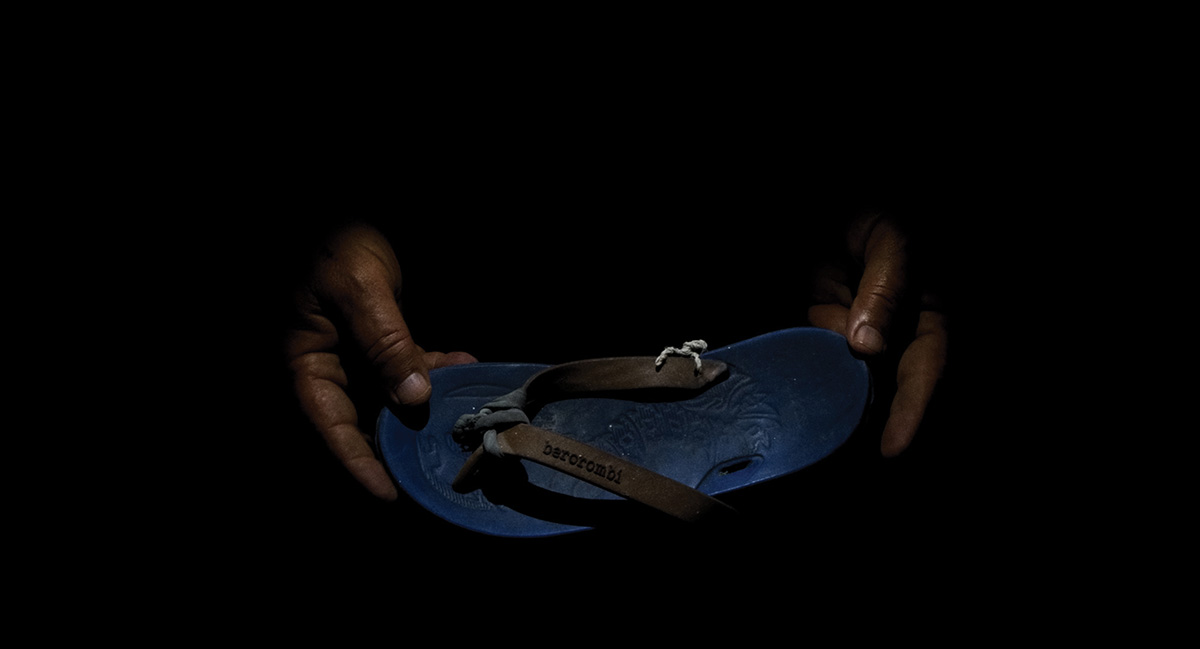
A lone figure digs a grave in the dead of night. With no dialogue – and no sound other than the wind, the crackling of a fire and the scrape of a shovel against dry earth – we are confronted with a dark and mysterious, possibly cursed, universe where every object seems haunted by a meaning we barely sense, but which seem to confirm our anxieties. The head of an old doll, a comb, a lipstick. Relics whose silent language speaks of the end of their former owners. At sea, in the desert. Younes Ben Slimane’s disturbingly beautiful and melancholic imagery is bathed in darkness and in a golden chiaroscuro, lit only by the stars and the lone grave diggers’ headlamps.
Younes Ben Slimane: Tunisian artist and filmmaker, graduated from Le Fresnoy - Studio national des arts contemporains in 2022. His films have been selected in international festivals such as Locarno Film Festival, CPH:DOX, DokuFest, Festival dei Popoli. His work is part of the collections of art institutions and museums including the Institute of Contemporary Art, Villeurbanne/Rhône-Alpes (IAC), France and the Museum of Contemporary Art of Barcelona, MACBA - Barcelona, Spain.
Oren Ben Yosef
Of once held joy...
Création sonore | 0 | color | 4:42 | Israel | 2003
"...of once held joy" is the final part of an audio work called "WAKE". After about 45 minutes of a wake ceremony, this song comes to celebrate something that is truly lost now. It tells about a war and how the person who sings this song lost in it. The song itself is already buried under layers of noise and decay which now take over the song itself on a musical level.
MORTALMANIFEST is a sound project working around different aspects of the sublime/divine. Thus trying to give noise music more value than its usually related nihilistic behaviour. Coming from a small but kicking noise scene in Israel, I have performed with several other noise artist and participated in several radio shows. On a global level, I have released several tracks on compilation albums in the USA and was featured in two festivals in Canada and Wales.
Anat Ben-david
The Promise Of Meat
Experimental video | hdcam | color | 10:52 | United Kingdom | 2021
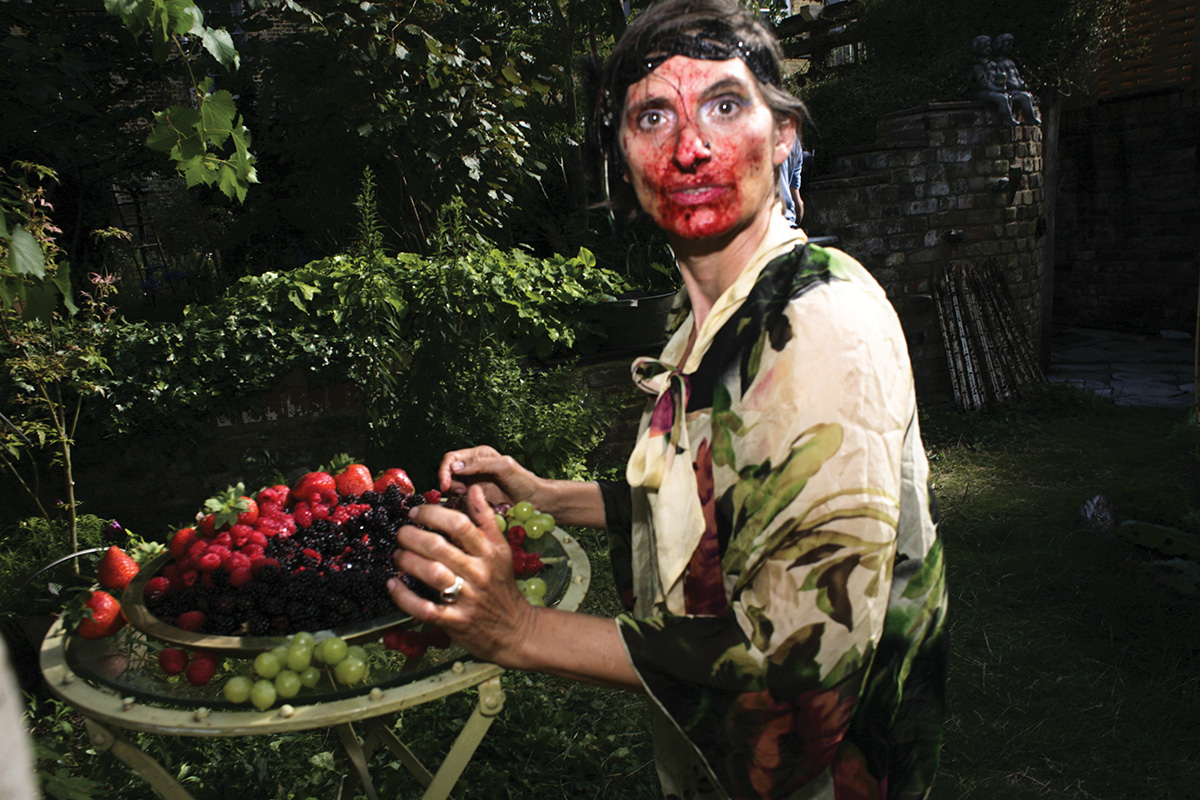
The Promise of Meat song- composed and performed By Anat Ben-David with Anna Dennis by vocally improvising fragments from William Golding’s Lord of the Flies. Beginning as a narrative song (using Golding’s descriptive scenes of the jungle), it gradually degenerates into eloquent chaos, the slow tribal thud evoking the atmosphere of ritual sacrifice. The promise of meat video featuring: Anat Ben-David, Anna Dennis and Cinematographer: Lily Grimes, elevates the carnal, visceral and unreasonable beauty of the human psych in the age of Data-centric threat to humanity.
Dr Anat Ben-David explores the freedom of live improvisation combined with traditional methods of musical composition. Anat’s approach to time-based work is founded in composition. Her background in experimental theatre (the school of Visual Theatre, Jerusalem) and as a member of electro–punk band and art collective Chicks On Speed, has led to projects such as Kairos OperaArt (commissioned for the opening of the new wing of Victoria and Albert Museum), where live electronic processing meets classical instrumentation in a fusion of different musical genres. In her doctoral research Oscillation and Disturbance in the OpeRaArt (Kingston University, 2015), artist and musician Anat Ben David coined the term ‘OpeRaArt’ to explain her rearrangements of sound-text into musical compositions. Ben-David recent collaborations include Lina Lapelyte (winner of Venice Golden-Lion prize, 2019), opera singer Anna Dennis, poet Richard Scott, Vocalist Sharon Gal, violinist Angharad Davies and more. Anna Dennis Described by the Times as a “delectable soprano and a serene, ever-sentient presence”, Anna is especially noted for her work in Modern and Baroque repertoire. Previous opera stages include ROH, ENO, La Scala, Göttingen and Aldeburgh. Concert work includes Berlin Philharmonie, Lincoln Center, Royal Albert Hall, Gulbenkian Lisbon, and Sydney Opera House.
Yasmina Benabderrahmane
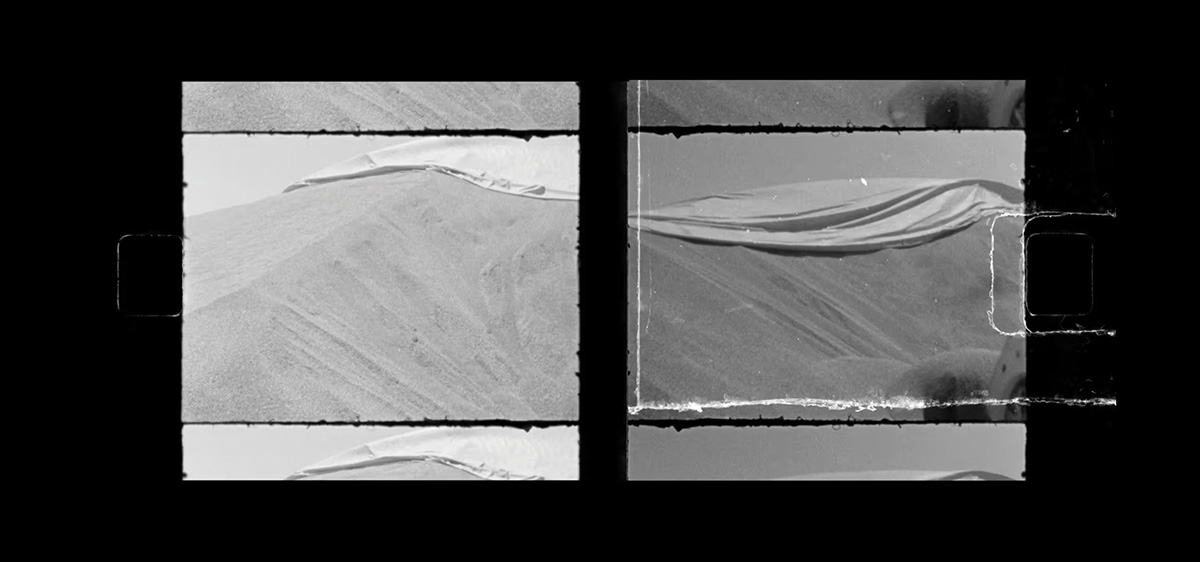
Rokh
Experimental film | super8 | black and white | 14:2 | France, Qatar | 2023
Rokh is a metaphorical portrait of the flour mill in its current state as the ‘granary of the country’. Rokh (the mythological bird of prey) relates to poet Farid ud-Din Attar’s ‘Conference of the Birds’, to the quest of the mythical Simorgh, who appears in so many Arabic, Indian and Persian tales. Rokh is an attempt to capture something of the disappearing, mutating mill. It references the history and the present day of a land in mutation by means of a collection of traditional gestures: from the arrival of the ship importing the grain from Asia to the grain being sorted, stored and reworked, studied and tasted. Dreamlike and repetitive mechanisms transport us into a hypnotic visual and sonic trance echoing the migration of humans through the movements, passages and transit of birds. The building is seen as a nest or a living organism producing grain that feeds. There is a transient movement toward the demolition of the building, a fall of rubble and reconstruction. I see this film project as an allegory of nesting, waiting for the next journey or flight, a dreamlike journey in a concrete body revealed by the caressing light, the power of heat, the visitation of the sun from day to night, an eternal cycle insulating the film like a skin marked with iron.
Yasmina Benabderrahmane graduated from the École Nationale Supérieure des Beaux-Arts de Paris in 2009 and from Le Fresnoy - Studio national des arts contemporains de Tourcoing - in 2015. She works experimentally with silver film and photography. Yasmina is interested in the fragment and focuses her gaze as close as possible to the material, right down to the invisible. She creates bodies of still, moving and sound images. Her work, halfway between documentary and filmed diary, takes several forms: from the simple image to the film to the multimedia installation. In 2018, Yasmina won the Solveig-Anspach Short Film Prize for her film La renardière. In 2019, she won the Révélation Photographie - Lauréate du Prix LE BAL de la Jeune Création with ADAGP. In 2021, she won the national photographic commission "Regards du Grand Paris - Année 6" (CNAP - Ateliers Médicis). Her work is exhibited internationally and is included in private and public collections. Yasmina Benabderrahmane is a resident at Villa Medici in the 2022-2023 year, where she is conducting research for the feature-length film project Carne Vale, lotta lavora come un fascista.
Samy Benammar, Mohamad Awad
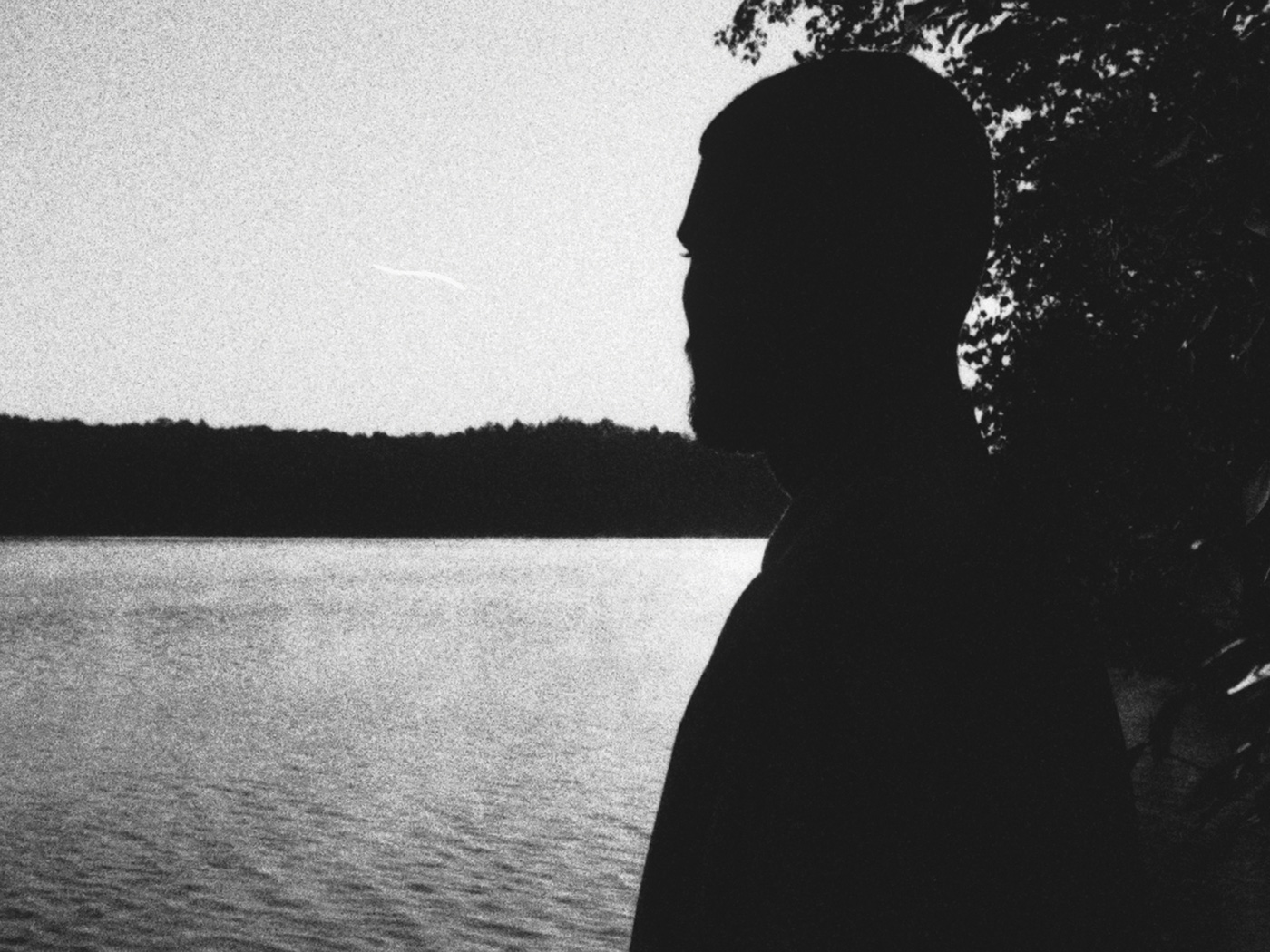
Adieu Ugarit
Documentary | 16mm | black and white | 15:45 | Canada | 2024
In 2012, Mohamed had seen his best friend shot dead by an armed militia on the outskirts of Damascus, Syria; the blood spilled in the lake contaminated his memory. Ten years on, the reflections on the Laurentian waters revive Mohamed's trauma. I ask him if he'd like to dredge up the memories, repair the pain by retreating for a few days to the most distressing calm he can find. He talks about death, immigration and anger. We wonder how and why we should recount this story.
Samy Benammar is a filmmaker, photographer, and art critic based between Montreal and Marseille. Drawing from his Algerian roots and working-class upbringing, his work blends a reflective documentary approach with tactile experimentation. He seeks a form of visual reconciliation while underscoring the irreparable fractures left by fantasies of the past. Often hovering on the edge of disappearance, his images explore the tension between physical and imagined space, between memory, identity, and stone. He has served on the editorial boards of Hors Champ, 24 images, and Panorama-cinéma, and is currently pursuing a PhD on colonial photography in the Aurès region of Algeria.
Laetitia Benat
Fragmentarium
Experimental fiction | dv | color | 18:22 | France | 2008
The principal topics of this film are isolation and sickness. The way of recording them, voluntarily fragmented, differentiates film from documentary and also from a conventional narration. It was carried out and taken from a text written by a psychiatric nurse who plays her own part in film. It was not filmed in a real hospital but in the Dutch college of Cité Universitaire Internationale de Paris. The author chosen for her plastic qualities, the purity of her lines which truly guide the spectator. She wanted to show how space and architecture represent a form capable of constraining bodies. More than the bars, it is the look which constrains the other, takes care of it, and supervises it. It is without question honoring a place within the law, an institution. The title takes up this idea; it evokes a place (like a clinic) and a mode of representation of a fragmentary world.The principal topics of this film are isolation and sickness. The way of recording them, voluntarily fragmented, differentiates film from documentary and also from a conventional narration. It was carried out and taken from a text written by a psychiatric nurse who plays her own part in film. It was not filmed in a real hospital but in the Dutch college of Cité Universitaire Internationale de Paris. The author chosen for her plastic qualities, the purity of her lines which truly guide the spectator. She wanted to show how space and architecture represent a form capable of constraining bodies. More than the bars, it is the look which constrains the other, takes care of it, and supervises it. It is without question honoring a place within the law, an institution. The title takes up this idea; it evokes a place (like a clinic) and a mode of representation of a fragmentary world.
Laetitia Benat is an artist born in 1971 who works mainly three mediums: video, photography, and drawing. She deals with the rewriting of a story inspired by the daily newspaper. But the daily newspaper becomes bewildered by the attention paid to these details usually invisible where one is protected by not looking too closely. The abyss is the place, the room, a generally closed space where only loneliness takes place. A window frame shadow which appears on a wall. Her videos are characterized by depicting women who faint, some who are sad, hypnotically empty according to others. But, through all these pale faces, which she want to express it is nothing more than the pursuit of the original portrait, bringing everybody together.
Yohana, Hanga Benattar, Toth, Hanga Toth , Yohana Benattar
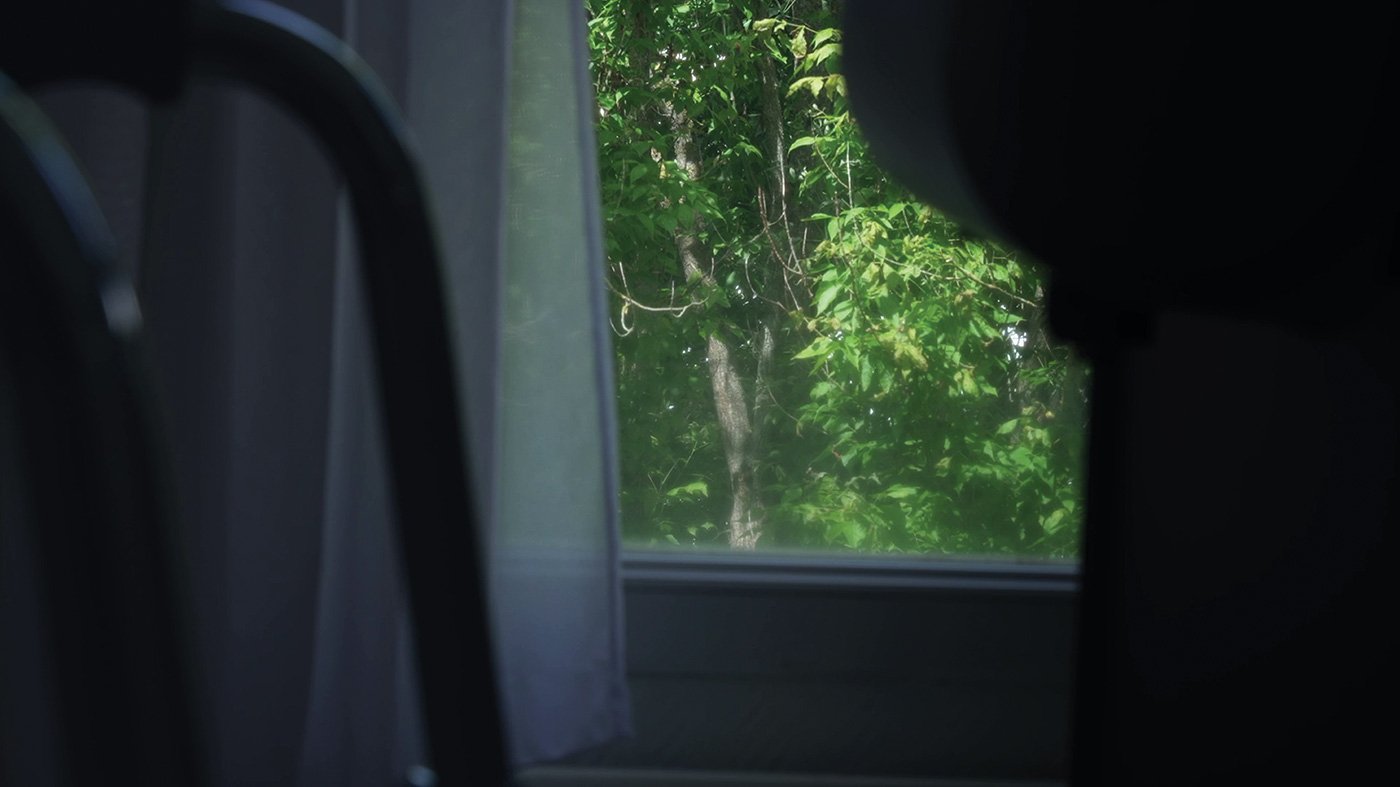
Ce qui se meut comme corps revient comme mouvement de pensée
Experimental doc. | mp4 | color | 61:13 | France | 0
Il s’agit d’une tentative d’imaginer un regard réciproque, un regard qui articule la nature en nous et hors de nous. Les plantes nous accompagnent toute notre vie, nous tissons et retissons avec elles des relations subtiles, d’équilibres mouvants, imprévisibles et souvent invisibles. Pourtant, dans nos représentations, l’environnement non-humain reste souvent évoqué comme un cadre de l’expérience humaine, plutôt qu’un acteur à part entière. Comment regarder et faire ressentir les relations silencieuses et discrètes qui nous relient à la végétation ? Comment les liens avec le vivant se tissent et se créent dans ces espaces de vie que sont les hôpitaux gériatriques, des unités de soin longue durée ou les établissements d'hébergement pour personnes âgées dépendantes ? Durant l’année 2024, nous avons réfléchi ensemble avec les résidentes et résidents de quatre EHAPDs à la perception des plantes, à la manière dont nous appréhendons leurs présences et qu’elles nous perçoivent.
Hanga Tóth est artiste et cinéaste, elle travaille entre Budapest et Paris. Dans ses installations vidéos et éditions elle s’intéresse aux dimensions performatives et processuelles du cinéma documentaire et développe des formes d’attention aux mouvements. Elle développe des méthodologies de création ouvertes et collaboratives, impliquant des équipes pluridisciplinaires pour explorer des questions sociétales telles que les savoirs expérientiels en santé, la perception du temps ou notre rapport à l’environnement immédiat. Après son diplôme à l’Université des arts Moholy-Nagy de Budapest, elle a étudié la philosophie contemporaine et la réalisation documentaire à l'Université Paris Cité. Yohana Benattar est cinéaste et autrice. Elle est diplômée d’un master de recherche en anthropologie sociale de l’EHESS et d’un master en écritures documentaires de l’Université de Paris Diderot. Yohana s’est dirigée vers la réalisation documentaire sous diverses formes et termine actuellement son premier long-métrage documentaire « Bedeau, camp de passage ». Elle a co-fondé l’association étrangères productions avec Hanga Toth qui accompagne des projets hybrides à l’intersection de l’art, du soin et des sciences sociales.
Aude Benhaim
ÎLE
Experimental doc. | mov | color | 24:51 | France, Germany | 2021
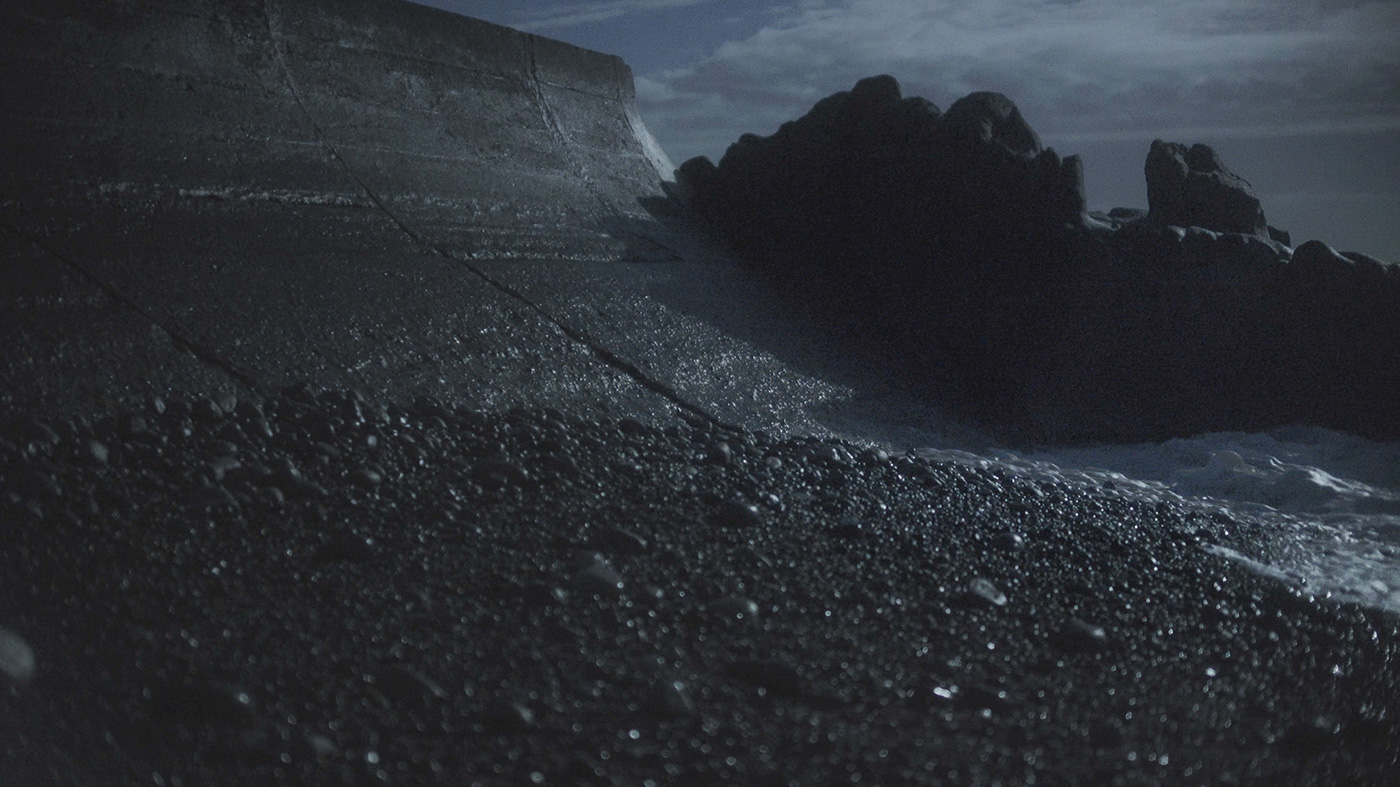
Au large de la côte bretonne s'étale une petite île à la merci des marées. La mer gronde jusque dans les étroites ruelles. La voix des vagues se mêle à celles des habitants. Les tempêtes et les naufrages reviennent à leur mémoire et rappellent la mort toujours aux aguets.
Aude Benhaïm est une artiste vidéaste. Elle a grandi en France et vit aujourd’hui en Allemagne. En 2009, elle a obtenu son Diplôme national d’arts plastiques en communication visuelle à l’École européenne supérieure d’art de Bretagne, site de Rennes. En 2011, elle est venue étudier à l’École d’art de Leipzig (“Hochschule für Grafik und Buchkunst”) dans la classe de photographie et d’image animée de l'artiste Tina Bara. En 2016, elle y a obtenu son diplôme avec le film documentaire Ailleurs en moi. En 2017, elle a participé au programme de formation continue TP2 Talentpool dans le domaine de la réalisation avec le projet Île. En 2018, elle a remporté le prix KONTAKT Pitching lors de la Journée des jeunes talents organisée par la Mitteldeutsche Medienförderung à Leipzig pour ce même projet. Le court-métrage Île a été projeté au festival Torino Underground Cinefest en 2022.
Margarita Benitez
Warspying
Art vidéo | dv | color and b&w | 3:1 | USA | 2004
The current state of the world demands that technology and security go hand in hand. The problem is that sometimes security devices are purchased, and we are not fully aware of what the risks of using such a device are. "Warspying" is a guerilla-style documentary short seeking to create awareness of wireless video technology and the issue of privacy or the lack thereof that comes from using such devices. Two of my friends and I drive around and show you just how easy it is for someone to pick up wireless video signals. The moral of this story? Turn off wireless cameras when you want privacy.
EXHIBITIONS 2005 BFA Exhibition, Frost Art Museum, Florida International University International Kaunas Art Biennial ?Textile 05?. Kaunas, Lithuania. 54th Annual All Florida Juried Competition and Exhibition Boca Raton Museum of Art. Boca Raton, Florida. TEXTILE TALENTS 2005 ? East Carolina University. FULL LOAD- The Loft Building ? FIU Wolfsonian & Dacra ? Miami, Florida. NORTH GOES SOUTH- Best in Show ? Graham Center Gallery. Curated by Pip Brant. Florida International University. Miami, Florida BEYOND ALL OF THAT? ? EDGE ZONES @ World Arts Building. Curated by Charo Oquet & David Vardi. Miami, Florida. 2004 OMNI ART ? Curated by Carol Damien & Tina Spiro. Downtown - Miami, Florida. MIAMI NOW ? EDGE ZONES @ World Arts Building. Curated by Charo Oquet & David Vardi. Miami, Florida. 15th ANNUAL USE ? University Student Exhibition, ACA Hester Merwin Ayers Gallery, Atlantic Center for the Arts, Juried by John Torreano. ANNUAL STUDENT SHOW, Frost Art Museum, Florida International University, Juried by Robert Chambers. PUBLIC ART PROJECT ? Group Quilt. Florida International University, Biscayne Bay Campus, Miami, Florida 2002 ARTSERVE Gallery Exhibit in Main Library, Fort Lauderdale, Florida. 35th SALON DE REFUSES, Warehouse Gallery 721, Broward Art Guild, Fort Lauderdale, Florida. FORM FOUNDRY, Creations, Delray Beach, Florida. 2001 BEAUX ARTS FESTIVAL, Coral Gables, Florida. 2000 CLEMATIS BY NIGHT, West Palm Beach, Florida. (August ? December) ALLIANCE FOR THE ARTS, Museum Shop. Fort Myers, Florida 1999 GEEK ART SHOW, Mark K. Wheeler Gallery, Fort Lauderdale, Florida. SCREENINGS 2005 ? The Education Channel`s Annual Independents` Film Festival (IFF) ? 2005 Zeitgeist International Film Festival. San Francisco, California. CURATORIAL Gallery Director - Hugin and Munin Gallery - Dec 2004 to present Catalina &Durvis Tena Francesca Lalane BIBLIOGRAPHY ?The Studio at SIGGRAPH 2001? Computer Graphics Quaterly, May 2002. ?Emerging Technologies? Computer Graphics Quaterly, May 2002. Todd Tongen, Channel 10 Taxi, ?Geek Art Show? 1999. New Florida, ?Geek Art Show? 1999. AWARDS Outstanding Fibers Student Award from Surface Design Magazine through FIU. Workshop scholarships (2) for Transart Institute Summer New Media Art Workshops 2005, Danube University, Krems, Austria. Best in Show, North Goes South, 2005. Outstanding Academic Achievement in Art, Florida International University, Spring 2004. Workshops & Residencies Transart Institute Summer New Media Art Workshops 2005, Danube University, Krems, Austria. Orgs/Memberships ACM SIGGRAPH Golden Key Honors Society Glass Art Society Surface Design Association EDUCATION Florida International University, B.F.A. December 2005 ? non-traditional student B.S. Media Arts & Animation, Cum Laude. Art Institute of Ft. Lauderdale. Ft. Laud., FL 2000. A.A. Miami-Dade Community College. Miami, Florida, 1999. Websites: www.pixel-foundry.com/maggie www.warspying.org

Fethi Benmokhtar
Crash
Documentary | hdv | color | 9:0 | Algeria | 2017
Collision est un film de Benmokhtar Fethi, basé sur la narration non linéaire. (France). Le film nous présente des éléments réels, sur la situation actuelle de la ville d'Oran. Des éléments sur la vie et la mort dans la ville à travers son histoire, son identité, sa religion et son entourage naturel. Le film contient trois chapitres. Le premier chapitre est dédié aux martyrs de la révolution, raconté par la grand-mère. Le deuxième chapitre est dédié aux victimes de la dècennie noire, raconté par la mère. Le troisième chapitre, dédiéà la relation des habitants avec leur ville, et au cycle de vie de la nature est raconté par la fille.
Gregory Bennett
Edifice I
Animation | mp4 | color | 8:35 | New Zealand | 2020
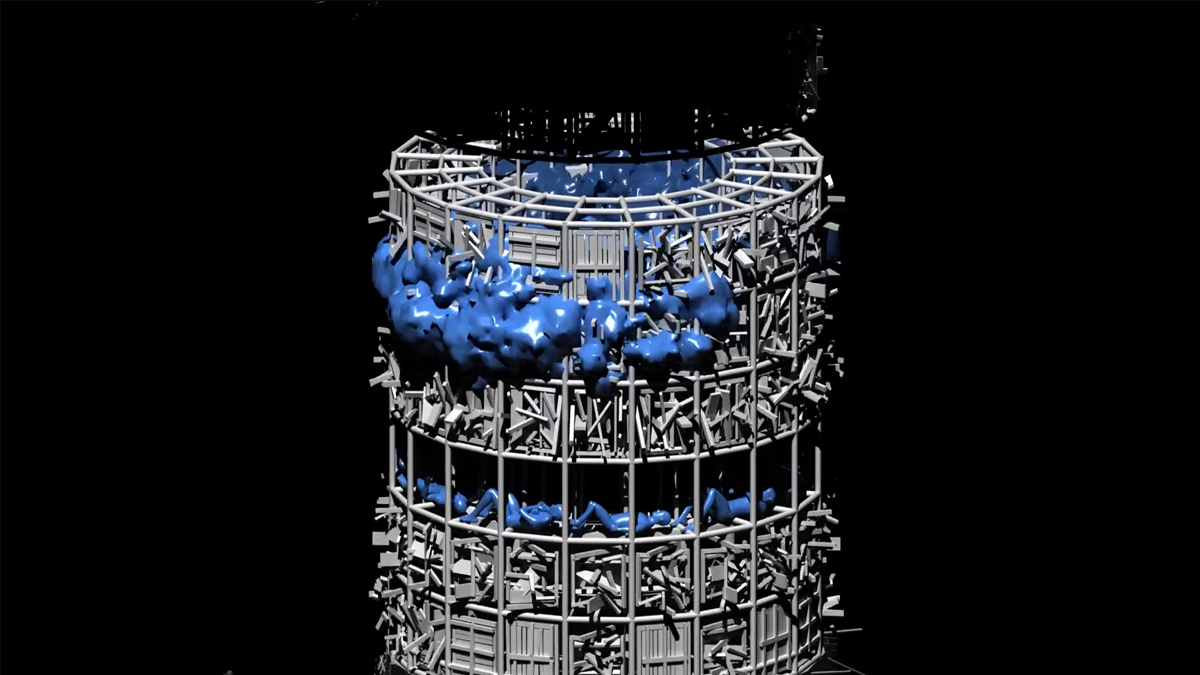
‘Edifice I’ is an 8:35 minute experimental 3D animation. The work is situated in an art practice that that embraces 3D computer animation and the digital body to explore themes and tensions around nature and culture, the utopian and the dystopian, through the rendering of complex digital ecosystems. The term ‘edifice’ can refer to both a large, imposing building, and a long-established complex system of beliefs. ‘Edifice I’ is the latest in an ongoing series of works by the artist that imagine infinitely revolving Babel-like tower structures situated in an infinite void. Homogeneous human figures appear only intermittently, precariously overwhelmed or trapped by the, at times, unstable superstructure. The tower simulates at times a machine in perpetual motion, without obvious purpose. Although resembling a fortress, it is rendered as a permeable and contingent structure, at times in a state of unstable flux, an embodiment the fragility of utopian desire and impermanence of human endeavour.
Gregory Bennett is a New Zealand/Aotearoa-born and based digital artist who explores conceptions of the utopian and dystopian through representations of the multiplied digital body. He uses 3D animation in a creative practice which encompasses video, motion capture, projection mapping, and virtual reality. Bennett has exhibited internationally in the USA, Hong Kong, China, Australia, and Europe. Exhibitions include ‘real-fake.org.2.0’ at the BronxArtSpace, New York; the 2019 ‘Rencontres Internationales, New Cinema and Contemporary Art’ in Paris and Berlin; the 2016 International Symposium on Electronic Art in Hong Kong; the ‘Supernova’ Digital Animation Festival in Denver, USA; and the Centre for Contemporary Photography in Australia. He was a finalist in the 7th Screengrab International Media Arts Award in Australia in 2015 and was selected for ‘Narracje 2013, Installations and Interventions in Public Space’ in Gdansk, Poland, and the Video Contemporary exhibition at the 2015 Sydney Contemporary International Art Fair. His work was paired with Giovanni Battista Piranesi’s ‘Imaginary Prisons’ print series for a show at AALA Gallery, Los Angeles in 2018. Bennett has a Masters degree from the University of Auckland, and is currently Head of Department for Digital Design and Visual Arts at the Auckland University of Technology.
Justin Bennett
Vilgiskoddeoayvinyarvi: Wolf Lake on the Mountains
Experimental doc. | mov | color | 24:50 | United Kingdom, Russia | 2018
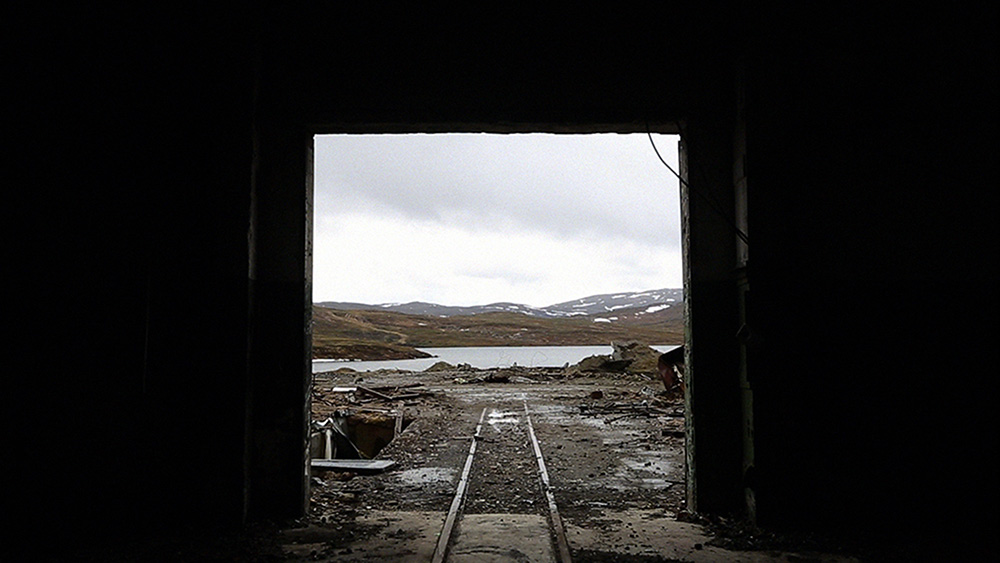
We follow Viktor Koslovsky, a scientist still working at the otherwise abandoned Kola Super-Deep Borehole, a geological research station “at the border of everything†in north-west Russia. He tells of the history of this former cold-war project and of his current research which he describes as “listening to the past in order to hear the future.†The Kola Super-Deep Borehole (KSD) is the deepest man-made hole on earth – more than 12 km deep. It was a Soviet geology research project started during the Cold War. In addition to gathering data about the geology of the earth`s crust it formed part of Project Globus, a network of seismic listening stations which was to act as an early-warning system for natural disasters as well as for monitoring enemy nuclear tests. After the fall of the Soviet Union the project was slowly wound up and the site was abandoned in 2008. The rock strata that are visible in the core samples extracted from the borehole are seemingly inert to humans but on another time-scale they are very much alive. They tell the story of the formation of the earth and of ultra-slow processes that are still taking place within the earth`s crust. Thinking at this geological timescale puts human endeavour and progress into perspective, the Kola Super Deep becomes merely a pin-prick into the body of the earth. Still, the image of drilling so deep into the earth inflamed the imagination of evangelical Christians with an image of Hell. The sounds of screams emanating from the inferno circulated on the internet purporting to have been recorded by the Russian scientists – probably a montage of horror-film soundtracks. The layers of rock penetrated by the drill resound with Dante`s decent into the Inferno with Virgil as his guide – where each layer or circle of Hell is reserved for different kinds of sinners, each with their own story. In which circle of Hell can the conspiracy theorists be found? Which is reserved for the climate change deniers? At the KSD site, next to a lake called Vilgiskoddeoayvinyarvi (‘Wolf lake on the mountains’ in Sà mi language), we meet Viktor. Ever since the station shut down, Viktor has stayed on-site as much as possible, carrying on the work started by Dr. Huberman, the founder of the project. He recounts the history of the KSD, relating it to other cold-war science projects, about the geology and history of the area, and of his experiences living there alone. He guides us around the ruined site, introducing his living quarters, his small laboratory and of course the borehole itself. He explains his work, listening to vibrations deep within the earth, linking geology with Sami shamanism and divination.
Justin Bennett (UK, 1964, based in The Hague) works with sound and image. Trained in sculpture and electronic music, he uses drawing, video, sculpture, and a diverse array of sound forms in his research. One recurrent theme is our experience of archticture, urban development, and the (un)built space. He employs sound in order to render it audible as well as palpable: in his work, listening carefully provides a radically different way of seeing and experiencing. Bennett`s recording of sound is comparable with the shooting of video. He uses various microphones to change perspectives – like camera lenses. The microphones – the listener`s points-of-hearing – move through a city, a street, a windy Russian tundra, or the different-sounding spaces of a building. In many of Bennett`s works and installations sound is complemented by video images that affect the experience of the visitor differenty again. In some of his research projects the audiovisual material is juxtaposed with voice-overs and drawings, mapping space, movement, sound, magnetic fields, and so forth, through language and diagrams. Thus a reciprocity is created between various forms of expression: a drawing or a text can be a score; and sound and image become ways of drawing and writing. This way, Bennett`s work is also a research into sound and image as specific media, and an exploration of the ways in which they can be used and experienced. His way of working sparkles unexpected complementarities, synaesthetics, collisions and manipulations of the mind.
Gregory Bennett
Exosphere
Animation | mp4 | color | 20:47 | New Zealand | 2018
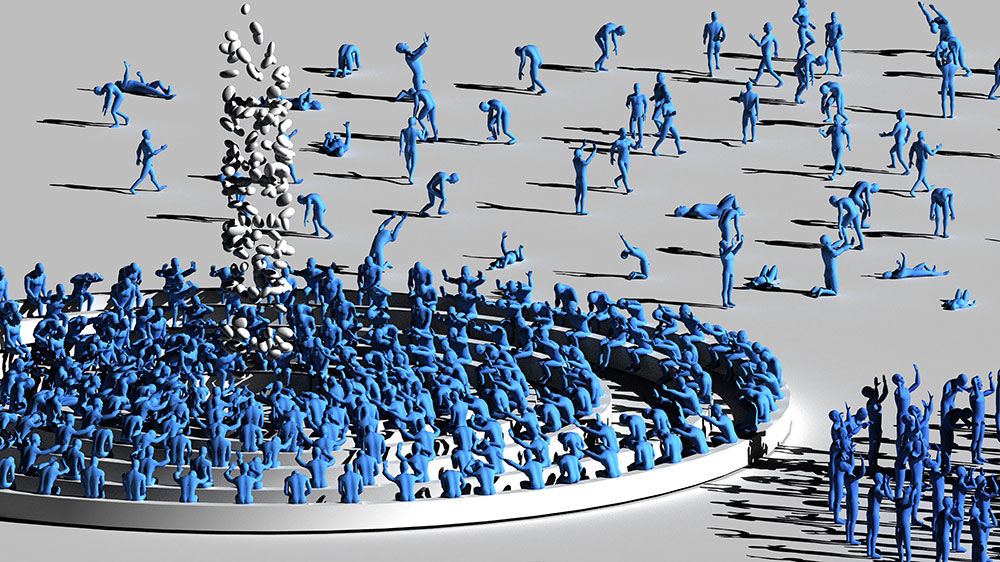
Exosphere (2018) is 21-minute long looped digital animation. The term ‘exosphere’ refers to the uppermost layer of atmosphere surrounding a planet, where it thins out and merges with interplanetary space: an in-between zone that suggests both limitations and possibilities. The work in part references French philosopher Paul Virilio’s suggestion that the modern city has become a ‘claustropolis’, where the inhabitants feel the need to put up what he describes as an ‘exospherical fence’ or barrier to fend off the unknown dangers of the outside world. Another influence is The Panopticon, an institutional design created by the 18th century English philosopher Jeremy Bentham. Employing multiple humanoid forms trapped in perpetual looped motions, ‘Exosphere’ reflects the primary functions of The Panopticon, which explores ideas of surveillance, regulated behaviour and the disciplinary society. Here the corporeal body is transformed into proliferating avatars inhabiting a range of environments where existence is either tenuous, or wholly subsumed into a synthetic ecosystem. These spaces can be read as a series of psychological landscapes, as representations of hermetic digital colonies – depictions which fluctuate between the utopian and dystopian, or as figures enacting some enigmatic ceremonial. The artist uses current animation technology to reflect metaphorically what might be occurring in the present while also imagining any number of possible futures.
Gregory Bennett is a New Zealand-based artist who works with 3D animation, motion capture, projection mapping, and virtual reality. His work has been exhibited internationally in galleries and new media festivals in the USA, Hong Kong, China, Europe, Australia, and New Zealand. Recent exhibitions include the AA/LA Gallery in Los Angeles, ‘the real-fake.org.2.0’ at the BronxArtSpace in New York, the juried exhibition at the 2016 International Symposium on Electronic Art in Hong Kong, and the Centre for Contemporary Photography in Melbourne, Australia. He was also a finalist in the 7th Screengrab International Media Arts Award in Australia in 2015 and was selected for the Video Contemporary exhibition at the 2015 Sydney Contemporary International Art Fair. His work has also been selected for the Supernova 2018 Digital Animation Festival in Denver, USA; Currents 2014, the Santa Fe International New Media Festival, USA; SIMULTAN Festival for Video, Media Art, Exploratory Music and Sound 2014, Timisoara, Romania; Prak-sis n3w M3dia Art Festival 2014, Chicago, USA; TEMP Art Space, New York; ISEA 2012 in Alberquerque, New Mexico, USA. He was also an invited artist for Narracje 2013, Installations and Interventions in Public Space in Gdansk, Poland.
Mylene Benoit, Mathieu BOUVIER
L'Herbe, sur un paysage interstitiel
Experimental video | betaSP | color | 10:0 | France | 2003
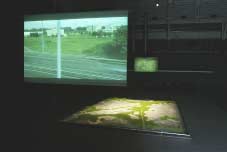
In the Lille metropolis, such a s in all occidental big build-up areas, the urban network crosses, gathers, fills gaps, get closer inexorably their frames and absorbs all wild space. If the territory surface in nowadays divided into squares until the last centimetre, under satellite?s eye as under the rule of the teleprompters, what chance do we keep to find some spaces of no determination, of vague, of adventure? Where can we still hide? Seen form above, some ?white dapples? adds again to the map colours: these wild lands, those interchange, or tree hills reserve indeed some invisibility spaces, silence and adventure in the tight squares of the urban network. During the month of March and April 2003, with a digital camera and a satellite picture as a map, we have travelled by foot all the Lille build-up area, in an area of some 20m² around its main high road nodal, in quest of interstitial spaces. These eight hikes gave us the documentary material of a reasoned atlas of our ?mini-steppes? that you can find on www.lherbe.net Our jaunts also served us to do some searching for a short length movie, launched on the tracks of a weird tribe of individuals that a great migration run drive, from high roads islands to unreachable wild lands in a ?country side? of the urban space. If a landscape must be constituted after this tribe, this is indeed a kind of spotted steppe: where pass our barbarians, the herb grows back? From March to June 2003, Christian Ceulemans, working at the workshop Courant d?Art of Bernard Petit, in Aubusson, seamed a tapestry of horizontal shuttle loom that keeps now in its crossed strings a stepped herbal pattern by the tribe. To the tapestry back side, the green wool strings handle in their regular frame, unmovable and perennial, the image of a mix of twigs. To the back side, the grass blades redundant go against the grass movement. This tapestry includes antagonist principles of order and disorder in its making itself, before to become a metaphor of it. During all the period of the exhibition, a natural grass sneaks in the satellite photography frame, in places which were stepped by the pack, on our mini-steppes: a map of the residual space overlaps slowly, a soft green, on the map of the useful space. To make the indecisive go up on the map of the vocations and the uses, untie the frame of the useful space, create experience in the landscape and of the landscape in the city, reintroduce the ?white dapples? on the map, this is also, as suggests Emmanuel Hocquard* ? create the distance in a space time in a reckless closing path?. * ?Tâche blanches? in Ma haie edition, P.O.L.
Mathieu Bouvier is an artist born in 1973. He works and live in Montreuil sous Bois. He is graduated from the Ecole des Beaux-Arts of Lyon and St-Etienne, from the Studio National des Arts Contemporains-Tourcoing. Mylène Benoit is a plastic artist, video artist, choreographer, and she lives and works in Paris and Roubais (France). She?s graduated from the University of Westminster in London (BA with Honours of Contemporary Media Practice), from the University of St Denis (Master in Hyperdocument Multimédia). From October 2001 to July 2003, she?s artist in residence at the Fresnoy, Studion National des Arts Conteporains of Tourcoing. She creates in 2003 the Compagnie Contour Prgressif which realizations axe around the study of relation of interaction between mediatic/cinematographic vocabulary and choreographic writing. Since 1997, she acts at the Cité des Sciences et de l?Industrie of Paris as exhibition creator and multimedia project chef.
Benten Clay
R&D STUDY NO. 3: ION
0 | 0 | color | 2:0 | Germany, Finland | 2011
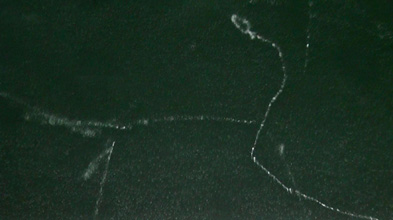
Ionizing radiation can be detected and made visible through an experiment called The Cloud Chamber. The video is a filmed document from a Cloud Chamber positioned near Olkiluoto nuclear power plant on September 11th, 2011, 2:10 ? 2:12 p.m. In this case, Alpha particles, Beta particles, Muons and Protons leave traces that can be distinguished by their characteristic shapes.