Catalogue > Search
Results for : Tout le catalogue
Roberto Collío
Muerte Blanca
Animation | 16mm | black and white | 17:20 | Chile | 2014
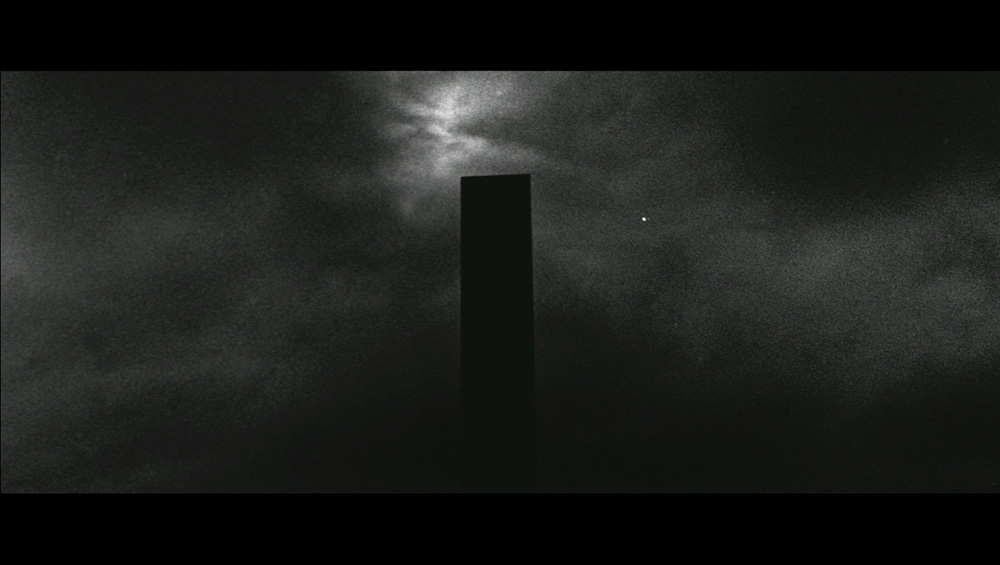
White death is the impressionist portrait of a landscape marked by tragedy. A ghostly stroll among the vestiges of a story where forty-four young soldiers and one sergeant were pushed to their deaths in the mountainous region of Antuco.
Roberto Collío – 25 November 1986, Santiago (Chile) Graduated of Integral Realization of Film and Television from Center of Cinematographic Research. While studying in Argentina he wrote and directed his first short film "Hombre muerto", an adaptation exercise based on the homonymous short story by Horacio Quiroga. Roberto Collío returned to Chile on 2009, where he participate as sound mixer in several film, both documentary and fiction. During 2013, Collío directs his second short film, "Muerte Blanca", an experimental documentary that chronicles the tragedy of Antuco. Currently Collío is developing his first feature, a documentary called “Petit Frère". The project, co ¬directed with Rodrigo Robledo and produced by Isabel Orellana, is a playful approach to the idea of identity, built in the fantastic imaginary writing of a haitian immigrant.

Natalia Comandari
Made in Suiza
Experimental doc. | dv | color | 5:56 | El Salvador, Switzerland | 2010
Le décor : un concours de beauté qui désignera le plus beau jeune homme de la communauté latino-américaine de Genève. Le corps masculin est ici exposé comme un prétexte à l?idéalisation et au rôle de la femme parfaite. Les pistes sont brouillées en même temps que les corps érotisés des jeunes hommes dessinent et trahissent, l?affirmation des codes et des stéréotypes sociaux. La plupart des participants nés en Suisse, fils d?immigrants, rejouent l?idéal masculin et les jugements féminins de manière ambiguë et re_chargé d?exotisme. Les corps impatients étalent l?hédonisme d?une jeunesse. Romain Legros
NATALIA COMANDARI Née le 24/01/83 San Salvador, El Salvador ncomandari@gmail.com Vie et travaille entre la Suisse et El Salvador EDUCATION June 2007: DNSEP mention du jury: Engagement du travail et de l?artiste, ENBAL Lyon. June 2004: DNAP Felicitations du Jury, ENBAL, Lyon Sep 2002: Journalism and Visual Communication, UCA, San Salvador
Natalia Comandari
Ryhmä-School Party
Experimental doc. | hdv | color | 8:30 | El Salvador, Finland | 2012
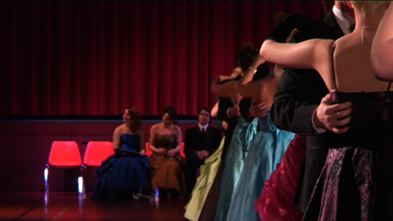
Ryhmä-School Party est la première vidéo d?une série des événements filmés dans plusieurs contextes temporellement précis ayant tous comme fil conducteur l?envie de documenter des nouveaux rites et cérémonies modernes. Ryhmä, traduit du Finlandais veut dire groupe, catégorie, fête. Dans le village de Hämeenkyrö les élèves de la F:E Sillanpää Senior High School célèbrent une tradition qui a été transmise de génération en génération : les élèves de la troisième année du Lycée quittent l?école pour aller à l?université, ce sont donc, les étudiants de la deuxième année qui deviennent les plus âgés dans l?école. Cet honneur est célébré avec un bal avec des danses traditionnelles finlandaises mais aussi des danses de salon. C?est un rite de passage à l?âge adulte qui mélange tradition et culture pop comme les principaux ingrédients d?un bal contemporain.
Natalia Comandari, -
Torito Denbow
Experimental doc. | hdv | color | 5:51 | El Salvador | 2011
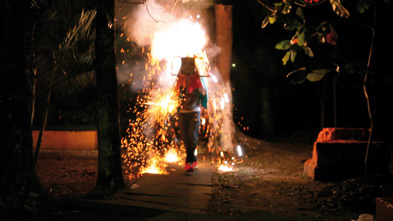
Native to Central America, the reggaton industrial bit called: Denbow, accompanied the protests of the working classes and women in their social demands of the 80 - 90. A fight with a female instrument catchy anthem anti-macho. Torito Denbow is a mix tape of religious symbols and rituals of Latin American revisited by a young band led by Natalia Comandari. The star of the evening is the Quinciañera she`s about to switch to the world of adult women from the fifteen years. In its simplest device for its music marks the rite, repeated and emphasized the cyclical aspect of these customs. Everyone is on stage in the street scene, the celebrated, the celebrants, the ceremony, the assembly, and the time in a loop on repeat mode.
Born 1983 San Salvador, El Salvador lives and works between Switzerland and El Salvador EDUCATION 2010: HEAD de Genève, master programme: Work Master, mention of the jury. 2007: DNSEP mention du jury: Engagement du travail et de l?artiste, ENBAL Lyon. 2004: DNAP Felicitations du Jury, ENBAL, Lyon 2002: Journalism and Visual Communication, UCA, San Salvador.
Agustina Comedi
Playback. Ensayo de una despedida
Experimental doc. | 4k | color | 14:32 | Argentina | 2019
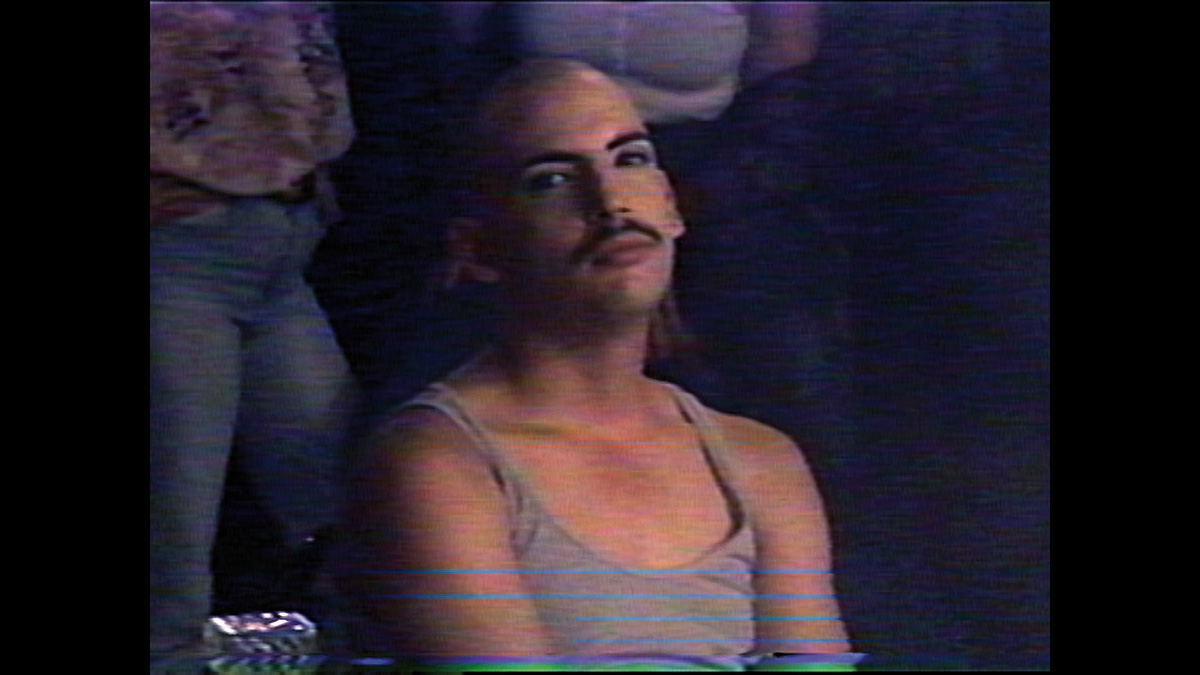
In Córdoba, far away from Argentina’s capital city, the end of a military regime promises a spring that doesn’t last long. “La Delpi” is the only survivor from a group of transgender women and drag queens, who began to die of AIDS in the late 80’s. In a catholic and conservative city, the Kalas Group made their weapons and trenches out of improvised dresses and playbacks. Today the images of a unique and unknown footage are not only a farewell letter, but also a friendship manifesto.
Agustina Comedi (1986) Córdoba, Argentina. Screenwriter and Filmmaker. She studied Modern Literature. In 2017 her first film "Silence is a Falling Body" was premiered at IDFA. The film was multi-awarded and selected in more than 50 international festivals. Nowadays she's writing her second feature.
Carlos Conceicao
Cidade pequena
Fiction | hdv | color | 19:0 | Portugal | 2016
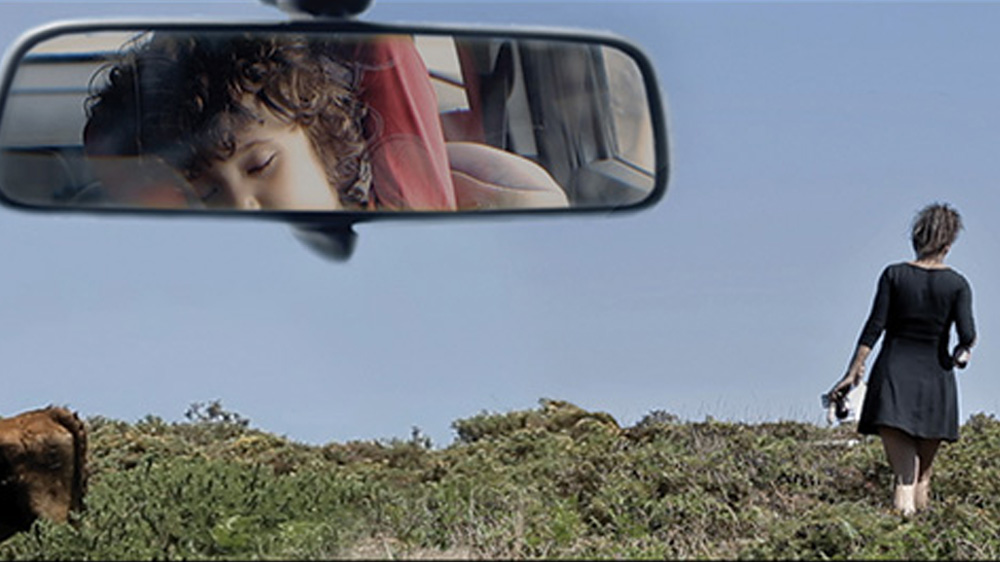
In September the child Frederico learns from his teacher that if the heart stops, people die. In October his mother notices a panorama of changing seasons and horizons. Still lives in motion in a small town.
Diogo Costa Amarante was born in Portugal where he graduated in Law. His first film “Jumate/Jumate” was selected in several international film festivals and was awarded best film in the Documentamadrid08 / Spain, Golden boll film festival / Turkey, and Reykjavik IFF. In 2009, Diogo participated in the Berlinale Talent Campus and directed his second documentary film “In January, perhaps” which was also selected in many festivals and won Jury Prize at the Documentamadrid09 and a special mention of the Jury in the SalinaDocFest 09 / Italy. “The White Roses”, Diogo’s Pre-thesis film, had its world premiere at the 64th Berlin International Film Festival in the Official Shorts Competition and was awarded in the Festival Européen du Film Court de Brest . Currently Diogo finished as a Fulbright Scholar his Master of Fine Arts at the New York University / Tisch School of the Arts and was funded to develop his first feature script, « Migrar pelas Sombras ».
Carlos Conceicao
Um campo de aviação
Video | hdv | color | 14:0 | Portugal | 2016
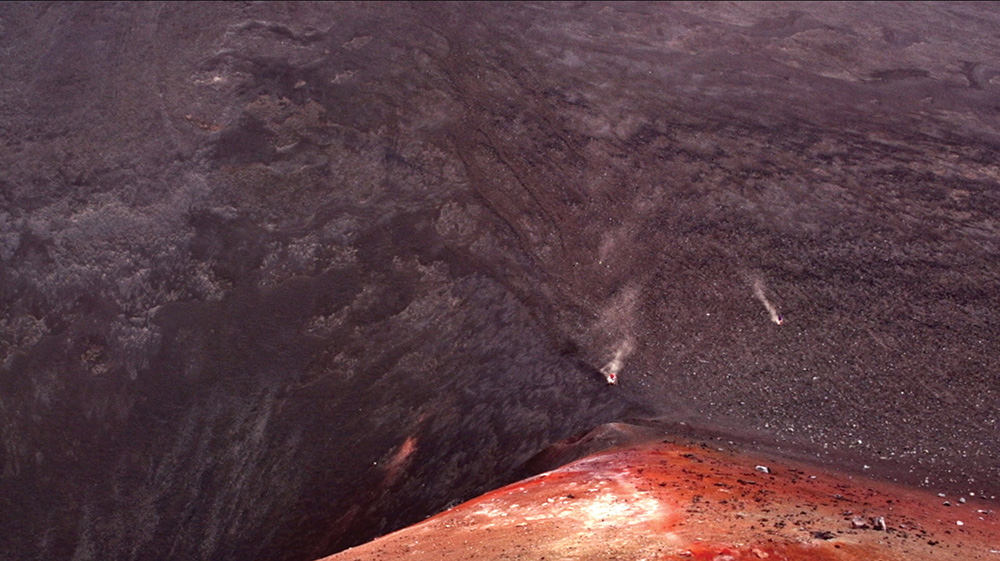
An aviation field in an unknown suburb. The lake underneath the city burns the streets. The mountains throw rock into the gardens. In the crater of a volcano in Fogo, a model Brazilian city is lifted and dissolves. Two people find each other in this landscape, 50 years apart.
(b. 1986, Lisbon) JOANA PIMENTA is a filmmaker from Lisbon, Portugal, currently living and working between the United States and Brazil. Her short film The Figures Carved into the Knife by the Sap of the Banana Trees received the Competition Award at Indielisboa ’14, where it premiered, the Tom Berman Award for Most Promising Filmmaker at the Ann Arbor Film Festival, and has been screened at the Toronto International Film Festival, the New York Film Festival, Jihlava, Mar del Plata, Ambulante, Edinburgh, Videoex, Taipei, among other venues. Her video installation work has been recently presented at the Festival Temps d`Images, the Fundacion Botin, Galeria da Boavista, Carpenter Center for the Visual Arts, and The Pipe Factory, among others. She works and teaches in the Department of Visual and Environmental Studies at Harvard University and in the BFA program in Film at Rutgers University, and is a fellow at the Film Study Center and the Sensory Ethnography Lab.
Céline Condorelli, Ben Rivers
After Work
Experimental film | 16mm | color | 13:18 | United Kingdom | 2022
The process of making a playground is the starting point for a reflection on the relationship between work and free-time, highlighting the hidden labour of the production of culture by following the construction of Condorelli’s commission in South London. Jay Bernard wrote and recites the soundtrack.
Condorelli has produced an extensive body of work that develops different possibilities for living and working together, exploring notions such as public space, the commons, institutions, property relations. Condorelli’s practice is committed to a continuous exploration of the less explicit elements that compose the structures through which individuals encounter the world — be they cultural, economic, material, social or political – the apparatuses of visibility that are often taken for granted, and which the artist describes as “support structures”.
Céline Condorelli lives and works between London and Lisbon. A selection of exhibitions and projects include: Pentimenti (The Corrections), National Gallery, London, UK (2023); After Work, Talbot Rice Gallery, South London Gallery, UK (2022); Our Silver City 2094, Nottingham Contemporary, Nottingham, UK (2022); Dos años de vacaciones, TEA, Tenerife, Spain (2021); Deux ans de vacances, FRAC Lorraine – Metz, France (2020); Ground Control, Bildmuseet, Umeå, Sweden (2020); Singapore Biennial, Art Encounters Biennial, Timisoara, Romania (2019); Céline Condorelli, Kunsthaus Pasquart, Biel, Switzerland (2019); Host / Vært, Kunsthal Aarhus, Denmark (2019); Zanzibar (commissioned sculpture), King’s Cross Projects, London, UK (2019); Geometries, Locus Athens, Greece (2018); Anren Biennale, Chengdu, China (2018).
Ben Rivers studied Fine Art at Falmouth School of Art, initially in sculpture before moving into photography and super8 film. After his degree he taught himself 16mm filmmaking and hand-processing. His practice as a filmmaker treads a line between documentary and fiction. Often following and filming people who have in some way separated themselves from society, the raw film footage provides Rivers with a starting point for creating oblique narratives imagining alternative existences in marginal worlds.
He is the recipient of numerous prizes including: FIPRESCI International Critics Prize, 68th Venice Film Festival for his first feature film Two Years At Sea; the Baloise Art Prize, Art Basel 42, 2011; shortlisted for the Jarman Award 2010/2012; Paul Hamlyn Foundation Award for Artists, 2010. Recent exhibitions include: Slow Action, Hepworth Wakefield, 2012; Sack Barrow, Hayward Gallery, London, 2011; Slow Action, Matt’s Gallery, London and Gallery TPW, Toronto, 2011; A World Rattled of Habit, A Foundation, Liverpool, 2009. Artist-in-focus include Courtisane Festival; Pesaro International Film Festival; London Film Festival; Tirana Film Festival; Punto de Vista, Pamplona; Indielisboa and Milan Film Festival.
In 1996 he co-founded Brighton Cinematheque which he then co-programmed through to its demise in 2006 – renowned for screening a unique programme of film from its earliest days through to the latest artist’s film and video.
Carles Congost
La Mala Pintura
Art vidéo | | color | 10:0 | Spain | 2008
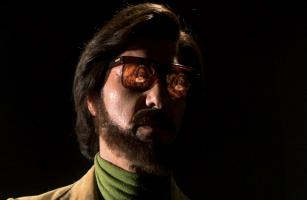
LA MALA PINTURA (BAD PAINTING) Unhappy with Spanish art?s lack of resonance or relevance on the current international scene, the Great Masters of the Baroque, Velázquez, Zurbarán and Murillo hatch a plot from Hell to bring back the Golden Age. To do so they exploit the blind loyalty of a talentless arriviste curator, the tool through whom they will carry out a series of sacrifices. The spectacular return of painting is embodied in a spawn of infernal monsters whose aim is to spread panic and overturn all the ?advances? of the contemporary world. With an aesthetic inspired by the American horror movies of the ?80s, and a battery of sophisticated special effects, "La Mala Pintura" presents a series of absurd and hilarious situations centred on the theme of how Spanish art is perceived outside Spain. As in this artist?s previous works, the confrontation between tradition and modernity is pushed to the point of stereotype in an irreverently uninhibited tour-de-force of in-jokes and parodies of genre conventions. What "La Mala Pintura" offers us, then, is an irreverently uninhibited vision of the present moment in art, laden with irony and black humour, in a spirit that is pure Pop. Of note among the principals are the young Barcelona-born actor Nilo Mur and the 80`s Italian pop singer Ryan Paris (?La Dolce Vita?), in the role of the Famous International Curator.
Born in Olot ( Girona) the 13th of november of 1970 Fine Arts Degree by the University of Barcelona in 1994 EXPOSICIONES INDIVIDUALES / ONE PERSON SHOWS 1995 The Congosound - La Capella- Barcelona Curated by Manel Clot. Catalogue 1996 High Culture - Caz La Galería - Zaragoza Curated by Javier Peñafiel 1997 The Congosound featuring Jessie - Studio Meyetta -Barcelona Curated by Manel Clot 1999 My videostory (Visions de futur) Casa de Cultura -Girona Curated by Sebastià Goday 1999 En-entre-límite - Galería Luis Adelantado -Valencia Curated by Amparo Lozano 2000 Country Girls - Fundació Miró/ Espai 13 - Barcelona Curated by Frederic Montornés 2001 That`s my impression! - Centro Andaluz de Arte Contemporáneo- Sevilla Curated by Margarita Aizpuru 2001 Popcorn Love - Espacio Uno/ Museo Nacional Centro de Arte Reina Sofía - Madrid Curated by Rafael Doctor. Catalogue 2001 Rock your body! - Sala de Arte Moreno Villa /Ayuntamiento de Málaga - Málaga Curated by Natalia Bravo 2001 Temptation - Galería Luis Adelantado- Valencia 2002 That`s my impression! (video version) - Project Room ARCO `02- Madrid Curated by Rosa Martínez 2002 Synthesizers - Espai Zer01 Olot (Girona) Curated by David Santaeulària 2002 Carles Congost (Videoproyecciones)- Terraza de la Casa de América- Madrid Curated by Rafael Doctor 2002 Hyperreal - Galería Horrach Moyà - Palma de Mallorca 2003 A.M.E.R.I.C.A (a secret teenage conspiracy)- Galería Espacio Mínimo- Madrid 2003 Un Mystique Determinado - Fundación Bilbao Arte- Bilbao Curated by Xabier Arakistain 2004 Neverland- Centre Cultural Andratx - Mallorca Curated by Alessandra Pace 2004 Children of the Revolution - Sales Municipals- Girona Curated by Carme Sais. Catalogue 2005 Gloria - Arte Ricambi - Verona Curated by Alessandra Pace. 2005 coming soon... - Galería Luis Adelantado- Valencia 2005 Memorias de Arkaran - Centre d`Art Santa Mònica (CASM) -Barcelona Curated by Frederic Montornés 2005 Un Mystique Determinado - Centro Galego de Arte Contemporanea (CGAC) - Santiago de Compostela Curated by Miguel Fernández Cid 2005 coming soon... Galería Horrach Moyà - Palma de Mallorca 2006 Memorias de Arkaran (versión Monocanal) - Espacio 5/ CAC Málaga - Málaga Curated by Julieta Manzano 2006 We Are Tomorrow ? Project Room Present Future/ Artissima 13 ? Torino Curated by Katerina Grecos y Agustín Pérez Rubio 2007 Say I`m Your Number One ? Proyecto Vitrinas/ MUSAC ? León Curated by Agustín Pérez Rubio y Rafa Doctor 2007 I Don`t Like Music ? Espai Zer01 ? Olot (Girona) Curated by David Santaeulària. Catalogue. 2008 La Mala Pintura ? Stand Galeria Horrach Moyà- Loop Video Art Fair (Barcelona) 2008 La Mala Pintura ? Artericambi ? Verona Text by Luigi Meneguelli- Brochure GROUP SHOWS 1995 Is it my body? (video music) - Espárrago Rock - Granada Curated by Mar Villaespesa. Catalogue 1996 Lento - Galería & Ediciones Ginkgo -Madrid Curated by Manel Clot 1996 Spaces of desire - Transmission Gallery - Glasgow Curated by Manel Clot. Catalogue 1996 Biennal de Valls Capella de St. Nicolau- Valls (Tarragona) First Award. Catalogue 1997 Subjetiles (3 escenarios) -Círculo de Bellas Artes - Madrid -Koldo Mitxelena Kulturunea-Donosti -Centre d`Art Santa Mònica-Barcelona Curated by Jorge Luis Marzo. Catálogo 1997 Dies Irae - -Museu de Granollers (Barcelona) -Sala Municipal de San Benito - Valladolid -El Roser Lleida Curated by Manel Clot. Catálogo 1997 Present Perfet - Capella de Sant Roc -Valls (Tarragona) Curated by Creatures. Catalogue 1998 La cicatriz interior Sala Plaza de España / Comunidad de Madrid - Madrid Curated by Pablo Llorca. Catalogue 1998 Des garçons sauvages - Galería Helga de Alvear/ Estudio - Madrid Curated by Manel Clot 1998 Propositions II - Musée Départamental de Rochechouart - Rochechouart (Haute- Vienne) Curated by Jean Marc Prévost/ Introduced by Pep Agut 1998 Transgenéric@s Koldo Mitxelena Kulturunea -Donosti Curated by Mar Villaespesa and Juan Vicente Aliaga. Catalogue 1999 Club (arts & lounge) - Museu de Granollers (Barcelona) Curated by Manel Clot. Catalogue. 1999 Sonarmática`99 - CCCB - Barcelona Curated by Oscar Abril Ascaso. Catalogue. 1999 Nuevos caminos (amenazas y promesas del arte electrónico) - Casa das Artes - Vigo Curated by Manuel Olveira. Catalogue. 1999 Hypertronix - Espai d`art contemporani de Castelló ( EACC) Castelló Curated by Manel Clot. Catalogue. 1999 Amnésic Cinemas- Gallerie du Bellay- Haute- Normandie (France) Curated by Philippe Terrier Hermann 1999 Lost in sound - Centro Galego de Arte Contemporanea (CGAC) - Santiago de Compostela Curated by Manuel Olveira. Catalogue. 2000 Inter-zona - Palau de la Virreina- Barcelona Curated by Manel Clot. Catalogue. 2000 Trasvases - Centro de Cultura Español - Lima Curated by Agustín Pérez Rubio. Catalogue. 2000 Queer Spaces - Institute of Civil Disobedience-Oslo Curated by Octavio Zaya 2001 Sweet dreams (Begijnhof II) - Galeria Estrany de la Mota- Barcelona 2001 Trans Sexual Express - -Centre d`Art Santa Mònica - Barcelona -Kunsthalle Mucsarnok - Budapest -City Council Hall- La Coruña Curated by Rosa Martínez and Xabier Arakistain. Catalogue. 2001 Ofelias y Ulises (Entorno al arte español contemporáneo) -Antiche Granei, Venecia (Itàlia) -Museum Kuppersmühle Sammlung Groethe, Duissburg (Alemània) Video Program curated by Rafael Doctor. Catalogue. 2002 MediatecaClub`02 - CaixaForum - Barcelona Curated by Manel Clot. 2002 Big Sur (Nuevo arte español) - Hamburger Bahnhof- Museum für Gegenwart- Berlin Curated by Enrique Juncosa. Catalogue. 2003 Video Invitational - f a projects - London 2003 Monocanal- -Museo Nacional Centro de Arte Reina Sofía - Madrid -Centre d`Art Santa Mònica - Barcelona -CGAC - Santiago de Compostela -Casa Díaz Cassou - Murcia Curated by Berta Sichel, Neus Miró and Juan Antonio Álvarez Reyes. Catalogue. 2003 25 Años de Arte en España. Creación en Libertad - MUVIM- Valencia Curated by Pablo Rico. Catalogue. 2003 Bad Boys- La Fontego dei Tedeschi (50th La Biennale di Venezia)- Venecia Curated by Agustín Pérez Rubio. Catalogue. 2003 La Muestra del Déficit- Sala Metrònom ? Barcelona Curated by Gustavo Marrone. Catalogue. 2003 Indisciplinados - MARCO - Vigo Curated by Núria Gual. Catalogue. 2003 Edad Perversa - Galería Horrach Moyà - Palma de Mallorca Curated by Joan Morey. Catalogue. 2003 The Real Royal Trip - PS1 MOMA - Nueva York Curated by Harald Szeemann. Catalogue. 2003 Museo de Museos - Museo Nacional Centro de Arte Reina Sofía- Madrid Curated by Juan Manuel Bonet y Kevin Power. Catalogue. 2004 El Real Viaje Real/ El Retorno- Patio Herreriano - Valladolid Curated by Harald Szeemann. Catalogue. 2004 Parodie - Galerie Les Filles du Calvaire - Paris 2004 Looking further, thinking through - Reykjavik Art Museum Kjarvalsstadir- Reykjavik Curated by David G. Torres. Catalogue. 2004 Live! - Palais de Tokyo - Paris Curated by Jêrome Sans. Catalogue. 2005 Hasta pulverizarse los ojos - -Sala de Exposiciones BBVA - Madrid -Sala de Exposiciones BBVA - Bilbao Curated by Enrique Juncosa. Catalogue. 2006 Biennal de Lleida- Centre d`Art La Panera - Lleida Curated by Gloria Picazo. Catalogue. 2006 Postfotografía - Galería Horrach Moyá - Palma de Mallorca Curated by Sebastià Camps. 2006 Space Cases - Meals & SUVs Gallery - London Curated by Tom Keoghs. 2006 Tilhas Na Mata Digital (Videocraçâo Contemporânea Na Espanha) ? Museu de Arte Contemporânea de Niterói - Niterói (Brasil) Curated by Daniel Steegmann. 2006 Mirador (Media Art From Spain) - O.K Center For Contemporary Art ? Linz (Austria) Curated by Martin Sturm & Genoveva Rueckert. 2006 Vídeos en español - Dinamo Art Center - Budapest (Hungría) Curated by Adrien Törok. 2006 Switch On The Power (Ruido y Políticas Musicales) ? MARCO ? Vigo Centro Atlántico de Arte Moderno- Las Palmas de Gran Canarias Centro Cultural Montehermoso ? Valladolid Curated by Xabier Arakistain- Catalogue. 2006 Certamen Internacional D`Arts Plàstiques 2006 ? Museu de Pollença ? Pollença (Mallorca) Catalogue. 2006 Whatever? Cinisme Colorista al Límit del Discurs ? Sala Muncunill ? Terrassa (Barcelona) Curated by Alex Brahim and Thomas Reydellet. Catalogue. 2006 All Hawaii Entrées/ Lunar Reggae Irish Museum of Modern Art (IMMA) ? Dublin Curated by Philippe Parreno and Rachael Thomas. Catalogue. 2006 Cuentos Digitales ? Centro Galego de Arte Contemporanea (CGAC) - Santiago de Compostela Curated by Manuel Olveira. Catalogue. 2007 Amateur- Cercle d`Art Sant LLuc - Barcelona Curated by Daniel Riera and Daniel Ayuso. 2007 Background 4 - Galeria Horrach Moyà ? Palma de Mallorca 2007 Everyday Utopia - Centrale Électrique ? Bruselas (Bélgica) Curated by Glòria Picazo. 2007 An Interpersonal Journey ? Santralistambul ? Istambul Curated by Agustín Pérez Rubio 2007 Untitled ? Artericambi- Verona Curated by Anna Longo 2007 Imitación a la vida ? Galeria Mito - Barcelona Curated by Juan Redón. Catalogue. 2008 Video Program: Cosmopolitan Barcelona, selected shorts ? Dia at the Hispanic Society ? New York Curated by Kristin Poor. 2008 Intangible Actions/ Frieze Art Projects ? Frieze Art Fair - London Curated by Agustín Pérez Rubio.
Carles Congost
Memorias de Arkaran
Experimental video | dv | color | 5:0 | Spain | 2005
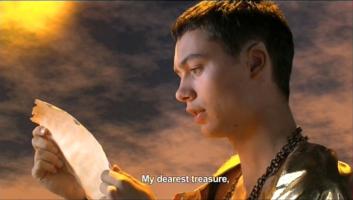
Memorias de Arkaran narrates the story of a fictious country exclusively inhabited by artists who, despite enjoying a privileged and peaceful life, are not contented to be simple buffons, the entertainment of kings. Across the vallery, fed up with always living in fear, queen of Argkarun decides to ignore the threats of war the sages decipher in an ancestral book and sends her son to Arkaran to be trained asd a prince artists rather than a warrior king as her army entreats. Told in the manner of a light-hearted epic the story of Arkaran and its inhabitants mirrors aspects of the art world that can easily be applied to our days: the relations between art and power or the social role of artists themselves. The German designer Bernhard Willhelm and the always fabulous Amanda Lear participated in this video.
Carles Congost (Olot, 1970) uninhibitedly combines different media and disciplines such as video, music, drawing and photography. The following are highlights of his professional trajectory, solo exhibitions in some of the most important centres of contemporary art: "Country Girls" (2000) at Espai 13 of the Fundació Miró in Barcelona; "That`s my impression!" (2001) at the Centro Andaluz de Arte Contemporáneo; "Popcorn Love" (2001) at Espacio Uno of the Museo Nacional Centro de Arte Reina Sofía, ?Un mystique determinado? (2003) at the Fundación Bilbao Arte, ?Memorias de Arkaran? (2005) at the Centre d`Art Santa Mònica in Barcelona and "Say I`mYour Number One" at MUSAC (Museo de Castilla y León). Regarding group exhibitions, Congost has participated in ?Spaces of desire? (1996) at Transmission Gallery in Glasgow, "Transgeneric@s? (1998) at Koldo Mitxelena in Donosti, "Hypertronix"(1999) at EACC in Castellón, "Inter-zona" (2000) at the Palau de la Virreina in Barcelona, "Big Sur (Arte Nuevo Español)" (2002) at the Hamburger Bahnhof in Berlin, ?Video Invitational? (2003) at f a projects in London, ?Bad Boys? (2003) at the 50ª Venice Biennial, ?The Real Royal Trip... by the Arts? (2003) at PS1/ MOMA in New York and ?Live? (2004) at the Palais de Tokyo in Paris. He is currently working with Artericambi Gallery (Verona) and Galeria Horrach Moyà (Palma de Mallorca).
Carles Congost
Paradigm
Experimental fiction | hdv | color | 10:16 | Spain | 2012
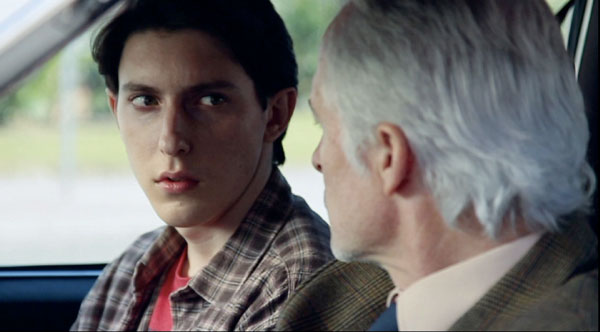
Paradigm represents a departure both formally and conceptually from the artist?s previous works. This new piece represents a commitment on behalf of the artist to an overtly cinematographic language placing his discourse in the renovated territory of the suggestive and the ambiguous. This work presents a highly recognizable situation within the police procedural genre, both in films and TV series. The characters that take part in the story appear gradually and in slow motion becoming integrated in a setting that, to begin with, leaves little room for improvisation. In spite of the multiplicity of familiar spaces represented in the first scenes of the film, the narration progressively releases subtle and disturbing signals that aim at articulating a mysterious choreography, a kind of ritual that shifts the fortuitous encounter between characters to an unwonted place. In this video we find numerous references to contemporary films and film directors such as the mythical western Once Upon A Time In The West, (1968), directed by Sergio Leone. The original soundtrack of Paradigm was composed by the Greek musician Evripidis Sabatis and Stefano Maccarrone, member of the Barcelona-based pop band Mendetz.
Carles Congost (Olot, Spain, 1970) has a BA in fne arts from the University of Barcelona. He has exhibited individually in Espai 13 / Fundació Miró, Barcelona; Espacio Uno / MNCARS, Madrid; CASM, Barcelona; MUSAC, León, Spain; CCA, Glasgow; Fundación Bilbao Arte, Bilbao; Gallery Luis Adelantado, Valencia; Gallery Horrach Moyà, Palma de Mallorca; Gallery Joan Prats, Barcelona; Artericambi, Verona (Italy); among others. He has participated in group exhibitions at the Palais de Tokyo, Paris; PS1/MOMA, New York; Hamburger Bahnhof, Berlin; IMMA, Dublin; f a projects, London; Santralistambul, Istanbul; Müczarnok Kunsthalle, Budapest; etc. He has also been invited to carry out specifc projects for the editions of the fairs: ARCO` 01, Madrid; Artissima` 06, Torino; and Frieze` 08, London
Steve Connolly
I Know Where I'm Going
Experimental film | 16mm | color | 29:0 | United Kingdom | 2009
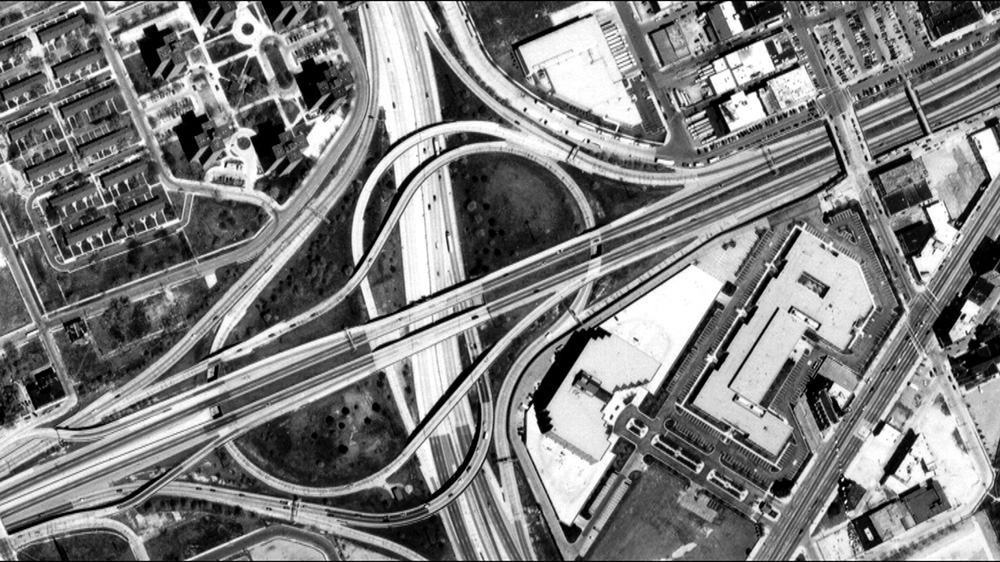
?What would be left of human action, human traces, human constructions, human buildings and wider ripple effects of humans after that length of time?assuming, that humans disappear in the geologically near future.? A fragmented road trip through Britain on the peripheries. Down empty roads, off in the wilderness, a few lone stragglers. My first stop geologist Jan Zalasiewicz, talking about the Earth in One-hundred millions years time.
Ben Rivers studied Fine Art at Falmouth School of Art. Since then he has worked predominantly in 16mm film, showing in international festivals, galleries and UK theatres. Recent works have included two commissions from Paul Harnden Shoemakers ? making works which fall somewhere between documentary and fiction. These works are then exhibited in mock miniature cinemas in boutiques in Japan, Europe and USA. His latest work is an ongoing series of portraits of people living somehow outside of (the generally accepted idea of) society. The first part ? ?This Is My Land?, was premiered at London Film Festival 2006 and exhibited by Measure Arts in London 2007. In 1996, Ben co-founded and has since co-managed/programmed Brighton Cinematheque - renowned for screening a unique programme of film from its earliest days through to the latest artist?s film and video.
Stephen Connolly
Machine Space
Experimental doc. | hdv | color and b&w | 37:14 | United Kingdom | 2017
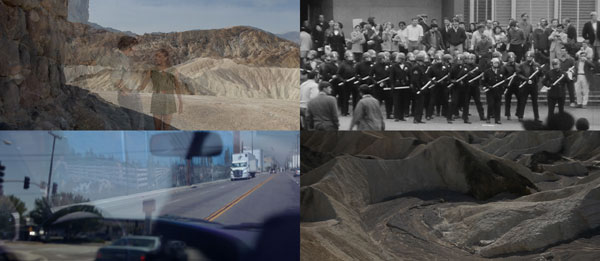
Machine Space is an essay film exploring a city as a machine; a place of movement and circulation. Using a kinetic approach, issues of space, race and finance frame the city of Machine Space. Residents in voice over testify how the city as a spatial and financial machine shapes their experience. The city is Detroit, a place that has changed from producing the means of movement to producing space itself.
Stephen Connolly is an artist filmmaker currently teaching Film at the University for the Creative Arts. His practice as research doctorate, entitled The Spatial Cinema, is the culmination of many years of moving image research into the negotiation of space and the material environment through film. His work has been shown in film and media festivals worldwide since 2004. He has been the recipient of prestigious production grants from FLAMIN and the Arts Council.
Stephen Connolly
Zabriskie Point (Redacted)
Experimental film | hdv | color and b&w | 27:40 | United Kingdom | 2013
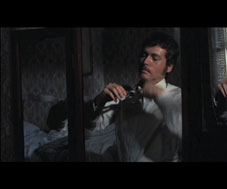
Synopsis - inspired by a visit to Zabriskie Point ? a scenic tourist spot in Death Valley, California ? this film re-visits and re-imagines in the contemporary Antonioni?s 1970 MGM film of the same name. Aligning with Antonioni`s stated intentions ? to produce a work as "an idea in landscape" ? Zabriskie Point (Redacted) enacts a programme of visual and social research for the earlier film at one remove from the dramatic narrative. ?I wanted to ?play the stranger? with the original film. I`ve put the story to one side and concentrated on other aspects of the movie - the landscapes, the documentary footage used and the kind of material that was used as research for the work. The result is a peek at ideas of site, spatiality and the ?spectatorial?.? (Stephen Connolly) Sources and references for the film ? see here http://experimenta2013.tumblr.com/tagged/stephen-connolly
Artist filmmaker Stephen Connolly?s work investigates cinema and representation through site, history and politics. His single screen work has been widely shown internationally. He is currently a PhD candidate at the University of Kent, UK Filmmakers website www.bubblefilm.net
Antonio Contador
A.E.P. (Alternative Energy Providers)
Experimental video | dv | color | 4:23 | Portugal | 2006
Ten sample videos on replay in DVD format about the possibilities of daily alternative energy use, cheap and clean, therefore not harmful to the environment. Our bodies need energy to be able to move, but they are also a source of clean energy production thanks to these same daily bodily movements. Yet they seem to get lost in their immediate usefulness, and the energy that is produced could be captured and stocked for later use. A.E.P. (Alternative Energy Providers) proposes ten extracts ("samples") of bodily movements that could be the base of new energy production and accumulation. A.E.P. presents itself as a bureau of development, a department of ideas and research in energy, a sort of energetic laboratory with great potential, having only one reason to exist: the reality of its projects. A.E.P. is a sort of department of study that takes into account the actual possibilities of common energy development, usable on a daily basis in the near future.
Antonio Contador was born in 1971 in Vitry sur Seine but has been living in Lisbon, Portugal, since 1990. Educated in sociology, he is currently a professor in an Advanced School for Art and Design in Portugal, and is writing a doctorate in Art, Aesthetics, and Art Sciences at the Sorbonne in Paris. As a musician he has released a few titles and albums, self-issued and with various independent labels (kinder of heart, variz, base). He has collaborated (and wishes to do so again) with the group of artists and musicians "Section Amour". As a visual artist he is associated with the Parisian artistic structure "L'appareil".
Antonio Contador
JUNE 8TH
Installation vid�o | | color | 0:39 | Portugal | 2007
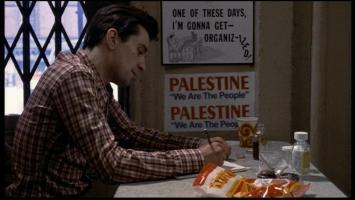
The starting point for this video is a sequence of the movie "Taxi Driver" (1976) from Martin Scorsese. Something is infiltrated as a spot in the original sequence - the word `palantine` became `palestine` - modifying the understanding of it all within the context of the movie itself and the past/current political set.
Antonio Contador (born in 1971 in Vitry Sur Seine, near Paris/France), lives between Paris and Lisbon/Portugal. He operates in the field of " discount " video and music. He produces musical and visual impressions, wobbly pop or neo-jingles using sound sources and movies out of their usual context. The visual production shows low-key videos, using mainly the technique of sampling, and which do not necessarily tell stories. He is involved in the " L`appareil " artistic Paris based structure. He is holder of a research Master diploma in Communication, Culture, Information Technology, and is working on a PhD in Arts, Aesthetics and Sciences of Art in Université Panthéon/La Sorbonne in Paris.

Jasper Coppes
Aasivissuit
Experimental doc. | 4k | color | 23:30 | Netherlands, Greenland | 2020
Recent footage of melting polar ice in Greenland as shown in the global mass media has represented the country as both the ground zero of climate crisis and a vast expanse for resource exploitation. The film Aasivissuit aims to provide a different view, showing instead the landscape and its inhabitants: focusing on people’s discussions about climate change and how they adapt in their complex relationship with the changing environment. The film follows two park rangers exploring the Greenlandic landscape. They exchange new and old knowledge of the land in their conversations. They talk about how ancient fertile sediment from Greenland is used to nurture exploited soil elsewhere and how microbes have found a way to deal with pollution. Drawing attention to the non-human presence within the landscape, the camera occasionally adopts the perspective of a fly or a raven, or dives into one of the holes in the melting ice cap where toxic metals collect. The film investigates how we can experience and perhaps understand these different perspectives.
Jasper Baldwin Coppes (1983, Amsterdam) is a visual artist who works in a diverse range of media such as films, sound performances, installations and writing. In these, Coppes explores the ways in which dominant narratives about the world and its inhabitants can be transformed. Controversial landscapes, other-than-human entities, silent objects and their presence have often been the core interests in his practice. Coppes graduated from the Gerrit Rietveld Academie in 2008 and was a fellow at the Jan van Eyck Academie in Maastricht in 2010 and 2011. He has participated in international exhibitions, film festivals and conferences and is a tutor at the Royal Academy of Art in The Hague and the Rietveld Academy in Amsterdam.
Franziska Cordes, Center of Applied Space Technology and Microgravity
All is full of love
Experimental film | dv | color | 10:0 | Germany | 2007
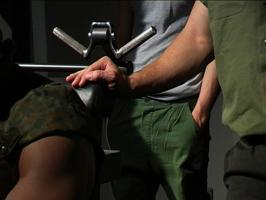
?All is full of love? ist eine erzählerische Inszenierung des Äquivalenzprinzipes, das hier auf der Basis von round robin ? jeder gegen jeden ? als individuelles Glaubensbekenntnis artikuliert wird. Ausgangspunkt für das Projekt sind Videoaufnahmen, die zu Forschungszwecken bei Versuchen zur Erzeugung von Schwerelosigkeit gemacht wurden: In einem 100 Meter hohen Fallturm, der durch seine Form an ein Minarett erinnert, wird eine Kapsel abgeworfen und in einem mit Styroporkugeln gefüllten Behälter aufgefangen. `All is full of love` ist eine freie Übersetzung dieses Versuchs in eine fiktive Wettkampfsituation zwischen Turmspringern unterschiedlicher Mannschaften. Es gibt wenige Dinge, die sich so deutlich gegen die Virtuelle Welt stellen lassen wie die Schwerkraft. Das Projekt imaginiert unter diesem Aspekt einen Ort, an dem sich die Dinge in ihrer Gleichwertigkeit offenbaren ? an dem sich die Kontrahenten mit ihrer Gleich-gültigkeit konfrontiert sehen. Dieser Ort und dieser Moment artikulieren sich in einem beklemmenden Gefühl der Schwerelosigkeit, dem Muskelkraft entgegensteht. Das Motive des Wettbewerbs, die Diktatur von Gruppenidentitäten, ihrer Konstitution und potenzielle Dekonstruktion bilden die Ausgangssitu-ation. `All is full of love` stellt sich als Bricolage von Feldern dar: Politik, Sport, Liebe, Wissenschaft, Kunst. Fragmente werden zu einem dezentralen Netzwerk reorganisiert, Bild- und Tonspur semplen ein exorbitales Gewebe, durch das sich der Zuschauer satelitenartig bewegen kann.
Franziska Cordes studierte Freie Kunst und Visuelle Kommunikation mit Bjørn Melhus an der kunsthochschule Kassel. Seitdem nahm Franziska Cordes an zahlreichen internationalen Ausstellungen und Festivals teil. Seit 2006 ist sie im postgraduate programme "Audio-Visual Media" an der academy of Media Arts Cologne. Die Videos von Franziska Cordes eröffnen eine eizigartige Hintergründigkeit, in der die persönlichsten Belange des Individuums in den Strudel einer fragmentierten, spektakulären Welt geraten. Dabei inszeniert Cordes ihre eigene Person als Protagonistin unterschiedlichster kultureller Codes, um sich einer Analyse aktueller gesellschaftlicher Prozesse anzunähern. Ihre Geschichten beginnen und enden in der Abstraktion eines sehr persönlichen Erlebens. Mit ihrer eigenwilligen, oft kontrapunktischen Kombination von Bild und Text, sowie der großen Bedeutung von Querverweisen, gelingt ihr die Setzung einer scheinbar alles zerschmetternden Zentrumslosigkeit: Wie bei dem Tanz eines Derwisches verweist auch diese Sinnrotation auf ein Zentrum, welches verspricht, das persönliche Mysterium zu öffnen. Mit ihrer Arbeit versucht Franziska Cordes nicht Realität abzubilden, sondern Bilder zu schaffen, die in einem assoziativen Denkraum das Reale der Realität erfassen. Ihre Erzählungen werden dabei häufig unterbrochen, unterwandert oder neutralisiert und somit selbst zu einem Zustand des rasenden Stillstands. Diese bewusste Zerstörung linearer Schlüssigkeiten und klimaxorientierter, narrativer Bewegung erweist sich hier nicht nur als die Manifestation des scheinbaren Kollabierens der Kommunikationssysteme im Zeitalter der Kommunikation. Vielmehr umschreiben sie jene Assoziations- und Dissoziationsprozesse, die eine ewige Metamorphose des Sinnes bewirken. Franziska Cordes verhandelt Persönlichkeit als nomadisierenden Geist, der mit den Medien und durch die Medien hindurch den Selbstausdruck in der Dissemination zu finden versucht. In ihrem aktuellen Arbeitsvorhaben konzentriert sich Franziska Cordes auf die Suche nach den Signifikanten der Herkunft von Bildern, auf die Inszenierung ihrer Strukturen, ihrer spezifischen Sprache, und deren Reduktion auf ihre pure Materialität. Dabei beabsichtigt sie ihre bisherige filmische Arbeit in eine Installation (Skulptur) zu überführen, die die konkreten Umstände untersucht, in denen sich Identität vollzieht. Eine überraschende, und dennoch folgerichtige Entscheidung, die zeigt, dass sie spielend in der Lage ist, ihr Spielfeld zu erweitern. Franziska Cordes wurde 1979 in Hannover geboren und lebt und arbeitet in Köln.
Franziska Cordes, Markus Bertuch
Advocat
Experimental doc. | dv | color | 10:8 | Germany | 2009
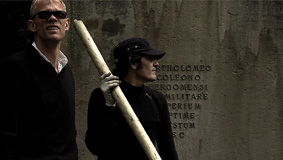
Ein Reiterstandbild wird abgerissen, verladen und abtransportiert. Eine Gruppe aus 4 Männern verschiedener europäischer Herkunft nimmt Autoreifen, Hölzer und Zugseile als Werkzeug für den Sturz. Das Bild, das entsteht, ist archaisch und erinnert an die Antike. Das Gewicht und die Kraft der Bronzestatur geht über die Körperkraft der Gruppe hinaus. Potential auf Potential. ADVOCAT behandelt die politische Dimension des Umsturzes auf die Weise, dass unerwähnt und nebensächlich bleibt, warum und weshalb es zu diesem Sturz kommt. Das Reiterstandbild, das durch die Aktion orts- und namenlos gemacht wird, fungiert hier als Maschine, gleichsam als Interface für die Handschrift der hierzu formierten Gruppe. Es wird auf die Reise geschickt, zurück bleibt nur der Sockel, der samt Inschrift an einen Grabstein erinnert. Die Bronzestatur selbst ist samt Autoreifen (auf die das Standbild gestürzt wurde) zu einer neuen Skulptur umgebaut. Der Ritter ist von der Vertikalen in die Horizontale gebracht und auf ein an eine Laderampe / Floss erinnerndes Podest geschnürt.
Franziska Cordes (*1979) studierte Freie Kunst bei Bjørn Melhus und absolvierte 2009 das Postgraduate Programme Audio-Visual-Media an der Kunsthochschule für Medien in Köln. Mit dem Video ?Gretel? schlug sie bereits frühzeitig einen sehr eigenwilligen Weg ein, den sie mit den nachfolgenden Arbeiten zu einer einzigartigen künstlerischen Position ausbaute. Dabei fanden die entstandenen Werke bereits während des Studiums in zahlreichen Ausstellungen und internationalen Festivals Anerkennung. 2009 erhielt sie das 1 jährige Arbeitsstipendium der Stiftung Kunstfonds Bonn. Für 2010 das Arbeitsstipendium am Schloss Ringenberg. Franziska Cordes wird von der Galerie Sandra Bürgel Berlin vertreten. Ihre Videos und Videoskulpturen werden vom Arsenal-Institut für Film und Videokunst e.V. Berlin verliehen. Sie lebt und arbeitet in Berlin und Düsseldorf.
Franziska Cordes
delay.aventures
Experimental video | dv | color | 15:50 | Germany | 2006
In a comic tragedy framework, "Delay.Aventures", with references to Anderson's fairy tale, "The Red Shoes", describes the desperate attempt to compensate the underdog and render tangible the vanishing identities. The strange caricature emerges of a personality whose intensive self-denial turns into excessive self-dramatization that in no case allows the character to be apprehended, but that, to the contrary, leads to the loss of him. The character runs aground. "Delay.Aventures" is somewhat of an illustration, pushed to the extreme and strained towards self-ridicule, conflicts, fits, and peculiarities which the actors find themselves confronted with every day, above all because of their personal reflections on creation, in view of an environment saturated with media.
Born in 1979 in Hanover, Franciska Cordes now lives in both Berlin and Cologne. From 1999-2000 she attended the Leiniz-Kolleg of Tübingen, where she studied epistemology and physics. From 2001-2006 she studied visual communication at the Kunsthochschule de Kassel, and in 2002 she also studied Virtual Realities with Professors Urs Lüthi and Bjørn Melhus. Her works have been exhibited throughout the world. She has been taking part in the postgraduate program, "Audio-Visual Media" at the Academy of Media Arts in Cologne.
Franziska Cordes
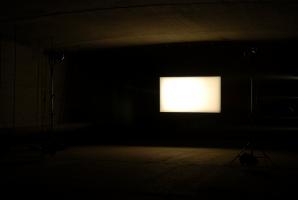
sans titre, O.T.
Video installation | | | 1:35 | Germany | 2007
Untitled (Against any uncertainty and discouragement of the ideal pioneers of reform and contrareform) Installation | Phosphorus Screen | 2 Spots | Audio | 2007 From the Mirage series (Concrete Garden) The screen, a wooden tablet covered with phosphorus, becomes near endlessly filled with light ? and reflects it again in the dark. The video projector projects no information, rather the screen itself saves the information of light. The image remains absent in a tragic comic way. The other side of the free hanging screen appears in the dark through backlight of the flood lamps. Two Sine waves careen, a seemingly continuous scale descends, the two tones cross over and into each other receding in opposite directions. The idea of a beginning and an end, extreme opposites and progression, becomes replaced through rotating illusion. Any sort of image remains, regardless of the deliberately constructed, continuously ascending expectation, absent. Whoever comes is the right people. Whatever happens is the only thing that could have. Whenever it starts is the right time. When it?s over it?s over. Just give me a call if you feel like it! The installation is inherently a socio-cultural psychogram and indicates a running stand still, which through its ironic breaking down of a medial illusion shows an unnerving state of condition and threshold of fear, thereby establishing the origin of the series Mirage (concrete garden).
Franziska Cordes was born in 1979 in Hannover, Germany. 2001-2006 she studied Virtual Realities and Fine Arts at Kunsthochschule Kassel with Bjørn Melhus. Currently Cordes graduates the Postgraduate Programme ?Audio Visual Media Arts? at the Academy for Media Arts in Cologne. Since 2004 she participated at numerous international Exhibitions and sceenings, as 2007 at Kunst- und Ausstellungshalle der Bundesrepublik Deutschland and 2006 at Kunstverein Hannover. Since February 2008 she is deputised by Arsenal Experimental Berlin and Gallery Sandra Bürgel Berlin. Cordes lives and works in Cologne. The videos from Franziska Cordes appear at first glance to destruct the senses, yet on closer inspection they establish a unique subtleness, in which the most personal issues of an individual become fragmented as if in a strudel or spectacular world: Cordes thereby stages her own person as protagonist of differing cultural codes, in order to approach a contemporary societal analysis. Her stories begin and end in the abstraction of a very personal experience. With her idiosyncratic, often contrapointal combination of picture and text, as in the larger meaning of cross-referencing, she succeeds the placing of a seemingly shattering discentrism, Like the dance of a dervish this rotation of the sence refers to a center, which promises to open the personal mystery. Within her work Franziska Cordes does not try to reproduce reality but to create pictures, which grasp the real of reality in an associative room of thinking. Thereby her stories are often interrupted, undercut or neutralized and become a status of the speeding stagnancy. This self-conscious destruction of linear conclusiveness and a climax-oriented, narrative motion in this case does not prove to be just the manifestation of the pretended collapse of the communication system in the age of communication. Rather they describe those processes of association and dissociation causing an eternal metamorphosis of sense. Franziska Cordes debates personality as a nomads provoking spirit, which tries to find the self concept by dissemination through and by the use of media. In her current project Franziska Cordes concentrates on the search for the significant source of pictures/images, for the production of her structures, her specific language, and their reduction to her pure materiality. Thereby she intends to convict her previous filmic work into an installation (sculpture) to analyse the concrete instances, in which identitiy is taking place. These installations are moving psychograms of a standstill showing the picture of an oppressive state of fear of embarking on something new in terms of deconstruction and recontextualisation. Thereby they form a starting point for Mirage (concrete garden), a series constructing essential scenarios of fear and harassment in different ways. Bjørn Melhus