Catalogue > Search
Results for : Tout le catalogue
François Cormier
Débat
0 | 0 | | 0:0 | Canada | 2005
L?organisme Champ Libre (fondé en 1992) qui ?uvre maintenant dans les domaines de l?image en mouvement, des arts électroniques, de l?architecture et de l?urbanisme a emprunté son nom à l?histoire récente du Québec. En effet au moment de la fondation de l?organisme en 1992, François Cormier l?un des co-fondateurs, cherchait un nom à donner à ce nouvel espace de réflexion et de diffusion artistique qui émergeait à partir de l?effervescence de rencontres avec d?autres co-fondateurs issus du milieu de l?architecture, des arts visuels, de la philosophie, de la littérature et de l?urbanisme. À cette époque ce collectif définissait son action entre autres par le besoin de regrouper les forces de ses co-fondateurs et proposer de nouvelles façons de voir, d?entendre et de comprendre. C?est au hasard d?une visite dans une librairie de livres usagés du plateau Mont-Royal à Montréal en 1991 que fut découverte une édition ancienne et originale de la revue de cinéma québécoise CHAMP LIBRE ayant existé dans les années soixante-dix le temps de quelques numéros. L?édition no 1 de cette revue clamait en 1971 que : ?il consiste à donner aux colonisés que sont les Québécois les images d?eux-mêmes qui leur manquent, à reconquérir un reflet volé et à proposer des schémas d?analyse et de lutte. Inutile de dire que CHAMP LIBRE participe à ce combat. C?est la force éditoriale de ces propos et le désir, la volonté de faire revivre le nom inspirant de cette revue de cinéma d?auteur qui a fait naître dans sa continuité le nom de l?organisme CHAMP LIBRE que l?on connaît aujourd?hui.
CHAMP LIBRE * (fondé en 1992) est un diffuseur et un laboratoire artistique nomade qui présente des événements in situ, s`insérant dans la communauté et mettant en relation les pratiques contemporaines de l`art, de l?architecture, de l?urbanisme et des nouvelles technologies.
Juliette Corne
Izioum
Documentary | mov | color | 4:18 | France, Ukraine | 2025
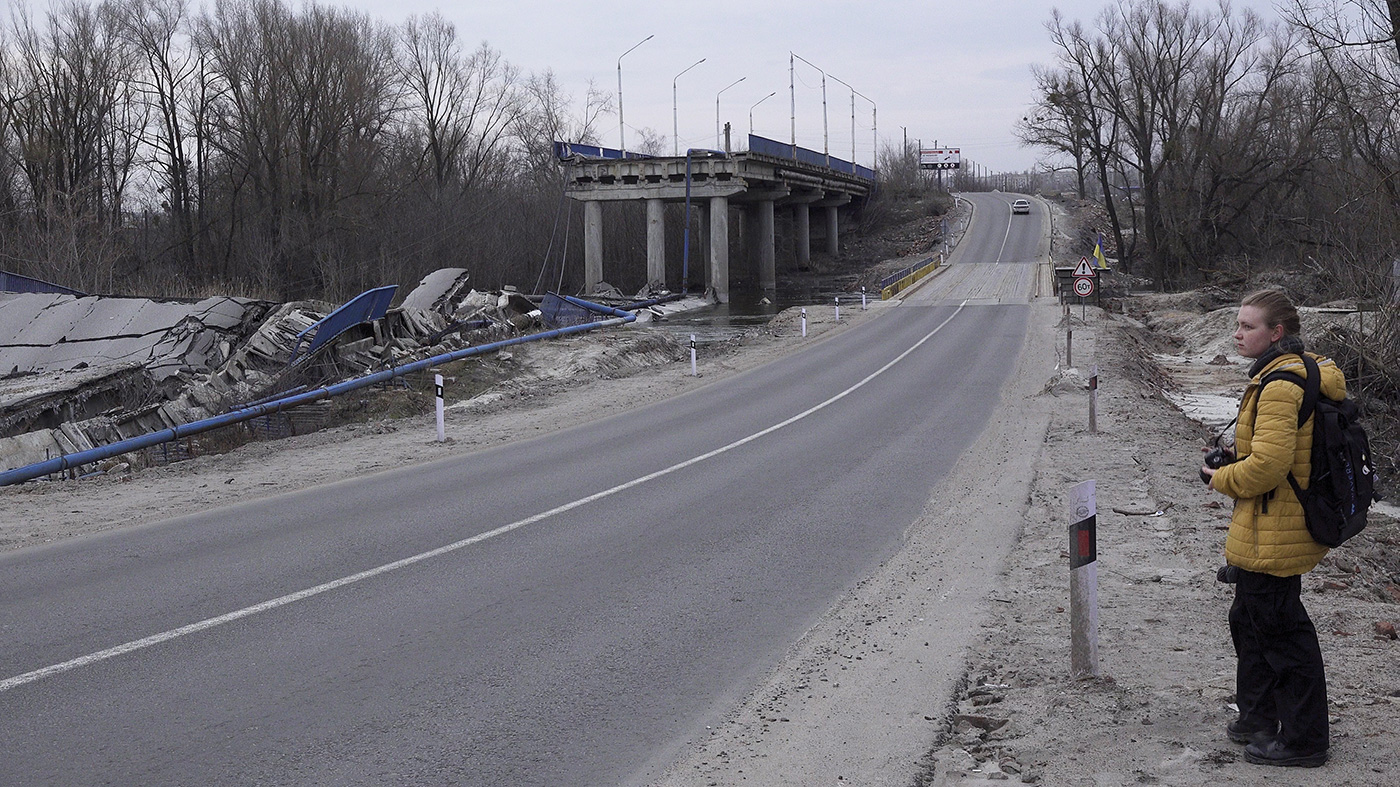
The central square of Izium, a few months after the city’s liberation. A hesitant camera pans over the traces of war, while residents resume their daily lives.
Juliette Corne holds a national higher diploma in visual arts from the Beaux-Arts de Paris. Her work navigates between contemporary art and cinema, exploring contemporary socio-political events and their consequences on representations and intimacy. Committed to revealing the mechanisms that lead to the normalization of violence, she captures, through her films, installations, and photographs, moments of life that continue despite horror and war. Zoé Monti
Robbie Cornelissen
The Number 9 Sessions
Animation | hdv | black and white | 8:36 | Netherlands | 2017
.
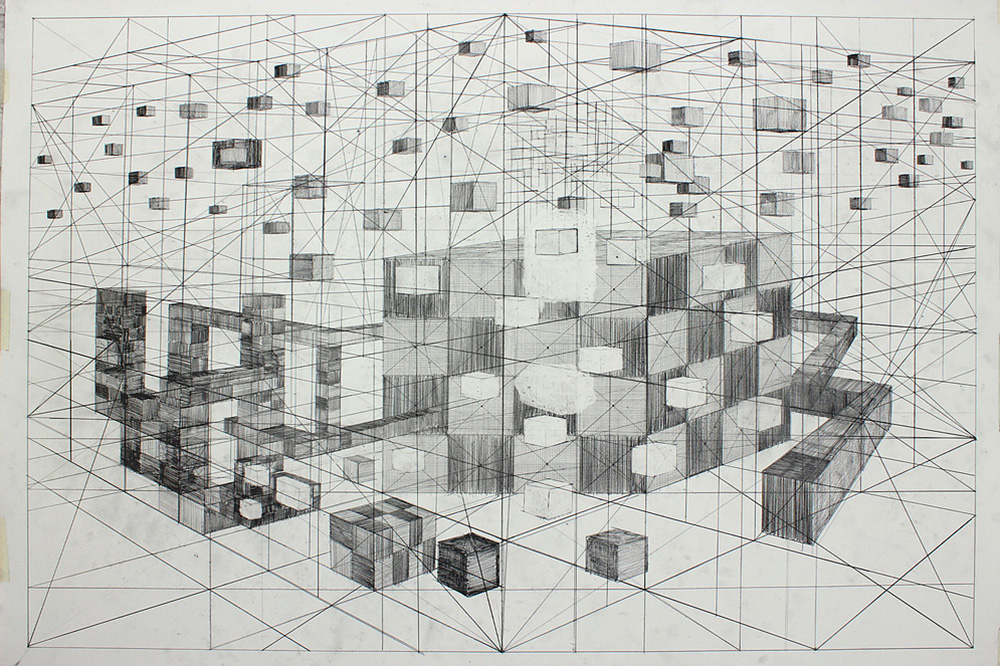
Cornelissen was born in Utrecht in 1954. He lives and work in Utrecht. Before practicing art, he studied Biology and Ecology. He attended the Vrije Akademie in Den Haag from 1982 to 1984 and then studied at Rietveld Akademie in Amsterdam from 1984 to 1987. He began his art career as a painter, but shortly switched to drawing, in which he developed a signature style of monumental drawings that show imaginary architectural spaces and enigmatic figures. His grid-like patterned drawings are not only part of paper-based work, but also come to life in 3-D in his animated videos. The highly detailed representations in Cornelissen's work examine the construction of space. He often creates a reality full of the strange and the familiar where the viewer becomes lost in a labyrinth of lines, rooms, and buildings.
Eli Cortiñas
Confessions with an open curtain
Video | hdv | | 5:25 | Spain, Germany | 2011
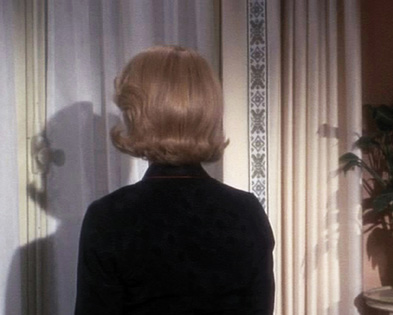
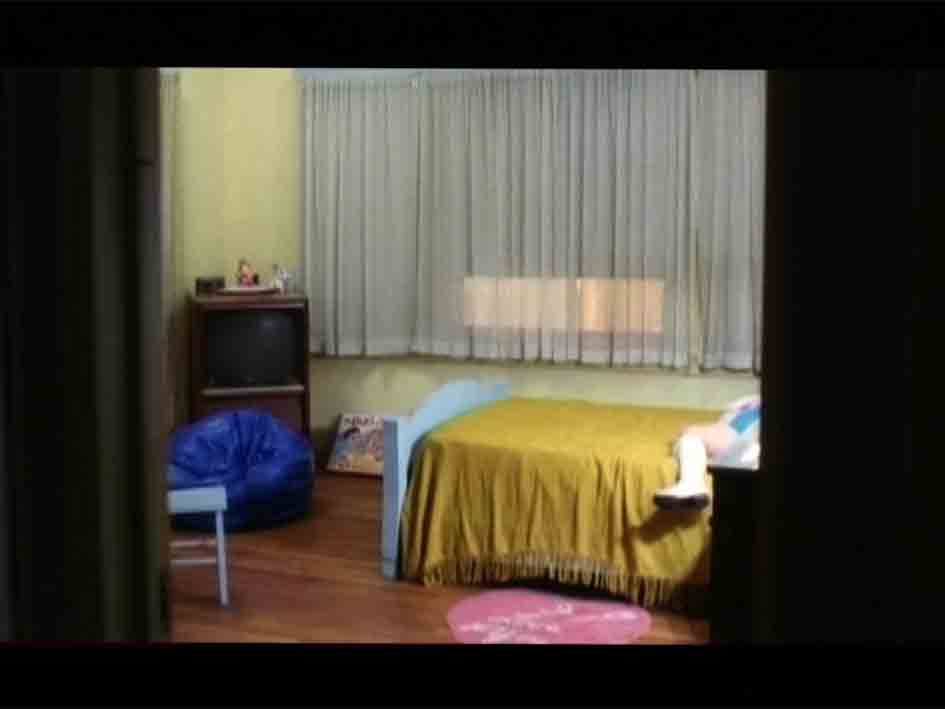
As in previous works, the video which is based on found-footage, deals with the construction of female identity, as well as with the portrayal of pictorial details, the interpretation of the specifics of a dramaturgic scene and the relevant film scenography. Things which within the context of film history are already ?embedded? in the film material and could thus be overlooked, are brought to the forefront. Paradoxically the supposed confessional referred to by the artist is described as having an open curtain, in contrast to the usual situation in the Catholic Church where its confessional booths consist of a dividing wall and a curtain. The curtain has long been regarded as being at the beginning, an item which veils and conceals. In the baroque and bourgeois theatre of the 18th century it is accorded a particular power, which gives it an active role. Not only does it announce the play, it becomes a figure itself, with its folds, movements and shades of colour, ranging from opaque to transparent. In Cortiňas? work the curtain turns into the central figure with its individual sounds, sweeping size and physical characteristics. In front of it and behind it are blonde women, allowing the viewer only to look over their shoulders. Cortiňas utilizes this motif from Romanticism which permits the female figures to be made anonymous as well as be typified, seeming to merge into one. Alongside the women we gaze out of the window into the distance, into the past, into the future, celebrate the nostalgic image of the romantic idea of inner freedom and are halted by the rasping voice of a mature woman: Every woman has a career ? the career of being a woman. Cortiňas approach to the re-enactment of the longings of her mostly female heroines, who reveal their supposed confessions in a collage of sounds, and in excerpts, is accompanied by an aesthetic reflection, in the sense of an ?atmospheric? perception. The pictorial-compositional and narrative excerpts which occur simultaneously provoke us into completing the ellipses in the visual and the content. Through the distance to the usual cinema experience ? the linear dramaturgy is constantly interrupted both on the levels of image and sound ? Cortiňas confronts the viewer with completely different versions of the individual motifs. She creates a layer of desires, most of which turn out to be unrealistic. The goal as an endless pipe-dream.
ELI CORTIÑAS Born 1976 in Las Palmas de Gran Canaria/Spain. Lives and works in Berlin and Cologne/ Germany. 2003-2008 Academy of Media Arts Cologne, Prof. Matthias Müller, Prof. Marcel Odenbach 2001-2002 European Film College, DK AWARDS / GRANTS 2011 Shortlist Award for young Film Art, Freunde der Neuen National Galerie und Deutsche Filmakademie 2009 Promotion Prize NRW 2009 for Media Art, Düsseldorf/ Germany Winner of the 19th Art Students Competition by the States Department for Education and Research, Kunst- u. Ausstellungshalle der Bundesrepublik, Bonn/ Germany Short List Nomination for the Columbus Art Foundation Project, Leipzig/ Germany 2nd Price NRW Competition at the International Filmfestival Oberhausen/ Germany 2008 Nominated for the German Short film Award in Gold for experimental film, Berlin/ Germany 2005 Promotion Price of the Big Art Exhibition North Rhine-Westphalia, Düsseldorf/ Germany 2001 Grant from the Film foundation MSH, Lübeck/ Germany EXHIBITIONS 2011 Street Girls Bringing Sailors In Must Pay In Advance I + II, Michael Wiesehöfer Gallery/ Haus Im Süden, Cologne/ Germany Dorothea, Ancient & Modern Gallery, London Based Around Babusch, Babusch Art Project, Berlin What a pity, it was indeed a great city, Van Bau Gallery, Vestfossen, Norway The New Rhineland. The Post-ironic Generation, Museum Morsbroich, Leverkusen/ Germany (C) BIWAK III, Eli Cortiñas, Jürgen von Dückerhoff, Diango Hernández, Alexander Lieck, Anthony McCall, Thom Merrick, Richard Allen Morris, Trevor Paglen, Peter Piller, Thomas Zander Gallery, Schmidt Maczollek Gallery, Michael Wiesehöfer Gallery, Cologne/ Germany 2010 Hypercinema!, Les Rencontres Internationales, Centre Pompidou, Paris/ France (C) The New Rhineland. The Post-ironic Generation, Museum Morsbroich, Leverkusen/ Germany (C) Saw it & Loved it # 4: Saw it, Loved it # 4: Better living with... From young collections, Museum Ludwig, Cologne/ Germany New Positions, Art Cologne, solo booth, Michael Wiesehöfer Gallery, Cologne/ Germany (C) (Solo) The excitement of ownership, Waldburger Gallery, Brussels/ Belgium (Solo) The sky is burning, 6 positions towards collage, Rupert Pfab Gallery, Düsseldorf/ Germany 2009 Liste Basel, Basel/ Switzerland (C) (Solo) Dial M for Mother, Michael Wiesehöfer Gallery, Cologne/Germany (Solo) Footloose, Waldburger Gallery, Brussels/ Belgium Moon Star Love, Marcelle Alix Gallery, Paris/ France +10/ Shortlist Columbus Art Foundation Project, Halle 14, Spinnerei Leipzig/ Germany (C) Regarding Düsseldorf 4, Düsseldorf/ Germany (C) Art Students Competition Exhibition, Kunst- u. Ausstellungshalle der Bundesrepublik, Bonn/ Germany (C) 2008 Cinéma Revisité, Centre Pompidou, Paris/ France (C) Documental: Contemporary Video Art from Europe, Guggenheim Gallery, L.A./ U.S.A. 13. Marler Video Art Price, Glaskasten Marl, Marl/ Germany (C) Lies. Nowhere. Between fiction and reality, exhibition screening, Museum for Contemporary Art Münster, Münster/ Germany (C) Recently seen and admired, Kunstagenten Gallery, Berlin/ Germany Minus Eins, Minus Eins experimental Lab, curated by Mischa Kuball, Cologne/ Germany Family Matters, Gallery NB8, Oslo/ Norway Zur Zeit, Künstlerhaus Bregenz, Palais Thurn & Taxis, Bregenz/ Austria There will be no funeral, e*raum, Cologne/ Germany (Solo) 2007 Rettung ohne Untergang, Deutzer Brücke, Cologne/ Germany CROPPED, Figge von Rosen Gallery, Cologne/ Germany 2006 Exhibition due to Promotion Price of the Big Art Exhibition North Rhine-Westphalia, Düsseldorf/ Germany (C) 2005 Köln Kunst 7, Cologne/ Germany (C) 5. Augsburger Art Lab (LAB 30), Augsburg/ Germany Guten Tag: Auf Wiedersehen, Rutgers Arts Center, New Jersey/ U.S.A. SCREENINGS 2011 Xperimenta, Xcèntric, CCCB, Barcelona (November 2011) IFFF Dortmund, Espressofilm, Viena, Austria 2008 ? 2011 Les Rencontres Internationales, Paris, Madrid, Berlin 2009 Norwegian Short Film Festival Grimstad/ Norway Reel to Real, Künstlerhaus Mousonturm, Frankfurt am Main/ Germany ZKMax showroom: Passage Maximilianstrasse, Landeshauptstadt München Kulturreferat in cooperation with ZKM Center for Art and Media Karlsruhe, München/ Germany 2008 CINÉMA REVISITÉ Centre Pompidou Paris/ France Int. Women Film Festival Dortmund, Panorama section, Dortmund, Cologne/ Germany "LUX" Max Ophüls Price, Experimental Film / Video, Saarbrücken/ Germany Short Cuts Cologne, Cologne/ Germany 2007 LOOP, video art fair, Barcelona/ Spain European Media Art Festival, Osnabrück/ Germany Int. Short Film Festival, Oberhausen/ Germany L´Alternativa, Barcelona/ Spain 2006 XXX Forum ? Video Art, Museum Ludwig, Cologne/ Germany Geladen: Videokunst", Junge Kunstfreunde, Museum Ludwig, Cologne/ Germany "Traveller auf Reise wohnen", Galerie Sammler, Leipzig/Germany 2003 Oldenburg Film Week, Oldenburg/ Germany Filmfest Augenweide, Kiel/G Germany Int. Leipzig Festival for Documentary & Animated Film, (Competition), Leipzig/ Germany Film Tournee Unterwegs, Germany 2002 Feminale, Cologne/ Germany Nordic Film Week, Lübeck/ Germany Mediawave, Ungarn Int. Women?s Film Festival, Seoul/ Korea CURRENT PUBLICATIONS/ PRESS ?TWIN ? Cinematic New Talents: Eli Cortiñas, Conrad Ventur, Angelika Markul and Ruth Hinkel-Pevzner ? by Freire Barnes, TWIN-Factory ,London, UK. ?Despite moments of clarity there is no ism in this book: 100 New Artists?, by Francesca Gavin, Laurence King Publishing, London, UK., coming out: September 2011 ?RISING: Young Emerging Artists?, by Julia Ritterskamp u.a., Herausgeber: Daab Verlag, Erscheinungstermin: Mai/ Juni 2011 GQ MAGAZINE, British Edition, ?Up and Coming Artists? by George Daniell, May 2011 MONOPOL, 1/2011 January, ?Komisch: Leverkusen predigt Postironie und die Generationsschublade klemmt?, Alexandra Wach, S.95 (http://www.monopol-magazin.de/drucken/artikel/2337/) Welt am Sonntag, 28. November 2010, ?Die neue rheinische Ehrlichkeit?, Christiane Hoffmans, S.48 MOFF ? Artists Magazine, 2/2010, ?Eli Cortiñas?, S.30-34 (C= Catalogue)
Eli Cortiñas
Dial M for Mother
Video installation | 0 | color | 11:30 | Spain, Germany | 2008
Dial M for Mother ? 2 channel video, 12:30 min/ loop A persisting phone ringing goes across Dial M for Mother and dominates the sound and visual scene as well as the figure of Gena Rowlands who fights while being chased by the persecuting ringing. A spanish voice is heard talking to her as someone who seems to be a mother. Eli Cortiñas Hidalgo presents in her final work at the Academy of Media Arts Cologne a fascinating tour de force throught the depth of human psychology. The mother-daughter conflict on the surface reveals himself more and more as the struggle of a human being longing for identity and autonomy as well as a role in life. A struggle which can either be win nor lost, within a vicous circle of a never ending life fight, with the attempt to find a solution by becoming a ?play? and rescuing himself from the emptiness directly into the stage floor. [...] Petra Pechtheyden
ELI CORTIÑAS HIDALGO Born on the 6th of April 1976 in Las Palmas de Gran Canaria, Spain. From 2003 - 2008 studies at the Academy of Media Arts Cologne with Prof. Matthias Müller and Prof. Marcel Odenbach (Diploma July 2008). From 2001 -2002 studies at the European Film College, DK awards/ grants Nominated for the GERMAN SHORTFILM AWARD 2008 in Gold for experimental film, Berlin Promotion Price of the BIG ART EXHIBITION NORTH RHINE-WESTPHALIA 2006, Düsseldorf Grant from the Film foundation MSH 2001, Lübeck film/ video I AM THE RABBIT!, 3 channel video, to be completed 2009 BIRD, CHERRY, LOVER, 2 channel video, to be completed 2009 DIAL M FOR MOTHER, 2 channel video, 2008 LOVERS ? ALL THE SAME IN FRONT OF GOD, 1 channel video, 2007 2 OR 3 THINGS I KNEW ABOUT HER, experimental film , 2006/ 2007 NO PLACE LIKE HOME, 2 channel video for monitor installation, 2006 FAMILIAR FACES, experimental film/ animation, 2003 BUÑUEL´S DREAM, experimental film, 2001

Eli Cortiñas
I‘ve Always Demanded More From The Sunset
Video | mov | color and b&w | 4:0 | Spain, Germany | 2022
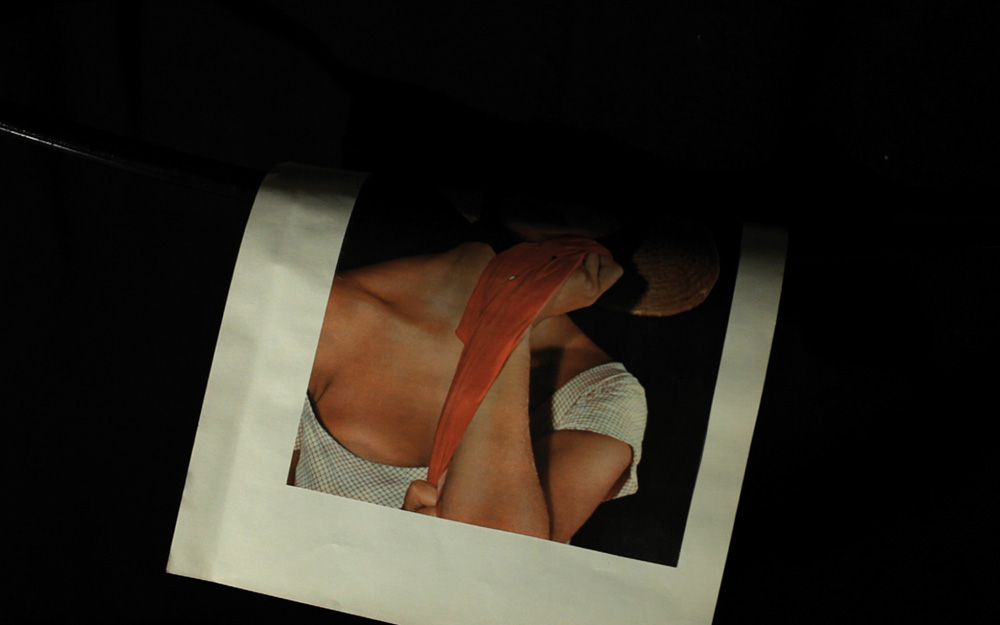
In the three channel video installation 'I’ve Always Demanded More From The Sunset' a mysterious female artificial intelligence warns us about humans being naturally drawn to killing. While navigating different sequences of breathing exercises to overcome fear and what seems to be an array of non human entities in a state of uncanniness and disbelief, different associations and questions beginn to appear: What stories lie in the forest? What arises in the ruins of man made devastation? An orchestrated symphony of mushrooms emerges from the ground like a poetic anticipation of post-human life.
Eli Cortiñas is a video artist of Cuban descent, born in Las Palmas de Gran Canaria. She was a guest professor at the Art Academy Kassel and the Art Academy Mainz and shared a professorship for Spatial Concepts with Candice Breitz at the University of Art Braunschweig from 2019 till 2022 Cortiñas has recently been appointed professor for Media Art at the Academy of Fine Arts Leipzig. She has received numerous grants and residencies, including Fundación Botín, Kunstfonds, Villa Massimo, Berlin Senate, Villa Sträuli, Goethe Institute, Kölnischer Kunstverein, Rupert and Karl Schmidt Rottluff among others. Cortiñas’ work has been presented in solo and group exhibitions at institutions such as Museum Ludwig, Kunsthalle Budapest, CAC Vilnius, SCHIRN Kunsthalle, SAVVY Contemporary, Kunstverein Braunschweig, Museum Marta Herford, Kunstraum Innsbruck, Centro Atlántico de Arte Moderno, Centre Georges Pompidou, Museum of Modern Art Moscow, Kunstmuseum Bonn and MUSAC et al., as well as in international Biennials and festivals such as Ural Industrial Biennial, Riga Biennale, Moscow International Biennale for Young Art, Mardin Biennale, International Short Film Festival Oberhausen, International Curtas Vila Do Conde and Nashville Film Festival et al. She lives and works in Berlin.
Eli Cortiñas
Quella che cammina
Video | hdv | color and b&w | 9:30 | Spain | 2014
"The One Who Walks" ("Quella Che Cammina") is a central female character in Carlo Lizzanis contribution to the neorealist anthology film "L'amore in città" of 1953. Eli Cortiñas' unconventional filmic composition used this figure of an aging, impoverished prostitute as a nucleus an associative montage of self-filmed material, found footage and fragile sculptural constructions circle around to question her own role as a self-responsible individual, as a working class child, as a woman, as a daughter, as an artist.
Eli Cortiñas was born in Las Palmas de Gran Canaria, Spain, 1976. She studied at the Academy of Media Arts Cologne and has been awarded the Villa Massimo and the Karl Schmidt-Rottluft grant among others. Her work has been presented in solo and group shows at museums such as Museum Ludwig, Cologne, Kunsthalle Budapest, Museum Marta Herford, Kunstraum Innsbruck, Museum La Regenta and MUSAC, Spain, as well as in international festivals such as the 3rd Moscow International Biennale for Young Art, the 2nd Mardin Biennale, the 58th International Short Film Festival Oberhausen, the 20th International Curtas Vila Do Conde and the Nashville Film Festival. She lives and works in Berlin.

Eli Cortiñas
Vogel, Kirsche, Geliebte
0 | betaSP | color | 8:0 | Spain, Germany | 2010
A woman trapped in a vicious circle between redemption and ruin.
Eli Cortinas was born en 1976 in Las Palmas de Gran Canaria in Spain. He lives and Works in Cologne in Germany. From 2001 to 2002 he studied at the European Film College in Danemark, then from 2003 to 2008, at the Academy of Media Arts Cologne. He has been granted the Prize for Media Art NRW 2009, Düsseldorf, Germany. He made several movies, including the two channel vidéos "Bird, Cherry, Lover" (2010), and "No Place Like Home" (2006), the experimental movie "2 or 3 Things I knew About Her" (2006), the one channel video "Lovers ? all the same in front of G.O.D." (2007, the two channel vidéo "Dial M for Mother? (2008) and the one channel video ?FIN? (2009).
Pedro Costa
Ne change rien
Documentary | 35mm | black and white | 90:0 | Portugal | 2009
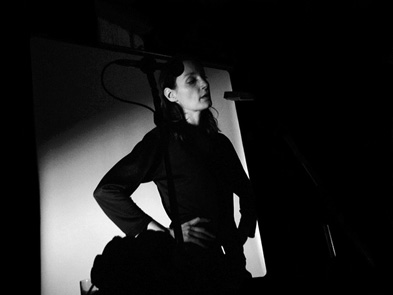
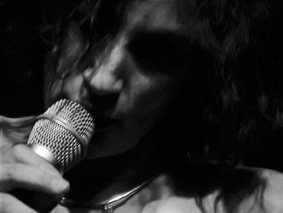
Ne Change Rien, expressing that he sought to make a film about the process of creating music. In so doing, he captured his friend, who, disillusioned with the caliber of roles offered to her as an actress, decided to pursue singing. With films such as Juventude Em Marche (Colossal Youth, 2006) and No Quarto da Vanda (In Vanda?s Room, 2000) the majority of Costa?s recent work has focused on the marginalised and poverty stricken in his native Portugal?so it is intriguing that Pedro Costa's new subject is French actress, Jeanne Balibar.
Pedro Costa (born 1959) is a Portuguese film director. He is acclaimed for using his ascetic style to depict the marginalised people in desperate living situations. Many of his films are set in a district of Lisbon inhabited by the socially disadvantaged and shot in a natural and low-key way that makes them resemble documentaries. While studying history at University of Lisbon, Costa switched to film courses at School of Theatre and Cinema (Escola Superior de Teatro e Cinema). After working as an assistant director to several directors such as Jorge Silva Melo and João Botelho, he made a first feature film O Sangue (The Blood) in 1989. He collected the France Culture Award (Foreign Cineaste of the Year) at 2002 Cannes International Film Festival for directing the film No Quarto da Vanda (In Vanda?s Room). Juventude em Marcha (Youth on the March, known as ?Colossal Youth? in Anglophone countries, and ?En avant, jeunesse? ? ?Onward, Youth? ? in Francophone countries) was selected for the Cannes Film Festival in 2006 and earned the Independent/Experimental prize (Los Angeles Film Critics Assossiation) in 2008.
Pedro Costa
Casa de lava
Fiction | 35mm | color | 110:0 | Portugal | 1994
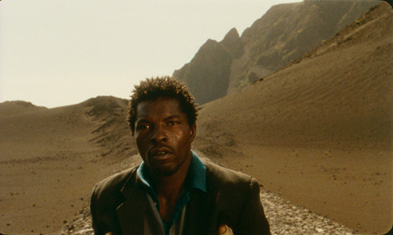
For his second feature film, from 1994, the Portuguese director Pedro Costa constructs a politically savvy homage to Jacques Tourneur?s 1943 horror film, I Walked with a Zombie, in which postcolonial decay is invested with both metaphysical and erotic allure. Leão (Isaach De Bankolé), an immigrant laborer in Lisbon, is knocked unconscious in an industrial accident; Mariana (Inês de Medeiros), a nurse, volunteers for the medical transport that repatriates the comatose man to one of the Cape Verde islands. She busies herself at the rustic hospital that has taken him in, but she quickly comes under the spell of the volcanic island?s loamy mysteries?many of which seem to revolve around the still inanimate man. Psychology takes a back seat to the overtones of history as Mariana finds herself growing increasingly involved with the family that lays claim to Leão as well as with a Portuguese émigrée, Edite (the French cult actress Edith Scob, from Eyes Without a Face), whose madness derives from social traumas of the local past. With a strikingly modern yet humanistic style, Costa elicits quietly declamatory performances from his remarkable cast (which joins nonactors and seasoned professionals) and creates moody, luminous tableaux to conjure an incantatory, Faulknerian earthiness.
Pedro Costa (born 1959) is a Portuguese film director. He is acclaimed for using his ascetic style to depict the marginalised people in desperate living situations. Many of his films are set in a district of Lisbon inhabited by the socially disadvantaged and shot in a natural and low-key way that makes them resemble documentaries. While studying history at University of Lisbon, Costa switched to film courses at School of Theatre and Cinema (Escola Superior de Teatro e Cinema). After working as an assistant director to several directors such as Jorge Silva Melo and João Botelho, he made a first feature film O Sangue (The Blood) in 1989. He collected the France Culture Award (Foreign Cineaste of the Year) at 2002 Cannes International Film Festival for directing the film No Quarto da Vanda (In Vanda?s Room). Juventude em Marcha (Youth on the March, known as ?Colossal Youth? in Anglophone countries, and ?En avant, jeunesse? ? ?Onward, Youth? ? in Francophone countries) was selected for the Cannes Film Festival in 2006 and earned the Independent/Experimental prize (Los Angeles Film Critics Assossiation) in 2008.
Pedro Costa
Minimo macho, minimo Fêméa
Video installation | dv | color | 37:0 | Portugal | 2005
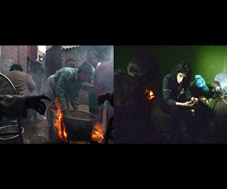
Consisting of double projections of footage from Costa?s film "No quarto da Vanda", the installation "Minimo macho, minimo fêméa" provides a view alternating between exterior scenes and the respective interiors of houses in Lisbon?s Fontainhas neighborhood. It thus documents and illustratively intensifies the existence of immigrants from the former colonies in a calm and clear way.
Pedro Costa
Où gît votre sourire enfoui
Documentary | 35mm | color | 104:0 | Portugal, France | 2001
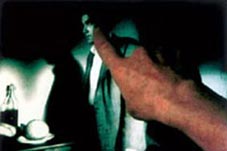
Pedro Costa films Jean-Marie Straub and Danièle Huillet during different steps of the editing of the film "Sicilia!" Jean-Marie Straub defines editing as a "struggle with the matter". Indeed, here there is an exhausting test of patience, because this document plunges us not in the general composition of central choices, but simply in an irksome work of connections. Each of them implies very small choices, which are decisive in each case for the overall meaning of the coming film. Pedro Costa dwells upon these constantly explored, slowed, flashbacked, immobilized images until he manages to produce an hypnotic effect. He also explores a dark laboratory's atmosphere, and then he includes, without explanation, two surprising sequences where the Sraub present their films to few spectators.
Pedro Costa graduated from the Escola Superior de Cinema (the Film School of the National Conservatory of Lisbon). He took lessons with the Portuguese actor, Antonio Reis. In 1987 he produced his first short film, "Cartas a Julia", then soon after a series for children for Portuguese TV. Very influenced by Friedrich-Wilhelm Murnau, in 1989 he made "Le Sang", a drama acclaimed by the critic, but that did not satisfy him absolutely. "La Maison de lave" in 1994 confirmed the endowment of this Portuguese film maker from the point of view of film professionals, who reveal the features of his work: an aestheticism that comes closer with mannerism, various and very detailed blacks and whites, and recurrent themes like the woeful and the dingy, but a certain tendency to sublimate them. His taste for blood and cold violence are also in "Ossos" (1997). The critics analyze his style like a comeback to the origins of cinema, a heritage from the silent film. This work has been awarded at Venice and Belfort. In 2000, he made "Dans la chambre de Vanda", which relates the lowering of a drug addict. Costa's aestheticism changes this dark story into a filmic poem. "Où gît votre sourire?" (2001) is a homage to the filmmaker twosome Danièle Huillet and Jean-Marie Straub. "One has to take risks in each image; this is what Antonio Reis said. Even risking one's life in each image, in each moment, each intonation of an actor. Without this risk, cinema is useless. It is fundamental that a film is useful." - Pedro Costa
Pedro Costa, Harun FAROCKI, Eugène GREEN
MEMORIES
Experimental video | dv | color | 102:0 | Portugal, Korea, South | 2007
Diplômé de l`Escola Superior de Cinema (l`Ecole de Cinéma du Conservatoire National de Lisbonne), Pedro Costa suit les cours de l`acteur portugais Antonio Reis. Il réalise en 1987 son premier court métrage,"Cartas a Julia", suivi bientôt d`une série pour enfants pour la télévision portugaise. Très influencé par Friedrich-Wilhelm Murnau, il signe en 1989 "Le Sang", un drame encensé par la critique qui ne le satisfait pourtant pas tout à fait. "La Maison de lave" en 1994 confirme le talent de ce réalisateur portugais aux yeux des professionnels du cinéma, qui dévoile dès lors les caractéristiques de son travail : un esthétisme qui frôle le maniérisme, des noirs et blancs variés et très travaillés, des thèmes récurrents tels que le sordide et le crasseux, mais une certaine tendance à les sublimer. Son goût pour le sang et la violence froide se retrouve dans "Ossos" (1997). Les critiques voient en son style un retour au cinéma des origines, héritage du cinéma muet. Le film sera primé notamment à Venise et à Belfort. En 2000, il signe "Dans la chambre de Vanda" narrant la déchéance d`une toxicomane. L`esthétisme de Costa transforme cette histoire sombre en poème filmique. "Où gît votre sourire enfoui ?"(2001) est un hommage au couple de cinéastes Danièle Huillet/Jean-Marie Straub. "Il faut se risquer dans chaque plan, c?est ce que disait Antonio Reis. Risquer sa vie même dans chaque plan, chaque moment, chaque intonation d?un acteur. Sinon le cinéma ne sert à rien. Pour moi, il est fondamental qu?un film soit utile." Pedro Costa
Pedro Costa
Ne change rien
Documentary | 35mm | black and white | 98:0 | Portugal, France | 2009
Pedro Costa
O nosso homem / Notre homme
Fiction | | color | 23:0 | Portugal | 2010
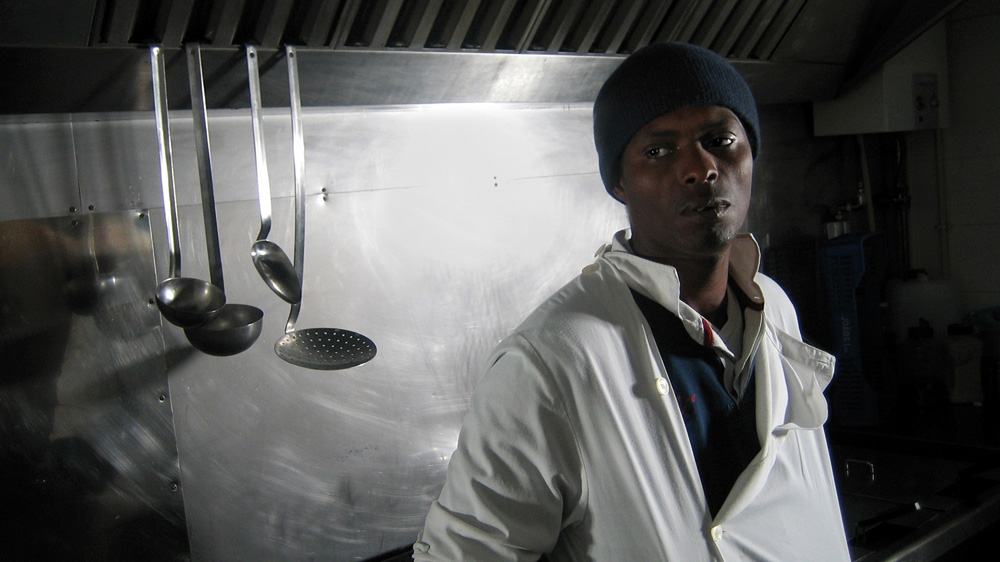
« J?étais un bon maçon. J?ai jamais fais un mur de travers. Mon patron s?est jamais plaint de moi. Un jour le travail s?est arrêté, j?ai perdu mon chômage. Pas de pension de retraite, pas d?allocations familiales. J?ai cherché du travail partout, mais rien. Je ramenais pas d?argent à la maison, Suzete m?a foutu à la porte »
Pedro Costa
Ossos
Fiction | 35mm | color | 94:0 | Portugal | 1997
The first film in Pedro Costa?s transformative trilogy about Fontainhas, an impoverished quarter of Lisbon, Ossos is a tale of young lives torn apart by desperation. After a suicidal teenage girl gives birth, she misguidedly entrusts her baby?s safety to the troubled, deadbeat father, whose violent actions take the viewer on a tour of the foreboding, crumbling shantytown in which they live. With its reserved, shadowy cinematography by Emmanuel Machuel (who collaborated with Bresson on L?argent), Ossos is a haunting look at a devastated community. (Criterion)
Pedro Costa graduated from the Escola Superior de Cinema (the Film School of the National Conservatory of Lisbon). He took lessons with the Portuguese actor, Antonio Reis. In 1987 he produced his first short film, "Cartas a Julia", then soon after a series for children for Portuguese TV. Very influenced by Friedrich-Wilhelm Murnau, in 1989 he made "Le Sang", a drama acclaimed by the critic, but that did not satisfy him absolutely. "La Maison de lave" in 1994 confirmed the endowment of this Portuguese film maker from the point of view of film professionals, who reveal the features of his work: an aestheticism that comes closer with mannerism, various and very detailed blacks and whites, and recurrent themes like the woeful and the dingy, but a certain tendency to sublimate them. His taste for blood and cold violence are also in "Ossos" (1997). The critics analyze his style like a comeback to the origins of cinema, a heritage from the silent film. This work has been awarded at Venice and Belfort. In 2000, he made "Dans la chambre de Vanda", which relates the lowering of a drug addict. Costa`s aestheticism changes this dark story into a filmic poem. "Où gît votre sourire?" (2001) is a homage to the filmmaker twosome Danièle Huillet and Jean-Marie Straub. "One has to take risks in each image; this is what Antonio Reis said. Even risking one`s life in each image, in each moment, each intonation of an actor. Without this risk, cinema is useless. It is fundamental that a film is useful." - Pedro Costa
Pedro Costa
O Nosso Homem
Experimental doc. | hdv | color | 23:0 | Portugal | 2015
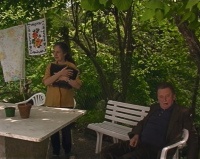
Nouveau montage, inédit de «O Nosso Homen». Un matin de l’été 2007. L’intérieur d’une baraque en bois et plaques d’étain dans la périphérie de Lisbonne. José Alberto, vingt-sept ans, et sa mère, cinquante-cinq ans, tous les deux Cap-Verdiens. Ils sont assis à une table. José Alberto se coupe les ongles avec un petit couteau de poche. Ils parlent en créole.
Pedro Costa est réalisateur, scénariste et directeur de la photographie portugais. En 1994, «Casa de Lava» est sélectionné au Festival de Cannes. «Ossos» remporte en 1997 le prix de la photographie de la Mostra de Venise. «La chambre de Vanda» est primé au Festival de Cannes en 2002. «En avant jeunesse !», qui revient sur la vie d’immigrés cap-verdiens déplacés dans un quartier HLM neuf de Lisbonne, est sélectionné en compétition internationales au Festival de Cannes en 2006, et est primé par le Los Angeles Film Critics Association en 2008. «Ne Change rien» est présenté à la Quinzaine des réalisateurs du Festival de Cannes en 2009. Son dernier film «Cavalo Dinheiro» a reçu le Léopard du meilleur film au Festival international du film de Locarno en 2014. «Il faut se risquer dans chaque plan, c’est ce que disait Antonio Reis. Risquer sa vie même dans chaque plan, chaque moment, chaque intonation d’un acteur. Sinon le cinéma ne sert à rien. Pour moi, il est fondamental qu’un film soit utile.» Pedro Costa
Pedro Costa
Six bagatelles
Experimental doc. | dv | color | 20:0 | Portugal | 2004
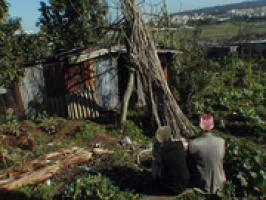
Pedro Costa has taken six scenes from "Où gît votre sourire enfoui?" and has located them in a different context. These bits are not only "bagatelles", but above all they are a personal look at Danièle Huillet and Jean-Marie Straub.
Pedro Costa graduated from the Escola Superior de Cinema (the Film School of the National Conservatory of Lisbon). He took lessons with the Portuguese actor, Antonio Reis. In 1987 he produced his first short film, "Cartas a Julia", then soon after a series for children for Portuguese TV. Very influenced by Friedrich-Wilhelm Murnau, in 1989 he made "Le Sang", a drama acclaimed by the critic, but that did not satisfy him absolutely. "La Maison de lave" in 1994 confirmed the endowment of this Portuguese film maker from the point of view of film professionals, who reveal the features of his work: an aestheticism that comes closer with mannerism, various and very detailed blacks and whites, and recurrent themes like the woeful and the dingy, but a certain tendency to sublimate them. His taste for blood and cold violence are also in "Ossos" (1997). The critics analyze his style like a comeback to the origins of cinema, a heritage from the silent film. This work has been awarded at Venice and Belfort. In 2000, he made "Dans la chambre de Vanda", which relates the lowering of a drug addict. Costa's aestheticism changes this dark story into a filmic poem. "Où gît votre sourire?" (2001) is a homage to the filmmaker twosome Danièle Huillet and Jean-Marie Straub. "One has to take risks in each image; this is what Antonio Reis said. Even risking one's life in each image, in each moment, each intonation of an actor. Without this risk, cinema is useless. It is fundamental that a film is useful." - Pedro Costa
Pedro Costa
The Rabbit Hunters
Experimental fiction | betaSP | color | 23:0 | Portugal | 2007
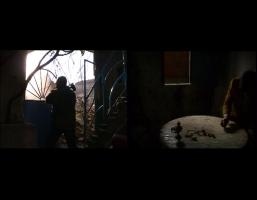
Fontainhas is a lost community, a shanty-town on the outskirts of Lisbon. This film shows the day-by-day stories of the residents eager for the new, better life announced with its promises of warm comfort and economic growth. We see characters like Virgilio who asks himself if he really needs another refrigerator, Benvindo and Maria who break-up and Isabel who cant`t take it anymore.
Pedro Costa graduated from the Escola Superior de Cinema in Lisbon and followed classes by the Portuguese actor Antonio Reis. He directs his first film in 1987, "Cartas a Julia", shortly followed by a television serie for children in Portugal. Being strongly influenced by Frierich-Wilhelm Murnau, he directs in 1989 "Le Sang", although praised by critics, the drama does not satisfy him. "La Maison de Lave" in 1994 confirms the talent of this Portuguese director in the eyes of cinema professionals. It is then that he develops his work's characteristic: aesthetics flirting with mannerism, varied black and whites very well studied, recurring themes such as what is sordid and filthy while sublimating them. His taste for blood and cold violence shines through again in "Ossos" in 1997. Critics see in him a comeback to a cinema of origins, legacy of silent cinema. The film was awarded a prize in Venice and Belfort. In 2000 he signs "Dans la Chambre de Vanda"narrating the downfall of a junky. Costa's aesthetics transform this dark story into a filmic poem. "Ou gît votre sourire enfoui?" is a tribute to the directing couple Danièle Huillet/Jean-Marie Straub. "One has to risk himself on every frame, is what Antonio Reis said. (one has) To risk one's life in each frame, in each moment, each actor's intonation. If not, cinema is useless. To me, it is fundamental for a film to be useful."
Pedro Costa
Minimo macho, minimo Fêméa
Fiction | dv | color | 37:0 | Portugal | 2005
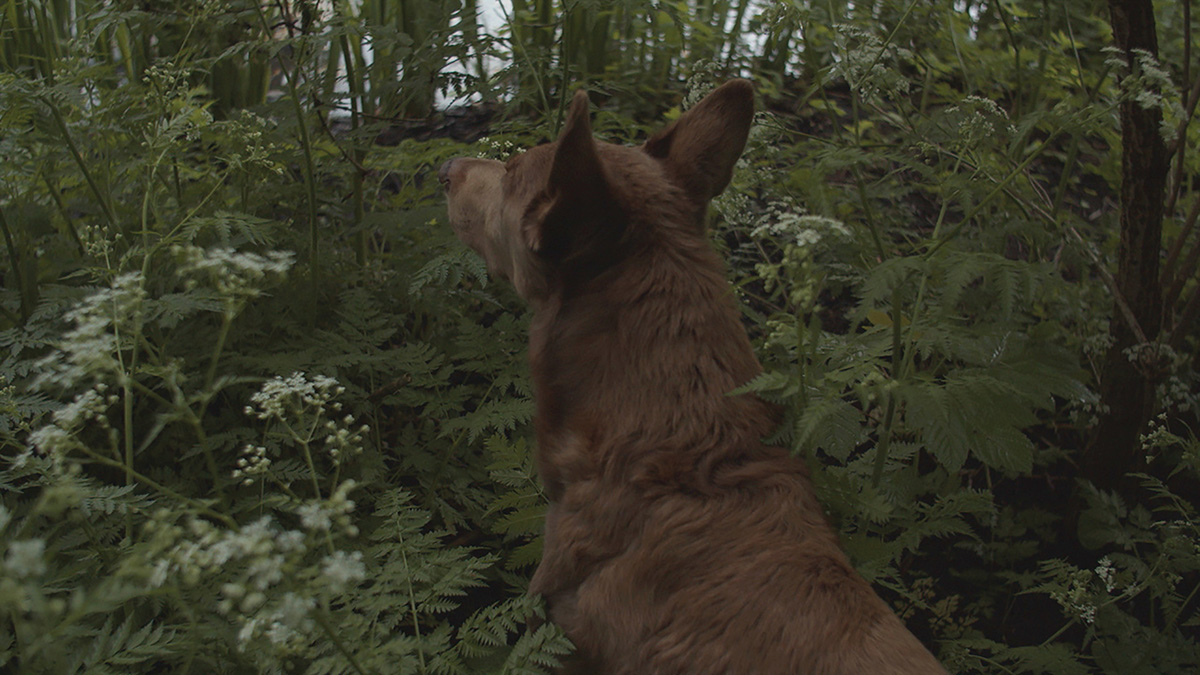
Consisting of double projections of footage from Costa?s film "No quarto da Vanda", the installation "Minimo macho, minimo fêméa" provides a view alternating between exterior scenes and the respective interiors of houses in Lisbon?s Fontainhas neighborhood. It thus documents and illustratively intensifies the existence of immigrants from the former colonies in a calm and clear way.
Noé Cottencin
Reality and Fiction
Experimental fiction | mov | color | 10:20 | France, Netherlands | 2021
Un chien, une fille, des adolescents et d’autres créatures fantastiques font l’insurrection de leur vie quotidienne à travers des marches dans la ville, des détournements d’espaces et autres actions à travers lesquelles ils observent et transforment la réalité et le monde autour d’eux.
Noé Cottencin (France, 1994) a étudié l’image en mouvement à l’Académie Gerrit Rietveld et au Sandberg Institute. Son travail, à travers des récits qui prennent différentes formes (dessins, films, interventions, publications), s’intéresse principalement à la mise en commun des individualités. Il vit et travaille à Amsterdam et Los Angeles.