Catalogue > Search
Results for : Tout le catalogue

Michel François
Fox
Video installation | dv | color | 3:51 | Belgium | 2005
The video work of Michel François is often based on the isolation of interludes, tiny events and movements, the engraving of tiny sculptures in real time. He draws up an inventory of the world around us making use of antitheses: not merely formal, but also philosophical; social or political-economical oppositions. This video was recorded during a single night in the studios of the American TV-network FOX. The camera wanders around between abandoned cameras and illuminated TV-screens. In the background the dialogues resound, and the soundtrack of the program which was broadcast at that time-an episode from a lawyer series. The duration of the film corresponds with the last minutes of the programme. The acoustic climax echoes through the empty, dehumanized studio.
Educated at Brussels` École de recherche graphique (ERG), Michel François doesn`t want to limit himself to one discipline. He uses all sorts of materials and a range of methods, combining industrial and natural objects, photographs and installations into a result that appeals to all of our senses. François analyses and refers to everyday customs and habits in associative manner without detracting from their general validity. By way of simplification we could say that Michel François is a sculptor. His work is caught between the temptation to enlarge or fill in voids and the temptation to hollow out or fill out solids. As a video-maker each one of his sequences forms a transition to the next sequence, and his whole output is based on his skill at isolating interludes, minor occurrences and unsuccessful, revived acts from that real time which principally consists in spare time. Central in Michel François`s work is the personal perception of reality although he himself remains strikingly in the background, anonymously documenting the events taking place. This position is exemplary in his videos, each one of them a record of private or public life with its own particular speed and rhythm. Whether he is filming a pair of feet running on treadmills, a wooden chair endlessly falling down stairs and chattering into pieces or falling mikado sticks, the objects depicted in quick succession do not represent commentaries, reactions or answers to political, cultural or economic questions. Being non-autobiographical in nature, neither posed nor staged, they explore cause and effect. They are experimental in nature and immediately explicable. François intents on creating a space of reflection or of self-awareness, by showing normal human occurrences as well as recognisable processes and objects. Yet at the same time he reverses things, or rather, turns them inside out. François inventories the world around us by way of antitheses: formal opposites such as the sculptural extremes of concave-convex and empty-full; and such opposites as freedom and imprisonment, poor and rich. Work versus free time is one of the contrasts that determine our day to day life. In his photographs and video-works Michel François does not construct his work within an autonomous, digital world but he finds his subjects in the real - almost by definition anti-heroic - ordinary world. At the same time, this living context is the place where his art is displayed. François`s images possess nothing of the unique, isolated object. His view is not attached to what has been canonised but to the liveliness of everyday life. What is registered by Michel François is the unexpected in the familiar, the intense in the inconstant. He seems to have the quality to let the things happening around him lead a life of their own, as filtering the world with respect to content and form, however, without distancing himself from his subject. François`s photographs and videos reveal themselves as paintings with restrained or openly expressed sculptural qualities. No matter how they are defined, they are qualities of his physical and emotional life that confront the qualities of the spectator`s physical and emotional life. "L`art, de toute façon, c`est la vie que l`on sculpte", thus François.

Tina Frank, General Magic
Chronomops
Experimental video | dv | color | 2:0 | Austria | 2005
The doors of perception, electronic style. Tina Frank?s Chronomops opens doors to truly different dimensions: different than digital art?s reductionist studies so common today, different than the serially laid out minimalist images, and different than the omnipresent filtering and layering experiments. Chronomopsopens up a shimmering, colorful space that is simultaneously an excess of color, frenzy of perception, and pop carousel. An abstract architecture of vertical color bars is set in endless rotation, whereby the modules and building blocks fly around themselves?and the entire system likewise rotates. The forced, in part jerky movement forms a digital maelstrom whose suction pulls the observer deep into it.A system surfacing as though out of a void, steadily plunging through its own dynamic into new excesses of mobility, while adventurously hopping axes, temporarily dissolving into two-di- mensional stripes, then lapsing again into a prismatic staccato of light and color, tending towards a 90 degree angle, sideward?leaving an extreme dizzying feeling in its wake. Chronomops, accompanied by music from General Magic, which is also composed as a slip stream, thus shows what the pop psychedelics always knew to be true: that the ?other? side looms right around the corner of the perfect groove, a labyrinth of colors and forms set in irregular motion, which merely has to be raised from its invisibility and liberated from its incomprehensible state. Electronic music?s inner life has seldom appeared so colorful and captivating.(Christian HÖller)
Tina Frank starts to work as a designer in 1995. Her sleeve-designs for Mego - a label for electronic music in Vienna - are soon recognised as "future classics" and printed in many designbooks and magazines. At the same time she is developing visual concepts and corporate appearances for companies, organzisations and conferences while working at U.R.L. Between 1996 - 2000 Mathias Gmachl (from farmers manual) and Tina Frank worked together under the name of Skot, experimenting on new forms of realtime-video. 2002 the japanese label Gas brings out Tina Frank`s first DVD "Fuzzy Motion - Pictures without legs 1995-2002". Tina Frank has collaborated with many musicians and designers such as Chicks on Speed, Oren Ambarchi & Martin Ng, General Magic, Florian Hecker, etc. Many performances on festivals, institutions and art places such as Centre Pompidou, Paris or ICC, Tokyo and many reviews in Music- and Design-magazines show evidence of a lively activity of a design- and videoartist.
Megan Fraser
The Clearance
Documentary | 16mm | color | 15:0 | United Kingdom | 2007
The Clearance is a 35mm film shot in a medical museum at a London hospital and documents the dismantling, dispersal and digitisation of the museum?s collection of human specimens. Structured as a series of shots strung together with an aesthetic that echoes a minimalist arrangement, barely an order, just ?one thing after another?. What is happening in the image, or the meaning of things and actions represented permeates the formal texture of the image and floats across the film. The Clearance is a document of sorts but not a documentary. Made in response to debates surrounding the laws that govern the collection of human tissue the film mixes strategies of observational documentary with a theatrical staging of the subject event to produce a haunting meditation on the notion of ?a thing?, and the legal, social and cultural frameworks that influence its status and our relationship to it.
Megan Fraser lives and works in London and New York. She attended the MFA program at Bard College and has shown internationally at venues including Koelnischer Kunstverein, Koln, Oberhausen Film festival, Germany, Rotterdam International Film Festival and The Walker Art Centre, Minneapolis.

Lisa Freeman
Hook, Spill, Cry Your Eyes Out
Experimental film | mp4 | color | 2:26 | Ireland | 2024
A headfirst rush into the capitalist, urban landscape, using dynamic camerawork and canny editing. Productivity, optimisation, constant forward motion. In this experimental short from artist and filmmaker Lisa Freeman, frenetic camerawork and quickfire editing convey the body’s lacklustre requirement to always be working in our capitalist society. Using glimpses of concrete environments, bodies on treadmills, crash-test dummies, and other ubiquitous urban images, and melding these with a soundscape of ragged breathing and disjointed conversations, Hook, Spill, Cry Your Eyes Out provides a cutting commentary on what our society inflates with importance.
Lisa Freeman is an artist and filmmaker based in Dublin, Ireland. Her work draws into question economic and power structures and explores how intimacy might be employed as a form of resistance. Recent works have examined the everyday, where the city’s sounds play in the dreams, nostalgias, or hopes of another and where small moments lead to more surreal events (Slipped, Fell and Smacked my Face on the Dance Floor), and social isolation in the public realm (Hook, Spill, Cry Your Eyes Out). Freeman is a studio member at Temple Bar Gallery + Studios, Dublin. She has received several Bursary and Project awards from the Arts Council of Ireland. Her work is held in the collection of the Arts Council of Ireland. Freeman has taken part in residencies in South Korea (BARIM Arts, 2016), and Cité Internationale des Arts Paris x Institut Francais, supported by Temple Bar Gallery + Studios Dublin and Bétonsalon, Paris (2025).
Moritz Frei
Am I the sleeping bag of my soul?
Experimental film | mp4 | color | 3:53 | Germany | 2025
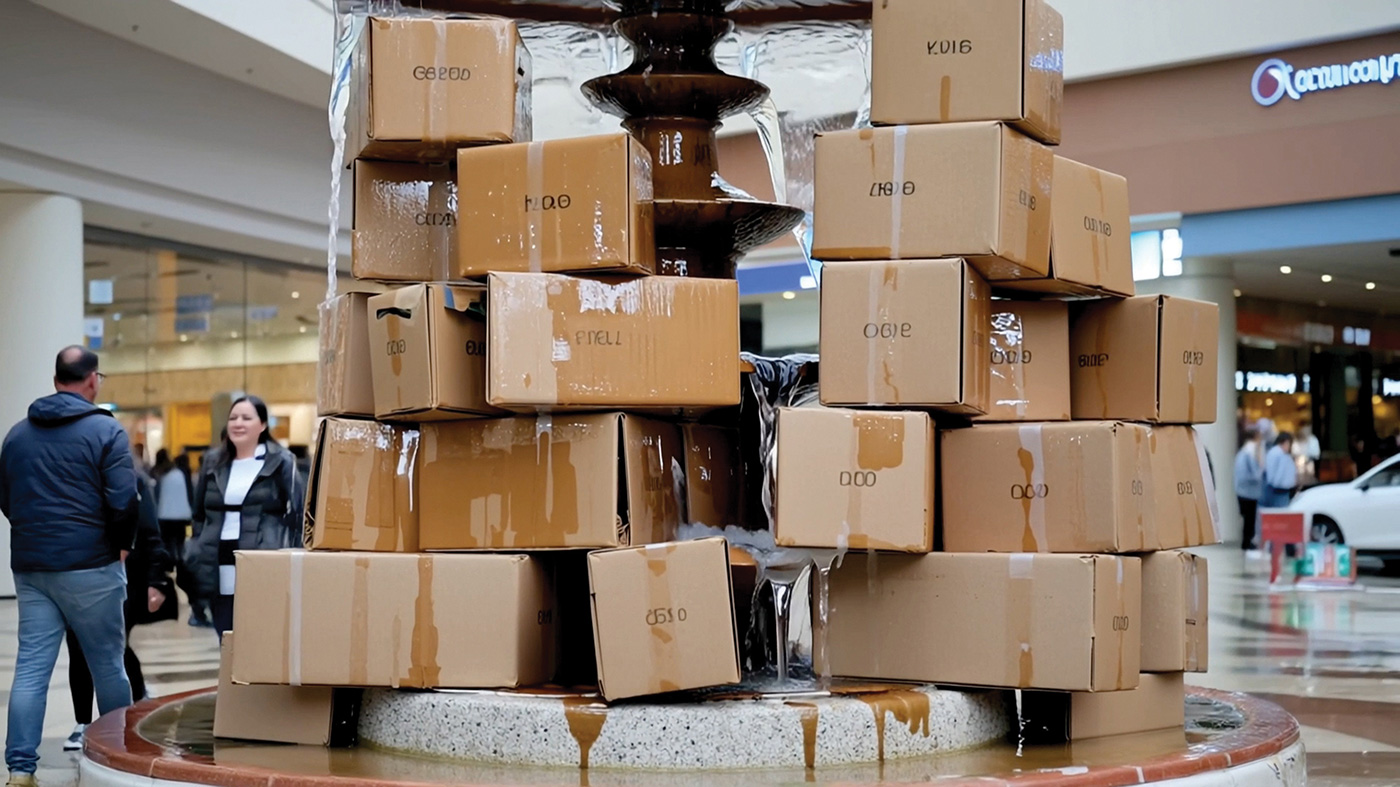
Clowns at a flooded piano, eerie stockbrokers, cardboard fountains in urban spaces. Without a clear narrative structure, the boundaries between self, body and consciousness become blurred. Familiar signs appear alienated, spaces dissolve, meanings remain elusive. Despite its abstraction, the film seems strangely connected to our present. It is as if it were uncovering a deeper unease beneath the surface of everyday images, one that is difficult to name but remains palpable.
Moritz Frei is a visual artist who works with installation, video, text and sound. His practice moves between analysis and absurdity, using humour as a strategy to question social and media structures. Experimentation and possible failure are integral parts of his artistic process, allowing him to playfully explore control mechanisms and perception. Frei studied at the Academy of Visual Arts in Leipzig. For many years, he worked part-time in video stores, the Filmgalerie 451 Berlin and Alpha 60 Leipzig, both renowned centres for experimental and international cinema. This experience sharpened his eye for the materiality and power of moving images. The initial moment for his artistic and cinematic work was Moritz Frei's first cup of coffee with Bruno Ganz for his film ‘Meine erste Tasse Kaffee’ (My first Cup of Coffee).
Mauricio Freyre
Movimiento continuo
Experimental doc. | hdv | color | 14:36 | Peru, Spain | 2018
The history of an experimental housing project in Lima, conceived as an international competition, is the starting point of an exploration on the nature of transformation and hybridization in the context of the project of modernity in Perú. The unfinished housing complex designed in the late sixties gathered the architectural avant-garde of that time, incorporating notions of self-construction, metabolism and progressive growth to its architecture. Juxtaposing the briefing of the project, together with archival material of three sources, the film explores different sequences of formal procedures. Transfers, cuts and superpositions, in a sequence of permanent transformation, operate as transcriptions that explore various relations and configurations of the material, to displace a fixed point of view.
Mauricio Freyre (1976, Lima) is an artist and filmmaker, his projects revolve around structures and systems of ideas between the constructed and the projected, focusing on blind spots, dark areas, accidents and distortions, in the search of invisible narratives, metaphors, dimensions and forms of consciousness that were excluded and silenced. He is currently working on a project that studies the role of botanics, its agency within the colonial sciences, along with its role within the modern project in Peru; exploring the political and subversive dimension of the plant world in relation to a western epistemology. His films and installations have been part of different programs and exhibitions including FIC Valdivia, Haus der Kulturen der Welt, TENT Rotterdam, Unforseen Festival, Nederlands Film Festival, Film Museum Amsterdam, Fundación Telefonica.

Mauricio Freyre
Interspecies Architecture
Experimental fiction | mov | | 11:0 | Peru, Spain | 2020
How to reestablish the future of our relationship with other species? A journey in the forest near Taipei with an uncertain destination. A nomadic speculation on relationships and processes that occur among species and dimensions beyond the human.
Mauricio Freyre (Lima, 1976) researcher, audiovisual artist and filmmaker with a background on architecture. His projects revolve around structures and systems of ideas in the margins of the constructed and the projected, focusing the attention on blind spots, dark areas, accidents, distortions and forms of consciousness that are excluded. Currently he is working on the audiovisual project ‘Estados Generales’, focused on the role of botanics and its agency within the colonial sciences, exploring the political and subversive dimension of the plant world in relation to a western epistemology. He has obtained the National Prize for Experimental Films awarded by the Ministry of Culture in Peru and the Matadero Production Grant in Madrid. His films and installations have been part of different programs and exhibitions including Festival Internacional de Cine Valdivia, Strangloscope, Les Rencontres Internationales Paris/Berlin, l’Alternativa, Haus der Kulturen der Welt, TENT Rotterdam, Nederlands Film Festival and Fundación Telefonica Lima.
Mauricio Freyre
SET OUT 1
Fiction | 16mm | color | 2:14 | Peru, Spain | 2015
When does the fiction of a film start? Where do characters go when the movie is over? A story made of fragments and discarded footage from a film shooting. The camera examines the landscape of the mise-en-scène, looking for meaning in the elements that make up the picture.
Mauricio Freyre is an artist and filmmaker, graduated from Architecture and Fine Arts, based in Madrid. He uses the film medium to explore structures and systems of thought behind the constructed and projected. His projects and films have been exhibited at Haus der Kulturen der Welt (Berlin), Fundación Telefonica (Lima), TENT Museum (Rotterdam), W139 (Amsterdam), Nederlands Film Festival (Utrecht), FIC (Valdivia), Sunset Cinema (Luxemburg), Filmmuseum (Amsterdam), etc. He is currently a visiting teacher at The Berlage (Delft), KABK Royal Academie of Art (The Hague) and ETSAM Universidad Politècnica (Madrid).
Yariv Friedman
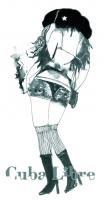
Cuba Libre
Documentary | dv | color and b&w | 24:37 | Israel, Switzerland | 2005
This clandestine short film,carries us through tensions that reign between memory, the local icon Ernest "Che" Guevara, and the everyday reality in Santa Clara (Cuba), made of dictatorship, poverty and prostitution. This short film brings together monologues of citizens of Santa Clara. Through their testimonies the film opposes their speeches, sometimes quasi-official, and the unsaid that is expressed by their body language. Then, the film interweaves fixed images of ?Che? in a way that cuts the rhythm of the running images; weaving through past memories, the present and the ideal.
Yariv Friedman was born in 1971 in Israel. Since 1999 he lives in Switzerland. He has degrees in Law and Economics. He studied Actors Directing in Paris. He is currently working as a lawyer in a compensation program for holocaust's victims. In September 2004, he presented Dona Juanita (fiction, 15?), which during its short existence was warmly welcomed in several festivals. In May 2005, he finalized "Cuba Libre" (Documentary, 25?). He is currently working on "The River" (documentary, March 2006) and "Ecclesiast" (feature, November 2006).
Fred Froehlich
Volume I
Experimental video | 0 | color | 8:0 | Germany | 2005
The basis of the informative animation "VOLUME I" is the archived image of a stock of 100,000 commercials. The raw starting material was sorted and picked according to formal criteria, such as colour, contrast, and composition, and then reassembled in an animation of individual images. The changing of the images happens so quickly that the eye cannot follow. The frequency of the changing images brings to mind the view from the interior of a very fast moving train, where the outside scenery of people, trees, and objects passes in a fraction of a second to disappear just as quickly. The images are actually the initial material of the publicity industry, which used them for announcements and brochures. They show the world in an idealized angle. Before everything else, the content of the images carried positive weight and were distinguishable in their semantic interchangeability. The images reminiscent of all present-day themes were assembled so as to correspond to the encyclopaedic character of this work. Beyond the choice of material to include in the reserve was a selection concerning the function of the purity of symbolic contents. "VOLUME I" creates an association with dream images. A crazy race across the images that were supposedly the last ones made establishes a comparison between what the viewer has see elsewhere - consciously or subconsciously - and the flood of images. The rapid eye movement is imitated and the images move by themselves. The negatives search for their context in the world of the spectator's representations, and thus free themselves from their original finality.
Fred Fröhlich was born in 1968 in Suhl (Thuringe), Germany. He studied photography and was a Master Scholar and Assistant at the Hochschule für Grafik und Buchkunst in Leipzig. He has studied in the United States, Spain, Thailand, Cambodia, Russia, and Japan. He has participated in collective exhibitions both at home and abroad, and has realized solo exhibitions and projects linked to medias in the public space. Fred Fröhlich currently resides in Berlin.
Graciela Fuentes
Saida
Art vidéo | dv | color | 5:43 | Mexico, USA | 2005
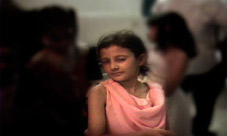
Saida is a seven year old girl dancing seductively for the video camera placed in front of her. She did not receive any instructions when the camera was placed. The viewer is confronted with Saida?s very intense gaze, but in reality Saida is looking at an image of herself in the inverted camera screen. She is captivated by her image and only interrupts her engagement with herself to look momentarily at the adults around her or to fight with the other girls competing to appear on the camera screen. The piece focus on her and on the relationship that the gaze with the viewer prompts. The rest of the image is out of focus to reproduce her own isolation from the context during the time she dances for the camera.
Graciela Fuentes is a visual artist working in video, installation and photography. She was born in 1975 in Monterrey, Mexico. She lives in New York City where she is currently participating in the Whitney Museum Independent Study Program. She holds an MFA degree from New York University and a BA in Studio Art from UIW. Her work has been presented in solo exhibitions in New York City, Mexico, Portugal and Puerto Rico. She has also participated in major group exhibitions in Mexico, New York, Bolivia, Paris, California and Taiwan. Her work has been reviewed in Art on Paper, The Village Voice, the New Yorker and Arte al Dia among other publications. She has received three grants from the National Council for Culture and the Arts in Mexico and is a 2005 Visual Arts Grant recipient from the Spanish Foundation Marcelino Botin.

Soren Thilo Funder
The Watchers of Malheur (TWEET TWEET)
Experimental fiction | 4k | color | 22:5 | Denmark, USA | 2019
A series of intense political events at a wildlife reserve in Oregon USA are the focus of The Watchers of Malheur (TWEET TWEET). The work combines reportage with speculative fiction, political events with extended periods of waiting, wild nature with a digital sensory apparatus, and filmic construction with virtual transience. Photo-realistic camouflage, a motion capture studio with a horse and a Berlingo car, vast expanses of the American landscape, fetishized optic tech, and a pitiable animated Twitter bird are just a few of the many layers that comprise the transrealistic story of armed combat between ornithologists and militia members on the borders of the Malheur National Wildlife Refuge.
Soren Thilo Funder is a visual artist working primarily with video and installation. His works are mash-ups of popular fictions, cultural tropes and socio-political situations, projections and histories. They are narrative constructions insisting on new meaning forming in the thin membrane negotiating fictions from realities. Invested in written and unwritten histories, the paradoxes of societal engagement and a need for new nonlinear narratives, Thilo Funder proposes spaces for awry temporal, political and recollective encounters. Soren Thilo Funder has an MA from the Royal Danish Academy of Fine Arts and The School of Art and Architecture at the University of Illinois at Chicago. He is currently a Research Fellow at The Art Academy - Department of Contemporary Art, University of Bergen. He has been artist-in-residence at ISCP in New York, Künstlerhaus Bethanien in Berlin, SOMA in Mexico City, Townhouse Gallery in Cairo, Frankfurter Kunstverein in Frankfurt and Platform Garanti in Istanbul. Previous exhibitions include solo presentations at Turku Museum of Art, Museum of Contemporary Art Zagreb, Tranen Contemporary Art Center, Overgaden – Institute for Contemporary Art and Den Frie - Centre for Contemporary Art, Copenhagen, as well as the duo show “Little Lies” with David Claerbout at Yarat Contemporary Art Centre. He was furthermore represented at the 19th Biennale of Sydney, eva International Biennial of Visual Art - “After The Future”, 12th Istanbul Biennial, Manifesta 8 – Parallel Events and 6th International Liverpool Biennial.
Soren Thilo Funder
Disastrous Dialogue
Video | hdv | color | 10:0 | Denmark | 2011
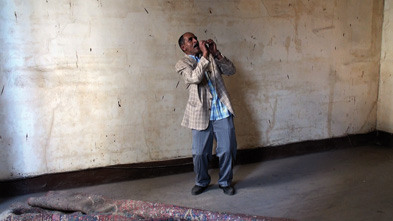
Disastrous Dialogue focuses on the modern subject?s fixation on catastrophe images, here particularly the Hollywood-produced Catastrophe Cinema. Appropriating movie script dialogue from three major catastrophe movies, all written and directed by the German Director Roland Emmerich, Disastrous Dialogue sets out to challenge the mainstream viewpoint of disaster strategies. The script is translated into Arabic and performed by Egyptian actors, transforming the script through the voice of Hollywood cinema?s unrepresented. The film was shot immediately before the Egyptian Revolution and is dedicated to the actress Sally Zahran who perished during the brutal attacks on Egyptian demonstrators.
Soren Thilo Funder is a visual artist based in Copenhagen, Denmark. His works are audio-visual productions dealing with diverse cultural fields and integrating aspects of critical theory, literature, theater, cinema, Sci-Fi, Horror, political activism and other counter-cultural disciplines. The works are formal investigations of the power relations of modern day society. Through the use of cinematic narratives, choreography and mise en scène, the works strive to expose the precariousness of contemporary society and the broken link between politics and the political. The works use the fictional and extra-real to pose new questions and generate a new potential space, a third place, for political contemplations and counter-memory. Soren Thilo Funder has a MA from the Royal Danish Academy of Fine Arts. He has exhibited his works in international galleries, film festivals, museum exhibitions and public space exhibitions, in countries like Japan, USA, Iceland, Iran, Turkey, Russia, Vietnam, Bulgaria, Spain, Germany and Egypt. He has been an artist-in-residency at SOMA in Mexico City, Townhouse Gallery in Cairo, Frankfurter Kunstverein in Frankfurt am Main and Platform Garanti Contemporary Art Center in Istanbul. He was furthermore represented at the 12th Istanbul Biennial, VII Shiryaevo Biennale of Contemporary Art, 2nd International Moscow Biennial for Young Art, the 6th International Liverpool Biennial and Manifesta 8. In 2011 Soren Thilo Funder is currently artist-in-residence at Art Space SOMA in Mexico City.
Soren Thilo Funder
Friedlos (aka The Bandit Wolf-Man)
Experimental fiction | | color | 8:12 | Denmark | 2009
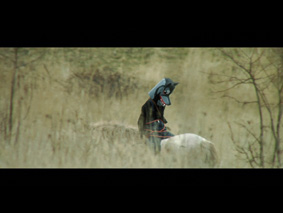
Friedlos (aka The Bandit Wolf-Man) HD DVCPRO Duration: 08:12 Synopsis: On the outskirts of the city, the townsfolk are gathered to expel the citizen and bandit Friedlos (aka The Bandit Wolf-Man). In a heathen display they perform the traditional heathen ritual of banishment. Finally Friedlos is tight to a horse, masked with a wolf?s head and send out of town. The banishment questions contemporary societies exclusion/inclusion relationship. The heathen aspect and the epic western soundtrack underlines this society?s regression towards rhetoric?s and ethics in comparison with those of the Wild West, witch hunts and tribal community fear. Friedlos (aka The Bandit Wolf-Man) is set in a world of no specific time generating a timescape that foresees the future as it dwells in the past.
Soren Thilo Funder is a visual artist, working mainly with audio-visual productions, based in Copenhagen, Denmark. He graduated at the Royal Danish Academy of Fine Arts in 2008. He has also studied at the The University of Illinois at Chicago ? Art and Architecture and The European Film College. He has exhibited in numerous International constellations in countries as Iran, Serbia, United States of America, Japan, Germany, Denmark, Iceland and Spain. His works has been presented in commercial galleries, at film festivals, museum exhibitions and in public space. He has been an artist-in-residency at Frankfurter Kunstverein in Frankfurt Am Main and Platform Garanti Contemporary Art Center in Istanbul.
Soren Thilo Funder
First Citizen (House of the Deaf Man)
Experimental fiction | hdv | color | 12:30 | Denmark | 2013
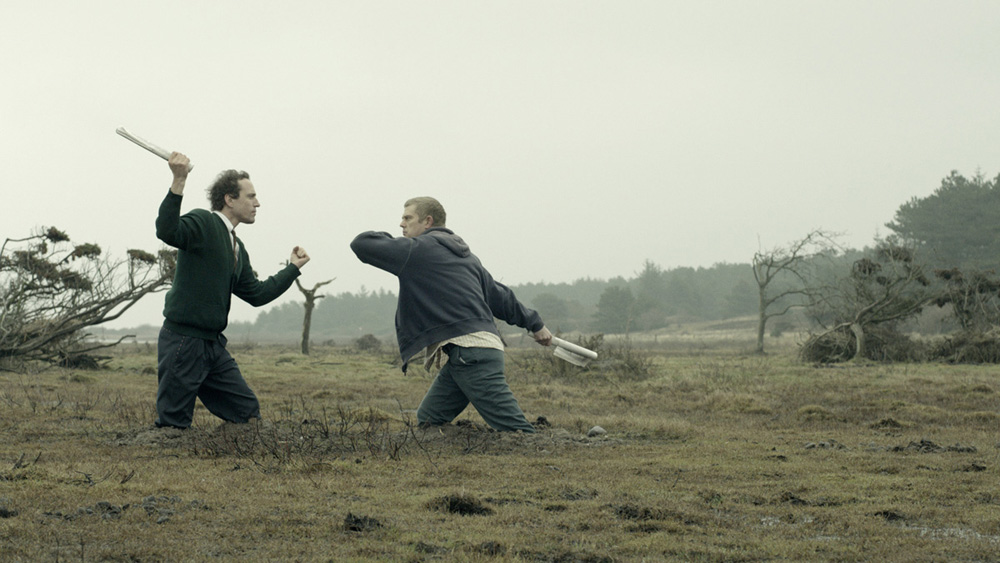
First Citizen (House of the Deaf Man) opens in a small room, where a therapist is in consultation with a young man. Through the use of hypnosis, the young man is experiencing a ma¬nipulation of his unconscious motivation. A feeling of debt is implanted in him through psycho-suggestion. First Citizen (House of the Deaf Man) proposes the idea that the indebt¬edness of the citizen is not only a causality of a flawed eco¬nomic system, but also the last relation that connects the citizen to a community. The only sure way to be part of any power relation is to enter the creditor/debtor relationship. Debt might hence be something that the citizen uncontiously desires - as the only means of experiencing community. First Citizen (House of the Deaf Man) paints an awry portrait of the indebted man with a little help from Goya’s painting ‘Duel with Cudgels’.
Soren Thilo Funder’s works are formal investigations of the power relations of modern day society. Through the use of conceptual visual strategies, cinematic narratives and mise en scène, the works aim to expose the precariousness of contemporary society using fiction to generate new potential spaces for political contemplations and counter-memory. Soren Thilo Funder has an MA from the Royal Danish Academy of Fine Arts and The School of Art and Architecture at the University of Illinois at Chicago. He has been an artist-in-residence at Künstlerhaus Bethanien in Berlin, SOMA in Mexico City, Townhouse Gallery in Cairo, Frankfurter Kunstverein in Frankfurt and Platform Garanti in Istanbul. He was represented at the 19th Biennale of Sydney, 1st Copenhagen Art Festival, eva International Biennial of Visual Art - “After The Future”, 12th Istanbul Biennial, 2nd International Moscow Biennial for Young Art, Manifesta 8 – Parallel Events and 6th International Liverpool Biennial.
Soren Thilo Funder
Red Tape (Don't go into Tarlabasi)
Art vidéo | | color | 7:9 | Denmark, Turkey | 2010
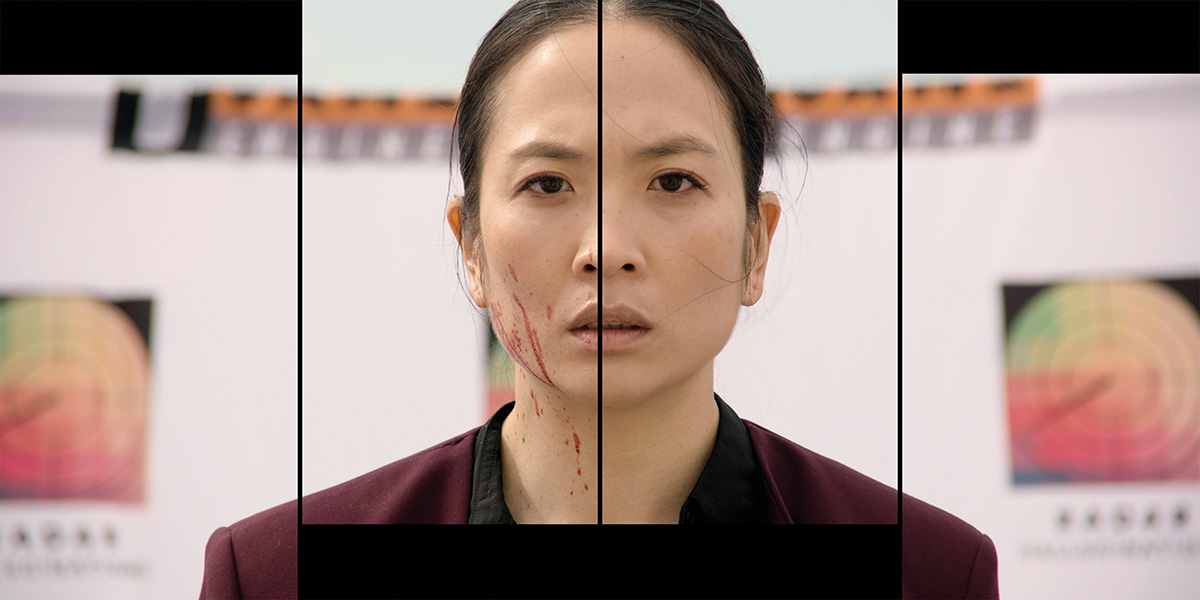
Red Tape (Don`t go down into Tarlabasi) Video - HD AppleProRes Duration: 7:09 min. 2010 Coming to Istanbul I was told immediately that I should not go down into Tarlabasi. The ghettoized area Tarlabasi is, apart from not being all that dangerous, also the next poor area to be gentrified. Red Tape takes it outset in the Japanese horror film Kairo and in the mix between documentary and horror fiction it aims to distort the image of ghettoization.
Soren Thilo Funder is a visual artist based in Copenhagen, Denmark. His works are audio-visual productions dealing with diverse cultural fields and integrating aspects of critical theory, literature, theater, cinema, Sci-Fi, Horror, political activism and other counter-cultural disciplines. The works are formal investigations of the power relations of modern day society. Through the use of cinematic narratives, choreography and mise en scène, the works strive to expose the precariousness of contemporary society and the broken link between politics and the political. The works use the fictional and extra-real to pose new questions and generate a new potential space , a third place, for political contemplations and counter-memory. Soren Thilo Funder has exhibited his works in international galleries, film festivals, museum exhibitions and public space exhibitions. He has been an artist-in-residency at Frankfurter Kunstverein in Frankfurt Am Main, Platform Garanti Contemporary Art Center in Istanbul and Townhouse Gallery in Cairo. He was furthermore represented at the 2nd International Moscow Biennial for Young Art, the 6th International Liverpool Biennial and Manifesta 8.
Soren Thilo Funder
GAME Engine (Orange Bulletproof Kids)
Video | hdv | color | 30:0 | Denmark | 2021
In GAME Engine (Orange Bulletproof Kids) we are invited to an exclusive press meeting at an undisclosed location. Here, the spokesperson of a notorious game developer, presents a brand new game engine. A game engine that promises revolutionary in-game experiences, the layout of which are never fully disclosed in protection of its intellectual property value. This oral evasive manoeuvre leads the spokesperson into complex landscapes in which game and reality, body and avatar, the sensorial and the informational, blend together. Parallel to this fiction scenario, a group of CS:GO athletes are recreating their game experiences, using their bodies as vehicles for motoric and visual memory.
Soren Thilo Funder is a visual artist working primarily with video and installation. His works are mash-ups of popular fictions, cultural tropes and socio-political situations, projections and histories. They are narrative constructions insisting on new meaning forming in the thin membrane negotiating fictions from realities. Invested in written and unwritten histories, the paradoxes of societal engagement, temporal displacements and a need for new nonlinear narratives, Thilo Funder proposes spaces for awry temporal, political and recollective encounters. Soren Thilo Funder’s previous exhibitions include solo presentations at Turku Museum of Art, Museum of Contemporary Art Zagreb, Tranen Contemporary Art Center, Overgaden – Institute for Contemporary Art and Den Frie - Centre for Contemporary Art, Copenhagen. He was furthermore represented at the 19th Biennale of Sydney, eva International Biennial of Visual Art - “After The Future”, 12th Istanbul Biennial, Manifesta 8 – Parallel Events and 6th International Liverpool Biennial. He is currently doing a PhD in Artistic Research at The Art Academy - Department of Contemporary Art, University of Bergen.

Soren Thilo Funder
Archipelago (No one is an island)
Experimental fiction | hdv | color | 37:5 | Denmark | 2023
Archipelago (No one is an island) splashes heedlessly into a fictional exploration of the high frequency trading firm Archipelago and its existence in the strange socio-political, socio-economical and psychological reality of the proliferating internet and lives lived in wireless connectivity. In this business realm, human activity, unfolding in virtual spaces and directed by algorithms, is mainly left to perform the rituals that gives the bodiless stream a body; performing the myths of human ingenuity and dominance; repeating the hierarchical patterns that represent human social activity. The dramatic structure of the two channel video work shapes an archipelago in itself. Every character inhabiting the depicted environment forms an island within herself, literally plugged into a closed circuit; AirPods in ear; screen glued to face. Islands that seem to react upon one another even across time particulars and image frames.
Soren Thilo Funder is a visual artist working primarily with video and installation. His works are mash-ups of popular fictions, cultural tropes and socio-political situations, projections and histories. They are narrative constructions insisting on new meaning forming in the thin membrane negotiating fictions from realities. Invested in written and unwritten histories, the paradoxes of societal engagement, temporal displacements and a need for new nonlinear narratives, Thilo Funder proposes spaces for awry temporal, political and recollective encounters. Soren Thilo Funder has an MA from the Royal Danish Academy of Fine Arts and The School of Art and Architecture at the University of Illinois at Chicago. He is Associate Professor at The Royal Danish Academy of the Arts. He has been artist-in-residence at ISCP in New York, Künstlerhaus Bethanien in Berlin, SOMA in Mexico City, Townhouse Gallery in Cairo, Frankfurter Kunstverein in Frankfurt and Platform Garanti in Istanbul. Previous exhibitions include solo presentations at Turku Museum of Art, Museum of Contemporary Art Zagreb, Tranen Contemporary Art Center, Overgaden – Institute for Contemporary Art and Den Frie - Centre for Contemporary Art, Copenhagen. He was furthermore represented at the 9th Bucharest Biennale, the 19th Biennale of Sydney, the 1st eva International Biennial of Visual Art, the 12th Istanbul Biennial, Manifesta 8 and the 6th International Liverpool Biennial. He recently finished his PhD in Artistic Research at The Art Academy - Department of Contemporary Art, University of Bergen, titled “Oceanic Horror - or How to Survive the Night in the Haunted Mansion of Absolute Capitalism”.
Soren Thilo Funder
Mirror Touch (Archipelago DLC_01)
Fiction | 4k | color | 19:21 | Denmark | 2024
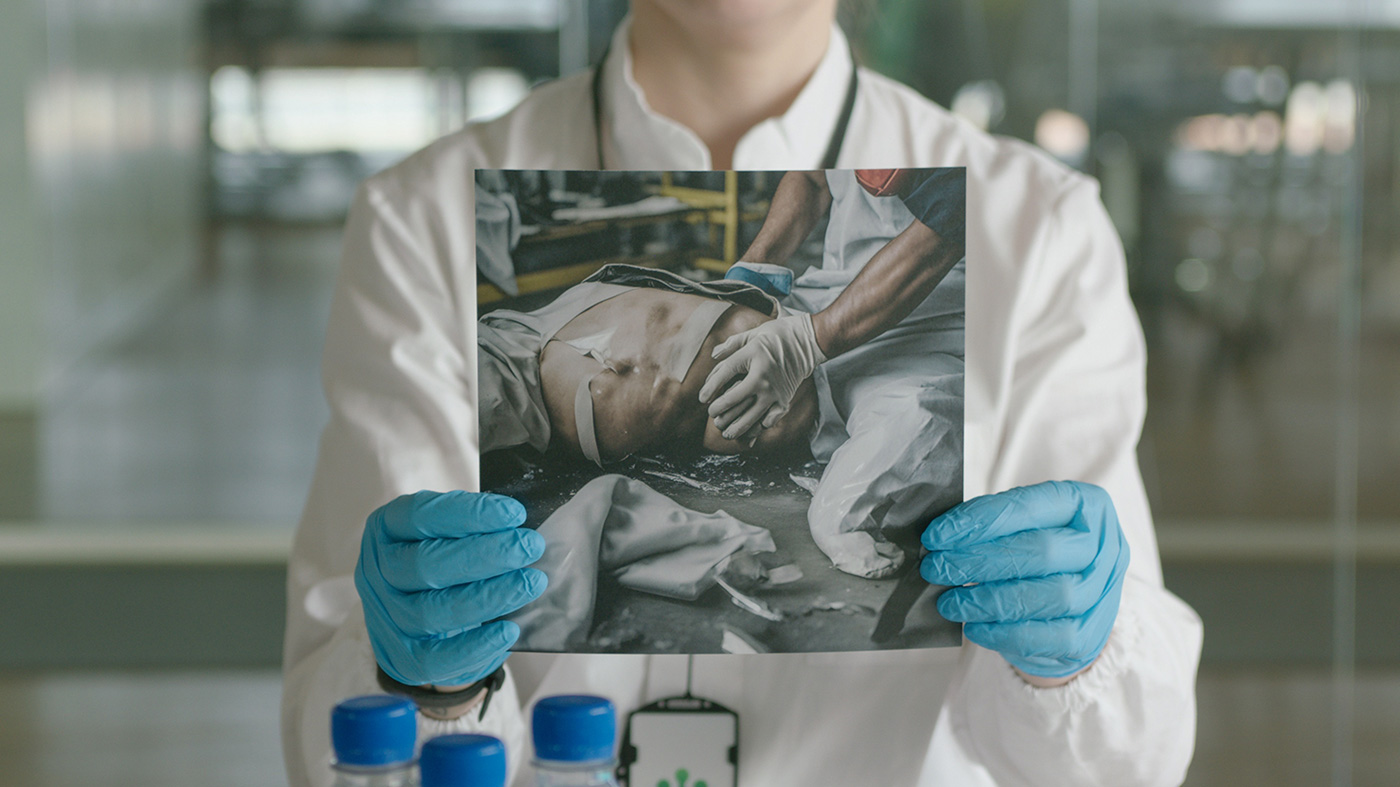
Mirror-touch synesthesia" is a neurological phenomenon where a person feels the same touch as they see another person experiencing. Stimuli on one sense thus trigger a feeling in another. In the video work ’Mirror Touch (Archipelago DLC_01)’, employees at the high-frequency trading company Archipelago™ are subjected to a series of experimental tests in the development of synthetic empathy. The process aims to reunite the body's space with the cognitive; the corporeal with the immaterial; the real with the imaginary. Accompanied by the film's actors, the viewer is led by a commanding voice on a suggestive journey from the trading terminals to the physical reality of the factory. Here, we are reminded of the factory floor's still indisputable and violent physical reality and the worker's body as a physical witness to the violent imprint of progress.
Søren Thilo Funder is a visual artist working primarily with video and installation. His works are mash-ups of popular fictions, cultural tropes and socio-political situations, projections and histories. They are narrative constructions that insist on new meaning being formed in the thin membrane separating fictions from realities. Invested in written and unwritten histories, the paradoxes of societal engagement, temporal displacements and a need for new nonlinear narratives, Thilo Funder proposes spaces for awry temporal, political and recollective encounters.
Horacio G, Longina
OIDAR
Experimental video | dv | color | 2:0 | Spain | 2005
______
_____

Paul Gabel
I will always wait (It will never be)
Video | dv | color | 8:56 | USA | 2005
A film that captures Wall Street at a point between deconstruction (the shrouded Deutsche Bank) reconstruction (7 World Trade Center) and destruction (the absent Trade Towers), the phrases "I will always wait" and "It will never be" make possible a lamentation for the tragic September 11th event, at a time when its physical indications are in the midst of upheaval by urban renewal and the flow of progress.
Paul Gabel was born in 1976. He received a BFA from Binghamton University (1994-1998) for his work in drawing and printmaking. During his training, Gabel was a courtroom illustrator for a local television station in Binghamton covering the murder cases Pennsylvania v. Dr. Stephen Barry Scher (1997) and New York v. Guiseppe Cataldo (1998). Afterwards, Gabel went on to work for The Metropolitan Museum of Art, The Drawing Center and the Whitney Museum of American Art. In 2001, he was hired on to help develop The New York Public Library Art Collection and, since 2005, The New York Public Library Picture Collection. Paul Gabel was born in Kingston, Pennsylvania, in 1976 and brought up in Binghamton, New York. Today he lives and works in New York City. Paul Gabel?s video projects (which have explored themes concerning cognition, remembrance, faith, authority, presence and absence) have gained visibility through publication, group exhibitions and international video art festivals. The Journal of Motion and Sound highlighted The Impossibility of Remaining (2003) in their first DVD compilation of 40 international artists. Distribution rights for The Impossibility of Remaining, 2004?s The Seen and Unseen and 2005?s I will always wait, It will never be (Gabel?s latest video piece on the possibility of mourning against the current state of Ground Zero) are held by The Film-maker?s Cooperative, the largest archive of independent and avant-garde films in the world. While Gabel continues to seek new venues for these films, he is also at work on his upcoming project titled, For Safekeeping (scissions, sutures and naming), a video study that follows the processes behind an image archive. I will always wait (It will never be) was recently shown at The Hull 4th International Short Film Festival in the United Kingdom and the Luksuz Film Festival in Slovenia.