Catalogue > Liste par artiste
Parcourez la liste complète des artistes présentés dans le cadre des Rencontres Internationales depuis 2004. Utilisez le filtre alphabétique pour affiner vos recherches.
Jeremie Reichenbach
Catalogue : 2014QUAND PASSE LE TRAIN | Documentaire | dv | couleur | 30:0 | France | 0
Jeremie Reichenbach
QUAND PASSE LE TRAIN
Documentaire | dv | couleur | 30:0 | France | 0
Mark Reid
Catalogue : 2011Park sky split | Vidéo | dv | couleur et n&b | 5:14 | Australie | 2010

Mark Reid
Park sky split
Vidéo | dv | couleur et n&b | 5:14 | Australie | 2010
Park Sky Split is a study of temporal abstraction and rhythmic structures in video. The film presents an ambiguous black and white image, fragmented into small sections and repeated in seemingly random sequences. Brief moments of repeated rhythms and patterns are quickly broken as the film traverses back and forth across the timescale of the original footage. The film is comprised of a single piece of footage, copied and superimposed upon itself at half speed. Using digital compositing, the differences between the two videos are manifested in the frame as light, while the areas that remain the same across both images are represented by darkness. As the film progresses and this difference becomes greater, the dark areas of the frame appear to tear, filling with light. The rhythmic repetition creates a tension with the audience`s expectations of temporality in film as linear, while investigating the possibilities of visual interpretations of time.
Mark Reid is a new media artist who lives and works in Melbourne, Australia. He completed a Bachelor of Fine Arts (Honours) majoring in Media Arts at RMIT University in 2010. In 2011, Mark is moving to the United Kingdom to further explore his current body of work, which focuses on studies of place in artists` video.
Andrew Reid
Catalogue : 2007Seeking foreign policy advice from... | Création sonore | 0 | | 4:15 | Royaume-Uni | 2006
Andrew Reid
Seeking foreign policy advice from...
Création sonore | 0 | | 4:15 | Royaume-Uni | 2006
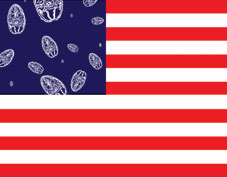
"Seeking foreign policy advice" fait partie d'un projet de création sonore en cours, explorant les enjeux du 'Culture Jamming' et du 'fair use' ou droit d'appropriation, ainsi que les problèmes de droits d'auteurs dans le domaine de la création artistique. A cette fin, l'artiste a utilisé des extraits de grands discours de politique étrangère prononcés par les cinq derniers présidents des Etats-Unis, en les replacant dans leur contexte et en les associant avec une bande-son d'applaudissements en continu (extraits d'une conférence sur le droit religieux, toujours aux Etats-Unis). L'artiste ne considère pas son travail comme nécessairement politique ou autobiographique, il s'agit bien plutôt de permettre à l'auditeur de tirer ses propres conclusions.
Andrew Reid est né en 1972 en Irlande. Il a étudié au Ducan of Jordanstone College de 2000 à 2005, où il a obtenu un Bachelor Honours et un Master of Fine Arts. Il prépare actuellement un doctorat (PhD) à l'université de Dundee.
Patricia Reinhart
Catalogue : 2014Ein Nachtstück | Installation vidéo | | noir et blanc | 5:10 | Autriche | 2012
Patricia Reinhart
Ein Nachtstück
Installation vidéo | | noir et blanc | 5:10 | Autriche | 2012
An end. Impasse. The ciné collages, 3 screenings parallel, only in black and white, without tone. The dialogue takes place between the individual scenes. By using different imaging sequences and lengths a new conflict, a new language, a new image is created. Ein Nachtstück is created in great detail from still photographs. Reinhart uses a technique to make her film loops which she has named ciné-collage. Multiple still photographs of characters and location details are collaged together in painterly layers and given just enough movement to provide a depth of colour and space. Architectural elements and public spaces of Paris are montaged together to present a destroyed, post-apocalyptic world. By using the bilateral symmetry of a building and its surroundings, or seen in the tradition of the Rorschach test, perspectives change. The world reflects itself, and seems to break and collapse. Patricia Reinhart created a world full of darkness, fear and the feeling of oppression. The disaster of the present has become an irrevocable reality. Lautréamont`s " Les Chants de Maldoror " and Max Ernst`s collages "Une semaine de Bonté" influenced Reinhart during the process of developing this work.
Patricia Reinhart studied painting at the Academy of Fine Arts in Vienna/AT and currently lives in Paris/FR. She has exhibited widely throughout Europe, including solo exhibitions at Gallery Lisa Ruyter/AT, Gallery Dana Charkasi/AT, marks blond project/CH, as well as public screenings at the beach in Venezuela and Spain. Her work has been shown in group exhibitions at Kunst im Tunnel/DE, Eglise Saint-Merry Paris/FR, Kerstin Engholm Gallery/AT, Essl Museum/AT and she also showed video work at Paris Nuit Blanche 2013. Works of her`s are included in many collections such as CCA Andratx/ES, Essl Museum/AT and Ursula Blickle Archiv - Kunsthalle Wien/AT.
Steve Reinke
Catalogue : 2017Welcome to David Wojnarowicz Week | Vidéo | hdv | couleur | 14:1 | Canada, USA | 2016
Steve Reinke
Welcome to David Wojnarowicz Week
Vidéo | hdv | couleur | 14:1 | Canada, USA | 2016
Reinke proposes a new holiday with the motto MORE RAGE LESS DISGUST: David Wojnarowicz Week and takes us through his seven days of celebration of the life of artist, writer and AIDS activist, David Wojnarowicz. Plankton, Kafka, Bette Davis, Wednesday afternoon visits with friends, more plankton, burning villages, Hollis Frampton, Sammy Davis Jr. as a libidinal machine producing sadness, opera, disembowelment, poetry.
Steve Reinke is an artist and writer best known for his monologue-based video essays, which are widely screened and collected. Originally from Canada, he know lives in Chicago and teaches in the department of Art, Theory, Practice at Northwestern.
Catalogue : 2015Rib Gets In the Way | Documentaire | hdv | couleur | 52:15 | Canada | 2014
Steve Reinke
Rib Gets In the Way
Documentaire | hdv | couleur | 52:15 | Canada | 2014
Rib Gets in the Way is narrated in the first person by Reinke and addresses mortality, the body, the archive, and the embodiment of a life’s work. The final and longest section of the video presents an animated children’s adaptation of Friedrich Nietzsche’s philosophical novel Thus Spoke Zarathustra (1883–85). The hand-drawn animations in this and earlier sections of the video are by Jessie Mott, a visual artist and writer whose work consistently engages a menagerie of human, animal, and celestial forms and with whom Reinke has collaborated on several previous videos.
Steve Reinke has long been lauded for his irreverent, philosophical, and often acerbic works, which typically adopt the form of personal essays to wryly bend and reread wide-ranging topics from pop culture to sex to theories of visual perception and beyond.
Wolfgang Reinke
Catalogue : 2007Nicht böse sein! | Documentaire | dv | couleur | 95:4 | Allemagne | 2006
Wolfgang Reinke
Nicht böse sein!
Documentaire | dv | couleur | 95:4 | Allemagne | 2006
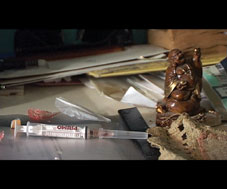
Johann Wolfgang est écrivain, et alcoolique. Cela fait des années que Dieter et Andi, tous deux dépendants à l'héroïne, ont trouvé refuge chez lui. 24 heures par jour suffisent tout juste à Andi pour satisfaire ses besoins en héroïne. Andi vit dans la salle de bains de Wolfgang. Dieter reporte sans cesse l'accomplissement de sa peine de prison de 100 jours par crainte de la crise de manque. Dieter habite dans la cuisine de Wolfgang. En dépit de l'impasse que représente leur dépendance et des conflits qui éclatent en permanence, ils réussissent tout de même à revenir les uns vers les autres et à réfléchir à une vie meilleure.
Né en 1974 à Güstrow, RDA 1984 - Première rencontre avec l'équipe d'un film documentaire de la télévision est-allemande, qui échoua à m'interviewer au terme d'une tentative de deux heures . 1986 - Tentative d'engagement par la "police du peuple" (VP) après un premier contact avec des "citoyens à problèmes" que j'avais justement envoyés en taule en voulant récupérer mon vélo volé. Premiers doutes prudents à propos du socialisme, après avoir vu l'intérieur de la voiture de patrouille, dans laquelle j'ai mené la police jusqu'à la bande de voleurs. 50 Marks de l'est de récompense. 1987 - Premier et dernier travail de sciences naturelles sur le thème ?Y a-t-il une vie sur Titan, satellite de Saturne?? (On n'a pas encore découvert de vie sur Titan.) 1988 - l'équipe de ?Bereitschaft Dr. Federau? (série médicale de la tv est-allemande) tourne dans notre jardin. Mon impression : une équipe de tournage se compose de porteurs de câbles . 1989 - Présentation de mon premier spectacle multimedia sur le thème "Menace nucléaire à cause de la course aux armements" . Après mon bac en 1992 étudiant sans perspective de diplôme, photographe pour des photos d'identité, vendeur de glaces, aide-maçon, conseiller ANPE, conseiller relations publiques, barman, assistant technique de reportages , photo-reporter indépendant, auteur pour "Eulenspiegel", assistant - éclairagiste, - script, et - décorateur.
Remi
Catalogue : 2006Auto_facing | Performance | 0 | | 25:0 | Autriche | 2005
Remi
Auto_facing
Performance | 0 | | 25:0 | Autriche | 2005
_________
______________
Clémence Renaud
Catalogue : 2019Gloires et Déclins | Vidéo expérimentale | hdv | couleur | 15:30 | France, Japon | 2018
Clémence Renaud
Gloires et Déclins
Vidéo expérimentale | hdv | couleur | 15:30 | France, Japon | 2018
Au milieu des décors de la ville de Tokyo, des messages circulent par l`intermédiaire d`un signal rendu perceptible grâce à des objets génériques aux allures de sculptures. Un routeur wifi signale l'existence d'une ville en activité. La radio diffuse une voix qui annonce la météo du jour. Un objet rectangulaire blanc semblable à la forme d'un téléphone portable, glisse sur une surface en tissu aux imprimés faux bois. Un satellite en orbite géostationnaire au milieu des nuages synchronise son mouvement au rythme d`une respiration. La voix d'un GPS prend le relais et semble diriger enchaînement des images. La présence humaine est dématérialisée. Cette présence que l'on ne voit qu'à travers l'entité de la ville mais dont on entend les voix et les messages. Les corps ont pris la forme de ces objets sans fil qui relaient tout un tas d'informations. Des images nous reviennent en écho comme des repères, révélant petit à petit le chemin d`un signal jusqu'au point d'arrivée : L` île artificielle d`Odaïba construite sur des déchets. Gloires et Déclins invite le spectateur à observer les constructions d`un paysage contemporain, là où s`opère un glissement des identités.
Clémence Renaud est diplômée des Beaux-arts de Paris et lauréate du prix paris jeunes talents ; elle travaille d`abord dans le cadre de résidences en France puis décide de voyager et part vivre à Tokyo. Elle expose en Europe et au Japon. Elle élabore un travail sous forme de sculpture sonore, d`installation et de vidéo, au cœur duquel objets/sculptures et spectateurs se rencontrent et s`interpellent.
Zhu Renjie
Catalogue : 2026Fare Thee Well | Fiction | mp4 | couleur | 25:0 | Chine | 2024
Zhu Renjie
Fare Thee Well
Fiction | mp4 | couleur | 25:0 | Chine | 2024
Sous l’effet papillon déclenché par la deuxième vague de réformes et d’ouverture de la Chine, une petite famille se retrouve prise dans un ouragan continu. De nombreuses années plus tard, Yang Xiaolong reçoit quatre lettres de son père, disparu de sa vie depuis longtemps. Ainsi, le fil textuel — « le pays grandit et la famille se brise » — déverrouille en lui des souvenirs d’enfance longtemps enfouis…
Renjie ZHU, réalisateur et directeur de la photographie né en 1992, a vécu dans l’ancienne ville d’Anyang puis dans la métropole de Shenzhen en raison de circonstances familiales. Il réside aujourd’hui à Hangzhou. Diplômé de l’Académie des arts de Chine, où il a obtenu sa licence et son master, il y poursuit actuellement un doctorat en création filmique. Son travail a remporté le New Wings Promotion Award lors de la Golden Rooster Youth Short Film Season, ainsi que le prix Qilin Outstanding Short Film au In Moment Film Festival. Ses films ont également été sélectionnés au Beijing International Short Film Festival, au Light My Fire Youth Film Festival, entre autres.
Markus Renvall
Catalogue : 2009Demonstration | Vidéo | dv | couleur | 4:0 | Finlande | 2006
Markus Renvall
Demonstration
Vidéo | dv | couleur | 4:0 | Finlande | 2006
Joanna Reposi Garibaldi
Catalogue : 2020Lemebel | Documentaire | 0 | couleur | 96:0 | Chili | 2019
Joanna Reposi Garibaldi
Lemebel
Documentaire | 0 | couleur | 96:0 | Chili | 2019
Writer, Visual Artist and pioneer of the Queer movement in Latin America, Pedro Lemebel shook up conservative Chilean society during Pinochet?s dictatorship in the 1980s. Body, blood and fire were protagonists in his work that he attempted to perpetuate in the last eight years of his life in a film he was never able to see finished. In an intimate and poetic journey through his risky performances dealing with homosexuality and human rights, "Lemebel" portrays a culmination of yearning immortality.
Joanna Reposi Garibaldi (1971). Chilean screenwriter, director and visual artist. Master of Arts at Goldsmiths College, University of London. In 2003 she did her first feature film "Locos del alma". His second documentary "Lemebel" was winner of the Docs in Progress of Visions du Réel, Switzerland (2018) and got the Teddy Award to Best Documentary/Essay Film during Berlinale (2019). She is currently developing her next film.
Oliver Ressler, Zanny Begg
Catalogue : 2021Carbon and Captivity | Documentaire | 4k | couleur | 33:0 | Autriche | 2020
Oliver Ressler
Carbon and Captivity
Documentaire | 4k | couleur | 33:0 | Autriche | 2020
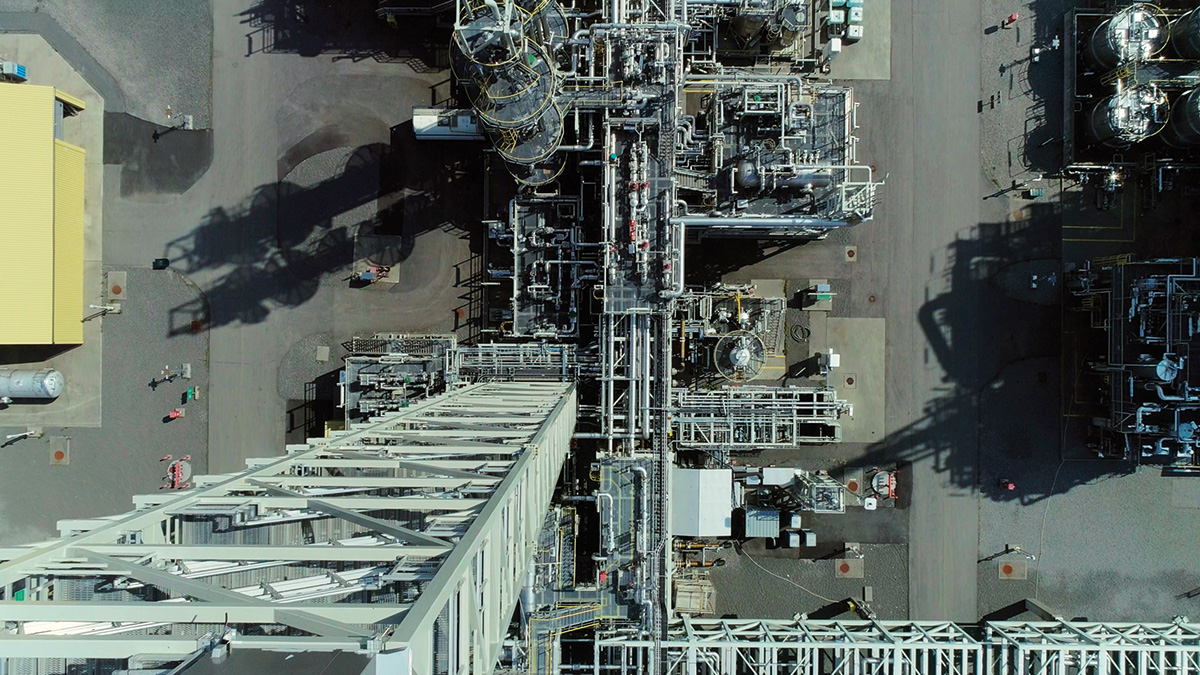
Pendant des décennies, les États et les politiques se sont montrés incapables de décarboner l'économie. Les compagnies pétrolières ont financé le déni du changement climatique pendant un quart de siècle, alors que leurs propres scientifiques leur fournissaient des preuves du désastre. À l'heure où la plupart des gens ressentent les effets du changement climatique dans leur propre vie, les sociétés pétrolières ont changé de stratégie et font désormais pression pour généraliser l'emploi de procédés technologiques qui leur permettraient de continuer l’extraction du pétrole. Enregistré au Technology Centre Mongstad (TCM), en Norvège, ce film présente différentes perspectives sur le captage et stockage du carbone (CSC). Le CSC est présenté comme une solution technologique pour éviter un réchauffement climatique catastrophique. Mais il s’agit d’une technologie encore relativement immature, qui accentue notre dépendance envers les combustibles fossiles. Le film fait référence à l’état de "captivité" de l'humanité qui semble pousser l'extractivisme jusqu'à son point de non-retour.
Oliver Ressler est artiste et cinéaste. Il réalise des installations, des projets en espace public et des films sur des questions telles que l'économie, la démocratie, la migration, la crise climatique, les formes de résistance et les alternatives sociales. Oliver Ressler a présenté des expositions individuelles au Berkeley Art Museum (USA); au Musée d'Art contemporain de Belgrade (Serbie); au Centro Cultural Conde Duque, Madrid (Espagne); à l'Alexandria Contemporary Arts Forum (Égypte); au Cube Project Space, Taipei (Taïwan); au Kunsthaus Graz (Autriche), ainsi que des expositions individuelles complètes au Wyspa Institute of Art, Gdansk (Pologne); au Lentos Kunstmuseum, Linz (Autriche); au Centro Andaluz de Arte Contemporaneo - CAAC, Séville (Espagne); au SALT Galata, Istanbul (Turquie); au MNAC - Musée national d'art contemporain, Bucarest (Roumanie) et au Centre culturel de Belgrade (Serbie). Il a participé à plus de 400 expositions collectives, notamment au musée Reina Sofía, Madrid (Espagne); au Musée Van Abbe, Eindhoven (Pays-Bas); au MASSMoCA – Massachusetts Museum of Contemporary Art, North Adams (USA); au Centre Pompidou, Paris (France); aux biennales de Prague (2005), Séville (2006), Moscou (2007), Taipei (2008), Lyon (2009), Gyumri (2012), Venise (2013), Athènes (2013, 2015), Québec (2014), Helsinki (2014), Jeju (2017), Kiev (2017), Göteborg (2019) et Stavanger (2019), et à la Documenta 14, Kassel (Allemagne) en 2017 (exposition organisée par l'EMST – Musée national d’Art contemporain d’Athènes). Ressler a réalisé trente-quatre films, qui ont été projetés dans des milliers d'événements de mouvements sociaux, d'institutions artistiques et de festivals de cinéma. Une rétrospective de ses films a eu lieu au Centre d'Art Contemporain Genève (Suisse) en 2013. En 2002, Ressler a remporté le premier prix de l'International Media Art Award du ZKM de Karlsruhe (Allemagne) et, en 2016, il est le tout premier lauréat du Prix Thun for Art and Ethics. Pour la Biennale de Taipei 2008 (Taïwan), Ressler a organisé une exposition sur le mouvement antimondialisation: "A World Where Many Worlds Fit". En tant que co-commissaire aux côtés de Gregory Sholette, il a présenté une exposition itinérante sur la crise financière, "It's the Political Economy, Stupid", dans neuf lieux de 2011 à 2016, dont le Musée d’art de Pori (Finlande) en 2013. Depuis 2019, Ressler dirige "Barricading the Ice Sheets", un projet de recherche sur le mouvement pour la justice climatique financé par le Fonds scientifique autrichien. En septembre 2021 ce projet donnera lieu à une exposition à Camera Austria, Graz (Autriche).
Catalogue : 2019Anubumin | Documentaire | hdv | couleur | 18:0 | Autriche | 2017
Oliver Ressler, Zanny Begg
Anubumin
Documentaire | hdv | couleur | 18:0 | Autriche | 2017
The film focuses on Nauru, a tiny remote island in the Pacific with 10,000 inhabitants. The narration discusses different voids that have shaped the islands past and future. The largest void is a physical one, the island is a raised reef consisting of calcite and phosphate on a volcanic base, which since 1906 has been mined and exported to Australia, to fertilise the former colonisers’ farms. When phosphate extraction came to a stop in the 1980s, Nauru was bankrupt and 80 percent of the land area uninhabitable and infertile. In an attempt to generate income, in the 1990s Nauru became a prime money-laundering haven. After the disappearance of soil and money, today Nauru involves in the “disappearance of people” - housing one of Australia’s offshore refugee detention centres. In a reaction to the criticism on terrible human right situation in the detention centre, Nauru severely restricted access to the island. Four whistleblowers, who worked as doctors and nurses in the detention centre, describe the institutionalised human rights violations in the offshore detention. Today a new void threatens the island, rising sea-levels threaten the coastal edge, which is the only area left for its inhabitants to live.
Zanny Begg is a Sydney based artist whose work focuses on political activism and community. Her work is often collaborative inviting engagement with key themes such as resilience, financial disobedience and unthinking borders. Zanny has an experimental and research driven practice that works across film, performance, installation, activism and drawing. Zanny’s exhibitions include The Museum of Contemporary Art, Sydney, 2017; Sharjah Biennale, 2011; Istanbul Biennale, 2009. Oliver Ressler produces installations, projects in public space, and films on issues such as economics, democracy, global warming, forms of resistance and social alternatives. Solo exhibitions: Berkeley Art Museum, USA; Alexandria Contemporary Arts Forum, Egypt; Wyspa Institute of Art, Gdansk; Lentos Kunstmuseum, Linz; MNAC - National Museum of Contemporary Art, Bucharest; SALT Galata, Istanbul. Ressler is the first price winner of the Prix Thun for Art and Ethics Award in 2016.
Catalogue : 2018There are no Syrian refugees in Turkey | Doc. expérimental | 4k | couleur | 30:0 | Autriche | 2016
Oliver Ressler
There are no Syrian refugees in Turkey
Doc. expérimental | 4k | couleur | 30:0 | Autriche | 2016
Refugees attempting to enter the European Union play a specific role in the relation between the EU and Turkey. The same European powers that routinely invoke “ human rights ” to justify military action in Africa and Asia (including the “ Middle East ”) deny all protection to survivors fleeing the slaughter they order. The EU border regime is responsible for tens of thousands of drownings in the Mediterranean, while Turkey has opened its borders to nearly three million refugees, more than all EU states combined. The film channels voices that not only go unheard but are quite unheard-of in the western “ refugee debate ” because if Europe is the center of the world, speakers like these couldn`t possibly exist. They are Syrian refugees who preferred not to seek a way into the EU, choosing to continue their lives in Istanbul instead. The Syrians describe their life as “ guests ” in the continent`s largest metropolis, which for 500+ years has sheltered survivors of wars and pogroms started by powers to its north and west. One thing they discuss at length is the difficulty of making a living in Istanbul. Another is the reluctance of the EU to admit more than a pitiful number of refugees, whom it treats collectively as a social pathogen, a mobile hazard to be isolated and “ made safe ”. All the conversations were recorded in Arabic in the days after the coup attempt in Turkey on 15 July 2016, which therefore also became a topic of the film. Quietly reversing the entire perspective of the “ efugee debate ”, the film develops a political analysis of Turkish and European politics from the standpoint of Syrian refugees. The speakers are not seen in the film. Their anonymity is maintained as a precaution against repression and unwanted consequences of all kinds. The interviews are combined with images made from long single shots taken in Istanbul. The words and images are accompanied by an experimental audio composition “ produced specifically for the film”which likewise bears witness to conditions of war and terror and to things left unsaid.
Oliver Ressler, born 1970, lives and works as an artist and filmmaker in Vienna, Austria, and produces exhibitions, projects in the public space, and films on issues such as economics, democracy, forms of resistance and social alternatives.
Oliver Ressler, Dario AZZELLINI
Catalogue : 2006Venezuela from Below | Documentaire | dv | couleur | 67:0 | Autriche | 2004

Oliver Ressler, Dario AZZELLINI
Venezuela from Below
Documentaire | dv | couleur | 67:0 | Autriche | 2004
"Au Vénézuéla, une profonde transformation sociale a lieu depuis qu?Hugo Chávez a pris le pouvoir en 1998. Un large processus d?auto-organisation accompagné d?un grand nombre d?autres réformes est en cours. Dans le film ?Venezuela from below? les acteurs à la base de ce processus social ont la parole. Ils décrivent ce qu?ils ont fait et sont en train de faire, ce qu?ils pensent du processus bolivarien et quelles sont leurs attentes et leurs idées."
Oliver Ressler est né en 1970 à Vienne où il vit et travaille. Ressler est un artiste qui mène de front des projets de différents sujets socio-politiques. Il s?est investi depuis 1994 dans des expositions thèmatiques particulières, des projets ouverts au public et des vidéos aux thèmes tels que le racisme, l?immigration, le génie génétique, l?économie, les formes de résistance et les alternatives sociales. Ses récents projets et expositions personnelles sont Alternative Economics, Alternative Societies (Galerija Skuc, Ljubljana, 2003; Kunstraum der Universität Lüneburg, 2004), European Corrections Corporation (installation en container à Wels, Graz and Munich, 2003/2004, avec Martin Krenn) et Boom! (avec David Thorne, depuis 2001). Ressler a participé à des expositions collectives telles que »fly utopia !« , Transmediale 04 de Berlin; »The Interventionists«, MASS MoCA ( Massachusetts Museum of Contemporary Art) ; »Emoção Art.ficial II«, Itaucultural Institute de São Paulo; »Banquete«, Centre of Contemporary Art Palau de la Virreina à Barcelone; »Conde Duque«, Centre Culturel de Madrid; »Attack !«, Kunsthalle de Vienne; »Empire/State: Artists Engaging Globalization«, Whitney Museum of American Art de New York; »Exchange & Transform«, Kunstverein de Munich; , »Steirischer Herbst«, Graz. Il a également participé à de nombreux festivals vidéo en Europe et en Amérique du Nord. En 2002 son film vidéo »This is what democracy looks like !« a remporté le 1er prix International des Arts Médiatiques du ZKM.
Oliver Ressler
Catalogue : 2021Carbon and Captivity | Documentaire | 4k | couleur | 33:0 | Autriche | 2020
Oliver Ressler
Carbon and Captivity
Documentaire | 4k | couleur | 33:0 | Autriche | 2020
Pendant des décennies, les États et les politiques se sont montrés incapables de décarboner l'économie. Les compagnies pétrolières ont financé le déni du changement climatique pendant un quart de siècle, alors que leurs propres scientifiques leur fournissaient des preuves du désastre. À l'heure où la plupart des gens ressentent les effets du changement climatique dans leur propre vie, les sociétés pétrolières ont changé de stratégie et font désormais pression pour généraliser l'emploi de procédés technologiques qui leur permettraient de continuer l’extraction du pétrole. Enregistré au Technology Centre Mongstad (TCM), en Norvège, ce film présente différentes perspectives sur le captage et stockage du carbone (CSC). Le CSC est présenté comme une solution technologique pour éviter un réchauffement climatique catastrophique. Mais il s’agit d’une technologie encore relativement immature, qui accentue notre dépendance envers les combustibles fossiles. Le film fait référence à l’état de "captivité" de l'humanité qui semble pousser l'extractivisme jusqu'à son point de non-retour.
Oliver Ressler est artiste et cinéaste. Il réalise des installations, des projets en espace public et des films sur des questions telles que l'économie, la démocratie, la migration, la crise climatique, les formes de résistance et les alternatives sociales. Oliver Ressler a présenté des expositions individuelles au Berkeley Art Museum (USA); au Musée d'Art contemporain de Belgrade (Serbie); au Centro Cultural Conde Duque, Madrid (Espagne); à l'Alexandria Contemporary Arts Forum (Égypte); au Cube Project Space, Taipei (Taïwan); au Kunsthaus Graz (Autriche), ainsi que des expositions individuelles complètes au Wyspa Institute of Art, Gdansk (Pologne); au Lentos Kunstmuseum, Linz (Autriche); au Centro Andaluz de Arte Contemporaneo - CAAC, Séville (Espagne); au SALT Galata, Istanbul (Turquie); au MNAC - Musée national d'art contemporain, Bucarest (Roumanie) et au Centre culturel de Belgrade (Serbie). Il a participé à plus de 400 expositions collectives, notamment au musée Reina Sofía, Madrid (Espagne); au Musée Van Abbe, Eindhoven (Pays-Bas); au MASSMoCA – Massachusetts Museum of Contemporary Art, North Adams (USA); au Centre Pompidou, Paris (France); aux biennales de Prague (2005), Séville (2006), Moscou (2007), Taipei (2008), Lyon (2009), Gyumri (2012), Venise (2013), Athènes (2013, 2015), Québec (2014), Helsinki (2014), Jeju (2017), Kiev (2017), Göteborg (2019) et Stavanger (2019), et à la Documenta 14, Kassel (Allemagne) en 2017 (exposition organisée par l'EMST – Musée national d’Art contemporain d’Athènes). Ressler a réalisé trente-quatre films, qui ont été projetés dans des milliers d'événements de mouvements sociaux, d'institutions artistiques et de festivals de cinéma. Une rétrospective de ses films a eu lieu au Centre d'Art Contemporain Genève (Suisse) en 2013. En 2002, Ressler a remporté le premier prix de l'International Media Art Award du ZKM de Karlsruhe (Allemagne) et, en 2016, il est le tout premier lauréat du Prix Thun for Art and Ethics. Pour la Biennale de Taipei 2008 (Taïwan), Ressler a organisé une exposition sur le mouvement antimondialisation: "A World Where Many Worlds Fit". En tant que co-commissaire aux côtés de Gregory Sholette, il a présenté une exposition itinérante sur la crise financière, "It's the Political Economy, Stupid", dans neuf lieux de 2011 à 2016, dont le Musée d’art de Pori (Finlande) en 2013. Depuis 2019, Ressler dirige "Barricading the Ice Sheets", un projet de recherche sur le mouvement pour la justice climatique financé par le Fonds scientifique autrichien. En septembre 2021 ce projet donnera lieu à une exposition à Camera Austria, Graz (Autriche).
Catalogue : 2019Anubumin | Documentaire | hdv | couleur | 18:0 | Autriche | 2017
Oliver Ressler, Zanny Begg
Anubumin
Documentaire | hdv | couleur | 18:0 | Autriche | 2017
The film focuses on Nauru, a tiny remote island in the Pacific with 10,000 inhabitants. The narration discusses different voids that have shaped the islands past and future. The largest void is a physical one, the island is a raised reef consisting of calcite and phosphate on a volcanic base, which since 1906 has been mined and exported to Australia, to fertilise the former colonisers’ farms. When phosphate extraction came to a stop in the 1980s, Nauru was bankrupt and 80 percent of the land area uninhabitable and infertile. In an attempt to generate income, in the 1990s Nauru became a prime money-laundering haven. After the disappearance of soil and money, today Nauru involves in the “disappearance of people” - housing one of Australia’s offshore refugee detention centres. In a reaction to the criticism on terrible human right situation in the detention centre, Nauru severely restricted access to the island. Four whistleblowers, who worked as doctors and nurses in the detention centre, describe the institutionalised human rights violations in the offshore detention. Today a new void threatens the island, rising sea-levels threaten the coastal edge, which is the only area left for its inhabitants to live.
Zanny Begg is a Sydney based artist whose work focuses on political activism and community. Her work is often collaborative inviting engagement with key themes such as resilience, financial disobedience and unthinking borders. Zanny has an experimental and research driven practice that works across film, performance, installation, activism and drawing. Zanny’s exhibitions include The Museum of Contemporary Art, Sydney, 2017; Sharjah Biennale, 2011; Istanbul Biennale, 2009. Oliver Ressler produces installations, projects in public space, and films on issues such as economics, democracy, global warming, forms of resistance and social alternatives. Solo exhibitions: Berkeley Art Museum, USA; Alexandria Contemporary Arts Forum, Egypt; Wyspa Institute of Art, Gdansk; Lentos Kunstmuseum, Linz; MNAC - National Museum of Contemporary Art, Bucharest; SALT Galata, Istanbul. Ressler is the first price winner of the Prix Thun for Art and Ethics Award in 2016.
Catalogue : 2018There are no Syrian refugees in Turkey | Doc. expérimental | 4k | couleur | 30:0 | Autriche | 2016
Oliver Ressler
There are no Syrian refugees in Turkey
Doc. expérimental | 4k | couleur | 30:0 | Autriche | 2016
Refugees attempting to enter the European Union play a specific role in the relation between the EU and Turkey. The same European powers that routinely invoke “ human rights ” to justify military action in Africa and Asia (including the “ Middle East ”) deny all protection to survivors fleeing the slaughter they order. The EU border regime is responsible for tens of thousands of drownings in the Mediterranean, while Turkey has opened its borders to nearly three million refugees, more than all EU states combined. The film channels voices that not only go unheard but are quite unheard-of in the western “ refugee debate ” because if Europe is the center of the world, speakers like these couldn`t possibly exist. They are Syrian refugees who preferred not to seek a way into the EU, choosing to continue their lives in Istanbul instead. The Syrians describe their life as “ guests ” in the continent`s largest metropolis, which for 500+ years has sheltered survivors of wars and pogroms started by powers to its north and west. One thing they discuss at length is the difficulty of making a living in Istanbul. Another is the reluctance of the EU to admit more than a pitiful number of refugees, whom it treats collectively as a social pathogen, a mobile hazard to be isolated and “ made safe ”. All the conversations were recorded in Arabic in the days after the coup attempt in Turkey on 15 July 2016, which therefore also became a topic of the film. Quietly reversing the entire perspective of the “ efugee debate ”, the film develops a political analysis of Turkish and European politics from the standpoint of Syrian refugees. The speakers are not seen in the film. Their anonymity is maintained as a precaution against repression and unwanted consequences of all kinds. The interviews are combined with images made from long single shots taken in Istanbul. The words and images are accompanied by an experimental audio composition “ produced specifically for the film”which likewise bears witness to conditions of war and terror and to things left unsaid.
Oliver Ressler, born 1970, lives and works as an artist and filmmaker in Vienna, Austria, and produces exhibitions, projects in the public space, and films on issues such as economics, democracy, forms of resistance and social alternatives.
Fernando Restelli
Catalogue : 2018Merodeo (Loitering) | Documentaire | hdv | couleur | 13:50 | Argentine | 2016
Fernando Restelli
Merodeo (Loitering)
Documentaire | hdv | couleur | 13:50 | Argentine | 2016
Provocative documentary that exposes a personal look at the stigmatization produced by police forces and the state in the current xenophobic heritage. Using found footage, the film seeks to establish a social monitoring map available through the Internet, while following the journey of two marauding through the night. One of them will surely be stopped.
Born in 1991, he currently lives and works in Cordoba, Argentina. A filmmaker and cinematographer, he studied at the Universidad de Cordoba. His short film Merodeo has received the Special Jury Prize in [23] FICValdivia and participated in several festivals. With his first feature film in progress, Construcciones, has participated in the Rough Cut Lab of the 49 Visions du Réel, the 31 MDQ Film Fest, DocMontevideo 2016 and the TransLAB 2015 of Festival Transcinema. In 2016 he received an scholarship to attend the IDFAcademy in Amsterdam, The Netherlands.
Rachel Reupke
Catalogue : 201110 Seconds or Greater | Vidéo expérimentale | | couleur | 15:0 | Royaume-Uni | 2010
Rachel Reupke
10 Seconds or Greater
Vidéo expérimentale | | couleur | 15:0 | Royaume-Uni | 2010
10 Seconds or Greater by Rachel Reupke is shown as a single screen installation at Picture This. The film was made during the third in a series of residencies based at Picture This supported by Film London. Formally based on the production of royalty-free stock footage, 10 Seconds or Greater maps the logical progression of a director through a check list of popular scenarios designed to illustrate such commercially lucrative concepts as ?communication', ?relaxation' and ?healthy life-style'. With an original R&B score by Simon and Matt Ward
Jean-françois Reverdy
Catalogue : 2016Matière Première | Doc. expérimental | hdv | couleur | 26:2 | France, Mauritanie | 2015
Jean-françois Reverdy
Matière Première
Doc. expérimental | hdv | couleur | 26:2 | France, Mauritanie | 2015
"C’est un périple qui s’inscrit dans une région désertique, de l’exploitation des carrières de fer à l’acheminement du minerai jusqu’à l’Océan, à bord du plus long train du monde. Bientôt, les plages jonchées d’épaves annoncent la fin du voyage, tandis que s’amoncelle, sur les cargos amarrés, le précieux minerai, en partance pour les pays riches. Ce film utilise le dispositif antique du sténopé, technique des premières captures du réel : un simple trou dans une feuille opaque remplace l’objectif de la caméra. Une perception inhabituelle de la lumière du désert, de ses formes et de ses couleurs, des hommes et des machines qui l’habitent."
Chef opérateur notamment sur les documentaires « Escort » de Hélène De Crécy (2012), « United state of amnesia » de Nicolas Djian, « La consultation » de Hélène De Crécy, il réalise un essai "vidéo sténopé" en 2003 dans le cadre des ateliers de recherche d`Arte (Paul Ouazan). Il travaille actuellement comme chef opérateur pour des émissions de Canal Plus. » Matière Première » est son premier film.
Reynold Reynolds
Catalogue : 2010Letzter Tag der Republik | Vidéo | 16mm | couleur et n&b | 8:0 | USA, Allemagne | 2009
Reynold Reynolds
Letzter Tag der Republik
Vidéo | 16mm | couleur et n&b | 8:0 | USA, Allemagne | 2009
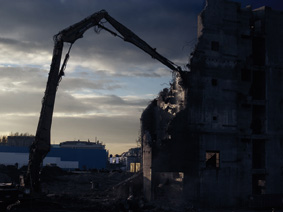
The Palast der Republik (Palace of the Republic) Opened in 1976 as a meeting place for the East German people and an emblem of the future. The unique modern building made of distinctive golden-mirrored windows was home to not just the East German Parliament but auditoriums, art galleries, five restaurants, concert halls, and even a bowling alley. The building`s dazzling public lobby, surrounded by several tiers, was once the center of social life in East Berlin with thousands of sparkling lamps filling the open space of the lobby`s grand staircase. Many Berliners recall attending a play in one of the theaters or dancing the night away in the underground disco, others seeing their first rock concert, or being married. Later, thousands of citizens demonstrated against the planned demolition and hoped the building would be protected against historical censorship, but alas, one day, twenty years after the fall of the Berlin wall, the Palace completely disappeared. This day was the: Last Day of the Republic. Letzter Tag der Republik. Written by Gerhard Falkner Ich hatte einst ein schönes Vaterland das Weiß-nicht-mehr wuchs dort so schön das Weiß-nicht-mehr Weißt du noch wo du warst, als Troja fiel? Bist du in deinem Alter noch der Mensch. Der vor Karthago stand? Na siehst du: ceterum censeo. Sind die Wolken die einzigen Mauern die nicht fallen weil sie fahren. Die einzigen Mauern, die Posaunen nicht einreißen. Die fließenden Mauern. Ich bin immer noch nicht da, wo ich war, wenn ich weg bin. Ich stehe nach Abschluss der Arbeiten nun kurz vor der Beseitigung. Es wird schwer sein, mich zu vergessen, jetzt wo ich nicht mehr da sein werde. Meine Anwesenheit in der Abwesenheit wird nachklingen. Ein Koloss aus Beton, Geschichte und Zeit, der geht nicht, - ohne dass etwas bleibt, was noch verschwindet, wenn alles längst vorbei ist. Karthago ist auch nicht an einem Tage zerstört worden. Es wird bleiben ein Loch in der Luft, so groß wie ein Schloss. Mit oben lauter antike Figuren. Und unten lauter Figuren mit keine Ahnung von Antike. Das Schloss wird sich schließen um den versunkenen Bau und die Zeit wird im Schloss den Schlüssel umdrehen! Bis der Schlüssel (mit der Zeit) das Schloss umdreht. Und immer so weiter. die Philosophen haben die Welt nur verändert heute geht es darum, sie verschieden zu interpretieren am Besten pro Mann eine Meinung zu Allem dann bleibt unterm Strich alles offen und, wenn alles gut geht, kein Stein auf dem andern Bleiben werden: das Wasser über der Spree und die Wolken unter dem Schloss Alles andre muss fallen. Erst wenn die Wolken ins Gras beißen, wird dieses Stück Geschichte gegessen sein.
Reynold Reynolds was born in 1966 in Central Alaska. During his undergraduate schooling at the University of Colorado, Boulder, Reynolds initially studied physics receiving a bachelor`s degree under the professorship of Carl Wieman (Physics Nobel Laureate 2001). Changing his focus to studio art he remained two more years in Boulder to study under experimental film maker Stan Brakhage. Reynolds then finished an M.F.A. in New York City at the School of Visual Arts. Influenced early on by philosophy and working primarily with 16mm and Super 8mm film as an art medium he has developed a common film grammar based on transformation, consumption and decay. Reynolds` depictions frequent disturbed psychological and physical themes, increasingly provoking the viewer`s participation and dismay. In 2003 Reynold Reynolds was awarded the John Simone Guggenheim Memorial Foundation Fellowship and in 2004 he was invited to The American Academy in Berlin with a studio at Kunstlerhaus Bethanien for one year. In 2007 he received the German Kunstfonds support to develop two projects in Berlin in 2008. In 2010 he will have a eight month residency at Akademie Schloss Solitude (Germany).
Catalogue : 2009Secret Life | Installation vidéo | 16mm | couleur | 5:0 | USA, Allemagne | 2008
Reynold Reynolds
Secret Life
Installation vidéo | 16mm | couleur | 5:0 | USA, Allemagne | 2008
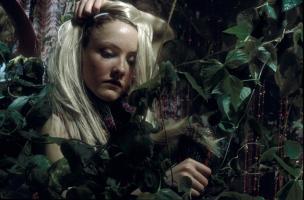
« Secret Life » est le premier des trois volets d?un cycle consacré aux éléments imperceptibles qui régissent notre vie. Dans « Secret Life », une femme est enfermée dans un appartement qui connaît un effondrement du temps. Alors que le temps est perçu tout à coup comme linéaire, l'espace devient une horloge qui fonctionne de façon circulaire et répétitive. De nouvelles durées s?invitent dans le rythme normal de la vie et l'appartement subit une explosion d?activités. Sans la certitude du temps, l'occupante de l'appartement n'est plus en mesure de rester au même endroit, et son esprit néglige l'organisation de l'expérience, la laissant seule avec les sensations. Ses pensées s?échappent d?elle et croissent comme des plantes dans l'espace autour d'elle, vivant, cherchant, débordant de son appartement, tout en la menaçant sauvagement, avant de mourir et de se décomposer comme des animaux.
Reynold Reynolds est né en Alaska (USA) et vit actuellement à New York et à Berlin. Depuis dix ans, ses médiums de prédilection sont les films en 16mm et en Super 8. Il a créé des installations, des documentaires, des ?uvres faites à partir d?images trouvées, et a réalisé des films narratifs et expérimentaux. Reynolds met souvent en scène des psychologies perturbées et des thèmes physiques. Ses ?uvres ont été présentées dans de nombreux festivals internationaux et y ont remporté beaucoup de prix.
Catalogue : 2007Sugar | Fiction expérimentale | 16mm | couleur et n&b | 60:0 | USA | 2005
Reynold Reynolds, Patrick JOLLEY
Sugar
Fiction expérimentale | 16mm | couleur et n&b | 60:0 | USA | 2005
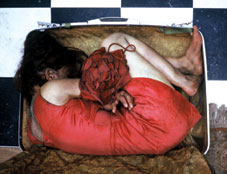
Un jeune femme sombre dans la folie dans un film prenant, construit sur des boucles, qui dure une heure et qui a été réalisé par Renyold Reynolds et Patrick Jolley. C'est du moins ce qu'on a l'impression de voir puisque l'histoire non linéaire du film et le mélange du noir et blanc flou et de la couleur nette a tendance à nous empêcher de distinguer vraiment ce qui est réel et ce qui est rêvé. Tour à tour drôles, tristes, mystérieux et effrayants, les événements relatés dans le film se déroulent dans un studio sordide. Une jeune femme, jouée par Samara Golden, arrive chargée d'une valise et commence à faire le ménage. A un moment, elle extrait un cadavre qui lui ressemble de derrière un radiateur et s'en occupe comme si elle le préparait pour un enterrement. Dans d'autres scènes la pièce tremble violemment et commence à être innondée. Les ampoules lâchent et des prises électriques surchargées crépitent et bourdonnent. Un homme sorti de nulle part essaie de violer la femme, mais il disparaît rapidement. A un autre moment, elle mélange une pâte à laquelle elle ajoute de la poudre insecticide qu'elle avait placé dans une boîte à sucre - d'où, probablement, le titre du film "Sugar" (sucre) - et elle la mange. Enfin elle transfère son double maléfique du réfrigérateur à la valise qu'elle portait en entrant et s'en va. New York Times
Reynolds was born in Alaska, USA, and now lives in New York. His work includes short films and commercial productions. He works with the Alexandra Saheb Galleries in Berlin, T20 in Spain, and the Roebling Hall in New York. He has exhibited his work at the Contemporary Art Biennial and the KW of Berlin; the Bass Museum in Miami; the P.S.1 in Long Island; and the Phoenix Art Museum. He participated in the X and XI Biennial of Moving Images in Geneva; in "Urban Realities ? Fokus" in Istanbul; in the Martin-Gropius-Bau in Berlin; and the Chelsea Art Museum in New York; as well as in exhibitions in Vienna, Los Angeles, and Zurich. His works are on permanent exhibition at the Elipse Foundation in Alcoitao, Portugal. Jolley was born in Ireland in 1965. He now splits his time between New York and London. He is primarily interested in photography and has created various exhibitions. He works with the T20 Gallery in Spain and the Roebling Hall in New York. In 2006, he exhibited his work in the Contemporary Art Biennial and the KW of Berlin; the Dublin IMMA (in collaboration with Focus); at the Fire Biennial of Caracas (Venezuela), and in New York. Before these he had already exhibited in NY (Chelsea Art Museum, Tina Kim Art, Ronald Feldman Fine Art and the Roebling Hall), in LA, Glasgow, and Vienna. His pictures are shown in a permanent exhibition at the Irish Museum of Modern Art -IMMA, Dublin. Reynold Reynolds and Patrick Jolley have been collaborating on short films for the past few years. Although they share similar aesthetic concerns, they are not intended to be set together. Res magazine recently included Reynolds and Jolley in their "10 Filmmakers to Watch" line-up, and their films have been screened at the Sundance Film Festival. Reynolds and Jolley met in 1995 in the graduate program of the School of Visual Arts in Manhattan. They came up with the idea of a short video installation, "Seven Days Til Sunday". Today they both continue to work on their own projects. Reynolds says that Jolley "is very interested in symbology. He likes to say that he makes work that is so loaded with symbols that it has no meaning." "Sugar" has been presented in the Roebling Hall, New York, and the Alexandra Saheb Gallery in Berlin, 2005.
Reynold Reynolds, Patrick JOLLEY
Catalogue : 2010Letzter Tag der Republik | Vidéo | 16mm | couleur et n&b | 8:0 | USA, Allemagne | 2009
Reynold Reynolds
Letzter Tag der Republik
Vidéo | 16mm | couleur et n&b | 8:0 | USA, Allemagne | 2009
The Palast der Republik (Palace of the Republic) Opened in 1976 as a meeting place for the East German people and an emblem of the future. The unique modern building made of distinctive golden-mirrored windows was home to not just the East German Parliament but auditoriums, art galleries, five restaurants, concert halls, and even a bowling alley. The building`s dazzling public lobby, surrounded by several tiers, was once the center of social life in East Berlin with thousands of sparkling lamps filling the open space of the lobby`s grand staircase. Many Berliners recall attending a play in one of the theaters or dancing the night away in the underground disco, others seeing their first rock concert, or being married. Later, thousands of citizens demonstrated against the planned demolition and hoped the building would be protected against historical censorship, but alas, one day, twenty years after the fall of the Berlin wall, the Palace completely disappeared. This day was the: Last Day of the Republic. Letzter Tag der Republik. Written by Gerhard Falkner Ich hatte einst ein schönes Vaterland das Weiß-nicht-mehr wuchs dort so schön das Weiß-nicht-mehr Weißt du noch wo du warst, als Troja fiel? Bist du in deinem Alter noch der Mensch. Der vor Karthago stand? Na siehst du: ceterum censeo. Sind die Wolken die einzigen Mauern die nicht fallen weil sie fahren. Die einzigen Mauern, die Posaunen nicht einreißen. Die fließenden Mauern. Ich bin immer noch nicht da, wo ich war, wenn ich weg bin. Ich stehe nach Abschluss der Arbeiten nun kurz vor der Beseitigung. Es wird schwer sein, mich zu vergessen, jetzt wo ich nicht mehr da sein werde. Meine Anwesenheit in der Abwesenheit wird nachklingen. Ein Koloss aus Beton, Geschichte und Zeit, der geht nicht, - ohne dass etwas bleibt, was noch verschwindet, wenn alles längst vorbei ist. Karthago ist auch nicht an einem Tage zerstört worden. Es wird bleiben ein Loch in der Luft, so groß wie ein Schloss. Mit oben lauter antike Figuren. Und unten lauter Figuren mit keine Ahnung von Antike. Das Schloss wird sich schließen um den versunkenen Bau und die Zeit wird im Schloss den Schlüssel umdrehen! Bis der Schlüssel (mit der Zeit) das Schloss umdreht. Und immer so weiter. die Philosophen haben die Welt nur verändert heute geht es darum, sie verschieden zu interpretieren am Besten pro Mann eine Meinung zu Allem dann bleibt unterm Strich alles offen und, wenn alles gut geht, kein Stein auf dem andern Bleiben werden: das Wasser über der Spree und die Wolken unter dem Schloss Alles andre muss fallen. Erst wenn die Wolken ins Gras beißen, wird dieses Stück Geschichte gegessen sein.
Reynold Reynolds was born in 1966 in Central Alaska. During his undergraduate schooling at the University of Colorado, Boulder, Reynolds initially studied physics receiving a bachelor`s degree under the professorship of Carl Wieman (Physics Nobel Laureate 2001). Changing his focus to studio art he remained two more years in Boulder to study under experimental film maker Stan Brakhage. Reynolds then finished an M.F.A. in New York City at the School of Visual Arts. Influenced early on by philosophy and working primarily with 16mm and Super 8mm film as an art medium he has developed a common film grammar based on transformation, consumption and decay. Reynolds` depictions frequent disturbed psychological and physical themes, increasingly provoking the viewer`s participation and dismay. In 2003 Reynold Reynolds was awarded the John Simone Guggenheim Memorial Foundation Fellowship and in 2004 he was invited to The American Academy in Berlin with a studio at Kunstlerhaus Bethanien for one year. In 2007 he received the German Kunstfonds support to develop two projects in Berlin in 2008. In 2010 he will have a eight month residency at Akademie Schloss Solitude (Germany).
Catalogue : 2009Secret Life | Installation vidéo | 16mm | couleur | 5:0 | USA, Allemagne | 2008
Reynold Reynolds
Secret Life
Installation vidéo | 16mm | couleur | 5:0 | USA, Allemagne | 2008
« Secret Life » est le premier des trois volets d?un cycle consacré aux éléments imperceptibles qui régissent notre vie. Dans « Secret Life », une femme est enfermée dans un appartement qui connaît un effondrement du temps. Alors que le temps est perçu tout à coup comme linéaire, l'espace devient une horloge qui fonctionne de façon circulaire et répétitive. De nouvelles durées s?invitent dans le rythme normal de la vie et l'appartement subit une explosion d?activités. Sans la certitude du temps, l'occupante de l'appartement n'est plus en mesure de rester au même endroit, et son esprit néglige l'organisation de l'expérience, la laissant seule avec les sensations. Ses pensées s?échappent d?elle et croissent comme des plantes dans l'espace autour d'elle, vivant, cherchant, débordant de son appartement, tout en la menaçant sauvagement, avant de mourir et de se décomposer comme des animaux.
Reynold Reynolds est né en Alaska (USA) et vit actuellement à New York et à Berlin. Depuis dix ans, ses médiums de prédilection sont les films en 16mm et en Super 8. Il a créé des installations, des documentaires, des ?uvres faites à partir d?images trouvées, et a réalisé des films narratifs et expérimentaux. Reynolds met souvent en scène des psychologies perturbées et des thèmes physiques. Ses ?uvres ont été présentées dans de nombreux festivals internationaux et y ont remporté beaucoup de prix.
Catalogue : 2007Sugar | Fiction expérimentale | 16mm | couleur et n&b | 60:0 | USA | 2005
Reynold Reynolds, Patrick JOLLEY
Sugar
Fiction expérimentale | 16mm | couleur et n&b | 60:0 | USA | 2005
Un jeune femme sombre dans la folie dans un film prenant, construit sur des boucles, qui dure une heure et qui a été réalisé par Renyold Reynolds et Patrick Jolley. C'est du moins ce qu'on a l'impression de voir puisque l'histoire non linéaire du film et le mélange du noir et blanc flou et de la couleur nette a tendance à nous empêcher de distinguer vraiment ce qui est réel et ce qui est rêvé. Tour à tour drôles, tristes, mystérieux et effrayants, les événements relatés dans le film se déroulent dans un studio sordide. Une jeune femme, jouée par Samara Golden, arrive chargée d'une valise et commence à faire le ménage. A un moment, elle extrait un cadavre qui lui ressemble de derrière un radiateur et s'en occupe comme si elle le préparait pour un enterrement. Dans d'autres scènes la pièce tremble violemment et commence à être innondée. Les ampoules lâchent et des prises électriques surchargées crépitent et bourdonnent. Un homme sorti de nulle part essaie de violer la femme, mais il disparaît rapidement. A un autre moment, elle mélange une pâte à laquelle elle ajoute de la poudre insecticide qu'elle avait placé dans une boîte à sucre - d'où, probablement, le titre du film "Sugar" (sucre) - et elle la mange. Enfin elle transfère son double maléfique du réfrigérateur à la valise qu'elle portait en entrant et s'en va. New York Times
Reynolds was born in Alaska, USA, and now lives in New York. His work includes short films and commercial productions. He works with the Alexandra Saheb Galleries in Berlin, T20 in Spain, and the Roebling Hall in New York. He has exhibited his work at the Contemporary Art Biennial and the KW of Berlin; the Bass Museum in Miami; the P.S.1 in Long Island; and the Phoenix Art Museum. He participated in the X and XI Biennial of Moving Images in Geneva; in "Urban Realities ? Fokus" in Istanbul; in the Martin-Gropius-Bau in Berlin; and the Chelsea Art Museum in New York; as well as in exhibitions in Vienna, Los Angeles, and Zurich. His works are on permanent exhibition at the Elipse Foundation in Alcoitao, Portugal. Jolley was born in Ireland in 1965. He now splits his time between New York and London. He is primarily interested in photography and has created various exhibitions. He works with the T20 Gallery in Spain and the Roebling Hall in New York. In 2006, he exhibited his work in the Contemporary Art Biennial and the KW of Berlin; the Dublin IMMA (in collaboration with Focus); at the Fire Biennial of Caracas (Venezuela), and in New York. Before these he had already exhibited in NY (Chelsea Art Museum, Tina Kim Art, Ronald Feldman Fine Art and the Roebling Hall), in LA, Glasgow, and Vienna. His pictures are shown in a permanent exhibition at the Irish Museum of Modern Art -IMMA, Dublin. Reynold Reynolds and Patrick Jolley have been collaborating on short films for the past few years. Although they share similar aesthetic concerns, they are not intended to be set together. Res magazine recently included Reynolds and Jolley in their "10 Filmmakers to Watch" line-up, and their films have been screened at the Sundance Film Festival. Reynolds and Jolley met in 1995 in the graduate program of the School of Visual Arts in Manhattan. They came up with the idea of a short video installation, "Seven Days Til Sunday". Today they both continue to work on their own projects. Reynolds says that Jolley "is very interested in symbology. He likes to say that he makes work that is so loaded with symbols that it has no meaning." "Sugar" has been presented in the Roebling Hall, New York, and the Alexandra Saheb Gallery in Berlin, 2005.
Alex Reynolds
Catalogue : 2019Esta puerta, esta ventana | Doc. expérimental | hdv | couleur | 36:11 | Espagne, Belgique | 2017
Alex Reynolds
Esta puerta, esta ventana
Doc. expérimental | hdv | couleur | 36:11 | Espagne, Belgique | 2017
In "This Door, This Window", choreographer Alma Söderberg and musician Nilo Gallego create a blind duet, investigating the boundaries of the individual in a relation. Where do "I" end and does "we" begin? How can we live together with our personal rhythms? How do we influence, steer or manipulate each other? How do we find or lose each other? The film sits somewhere between portaiture and sonic performance, the result of fantasizing with a calculated "and perverse" use of sound and rhythm in order to consciously invade, connect, and alter the body. It reflects on the theme of cohabitation through sound, thinking of living together as a matter of listening and of negotiating rhythms, earworms and boundaries when there are no doors or windows to keep out sound, or inversely, anything may serve as door or window.
ALEX REYNOLDS is an artist and filmmaker living in Brussels and Berlin. Honing into the intersection of portraiture and fiction, her films explore the expansive and invasive potential of point of view, empathy, and rhythm, often walking the line between tenderness and violence to insistently ask: how to live together? Recent exhibitions and projects include Querer parecer noche, Ca2m, Madrid, Every Object is a Thing but not every thing is an object, Hollybush Gardens, London; This Door, this Window, Estrany de la Mota, Barcelona; La timidite? des cimes, FRAC Lorraine, Metz; Playground Festival, Leuven; She is a Film, galería Marta Cervera, Madrid; Moving Image Contours: Points for a Surrounding Movement, Tabakalera, San Sebastián; We Can't Go Home Again, CAC, Vilnius; Elisabet, Lena, Tobias', National Music and Theatre Library of Sweden, Stockholm; A Trip to the Moon, Before and After Film, Bonniers Konsthall, Stockholm... Her films have been screened at festivals and programmes including FIDMarseille, Les Rencontres Internationales, Aesthetica Film Festival, Kunstfilmtage Düsseldorf, or Cinematek, Brussels.
Catalogue : 2010NUEVE SEGUNDOS DE NEGRO | Vidéo | dv | couleur | 1:39 | Espagne | 2009
Alex Reynolds
NUEVE SEGUNDOS DE NEGRO
Vidéo | dv | couleur | 1:39 | Espagne | 2009
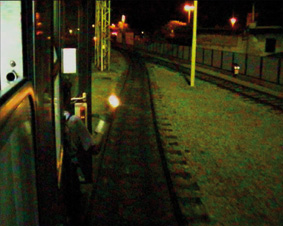
The testimony of a patient as he is going through an eye operation serves as a starting point to talk about a working process that involves a slow search for meaning and concision.
Hun Rhee
Catalogue : 2021how surely gravity’s law: notes and sketches | Film expérimental | 16mm | couleur et n&b | 24:20 | Coree du Sud | 2019
Hun Rhee
how surely gravity’s law: notes and sketches
Film expérimental | 16mm | couleur et n&b | 24:20 | Coree du Sud | 2019
"Les gens vivent ensemble, parents et enfants, mari et femme, mais ne savent pas que la communication n'est qu'une illusion, qu'en dernière analyse chacun d'entre nous est enfermé dans son propre secret?" écrivait l'auteur argentin Adolfo Bioy Casares dans sa nouvelle "Carta Sobre Emilia". Emilia n'est rien d'autre qu'un symbole de la "pathosformel". Ce que nous comprenons des images de passions qui expriment l’anxiété dans l'incertitude, la dépression, la tristesse, le deuil, l’amertume, ou encore l’allégresse et la passion, la résistance et l’indolence, pourrait être un état de "faible déclin espérant l’optimisme" et une nouvelle forme de cognition, "la cognition tragique de l'être". Un après-midi, Emilia, narratrice à la troisième personne et personnage fictif, se retrouve par hasard dans une librairie et y trouve un vieux recueil jauni de poèmes écrits par René Laurids Brigge, contenant de courtes notes à propos de la mort de Wera Ouckama-Knoop, une danseuse de 19 ans. Elle décide alors de réécrire les notes et petits croquis sur W.O. Knoop, ainsi que les documents qu'elle a rassemblés pour se souvenir de la mort de quelqu'un. La forme quadriptyque de ce film montre un certain pan du pathosformel, des forces polyvalentes dans lesquelles Emilia retrouve ses notes et ses croquis comme "un temps non-réel et un espace hétérogène", et commence à ressentir tous les souvenirs, qui sont comme un vague "futur paysage historique", comme un flash de lumière au moment d’un danger.
Rhee Hun est réalisateur et chercheur, en particulier dans lex domaine des images en mouvement. Membre du conseil d'administration de la AAMP - Asian Artist Moving Image Platform, il concentre ses activités sur les pratiques artistiques et curatoriales dans les champs du film d'artiste et de la recherche d'archives, en posant des questions à propos de "l'avenir du paysage et de l'image en mouvement", fondées sur l'espace archéologique et la narration spéculative, le langage et l'épistémologie. Ses films et vidéos ont été présentés dans le cadre d'expositions et de projections à Far From Here au SeMA Storage, Séoul (Corée du Sud) [2019]; au International Short Film Festival in Oberhausen (Allemagne); au Labs Program [2019]; Collective research au MMCA – Museum of Modern and Contemporary Art - Changdong residency program, Séoul (Corée du Sud) [2016]; à la plateforme Asia-Kula, Kula Ring du ACC – Asia Culture Center Network, Gwangju (Corée du Sud) [2016]; au Arkipel Documentary and Experimental Film Festival, Jakarta (Indonésie) [2015] et au Rough Cut Night - Stop Motion - Expanded Cinema, Arts Council Korea Arts Theatre, Séoul (Corée du Sud) [2014].