Catalogue > Faire une recherche
Résultats pour : Tout le catalogue
Jussi Eerola
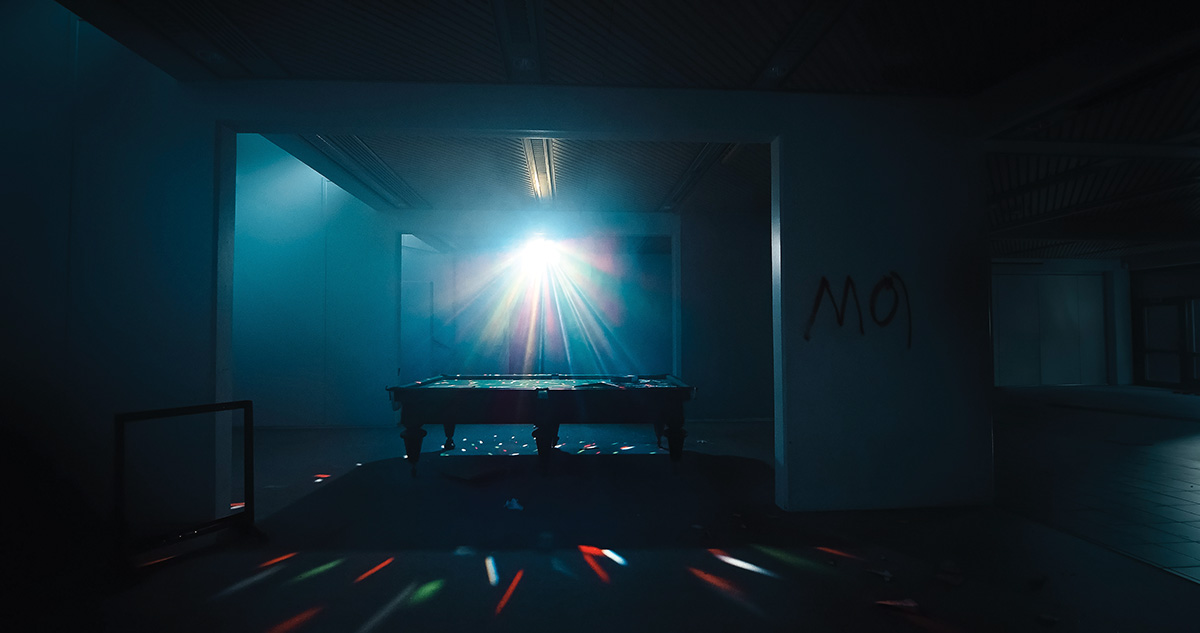
Grasshopper
Film expérimental | 4k | couleur | 9:0 | Finlande | 2023
During the darkest hours of the night a small disco light appears and shines lights to empty business premises. A minimalistic musical.
Jussi Eerola has worked as a cinematographer on many internationally awarded films since 1992. His directional debut was a documentary about electro-hypersensitive people titled Refugees of Technocracy (2009). The Return of the Atom directed together with Mika Taanila premiered at TIFF 2015 and won the NORDIC:DOX Award at CPH:DOX in 2015. Eerola’s first minimalistic short film Blue Honda Civic premiered at IFFR in 2020 and continued to many international festivals receiving three awards. Eerola is a founding member of the production company Testifilmi Oy started 2014 together with Mika Taanila and visual artist duo IC-98 (Patrik Söderlund and Visa Suonpää). Testifilmi emphasizes the vast potential of cinematic possibilities over standard formats and storytelling.

Jussi Eerola
Obsidian Blue Pearl
Vidéo | 4k | couleur | 11:3 | Finlande | 2021
The romantic landscape paintings often portrayed weather condition, topography of national landscape, religious themes, spirituality of nature and hunting scenes. Obsidian Blue Pearl is a minimalistic road movie mirroring the emotions of the driver through the landscapes (s)he has chosen to look at.
Jussi Eerola (b.1969) has worked as a cinematographer on many internationally rewarded short films, documentaries and tv-features since 1992. He has collaborated with many visual artist’s e.g. Eija-Liisa Ahtila, Mika Taanila, IC-98, Elena Näsänen and Anu Pennanen. His directional debut was a documentary about electro-hypersensitive people titled Refugees of Technocracy (2009). Documentary film The Return of the Atom written & directed together with Mika Taanila premiered at Toronto IFF 2015 and was given the NORDIC:DOX award at CPH:DOX in 2015. In 2014 he started a production company Testifilmi Oy together with Mika Taanila and visual artist duo IC-98 (Patrik Söderlund and Visa Suonpää) and has produced several of company's films. Eerola's first short film Blue Honda Civic (2020) premiered at IFF Rotterdam and was awarded three times at international film festivals.
Effi & Amir
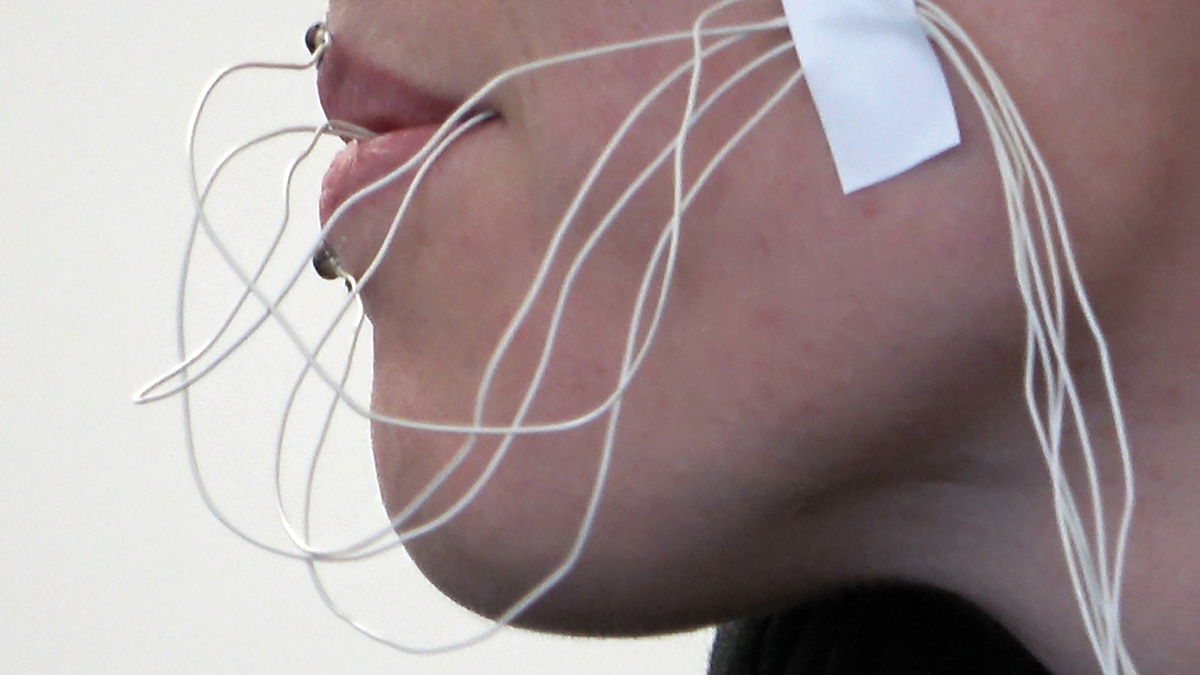
Places of Articulation: Five Obstructions
Doc. expérimental | mov | couleur | 22:0 | Belgique | 2020
Places of Articulation: Five Obstructions takes the spectator on a journey across borders, from Northern Ireland to Tibet, passing through Germany, Albania and Flanders. However, it explores a more deeply engraved border, the invisible border of our oral cavity, which marks and defines the sounds we can emit and the words we can pronounce. Since biblical times and up till nowadays asylum procedures, this border is exploited to discriminate and divide. Moving between territories – sonic, anatomical and political ones – this installation examines how voice and pronunciation are used as identifiers, eventually become mobile checkpoints, determining fates and sometimes costing lives. Employing different imaging methods and visualisations, it renders these checkpoints visible, while questioning the limits of identification and revealing blurred lines or zones of ambiguity that defy binary categorisation.
Effi & Amir, nés et grandis en Israël, travaillent en duo depuis 1999 et vivent à Bruxelles depuis 2005. Ils ont étudié les beaux-arts à l'Académie Bezalel de Jérusalem et au Sandberg Institut d'Amsterdam et ont appris eux-mêmes, bien plus tard, comment faire des films. Leur travail, qui utilise les médias audiovisuels, la performance et les stratégies participatives, se situe à la frontière floue entre le documentaire et la fiction, et traite des mécanismes de construction - de l'identité, de l'appartenance au groupe, de l'histoire et de l'œuvre elle-même. Le travail d'Effi & Amir a récemment été primé dans des festivals de films documentaires (docAviv, IndieLisboa, En ville !, festival Jean rouch) et ils sont les lauréats du Prix de parcours documentaire audoiovisuel 2022 de la Scam.
Ewa Effiom
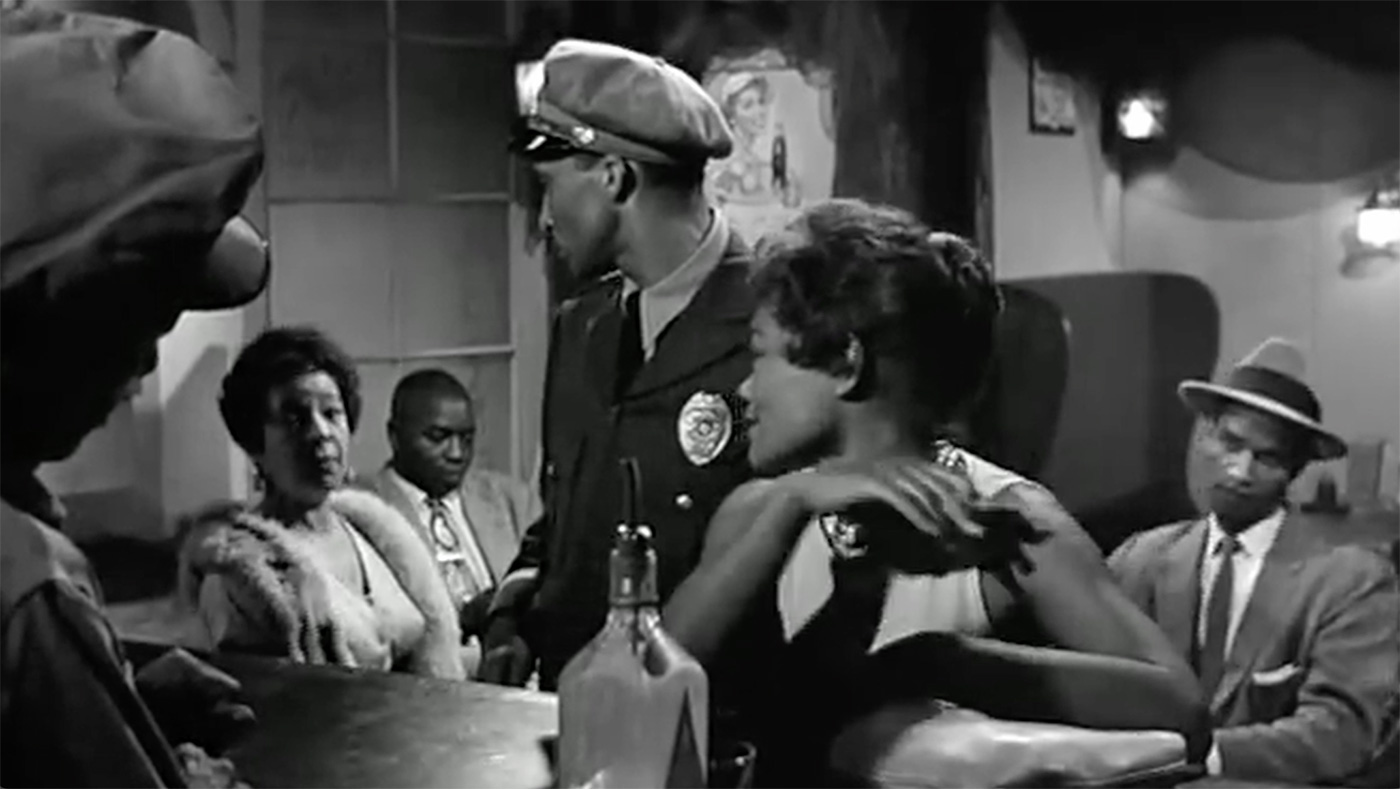
WHEN ONE DOOR OPENS
Doc. expérimental | mp4 | couleur | 10:44 | Belgique, Royaume-Uni | 2024
WHEN ONE DOOR OPENS se déploie comme une exploration des dynamiques complexes entre autorat, représentation et histoire. S’inspirant des méthodologies décisives d’Arthur Jafa et des esthétiques évocatrices de Christian Marclay, le film s’écarte des cadres conventionnels du cinéma dominant pour plonger au cœur d’un riche tissu de found footage, exhumant et réappropriant les récits enfouis au sein des race films, principalement issus de la période qui suit immédiatement l’ère pré-Code. À cet égard, l’œuvre se présente comme un contrepoint aux propositions parfois unidimensionnelles de Marclay. À travers une narration en apparence sinueuse, WHEN ONE DOOR OPENS bouscule les notions conventionnelles d’identité et d’appartenance, invitant le spectateur à se confronter aux complexités de la représentation historique. Chaque image devient un passage vers une époque révolue, où les personnages évoluent dans des espaces architecturaux à la fois littéraux et métaphoriques. L’exploration du mouvement au sein de ces espaces résonne d’une forte charge symbolique, révélant le pouvoir transformateur du cinéma. Au final, le film se dresse comme un hommage à l’attrait durable du médium cinématographique et à ses espaces implicites, capables de saisir et de réinventer les multiples strates de l’expérience humaine.
EWA EFFIOM est un architecte, auteur et producteur belgo-nigérian basé à Londres. L’imaginaire visuel, le futurisme et la mythologie sont des thèmes récurrents dans son travail, avec une attention particulière portée à leur relation avec l’espace. Il a fait partie de la deuxième promotion du programme New Architecture Writers de l’Architecture Foundation, qui s’est conclu par un programme public salué par la critique. Ses textes ont été publiés dans Architect’s Newspaper, Dwell, The AJ, ICON, Wallpaper, Frame, OnOffice, Architecture Aujourd’hui, The Modern House Magazine, A Daily Dose, Ex Libris, entre autres. Son essai Architecture, Buildings and Conservation in MAJA a été nommé dans la catégorie Meilleur article aux Estonian Architecture Awards 2022, un an après avoir obtenu la deuxième place au concours de commissariat de la Tallinn Architecture Biennale 2021 avec une proposition intitulée Adaptive Re-use. Son film Eagle Mansions a été présenté en première au Urban Film Festival de Perth en 2021, puis projeté à la Melbourne Design Week 2022. Il a ensuite obtenu la résidence How To au Centre canadien d’architecture, sous le titre How Not To Be A Developer. En 2022, son second film Beck Road a été présenté en première au festival Open City, avant d’être projeté à la 18? Biennale d’architecture de Venise. Il a été Fellow LINA en 2023 et a reçu la résidence Film Lab du musée MAXXI à Rome, où il a réalisé When One Door Opens, présenté au Demanio Marittimo–Km 278 puis dans l’exposition Restless Architecture commissariée par Diller Scofidio + Renfro au MAXXI. Il a également participé à la résidence Staging Ground de Theatrum Mundi, avec une exploration collaborative des transformations infrastructurelles de Paris après les Jeux olympiques. Il est ensuite revenu au réseau LINA pour prononcer le State of Architecture Address 2025, salué par la critique — un plaidoyer pour que la discipline architecturale retrouve la voie de l’imagination. Bien qu’il n’enseigne plus dans le programme MA in Architecture + Urbanism de la Manchester School of Architecture depuis 2022, il demeure critique invité à l’Estonian Institute of Technology et à la London Metropolitan University.
Anders Eiebakke
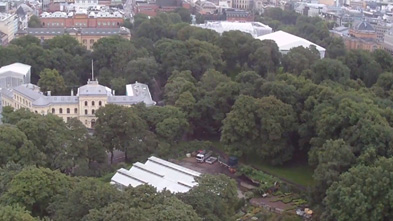
Proportional, Integral, Derivative. Registration of an expanding parametre around Kunstnernes Hus
| | couleur | 7:33 | Norvège | 2012
.
Born 1970 Lives and works in Oslo In the project "Proportional, Integral, Derivative: Registration of an expanding perimeter around Kunstnernes Hus" I utilise the board´s room in Kunstnernes Hus as a base for drone flying inside and outside of Kunstnernes Hus. The structures and Neo Classicist ideals of the Royal Palace Park create a web programmed into the drone. The Functionalism in Kunstnernes Hus defines the framework of video based piloting.
Charlotte Eifler, Clarissa Thieme
Archival Grid 1
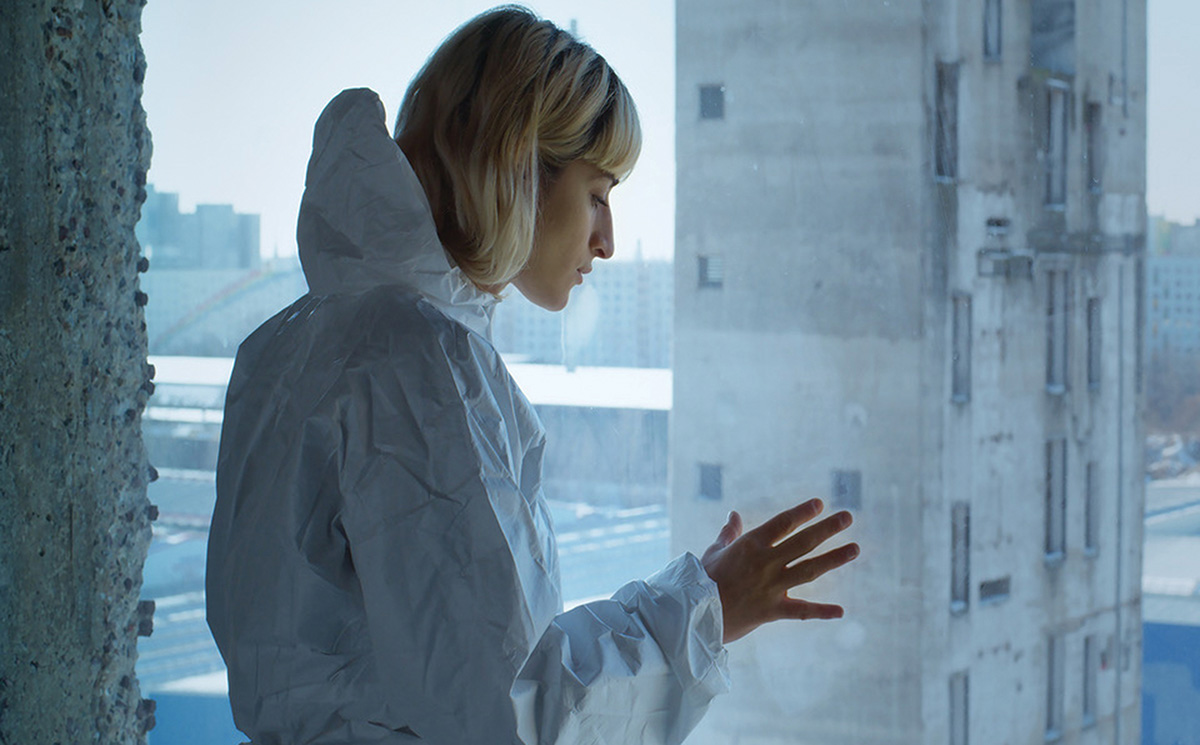
Doc. expérimental | 0 | couleur | 13:0 | Allemagne, Bosnie-Herzégovine | 2022
With the installation ARCHIVAL GRID, Charlotte Eifler and Clarissa Thieme present a filmic analysis in three parts. The work explores the tools of evidence production, the legal impact of cartographic surveys and the social processing of collective traumata and war crimes, as well as the criticism of it by those affected. The source materials are videos from one of the most extensive publicly accessible archives on war crimes: the archive of the International Criminal Tribunal for the former Yugoslavia (ICTY). In 2001, the ICTY conducted site visits with witnesses in Sarajevo to prepare indictments related to the 1992–1996 siege of the city. The purpose of these site visits was the detailed reconstruction of war crimes, particularly the targeted shelling of civilians. Interviews with the local witnesses at the original sites were documented on video, combined with 360-degree photographs and geographical surveys. The first part of ARCHIVAL GRID combines the forensic materials gene- rated from the ICTY evidence documents with transcripts from the court proceedings and interviews conducted today with witnesses and former employees of the ICTY. These recordings of different surveying practices in the fictitious setting of a future archive architecture shape the cinematic discursive framework. This reflects close parallels of perspectives in the technologies of witnessing, evidence and testimony and juxtaposes them with the demands of the affected people for recognition of their suffering. In a second part, ARCHIVAL GRID analyses the historical backdrop of tools of inquiry and their database logic as well as their entanglements with governmentality and coloniality. Algorithms collect data from digital archives and constantly create, combine and re-organize existing and emerg- ing databases. Through historical surveying instruments, maps and globes from the Mathematisch-Physikalischer Salon in Dresden collected und used by the Electors of Saxony, Augustus (1526– 1586) and Augustus II the Strong (1670–1733), Eifler and Thieme reflect on the historic interplay between survey and data collection, its visual representations and absolutistic claims to power. A third part turns once again to the archival ICTY videos to reflect on the specific forms of image production. Juxtaposing the processes and practices of the ICTY film team and the artistic methods that were used in the production of ARCHIVAL GRID, Eifler und Thieme engage with their own positions as filming artists and their role in the interrelation with witnesses of the war.
Charlotte Eifler is an artist and filmmaker spanning performance, video, installation, XR, and sound. Her works address the politics of representation, abstraction, and computation, and are characterized by interdisciplinary forms of collaboration. Focusing on feminist approaches and elements of science fiction, she explores processes of image & history production and imaginations of alternative futures. Charlotte is co-founder and/or member of the networks Digital Critique Leipzig, G-Edit, cobratheater.cobra, FACES – gender,art,technology und feat.Fem. Since Nov 2020, she’s teaching in the department of Media Art/ Film at the Karlsruhe University of Arts and Design (HfG). Eifler’s works have been presented at ACM Siggraph Art, Los Angeles (US); Staatliche Kunsthalle Baden Baden (DE), Le printemps de Septembre, Toulouse (FR); Sapporo International Art Japan (JN); Haus der Kulturen der Welt, Berlin (DE); IMPAKT Utrecht (NL); Kurzfilmtage Oberhausen and RENCONTRES INTERNATIONAL Paris among others. Residencies and scholarships facilitated her research in Moskau (Rosa Luxemburg Foundation), New York (KdFs Foundation) and Mexico City (Institutio Nacional de Bellas Artes y Literatura). /// Clarissa Thieme works with film, performance, text, and installation, combining documentary and fictional methods to explore processes of memory and historical translation as well as their identity implications. For this purpose, Thieme often deals with subjective testimonies in the context of collective traumas and their reconstruction with technical and legal means to trace the fissures that open up between the languages of individual memory and their translation into processes of historical objectification. Her practice is research-oriented and takes a collaborative approach. In series, many of her works link together to form long-term studies that span several years. Since the early 2000s, various artistic projects have taken her to the post-Yugoslav space, where she has collaborated with various archival collections and initiatives.
Jeroen Eisinga
Springtime
Installation vidéo | 35mm | noir et blanc | 19:5 | Pays-Bas | 2011
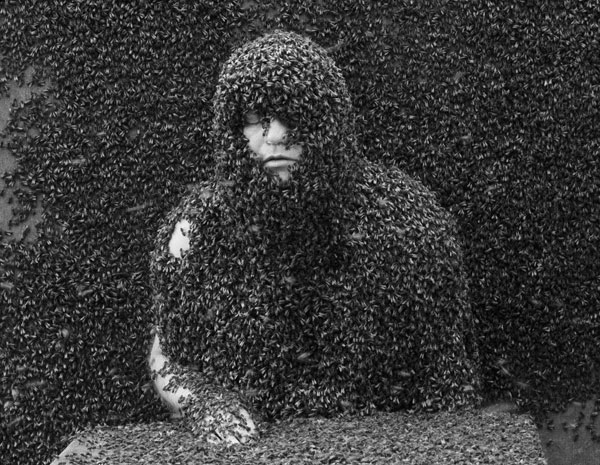
Performance artist Jeroen Eisinga is seated at a small table in front of a wall, which is entirely covered by bees. The pulsating, squirming bee mass gradually covers the artist?s body and face as well. In this gruesome, yet beautifully filmed performance the artist balances on the border between life and death. A claustrophobic image of fearlessness and patience.
Jeroen Eisinga began to work in performance art and film in the early 1990s. He made a series of controversial films in which the idea of suffering and personal danger as artistic expression were central. In his first performance (40-44-PG, 1993) a Volkswagen Beetle without a driver, circles mechanically in circles around the blindfolded artist who walks in circles in the opposite direction. Eisinga`s work deals increasingly with death and transience.

Saara Ekstrom
Shadow Codex
Film expérimental | 16mm | couleur | 12:30 | Finlande | 2021
The black-and-white 8mm film of the abandoned facilities of Turku County Prison (1835–2007), documents the layers of messages drawn, scratched and burned on the cell walls. The markings are passages to the shadow of an individual’s psyche, and expose an underbelly which a society simultaneously both generates and hides. The film becomes a codex of a collapsed civilization and evidence of a forbidden zone in the centre of the city. On top of the inmates’ messages, a second layer of graffiti by building squatters, trespassers and other participators has emerged, turning the walls into thickets of obscure visual information and indecipherable communication. The flow of images is punctuated by John Cage’s (1912–1992) composition “Perilous Night” (1964), described as a journey to the nocturnal side of the soul.
Saara Ekström works in film, photography, text and installation. Chronotopes where time and place densify, time that nurtures and erodes, the ambivalent desire to both remember and forget are at the core of her art. Ekström’s work has been shown extensively in various museums and festivals in Europe, the Americas and Asia. She received the Finnish media art prize AVEK-award in 2018 and the prizes of SW Finland in 2017, Finnish Art Society in 1995 and the Aboa prize in 1994. She has been the Helsinki Festival Artist in 2005 and was nominated for both Ars Fennica and Carnegie Art Award prizes in 2010.
Hakima El Djoudi
2 avenue M
Fiction expérimentale | dv | couleur | 9:14 | France | 2008
Dans « 2 Avenue M », Hakima El Djoudi dépeint les scènes de conflits et de rupture très intenses et, apparemment très passionnées mais aussi très contrôlées et elliptiques, entre un homme et une femme de la haute bourgeoisie. Le développement de séquences dans un appartement luxueux sans éclairage artificiel, et le dialogue entre les deux personnages, intensifient la tension suffocante entre l?homme et la femme, et leurs conflits profonds, pris trop tard pour pouvoir revenir en arrière.
lives and works in Paris and Corsica
Ahmed Elghoneimy
Al-Maw oud
Documentaire | hdv | couleur | 18:14 | Egypte | 2020
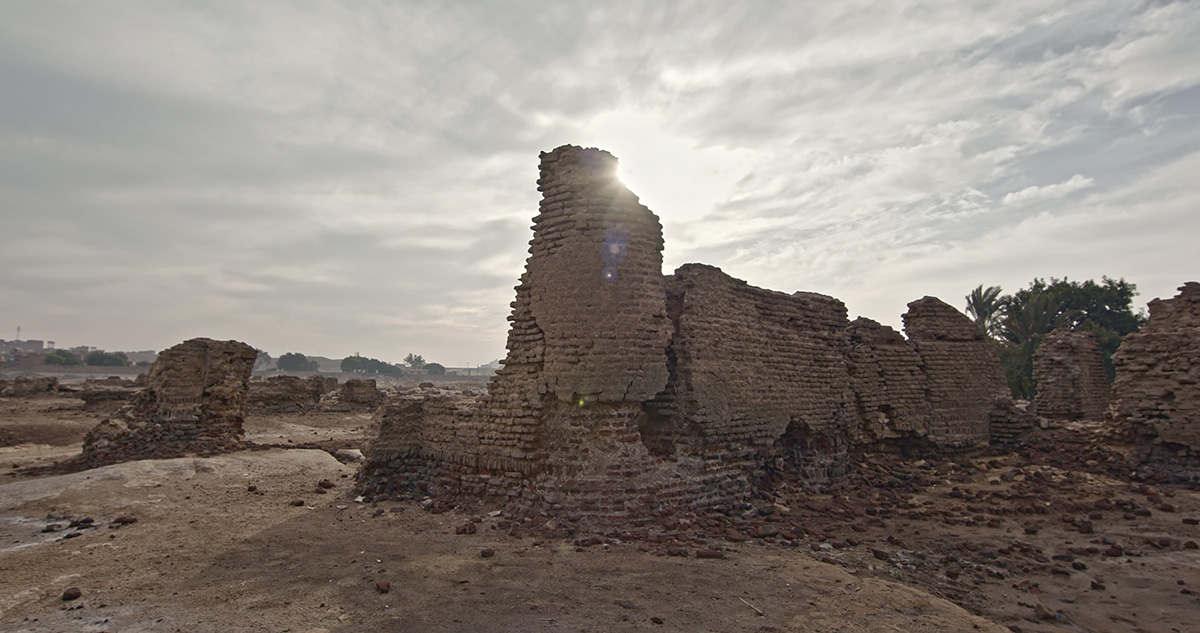
In and around the historical ruins of Fustat in Old Cairo, tensions simmer between the site’s government-appointed guards and residents of a nearby informal settlement, al-Izba. The guards chase away looters and confiscate their equipment, while locals infuriate them by taking shortcuts through the site, occasionally stopping for a smoke. For the guards it would be easiest to keep the site closed until further notice.
Ahmed El Ghoneimy, born in 1986 in Alexandria, Egypt, is a filmmaker and artist currently living between Alexandria and Cairo. His work revolves around interpersonal tensions between the different protagonists presented in his films, such as sons and fathers (Tripoli Tide, 2018), victims and perpetrators (Bahari, 2011), bullies and friends (The Cave, 2013). Alternating between fiction and documentary, his films follow associations and use moments of collision as an opportunity to investigate notions like victimhood, power, and masculinity.
Carl Elsaesser
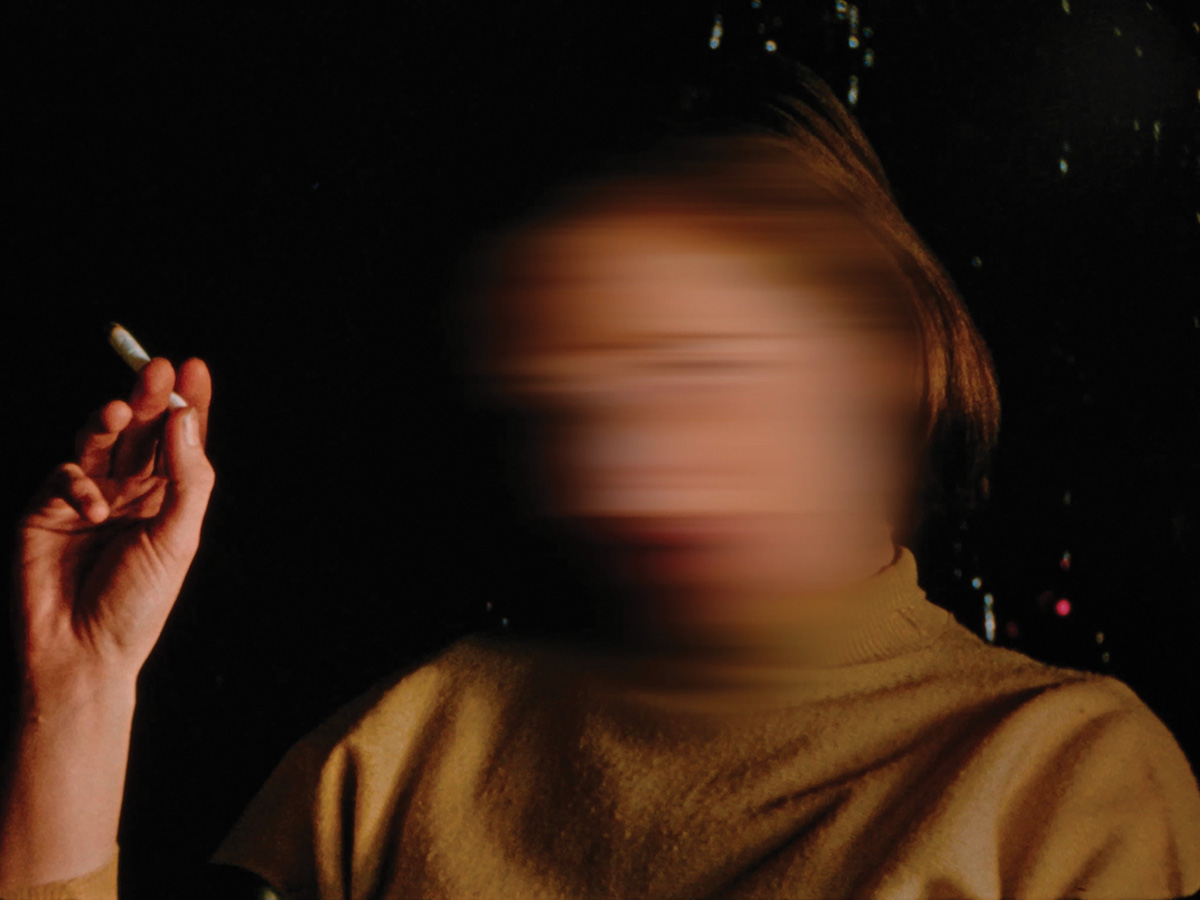
Home When You Return
Doc. expérimental | 16mm | couleur | 30:0 | USA | 2021
“Stretching and blurring the boundaries of video essay, experimental film and home movie, traces of a 1950s homemade melodrama by amateur filmmaker Joan Thurber Baldwin intermingle with a mournful homage to the author’s grandmother and her vacated home. A powerful mélange of cinematic and domestic spaces, past and present.”
Carl Elsaesser (1988, USA) graduated from Hampshire college and University of Iowa. He lives and works between midcoast and interior Maine and Brooklyn, NY. He has made several short films which have screened at festivals in New York, Berlin, Michigan, Amsterdam, Korea among others. In his work, Elsaesser mixes genres and materials to produce work that “critically investigates the overarching presence of the historical without losing sight of individual experiences of human connection.”
åsa Elzén, Wetzel, Markus
I'll be you if you'll be me 4 - Love Hurts More
Fiction expérimentale | dv | couleur | 10:0 | Suède | 2007
"I'll be you if you'll be me 4 - Love Hurts More", une oeuvre d'Åsa Elzén et Markus Wetzel Pendant trois mois en 2006, les artistes se sont isolés sur une petite île inhabitée de la mer Baltique où ils ont réalisé ensemble une série de cours métrages. Dans le même film, ils ont constamment échangé leur rôles, de réalisateur à acteur et inversement, et grâce à cette méthode, ont développé des récits sur un personnage androgyne fictif. Celui qui jouait portait un masque et devenait cet étrange personnage silencieux, seul sur son île, essayant de venir à bout de la nature aliénante, de la solitude, de la mort et de son désir d'amour. Ce "trans-personnage" au sexe toujours changeant habite également un espace entre les deux artistes. Le séjour réel sur l'île est ici une métaphore de l'isolation forcée dans laquelle un couple peut se mettre, mentalement ou physiquement. Cet état ambivalent entre sécurité et isolation a influencé la situation dans laquelle la collaboration a eu lieu. Les artistes s'intéressent aux notions d'hétéronormativité, de genre et de sexualité, et aux limites entre sujet et autre. Au début de "Love Hurts More" (10 mn), le personnage chante la chanson "Love Hurts" sur les rives rocheuses la nuit. Il/elle utilise un générateur pour faire fonctionner une lampe et chante en même temps que le bruit du générateur. Ensuite, il/elle se dirige vers le centre de l'île en s'aidant de la lampe et en traînant le lourd générateur. Il/elle arrive enfin à destination et trouve un cristal caché dans les branches d'un vieil arbre. De retour dans sa petite maison avec son trophée, notre héro/héroïne tente sans enthousiasme de soigner son manque d'amour par une étrange incantation.
Åsa Elzen a obtenu son MFA au Royal University College of Fine Art de Stockholm en 2002. Actuellement, elle suit le Whitney Independent Study Program de New York. Elle travaille sur les installations et l'art vidéo, traitant souvent de féminisme et de questions post-coloniales. Markus Wetzel a obtenu son MFA à la Hochschule fur Gestaltung und Kunst à Zurich. Actuellement, il travaille à New York et Zurich. Dans ses projets, il utilise l'idée de l'île à la fois comme forme réelle et comme forme fictive: ses images numériques, ses installations et ses projets d'extérieur, tout comme ses collaborations tendent vers les limites de la fiction, de l'espace fictif et du récit, vers ce moment où la fiction semble basculer dans la réalité. Depuis 2005, Elzén et Wetzel ont collaboré à trois projets.
Heinz Emigholz
Mamani in El Alto
Documentaire | 4k | couleur | 95:0 | Allemagne | 2022
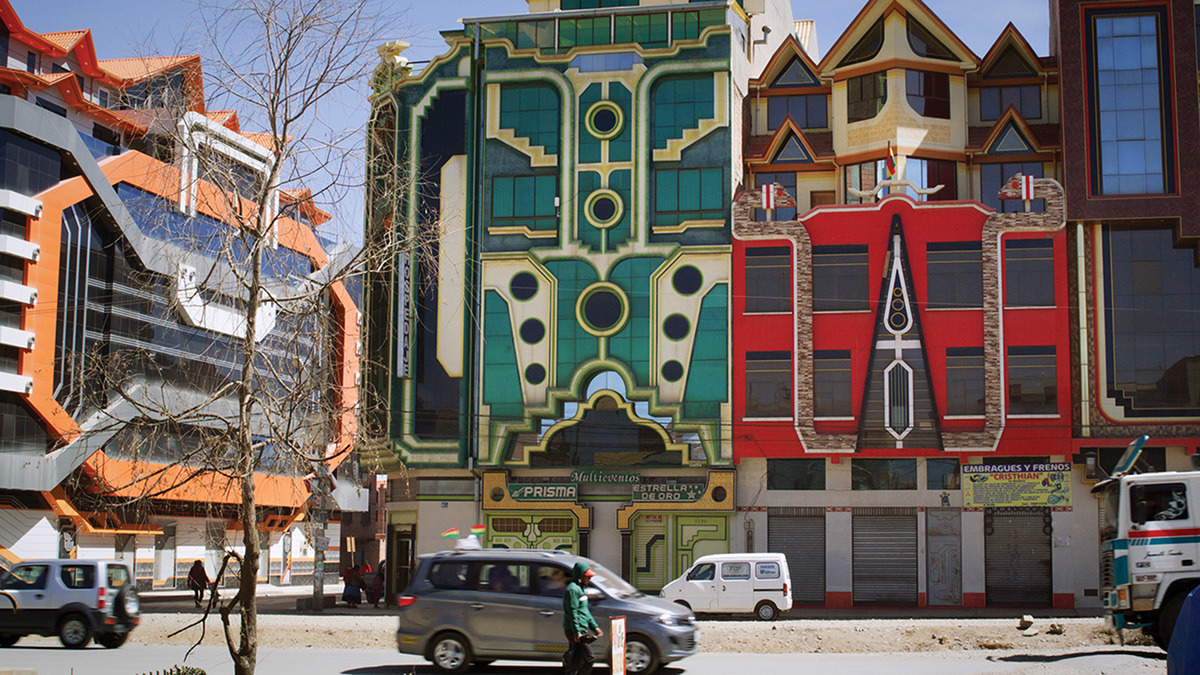
The civil engineer and architect Freddy Mamani Silvestre (*1971), has designed more than 60 building projects in the Bolivian city of El Alto since 2008, which mock the norms of a formulaic modern architecture shaped and enforced with global aspirations by the Bauhaus. Mamani comes from a humble background and belongs to the Aymara people. His self-taught architecture is a counter-utopia that grew out of local usages and opens up a view of preferences other than sparseness and global stylistic adherence. The film shows many of the “cholets” he built with their magnificent ballrooms in their urban setting. Mamani became the founder of neo-Andean architecture.
Born in 1948 near Bremen in Germany, Heinz Emigholz trained first as a draftsman before studying philosophy and literature in Hamburg. He began filmmaking in 1968 and has worked since 1973 as a filmmaker, artist, writer and producer in Germany and the USA. In 1974 he started his encyclopaedic drawing series “The Basis of Make-Up”. He looks back on numerous exhibitions, retrospectives, lectures and publications. In 1984 he started his film series “Photography and beyond”. He had held a professorship in Experimental Filmmaking at the Universität der Künste Berlin 1993-2013, and co-founded the Institute for Time-based Media and the Art and Media program, there. In 2003 Filmgalerie 451 started an edition of all his films on DVD. Publications a.o.: Krieg der Augen, Kreuz der Sinne (War of Eyes, Cross of Senses), Seit Freud gesagt hat, der Künstler heile seine Neurose selbst, heilen die Künstler ihre Neurosen selbst (Since Freud Said That the Artist Heals His Neuroses Himself, Artists Have Been Healing Their Neuroses Themselves), Normalsatz – Siebzehn Filme (Ordinary Sentence – Seventeen Films) and Das schwarze Schamquadrat (The Black Sqare of Shame) (all four books were published at Verlag Martin Schmitz); “Die Basis des Make-Up (I) and (II)”, “Der Begnadete Meier”, “Kleine Enzyklopädie der Photographie” (Small Encyclopaedia of Photography) and “Die Basis des Make-Up (III)” (in Die Republik No. 68-71, 76-78, 89-91, 94-97 and 123-125); Sense of Architecture with more than 600 photographs. Heinz Emigholz is a member of the Academy of the Arts in Berlin.

Heinz Emigholz
The Last City
Fiction | hdv | couleur | 100:0 | Allemagne | 2020
Un archéologue et un concepteur d'armes, qui se sont connus dans une autre vie où l’un était cinéaste et l’autre psychanalyste, se rencontrent sur un site de fouilles dans le désert du Néguev, et entament une conversation sur l'amour et la guerre, qu'ils poursuivent dans la ville israélienne de Be'er Sheva. Puis, avec des acteurs changeants dans des rôles changeants, le film entame une ronde qui les mène à travers Athènes, Berlin, Hong Kong et São Paulo. Apparaissent: un vieil artiste qui rencontre le jeune homme qu’il était, une mère qui vit avec ses deux fils adultes - un prêtre et un policier, une Chinoise et une Japonaise, un curatrice et un cosmologiste. Leurs dialogues traitent de tabous sociaux devenus obsolètes, de conflits de générations, de culpabilité de guerre, et de cosmologies. Les architectures des cinq villes servent de troisième participant au dialogue des protagonistes, et complètent leurs parcours philosophiques et métaphysiques.
Heinz Emigholz est né en 1948 à Achim, près de Brême (Allemagne). Il a d'abord suivi une formation de dessinateur, avant d'étudier la philosophie et la littérature à Hambourg (Allemagne). Il a commencé à réaliser des films en 1968, et travaille depuis 1973 comme réalisateur, artiste, écrivain et producteur, en Allemagne et aux États-Unis. En 1974, il a commencé sa série de dessins encyclopédiques "The Basis of Make-Up". Il a de nombreuses expositions, rétrospectives, conférences et publications à son actif. En 1984, il a entamé sa série de films "Photography and beyond". Il a été professeur de cinéma expérimental à la Universität der Künste Berlin (Allemagne) de 1993 à 2013, et y a cofondé le Institute for Time-based Media et le programme Art and Media. En 2003, la Filmgalerie 451, Berlin (Allemagne), a lancé une édition de tous ses films sur DVD. Entre autres publications, citons: "Krieg der Augen, Kreuz der Sinne", "Seit Freud gesagt hat, der Künstler heile seine Neurose selbst, heilen die Künstler ihre Neurosen selbst", "Normalsatz - Siebzehn Filme", et "Das schwarze Schamquadrat" (ces quatre livres ont été publiés chez Verlag Martin Schmitz, Berlin [Allemagne]); "Die Basis des Make-Up (I) et (II)", "Der Begnadete Meier", "Kleine Enzyklopädie der Photographie" et "Die Basis des Make-Up (III)" (publiés dans "Die Republik" No. 68-71, 76-78, 89-91, 94-97 et 123-125); et "Sense of Architecture", avec plus de 600 photographies. Heinz Emigholz est membre de l'Académie des Arts de Berlin (Allemagne).
Redmond Entwistle
Belfast Trio
Doc. expérimental | 16mm | couleur | 10:20 | Royaume-Uni | 2009
Revised synopsis Belfast Trio (Tea at Four O'Clock/The Hollow Ball/The Apprentice)is a sequence of three 3-minute films, which can be shown in different orders. Each film is a piece of a puzzle of which the three films form a whole. Taking their titles from classic mid-20th century novels of Belfast life, each film is at once a description of a film to be made, a conversation between characters in a love triangle, and a portrait of a city attempting to refashion itself for entry into a global economy. The films restage original interviews with professionals from the film and IT industry in Belfast, two industries through which the city hopes to attract investment and establish itsâ?? position within an international pecking order of knowledge economies and creative industries. Interwoven with these interviews are moments of melodrama and documentary explorations of redevelopment projects. The films were made with a crew drawn from Northern Irelandâ??s film industry, and allude to this image-making economy in which on the one hand local history has a market function, and on the other the city can stand-in for any number of other cities or time periods. Originally shown in three separate cinemas around Belfast before feature films, most of which were North American, the films hint at the promises and thwarted desires of mobility and economic participation at an international level that characterize the new economy.
Redmond Entwistle (b. London, 1977) is an artist-filmmaker currently living in New York. Entwistle employs documentary and abstract modes of film-making, often investigating histories of social displacement and creating portraits of cities anchored on the invisible or the implied. Recent works include Monuments (2009), a narrative exploration of the origins of Post-Minimalist art in the economic and spatial relationship between New York and New Jersey, Skein (2007), a video portrait of migration to the towns that spread out from New York, and Paterson ? Lódz (2006), a 16mm expanded film about two towns (Paterson, New Jersey, and Lódz, Poland) and their interrelated history of politics and migration in the early years of the 20th century. Redmond Entwistle studied at California Institute of the Arts and the Whitney Independent Study Program. He has presented projects at recent group shows at Miguel Abreu Gallery (NY), Nought to Sixty (ICA, London), a film performance at Gallery TPW (Toronto), and a recent solo exhibition at Belfast Exposed (UK).
Redmond Entwistle
Walk-Through by
Doc. expérimental | hdv | couleur | 18:0 | Royaume-Uni | 2012
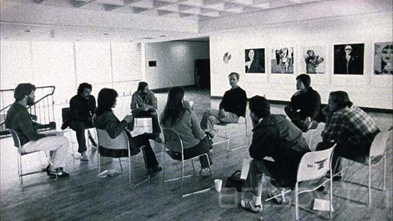
A film exploring the role and value of art education today through the history of the seminal California Institute of the Arts. WALK-THROUGH revisits the history of pioneering Los Angeles art school, the California Institute of the Arts, to explore wider questions about the purpose and value of education today. This newly commissioned film by artist filmmaker Redmond Entwistle will premier at Tramway for the Glasgow International Festival on 20th April. It will then tour to Cubitt Gallery, London, and International Project Space, Birmingham, reaching a wide audience through out the UK, with plans to tour further in the US and Europe.
Redmond Entwistle (b. London, 1977) is an artist and filmmaker based in New York and London. Working across a range of film forms from expanded cinema to narrative, his work has shown in both galleries and film festivals internationally. In 2008 his film Paterson ? Lódz won Best International Film On-Screen at Images Festival. His films have been included in recent group shows Nought to Sixty (ICA, London) and Greater New York: Artists Cinema (PS1 MOMA). His last film Monuments had its gallery premiere at Art in General in 2010 and had its festival premiere in competition at the Rotterdam International Film Festival 2010 and has been shown in a number of festivals and curated programs internationally including the National Gallery of Art Washington, Viennale, FID Marseilles, Hors Pistes at the Centre Pompidou, Argos Center for Art and Media, Anthology Film Archives and the Walker Art Center. His work is distributed by Lux Artists Film and Video.
Mélissa Epaminondi
Il Grattacielo Nuovo
Film expérimental | hdv | couleur | 8:10 | France, Italie | 2015
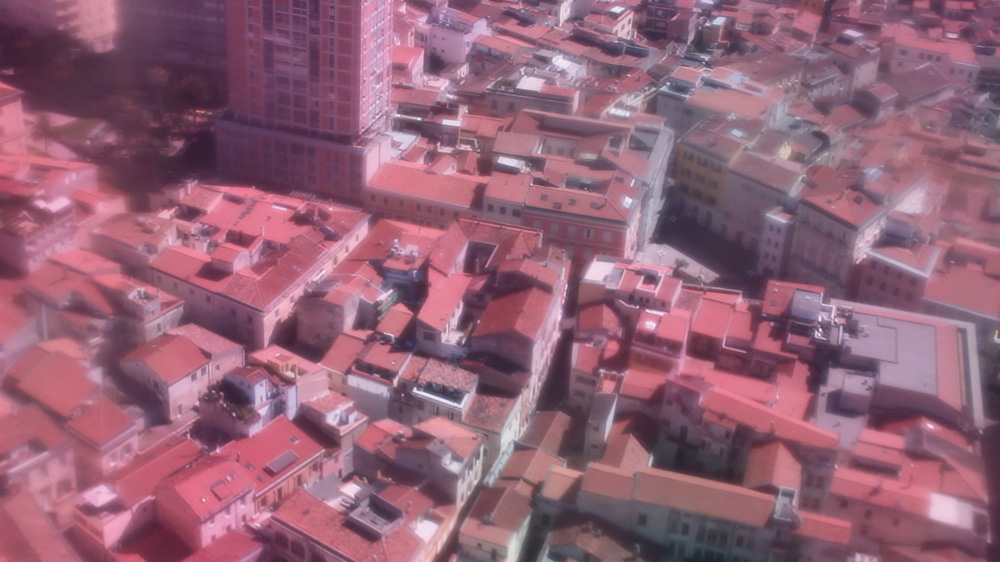
La place Castello est surmontée de l’une des transformations urbaines les plus discutées de la ville de Sassari, construite par Fernando Clemente en 1965. Ce bâtiment, baptisé “Il Grattacielo Nuovo”, a été le premier édifice d’architecture moderne en Sardaigne. Le gratte-ciel est visible de tous les points de la ville, et jusqu’en 1970 une étoile filante lumineuse était installée à son sommet pendant les fêtes de Noël. Dans le même période, entre 1965 et 1970 l’homme a rejoint la Lune. Le film est une évocation de la chute des utopies. Deux plans séquences se succèdent : l’un suit le mouvement vertical de la nacelle électrique suspendue à la façade est du gratte-ciel en cours de rénovation ; l’autre, vue du ciel, traverse horizontalement la ville de Sassari depuis la campagne périurbaine jusqu’au centre historique de la place Castello. Sous la forme d’un karaoké la lecture de ces images est accompagnée par la chanson I want to know dans laquelle Adriano Celentano critique la société, son mode de vie et son urbanisme. Ce titre sort en 1976 dans les premières années d`existence de cette tour symbole de modernité. Sur la place Castello j’ai installé une sculpture représentant une étoile filante en métal. Elle est posée à l’horizontale au centre de la place à même le sol. Elle a été réalisée selon le dessin de l’artiste sarde Leonardo Boscani, faisant appel à son souvenir d’enfant.
Née en 1977 à Bastia, Mélissa Epaminondi est architecte et artiste, elle vit et travaille entre la Corse et Paris. Elle s’est engagée dans un processus de travail établissant des liens entre l’art et l’architecture au travers de la notion de projection. Son approche architecturale lui permet d’appréhender l’installation et l’art vidéo d’une manière singulière, questionnant le rapport entre le corps, l’architecture et le cinéma. Elle s’attache particulièrement aux espaces en lien avec l’intime. Depuis 2008 elle mène également son activité au sein du collectif l 140 (bureau de conception de projets d’art et d’architecture). Depuis 2013 Mélissa Epaminondi est représentée par la société de production Stanley White au sein de laquelle le producteur et historien d’art Fabien Danesi accompagne ses projets cinématographiques.

Mélissa Epaminondi
La Villa
Vidéo | hdv | couleur | 5:34 | France | 2016
LA VILLA Etre dans sa maison L’été 2016, je filme le caveau familial à peine achevé. Cet ouvrage minimaliste, projet de mon père, est bâti dans le cimetière d`Oletta en Corse. Le marbre de Carrare, reflète dans sa permanence l`architecture du village dont certaines villégiatures.
Mélissa Epaminondi est née en 1977. Elle vit et travaille entre Paris et Oletta (Corse). Elle est diplômée de l’Ecole d’Architecture de Marseille Luminy. Architecte et artiste, elle poursuit sa pratique initiale et réalise des films, vidéos et installations. Depuis 2008 elle mène son activité d’architecte au sein du collectif L140. Elle enseigne l’art-vidéo à l’Université de Corse Pascal Paoli. Dans le prolongement des bâtiments qu’elle construit, ses films, vidéos et installations sont des architectures projectives révélant l’inconscient individuel ou collectif. Les références à la culture populaire sont présentes dans ses oeuvres dont l’univers part d’un regard alternativement amusé et grinçant sur le monde. Tout dans son travail est à la faveur des projections mentales. Chaque non-dit, chaque manque, chaque vide permet l’ambiguité. Les objets y sont transitionnels, faisant appel à la mémoire, à l’interprétation, au désir à la faveur d`un renversement du regard. Les mouvements de caméra sont synthétiques. S’ils ne suivent pas la trajectoire du corps qui porte la caméra ils s’opèrent grâce à un mécanisme présent sur place au moment du tournage.
Mélissa Epaminondi
LAVEZZI
Vidéo | hdv | couleur | 12:35 | France | 2013
/Volumes/MELISSA-2/LAVEZZI/DIVERS/Paris Berlin Madrid/LAVEZZI SYNOPSIS .pdf
/Volumes/MELISSA-2/LAVEZZI/DIVERS/Paris Berlin Madrid/LAVEZZI BIOGRAPHIE .pdf

Mélissa Epaminondi, Esteban Ulrich
Deconstructing Niemeyer
Doc. expérimental | mp4 | couleur | 1:9 | France | 2020
Sur une succession d'images documentant le chantier de remise en état de la coupole du siège du Parti Communiste Français, la voix de l'architecte brésilien Oscar Niemeyer traverse le temps pour nous dévoiler le cœur de son œuvre et de sa pensée.
Mélissa Epaminondi est née en 1977. Elle vit et travaille entre Paris (France) et Oletta (Corse, France). Elle est DPLG diplômée de l’École d’Architecture de Luminy Marseille (France). Architecte et artiste, son travail reflète une vision sensible en même temps qu’une réflexion étayée sur les questions environnementales. Elle poursuit sa pratique initiale et réalise des films, vidéos et installations. Esteban Ulrich est né à Buenos Aires, Argentine, en 1975 il étudie dans des écoles françaises avant de commencer sa carrière professionnelle chez Los Inrockuptibles, la version argentine du magazine français. Depuis, il se partage entre le journalisme, le cinéma, la photographie et l'expérimentation avec les nouvelles technologies appliquées à l'art et aux médias. Il vit à Paris (France) depuis 2015.

Zachary Epcar
Billy
Fiction expérimentale | 16mm | couleur | 8:3 | USA | 2019
The reenactment of a scene from a primetime soap opens this domestic psychodrama, an anxious look into the horrors of interior decoration and the boundless entanglement of things.
Zachary Epcar (b. San Francisco) is a filmmaker whose work has screened at the New York Film Festival, Toronto International Film Festival, International Film Festival Rotterdam, Museum of Contemporary Art Chicago, Pacific Film Archive, Ann Arbor Film Festival, Rencontres Internationales, Onion City, Images Festival, and elsewhere.