Catalogue > Faire une recherche
Résultats pour : Tout le catalogue
Zachary Epcar
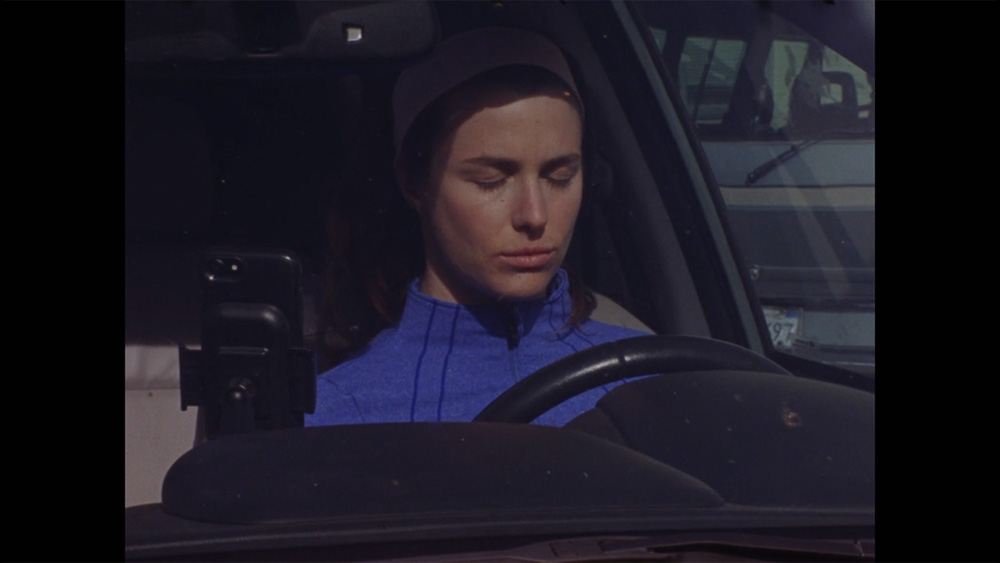
Life After Love
Film expérimental | 16mm | couleur | 8:25 | USA | 2018
A shifting in the light of the lot, where parked cars become containers for a collective estrangement.
Zachary Epcar (b. 1987, San Francisco) has screened at the New York Film Festival - Projections, Pacific Film Archive, Ann Arbor Film Festival, San Francisco Cinematheque's Crossroads, Images Festival, Rencontres Internationales Paris / Berlin, the Rotterdam, Edinburgh, San Francisco International Film Festivals, and elsewhere. He studied at Bard College and is a current MFA candidate in the Film, Video, Animation, & New Genres program at the University of Wisconsin Milwaukee.
Zachary Epcar
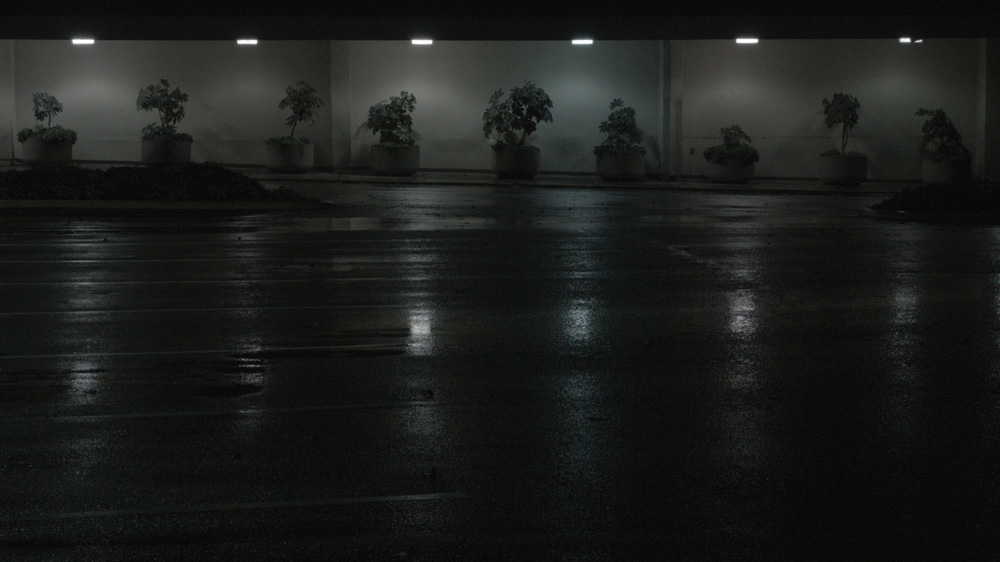
Night Swells
Vidéo | hdv | couleur | 5:14 | USA | 2015
And you love that humid atmosphere/ And you look so lush under glass.
Zachary Epcar (b. 1987, San Francisco) is a film and video maker currently based in Oakland, California. His work has shown at the New York Film Festival - Projections, Ann Arbor Film Festival, San Francisco Cinematheque’s Crossroads, FLEXfest, Images Festival, 25 FPS, and the Rotterdam, Edinburgh, and San Francisco International Film Festivals.

Zachary Epcar
The Canyon
Fiction expérimentale | 16mm | couleur | 15:43 | USA | 2020
Un portrait d’un complexe résidentiel urbain qui tombe dans l'oubli. Plus de beaux bébés, plus de chaises en rotin emballées à la main.
Zachary Epcar est né à San Francisco (USA). Il est réalisateur, et ses œuvres ont notamment été présentées au New York Film Festival (USA); au Toronto International Film Festival (Canada); au Festival international du film de Rotterdam (Pays-Bas); au Museum of Contemporary Art Chicago (USA); et à la Pacific Film Archive, Berkeley (USA).
Zachary Epcar
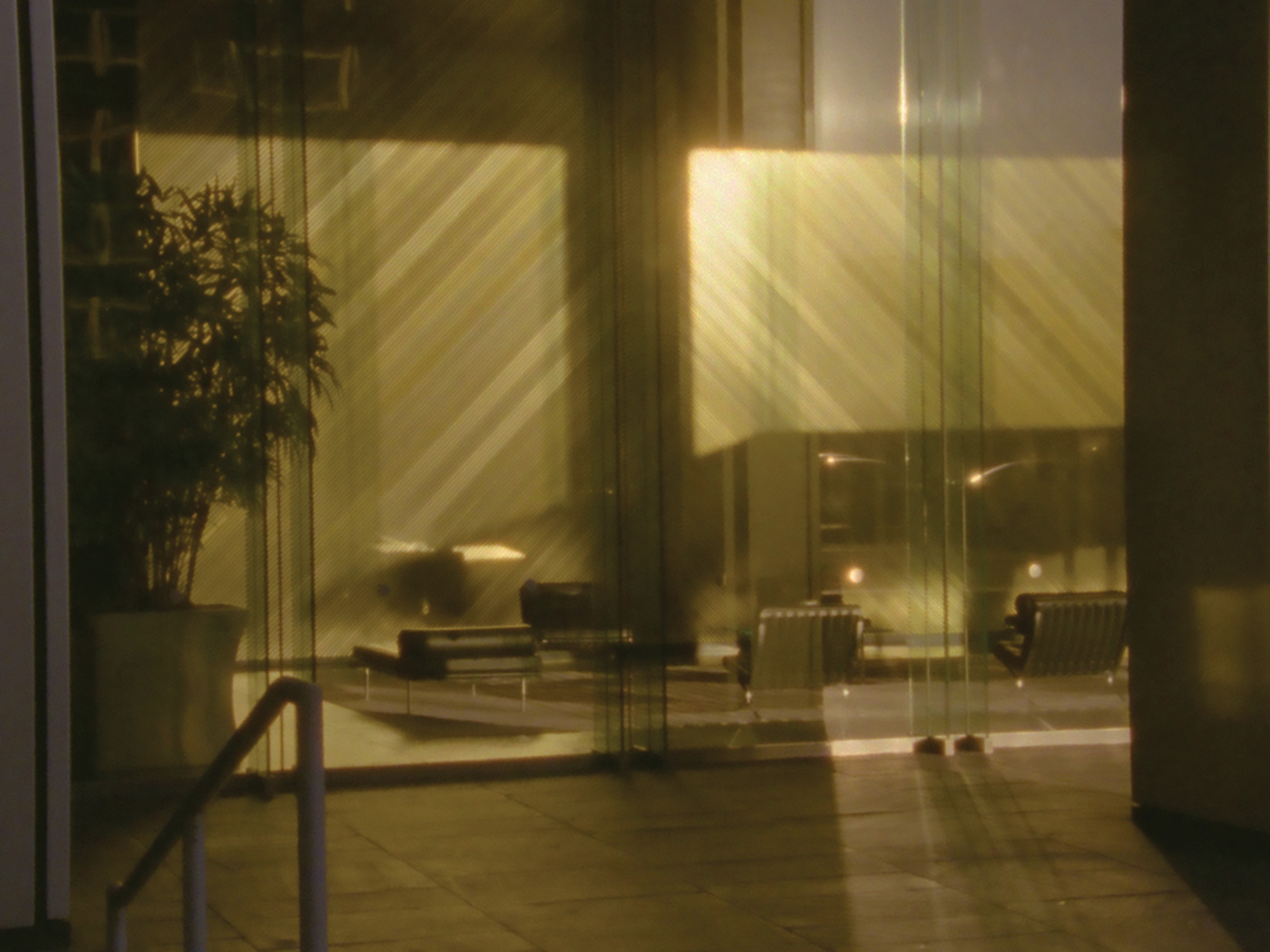
Sinking Feeling
Fiction expérimentale | 16mm | couleur | 20:0 | USA | 2024
Trois employés de bureau se remémorent une expérience où ils se sont retrouvés piégés dans le tunnel transbay de San Francisco, chacun dérivant vers des fantasmes de sexe, de mort et d’autres formes d’intimité avec des inconnus. « Une œuvre envoûtante, ample et transportante, faite de tension suspendue, qui cherche de nouvelles formes d’intimité dans l’aseptisé. Un parc de bureaux urbain devient un bassin de réflexion pour les fantasmes érotiques d’un train déraillé où nous attendons, tremblons et survivons ensemble. »
Zachary Epcar (né à San Francisco) est un cinéaste dont les films ont été projetés dans les festivals internationaux de Toronto, New York, Rotterdam, San Francisco, Vancouver, Édimbourg et Melbourne ; au Berkeley Art Museum & Pacific Film Archive, à Media City, IndieLisboa, European Media Art Festival, EXiS, 25 FPS ; ainsi que lors de programmations monographiques au Museum of Contemporary Art Chicago, au Museum of the Moving Image et à Black Hole Cinematheque. Ses films ont également été présentés en ligne sur MUBI, Le Cinéma Club et Ecstatic Static. Zachary vit à Oakland, en Californie, où il est membre du collectif de programmation Light Field. Ses films sont distribués par Light Cone (Paris).
Zachary Epcar
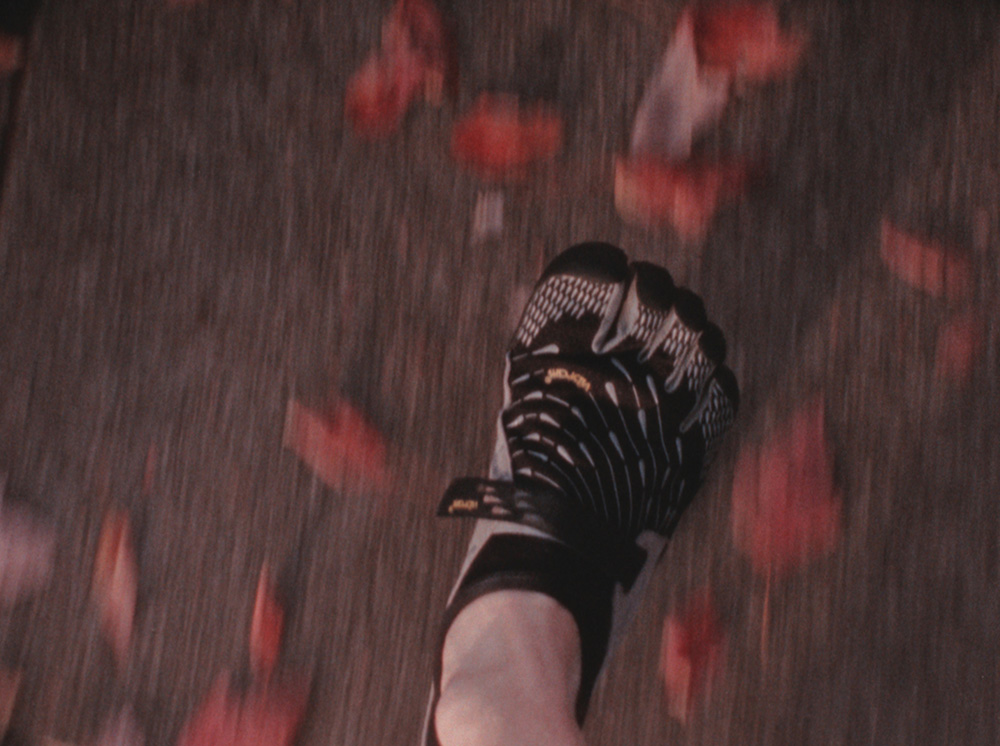
Return to Forms
Film expérimental | 16mm | couleur | 10:13 | USA | 2016
A constellation of objects, each emerging into the soft peach-light void of an indeterminate condominium space.
Zachary Epcar (b. 1987, San Francisco) is a film and video maker based in Oakland, California. His work has shown at the New York Film Festival - Projections, Ann Arbor Film Festival, San Francisco Cinematheque’s Crossroads, Les Rencontres Internationales Paris/Berlin, Images Festival, and the Rotterdam, Edinburgh, and San Francisco International Film Festivals.
Andro Eradze
Flowering And Fading
Film expérimental | 0 | couleur | 16:22 | Georgie, 0 | 2024
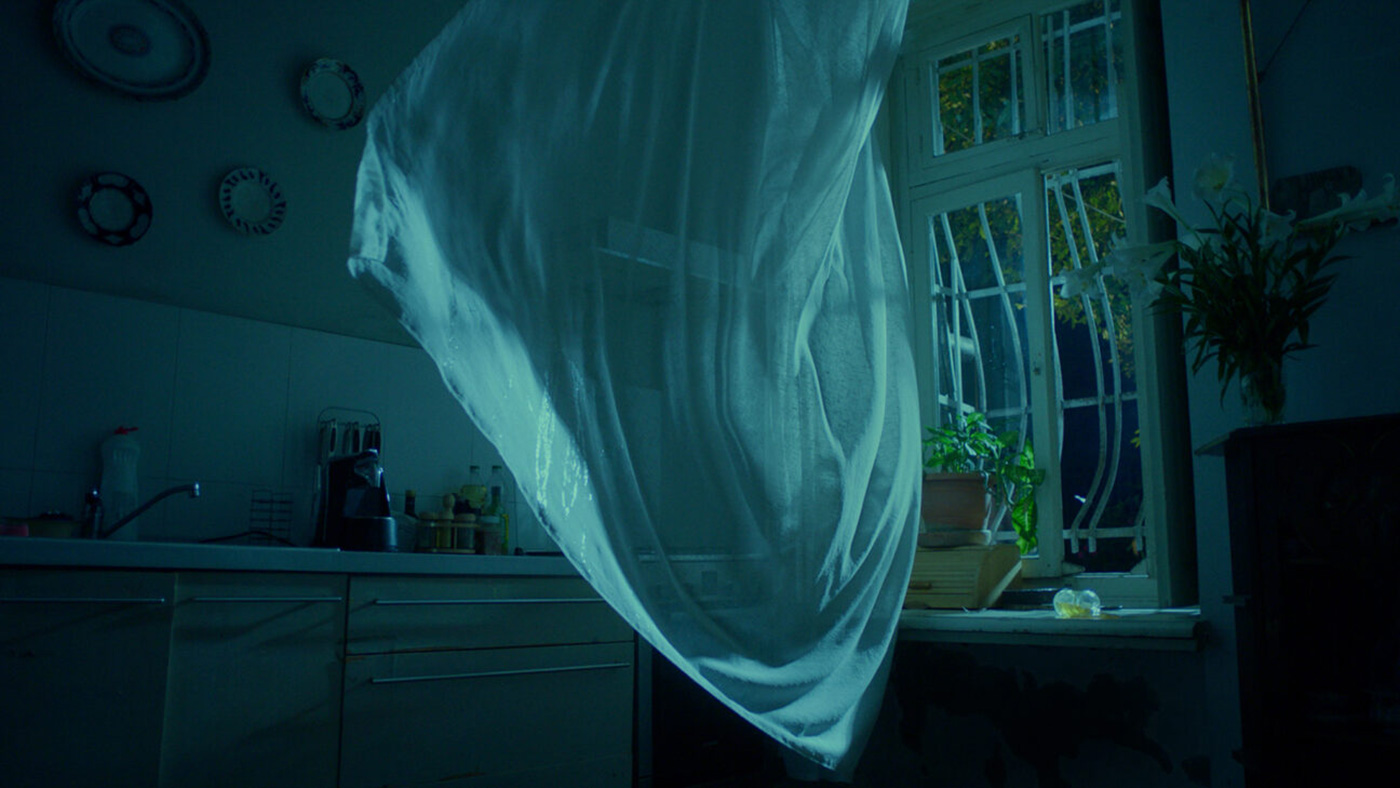
Un chien et un humain partagent leur sommeil dans le clair-obscur d’une maison tranquille. Soudain, les contours du réel commencent à se brouiller, et peu à peu, le rêve et la fantaisie prennent le dessus. Dans son nouveau travail, Andro Eradze façonne une vision renouvelée du surréalisme, où une composition d’image impeccable et un travail sonore saisissant frappent directement l’inconscient, plongeant les sens dans un océan de beauté absolue.
Andro Eradze (né en 1993, Tbilissi, Géorgie) est un artiste et cinéaste dont la pratique pluridisciplinaire explore les intersections entre présence, mémoire et spectralité. À travers la photographie, l’installation, la vidéo et le cinéma expérimental, Eradze examine l’agency des entités non humaines au sein de paysages où les frontières entre expériences humaines et non humaines se brouillent. Ses projets convoquent souvent des espaces liminaux, explorant les gestes inattendus et les relations subtiles entre objets, plantes et animaux. Il a participé à plusieurs expositions personnelles et collectives ainsi qu’à des projections dans des institutions internationales telles que MoMA PS1 (New York), la 59e Biennale de Venise, The New Museum (New York), WIELS (Bruxelles), GAMeC (Bergame), la 22e Biennale Sesc_Videobrasil (São Paulo), la 14e Biennale de Kaunas (Lituanie), et la Fondation Vincent van Gogh Arles.
Andro Eradze
Raised in the Dust
Vidéo | 4k | couleur | 7:45 | Georgie | 2022
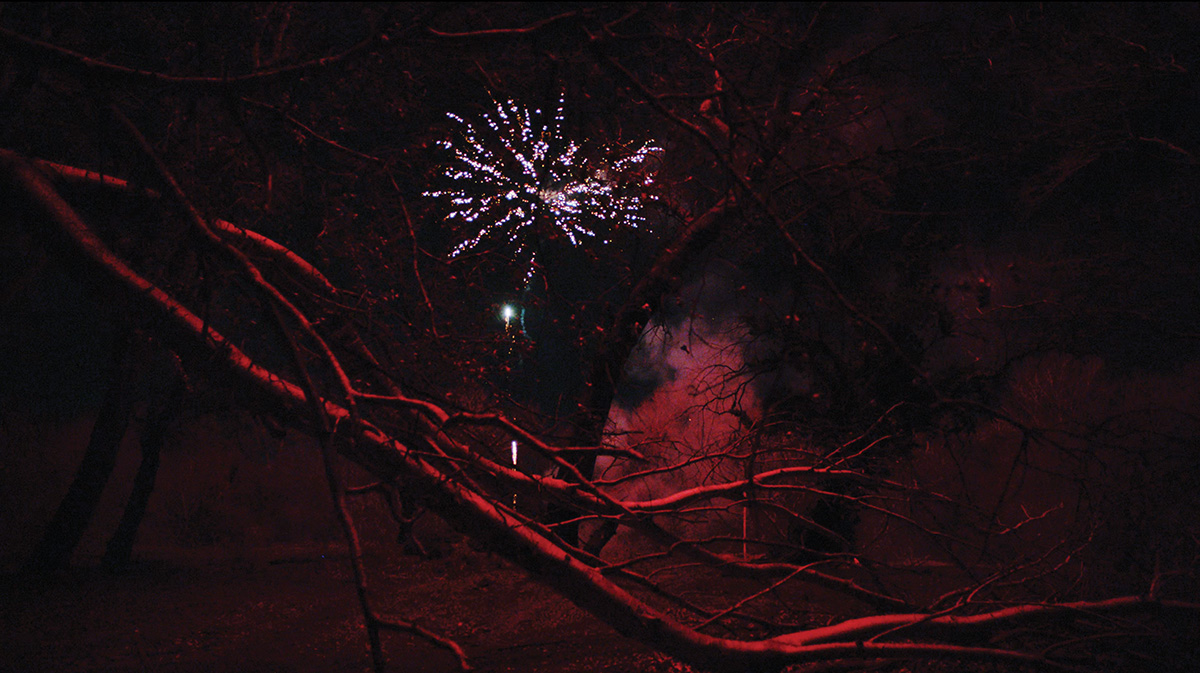
Inspired by Donna Haraway and John Berger’s contemporary theories on interspecies relations, Andro Eradze fills the frames of his works with plants and animals poised to exceed their boundaries. His camera follows scenes on the cusp of something undefined: a smouldering campfire, a stormy forest of wind-whipped trees, a flooding football pitch. Accompanied by haunting, transcendent soundtracks, his films feel like a compilation of the transitional moments of a feature film, leaving the viewer with a sense of expansive anticipation. Eradze’s new video installation for The Milk of Dreams, titled Raised in the dust (2022), stems from the conclusion of classical Georgian poet Vazha-Pshavela’s The Snake Eater (1901). The poem’s protagonist has a supernatural talent for understanding the language of nature; he must decide between his connection to nature and his social responsibilities, ultimately bowing to the latter. Eradze’s film takes place in a forest. Taxidermized animals appear one by one, disturbed by an uproar of New Year’s Eve fireworks. Critical of the human carnival that is disruptive, toxic, and fatal for wildlife, Eradze’s film repositions fireworks as an entry point onto the dark and mythological side of the forest, a world of plants, animals, and phantoms.
Andro Eradze (b. 1993) lives and works in Tbilisi, Georgia. He studied at the Shota Rustaveli Film Academy, as well as CCA-T (Center of Contemporary Art Tbilisi) MFA program. His works meditate on the qualitative nature of images, still as well as moving. Working primarily in Georgia, Eradze experiments with introducing narratives to the outskirts of human habitation, in the literal and figurative sense. The feeling of an uncanny, non-anthropocentric presence in his works invites the viewer to the liminal space between the subjective and the visceral, between cognition, perception and the alien otherness of non-human experience. Animals, objects, plants, and digital artifacts permeate a sense of presence in a landscape that exists simultaneously parallel and entangled human experience. Eradze’s practice investigates the potentiality of animism as method. Photography, installations, experimental cinema practices and video blend into a project contemplating the fading present, in which the Anthropocene is faltering, and everything operates independently of it. Building upon the legacy of alternative approaches to reality—surrealism and magical realism—his images blur the distinction between the imaginary and the real.
Daniel Erb, Patrik METZGER
West-Berlin
Documentaire | dv | couleur | 3:47 | Allemagne | 2006
Histoires de l'est de Berlin-Ouest. Ou pourquoi Berlin-Ouest se trouve très loin en République kalmouke.
DANIEL ERB, né le 08/08/1976 Cameraman et cinéaste. Sélection de films: DIE AFFEN IN DEN BÄUMEN DES ODYSSEUS (1999), film documentaire expérimental IN MEMORIAM (2003), clip documentaire PARTISAN (2004), film documentaire THE PICK-UP (2004), court-métrage 2800km NACH HAUSE (2005), film documentaire court PATRIK METZGER, né le 19.05.1969 Sélection de films: FUNKEL (2002), film d'animation
Köken Ergun
The Flag
Vidéo expérimentale | dv | couleur | 9:1 | Turquie | 2006
?The Flag? ('Le Drapeau') est la seconde partie de la série de vidéos de Köken Ergun sur les cérémonies contrôlées par l?état en Turquie lors de fêtes nationales. Tourné lors du ?Jour des Enfants? du 23 avril, date qui marque la mise en place du nouveau parlement turc et la chute officielle de l?Empire Ottoman en 1920, ce film témoigne d?une représentation patriotique pompeuse conçue par les adultes dans le but d'être mise en scène par des enfants. Durant la cérémonie, présidée par le maire et le gouverneur d?Istanbul et avec la participation d?un général de haut rang, les élèves d?une école primaire lisent à voix haute des poèmes et des serments. Le patriotisme se métamorphose alors en nationalisme pur et dur. L?un des textes, ?Le Drapeau?, est récité par une petite fille qui jure de ?détruire le nid de tous les oiseaux qui ne saluent pas le drapeau [de son pays] durant son vol? et de ?creuser la tombe de toutes les personnes qui ne regardent pas le drapeau [comme elle le fait].?
Né à Istanbul, Köken Ergun a été l?élève du dramaturge Güngör Dilmen et de l?actrice Yildiz Kenter au Conservatoire d?état d?Istanbul et il a effectué son diplôme de troisième cycle au King?s College de Londres. De 1998 à 2002 il a travaillé avec le réalisateur américain Robert Wilson. Ergun a également travaillé avec Aydin Teker à Istanbul en jouant dans ?Density? et ?iiao?. En septembre 2001, Ergun a présenté ?öte-oceanwide?, un projet d?installation/performance, à l?occasion de la Biennale d?Istanbul avec Carlos Soto, Ferhat Karakaya et Dominic Reeves. Bénéficiaire de l?American Center Foundation et de la Jerome Robbins Foundation, Ergun a plus récemment exposé une installation sonore à Kiasma à Helsinki. Il écrit actuellement sa thèse à l?Istanbul Bilgi University sur ?L?Elément de stress sur le corps contemporain dans les nouveaux arts médiatiques d?aujourd?hui.? La résidence d?Ergun à Location One est financée par la Jerome Robbins Foundation ; le Ministère des affaires étrangères de Turquie, Mavi Jeans ; Istanbul Bilgi University, le Marmara-Manhattan et le Moon and Stars Project.

Jonas Erler
Der Junge mit dem Perlenohrring
Fiction expérimentale | 16mm | couleur | 8:33 | Allemagne | 2023
The boy is familiar with his surroundings. His path is linear and without any detours. Slowly, doubts creep into his mind and he begins to question the status quo. Where does his path lead?
Jonas Erler is studying at the Academy of Fine Arts Leipzig (HGB) in the class of Heidi Specker. In 2022 he took part in the Connecting Talents program "Visegrád in Short(s)" of Filmfest Dresden under the mentorship of Csaba Bollók and in 2024 in the Oberhausen Seminar. He works closely with the Chemnitzer Filmwerkstatt. Currently he is working as assistant director for Luise Donschen.
Felipe Esparza
Soga de muerto
Film expérimental | hdv | noir et blanc | 6:26 | Pérou | 2014
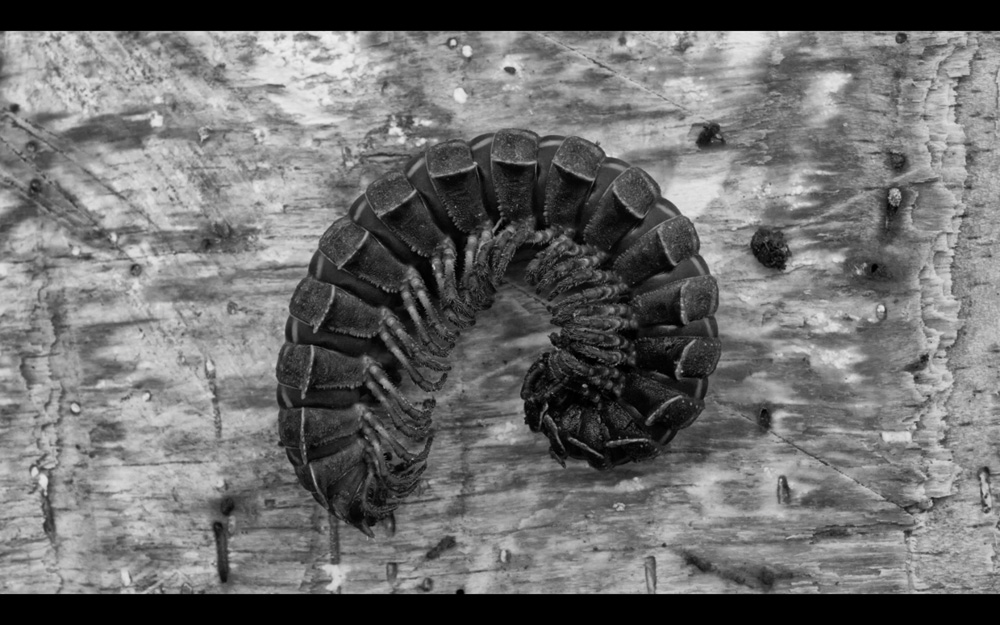
Ayahuasca is a drink used by the Amazonian indigenous peoples, which is commonly called "medicine" to access higher states of consciousness, experimenting with different gods, emotions, fears and egos, `cures`, change habits, thoughts, emotional states . According to tradition, the ayahuasca is the rope that allows the spirit leaves the body without this die.
Graduated in Communications, specializing in audiovisual by the Peruvian University of Applied Sciences. I worked in several agencies like Pragma, McCann Erickson and audiovisual production companies such as 7 Samurai and Cine 70. Film worked as assistant director in two Peruvian films. I was art director for several magazines and independent design and cultural publications in my own studio. Explore the audiovisual language, graphic design and illustration and painting. In my audiovisual work, I have been in the official selection at the Independent Film Festival of Lima (2013-2015). Insurgency displays moving: anthology of Peruvian audiovisual margins. (MALI 2013). Intermittent sample Lima Film Festival (2012). It shows at the Cultural Center Expaña (2011). Latin American projection UnionDocs for Documentary Arts (NY).
Felipe Esparza
Cortar un arbol en luna verde
Doc. expérimental | 4k | couleur et n&b | 8:0 | Pérou | 2021
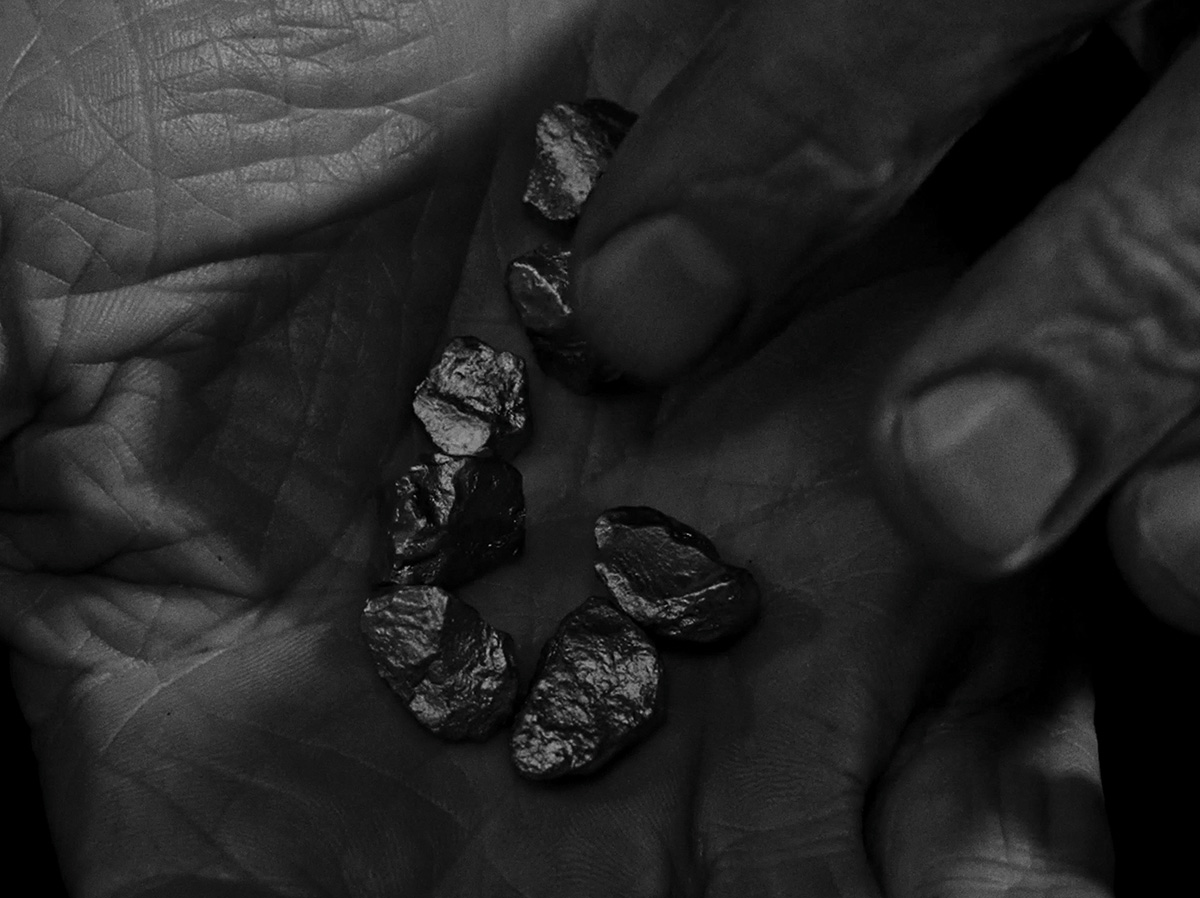
From the diary of Christopher Columbus, October 15, 1492: "And deviated from the land by two lombard shots, there is in all these islands so much depth that one cannot reach it. These islands are very green and fertile and have very sweet airs, and there may be many things that I do not know, because I do not want to stop to go through many islands to find gold". They had only been on land for four days. The gold never existed. It is only possible to suppose the sweetness of the air. The islands are still green.
Felipe Esparza’s work creates dynamic links and tensions between film, visual arts and video creation. In his projects there is an interest in social content coexisting with an exploration of themes such as nature, the sacred, non-verbal communication, its symbolic derivations, and the relationship between image and time, image and history, and image and truth. He approaches the complex representation of these themes by developing visual narratives in which the contemporary visual imagination cohabits with archives and with local and universal cultural codes, to the point of creating pieces of metalanguage. He is currently focusing on rituals, focusing on themes such as post-colonial remains around the sacred and the raw material with which cities are built as a sensitive archaeological gesture. His videos and video installations have been shown in national art centers such as: MALI, Luis Miró Quesada, Lugar de la Memoria, Ministerio de Cultura (Lima), Festival de Lima Independiente, Festival Lima Alterna, and international ones such as: Rencontres Internationales Paris/Berlin - New Cinema and Contemporary Art, Guangzhou Image Triennial (China), Shangyuang Museum of Contemporary Art (Beijing), Videobrasil Festival (Sao Paulo), Cámara Municipal de Lisboa (Portugal), Los Angeles Film Forum, HANGAR Art Production Center (Madrid), Buenos Aires Video Art Festival, Rotterdam International Film Festival, Uppsala, Molodist, Curtocircuíto, among others. Graduated from the Master of Mal de Foco at the Centro de la Imagen (Peru), Director at the Berlinale Talent Campus and selected artist at Le Fresnoy - Studio national des arts contemporains, France.
Micael Espinha
CINZA
Vidéo | hdv | noir et blanc | 10:2 | Portugal | 2014
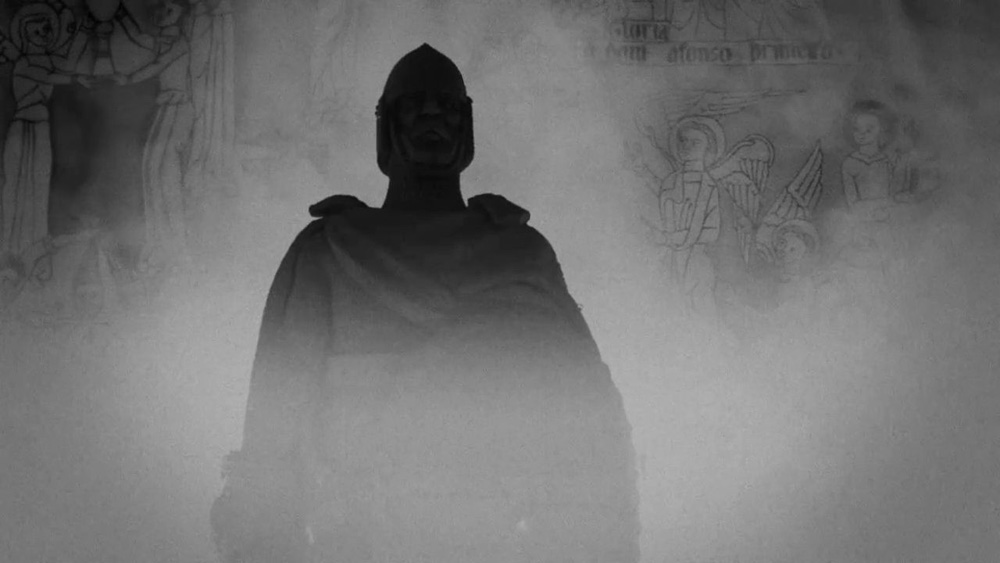
A visual and soundscaped short ambience voyage through an utopian, ghost-like city-state. In this mid twentieth century imaginary Lisbon, the power plants continue to produce energy, brand new subway network locomotives’ engines hum in standby, city lights and neon signs come alive each night and radio receivers spread Salazar’s [Portuguese Dictator] speeches - yet, nowhere is to be found the slightest human presence: there isn’t anyone to see and hear this newcomer modernity’s heartbeat. Only statues and facades inhabit the metropolis. "CINZA" is a short film made entirely from photographs that depict Lisbon during the dictatorial regime installed in Portugal from 1926 until 1974. Their authors were Mário Novais, Horácio Novais and Casimiro dos Santos Vinagre, and the photographs now belong to the Calouste Gulbenkian Foundation Art Library Archive.
Micael was born in 1974 and graduated in ‘Directing’ at the Lisbon Theatre and Film School, in 2003, where he had already obtained his bachelor degree in ‘Editing’, in 1999. He is a partner at the production company Roughcut, where he’s been developing documental projects, television series, fiction and animation short films, being also responsible for the company’s post-production of several projects and works. He co-founded with David Gabriel, in 2012, the colective "Companhia do Inferno", which dedicates itself to the development and production of videoart projects and scriptwriting, under which he already directed several experimental videos. Since 2000, Micael works regularly as a freelance editor in advertising, television, fiction, documentary and music videos, and he worked with such directors as Bruno Ramos, João Nuno Pinto, Júlio Alves, Marco Martins, Miguel Coimbra, Miguel Seabra Lopes, Pedro Cláudio, Pedro Macedo, Pedro Sena Nunes, among others. He directed the television series "KmZero" which was aired on RTP2 (2007/2008), and co-directed the cultural magazine "Câmara Clara", which also aired on RTP2 (2008/2009). Recently, he co-directed the documental series “Tradições – Retalhos da Vida de um Povo”, produced by Roughcut and broadcasted by SIC Notícias (2013/2014). He produced, directed and animated the animation short film "Black Bug", which was one of the finalists of the ZON Awards Creativity in Multimedia (2011/2012). In collaboration with the performing arts, Micael directed the video for the theatre play “Old Times”, staged by Duval Pestana, for ONIMED, and directed the video for the performance “The Lusiads” by António Fonseca, which premiered at Guimarães – European Capital of Culture, in 2012, and was already presented in Lisbon, Coimbra, Almada and Brazil (2013/2014).
Keina Espiñeira
Tout le monde aime le bord de la mer
Doc. expérimental | 4k | couleur | 16:56 | Espagne | 2015
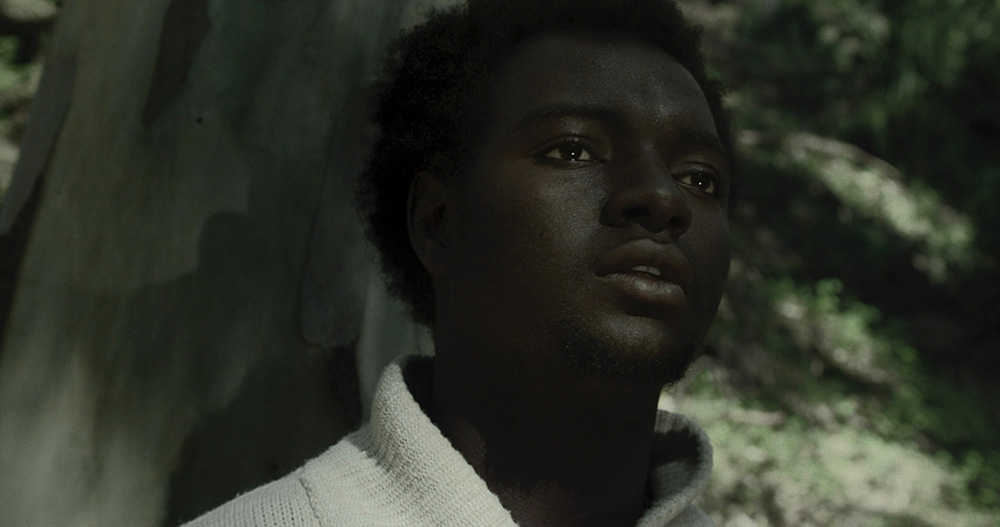
A group of men are waiting at the fringes of a coastal woodland for the journey to Europe. They are in a temporal and spatial limbo. A film is shot there with the men playing themselves. The landscape changes and where they are is no longer their motherland. The water is not transparent, not clear. Myths from the colonial past collide with present times, memory survives.
Keina Espiñeira (1983, Spain) is a scholar and filmmaker. Her artistic work is related to borders, landscapes and mythologies. She holds a Master`s degree in Direction and Production of Documentary Films, awarded by DOCMA. She has also worked as social researcher in California, Netherlands, Spain and Morocco.

Eteam
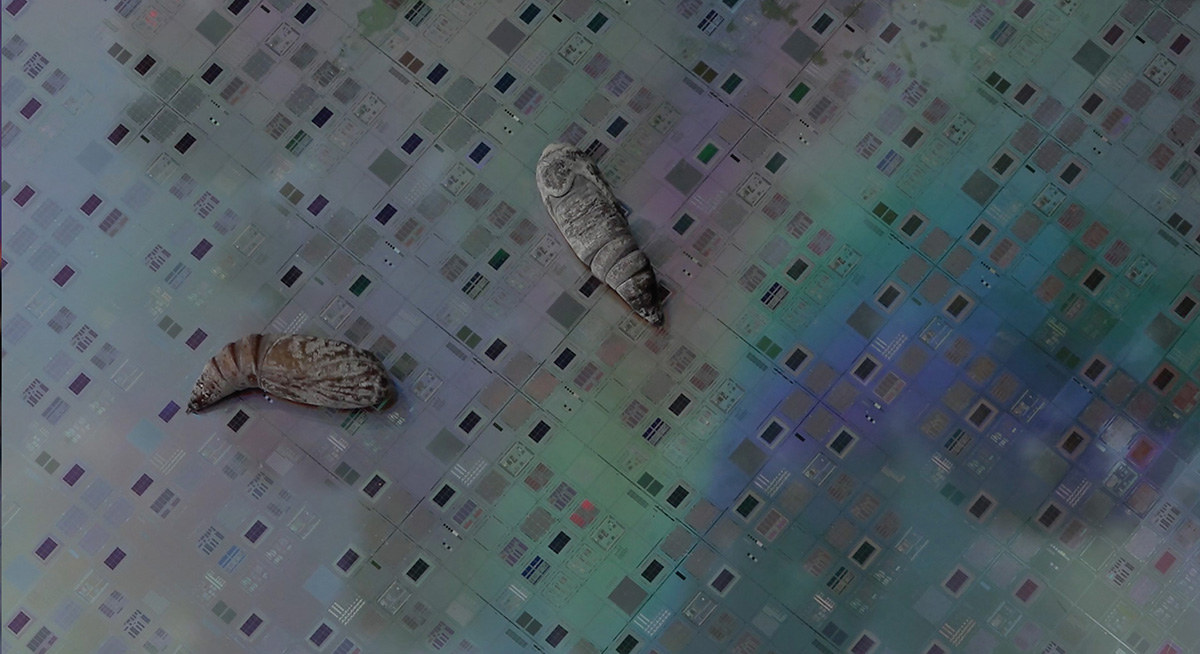
Our Non-Understanding of Everything #09
Vidéo expérimentale | 4k | couleur | 20:4 | Allemagne, USA | 2023
“Our Non-Understanding of Everything #09” is part of a larger series that explores how the structures of architecture, semiconductors, and circuits become forms of expression reflecting hierarchies, cognitive processes, and relationships to the natural environment. The project is the daily practice of observation, questioning and switching perspectives in order to understand our relationship to our tech-devices and their existence in the world. Motivated by finding ways to imagine what our smart phones want from us and if we can communicate with them, we are using our natural and human built environments to possibly entertain, relax and stimulate the technical devices, that so profoundly influence our conception of the universe and our relation to it.
eteam uses video, performance, installation and writing to instigate and articulate encounters at the edges of diverging cultural, technical and aesthetic universes. Through their artistic practice eteam finds ways to collaborate with people who operate on the edges of mainstream culture and the marketplace. They are drawn to those willing to experiment, cross genres and cultural boundaries, together we forge proximity and make visible the interconnections we humans share with land, animals, plants, ghosts, deities and objects. Practicing art is their way to enter the “outside,” pay close attention to the details, while trying to understand the whole. Eteam’s narratives have screened internationally in video- and film festivals, they lectured in universities, presented in art galleries and museums and performed in the desert, on fields, in caves in ships, black box theaters and horse-drawn wagons. They could not have done this without the support of Creative Capital and The John Simon Guggenheim Memorial Foundation, Art in General, NYSCA, NYFA, Rhizome, CLUI, Taipei Artist Village, Eyebeam, Smack Mellon, Yaddo and MacDowell, the City College of New York, the Academy of Visual Art HKBU and the Fulbright Scholar Program, among many others. Their novel “Grabeland” was published by Nightboat Books in February 2020.
Eteam
Our Non-Understanding of Everything 04
Vidéo | hdv | couleur | 14:13 | Allemagne, USA | 2022
What is our relationship to our tech devices? How do smart devices exist in the world? What do we want from them? What do they want from us? "Our Non-Understanding of Everything" is a daily practice, where we observe and speculate of how our personal tech devices and their building parts exist in a possible future, shared between the architecture of circuitry, political thought and the wild and programmed parts of our natural environments. “Our Non-Understanding of Everything” signals a complete openness to learn, shift viewpoints, upturn embedded prejudices, discover, surprise and draw connections between phenomena and things that reside and operate in wildly diverse realms. The project aligns with non-representational ideas, in which events and encounters in the world are constituted through emergent, relational, and intangible complexities that cannot necessarily be articulated or contained within the particular ways we attempt to represent them.
eteam is a two people collaboration who uses video, performance, installation and writing to instigate and articulate encounters at the edges of diverging cultural, technical and aesthetical universes. Traversing over earthly planes they trigger communication, collaborations and transformations between humans, nature, and technologies. Through their artistic practice eteam finds ways to collaborate with people who operate on the edges of mainstream culture and the marketplace. They are drawn to those willing to experiment, cross genres and cultural boundaries, they forge proximity and make visible the interconnections we humans share with land, animals, plants, ghosts, deities and objects. Eteam’s work is land- and process-based, often long term, situational and happens in places they don’t inhabit permanently. Practicing art is their way to enter the “outside,” pay close attention to the details, while trying to understand the whole. Eteam’s narratives have screened internationally in video- and film festivals, they lectured in universities, presented in art galleries and museums and performed in the desert, on fields, in caves and on mountaintops, in ships, black box theaters and horse-drawn wagons. They could not have done this without the generous support of Creative Capital and The John Simon Guggenheim Memorial Foundation, Art in General, NYSCA, NYFA, Rhizome, CLUI, Taipei Artist Village, Eyebeam, Smack Mellon, Yaddo and MacDowell, the City College of New York, the Academy of Visual Art HKBU and the Fulbright Scholar Program, among many others. Their novel “Grabeland” was published by Nightboat Books in February 2020. They are represented by Gallery M29, Cologne Germany and Video Data Bank, Chicago.

Jon Mikel Euba
Gowar
Film expérimental | dv | couleur | 7:0 | Espagne | 2005
"Godard-Warhol This would be in short what the video is about: One minute of carrying One double minute One minute of silence One minute of rock One minute of star : gowar"
Jon Mikel Euba est né en 1967 à Bilbao, Espagne. Il vit et travaille à Berlin et à Bilbao.Il s`apprête à présenter à Bucarest ses vidéos, dont la dernière intitulée "One minute of Silence" mais aussi des plus anciennes comme "K.Y.D." (2001). Il travaille actuellement sur sa prochaine vidéo. Jon Mikel Euba a à la fois recours au texte et à l`image dans ses ?uvres "utilisant la vidéo, le dessin et les mots pour construire des récits ambigus et mettre en scène des incidents ou des situations mystérieuses dans lesquelles le paysage suscite des fragments d`actions récurrentes, qu`une répétition à l`infini transforme en icônes abstraites. À partir du montage d`images provenant de ses archives personnelles, d`arrêts sur image, de phrases et des passages récupérés, il génère un nouveau texte cinématique, une nouvelle structure qui transcende de telles unités informationnelles pour décrire de nouveaux modes de comportements." (Nuria Enguita Mayo).

Tirtza Even
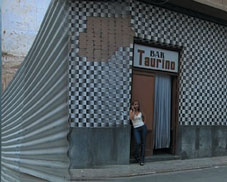
Parallel, Work in progress demo
Doc. expérimental | hdv | couleur | 10:0 | USA | 2024
Parallel (work in progress demo) tells the story of the fissure–the modes of blindness and longing, of not seeing and being unseen, of being together yet also apart–at the heart of an intimate exchange. The installation is constructed of an elongated strip of portraits which can be viewed from both front and back. On either side of the installation are displayed close-up faces of a range of individuals. Each of the individuals stares at a parallel figure sitting across from them, their back to the camera. The parallel figure’s face is visible from the reverse side of the installation, as is the back of the person we saw on the front side. Beyond the more immediate scene of the gaze exchange between the figures, we can see, through cracks in the wall behind them, a hint of an open landscape. At an almost undetectable speed, the two rows of portraits–those who are facing us and those who are not–drift along, and then off of the edge of the screen. New pairs continue to slip in endlessly. The pace of the rows’ drift (front and back), however, is slightly mismatched. This gap in the rate of their movement results in a subtle dissonance: the parallel figures slip away from each other as well as away from us. As they drift, they intermittently obscure the individuals they face. Short texts–segments of online messages written to an unknown other–are, at irregular intervals, read out loud by one of the visible characters. The same text might be performed by different people. Several distinct texts might be read by a few characters at once. The link between who we see and the story we associate with them is, thus, like their image, unsettled, interrupted and displaced. The video attached is a work in progress edit demonstrating two possible scales for the project's display.
An experimental documentary maker for over twenty years, Even has produced work which ranges from feature-length documentaries to multi-channel installation and interactive video work, and which, relying on almost imperceptible digital manipulation of slow and extended moments, aims to depict the less overt manifestations of complex, and at times extreme, social/political dynamics in specific locations (e.g. Palestine, Turkey, Spain, the U.S. and Germany, among others). Even’s work has been shown at the Museum of Modern Art, NY, at the Whitney Biennial, the Johannesburg Biennial, as well as in many galleries, museums and festivals in the U.S., Canada and Europe, including Doc Fortnight at MoMA, NY, Rotterdam Film Festival, RIDM Film Festival, Montreal, New York Video Festival, Lincoln Center. It has won numerous grants and awards, including 3ARTs Visual Arts and Next Level Awards, Fledgling Distribution Fund, Artadia Award, Media Arts Award, the Jerome Foundation, Individual Artists Program Awards, NYSCA, and many others; and has been purchased for the permanent collection of the Museum of Modern Art (NY) and the Jewish Museum (NY) among others. Even has been an invited guest at many conferences and university programs, including the Whitney Museum Seminar series, the Digital Flaherty Seminar, Open Doc Lab at MIT, SXSW Interactive Conference, Art Pace annual panel, ACM Multimedia and others. Her work is distributed by Heure Exquise, France and Video Data Bank (VDB). Even is Professor at the School of the Art Institute of Chicago’s Film, Video, New Media, and Animation department.
Tirtza Even
Icarus
Doc. expérimental | dv | couleur | 12:0 | Israel, Espagne | 2004
Icarus / Tirtza Even Icarus fut abattu à Cartagène, en Espagne. La ville de Cartagène située sur la côte Méditerranéenne, a été un site de grandeur et de décadence (où alternaient manifestations de pouvoir et troubles politiques), site idéal pour un déploiement de cultures et de régimes. Romains, Byzantins et Ottoman, tout comme l'Église Épiscopsale et la République Espagnole s'y sont mêlés. Durant cette période la ville servait (entre de longs moments de décrépitude, d'épidémies, de guerres, de destruction puis de récupération) de port fructueux, de base militaire à valeur stratégique et de centre industriel et commercial riche en minerais, mines de plomb et d'argent. De nos jours, c'est une petite ville périphérique, habitée en grande partie par une communauté émigrante du Maroc, des travailleur d'un jour, elle aboute pour élargir le tourisme et l'attrait culturel de ses exhumations avec des restes d'un théâtre romain, et d'un amphithéâtre situé sous des arènes, et d'un grand nombre militaires, marines et sites culturels historiquement pointus , tout comme son Université renommée (qui réside dans un hôpital militaire rénové) -- une série de maisons sont démolies, sous surveillance, dans des sites par intermittence dispersés dans le centre de la ville, afin d'être ré-occupés dans un futur proche par des appartement-hotel de luxe. Au moment de la réalisation d'Icarus, les signes variés de pouvoir et d'entropie, de centralité et de marginalité, qu'elle soit militaire, politique, éthnique, économique, culturelle ou sociale, étaient exposés de façon éclectique dans l'architecture superposée et fracturée et dans l'arène humaine. La vidéo éditée pour Icarus, consiste en 12 min. de plan inversé- un impossible re-tour ou "torchon temporel" -- à travers des sites circulaires filmés à Cartagène, chacun cousu ensemble comme rapiécés, dans l'espace et le temps, du paysage urbain d'une ville. L'acte de tisser: des moments et des en- et hors- scènes , trahit des fissures inédites dans lesquelles différents personnages glissent, dans lesquelles ils convergent, ou disparaissent. Ainsi le paysage pêle et se déplie, se retournant sans vraiment arriver à ce moment intact d'aspiration et d'origine. L'oeuvre est formellement engagée dans le louvoiement de paysages fragmentés, utilisant les mouvements de la caméra comme moyen pour commenter - ou occuper et ainsi interrompre -- ces déterminants politiques et sociaux du paysage.
Tirtza Even, Bio Vidéaste en pratique et documentariste durant ces dix dernières années, Even a réalisée des travaux vidéo à la fois linéaires et intéractifs représentant des manifestations complexes peu évidentes et quelquefois des dynamiques socio-politique extrêmes, dans des endroits spécifiques (comme par exemple la Palestine, la Turquie,l' Espagne, les États Unis, et l'Allemagne parmi tant d'autres). Son oeuvre est parue au Musée d'Art Moderne de New York, à la Biennale de Whitney, Johannesburg ainsi que d'autres festivals, galeries, et musées aux États-Unis, en Israël, et en Europe, et a été acheté pour des collections permanentes par le Musée d'Art Moderne (New York), le Musée Juif (New York), Le Musée d'Israël (Jérusalem), pour ne citer qu'eux. Elle a été invitée et oratrice lors de nombreuses conférences et de programmes universitaires, dont "the Whitney Museum Seminar series", "the Digital Flaherty Seminar", "Art Pace annual panel", "ACM Multimedia"," The Performance Studies International conference" (PSI), "The Society for Literature, Science", and "the Arts conference" (SLSA) et autres.

Kevin Everson
emergency needs
Film expérimental | 16mm | couleur | 7:0 | USA | 2007
Commandé par le festival du film de Rotterdam de 2007 en hommage à l'oeuvre de Gus Van Sant, "Emergency Needs", réalisé par Jerome Everson, est une réinterprétation sous forme de pastiche d'un événement de l'histoire afro-américaine: les émeutes de Cleveland de 1968. En utilisant à la fois des séquences d'archives et des images originales, le film déconstruit la chaîne d'événements dans laquelle est pris le maire Carl Stokes. Assailli de questions par la presse locale et nationale, Stokes lutte pour garder la face. L'actrice qui incarne Stokes reproduit ses mots, sa façon de s'exprimer et ses gestes, dirigeant le film vers la fiction / reconstitution historique. Comme dans d'autres oeuvres d'Everson, les histoires de la diaspora africaine sont réexaminées de façon à révéler des stratégies et des rythmes de travail. Les séquences d'archives de la conférence de presse et des émeutes révèlent un homme engagé dans l'art politicien, quelque chose se rapprochant du jeu d'acteur. Les séquences originales avec l'actrice récréant la conférence de presse en split screen ajoutent une qualité répétitive, étrangement Warholienne, à l'oeuvre.
Kevin Jerome Everson est né à Mansfield Ohio, où il a grandi. Il est réalisateur et artiste visuel. Son oeuvre étudie les conditions, les tâches, les gestes des communautés de travailleurs noirs. Il enseigne actuellement à l'université de Virginie, Charlottesville. Everson est diplômé de l'université de l'Ohio et de l'université d'Akron. Il a réalisé deux longs- métrages salués par la critique et plus de quatante courts- métrages couronnés de prix. En 2006, il a été élu par Filmamaker Magazine comme l'un des vingt-cinq nouveaux visages les plus importants du cinéma indépendant. En 2005, son premier long- métrage "Spicebush", une enquête sur les rythmes de travail et le passage du temps dans les communautés de travailleurs noirs, a été montré pour la première fois au festival international du film de Rotterdam et remporté le prix du jury du meilleur documentaire au festival du film underground de New York. "Cinammon" (2006) a été découvert au festival du film de Sundance et au festival de Rotterdam, ainsi que dans d'autres festivals internationaux. Avec sa compagnie Trich Arts, Everson développe actuellement deux projets de longs- métrages avec la productrice Madeleine Molyneaux de Pictures Palace Pictures, dont "The Golden Age of Fish" (en post-production), une étude scientifique sur la culture de consommation à la fois meurtrière et suicidaire, et le biopic expérimental "Rhino", sur les vies et mythes entourant le Duc de Florence du XVIe siècle Alessandro della Medici, né d'une servante africaine, et sur l'actrice afro-américaine Gail Fisher ("Mannix"). Everson développe également "Lowndes County", en collaboration avec la dramaturge Talaya Delaney, sur une communauté d'adolescents noirs dans les années 50, au Mississippi, à la veille de la déségrégation de l'école. Ses photos, sculptures et films ont été montrés à travers le monde, au MOMA de New York, au Whitney Museum of American Art, au Cleveland Museum of Art, au Studio Museum de Harlem, au Armand Hammer Museum de Los Angeles, au REDCAT (L.A.), au Palm Beach Institute of Contemporary Art, à la William Busta Gallery de Cleveland, Ohio, à la Spaces Gallery de Cleveland, à la Whitechapel Gallery de Londres, l'American Academy de Rome, en Italie, en France, en Chine et en Allemagne. Ses films ont été présentés au festival de Sundance en 1998, 2000, 2003, 2004, 2006, au festival de Rotterdam en 2003, 2005, 2006, au Festival International du Documentaire de Marseille, au Munich International, au Cinematexas, au Ann Arbor Film Festival, au LA Film Festival, au New York Underground Film Festival, à l'International Center of the Arts de Londres, à la New School of Social Research, au Black Maria Film Festival (meilleur film 2004), à l'Athens International Film Festival, au Shorts International de New York, au Siskel Theater de Chicago, au Virginia Film Festival de Charlottesville, à l'université de Floride Centrale, à l'université de Princeton, et au South by Southwest Film Festival (prix du meilleur film expérimental pour "Thermostat").
Kevin Jerome Everson
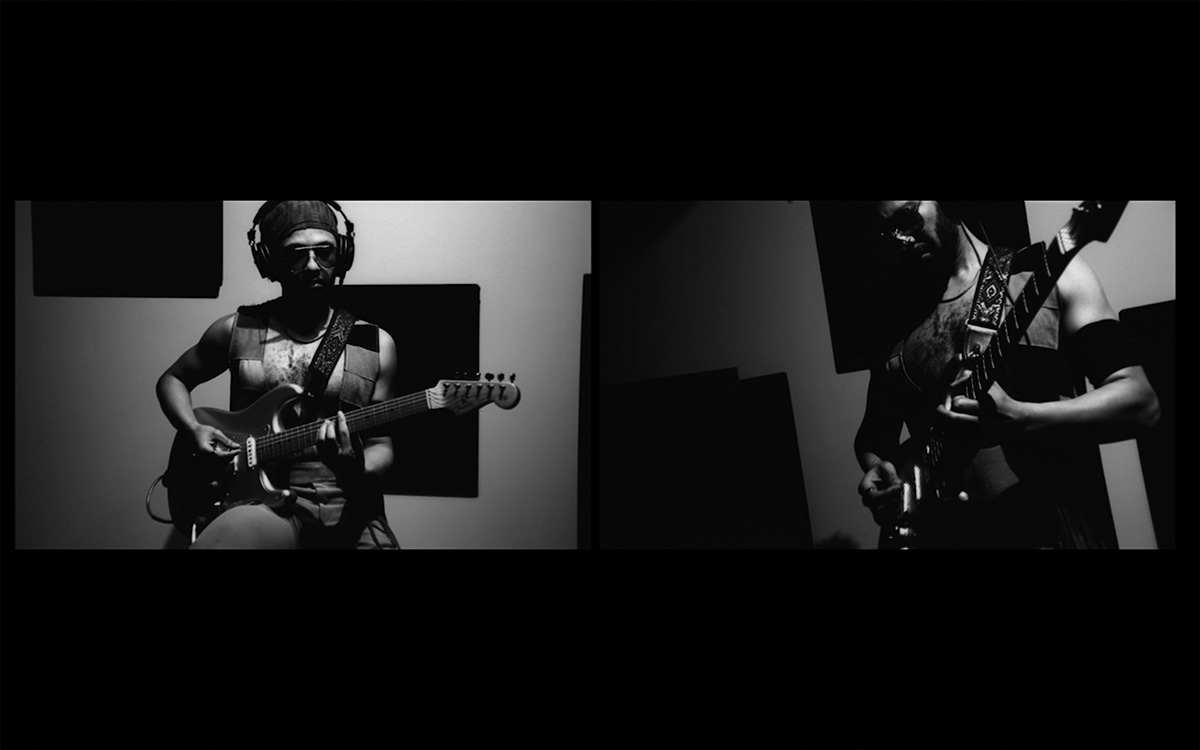
Hazel (Dual)
Vidéo | 16mm | noir et blanc | 12:19 | USA | 2023
Hazel (dual) is a split screen film, shot in 16mm b/w, inspired by the legendary recording of the underrated guitarist Eddie Hazel’s (1950-1993) ten-minute guitar solo on “Maggot Brain”, the title track to Funkadelic’s 1971 album . The film is the fictitious moment when bandleader George Clinton “misleads” the guitarist Eddie Hazel to record what is considered one of the greatest guitar solos ever recorded. Performed by actor and musician Ricky Goldman whose previous collaborations with the artist include leading roles in the short films It Seems to Hang On (US, 2015, Venice Film Festival); We Demand, co- directed with Claudrena N. Harold (US, 2016, Berlinale 'Forum Expanded' and Gospel Hill. co-directed with Claudrena N. Harold (US, 2022, Chicago Intl FF).
Kevin Jerome Everson (b. 1965 Mansfield, Ohio U.S.) B.F.A. University of Akron; M.F.A. Ohio University. Lives and works in Charlottesville, Virginia, US. Commonwealth Professor of Art and Director of Studio Arts, University of Virginia Everson's work and practice encompasses photography, printmaking, sculpture and film – 12 features and more than 200 solo and collaobrative short form works. He has been recognized with the Guggenheim Fellowship, the Alpert Award in Film/Video, the Heinz Award in Arts and Humanities, the American Academy in Rome Prize, the American Academy in Berlin Prize and artist grants from Creative Capital, National Endowment of the Arts, Hallwalls Contemporary Arts Center, Wexner Center for the Arts and the Ohio Arts Council. His artwork has been the subject of retrospectives and solo exhibitions at The Whitney Museum of American Art, Tate Modern/Film, Cinema du Reel/Centre Pompidou, BlackStar, Halle fur Kunst Steiermark, Graz, Art Windsor-Essex, Windsor, Ontario, Museum of Modern and Contemporary Art, Seoul, Museum of Contemporary Art, Novi Sad, Serbia, Harvard Film Archive, Cinematek Brussels/Courtisane and presented at international film festivals and art institutions including Berlin, Sundance, Rotterdam, Toronto, Venice, BFI/London, NYFF, BlackStar, Oberhausen, Jeonju, Carnegie Museum of Art, Pittsburgh, MOCA, Los Angeles, Walker Art Center, Minneapolis, MoMA, NY and the Smithsonian National Museum of African American History & Culture, Washington D.C.. His films have been featured at the 2008, 2012 and 2017 Whitney Biennial, the 2013 Sharjah Biennial, the 2018 Carnegie International and the 2023 Contour Biennale in Mechelen, Belgium. A 3 DVD Boxed Set, Broad Daylight and Other Times, was released by Video Data Bank (U.S.) in 2011 and a DVD dedicated to films focusing on the rituals and gestures of labor, I Really Hear That: Quality Control and Other Works was released by VDB in summer 2017. The DVD contains the feature film Quality Control (2011), included in the 2012 Whitney Biennial. The two disc blu-ray How You Live Your Story: Selected Works of Kevin Jerome Everson was released by the UK based boutique label Second Run DVD in Fall 2020. Everson's films are represented and/or distributed by Picture Palace Pictures, New York.