Catalogue > Liste par artiste
Parcourez la liste complète des artistes présentés dans le cadre des Rencontres Internationales depuis 2004. Utilisez le filtre alphabétique pour affiner vos recherches.
Chen Hung Chiu
Catalogue : 2015大理石廠工人 | Doc. expérimental | hdv | couleur | 7:30 | Taiwan | 2013
Chen Hung Chiu
大理石廠工人
Doc. expérimental | hdv | couleur | 7:30 | Taiwan | 2013
The video shows two Tai labors in Hualien marble factory pushed a trolley used in the past particularly for mine district, today , this old style trolley has been replaced by the new style crane, Artist invites two labors walking back and forth through the old trolley that he gilded by covering gold leaves as a divinized presentation. This work therefore has blended and mixed the reality and memory in life like the layers of wrinkles and folds in the stratum, the viewer could create an archaeological journey from the imaginations in many aspects.
Chen-Hung Chiu creative works revolve around collecting those inadvertently hidden objects / people and legends surrounding him, as well as rewriting the ambiguous ties between these "anonymous identities" and the locality, in a sense analogous to the connections between body and building, city and cells, monuments and intimacy. Comparable to the process of remodeling monuments, he strips away the logic designed and rationalized by social structures in attempt to rename those that offer significance and meaning to each material. Yet, unlike the citations made through reminiscing in the past, his works are instead sincere observations which explore personal experience and logic. Important exhibitions Chiu participated in include the Liverpool Biennial: City States(2012), ThaiTai:A Measure of Understanding, Bangkok Art and Culture Centre(2012), Une terrible poetique, La Biennale de Lyon, Galerie Olivier Hong(2011), Arte da Taiwan, Museo di Arte Contemporanea di Villa Croce, Genova(2011), Taiwan Calling-The Phantom of Liberty, Mucsarnot Museum, Budapest(2010), etc. in 2012, he was also chosen as an artist in residence at Cite internationale des arts Paris for the 12th Visual Arts Talent Exchange Program conducted by the Taiwan Ministry of Culture.
Seoungho Cho
Catalogue : 2010buoy | Vidéo | dv | couleur | 6:21 | Coree du Sud, USA | 2008
Seoungho Cho
buoy
Vidéo | dv | couleur | 6:21 | Coree du Sud, USA | 2008
BUOY/ SEOUNGHO CHO 6:21 MINUTES, COLOR, SOUND, 2008 The golden, barren landscape of Death Valley, California, recorded by Cho from a moving car, provides the luminous and mysterious texture of Buoy. As the title suggests, this work reflects on the polar extremes of this desert, which was once the floor of a vast sea, now traversed by sight-seeing tourists. In contrast to the horizontal landscape, which floats ceaselessly past Cho`s camera, vertical "strata" pattern the imagery, creating an axis between natural landscape and Cho`s composition. Cho accumulated his Death Valley footage over several years; the vertical patterning further represents the collapse of this footage into what appears to be a continuous drive through the desert.
Seoungho Cho was born in 1959 in Pusan, South Korea, and currently lives and works in New York. He received a BA and an MA in graphic arts from Hong-Ik University, Korea, and an MA in video art from New York University. He has had solo exhibitions in many prestigious venues such as the Museum of Modern Art in New York and his videos have been shown in biennales and group screenings throughout Europe and North America. Cho has received various awards and grants, including ones from the Jerome and Rockefeller foundations. Cho uses digital image processing techniques to manipulate simple, everyday objects, scenes or landscapes into highly lyrical sound and image collages. Cho`s videos are often very painterly in their use of rich, saturated colour and exquisite composition of the space on the screen. The works sometimes involve subtly developed, open-ended narratives that emphasize the embodied nature of perception and experience. The formal aspects of Cho`s videos are closely tied to explorations of how nature is represented through technology, specifically how representation is constituted by traces of contact between bodies, technology and the environment.
Catalogue : 2009I left my silent house | Art vidéo | dv | couleur et n&b | 8:51 | Coree du Sud, USA | 2007
Seoungho Cho
I left my silent house
Art vidéo | dv | couleur et n&b | 8:51 | Coree du Sud, USA | 2007
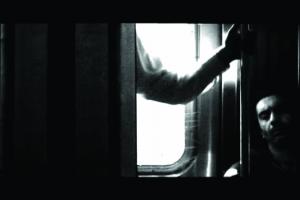
La dernière ?uvre de Seoungho Cho, « I Left my Silent House », commence dans une atmosphère méditative, avec des images en noir et blanc de personnes dans le métro, se transforme ensuite en un voyage coloré à travers des espaces théâtraux ouverts, pour retourner enfin de nouveau à la ville. La vidéo est une recherche sur les tensions et les plaisirs du voyage et, en fin de compte, sur la métamorphose.
Seoungho Cho est né en 1959 à Pusan (Corée du Sud) et vit actuellement à New York. Il a obtenu sa licence et sa maîtrise en arts graphiques à l?Université de Hong-Ik (Corée), et une maîtrise en art vidéo à l'Université de New York. En 1998, il a reçu une bourse en arts médiatiques de la Fondation Rockefeller et, en 2003, une subvention de la Jerome Foundation. Il lui a été décerné le Grand Prix du 27e Annual Black Maria Film and Video Festival, ainsi que le Prix International pour l'Art Vidéo du ZKM. Les vidéos de Cho ont été diffusées à une échelle nationale et internationale.
Catalogue : 2008snap | Art vidéo | | couleur et n&b | 4:32 | Coree du Sud, USA | 2006
Seoungho Cho
snap
Art vidéo | | couleur et n&b | 4:32 | Coree du Sud, USA | 2006
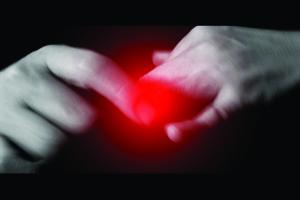
"Snap" est une oeuvre brève et minimaliste qui explore l'esthétique de la production vidéo numérique. Des doigts et des mains en gros plan effectuent des mouvements rapides, puis lents, suivant une bande son de cliquetis et de claquements stylisés, tandis que des flammes de couleur traversent par intermittence les images originales en noir et blanc. "Snap" pousse l'image et le son vers l'abstraction dans une exploration inventive, bien pensée et agréable de la technologie de l'image en mouvement.
Seoungho Cho est né en 1959 à Pusan, en Corée du Sud. Il est diplômé de l'université d'arts graphiques de Honk-lk en Corée. Il a également un diplôme en art vidéo de l'université de New York. En 1998, il a reçu une bourse du Rockfeller Foundation Media Arts et en 2003 l'aide de la Jerome Foundation. Il a reçu la "Juror's Citation" au 18ème Black Maria Film and Video Festival ainsi qu'un prix pour l'art vidéo de ZKM.
Eun Woo Cho
Catalogue : 2009GATE | Installation multimédia | dv | couleur | 1:20 | Coree du Sud, USA | 2008
Eun Woo Cho
GATE
Installation multimédia | dv | couleur | 1:20 | Coree du Sud, USA | 2008
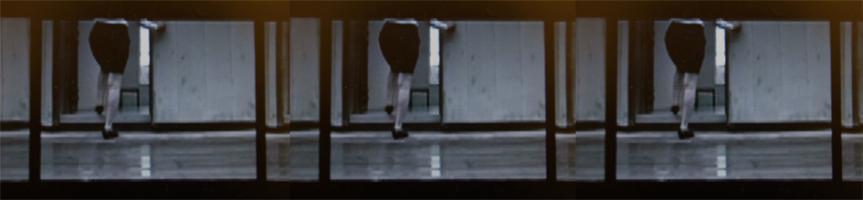
« Gate » constitue un point d?entrée ou un tournant dans l?espace psychologique circonscrit dans, et créée par, une forme architecturale spécifique à l?intérieur du corps humain. Il représente une ouverture, avec différents types de rencontres humaines et de séparations. « Gate » voudrait réussir à s?opposer au contrôle extrême des entrées et à la libre sortie de soi-même et des autres. Le geste de rencontre et de séparation est une forme de psychothérapie, qui a émergé avec la communication interpersonnelle et l?intensification de l?expérience psychologique du spectateur et du public. Lorsque le processus de séparation se produit, il transforme un mélange de substances, en rapport avec plusieurs espaces physiques, en différents composants architecturaux et psychanalytiques. Souvent, la pression du pouvoir et la force politique provoquent d?inévitables migrations humaines, ainsi qu?immigration, rencontres et séparations. Ces séparations et rencontres sont intimement liées au cycle de vie naturel. La structure de la pression ou du pouvoir impose des situations frontalières existantes, telles précisément, la séparation actuelle entre Corée du Nord et Corée du Sud.
Cho Eun Woo est née à Séoul (Corée). Elle a obtenu son BFA (Bachelor of Fine Arts) à l?Ontario College of Arts & Design (Canada). Elle a été impliquée dans diverses performances et expositions au Canada, en Italie et aux USA. Elle a récemment obtenu son MFA (Master of Fine Arts ) de la School of Visual Art de New York (USA) et fréquente actuellement les cours de l?Institute for Doctoral Studies in the Visual Arts Main de Portland (USA). Elle a obtenu des résidence artistiques auprès de la 7e Gawnju Biennale Global Institution et du Skowhegan Residency Program in Main de Portland en 2008-2009, et du Cat?Art en France, en 2007-2008.
Seoungho Cho
Catalogue : 2007Snap | Vidéo expérimentale | dv | couleur et n&b | 4:32 | Coree du Sud, USA | 2006
Seoungho Cho
Snap
Vidéo expérimentale | dv | couleur et n&b | 4:32 | Coree du Sud, USA | 2006
"Snap" is a taut, minimalist work that explores the aesthetics of digital video production. Fingers and hands in close-up move fast, then slowly, to a soundtrack of stylized clicks and snaps, while intermittent flares of color burn through the original black and white footage. "Snap" pushes figure and sound toward abstraction in an inventive, considered, and pleasurable exploration of moving image technology.
Seoungho Cho was born in 1959 in Pusan, South Korea. He received his B.A. and M.A. in Graphic Arts from Hong-Ik University, Korea, and an M.A. in video art from New York University. In 1998 he received a Rockefeller Foundation Media Arts Fellowship and in 2003 he received a Jerome Foundation grant. He received the "Juror's Citation" at the 18th Annual Black Maria Film and Video Festival as well as the International Award for Video Art from ZKM.
Catalogue : 2007Show your tongue | Vidéo expérimentale | dv | couleur | 6:8 | Coree du Sud, USA | 2006
Seoungho Cho
Show your tongue
Vidéo expérimentale | dv | couleur | 6:8 | Coree du Sud, USA | 2006
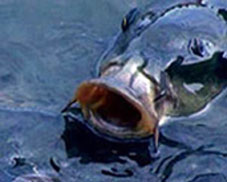
"Show Your Tongue" de Seoungho Cho est un millefeuille, une ?uvre composée de différentes couches. La première est de l?eau. On observe sa surface. On la voit de dessus et de près. Elle est parcourue de petites ondulations. Elle est d?un bleu profond. La deuxième couche est aussi fine et vivante, aussi gracieuse que la première. Son reflet sonore presque parfait, impossible de les différencier. Puis, petit à petit, la sensation de paix se dissipe. On commence à percevoir l?existence des monstres qui vivent sous la surface. Leurs écailles, leurs ailerons se frôlent. Leurs bouches claquent à la surface de l?eau. Cho manipule les images de ces bêtes en un motif vivant de formes et de motivation qui débordent les une sur les autres, recouvert d?un glaçage aqueux brillant. Il tisse une structure transparente en deux dimensions. Une structure qui se développe toute seule, couche après couche, et qui grandira jusqu?à consumer les filtres et les optiques de la camera, jusqu?à brûler la pellicule et les rétines du spectateur.
Catalogue : 2007WS.2 | Art vidéo | dv | couleur | 8:6 | Coree du Sud, USA | 2004
Seoungho Cho
WS.2
Art vidéo | dv | couleur | 8:6 | Coree du Sud, USA | 2004
Il y a plusieurs aspects de l?acte d?observation qui rendent la réaction que l?on devant une image subjective. Seoungho Cho en souligne quelques importants et en omet clairement différents autres qui sont pourtant importants aussi. On ne nous propose aucun récit, aucun contexte ni aucune palette de couleur variée, pas de tout, pas de partie. Ces restrictions lui permettent en grande partie de définir la manière d?observer du spectateur comme une action en elle-même. Le cadre de ?WS.2? est en mouvement, ce qui permet au spectateur de prendre conscience du mécanisme de l??il, de la lumière, de la distance, de l?espace et de la réflexion, et de l?analogie de ceux-ci avec la caméra, l?enregistrement et la projection. L?image qui change à des moments bien choisis, provoque des changements dans notre perception de l?espace. Cela apporte un sentiment de transposition, le sentiment qu?on cherche quelque chose ? comme si on voyageait derrière la fenêtre d?un véhicule conduit par quelqu?un d?autre ? en avant puis en arrière de nouveau, comme s?il devait y avoir une raison pour regarder quelque chose en arrière. Le mouvement est tellement précis et contrôlé qu?il n?en est plus ni naturel ni physique, un peu comme un robot ; comme si quelqu?un contrôlait votre tête et vos yeux avec un joystick. Et pourtant ce que nous voyons rappelle le monde, un caractère capricieux et la beauté. Des lignes qui ondulent nous rappelant des dunes, des gros plans de courbes qui nous rappellent celle du corps, des plans micro de textiles ou des plans macro de vaste paysages pour définir cela, parce que l?image reste toujours ?matérielle?. Ce que vous voyez est une raison d?installer une chaise de réalisateur pour Cho dans votre tête.
Seoungho Cho est né en 1959 à Pusan en Corée du Sud. Il a obtenu un B.A. (Bachelor of Arts) et un M.A. (Master of Arts) en arts graphiques à l?université de Hong-Ik, en Corée et un M.A. en vidéo à l?université de New York. En 1998, il a reçu le Rockefeller Foundation Media Arts Fellowship et en 2003, une récompense de la Jerome Foundation. Il a également obtenu la ?Juror?s Citation au 18ème Annual Black Maria Film and Video Festival ainsi que le prix international pour la vidéo d?art de ZKM. Parmi les expositions personnelles de Cho on compte par exemple le Museum of Modern Art de New York ; la Philip Feldman Gallery en Oregon ; le Contemporary Art Museum d?Honolulu à Hawaii ; le Pusan Metropolitan Museum of Art en Corée ; le Montevideo à Amsterdam et la Cinémathèque Ontario à Toronto. Son travail a été présenté dans de nombreux festivals internationaux et expositions collectives, comme par exemple the Philadelphia Museum of Art à Philadelphie, the Museum of Contemporary Art à Chicago, le 58ème Fetsival International du Film d?Edimbourg, le Pandaemonium ?98 au Lux Centre de Londres, le Centro d?Art Santa Monica de Barcelone en Espagne, the National Gallery of Art de Washington DC, le Stedelijk Museum à Amsterdam, le Samsung Museujm of Modern Art en Corée, le Festival Nouveau Cinéma, Nouveaux Médias de Montréal au Canada, la Valencia Biennial en Espagne, the Kwangju Biennial en Corée, the Palm Beach Institute of Contemporary Art en Floride, the Robert Flaherty Film Seminars; Artist?s Space à New York, the International Film Festival Rotterdam, et the New York Video Festival au Lincoln Center à New York. Les cassettes de Cho ont été diffusées au niveau national et international, il vit à New York.
Stanley Cho
Catalogue : 2006Nevertheless | Fiction | 16mm | noir et blanc | 20:40 | USA | 2004
Stanley Cho
Nevertheless
Fiction | 16mm | noir et blanc | 20:40 | USA | 2004
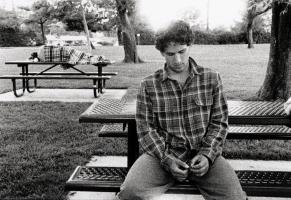
Joseph est engagé dans un voyage sinueux. Son oncle, Henry, est veuf et vit seul. Joseph arrive chez Henry. Gisela, qui lit Neruda, est la gouvernante d'Henry. Sam, qui joue du piano, habite à côté et est le seul ami de Henry. Joseph a sa propre tristesse, mais cela conduit Henry à repenser à ses propres souvenirs sombres.
Stanley Cho vit et travaille à Los Angeles, Californie. Il obtient son diplôme à la UCLA School of Art and Architecture en 2001. "Nevertheless" est son deuxième court-métrage.
Pip Chodorov
Catalogue : 2023Rooftop Flicker | Film expérimental | super8 | couleur | 3:20 | USA, Coree du Sud | 2022
Pip Chodorov
Rooftop Flicker
Film expérimental | super8 | couleur | 3:20 | USA, Coree du Sud | 2022
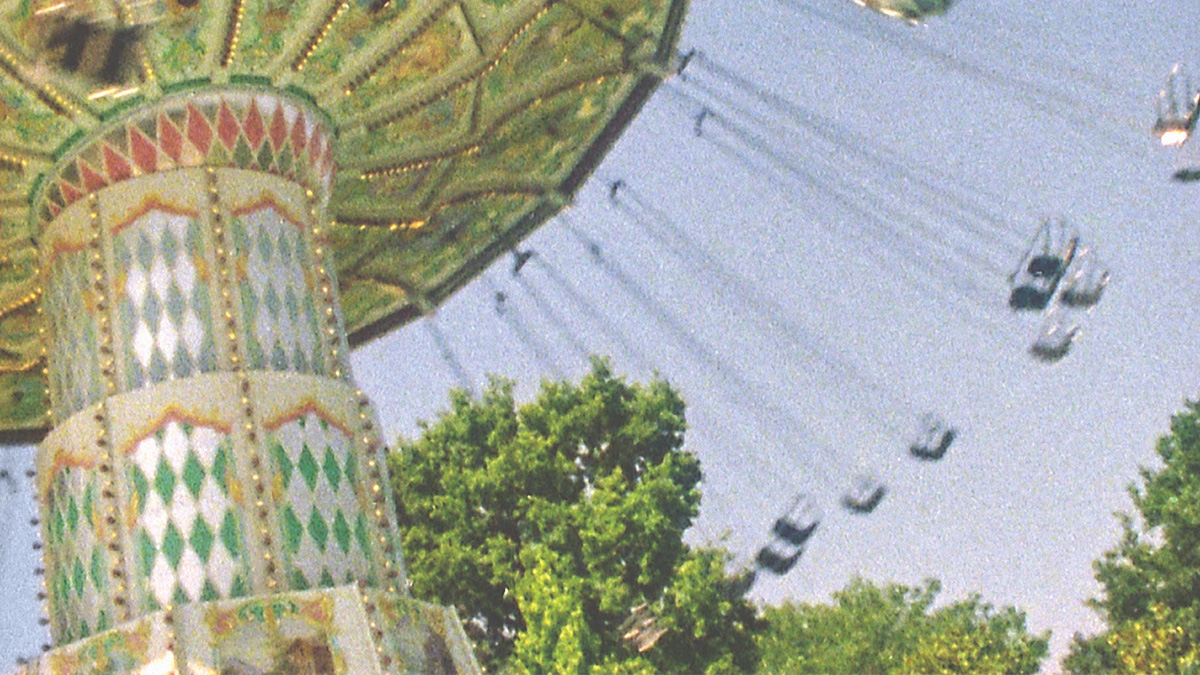
Super-8 flicker film shot and hand-developed in Seoul in spring 2022 with jazz soundtrack from a Jonas Mekas centennial tribute in Busan.
Pip Chodorov. Born April 13, 1965 in New York. Filmmaking and music composition since 1972. Studied cognitive science at the University of Rochester, NY and film semiotics at the University of Paris, France. Work in film distribution - previously Orion Classics, NYC; UGC, Paris; Light Cone, Paris; and, currently, Re:Voir Video, Paris, which he founded in 1994 and The Film Gallery, the first art gallery devoted excusively to experimental film. He is also co-founder of L'Abominable, a cooperative do-it-yourself film lab in Paris, and the moderator of the internet-based forum on experimental film, FrameWorks.
Catalogue : 2019The Stranger | Fiction expérimentale | 16mm | couleur | 9:19 | USA, Roumanie | 2018
Pip Chodorov
The Stranger
Fiction expérimentale | 16mm | couleur | 9:19 | USA, Roumanie | 2018
Romanian fairy tales usually start with the sentence: “Once upon a time something happened, if it hadn’t happened it couldn’t be told”. In this fairy tale, a stranger visits the remote mountain village of Slon. This film was made at an annual ten-day filmmaking residency in Slon. As a stranger myself, first time to Romania, with only four days to shoot and four days to edit, I wrote this modern-day fairy tale to coincide with my fantasy idea of what my unpredictable visit to the village would be like.
Pip Chodorov. Born April 13, 1965 in New York. Filmmaking and music composition since 1972. Studied cognitive science at the University of Rochester, NY and film semiotics at the University of Paris, France. Work in film distribution - previously Orion Classics, NYC; UGC, Paris; Light Cone, Paris; and, currently, Re:Voir Video, Paris, which he founded in 1994 and The Film Gallery, the first art gallery devoted excusively to experimental film. He is also co-founder of L`Abominable, a cooperative do-it-yourself film lab in Paris, and the moderator of the internet-based forum on experimental film, FrameWorks.
Adam Chodzko
Catalogue : 2015Knots | Fiction expérimentale | hdv | couleur | 8:5 | Royaume-Uni | 2013
Adam Chodzko
Knots
Fiction expérimentale | hdv | couleur | 8:5 | Royaume-Uni | 2013
In Knots, Adam Chodzko focuses on the remote but important relationship between the artist Kurt Schwitters, in the final years of his life in the late 1940’s, living in poverty and exile in England’s Lake District, and J. Edgar Kaufmann, the wealthy owner of the Kaufman Department Store in Pittsburgh, USA. Kaufmann had arranged for money to be wired to Schwitters so that he could develop a new Merz structure. Chodzko plays with the desire to conclude and tie up the loose and disparate ends of this narrative. He imagines the now empty Merzbarn (Schwitters final work having been removed to a Newcastle museum in 1965) as a vacuum, sucking in thoughts, desires and matter; all caught up in the vortex of a dream-like surreality. Kaufmann had commissioned Frank Lloyd Wright to design his Pittsburgh office, a structure that itself was also later displaced from its source when donated to the Victoria & Albert Museum, London. Chodzko sees the interior spaces that Schwitters and Kaufmann worked within as unstable, flowing, collaged together, as though becoming a Merz themselves, whilst the form of the video also echoes this process of construction and deconstruction. Knots is a mesmerizing combination of fact and fiction, text and moving image building a story about longing, creation and fragmentation, endings and beginnings, networks of people and isolated individuals, separations and notions of home. It was commissioned by Tate Britain in 2012.
Adam Chodzko’s art explores the interactions and possibilities of human behaviour by investigating the space between how we are and how we could be. Working across media, from video installation to subtle interventions, with a practice that is situated both within the gallery and the wider public realm, his work investigates and invents the possibilities of collective imagination through using a poetics of everyday life. By wondering how, through the visual, we might best engage with the existence of others he reveals the realities that emerge from the search for this knowledge. Chodzko's art proposes new relationships between our value and belief systems, exploring their effect on our communal and private spaces and the documents and fictions that control, describe and guide them. Working directly with the networks of people and places that surround him, often using forms of anthropology, Chodzko focuses on the relational politics of culture's edges, endings, displacements, transitions and disappearances through a provocative looking in the 'wrong' place; a search for knowledge through instability. His art is catalysed by imagining a collapse of the category of Art, requiring not only a new audience but also a new status for the art object. Chodzko’s practice operates in the tight, poetic spaces he evolves between documentary and fantasy, conceptualism and surrealism, and public and private space, often engaging reflexively and directly with the role of the viewer. Intimate collections and ephemeral communities are frequently generated through his works; assemblies of owners of a particular jacket and a reunion of the children 'murdered' in a Pasolini film; a god look-alike contest; lighting technicians asked to advise on the light in heaven; a London gallery's archive given to a group of Kurdish asylum seekers to edit and hide outside the capital; the multi-faceted Design for a Carnival, the evolution of a ritual event for the future including Settlement, the legal purchase of a square foot of land as a gift to a stranger, Nightshift, a late night parade of nocturnal animals to the Frieze Art Fair, London and M-path, the collection and distribution of perception-changing footwear for gallery visitors. More recently a trilogy science fiction video and mixed media works, Hole, Around and Pyramid, have all explored, the idea of art becoming a vehicle for a community’s collective mythology, whilst Echo, The Pickers and Ghost elaborate these themes through excavating processes of memory, empathy and the imaginary. Because, 2013 (at Tate Britain) and We are Ready for your Arrival, 2013 (at Raven Row) further develop these ideas through manifestations of the unconscious relationships between individuals and groups; their excesses and disappearances. Born in 1965. Lives and works in Whitstable, Kent, UK. Since 1991 Chodzko has exhibited extensively in international solo and group exhibitions including: Raven Row, London; Tate Britain; Tate, St Ives; Museo d'Arte Moderna, Bologna (MAMBo); The Benaki Museum, Athens; Athens Biennale, Istanbul Biennale, Venice Biennale; Royal Academy, London; Deste Foundation, Athens; PS1, NY; Ikon Gallery, Birmingham, Kunstmuseum Luzern etc. Recent projects include commissions by Creative Time, New York, The Contemporary Art Society, Frieze Art Fair, and Hayward Gallery. In 2002 he received awards from the Hamlyn Foundation and the Foundation for Contemporary Art, New York, and in 2007 was awarded an AHRC Research Fellowship in the Film Department at the University of Kent, Canterbury. His work is in the collections of the Tate, The British Council, The British Film Institute, The Arts Council, APT, Auckland City Art Gallery, Contemporary Art Society Collection, The Creative Foundation, Frac Languedoc-Rousillon, GAM - Galleria d’Arte Moderna, Turin, Grizedale Arts, MAMBo - Museo d’Arte Moderna di Bologna, Plains Arts Museum, North Dakota, USA, Saatchi Collection, South London Gallery, Towner Gallery Eastbourne, and international private collections.
Oleg Chorny
Catalogue : 2025Kyiv in the Days of War | Documentaire | 4k | couleur | 3:9 | Ukraine | 2022
Oleg Chorny
Kyiv in the Days of War
Documentaire | 4k | couleur | 3:9 | Ukraine | 2022
On the 24th of February 2022 Russia launched a large-scale invasion of Ukraine. In the beginning of April the first massive attack of Russian troops was repulsed, but Kyiv is still suffering by air strikes. There are traces of war on the streets of the city. Defensive structures are ready, because the enemy could attempt to occupy the capital of Ukraine again. Despite this the residents of Kyiv are trying to maintain habits of peaceful life, but the war continues.
Born in 1963. Graduated from the film director’s department of the State Institute of Theatre and cinema in 1985. Worked at the Olexander Dovzhenko State Film Studio in Kyiv, various governmental and non-governmental film and video studios. Shot a number of feature shorts, documentaries, ecological and promo films and musical video clips. He is member of the Ukrainian Filmmakers Union. His short feature movies and documentaries participated at the programs at the Ukrainian and international festivals. In 1996 Oleg Chorny and Gennady Khmaruk (w.b. 1972) has founded the non-profit creative unit “SAMPLED PICTURES”. A number of videos created by “SAMPLED PICTURES” were presented at the various film and video festivals, exhibitions and club screenings.
Oleg Chorny, Gena KHMARUK
Catalogue : 2006Pershe Karaoke | Doc. expérimental | dv | noir et blanc | 3:0 | Ukraine | 2005
Oleg Chorny, Gena KHMARUK
Pershe Karaoke
Doc. expérimental | dv | noir et blanc | 3:0 | Ukraine | 2005
L'histoire vraie de la première invention du karaoke.
OlEG CHORNY. Est né en 1963. Il obtient son diplôme au Département de réalisation du Kiev State Institute of Theatre and Cinema en 1985. Il a travaillé dans de nombreux studios de films et vidéos gouvernementaux et non gouvernementaux. Avec Gena Khmaruk, il a fondé le service créatif non gouvernemental "Sampled Pictures". GENA KHMARUK. Est né en 1972. Il obtient son diplôme au Département de réalisation de la Ukrainian State Academy of Culture en 1996. Il a travaillé comme monteur dans divers studios de télé. Il travaille également comme présentateur de clips et infographiste.
Isoje Chou
Catalogue : 2008anne (the assumption) | Vidéo expérimentale | dv | couleur | 3:0 | Nigeria, Canada | 2006
Isoje Chou
anne (the assumption)
Vidéo expérimentale | dv | couleur | 3:0 | Nigeria, Canada | 2006
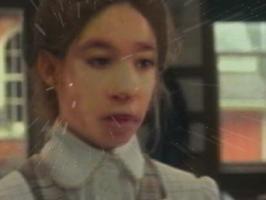
Dans "Anne (The assumption), les images d'archive sont un acte de mémoire, de mort et d'élévation physique. En insérant mon visage "natal" sur celui du personnage Anne du film Canadien par essence "Anne of Green Gables", le doux plaisir du film de télévision est transformé en déconcertant souvenir, tout autant fictionnel qu'historique.
Iso Chou est née à Kano, au Niger. Elle possède une double origine: chinoise/ mandchourienne et nigérienne/cap-verdienne. Elle a obtenu son Master of Arts à l'université de York, à Toronto.
Ijosé Chou
Catalogue : 2006Bullfight (acts of war) | Vidéo expérimentale | dv | couleur | 1:0 | Sahara Occidental, Liberia | 2004
Ijosé Chou
Bullfight (acts of war)
Vidéo expérimentale | dv | couleur | 1:0 | Sahara Occidental, Liberia | 2004
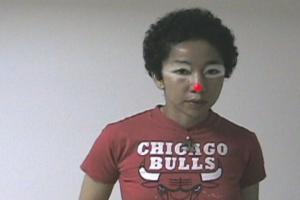
"Bullfight" touche à des espaces qui sont psychiques, personnels, privés / déplacés ? où le corps est un fois cru et interposé comme un clown, et matador et un taureau.
Il est né et a été élevé en Afrique Occidentale et vit maintenant en Amérique du Nord.
Catalogue : 2006Anne | Vidéo expérimentale | dv | couleur | 1:25 | Sahara Occidental, Canada | 2003
Ijosé Chou
Anne
Vidéo expérimentale | dv | couleur | 1:25 | Sahara Occidental, Canada | 2003
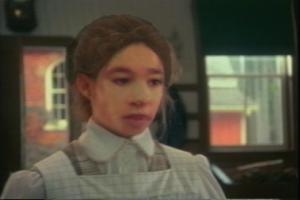
Dans "anne", les images archives sont un acte de souvenir. En insérant mon visage (et par-là même, "mon corps"), sur l'un des personnages du film, "Anne of Green Gables", je démarre un processus de souvenir qui est autant romanesque qu'historique.
Est né et a grandi dans les pays de l'Ouest de l'Afrique. Vit actuellement en Amérique du Nord. Son activité comprend la peinture, le dessin, la vidéo et la représentation vidéo.
Davy Chou
Catalogue : 2015Cambodia 2099 | Fiction expérimentale | hdv | couleur | 21:0 | France | 2014
Davy Chou
Cambodia 2099
Fiction expérimentale | hdv | couleur | 21:0 | France | 2014
Phnom Penh, Cambodge. Sur Diamond Island, joyau de modernité du pays, deux amis se racontent les rêves qu'ils ont faits la veille.
Davy Chou est un réalisateur français. Son premier long métrage documentaire, Le Sommeil d’or, fut sélectionné au Forum de la Berlinale 2012 et au festival international de Busan 2011. Il développe un long métrage de fiction intitulé Diamond Island.
Saddie Choua
Catalogue : 2020Today is the Shortest Day of the Year But Somehow Hanging Around With You All Day Makes it Seem Like the Longest | Vidéo | super8 | couleur | 11:45 | Belgique, Allemagne | 2018
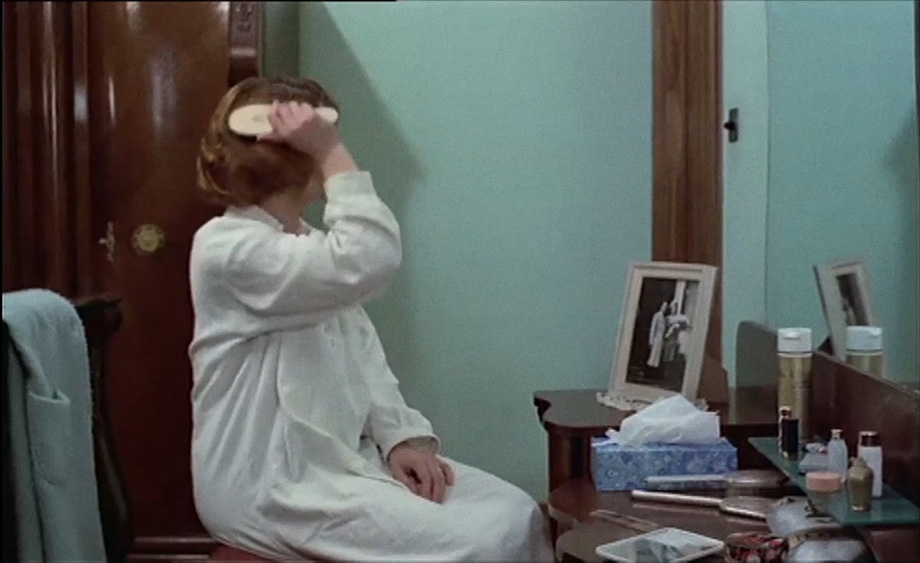
Saddie Choua
Today is the Shortest Day of the Year But Somehow Hanging Around With You All Day Makes it Seem Like the Longest
Vidéo | super8 | couleur | 11:45 | Belgique, Allemagne | 2018
Dans ses films, Saddie Choua combine son propre matériel cinématographique avec des images trouvées, des documents d’archives visuels et textuels, provenant de diverses sources, telles que la télévision nationale, des programmes de loisirs, des vidéos musicales et des magazines. Dans sa pratique, Saddie Choua se concentre sur le rôle de l’image en mouvement dans les loisirs et la politique et leur influence sur l’image commune de l’Autre. Dans certains de ses projets, elle introduit du matériel autobiographique pour rechercher le rôle entre elle et cet Autre. Dans ses films et installations, Saddie Choua simule la conception des médias de masse vus du salon, créant ainsi une situation familière pour transmettre de nouvelles images qui suggèrent les complexités de l’Autre. Saddie Choua montre les structures de pouvoir derrière l’industrie de l’image actuelle et les préjugés et malentendus qu’elles provoquent.
Saddie Choua a étudié la sociologie à la VUB de Bruxelles. Elle participe actuellement au projet international de recherche et de discussion intitulé “Décolonisation perverse”, à l’Akademie der Künster der Welt à Cologne. Saddie Choua a été invitée pour les expositions personnelles suivantes (une sélection) : Le Joli Mois de Mai, Ten Weyngaert, Bruxelles, 2017 ; The Chouas - Work in Progress, MU.ZEE, Ostende, 2016 ; Great News. J’ai été élu félin de l’année, WIELS, 2014. Ses œuvres ont également été présentées dans les expositions de groupe, festivals et projections suivants (une sélection) : Festival Concreto, Fortaleza, 2017 ; Montrez-moi vos archives et je vous dirai qui est au pouvoir, KIOSK, Gand, 2017 ; Je crois qu’il y a une confusion chez vous. Vous croyez que moi je veux vous imiter, Kaaistudio’s, Bruxelles, 2017 ; The Chouas - A work in progress Episode #3, Human(art)istic festival, Beursschouwburg, Bruxelles, 2016 ; L’acte de fixer le soleil, Zwart Wild, Gand, 2016 ; Biënnale de Marrakech, Marrakech, 2016 ; Festival d’égalité, Vooruit, Gand, 2015 ; Été de la photographie, BOZAR, Bruxelles, 2014.
Omar Chowdhury
Catalogue : 2016The Colonies at Dusk | Vidéo | hdv | couleur | 12:49 | Bangladesh, Australie | 2014
Omar Chowdhury
The Colonies at Dusk
Vidéo | hdv | couleur | 12:49 | Bangladesh, Australie | 2014
To make the moving-image work for Means the recently returned Australian-Bangladeshi artist Omar Chowdhury headed out into the Australian bush seeking a form of simple and focused sensing. Carrying stills and cinematic cameras, he ventured into the Southern Highlands of New South Wales, crossed the Great Dividing Range, and wandered out to the remnant Victorian gold towns, searching. Haunted by the ‘weirdness’ of the trees, the totemic termite mounds, the warbling creeks and dirt packed roads, he felt himself and his thinking seep into the darkening landscape. The traces of this spiritual ethereality inhere in his strange and occult video footage of animals, rocks, branches, burnings, machines and the silence of the isolate people. In it, somewhere, lie the means of his being.
Bangladeshi-Australian artist Omar Chowdhury makes moving-image, photographic, conceptual and textual installations based on immersions into contested spaces and their histories. Often mixing notions of ontology, political economy, and the spirit, they hold in uneasy tension various polarities: facts and the surreal, humour and melancholia, rhythm with chaos, weakness and power, and memory with forgetting. Out of these cohesions and frictions he produces densely woven languages and environments of moral and psychic inquiry. In 2016 he has an upcoming solo presentations at Bengal Gallery (Dhaka) and Dhaka Art Summit 2016 and screenings at the Queensland Gallery of Modern Art (Brisbane) for Asia Pacific Triennial 8. Recently he has had solo exhibitions at 4A Centre for Contemporary Asian Art (Sydney), ALASKA Projects (Sydney) and MOMENTUM (Berlin). He was a finalist in the 2015 John Fries Award (Sydney) and the 2015 and 2016 Blake Prize Award (Sydney). He is the recent recipient of a Bengal Foundation Practice Grant, Keir Foundation/4A Commission, Australia Council Skills and Development Grant, Edward M. Kennedy Grant for the Arts, and an Australian Cinematographer`s Society Gold Award. He also founded and often programs the Bengal Cinematheque in Dhaka.
Jasmina Cibic
Catalogue : 2025Beacons | Doc. expérimental | 4k | couleur | 23:0 | Slovénie, Royaume-Uni | 2023
Jasmina Cibic
Beacons
Doc. expérimental | 4k | couleur | 23:0 | Slovénie, Royaume-Uni | 2023
Beacons is a cinematographic journey portraying eight women who distil the archive of cultural workers from countries of the Non-Aligned Movement into a musical score. They translate and decipher words into sounds and choreography and meet within a proposition for an address recasting the unrealised promises of the past into a sonic address a rehearsal for our present. Filmed on isolated architectures steeped in nature that once served the awakening of transnational solidarity, the project aims to re-inscribe the missing female voice into the history of world-building.
Cibic represented Slovenia at the 55th Venice Biennial with her project “For Our Economy and Culture”. She was the winner of the Film London Jarman Award (2021), the B3 Biennial of the Moving Image Award (2020) and has screened her films at the Whitechapel Gallery, London Film Festival, HKW Berlin, the Louvre, Dokfest Kassel and the Copenhagen International Documentary Festival among others. Cibic’s recent exhibitions include solo shows at the Museum of Contemporary Art Zagreb, The High Line New York, Museum der Moderne Salzburg, macLyon, Museum Sztuki Lódz, CCA Glasgow, Phi Foundation Montreal and BALTIC Centre for Contemporary Art Gateshead. Cibic’s work recently been presented at group exhibitions including IMMA Dublin, Biennale Jogja, Innsbruck Biennial, MAXXI Rome, Mac Belfast, MOMA New York, the Chicago Architectural Biennial and the Museum of Contemporary Art Belgrade.
Catalogue : 2023The Gift | Fiction expérimentale | 4k | couleur | 27:56 | Slovénie, France | 2021
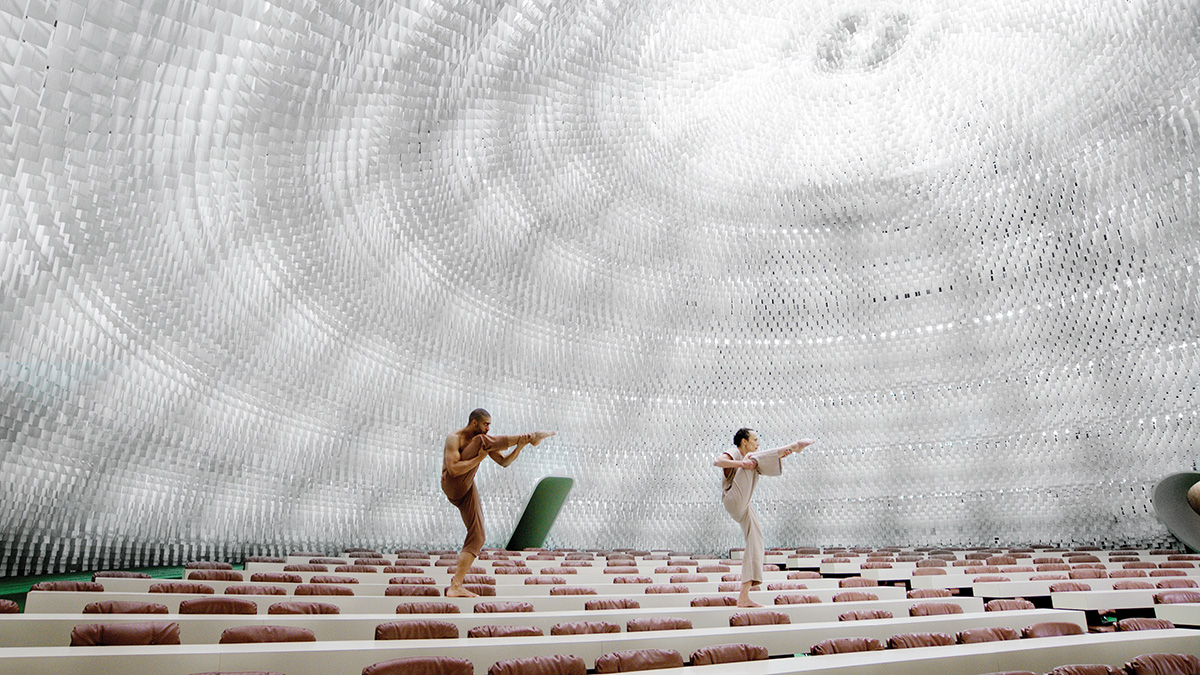
Jasmina Cibic
The Gift
Fiction expérimentale | 4k | couleur | 27:56 | Slovénie, France | 2021
The Gift is a film about the use and abuse of culture in times of political and ideological crisis. It tells the story of a competition for a perfect gift that could heal a broken nation. The Gift is composed entirely of historical ready-mades that include some of the most perturbing examples of art, music and architecture deployed as trojan horses of political powers. The film’s locations include iconic buildings which were all political gifts themselves - including Oscar Niemeyer’s French Communist Party HQ in Paris, the Palace of Nations in Geneva, Mount Buzludzha in Bolgaria and the Palace of Culture and Science in Warsaw.
Jasmina Cibic is a Slovenian artist currently based in London, who works in film, performance and installation. She represented Slovenia at the 55th Venice Biennial with her project “For Our Economy and Culture”. Her recent exhibitions include solo shows at: Museum der Moderne Salzburg, The Highline New York, macLyon, Museum Sztuki ?ód?, Museum of Contemporary Art Ljubljana, CCA Glasgow, Phi Foundation Montreal, BALTIC Centre for Contemporary Art Gateshead, Ludwig Museum Budapest, Kunstmuseen Krefeld along with group exhibitions at MAXXI Rome, Steirischer Herbst ‘19, MOMA NY, Marta Herford and Guangdong Museum of Art China. Cibic’s films have been screened at the Barbican London, Whitechapel Gallery, CCA Montreal, Pula Film Festival, HKW Berlin, Louvre, Les Rencontres Internationales Paris, Aesthetica, Berwick Film and Media Arts Festival, BFI London Film Festival, Dokfest Kassel and Copenhagen International Documentary Festival. Cibic was the winner of the MAC International Ulster Bank and Charlottenborg Fonden awards (2016), the B3 Biennial of the Moving Image Award (2020) and the Film London Jarman Award (2021).
Catalogue : 2019NADA: Act III - The Exhibition | Vidéo | 4k | couleur | 16:20 | Slovénie, Allemagne | 2017
Jasmina Cibic
NADA: Act III - The Exhibition
Vidéo | 4k | couleur | 16:20 | Slovénie, Allemagne | 2017
Composed of quotes drawn from political discussions on German national representation at 20th Century’s World Expositions, The Exhibition creates an original conversation between three allegorical positions. The Curator, the Artist and Germania become a reflection of ideological deliberation facing a practical scruple: how to create an exhibition of the nation’s best artworks in order to affect society. Including words drawn from the opening address at the German Pavilion at Barcelona EXPO 1929, Goebbels’ ideas on casting out women from politics and post 2WW soft power deliberations, The Exhibition merges political rhetoric to arrive at what seems to be the only solution that guarantees the success of capital: banning the audience. Filmed within the villas Haus Esters and Lange, that Ludwig Mies van der Rohe built for the Krefeld silk barons in 1920s, The Exhibition uses the architecture which itself served as soft power realised: a theatrical frame and pedestal that went on to establish Mies as the architect that paved way for the theatricality of the concept of nation state and its visual branding.
Jasmina Cibic (b. Ljubljana 1979) is a London based artist who works in performance, installation and film, employing a range of activity, media and theatrical tactics to redefine or reconsider a specific ideological formation and its framing devices such as art and architecture. Jasmina represented Slovenia at the 55th Venice Biennial with her project “For Our Economy and Culture”. Her recent exhibitions include solo shows at: DHC/Art Montreal, BALTIC Centre for Contemporary Art Gateshead, Museum Haus Esters Krefeld, Aarhus 2017, Esker Foundation Calgary, Museum of Contemporary Art Zagreb, Museum of Contemporary Art Belgrade, Museum of Contemporary Art Vojvodina, MGLC Ljubljana and Ludwig Museum Budapest along with group exhibitions at MOMA NY, MUMA Monash Museum, CCS BARD, Guangdong Museum of Art China, Pera Museum Istanbul, La Panacee Montpellier, City Gallery Wellington, MSUM Ljubljana, MNHA Luxembourg, Joanneum Museum Graz and California College of the Arts. Cibic’s films have been screened at FIAC Paris, Pula Film Festival, HKW Berlin, CCA Laznia, Les Rencontres Internationales Paris, Dokfest Kassel and Copenhagen International Documentary Festival. Jasmina Cibic has been shortlisted for the Jarman Award (2018) and was the winner of the MAC International Ulster Bank and Charlottenborg Fonden awards (2016).
Catalogue : 2017Nada: Act I | Vidéo | hdv | couleur | 10:9 | Slovénie, Royaume-Uni | 2016
Jasmina Cibic
Nada: Act I
Vidéo | hdv | couleur | 10:9 | Slovénie, Royaume-Uni | 2016
Jasmina Cibic’s film trilogy NADA draws parallels between the construction of national culture and its use-value for political aims. The first chapter Nada: Act I fans out from a biographical thread of architect and artist Vjenceslav Richter, one of the key figures in charge of the visual representation of the Yugoslav state and his first and unrealized design for the Yugoslav Pavilion at the 1958 EXPO in Brussels. Cibic traced this architecture through archives and recreated the pavilion’s initial design as a musical instrument. In the film, a violinist constructs and continually tunes the instrument according to the Miraculous Mandarin, a musical composition for ballet written by Béla Bartók. This artwork was the one chosen to represent Yugoslavia at the most important dates of the pavilion itself “its National Days” whose role was to maximise the attention and the number of visitors. Paradoxically, this work was since its conception in 1917 marred by state censorship due to its explicit subject matter: a plot of a prostitute, her pimps and the client’s roles which Cibic recasts in the following chapters of Nada into characters of Mother Nation, politicians and the artist in charge of national presentation.
Jasmina Cibic works in performance, instalation and film, employing a range of activity, media and theatrical tactics to redefine or reconsider a specific ideological formation and its framing devices such as art and architecture. She represented Slovenia at the 55th Venice Biennial with the project “For Our Economy and Culture”. Her recent solo exhibitions include Esker Foundation Calgary, Museum of Contemporary Art Zagreb, Museum of Contemporary Art Belgrade, Museum of Contemporary Art Vojvodina, MGLC Ljubljana and Ludwig Museum Budapest along with group exhibitions at Hessel Museum, Pera Museum Istanbul, Museum of Modern Art Ljubljana, La Panacee Montpellier, City Gallery Wellington, MSUM+ Ljubljana, MNHA Luxembourg. Her films have recently been screened at Biennial of Moving Image Buenos Aires, Pula Film Festival, HKW Berlin, CCA Laznia, Les Rencontres Internationales Paris, Dokfest Kassel and Copenhagen International Documentary Festival. Cibic has been nominated for the Jarman Award (2016), Golden Cube Award (Dokfest 2016) and won the MAC International Ulster Bank Award (2016) and best International Artist at the Kunsthalle Charlottenburg(2016). Cibic’s upcoming solo exhibitions include NN Contemporary, Crawford Art Gallery Cork, Aarhus 2017, BALTIC Gateshead, Krefeld Museum and DHC Art Montreal.
Catalogue : 2016Tear Down and Rebuild | Fiction expérimentale | 4k | couleur | 15:28 | Slovénie, Royaume-Uni | 2015
Jasmina Cibic
Tear Down and Rebuild
Fiction expérimentale | 4k | couleur | 15:28 | Slovénie, Royaume-Uni | 2015
Composed of various quotes - belonging to political speeches, debates and proclamations that extract and emphasize the iconoclasm of architecture, art and monuments – the film creates an original conversation between four characters. A Nation Builder, a Pragmatist, a Conservationist and an Artist/Architect become a reflection of ideological deliberation facing a practical scruple. Including words drawn from Regan’s speech on the Berlin Wall, Prince Charles’s 1984 address at RIBA and Isis bloggers’ proclamation on the demolishment of temples, the film’s storyline uses language that endorses demolition and redesign, which were to aid the creation of new displays for ensuing nation-states or ideological positions throughout the 20th and 21st centuries. As the film’s narrative unfolds, the viewer is a witness to the final decision to demolish the fictitious building, the image of which is constructed in the spectator’s imagination through a collage of quotations on diverse, ideologically contrived and historically charged buildings, monuments, walls etc. that were to be or were knocked down - pointing to the universality and timelessness of the paradox of national and ideological representation and its icons.
1979, Ljubljana A London based artist working in installation, performance and photography. Cibic has begun making films in 2012 for her solo presentation of the Slovenian Pavilion at the 55th Venice Biennial. Cibic`s work is site and context specific, performative in nature and employs a range of activity, media and theatrical tactics to redefine or reconsider an existent environment and its politics. The basic gesture in Cibic’s artistic explorations is the dismantlement and careful analysis of the work of art, its representation, and its relationship to the viewer as she tries to operate inside the system she is investigating. The mechanisms and structures of the system thus often become integral parts of the practice, allowing the work to transcend the plane of art and the language of form. Her film works have been shown at Ludwig Museum Budapest, MSUB Belgrade, MGLC Ljubljana, Dokfest Kulturbahfhof – Kassel, Haus der Kulturen der Welt Berlin, Les Rencontres Internationales - Gaîté Lyrique Paris, Copenhagen International Documentary Festival, Art Brussels Cinema Program and Nassauischer Kunstverein Wiesbaden. Her upcoming solo screenings include MSUM Ljubljana, Crawford Art Gallery Cork, the Artist Cinema at the Museum of Contemporary Art Zagreb.
Catalogue : 2014Framing the Space | | | | 11:31 | Slovénie | 0
Jasmina Cibic
Framing the Space
| | | 11:31 | Slovénie | 0
?Framing the Space? was shot at the summer residency of former Yugoslavia`s president Tito. The Vila underwent numerous redesigns concurrent with national cultural and political imperatives throughout its life, culminating in its 1950s redesign by Tito?s official state architect, who had the task of translating the existing Austro Hungarian castle into a new, modernist architecture, fit to illustrate a new national formation. The film presents philosophical and architectural theories of purpose, form, function and aesthetic priorities through a staged interview between the architect and a journalist questioning his possible successes and failures. The script is based on documents from Slovenian Parliament?s archives from 1950s. The theoretical debate around ideological vision lies in opposite to the period/melodrama-style delivery and aesthetic and points to the exoticism that historical and geopolitical revisitations are subjected to in the eyes of the contemporary viewer. The recontextualising of issues around the ideas of national representativeness, dramatises not only the power paradigms inherent in systems of authority, but also the explicit contradictions present in the transmutation of a national identity from past to present, place to place. Framing the Space was produced specifically for Cibic?s project ?For Our Economy and Culture? representing Slovenia at the 55th Venice Biennial.
Jasmina Cibic was born in Ljubljana, Slovenia in 1979. She completed her MA in Fine Art at Goldsmiths College in London in 2006. She has taught at the Accademia di Belle Arti in Venice and regularly holds artist talks and lectures internationally. Jasmina Cibic?s recent projects and exhibitions include ?For Our Economy and Culture?, Slovenian pavilion, 55th Venice Biennial, ?Disturbances?, Musée national d`histoire et d`art, Luxembourg, 3oth International Graphics Biennial Ljubljana, ?October Salon?, Belgrade, ?U3 ? 7TH Triennial of Contemporary Art?, MSUM, Ljubljana, ?Monitoring?, Dokfest, Kassel, ?Borderline?, Joanneum Museum Graz, ?The Secret of the Ninth Planet?, California College of the Arts, San Francisco, ?Museum on the Street?, Museum of Modern Art Ljubljana, ?The Object of the Spectacle?, Galerija ?kuc, Ljubljana, ?Present State?, Five Years Gallery, London, ?Tourists Welcome?, Ljubljana International Airport and ?Landescape?, Künstlerhaus Graz. Her upcoming exhibitions include ?Fruits of Our Land?, LMAKprojects, New York and Ernst Museum (Capa Contemporary Photography Center), Budapest. Jasmina Cibic? s moving image work has recently been screened at Copenhagen International Documentary Film Festival, Museum of Modern Art Ljubljana and KORO, Oslo. Her upcoming screenings include 14th GOEAST - FESTIVAL OF CENTRAL AND EASTERN EUROPEAN FILM, Wiesbaden, ?Art and Power?, Museum of 25th of May, Belgrade.
Mariangela Ciccarello, Philip Cartelli
Catalogue : 2016Lampedusa | Fiction expérimentale | hdv | couleur et n&b | 13:44 | Italie, USA | 2015
Mariangela Ciccarello, Philip Cartelli
Lampedusa
Fiction expérimentale | hdv | couleur et n&b | 13:44 | Italie, USA | 2015
Combining high definition and Super 8 footage, Lampedusa is composed of interwoven narratives based on a series of real events. In late 1831, a volcanic island suddenly erupted from the sea a few kilometers off the southern coast of Sicily. An international dispute ensued, during which a number of European powers laid claim to this newfound “land.” The island receded below sea level six months later, leaving only a rocky ledge under the sea...
Philip Cartelli Philip Cartelli is a filmmaker, critic, researcher, and doctoral candidate in Harvard University’s Sensory Ethnography Lab. His film and video works have been shown in international festivals, conferences, and installation settings. Mariangela Ciccarello After studies in philosophy and visual art, Mariangela Ciccarello pursued a career as a curator in galleries and museums between Europe and South Africa. She has made a series of films over the past few years, most recently during a fellowship at the UnionDocs Center for Documentary Art in Brooklyn.
Linda Ciharova
Catalogue : 2011Jízda Emokrajem | Vidéo | dv | couleur | 8:15 | Tchèque (Rép.) | 2010

Linda Ciharova
Jízda Emokrajem
Vidéo | dv | couleur | 8:15 | Tchèque (Rép.) | 2010
The whole project is interested in the border of an urbanistic landscape, where the city meets the nature. It is using an artficial light (hand torch, car lights or a helicopter´s search light ) to enlight and discover a landscape. An artificial light paraphrases here not only quite invasive human activity, but also a searching human mind. Through giving an focused attention revaluates an relationship to this "normal" suburbian landscape and lifts up the landscape and its part into unique objects. The fundamental element here is a feeling - an emotion, which we get from some places minded to communicate with us.
Linda Čihařová has born on 2.7.1982 in Prague, where she is also living and working. She graduated at the University of Art, Archuitecture and design in Prague and also experienced studies on FAMU in Prague, University of New Mexico in Albuquerque and Academy Beeldene Kunste in Maastrichtu, Netherlands. Although Linda Čihařová is using different new media, her projects have base in land art and concept art. She is in a way an muliinstrumentalist of new media techniques, because she is formally not limited in means of expression. While working on her ideas, she is mostly using video, photography, drawing, painting, instalations, an interactivity with a viewer and their combinations. Unifying element and main inspiration source she almost always finds in landscape, nature and a point of reflection of a human energy on it. Recently she is focused on communication of humans and their surrounding. She is also inspired by scientifical methods, micro worlds and landscape deatils. By making the photography an abstract one, she gets into a inner world of landscape and creating a psychological portrait of the place. she finds creatures, stories and situations, which want to be made visible. The drawing is here an expression of a personal reading in particular place and the landscape an interactive personality.
Claudia Claremi
Catalogue : 2022El Tiempo | Doc. expérimental | mov | couleur et n&b | 18:36 | Cuba, Espagne | 2020
Claudia Claremi
El Tiempo
Doc. expérimental | mov | couleur et n&b | 18:36 | Cuba, Espagne | 2020
El Tiempo is a collaboration with the volunteers of the Reina Sofía Museum, a group of pensioners that play an active role in the museum’s educational programmes. Through the creation of a collaborative experimental film, El Tiempo examines the intangible, explores personal and collective memories, and delves into the relationship between this group and the Museum, representing a symbiosis of bodies and artworks. The project started in 2019, with the idea of making a film set in a dystopian present, where the Museum is closed to the public as a result of the collapse of modern society. Western culture has therefore lost its hegemonic role, causing the abandonment of the institutions that sustained it. In this context, the volunteers appear to be the only people who inhabit the Museum. The framework of this fictional thread, facilitated the development of group and individual performative actions, and allowed a series of encounters of bodies, space and artworks. This work was shot just before the pandemic and the editing and post-production process took place during the confinement. This experience deeply redefined the project and those images that were created as a vision of an imagined present, began to represent a plausible reality.
Claudia Claremi (Madrid, 1986). Visual artist and filmmaker. Graduated in Documentary Film from the Escuela Internacional de Cine y Televisión de San Antonio de los Baños (Cuba) and in Fine Arts from University of the Arts London (UK) and the Instituto Superior de Arte de La Habana (Cuba), and she has participated in alternative programmes of study and critical practice such as VISIO (Lo Schermo dell’Arte, Florence), P.O.P.S. (Colectivo Ayllu, Matadero, Madrid), Campus (Latitudes, Barcelona) and La Práctica (Beta Local, Puerto Rico). Her films Firefly, Bat and The woodland, among others, have been shown and awarded at international film festivals such as Raindance, Ann Arbor, Ji.hlava, FIC Guadalajara, Documentamadrid or Márgenes. Her work has been part of many exhibitions and she has also obtained the XXI Generación 2021 award, XXXI Circuitos award, the Matadero CREA grant. In 2020-21 she has completed El Tiempo, a film in collaboration with the Reina Sofía Museum in Madrid.
Louis Braddock Clarke
Catalogue : 2025Under Boom | Installation vidéo | 4k | couleur | 18:0 | Royaume-Uni, Pays-Bas | 2024
Louis Braddock Clarke
Under Boom
Installation vidéo | 4k | couleur | 18:0 | Royaume-Uni, Pays-Bas | 2024
UNDER BOOM (2024) is a hallucinatory cinematic experience shaped through a combination of human-shaped sonic ecologies and deep time. Framed as a listening station and a geological hotspot to imagine society’s shifting sonic world, the work takes the audience through an anthropogenic cinema experience with infrasound, an inaudible bandwidth of 0–20 Hz filled with shockwaves caused by human activities. These include mining blasts, burning space debris, air strikes, atomic bangs, sonic booms, seismic guns, and the calving of ice sheets. The work stems from the discovery of a listening island in the mid-Atlantic, which due to its geo-positioning and low noise ratio is hyper-sensitive to long-wave sounds. From this island, the sonic ruptures of the Earth’s ever-changing global acoustics can be heard. UNDER BOOM is captured using stroboscopic techniques, where anthropogenic beats orchestrate the presence of visuals. Infrasonic events become markers of visibility, entangling frequency with video frame-rates in an act to dissolve ocularcentrism. The frictions of vibrating matter, shaking sonics, and flickering images highlight the physical renderings of human sounds on the Earth. Linking the intimacy and intensity of flicker cinema with an embodiment of climate allows for alternative modes of listening and climatic imaginary experiences. What if the Earth was dancing faster and faster every year?
Louis Braddock Clarke is an artist and researcher interpreting notions from domains of art, geography, physics, and esoteric philosophy. Listening and amplification as creative methods have become key approaches to their work relating to disrupted ecologies. Through fieldwork, filmmaking, sonic tuning, and amateur geology their projects seek to speculate on the future surfaces of the Earth. Braddock Clarke’s relationship with the geographical arts is embedded in their formative years in Cornwall, surrounded by radon moorlands, granite quoits, shifting isolines, pixies, tin mines, and trans-Atlantic cable systems. These entangled Earth energies have become paramount to their ongoing research methods relating to technologies and terrains.
Dana Claxton
Dana Claxton
Catalogue : 2007Anwolek - Regatta city | Vidéo expérimentale | dv | couleur | 4:22 | Canada | 2005
Dana Claxton
Anwolek - Regatta city
Vidéo expérimentale | dv | couleur | 4:22 | Canada | 2005
Commandé dans un premier temps par la ville de Kelowna et la Alternator Gallery, ce travail remet en question la mémoire, la perte, l?identité, la nostalgie et la manière dont les paysages sont détériorés à travers l?apparat. Ce travail, plein de sujets sous-jacents et de métaphores, fait allusion au 11 septembre, à l?assassinat de Kennedy et à Olympia de Leni Riefenstahl.