Catalogue > Liste par artiste
Parcourez la liste complète des artistes présentés dans le cadre des Rencontres Internationales depuis 2004. Utilisez le filtre alphabétique pour affiner vos recherches.
Jenny Marketou
Catalogue : 2008DE_LETE | Doc. expérimental | dv | couleur | 2:0 | Grèce, USA | 2006
Jenny Marketou
DE_LETE
Doc. expérimental | dv | couleur | 2:0 | Grèce, USA | 2006
La frontière est un lieu construit artificiellement qui se matérialise lorsque les gens le traversent. Nous sommes habitués à voir dans les médias des images violentes et agressivesde la frontière, utilisées pour manipuler l'opinion publique sur l'immigration illégale et la sécurité nationale. De Lete a été tourné sur la frontière entre Tijuana et San Diego, avec pour toile de fond le petit village de Las Playas au golf du Mexique. De Lete donne une vision alternative de la frontière. Le film est au carrefour de plusieurs genres, formel, documentaire et philosophique. La caméra capte l'activité humaine le long de la barrière en fil de fer de la frontière, anticipant le crime. A notre surprise, la frontière se matérialise seulement quand les gens de tous âges viennent des deux côtés pour s'adonner à une communication intime. Ainsi, la barrière se transforme en point de rencontre, et aucune tentative pour la traverser n'est faite. Tandis que cet acte de tous les jours se répète au ralenti, la frontière disparaît et devient soudain un lieu ambivalent à la croisée de deux cultures; un nouvel espace social aux relations discrètes. C'est un espace reculé, contrôlé par des forces invisibles.
Jenny Marketou est née à Athènes, en Grèce, et vit à Brooklyn, où elle réalise des installations vidéo, internet, des photographies et des dialogues publiques. Son travail est influencé par la musique, l'art et les nouveaux médias. Son inspiration première est liée à de nombreuses lectures, que l'on peut voir comme une culture du paysage. Son oeuvre a été montrée dans des musées et des galleries aux niveaux national et international et a reçu de nombreuses bourses et a fait de nombreuses résidences d'artistes à travers le monde. Elle possède un Master of Fine Arts du Pratt Insitute de Brooklyn et enseigne en tant que professeur adjoint la photographie et l'art interdisciplinaire à la Union School of Art and Science de New York. Elle est l'auteur d'un livre avec photographies et entretiens: "The Great Longing: The Greek Immigrants of Astoria ,Queens".
Filip Markiewicz
Catalogue : 2022Euro Hamlet | Fiction expérimentale | mov | couleur | 20:0 | Luxembourg, Allemagne | 2021
Filip Markiewicz
Euro Hamlet
Fiction expérimentale | mov | couleur | 20:0 | Luxembourg, Allemagne | 2021
Euro Hamlet is the latest project of theatrical creation directed by Filip Markiewicz in August 2021 in the immense Hall of the Telux site in Weisswasser in Germany, in collaboration with playwright Katrin Michaels, Working from the original text of Hamlet, Shakespeare's most popular and disturbing play, Filip Markiewicz creates a sort of concept with Euro Hamlet. He subverts the established rules of classic theatre and combines them with different artistic forms. The result proves to be a veritable performance, both in terms of the artists appropriating the original text and the visual and audio presentation of its content in space. In this contemporary tableau, Filip Markiewicz reflects certain references from the history of art and uses the concept of the «Play Within the Play» to engage with issues in the social and political realities of today's Europe, It raises the question: how to communicate the truths of everydav life in a context that is subject to codes of appearance? The preparation for the staging of Euro Hamlet included a shooting in July 2021 with the actors Leila Lallali, Marie Jung, Luc Feit and Joran Yonis in the region of East Germany and in Zgorzelec in Poland. A "mise en abyme" of Shakespeare's text in an organic setting that bears witness to European history, where the artist adresses the notion of territory beyond the experimental nature of this reading.
Filip Markiewicz (born in 1980, Esch / Alzette, Luxembourg) is a visual artist who expresses himself through various media such as drawing, painting, music, video and installation. Filip Markiewicz represented Luxembourg at the 56th Venice Biennale 2015 with the Paradiso Lussemburgo project. His long-term project Celebration Factory on contemporary Europe began in 2016 at the NN Contemporary Art Northampton and at the Theater Basel before it was continued in 2018 at the Casino Luxembourg - Forum d'Art Contemporain and in 2019 at the Center for Contemporary Art Derry-Londonderry and the Kunsthalle Osnabrück. In 2017 Markiewicz staged his performance Fake Fiction with diary texts by Oskar Schlemmer (publication Hyde Éditions) at Theater Basel for the official Art Basel program. Markiewicz received the Art Prize Bourse Bert-Theis in 2019 for his art music project Ultrasocial Pop. In 2020 Markiewicz shows his monographic exhibition Ultraplastik Rhapsody at the National Museum of Contemporary Art in Bucharest. For the Lausitz Festival 2020, Markiewicz directed, created the scenography and composed the music for the play ANTIGONE NEUROPA (Sophocles) in collaboration with the Staatstheater Cottbus. In february 2021 Filip Markiewicz presented the performance Ultrasocial Pop in the frame of the Rencontres Internationales Paris / Berlin. In August 2021 Markiewicz directed, created the scenography and composed the music for the installation and theater performance Euro Hamlet at the Lausitz Festival. Filip Markiewicz has been composing music for film, theater and installation under the name RAFTSIDE since 1999, with which he has also appeared in several international festivals.
Catalogue : 2021Ultrasocial Pop | Performance | mov | couleur | 30:0 | Luxembourg | 2020
Filip Markiewicz
Ultrasocial Pop
Performance | mov | couleur | 30:0 | Luxembourg | 2020
"Ultrasocial Pop" est le dernier projet audiovisuel expérimental de Filip Markiewicz. Il crée un dialogue performatif entre son travail visuel et filmique, et ses compositions musicales sous le nom Raftside. La performance en direct est toujours une expérience unique, qui inclut un commentaire sur des événements sociaux réels. L'idée est d’interroger le lien entre la culture pop et le populisme, et de monter un tableau vidéographique en mouvement. "Ultrasocial Pop", une œuvre encore en développement, aboutira sur la publication d'un livre visuel accompagné d’un disque vinyle LP (Label Grzegorzki Records) dans le cadre de son exposition solo à Haus am Lützowplatz, à Berlin (Allemagne), en mai 2021. "Ultrasocial Pop" est financé par la Bourse Bert-Theis.
Filip Markiewicz est né à Esch-sur-Alzette (Luxembourg) en 1980. Ses expositions personnelles ont été présentées par des institutions telles que le MNAC - Musée national d'art contemporain de Bucarest (Roumanie); le NN Contemporay Art, Northampton (Royaume-Uni); la Kunsthalle Osnabrück (Allemagne); le Centre for Contemporary Art Derry (Royaume-Uni); et le Casino Luxembourg - Forum d'Art Contemporain, Luxembourg (Luxembourg). Il a représenté le Luxembourg à la 56e Biennale de Venise (Italie). Filip Markiewicz suit une voie de performance théâtrale et musicale, qui l'a conduit à créer des représentations au Staatstheater Cottbus, Cottbus (Allemagne), dans le cadre du Lausitz Festival, Görlitz (Allemagne); au Theater Basel, Bâle (Suisse); et à l'Expo Shanghai (Chine); ainsi qu’à développer son travail dans le domaine des arts visuels. Il vit et travaille à Hambourg (Allemagne) et à Luxembourg (Luxembourg).
Catalogue : 2020Fake Fiction | Fiction expérimentale | hdv | couleur | 26:7 | Luxembourg, Suisse | 2018
Filip Markiewicz
Fake Fiction
Fiction expérimentale | hdv | couleur | 26:7 | Luxembourg, Suisse | 2018
Fake Fiction is initially a theater play that became a film produced in 2017 by the Theater Basel. Filip Markiewicz wrote the dialogues in reference to the events that happened during the period of time, the terror attacks, the European mirgant crisis and the rise of populist movements and fake news...
Luxembourgeois d’origine polonaise, Filip Markiewicz (né en 1980) est un artiste multidisciplinaire qui s’ex- prime à travers différents médiums, dont le dessin, la vidéo et l’installation. Toujours en quête d’explications à nos vies quotidiennes, il explore l’omnipré- sence des images et met en perspective le message qu’elles véhiculent. Il soumet l’actualité à une approche critique et politique et, partant, souligne la vacuité de notre monde en surproduction visuelle où l’information devient la réalité plutôt que l’inverse. En 2015, Markiewicz a représenté le Grand-Duché de Luxembourg à la 56e Biennale de Venise avec Paradiso Lussemburgo.
Catalogue : 2018Celebration Club | Fiction expérimentale | hdv | couleur | 23:10 | Luxembourg, Royaume-Uni | 2017
Filip Markiewicz
Celebration Club
Fiction expérimentale | hdv | couleur | 23:10 | Luxembourg, Royaume-Uni | 2017
Celebration Club (2017) is a film made over the course of one week in Northampton following the Brexit referendum.The film captures musicians of different generations and origins talking about the changing society and making music, including punk scholar Roy Wallace, rapper Phundo Art, avant-garde black metal band Denigrata and the Northampton Male Voice Choir performing Robbie William’s Angels in a local church.
Luxembourger of Polish origin, Filip Markiewicz (born in 1980) is a multidisciplinary artist expressing himself through drawing, video, music, theatre and installations thereby creating a visual body of work using diversified media. His work is not intending to be a kind of political activism, but rather to develop an almost surreal language consolidating different expressions. In 2015 Filip Markiewicz represented the Grand Duchy of Luxembourg at the 56th Venice Biennale with his project "Paradiso Lussemburgo". In 2017 he produced his first theater play "Fake Fiction" at the Theater Basel. In 2018, he will present his monographic exhibition "Celebration Factory" at the Casino Luxembourg - Forum d`Art Contemporain.
Ivan Markovic
Catalogue : 2025Similar to Ourselves | Installation vidéo | 4k | couleur | 12:20 | Serbia, 0 | 2023
Ivan Markovic
Similar to Ourselves
Installation vidéo | 4k | couleur | 12:20 | Serbia, 0 | 2023
Like a glass vault that contains traces and gifts from distant countries, the headquarters of Energoprojekt, the former Yugoslavian construction company merges geographically distant places. Walls are pannelled with faded photographs of Energoprojekt’s conscturctions in fellow Non-Aligned countries, from 1960's until late 1980’s. Across Africa, South America, the Middle East and South Asia, the distinctive modernist constructions built by Energoprojekt formed an independent post-colonial architectural identity, beyond the Eastern and Western Bloc polarity. Abundant plants and trees, different species brought from afar 50 years ago, still grow together under the glass roof. The space is gradually revealed in choreographed sequences of the people who take care of the plants, forming an inseparable sense of belonging.
In his films, photography and video works, Ivan Markovi? observes space and the relationship between labour, architecture and ideology. With Linfeng Wu, he co-directed the short film “White Bird”, that had its premiere at Berlinale 2016. His experimental documentary “Centar” had its premiere at Doclisboa in 2018, won the “Best Newcomer” award at Dokufest. “From Tomorrow on, I Will”, a feature he co-directed with Linfeng Wu, had its premiere at Berlinale Forum 2019. The film received the Grand Prize at 2019 Jeonju IFF. It was shown in numerous festivals, including Belfort, Viennale, Zinebi and Mar del Plata. As a cinematographer collaborated on several feature films including “You Have the Night” by Ivan Salatic (Venice Film Festival), “Landscapes of Resistance” by Marta Popivoda (IFF Rotterdam) and “I Was at Home, But...” and “Music” by Angela Schanelec (Berlinale). His work was shown in numerous solo or group exhibitions internationally, in institutions including Institute of Contemporary Arts London, Bethanien in Berlin, Austrian Kulturforum Berlin, Museum of Contemporary arts Belgrade. Since 2020, a member of the European Film Academy.
Randa Maroufi
Catalogue : 2018Stand-by Office | Doc. expérimental | hdv | couleur | 13:0 | Maroc, Pays-Bas | 2017
Randa Maroufi
Stand-by Office
Doc. expérimental | hdv | couleur | 13:0 | Maroc, Pays-Bas | 2017
Un groupe de personnes dans un environnement de bureau. Des gestes quotidiens de travail sont observés dans tout le bâtiment. Rien ne semble être déplacé. La caméra circule continuellement et change progressivement notre perception de cet espace. On se pose la question : qu’est ce que signifie ce bureau pour ce groupe de personnes ? "We Are Here" est un groupe de réfugiés à Amsterdam qui ne reçoit aucun logement fourni par le gouvernement, mais ne peut pas non plus travailler. Le groupe a décidé de rendre visible la situation inhumaine qu’ils doivent vivre, en ne se cachant plus, mais en montrant la situation des réfugiés qui sont "en dehors de la loi" aux Pays-Bas.
Diplômée de l’Institut National des Beaux-Arts de Tétouan, de l’École Supérieure des Beaux-Arts d’Angers (France) ainsi que du Fresnoy (France). Randa Maroufi est de cette génération advenue avec le règne des images. Elle les collectionne avec autant d’avidité que de méfiance, se pose sans cesse la question de leur véracité. Sa recherche se situe entre le reportage, le cinéma et l’étude sociologique qu’elle poursuit en réalisant des fictions ambiguës qu’elle met au service du réel, et le champ de ses expérimentations s’étend de l’occupation de l’espace public à la question du genre, dont elle relève les mécanismes de construction. Son travail qui se traduit essentiellement à travers la photographie, la vidéo, l’installation, la performance et le son, a été présenté lors d’événements d’art contemporain et de cinéma majeurs tels que La Biennale de Marrakech (2014), Les Rencontres photographiques de Bamako (2015), Le Museum of Modern Art à New York (2016), Le Dubai Photo Exhibition (2016), Le Festival International du court-métrage de Clermont-Ferrand (2016), le VIS Vienna Independent Shorts (2016), le FID Marseille (2016) etc. Son film Le Park a reçu plus d’une vingtaine de prix tels que le prix ADAGP Art numérique – Art vidéo (2015), Videonale Award of the fluentum Collection (2017), le prix du jury au Festival International du film de Rotterdam (2016), le prix du meilleur court métrage au festival IBAFF etc.
Randa Maroufi
Catalogue : 2026L’mina | Documentaire | dcp | couleur | 26:0 | Maroc, France | 2025
Randa Maroufi
L’mina
Documentaire | dcp | couleur | 26:0 | Maroc, France | 2025
Jerada est une ville minière au Maroc où l’exploitation du charbon, bien que officiellement arrêtée en 2001, se poursuit de manière informelle jusqu’à aujourd’hui. "L’mina" reconstitue le travail actuel dans les puits en utilisant un dispositif de décor conçu en collaboration avec les habitant·e·s de la ville, qui se mettent en scène dans leur propre rôle.
Née en 1987 à Casablanca (Maroc), Randa Maroufi est artiste plasticienne et réalisatrice. Elle est diplômée de l’Institut National des Beaux-Arts de Tétouan, de l’École Supérieure des Beaux-Arts d’Angers, et du Fresnoy – Studio National des Arts Contemporains. Pensionnaire de l’Académie de France à Madrid, Casa de Velázquez en 2018 et de la Villa Médicis à Rome en 2026. Ses films Le Park (2015) et Bab Sebta (2019), primés dans plusieurs festivals, marquent le début d’une trilogie consacrée à trois cités marocaines. L’mina (2025) en est le dernier volet.
Siyanda Marrengane
Catalogue : 2023Go Slow, You'll See Better | Vidéo expérimentale | mp4 | couleur | 3:8 | Swaziland, Afrique du sud | 2022
Siyanda Marrengane
Go Slow, You'll See Better
Vidéo expérimentale | mp4 | couleur | 3:8 | Swaziland, Afrique du sud | 2022
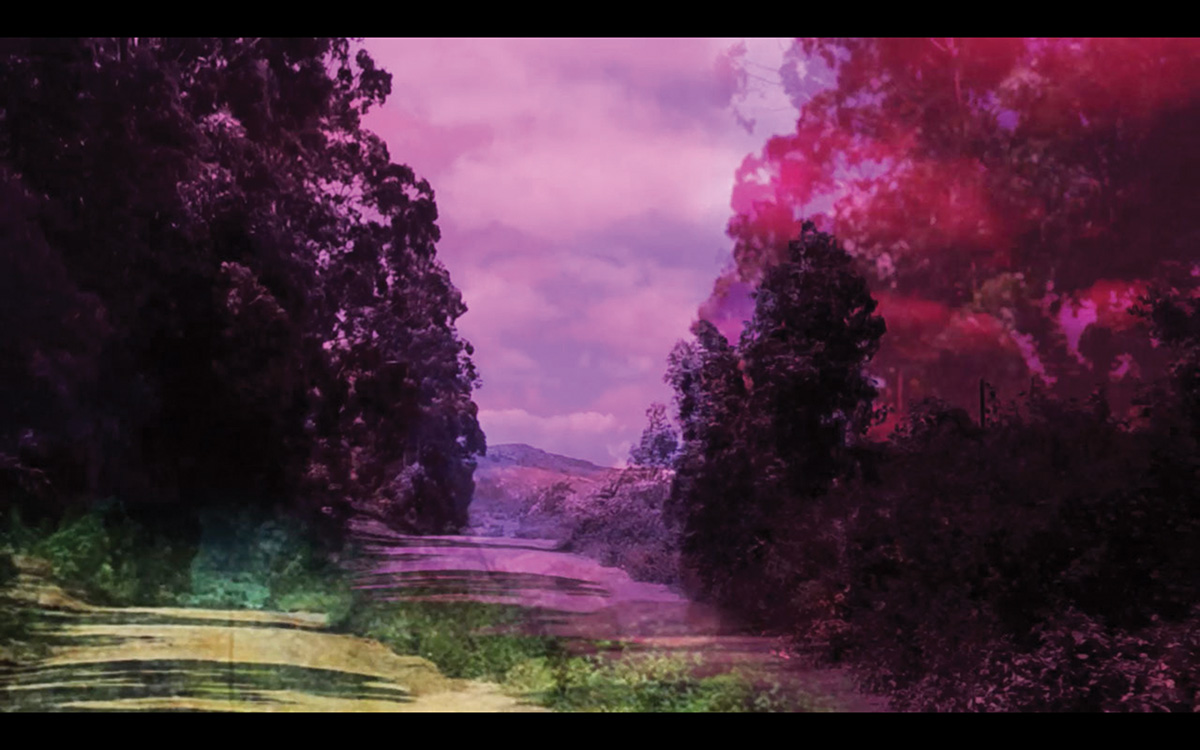
go slow, you’ll see better is a journey of contemplation and transitioning between opposing states (of being). Revealing a landscape interspersed with vibrant colours of magenta and pink, this represents a bridge between excitement and calmness, chaos, and order. The shift in saturation mirrors the ever-changing nature of emotions, experiences, and personal narratives. Driving by and shooting out the window, the landscape becomes blurred and unblurred, evoking the sense of in-betweenness, which can prompt the feelings of familiarity and unfamiliarity, clarity, and vagueness. go slow, you’ll see better is everywhere and nowhere, collapsing both the temporal and the spatial.
Siyanda Marrengane is a Eswatini-born visual artist based in Johannesburg, South Africa. Kuba semkhatsini is a SiSwati phrase that can be translated as being caught in the middle of conflicting states of being, situations, conditions and more. Siyanda is interested in the notion of the in-between (kuba semkhatsini), a central component in her practice that encompasses personal and collective narratives and experiences. These are subsequently explored as ways of questioning, challenging and falsifying existing hegemonies. Unpacking and translating these through video, sound and installation, to create ambiguous spaces that are both imagined and real.
Lynne Marsh
Catalogue : 2011Plänterwald | Art vidéo | dv | couleur | 18:15 | Canada, Allemagne | 2010
Lynne Marsh
Plänterwald
Art vidéo | dv | couleur | 18:15 | Canada, Allemagne | 2010
Plänterwald is filmed on the site of a former GDR amusement park built in 1969 and abandoned after unification. Its rollercoaster and ferris wheel sit motionless at the edge of the city of Berlin. After being closed to the public for almost a decade the rides and fairground structures ? once providing a distraction from everyday realities ? are left to a gradual process of decay and overgrowth. Paradoxically this derelict site is patrolled and protected by security guards who on the one hand attempt to maintain its separation from the public sphere and contemporary life yet at the same time position it in the present social and economic conditions. The video stages a journey in, over and through this bordered off park evoking the exceptional conditions of its persistent existence. Positioning the security guards as the guardians of a ?dead? space, the work plays on the absurdity of the use of force and notion of property in relation to the decay and obsolescence of the site. Plänterwald pursues an exploration of a world held together by an internal logic, and quietly, yet relentlessly - like the defunct rollercoaster - echoes the rumbles of deep social and political fault lines and their explosive potential.
Lynne Marsh is a Canadian artist who divides her time between Montréal, Berlin and London where she teaches at the University of Hertfordshire. Working predominately with video, installation and sound her practice explores the cultural and social concerns that operate at the convergence of performance, choreography, speculative fiction and staged events. Her most recent works, shot respectively in a sports stadium, a TV studio and an abandoned amusement park investigate the inscription of individual bodies in architectural environments built for mass consumption. Her works present conceptual and visual experimentations that create a space for us to speculate on the present concept of the individual and its contemporary exertion of pressure as a political subject. Marsh?s video installations have been exhibited in solo exhibitions including Kunstlerhaus Bethanien, Berlin, Steve Turner Contemporary, Los Angeles, the Musée d`art contemporain de Montréal and Danielle Arnaud contemporary art, London and group exhibitions including Catastrophe, the Québec City Biennial and There is no audience, at Montehermoso, Vitoria-Gasteiz, Spain. A monograph on her works entitled Lynne Marsh, was produced by the Musée d`art contemporain de Montreal and the Musée régional de Rimouski.
Cécile Martin
Catalogue : 2006Débat | | | | 0:0 | France, Canada | 2005
Cécile Martin
Débat
| | | 0:0 | France, Canada | 2005
L?organisme Champ Libre (fondé en 1992) qui ?uvre maintenant dans les domaines de l?image en mouvement, des arts électroniques, de l?architecture et de l?urbanisme a emprunté son nom à l?histoire récente du Québec. En effet au moment de la fondation de l?organisme en 1992, François Cormier l?un des co-fondateurs, cherchait un nom à donner à ce nouvel espace de réflexion et de diffusion artistique qui émergeait à partir de l?effervescence de rencontres avec d?autres co-fondateurs issus du milieu de l?architecture, des arts visuels, de la philosophie, de la littérature et de l?urbanisme. À cette époque ce collectif définissait son action entre autres par le besoin de regrouper les forces de ses co-fondateurs et proposer de nouvelles façons de voir, d?entendre et de comprendre. C?est au hasard d?une visite dans une librairie de livres usagés du plateau Mont-Royal à Montréal en 1991 que fut découverte une édition ancienne et originale de la revue de cinéma québécoise CHAMP LIBRE ayant existé dans les années soixante-dix le temps de quelques numéros. L?édition no 1 de cette revue clamait en 1971 que : ?il consiste à donner aux colonisés que sont les Québécois les images d?eux-mêmes qui leur manquent, à reconquérir un reflet volé et à proposer des schémas d?analyse et de lutte. Inutile de dire que CHAMP LIBRE participe à ce combat. C?est la force éditoriale de ces propos et le désir, la volonté de faire revivre le nom inspirant de cette revue de cinéma d?auteur qui a fait naître dans sa continuité le nom de l?organisme CHAMP LIBRE que l?on connaît aujourd?hui.
CHAMP LIBRE (fondé en 1992) est un diffuseur et un laboratoire artistique nomade qui présente des événements in situ, s`insérant dans la communauté et mettant en relation les pratiques contemporaines de l`art, de l?architecture, de l?urbanisme et des nouvelles technologies.
Richard Martin
Catalogue : 2016Abcam | Vidéo | hdv | couleur | 7:54 | Canada | 2015
Richard Martin
Abcam
Vidéo | hdv | couleur | 7:54 | Canada | 2015
A B C A M (or A & B Cam) explores a scene from a TV movie where the angles have been superimposed to reveal filmic conventions. It reveals the narrative, angles as well as the adjustments in performance to observe the process in its rawness and mesmerizing predictability. In conventional cinema we are only allowed to see what is presented and manipulated through the process of editing. This is a process as old as the medium itself. It is the essence of cinema. In the case of A B C A M, that process has been subverted and exposed to allow the audience to experience the conventions simultaneously and in real time. The manufactured certainty of the experience is undermined as we are encouraged to review both sides of the narrative, follow the narrative or perhaps, find a new narrative.
Richard Martin (MFA 2013 University of British Columbia) is a media artist living in Vancouver Canada. His short film work has appeared as official selections in prestigious venues such as Berlin International Film Festival, Oberhausen, Rencontres (Paris), Toronto International, EXiS (Korea), Ann Arbor, Athens (Ohio), and many more. He has also worked as a mainstream film and TV director and in that his work straddles conventional and experimental cinema, blending and upending convention with abstract intention, playfulness and occasionally, personal trauma.
Catalogue : 2006Mixed Signals | Vidéo expérimentale | dv | couleur | 7:45 | Canada | 2004
Richard Martin
Mixed Signals
Vidéo expérimentale | dv | couleur | 7:45 | Canada | 2004
Une mer pixelisée d'images télévisées mélange la rhétorique évangélique chrétienne avec le gospel de George W. Bush.
Richard Martin est un réalisateur de films et télévision professionnel qui vit à Vancouver, Canada. "Mixed Signals" marque son retour au cinéma expériemental... et il revient de plus belle.
Darrin Martin
Catalogue : 2006Monograph in Stereo | Vidéo expérimentale | dv | couleur | 17:20 | USA | 2005
Darrin Martin
Monograph in Stereo
Vidéo expérimentale | dv | couleur | 17:20 | USA | 2005
Monograph in Stereo utilise des techniques documentaires et expérimentales pour exprimer le combat contre la perte auditive congénitale et opérationnelle et les acouphènes, un son persistant dans l?oreille ; une perception auditoire fantôme.
Les vidéos et performances de Darrin Martin ont été exposées internationalement lors de festivals et dans des musées dont le Museum of Modern Art et le DIA Center pour les arts de New York, le Los Angeles Museum of Contemporary Arts, et l?European Media Art Festival en Allemagne. Ses installations ont été montrées lors expositions comme la Kitchen à New York, WRO Media Arts Biennale en Pologne, et la Pacific Switchboard de Portland, dans l?Oregon. Il collabore souvent avec Torsten Senas Burns. Leurs ?uvres communes furent montrées lors d?expositions dont celle du New York Video Festival, The Oberhausen Short Film Festival, Cinematexas, The Madrid Museum of Contemporary Art, The Paris/Berlin International et Eyebeam de New York. Ils ont aussi lancé une projet net art DSL dont le titre est : Lesson Stalls : learning nets à http://www.eai.org/lessons commissionné par Electronics Arts Intermix.
Lucia Martinez
Catalogue : 2018Mirador | Fiction | hdv | couleur | 14:0 | Suisse | 2016
Lucia Martinez
Mirador
Fiction | hdv | couleur | 14:0 | Suisse | 2016
Depuis un mirador, Lucas observe, effleure un monde qui se bâtit autour de lui. Libéré du foyer dans lequel il réside, le temps d’une journée, Lucas va se confronter à son réel, aux autres, qui vont lui renvoyer de lui même une image aussi mystérieuse qu’elle s’avère fragile.
Née en 1994, Lucia Martinez est une jeune réalisatrice suisse dont les films explorent le passage de l’enfance au monde adulte. N’utilisant pas d’interprètes professionnels, les fictions engendrées le sont à partir de son réel immédiat. Un frère, une voisine, des amis, peuvent devenir des interprètes le temps d’une fiction. Pour Lucia la fiction se glisse souvent dans les replis du réel, faisant émerger des fictions aussi minimales qu’elles sont essentielles.
Ruben Martinez
Catalogue : 2007Hamaca | 0 | 0 | | 0:0 | Espagne | 2007

Ruben Martinez
Hamaca
0 | 0 | | 0:0 | Espagne | 2007
HAMACA is a distributor of video art and electronic art. It was established by the initiative of AAVC and is directed by YP. The name HAMACA refers to the operative system under which we aim to work: as a horizontal net joined together at various points. Our main objective is to make works in video format available to the greatest number of individuals and institutions, and in this way promote their circulation and screenings. The distributor is a non-for-profit organisation at the service of both authors and users, whose aim is to promote the circulation of the works and to generate an economic flow for the artists' productions. We hereby continue in the line of the kind of activities led by AAVC throughout the past few years. HAMACA works as an intermediary that promotes and guarantees the presence of contemporary and historical video productions in audiovisual screenings and programs at a national and an international level. In addition, it opens up the market for new communication and information media. The works contained in the catalogue have been previously selected by a selection committee comprising professionals and experts in the field, such as Susana Blas, Eugeni Bonet, Juan Guardiola, Esther Regueira, Fito Rodríguez, Jorge Luis Marzo, Lola Dopico, and Virginia Vilaplana. The catalogue contains a varied selection of works and encompasses all genres, from historical productions and pieces in documentary format, to works of fiction, animation pieces, etc... always including the most current and risk taking pieces being created in video. Their starting point is a selection of artists that have produced most of their work within the Spanish state. It is the group's aim to expand the catalogue on a regular basis in response to different demands and criteria. Once the HAMACA catalogue has been designed and compiled, it is digitalized in order to make it accessible on line, and thus encourage research of its contents, as well as its promotion and circulation. All the works in distribution can be checked at Hamaca's web platform. The distributor is physically located in Barcelona; those interested can visit the premises by appointment and consult the catalogue in person.
Angela Martinez
Mónica Martins Nunes
Catalogue : 2018Na cinza fica calor (The Ashes Remain Warm) | Doc. expérimental | hdv | couleur | 20:52 | Portugal, Cap Vert (Îles du) | 2016
Mónica Martins Nunes
Na cinza fica calor (The Ashes Remain Warm)
Doc. expérimental | hdv | couleur | 20:52 | Portugal, Cap Vert (Îles du) | 2016
“ Every morning when I go out of the door, he is the first one I see. He is the first to tell me good morning. ” “ He is a father. Although he is destroying us, he does not kill us. ” The villages of “ Chã das Caldeiras ” lie inside the caldera of the “ Pico do Fogo ” volcano in Cabo Verde. After losing everything they own on the last eruption, its inhabitants are forced to reconstruct their lives. A subjective visual tale on real loss, a symbiotic relationship and the possibility of the eternal return.
Monica Martins Nunes (1990, Lisbon) is a portuguese visual artist living and working in Berlin. After studying Sculpture in Faculdade de Belas-Artes - Lisbon University, she graduated in Fine Arts from the Universitat der Künste Berlin. In 2016 she became a Meisterschüler in the same institution and was subsequently awarded the Elsa-Neumann-Stipendium from the city of Berlin. "The Ashes Remain Warm" is her first moving image work and won the Golden Dove - International Competition Short Documentary at DOK Leipzig 2017.
Gohar Martirosyan
Catalogue : 2025The Mount A | Animation | 4k | couleur | 8:35 | Arménie, France | 2024
Gohar Martirosyan
The Mount A
Animation | 4k | couleur | 8:35 | Arménie, France | 2024
Un dialogue entre le mont Ararat et le Mont Analogue de René Daumal interroge le paradoxe de leur présence visible mais inaccessible en tant que montagnes intérieures. Ce dialogue reflète comment les montagnes, au-delà de leur rôle de repères physiques, agissent également comme des constructions métaphysiques qui façonnent notre perception de nous-mêmes. À travers ce prisme, les frontières entre biographie personnelle et géographie s'effacent, révélant les liens profonds entre nos identités et les paysages que nous habitons. Le mont Ararat, avec son sommet volcanique de 5 137 mètres visible à l'horizon, se dresse comme un symbole poignant—toujours à portée de vue, mais inaccessible en raison des forces géopolitiques intractables.
Dans sa pratique filmique, Gohar Martirosyan examine les ensembles d'influences qui participent à la construction d'une personne ou d’une identité, qu'elles proviennent d'événements historiques, de pratiques culturelles, de liens sociaux ou de relations avec différentes formes du vivant. Par le biais d’images d’archives et de procédés technologiques, son installation vidéo fait dialoguer des géographies devenues inaccessibles, autrefois habitées par l’activité humaine, prenant naissance dans la biographie de l’artiste. Gohar a étudié au Le Fresnoy, elle est née à Gyumri (Arménie) et est actuellement basée à Paris.
Miriam Martín
Catalogue : 2020La espada me la ha regalado | Doc. expérimental | hdv | couleur | 18:6 | Espagne | 2019
Miriam MartÍn
La espada me la ha regalado
Doc. expérimental | hdv | couleur | 18:6 | Espagne | 2019
La Casa de Campo est l'un des plus grands parcs publics du monde, une forêt en réalité. Pendant des siècles, ce ne fut que pour les rois et les reines. Dans les images, c'est 2019 : le vert de la terre qui brille à nouveau pour nous ou les restes des tranchées comme endormies ou l'usage imprévu des ponts et des bassins par les enfants. Dans les sons, 1936, la forêt coupée en deux, la défense de Madrid : « bourdonnements et explosions, rafales de mitrailleuses, claquement sec des fusils » ou le feu d'artillerie qui massacra la ville depuis les collines ou les mots de ceux qui inventèrent une révolution et un goût pour la vie bonne au milieu de tout ce vacarme.
Miriam Martín a consacré toute sa vie adulte et une partie de la précédente au cinéma. D'abord comme spectatrice, puis comme programmatrice dans diverses institutions. Et en organisant, de novembre 2012 à juillet 2018, le ciné-club Chantal, une expérience esthétique et politique à périodicité hebdomadaire.
Lukas Marxt, Marcel Odenbach
Catalogue : 2018Fishing Is Not Done on Tuesdays | Vidéo | hdv | couleur | 15:0 | Autriche, Ghana | 2017
Lukas Marxt, Marcel Odenbach
Fishing Is Not Done on Tuesdays
Vidéo | hdv | couleur | 15:0 | Autriche, Ghana | 2017
Landscape is a question of distance. Patterns and formations become recognizable from a distance revealing the landscape as a fabrication, a result of natural and historical movements. Fishing is not done on Tuesdays takes variously distanced, moving and focused looks at a location on the coast of Ghana. The first building block of a grid that threads its way through the entire film is indicated by a rotating bird´s eye view of a densely woven canopy of trees intersected by an uneven wall. The vertigo of this circular motion shifts into a gradual glide along untreated cement pylons. Their verticality intersects with the horizon line visible in the distance, to be ruptured only by the turbulence of approaching waves. Constructed lines produce visual axes and visual slits, dividing and lending rhythm to an apparently wild growth of abundant vegetation. These lines and grids do not divide the interior and exterior but rather create openings and passageways. Over and over again views are seen that refute these clear geometries, vibrating and unstable, brought near by binoculars but at the same time strangely far removed. Fisherman on their boats, at prayer before the workday begins; two boys with toy guns in search of an invisible adversary. Smoke condenses; silhouettes become blurred. Are these everyday scenes or the distant echoes of disturbing memories? There is no fishing on Tuesdays. Loudspeaker systems are the domain of Christian agitators on Sundays. The everyday rhythms of this place are overlaid with the drumming of rotors, the swelling and waning of music and the ocean. Their intersection is marked by this house on stilts, this perch from which an interior grid merges with the exterior as landscape. (Katrin Mundt)
Born in the Steiermark region of Austria in 1983, he studied geography and environmental system sciences in Graz until 2004. He then switched to audiovisual design at the University of Art and Design Linz. From 2007 to 2008 he studied art and multimedia at the Faculdade de Belas-Artes in Lisbon, Portugal. In 2009 he took up a postgraduate degree at the Academy of Media Arts Cologne and a masters at the Academy of Fine Arts (HGB) in Leipzig. Following the short film Fishing is not done on Tuesdays, co-directed with Marcel Odenbach, this marks the second outing for their collaborative work in competition in the Berlinale Shorts. He lives and works in Cologne and Vienna.
Lukas Marxt
Catalogue : 2021Imperial Irrigation | Vidéo | 4k | couleur | 20:4 | Autriche, USA | 2020
Lukas Marxt
Imperial Irrigation
Vidéo | 4k | couleur | 20:4 | Autriche, USA | 2020
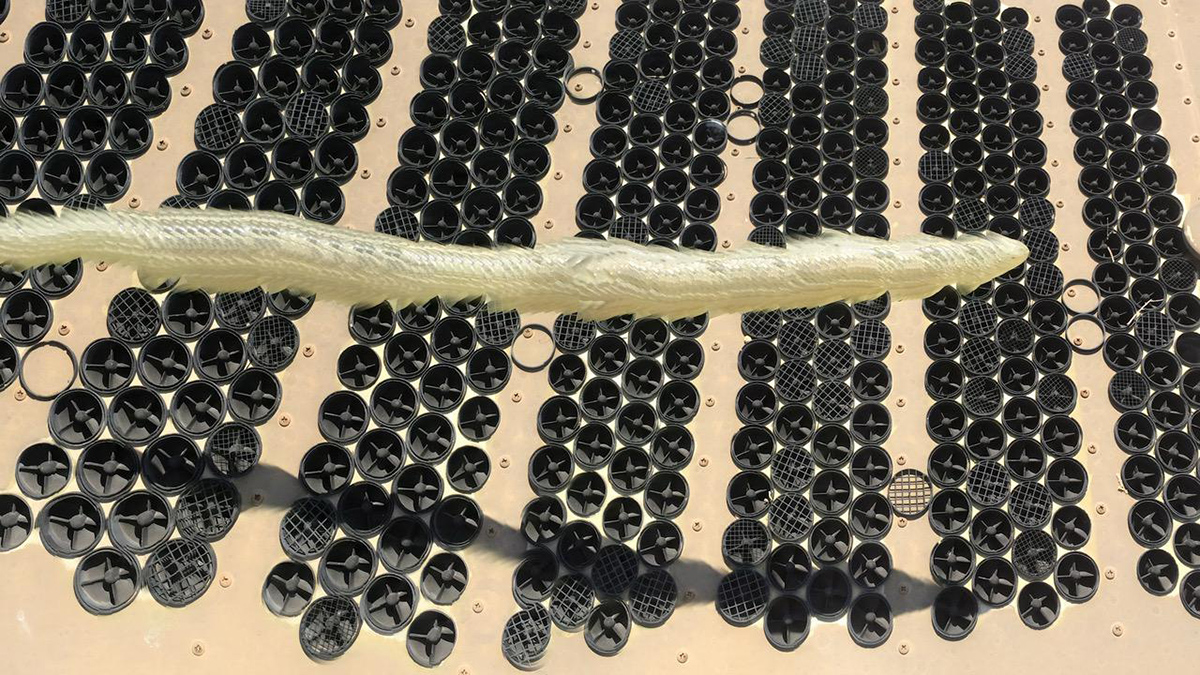
Trouver l'accès aux strates et aux vérités les plus profondes d'un bout de terre, par le biais du surréel et de ce qui est aliéné numériquement. Tel est l'objectif de "Imperial Irrigation", de Lukas Marxt, où le surréalisme numérique est ancré dans l’intention d’un documentaire expérimental, tandis que les couches de texte et de son s'immiscent dans les multiples strates d'action, décentrant ainsi continuellement le récit. Le point de départ de cette étude territoriale complexe et dynamique est la Salton Sea, en Californie, près de là où "Imperial Valley (cultivated run-off)", de Lukas Marxt, menait déjà. Ce lac, qui s'assèche lentement, et son passé en dents de scie sont approchés par le biais de différents types d'images, dont la plupart mettent délibérément en scène des moments d'aliénation soigneusement disposés. Comme si l'intangibilité du paysage offert ne pouvait être rencontrée par des moyens réalistes, les plans sont découpés numériquement, prolongés par des arrêts temporels, imprégnés de MacGuffins indéfinissables et tremblotant de manière erratique à cause des reflets de l'air qui se produisent lorsqu'on filme à grande distance. Lukas Marxt ne s'exclut pas de cette inspection quasi-coloniale du paysage. Ses bottes de cow-boy, son chapeau en peau de serpent, le temps qu'il passe devant les machines à sous ou dans la voiture interviennent à plusieurs reprises, comme des présences idiosyncratiques dans le flux des images. L'artiste Julia Scher raconte énergiquement une histoire de la Salton Sea basée sur un texte de William L. Fox, récapitulant divers moments d'ancrage discursif. Dans le même temps, des éléments sonores entrelacés subtilement, notamment des passages insistants du musicien Jung An Tagen, viennent dépasser le "sens insensé" des événements, à la manière d’un média alternatif. Il en ressort un portrait troublant d'une partie de l'Anthropocène, dont le film résume bien le cap actuel, catastrophique. (Christian Höller)
Lukas Marxt est né en 1983, en Autriche, et vit et travaille entre Cologne (Allemagne) et Graz (Autriche). Il est artiste et réalisateur. L'intérêt de Lukas Marxt pour le dialogue entre l'existence humaine et géologique, et pour l'impact de l'homme sur la nature, s’est d’abord développé lors de ses études de géographie et de sciences de l'environnement à l'université de Graz, puis lors de ses études audiovisuelles à l'université d'art de Linz. Il a obtenu un master à la Kunsthochschule für Medien Köln, Cologne (Allemagne), et a suivi le programme de troisième cycle à la Hochschule für Grafik und Buchkunst Leipzig (Allemagne). Lukas Marxt a partagé ses travaux dans le milieu des arts visuels, ainsi que dans celui du cinéma. Ses œuvres ont été présentées dans de nombreuses expositions individuelles et collectives, notamment au Torrance Art Museum, Los Angeles (USA) [2018]; à la Biennial of Painting, Museum Dhondt-Dhaenens, Laethem-Saint-Martin (Belgique) [2018]; et au Museum of Modern and Contemporary Art Rijeka (Croatie) [2018]. Ses films ont été présentés dans de nombreux festivals de cinéma à l’international, notamment à la Berlinale, Berlin (Allemagne) [2017, 2018]; à Curtas Vila do Conde, Vila do Conde (Portugal) [2018]; et au Festival international du film de Gijón (Espagne), où il a reçu le prix Principado de Asturias pour le meilleur film court [2018]. Depuis 2017, Lukas Marxt a passé un temps considérable en Californie du Sud (USA), où il a fait des recherches sur les structures écologiques et sociopolitiques entourant la Salton Sea.
Lukas Marxt
Catalogue : 2013Nella Fantasia | Doc. expérimental | hdv | couleur | 55:0 | Autriche, Norvège | 2012
Lukas Marxt
Nella Fantasia
Doc. expérimental | hdv | couleur | 55:0 | Autriche, Norvège | 2012
Nella Fantasia was created in December 2011 on the offshore oil rig Snorre A situated in the middle of the North Sea off the coast of Norway. After successfully passing a number of health tests and safety trainings, Lukas Marxt travelled to the platform and spent around 10 days collecting visual and acoustic impressions amid the loneliness of wind storms and huge waves. The result is a visual description of the oil rig microcosm which does not focus on technical processes and ongoing work on the platform but, instead, attempts to create a location which excludes obvious associations of the surroundings such as corridors, curtains, the horizon, the lapping of waves and a melancholic sigh at the end of a shift. The quiet and long shots of the film form a sort of inner monologue which the viewer can feel and experience - disconnecting people and machine. "Nella Fantasia" lasts roughly 55 minutes and is part documentary and part experimental art film.
Lukas Marxt lebt und arbeitet in Köln, Leipzig und Graz, er wurde 1983 in Österreich geboren, studierte von 2003 bis 2007 an der Kunstuniversität Linz. 2007/2008 studierte er an der Faculdade de Belas Artes in Lissabon. 2009 realisierte er sein Diplom im Studienzweig ?Audiovisuelle Gestaltung? an der Kunstuniversität Linz. Zwischen 2009 und 2012 absolvierte er den postgradualen Studiengang an der Kunsthochschule für Medien Köln. Seit 2012 ist Lukas Marxt als freischaffender Künstler tätig.
Lukas Marxt
Catalogue : 2018Imperial Valley | Doc. expérimental | hdv | couleur | 13:58 | Autriche, USA | 2018
Lukas Marxt
Imperial Valley
Doc. expérimental | hdv | couleur | 13:58 | Autriche, USA | 2018
La Vallée Impériale est l’une des plus importantes régions d’agriculture industrielle de Californie. Les grandes compagnies d’exploitation agricole sont parvenues à tirer profit et à cultiver cette portion géologique du désert de Sonora grâce à un gigantesque système d’irrigation, alimenté par le fleuve Colorado. Dans “ Imperial Valley (cultivated run-off) ”, Lukas MARXT aborde ce problème d’une façon très ingénieuse. Il commence avec une vue aérienne d’un canal d’irrigation traversant un paysage désertique.
1983 in Styria, Austria. Marxt studied Environmental Sciences for Geography in Graz, in 2004 he switched to audio visual studies at the Art University in Linz. From 2007 to 2008 he attended the Faculdade de Belas Artes de Lisboa at the Institut Arte Multimédia. In 2009 Marxt carried on with post graduate studies at the Art University in Cologne and attended post graduate studies at the HGB Leipzig. He lives and works in Cologne and Graz.
Lukas Marxt, Vanja Smiljanic
Catalogue : 2026AMONG THE PALMS THE BOMB or: Looking for reflections in the toxic field of plenty | Doc. expérimental | mov | couleur | 85:0 | Autriche, Allemagne | 2024
Lukas Marxt, Vanja Smiljanic
AMONG THE PALMS THE BOMB or: Looking for reflections in the toxic field of plenty
Doc. expérimental | mov | couleur | 85:0 | Autriche, Allemagne | 2024
La mer de Salton, dans le sud de la Californie, est un écosystème unique. En seulement quatre ans, son niveau d’eau a baissé d’un bon demi-mètre ; avec une profondeur maximale de dix mètres, on peut aisément calculer le moment où elle devrait se retrouver à sec. Et cela ne concerne encore que l’aspect global, lié au réchauffement climatique et aux modifications du climat local. La Salton Sea est également singulière parce que les États-Unis y ont testé de nombreuses bombes atomiques durant les phases finales de la Seconde Guerre mondiale et de la guerre froide — d’abord en préparation des bombardements d’Hiroshima et de Nagasaki, puis comme entraînement pour des missions qui, fort heureusement, n’ont jamais eu lieu. Dans AMONG THE PALMS THE BOMB, Lukas Marxt et Vanja Smiljani? s’intéressent particulièrement à cet aspect de l’histoire régionale. Le film commence dans l’Utah, d’où décollaient les avions avant de trouver leur cible dans la zone supposément isolée autour de la Salton Sea. À Wendover, un musée expose notamment des maquettes de « Fat Man » et « Little Boy », les deux seules bombes atomiques jamais utilisées en temps de guerre, ainsi qu’une fosse de chargement où les avions étaient équipés — un dispositif auquel Marxt a d’ailleurs consacré un court film en 2019. Depuis de nombreuses années, il étudie la situation du sud de la Californie, que l’on peut, à bien des égards, qualifier d’extrême. L’agriculture intensive, fondée de manière radicale sur les monocultures, a tout submergé. Marxt et Smiljani? découvrent qu’une alliance s’est formée dans ce contexte : des travailleurs agricoles sans papiers venus d’Amérique latine trouvent refuge dans les réserves amérindiennes. AMONG THE PALMS THE BOMB donne la parole à des experts locaux qui éclairent le paysage et son histoire ; le réalisateur recherche également des voix discordantes, notamment au sein de la tribu des Torres Martinez Desert Cahuilla Indians, victimes d’un génocide au XIX? siècle. Leurs descendants se souviennent du temps où nombre de plantes aux pouvoirs curatifs — et indissociables d’une vie en symbiose avec la nature — poussaient autour des eaux salées de la Salton Sea. Aujourd’hui, la région appartient aux buissons salins, et sous la surface sommeille l’uranium d’une guerre froide sur le point de ressurgir. « Des temps effrayants », dit quelqu’un. (Bert Rebhandl)
Lukas Marxt (*1983, Autriche) est un artiste et cinéaste vivant et travaillant entre Cologne et Graz. Son intérêt pour le dialogue entre l’existence humaine et géologique, ainsi que pour l’impact de l’activité humaine sur la nature, s’est d’abord développé au cours de ses études de géographie et de sciences environnementales à l’Université de Graz, avant de se poursuivre dans ses études audiovisuelles à l’Université d’art de Linz. Il a obtenu un MFA à la Kunsthochschule für Medien Köln et a suivi le programme postgrade de l’Académie des beaux-arts de Leipzig. Marxt partage sa recherche aussi bien dans le champ des arts visuels que dans le contexte cinématographique. Ses œuvres ont été présentées dans de nombreuses expositions personnelles et collectives, parmi lesquelles le Torrance Art Museum (Los Angeles, 2018), la Biennale de la peinture au Museum Dhondt-Dhaenens (Belgique, 2018) et le Museum of Modern and Contemporary Art de Rijeka (Croatie, 2018). Ses films ont été montrés dans de nombreux festivals internationaux, notamment la Berlinale (Allemagne, 2017 et 2018), Curtas Vila do Conde (Portugal, 2018), ainsi qu’au Festival international du film de Gijón, où il a reçu le prix Principado de Asturias du meilleur court métrage (Espagne, 2018). Depuis 2017, Marxt a passé de longues périodes dans le sud de la Californie, où il étudie les structures écologiques et sociopolitiques entourant la Salton Sea. Vanja Smiljani? (Belgrade, 1986) est une artiste visuelle et performeuse vivant et travaillant entre Lisbonne et Cologne. Elle a suivi le programme post-master en recherche artistique à A.pass, Bruxelles (2015), a obtenu un MFA au Dutch Art Institute (DAI), Arnhem (2012), ainsi qu’à la Kunsthochschule für Medien Köln (2019), et est diplômée en arts plastiques de la Faculdade de Belas Artes de Lisboa (2009). Dans sa pratique, elle recourt souvent au modèle de la performance-conférence pour relier des univers fictifs et expérientiels, mêlant dispositifs techniques, diagrammes et sculptures sci-fi povera. En connectant des systèmes de réalité a priori incomparables, le travail de Vanja met en lumière la fabrication des idéologies comme régimes aliénés, en utilisant son propre corps comme vecteur de narration, oscillant fréquemment entre les positions d’oracle et de conteuse.