Catalogue > Liste par artiste
Parcourez la liste complète des artistes présentés dans le cadre des Rencontres Internationales depuis 2004. Utilisez le filtre alphabétique pour affiner vos recherches.
Armand Morin
Catalogue : 2011Climatic Fictions | Doc. expérimental | dv | couleur | 5:32 | France, USA | 2009
Armand Morin
Climatic Fictions
Doc. expérimental | dv | couleur | 5:32 | France, USA | 2009
Cette vidéo a été tournée en Arizona, dans différents parcs naturels (Painted desert, Petrified forest) ainsi qu?à Biosphere 2, centre d?étude scientifique où 4 écosystèmes et climats ont été artificiellement reconstitués sous une serre située en plein désert. Le montage et la voix du guide de Biosphère 2 construisent un documentaire de science fiction, absurde mais inquiétant. Cela laisse supposer que ces paysages immenses ont été générés par Biosphere2.
Armand Morin Né à Nevers en 1984 Vit et travaille à Lille Armand Morin a été diplômé des beaux-Arts de Nantes en 2007. Son travail s`approprie les diverses formes générées par le monde des loisirs, liées au paysage et à l`architecture. En 2008, ses vidéos et sculptures sont récompensées par le Prix des arts plastiques de la ville de Nantes. En 2009, l`école des Beaux-Arts de Nantes lui propose une bourse pour poursuivre ses recherches à Miami, dans le cadre du groupe de recherche "Pensées Archipéliques" qui s`intéresse au rapport entre l`art, la ville, le multiculturalisme et la mondialisation. Il y tourne les vidéos "Pardon our Dust" et "Le Monastère Espagnol" qui interrogent le rapport de Miami à son territoire et les emprunts culturels européens que l`on retrouve dans son architecture. Il commence à la rentrée 2010 le Cursus du Fresnoy, studio national des arts contemporains.
Catalogue : 2008keep off displays 2 (missile range | Art vidéo | dv | couleur | 6:17 | France, USA | 2007
Armand Morin
keep off displays 2 (missile range
Art vidéo | dv | couleur | 6:17 | France, USA | 2007
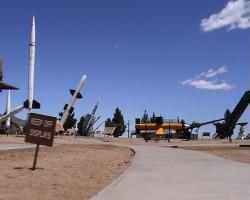
La vidéo "Keep off displays" a été tournée au Nouveau Méxique, à "Missile Range", une base militaire où ont été effectués dans les années 40 les premiers essais nucléaires. La vidéo s`attarde plus précisément sur une partie ouverte au public appelée "Missile park". Ce musée du missile propose soixante ans d`une histoire de l`armement balistique américain. Entre une réplique de la bombe H, un V2, de drônes, et le public touristique;un véhicule radiocommandé se ballade sans fin sur les allées de cette mise en scène spectaculaire. Celui-ci imite le déplacement des "Rovers",robots récemment envoyés sur mars par la NASA . Sur ce site l`histoire se déroule et se raconte avec naïveté et cynisme, dans le culte du progrès et de la performance, au mépris des implications humaines et géopolitiques les plus évidentes. Dans ce Disneyland, "Pluto" a le museau équipé d`une tête chercheuse...
Qu`il se développe sous forme de photographie de vidéos, de sculptures ou d`installations, mon travail s`interroge sur les divers moyens de représentation qui donnent naissance au paysage et dans un sens, les amorces de fictions que ces représentations matérielles ou mentales engagent. Cette pratique a pour origine diverses expériences, promenades et rencontres avec des lieux et des situations qui seront dans un premier temps documentées puis réinvesties dans des dispositifs combinant des souvenirs, des matériaux prélevés et une imagerie collective. Des séquences, du montage, de l`assemblage. Je m`intéressent particulièrement au formes produites par les lieux et les industries de consommation du temps libre, des loisirs, aux pratiques amateurs. Ces situations sont propices à la modélisation, au changement d`échelle, aux basculements sémantiques, à la naissance de récits populaires du monde. Je viens d`être diplômé (juin 2007) de l`École des beaux-arts de Nantes, ou je vis et travaille.
Maria Morina
Catalogue : 2020Youth Part II | Documentaire | hdv | couleur | 2:13 | Russie | 2019

Maria Morina
Youth Part II
Documentaire | hdv | couleur | 2:13 | Russie | 2019
Until the beginning of the 1990s, there were no rap artists in Russia and the Soviet Union. In the middle of the 1990s, a lot of boys throughout Russia started performing hip hop music, many of them had ended up working on factories in the former closed cities. Filmmaker asked several former hip-hop musicians, some still having factory jobs, to remember their old rhythms silently, and paired it with a spontaneous hip hop jam of young people living near the factories of Nizhny Tagil and Yekaterinburg on a second screen. Their voices dissolve like smoke in the back streets of Ural cities, gigantic open-air factories.
Maria Morina is a Russian photographer and filmmaker. She is one of the authors of a cross-media project that took 9 years to produce - Grozny: Nine Cities. It explores specific aspects of the aftermath of the two Chechen wars. It has won several international awards, including Calvados Awards for War Correspondents, 2014, and Luma Rencontres Dummy Book Award Arles, 2017. While working with different mediums on the Grozny: Nine Cities project, Maria has turned to film-making. Maria Morina?s first full-length documentary film, Don?t Press Stop, about Rap musicians in Nizhny Tagil, a gigantic open-air factory in Russia, was released in 2017. It was selected for Lussas Documentary Film Festival, France and Russian Open Documentary Film Festival Artdocfest in 2017. Maria Morina has participated in numerous exhibitions and festivals in Russia and abroad. Her works are held in the Les Rencontres d’Arles and The Open Society Foundation collections.
Catalogue : 2012Nizhny Tagil Youth | Documentaire | hdv | couleur | 5:5 | Russie | 2011
Maria Morina
Nizhny Tagil Youth
Documentaire | hdv | couleur | 5:5 | Russie | 2011
Nizhny Tagil Youth project explores the life of young people in one of the industrial centres, Nizhny Tagil, Russia, located on the virtual border between Europe and Asia. Their aspirations are limited by the paths already determined for them. This industrial city sits amidst the Ural mountains, the natural frontier between Europe and Asia. Of the 362,000 inhabitants, about 70,000 work for UralVagonZavod and 25,000 work for Nizhny Tagil Iron and Steel Plant, part of the Evraz Group, the two main factories located in the town. At around 16 years old, teenagers must make a choice about their employment. The majority ends up working long hours in one of the two plants, some join the small businesses that support these plants and their workers, and the rest remain unemployed. For the young people of the city, growing up within this damaged social landscape, there is a palpable sense of disillusionment. Those who work in the factories are subjected to a monotonous routine. The two hours a day commute added to eight hours on the job leaves them with little time to themselves. And lack of money often prevents them from going out, some feel that they have nothing to do.
Maria Morina is an emerging Russian documentary photographer and filmmaker based in Kiev, Ukraine. Maria Morina was born in Novosibirsk, Russia, in 1982. She graduated from St. Petersburg State University, International Relations, and attended Galperin photojournalism faculty in St. Petersburg and several workshops by Yury Kozyrev/ NOOR, and Bjarke Myrthu/ StoryPlanet organized by Objective Reality Foundation. Ms. Morina has participated in several group exhibitions and installations in Russia, UK, and US. She also worked as a field producer for documentary film Birth Of Nation by Daya Cahen, 2010. Since 2009 Ms. Morina has been working on joint project by three female photographers Grozny: Nine Cities, exploring specific aspects of the aftermath of two Chechen wars, which has been nominated for several international reward. In 2010 Ms. Morina started to work on a personal long term project on Nizhny Tagil youngsters lifestyle. The result of the project will be a series of short documentary films.
Wendy Morris
Catalogue : 2008Bully Beef | Animation | 16mm | noir et blanc | 6:0 | Afrique du sud, Belgique | 2007

Wendy Morris
Bully Beef
Animation | 16mm | noir et blanc | 6:0 | Afrique du sud, Belgique | 2007
"Bully Beef" tente de relier deux histoires que l'on persiste à traiter séparément. En 1914, l'Allemagne envahie la "petite" Belgique. Ses alliés viennent à son secours. Il faut quatre ans et plus de quarante nations ou groupe ethniques - dont nombreux sont colonisés par les nations alliées- pour tenir tête aux impérialistes allemands. Le souvenir de ce traumatisme est toujours vivace en Belgique. Le tourisme autour de sites de bataille de la Première guerre mondiale est plus que jamais actif. Chaque jour, des bus remplis d'écoliers s'arrêtent devant les musées et les cimetières du Commonwealth à Leper et dans le Westhoek. On publie en Belgique de plus en plus de livres sur la Première guerre mondiale. En revanche, il y a de moins en moins de publications sur une autre invasion concernant la Belgique, survenue à peine trente ans avant 1914. De nombreux officiers et généraux décorés pour leur rôle dans la défense de la Belgique pendant la Première guerre mondiale ont pratiqué leur commerce non pas en Europe mais dans l'acquisition, le contrôle et l'exploitation d'un morceau de terre huit fois plus grand que leur terre natale, le Congo. La Belgique a fait au Congo ce que l'Allemagne espérait faire à la Belgique et à d'autres pays de l'Europe de l'Ouest. Repoussant l'invasion allemande avec l'aide de ses alliés, la Belgique a continué son invasion du Congo pendant encore quarante ans.
Wendy Morris est née en Namibie en 1960. Elle grandit à Johannesburg, en Afrique du Sud. Elle étudie les beaux-arts à l'université de Witwaterstrand et à l'université d'Afrique du Sud. Vivant actuellement en Belgique, elle est en doctorat à l'université de Leuven. Pour ses films d'animation, elle utilise de grands dessins au fusain qu'elle transforme et redessine. "Bully Beef" est son troisième film. Morris montre ses films, parfois en même temps que ses dessins, dans des galeries, des musées et à des festivals. Ses films ont été sélectionnés pour concourir aux festivals de Fantoche, Oberhausen et Annecy.
Catalogue : 2007Taste the World | Animation | 16mm | couleur et n&b | 4:20 | Afrique du sud, Belgique | 2005

Wendy Morris
Taste the World
Animation | 16mm | couleur et n&b | 4:20 | Afrique du sud, Belgique | 2005
Taste the World dure quatre minutes et montre que les touristes perçoivent le Tiers Monde comme une cours de récréation pour l?Europe. Le titre vient d?une brochure pour les touristes qui exhorte les voyageurs à ?goûter le monde.? Le slogan de cette publicité sous-entend que le monde est là pour ?vous,? pour le ?vous? du connaisseur doué de discernement, le ?vous? que représentent les Européens et leur excès de temps libre. Sans frontières, le (?tiers?) monde est présenté comme le domaine du consommateur, un domaine qui offre des choix illimités : culinaires, sexuels, économiques et culturels. Le film commence et finit par un repas. Intercalée dans cette histoire, on trouve une référence au voyage de Sarah Bartman, la femme Khoi Sud Africaine qui a été exhibée en Europe dans les années 1700 comme étant le lien entre l?homme et le singe, et à son retour au pays. Elle mourut jeune à Paris et des parties de son corps furent mises en bouteille et montrées au musée de l?homme. En 2003, ses restes furent rapatriés en Afrique du Sud et elle fut enterrée.
Wendy Morris est une artiste du visuel née en 1960 à Walvis Bay en Namibie. De nationalité Sud Africaine, elle vit en Belgique. Elle a été Bachelor of Arts in Fine Arts en 1994 à l?université d?Afrique du Sud. En 1999 elle est Honours Bachelor of Arts en histoire de l?art également à l?université d?Afrique du Sud. Et en 2004, elle a obtenu une maîtrise en arts visuels, toujours à l?université d?Afrique du Sud.
Bill Morrison
Catalogue : 2023Incident | Doc. expérimental | 0 | couleur | 29:49 | USA | 2023
Bill Morrison
Incident
Doc. expérimental | 0 | couleur | 29:49 | USA | 2023
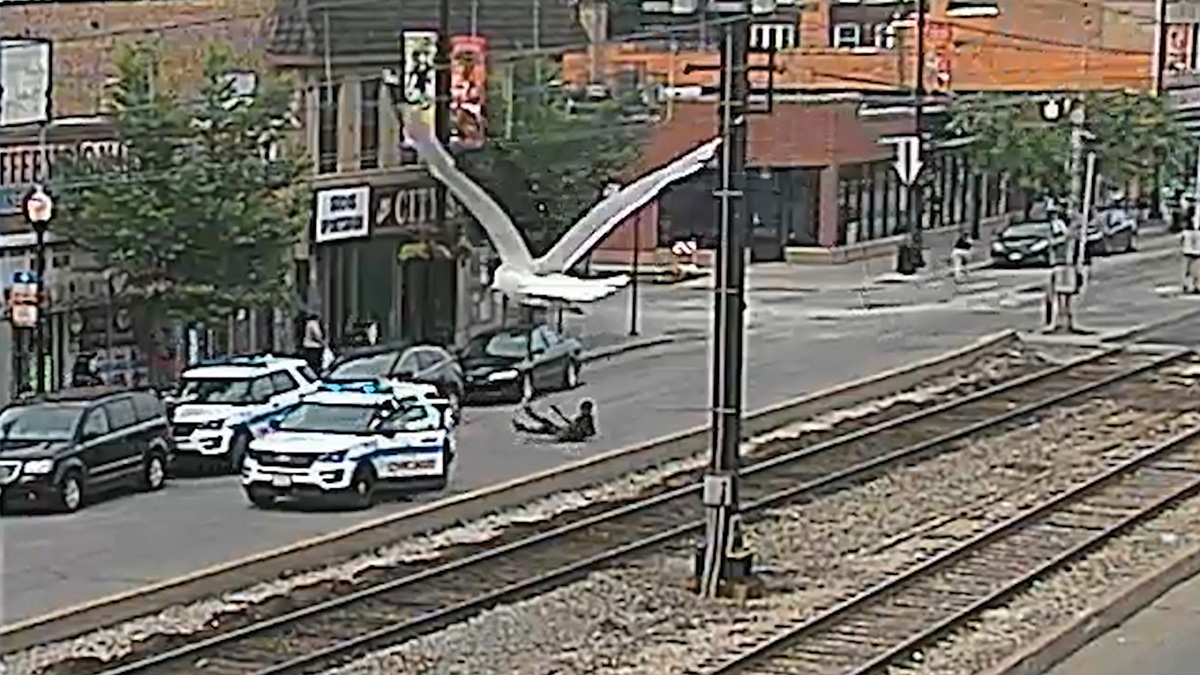
INCIDENT reconstructs a police shooting in Chicago in 2018, reassembling the event and its immediate aftermath from a variety of viewpoints, including surveillance, security, dashboard, and body-worn cameras as a continuous, synchronized split-screen montage.
Bill Morrison has been called “the poet laureate of lost films” (New York Times, 9/22/21). He makes films that reframe long-forgotten moving images. He has premiered feature-length documentary films at the New York, Sundance, Telluride and Venice film festivals. Morrison had a mid-career retrospective at MoMA in 2014. His found footage opus Decasia (2002) was the first film of the 21st century to be selected to the Library of Congress’ National Film Registry. Dawson City: Frozen Time (2016) was named one of the best films of year by more than 100 critics, and among the best of the decade (2010s) by the Associated Press, Los Angeles Times, and Vanity Fair, among others. In 2021 Morrison became a member of the documentary branch of the Academy of Motion Pictures Arts and Sciences.
Erik Moskowitz, Amanda TRAGER
Catalogue : 2009Cloud Cuckoo Land | Installation vidéo | 0 | couleur | 16:27 | USA | 2008
_1.jpg)
Erik Moskowitz, Amanda TRAGER
Cloud Cuckoo Land
Installation vidéo | 0 | couleur | 16:27 | USA | 2008
« Cloud Cuckoo Land » (2008) est une collaboration entre Erik Moskowitz et Amanda Trager. Le titre de la pièce, « Cloud Cuckoo Land », est tiré de la pièce d?Aristophane « Les oiseaux ». Au IVe siècle avant J.-C., la notion d'utopie était déjà d?actualité ? mais également remise en question. Le récit parle du transfert d?une famille dans une communauté contemporaine. Le personnage central, Bianca, après avoir fantasmé des années sur la meilleure manière d?élever ses enfants ainsi que sur la notion figée et romantique de « meilleure » façon de vivre, est confrontée à sa propre intolérance et à sa propre incapacité à s'intégrer à la communauté. Le récit de la vidéo, qui exploite des moyens cinématographiques classiques tels que chant-contrechant, est destiné à l?exposition aussi bien dans des galeries ou des musées que dans des espaces cinématographiques. « Cloud Cuckoo Land » critique les postulats trop assurés sur les moyens de différencier espace public et espace privé.
Erik Moskowitz et Amanda Trager vivent et travaillent à New York et au Canada. Erik Moskowitz utilise la relation entre le cinéma et l?espace de la galerie comme point de départ pour l?installation et les films. Amanda Trager fait fusionner peinture, sculpture et installations, dans des récits en prose à la première personne. L?intérêt des artistes pour les récits fragmentés ou anti-narratifs vient de loin dans leurs parcours respectifs. Pour Moskowitz, il remonte à l?enfance, lorsque Spalding Gray l?invita à jouer dans le Sakonnet Point de Wooster Group. Son travail avec Spalding a continué pendant les huit années suivantes. Sa relation avec Joan Jonas date de cette période. Plus récemment, Moskowitz s?est fait remarquer pour ses musiques/installations vidéos basées sur des sources littéraires. Après s?être concentrée sur des textes plaintifs et sur la création de personnages dans la peinture, la sculpture et l?installation pendant plus de dix ans, Trager s?est récemment penchée sur la représentation d?une « conversation » absurde entre des acteurs mal assortis.
Erik-amanda Moskowitz-trager
Catalogue : 2012QUEER VOICE | Vidéo | | couleur | 5:12 | USA | 2010
Erik-amanda Moskowitz-trager
QUEER VOICE
Vidéo | | couleur | 5:12 | USA | 2010
In response to an invitation to ?describe the queer voice,? artists Erik Moskowitz + Amanda Trager created this video, a whimsical portrait of an artist-couple.
Our collaborative work has been exhibited and screened internationally at venues that include Centre Pompidou, Jeu de Paume, Paris (2008-10); Reina Sofia, Madrid (2009); Haus der Kulturen der Welt, Berlin (2009); Participant, Inc. and 303 Gallery, NYC (2009). The single-channel component of our newest work premiered at the Rotterdam Film Festival and won Grand Prize for Short Film at IndieLisboa (2011). Art residencies include Montalvo Arts Center (2006) and Headlands Center for the Arts (2011), both in California. Grants include a NYFA Fellowship in Video (2008) and a NYSCA Distribution Grant (2009).
Joshua Mosley
Catalogue : 2017Jeu de Paume | Animation | hdv | couleur | 2:52 | USA | 2014
Joshua Mosley
Jeu de Paume
Animation | hdv | couleur | 2:52 | USA | 2014
Jeu de Paume depicts a court tennis match at the Château de Fontainebleau, France, set in 1907. The stop-motion animation, filmed with a robotic hand-held camera, reflects the asymmetrical design of the court and the irregular rhythm of the game.
Joshua Mosley is Professor of Fine Arts in the School of Design at the University of Pennsylvania. He received his M.F.A. and B.F.A. from The School of the Art Institute of Chicago. Joshua is a recipient of fellowships including the Joseph H. Hazen Rome Prize, the Pew Fellowship in the Arts, and the Louis Comfort Tiffany Foundation Award. His work has exhibited and screened at the 2014 Whitney Biennial, the 2007 Venice Biennale, the Wexner Center for the Arts, the Museum of Modern Art, NY, the Modern Art Museum of Fort Worth, the Museum für Gegenwartskunst in Basel, Switzerland, the Art Institute of Chicago, the Bruce Museum, the Reina Sofia in Madrid, the Philadelphia Museum of Art, Donald Young Gallery, the Indianapolis Museum of Art, the Fabric Workshop and Museum, the Institute of Contemporary Art Philadelphia, the SITE Santa Fe Eighth International Biennial, and the Museum of Contemporary Art San Diego.
Vladimir Moss (moseykin)
Mostra, Gabriela MONROY, Caspar STRACKE
Catalogue : 2006Kuleshov sukiyaki | Vidéo expérimentale | dv | couleur | 2:58 | Mexique, USA | 2004

Mostra, Gabriela MONROY, Caspar STRACKE
Kuleshov sukiyaki
Vidéo expérimentale | dv | couleur | 2:58 | Mexique, USA | 2004
"Kuleshov Sukiyaki is based on the music piece "Systole No 2" from INTERSTICES (2000) by Terre Thaemlitz. It uses this music collage as a grid for the montage of a particular set of found images. In the music piece ?Systole No 2?, Thaemlitz deconstructed a funky 70`s pop song with the idea to extract those music passages where no vocals are being sang. These are usually the pop song segments that hardly anyone pays attention to. Thaemlitz therefore distills the background radiation of the song, transforms it into an arrhythmic instrumental piece, not without leaving some traces of the singer`s voice - his inhalations and exhalations, "suggesting emotional, physical and/or sexual exasperation, and occasionally resulting in the whispering of new words?? (T.T.) Analog to this "systolic" sound collage Kuleshov Sukiyaki contains a patchwork of clips from 70`s erotica and soft porn movies which highlight similar emotional moments, including the befores and afters of orgasm scenes. It features a variety of highly aesthetic cinematography (in films of Radley Metzger, Paul Morrisey) as well as stylistic somersaults. In the eyes of their producers and occasionally even directors these elements are exclusively created for the support or exaggeration of pure lust and sexual charge, that their creators hope to have embedded in these scenes. This over-saturation becomes apparent even in single images, after being taken out of their context. (Mostly close-up`s of actors gazing at their partner.) In this assembly of images the energy fields are redirected, using their magnetic charge in order to fuse together associative image elements of entirely different films. In addition, it also applies the oldest experiment in associative editing, the famous Lev Kuleshov effect, while featuring a non- linearity that could be compared to the ?now legendary? chopped film-with-sukiyaki dish by experimentalist Tony Conrad."
m o s t r a is a duo of video artists Gabriela Monroy and Caspar Stracke. They gather and transform found images according to single themes of social, architectural and political nature. Harvesting the net as well as recycling found footage, they recontextualize raw content in which images sequences are treated as text re-edited. Occasionally this also happens vice versa: text is transformed into imagery--literally, though ASCII code. m o s t r a `s fast-paced hybrid language of juxtaposed imagery and animated shapes allow a constant exchangeability of visual and textual signifiers, creating new meaning out of re-used images. Both, Monroy and Stracke have produced several video installations and single channel works that have been shown in the US, Mexico, Brazil, Europe and Japan. Their work has been published on the Eyewash DVD compilation by forward-motion theater. Stracke?s single channel work is in distribution of video data bank, e-film workshop, Oberhausen Festival and Lightcone, Paris.
Carlos Motta
Catalogue : 2015NEFANDUS | VIDEO | hdv | couleur | 13:4 | Colombie | 2013
Carlos Motta
NEFANDUS
VIDEO | hdv | couleur | 13:4 | Colombie | 2013
In Nefandus two men travel by canoe down the Don Diego river in the Sierra Nevada de Santa Marta in the Colombian Caribbean, a landscape of “wild” beauty. The men, an indigenous man and a Spanish speaking man, tell stories about pecados nefandos [unspeakable sins, abominable crimes]; acts of sodomy that took place in the Americas during the conquest. It has been documented that Spanish conquistadores used sex as a weapon of domination, but what is known about homoerotic pre-Hispanic traditions? How did Christian morality, as taught by the Catholic missions and propagated through war during the Conquest, transform the natives’ relationship to sex? Nefandus attentively looks at the landscape, its movement and its sounds for clues of stories that remain untold and have been largely ignored and stigmatized in historical accounts.
Carlos Motta's interdisciplinary artistic practice includes the making of video essays, documentaries and online video archives. His early video Letter to My Father (Standing by the Fence) (2005) narrates the experience of living and working in New York City at the aftermath on 9/11 and focuses on the personal and political intersections of immigrants within that context. Motta is interested in questioning the structures of power that control and regulate civic life as well as hegemonic construction of historical narratives. One of his most recognized projects is We Who Feel Differently (2012), a comprehensive video archive of interviews with dozens of queer subjects that speak about the forty years of gay, lesbian, bisexual, trans, intersex and queer activism from a variety of social perspectives. The installation was first presented in a solo exhibition at New York's New Museum in 2012 to great acclaim. Motta's most recent video works Nefandus Trilogy will have its World Premiere at the 2014 International Film Festival Rotterdam's Tiger Awards Competition. Composed of three short films, Nefandus (winner of Catalonia Hotels Award for Best Video at LOOP, Barcelona, 2013), Naufragios and La visión de los vencidos, the trilogy exposes the imposition of the category `sexuality` onto indigenous cultures in the Americas during the Conquest and throughout the colonial period, based on moral and legal discourses of sin and crime. These works will also be presented at the First International Biennial of Contemporary Art of Cartagena de Indias in February.
Shana Moulton
Pierrick Mouton
Catalogue : 2021Chapter 5 — The Sacred Forest | Film expérimental | mov | couleur | 18:55 | France, Bénin | 2019
Pierrick Mouton
Chapter 5 — The Sacred Forest
Film expérimental | mov | couleur | 18:55 | France, Bénin | 2019
Il y a très longtemps, se trouvait un vieil homme au village, qui gardait jalousement un secret. Certains soir de l'année, quand la lune était pleine Il s'asseyait devant l'arbre sacré. Les mains écartées, il prononçait des paroles incantatoires jusqu'au bout de la nuit. La forêt tout entière s'animait. Après quoi, On raconte l'avoir vu à des centaines de kilomètres de là. Certains disent qu'il aurait le pouvoir de se téléreporter.
Pierrick Mouton est artiste et vidéaste, et vit à Paris (France). Son travail s’articule autour de systèmes de croyances, spirituels ou idéologiques à travers des films, des œuvres sonores ou des objets, qu’il fait réaliser ou qu’il réalise lui-même. Cette démarche est associée à une approche documentaire, et à une immersion sur le long terme avec différents groupe de croyance et de pensée. Pierrick Mouton a récemment exposé au Salon de Montrouge, Paris (France); à l’École d’architecture de la ville et des territoires Paris Est (France); à la Clark House Initiative, Mumbai (Inde); à la Villa Belleville, Paris (France); à l’Alliance Française, Chandigarh (Inde); à la Nunnery Gallery, Londres (Royaume-Uni); et à Carrousel, Londres (Royaume-Uni). Ses créations radiophoniques sont régulièrement diffusés sur France Culture et DUUU radio.
Lydia Moyer
Catalogue : 2016The Forcing (no. 2) | Vidéo | hdv | couleur | 7:15 | USA | 2015
Lydia Moyer
The Forcing (no. 2)
Vidéo | hdv | couleur | 7:15 | USA | 2015
Begun in the wake of recent (and ongoing) racial unrest in Ferguson, Missouri, USA, The Forcing (no. 2) is a meditation on power and the longing for deliverance in contemporary America. It combines original sound and video with appropriated content, observing no hierarchy of image quality or authorship.
Lydia Moyer is a visual artist and media maker who lives and works in the foothills of the Blue Ridge Mountains, USA. She directs the new media program in the art department at the University of Virginia where she is on the faculty. Her video and print work has been shown widely in the US and abroad.
Shirin Mozaffari
Catalogue : 2013Someone Else's Project | Documentaire | hdv | couleur | 4:7 | Iran, USA | 2012
Shirin Mozaffari
Someone Else's Project
Documentaire | hdv | couleur | 4:7 | Iran, USA | 2012
Someone Else?s Project gives an unmediated insider look to the everyday lives of residents of Tehran, focusing on a correspondence between a U.S. based artist, and a Tehran based videographer, who takes on the risk of shooting illegally on the streets. The videographer recounts her interactions with civilians and guards, where strangers offer her voluntary and enthusiastic support to accomplish an illegal task. While reflecting on the unexpectedly familiar nature of everyday life in Tehran, Someone Else?s Project sheds light on Tehrani civilian?s resistant attitude towards civil obedience and the isolation of a society that is desperate to participate.
Shirin Mozaffari is a media artist, born and raised in Tehran, Iran. She holds a Master of Fine Arts from The School of The Art Institute of Chicago. Mozaffari has screened her short films and exhibited her video installations widely in the United States and abroad including the Asian American Film Festival at The Gene Siskel Film Center in Chicago, and the Queelnsland Gallery of Modern Art in Queensland Australia. Mozaffari was awarded for best Art Direction at Chicago Short Film Festival for her film Namesake. Mozaffari currently lives and works in Boston, MA.
Pavel Mozhar
Catalogue : 2025Ungewollte Verwandtschaft | Documentaire | 4k | couleur | 30:0 | Allemagne | 2024

Pavel Mozhar
Ungewollte Verwandtschaft
Documentaire | 4k | couleur | 30:0 | Allemagne | 2024
The reports by civilian victims of the Russian and Belarusian occupation in Ukraine contain descriptions of torture and repression that appear to be systematic in nature. Taking those reports as a basis, a filmmaker born in Belarus investigates that systematic procedure on the streets of his Berlin neighbourhood. He also confronts the question of what this war of annihilation has to do with him and what responsibility he himself bears.
Born in Minsk, Belarus in 1987, he grew up in and around Berlin from the age of ten. From 2009 to 2012, he studied philosophy and economics at the University of Bayreuth. In 2015, he took up a film directing degree with a focus on documentary at the Film University Babelsberg Konrad Wolf. His short documentary Handbook, about the protests in Belarus in August 2020, won numerous awards, including Best Short Film at the IDFA in 2021. Mozhar’s most recent work is a short documentary Unwanted Kinship about the Russian war of extermination in Ukraine.
David Mozny
Catalogue : 2007Pomalu | Animation | dv | couleur | 4:20 | Tchèque (Rép.) | 2005
David Mozny
Pomalu
Animation | dv | couleur | 4:20 | Tchèque (Rép.) | 2005
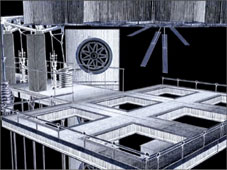
Ce film d´animation est basé sur les illustrations du "duden", livre de vocabulaire allemand-russe. Cette version de 1953 donne une description du monde à travers de nombreuses illustrations, de la vie politique aux sports en passant par la nature et le corps humain. Le film est indépendant des textes de la chanson, il reflète approximativement sa tonalité psychédelique et surréelle /"la ville est l´hameçon, la proie au bout de sa fine corde ... je suis en train de fumer, après le travail, la porte claque ... lentement, tout au long de la journée, plus rien à faire, lentement, le long des vitrines et des bars ..."/
David Mozny, artiste visuel, utilise l´image numérique depuis 2000. Il expose ses oeuvres dans des galeries ainsi que des clubs média et de théâtre, et est également professeur à temps partiel à la Faculté de sciences sociales de Masaryk, à Brno, dans la section "nouveaux médias".
Marianna / Rannvá Mørkøre / Káradóttir, Káradóttir, Rannvá
Catalogue : 2012Magma | Film expérimental | super8 | noir et blanc | 5:19 | Faeroe (Îles) | 2010
Marianna / Rannvá MØrkØre / KÁradÓttir, Káradóttir, Rannvá
Magma
Film expérimental | super8 | noir et blanc | 5:19 | Faeroe (Îles) | 2010
Magma is the first film in a greater series of experimental short films called The Cycle - 8 experimental short films that embrace and discover movement through camera. The films are shot in the extreme and wild landscapes of a remote group of islands far up in the North Atlantic Ocean, the Faroe Islands. Fragmented stories are unraveled in these open and empty spaces, enhanced by the uncontrollable and extreme weather conditions that have an important character in all the films. Deprived from dialogues and narratives, the repetitive patterns of movements, costumes, music, landscapes and other components create an intriguing atmosphere that takes the viewer to a surrealistic yet hauntingly beautiful universe.
Rannvá Káradóttir is a London-based artist and filmmaker. Since graduating from London Contemporary Dance School she has emerged as one of the most prominent performance directors on screen. Rannvá started to use the film media for her practice early on and has developed a distinctive movement vocabulary on screen, exploring dance in various contexts and cross disciplinary works. Marianna Mørkøre, filmmaker and illustrator, began her career during fashion studies in London, especially interested in editing. Her constant curiosity in challenging the traditional perception of moving image has generated unique visual narratives that are marked by an experimental approach and a personal voice - a methodology of intriguing imagery determined to linger in your mind.
Lubanzadyo Mpemba
Catalogue : 2023Sirenes Opacas de São Paulo | Vidéo expérimentale | mov | couleur | 5:42 | Angola, Brésil | 2019
Lubanzadyo Mpemba
Sirenes Opacas de São Paulo
Vidéo expérimentale | mov | couleur | 5:42 | Angola, Brésil | 2019
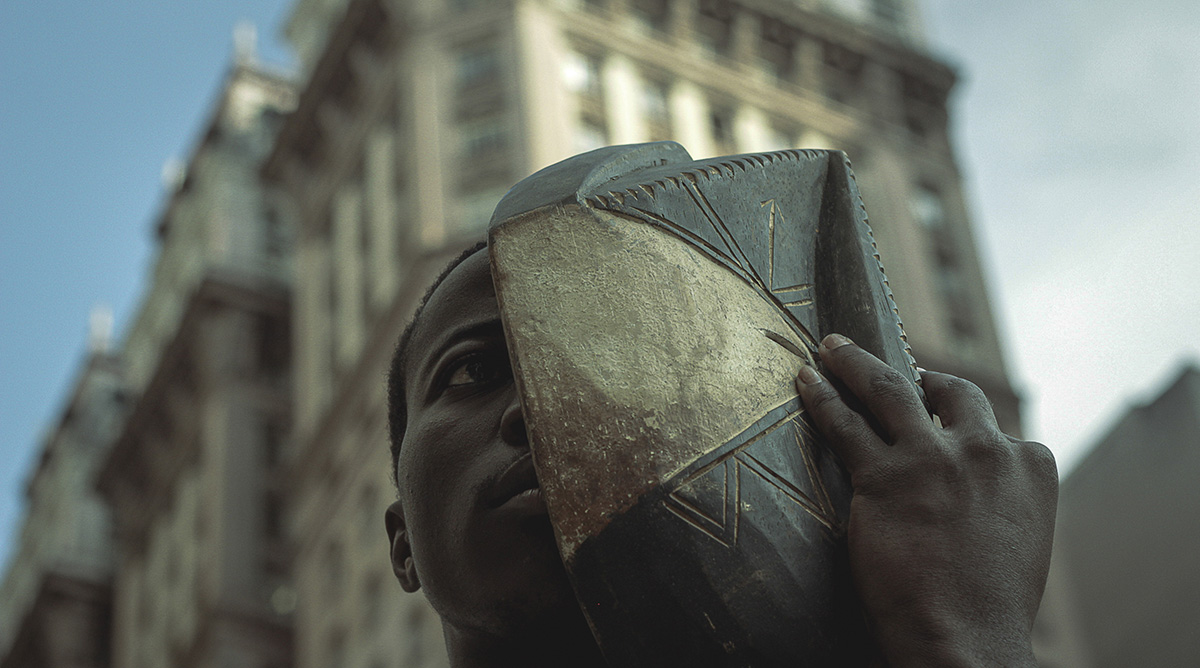
Dans Sirenes Opacas de São Paulo habite la tension entre la ville en tant que béton anonyme qui occupe l'espace, et le monde en tant qu'expérience accumulée dans le corps. Mais la ville est aussi le monde et l'espace est aussi le corps, et chacun porte l'anatomie de souvenirs opaques. L'ampleur des bâtiments face à l'échelle humaine des passants est opaque pour la recherche d'endroits sûrs face à la verticalité imposante. Le geste comme détail du corps qui parle est opaque au bruit de l'abîme urbain. Le suspense inerte qui gratte le ciel est opaque pour les expériences qui se transfigurent à la recherche d'elles-mêmes. Et cette tension ne grandit pas et ne diminue pas, elle est constante et ce qui soutient le mouvement quotidien, et son absence, dans les rues de São Paulo.
Né en Angola en 1989. Artiste transdisciplinaire, Lubanzadyo Mpemba s’exprime dans l’art vidéo, la photo performance, performance et documentaire. Son travail comprend des mises en scène visuelles qui traitent de la migration, de la la gentrification, la violence institutionnelle et la mémoire collective. Il est diplômé en droit et a étudié la sociologie urbaine, Études curatoriales, film et peinture en mouvement.
Marcel Mrejen
Catalogue : 2026Larry | Vidéo | 4k | couleur | 10:0 | Algérie | 2024
Marcel Mrejen
Larry
Vidéo | 4k | couleur | 10:0 | Algérie | 2024
Sur des images muettes en 16 mm tournées par un soldat français dans l’Algérie occupée, le film met en scène une rencontre entre la mémoire coloniale et le paysage sonore de la guerre contemporaine. À mesure que le militarisme actuel infiltre l’archive, le temps se fissure et les images se mettent à résonner de conflits passés et à venir. Il en résulte une méditation spectrale sur la manière dont la violence coloniale continue de vibrer au cœur des imaginaires militaires d’aujourd’hui.
Marcel Mrejen (FR/DZ), né en 1994 à Paris (FR), est un artiste visuel et cinéaste dont la pratique explore l’articulation des technologies au sein des métabolismes vivants et économiques. Son travail prend des formes variées au sein des médias temporels — installations, cinéma, sound design, apprentissage automatique. Diplômé de la Gerrit Rietveld Academie en 2018, il a ensuite été résident au Fresnoy – Studio national des arts contemporains de 2021 à 2023. Son travail a été exposé ou projeté dans diverses institutions culturelles, parmi lesquelles le Stedelijk Museum (Amsterdam), l’Institute of Contemporary Arts (Londres) ou encore l’Eye Filmmuseum (Amsterdam). Parallèlement à sa pratique artistique, il a co-curaté la première édition de REFRESH: Future-Proof en 2021. Son premier film, Memories of an Unborn Sun, a reçu le prix du Meilleur court métrage à Visions du Réel en 2024, et a été présenté — et récompensé — dans de nombreux festivals à travers le monde. En 2025, il reçoit le Prix Scam du Meilleur film expérimental. En collaboration avec Eliott Déchamboux, il a publié en 2019 son livre L’Europe c’est Deutshland quand tu rates là-bas tu es foutu mon frère, le reste c’est du fouma-fouma, aux éditions Jungle Books.
Marcel Mrejen
Catalogue : 2025Memories of an Unborn Sun | Doc. expérimental | 4k | couleur | 22:0 | Algérie | 2024
Marcel Mrejen
Memories of an Unborn Sun
Doc. expérimental | 4k | couleur | 22:0 | Algérie | 2024
Written upon testimonies, rumors and fake news, this film questions the architectures of energy shaping the Algerian territory from its colonial history to the rise of Chinese extractivism, underlining the multiplicity of reality in a post-truth era. Since 2006, thousands of Chinese workers have been arriving daily in Algeria to build new cities across the country. Refusal of taking care of the dead by construction companies led to rumors about the disappearance of worker’s bodies, therefore questioning the collective memory of these workers expunged from history. Memories of an Unborn Sun aims to articulate a metaphysical query around light as a form of memory, blending archives from French nuclear tests in the Sahara, viral footage of an artificial sun rising in the sky and verses from Tuareg poet Hawad. As this nightless world embodies the capitalist utopia of infinite growth, how to remember those made invisible? Exiled workers and ghosts of an energetical quest.
Marcel Mrejen (FR/DZ) born in 1994 (Paris, FR) is a visual artist and filmmaker exploring the articulation of technology within living and economic metabolisms. The form of his work spans various time-based media — installations, filmmaking, sound, and machine-learning. He graduated from the Gerrit Rietveld Academie in 2018, before being a resident of Le Fresnoy - Studio national des arts contemporains. His work has been exhibited in various cultural institutions, including the Stedelijk Museum, Laurel Project Space, De Brakke Grond, or the Institute of Contemporary Arts in London. Parallel to his artistic practice, he co-curated the first edition of REFRESH: Future-Proof. In collaboration with Eliott Déchamboux, his book: L’Europe c’est Deutshland quand tu rate laba tu est foutue mon frère, le reste c’est du fouma-fouma, was published by Jungle Books in 2019. His debut film Memories of an Unborn Sun was awarded the Jury Prize at Visions du Réel in 2024.
Rabih Mroue
Catalogue : 2012Face A/Face B | Vidéo | | couleur | 10:0 | 0, Liban | 2002

Rabih Mroue
Face A/Face B
Vidéo | | couleur | 10:0 | 0, Liban | 2002