Catalogue > Search
Results for : Tout le catalogue
Ella Raidel
We'll Always Have Paris
Experimental doc. | 4k | color | 3:36 | Austria, China | 2021
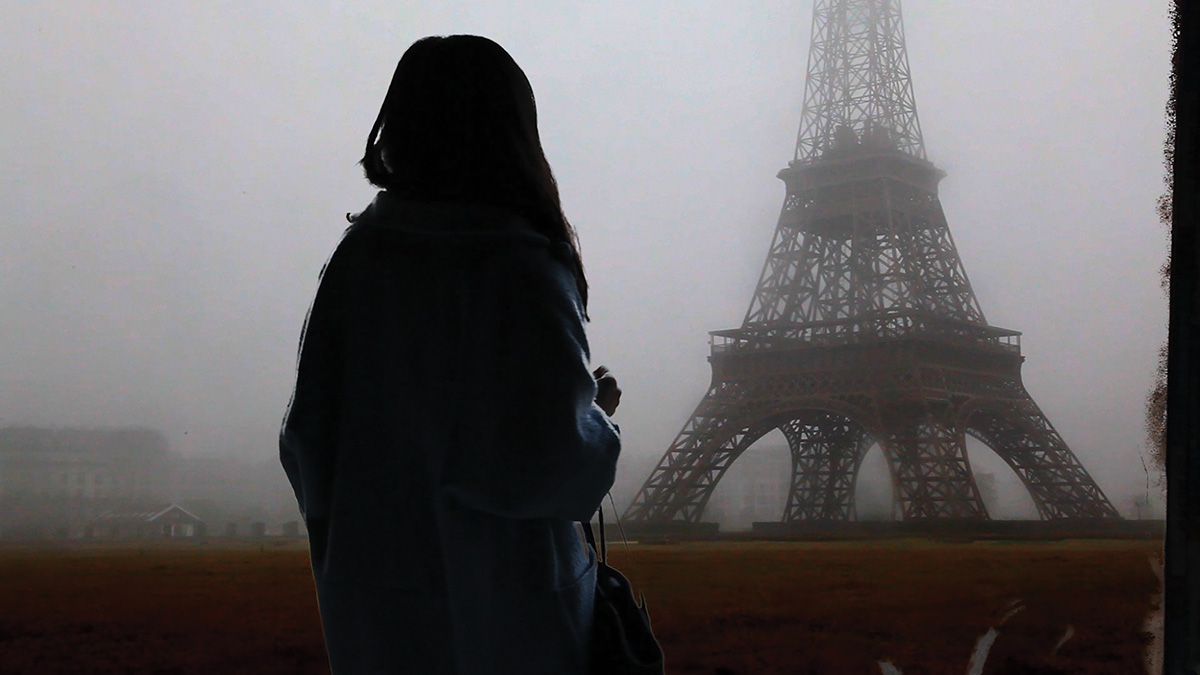
Paris is not necessarily the first choice as the setting for a ghost story. The excessive romance of the French metropolis’ cultural symbols renders them simply unsuitable as backdrop for horror stories. But that’s not the case in Ella Raidel’s four-minute short film, which arose in the course of her extensive research project Of Haunted Spaces and refers to an upcoming feature film project. In We’ll always have Paris, the Eifel Tower, Champs-Élysées, magnificent fountains, and trimmed hedges stand as faux French in the hazy rain of Tianducheng. The residential complex located in the suburbs of the Chinese megapolis Hangzhou is one of the countless, largely unpopulated pop-up sites that sprung up overnight through high-speed real-estate speculation. In Raidel’s film, the Eifel Tower is the anti-gravity center of a phantom zone furnished with stark high-rises, parking areas, and gardens—an urban proposition that amounts to nothing. As the camera focuses on the building clone and its surroundings from various perspectives, the film suddenly changes tone. A woman who at first is visible only from behind enters the urban planning remake. Through a construction site corridor, she enters a conference space, improvised by partition walls, from which the view of the tower’s base condenses to an image of the uncanny. Like the pastiche in Tianducheng, We’ll always have Paris also contradicts the logics of representation; the film itself becomes a simulation of an architecture film, of a capitalism critique, of a ghost story: as they say in the film classic Casablanca, "We’ll always have Paris." But what do we have here? (Esther Buss)
Ella Raidel, is an Austrian filmmaker, artist and researcher who has lived in Taiwan for the past 20 years. In her interdisciplinary works – films, videos, research and discourses – she focuses on the socio-cultural aspects of globalization, urbanization and the representation of images. Her hybrid practice is to create a discursive space for filmmaking, art and research. She is currently Asst. Professor at NTU Singapore, lives and works in Singapore. In recent years, she has been concerned with China’s unprecedented growth and rapid urban changes, in experimenting with new documentary modes, narrations and methods. Raidel’s works has participated in international biennials, exhibitions, conferences, and presented at numerous International film festivals.
Ella Raidel
Play Life Series
Documentary | hdv | color | 11:0 | Austria | 2011
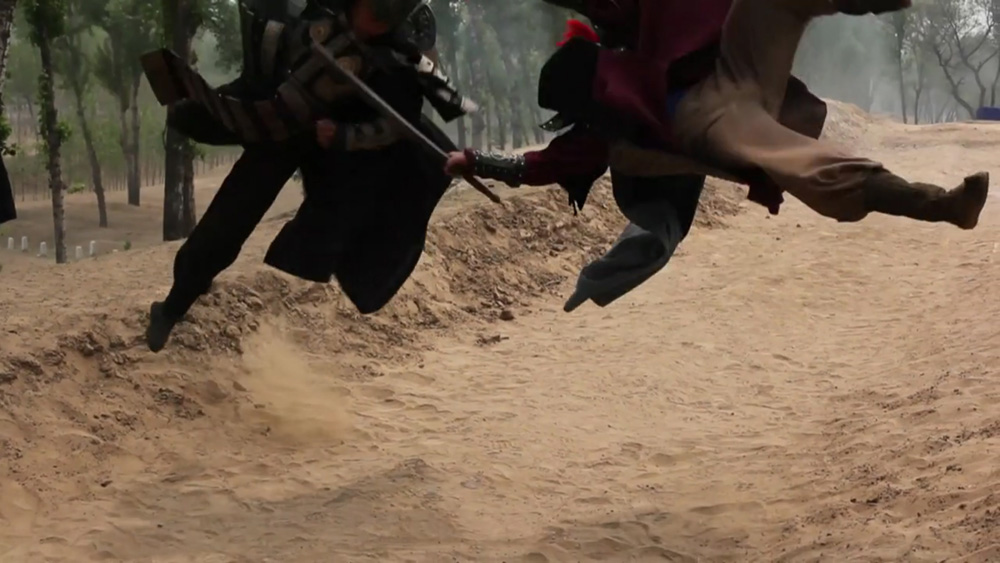
Ella Raidel’s video Play Life Serie exposes its own methods right from the start. We see film shoots and film sites where Chinese soap operas are produced. As the camera pans to film teams and cameramen, the fictional content of the rehearsed scenes is interrupted and revealed as the process of making-of. At the same time, through editing, Raidel replays particular movements, handholds, and gestures of the characters, thus intensifying their serial level. The repetitions make clear the extent to which sword fights, wine, love, and revolt are part of a medially represented repertoire of gestures. Ella Raidel’s work deals ironically with the Chinese soap opera as fake-factory of collective desires, which in the interplay of fiction and making-of, forces its way through reality, scrutinizing it—as site of image making and image controlling.
Ella Raidel, born 1970 in Austria, studied at Art University Linz, lives and works in Taipei. She is currently Post-doc Researcher at Academia Sinica in Taipei/Taiwan. Ella Raidel is artist, filmmaker, presents her works internationally at Video- and Filmfestivals as well as exhibitions, such as Transmediale 2013 (Haus der Kulturen der Welt, Berlin), Floating Islands (Shanghai Biennale 2012/13 Kinmen/Taiwan), Asian Triennale Manchester, Discovering the Other (National Palace Museum Taipei), Based Upon: True Stories (Witte de Wit Rotterdam) Filmfestivals: CPH:DOX, Dok Leipzig, International Filmfestival Rotterdam, Crossing Europe, Duisburger Filmwoche, etc.
Yvonne Rainer
Journeys from Berlin/1971
Experimental fiction | 16mm | color | 125:0 | USA | 1979
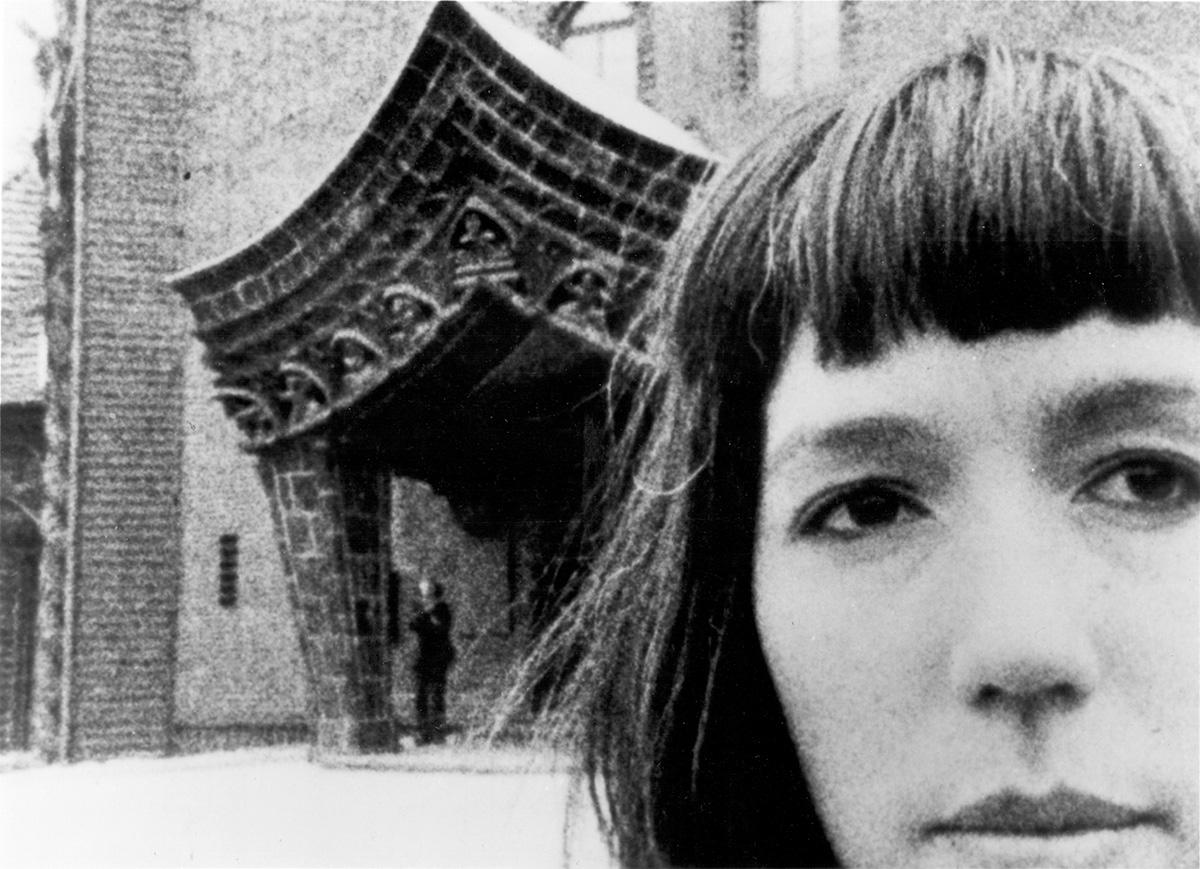
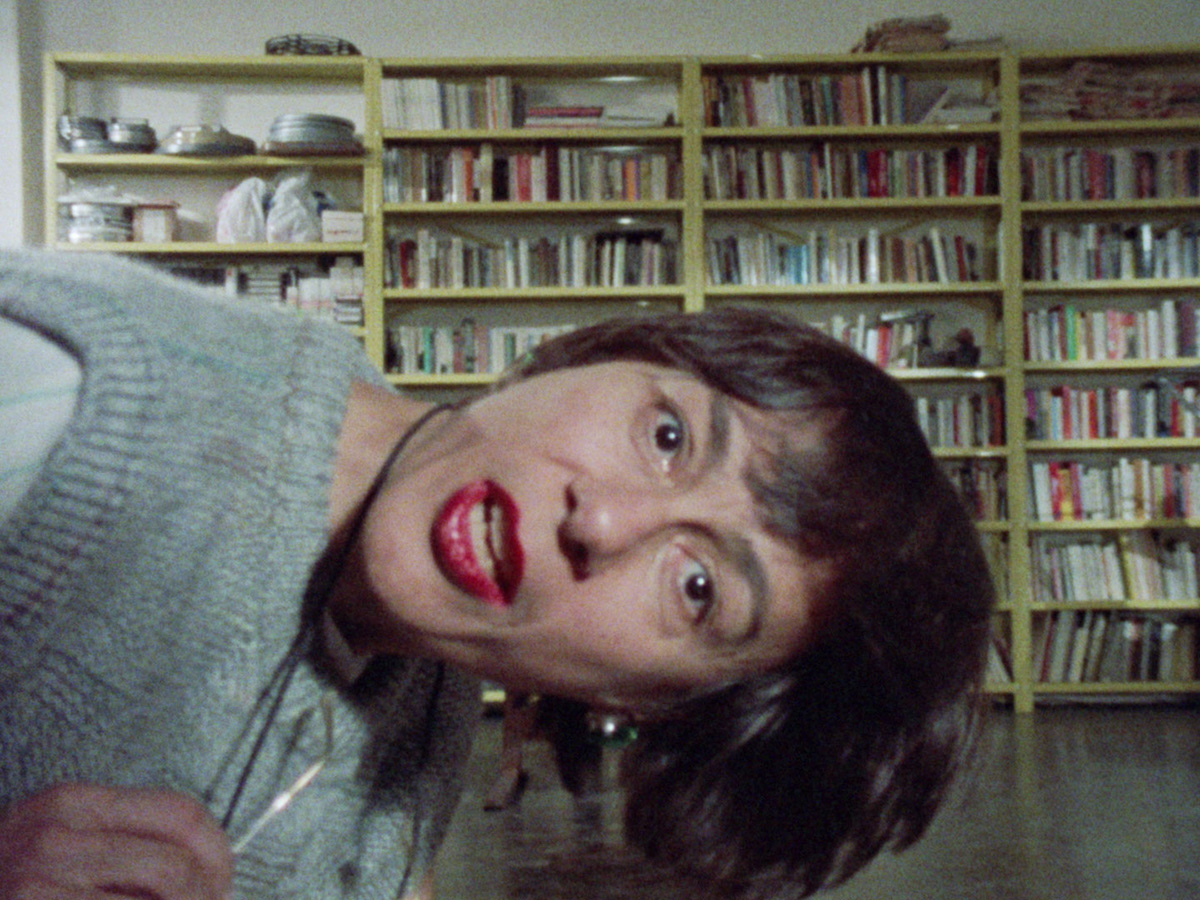
“Without a doubt the most ambitious, most risk-taking work of Rainer’s cinematic career.”—B. Ruby Rich. Rainer’s fourth feature, inspired by her experiences living in West Berlin in 1976 and ’77, when the activities of right-wing terrorists were at their height, offers an audacious, collage-like meditation on state power, repression, violence, and revolution. Vaulting between aerial images of British landscapes, intertitles, fragments of Rainer’s teenage diary, and one unseen couple’s debate (voiced by Amy Taubin and Vito Acconci) over the demise of the RAF, the film is illuminated by a lead performance from the late art and film critic Annette Michelson as a patient undergoing psychoanalysis, whose every gesture was choreographed elaborately by Rainer over a nine-month period. (Synopsis courtesy of The Metrograph)
When Yvonne Rainer made her first feature-length film in 1972, she had already influenced the world of dance and choreography for nearly a decade. From the beginning of her film career she inspired audiences to think about what they saw, interweaving the real and fictional, the personal and political, the concrete and abstract in imaginative, unpredictable ways. Her bold feminist sensibility and often controversial subject matter, leavened with a quirky humor, has made her, as the Village Voice dubbed her in 1986, "The most influential American avant-garde filmmaker of the past dozen years, with an impact as evident in London or Berlin as in New York. Rainer was born in San Francisco in 1934. She trained as a modern dancer in New York from 1957 and began to choreograph her own work in 1960. She was one of the founders of the Judson Dance Theater in 1962, the beginning of a movement that proved to be a vital force in modern dance in the following decades. Between 1962 and 1975 she presented her choreography throughout the United States and Europe, notably on Broadway in 1969, in Scandinavia, London, Germany, and Italy between 1964 and 1972, and at the Festival D'Automne in Paris in 1972. In 1968 she began to integrate short films into her live performances, and by 1975 she had made a complete transition to filmmaking. In 1972 she completed a first feature-length film, LIVES OF PERFORMERS. In all she has completed seven features: FILM ABOUT A WOMAN WHO... (1974), KRISTINA TALKING PICTURES (1976), JOURNEYS FROM BERLIN/1971 (1980, co-produced by the British Film Institute and winner of the Special Achievement Award from the Los Angeles Film Critics' Association), THE MAN WHO ENVIED WOMEN (1985), PRIVILEGE (1990, winner of the Filmmakers' Trophy at the Sundance Film Festival, Park City. Utah, 1991, and the Geyer Werke Prize at the International Documentary Film Festival in Munich, 1991), and MURDER and murder (1996). Rainer's films have been shown extensively in the U.S. and throughout the world, in alternative film exhibition showcases and revival houses (such as the Bleecker St Cinema, Roxy-S.F., NuArt-L.A, Film Forum-NYC, et al), in museums and in universities. Her films have also been screened at festivals in Los Angeles (Filmex), London, Montreux, Toronto, Edinburgh, Mannheim, Berlin, Locarno, Rotterdam, Creteil, Deauville, Toulon, Montreal, Hamburg, Salsa Majori, Figueira da Foz, Munich, Vienna, Athens (Ohio), Sundance, Hong Kong, Yamagata, and Sydney. A half-hour video tape entitled YVONNE RAINER: STORY OF A FILMMAKER WHO... was aired on Film and Video Review, WNET-TV in 1980. THE MAN WHO ENVIED WOMEN was aired on Independent Focus, WNET-TV in, 1989, and PRIVILEGE on the same program in 1992 and during the summer of 1994. In the Spring of 1997—to coincide with the release of MURDER and murder—complete retrospectives of the films of Yvonne Rainer were mounted at the Museum of Modern Art in San Francisco and at the Film Society of Lincoln Center in New York City.
Yvonne Rainer
Privilege
Experimental fiction | 16mm | color and b&w | 103:0 | USA | 1990
“For Rainer, drama and style aren’t innocent, and the very concept of a story, and the way it’s told, is political”—Richard Brody. One of Rainer’s most narratively complex films, Privilege shifts from a documentary about women going through the process of menopause to a deadpan and delightfully anarchic autobiographical meta-film exploring the power dynamics underpinning experience, memory, and the manner in which women’s stories are told. Synopsis courtesy of The Metrograph.
When Yvonne Rainer made her first feature-length film in 1972, she had already influenced the world of dance and choreography for nearly a decade. From the beginning of her film career she inspired audiences to think about what they saw, interweaving the real and fictional, the personal and political, the concrete and abstract in imaginative, unpredictable ways. Her bold feminist sensibility and often controversial subject matter, leavened with a quirky humor, has made her, as the Village Voice dubbed her in 1986, "The most influential American avant-garde filmmaker of the past dozen years, with an impact as evident in London or Berlin as in New York. Rainer was born in San Francisco in 1934. She trained as a modern dancer in New York from 1957 and began to choreograph her own work in 1960. She was one of the founders of the Judson Dance Theater in 1962, the beginning of a movement that proved to be a vital force in modern dance in the following decades. Between 1962 and 1975 she presented her choreography throughout the United States and Europe, notably on Broadway in 1969, in Scandinavia, London, Germany, and Italy between 1964 and 1972, and at the Festival D'Automne in Paris in 1972. In 1968 she began to integrate short films into her live performances, and by 1975 she had made a complete transition to filmmaking. In 1972 she completed a first feature-length film, LIVES OF PERFORMERS. In all she has completed seven features: FILM ABOUT A WOMAN WHO... (1974), KRISTINA TALKING PICTURES (1976), JOURNEYS FROM BERLIN/1971 (1980, co-produced by the British Film Institute and winner of the Special Achievement Award from the Los Angeles Film Critics' Association), THE MAN WHO ENVIED WOMEN (1985), PRIVILEGE (1990, winner of the Filmmakers' Trophy at the Sundance Film Festival, Park City. Utah, 1991, and the Geyer Werke Prize at the International Documentary Film Festival in Munich, 1991), and MURDER and murder (1996). Rainer's films have been shown extensively in the U.S. and throughout the world, in alternative film exhibition showcases and revival houses (such as the Bleecker St Cinema, Roxy-S.F., NuArt-L.A, Film Forum-NYC, et al), in museums and in universities. Her films have also been screened at festivals in Los Angeles (Filmex), London, Montreux, Toronto, Edinburgh, Mannheim, Berlin, Locarno, Rotterdam, Creteil, Deauville, Toulon, Montreal, Hamburg, Salsa Majori, Figueira da Foz, Munich, Vienna, Athens (Ohio), Sundance, Hong Kong, Yamagata, and Sydney. A half-hour video tape entitled YVONNE RAINER: STORY OF A FILMMAKER WHO... was aired on Film and Video Review, WNET-TV in 1980. THE MAN WHO ENVIED WOMEN was aired on Independent Focus, WNET-TV in, 1989, and PRIVILEGE on the same program in 1992 and during the summer of 1994. In the Spring of 1997—to coincide with the release of MURDER and murder—complete retrospectives of the films of Yvonne Rainer were mounted at the Museum of Modern Art in San Francisco and at the Film Society of Lincoln Center in New York City. In 2006 MIT Press published Yvonne Rainer's memoir Feelings Are Facts: A Life
Yvonne Rainer
The Man who Envied Women
Experimental fiction | 16mm | color | 125:0 | USA | 1985
The Man Who Envied Women sees Rainer, in her own words, “throw down the gauntlet to psychoanalytic feminist film theory,” interrogating and responding to contemporary debates over notions such as the male gaze with a drolly provocative hybrid essay film. Rainer’s account of the break-up of a marriage between a womanizing blowhard Manhattan professor (played alternately by William Raymond and Larry Loonin) and his artist wife, who exists only as voice-over (choreographer Trisha Brown), soon galaxy brains outwards to address concerns as divergent as the housing crisis facing New York artists and political struggles in Latin America. (Synopsis courtesy of The Metrograph)
When Yvonne Rainer made her first feature-length film in 1972, she had already influenced the world of dance and choreography for nearly a decade. From the beginning of her film career she inspired audiences to think about what they saw, interweaving the real and fictional, the personal and political, the concrete and abstract in imaginative, unpredictable ways. Her bold feminist sensibility and often controversial subject matter, leavened with a quirky humor, has made her, as the Village Voice dubbed her in 1986, "The most influential American avant-garde filmmaker of the past dozen years, with an impact as evident in London or Berlin as in New York. Rainer was born in San Francisco in 1934. She trained as a modern dancer in New York from 1957 and began to choreograph her own work in 1960. She was one of the founders of the Judson Dance Theater in 1962, the beginning of a movement that proved to be a vital force in modern dance in the following decades. Between 1962 and 1975 she presented her choreography throughout the United States and Europe, notably on Broadway in 1969, in Scandinavia, London, Germany, and Italy between 1964 and 1972, and at the Festival D'Automne in Paris in 1972. In 1968 she began to integrate short films into her live performances, and by 1975 she had made a complete transition to filmmaking. In 1972 she completed a first feature-length film, LIVES OF PERFORMERS. In all she has completed seven features: FILM ABOUT A WOMAN WHO... (1974), KRISTINA TALKING PICTURES (1976), JOURNEYS FROM BERLIN/1971 (1980, co-produced by the British Film Institute and winner of the Special Achievement Award from the Los Angeles Film Critics' Association), THE MAN WHO ENVIED WOMEN (1985), PRIVILEGE (1990, winner of the Filmmakers' Trophy at the Sundance Film Festival, Park City. Utah, 1991, and the Geyer Werke Prize at the International Documentary Film Festival in Munich, 1991), and MURDER and murder (1996). Rainer's films have been shown extensively in the U.S. and throughout the world, in alternative film exhibition showcases and revival houses (such as the Bleecker St Cinema, Roxy-S.F., NuArt-L.A, Film Forum-NYC, et al), in museums and in universities. Her films have also been screened at festivals in Los Angeles (Filmex), London, Montreux, Toronto, Edinburgh, Mannheim, Berlin, Locarno, Rotterdam, Creteil, Deauville, Toulon, Montreal, Hamburg, Salsa Majori, Figueira da Foz, Munich, Vienna, Athens (Ohio), Sundance, Hong Kong, Yamagata, and Sydney. A half-hour video tape entitled YVONNE RAINER: STORY OF A FILMMAKER WHO... was aired on Film and Video Review, WNET-TV in 1980. THE MAN WHO ENVIED WOMEN was aired on Independent Focus, WNET-TV in, 1989, and PRIVILEGE on the same program in 1992 and during the summer of 1994. In the Spring of 1997—to coincide with the release of MURDER and murder—complete retrospectives of the films of Yvonne Rainer were mounted at the Museum of Modern Art in San Francisco and at the Film Society of Lincoln Center in New York City. In 2006 MIT Press published Yvonne Rainer's memoir Feelings Are Facts: A Life.
Yvonne Rainer
MURDER and murder
Experimental fiction | 16mm | color | 113:0 | USA | 1996
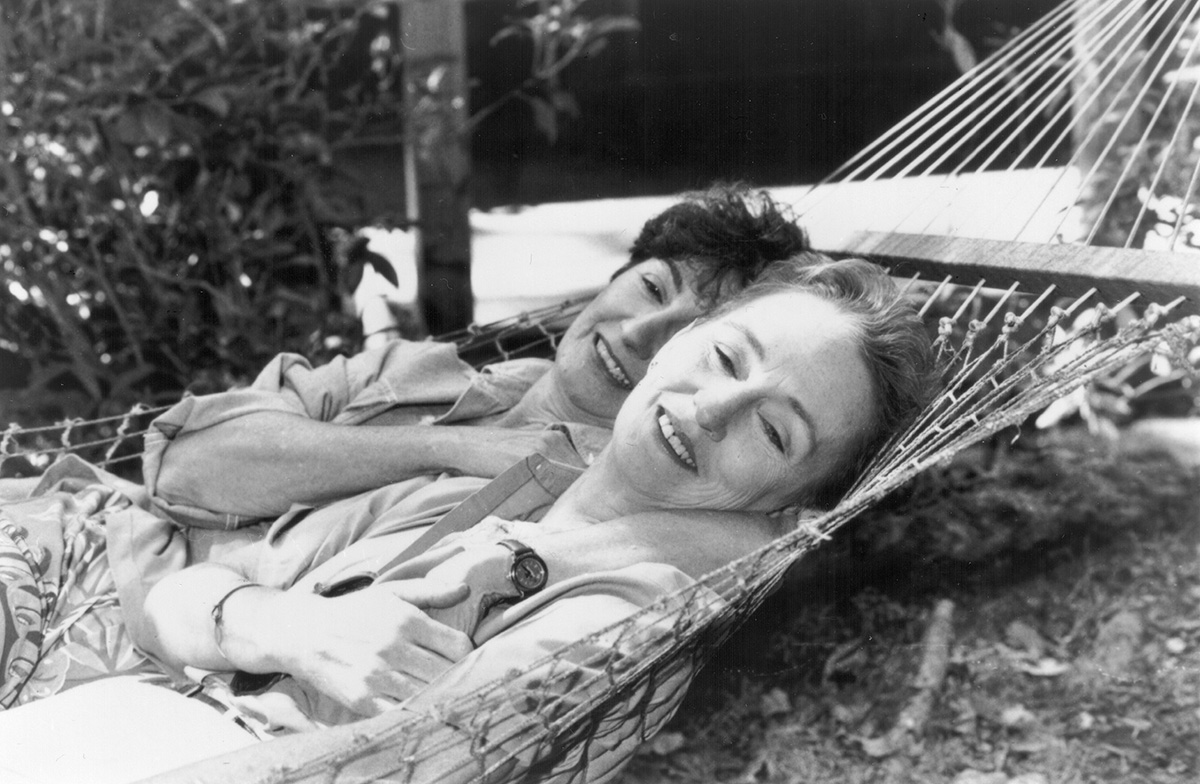
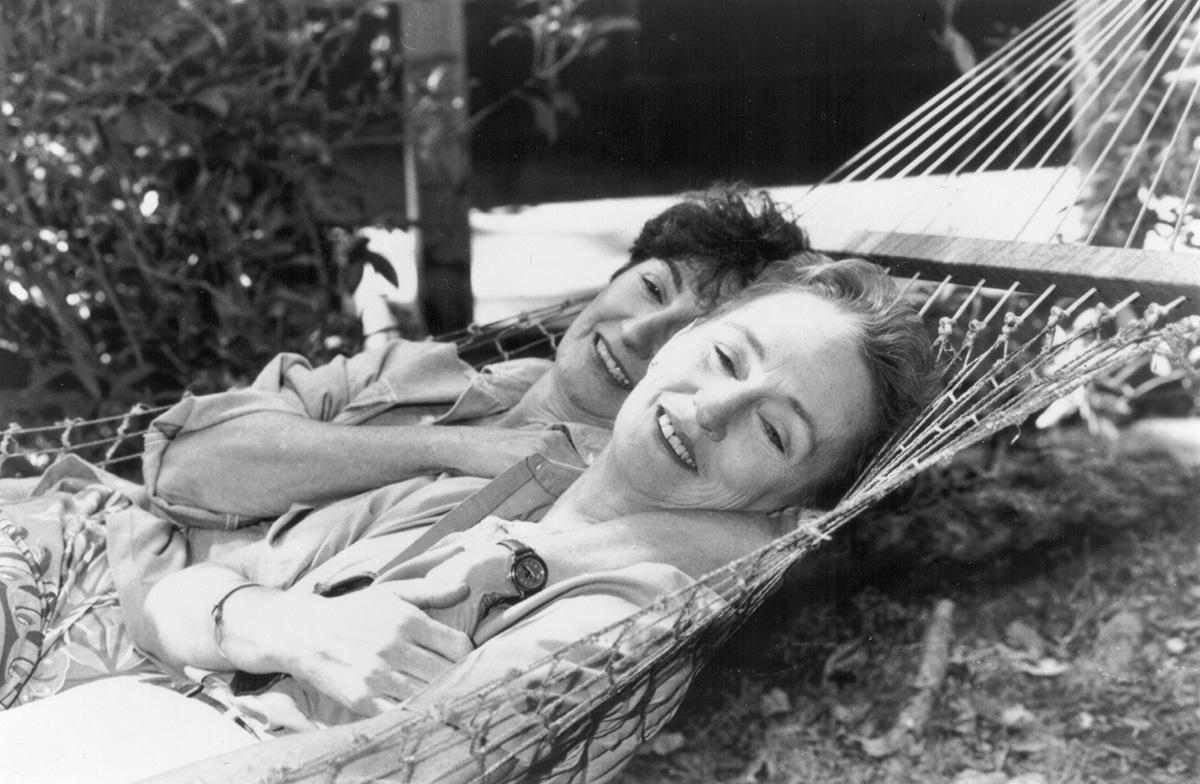
Rainer’s last feature is also one of her most personal, inspired by the lows and highs of a breast cancer diagnosis in the early 1990s, and the surprise of a burgeoning lesbian relationship. The latter is playfully refracted here through the love story of two women from very different backgrounds: Yvonne’s sixty-something screen counterpart Doris (Joanna Merlin) who gleefully announces that she “loves eating pussy,” and the younger academic she’s soon to move in with, Mildred (Kathleen Chalfant). A comic romance whose emotions are amplified by Rainer’s structural tomfoolery and signature intellectual rigor—with the director providing running commentary and appearing intermittently to address the camera—MURDER and murder probes the pleasures, and attendant questions, of late-in-life love affairs. (Synopsis courtesy of The Metrograph.)
When Yvonne Rainer made her first feature-length film in 1972, she had already influenced the world of dance and choreography for nearly a decade. From the beginning of her film career she inspired audiences to think about what they saw, interweaving the real and fictional, the personal and political, the concrete and abstract in imaginative, unpredictable ways. Her bold feminist sensibility and often controversial subject matter, leavened with a quirky humor, has made her, as the Village Voice dubbed her in 1986, "The most influential American avant-garde filmmaker of the past dozen years, with an impact as evident in London or Berlin as in New York. Rainer was born in San Francisco in 1934. She trained as a modern dancer in New York from 1957 and began to choreograph her own work in 1960. She was one of the founders of the Judson Dance Theater in 1962, the beginning of a movement that proved to be a vital force in modern dance in the following decades. Between 1962 and 1975 she presented her choreography throughout the United States and Europe, notably on Broadway in 1969, in Scandinavia, London, Germany, and Italy between 1964 and 1972, and at the Festival D'Automne in Paris in 1972. In 1968 she began to integrate short films into her live performances, and by 1975 she had made a complete transition to filmmaking. In 1972 she completed a first feature-length film, LIVES OF PERFORMERS. In all she has completed seven features: FILM ABOUT A WOMAN WHO... (1974), KRISTINA TALKING PICTURES (1976), JOURNEYS FROM BERLIN/1971 (1980, co-produced by the British Film Institute and winner of the Special Achievement Award from the Los Angeles Film Critics' Association), THE MAN WHO ENVIED WOMEN (1985), PRIVILEGE (1990, winner of the Filmmakers' Trophy at the Sundance Film Festival, Park City. Utah, 1991, and the Geyer Werke Prize at the International Documentary Film Festival in Munich, 1991), and MURDER and murder (1996). Rainer's films have been shown extensively in the U.S. and throughout the world, in alternative film exhibition showcases and revival houses (such as the Bleecker St Cinema, Roxy-S.F., NuArt-L.A, Film Forum-NYC, et al), in museums and in universities. Her films have also been screened at festivals in Los Angeles (Filmex), London, Montreux, Toronto, Edinburgh, Mannheim, Berlin, Locarno, Rotterdam, Creteil, Deauville, Toulon, Montreal, Hamburg, Salsa Majori, Figueira da Foz, Munich, Vienna, Athens (Ohio), Sundance, Hong Kong, Yamagata, and Sydney. A half-hour video tape entitled YVONNE RAINER: STORY OF A FILMMAKER WHO... was aired on Film and Video Review, WNET-TV in 1980. THE MAN WHO ENVIED WOMEN was aired on Independent Focus, WNET-TV in, 1989, and PRIVILEGE on the same program in 1992 and during the summer of 1994. In the Spring of 1997—to coincide with the release of MURDER and murder—complete retrospectives of the films of Yvonne Rainer were mounted at the Museum of Modern Art in San Francisco and at the Film Society of Lincoln Center in New York City. In 2006 MIT Press published Yvonne Rainer's memoir Feelings Are Facts: A Life.

Yvonne Rainer
Kristina Talking Pictures
Experimental fiction | 16mm | color | 90:0 | USA | 1976
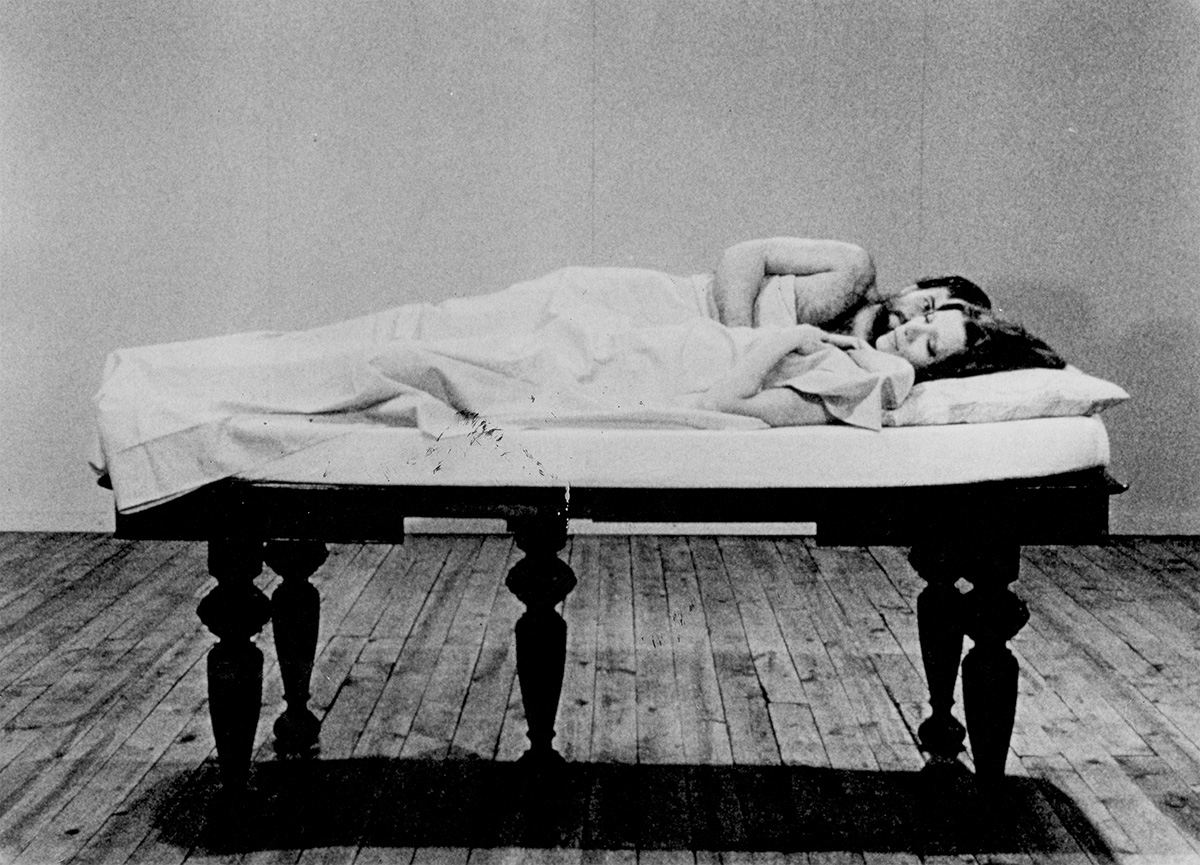
“What Rainer was up to, after all, was the reinvention of melodrama as a genre, accented for the contemporary psyche.”—B. Ruby Rich. Namechecking both Virginia Woolf and Jean-Luc Godard in the film’s opening segment, Rainer continues to experiment in her elegiac, hybrid third feature with unshackling narrative from conventional representation, using the paradoxical feminine figure of a lion tamer, Kristina (played by several women, including Rainer herself), and a disjunctive audiovisual syntax that pushes avant-garde film grammar into thrillingly novel, expressive realms. Kristina arrives from Budapest to 1970s New York City, harboring hopes of becoming a dance choreographer, as well as romantic affections for an elusive sailor named Raoul.(Synopsis courtesy of The Metrograph.)
When Yvonne Rainer made her first feature-length film in 1972, she had already influenced the world of dance and choreography for nearly a decade. From the beginning of her film career she inspired audiences to think about what they saw, interweaving the real and fictional, the personal and political, the concrete and abstract in imaginative, unpredictable ways. Her bold feminist sensibility and often controversial subject matter, leavened with a quirky humor, has made her, as the Village Voice dubbed her in 1986, "The most influential American avant-garde filmmaker of the past dozen years, with an impact as evident in London or Berlin as in New York. Rainer was born in San Francisco in 1934. She trained as a modern dancer in New York from 1957 and began to choreograph her own work in 1960. She was one of the founders of the Judson Dance Theater in 1962, the beginning of a movement that proved to be a vital force in modern dance in the following decades. Between 1962 and 1975 she presented her choreography throughout the United States and Europe, notably on Broadway in 1969, in Scandinavia, London, Germany, and Italy between 1964 and 1972, and at the Festival D'Automne in Paris in 1972. In 1968 she began to integrate short films into her live performances, and by 1975 she had made a complete transition to filmmaking. In 1972 she completed a first feature-length film, LIVES OF PERFORMERS. In all she has completed seven features: FILM ABOUT A WOMAN WHO... (1974), KRISTINA TALKING PICTURES (1976), JOURNEYS FROM BERLIN/1971 (1980, co-produced by the British Film Institute and winner of the Special Achievement Award from the Los Angeles Film Critics' Association), THE MAN WHO ENVIED WOMEN (1985), PRIVILEGE (1990, winner of the Filmmakers' Trophy at the Sundance Film Festival, Park City. Utah, 1991, and the Geyer Werke Prize at the International Documentary Film Festival in Munich, 1991), and MURDER and murder (1996). Rainer's films have been shown extensively in the U.S. and throughout the world, in alternative film exhibition showcases and revival houses (such as the Bleecker St Cinema, Roxy-S.F., NuArt-L.A, Film Forum-NYC, et al), in museums and in universities. Her films have also been screened at festivals in Los Angeles (Filmex), London, Montreux, Toronto, Edinburgh, Mannheim, Berlin, Locarno, Rotterdam, Creteil, Deauville, Toulon, Montreal, Hamburg, Salsa Majori, Figueira da Foz, Munich, Vienna, Athens (Ohio), Sundance, Hong Kong, Yamagata, and Sydney. A half-hour video tape entitled YVONNE RAINER: STORY OF A FILMMAKER WHO... was aired on Film and Video Review, WNET-TV in 1980. THE MAN WHO ENVIED WOMEN was aired on Independent Focus, WNET-TV in, 1989, and PRIVILEGE on the same program in 1992 and during the summer of 1994. In the Spring of 1997—to coincide with the release of MURDER and murder—complete retrospectives of the films of Yvonne Rainer were mounted at the Museum of Modern Art in San Francisco and at the Film Society of Lincoln Center in New York City. In 2006 MIT Press published Yvonne Rainer's memoir Feelings Are Facts: A Life.
Yvonne Rainer
Film About a Woman Who...
Experimental fiction | 16mm | black and white | 0:0 | USA | 1974
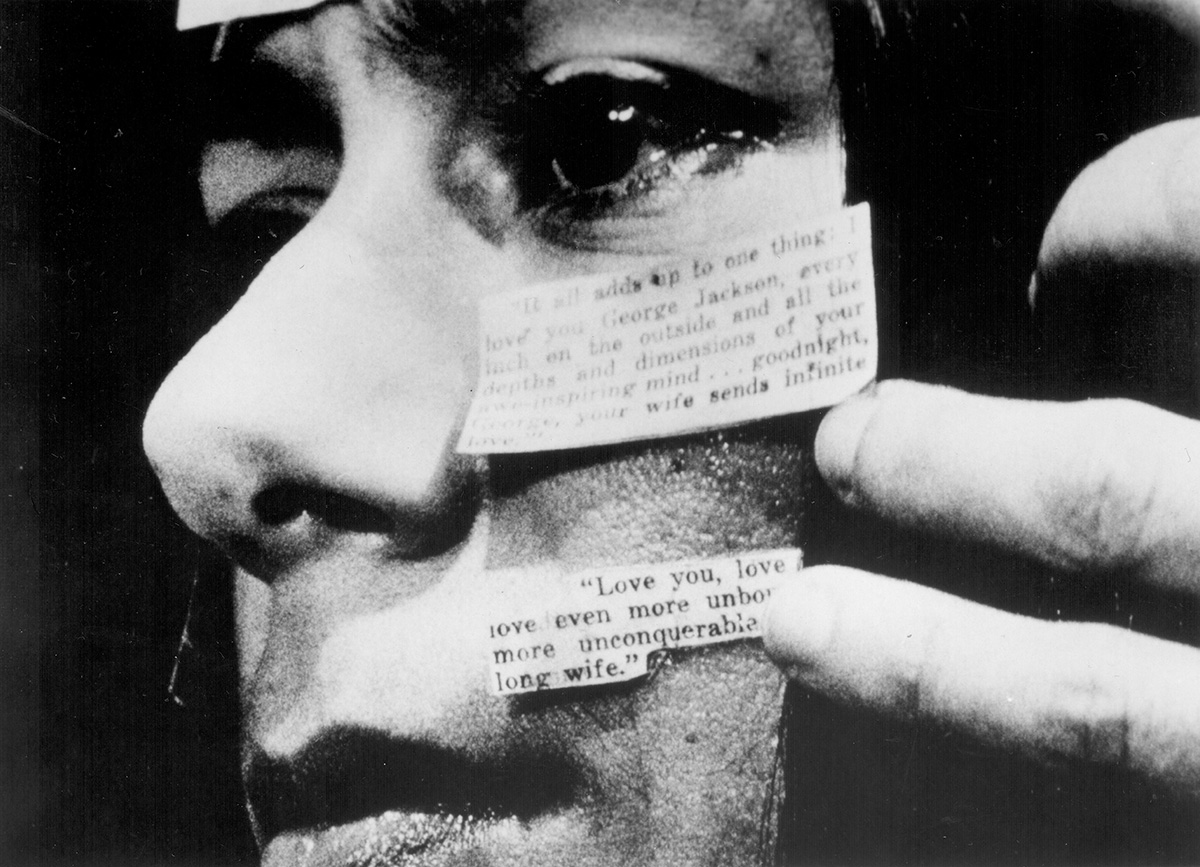
Picking up where Lives of Performers left off, Rainer’s second, landmark feature tells the story of a woman whose sexual dissatisfaction masks an enormous anger, with Rainer needling at questions raised by contemporary feminism about the relationship between the representation of romantic clichés and sexual repression. Borrowing techniques from soap opera, the formally fractured yet exuberant Film About a Woman Who… combines voiceover, intertitles, simulated “still” images, and dinner-table discussions to provocative, often contradictory effect. Long silences and Babette Mangolte’s fluid black-and-white images only heighten the darting, doubt-ridden, highly dislocating drama. (Synopsis courtesy of The Metrograph.)
When Yvonne Rainer made her first feature-length film in 1972, she had already influenced the world of dance and choreography for nearly a decade. From the beginning of her film career she inspired audiences to think about what they saw, interweaving the real and fictional, the personal and political, the concrete and abstract in imaginative, unpredictable ways. Her bold feminist sensibility and often controversial subject matter, leavened with a quirky humor, has made her, as the Village Voice dubbed her in 1986, "The most influential American avant-garde filmmaker of the past dozen years, with an impact as evident in London or Berlin as in New York. Rainer was born in San Francisco in 1934. She trained as a modern dancer in New York from 1957 and began to choreograph her own work in 1960. She was one of the founders of the Judson Dance Theater in 1962, the beginning of a movement that proved to be a vital force in modern dance in the following decades. Between 1962 and 1975 she presented her choreography throughout the United States and Europe, notably on Broadway in 1969, in Scandinavia, London, Germany, and Italy between 1964 and 1972, and at the Festival D'Automne in Paris in 1972. In 1968 she began to integrate short films into her live performances, and by 1975 she had made a complete transition to filmmaking. In 1972 she completed a first feature-length film, LIVES OF PERFORMERS. In all she has completed seven features: FILM ABOUT A WOMAN WHO... (1974), KRISTINA TALKING PICTURES (1976), JOURNEYS FROM BERLIN/1971 (1980, co-produced by the British Film Institute and winner of the Special Achievement Award from the Los Angeles Film Critics' Association), THE MAN WHO ENVIED WOMEN (1985), PRIVILEGE (1990, winner of the Filmmakers' Trophy at the Sundance Film Festival, Park City. Utah, 1991, and the Geyer Werke Prize at the International Documentary Film Festival in Munich, 1991), and MURDER and murder (1996). Rainer's films have been shown extensively in the U.S. and throughout the world, in alternative film exhibition showcases and revival houses (such as the Bleecker St Cinema, Roxy-S.F., NuArt-L.A, Film Forum-NYC, et al), in museums and in universities. Her films have also been screened at festivals in Los Angeles (Filmex), London, Montreux, Toronto, Edinburgh, Mannheim, Berlin, Locarno, Rotterdam, Creteil, Deauville, Toulon, Montreal, Hamburg, Salsa Majori, Figueira da Foz, Munich, Vienna, Athens (Ohio), Sundance, Hong Kong, Yamagata, and Sydney. A half-hour video tape entitled YVONNE RAINER: STORY OF A FILMMAKER WHO... was aired on Film and Video Review, WNET-TV in 1980. THE MAN WHO ENVIED WOMEN was aired on Independent Focus, WNET-TV in, 1989, and PRIVILEGE on the same program in 1992 and during the summer of 1994. In the Spring of 1997—to coincide with the release of MURDER and murder—complete retrospectives of the films of Yvonne Rainer were mounted at the Museum of Modern Art in San Francisco and at the Film Society of Lincoln Center in New York City. In 2006 MIT Press published Yvonne Rainer's memoir Feelings Are Facts: A Life
Yvonne Rainer
Lives of Performers
Experimental fiction | 16mm | black and white | 89:0 | USA | 1972
Rainer’s debut feature film announced both her shift from the world of dance towards avant-garde cinema, and what would become a career-long interest in “women’s stories” and the teasing machinations of melodrama. The familiar tale of a man who can’t choose between two women and makes everyone suffer is reworked by Rainer as a jolting and radically austere, anti-illusionist spectacle, comprising dance rehearsals, photography, tableaux, and a flurry of fragments of text, both onscreen and not. Off-camera, multiple voices can be heard—including that of cinematographer Babette Mangolte, who was at the time just beginning work with a young Chantal Akerman. (Synopsis courtesy of The Metrograph.)
When Yvonne Rainer made her first feature-length film in 1972, she had already influenced the world of dance and choreography for nearly a decade. From the beginning of her film career she inspired audiences to think about what they saw, interweaving the real and fictional, the personal and political, the concrete and abstract in imaginative, unpredictable ways. Her bold feminist sensibility and often controversial subject matter, leavened with a quirky humor, has made her, as the Village Voice dubbed her in 1986, "The most influential American avant-garde filmmaker of the past dozen years, with an impact as evident in London or Berlin as in New York. Rainer was born in San Francisco in 1934. She trained as a modern dancer in New York from 1957 and began to choreograph her own work in 1960. She was one of the founders of the Judson Dance Theater in 1962, the beginning of a movement that proved to be a vital force in modern dance in the following decades. Between 1962 and 1975 she presented her choreography throughout the United States and Europe, notably on Broadway in 1969, in Scandinavia, London, Germany, and Italy between 1964 and 1972, and at the Festival D'Automne in Paris in 1972. In 1968 she began to integrate short films into her live performances, and by 1975 she had made a complete transition to filmmaking. In 1972 she completed a first feature-length film, LIVES OF PERFORMERS. In all she has completed seven features: FILM ABOUT A WOMAN WHO... (1974), KRISTINA TALKING PICTURES (1976), JOURNEYS FROM BERLIN/1971 (1980, co-produced by the British Film Institute and winner of the Special Achievement Award from the Los Angeles Film Critics' Association), THE MAN WHO ENVIED WOMEN (1985), PRIVILEGE (1990, winner of the Filmmakers' Trophy at the Sundance Film Festival, Park City. Utah, 1991, and the Geyer Werke Prize at the International Documentary Film Festival in Munich, 1991), and MURDER and murder (1996). Rainer's films have been shown extensively in the U.S. and throughout the world, in alternative film exhibition showcases and revival houses (such as the Bleecker St Cinema, Roxy-S.F., NuArt-L.A, Film Forum-NYC, et al), in museums and in universities. Her films have also been screened at festivals in Los Angeles (Filmex), London, Montreux, Toronto, Edinburgh, Mannheim, Berlin, Locarno, Rotterdam, Creteil, Deauville, Toulon, Montreal, Hamburg, Salsa Majori, Figueira da Foz, Munich, Vienna, Athens (Ohio), Sundance, Hong Kong, Yamagata, and Sydney. A half-hour video tape entitled YVONNE RAINER: STORY OF A FILMMAKER WHO... was aired on Film and Video Review, WNET-TV in 1980. THE MAN WHO ENVIED WOMEN was aired on Independent Focus, WNET-TV in, 1989, and PRIVILEGE on the same program in 1992 and during the summer of 1994. In the Spring of 1997—to coincide with the release of MURDER and murder—complete retrospectives of the films of Yvonne Rainer were mounted at the Museum of Modern Art in San Francisco and at the Film Society of Lincoln Center in New York City. In 2006 MIT Press published Yvonne Rainer's memoir Feelings Are Facts: A Life
Tuomo Rainio
City
Art vidéo | dv | black and white | 2:46 | Finland | 2006
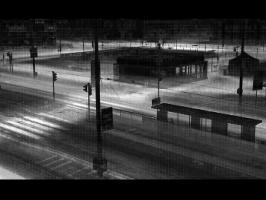
In the urban space every person?s behaviour is observed and controlled by the others and by themselves. Yet everyone has a possibility to step out from formal and differ from the crowd. In the video work CITY I have used a self-made computer program to draw the image out of movements on the video, so that anything that moves leaves a trace in the image. The video visualizes the slow process of an image appearing from the accumulating changes. In the end the unchanged landscape is revealed and the moving image is seemingly transformed into a still. The most common pathways are multiplied in brightness as more movement occurs. By performing in the video, I have drawn my own trace as opposite to regular movements; I have tried to make my presence visible among the crowd.
Tuomo Rainio was born in Espoo, Finland, in 1983. He is currently living and working in Helsinki. He has graduated as Bachelor of Arts from the Photographic Department of University of Art and Design Helsinki and is continuing his studies within MA program at the same university. In year 2007-08, he has been studying at Musashino Art University in Tokyo. Rainio is mainly working with digital video and photography exploring universal themes such as existense, individuality and evanescense. His work combines a conceptual approach with new technical solutions. Rainio tries to connect the visual representation with logic of process of creating images, and use both of these as a means of expression. Rainio?s works have been shown in several group exhibitions in eight different European coutries. Last year he held his first solo exhibition in Finland and was also taking part in an exhibition at the Finnish Museum of Photography. In the year 2008 he is exhibiting in the group show at Museum of Contemporary Art Kiasma in Finland and with ?The European Month of Photography?, an exhibition organized in nine capital cities in Europe. In the summer 2008 Rainio will exhibit his works in a solo show in a private art museum in Finland.
Sara Rajaei, Rajaei, Sara
Charismatic fates & Vanishing dates
Art vidéo | dv | color | 3:0 | Iran, Netherlands | 2006
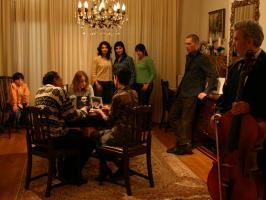
There are moments of déjà vu in our lives, moments of intense recall. Here, the characters of the film are in a continual state of déjà vu. Kids are pure and immortal like ideas and concepts ? they remain and remind, break the border between real and unreal. Those who are older retain the memories of their old home to comfort them, but memories are memories, without solidity to support.
Sara Rajaei, born 05.09.1976, Abadan/Iran is a video artists based, in The Netherlands since 1998. She studied Handicrafts at the university of art in Tehran, for 2 years and then left Iran for the Netherlands, where she obtained her bachelors as a video artist from The Royal academy of art in The Hague in 2002. Her graduation followed by getting accepted at the Rijksakademie in Amsterdam where she did a 2 years residency. Since 2004, she?s been working as freelance video artist, editor and writer. She often works in between Iran and the Netherlands, not to lose track being an inhabitant of both countries. Her work since has been shown in various festivals and exhibitions around the world.
Frédéric Ramade
Go Forth
Documentary | hdv | color | 62:0 | France | 2014
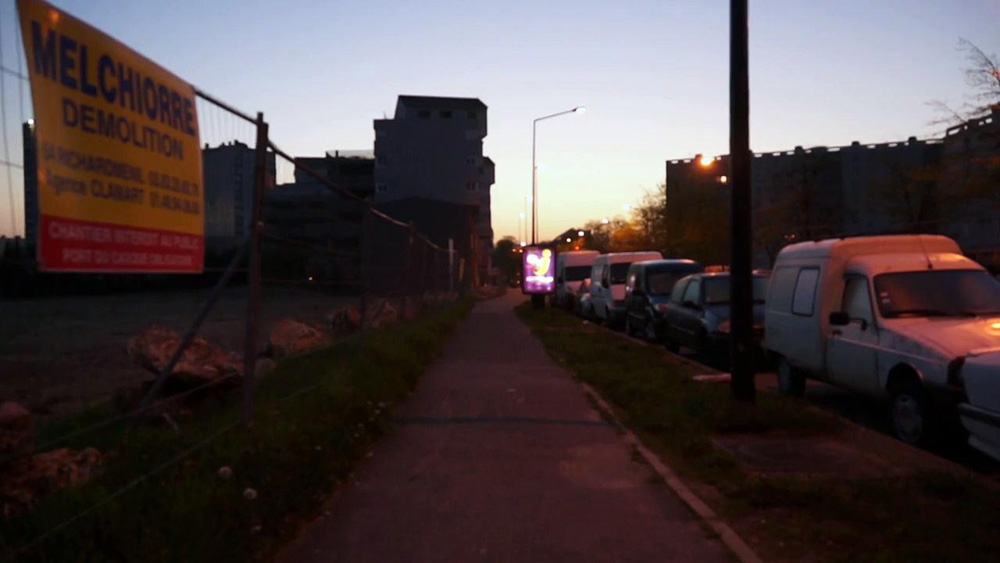
À travers le portrait d’une femme de 79 ans, Taklit Adel, ma grand-mère, née en Algérie et vivant en France depuis 60 ans, se noue à la fois le fil de la petite et de la grande Histoire et l’exploration de la banlieue et de son ensemble. Une histoire personnelle prise dans l’histoire collective.
Soufiane Adel est né en 1981 en Algérie. Il arrive en France à 8 ans. C’est en faisant une école de design, l’ENSCI, Les Ateliers, qu’il découvre le cinéma. Pas par hasard, toute son enfance il s’est nourri des films de Jean Claude Van Damme et du Nouvel Hollywood. Il rencontre à 20 ans le néoréalisme italien et le cinéma expérimental, et amorce alors une longue cinéphilie, autodidacte, aléatoire, et compulsive. En 2004, il décide de filmer son père, lui demande de rejouer une scène qu’ils ont vécue ensemble. Ce sera son premier court métrage : « Nuits closes ». Après il y aura « La Cassette » puis « Kamel s’est suicidé six fois, son père est mort ». A partir de 2009, il co-réalise ses films avec Angela Terrail, avec qui il travaille depuis « La Cassette ». Ils réaliseront « Sur la tête de Bertha Boxcar » et prépare actuellement un long métrage, l’adaptation contemporaine d’un roman de Jack London « Martin Eden ».
Frédéric Ramade
Les Bonnes
Video | hdv | color | 8:0 | France | 2015
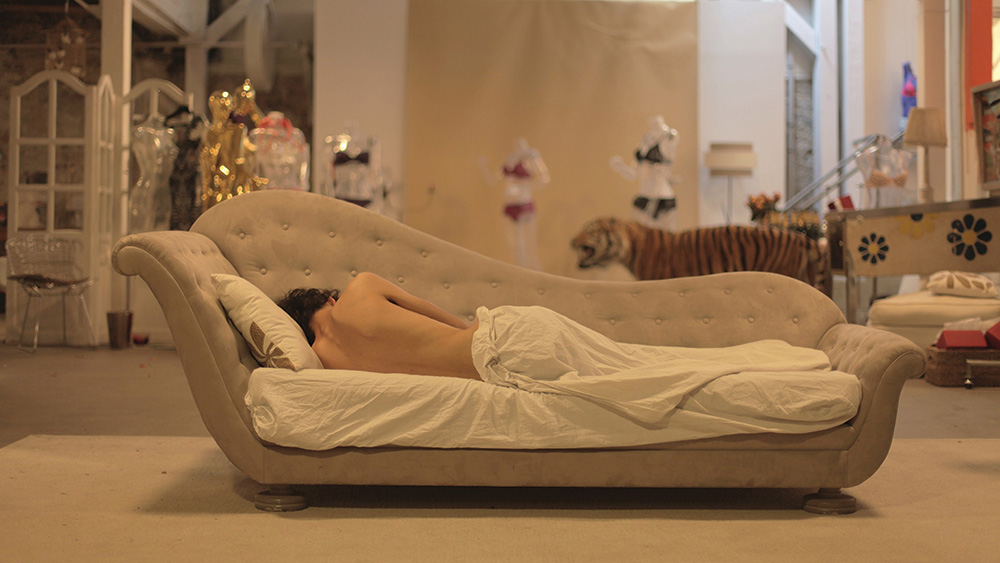
Le long de la nuit. Deux jeunes garçons sont dehors. Ils gardent un studio de cinéma. Ils sont frères. Seuls, la lune et un tigre les accompagnent pour traverser ce temps.
Soufiane Adel est né en 1981 en Algérie. Il arrive en France à 8 ans. C’est en faisant une école de design, l’ENSCI, Les Ateliers, qu’il découvre le cinéma. Pas par hasard, toute son enfance il s’est nourri des films de Jean Claude Van Damme et du Nouvel Hollywood. Il rencontre à 20 ans le néoréalisme italien et le cinéma expérimental, et amorce alors une longue cinéphilie, autodidacte, aléatoire, et compulsive. En 2004, il décide de filmer son père, lui demande de rejouer une scène qu’ils ont vécue ensemble. Ce sera son premier court métrage : « Nuits closes ». Après il y aura « La Cassette » puis « Kamel s’est suicidé six fois, son père est mort ». À partir de 2009, il co-réalise ses films avec Angela Terrail, avec qui il travaille depuis « La Cassette ». Ils réaliseront « Sur la tête de Bertha Boxcar » et prépare actuellement un long métrage, l’adaptation contemporaine d’un roman de Jack London « Martin Eden ».
Frédéric Ramade
Ode pavillonnaire
Experimental fiction | 16mm | color and b&w | 47:47 | France | 2005
Returning to his childhood suburban home, the director puts his relatives on camera and leads them to use a critical approach to think about the beginnings of their home and about the desires that guided their aesthetic and technical choices. A humoristic and symbolic reconstruction of the past between political criticism and civil disobedience.
Frédéric Ramade is both a writer and film director. In 2006, he achieved "Ode Pavillionnaire", a first medium-length personal film mixing fiction and documentary, on life in suburbian estates. Before "Ode pavillonnaire ", Frédéric Ramade directed numerous documentary films among which: "Raconte Moi... », animation films on fairy tales' characters, France 5, 2006, "Le Dessous Des Cartes", more than fifty issues of the geopolitical magazine, ARTE, 1999 to 2006, "Court-Circuit", portraits of film directors within the magazine - Patrick Bokanovski, Michael Snow, the Quay brothers, Jan Svankmaje, ARTE, 2001 to 2004, "Voyage au Féminin", portraits of towns on the outskirts of the Mediterranean sea through the points of view of women, Escale, 2002-2003. Aside from these, Frédéric Ramade has directed several experimental films: "Dernières représentations", video, 2000, a tribute to the French writer Bernard Lamarche-Vadel, screened during the Paris-Berlin festival, 2003, "Olhos Fechados", video, 2001, a reflexion on death through the picture of the famous Brazilian thief, Lampião, "En l'attente", S8 transfered on video, 2002, essay on photography through the work of the French photographer Magdi Senadji, screened at the Arthotèque of Caen, June 2002, "Un tombeau for Senadji", video, 2003, tribute to the dead photographer, screened in the Centre National de la Photographie. Frédéric Ramade has also published several illustrated books on Iran, Brazil, Vietnam, and Mexico, for Le Chêne and Flammarion, and has translated contemporary Iranian short stories for Gallimard. Frédéric Ramade is currently developing his first long feature film, "Rodeo", and an experimental documentary film, "Bienvenue à Charleworld", exploring the life and work of the American musician & artist Charlemagne Palestine.

Jules Ramage
Ghostmarkets
Experimental doc. | 0 | color | 6:24 | France | 2022
Ghostmarkets is part of a long-term collaboration with a group of men prisoners at Poissy prison (France). In 2019, in the wake of the prohibition of all transactions in the prison space, they engaged in the creation of a monetary production economy inside the walls. The debates conducted on this occasion testify to the prior existence of an invisible economic system, based on the exchange of services, debts of honor, and the performance of masculinity. As he was directing and recording the discussions of his work group, Jules Ramage came to realize the complex position he assumed inside the prison walls. The SD card verification protocol turned his camcorder into a surveillance tool. The sound, video, and textual archives of this collective experience were used to make an installed film, marked by the extraction of the voices of its detained collaborators, focusing on the material transformation and gain in symbolic value. With John Dow, Ben, Christophe, Brahli, Sparafucile, Youssef Rhnima, Philippe T., Ilich.
Jules Ramage (1987, France) is a visual artist and researcher. Associated with the CERILAC laboratory at the University of Paris, he is also a member of the Cité du Genre, interdisciplinary research institute in gender studies. He explores the relationships of power at play in disciplinary and institutional structures. Since 2013, he has conducted in-depth fieldwork in the prison space, where he implements collaborative protocols with inmates as well as prison guards. His work has been exhibited in France, the United States, Argentina, England, Spain, and Germany. He was a resident at CENTQUATRE-Paris, Cité internationale des arts, Ateliers Médicis, Fresnoy-studio national des arts contemporains. For Ghostmarkets, he worked with a group of men detained in the central prison of Poissy, formed in 2015 as part of the Section des Etudiants Empêchés, a teaching program run by the University of Paris. Over the years, the group has become self-sufficient, and, under the management of Jules Ramage, it has taken on the identity of a collaborative research-creation collective. It includes : John Dow, Ben, Christophe, Brahli, Sparafucile, Youssef Rhnima, Philippe T., Ilich.
Sj Ramir
In This Valley of Respite, My Last Breath...
Experimental video | hdv | color | 5:6 | New Zealand, Australia | 2017
A valley starved of light. Weariness. Fatigue. An offering of shelter; a surrender of breath...
Originally a photographer, artist/filmmaker SJ.Ramir later moved to digital video - shooting scenes of lone figures moving across remote and isolated geographical landscapes. The landscapes and structures in his films are often a mix of real and/or constructed 3D models. The prominent style of his films came from early years of experimentation with custom-made lens filters. These filters enhanced video pixels and produced hazy, distorted images, which Ramir felt were visually suggestive of emotional states connected with a central theme in his work: isolation. His films have been exhibited at art galleries worldwide and screened at many prestigious film festivals including: the 67th Venice International Film Festival, International Film Festival Rotterdam (2009 and 2010), Edinburgh International Film Festival (2012 and 2013), Melbourne International Film Festival (2011) and the International Short Film Festival Oberhausen (2009).

Sj Ramir
In This Valley, My Heart Is Buried Deep...
Experimental film | hdv | color | 6:7 | New Zealand | 2014
“On the morning of my death – just after sunrise, and before my spirit had departed, a mysterious figure entered the house... “ In This Valley My Heart Is Buried Deep, is an experimental narrative that uses a combination of visuals and text. Based on an actual dream, the video explores what it means to belong; connection to the land; connection to a place…
Originally a photographer, artist/filmmaker SJ.Ramir later moved to digital video - shooting scenes of lone figures moving across remote and isolated geographical landscapes. The landscapes in his films are often a mix of real and/or constructed 3D models. The prominent style of his films came from early years of experimentation with custom-made lens filters. These filters enhanced video pixels and produced hazy, distorted images, which Ramir felt were visually suggestive of emotional states connected with a central theme in his work: isolation. Ramir’s distinctive films have screened at numerous film festivals worldwide including the Venice International Film Festival, International Film Festival Rotterdam, Edinburgh International Film Festival and the Melbourne International Film Festival. He currently resides in Melbourne, Australia.
Enrique Ramirez
Brises
Fiction | 16mm | color | 13:0 | Chile | 2008
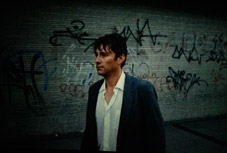
?Breezes? is a ten minute film of sequence shot while the camera crosses the Presidential Palace (Moneda). This film deals mainly with the memory of a place which was the scenario of the Coup d'Etat and the return of democracy, a place which was the cradle of tragedies and joys of a whole race.
Enrique Ramirez was born in Chile in 1979. There he studied music and audio-visual communication with cinematographic touch, and is currently a professor with the National Studio of Contemporary Arts Le Fresnoy. The artistic path of Enrique Ramirez was profitable and intense. His attentive perspective of contemporary history is reflected in his works: popular culture in its funk expression in ?the Central Track? (2003), the invention of enemies for the intervention and the occupation of other people, and the open or underhand complicity of the rest of the world in ?the Allies? (2003), the stories of immigrants in ?the Landscape? (2007), the history and the memory in ?Breezes? (2008). Ramirez works with two central elements: an object which is attached directly to the concept which works and a projection with sequences of images on the object. In this way, it brings up to date and contextualizes the object by instigating it with the means of the movement which the images create, while creating at the same time channels of correspondence between the various components of work.
Enrique Ramirez
Deux faisceaux blancs groupés et rotatifs
Experimental fiction | 4k | color | 24:41 | Chile, France | 2017
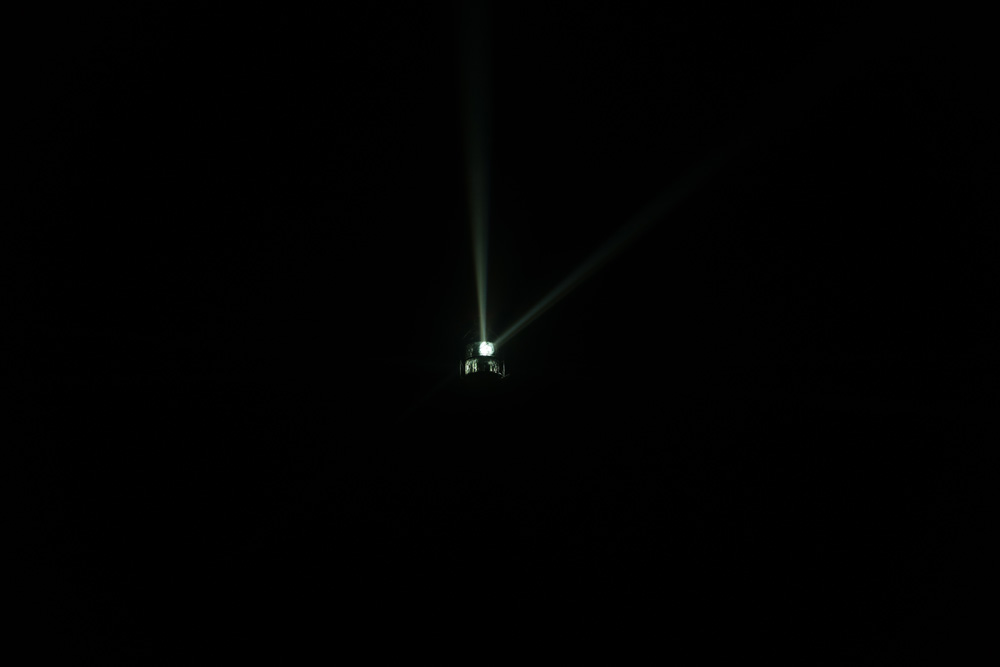
In this twilight work, the sea appears calm or turbulent: effusions of foam stand out against dark matter, the beam of light mechanically pierces the night sky, and multiple voices accompany this elemental choreography. One voice invites us to discover the beliefs of certain Native American tribes, who felt that the white marks in the sky (the stars) were holes through which entered the light of the universe, where darkness did not exist. Other famous voices revive great moments of political history, burning words that have guided humanity, or evocations of tragic events that have left it distraught. This confirms the existential and generic dimension of Enrique Ramírez’s universe, profoundly structured by the motif of cycle, revolution and eternal beginnings. There is no moralism in this meditative approach: the artist suggests rather the clandestine development of thought, and the experience of immersion in the noise of the world.
Enrique Ramírez. Born in 1979 in Santiago, Chile. He has a master degree in Contemporary art and New Media in Studio National of art contemporain Le Fresnoy, France. Enrique Ramirez’s work could be described as poetic incursions towards the humanization of contemporary dystopias. His film-installations and photography deals with the politics of exodus and exile and the discontinuity of memory, but for Ramirez this always means an arduous search into subjective imaginary. The vast landscapes that often appear in his works are conceived as geo-poetic spaces for imagination, territories open for vision and deambulation. The mood of the images is a contemplative one; the landscape, the breeze, the water, the sand, they all seem to work together in an effort to place a subjective view.

Mary-audrey Ramirez
Forced Amnesia
Multimedia installation | hdv | color | 0:0 | Luxembourg | 2024
The game follows ideas such as design by subtraction. A world devoid of time and space where the great dichotomies of human thought no longer cast a shadow. A post-anthropocentric world with a non-hierarchical structure. Here we cannot orient ourselves, which defies our understanding in a refreshing way and makes us forget - at least for a few moments - who we are; where we come from; and that we believe we are of particular importance. Forced Amnesia follows a simple instruction pattern: explore and you will find. As it is devoid of language all we have to do is follow our instinct. What we learned in games that we played before. The idea for Forced Amnesia started 2023 as an art exhibition, which led to the development of a video game. Forced Amnesia is a game with focus on quiet moments, inspired by the concept of design by subtraction, philosophy introduced by Fumito Ueda. The game gives the player lots of space to navigate through. Forced Amnesia’s aesthetics moves through a stage of comforting uncertainty, the player does not know if they are above or under water, swinging or flying. This state, fused with a calm soothing musical score creates a space for relaxation and calm. Places that nowadays are getting increasingly harder to find. Forced Amnesia aims at an older generation of gamers. Gen X and Gen Y will be the first generation to grow old playing video games. As we slowly age, our lifestyle and perception changes, Forced Amnesia is there to accompany us.
Mary-Audrey Ramirez studied under Thomas Zipp at the University of the Arts in Berlin Germany from 2010 to 2016. In 2019 she was the recipient of the prestigious Edward Steichen Award in Luxembourg for her textile-based sculptural and pictorial works. Early 2025 Ramirez’s Qrst percent for art work will be Qnalized in Berlin Spandau. Her works have been shown in both solo and group exhibitions at institutions such as Casino Luxembourg, forum d’art contemporain, Luxembourg; Kunsthalle Gießen, Gießen; Dortmunder Kunstverein, Dortmund; TRAUMA BAR UND KINO, Berlin; Kai 10 Arthena Foundation, D sseldorf; Haus Mödrath, Kerpen; Margot Samel Gallery, New York City; Polansky Gallery, Prague and MARTINETZ, Cologne. She was also part of Esch2022+ARS ELECTRONICA, Luxembourg/Linz. “Ramirez creates a dense image of a world with her figurative representations in pictures, objects and games, It is a world devoid of time and space where the great dichotomies of human thought no longer play a role. A post-anthropocentric world that is not organised hierarchically. A world in which we cannot orientate ourselves, which defies our understanding in a refreshing way and makes us forget, at least for a few moments, who we are, where we come from and that we believe we are of particular importance” - (Annekathrin Kohout)

Enrique Ramirez
Las tres memorias
Experimental fiction | 4k | color | 15:54 | Chile | 2023
A man with no memory walks through the hall of honor of the former national congress of Chile, a place that was closed during the military dictatorship and that has become an important place again during the writing of the two new failed constitutions in Chile. In front of him is the famous painting of Pedro Subercaseaux that represents the discovery of Chile, this man without memory tries to remember our national anthem. Through this effort is built this film that seeks to make us travel inside an imaginary landscape in the heart of the History and architecture of the main hall of governmental power in Chile, where all presidents promised a fairer and better country ... this landscape is Chile : an experiment of neoliberalism that, despite everything, continues to breathe on our sky and dream
Enrique Ramírez was born in 1979 in Santiago de Chile. Since 2007, he lives and works between Paris (France) and Santiago (Chile). He studied popular music and cinema in Chile before joining the postgraduate master in contemporary art and new media of Le Fresnoy – Studio National des Arts Contemporains (Tourcoing, France). In 2014 he won the discovery price of Les Amis du Palais de Tokyo, Paris, France. He has since exposed in some major places as Le Palais de Tokyo, Centre Pompidou, Espace Culturel Louis Vuitton or le 104), France (le Grand Café, Saint-Nazaire) and in Central and South America (Museo Amparo, Puebla, Mexico ; Museo de la memoria, Santiago ; Parque de la memoria en Argentina, Buenos Aires). In 2017, he is invited to the 57th International Art Exhibition - La Biennale di Venezia curated by Christine Macel, Ramírez is nominated for the Marcel Duchamp Prize 2020