Catalogue > Search
Results for : Tout le catalogue
Carlos Pazos
Escenario vaciado
Art vidéo | betaSP | color | 2:42 | Spain | 2008
Carlos PAZOS : Escenario vaciado The video "Emptied Setting" shows the transition of a setting with a storyline and of characters in an emptied and lifeless setting. On Christmas Eve 2006, on the first floor of a building on Pau Claris Street in Barcelona, Emilia Fox, the artist's wife's mother, passed away. She was ninety years old. When she settled down with her husband Claudi Cuchillo and their four children, at the end of January 1951, she was heavily pregnant. The author's wife was born in this apartment, at the beginning of spring. Just as mother and daughter were together when the latter one was born, they were also together when Emilia passed away. During all these years her apartment was fully decorated, sometimes crammed. The sudden death of her husband left her mute for some months, the furniture and the walls. When Emilia fell ill, spaces slowly became empty.
Carlos Pazos was born in Barcelona in 1949. He received the National Prize for Visual Arts in Catalonia in 2008, the National Prize for Plastic Arts from the Spanish Ministry of Culture in 2004, and the City of Madrid Prize in 2003. He studied architecture at the Universidad Politécnica, philosophy at the University of Barcelona, and design at EINA School. He held his first individual exhibition on January 1970, at the age of twenty. In 2007, the Museum of Contemporary Art in Barcelona and the Reina Sofia Art Center National Museum in Madrid held the retrospective exhibition "Don't Say Anything," and he is currently preparing a version for the Museum of Contemporary Art in Sao Paulo for 2009. In 1987 he played the main character in the film "Es quan dormo que hi veig clar" by Jordi Cadena, based on the writings of Catalan poet J.V. Foix. In 1998 he directed and developed the scenography for the theater piece "El bell lloc" by Joan Brossa.

Carlos Pazos
En blanc i negre, une vez mas
Experimental film | 35mm | color | 10:30 | Spain | 2006
The encounter between an albinos chimpanze (dressed in black) and a black roman virgin (in white chocolate). Nouveau synopsis: «En blanc i negre, una vez mas » (En noir et blanc, encore une fois) Le spectateur se trouve dans une pièce de théâtre drôle et absurde basée en la rencontre de deux personnages: la «Dame de la montagne de Montserrat», vierge noire, «La Moreneta » (Brunette), patronne de la Catalogne et «Copito de nieve», (Flocon de neige), seul gorille albinos connu au monde. Son nom d?origine est Nfumu Ngi (White gorilla), il a été trouvé agrippé à sa mère, tuée le 1er octobre 1966 en Guinée Equatoriale. Un primatologue Catalan acquis l?orphelin et le conduisit au zoo de Barcelone, dont il devint la mascotte jusqu?à sa mort, a l?âge de 39 ans. Carlos Pazos a longuement travaillé sur l?association et la juxtaposition de ces deux symboles de la Catalogne dont surgit une autre histoire pas encore écrite. Le compositeur Tom Johnson a créé la musique, une déconstruction de la Macarena (vierge blanche, patronne de Seville) du groupe «Los del Rio», fameux tube des années 90. Dans le film, ce n?est pas Copito qui joue, mais un chimpanzé en négatif. Son image à l?envers, dans des teintes blanches et roses. La vierge est une reproduction en chocolat blanc, son image aussi à l?envers. À la fin du film, les couleurs redeviennent des couleurs réelles, avec le chimpanzé noir et la vierge blanche. L?artiste met à nu son artifice et démontre son processus comme pure fiction.
Please, see the catalogue of the exhibition "No me digas nada" ("Tell nothing"), 2007, cited below. Nouvelle biographie: Né à Barcelona le 23 décembre 1949. Prix National des Arts Plastiques, 2004, Ministère de la Culture espagnol et Prix Villa de Madrid, 2003. Fait des études d?architecture à l?Universidad Politécnica, philosophie à l?Universidad de Barcelona et design à l?Ecole EINA de Barcelona. Il a exprimé son amour pour la musique et la nuit avec la direction d?un salon de bal (Salón Cibeles, 1978-1983), d?un cocktail bar (Bijou, 1983-1986) et d?un bar musical (Je-rrix, 1994-1995). Dans ce dernier local il a établi le siège de son Club de Fans, le "C.P.FANS CLUB", fondé en décembre 1994. En 1987 il est le protagoniste du film « Es quan dormo que hi veig clar » de Jordi Cadena sur des textes du poète Catalan J.V. Foix. En 1998, il dirige et réalise la scénographie de la pièce de theatre "El bell lloc", de Joan Brossa, au Espai Joan Brossa de Barcelona. Cette même année est publié "El Mundo del Ritmo" (édité par Tabelaria + Antojos), en collaboration avec Eduardo Mendoza et il est le protagoniste du video "Pianito", de Jordi Colomer. L?année 2002 il publie le scénario du film, en attente de producteur, "Aquí en la tierra como en el infierno" et en décembre 2004 il publie son livre ?Garabatos y Zarpazos?, édité par l?Université de Barcelona, dans la collection ?Les arts i els artistes?, en 2007 il publie « Fidelidad Total », en collaboration Ramón de España, édité par Raina Lupa et en 2008 « Diodrama », avec textes d?Eduardo Lago, edité par Atelier Clot. Il a fait sa première exposition individuelle en janvier 1970, à l?age de vint ans. En 2007 il a fait l?exposition rétrospective «No me digas nada» au MACBA (Museo Arte Contemporáneo de Barcelona) et au MNCARS (Museo Nacional Centro de Arte Reina Sofía), dont il prépare une version pour le Musée d?Art Contemporain de Sao Paulo, en 2009. Pour son exposition rétrospective il a réalisé le film « Mnemocine. Film à découper », un collage audiovisuel constitué par 11 épisodes, d?une durée de 26 minutes.
Rune Peitersen
Cross003
Art vidéo | dv | color | 4:0 | Denmark, Netherlands | 2004
In Cross003, an image resembling a cross is seen, first as a seemingly tangible manifestation - a glowing or burning cross ? but secondly as a crevasse in a curtain in a window. The cross consists purely of light, and is only manifest as an interpretation of dark surroundings, lack of visual information. When people ? shadows ? appear and block the light, the cross momentarily disappears and the scene changes character and meaning. In the act of trying to decipher and categorize the changing imagery the viewer must engage his own views on voyeurism and iconography.
Rune Peitersen was born in Denmark in 1971. He lives and works in Amsterdam Education 1999-2001 MFA, Frank Mohr Instituut, Groningen, www.mohr-i.nl 1995-1999, BA, Royal Academy of Art, The Hague, www.kabk.nl Represented by: Gallery Ellen de Bruijne Projects
Artavazd Pelechian
Fin
Experimental doc. | 35mm | black and white | 8:0 | Armenia | 1992
Pelechian films with the camera over his shoulder men and women of different ages and ethnic groups on the train from Moscow to Erevan.
Artavazd Pelechian?s cinema ? who, Jean-Luc Godard assures us, is the greatest filmmaker in the world - remains still today not very known in the West. The film maker of Armenian origins got his formation with the VGIK between 1963 and 1968. He lives and works in Moscow, city that he very seldom leaves. His work, which is built film upon film, for the sake of research and experimentation implies what we have discovered, tired levels in movement of evolution. Pelechian films little and only short films. The density of any new opus is in fact every time a rare piece of work.
Artavazd Pelechian
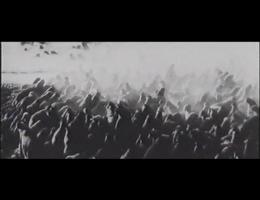
Les saisons
Experimental doc. | 35mm | black and white | 30:0 | Armenia | 1972
?The seasons? is a very beautiful poem evoking in a vast parable certain moments in Armenian history, from its volcanic origins, up to the industrial period.
Artavazd Pelechian?s cinema ? who, Jean-Luc Godard assures us, is the greatest filmmaker in the world - remains still today not very known in the West. The film maker of Armenian origins got his formation with the VGIK between 1963 and 1968. He lives and works in Moscow, city that he very seldom leaves. His work, which is built film upon film, for the sake of research and experimentation implies what we have discovered, tired levels in movement of evolution. Pelechian films little and only short films. The density of any new opus is in fact every time a rare piece of work.
Artavazd Pelechian
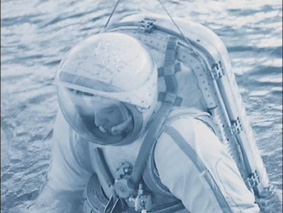
Les habitants
Experimental doc. | 35mm | black and white | 10:0 | Armenia | 1970
The film is built on the idea of `` a relationship full of mankind with nature and animals. It deals with the attacks perpetrated by man against nature, and the threat of the destruction of the natural harmony.
`Artavazd Pelechian?s cinema ? who, Jean-Luc Godard assures us, is the greatest filmmaker in the world - remains still today not very known in the West. The film maker of Armenian origins got his formation with the VGIK between 1963 and 1968. He lives and works in Moscow, city that he very seldom leaves. His work, which is built film upon film, for the sake of research and experimentation implies what we have discovered, tired levels in movement of evolution. Pelechian films little and only short films. The density of any new opus is in fact every time a rare piece of work.
Artavazd Pelechian
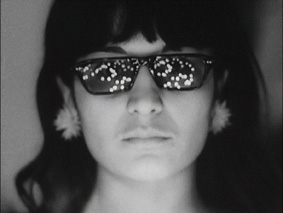
Notre siècle
Documentary | 35mm | color | 30:0 | Russia | 1982
Artavazd Pelechian
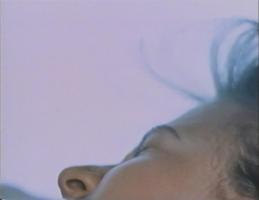
Nous
Documentary | 35mm | black and white | 30:0 | Russia | 1969
Artavazd Pelechian
Vie
Experimental doc. | 35mm | color | 6:30 | Armenia | 1993
The profile of a woman, lying disfigured - as in pleasure ? in an ancestral gesture. The holding of the child which has just been born, magnified by an ideal, a contrast and abstraction of space which surrounds them, evokes a religious iconography just like the portrait of the mother and child.
`Artavazd Pelechian?s cinema ? who, Jean-Luc Godard assures us, is the greatest filmmaker in the world - remains still today not very known in the West. The film maker of Armenian origins got his formation with the VGIK between 1963 and 1968. He lives and works in Moscow, city that he very seldom leaves. His work, which is built film upon film, for the sake of research and experimentation implies what we have discovered, tired levels in movement of evolution. Pelechian films little and only short films. The density of any new opus is in fact every time a rare piece of work.

Sini Pelkki
Sheet N°4
Experimental film | 16mm | color | 12:0 | Finland | 2018
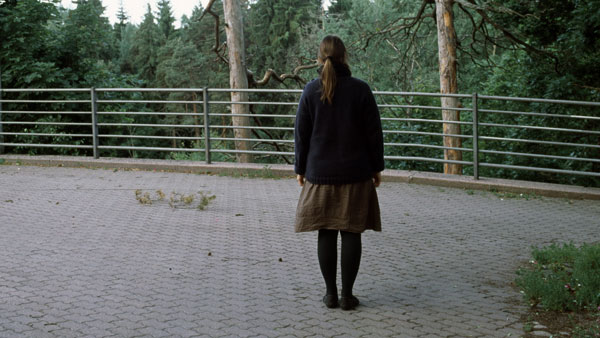
Sheet No4 examines the outlines and borders of a photograph -and a human being. How to look, how to see, how to move. Using repetition and reinterpretation to both construct and deconstruct the image and its boundaries. A Conflict between outlines and content. One of the starting points of the work was the dialogue between Pelkki and the four multidisciplinary artists, whom she invited to collaborate; Emma Hammarén, Magnús Logi Kristinsson, Johan Jonason and Keiko Yamamoto. The interaction and diverse interpretations embodied in those exchanges becomes the core of Sheet No4. The name of the work refers to a contact sheet, a proposal for a photograph, where all the options are there with possible re-framing and remarks.
Sini Pelkki (b. 1978 Helsinki) works with photography and moving image. She is interested in the subjectivity of seeing, introspective lives of spaces within spaces. In her works landscapes, figures and objects turn into layered narratives that lead to various paths and ambiguous readings. Recent years her work has been going towards different kind of collaborations. Her first work in book form Arranged Lines was released in 2018. Sini Pelkki (b. 1978 Helsinki) works with photography and moving image. She is interested in the subjectivity of seeing, introspective lives of spaces within spaces. In her works landscapes, figures and objects turn into layered narratives that lead to various paths and ambiguous readings. Recent years her work has been going towards different kind of collaborations. Her first work in book form Arranged Lines was released in 2018. Pelkki gained her Bachelor degree in Fine Art from Chelsea College of Art and Design, London (UK) in 2002 and MA from the Academy of Fine Arts Helsinki in 2008. Her works have been shown in exhibitions and film festivals internationally.
Sini Pelkki
Embarkation
Experimental film | 16mm | color | 7:10 | Finland | 2012
Embarkation is a moving image that is framed like a photograph. Through repetition it builds up into a single image, like a photograph that consists of countless images. With simultaneous presence and absence, the work explores the realtionship between still and moving image.
Sini Pelkki is an artist working with photography and moving image. Her work derives and evolves around photography and the photographic image. Her film works are often based on photographic images. Focusing on the subjectivity of seeing and the relation between a human and different physical and psychological environments and spaces. Her work has been shown across Europe in exhibitions and festivals. Pelkki was born 1978 in Helsinki, Finland. She studied fine art in Chelsea College of Art and Design in London (UK) and at the Academy of Fine Arts in Helsinki. She is currently based in Helsinki.
Caroline Pellet
Oblique
Experimental doc. | hdv | color | 13:24 | France | 2010
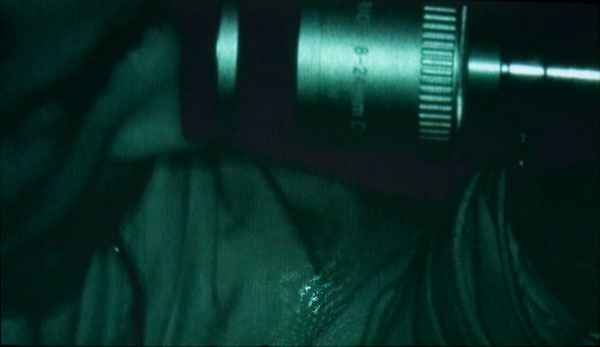
OBLIQUE (Texte de Gabrielle Reiner) Oblique est un documentaire expérimental sur un groupe d'astronomes. L'artiste filme ces chercheurs d'étoiles et entrecoupe ces plans avec ceux des «objets » (le nom donné aux étoiles par les astronomes) observés au travers de l'oculaire. La prise de vue adopte les caractéristiques de la caméra de surveillance(1) et une voix-off évoque les techniques utilisées pour améliorer la vision scotopique (2). Les astronomes se documentent avec des photographies d'astres génériques ce qui leur permet à l'observation de mieux discerner les détails des astres. On peut parler d'« expérience améliorée ». Le spectateur est invité à une « expérience esthétique » (Cf. Jauss) paradoxale qui oscille entre deux points de vue: l?exploration optique des observants répond à celle sensible et relative de l'?uvre artistique. En confrontant théories scientifiques et théories esthétiques de la perception, la vidéaste interroge de manière critique la normativité de l'expérience perceptive. 1. Le night shot est le procédé qui permet de filmer la lumière infra-rouge, invisible à l'?il nu. Fait à l ́origine pour les caméras de surveillance, il a été transposé sur les caméras amateurs. 2. Il faut en effet entre vingt et quarante cinq minutes à l'?il pour basculer en scotopique, perception qui sollicite des cellules appelées bâtonnets situées non pas au centre de l'?il mais en périphérie. A cause de cette répartition des cellules ayant la plus grande sensibilité, les astronomes utilisent un regard « oblique » ou décalé, c'est à dire qu'ils visent à coté de l'objet qu'ils veulent voir afin d'obtenir une perception plus détaillée.
BIOGRAPHIE Vit et travaille à Saint-Ouen (France) née en 02/02/1984 en France
Gael Peltier
Percussion mécanique
Performance | mov | color | 2:2 | France | 2018
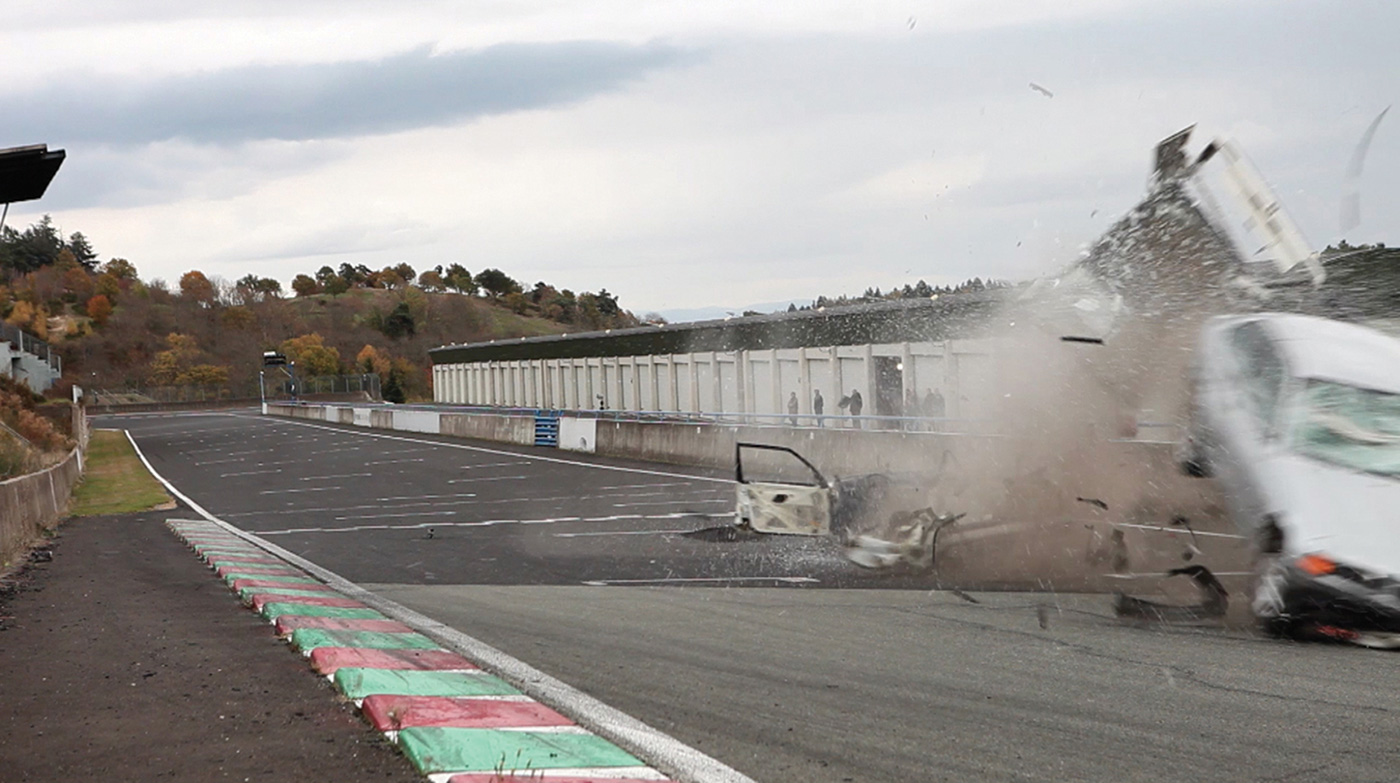
For Gaël Peltier, video is above all a means of recording a performance that cannot be repeated. It is an art of the instant which, as here, culminates in violent mechanical destruction. Its proximity to cinema lies in the procedures behind the actions he undertakes, willingly putting himself in danger and, like a stuntman, accepting the constraints and risks of an operation prepared with meticulous care. Beyond this technical kinship and the references that inevitably come to mind — Crash by David Cronenberg, after J. G. Ballard’s novel, for instance — everything in this work stands in opposition to cinema. There is no narrative: the focus rests on an accident, on the acceleration that leads to it, and on the brutal impact to which the performer submits himself. He places himself entirely within reality; only the driver’s protective gear and harness distinguish this deliberate crash from a fortuitous event of the kind that so often occurs on the road. This resemblance unsettles the viewer’s eye and reveals the presence of a latent desire — not only to watch, but to take part in something that is usually perceived solely as a dramatic event, frequently with fatal consequences.
Gaël Peltier develops a practice in which attitude takes precedence over the production of objects, ready-mades or films, placing his work in the lineage of artists without oeuvre. He describes himself as an “infra-conceptual artist by default,” adopting a lateral position in which a protocol applied to reality becomes the material itself. His projects involve precise forms of commitment: gaining 30 kg in New York for a role that did not exist (La Conjuration, 2010), a car crash staged as critical action (Percussion Mécanique, 2018), or interventions that subtly disturb an otherwise ordinary situation. Video records these processes not in order to produce an effect, but to render visible the conditions of their emergence within real-world circumstances. His work has been exhibited in France and abroad since 2002.
Anu Pennanen
Untitled
Art vidéo | 0 | color | 15:0 | Finland | 2005
Anu Pennanen, Laura HORELLI
Viesti
Documentary | dv | color | 14:3 | Finland | 2009
"Relay" is based on a performance where the makers invited eight participants ? individuals and not-for-profit organisations ? to highlight a cause by running a lap of honour at a sports stadium in Finland. The participants were paired. Whilst one of them ran, the other one discussed the topics central to the running group. "Relay" shows the two actions simultaneously in split screen and references the conventions of sports coverage. The name refers both to the sharing of information and to the sport event that acted as the framework.
Anu Pennanen: Anu Pennanen was born in 1975 in Kirkkonummi, Finland, to the family of a social worker mother and technician father. She is based in Helsinki and works internationally. She is an artist working with urban public space and its relation to cinema and media. She works collaboratively and site-specifically with people, who in her works are the mirrors and investigators of built environment. She frequently collaborates with experimental musicians. After graduating from the Academy of Fine Arts in Helsinki 2003 she has exhibited widely internationally; including 2nd Moscow Biennale. Monuments of our Discontent: Expiration of Place. Special project curated by Lolita Yablonskene. Moscow, Russia (2007), Ars Baltica Triennale. Don`t Worry - Be Curious! Stadtgalerie Kiel, Germany; KUMU, Estonian Art Museum, Tallinn, Estonia; Pori Art Museum, Finland (2007), Liverpool Biennial, UK (2006), Scape Biennial of Art in Public Space, Christchurch, New Zealand (2006), Busan Biennale, South Korea (2006), Under your skin, White Box Gallery, New York USA (2005), Manifesta 5, San Sebastian, Spain (2004), Momentum, Moss, Norway (2004). Laura Horelli: Born 1976 in Helsinki. Lives and works in Berlin. Art studies: 1997-2002 Staatliche Hochschule für Bildende Künste - Städelschule, Klasse Bayrle, Frankfurt, Germany. 1995-2001 Academy of Fine Arts Helsinki, Department of Time and Space, MFA.
Miranda Pennell
Drum Room
Experimental doc. | | color | 15:5 | United Kingdom | 2007
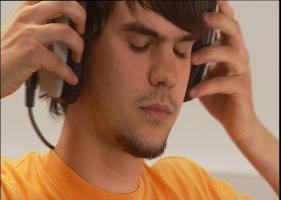
The empty spaces of an ambiguous building open-up to reveal a group of aspiring musicians as they play together, alone.
Miranda Pennell studied contemporary dance before she started working with film and video. Her work has been shown in different contexts including broadcast, independent cinema, and gallery settings. Recent one-person exhibitions include `I AM/WE ARE` Centre pour Image Contemporain St Gervais Genéve (2008), `PLAY` Void Gallery, Derry (2007), a retrospective program at Cinema Nova Bruxelles (2008), and at the Festival International du Film de La Rochelle (France, 2007). She lives in London.
Miranda Pennell
Strange Object
Experimental doc. | 0 | color and b&w | 15:20 | United Kingdom | 2020
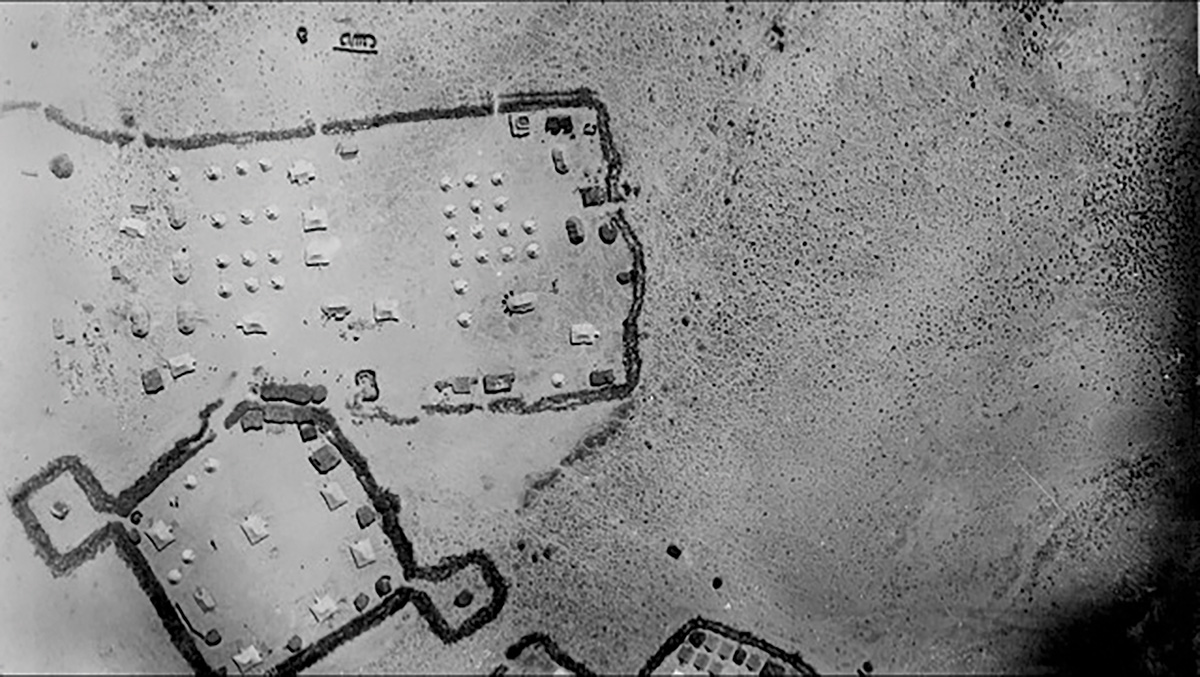
The ‘Z’ Unit’s operation in a world far from our own was an experiment of sorts, a test. And this place, inhabited by beings different from ourselves, served as a laboratory. A successful outcome would secure the Z Unit’s future, enabling its enterprise to expand and its methods to be applied to other worlds. An investigation into imperial image-making, and destruction.
Miranda Pennell is an artist filmmaker based in London. Her recent and current work uses photographic archives as the starting point for a reflection on colonial legacies. She originally trained in contemporary dance, and her award-winning videos exploring choreography in everyday life have been widely screened and broadcast internationally. Pennell received an MA in visual anthropology in 2010 from Goldsmiths College, University of London, and undertook practice-led PhD research completed in 2016. Selected screenings and exhibitions include Intersectional Georgraphies (2022) Martin Parr Foundation, Bristol; Lahore Biennale (2020),Tanzbilder at the Neues Museum Nuremberg (2019), one-person programme at the Stuttgart FilmWinter Festival for Expanded Media (2019), Miranda Pennell: choreographies and archives at the Film Museum Munich (2017), Choreocinema: Siobhan Davies & Miranda Pennell, Barbican, London (2017), Co-op Dialogues 1976-2016: Lis Rhodes & Miranda Pennell, Tate Britain (2016), All Systems Go, Cooper Gallery, Dundee (2016), Europe – The Future of History at Kunsthaus Zurich (2015), and The World Turned Upside Down, Mead Gallery (2013).

Miranda Pennell
The Host
Experimental doc. | hdv | color and b&w | 60:0 | United Kingdom | 2015
A filmmaker turns forensic detective as she pieces together hundreds of photographs in search of what she believes to be a buried history, only to find herself inside the story she is researching. The Host investigates the activities of British Petroleum (BP) in Iran; a tale of power, imperial hubris and catastrophe. While the tectonic plates of geopolitical conspiracy shift in the background, the film asks us to look, and look again, at images produced by the oil company and personal photos taken by its British staff in Iran– including the filmmaker’s parents– not for what they show, but for what they betray. The Host is about the stories we tell about ourselves and others, the facts and fictions we live by - and their consequences.
Miranda Pennell originally trained in contemporary dance and later studied visual anthropology.Her short film and video works that explore performance and choreographies of the everyday, have been screened internationally including for broadcast. Her most recent moving-image work reworks colonial archives as the starting point for investigations into the colonial imaginary. Her film Why Colonel Bunny Was Killed (2010) was awarded best international film at the Images Festival, Toronto, and Courtisane Festival of Media Art, Ghent and is published on DVD by Filmarmalade. The Host (2015) is Pennell’s first feature length film. Selected screenings and exhibition of Pennell’s work includes mixed programs and group shows at Tate Britain (2014), Whitechapel Gallery (2015), Museum of Modern Art Vienna (2012), Kunsthaus Zurich (2015).
Miranda Pennell
Why Colonel Bunny Was Killed
Experimental doc. | hdcam | black and white | 27:30 | United Kingdom | 2010
Triggered by the memoirs of a medical missionary on the Afghan borderlands, the film is constructed from some remarkable still photographs of colonial life on the North West frontier of British India at the turn of the 20th century. Searching for clues to the realities behind images framed during a time of colonial conflict, the film plays sound against image and finds striking continuities in Western portrayals of a distant place and people.
Miranda Pennell originally trained in contemporary dance and later studied visual anthropology at Goldsmiths University, London. Her recent and current film work explores social performances framed within photographic archives. Much of Pennell`s work before this explored performance in the `real` world through film and video, and centred on a diverse range of human subjects that have included teenage ice-skaters, amateur and professional dancers, fight directors, soldiers and a marching band, and aspiring drummers.
Miranda Pennell
You made me love you
Experimental video | dv | color | 3:36 | United Kingdom | 2005
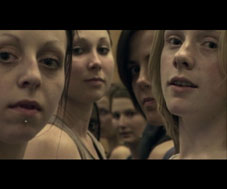
In the works of Miranda Pennell, minor everyday activities are transformed into fascinating choreographies. In fact, she was not trained as a filmmaker or audiovisual artist, but rather as a dancer. She usually points her camera at 'ordinary' people in their own habitat and in this way analyses the various facets and meanings of movement. In "You Made Me Love You", the rules of the game are simple; a camera moves unexpectedly, quickly or slowly, backwards and forwards along a rail. A troupe of ballet dancers strives to make or keep eye contact with the camera. Only a few faces are continually on screen. Sometimes other dancers manage to steal the limelight for a moment. The rapid footwork, which sometimes can hardly keep up with the camera, is the only audible sound. A true struggle for attention is taking place on the dance floor. Because woe betide you if you end up off screen and sink into oblivion! With "You Made Me Love You", this artist presents us with an allegory of the present-day fixation on cameras and stardom.
Miranda Pennell
You Made Me Love You
Experimental video | dv | color | 3:0 | United Kingdom | 2005
In the works of Miranda Pennell, minor everyday activities are transformed into fascinating choreographies. In fact, she was not trained as a film maker or audiovisual artist, but rather as a dancer. She usually points her camera at ?ordinary? people in their own habitat and in this way analyses the various facets and meanings of movement. In You Made Me Love You, the rules of the game are simple; a camera moves unexpectedly, quickly or slowly, backwards and forwards along a rail. A troupe of ballet dancers strives to make or keep eye contact with the camera. Only a few faces are continually on screen. Sometimes other dancers manage to steal the limelight for a moment. The rapid footwork, which sometimes can hardly keep up with the camera, is the only audible sound. A true struggle for attention is taking place on the dance floor. Because woe betide you if you end up off screen and sink into oblivion! With You Made Me Love You, this artist presents us with an allegory on the present-day fixation on cameras and stardom.