Catalogue > Search
Results for : Tout le catalogue
Benjamin Ramírez Pérez
A Fire in My Brain That Separates Us
Experimental film | hdv | color | 17:10 | Germany | 2015
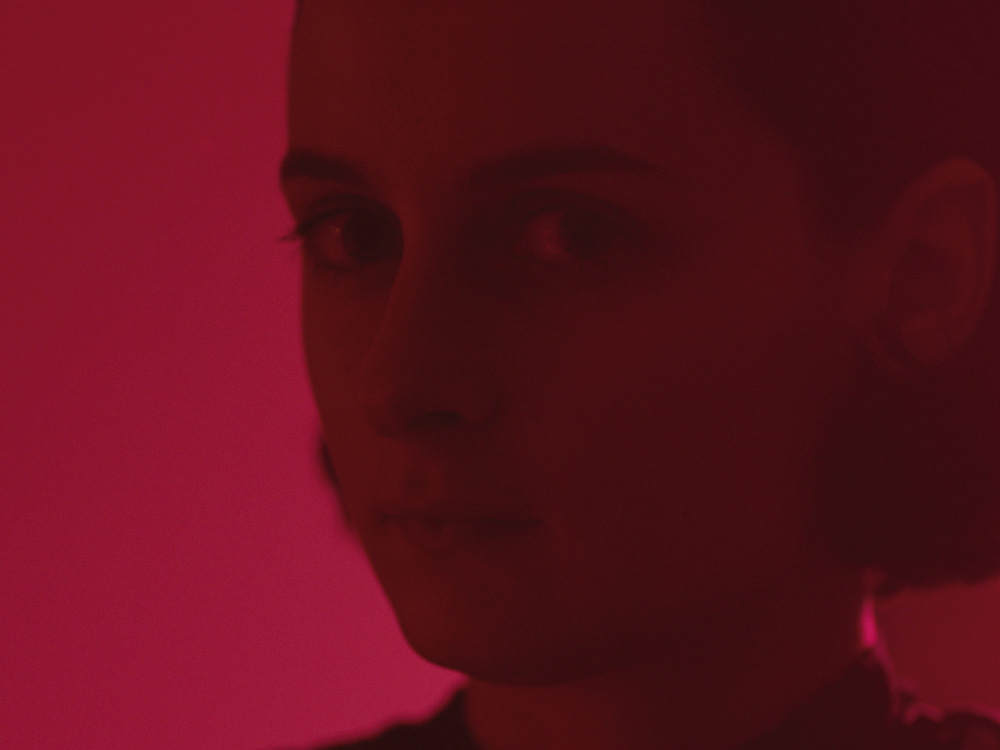
In an initially deserted room objects slowly begin to move; they are manipulated from the off-screen space, being pulled and dragged by strings, cables or the carpet. Thus a ‘ghostly’ choreography emerges, with the objects taking on a life of their own, vanishing and reappearing. The control of these processes from the off-screen is made visible, by showing the strings attached to the objects as well as parts of the acting persons on the edge of the frame. This is accompanied by superimposed subtitles, which consist of a collage of existing film dialogue: Lines from the sub-genre of ‘gaslighting’ films are combined, taking the eponymous Gaslight (1944) as a starting point. A text assemblage on seduction and betrayal unfolds. At the same time the ambient lighting of the room gradually becomes increasingly colored, reaching an almost excessive saturation point as off- and on-screen space become reversed and a muffled pop music penetrates the room. A kind of karaoke video comes into being with the music – like many elements of the film – taking on the notion of a copy of something vaguely familiar.
Benjamin Ramírez Pérez, born in Hutthurm, Germany. Lives and works in Cologne. Studied at the Academy of Media Arts Cologne from 2009–2015. His works have been screened at Locarno, Edinburgh and Toronto International Film Festival, among others. In 2013, he was awarded the Prize of the German Federal Association of Film Journalists for Best Experimental Short. In 2015, he received the Chargesheimer Scholarship for Media Arts by the City of Cologne.
Benjamin Ramírez Pérez
Body Snatcher
Experimental film | 16mm | color | 17:18 | Germany | 2016
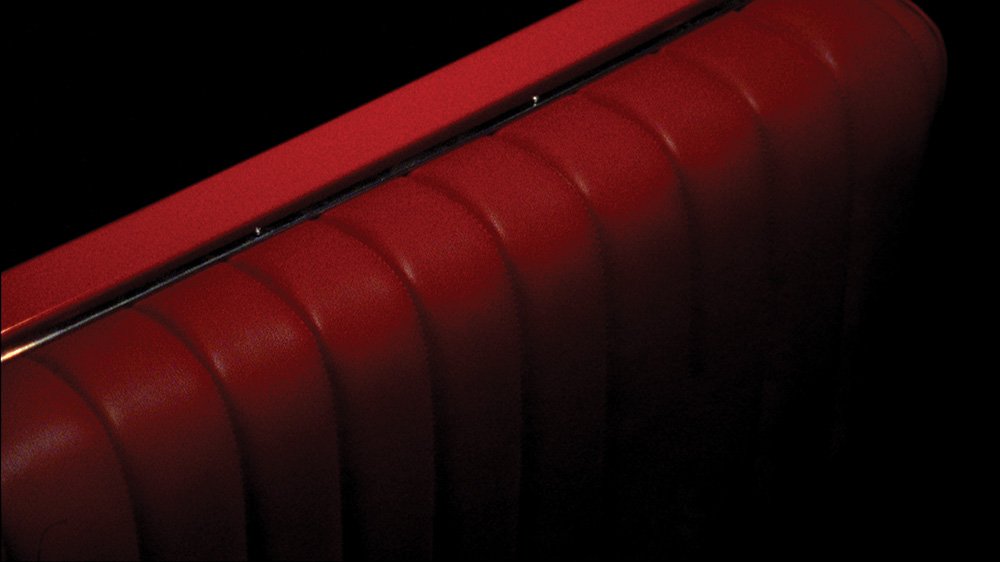
Body Snatcher conflates new 16mm material and found footage from Barbara Loden‘s film Wanda (1970) into an abstract narrative. Loden‘s film shows a character that seemingly passively navigates the world, but at the same time fights for her own identity and challenges social norms through her refusal to function as expected: „Life is a mistery to her. She doesn’t know what she wants but she knows what she doesn’t want.“ Taking fragments of the film as a starting point, objects, props and surfaces from the film were recreated, visually isolated and filmed anew. In a kind of vacuum, an abstract and associative narration touching on emptiness, failure, and identity construction slowly unfolds. A sort of parasitic science fiction remake of Wanda emerges - a layer of meaning that lies behind the film‘s plot and surface is imagined and constructed, positioning disparate elements in relation to each other and forging connections between them.
Benjamin Ramírez Pérez lives and works in Amsterdam. He studied at the Academy of Media Arts Cologne from 2009 - 2015. He was awarded the German Film Critics’ Prize for Best Experimental Short in 2013. In 2015, he received the Chargesheimer Scholarship for Media Arts of the City of Cologne. Currently, he is a participant at De Ateliers in Amsterdam (2016 – 2018).
Benjamin Ramírez Pérez
Summer Heat an Early Frost
Experimental doc. | 16mm | color | 13:45 | Canada, Germany | 2021
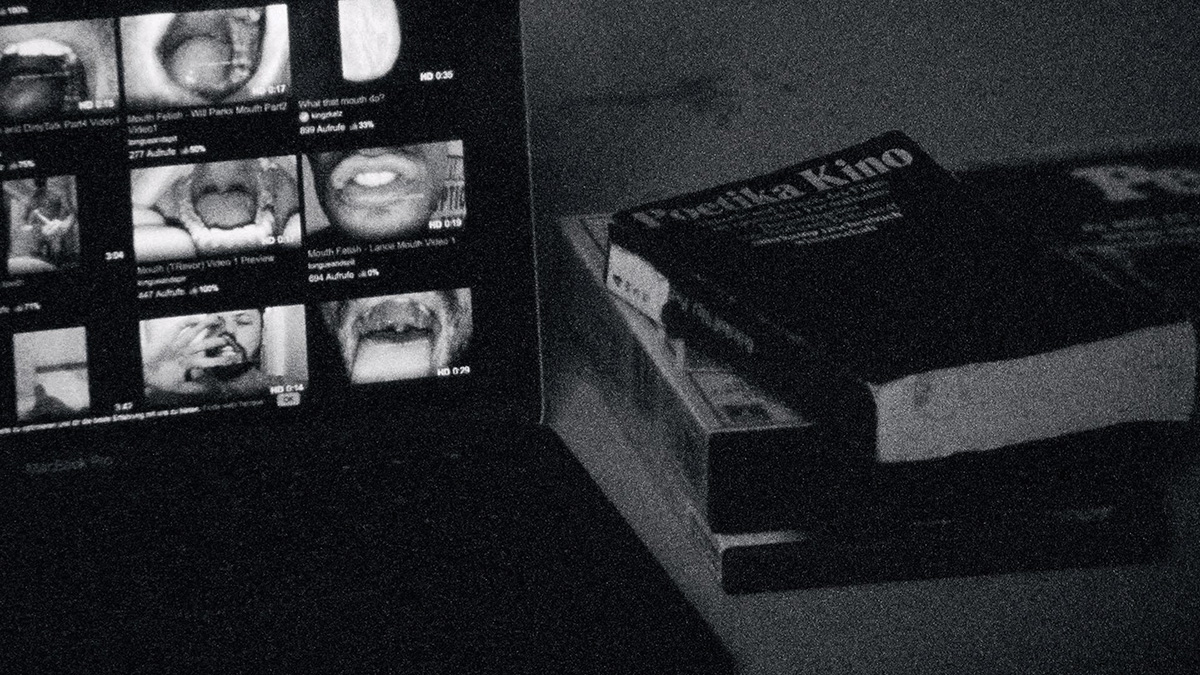
Created based on research conducted during a 2018 residency at LIFT (Liaison of Independent Filmmakers of Toronto), SUMMER HEAT AN EARLY FROST combines the narrative structures of film, documentation, photography, cinematographic staging, and interview into a collage on the organizational principles of our perception. Similar to a stream of consciousness formed of constantly expanding recordings that proceed as the common denominator between a partially sensory, partially mechanically narrative voice and a screen text that fluctuates in intervals between narration, commentary, and subtitle, the image flow comprises a number of visual resources: arranged rhythmically behind an archival setup of vintage pornographic magazines from the University of Toronto’s Sexual Representation Collection, the marked text passages on film theory are taken from a collection of essays by Russian formalists. A multi-layered and narrative complement is present in the form of excerpts from “An Early Frost” (1985)—the first mainstream TV feature film to address the emerging public, social, and political crisis surrounding the spread of HIV/AIDS as part of the everyday life of a US family. Quietly and with an almost static austerity, set pieces from early silent films of the 1920s such as those from Jean Epstein and Dziga Vertov are superimposed across from sexually fetishized sequences of self-produced montages from tooth and mouth recordings, only to be expanded upon in the form of a new cut expounding on the pornographic industry’s digital infrastructure. Massed like a cluster of findings from a multimedia, multi-thematic search for the internal logics of filmic and documentary mechanisms of production and affect—whose focus potentially also stretches to include the representation and repression of queer desire, longing, and craving—the montage opens up a different access to images and their language; a language whose essence is concealed in the multiplicity of the information gathered and which, transferred via data-mining technology into the artistic process of the film, facilitates the recognition of patterns of regularity and of hidden interrelations.
Benjamin Ramirez Perez, is visual artist working primarily with film, video and installation based in Cologne, Germany. He was a participant at De Ateliers Amsterdam from 2016-2018 and studied at the Academy of Media Arts Cologne from 2009–2015 with Julia Scher, Phil Collins and Matthias Mueller. His works have been screened at IFFR Rotterdam, Locarno, Edinburgh and Toronto International Film Festival, as well as Julia Stoschek Collection Du?sseldorf, Kurzfilmtage Oberhausen and Visions du Réel Nyon among others. He had group and solo exhibitions at Artothek Cologne, Kunstmuseum Bonn, Museum of Contemporary Art Belgrade, de Ateliers Amsterdam, Gallery Markus Luettgen Duesseldorf, and more. In 2015 he was awarded the Chargesheimer Scholarship for Media Art by the City of Cologne and in 2013 he received the Prize of the German Association for Film Journalists.

Benjamin Ramírez Pérez
Despair
Experimental film | 16mm | color | 21:50 | Germany | 2019
DESPAIR works with cinematic reenactments, which are connected in an associative collage-like layering into an experimental film, taking Rainer Werner Fassbinder’s film of the same title from 1977 as its starting point. Drawing on and digressing from various complementary sources such as Fassbinder’s contribution to "Germany in Autumn", David Cronenberg’s "Dead Ringers", the 1970s "Mission Impossible" TV-series as well as cel-animation, the theme of the cinematic double is explored and questions of identity, identification and alienation are raised alongside an inquiry into the political and cultural legacies of the German Autumn.
Benjamin Ramírez Pérez (*1988, Germany) lives and works in Cologne. He studied at the Academy of Media Arts Cologne from 2009–2015. He undertook the residency programme at de Ateliers from 2016 - 2018. His works have been screened at Locarno, Edinburgh, Toronto and Rotterdam International Film Festival, among others. He had recent Group and Solo shows at Artothek Cologne, Kunsthalle Recklinghausen, Kunstmuseum Bonn, Museum of Contemporary Art Belgrade and Alternative Space LOOP, Seoul.
Marco Raparelli
Abandoned Dog
Animation | dv | color | 4:31 | Italy | 2008
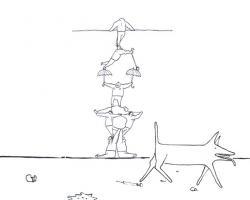
Title Abandoned Dog - 2008 Animation 4 minutes 20 seconds Narration is the principal characteristic of Marco Raparelli`s animations. Nevertheless, it is not a point of departure, but rather the consequence of a deviation of themes that are evoked by sensations transmitted from other images or drawings. The animations are free and extemporaneous deviations of images, which connect to each other to create infinite microcosms. Raparelli?s most recent animation tells the story of an abandoned dog who, while walking towards the sea, encounters different adventures, friends and nemeses and faces manifold abstract situations. The video functions as a sort of metaphor for life in which the dog plays the protagonist. He is an outcast who must cope with how to survive each impending new day. The video?s soundtrack consists of a piano score by Cosme McMoon. In the 1940s McMoon often accompanied the American soprano singer Florence Foster Jenkins, a rich heiress who, while having mediocre melodious qualities, was able to perform thanks to being very wealthy. Both McMoon and Foster Jenkins were anthropological phenomena and their absurdist songs serve as an appropriate soundtrack to the video?s images.
Biography Marco Raparelli was born in Rome on 12 July 1975. He graduated at the Accademia di Belle Arti di Roma and studied animation at the College of Art of Loughborough, London. He collaborated to the satiric weekly magazine ?Cuore?, and afterwards worked for a period of time as author of comics. In his artist practice he employs drawing painting and stop-motion animation. He has exibited widely. Group show include ?Emporio? Via Farini(2001) Milan, ?Lavori in corso? curated by Roberto Pinto (2002) Milan, ?3500 cm? Rialto S.Ambrogio, Rome curated by Lorenzo Benedetti, Grand1th:Cult media ?Bastart contemporary, Bratislava (2006) , "Clearly Invisible", Consulta - Centre d`Art Santa Monica, Barcelona, (2007) curated by Filipa Ramos, ?Animotion? Gallery F15, Moss Norway curated by Bjorn Hegardt(2007), New Entry Careof Milan curated by Chiara Agnello, Opla video animation from Italy Galerie Vanessa Quang Paris, curated by Raffaele Gavarro , Screening Haunch of Venison London, A,B,C,D,M,N,Z. Fondazione Bevilacqua La Masa Venice curated by Chiara Agnello, One of these things is not like the other thing, Gallery unosunove Rome curated by Raimundas Malasauskas, Sarah?s Journey Section of the 7th Bulgarian Biennal of Contemporary Art in Varna, Bulgaria , curated by Lorenzo Bruni. Solo show include "Pina ti amo Catania", Gallery Ugo Ferranti, Roma (2005), ?As a drop of water on a K-way?, Careof, Milan (2007) ?As. A drop of water on a K-way? Uqbar Berlin Curated by Marina Sorbello.. His book As a drop of water on a k-way is editing by fine arts unternehmen books. His next solo show will take a place in january 2009, in Umberto di Marino Gallery, Naples.
Marco Raparelli
Ristorante Italia
Animation | dv | color | 4:36 | Italy | 2007
Narration is the principle characteristic in the video animations of Raparelli. However, rather than a point of departure, it is the consequence of a deviation of themes that are represented by very precise images and drawings which transmit or evoke sensations. The narrative is a free and extemporaneous deviation on an image that connects to others to create infinite micro-worlds. Ristorante Italia ? 2007 animation 4 minutes 36 seconds A sometimes unexpected, sometimes forboding, chain of events take place inside a dive restaurant. The viewer is eyewitness to the occurance of the restaurant?s normal working and other activities that occur without beginning or end. Only the eventual arrival of evening suggests possibile relief or a truce.
Marco Raparelli was born in Rome on 12 July 1975. He graduated at the Accademia di Belle Arti di Roma and studied animation at the College of Art of Loughborough, London. He collaborated to the satiric weekly magazine ?Cuore?, and afterwards worked for a period of time as author of comics. In his artist practice he employs drawing painting and stop-motion animation. He has exibited widely. Group show include ?Emporio? Via Farini(2001) Milan, ?Lavori in corso? curated by Roberto Pinto (2002) Milan, ?3500 cm? Rialto S.Ambrogio, Rome curated by Lorenzo Benedetti, Grand1th:Cult media ?Bastart contemporary, Bratislava (2006) , "Clearly Invisible", Consulta - Centre d`Art Santa Monica, Barcelona, (2007)curated by Filipa Ramos, ?Animotion? Gallery F15, Moss Norway curated by Bjorn Hegardt(2007), New Entry CareOf Milan curated by Chiara Agnello. Solo show include : ?Pina ti amo Catania? gallery Ugo Ferranti Rome, ?Restroom and other stories? gallery Sergio Tossi Firenze Curated by Raffaele Gavarro, ?As a drop of water on a K-way? Careof Milan, project with Norberto Dalmata and Scintilla Robina.

Paulo Raposo
Verbatim
Experimental video | dv | color | 2:0 | Portugal | 2005
`verbatim` A adjective 1 direct, verbatim in precisely the same words used by a writer or speaker; "a direct quotation"; "repeated their dialog verbatim" B adverb 1 verbatim, word_for_word using exactly the same words; "he repeated her remarks verbatim" `verbatim` is based in a Maurice Blanchot short text, "la folie du Jour".
Paulo Raposo is a sound and media artist based in Lisbon, Portugal. Born in 1967, after studies of philosophy and cinema in Lisbon, he has been working in the medium of live electronic and computer sound, performing, recording and exhibiting works in France, Germany, UK, Spain, Italy, Netherlands, Portugal, Baltic States and United States. His work explores the inter-relationships and displacements between digital process and architectural spaces, using computer and custom-built software to create abstract and delicate soundscapes. Since the late nineties, he started also exploring intersections between sound and image taking advantage of the digital medium real-time possibilities, both in solo performances and collaborative work. He has "composed" moving images to several media: instalations, dance, performance, theatre and intermedia projects. Raposo performed and colaborated with numerous artists, including Janek Schaefer, Jason Kahn, Kaffe Mathews, Marc Behrens, Jgrzinich, Zbigniew Karkowski, Matt Rogalski, Carlos Santos, Carlos Zíngaro, Christopher Murphy, Koji Asano, Sara Kolster, among others.
Oday Rasheed
Underexposure
Fiction | 35mm | color | 67:0 | Iraq | 2004
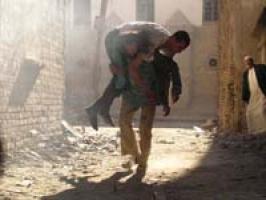
"Underexposure, a title that refers not only to the outdated film stock that was used to make the film, but also to the generation of Iraqis that have been isolated from the world for decades, takes an unprecedented, uncensored look into the lives, hearts, and minds of those living in Iraq during the tumultuous days after the fall of Saddam. Director Oday Rasheed has created a vivid world set against a real backdrop of war and upheaval. Friends, lovers, strangers and family members are woven together by the complexities of their new reality. The past is only a moment behind them, with the presence of death a constant companion into the future. Maysoun, the object of her brother and lover`s affections, finds solace in her sexuality. Hassan finds comfort in the belief that his films will outlive the cancer taking over his body. Homeless and alone with only his sacks of brightly colored rags, Nassir experiences his first taste of companionship and responsibility with the discovery of a dying Iraqi soldier. The first feature length film shot on location in Baghdad after the war, Underexposure blends reality and fiction to create a lyrical and textured work that captures the dizzying atmosphere of life during war and fiercely illuminates a part of the world long left in the dark."
Elise Rasmussen
A Poetic Truth in a Pathetic Fallacy
Experimental doc. | hdv | color | 16:0 | Canada, South Africa | 2017
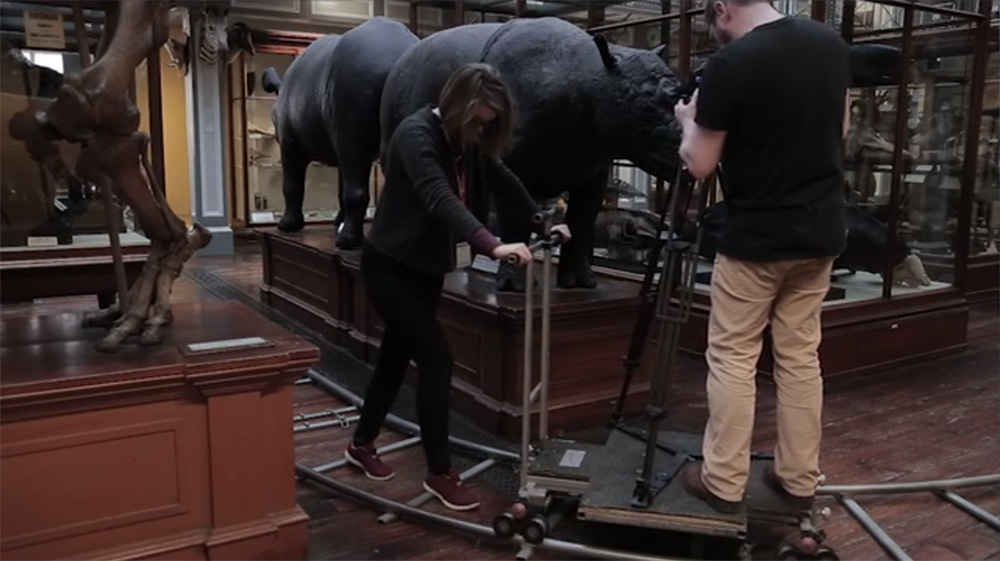
A Poetic Truth in a Pathetic Fallacy considers ways in which human-kind has been fascinated by and has misinterpreted the rhinoceros, exploring the urgency to keep this genus from extinction while considering the lingering effects of colonialism and collection. Over the past decade the trafficking of rhino horns has gained popularity and both poaching and theft of vintage horns has risen dramatically. Horns were traditionally used in Eastern medicine and although scientists have concluded they have no health benefit, this has not dissuaded the market and its value has risen due to its newfound status as a luxury good. This is not the first time that the rhino has been misconstrued. In 1515 Albrecht Dürer created his famous woodcut based off of a written description of the rhinoceros. Although grossly inaccurate, his artwork served as the prototype for future depictions of rhinos up until the mid-19th century. In South Africa today, the lingering effects of colonialism and apartheid are at the root of poaching. In the male-dominated industry of wildlife protection, the Black Mambas [all female] Anti-Poaching Unit has been gaining international recognition for their efforts. Although beloved by the media, the Mambas risk their lives and struggle to support their families while protecting the wildlife that serves the interests of white landowners. This project is a multi-layered investigation into the link between globalization and extinction, using the poaching of the rhinoceros and its horn to speak about the relationship between bodies, labor, desire and the contested territory of representation.
Elise Rasmussen (born 1977, Edmonton, Canada; resides in Brooklyn, NY) is a research-based artist working in photography, video and performance. Her work has been exhibited, performed and screened at international venues including the Brooklyn Museum (NY), the Irish Museum of Modern Art (Dublin), CCS Bard Hessel Museum (Annandale-on-Hudson), Night Gallery (LA), Pioneer Works (NY), and Erin Stump Projects (Toronto). Elise received her MFA from the School of the Art Institute of Chicago on a Merit Scholarship (2007) and is a 2017-2018 artist in residence at LMCC’s Workspace program in Manhattan.
Birgit Rathsmann
White Out
Art vidéo | dv | color | 3:15 | Germany, USA | 2006
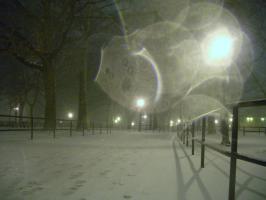
WHITE OUT: Single channel animation with digital stills, 02:32 min., 2005 A minimalist experiment in which digital stills of a nighttime encounter emulate a film noir in a Brooklyn park, slowly adding up to a digital blizzard until the frame is filled with white.
Birgit Rathsmann has received grants from NYSCA, the Illinois State Arts Council, Columbia College, the MacDowell Colony, the Skowhegan School of Painting and Sculpture and the Atlantic Art Center. Her video works have won awards at South by Southwest Film Fest, Palm Springs Film Fest, Telluride IndieFest, Raindance and have screened at numerous international film festivals and venues. Her video installations could be seen at the Bemis Center, Omaha and in Kamiyama, Japan. She teaches digital animation at New York University, NY and lives in Brooklyn, NY.
Miguel Rato
Meeting Point
Experimental doc. | hdv | color | 10:4 | Portugal | 2014
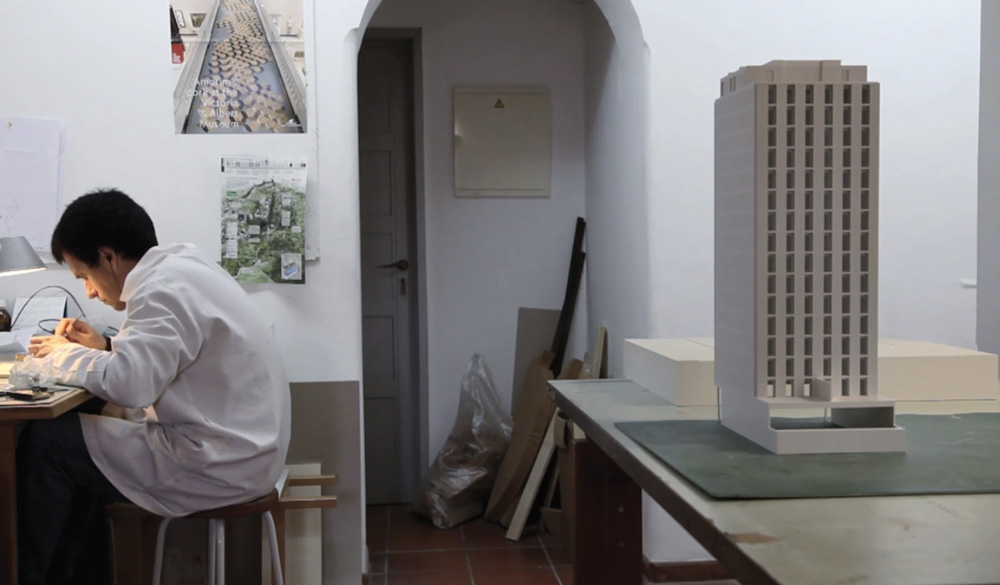
The imagined city as a simulation takes over the real one. Desire and reality meet creating a new space with its own rules. Ever sprawling suburban areas, anonymous landscapes generated by computers, places with no memory, landmarks, residential projects. Staged scenery for action to take place. Mostly filmed in London, Meeting Point is a study of urban space and of its representations, the virtuality of contemporary public space and landscape.
Miguel Rato (1986, Lisbon) studied Sound and Image at ESAD Arts and Design School (Portugal) and Documentary Film at London College of Communication, University of the Arts London. His film and photography work has been exhibited in the United Kingdom, Peru, United States, Spain, Canada, Holland and Portugal.

Nassif Rawane
Sokun Al Sulhufat (Turtles Are Always Home)
Experimental doc. | hdv | color | 11:39 | Lebanon | 2016
I left Lebanon in 2006. For the past 10 years I lived in 7 countries, 10 cities, and 21 homes. I slept in 21 beds, cooked in 21 kitchens, cleaned 21 bathrooms, wrote on 21 desks and locked 21 doors behind me. I packed all of my life into two suitcases and a backpack. The rest stayed behind. Somebody somewhere uses my bed, somebody somewhere has my shoes, somebody somewhere maybe remembers me in those fragmented traces of mine. I was there. But now I am here. In Qatar. In a fake Venice with colorful houses. Houses have memories too. They hide them under their windowsills, tuck them in layers of paint and sometimes whisper them to birds passing by. I wonder whose memories will these houses keep. I live here but I am unable to leave a trace. I try to attach myself to the walls, dirty them, mark them… but I fail. They are constantly cleaned, watched and protected. I caress them instead. And I film them, lest I forget. Home is where the heart is, they say. I disagree. My heart is everywhere. It left with the music. Like a turtle, I am always home.
Rawane Nassif is a Lebanese/Canadian filmmaker and anthropologist. She works in research and films often addressing subjects such as space, traditions, identities, displacement and memory. Rawane has directed social documentaries and wrote a book on the politics of memory in Lebanon, worked with immigrants and indigenous people in Canada, conducted visual research on nomadic traditions in Kyrgyzstan, taught anthropological courses in Tajikistan, wrote children’s books based on oral histories in Honduras and worked as a film researcher with the Doha Film Institute and the National Museum of Qatar. Her short film, “ Turtles are Always Home ” screened at numerous film festivals including the Berlinale, AFI Docs, Toronto, Camden, and RIDM. She is currently completing a mentorship with the “ Masters in Experimental Cinema, Creative Documentaries, and Video Creation ” Program at the Transforming Arts Institute in Madrid.
Mohd Naguib Razak
Glass enclosure: Tokyo invisible
Experimental doc. | dv | color | 80:0 | Malaysia | 2005
like a recurring dream, the writer wakes up again and again in a glass enclosure. he looks down below. watches the stream of tiny people streaming here and there. watching nature call on him, come and go. is this his glass enclosure? is that theirs? and when dusk sets. so do his emotions. descending. and rising. hoping. wishing. hearing. listening. this city. this great big city. tokyo. toh-kyoh. he doesn`t know what he's doing here. cannot remember if it was a good idea or a bad idea that brought him here. it isn't funny to be lost and lonely in tokyo. he thinks. then voices come to him. they tell of loneliness, despair, quiet desperation. nothing lost in translation, their loneliness echos loud and clear. the same loneliness that strangulates his soul. still the voices come. and then some linger. some speak of hope. of change. of unexpected kindness. relenting. the writer relents. surrenders. until what remains is just...
Mohd Naguib Razak is a writer, director, and producer. He began his working career as an advertising copywriter-cum-occasional magazine writer, whilst moonlighting in all manner of underground creative work, from poetry writing to graphic novel composition, from improvised street performance to experimental jazz theatre, before finally settling for a career in film and television. Even then, he couldn?t decide whether to become a writer, director or a producer. After 4 years of service as a Television Producer, Director and Scriptwriter/Editor in ASTRO, Malaysia?s leading satellite broadcast network company, and a spell as Feature Film Writer in Astro Shaw, he decided to move on to seek out new challenges. A small experimental documentary film called "Anak Duyung" (Child of Mermaid) took him to the Yamagata International Documentary Film Festival in 1999, and this experience opened him up to the wonderful world of the documentary film form. In 2001, he made a significant commercial breakthrough when he was chosen and commissioned to write, produce and direct a documentary film for Discovery Channel. The resulting film, entitled "The Boat-Maker and The Sea", was eventually broadcasted to some 80 million households across Asia, and subsequently awarded Best Documentary Film at the Malaysian Film Festival 2003. All this culminated with a six-month stay in Japan in 2002 as an artist-in-residence under the auspices of The Japan Foundation Fellowship (Invitation) Program. It was during this stay that he conceived and shot "Glass Enclosure: Tokyo Invisible", a feature-length documentary film that has competed in three International Competitions ? at the 4th Taiwan International Documentary Festival 2004, the 10th It?s All True ? International Documentary Film Festival 2005 in Sao Paulo and Rio de Janeiro, and the 2nd Documenta Madrid International Documentary Film Festival 2005. In 2005, he briefly served as a Senior Executive for Television in the Programme Department of the Asia-Pacific Broadcasting Union (ABU) in Kuala Lumpur. Whilst there, he was responsible for organizing and co-ordinating various international co-productions, programme exchanges as well as the ABU Prizes television & radio awards. He is now bound for Japan under the auspices of Nippon Foundation?s Fellowship for Asian Public Intellectuals (API) and will be based in Tokyo for one year to research and produce a documentary film relating to the theme, "Spirituality in Japan?s Material Utopia".
Maria-leena Räihälä
untitled
Animation | | black and white | 4:0 | Finland, Germany | 2006
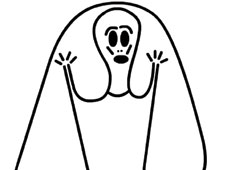
The artist presents ten minimalist flash-animated drawings, trying to respect the original handmade ones. Together they build a series, but every small loop definitely has its own story: 001 is a female figure trying to fly out of his monitor 002 is a another female with a ghost in her head 003 in this third one she is trying to find a balance for her hat (or maybe better: her head) while her hands are only sticks 004 is a morning bird living in a spruce 005 is a female figure from the series "flirting with flowers". Her head is communicating with... 006 ...basil, which the artist saw last spring growing in his garden. He had the feeling that while coming trough the earth they were like small babies opening their mouths, hungry for life 007 is a girl who merges with her chair so that she looks like a strange animal (the artist thinks it might just be him sitting too much at home) 008 is the only male figure, he is called Boxer. He has a very sad end by a brave young woman 009 is a very angry young woman 010 is called "blähungen" (flatulence). These animations have a very simple self-made sound in the background (even some stolen pieces from Finnish folk-songs were used as a loop).
Maria-Leena Räihälä was born on July 16, 1964. After her art studies at the "Nordic Art School" (Kokkola, Finland 1984-87) she moved to Berlin and hit the underground art scene (e.g. her exhibition "Electric Angel" at the Fischbüro in 1988). The beginning techno movement both fascinated and inspired her. In the early 90s, for example, she made a lot of exhibitions at the legendary club "Ständige Vertretung". That brought her to experiments with electric pictures and multimedia installations with projections and huge photocopies of her drawings fitted perfectly with the music of the best DJs in the city. The base of her work was and continues to be drawings. For their digital versions Flash is still her favourite program no.2. Beside these she works with computer prints and large photocopies in order to produce room-filling installations. An example for this is last summer's "Morgenvogelstation", a sort of an audio-visual Gesamtkunstwerk. Huge prints of her drawings went together with pictures of historical bird song transcriptions by Heinz Thiessen (1887-1971). At the same time you could hear bird recordings by Veikko Neuvonen (Finland 1997). Eventually there were several concerts by the Berlin experimental group The RotTT under the name of "The Birds, Too". They played with all sorts of bird sounds and wore bird masks, which the artist had tailored for them. A select list where her exhibitions have been held includes: 2006 - Multimedia Happening, Berlin; Joint Exhibition, Neues Problem, Berlin 2005 - L.O.F.T, Berlin; Neues Problem, Berlin; Joint Exhibition, Gutleut 15 Ausstellungsraum, Frankfurt/Main, and Glue, Berlin; Joint Exhibition, 'Nothing except drawings Vol.2', QUARTAIR, Den Haag 2. Berliner Kunstsalon, Berlin 2004 - Joint Exhibition,Haus am Lützowplatz, Studiogalerie, Berlin; Joint Exhibition, Gallery Christa Burger, München; Hinterconti Gallery, Hamburg 2003 - Joint Exhibition, Neues Problem Gallery, Berlin 2002 - Emil Bock Institut, Berlin 2000 - Joint Exhibition, Pussy Galore, Berlin; Joint Exhibition, Neues Problem Gallery, Berlin 1999 - Joint Exhibition, Berlin Brandenburg Exhibition, Radio-Berlin 1998 - Haus am Lützowplatz, Studiogalerie, Berlin; Fruchtig Gallery, Frankfurt am Main; Walden Gallery, Berlin 1997 - Congress for Performance and Visual Art, Berlin 1995 - HTC Gallery, Berlin; Installation at Friseur, Berlin 1989 - Vanhan Galleria, Culture-Center, Helsinki, Finland; Kunsthaus Tacheles, Berlin 1988 - SoToDo Gallery, Berlin; Vincenz Scala Gallery, Berlin
Marc Rees, Neil DAVIES
Comfort Zone
Performance | 0 | | 60:0 | United Kingdom | 2006
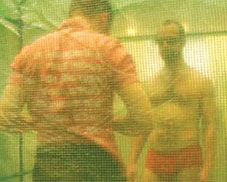
Two men enclosed in a small, cheap plastic, transparent green house, sealed off from their surroundings, in their own private, soft, and temporary, architecture. They stand on a bed of their own jumbled clothes, in turn repeatedly dressing and undressing, methodically until their breath steams up the see-through walls and their clothes become soaked with their married sweat. "They are standing less than a body length apart. What lies between them, apart from enough outfits to clothe a whole dance floor of men? Imagine a pulsing disco dance beat. Imagine dancing exactly this far apart all night. Imagine holding onto that personal/erotic space measurement of all that lies between us. Imagine if we never broke that magic volume of air to clasp arms, lock shoulders and wrestle briefly, naked from the waist down, sleeves rolled and hoods up, heads bent slightly but furiously into each other."
Marc Rees is one of Wales' leading exponents of contemporary performance and installation. His innovative interdisciplinary artworks are known for their flamboyant, humorous, and often extreme interpretations of history, culture, and personal experience. He has lived and worked in Amsterdam, Montreal, and Berlin, and under his company R.I.P.E has initiated several highly successful artistic alliances with furniture designers, film makers, authors, composers, and choreographers across Europe and North America. In addition to working with some of Britain's foremost physical theatre companies (Brith Gof, Earthfall, and DV8) and Germany's premiere choreographers (Angela Guerreiro, Thomas Lehmen, and Tanz Compagnie Rubato), his own extensive body of work includes the solo stage works "Iddo Ef"/"Caligula Disco", the award winning installation/performances "The House Project", "RevolUn", "Shed*light", and the BBC film "A Very Gladys Night". His most recent international commissions were the site specific events, Shed*light: "Norman Behaviour" for ARCO 05, Madrid ,"Adagietto Ara Deg" for the 51st Venice Biennale 2005, "Vaseline Machine" for VERBO, Galeria Vermehlo, Sao Paulo 2006, and "S x 3", SINOPALE, Turkey 2006.
Jeremie Reichenbach
La mort de la gazelle
Documentary | dv | color | 45:0 | France | 2009
North of Niger, somewhere on the borders of Sahara, hundreds of rebels of the MNJ movement, mainly Tuareg young men barely grown-up are ready to go to war. Cut-off from the world, they live according to their own rules, their own codes, in harmony with the desert. The humor, the boredom, the beauty, the nonsense of the situations, the danger of weapons and the threat of an invisible enemy, this film explores the improbable everyday life of these young fighters. Morning gatherings, discussions around the tea to pass the time, days go by and time seems to stand still, to suddenly accelerate when danger arises.
JEREMIE REICHENBACH Born in Paris the 29/08/1975 Master of Cinema at the university Paris 8 supervised by J.L. Comolli. FILMOGRAPHY ABOU AND STARS OF the MANDE (52 min) HIBOU production 2007 - Distribution(Broadcasting) France O Mosaïque of the malian cultures, this film lands through the journey of Abou Kouyaté, the roles which occupy the traditional and modern musics in the malian society. NIAMEY, HOW?S WORK ? (26 min) HIBOU prod. On 2006 - Distribution(Broadcasting) FranceO Tuareg, Fulani, Zermas native of all the regions of Niger are now settling in the capital Niamey. TESHUMARA, THE GUITARS OF THE TUAREG REBELLION (50 min) HIBOUproduction 2005 The history of the Tuareg rebellion through the music and the testimonies of the members band Tinariwen. Distribution(broadcasting) Mezzo, Image +, FranceO, TV Catalunya ( Spain), SVT(LIFE SCIENCE) (Sweden). Grand Prix Sacem of the documentary
Mark Reid
Park sky split
Video | dv | color and b&w | 5:14 | Australia | 2010
Park Sky Split is a study of temporal abstraction and rhythmic structures in video. The film presents an ambiguous black and white image, fragmented into small sections and repeated in seemingly random sequences. Brief moments of repeated rhythms and patterns are quickly broken as the film traverses back and forth across the timescale of the original footage. The film is comprised of a single piece of footage, copied and superimposed upon itself at half speed. Using digital compositing, the differences between the two videos are manifested in the frame as light, while the areas that remain the same across both images are represented by darkness. As the film progresses and this difference becomes greater, the dark areas of the frame appear to tear, filling with light. The rhythmic repetition creates a tension with the audience`s expectations of temporality in film as linear, while investigating the possibilities of visual interpretations of time.
Mark Reid is a new media artist who lives and works in Melbourne, Australia. He completed a Bachelor of Fine Arts (Honours) majoring in Media Arts at RMIT University in 2010. In 2011, Mark is moving to the United Kingdom to further explore his current body of work, which focuses on studies of place in artists` video.
Patricia Reinhart
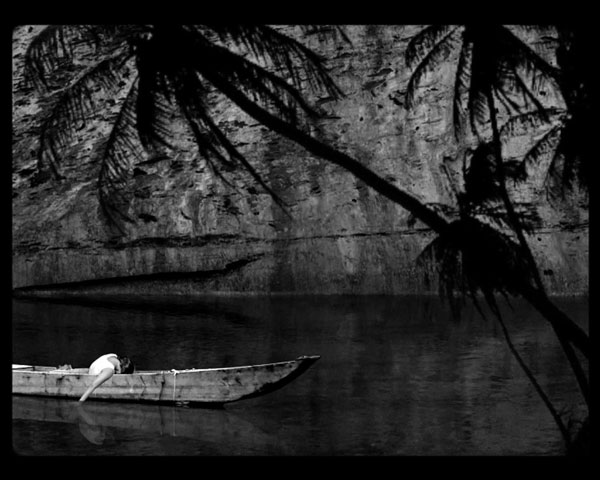
Ein Nachtstück
Video installation | | black and white | 5:10 | Austria | 2012
An end. Impasse. The ciné collages, 3 screenings parallel, only in black and white, without tone. The dialogue takes place between the individual scenes. By using different imaging sequences and lengths a new conflict, a new language, a new image is created. Ein Nachtstück is created in great detail from still photographs. Reinhart uses a technique to make her film loops which she has named ciné-collage. Multiple still photographs of characters and location details are collaged together in painterly layers and given just enough movement to provide a depth of colour and space. Architectural elements and public spaces of Paris are montaged together to present a destroyed, post-apocalyptic world. By using the bilateral symmetry of a building and its surroundings, or seen in the tradition of the Rorschach test, perspectives change. The world reflects itself, and seems to break and collapse. Patricia Reinhart created a world full of darkness, fear and the feeling of oppression. The disaster of the present has become an irrevocable reality. Lautréamont`s " Les Chants de Maldoror " and Max Ernst`s collages "Une semaine de Bonté" influenced Reinhart during the process of developing this work.
Patricia Reinhart studied painting at the Academy of Fine Arts in Vienna/AT and currently lives in Paris/FR. She has exhibited widely throughout Europe, including solo exhibitions at Gallery Lisa Ruyter/AT, Gallery Dana Charkasi/AT, marks blond project/CH, as well as public screenings at the beach in Venezuela and Spain. Her work has been shown in group exhibitions at Kunst im Tunnel/DE, Eglise Saint-Merry Paris/FR, Kerstin Engholm Gallery/AT, Essl Museum/AT and she also showed video work at Paris Nuit Blanche 2013. Works of her`s are included in many collections such as CCA Andratx/ES, Essl Museum/AT and Ursula Blickle Archiv - Kunsthalle Wien/AT.
Steve Reinke
Rib Gets In the Way
Documentary | hdv | color | 52:15 | Canada | 2014
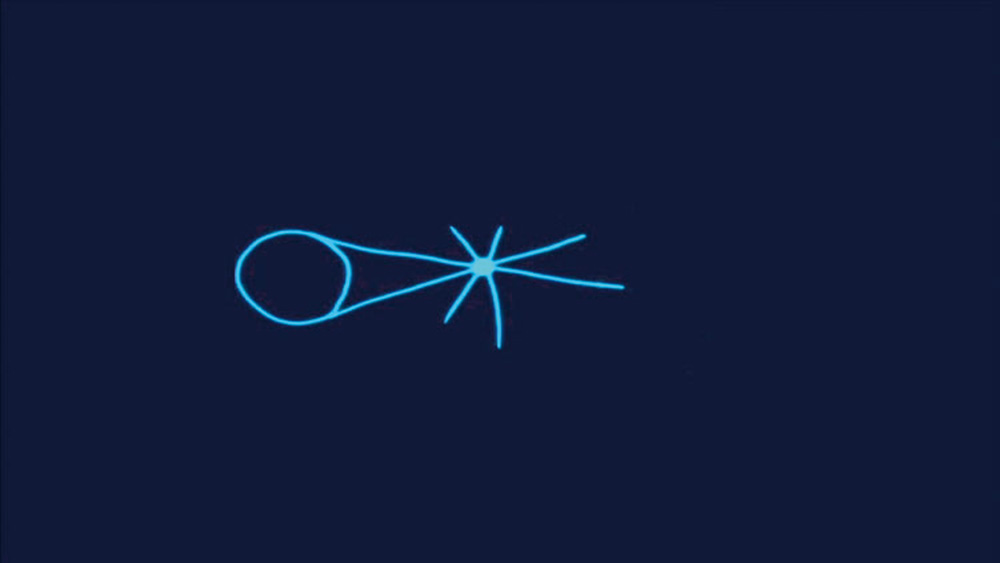
Rib Gets in the Way is narrated in the first person by Reinke and addresses mortality, the body, the archive, and the embodiment of a life’s work. The final and longest section of the video presents an animated children’s adaptation of Friedrich Nietzsche’s philosophical novel Thus Spoke Zarathustra (1883–85). The hand-drawn animations in this and earlier sections of the video are by Jessie Mott, a visual artist and writer whose work consistently engages a menagerie of human, animal, and celestial forms and with whom Reinke has collaborated on several previous videos.
Steve Reinke has long been lauded for his irreverent, philosophical, and often acerbic works, which typically adopt the form of personal essays to wryly bend and reread wide-ranging topics from pop culture to sex to theories of visual perception and beyond.
Remi
Auto_facing
Performance | 0 | | 25:0 | Austria | 2005
_________
______________
Zhu Renjie
Fare Thee Well
Fiction | mp4 | color | 25:0 | China | 2024
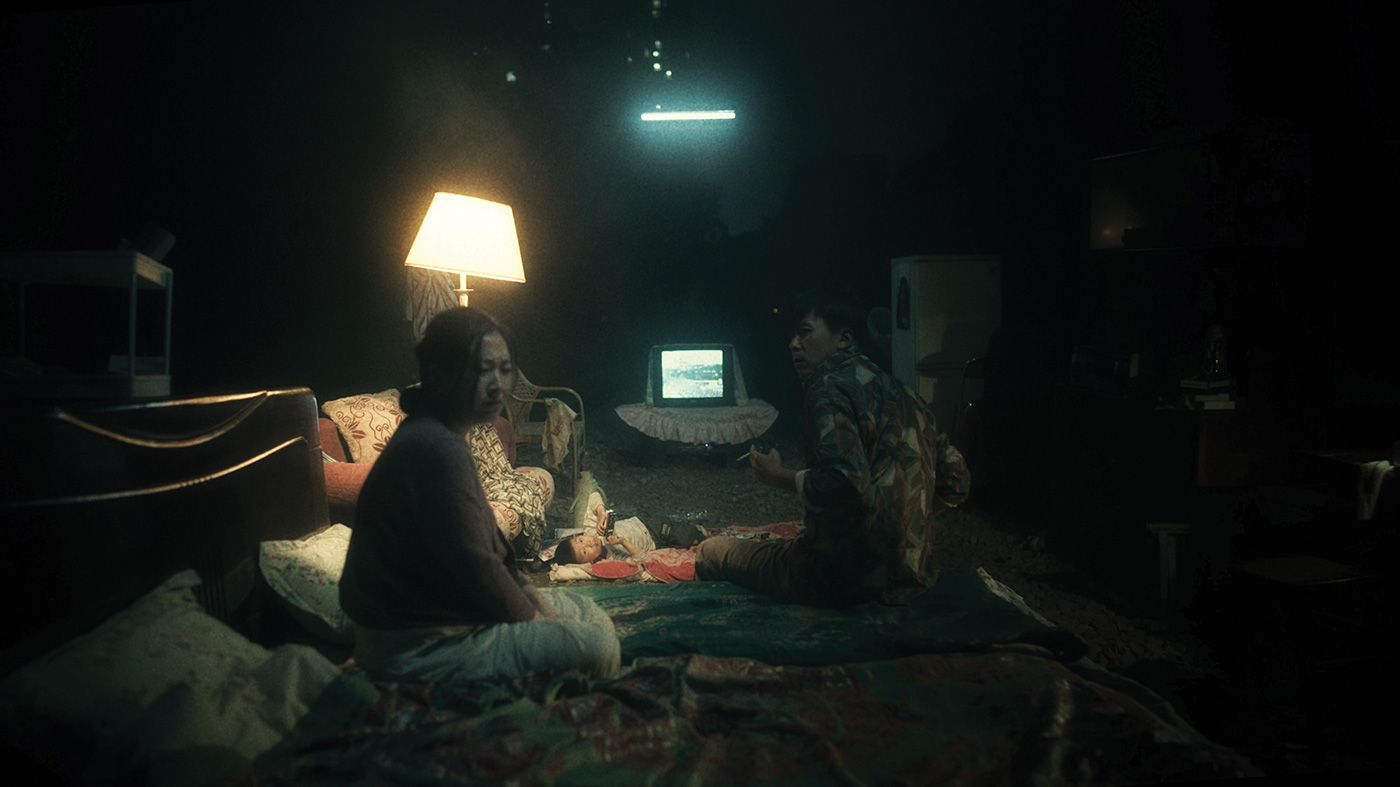
Under the butterfly effect triggered by the second wave of reform and opening up of China, a small family found itself caught in a continuous hurricane in life. Many years later, Yang Xiaolong received four letters from his long-unseen father. As a result, the textual clue of "country grows and family broke " unlocked the suppressed childhood memories within him...
Renjie ZHU, director and cinematographer, born in 1992, has lived in the ancient city of Anyang and the metropolis of Shenzhen due to family reasons since childhood. He currently resides in Hangzhou. He graduated from the China Academy of Art with both his bachelor's and master's degrees, and is currently pursuing a doctorate in film creation at the same institution. His work has won the New Wings Promotion Award in Golden Rooster Youth Short Film Season, and won the Qilin Outstanding short film in In Moment Film Festival, and has been selected for the Beijing International Short Film Festival and Light My Fire Youth Film Festival and so on.