Catalogue > Search
Results for : Tout le catalogue

Pere Portabella
Miró forja
Experimental doc. | 16mm | color and b&w | 24:0 | Spain | 1973
The film was conmissioned by the Galeria Maeght to commemorate the Joan Miró exhibit organized by the French Minsitry of Cultural Affairs in the Grand Palais in Paris that opened on May 17, 1974. The film, that took five days to shoot, shows the smelting and casting process of the work known as Puertas Mallorquinas by Joan Miró. The filming team travelled to the foundry owned by the Parellada family in Llinars de Munt. The bronze sculptures weigh 1200, 800 and 650 kilos respectively and were cast in one piece in a kiln specially constructed for the occasion.
Ever since the 1960s, Pere Portabella involved himself in the movements against the Franco dictatorship and in support of liberties. In 1977, he was elected senator in the first democratic elections, and took part in the drafting of the Spanish constitution (1978). Since 2001, he has chaired the Fundación Alternativas. Before working as a director, with Films 59, he produced some of the most emblematic spanish films: Los golfos (1959) by Carlos Saura, El cochecito (1960) by Marco Ferreri and Viridiana (1961) by Luis Buñuel wich provoked a scandal that obliged him to move to Italy. In 1964, he wrote the screenplay for Il momento della verità with Francesco Rosi. He began directing in 1967 with No compteu amb els dits followed by his first feature-length film, Nocturno 29 (1968). Vampir-Cuadeduc (1970) is a key work in his filmography, togheter with Umbracle (1972), represents a phase of radical rupture with the production of those years and marked him as one of the most original forces in underground and avantgarde cinema of the time. After Informe General of 1976 he only returned to directing in 1989, with Pont de Varsòvia. In 2001, his films became part of the collection of the Barcelona Museum of Contemporary Art (MACBA). In 2002, he was the only Spanish artist to be invited to Documenta 11 in Kassel. In 2008, the Museum of Modern Art of New York (MoMA) acquires a copy of Vampir-Cuadecuc and Die Stille vor Bach (2007).
Pere Portabella
Miró Tapís
Experimental doc. | 16mm | color and b&w | 22:0 | Spain | 1973
The film was commissioned by the Galeria Maeght for the Joan Miró exhibit organized by the French Ministry of Cultural Affairs in the Grand Palais in Paris that opened on May 17, 1974. The film was shot in six days in Montroig del Camp (the Miró country home) and in Tarragona during the process of elaboration of an original tapestry for eight months using 1200 kilos of wool and 600 kilos for the warp. The tapestry was 6 meters wide and 11 meters long and weighed a total of 3,500 kilos. A special loom had tobe built to weave it. The day the twin towers of the World Trade Center in New York were attacked, September 11, 2001, the tapestry was hanging in the hall of the one of the towers and was destroyed along with it.
Ever since the 1960s, Pere Portabella involved himself in the movements against the Franco dictatorship and in support of liberties. In 1977, he was elected senator in the first democratic elections, and took part in the drafting of the Spanish constitution (1978). Since 2001, he has chaired the Fundación Alternativas. Before working as a director, with Films 59, he produced some of the most emblematic spanish films: Los golfos (1959) by Carlos Saura, El cochecito (1960) by Marco Ferreri and Viridiana (1961) by Luis Buñuel wich provoked a scandal that obliged him to move to Italy. In 1964, he wrote the screenplay for Il momento della verità with Francesco Rosi. He began directing in 1967 with No compteu amb els dits followed by his first feature-length film, Nocturno 29 (1968). Vampir-Cuadeduc (1970) is a key work in his filmography, togheter with Umbracle (1972), represents a phase of radical rupture with the production of those years and marked him as one of the most original forces in underground and avantgarde cinema of the time. After Informe General of 1976 he only returned to directing in 1989, with Pont de Varsòvia. In 2001, his films became part of the collection of the Barcelona Museum of Contemporary Art (MACBA). In 2002, he was the only Spanish artist to be invited to Documenta 11 in Kassel. In 2008, the Museum of Modern Art of New York (MoMA) acquires a copy of Vampir-Cuadecuc and Die Stille vor Bach (2007).
Pere Portabella
Miró, Aides l?Espagne
Documentary | 16mm | black and white | 8:0 | Spain | 1969
The Colegio de Arquitectos de Catalunya commissioned Pere Portabella to make this film for the Joan Miró retrspective exhibit in 1969. There wew heated discussions on whether it would be rudent to screen the film during the exhibit. Portabella took the following stante: "either both films are screened or ther don`t screen any" and, finally, both Miro l`Altre and Aidez l`Espagne were shown. The film was made by combining newsreels and film material from the Spanish Civil War with prints by Miró from the series "Barcelona" (1939-1944). The film ends with the painter`s "pochoir" known as Aidez l`Espagne.
Ever since the 1960s, Pere Portabella involved himself in the movements against the Franco dictatorship and in support of liberties. In 1977, he was elected senator in the first democratic elections, and took part in the drafting of the Spanish constitution (1978). Since 2001, he has chaired the Fundación Alternativas. Before working as a director, with Films 59, he produced some of the most emblematic spanish films: Los golfos (1959) by Carlos Saura, El cochecito (1960) by Marco Ferreri and Viridiana (1961) by Luis Buñuel wich provoked a scandal that obliged him to move to Italy. In 1964, he wrote the screenplay for Il momento della verità with Francesco Rosi. He began directing in 1967 with No compteu amb els dits followed by his first feature-length film, Nocturno 29 (1968). Vampir-Cuadeduc (1970) is a key work in his filmography, togheter with Umbracle (1972), represents a phase of radical rupture with the production of those years and marked him as one of the most original forces in underground and avantgarde cinema of the time. After Informe General of 1976 he only returned to directing in 1989, with Pont de Varsòvia. In 2001, his films became part of the collection of the Barcelona Museum of Contemporary Art (MACBA). In 2002, he was the only Spanish artist to be invited to Documenta 11 in Kassel. In 2008, the Museum of Modern Art of New York (MoMA) acquires a copy of Vampir-Cuadecuc and Die Stille vor Bach (2007).
Pere Portabella
No al no
Experimental doc. | 35mm | color | 3:0 | Spain | 2006
Carles Santos plays one of his pieces on the piano. This film was made for the exhibit on Carles Santos ¡Visca el piano! held at the Miro Foundation in the summer of 2006.
Ever since the 1960s, Pere Portabella involved himself in the movements against the Franco dictatorship and in support of liberties. In 1977, he was elected senator in the first democratic elections, and took part in the drafting of the Spanish constitution (1978). Since 2001, he has chaired the Fundación Alternativas. Before working as a director, with Films 59, he produced some of the most emblematic spanish films: Los golfos (1959) by Carlos Saura, El cochecito (1960) by Marco Ferreri and Viridiana (1961) by Luis Buñuel wich provoked a scandal that obliged him to move to Italy. In 1964, he wrote the screenplay for Il momento della verità with Francesco Rosi. He began directing in 1967 with No compteu amb els dits followed by his first feature-length film, Nocturno 29 (1968). Vampir-Cuadeduc (1970) is a key work in his filmography, togheter with Umbracle (1972), represents a phase of radical rupture with the production of those years and marked him as one of the most original forces in underground and avantgarde cinema of the time. After Informe General of 1976 he only returned to directing in 1989, with Pont de Varsòvia. In 2001, his films became part of the collection of the Barcelona Museum of Contemporary Art (MACBA). In 2002, he was the only Spanish artist to be invited to Documenta 11 in Kassel. In 2008, the Museum of Modern Art of New York (MoMA) acquires a copy of Vampir-Cuadecuc and Die Stille vor Bach (2007).
Pere Portabella
Play Back
Experimental doc. | 16mm | black and white | 8:0 | Spain | 1970
Playback is presented as a short rehearsal in a double sense. It is a satellite of the constellation of works that Portabella dedicates to the analysis of the "materiality" of aesthetic and cultural languages (Vampir-Cuadecuc and Miró l`Altre among others can also be understood in this manner). At the same time, he analyzes the rehearsals that Carles Santos carries out for the playback recording of a film on the work of Antoni Gaudi. The choir of the Gran Teatro del Liceu of Barcelona reads fragments from Wagner`s Tannhauser, Lohengrin and the Valkyries. The film was shot in the theater "Lluïsos de Gràcia".
Ever since the 1960s, Pere Portabella involved himself in the movements against the Franco dictatorship and in support of liberties. In 1977, he was elected senator in the first democratic elections, and took part in the drafting of the Spanish constitution (1978). Since 2001, he has chaired the Fundación Alternativas. Before working as a director, with Films 59, he produced some of the most emblematic spanish films: Los golfos (1959) by Carlos Saura, El cochecito (1960) by Marco Ferreri and Viridiana (1961) by Luis Buñuel wich provoked a scandal that obliged him to move to Italy. In 1964, he wrote the screenplay for Il momento della verità with Francesco Rosi. He began directing in 1967 with No compteu amb els dits followed by his first feature-length film, Nocturno 29 (1968). Vampir-Cuadeduc (1970) is a key work in his filmography, togheter with Umbracle (1972), represents a phase of radical rupture with the production of those years and marked him as one of the most original forces in underground and avantgarde cinema of the time. After Informe General of 1976 he only returned to directing in 1989, with Pont de Varsòvia. In 2001, his films became part of the collection of the Barcelona Museum of Contemporary Art (MACBA). In 2002, he was the only Spanish artist to be invited to Documenta 11 in Kassel. In 2008, the Museum of Modern Art of New York (MoMA) acquires a copy of Vampir-Cuadecuc and Die Stille vor Bach (2007).
Pere Portabella
Uno de aquellos
Experimental doc. | 35mm | color | 5:0 | Spain | 2009
Stuart Pound
Birdsong Marimba
Experimental video | dv | color and b&w | 7:5 | United Kingdom | 2005
In the aftermath of an impossible to reverse decision, a political debate is plunged into an ambient world of photo shoots, marimba and birdsong.
Stuart Pound has a background in film-making and computing, which digital video brought together. He started film-making in 1970 as a member of the London Film-makers Co-op and subsequently taught film-making at Nottingham Trent University until 1979. His work has been shown at various festivals, including several in London, as well as via the internet.
Stuart Pound
Tehran Trace
Art vidéo | dv | color | 7:25 | United Kingdom | 2005
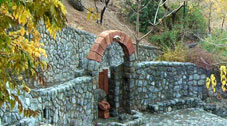
Tehran Trace takes the same motion path slowly and silently across four still photographs; the foyer of the Hotel Laleh, the Mirror Hall of the Golestan Palace, a stone arch towards the north of the city, and a bazaar with a view of mountains. Each "trace" begins close up, curves away from its opening subject and ends with the original image fully framed.
Stuart Pound has a background in film-making and computing and digital video brought the two together. He started film-making in 1970 as a member of the London Film-makers Co-op and subsequently taught film-making at Nottingham Trent University until 1979. His work has been shown at festivals in London and elsewhere as well as via the internet Past screenings include at MoMA (Paris),Tate Modern, Impakt Festival Utrecht, London Film Festival, Split International Festival of New Film, VIPER (Basel), International Media Art Biennale Wroclaw, Vidéoformes Clermont-Ferrand , Media Forum, Moscow International Film Festival , prog:ME, Centro Cultural Telemar, Rio de Janeiro, KunstFilmBiennale Köln, Microwave International Media Art Festival, Hong Kong
Yvan Pousset
9°N
Experimental video | dv | color | 4:30 | France | 2006
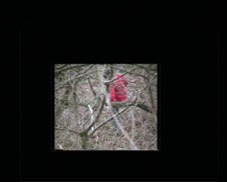
The video opens with a character dressed in red, roaming a forest, searching for something in a quest that started before the beginning of the film. Like a contemporary Sisyphus, the character goes on with his task without respite, blind to the eye staring at him. The density of the forest sits between a long-distance perception of the character and an enclosing proximity due to the distinctness of the sounds when he moves (branches cracking, breathing, etc). The window scans the forest area around the character who appears to be a fixed spot on the projection surface. This space, this distance created between his outlying perception and his sonorous presence (as well as the one of the shooting device), allows the uncertainties of an image and its author (the one who is filming) to appear, the latter seemingly more lost in his filming intentions than the protagonist who, like Sisyphus, accepts his fate. Destructuring and dislocating each of the elements that make up an illusion could be a way to put the viewer back in his real-time position.
Yvan Pousset was born in 1977 in Rennes, France. After general artistic studies, he followed them up at Beaux-Arts d'Angers as a sculptor, and four years ago started to express himself through video work. All of his work in this medium is centred on the search of a materiality in the vibration of the pixels.
Yvan Pousset
ANNA ET ROBBIE
Video | dv | color | 1:30 | France | 2012
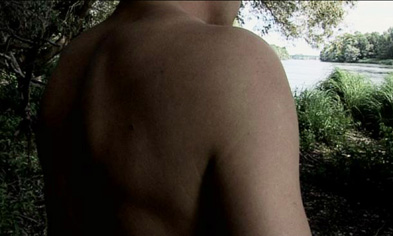
Un personnage en gros-plan fait face à un paysage sauvage, se dessinant au fur et à mesure derrière lui. Des spasmes le submergeront de plus en plus, jusqu`à le projeter dans la matière des lieux. La condition d`Anna et Robbie n`en est pas moins banale qu`ils sont denses et périssables.
Formé aux Beaux-Arts de 1999 à 2005, mes réalisations questionnent le corps et ses pratiques dans des installations-vidéo et vidéos expérimentales. Vidéaste indépendant, je confronte mon travail de recherche à d`autres disciplines artistiques (théâtre, musique, danse), ainsi qu`au contact de populations diverses (écoles, démarche participative, instituts d`études) et dans la volonté de lier création plastique et citoyenneté.
Yvan Pousset
Solanus ad solana
Experimental video | dv | color | 1:11 | France | 2011
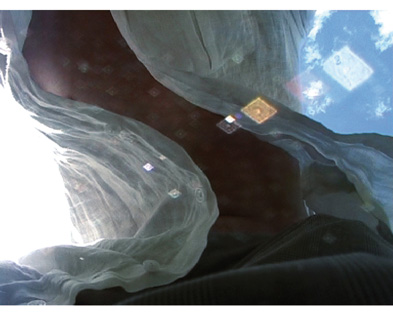
An on-board camera films in low-angle-shot and against the light a man putting up a struggle, fitted with his arm/tool.
Trained at the Beaux-Arts of Paris from 1999 to 2005, my works question the body and its practises in installation videos and experimental videos. As an independent video director, I confront my research to other artistic fields (theater, music, dance) as well as to the contact of various populations (schools, participative processes, studies institutes) and with the will to link plastic creation and citizenship.
Txuspo Poyo
DELAY GLASS
Animation | dv | color | 8:30 | Spain | 2007
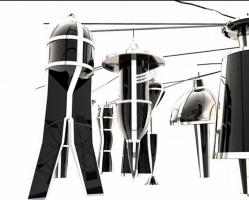
Delay Glass 2007 video animation 3d 8¨30´. Color. Stereo Bilbao Delay Glass refers to the unfinish The Large Glass by Marcel Duchamp in a simulation where scientiphic, technological, mechanistic and erotic constributions aquiere a rotating and onanistic movement of the different artifacts, interacting between fact and fiction.?
Txuspo Poyo was born in Alsasua-Navarra, Spain. He studied in Basque Country University(Bilbao), Where he received his B:F:A. He then spent two years in Toronto-Canada with a grand to continue education. After that he moved 1991 to New York City with a grand fron Basque Country where is living and sharing place with Bilbao. 2001 he was awarded a grant from Marcelino Botin Fundation for a ISCP residential program NY and CADA at the New York University. 2005 he got a grand from Bilboarte Fundation. 2006 he got a grand from Arte y Derecho, Madrid and he was a Gure Artea awarded, Basque Country. 2007 He got a residential at FAAP, Sao Paulo, Brasil. Where he show at File Festival, Sao Paulo.

Txuspo Poyo
Love Needs Time to Kill
Experimental fiction | 4k | color and b&w | 21:28 | Spain | 2020
The impetus to think how this project has been pulled to start from the end, is a symptom of the crisis of historical experience. As the seminaries in the Basque Country began to close, their pedagogical methods have been reduced to the imagination of several generations. "LOVE NEEDS TIME TO KILL" is about the emptiness distilled by the loss of what’s natural and cultural. Over recent decades Franciscan seminaries, along with those of other Orders, have been closing down across the Basque Country. With their closing, comes the loss of a pedagogy that has been a fundamental pillar in the education and identity of the Basque Country. Part of the pedagogical approach was to have large collections of plant and animal specimens, collected from missions in the American, African, and Asian colonies. This research project connects the identity of the diaspora in the missions and their forgotten pedagogical approach to the construction of an exotic and colonial imaginary. On the stage of a small theater in one of the closed seminaries, we have recreated a Baroque still-life scene from the 17th century. The still-life becomes a form of barricade, a gesture of struggle and resistance, in which the inert yet expressive bodies of the animals assert a sense of destiny and uncertainty that has accompanied us from the Romantic era through to present day.
Txuspo Poyo ( Alsasua, Navarra) holds a BA in Fine Arts from the University of the Basque Country (UPV-EHU). In 2001 he completed an ISCP residency sponsored by Foundation Marcelino Botín and also studied at the CADA center of New York University. In 2006 he received funding from the Vegap Foundation and The Valencia Art Foundation for his Delay Glass project, and the same year won the Prize Gure Artea of the Basque Government. In 2008, he was awarded first prize at the 10th Unión Fenosa International Exhibition. In 2015 he received the Multiverso grand funding from The BBVA Foundation for La Engaña tunnel project and 2018 from Huarte contemporary Art Center and the Navarra Government for Izaro project. In 2019 he received funding from the Vegap Foundation. He has taken part in the Madrid Region’s 15th Image Symposium, and has been an invited speaker on master’s programs at the University of Cuenca and the University Of Basque Country UPV-EHU. He has held solo exhibitions in venues such as BBVA Foundation, Madrid, Artium Museum in Vitoria, Centre d’Art La Panera in Lleida, the Costa Rica Museum of Contemporary Art and Design and the Montcada Gallery of La Caixa foundation in Barcelona. His group exhibitions include Geopolíticas de la animación showing at the CAAC in Seville and MARCO in Vigo; Les Rencontres Internationales Paris/Madrid/Berlin; the 2nd Angola Triennial; the FILE in São Paulo; Incógnitas at the Guggenheim Museum Bilbao; Cine y casi cine at the Reina Sofía Museum in Madrid; Multitude at the Artist Space Gallery in New York, and Sandretto Re Rebaudengo Foundation, in Guarene-Torino, Italy.
Txuspo Poyo
U.N(INVERSE)
Animation | dv | color | 19:0 | Spain | 2010
U.N(Inverse) is a project that delves into mechanisms of historical complexity from tracks of fragmentation as questions of interpretation, narration and fiction that has surrounded the construction of the United Nations, specifically the architectural complex of the New York headquarters. Constant changes of reference models have taken me to the crossroads between the idealism of the moment and the symbolism, the architecture and the cinema, sharing the limelight at a time of collapse. In terms of architecture, the decongestion and suspension proposed by Le Corbusier compared to the ideological vacuum of Wallace (the architect in vogue at that time), the backdrop of the cinema in the middle of the Cold War and as now the UNO is surrounded by Hollywood stars to promote themselves abroad; in this way Peter Pan?s Tinkerbell is the new ambassadress of the United Nations.
Txuspo Poyo was born in Alsasua-Navarra, Spain. He studied in Basque Country University(Bilbao), Where he received his B.F.A. He then spent two years in Toronto-Canada with a grand to continue education. After that he moved 1991 to New York City with a grand fron Basque Country where is living and sharing place with Bilbao. 2001 he was awarded a grant from Marcelino Botin Fundation for a ISCP residential program NY and CADA at the New York University. 2005 he got a grand from Bilboarte Fundation. 2006 he got a grand from Arte y Derecho, Madrid and he was a Gure Artea awarded, Basque Country. 2007 He got a residentian at FAAP, Sao Paulo, Brasil. Where he show at File Festival, Sao Paulo. 2008 he was awarded the first price at the international Union Fenosa competition, Spain. Txuspo has participated in the XV simposion of the study of the image, Madrid. 2010 invited artist in a master talk at the Cuenca University. Spain.

Marlies Pöschl
Vivo Vision
VR 360 video | mp4 | color | 34:30 | Austria | 2024
The young Swiss economist Hans travels to Thailand with his mum to visit his grandmother in “Vita Bona”, a care home for European seniors. The facility has changed its name and is hard to find at first. When they finally arrive, it is completely different from what they expected: a perfectly styled wellness retreat for young people. While Hans indulges in the beauty of the place, Daniela wanders through the labyrinthine complex in search of her mother and observes strange occurrences. Where are the senior citizens? What is the manager Mrs. Vasall hiding behind her charming smile? This conceptual VR film is a dystopian parable about the outsourcing of care work, as produced by our neo-colonialist globalized economic system. “Vivo Vision” refers to a way of seeing that Ms. Vasall, the manager of the resort, has invented. Wellness retreat and retirement home are present in the same place, but without interfering with each other. While the young people practice yoga poses by the pool, the seniors and workers have been relocated to another, invisible level. “Vivo Vision” is a view of the world in which everything that is considered unproductive in a capitalist logic has become invisible.
MARLIES POESCHL is an artist, filmmaker, curator and educator. She is currently based in Vienna (AT), where she teaches at the Academy of Fine Arts Vienna, but has previously worked in France, Iran, Thailand and China. Shifting between artistic, curatorial and educational approaches, Pöschl is interested in art as a form of knowledge production. She understands filmmaking as social practice and often collaborates with actors from outside the art world in search for polyphonic narrations and open-ended dramaturgies. Since 2018 Pöschl has focused on ways in which societies of the global north respond to the ‘care crisis’. Pöschl has received various prizes for her work: in 2022 she was granted the state scholarship for media art, in 2021 the Young Artist’s Award (City of Vienna). Her films and installations have been shown in several solo presentations, a.o. Kunstverein Ludwigshafen, DE (2022), Salzburger Kunstverein, AT (2021), CAC Brétigny, (2018) and MUSA, Vienna, AT (2016). She has participated in biennales and film festivals such as the Vienna Biennale for Change (AT), Antimatter media art festival (CA), Edinburgh International Film Festival (GB), Cinema Verité (IR), Diagonale (AT) and others. Her work is distributed by VTape and The Golden Pixel Cooperative.
Lucia Prancha
Sebastião, O Fantasma
Fiction | hdv | color | 14:57 | Portugal, USA | 2014
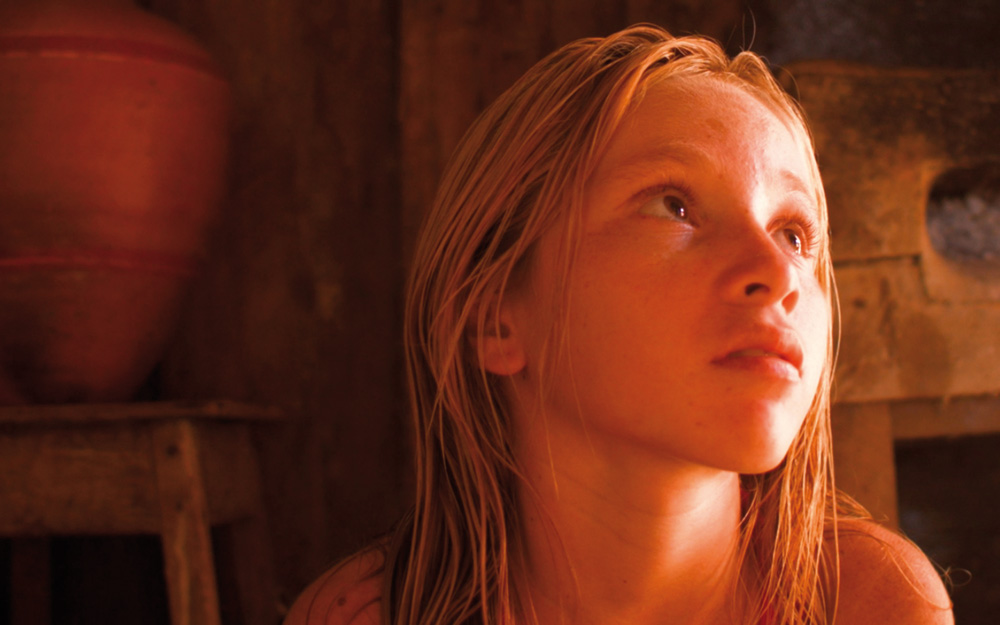
Sebastian of Portugal disappeared in the battle of Alcácer Quibir and is often referred to as The Desired by the Portuguese. The people of Lençóis believe that the ghost of Sebastian of Portugal haunts their Brazilian island. Some see themselves as direct descendants of the king. They also believe that every first Friday of every month king Sebastian visits the beach in full armour and on his horse, and that a subterranean ouroboros will swallow the island some day. A group of people who inhabit the island of Lençóis on the Northeast of Brazil and their interest in the myth of D. Sebastião I (Sebastian of Portugal 1554-1578).
Lúcia Prancha (1985, Lisbon / Portugal) received a MFA from CalArts - California Institute for the Arts (2015). Lúcia explores the tensions between aesthetics, perception and politics rethinking historical and social episodes through installation, video and sculpture. Her work has been exhibited at the Serralves Foundation, Oporto, Portugal; Galeria Leme, Sao Paulo, Brazil and Galeria Baginski, Lisbon, Portugal. In 2013, she was the recipient of a two-year Calouste Gulbenkian Foundation and the Luso-American Foundation for Development (FLAD) Scholarship. Presently practicing in Los Angeles.
Lucia Prancha
CHARLES
Experimental doc. | hdv | black and white | 2:38 | Portugal, USA | 2025
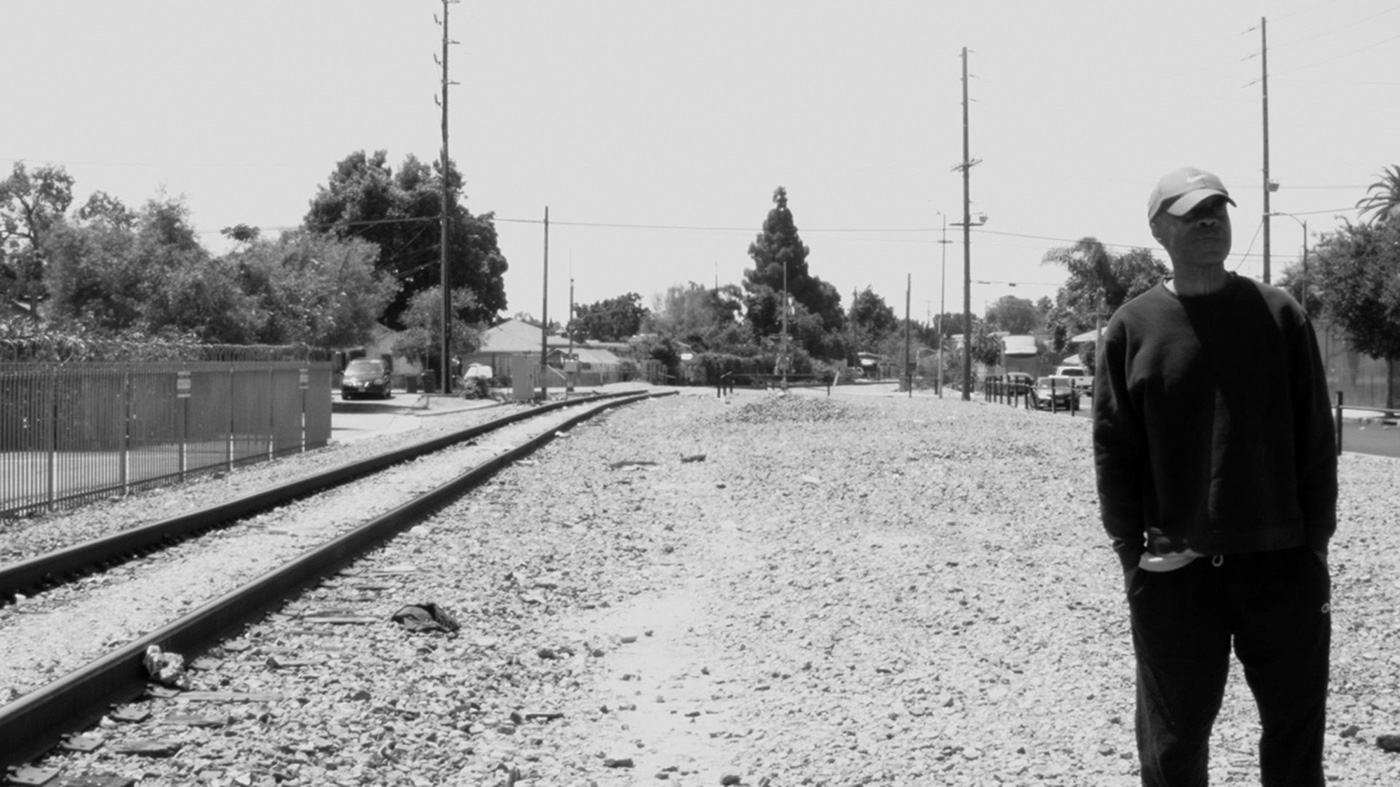
Do you remember the scene in Killer of Sheep (1978) where the kids are playing on abandoned railroad tracks? The scene is set in the Watts neighborhood in California. Director Charles Burnett took the artist Lúcia Prancha to several filming locations from his works around Los Angeles.
Lúcia Prancha (1985, Lisboa) is an artist who lives and works in Barcelona. Lúcia graduated in Painting from FBAUL (2009, PT) and obtained her Masters in Arts from CalArts–California Institute of the Arts (2015, USA). Her work was exhibited at Pavilhão Branco, Museu da Cidade, Lisbon; 19 Crac de Montbéliard; Centro de Arte Oliva; Sesc-Pompeia, Sao Paulo; LACA – Los Angeles Contemporary Archives; Hordaland Kunstsenter, Bergen; Serralves Foundation, Porto; Galeria Dynamo, Porto; Galeria Leme, São Paulo; Berardo Museum and São Paulo Biennial. Her videos were screened at the Cinemateca Portuguesa; INTERSECCIÓN, Coruña; Curtas Vila do Conde; Rencontres Internationales Nouveau Cinéma et Art Contemporain de Paris and, Haus der Kulturen der Welt, Berlin. Currently, she is part of "El vértigo de las imágenes", XVIII Bienal Internacional de Fotografía–Fotonoviembre at TEA–Tenerife Espacio de las Artes and Centro de Fotografía Isla de Tenerife, ES. From September to November, she will be in artistic residency at the Cité Internationale des Arts in Paris.

Katja Pratschke, Gusztáv Hámos
Cities (Territories & Occupation)
Experimental doc. | 4k | color and b&w | 29:50 | Germany | 2019
Cities (Territories & Occupation) is about "the city" divided into districts, neighborhoods, zones and domains, marked by inner-city borderlines. The film investigates how cities emerge and change through inclusion and exclusion, migration, decay, destruction, demolition, relocation, displacement. Urban territories, districts are characterized by different social processes, business relationships, power relations, private affairs. We wonder how urban territories are formed and why they change? Who controls the city or how do the inhabitants create free spaces? Who owns the city?
Gusztáv Hámos, born in Budapest, lives in Berlin, is a media artist, curator and author. His oeuvre includes video, film, photography and installation and has been exhibited at Documenta, Biennale Venice, ZKM Karlsruhe, Ludwig Muzeum Budapest. His videos and films have been shown at Tate Modern London, SFMOMA, Videobrasil Sao Paulo, Palais de Tokyo Paris, Ernst Muzeum Budapest and Art Basel Miami. His work is in the Collections of The Museum of Modern Art NY, Centre Georges Pompidou Paris, Múzeum Ludwig Budapest, NBK Berlin and ZKM Karlsruhe. Katja Pratschke, is a media artist, curator and since 2006 has organised photofilm seasons with Gusztáv Hámos with whom she has collaborated since 1998. Her films and installations have been shown at Ludwig Muzeum Budapest, Akademie der Künste Berlin, IndieLisboa and the 63th Mostra Internazionale d’Arte Cinematografica di Venezia. She has received various awards and grants: german short film award, travel grant of the Hessische Kulturstiftung, Artist-in-Residence Istanbul, Dhaka, Venice and Kolkata.
Katja Pratschke, Gusztáv Hámos
Cities
Experimental fiction | 35mm | color and b&w | 27:0 | Germany | 2012
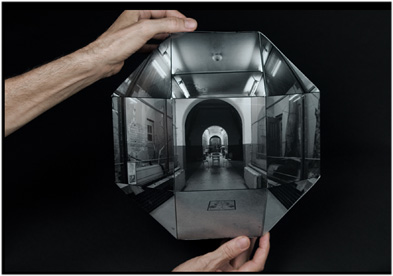
The theme of the film HIDDEN CITIES is personal urban perceptions, which we call »the city«. The city, as a living organism, reflecting social processes and interactions, economic relations, political conditions and private matters. In the city, human memories, desires and tragedies find expression in the form of designations and marks engraved in house walls and paving slabs. But what the city really is under this thick layer of signs, what it contains or conceals, is what we are researching in the HIDDEN CITIES project. The source material for the film are 9 sequential photo works created by Gusztáv Hámos between 1975 and 2010. Each of these »city perceptions« depicts essential situations of urban experiences containing human and inhuman acts in a compact form. The cities in which the photo sequences have been made are Berlin, Budapest and New York ? places with a traumatised past: Wars, dictatorships, terrorist catastrophes.
Gusztáv Hámos, born in Budapest, lives in Berlin. He is an artist, curator and author. His artistic work includes video, film, photography and installation and has been exhibited at Documenta, Biennale Venedig, ZKM Karlsruhe, Ludwig Muzeum Budapest. His videos and films were shown a.o. at Tate Modern London, Rencontres Internationales, 63th Mostra Interernazionale d?arte cinematografica di Venezia, Section Corto Cortissimo, SFMOMA, YBCA San Francisco. His work is included in the Collections of MOMA NY, Centre Georges Pompidou Paris, NBK Berlin, ZKM Karlsruhe, Kunstsammlung NRW, Ludwig Museum Budapest, C3 Budapest, Saint Gervai SIV, Geneve. Katja Pratschke is an artist, curator and since 2006 she has organised photofilm seasons with Thomas Tode and Gusztáv Hámos with whom she has collaborated since 1998. Her artistic projects include: Natural Born Digital (1998); Fremdkörper/Transposed Bodies (film, installation, book, 2001/2003); Rien ne vas plus (film, installation, 2005); Fiasko (split screen film 2010, book 2012), Cities (Verborgene Städte) (film, installation, book 2012). Her films were shown a.o. at Tate Modern London, Rencontres Internationales Paris/Berlin/Madrid, Triennale der Photographie Hamburg, 63th Mostra Interernazionale d?arte cinematografica di Venezia, Sektion Corto Cortissimo. She is co-editor of the publication Viva Fotofilm bewegt/unbewegt, Schüren 2010, and co-founder of the Concrete Narrative Society e.V.
Katja Pratschke, Gusztáv Hámos
In Limbo
Experimental doc. | 4k | color and b&w | 31:42 | Germany | 2022
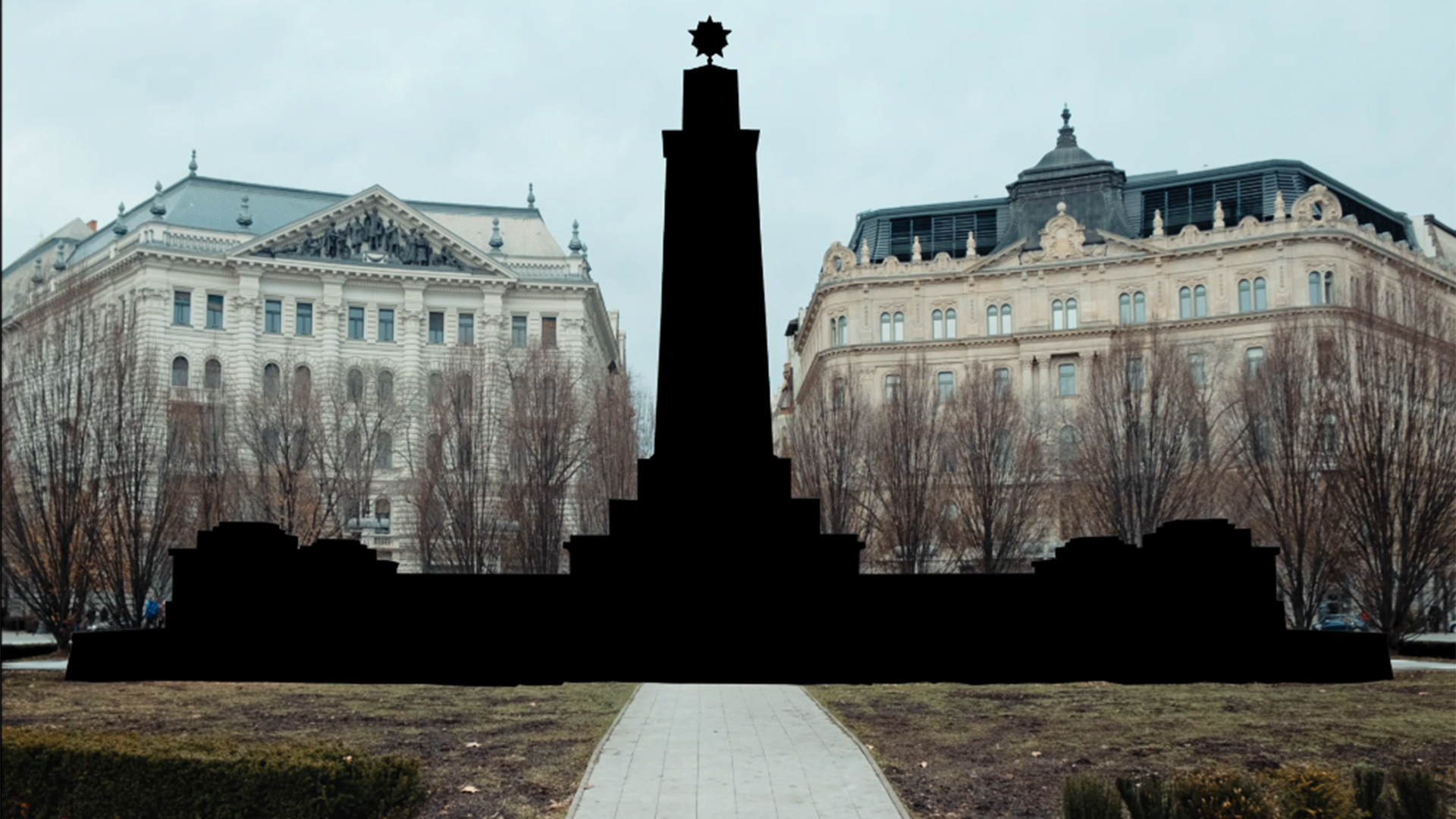
IN LIMBO is about a young man who flees from Hungary to West Berlin during the Cold War. Kiesling's story begins with his conscription into the people's army for military service. Ever since he realised that the state – in which he lives – claims ownership of him, his relationship with reality, with real freedom, has changed dramatically. He decides to reset his identity.
As media artists and artistic researchers, Gusztáv Hámos and Katja Pratschke have been working together on the theory and practice of intermedial arts for 20 years. Thus, their artistic practice includes video, film, photography, interactive and site-specific installations, VR work, as well as the curation of exhibitions, symposia, film series, workshops, and publications. They are founding members of the Concrete Narrative Society e.V. and members of the top_OS collective.
Sandra Prechtel, Francois ROSSIER
ND - Deutsches Neuland
Documentary | dv | color | 64:45 | Germany | 2004
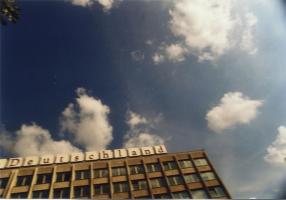
Portrait d'un drôle de bâtiment situé à Berlin Est, et dans lequel la RDA continue à exister, 15 ans après la chute du Mur. Ce qui fut le siège de la rédaction du journal officiel de RDA, Neues Deutschland, est devenu un biotope unique, où d'éternels citoyens de RDA et des artistes branchés de la scène culturelle berlinoise cohabitent. Synopsis résumé 15 ans après la chute du Mur, il existe un lieu à Berlin où la RDA semble poursuivre son existence: un immense immeuble de béton sur le toit duquel on peut lire en grandes lettres "Neues Deutschland" (la nouvelle Allemagne)- le titre orgueilleux de ce qui fut le journal officiel du régime. Un biotope unique s'est créé à l'intérieur: quelques citoyens impérissables de RDA tiennent ici désespérément leur position, un ilôt de résistance en plein territoire ennemi. Mais de jeunes artistes ont aussi découvert le charme des pièces défraîchies. Dans les couloirs éclairés aux néons, on perçoit les basses de la musique électro, quand ce n'est pas un pianiste new yorkais qui joue des sonates de Schubert. Et puis il y a encore les anciens collaborateurs du journal, qui errent dans les vieux locaux, à la recherche d'une RDA avec laquelle ils pourraient enfin faire la paix. Un lieu symbolique pour cette nouvelle Allemagne dans laquelle on ne peut encore tirer de trait définitif sous le passé. Synopsis Dans la Rue de la Commune de Paris, dans la partie Est de la ville, derrière les voies ferrées de la Ostbahnhof, on trouve tel un navire échoué le bâtiment massif qui fut autrefois le palais des media de RDA. Sur le toit, les lettres de néon éteintes depuis longtemps forment encore les mots NEUES DEUTSCHLAND. Pendant des décennies, ce fut le quartier général de l'organe officiel de la RDA qui diffusait quotidiennement son flot de paroles idéologiques. A l'intérieur, le temps semble s'être arrêté. Un portiers des temps anciens règne sur le foyer, le passé continue à exister: dans l'odeur de linoleum, le monte-charges immobile, les corridors interminables éclairés par la lumière tremblotante des tubes néons. Au rez-de-chaussée, c'est le domaine de Walter Grenzebach, dernier collaborateur du journal présent dans les lieux, toujours chargé des "relations publiques". Walter vit au jour le jour le déclin de son empire. Au deuxième étage, une clique de jeunes créteurs s'est appropriée les bureaux de la direction, autrefois sévèrement surveillés. Dans les couloirs, on entend maintenant de la musique, dans la grande salle de rédaction, un certain "Herr Schneider" vend du matériel pour DJs. Un des bureaux est devenu un studio de films d'animation. La réalisatrice, Katrin Rothe, a longtemps hésité avant de s'installer là. Les esprits du passé sont trop présents pour elle, toutes ces silhouettes grises qui ont rendu la vie en RDA insupportable. Mais c'est ici qu'elle développe maintenant un sentiment d'appartenance _ au pays disparu de son enfance. Ce qui pour les uns est une location branchée, où l'on peut laisser libre cours à sa créativité derrière les murs joliment décrépis d'un régime disparu, est pour les anciens collaborateurs le lieu où s'effectue toujours, 15 ans après, un douloureux travail de mémoire. Ils sont loin d'avoir fait la paix avec cet Etat, s'en prennent à eux-mêmes et au rôle qu'ils ont joué. Le film documentaire est le portrait d'un étrange "entre-deux", où il ne reste de la RDA que des fins de série et des néons jaunes qui éclairent ceux qui se sont construit leurs petits "empires" dans les espaces devenus vacants. Ca n'est plus "Neues Deutschland", mais "Deutsches Neuland", un nouveau territoire allemand indéfinissable, un lieu symbolique pour un pays dont le passé est loin d'avoir été surmonté. Un des lieux menacés de "rénovation" et ainsi condamnés à disparaître bientôt, où pourtant l'histoire est palpable dans la concomitance du passé et du présent.
Sandra Prechtel Réalisatrice / auteur Sandra Prechtel est née le 25 janvier 1969 à Munich. Elle a étudié les lettres et le cinéma, ainsi que les sciences politiques à Munich, Londres et Berlin. En 1997, à l'issue de ses études, elle a commencé une carrière journalistique par un séjour de plusieurs mois à Moscou, où elle a travaillé pour la Süddeutsche Zeitung. Depuis, elle a collaboré à de nombreux magazines dans le domaine des media. Sandra Prechtel a commencé à être assistante à la réalisation depuis ses études: Zwischen Himmel und Erde (court-métrage de Solveig Klassen, DFFB 1993), ou encore Frost (fiction de Fred Kelemen, 1996). ND-Deutsches Neuland est son premier moyen-métrage. François Rossier Né en 1961 à Vevey (Suisse), François Rossier est diplômé depuis 1983 de l'Ecole de théâtre Dimitri. De 1984 à 1986, il a été assistant de Roy Bosier à l'académie d'été pour le mouvement et l'expression corporelle, l'acrobatie et l'improvisation, à Vienne. De 1992 à 1994, il a étudié la réalisation à l'International Film School de Londres. Cameraman et assistant réalisateur, François Rossier a également réalisé plusieurs films. Quatre de ses courts métrages ont connu un accueil très favorable dans les festvals internationaux où ils ont été présentés: Liquid Assets (1993), 35 mm, NB, 8 min.; Skazka (1997), 35 mm, couleur, 24 min.; Château de sable(1999), 35 mm, 9 min.; Petits Gestes (2002). Il a récemment terminé son premier long documentaire. "Ailleurs si j'y suis" est un portrait du maire de Calcutta. ND-Deutsches Neuland est sa deuxième réalisation documentaire.