Catalogue > Search
Results for : Tout le catalogue

Dirk Peuker, Bettina Nürnberg
Elephant Bearing an Obelisk
Experimental doc. | 16mm | color | 14:0 | Germany | 2018
Marbled paper blue, a book’s illustrations, the flicker of film’s materiality: these are just a few of the narrative devices that punctuate Bettina Nürnberg and Dirk Peuker’s essayist film tracing the atmospheric efects of Italian architect Carlo Scarpa’s significant buildings, including the Brion family cemetery. As homage the work continues the filmmakers’ interests in documenting architectural histories. What is significant about this more poetic rendering is how it follows the rhythm of the spatial forms and motifs of their subject: Scarpa took an apolitical stance and refused to make architecture during the reign of fascism in Italy (1922–43); in the years that followed however, he produced Venice’s modernist exemplars, arguably the most beautiful architectural works of modernism for how they create mental spaces embedded in and indebted to his phenomenal city. With awareness of their medium, Nürnberg and Peuker capture both the structure and freeforming style of Scarpa’s architecture: their camera is equally focused on the mood of the city, the flow of water, the mandala as dichotomous form—light casts shadows. In turn, the film oscillates between document and experimental realism. The punctuating book pages that were an inspiration for Scarpa and ofer a structuring means for the sensuality of the recorded images come from the Venetian treatise of 1499 ascribed to Poliphili, which loosely acts an inventory of life-forms and classical humanist thought while following the story of courtly love. The act of ceremony is important to the book and so it is to the film as it mediates on Scarpa’s constructions, anachronistic zones that cross life with death, only to return to life once more: the film flickers, the paper is left wet, a hand all blue rises from the ruins … (Laura Preston)
Bettina Nürnberg www.bettinanuernberg.de Bettina NÜRNBERG (1976, Germany) was educated in art and film in Hamburg and Berlin. The work of the Berlin-based artist has been screened and exhibited worldwide. Dirk Peuker www.dirkpeuker.de Dirk PEUKER (1970, Germany) studied film and art in Berlin and Vienna. The work of the experimental filmmaker and artist has been screened and exhibited worldwide.
Jean-gabriel Périot
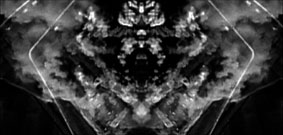
Under Twilight
Experimental video | dv | color | 5:0 | France | 2006
Beauty and/or Destruction
Baby-sitter, barman, clothes and handkrafts salesman, videotapes program clerck, assistant director, editor, mime, auction sales assistant, journalist, danse filmaker, artist?
Norbert Pfaffenbichler
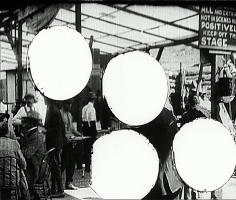
MOSAIK MÉCANIQUE
Experimental film | 35mm | black and white | 9:30 | Austria | 2007
SYNOPSIS All the shots of the slapstick comedy ?A Film Johnnie? (USA, 1914) are shown simultaneously in a symmetrical grid, one after the other. Each scene, from one cut to the next, from the first to the last frame, is looped. A pulsing visual polyrhythm is produced as a result, because of the shots? varying lengths. The total length of the mosaic film corresponds precisely to that of the original. ALPHABETIZATION Silent film was in a sense put in written form. The individual images are arranged in chronological order, from left to right and from the top down, in the same way as Latin letters. The entire film can be ?read? as if from a page in a book. REREADING The original film was subjected to a thorough rereading. The original footage was not altered, there was no optical manipulation of the images, and the sequence and length of the shots were maintained. The opening credits, intertitles, the countdown before the film starts, and end credits are of course part of the mosaic. Solely a different, ?panoramic? gaze was directed at the original. This historical grotesque film was in a way analyzed and, as a result, radicalized. SPATIALIZATION This experiment results in a de facto ?spatialization? of the two-dimensional medium. The process according which the original cut was arranged becomes the installation?s structural principle. Editing becomes architecture, and time becomes space. MULTIPLICATION As a result of the simultaneously horizontal and vertical arrangement of the moving images, the spaces and figures from the original film are multiplied. Each shot is turned into a separate chamber in an architectural structure. The fidgeting figures are prisoners caught in their boxes, doomed to never-ending mechanical repetition.
Norbert Pfaffenbichler (* 1967) Study of Mediadesign at the University of Applied Arts, Vienna Exhibitions and Festivals (Selection): 1996 Chromapark, Berlin. 1997 Chichester Film Festival, Chichester; Circles of Confusion, Berlin. 1998 Diagonale, Graz. 1999 viper Videofestival, Basel. 2000 Sonar Festival, Barcelona; Medienturm, Graz. 2001 Underground Film Festival, New York. 2002 Internationales Filmfestival, Rotterdam; Intercultural Videoart Exhibition, Tokio; 59. Filmfestspiele, Venedig; Museum der Wahrnehmung, Graz. 2003 Sound Spectral, O.K Centrum für Gegenwartskunst, Linz; Ars Electronica, Linz. 2006 DIGITAL TRANSIT, ARCO, Medialab Madrid.
Norbert Pfaffenbichler
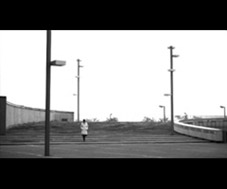
Notes on Film 02
Experimental fiction | betaSP | color and b&w | 96:0 | Austria | 2005
In a delusive vision, repetition is based on repetitions, difference is based on differences. Repetitions are repeated, the differentiating elements are differentiated (Gilles Deleuze). This experiment on the themes of 'difference and repetition' combines methods employed in structural film and elements of narrative cinema. Moments from the life of a heterosexual couple were arranged in sequence on the basis of a simple alphanumeric editing concept. Robert Frank?s film "O.K End Here" (USA, 1963) served as a model. This work was evidently greatly influenced by the Italian director Michelangelo Antonioni. Frank attempted to translate Antonioni?s film language to his own environment, the New York of the Beat Generation, in doing so ignoring film conventions to a large extent and producing highly individual visual compositions and sequences of cuts. The motivation to borrow from this work when making "N. o. F. 02" was for one the fact that the original source itself represented an attempt to translate an aesthetic form, and secondly because of its intentional disregard of the conventional rules of filmmaking. Furthermore, "N. o. F. 02" contains additional references to classics of the late Modern. The purpose of this mosaic of references is to question the way in which moving images work.
Norbert Pfaffenbichler was born in 1967. He studied Media Design at the University of Applied Arts, Vienna. His works have been shown at several exhibitions and festivals including: 1996 Chromapark, Berlin; 1997 Chichester Film Festival, Chichester; Circles of Confusion, Berlin. 1998 Diagonale, Graz. 1999 viper Videofestival, Basel; 2000 Sonar Festival, Barcelona, Medienturm, Graz; 2001 Underground Film Festival, New York; 2002 Internationales Filmfestival, Rotterdam; Intercultural Videoart Exhibition, Tokio; 59. Filmfestspiele, Venedig; Museum der Wahrnehmung, Graz. 2003 Sound Spectral, O.K Centrum für Gegenwartskunst, Linz; Ars Electronica, Linz. 2006 DIGITAL TRANSIT, ARCO, Medialab Madrid.
Norbert Pfaffenbichler
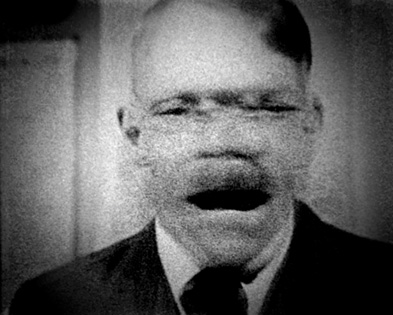
Notes on film 05 CONFERENCE
0 | 0 | black and white | 8:0 | Austria | 2011
In this grotesque found-footage-film close-ups of 65 actors playing Adolf Hitler in movies created between 1940 and today are combined in shot/countershot-manner. The soundtrack is produced by the Austrian composer Bernhard Lang. No other historical figure of the 20th century was portrayed more often in movies and by so many different actors than Adolf Hitler. (Only Jesus Christ has more appearances in cinema`s history - but with a headstart of more than 50 years.) In this grotesque and uncanny identity parade Adolf Hitler is presented as an undead who is impersonated by an alarming number of revenants. CONFERENCE is part five of my "notes on film"-series, which deals wtih filmtheoretical and -historical subjects. The movie is also part of a series of works about Charles Chaplin, which includes a number of installations and films.
1967 in Steyr. 1994-2001 University of Applied Arts, MK for Media. Artist and curator, various participations in festivals and exhibitions, founding member of VIDOK and lanolin. Go to artist`s homepage http://www.norbertpfaffenbichler.com

Mario Pfeifer
UNTITLED [TWO GuYS]
Video | dv | color | 8:0 | Germany | 2008
Synopsis (short): Cast: Cast: Sami Moss Mardina & Yeisen Acosta Medina Crew: Producer: Jakob Schillinger / Mario Pfeifer Cinematograpy: Matthias Biber Monatge: Mario Pfeifer Sound design: Thomas Wallmann Light design: Manuel Kinzer
Mario Pfeifer (b. 1981, Dresden /Germany) is a filmmaking artist based in Berlin and Los Angeles. He studied Fine Art at the Academy of Visual Arts Leipzig, University of the Arts Berlin and Städelschule Frankfurt am Main where he graduated in 2008. On invitation of the ?Bangkok Experimental Filmfestival 5? he co-curated international, artist made films from Berlin for the 2008 festival?s program. Mario Pfeifer was a Fulbright Scholar in California, USA in 2008/2009.
Mario Pfeifer
Reconsidering The New Industrial Parks near Irvin
Experimental doc. | 16mm | black and white | 13:0 | Germany, USA | 2009
Mario Pfeifer
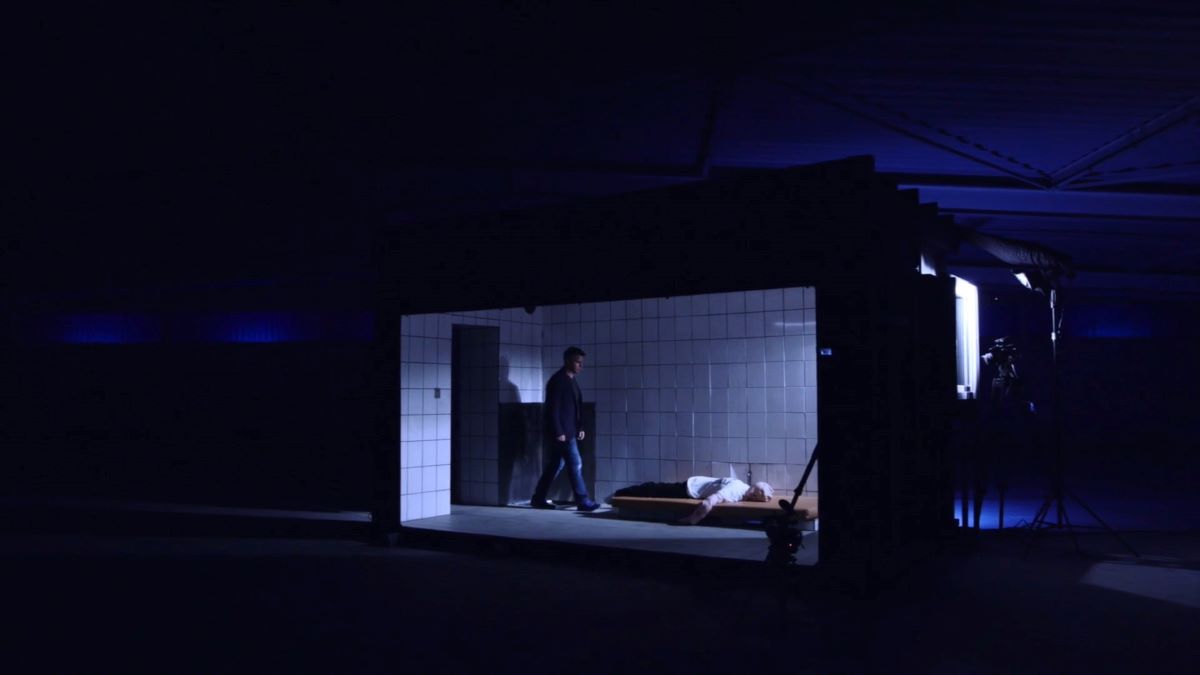
Cell 5 – A Reconstruction
Documentary | 4k | black and white | 43:0 | Germany, United Kingdom | 2023
On January 7th 2005 an asylum seeker, shackled at his hands and feet, dies in a fire in cell number five of a police station in Dessau, Germany. With “Cell 5” Mario Pfeifer reconstructs the case of Oury Jalloh’s death using legal documents, testimonies, audio-visual archives, and collaborates with the forensic expert Iain Peck to reproduce an accurate fire experiment. All in an attempt to answer: how could Oury Jalloh burn to death?
Mario Pfeifer ist a PRIX EUROPA nominated producer, director and visual artist whose interests intersect between political, social and anthropological issues. Mario works closely with communities, establishing intimate relationships from which he conceives his projects in collaboration with his protagonists. He graduated from the art academy Städelschule in Frankfurt am Main, studied with Stan Douglas at the University of the Arts in Berlin and was a Fulbright scholar in 2008 at the California Institute of the Arts, Mario is a recipient of DAAD fellowships in 2010 and 2012. Mario is an alumni of the European Creator’s Lab (2021), the Documentary Campus Masterschool (2019), the Feature Expanded Masterclass (2017), and a Berlinale Talent Campus alumni (2009). Mario Pfeifer’s installations were presented at the Power Plant Toronto; Museum of Modern Art, Berlin; Los Angeles County Museum of Art [LACMA], Los Angeles; MMK Museum fu?r Moderne Kunst Frankfurt am Main; Bundeskunsthalle Bonn; Neues Museum Nu?rnberg; Kunsthalle Winterthur; N.B.K. Neuer Berliner Kunstverein; Fotomuseum Winterthur; KOW, Berlin; Beursschouwburg, Brussels; MAAT Museum of Art, Architecture and Technology, Lisbon; KW Kunst-Werke, Berlin; CCA,Lagos; and his film presented at international Film Festivals in Amsterdam, Auckland, Berlin, Cologne, London, Madrid, Paris, Oberhausen, New York, Seoul and Toronto. He participated in the 3rd Montevideo Biennal (2016), the 11th Bienal do Mercosul (2018), the 10th Berlin Biennale (2018) as well as the 4th Mediterranean Biennale (2020). His works are hold in public and private museum collections at the Getty Center Los Angeles, Collection of Contemporary Art of the Federal Republic of Germany, Pinakothek der Moderne Munich, MMK Museum of Modern Art Frankfurt am Main, Fotomuseum Winterthur et.al. Mario has lectured and directed Masterclasses in Brazil, Chile, Czech Republic, Germany, India, Mexico, Poland, the U.K. and in the US. www.blackboardfilms.net/people

Mario Pfeifer
Again | Noch einmal
Documentary | 4k | color | 40:0 | Germany | 2018
A violent supermarket incident involving a refugee in East Germany is reenacted in a film studio. Ten citizens observe and comment on the case, which highlights the blurred distinction between civil courage and vigilante justice.
Producer / Director Mario Pfeifer's (*1981, Dresden / Germany) films explore representational structures and conventions in the medium of film and video, in locations ranging from Mumbai to New York, from Brazil to the Atacama desert, from Tierra del Fuego to East-Germany to the Western Sahara. He conceives each project out of a specific cultural situation, researches social-political backgrounds and weaves cross-cultural art historical, filmic, technological and political references into a richly layered practice.
Désirée Pfenninger
Ochs am Berg
Fiction | 16mm | color | 15:48 | Germany | 2014
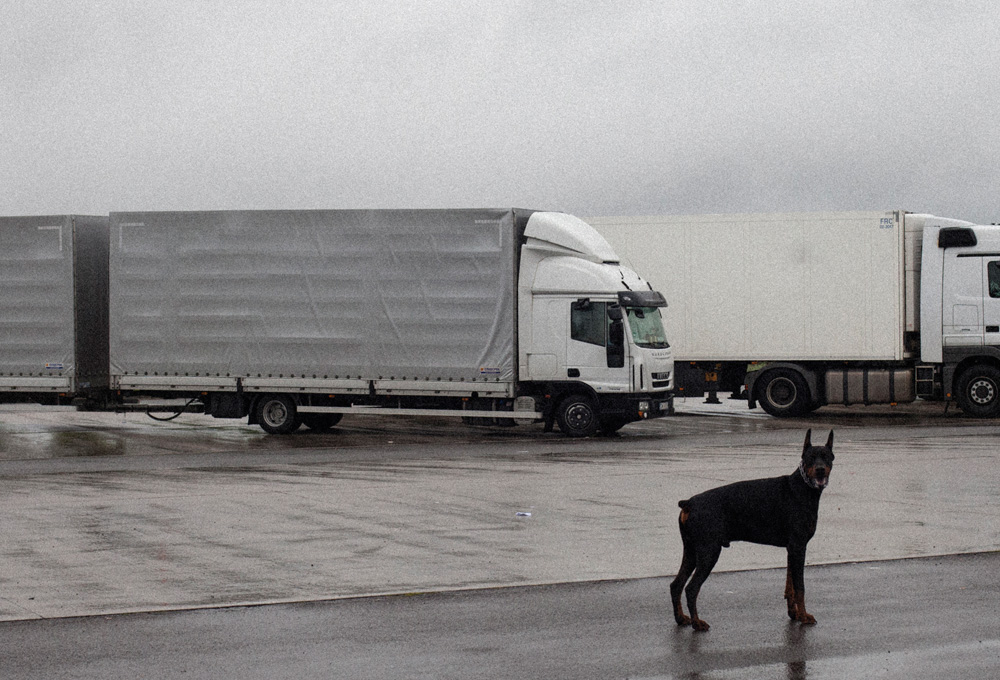
A rest stop docks the highway like a moonbase. Within this transit space a young man and a young woman drift in their orbits. A German love story.
After her first steps in the movie industry Désirée decided not to study film. After finishing studies in photo engineering and further filmexperiments she signed up for directing classes in Paris and Potsdam.
Lan Pham Ngoc
Chuyen Moi Nha
Experimental doc. | dv | color | 9:17 | Vietnam | 2011
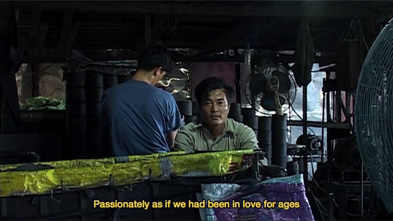
Utilizing the banality of Vietnamese state radio broadcasts, The Story of Ones gives a face and a sense of place to the unseen and offers a personal counterpoint to the officially sanctioned. Like entering a roomful of stories, the viewer steps into an unfamiliar space guided only by the sound of the radio tuning in to lifestyle programming, call-in shows and radio dramas. The portraits and settings layered atop the aural landscape create questions, provide humor, offer context and withdraw explanation of what once seemed clear before entering the room.
Pham Ngoc Lan {Phạm Ngọc Lân} was born in Hanoi, Vietnam; in July 02, 1986. He studied urban design and urban planning from 2004 to 2009 at Hanoi Architecture University (HAU). Inspired by the paradox of all living things, Lan considers himself an urban life observer rather than a photographer or an urban designer. Using photography and film as two of the favorite tools to express his ideas, his work attaches special importance to the direct, poetic and especially the whimsical respects of human life.
Paulette Phillips
Marnie's Handbag
Art vidéo | dv | color and b&w | 10:0 | Canada | 2008
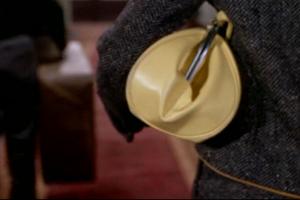
Marnie?s Handbag is a mash-up focused on the female criminal in popular cinema. Phillips takes a historical look at how Hollywood paradoxically dresses the female felon as she attempts to avoid apprehension. Looking at sequences of women dressing to commit a crime, removing the women from their narrative context Phillips focuses on the pleasure we derive from unbridled seduction and evening the score.
Paulette Phillips? recent group exhibitions include: The Tatton Park Biennale, UK; The Canadian Cultural Centre, Paris; The Power Plant, Toronto; ZKM, Germany; Kunsthaus Graz, Austria; Heidelberger Kunstverein, Germany, Ludwig Museum, Hungary and the Palazzo della Papesse, Italy. Reviews of her recent work can be found in Art in America, ArtForum, Modern Painters and Flashart. Based in Toronto, Phillips? work is represented by Diaz Contemporary Art, Toronto and Danielle Arnaud contemporary art, London. She teaches at The Ontario College of Art and Design.
Cristina Picchi
Zima
Experimental doc. | hdv | color | 11:27 | Italy, Russia | 2013
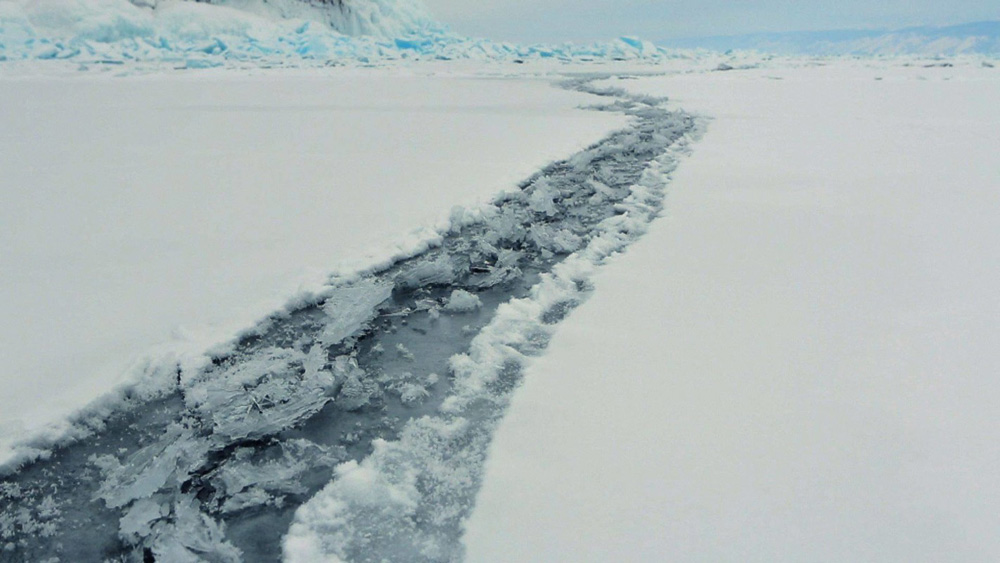
A portrait of a season - a journey through North Russia and Siberia, through the feelings and thoughts of the people who have to cope with one of the world's harshest climates; a reality where the boundary between life and death is so thin that is sometimes almost nonexistent, where civilization constantly both fights and embraces nature and its timeless rules and rites. In these remote places, people, animals and nature itself become elements of a millennial yet unpredictable script, in which physical and mental endurance play an important role as much as chance does, where life and death constantly embrace each other. A reflection on fate, adaptation and the immutable cycles of existence.
Cristina Picchi (Lucca, 1981) is an award winning Italian filmmaker, writer and artist based in London. As a filmmaker she has directed and edited the short documentaries Zima (2013), Eyes On The Ground (2012), Under Your Skin (2011), Fragments of a Dream (2011) and The Disassociated (2011); her films have been screened in festivals and galleries worldwide. Her written work includes short stories and contributions to award-winning books. She holds a degree and an MA in European Literature from the University of Pisa and and a master`s degree in Screen Documentary from Goldsmiths University.
Stéphane Pichard
Comme de jour
Art vidéo | dv | color | 1:55 | France, Mali | 2006
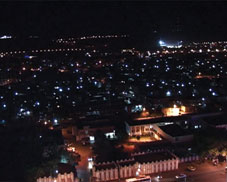
Let's start by closing our eyes. The 4/3 vertically divided screen teems with black and white pixels. There is something intense that we confusingly perceive in the breath and the noise. Progressively the pixels are going to diminish, most likely in favour of the little scene of a character. It is a short-cut and an extraction, a numeric zoom becoming optics, always in the rear. Like a vast inspiration, the city of Bamako grows at night, its lungs filled with heat and dust. " ...The picture is the result of an operation whose viewing is an instrument and not the preamble."* *Philippe-Alain Michaud, Sketches, page 67, Kargo and L'Eclat editions.
Stéphane Pichard was born in Nanterre in 1968. In 1993 he graduated from the ENSBA in Paris. He continued his studies at the University of British Columbia, Vancouver, Canada, completing a Master in Fine Arts. He then pursued research at Paris VIII and at the INA. He subsequently participated in several exhibitions in France and abroad. As a professor of plastic arts, he developed the residency program "Synapse" at the ESA in Rueil-Malmaison.
Stéphane Pichard
Fécampoise
Video | hdv | color | 2:49 | France | 2015
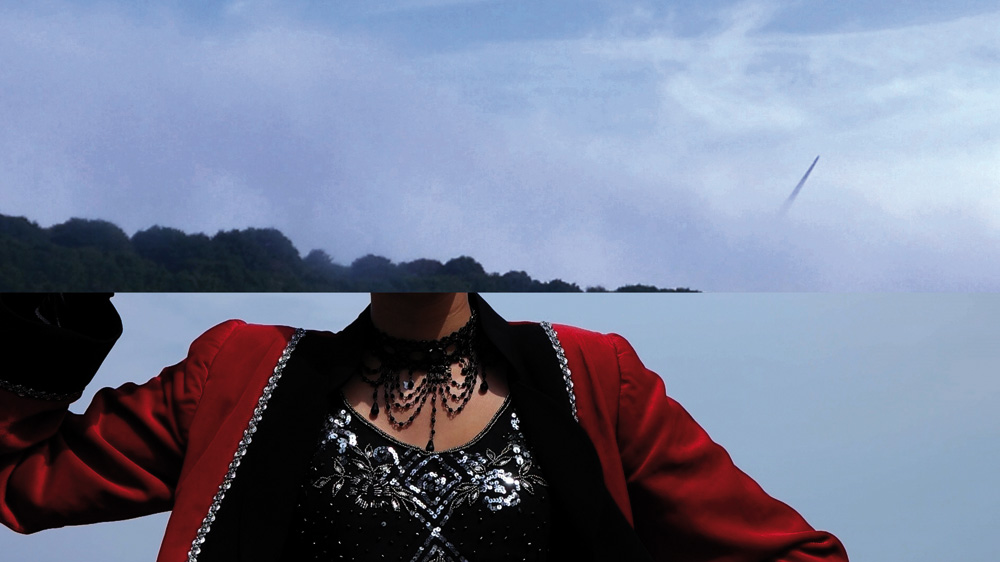
FECAMPOISE réuni plusieurs notes qui peuvent-être vues indépendamment ou par assemblage, vous verrez ici « J`ai pourtant bien essayé de te voir » et « Dites-moi que je rêve ». FECAMPOISE est un « docu-fanfare » comme on dit « docu-fiction », une sorte de comédie musicale. Voir les couvertures de survies -« Sound of music » (Y. Duyvendak)- qui dégringolent du plafond poussant les danseurs vers le quatrième mur jusqu`à ne plus pouvoir danser. Fin. Nous incluant, fin. Comme ces gens -« La fièvre dans le sang » (E. Kazan)- qui en 29, à Wall Street, se jetaient des tours. J`ai pourtant bien essayé de te voir.
Stéphane Pichard est né en 1968 à Nanterre. Diplômé en 1993 de l’ENSBA de Paris, il continue ses études à l’University of British Columbia dans le programme Master of Fine Arts, à Vancouver Canada, puis poursuit ses recherches à Paris VIII et à l’INA. Stéphane Pichard vit et travaille à Paris.
Stéphane Pichard
Répétition pour caméra et tablas
Art vidéo | 0 | color | 3:0 | France | 2005
Leighton Pierce
Everything s gonna be OK
Video | 4k | color | 6:37 | USA | 2021
This is a part of a developing series titles UAP (Unidentified Arial Phenomena). Looking to the sky can reveal both threats and salvation. This was shot and edited on a phone and is intended eventually to be presented on the intimate format of a phone. Shot and edited in summer 2021.
Pierce has been making films, video, and installations for over 3 decades with screenings at Cinematheque francais, Pompidou Center, Sundance, NYFF, Rotterdam, EMAF ad many other venues. Among others, he is recipient of Guggenheim, Rockefeller, and Creative Capital Fellowships. For the past 8 years he has been living in LA where he was dean and is now faculty at CalArts.
Romain Pierre
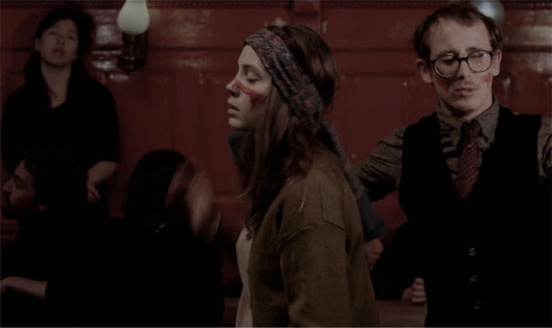
Taverne Française
Fiction | hdv | color | 7:23 | France | 2013
Taverne Française est d`abord un espace, physique et social, comprenant des murs et des possibles. Son vocabulaire pourrait être d`aujourd`hui, sa musique d`hier, son énergie celle de la jeunesse. Ce n`est pourtant pas l`analyse d`une époque ni le portrait d`une génération. Peu importe la taverne, c`est une taverne : on y sent l`urine, l`alcool et la sueur, on y parle de désir et de mort. Il ne pourrait pas s`agir d`autre chose, car c`est précisément toutes les autres choses qui sont en jeu. Les corps ne connaissent pas d`histoires ; la seule histoire s`inscrit entre les corps. Dès lors qu`il n`y a plus de jugements de valeur, le besoin ne se distingue pas de l`ennui, ni la cruauté de la tendresse, et dans ce délire, sans humour ni gravité, se trame le délire du monde. On ne délire pas sur une affaire personnelle mais, comme le dit Deleuze de l`inconscient, "sur les races, les tribus, les continents, l`histoire et la géographie, toujours un champ social". Et la parole de corps désaffectés, si elle n`est pas la parole des morts, ressemble bien à celle de l`inconscient.
Romain Pierre est né en 1989 à Paris. Il suit une formation de comédien à l`école supérieure d`art dramatique du Théâtre National de Strasbourg. En 2013, il écrit et réalise son premier court-métrage, Taverne Française, inspiré de l`oeuvre de Georges Bataille et des Velvet Underground.

Vaughan Pilikian
Household Gods
Experimental fiction | 16mm | color | 6:30 | United Kingdom | 2008
Alone at home, but haunted by other voices: six people is six rooms somewhere in London.
Vaughan Pilikian is a writer, director and artist who lives in London. His short films have screened in festivals around the world, and he is currently at work on his first feature.
Antoni Pinent
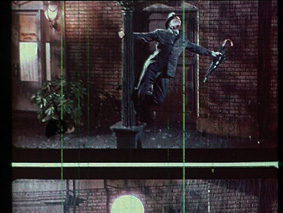
FILM QUARTET / POLYFRAME
Experimental film | 35mm | color and b&w | 9:0 | Spain | 2008
FILM QUARTET / POLYFRAME is conceived as a small cinematographic bomb attempting to question the established definition of frame as the minimum unit of (cinematographic) time by dynamiting it in four fragments. A step further in the so-called sub-genre practice of found footage film -recycled material- is also put forward for consideration in this project. The appropriationism applied in this work makes use of material found in Hollywood cinema (Singin?in the rain, Stanley Donen, 1952); Pink Panther; Buster Keaton; etc., the first avant-garde period (Un chien andalou, Luis Buñuel & Salvador Dalí, 1929) and American experimental film (Wavelength, Michael Snow, 1966-1967). Such method makes possible, therefore, to maintain image ecology while it provides an analysis of the history of cinema. An explosive artifact has been inscribed as cinematographic notation on musical staffs in order to facilitate the interpretation and development of the piece beyond its mere projection. Such being the case, unchanging cinematographic would pushed for their reinvention-destruction-explotion. This piece celebrates the 50th anniversary of A Movie (1958), by Bruce Conner (1933-2008).
Pink Twins
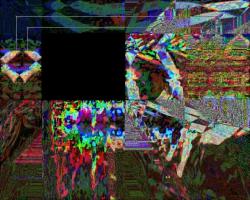
Box
Experimental video | dv | color | 8:0 | Finland, Fiji | 2004
Box is based on photographs from Tunguska, Siberia, where a large area of land was destroyed when a huge meteorite exploded above the ground in 1908. The video is a slow composition, where landscape images go through several stages of transformation. The video material which was further developed into "Box" was originally made for a stage version of Stalker, produced by Circus Maximus at Helsinki City Theater in 2003.
The Finnish duo Pink Twins, the brothers Vesa and Juha Vehviläinen, started to work together in 1997. Since then they have been exploring visual and sonic noise combined in a most physical experience. Sampling the everyday images and tearing them apart to pixels then putting them together again to a chaotic and blasting unity. In Pink Twins` music and video works "the logical and analytic thematic developments surrender to the frenetic and non-repetitive information overflow.