Catalogue > Search
Results for : Tout le catalogue
Dominik Ritszel, Dominik Ritszel
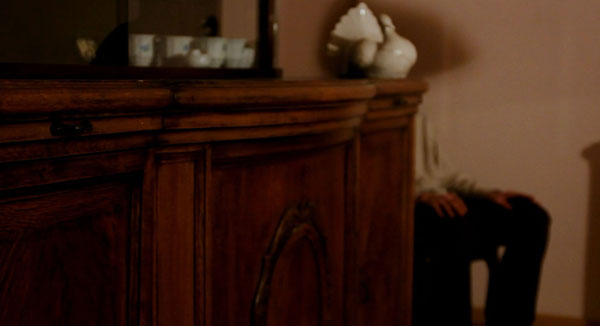
Preludium
Video | hdv | color | 7:57 | Poland | 2013
Video explore the relations between son and father (student/master), which is bring to inconspicuous, childish game. Situation plays in family house, where actors are my father, brother and myself. ?Preludium? is a memoir of my request to my father, who refused to teach me play piano, saying, that is too late.
In 2008 I began study on Academy of Fine Arts in Katowice. My first individual exhibition ?See you all? took place in CSW Kronika in Bytom. In 2012 I took part in group exhibition; ?Whoever seen, whoever knows?, (CSW Kronika, Bytom). I was invited to take part in project ?Public space as tool for shaping social attitudes? in Chisinau (Moldova) where I made film ?Campers?. My second individual exhibition was in Częstochowa (Centrum Promocji Młodych); entitled ?No fun?. In collaboration with French curator Lore Gablier, I was co-create film ?D?eux?, based on two weeks traveling through France and England. I was chosen, as one of 20 polish artist, in polish edition of project Curators Network, which intend to promote selected artists by international group of curators in Poland and abroad. In 2013 I was participant in group exhibition young Silesian artists ?Milk Teeth? in BWA (Katowice) where I showed my film ?Preludium?. I was chosen, as one of 10 artist, in project Showoff?13. On behalf on project Showoff (cooperating with Photo Month in Krakow) I was showing my works in gallery Grey house Exhibition was entitled ?Eine kleine Werke?.
Paul Ritt
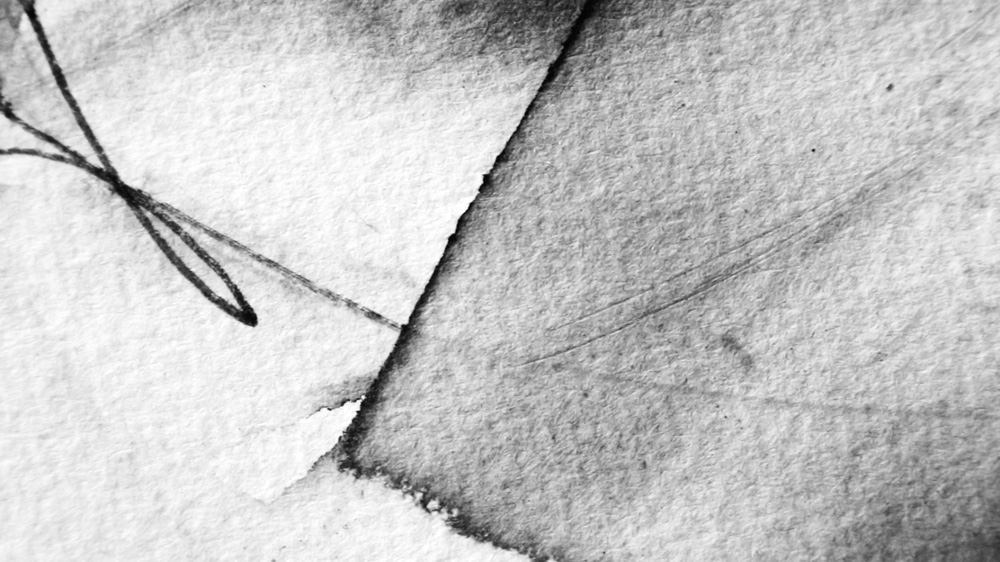
Connected
Video | hdv | black and white | 2:2 | Netherlands | 2014
Connected,a video/drawing of a short journey through fragments of intuitive moments. The work is about following, exploring known/unknown directions, registering, leaving traces,emerging into patterns, maps of the free spirit.
Paul Ritt was born in the Netherlands (1957). He studied monumentale vormgeving at the Academie Beeldende Kunst, Maastricht, (1980-1984). He lived and worked in Australia from 1984 -1999. After studying for the Advanced diploma of Arts in Electronics, design and interactive media at the Royal Melbourne Institute of Technology Melbourne (1997-1998), he started making short films.

Jorge Rivero
La presa
Experimental doc. | 35mm | color | 20:0 | Spain | 2009
Ben Rivers
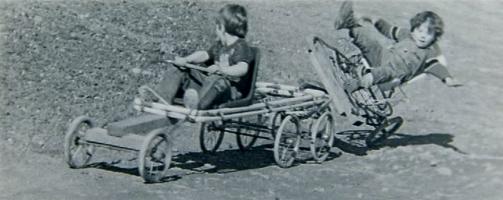
Ah, Liberty!
Experimental doc. | 16mm | black and white | 16:0 | United Kingdom | 2008
A family?s place in the wilderness, outside of time; free-range animals and children, junk and nature, all within the most sublime landscape. The work aims at an idea of freedom, which is reflected in the hand-processed Scope format, but is undercut with a sense of foreboding. There?s no particular story; beginning, middle or end, just fragments of lives lived, rituals performed.
Ben Rivers studied Fine Art at Falmouth School of Art. Since then he has worked predominantly in 16mm film, showing in galleries and international festivals, where he has won a number of awards. Most recent shows include; `If` Bloomberg Space, London; `Nought to Sixty`, ICA, London; `On Overgrown Paths` Permanent Gallery, Brighton.
Ben Rivers
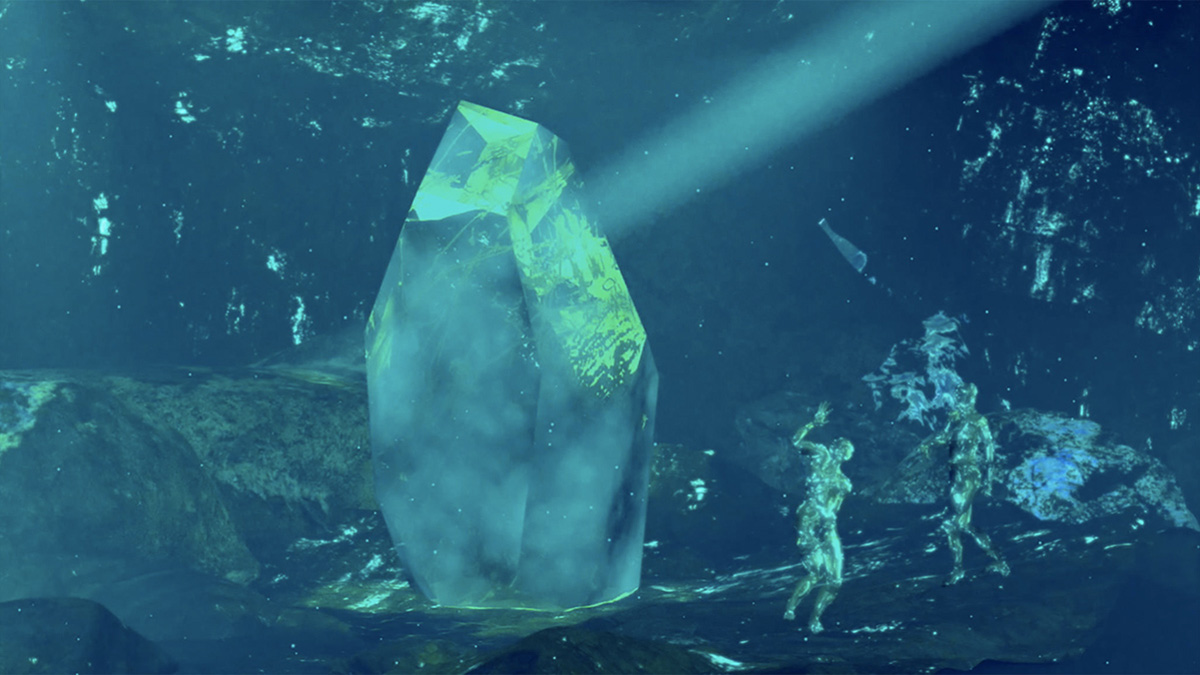
Look Then Below
Experimental film | 16mm | color | 22:30 | United Kingdom | 2019
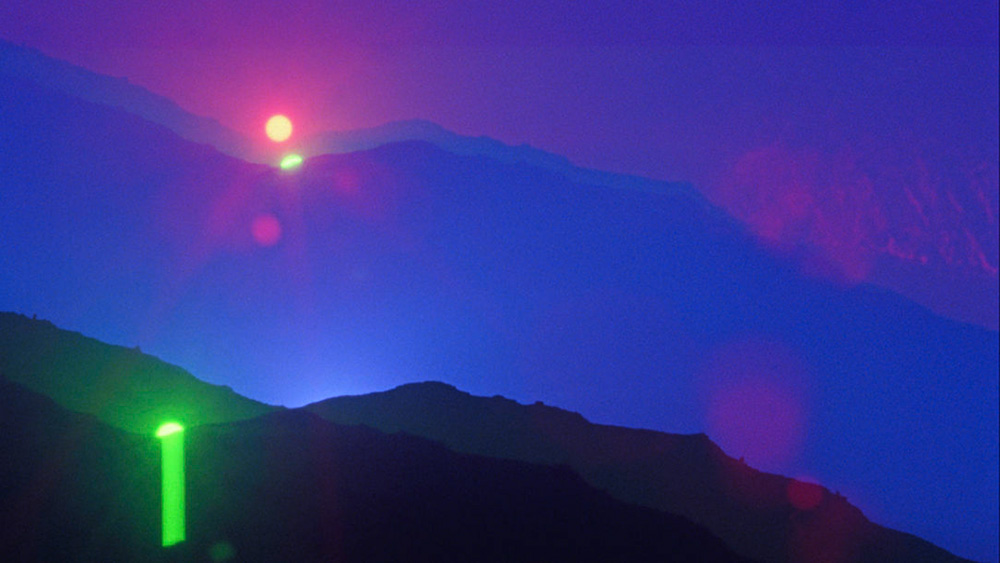
Ben Rivers' films study the otherworldly, looking for places and stories outside the daily conventions of reality. Look Then Below was filmed in a Somerset transformed into a coloured, mist-enveloped island in an oily ocean with a cave basking in a subterranean glow. Time seems to stand still there. After Slow Action and Urth, this is the final part of a trilogy developed with American SF author Mark von Schlegell.
Ben Rivers studied Fine Art at Falmouth School of Art, initially in sculpture before moving into photography and super8 film. After his degree he taught himself 16mm filmmaking and hand-processing. His practice as a filmmaker treads a line between documentary and fiction. Often following and filming people who have in some way separated themselves from society, the raw film footage provides Rivers with a starting point for creating oblique narratives imagining alternative existences in marginal worlds. He is the recipient of numerous prizes including: FIPRESCI International Critics Prize, 68th Venice Film Festival for his first feature film Two Years At Sea; the Baloise Art Prize, Art Basel 42, 2011; shortlisted for the Jarman Award 2010/2012; Paul Hamlyn Foundation Award for Artists, 2010. Recent exhibitions include: Slow Action, Hepworth Wakefield, 2012; Sack Barrow, Hayward Gallery, London, 2011; Slow Action, Mattâ’s Gallery, London and Gallery TPW, Toronto, 2011; A World Rattled of Habit, A Foundation, Liverpool, 2009. Artist-in-focus include Courtisane Festival; Pesaro International Film Festival; London Film Festival; Tirana Film Festival; Punto de Vista, Pamplona; Indielisboa and Milan Film Festival. In 1996 he co-founded Brighton Cinematheque which he then co-programmed through to its demise in 2006 “ renowned for screening a unique programme of film from its earliest days through to the latest artist’s film and video.
Ben Rivers
Trees Down Here
Experimental doc. | 16mm | color | 13:56 | United Kingdom | 2018
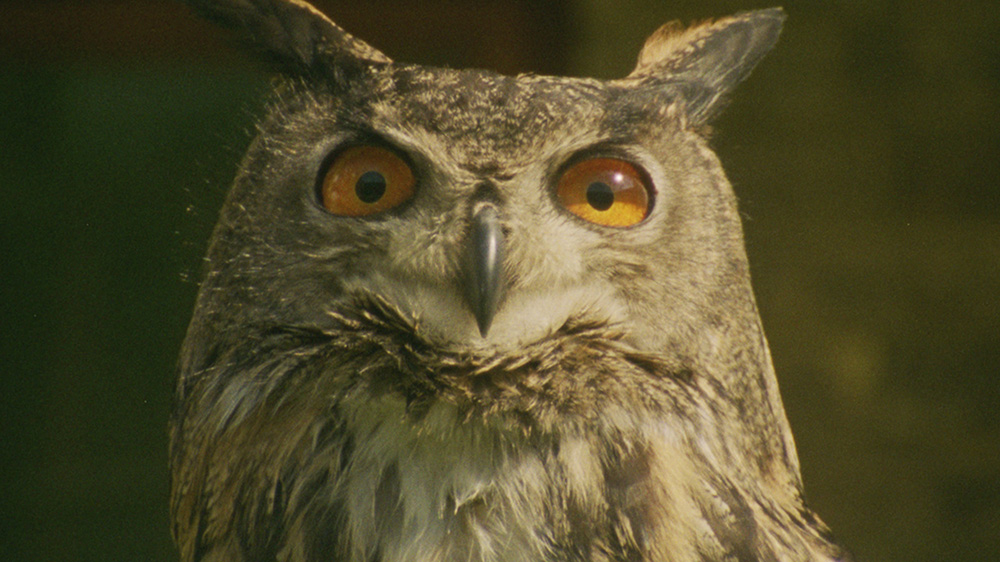
Trees are the silent characters, narrating the architecture and life of Churchill College (opened in 1960) through its natural history. 6’s Cowan Court (completed in 2016) inverted the spatial and material order of the picturesque Brutalism of the original college, shifting its mineral world of brick and shuttered concrete to timber. Cowan Court’s oak, both new and old, defines its structure and in turn encloses a central court filled with recently planted birch trees. The analogue materiality of Churchill College is matched by the film which, like the architecture and landscape, leaves traces of its own development. The human habitat is seen through nature ‘ swaying trees, lost animals, birds of prey, the seasons “ to create a new dreamlike environment in which any distinction between human life, architecture and nature is erased.
Ben Rivers studied Fine Art at Falmouth School of Art, initially in sculpture before moving into photography and super8 film. After his degree he taught himself 16mm filmmaking and hand-processing. His practice as a filmmaker treads a line between documentary and fiction. Often following and filming people who have in some way separated themselves from society, the raw film footage provides Rivers with a starting point for creating oblique narratives imagining alternative existences in marginal worlds. He is the recipient of numerous prizes including: FIPRESCI International Critics Prize, 68th Venice Film Festival for his first feature film Two Years At Sea; the Baloise Art Prize, Art Basel 42, 2011; shortlisted for the Jarman Award 2010/2012; Paul Hamlyn Foundation Award for Artists, 2010. Recent exhibitions include: Slow Action, Hepworth Wakefield, 2012; Sack Barrow, Hayward Gallery, London, 2011; Slow Action, Mattâ’s Gallery, London and Gallery TPW, Toronto, 2011; A World Rattled of Habit, A Foundation, Liverpool, 2009. Artist-in-focus include Courtisane Festival; Pesaro International Film Festival; London Film Festival; Tirana Film Festival; Punto de Vista, Pamplona; Indielisboa and Milan Film Festival. In 1996 he co-founded Brighton Cinematheque which he then co-programmed through to its demise in 2006 “ renowned for screening a unique programme of film from its earliest days through to the latest artistâ’s film and video.
Ben Rivers
Ghost Strata
Experimental doc. | 16mm | color | 45:44 | United Kingdom | 2019
‘Ghost Strata’ refers to the missing elements from within the rock strata that despite their absence offer hints of what was once there. The film is divided into the months of the year in which the footage was captured. Filmed in various places over the globe, charting various personal movements of the filmmaker, Ghost Strata explores the differing scales of impact that humanity’s presence has on the earth in the past, present and into the future. Found sound and text create a meditation on time, memory, leftovers and extinction.
Ben Rivers studied Fine Art at Falmouth School of Art, initially in sculpture before moving into photography and super8 film. After his degree he taught himself 16mm filmmaking and hand-processing. His practice as a filmmaker treads a line between documentary and fiction. Often following and filming people who have in some way separated themselves from society, the raw film footage provides Rivers with a starting point for creating oblique narratives imagining alternative existences in marginal worlds. He is the recipient of numerous prizes including: FIPRESCI International Critics Prize, 68th Venice Film Festival for his first feature film Two Years At Sea; the Baloise Art Prize, Art Basel 42, 2011; shortlisted for the Jarman Award 2010/2012; Paul Hamlyn Foundation Award for Artists, 2010. Recent exhibitions include: Slow Action, Hepworth Wakefield, 2012; Sack Barrow, Hayward Gallery, London, 2011; Slow Action, Matt’s Gallery, London and Gallery TPW, Toronto, 2011; A World Rattled of Habit, A Foundation, Liverpool, 2009. Artist-in-focus include Courtisane Festival; Pesaro International Film Festival; London Film Festival; Tirana Film Festival; Punto de Vista, Pamplona; Indielisboa and Milan Film Festival. In 1996 he co-founded Brighton Cinematheque which he then co-programmed through to its demise in 2006 – renowned for screening a unique programme of film from its earliest days through to the latest artist’s film and video.
Ben Rivers
Origin of the Species
Experimental doc. | 16mm | color | 16:0 | United Kingdom | 2008
?Some things didn?t really matter, you know, some mutations didn?t matter all that much?they were neither beneficial to survival nor detrimental to survival?but if they just hung on, there?d come a time when?that was the thing that saved the day.? Charting the beginnings of the time, through the descent of man, on to an uncertain future - all shot throughout the seasons in the garden of S, who lives in the wilderness and builds contraptions.
Born 1972. Studied Fine Art at Falmouth School of Art. Co-founded and programmed Brighton Cinematheque from 1996-2006. He has exhibited at many international film festivals and galleries, winning various awards, including Tiger Award, IFF Rotterdam 2008. He has been the recipient of a number of commissions, most recently a London Artist?s Film and Video Award. Recent shows include; ?A World Rattled of Habit? A Foundation, Liverpool; ?An Entangled Bank? Talbot Rice Gallery, Edinburgh; and artist-in-focus screenings in Courtisane Festival; Pesaro International Film Festival, London Film Festival, Punto de Vista, and upcoming at Tirana Film Festival and Indielisboa.

Ben Rivers
The House Was Quiet
Experimental film | 16mm | color | 4:25 | United Kingdom | 2020
The parts of a house: a door, the shabby ceiling, the wooden floorboards, the portrait of a little girl. And the crackling of the 16mm film on which they are printed, "concrete" like the objects he films and in opposition to the fading of things in the pixels of digital. The verses of a poem by Wallace Stevens accompany the images: "The house was quiet and the world was calm/the reader became the book/and the summer night was like being aware of the book". In the succession of verses - and in the repetition of the days locked in the house during the lockdown - the reader, the book, the house and the summer night become one, cradled by the crackling of the film.
Ben Rivers studied Fine Art at Falmouth School of Art, initially in sculpture before moving into photography and super8 film. After his degree he taught himself 16mm filmmaking and hand-processing. His practice as a filmmaker treads a line between documentary and fiction. Often following and filming people who have in some way separated themselves from society, the raw film footage provides Rivers with a starting point for creating oblique narratives imagining alternative existences in marginal worlds. He is the recipient of numerous prizes including: FIPRESCI International Critics Prize, 68th Venice Film Festival for his first feature film Two Years At Sea; the Baloise Art Prize, Art Basel 42, 2011; shortlisted for the Jarman Award 2010/2012; Paul Hamlyn Foundation Award for Artists, 2010. Recent exhibitions include: Slow Action, Hepworth Wakefield, 2012; Sack Barrow, Hayward Gallery, London, 2011; Slow Action, Mattâ’s Gallery, London and Gallery TPW, Toronto, 2011; A World Rattled of Habit, A Foundation, Liverpool, 2009. Artist-in-focus include Courtisane Festival; Pesaro International Film Festival; London Film Festival; Tirana Film Festival; Punto de Vista, Pamplona; Indielisboa and Milan Film Festival. In 1996 he co-founded Brighton Cinematheque which he then co-programmed through to its demise in 2006 “ renowned for screening a unique programme of film from its earliest days through to the latest artistâ’s film and video.
Ben Rivers
The Coming Race
Experimental film | 16mm | black and white | 5:0 | United Kingdom | 2006
The Coming Race (2006, 5 min, 16mm, b/w, Ireland) A hand processed film in which thousands of people climb a rocky mountain terrain. The destination and purpose of their ascension remains unclear. A vague, mysterious and unsettling pilgrimage fraught with unknown intentions. The title ?The Coming Race? is after a Victorian novel by E.G.E. Bulwer-Lytton, about a race of people who live under a mountain.
Studied Fine Art at Falmouth School of Art. Co-founded and programmed Brighton Cinematheque from 1996-2005, while developing his artistic practice -predominantly working with moving-image. He has exhibited at many international film festivals and galleries, and won various awards, most recently Jury Prize at IFF Rotterdam. He has been the recipient of a number of commissions, most recently a London Artists Film and Video Award, for which he will make a new work: « Origin of the Species ». Current/upcoming shows include 'If' Bloomberg Space, London, 'Art with Strangers' Turnpike Gallery, Leigh, and solo show with Measure, London, and retrospective screenings in Chicago, Hull IFF and Courtisane, Ghent.
Ben Rivers
There is a Happy Land Further Awaay
Experimental film | 16mm | color and b&w | 20:0 | United Kingdom | 2015
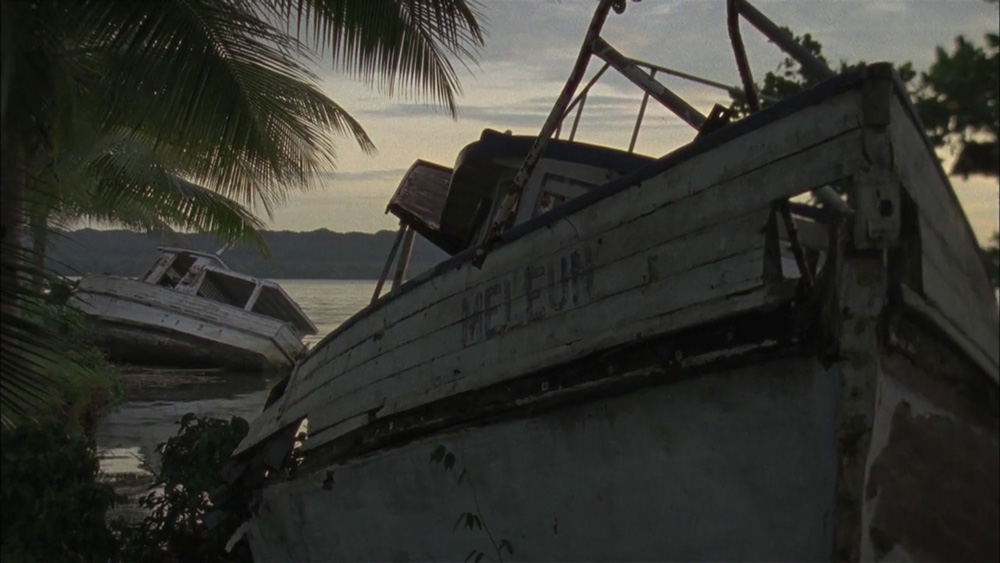
THERE IS A HAPPY LAND FURTHER AWAAY (20 mins, S16, col/b+w, 2015) There Is A Happy Land Further Awaay (2015), captures the landscapes of the remote volcanic Republic of Vanuatu archipelago, before they were devastated by Cyclone Pam in early 2015, the footage becoming a ghostly document of an ecosystem now irrevocably altered. A hesitant female voice reads a poem by Henri Michaux, recounting a life lived in a distant land, full of faltering and mistakes. Island imagery of active volcanoes, underwater WW2 debris, children playing, and wrecked boats transform into intangible digital recollections of the island, made on the opposite side of the world. Images of the eroded land merge with eroding film, a lone figure on a boat drifts at sea.
Ben Rivers (born in 1972) is an artist and experimental filmmaker based in London. His work has been shown in many film festivals and galleries around the world and has won numerous awards. His work ranges from themes about exploring unknown wilderness territories to candid and intimate portrayals of real-life subjects. Rivers`s practice as a filmmaker treads a line between documentary and fiction. Often following and filming people who have in some way separated themselves from society, the raw film footage provides Rivers with a starting point for creating oblique narratives imagining alternative existences in marginal worlds. Rivers uses near-antique cameras and hand develops the 16 mm film, which shows the evidence of the elements it has been exposed to – the materiality of this medium forming part of the narrative.
Ben Rivers
The Hyrcynium Wood
Experimental film | 16mm | black and white | 3:0 | United Kingdom | 2005
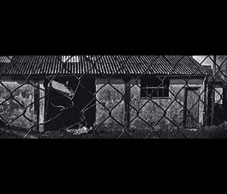
A fragmented narrative and exploration of abandoned spaces, using film sounds and music to create suspense and play with audience expectations.
Ben Rivers studied Fine Art at Falmouth School of Art. Since then he has worked predominantly in 16mm film, showing in international festivals, galleries, and UK theatres. In 1996 he co-founded and has since co-managed/programmed Brighton Cinematheque.
Faozan Rizal
Yasujiro Journey
Experimental fiction | dv | color | 46:0 | Indonesia | 2006
"Yasujiro's journey" is a portrait of a fictional wandering, that of Yasujiro Yamadawho, who, in 2002, travelled in Indonesia in search of his grandfather, whose name he inherited. This grandfather had apparently been a Japanese soldier who survived a plane crash above Indonesia, on his way to Pearl Harbour in 1942, but who never returned home. The journey is not as much a quest in the literal sense to find the elderly man, as it is a spiritual search through this foreign landscape his ancestor crossed. The fact that he doesn't find what he is looking for, and that he doesn't find himself, is particularly significant in one scene, in which he piles up stones until filling the height of the screen, then moves away, unsatisfied, knocks them over, and builds a new mound. The sound of the wind, very present throughout the film, functions as a warning, as if a Socratic demon was warning him of an error. The theme of the journey is central in this film, and in the filmmaker's works. He questions his native country and the former generations who never lived in an urban environment. Faozon Rizal also wills to explore the landscape from a foreigner's point of view, and it is significant that the protagonist of this wandering is Japanese.
Faozan Rizal is a young Indonesian filmmaker. His films were the object of an unofficial retrospective at the 18th International Singapore Film Festival in 2005. He has produced several experimental short films or films situated at the frontiers of various practices. He explores the qualities and textures of a film and the regions between cinema and photography. He has also produced a series of medium-length films of about thirty minutes, in collaboration with the dancer Katia Engel, in which dance and photography are so intimately linked that it would be an error to describe them simply as experimental films. It would actually be very difficult to imagine the performance without its transcription on film. The interweaving of different art forms is not surprising in the work of Faozan Rizal, who studied and practiced Javanese Dance in his youth, then painting before joining the Fémis. He has been an actor, a director of photography, a screenwriter and a producer. His work goes beyond linear narration. He expresses feelings and conveys ideas through the juxtaposition of concrete and specific images, the repetition of movements and the use of long sequence shots. His films do not present a transparent narration, but the sound is highly significant. Rizal did not abandon the idea of storytelling, but he gave up what was not necessary to the core of narration, the core being the very essence of narration.

Riar Rizaldi
Kasiterit
Experimental fiction | hdv | color | 18:22 | Indonesia | 2019
One-third of the global tin supply is extracted from Bangka island in Indonesia. Tin is the most impacted mineral by the upcoming technological development, which includes artificial intelligence and technology for renewable energy. Natasha is a solar-powered A.I. voice, and in this film, they trace their genealogy and the truth of their origin; from the capital liquidity to labour dynamic. With their feminised voice—as quite often performed by other AI-powered voice assistants produced by tech-companies, Natasha narrates the emergence of tin in Bangka island and their existence from the perspective of tropical anthropology of nature, value theory, philosophy of time, genetic mutation, geopolitics, and automation.
Riar Rizaldi works as an artist and researcher. Born in Indonesia and currently based in Hong Kong. His main focus is on the relationship between capital and technology, extractivism, and theoretical fiction. Through his works, he questions the notion of image politics, materiality, media archaeology and unanticipated consequences of technologies. He is also actively composing and performing sonic-fiction using the methods of field recording and foley through programming language. Riar has also curated ARKIPEL Jakarta International Documentary & Experimental Film Festival — Penal Colony (2017), Internet of (No)Things (2018) at Jogja National Museum and co-curated Open Possibilities: 'There is not only one neat way to imagine our future' at JCC, Singapore & NTT ICC, Tokyo (2019-2020). His works have been shown at Locarno Film Festival, BFI Southbank London, International Film Festival Rotterdam, NTT InterCommunication Center Tokyo, and National Gallery of Indonesia amongst others.
Riar Rizaldi
Notes from Gog Magog
Experimental doc. | 0 | color | 19:32 | Indonesia | 2022
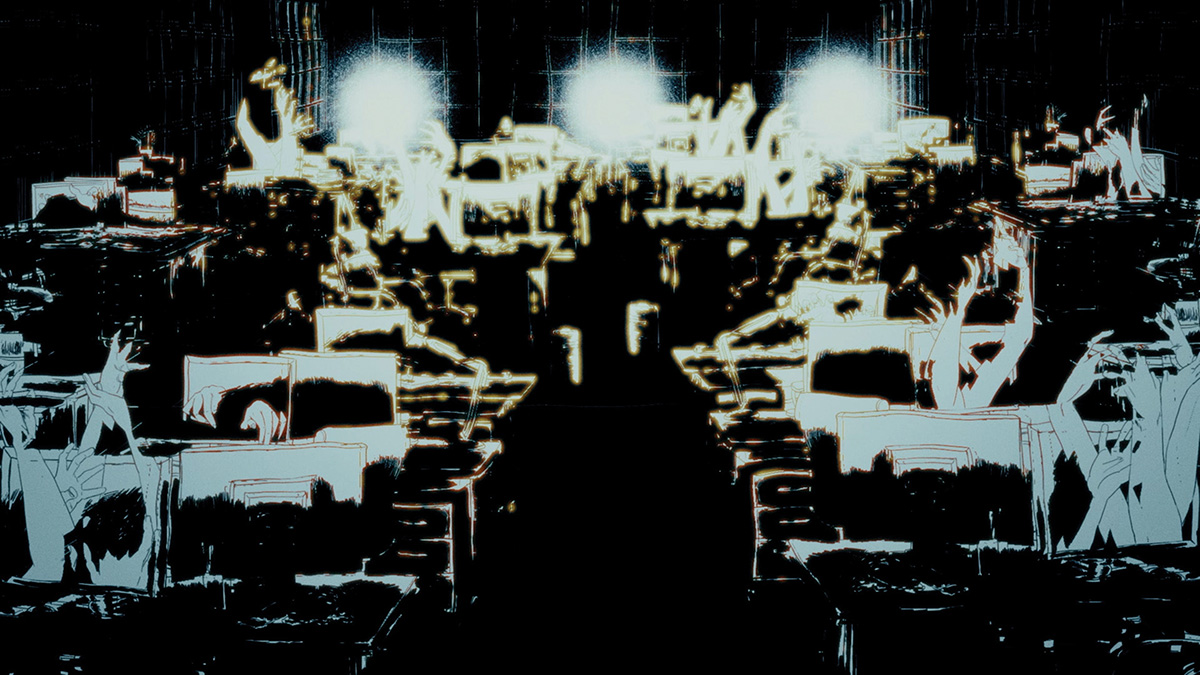
An exploration of the interconnection between ghost stories, tech company culture in South Korea, and the economy of logistics in Indonesia told through a notebook/premake film and dossier of an unmade techno-horror feature-length film set in between port in Jakarta and an unnamed employee assistance programme office in Seoul.
Riar Rizaldi works as an artist and filmmaker. He works predominantly with the medium of moving images and sound, both in the black-box of cinema settings as well spatial presentation as installation. His artistic practice focuses mostly on the relationship between capital and technology, labour and nature, worldviews, genre cinema, and the possibility of theoretical fiction. His works have been shown at various international film festivals (including Locarno, IFFR, FID Marseille, Viennale, BFI London, Cinema du Reel, Vancouver, etc) as well as Centre Pompidou Paris, NTT InterCommunication Center Tokyo, Taipei Biennial, Istanbul Biennial, Venice Architecture Biennale, Biennale Jogja, National Gallery of Indonesia, and other venues and institutions. In addition, solo exhibitions and focus program of his works had been held at Batalha Centro de Cinema, Porto and Centre de la photographie Genève amongst others.

Dylan Rizzo
Nogooddream
Experimental film | 35mm | color | 3:14 | USA | 2024
A man wakes up in a nightmare where he finds his grandmother's favorite tree burning outside his window, and is haunted by whispers of his childhood. The text is adapted from a page in my notes app dedicated to things my younger sister says that I find strange, or sad, or hopeful. The images are from a recurring nightmare. This film was shot on 500 ft of 5219 Kodak 35mm film stock.
Dylan Rizzo is a filmmaker and photographer based in New York City. He is currently pursuing his MFA in directing at Brooklyn College’s Feirstein Graduate School of Cinema. His work draws from his experiences as a native New Yorker and Chinese - Italian American, often dissecting the meaning of memory and how reconciling the past informs the process of becoming. Last year he completed a 18 min short film titled “One Day I’ll Open My Fist”, shot on location in NYC’s Chinatown on 16mm film. It is currently being submitted to festivals.
Louis Rizzo Naudi
In Here
Experimental fiction | mov | color and b&w | 8:50 | United Kingdom | 2024
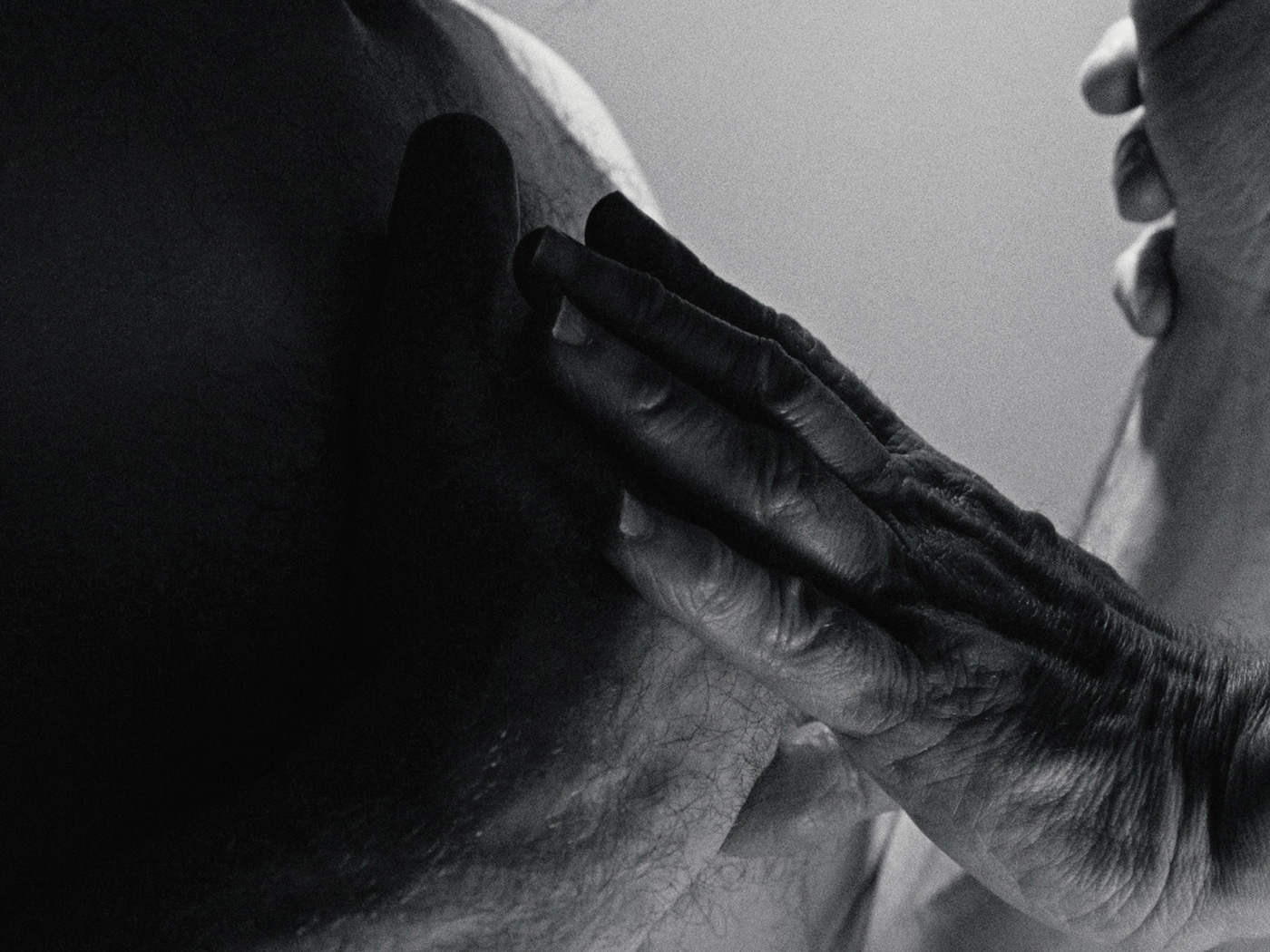
“We dream of travelling through the universe… is the universe, however, not within us? We do not know the depths of our spirit. The mysterious path leads inwards. Eternity, with its worlds of past and future, is in us or nowhere. The outward world is the world of shadow; it throws its shadow into the realm of light. At present, it indeed appears so dark, lonely, formless inside; but how completely different it will seem to us when this eclipse has passed, and the body and shadow have moved away. We will enjoy more than ever, because our spirit has been deprived.” — Novalis, ‘Pollen’ (1798). Translated and adapted from the original German publication, with assistance from W. Hastie’s English translation in ‘Hymns and Thoughts on Religion’ (1888).
Louis Rizzo Naudi is a British-Maltese filmmaker. His practice explores the experience of the sublime and the constructed nature of visual perception, with his camera often focussed on natural phenomena, landscapes, and technology. He holds a B.A. in Film Studies from King’s College London, where he was awarded the Film Studies dissertation prize for his essay on the sublime in footage of the International Space Station, and an M.Sc. in Cognitive and Evolutionary Anthropology from the University of Oxford, where he researched how sublime experiences may lead to increased prosocial behaviours, such as generosity. His films have screened across Europe, including International Film Festival Rotterdam, Karlovy Vary International Film Festival, the British Film Institute, and the Tate St. Ives, and have also been used as relaxation aids in hospitals for patients undergoing medical procedures.
Michael Robinson
The Dark, Krystle
Experimental fiction | dv | color | 9:34 | USA | 2013
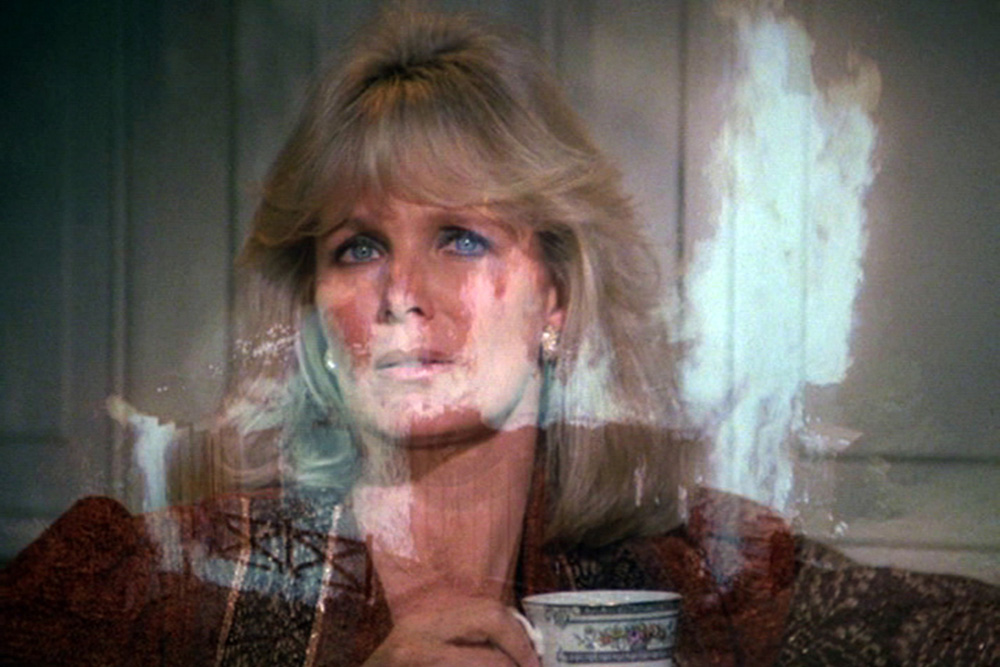
The cabin is on fire! Krystle can't stop crying, Alexis won't stop drinking, and the fabric of existence hangs in the balance, again and again and again. – MR "The Dark, Krystle brilliantly re-purposes the artificiality of stock gesture, allowing viewers to see its hollowness and to feel it recharging with new emotional power. Equal parts archival fashion show and feminist morality play, Robinson’s montage rekindles the unfinished business of identity, consumption, and excess in 1980s pop culture." - Carrie Secrist Gallery, Chicago
Michael Robinson (b.1981) is an American film, video and collage artist whose work explores the joys and dangers of mediated experience, riding the fine lines between humor and terror, nostalgia and contempt, ecstasy and hysteria. His work has shown in both solo and group shows at a variety of festivals, museums, and galleries including The 2012 Whitney Biennial, The International Film Festival Rotterdam, The New York Film Festival, The BFI London Film Festival, REDCAT Los Angeles, MoMA P.S.1, The Sundance Film Festival, The Walker Art Center, Anthology Film Archives, Kurzfilmtage Oberhausen, Viennale, and Whitechapel Gallery in London. Michael was the recipient of a 2012 Creative Capital grant, a 2011-2012 Film/Video Residency Award from The Wexner Center for the Arts, a 2009 residency from The Headlands Center for the Arts, and his films have received awards from numerous festivals. He was featured as one of the “50 Best Filmmakers Under 50” by Cinema Scope magazine in 2012, and listed among the top ten avant-garde filmmakers of the 2000`s by Film Comment magazine. His work is distributed by Video Data Bank and Carrie Secrist Gallery in Chicago.
Andrea Robles, Adriana BRAVO
El Fish
Animation | dv | color and b&w | 4:7 | Mexico | 2008
This animation dives into the daily world of Benjamin. The soundtrack was constructed based on his emotional states. It is made by sounds produced by himself and by sounds that fascinate him. The images in this work are an attempt to interpret Benjamin′s perceptions and sensations.
Robles obtained a bachelor degree in Visual Communication in 1999. During her studies she took a workshop in animation where she made a spot for the UNICEF. This spot was awarded the first prize in the ″Television and Video Festival ANUIES 2000″ (National Association of Universities and Institutions for Education). In 2001 she formed the collaboration group dobleA (doubleA) together with Adriana Bravo. Since then they have produced all their work in collaboration. In 2002 Robles attended a workshop given by Jesse Lerner at the Centro de la Imagen (Image Center) where she created "Mirada pérdida" (Lost sight). It is an animation piece done with objects. In the same year she produced "Contemplación" (Contemplation) and "Experimento" (Experiment). She conceived the work "Anatomy of a Moth on 2004". This animation of pencil drawings won a grant from ″Consejo Nacional para la Cultura y las Artes″ (Arts and Culture National Council). During the same year she received the Jóvenes Creadores 2004-2005 stipend (Young Creators 2004-2005) from "Fondo National para la Cultura y las Artes" (Arts and Culture National Fund). Within this period Robles produced "Microftalmía" (Microphthalmie), an experimental animation of oil drawings on glass.
João Pedro Rodrigues
O corpo de Afonso
| | | 32:0 | Portugal | 0
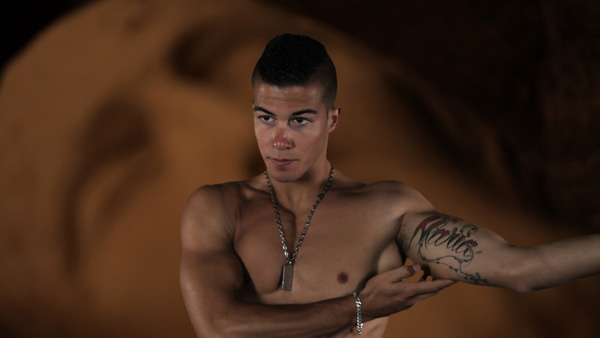
How would it look like, the body of Dom Afonso Henriques, first king of Portugal, tutelary figure, subject to successive mythifications throughout Portuguese history?
Born in Lisbon in 1966. Pedro Rodrigues attended the Lisbon Film School, in which he graduated in 1989. From 1989 to 1996 he worked as assistant director and editor with well-known names of the portuguese cinema, such as Teresa Villaverde. His short ?Parabéns!? (1997) participated at the Cinema Festival of Venice of 1997 and received a special distinction of the Jury. And his feature, ?O Fantasma?, of 2000, received the Award for the Best Foreign Feature Film at the Cinema Festival of Belfort in the same year. Recently he directed ?Odete?, Special Mention from Cinémas de Recherche in Cannes 2005, Director?s Fortnight .

Francisco Rodriguez Teare
Octubre al mediodía
Experimental doc. | 16mm | color | 12:0 | Chile | 2024
A spring afternoon on the San Cristobal hill, in downtown Santiago de Chile. Four friends and a sound engineer talk about the events seen and experienced during the popular revolt that began in 2019 in Chile. The film brings to the surface certain conversations related to any revolution: hope, disillusionment, fire, torture and police violence. The name of the film comes from the poem April Noon by Eileen Myles.
Francisco Rodríguez Teare is a Chilean artist and filmmaker based in France with a moving image practice working predominantly with film, video and installation. Since 2015 he has been creating works and exhibiting them both in film festival circuits and contemporary art contexts. He has directed the shorts Appels téléphononiques, Una luna de hierro, Why are they equipped with eyes ?, Octubre al mediodía, El oro y el pez. The video installations and performances Gois, Colored Procession, This dream is mine and the hybrid feature film Otro sol. Recently his work has been presented at film festivals and museums as New Directors/New Films at MoMA, Toronto FIlm Festival, 62 New York Film Festival, Centre Pompidou, Taipei Biennial, Stedelijk Museum, Cinémathèque Française, Mar del Plata IFF, CPH:DOX, Shanghai IFF, IndieLisboa, FID Marseille, Viennale.