Catalogue > Search
Results for : Tout le catalogue
Joel Autio
Älä itke minua, äitini
Fiction | 16mm | color | 6:33 | Finland | 2014
Nika Autor
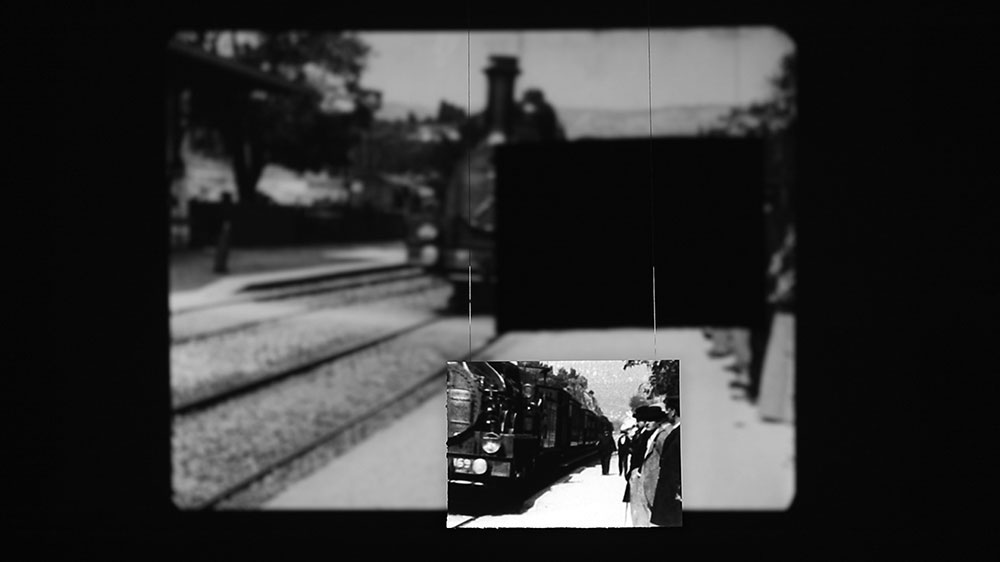
Newsreel 63 - The train of Shadows
Experimental doc. | hdv | color and b&w | 39:0 | Slovenia | 2017
Newsreel 63 follows newsreel-related practices and tries to position and understand a particular image a shred of video taken on the once famous Belgrade - Ljubljana rail-line, where refugees now travel not in couchettes but between the trains wheels. Newsreel 63 drifts into a visual investigation of railways and explores its historical, social and political narrative. The essayistic and associative elements of Newsreel 63 link this historical narrative to our pursuit of happiness, the idea of voyage in the current social constellation, where our longing for happiness is all too often tied to the idea of travelling somewhere or indeed the need to secure the means for mere basic survival.
Nika Autor finished her studies at the Academy of Fine Arts in Ljubljana (BA and MA) and finished her PhD in Practice at Academy of Fine Arts Vienna. Her practice is primarily based on experimental videos and documentary films, film essays, newsreels and spatial video and film installations. The focus of her work is a research of the invisibilities/ inaudibilities dealing with concealed topics of the forgotten past and the silenced present. Her work focuses on the production of particular images, specific constructions of collective memory as well as on personal/oral narratives and examines asylum and migration policies, workers rights and politics of memory. She is part of the collective Newsreel Front (Obzorniška Fronta), an informal collective of workers coming from the field of film theory and art practice.

Mariette Auvray
A nos parts absentes
Experimental film | super8 | color and b&w | 5:0 | France | 2024
I wanted to know what it was like to turn around on people we loved, and to remember our absent parts. This film is the first part of a series of short films in super8 that I start, between the newspaper, travelogue and film-poem, on fragments of my life between 2009 and 2020. I also compose the music, under my stage name Marie Delta.
Mariette Auvray (born in Mâcon, 1986) is a French filmmaker and musician based in Montreuil. She holds a Master’s degree in Cinema from the University of Paris I Panthéon-Sorbonne and the University of Toronto (Innis College), as well as a Master’s degree from the University of Strasbourg in documentary filmmaking. She is also a graduate of the ENSAD (Ecole Nationale Supérieure des Arts Décoratifs) in Paris. Since 2004, her artistic practice has focused on creating documentary films, experimental super8 film-poems, and music videos. Her films depict the contemporary world from an intersectional feminist perspective. She is also interested in memory, cultural heritage, and specifically, matrimoines. Her works often emerge from a process of documentation and encounters, drawing inspiration from cinema, visual arts, choreography, and music. She views her work as a form of human ecology, collaborating with other artists and exploring art as a therapeutic process. She currently hosts the quarterly radio show « Après la fin » on Station Station radio, which focuses on contemporary creation. Her films have won several awards, including the Les Etoiles de la Scam Award, the Best Short Film Award at the Créteil Women’s Film Festival, the Gautier-Delaye Award, the Audience Award at the Lille International Film Festival, the Best Short Film Award, and the Best Documentary Award at the University of Toronto Film Festival. Her film « Goodbye Jerusalem » received the Brouillon d’un Rêve grant from Scam and the Louis Lumière grant from the Institut Français. She has had residencies at the Cité Internationale des Arts in Paris, Tokyo Wonder Site in Tokyo, and Residencia Sao Joao in Brazil. Her work has been exhibited in various institutions and exhibitions, including Tokyo Arts and Space in Japan, MAMC in Saint-Etienne, Centquatre in Paris, Centre Pompidou (part of the « Mon Oeil » program), and on Arte. Her documentaries have been featured in Courrier International, Pan African Music, LCP, and BBC Arabic. Her films are distributed by Beliane and the Collectif Jeune Cinéma, and her « Goodbye Jerusalem » is available on the Tënk platform. She also participated in a performance titled « Galop » at the Musée de Saint-Etienne alongside the Franco-Gabonese artist Myriam Mihindou (Venice Biennale), who practices transperformance. From 2016 to 2019, Mariette was in charge of the video studio at ENSCI-Les Ateliers, and between 2021 and 2022, she was part of the audiovisual team at Sciences Po as a filmmaker. She now teaches a course in interactive documentary (video integrated in rich media format) at Gustave Eiffel University in Marne-la-Vallée and occasional workshops focused on new audiovisual forms related to the theme of the living (social media, 360°). In addition to her work as a filmmaker, Mariette has also written columns and interviews for various magazines (Vice, ONORIENT). As a former member of the post-punk bands Pussy Patrol, Eyes Behind, and BCBG, she toured in Europe, China, Korea, Australia, the United States, and Brazil with her various groups. She now performs solo under the moniker Marie Delta.

Vartan Avakian
Short Wave / Long Wave
Documentary | 0 | color | 9:0 | Lebanon, France | 2009
Behind the sea, when the weather was clear, stood a city with a high skyline and big structures. It looked like cities in films. Actually, it looked like New York in American films and TV series. I believed it was America. Some cities have no sound, some have no name. In my lovely hometown Jbeil, I was called "the Armenian" by my neighbors and my friends. When my father was still a kid, his name changed from Hampartsoum Avakian to Antoun Al-Armani, Anton the Armenian. To save my name, I searched for the anonymity of urban life.
Vartan Avakian is a visual artist and researcher born in Byblos (Lebanon) in 1977. His work is inter-disciplinary employing video, installation, photography and pop media. He studied Communication Arts (film and theatre) at the Lebanese American University and worked professionally in media production and scenic design. He is currently pursuing graduate studies in Architecture and Urban Culture at the Universitat Politècnica de Catalunya and the Centre de Cultura Contemporània de Barcelona. He is a founding member of the art collective Atfal Ahdath.

José Maria Avila
Pista de aterrizaje
Experimental doc. | mov | color | 30:0 | Ecuador | 2023
The video is set in Karakam, an Achuar indigenous community in the Ecuadorian Oriente. The Achuar have been nomadic in this area since ancient times. Following the construction of an airstrip, several families settled permanently in the surrounding area. Using documentary strategies, Landing Strip immerses the viewer in the temporality of Karakam, inviting them to participate in moments of communal gathering and work. The montage of the work is determined by the gaze of each viewer, who has to choose between one screen and the other. The sound reflects the atmosphere of the place and is also the starting point for the imaginary and the unexpected. Landing Strip blurs the boundaries between past/present/future and nature/culture.
José María Avilés (1988, Cuenca, Ecuador), is a filmmaker and artist based in Barcelona. He studied Film Directing in Buenos Aires and holds a Master's Degree in Filmmaking from the Elías Querejeta Zine Eskola in San Sebastian. He wrote and directed the feature film Al Oriente (Venice International Film Festival 2021) and La muerte del maestro (Rotterdam International Film Festival 2018) and the short films La enorme presencia de los muertos (San Sebastian Film Festival 2019), Speed Paradise (BAFICI, Buenos Aires International Independent Film Festival, 2015), Conversaciones en el jardín (BAFICI, Buenos Aires International Independent Film Festival, 2014) and Ricchieri (Ciudades reveladas, Buenos Aires, 2013).
Juana Awad, Jorge LOZANO
Ideology
Experimental video | super8 | color | 4:30 | Colombia, Canada | 2005
Shattering taboos about the politically correct and debunking dominant social constructions, "Ideology" takes a sudden turn.
Juana Awad and Jorge Lozano are Colombian born multi-disciplinary artists living in Toronto. They have collaborated on several film/video projects and are co-directors of the AluCine Toronto Latino Film and Video Festival and AlucinArte International Multidisciplinary Arts Festival.
Christine Ayo
Ikoce Volume I
Experimental doc. | mp4 | color | 10:48 | Uganda | 2020
An uncanny narrator searches for the meaning and form of a mysterious cultural performance speculated to have started after the second world war, in Northern Uganda. As the search unfolds, the film sonically and anecdotally questions notions of cultural legacy, kinship, individual and collective memory.
Ayo is a Ugandan born visual artist and filmmaker currently based in The Netherlands. Her practice is based on a desire to seek out counter narratives, and to explore both pleasurable as well as uncomfortable ways of re-telling histories. Recent projects investigate intangible forms of cultural heritage and informal knowledge production held by unofficial bodies. Ayo holds an MA in Fine Art (cum laude) from the Piet Zwart Institute in Rotterdam.
Azzoro Group
Proposal
Experimental video | dv | color | 1:52 | Poland | 2003
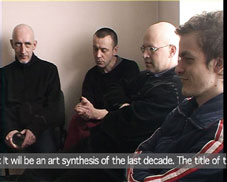
In "Proposal", a group is sitting in an office, arranged in a circle. The members are listening to a message that was left on their answering machine. A curator or representative of a gallery makes them a proposal for participation in an exhibition at that gallery. A long list of questions and restrictions follows. The voice emphatically expresses the hope that they will not be discouraged by how little the gallery has to offer them. The Polish artists' collective Azzoro Group will never miss an artistic occasion to ridicule that occasion, themselves included. In their performances, photos and videos, they manifest themselves as a couple of clowns who mock the entire circus of exhibitions and curators. This does not include much talking or writing, but rather, much posing and laughing. Corny acts are their trademark.
Kati åberg
GIG
Experimental film | 35mm | color | 3:36 | Finland | 2007
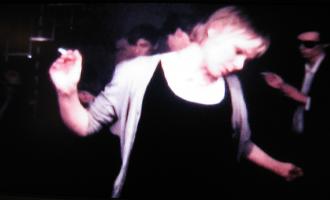
A three minute video of people attending a club gig. Instead of the performance onstage the attention focuses on clubgoers observing each other.
Liisa Lounila (b.1976) lives and works in Helsinki. Her main mediums are experimental film/video, photography and painting. Her works usually deal with an obscure need for change, great expectations and places of potential. Usually her pictures, both still and moving, have their background in movies, yellow papers, lifestyle magazines and pop lyrics.
Anna ådahl
Di-Simulated Crowds
Experimental fiction | hdv | color and b&w | 13:0 | Sweden | 2018
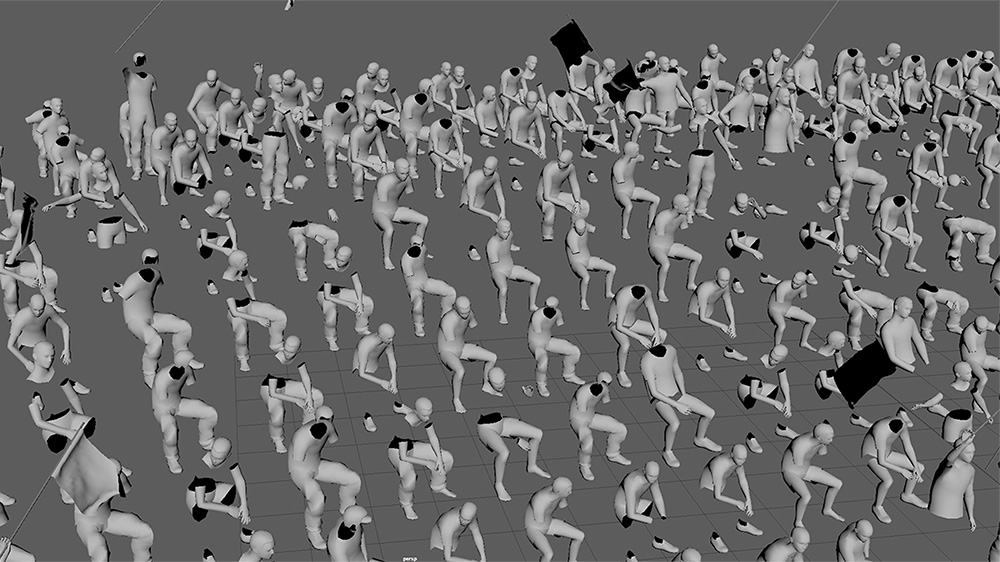
"to conceal what one is, rather than to pretend to be what one is not" Film in triptych format with common soundtrack. Three channelled video. 13 mins. The film focuses on the vocabulary, tools and human representation in the various types of software that is used for modelling and tracking crowd behaviour. Featured in the film are examples from online crowd simulation tutorials: coordinated swarms, mass body crushes, campsites and religious gatherings such as the Hajj in Mecca. These examples are juxtaposed with newly shot scenes of gestures and postures drawn from the simulated crowd agent, the default character, pre-programed behaviour re-enacted by dancers and images from human tracking devices and. images from human tracking devices and The voice-over interlaces the information and the instructions from the software tutorials generated by a speechedit software/robot voice, with the artist's own voice and thoughts. The film addresses the aesthetics and politics of these softwares and tracking system where these digital tools used for monitoring today´s crowd flows and behaviour are becoming increasingly political while facing ethical dilemmas. Sheding new light on the digitisation and simulations of crowds, their interconnected technologies and their inherent potentiality to predict and model our future collective behaviour. This film is part of my ongoing research, practice-based PhD at the Royal College of Art in London, Prediciting Crowds. The aesthetics and politics of digitized and simulated crowds.
Anna Adahl is a visual artist and researcher working in various mediums such as film, installations, performance and collage. She uses the tools of assemblage and montage where found footage meets newly shot images and where ready-mades are used as props in spatial narratives. In 2015 she started her practice-led PhD adressing the aesthetics and politics of digitized and simulated crowds. Over the past decade the notion and politics of crowds has been central in Anna Adahl's artistic practice. In numerous works she has been observing and examining the relationship between the individual and the mass as well as the language of the body in relation to the psychological, physical or political space that surrounds it. Within her current practice based research her focus has turned towards the conditions, the aesthetics and the politics of contemporary crowds, operating in a new computational realm. Her work has been presented and exhibited internationally including: Marabouparken Art Gallery, Stockholm (2018); Moderna Muséet, Stockolm (2018); Festival des Cinémas Differents et Experimentaux de Paris (2018); Nanjing International Art Festival, China (2017), Whitechapel Gallery, London, UK (2016); Lofoten International Arts Festival, Norway (2015); CCA Derry-Londonderry, Northern-Ireland, UK (2015); FRAC Champagne-Ardenne, Reims, France (2013).
Anna ådahl
Default Character
Video | hdv | color | 13:32 | Sweden | 2016
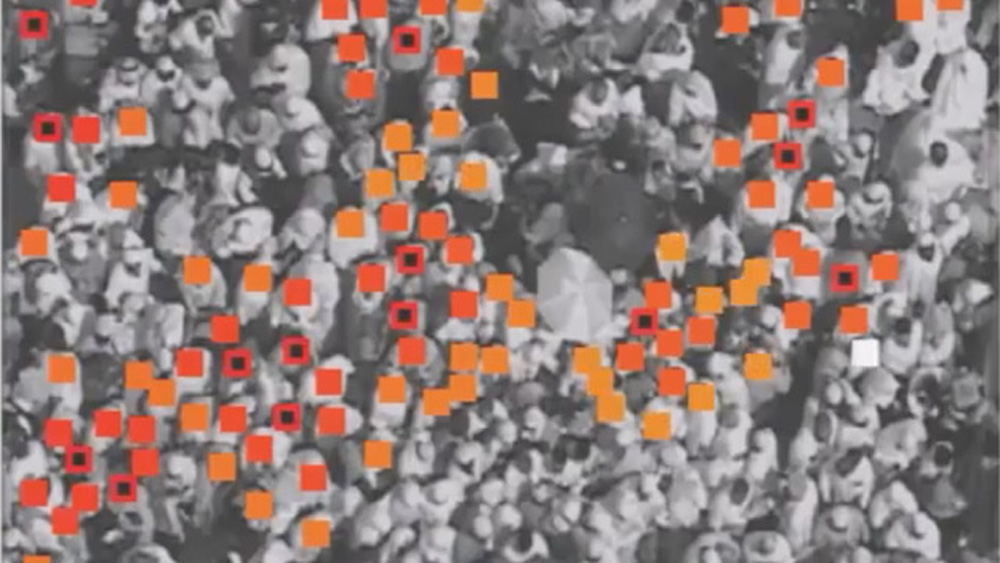
The film Default Character focuses on the vocabulary, tools and human representation of the softwares proposing and tracking the crowds behaviour, adressing the impact of how default settings produces an image of the algorithmically programmed human body. The film include images from online tutorials of crowd simulation programs ,human tracking devices and newly shot scenes (performed by dancer Pelle Andersson). The featured examples given by these tutorials and showreels are perfectly coordinated swarms, mass body crushes, camp sites and religious gatherings such as the Hadj in Mecka. Crowd simulations which are mainly used for crowd management and Hollywood production use a multi-agent simulation framework which is a computational methodology that allows building an artificial environment populated with autonomous agents which are capable of interacting with each other. The human tracking devices, track, study and accumulate statistics on our collective behaviour, while the crowd simulation proposes it. The voice over in the film, interlaces the tutors voice of informative instructions from the software tutorials with the artist´s personal voice and commentaries.
Anna Adahl is an artist and researcher working in various mediums such as film, installations and performance. She uses the tools of assemblage and montage where found footage meets newly shot images and where ready-mades are used as props in spatial narratives. Her ongoing Fine Art practice-based PhD at the Royal College of Art in London, UK, adresses the aesthetics and politics of crowd simulations analyses, using the physical body as tool and reference, the identity and human representation in crowds generated and supervised by new computational technologies. Her works has been exhibited and presented internationally and she is also a member of the editorial team of OEI magazine.
Anna ådahl
The Power of Flow. The Flow of Power
Experimental video | hdv | color and b&w | 18:0 | Sweden | 2020
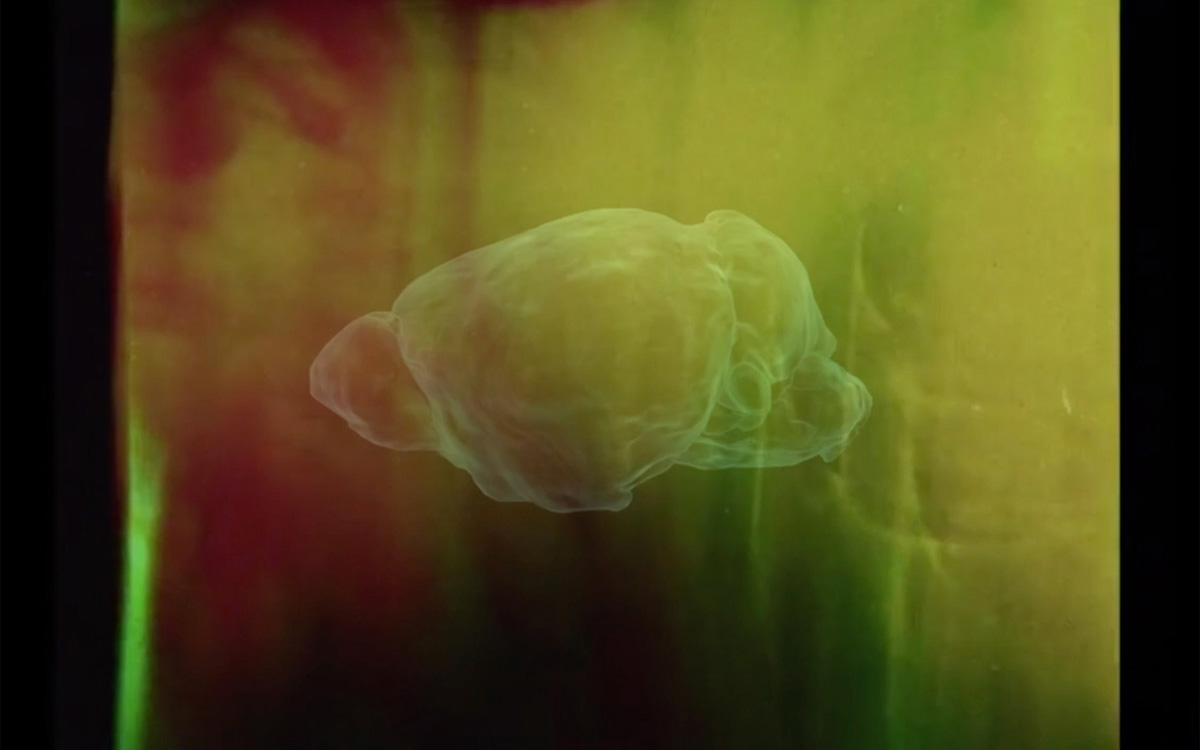
Through an immersive experience, the film addresses how the notion and term of flow and ‘flow states’ have been monetised by our current economy and accelerated society of 24/7 consumption, production, and performance. The film navigates through the various flows from its origin in the Buddhist and Taoist traditions of inclusiveness and nature, through computerised blood vessels, fractal deepdream dogs, outer space, further into the charts of human flows of migrants to today’s online mindfulness of digital relaxation clips and ‘sleeptubes’, with their ongoing chat forums. These new modes of relaxation and mindfulness are an instrumental part in enabling the continuous flow linked to our current economic systems and accelerated production modes, acting as artificial breathing pauses for better corporal endurance and performativity. The notion of flow inherent to our bodily survival system of circulation of blood, oxygen, and nutrients are now hi-jacked by our current economic system. Ultimately, the notion of flow has been turned into a bio-political tool which intent is to optimise the efficiency and performativity of our individual and collective behavior.
Anna Ådahl is a visual artist and researcher working in various mediums such as film, installations and performance. She uses the editing tools of assemblage and montage where found footage meets newly produced images, where ready-mades are used as props in spatial narratives and the body is used as an investigative tool in staged performances. Over more than a decade the notion and politics of crowds has been central in her artistic practice. Her fine art practice-based research, Inside the Postdigital Crowds, at the Royal College of Art in London addresses the aesthetics and politics of the digital conditions in which contemporary crowds are operated and governed.
Mattias åkeson
Klicker
Experimental video | hdv | | 9:28 | Sweden | 2018
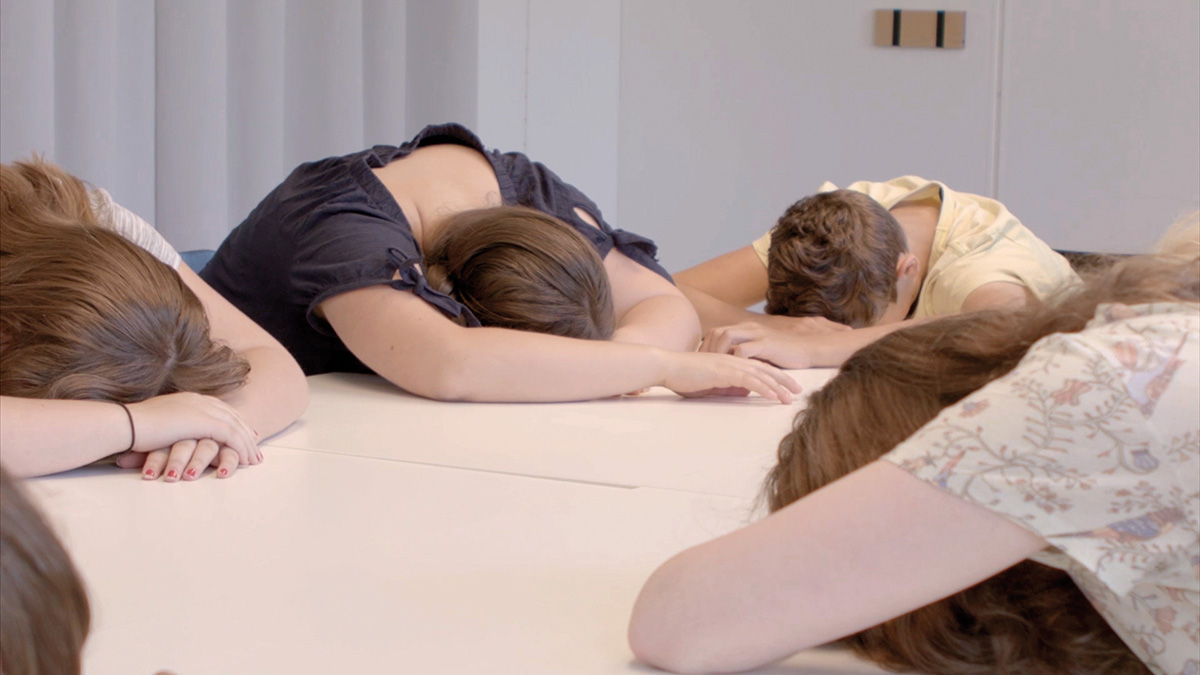
Mattias Åkeson looks into the relationship between the individual, the collective and society. KLICKER deals with the relation between confirmation, control and desires. The idea comes from an article ont how TAG-teaching (using a clicker to train animals) was developed as a pedagocical method in school to be used on pupils. The clicker became an interesting metaphor for our society today. All interpersonal relations, both professional and private, colorored by New Public Management. A kind of aesthetics of working life that draws nourishment from meeting rooms, workplace meetings, ventilated offices, directives and goal fulfillments.
Mattias Åkeson is a visual artist based in Sweden. He studied at the Art Academy in Bergen, Norway and graduated in 2001. Today he divides his time between artistic practice, teaching, exhibition design and projectmanager for public comissions. He is dealing with Scandinavian welfare, middleclass consumption identity, and the relation between community as a collective and the individual. He has been doing projects looking at the shopping mall, the Art gallery and the kindergarten. He works with various materials as film, installation, sculpture, photography and painting.
Ananthakrishnan B
The Celluloid Woman
Experimental doc. | 4k | color | 12:0 | India, Hungary | 2018
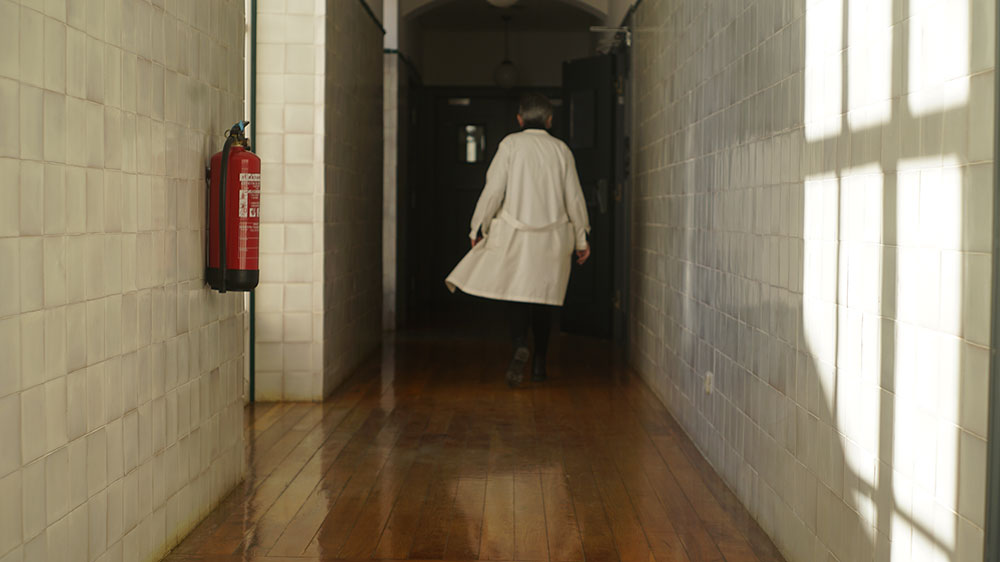
This is a meta-filming attempt to represent a failure. Conceptual challenge of a cinematographer who had to deal with passionate archivist, who works in the Film archive, uncompromisingly Film archivist forgetting the cinematic result demanded by the filmmaker, An archivist who belongs to celluloid age, still works with celluloid, starts confronting about the medium and time. Does the spectator really realise the conceptual mistake, or are they decided to go with a flow designed by filmmaker?This film eternally about director`s turbulent relationship with the character Margarita sosa. The short movie is divided into 4 movements, every movement is dedicated to a specific moment of cinema, but it is also a metaphor of your relationship with your subject. Movement 1: creation. Margarita speaks about the birth of cinema. It is a metaphor of beginning of the film first approach to the director`s character. Movement 2: preservation. Margarita speaks about preservation. It is a metaphor of the director is trying to keep a good relationship with his character. Movement 3: destruction. Margarita speaks about censorship (that is a destructive force). It is a metaphor of destroying the director`s relationship with the celluloid woman.
Ananthakrishnan is deeply involved in cinematographic and photographic storytelling. He traveled across India for geographically exploration of the socio-political structure. He worked as cinematographer for Tehelka music project, in New Delhi, and also with a documentary curating initiative called magiclanternmovies. Finally, as a video volunteer he worked at Primitive Seed Movement in navdanya. His ambition is to contemplate on the borders of practice and theory of documentary and fiction. He started his study at Gandhigram Rural Institute in Tamilnadu. After doing Development Studies he received a Summer Fellowship from National Human Rights Commission nhrc.nic.in to do a short-term research on human rights violations in India. He went on to complete his studies in community media at Tata Institute of Social Science in Mumbai tiss.edu. Afterwards, Ananthakrishnan received a Camargo Foundation Residency Art Fellowship in France to work on his working progress feature documentary Shadows of gandhi. Then he got accepted in the Summer Travelling Film School Cinemadamare 2018 in Italy cinemadamare, where he shot five short films during the period of two months. Ananthakrishnan`s photography projects have been exhibited at STIGMART10 in , Video Focus Biennial Edition , International Art Exhibition Nord Art 2016 in Germany, Screengrab Award 2014 in Australia, and International Festival of Photography PhotoVisa in Russia. His short documentaries and short films were widely screened at many international film festivals. At the moment he is doing the DOC NOMADS Erasmus Mundus Joint Master Degree 2017-2019 (EMJMD) in Documentary Filmmaking delivered by a consortium of the University of Lusofona in Portugal, University of Theatre and Film in Hungary and St. Lucas School of Arts in Belgium. AWARDS Annanthakrishnan won the National Student Contest at the International Year of Planet Earth in 2018. He also won twice the Best Cinematography Awards during the tenth Cinemadamare edition in 2018. See https://ananthakrishnan.foliohd.com/contact for more info.

Geoffrey Badel
Akousma Part III
Experimental fiction | hdv | color | 18:30 | France | 2023
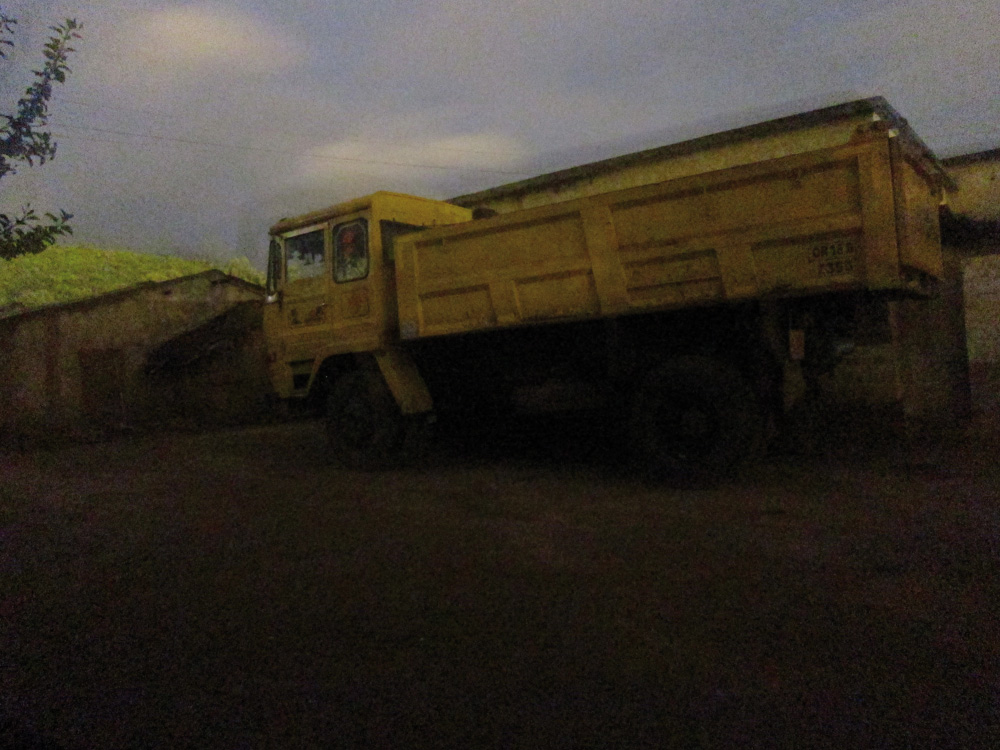
After missing a long-awaited call, a woman wakes up alone in an empty space. Through gesture and sound, she performs a strange ritual in the hope of an answer that would help her escape her haunting. In the form of a somnambulic experience, Akousma offers an incursion into the cranial cavity of a body on the prowl, trapped between the world of the living and dead. This first short film by young visual artist Geoffrey Badel features choreographer Mathilde Monnier, giving ghosts a chance to return.
Born in 1994 in Montélimar (France) Lives and works in Montpellier (France) Geoffrey Badel is an artist who explores silent worlds through immersive installations in the form of drawings, films, installations and performances. He situates his work in surrealistic environments, endowing them with magical and analeptic attributes, with an approach that seeks to transform situations. A 2017 graduate of the Ecole Supérieure des Beaux-Arts de Montpellier, Geoffrey Badel won the Drawing Room's Bourse Jeune Création MAIF that same year. He is taking part in the Saison 6 post-graduate program, created in 2018 by MO.CO. structured into three residency periods: Cochin (India), Venice (Italy) and Istanbul (Turkey). Alongside these experiences, in France and abroad, he works in schools and medical-social establishments to offer workshops and pass on his practice. Since 2024, following on from his research into language, he has been involved with the deaf community, with the aim of contributing to accessibility in art. From 2022 to 2024, his recent solo and group exhibitions include: the MO.CO. in Montpellier, the FRAC - Occitanie in Montpellier, the Musée d'art contemporain in Sérignan, the Fondation Bullukian in Lyon, the Atelier Blanc in Villefranche-de-Rouergue, the 67ème Salon de Montrouge and the Centre Pompidou in Metz.
Kush Badhwar
Blood Earth
Experimental doc. | hdv | color | 35:22 | Australia | 2013
Kucheipadar village in Odisha is a bauxite-rich block that since India’s economic liberalisation has been the subject of violent conflict between Adivasis and a mining venture. The singing of songs has come to articulate creative forms and political structures that steered the Kashipur resistance movement from subalternity, through solidarity and into dissolution. Blood Earth interweaves the efforts to record song, farming, village life and a political meeting to improvise a junction between voice, music, silence, sound and noise. Blood Earth is the second project of Word Sound Power, a New Delhi-based collective that constructs multimedia collaborations with South Asian artists on issues of social justice.
Kush Badhwar is a filmmaker and artist interested in shifting definitions of traditional mass-media, collaborating with unorthodox actors and using artistic intervention for improvised and informal political engagement. He is currently undertaking India Foundation of the Arts Archival Fellowship in India’s newest state, Telangana.

Howool Baek
BETWEEN_ in VR
Virtual/Augmented/eXtended Rea | 0 | color | 19:30 | Korea, South, Germany | 2023
“Can we imagine the universe from which we ourselves come as something physical, but at the same time as something virtual?” To portray the social circumstances of our contemporary society, characterised by a hybrid state of physicality and virtuality, choreographer Howool Baek combines body movement with technology. In “BETWEEN_in VR”, an imaginary and deeply 'immersive' universe emerges in which our body parts such as the hands, feet or navel lead us into an unfamiliar world. Using the overwhelming 360° VR spatial experience, we discover a new type of in-between space that merges the solid boundaries between the physical and the virtual, the body and the data, the analog and the digital, and the viewer and the performer.
Choreographer Howool Baek works on discovering individual body fragments without a face and proposing a different perspective of the body by deconstructing and transforming the body. Through breaking stereotypes about the body, she wants the audience to see society from a different perspective. Lately she has expanded her stage concept towards the digital space, carrying out new artistic experiments to transplant her choreographic method to the digital stage. Her first directed film Foreign body (2022) won the Best Film at Minimalen Short Film Festival - Multiplie Dance Film (Norway) in 2024. And VR film BETWEEN (2023) was awarded the Best Virtual Reality at Digital Media Fest (Italy) in 2023.
Ruth Baettig
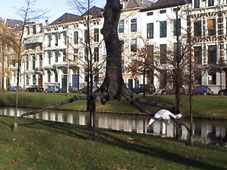
Running by numbers
Experimental video | dv | color | 8:30 | Switzerland, Netherlands | 2005
A person dressed in white runs breathlessly around in Rotterdam. She scrambles up sculptures by well known artists that are staged all over the city and bring to mind a fitness course.
Ruth Baettig was born in Mauensee/Lucerne, Switzerland, in 1964. She splits her time living and working in both Paris and Lucerne. From 1992-1996 she was registered in the Médias Mictes workshops at "l?école supérieure d?arts visuels" in Geneva. In 1999 she obtained a post-graduate degree from the Kunsthochschule in Cologne before registering in the Research Program of Ensba in Paris in 2000. Since 1995 she has participated in numerous video and plastic art exhibitions in Germany, Switzerland, Belgium, France, Brazil, Lebanon, and Armenia. She just recently published "Vagabonde", which can be found in art libraries in Paris.
Ruth Baettig
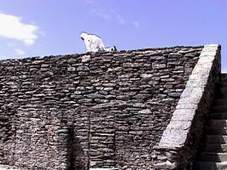
Sunday-Walk
Art vidéo | dv | color | 5:5 | Switzerland | 2005
A white person walks, stands poised, roams around, slips, jumps, climbs, and runs wild and aimlessly along the sculptures of the Alps in ruins. Out there, she passes casual hikers and other week-end tourists. Upset and baffled, the viewer sees the white person walk away. The video was shot in the Swiss mountains across the Italian border. The various components, including a mountain vista, an art figure, and movements, set up a comically absurd picture.
Born April 7th, 1964, 1992-96 Ecole Supérieure d'Art Visuel, Atelier Medias-Mixtes Silvie & Cherif Defraoui, Genf, Switzerland 1997-2000 Postgraduate studies at the Kunsthochschule fur Medien" in Cologne, Germany 2000-2002 Research Program, Ecole Nationale des Beaux-Arts, Paris, France

Georgy Bagdasarov, Alexandra Moralesova
Rhus Typhina
Experimental film | 16mm | black and white | 2:44 | Armenia, Czech Republic | 2014
One of the series of labodoble experiment of the natural(organic) film developers. The structure of the film is based on the chemical formula of the Rhus Typhina`s developer. The main protagonist of the film is a species of flowering plant in the family Anacardiaceae which leaves and berries have been mixed with tobacco and other herbs and smoked by Native American tribes. We tried to apply the properties of the Rhus Typhina in the photochemistry. The film catches the research, experiments, harvesting and preparation of the film developer in which latter original negative was developed. The nonlinear structure of the chemical formula as well as nonlinear research of the process reflected in a order of the frames. There is no post-production except sound all editing work is made while film was loaded in camera before chemical development.
Alexandra Moralesová was born in 1989 to Czech mother and Argentinian father. She studied at the Centre of Audiovisual Studies at The Film faculty of the Academy of Performing Arts in Prague (FAMU). Beyond the inspiration by the practices of experimental film, she`s mainly interested in remediation of found footage and found objects. Through various ways of viewing it, those objects represent for her its own possibility of de/construction in order to cross the frontier between analog and digital media and so disrupt the spectacle and alternate existing narratives. It`s been several years that she explores the post-production tools as for example the editing table or film viewers. The output of her works is often a performance, film screening or installation. Georgy Bagdasarov was born in Armenian family in 1978 to the sounds of rockets taking off into space from Kazakhstan. He never boarded any of those rockets and spent all his life living in various locations throughout Eurasia. Now he lives and works in Prague. His work explores the space between analog and digital, and merges them together. His works are created under strong influence of structural films, cooking recipes and syntax of computer codes. He combines different media: digital and film stock as well as music and food.
Georgy Bagdasarov, Alexandra Morales
Pro(s)thetic Dialogues
Experimental doc. | mp4 | color | 21:39 | Armenia, Czech Republic | 2022
Pro(s)thetic dialogues is more like a recording of a theatre performance playing out on a computer desktop. Here the human operator creates the conditions for exploring the performativity of a philosophical zombie pieced together from neural networks. The operator/stage technician merely directs the flow of mathematical operations pretending thought and creates a space in which the philosophical discourses are dissolved
Since 2013 Alexandra Moralesova and Georgy Bagdasarov form a filming and experimenting duo Labodoble. We run an artistic and curatorial platform under the same name. We mainly focus on photo-chemical experimental film processes but we are interested in other kinds of media practices. We like to question media and to reshape the relation of machine-operator into machine-performer. We merge technical skills with media theory and philosophy. We do films, performances, installations and workshops.