Catalogue > Search
Results for : Tout le catalogue
Giulia Giannola
Brief Immersion into History
Video | hdv | color | 0:48 | Italy | 2016
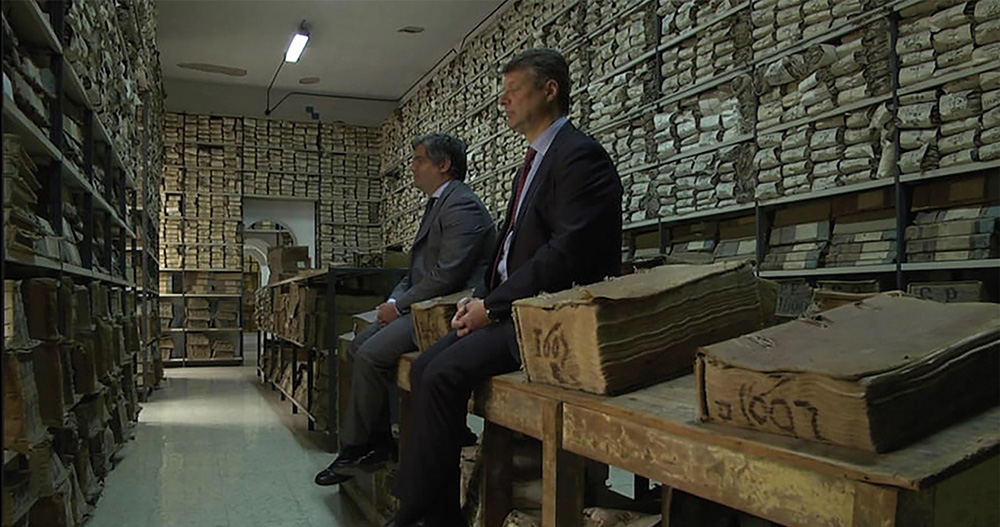
Power, Decisions, History, Economy. In the Bank of Naples Foundation, the two managers perform in its historical archive. The archive contains bank documents dating back from 1500, coming from Italy and Europe. Human stillness vs. ancient cheques stillness.
Giulia Giannola is an Italian artist born in 1985, in Naples. After finishing her Bachelor degree in Venice at the IUAV University, she moves to Berlin where she graduated as Meisterschülerin in Installation and Multimedia at the Universität der Künste (UdK), with Prof. Christiane Möbus and was guest student in artist Candice Breitz class at HBK Braunschweig. Her work draws inspiration from the observation of public/collective or personal life situations, in which time factors such as duration and rhythm, are called into question, twisted and transformed, suggesting alternate realities. She produces staged situations, performances, interventions in public space, and videos. She received the Elsa-Neumann-Stipendium des Landes Berlin in 2014. Her works have been shown in “Meridian|Urban, Curatorial projects on health”, Haus der Kulturen der Welt, Berlin; Ikono on Air Festival, Collegium Hungaricum, Berlin; Meisterschülerpreis des Präsidenten der UdK Berlin, Georg Kolbe Museum, Berlin, Germany; Italy in a Frame,Triennale di Milano, Milan; Shiryaevo Biennial,Regional Museum of Samara, Russia; Phaenomenale 2010, Science and art festival, Kunstverein Wolfsburg; HDLU, Zagreb; .HBC gallery, Berlin; Organhaus international video art festival, Chongqing, China; Biennial of young artists the Mediterranean, Fabbrica del Vapore, Milan; Avi Festival,Israeli Cinema Museum, Jerusalem; Public Space_s, Athens, Greece; Digital Marrakech, Marrakech, Morocco.
Elisa Giardina Papa
U Scantu: A Disorderly Tale
Experimental video | 4k | color | 13:0 | Italy | 2022
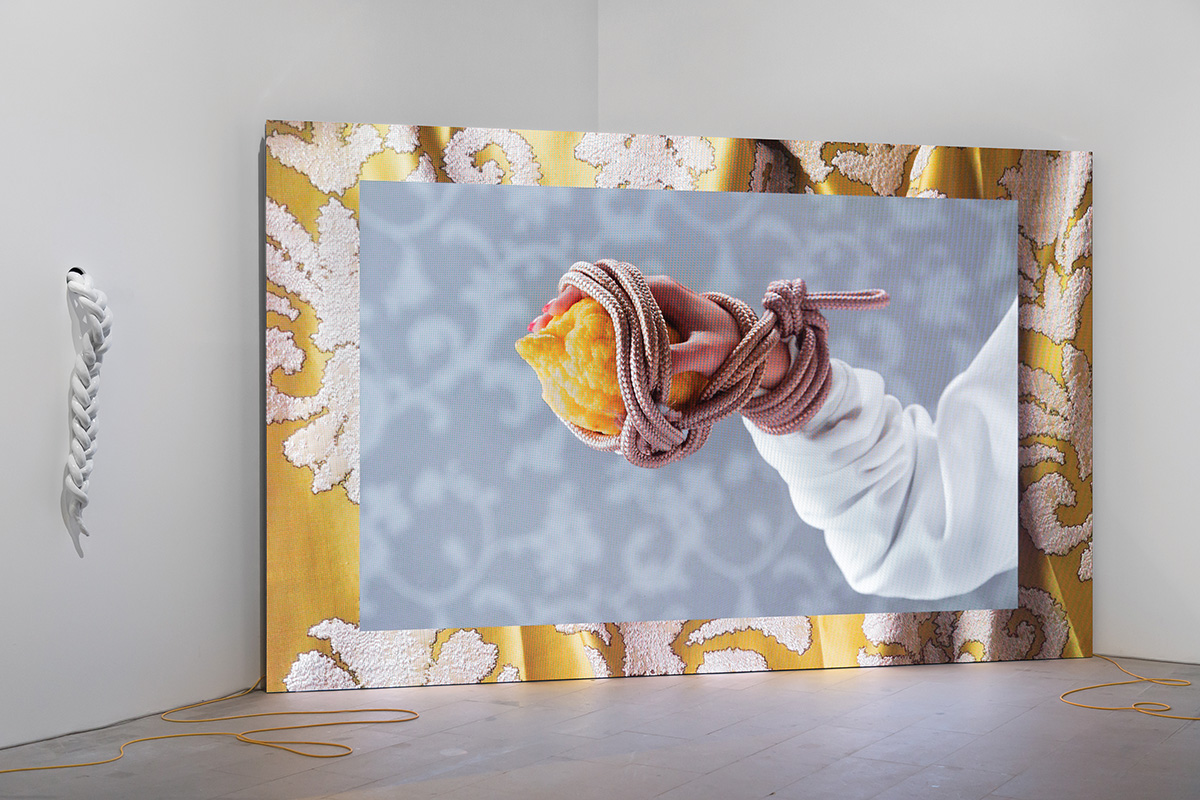
“U Scantu”: A Disorderly Tale (2022), presented as a video installation at 59th International Art Exhibition of La Biennale di Venezia, reimagines the Sicilian, queer, multispecies myth of the "donne di fora" (“women from the outside and beside themselves”). Described as both magical and criminal, the "donne di fora" were said to possess both the feminine and masculine; the human and the animal; the benevolent and the vengeful. This film envisions the "donne di fora" as a gang of teenage “tuners” who ride through the utopian city of Gibellina Nuova (Sicily) on bikes customized with disruptive sound systems. The narrative voyage of the “tuners” is interspersed with poetic text and visual motifs from a 19th century collection of Sicilian fairy tales, Giardina Papa’s fragmented childhood memories of songs and stories told by her grandmother, and archival material from the Inquisition trials of the 16th and 17th centuries that criminalized women accused of being a "donne di fora". “U Scantu”: A Disorderly Tale repurposes the magical, ritualistic, and unruly as forces that generate an imagination beyond predetermined categories of humanness, chronological time, and mythological womanhood.
Elisa Giardina Papa’s research-based practice investigates the performance of gender, sexuality, and labor. Working across large scale video installations, drawings, sculptures, and theoretical texts, she documents how past and present forms of capitalism have extracted our capacities for labor and living—including sleep, intimacy, and emotion. With witty and poetic framing, her work calls attention to those parts of our lives, desires, and embodiments that remain radically unruly, untranslatable, and incomputable. Her work has been exhibited and screened at the 59th International Art Exhibition of La Biennale di Venezia (The Milk of Dreams), the Museum of Modern Art (MoMA’s Modern Mondays), the Whitney Museum (Sunrise/Sunset Commission), Seoul Mediacity Biennale 2018, Flaherty NYC, UnionDocs, and Pacific Film Archive (BAMPFA), among others. Giardina Papa received an MFA from RISD, and she is currently pursuing a PhD in film, media, and gender studies at the University of California Berkeley. She lives and works in New York and Sant’Ignazio, Sicily. Elisa Giardina Papa is also a founding member of the artist collective Radha May. Together with Bathsheba Okwenje and Nupur Mathur, they develop performances and art installations that reveal forgotten archives, hidden histories, and peripheral sites, exploring their relation to gender, and colonialism.
Giovanni Giaretta
The Sailor
Video | hdv | color | 8:0 | Italy, Netherlands | 2017
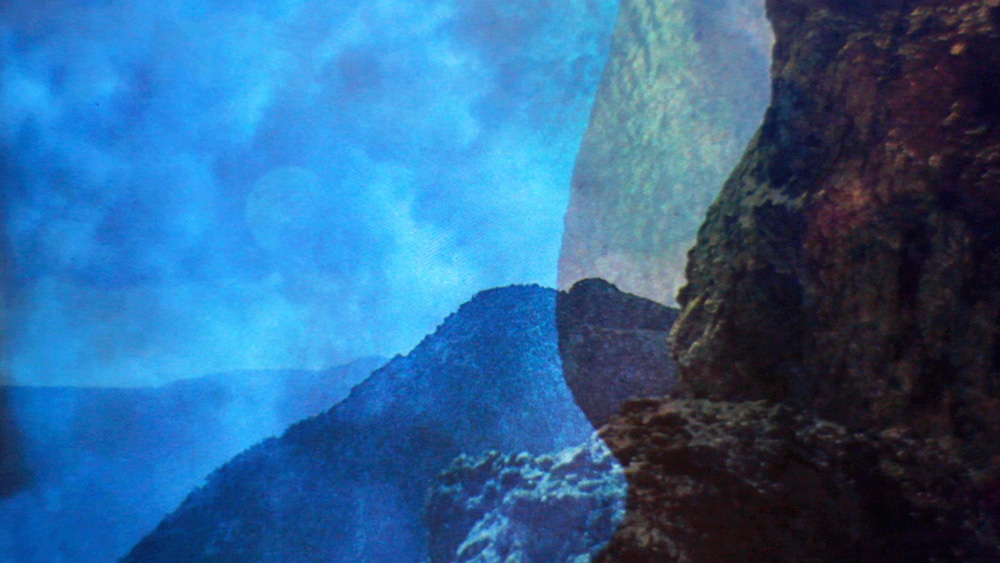
A voice-over tells the story of a sailor that dreams of a homeland he has never had; day after day the sailor constructs his new native land shaping it to his imagination. Inspired by Fernado Pessoa`s static drama "The Mariner" the video deals with the notion of what each of us addresses as home and foreign and at the same time with issues related to language and its translation. Playing with the perception of who is watching, confusing it and mixing it, whilst images of landscapes trick the eyes of the viewer creating shadow play illusions, the female voice speaks Na`vi, an invented language artificially created upon commission for the movie Avatar. Like a second voice, the subtitles suggest a relation established among words, images and imagination.
Giovanni Giaretta (Padua 1983) currently lives and works in Amsterdam. After graduating in Design and Production of Visual Arts at the University IUAV of Venice, he took part in a number of residency programs including: Dena Foundation for Contemporary Art in Paris in 2010; and most recently De Ateliers in Amsterdam. Giaretta’s work has been featured in exhibitions in Italy and abroad at diverse institutions and galleries such as: La Criée (Rennes, FR); Tegenboschvanvreden, (Amsterdam, NL); Foundation Botin (Santander, SP); Musée Départemental d’Art Contemporain de Rochechouart, (Rochechouart, FR); Fondazione Sandretto Re Rebaudengo, (Torino, IT); and Motive Gallery (Amsterdam, NL). His films have been shown at the International Film Festival of Rotterdam (Rotterdam, NL) and the T-Mobile New Horizons International Film Festival (Wroclaw, PL), among other festivals and screenings. His actual research is focusing on the relationship between perception and alteration during the night time. For the last year, to carry on such research Giaretta has been working as night porter in an hotel in Amsterdam. From 2015, he is also working as co-teacher at the Salzburg International Summer Academy.
Mike Gibisser
Travel Stop
Experimental film | 16mm | color | 19:0 | USA | 2017
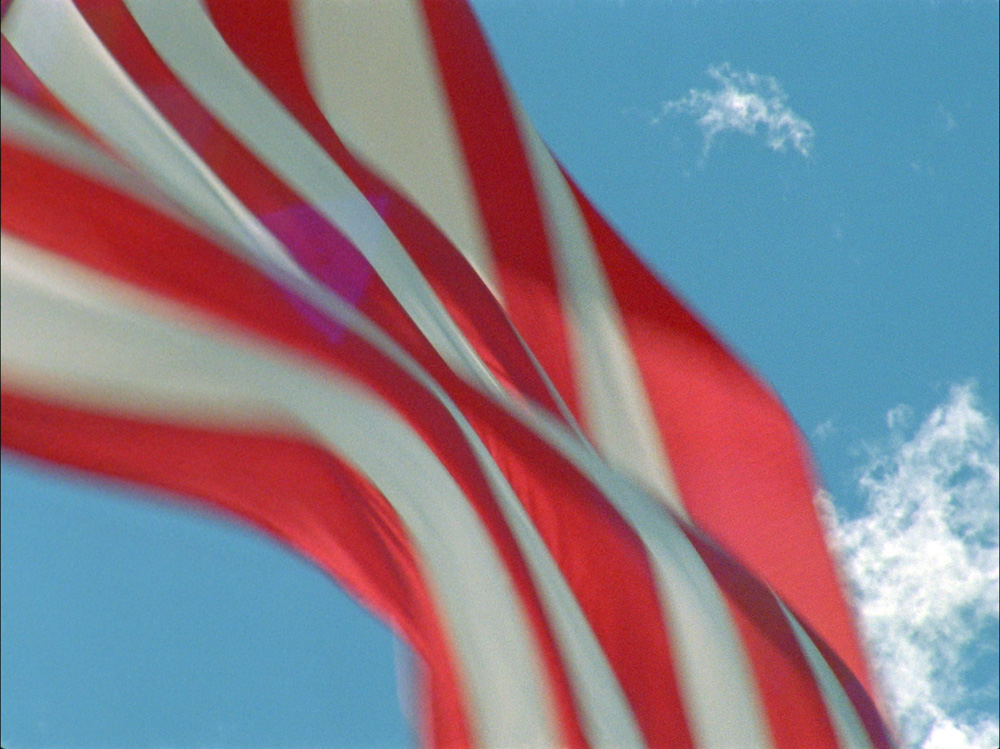
Shot at the World’s Largest Truckstop in Walcott, Iowa, the film contemplates the interiors of a Midwestern highway rest stop, creating an essayistic portrait of a familiar site of travel and transience. With fixed attention toward the ideological overtones pressed to the surface in the objects for sale, Travel Stop examines how identity is called upon, regressed, emptied, overburdened, or parceled when traversing the non-places along the US interstate. “ That the world of things can open itself to reveal a secret life ” indeed to reveal a set of actions and hence a narrativity and history outside the given field of perceptionis a constant daydream that the miniature presents. This is the daydream of the microscope: the daydream of life inside life, of significance multiplied infinitely within significance.
Mike Gibisser is a filmmaker and artist interested in navigating the indefinite lines between essay, narrative, experimental, and documentary work, often drawing together disparate subjects or time periods. In the past 10 years, he has completed two narrative features (Finally, Lillian and Dan and World of Facts), a feature film essay (The Day of Two Noons), as well as several experimental and non-fiction shorts. He has presented work at numerous galleries and festivals around the world, including the International Oberhausen Film Festival, the Harvard Film Archive, Tony Wight Gallery, Block Cinema, the AFI Film Festival, the Images Film Festival, the European Media Arts Festival, threewalls gallery, and the New York Film Festival. His work has been featured in Artforum, Variety, and Cinemascope, amongst other publications. He currently teaches at the University of Iowa and runs the Headroom Screening Series dedicated to bringing filmmakers to local audiences to present challenging and experimental new work.

Karlos Gil
The Neverending Story (Chapter one)
Experimental fiction | 16mm | black and white | 5:33 | Spain | 2011
This video has been filmed in Talavera, a little town in the region of "La Mancha" (Spain) where I was born. Filmed in 16mm and borrowing some semantic and visual blueprints from Chris Marker?s La Jetée (1962), the film continuously reaches a climax but never a resolution, in which places that I am familiar with are transformed into timeless and unreal. The film is designed taking into account the visual and linguistic codes of 60s sci-fi movies. All the pictures were taken in 2011 from real persons (friends, familiars, etc) and real places (all of them in Talavera), except the final frames from the NASA experiment (according to the same confrontation between reality and fiction). This is the first chapter of an ongoing film, without end. Actually, the second chapter is being filmed in Coney Island (New York), with the same technical features (a 16 mm Bolex H16 REX-5 camera and an old film from the sixties).
Karlos Gil (Toledo 1984) lives and works between Madrid and New York. Among the group exhibitions in which he has taken part, his notable works include Experimental Station, researching and artistic phenomena. CA2M, Madrid and LABoral, Gijón; Storytellers, West Side Gallery, New York; Far from Home, Galería MASART, Barcelona; (In)visivilidad y (Des)control, Fernado Pradilla Gallery, Madrid; Fresh, Ulf Saupe Galerie, Berlin; Against Egocentry. Brotfabrik Gallerie, Berlin; Zeppelin Festival 08, CCCB, Barcelona; Intransit, c Arte c, Madrid; IKAS-ART, Bilbao Exhibition Centre, BEC, Bilbao; Codified, Vibe Gallery, London; Beyond the abyect, Collision 08, London; The mean and the meaning, Puente sonoro, FI, Bogotá; Sci-Fi Tags. CaixaForum. Madrid. He is currently the summer resident artist at the School of Visual Arts, New York.
Gil & Moti, Gil & Moti
Fiddler on the Roof
Video | dv | color | 2:30 | Netherlands | 2008
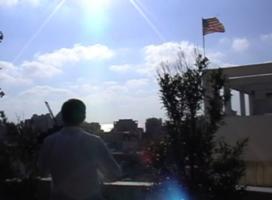
During a sunny afternoon, while overlooking Tel Aviv skyline, a violist plays expressively a hybrid reconstructed composition of both the Israeli and Palestinian anthems. The hours of hard work practicing as well as the mental pain leave its remark on the violists? neck, as shown at the very last scene of the video. This wound is a metaphor to the long-term painful struggle of the two peoples and cultures. Taking as a point of departure their own nationality and the current situation in Israel, concepts such as humanity, atonement and forgiveness acquire an added significance, and these are the very themes, which recur in the duo?s artistic work. In this video the artists suggest a utopian wish to have the two enemies living peacefully side-by-side.
Gil & Moti Gil Nader, b. Rishon LeZion, 1968. Moti Porat, b. Ganey Yehuda, 1971. They live and work together as the duo: Gil & Moti, since 1994 and are based in Rotterdam, Holland since 1998. They are graduates of Bezalel Academy of Art and Design, Jerusalem (1990-1997, cum laude); MFA at Piet Zwart Institute, Rotterdam and Plymouth University, UK (1998-2000, cum laude). Further studies at The Slade School of Art, London (1994) and the School of Visual Art, New York (1996). Selected solo exhibitions include "Laylah the Creature Beyond Dreams" at Kunsthalle Wien, Vienna (2004); "Sleeping With the Enemy" at Jack the Pelican Presents, New York (2005); "Love Grows Free" at Eric Dupont Gallery, Paris (2006); "Dating Gil & Moti" at Mucsarnok Kunsthalle , Budapest (2006); " "Available for You" at Kunsthallen Nikolaj, Copenhagen (2008); "We Hope You Like it the way we Do" at Kulturhuset, Stockholm (2008). The Israeli and Dutch governments have supported their projects and their works are included in private and public collections such as: Tel-Aviv Museum of Art, Haifa Museum of Art, Mumok, Vienna. In 2008 they received 2 years living grant from The Netherlands Foundation for Visual Arts, Design and Architecture.
Gil & Moti
Nasser
Video | dv | color | 7:8 | Netherlands, Israel | 2009
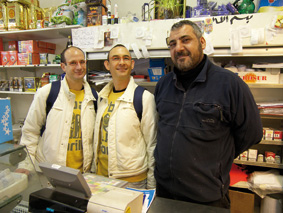
Gil & Moti / `Nasser` / 2008-2009 / 7`:08`` In 2008 the Israeli?Dutch artist duo Gil & Moti started their project Available for You. They offered their services free of charge to immigrants from Arab countries in Copenhagen and Rotterdam and documented their encounters in diary entries, photos and videos. Gil & Moti bridge the barriers of miscom-munication in an intelligent manner. At the same time, they raise themes from an artistic perspective that apply globally: themes such as sociability, integration and exclusion. On the border of the public and private domain and of the art institution and the street, they have created their project as a fascinating vision of an artistic and humanitarian practice in a changing world beset by conflict.
We Gil & Moti, are duo artists living and working together since 1994. Our work moves freely between life, the visual arts and performance. The decision to live life as a performance and to make art a way of living creates a tension, which motivates the work and is presented in the form of: installation, video, painting, writing and performance. With our work we engage in the appropriation of public space and its effect on human relationships. Our projects involve the rehabilitation of the network of associations in a given community. An analytic critique of the relationship of private life and public space constitutes an important facet of our practice. Jewish Israelis by birth, gay and immigrants in Holland we contribute with our work to the contemporary debates about being different and the rules of social coexistence. We express these concerns with vulnerable poetic narratives, suspended between reality and fantasy visualized in a range of images from mundane to highly theatrical.
Wojciech Gilewicz, -
Intrude
Art vidéo | dv | color | 6:5 | Poland, China | 2008
When I was invited to China at the end of 2008, in my contract with Zendai MoMA in Shanghai, I was bounded to realize 6 to 8 oil paintings there. While painting, I am often using my video camera as well, which is kind of registering in a cold eye the process of the ?emergence? of my urban-based paintings. I did so also when working for the museum on this series of paintings. However, in this very project the camera is slightly drifting away from the actual paintings and is showing fragments of reality as if they were autonomous paintings themselves. The reality appears in this video quite neurotic and nervous as well as a bit hectic. It is mysterious, very much fragmented and somehow jagged. The paintings coming off the reality leave a strange tear to it or maybe rather quite a philosophic dilemma.
Wojciech Gilewicz (1974) Polish American painter, photographer, author of installations and videos. In his works, which usually combine all these disciplines, Gilewicz explores the phenomenon of illusion and the blurring of distinctions between reality and its artistic representation. He also shows how relative and changeable our perception of the surrounding world is. Gilewicz?s practice invites a reflexion on the mechanisms governing our perception and on the cultural determinants of the way we see things. www.gilewicz.net
Wojciech Gilewicz
In Practice
Video | dv | color | 3:15 | Poland, USA | 2009
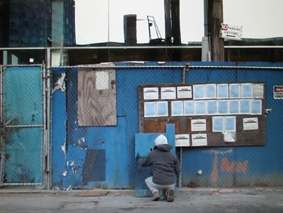
Wojciech Gilewicz: In Practice, 2009 (video) A series of oil paintings were installed outside the SculptureCenter building. The surfaces and forms of the canvases were designed to make them appear completely invisible while they were on site. A video documentating the process of placing the works in their environment encouraged visitors to explore the periphery of the building. Using a map I prepared, visitors were invited to search for the hidden paintings in the surrounding city space. I was primarily interested in challenging visitors` perception of space, reality and their surroundings. (by Wojciech Gilewicz) -------------- fragment of InPractice review by Lori Cole (ArtForum, 02.15.2009) "(...)While artists such as Peter Simensky, Carey Ascenzo, and Amy Patton struggle to reinvent site specificity, Wojciech Gilewicz defies its logic entirely in his deadpan installations-painted imitations of everyday surfaces, intended to go unnoticed in public space. In the video documentation of his project, Gilewicz nonchalantly installs the work in broad daylight, thereby performing the slight visual shifts between the trash on the surface of a garbage can and its painted replica, between a construction panel and its crafted double, and drawing attention to the way art can undermine even its own subversive rhetoric to make site both more and less noticeable." http://www.sculpture-center.org/pressSpecific.htm?id=61697
CV (narrative) Wojciech Gilewicz (1974) Polish American painter, photographer, author of installations and videos graduated from Academy of Fine Arts in Warsaw, Poland (1999) obtaining a Master?s Degree in Painting (Minor in Photography). In his works, which usually combine all these disciplines, Gilewicz explores the phenomenon of illusion and the blurring of distinctions between reality and its artistic representation. He shows also how relative and changeable our perception of the surrounding world is. Gilewicz?s practice invites a reflexion on the mechanisms governing our perception and on the cultural determinants of the way we see things. Selected soloexhibitions: Foksal Gallery Warsaw, Poland (2009); Contemporary Art Museum Saint Louis (2008); Museum of Fine Arts Ivano-Frankivsk, Ukraine (2007); Foksal Gallery Warsaw, Poland (2005), Fondation Deutsch de la Meurthe Paris, France (2004), CCA Ujazdowski Castle Warsaw, Poland (2001) Selected groupshows: MoCA Belgrade, Serbia (2009); MoBY Bat Yam, Israel (2009); CoCA, Torun, Poland (2009); Zendai MoMA Shanghai, China (2009); SculptureCenter New York (2009); Pianissimo Milan, Italy (2008); Museum of Art Lodz, Poland (2007); Zacheta National Gallery of Art Warsaw, Poland (2007) Selected artisticresidencies: TAV Taipei, Taiwan (2009); Zendai MoMA Shanghai, China (2008); ISCP New York (2008); Galichnik Macedonia (2005); Fundation Deutsch de la Meurthe Paris, France (2004) --------------- CV (detailed) Wojciech Gilewicz (www.gilewicz.net) EDUCATION 1999 Master?s Degree in Painting, Minor in Photography 1996 - 1999 Academy of Fine Arts Painting Department Warsaw, Poland 1994 - 1996 Academy of Fine Arts Painting Department Poznan, Poland SOLO EXHIBITIONS (selected) 2009 Lubelskie Towarzystwo Zachety Sztuk Pieknych, Lublin, Poland 2009 Foksal Gallery, Warsaw, Poland 2008 Contemporary Art Museum Saint Louis, USA 2007 Biala Gallery, Lublin, Poland 2007 Museum of Fine Arts, Iwano-Frankiwsk, Ukraine 2007 BWA Gallery Revitalisations, Sanok, Poland 2006 / 2007 Entropia Gallery The Aporia of Painting, Wroclaw, Poland 2005 TR Warszawa, Warsaw, Poland 2005 Foksal Gallery, Warsaw, Poland 2005 WAA (Warsaw Artists? Action) Them, Warsaw, Poland 2004 Fondation Deutsch de la Meurthe, Paris, France 2002 Arsenal Gallery, Bialystok, Poland 2001 Centre for Contemporary Art Ujazdowski Castle / Laboratorium Gallery City ? Estate ? Studio ? Apartment, Warsaw, Poland 2000 Biala Gallery Lublin, Poland 1999 Academy of Fine Arts, Warsaw, Poland GROUP EXHIBITIONS (selected) 2009 castillo/corrales Hello Goodbye Thank You Again, Paris, France 2009 Museum of Contemporary Art BELGRADE: NONPLACES. Art in public space, Belgrade, Serbia 2009 Aspen Art Museum Monitaur, Aspen, USA 2009 MoBY (Museum of Bat Yam) Factory, Bat Yam, Israel 2009 Centre of Contemporary Art Znaki Czasu Lucim żyje, Torun, Poland 2009 Zendai Museum of Modern Art Starting Point: Intrude Art & Life 366, Shanghai, China 2009 SculptureCenter In Practice, New York, USA 2008 Istituto Polacco di Roma Transfert Gallerie Polacche a Roma #6, Roma, Italy 2008 BWA Gallery External artists. OUT OF STH, Wroclaw, Poland 2008 Biala Gallery Remont generalny, Lublin, Poland 2008 White Box Gallery DiVA (Digital & Video Art), New York, USA 2008 Pianissimo Distortion of an Unendurable Reality, Milan, Italy 2008 Istituto Polacco di Roma Transfert Gallerie Polacche a Roma #2, Roma, Italy 2007 appendix2 Artyści polecają się nawzajem, Warsaw, Poland 2007 Museum of Art in Lodz Multi-way Street annex to the exhibition Beautiful Losers, Lodz, Poland 2007 Paul Robeson Galery Imago: The Drama of Self-Portraiture In Recent Photography, Newark, USA 2007 Zacheta National Gallery of Art / Kordegarda Gallery Here a Change Occurs, Warsaw, Poland 2006 Real Art Ways POZA, Hartford, USA 2006 Centre for Contemporary Art Laznia Love and Democracy, Gdansk, Poland 2006 LiveBox at Ravenswood, Chicago, USA 2006 Zacheta National Gallery of Art On Their Own, Warsaw, Poland 2003 National Museum / Krolikarnia, Warsaw, Poland 2002 Bunkier Sztuki, ZPAP Festival of Young Art novart.pl, Cracow, Poland 2001 BWA Galery Goscinna Pracownia Malarstwa Leona Tarasewicza goscinnie w Galerii BWA w Zielonej Gorze, Zielona Gora, Poland
John Gillies
Scentdia
Video | 0 | color | 5:20 | Australia | 2025
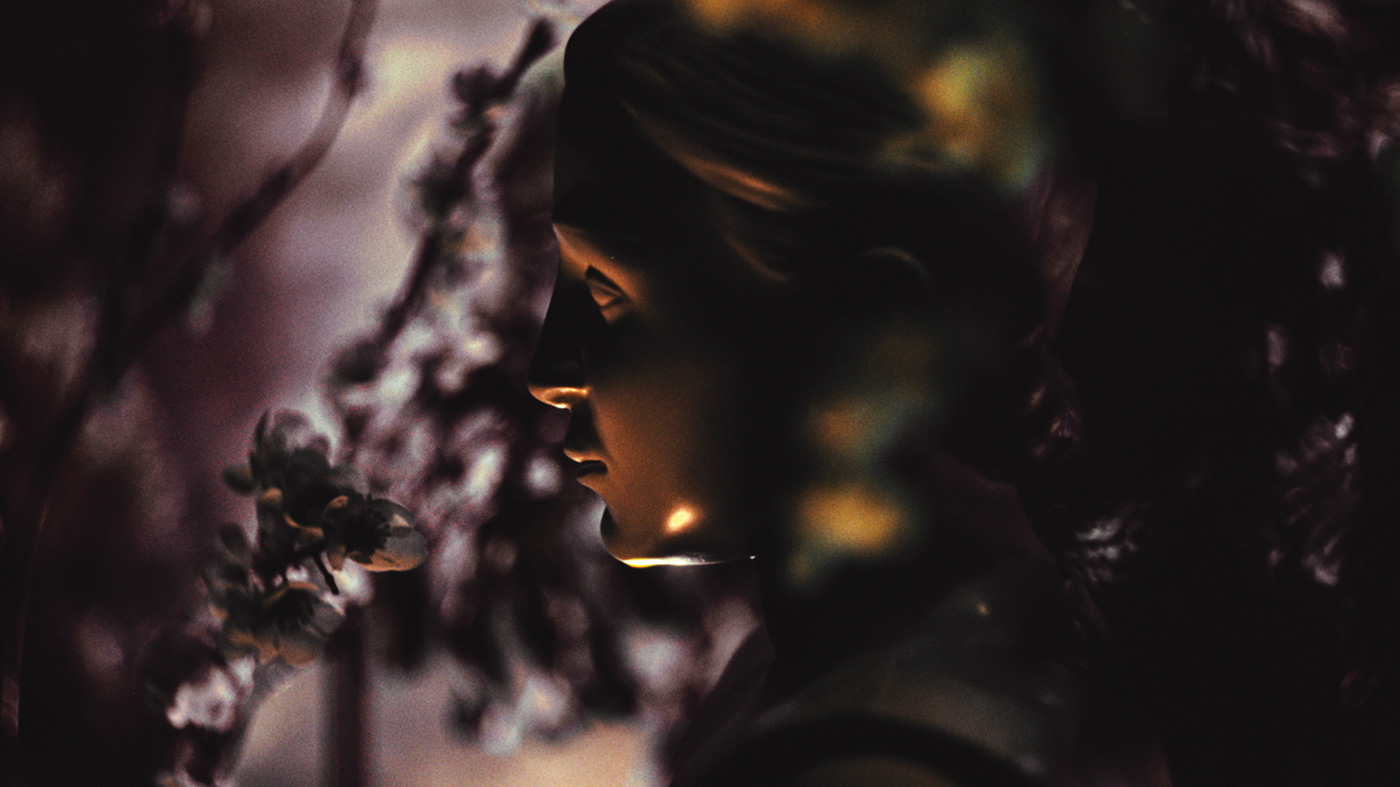
During its wanderings in a nocturnal forest, a robot encounters various flowers and plants, confronting the natural world and attempting to smell the scent of a wild bloom.
John Gillies is a Sydney (Eora)-based artist who has been creating work with time-based media, including performance, moving image, installation, music and sound, since the 1980s. Drawing on the world of experimental theatre and the languages of video and cinema, his art practice is often improvisational and collaborative.

Pierre-jean Giloux
Invisible Cities
Video | hdv | color | 0:0 | France, Japan | 2017
"Invisible Cities" 2015/2017 form a video tetralogy that draws portraits of several Japanese cities and questions the notions of urban landscapes. These futuristic fictions have as departure points the Japanese urban and social realities filmed and photographed and then extended by images of syntheses, what is commonly called augmented reality. Pierre-Jean Giloux resided at Villa Kujoyama in Kyoto where he directed "Stations" the fourth and final installment of "Invisible Cities".
The work of Pierre Jean Giloux is the result of ongoing research related to new technologies, especially to associations and hybridised photographic images, videos and computer graphics. Through digital technology, he developes a work of collage, the editing of visual and sound compositions that ometimes include 2d and 3d animation sequences. Pierre Jean Giloux seeks to create a language usi ng sound and image that combines elements of pop culture and the mass media with more "learned" cultures which refer to the visual arts and architecture. His video films are in between, they draw heavily from reality tending towards fiction.He likes to cohabit the virtual and the real with the aim of establishing a dialogue and questioning our relation to the real. There is a common denominator in all these films, the making of staged worlds, built on elliptical modes.The post production work gives him the opportunity to rework the images, which has the effect of altering the perception of the real, putting a distance in place. The installations of Pierre Jean Giloux, whether photographic o r filmic are structured, composed, but still leave the viewer a great deal of freedom for association and interpretation.
Pierre-jean Giloux
Biomimetic Stories # 3. Dholera
Experimental fiction | 4k | color | 7:0 | France | 2024
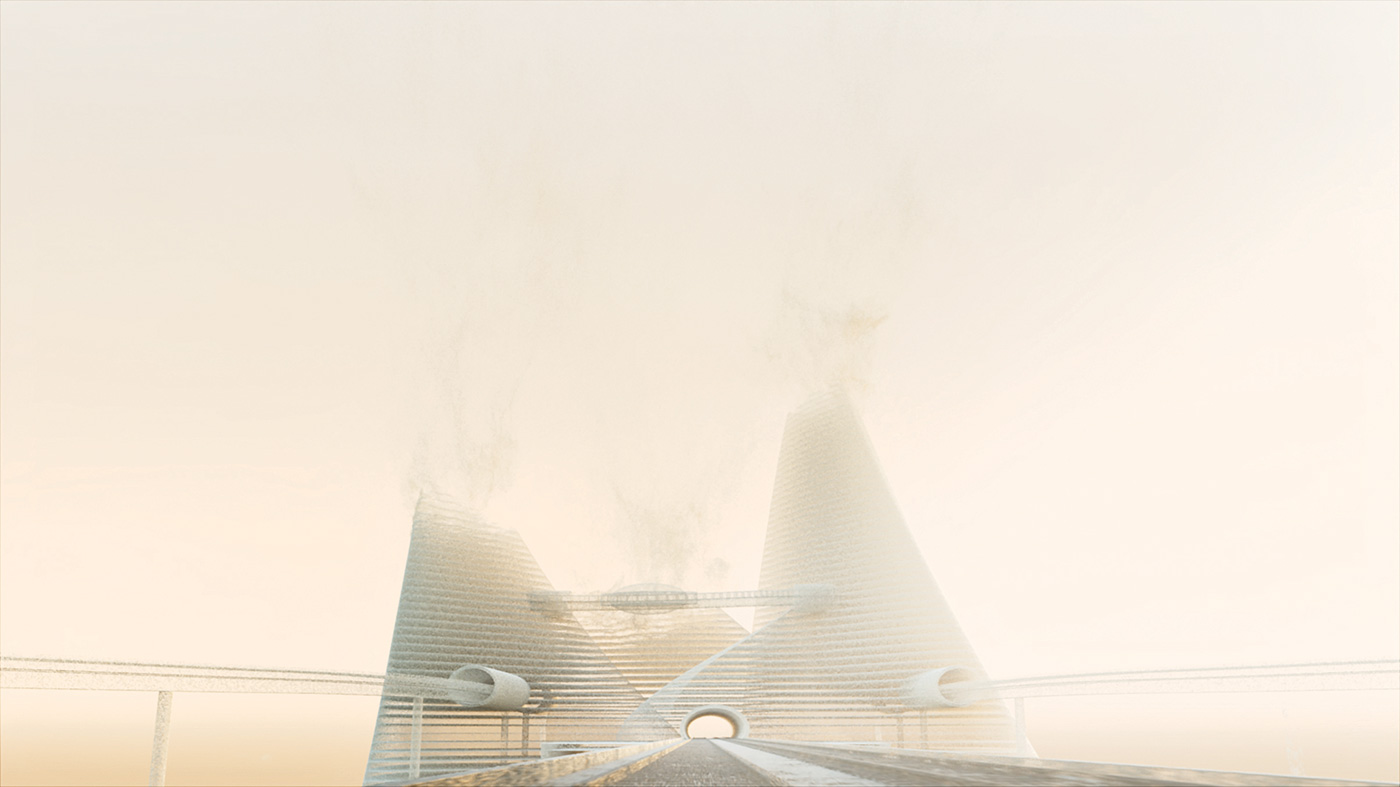
Dholera reveals the dystopian vision of this eponymous city, envisioned in the desert-like landscape of the Indian state of Gujarat. The city’s vast network of highways, elevated railways, electric pylons and water towers extend as far as the eye can see on an arid terrain devoid of vegetation, swept through by dust whirlwinds. This vast urban project— for which ground was broken over a decade ago—has now come to a virtual standstill. In-situ footage captured via drone reveals the enormity of this unfinished project through the virtual implantation of certain symbolic buildings featured in the initial project, through the use of point clouds. The ghost of Dholera city is brought forth through the film; a phantom construction site where future ruins create cracks in the very idea of utopia.
Pierre Jean Giloux, born in 1965, was awarded the Villa Kujoyama residency in Kyoto in 2015 and received the Grand Prix for Video Art at the Côté Court Festival in Pantin in 2016. Working in a form of augmented reality, he presents his installations in museums and art centres such as the Museum of Botany in Brussels, La Criée – Centre for Contemporary Art in Rennes, the Barbican in London, the Hiroshima MoMA and the National Museum of Osaka in Japan, as well as in galleries including DNA (Berlin), Sophie Scheidecker and Christophe Gaillard (Paris), Cristina Guerra (Lisbon) and Bank MABsociety (Shanghai). His works are held in private collections (in Paris, Rennes, Brussels and Tokyo, as well as the Pierre Darier Collection in Switzerland and the An-Sammlung in Munich) and in public collections (Fonds d’art contemporain – Paris Collection and the City of Marseille).
Pierre-jean Giloux
Metabolism
Fiction | hdv | color | 11:0 | France, Japan | 2015
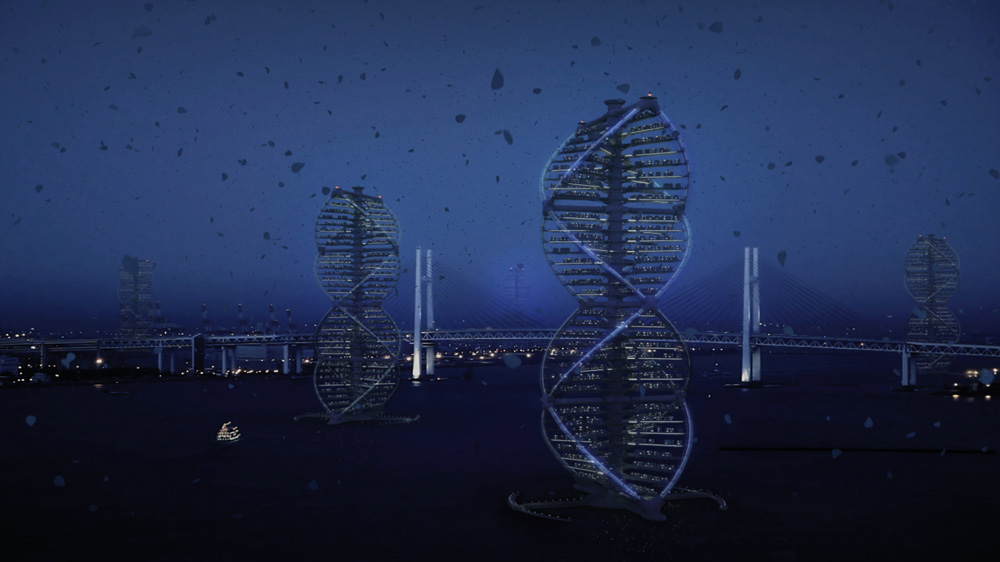
Metabolism : “Le point de départ est la découverte d’un photomontage de Arata Isozaki intitulé “Re-ruined Hiroshima”. Cette image est une énigme : dans ce paysage dévasté, deux grandes formes architecturées se dessinent : ces structures constituées (on le suppose) par des débris récupérés dans les alentours, surplombent une ville mise à terre. Les métabolistes (un groupe d’urbanistes et d’architectes japonais autour d’une même vision : la ville du futur ) ont projeté de reconstruire ce pays, de (lui) façonner une nouvelle identité. Ce fut une sorte d’élan tendu vers l’avenir, vers un futur développement de l’espace urbain qui devait répondre aux flux des populations vers les centres urbains. Ils s’inscrivirent néanmoins dans une continuité idéoloqique ‘traditionnelle’ faisant référence à l’image iconique du temple d’Ise . Le métabolisme fût la dernière utopie moderniste du XXème siècle, cette découverte m’a passionné et a suscité le désir de faire ce film. Certains de leurs projets non réalisés sont introduits dans ce film par le truchement des techniques numériques, dans le Tokyo de 2015. Jalons historiques et présences fantomatiques inscrites dans les strates urbaines de la mégapole japonaise.
Qu’il soit filmique ou photographique, le travail de Pierre Jean Giloux débute par le stade préparatoire du dessin, phases de recherches où la pensée s’organise par strates, avant de passer à la réalisation. Ses installations photographiques composées de suites d’images peuvent être qualifiées de « storyboards agrandis ». Ces dernières -le plus souvent exposées en milieux urbains- se confrontent aux rapports d’échelles et questionnent le statut de l’image au sein même de la cité. Ses travaux vidéo sont les résultats d’associations et hybridations d’images. Il développe par le biais des techniques numériques un travail de collage, montage, de compositions visuelles et sonores qui incluent des séquences animées en 2 et 3 d. Il aime à faire cohabiter le virtuel et le réel dans le dessein d’établir un dialogue et de questionner notre rapport au réel et vice versa. En 2015, Pierre-Jean Giloux à la Villa Kujoyama (Kyoto, Japon) où il réalise le quatrième et dernier volet de “Invisible Cities” intitulé “Station to Station”. Ses installations vidéos et ses films ont été exposés dans de nombreuses institutions et festivals, notamment le Centre Pompidou, le MAC VAL, le CREDAC, Comix Home Base de Hong Kong, au Kyoto Art Center, au Pavillon de l’Arsenal à Paris.
Charlotte Ginsborg
Over The Bones
Experimental film | 16mm | color | 30:0 | United Kingdom | 2008
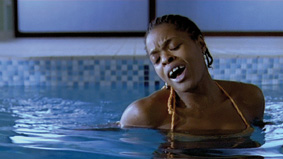
The film interweaves documentary and fiction to depict two characters, a truck driver and a singer. Filmed in their separate working environments their stories converge until they meet through an accident at a swimming pool. The driver witnesses the singer crashing into the end of the pool and passing out. He performs mouth-to-mouth resuscitation. Waking the next day the driver discovers he has developed a desire to write music. For the next six months his singing career develops at a rapid pace. The singer temporarily looses her voice, on regaining it she discovers that it has dramatically altered in tone. Although the tale is told retrospectively no conclusion is reached. Is he continuing to sing, did she regain her career, have they permanently swapped voices? He continues on his journey. By combining voice over, interview footage and dramatic tableaux, questions arise as to whether the events are true and to what extent the cast are acting. The film investigates what happens to people once placed in front of a camera and subsequently how a filmmaker can attempt to capture individuals continually shifting performances in real life. How we adjust ?self? in relationship to ?other? and what role storytelling has in the everyday are developed into key questions. By combining voice over, interview footage and dramatic tableaux, questions arise as to whether the events unfolding are true and to what extent the cast are acting. Are the characters figments of each other?s imaginations? Or in fact each other?s alter egos? The film investigates what happens to people once placed in front of a camera and subsequently how a filmmaker can attempt to capture the subtlety of individuals continually shifting performances in real life. How and why we adjust ?self? in relationship to ?other? and what role storytelling has in the everyday are developed into key questions.
Charlotte Ginsborg graduated from MA Fine Art at Goldsmiths College, London in 2002 where she specialized in film and video. Her films interweave documentary and fictional elements to explore people?s psychological relationship to their architectural environments. She has exhibited her 16mm and digital films in galleries and festivals both nationally and internationally, including the Venice Biennale, the Serpentine Gallery and the ICA, London, the Pompidou Centre, Paris and the Walker Arts Centre, USA. She won the Oriel Mostyn Open 03 for her film ?Spade? and had a solo exhibition at the Jerwood Foundation, London. Her films are distributed by The Lux and she is currently artist in residence at The London Chest Hospital.
Charlotte Ginsborg, Ginsborg
The Mirroring Cure
Experimental film | 16mm | color | 28:0 | United Kingdom | 2006
Tracing the life of a large construction site from demolition to the completion of new office space, `The Mirroring Cure` focuses on the company secretary who decides to interview those employed around her. She wants to understand their relationship to work, their hopes, fears and anxieties. We witness her fascination with one of the architects whom she discovers suffers from a loss of balance exacerbated by the large scale of the site. She becomes intrigued by the bizarre and surreal solution he develops to cope with his affliction. Appearing initially as a documentary detailing the complexity of personal identities formed through being `at work`, as well as the effects of architecture on behaviour, the film begins to incorporate fictional elements leaving the viewer unsure as to where reality lies. To what extent the characters are acting remains ambiguous. Shot on 16mm over a two year period the film forms an intimate portrait of five working lives set against the visually arresting and constantly shifting architecture of the building development. It investigates how people negotiate private experiences within the public domain and how we ?view? and ?judge? others as we move through the city.
Charlotte Ginsborg graduated from the MA Fine Art course at Goldsmiths College, London in 2001 where she specialized in film and video. Her films interweave documentary and fictional elements to explore people?s psychological relationship to their jobs and their working architectural environments. She has screened her 16mm and digital films in galleries and festivals both nationally and internationally. Including the Venice Biennale 2003, the Serpentine Gallery London, 2004, the Camden Arts Centre and the Curzon, Soho, London 2006, The ICA, London, 2007 and The Walker Arts centre, 2008. She has had solo exhibitions at The Jerwood Foundation, The Whitechapel Project Space and The Lux, who distribute her work. She has also undertaken various public art commissions and documentary projects and is currently the Artist-in-residence at the London Chest Hospital where she is working with staff and patients to develop a new film work. Her latest film ?Over The bones? (16mm, 30min, 2008), commissioned and funded by The Jerwood Foundation and The Arts Council England, is just about to be screened at The Kasseler Dokumentarfilm-&Videofest and furthers her interests in character development and disrupted narrative, investigating the complex performative space provided by the filming process.
Anton Ginzburg
Hyperborea
Experimental fiction | hdv | color | 45:0 | USA, Russia | 2011
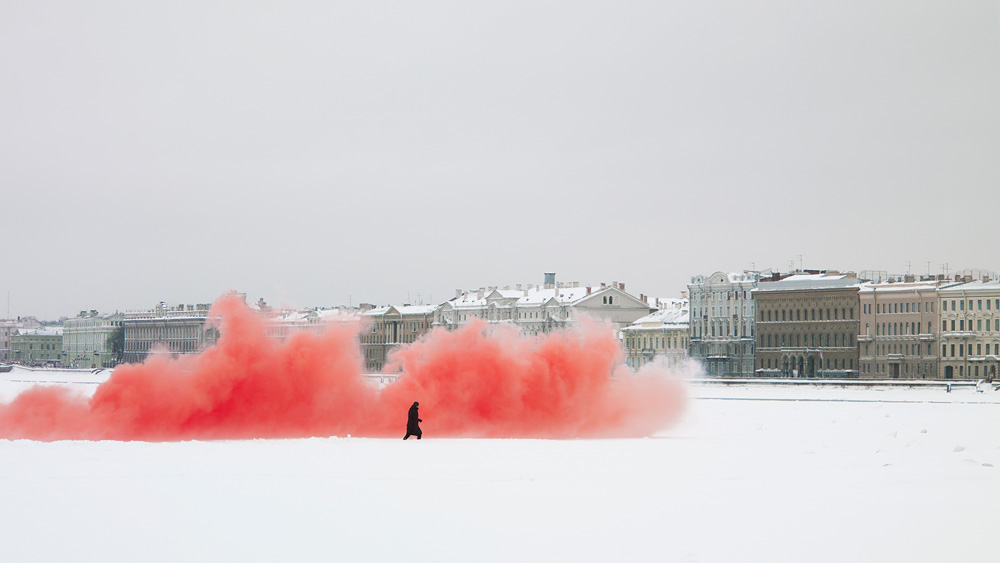
In his film ?Hyperborea?, Anton Ginzburg constructs points of intersection between memory ? individual or collective ? and imagination. Drawing on the many stories about the mythical region of Hyperborea, he set out to locate it and travelled to the distant Northern territories. His expedition runs through the forests of the American Pacific Northwest, the faded palaces of Saint Petersburg, and the Gulags of Russia?s White Sea. On the trail of ancient vestiges, primary forests, mammoth fossils and ruins, the explorer is accompanied by the mysterious cloud of red smoke.
Anton Ginzburg is a New York?based artist and filmmaker who uses an array of historical and cultural references as starting points for his investigations into art?s capacity to penetrate layers of the past. Born in 1974 in Saint Petersburg, Russia, Ginzburg received a classical arts education before immigrating to the United States in 1990. He earned a BFA from Parsons The New School for Design in 1997 and is currently working on his MFA degree at Bard College. His art has been shown at the 54th Venice Biennale, Lille3000, Palais de Tokyo, the San Francisco Museum of Modern Art, White Columns, the first and second Moscow Biennales, and the Smithsonian Cooper-Hewitt, National Design Museum. His work is represented in the permanent collections of the San Francisco Museum of Modern Art and the Moscow Museum of Modern Art, as well as in private collections around the world.
Anton Ginzburg
Pan
Experimental film | 16mm | color | 5:45 | USA | 2014
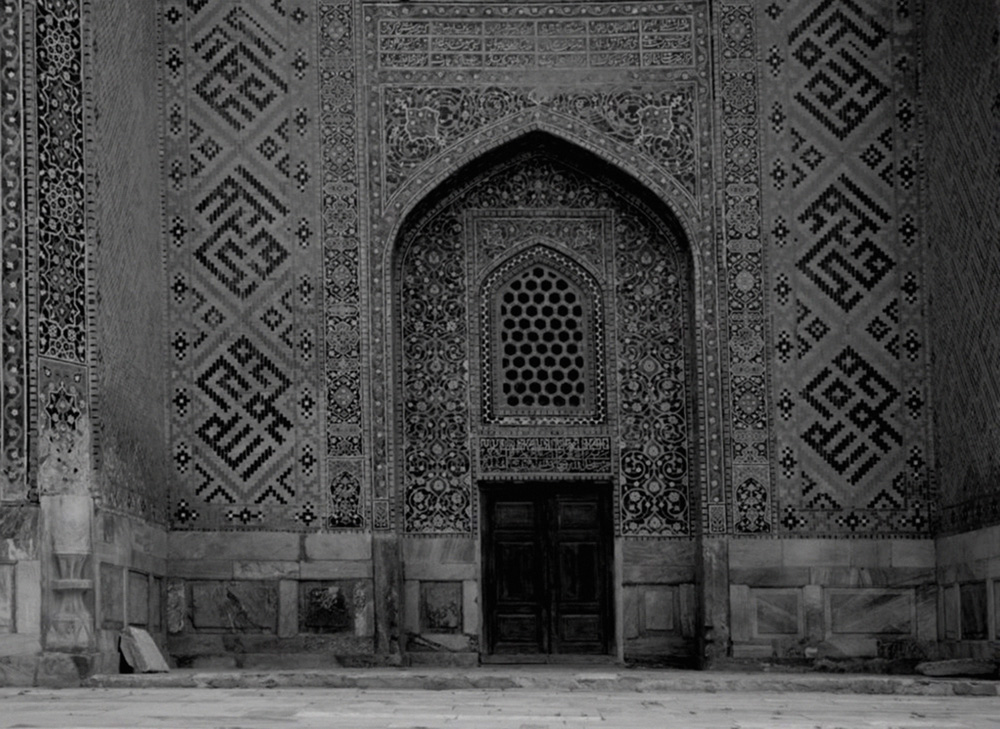
The film Pan (2014) by Anton Ginzburg, explores the genealogy and interactions of reproduction technologies from 16mm film to video formats. It examines variations of the mechanical gaze and its disembodiment in relation to the architectural representation and historical context. The hybrid aura offers an interplay and reconsideration of temporal and spatial relationships.
Anton Ginzburg is a New York–based artist and filmmaker who uses an array of historical and cultural references as starting points for his investigations into art’s capacity to penetrate layers of the past and reflect on the contemporary experience. Born in 1974 in Saint Petersburg, Russia, Ginzburg received a classical arts education before immigrating to the United States in 1990. He earned a BFA from Parsons The New School for Design in 1997 and MFA degree from Bard College, Milton Avery Graduate School of Arts, Annandale-on-Hudson, New York. His art has been shown at the fifty-fourth Venice Biennale, Blaffer Art Museum at the University of Houston, Palais de Tokyo in Paris, the San Francisco Museum of Modern Art, White Columns in New York, Lille3000 in Euralille, France, the first and second Moscow Biennales, and the Cooper-Hewitt, Smithsonian Design Museum in New York. His work is represented in the permanent collections of the San Francisco Museum of Modern Art and the Moscow Museum of Modern Art, as well as in private collections around the world.
Anton Ginzburg
ML_CRSH
Experimental video | 4k | color | 3:26 | USA | 2021
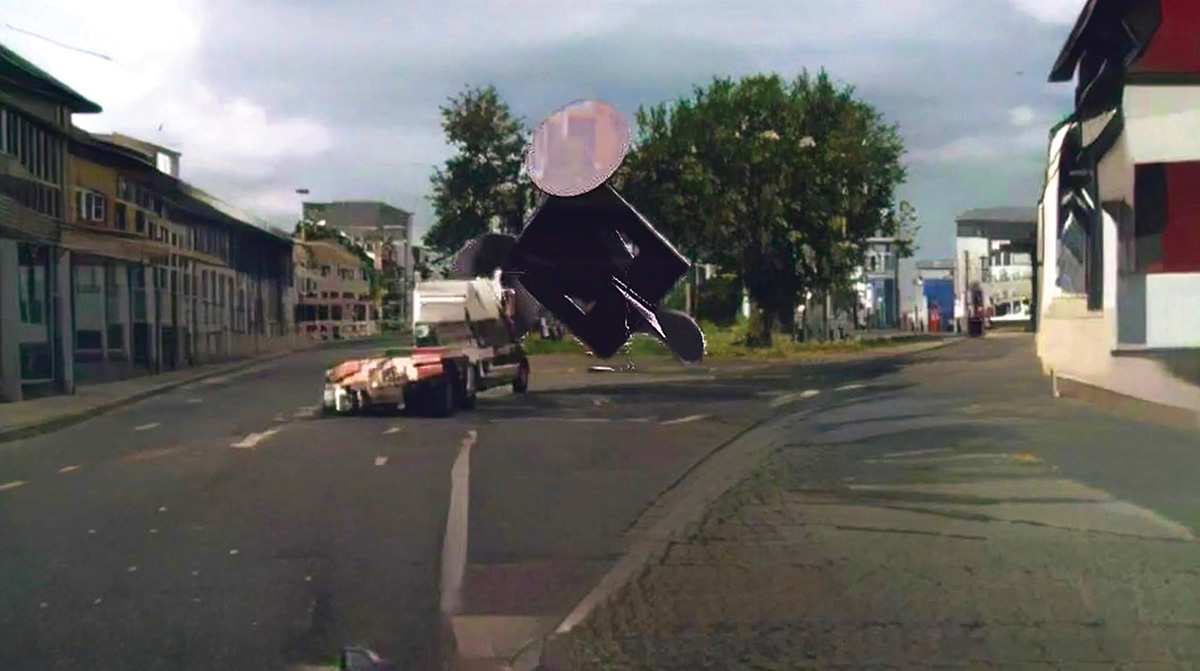
“ML CRSH” is a video work that was developed using a 3D gaming engine environment for self-driving vehicles. The AI algorithm was used to apply the database collection of photo materials and textures of Dresden to the 3D models, causing unpredictable digital artifacts. The initial video was inspired by the “Media Burn” 1975 performance organized by Ant Farm collective, where a customized Cadillac drove into a wall of flaming television sets. Translating it into today’s digital environment of “database logic” of new media objects and employment of AI, it features a montage of crashes of autonomous vehicles into digital replicas of art objects. The artwork turns its focus on the proliferation of database and AI technologies and disrupts its patterns with an iconoclastic gesture of a crash.
Anton Ginzburg is a New York–based artist and filmmaker who uses an array of historical and cultural references as starting points for his investigations into art’s capacity to penetrate layers of the past and reflect on the contemporary experience. Born in 1974 in Saint Petersburg, Russia, Ginzburg received a classical arts education before immigrating to the United States in 1990. He earned a BFA from Parsons The New School for Design and MFA degree from Bard College (Milton Avery Graduate School). His art has been shown at the 54th Venice Biennale, Blaffer Art Museum, Lille3000, Palais de Tokyo in Paris, the San Francisco Museum of Modern Art, White Columns, and the Smithsonian Cooper-Hewitt, National Design Museum. Screenings included IFFR, NYFF/Projections, Ann Arbor, Go Shorts and Images/Toronto.
Anton Ginzburg
Turo
Experimental fiction | hdv | color | 35:0 | USA | 2016
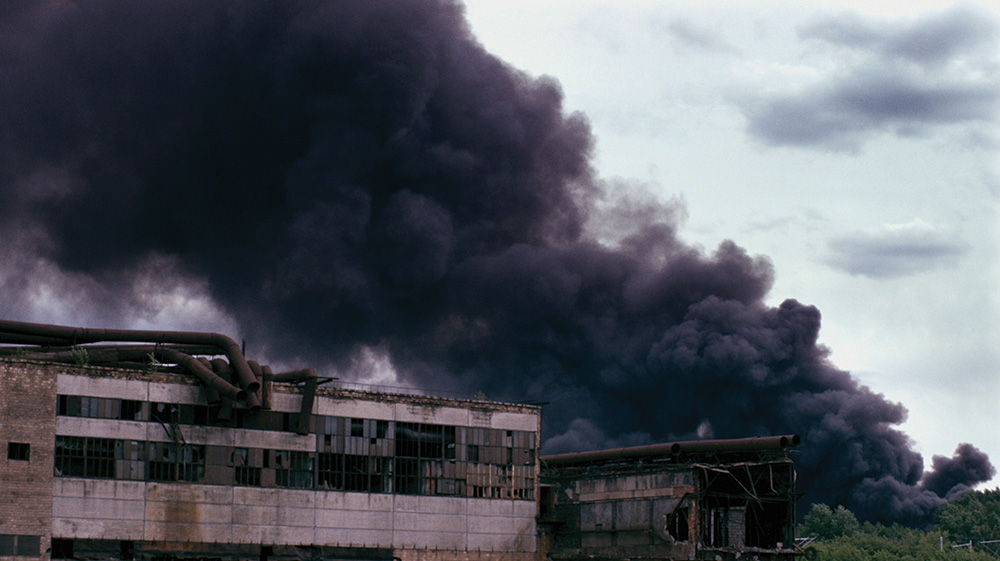
“Turo” is a film exploring post-Soviet geography and Constructivist architecture. It is made up four chapters and an introduction-index. Each chapter is exploring a different Constructivist building as a stage for past utopias. The buildings are landmarks of Soviet modernism: Melnikov House (architect Konstantin Melnikov), Narkomfin Building (architect Moisei Ginzburg), ZIL (Automobile factory designed by Vesnin brothers) and also recording of a “ghost mode” of a video game exploring ruins of Pripyat’ (Soviet town affected by Chernobyl catastrophe) featuring unrealized Tatlin’s Tower. Since a lot of Constructivist projects were never realized and existed as potential designs, they are placed into the virtual environments of the video game, positioning utopia within dystopia. It’s an atemporal collective territory, where past dreams coincide with current consumer culture. Modernity could be interpreted as an updated Babel Tower project where the universal tongue would have been imposed over the rest of the world. It still resonates deeply with contemporary culture, but today it exists as an archive of ruins, the record of fragmentation. Exploring various methods of representation the video’s structure combines cinematic approach with layering and digital abstraction. Each part of the film is a metaphorical tower that gets deconstructed throughout the duration of the chapter. Some parts are direct cinematic narratives, like an enormous blaze, while others show use projected images, deconstruction of an image and shaping its potential meanings on the basis of technological reproduction.
Anton Ginzburg is a New York–based artist and filmmaker who uses an array of historical and cultural references as starting points for his investigations into art’s capacity to penetrate layers of the past and reflect on the contemporary experience. Born in 1974 in Saint Petersburg, Russia, Ginzburg received a classical arts education before immigrating to the United States in 1990. He earned a BFA from Parsons The New School for Design and MFA degree from Bard College (Milton Avery Graduate School). His art has been shown at the 54th Venice Biennale, Blaffer Art Museum, Lille3000, Palais de Tokyo in Paris, the San Francisco Museum of Modern Art, White Columns, the first and second Moscow Biennales, and the Smithsonian Cooper-Hewitt, National Design Museum. Screenings included IFFR, NYFF/Projections, Les Rencontres Internationales Moscow International Film Festival, Arkipel/Jakarta, Exis/Korea and Images/Toronto.

Eva Giolo
Stone, Hat, Ribbon and Rose
Experimental film | 16mm | color | 16:0 | Belgium | 2024
Part of the YOURS project, an assemblage of five short films dedicated to Chantal Akerman, STONE, HAT, RIBBON AND ROSE offers a strictly personal and decidedly fragmented guide to Brussels; this idiosyncratic city symphony takes us across different urban terrains and unveils each location’s visual and sonic wonders. Amplifying the film’s elusive, drifting quality are a series of one-person performances involving disparate objects in the city. Playful and sombre, quotidian and fantastic, Eva Giolo’s film is a tender love letter to Akerman’s work. (Hyun Jin Cho)
Eva Giolo is an artist working across film, video, and installation. Her work has been exhibited at Sadie Coles HQ, Harlan Levey Project, WIELS centre for Contemporary Art , MAXXI–National Museum of 21st Century Art, Kunstmuseum Den Haag, BOZAR Centre for Fine Arts, Palazzo Strozzi, Museum of Contemporary Art Antwerp, Kunsthalle Wien, and major film festivals like International Film Festival Rotterdam, Viennale, FIDMarseille and Vision du Réel among others. She is a founding member of the production and distribution platform elephy.
Eva Giolo
Memory Is an Animal, It Barks with Many Mouths
Experimental film | 16mm | color | 24:0 | Belgium | 2025
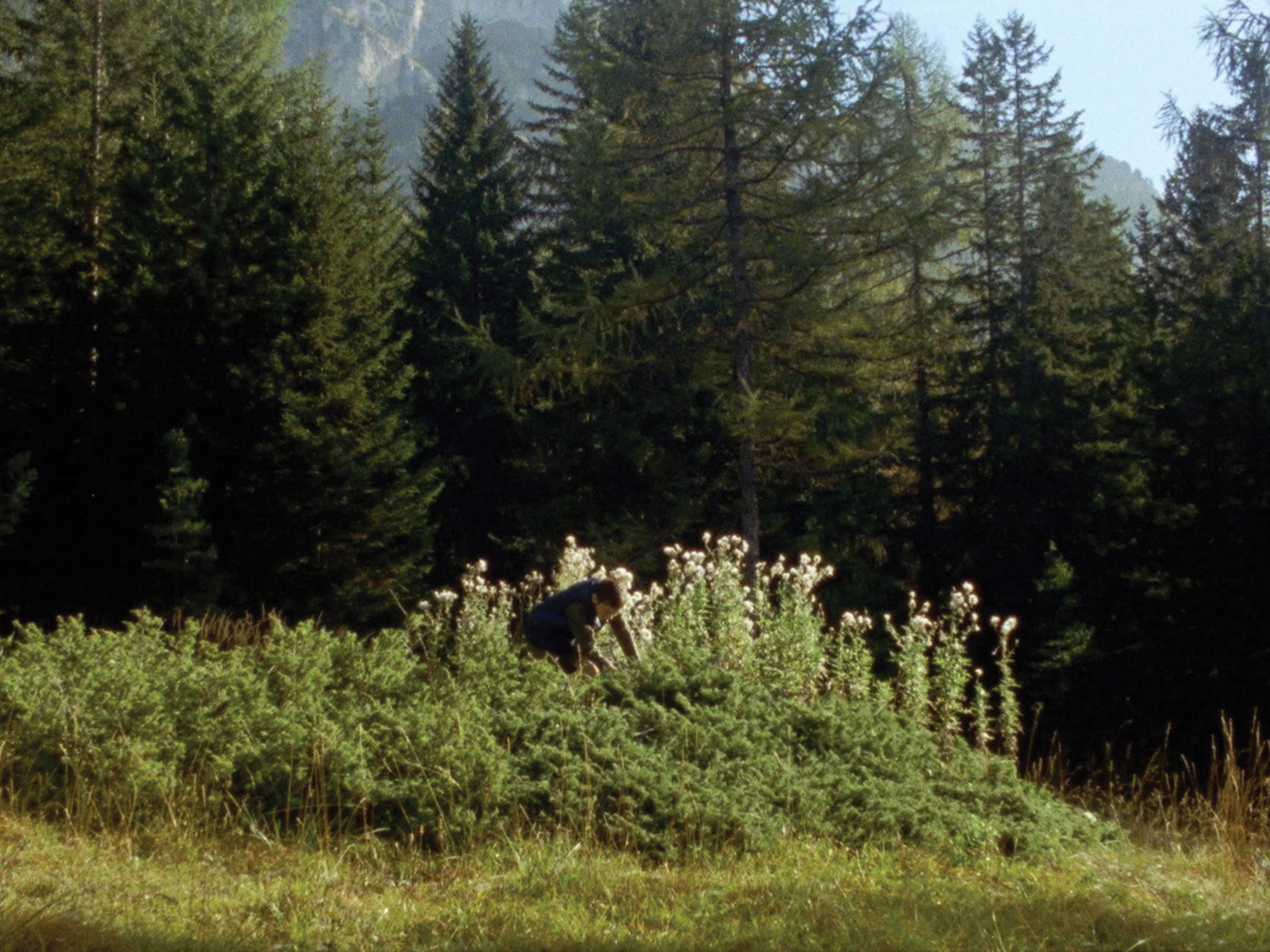
Eva Giolo’s latest work takes us to Val Gardena, where people still speak Ladin, a Rhaeto-Romance language. Giolo subverts the usual representation of mountain communities to deliver a portrait of a precious cultural heritage in constant evolution. Here, the inhabitants preserve and nurture their culture for future generations with awareness of the world and creativity. Shot on 16mm film sensitive to the grandeur and fragility of nature, Memory Is an Animal, It Barks with Many Mouths is an exquisite essay on the vital importance of linguistic diversity.
Eva GIOLO (1991, Belgium) is an artist working in film, video and installation. Her work places particular focus on the female experience, employing experimental and documentary strategies to explore themes of intimacy, permanence and memory, along with the analysis of language and semiotics. Her films, installations and other projects have been widely exhibited internationally at festivals, museums and galleries, including Sadie Coles HQ, Viennale, FIDMarseille, IFFR, New York Film Festival and many others. Her film Flowers blooming in our throats (2020) was nominated for The European Film Award and awarded the Top Prize at THIS IS SHORT 2021. She also received the National Award Special Mention at Lago Film Fest 2021, the Jury Special Mention at First Crossings Festival and the Critics’s Jury Award at 25FPS Festival. She is a laureate from HISK (2018-2020) and a former art resident at SeMA NANJI (2020), the year-long film–writing residency Conversation #4 (CVB, GSARA and Beursschouwburg), CASTRO studio program (2021), WIELS (2021), RU Unlimited New York and Fogo Island Arts (2022). Her films are distributed by elephy and Light Cone.