Catalogue > Search
Results for : Tout le catalogue

Eva Giolo
Remote
Experimental film | hdv | color | 23:41 | Belgium | 2016
Remote is a suggestive story. Portrait of a tender companionship in a secluded Irish countryside. Residing in the simplicity of the moment, the waiting and the repetition of days. This is a place where there is no space for imagining a future other than the perpetual repetition of the present. This is a place for survival, to be strong, alone with the wind, eyes burnt by the light. A place of unspoken tenderness, a landscape of silence and solitude in which there will always be someone.
Eva Giolo (b.1991 Brussels) is an audio visual artist. Her practice is predominantly made of filmic portraits that weave between fiction and documentary. They focus on individuals, almost always facing a certain kind of loneliness. She mainly focus on those individuals in their daily life, scripting and observing their actions and daily gestures through the camera. They often touch upon universal human themes and explore the relationship between loss, time and memory. But also the in-between language of the camera and the subject. Presenting memories, images and portraitures as something that can be manipulated and seen with multi-perspectives. Questioning the power of images is a recurrent theme and memories often stand as a central narrative. Giolo obtained a BA and MA in Fine Arts at the Media Arts department of the Royal Academy of Arts (KASK), Ghent. She completed her music education at the Institute of Contemporary Music in London. Recent screenings and exhibitions include: Imagine Science Film Festival, New York; TAZ#17, Ostend; Côté court, Paris; International Film Festival Rotterdam; Blaa Galleri, Copenhagen; BOZAR, Brussels; Courtisane Film Festival, Ghent; Ishibiki Gallery, Kanazawa; In Out Film Festival, Gdansk among others. Giolo won the VAF Wildcard for experimental film (2016) and is a founding member of the small distribution and production platform elephy. Eva Giolo is a post-grad art resident at HISK in Ghent (2018-2020). She currently works and lives in Brussels.
Marina Gioti
b-alles
Experimental video | dv | color | 2:0 | Greece | 2005
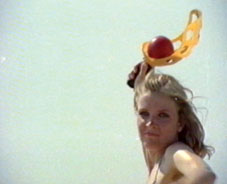
A Greek TV-commercial from the 80s of a product-action racquet game- that failed to become a success in the local market, is being manipulated anew in terms of image and sound. Apart from a funny rhythmical reworking of a rather trite found footage, this work aims at presenting a comical and simplistic view of how American products and trends have been implanted on our collective subconscious through advertising.
Marina Gioti is a filmmaker based in Athens, Greece. Her film and video work has been presented at various festivals and special screenings around Europe and the United States. Her most recent video "B-alles" was an official selection at: New York and Chicago Underground Film Festivals, Cinematexas 11, Hi/Lo Film Festival, Hull International Short Film Festival, among others. She also works as an independent film and video curator, programming and organizing experimental film and video screenings at various venues around Athens, mainly under the name "novaXpress". She has also programmed for Synch Festival (artistic director Synch Cinema 2005) and Cinematexas. She is the co-curator of the art exhibition "Anathena", which recently opened at the Deste Foundation (Athens, Greece).
Marina Gioti
To Krifo Scholio
Experimental film | 16mm | black and white | 10:0 | Greece | 2009
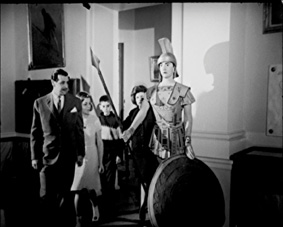
Greece, the early 70?s. A family visits the museum of the 1821 Greek Revolution and War against the Turks. As they wander inside the museum, one of the paintings comes to life ... ?Sabotaged? version of a rare -found- propaganda film,produced during the Greek military junta in the 70s, supporting a largely debated fact -for many a national myth- related to the birth of the modern Greek nation and the construction of its ethnic identity.
Born in Athens, Greece, Marina Gioti has studied Chemical Engineering, Environmental Management (MSc), Filmmaking and Media and Communication (MA) in Greece and the UK. Since 1999 she lives and works in Athens as a filmmaker/ video artist working mainly with found footage and animation. She has presented work at festivals and galleries in Athens, Europe and the United States, notably at the Toronto International Film Festival, The Rencontres Internationales, Cinematexas, New York Underground Film Festival and Transmediale festival in Berlin. She is also working as an independent curator and film programmer organizing art exhibitions and experimental film and documentary screenings around Athens.
Christoph Girardet
Fabric
Experimental film | hdv | black and white | 9:52 | Germany | 2014
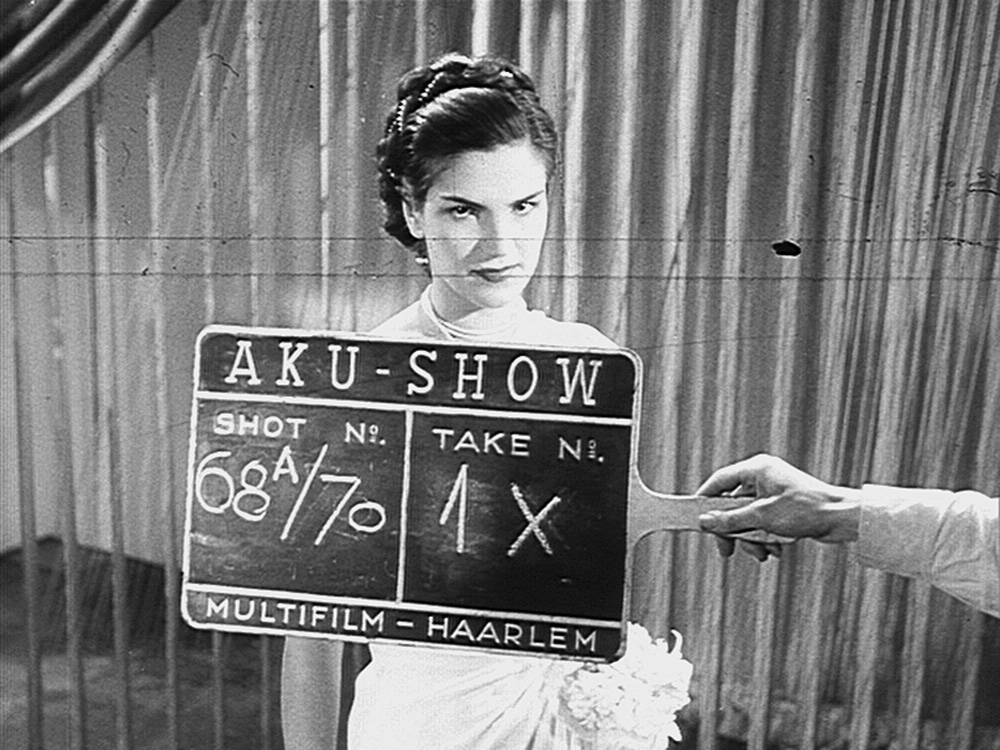
Fabric is a montage based on remaining workprints from a commercial film about viscose that no longer exists. The original attempt of the film to visualize perfect images of a young tailor and models dressed in sensual fabric while acting within a decorative modernist setting is mirrored in its shortcoming. The leftovers only show the preliminaries, faulty repetitions and aborted takes, thus all footage which was thrownout. Clapper boards indicating each take by numbers allowed to reconstruct a part of the film’s original storyboard. The new montage shows all of the remaining snippets from the related scenes including the clapper boards, the repeated takes and the glitches in the film material. However, all parts which probably have been used to edit the original film are missing, the gaps are marked with beeps on the otherwise silent soundtrack. While following a fragile new narrative, Fabric also generates a counterpart of an artefact that was lost.
Christoph Girardet, born in Langenhagen, Germany, in 1966. He studied Fine Arts at the Braunschweig School of Art (Master’s degree in 1994). Since 1989 he has produced video tapes, video installations and films, some of them in collaboration with video artist Volker Schreiner beginning in 1994 and as of 1999 with filmmaker Matthias Müller. He was awarded a stipend for the International Studio and Curatorial Program in New York (2000) and the Villa Massimo stipend in Rome (2004). He lives and works in Hanover.
Christoph Girardet
One Hundred Years Later
Experimental film | mov | black and white | 7:55 | Germany | 2025
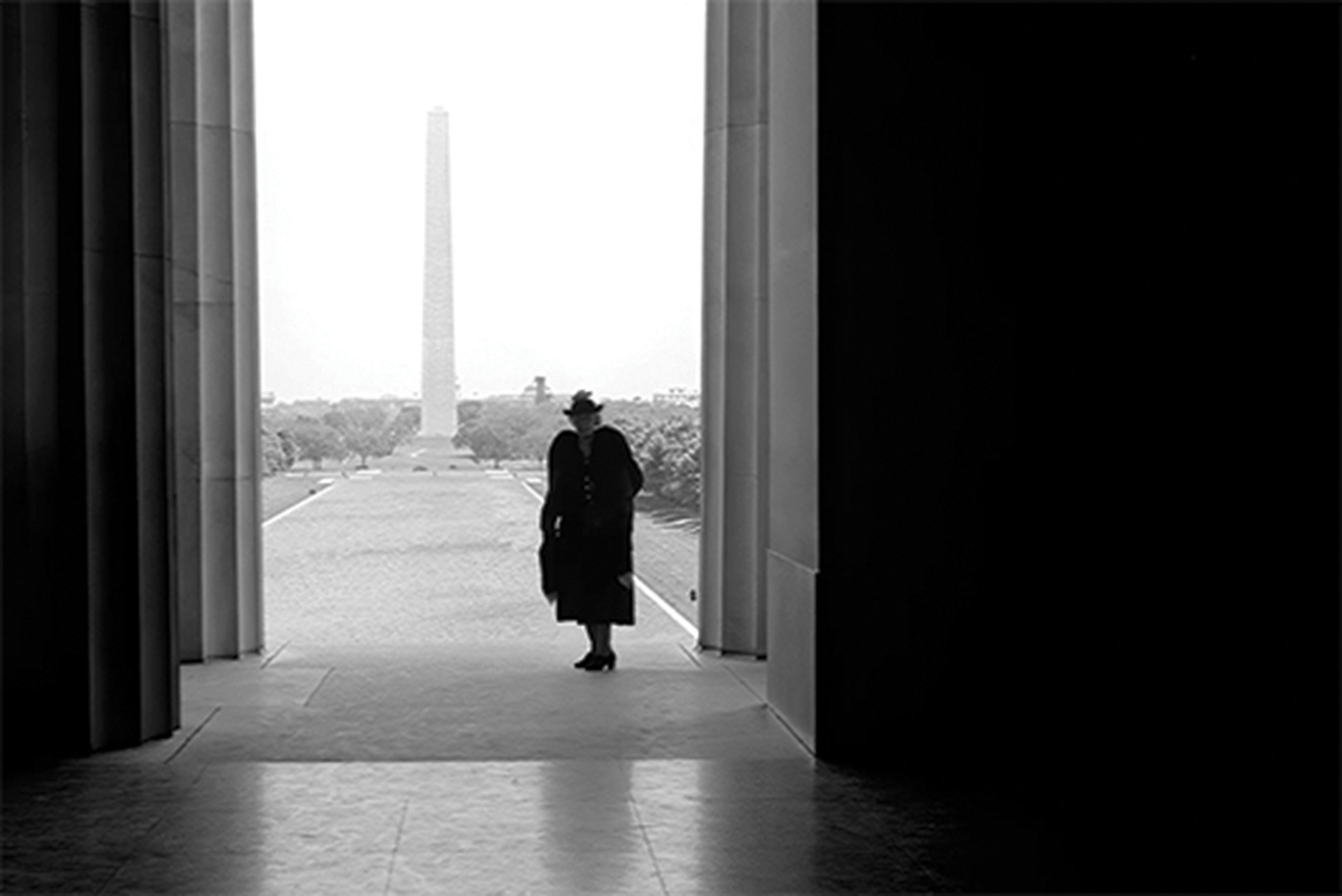
In 1939, a second unit with a double and extras filmed scenes for the Hollywood classic “Mr. Smith Goes to Washington” in the Lincoln Memorial. The succession of the long, sorted-out plan sequences undermines the classic cinematic narration; the plot does not seem to progress. The neoclassical architecture remains the setting for a recurring and questionable ritual, in which the protagonist is lost.
Christoph Girardet, born in 1966, is a German video artist and filmmaker. Girardet makes both the accidentally found and the extensively researched found footage from the archives of film history the subject of his art. Montage, omissions, and repetitions reveal the actual structures and inner mechanism of the depicted cinematic reality. Beyond the analysis of the material and its clichés, his work deals in essence with a melancholic state of absence, thus creating an individual pictorial world. From 1988 to 1994, Girardet studied Visual Arts at the Braunschweig University of Art (HBK) in the film class of Birgit Hein. Since 1989 he has produced films, videos and video installations, some of them in collaboration with video artist Volker Schreiner (1994 – 2004), and, more frequently, in collaboration with filmmaker Matthias Müller (1999 – ongoing). Girardet has participated in group shows at the Stedelijk Van Abbemuseum, Eindhoven, MoMA PS1, New York, Palais de Tokyo, Paris, Hirshhorn Museum, Washington, and Eye Filmmuseum, Amsterdam, among others. He had solo exhibitions at institutions such as FACT, Liverpool, Kunstverein Hannover and West, The Hague. He has taken part in major film festivals worldwide, including the festivals at Cannes, Venice, Berlin, Toronto, Locarno, Oberhausen and Rotterdam. His work is included in public and private collections. He has received numerous awards, among them a stipend for the International Studio and Curatorial Program in New York (2000) and a scholarship at Villa Massimo in Rome (2004). He lives and works in Hanover, Germany.

Christoph Girardet, Matthias Müller
Maybe Siam
Experimental film | betaSP | color and b&w | 12:20 | Germany | 2009
They call me a dreamer, well maybe I am. / But I know that I`m burnin` to see / Those far away places with the strange-soundin` names / Callin`, callin` me. (no translation, English only, please)
Christoph Girardet, born in Langenhagen, Germany, in 1966. Lives in Hannover. Works in video, film and installation since 1987. Studied at the Braunschweig HBK. Selected works: 1991 Schwertkampf, 1997 Release, 2001 Scratch, 2001 7:48, 2002 Absence, 2007 Pianoforte, 2010 Silberwald Matthias Müller, born in Bielefeld, Germany, in 1961. Lives in Bielefeld and Cologne. Works in film, video and photography since 1980. Studied at the Bielefeld University and at the Braunschweig HBK. Selected works: 1990 Home Stories, 1994 Alpsee, 1998 Vacancy, 2000 nebel, 2004 Album. Joint projects of Christoph Girardet and Matthias Müller: Phoenix Tapes 1999, Manual 2002, Beacon 2002, Play 2003, Mirror 2003, Ray 2004, Catch 2005, Ground 2005, Hide 2006, Kristall 2006, Locomotive 2008, Contre-jour 2009, Maybe Siam 2009
Christoph Girardet
It Was Still Her Face
Experimental film | hdv | black and white | 8:0 | Germany | 2017
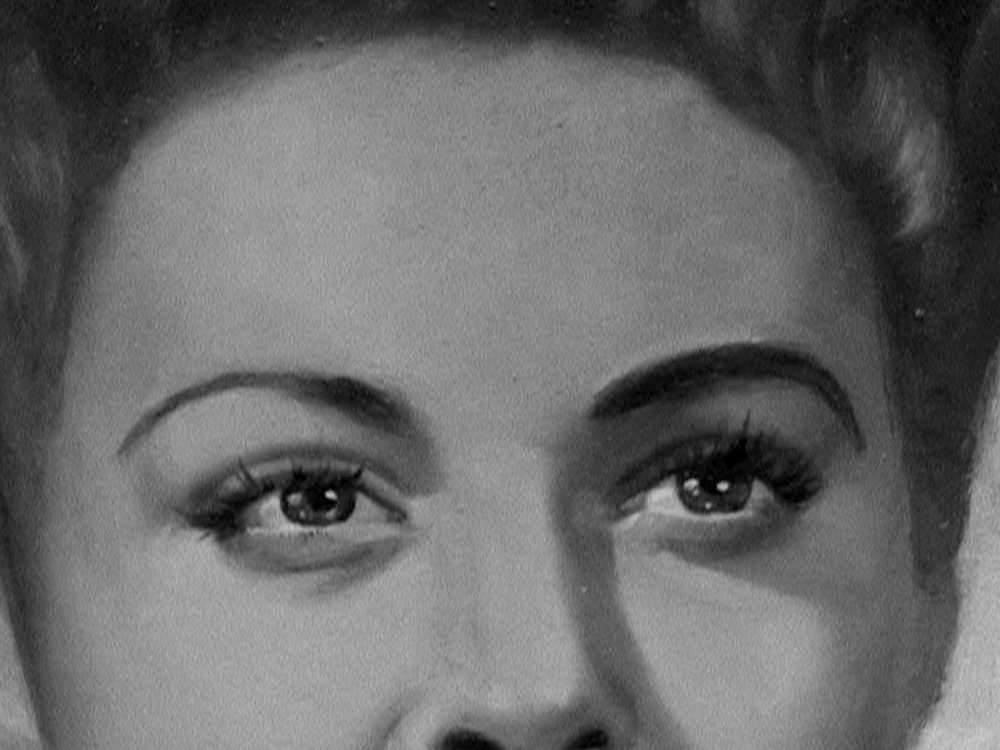
Portraits of women. And men, who are spellbound by them. The painted portraits, a recurring motif of film noir as well as European postwar cinema, aesthetically stand in a tradition of an outmoded academic style that is bent on striking likeness with the model. They are revenants, omens of absence, metaphors for loss and death, objects of desire and fixation, which mesmerize both the viewer in the movie and in front of the screen.
Christoph Girardet, born in Langenhagen, Germany, in 1966. Lives in Hannover. Studied at the Braunschweig HBK. filmography (single channel, selection) 1991 Schwertkampf 1993 Fieberrot 1996 Release 2001 Scratch 2002 Absence 2004 Fiction Artists (with Volker Schreiner) 2007 Pianoforte | Storyboard 2012 The Eternal Lesson | Dirigible 2014 Fabric 2015 Synthesis 2017 It Was Still Her Face collaborations with Matthias Müller 1999 Phoenix Tapes 2002 Manual | Beacon 2003 Play | Mirror 2006 Kristall 2009 Contre-jour | Maybe Siam 2011 Meteor 2013 Cut 2016 personne
Christoph Girardet, Matthias MÜLLER
Personne
Experimental film | hdv | color and b&w | 15:4 | Germany | 2016
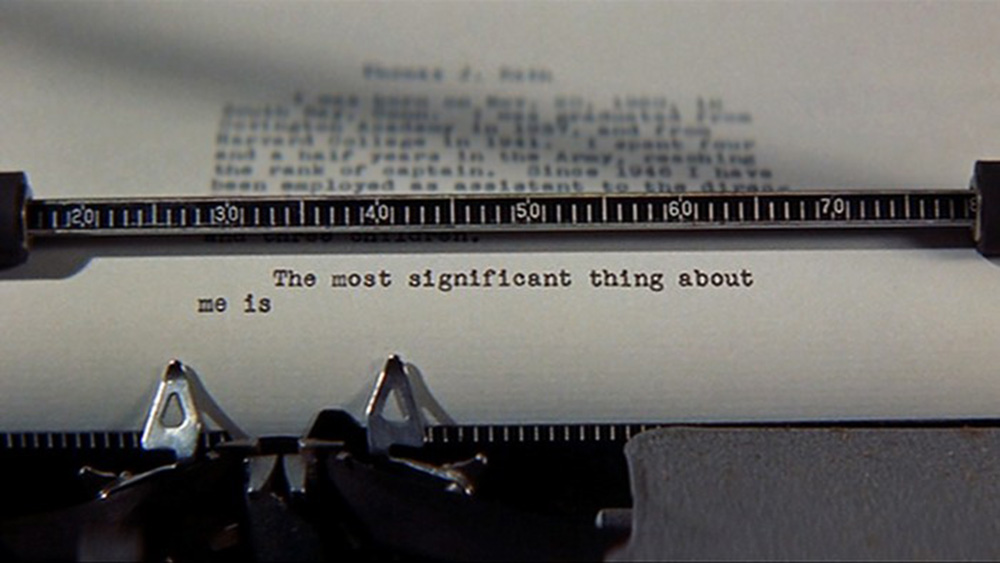
A broken bottleneck lies on the ground. An analogue telephone with a blank dial plate. The hero of the film, Jean-Louis Trintignant, in younger years – in older years. A man huddled on an elevator floor. Skewered butterflies. He is all alone in the world. The external is sealed off. The internal barricaded. He shifts between times. His focus is always trained on the other. Is he wanted, condemned, persecuted? The man whom we observe from the rear, is only able to see his back in the mirror. His face cannot be recognised. All the actions and movements, all the seeking and striving, all the alterations and associations revolve around the view and excerpt from “La reproduction interdite”, painted by Belgian surrealist René Magritte in 1937. The mirror axis of the film, and yet, and simply for that reason, one becomes the other. The other becomes many. “personne – that is somebody and nobody and anyone. That is us in the course of time. Persistently, in vain. The self is the need for permanent self-assertion”.
Christoph Girardet & Matthias Müller are directors, known for Cut (2013), Contre-jour (2009) and Personne (2016).
Christoph Girardet
Storyboard
Art vidéo | betaSP | color | 5:0 | Germany | 2007
Storyboard is a collage made from a variety of randomly found images: empty spaces, enigmatic gestures, artificial environments. Is this life according to a cinematic memory?
Christoph Girardet was born in 1966 in Langenhagen and lives in Hanover, Germany. He studied Fine Arts at the School of Art in Braunschweig. He works since 1987 on video, film and installation. He began to collaborate in 1994 with video director Volker Schreiner, and in 1999 with Matthias Müller (Phoenix Tapes), with whom he made numerous projects using digital techniques as a resource. He explores, amongst other subjects, the banalities of industrial filmmaking. Girardet has participated in collective exhibitions in prestigious institutions as Stedelijk Van Abbemuseum (Eindhoven) and the P.S.1 Contemporary Art Center in New York. Individual exhibits of his work have taken place at Kunstverein in Hanover and at the Sean Gallery in New York. He has received numerous awards.
Christoph Girardet, Matthias Müller
Misty Picture
Experimental film | 4k | color | 16:32 | Germany | 2021
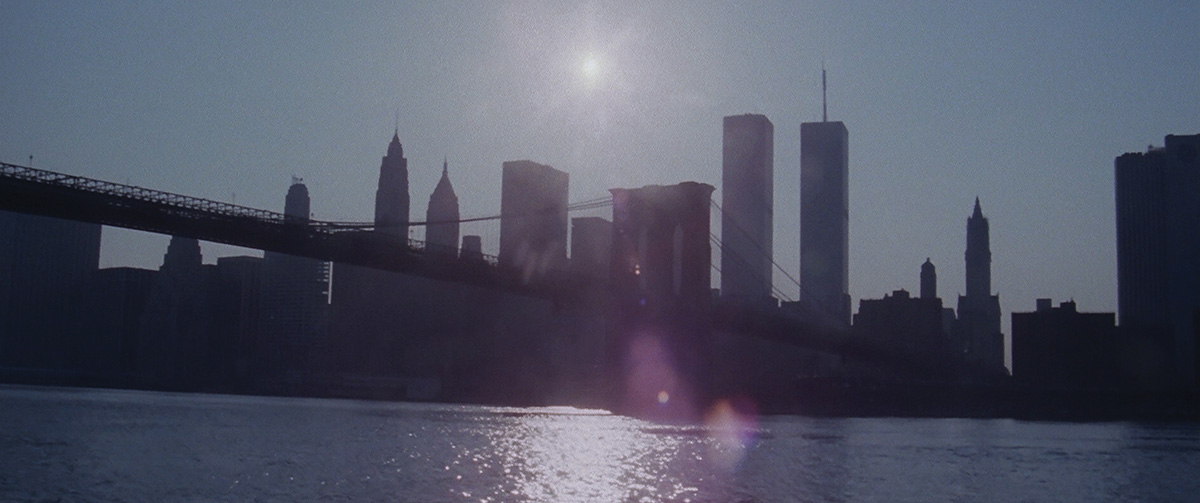
Twenty years ago, the towers of the New York World Trade Center collapsed. The endlessly repeating television images of this event were preceded by manyfold stagings of the building, either as a highly symbolic icon, a speculative destruction fantasy or merely as a spectacular backdrop. In Misty Picture, such fictional motifs string together: city symphony, disaster movie and medial trauma therapy become one.
Christoph Girardet, born in Langenhagen, Germany, in 1966. Lives in Hannover. Studied at the Braunschweig HBK. Matthias Müller, born in Bielefeld, Germany, in 1961. Lives in Bielefeld and Cologne. Studied at the Bielefeld University and at the Braunschweig HBK. Collaborative works since 1999

Christoph Girardet
Jishin
Experimental film | hdv | black and white | 8:0 | Germany | 2022
Jishin (Japanese: earthquake) shows an archaic-looking special effect for a Hollywood film of the 1940s: a house begins to sway, stone lanterns fall over, an actor loses his grip. Finally, mountains of debris fill the screen. The drama is repeated in five successive, slightly varied camera perspectives. The uncut raw material allows an analytical view of the clichéd and scenery-like setting: the disaster is not due to a natural event but to a precalculated performance.
born in Langenhagen, Germany, in 1966, studied Visual Arts at the Braunschweig University of Art (HBK). Since 1989 he has produced films, videos and video installations, some of them in collaboration with video artist Volker Schreiner (1994 – 2004), and, more frequently, in collaboration with filmmaker Matthias Müller (1999 – 2022). He lives and works in Hanover, Germany.

Christoph Girardet, Matthias Müller
Screen
Video | hdv | color and b&w | 17:30 | Germany | 2018
"While he mused on the effect of the flowing sands, he was seized from time to time by hallucinations in which he himself began to move with the flow." -Kobo Abe Liminal zones. Floating particles. Fire, water, earth, air. Voices of fictional characters: sometimes suggestive, sometimes strict, leading the viewer away from the here and now. Who`s talking? The relationship between the hypnotized subject and the hypnotist is mirrored in the spectator`s relationship to the screen.
CHRISTOPH GIRARDET was born in Langenhagen, Germany, in 1966. He studied Fine Arts at the Braunschweig School of Art (Master´s degree in 1994). Since 1989 he has produced video tapes, video installations and films, some of them in collaboration with Volker Schreiner beginning in 1994 and as of 1999 with Matthias Müller. He was awarded a stipend for the International Studio and Curatorial Program in New York (2000) and the Villa Massimo stipend in Rome (2004). He lives and works in Hanover. MATTHIAS MÜLLER was born in Bielefeld, Germany in 1961. Müller is an artist working in film, video and photography. He is based in Bielefeld and Cologne, Germany. Studied Arts and German Literature at Bielefeld University and Fine Arts at HBK Braunschweig. Master’s degree. Since 2003, Professor in Experimental Film at Academy of Media Arts, KHM, Cologne. Müller organized numerous avant-garde film events such as the "Found Footage Film Festival" (1996 & 1999) and the first German festival of autobiographical films "Ich etc." (1998) and various touring programs. With his films and videos he has taken part in major film festivals worldwide, including the festivals at Cannes, Venice, Berlin and Rotterdam. His work has also been featured in several group and solo exhibitions. His films and videos are part of the collections of institutions such as Centre Georges Pompidou, Paris, Museu d’Art Contemporani, Barcelona, Nederlands Film Museum, Amsterdam, Australian Centre For The Moving Image, Melbourne, Kunsthalle Bielefeld, the Goetz Collection, Munich, the collection of Isabelle and Jean-Conrad Lemaître, London, and Tate Modern, London.
Fabien Giraud
Thes Straight Edge
Experimental video | betaSP | color | 13:8 | France | 2005
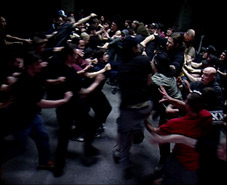
A crowd dances to the sound of a music that is not heard played by a band that is not seen. What is left is the sound of the bodies in movement, the image of a moving order. The Straight Edge is an experiment conducted in a concert of hardcore punk music. The crowd and its intensity provide the material. The shared expressions of joy, violence, and boredom are the elements of the cultural fiction at stake here. Within it, forms are tried, shifted, repeated. I approach community as a complex interplay in which individuals invent themselves. Sharing rules, postures, rhythms, each one constructs itself and creates a world. This movement of construction is at the heart of my work. I believe that it is always flexible, modifiable, that it can be altered and recreated. I believe in the fiction and the possibility of its reinvention.
Fabien Giraud, born in France in 1980, has studied at the Ecole Nationale Superieure des Arts Décoratifs in Paris and at the National Institute of Design in India. Presently living and working at Le Fresnoy, Studio National des Arts Contemporains in Tourcoing, France.
Helena Girón Vázquez, Samuel M. Delgado
Un dragón de cien cabezas
Experimental doc. | 16mm | color | 14:50 | Spain | 2025
In the Garden of Hesperides, a fruit, capable of granting immortality to whoever ate it, once grew. This garden, located somewhere off the coast of West Africa, was guarded by a dragon with one hundred heads. Through the use of bio-sonification of banana trees, a monoculture crop in the Canary Islands, we discover a tale of eternal life where this mythical garden used to exist.
Their work investigates the relationship between mythology, history and materialism. Their first feature film, Eles transportan a morte (2021), premiered at the Venice and San Sebastian festivals winning awards at both. It has subsequently been shown at international festivals such as Rotterdam, Cairo, Mar del Plata, Viennale, Hamburg and Sao Paulo. Their short films have been shown at festivals like Toronto, Locarno, New York, Ann Arbor and many others. They have made installations and performances in art centers like CCCB (Barcelona), BAM (New York), TEA (Tenerife) or Solar (Vila do Conde).
Peter Gizzi, Natalia ALMADA
Threshold Songs
Experimental film | super8 | color | 10:0 | Morocco | 2009
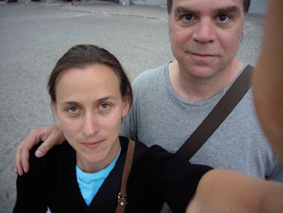
"Threshold Songs," by Natalia Almada and Peter Gizzi is part of "The Tangier 8," a film-poetry project that took place in Tangier, Morocco in June 2009. Working under tight time constraints-they had just four days to film, four days for sound, and four days for editing, the artists took inspiration from the city of Tangier-its history, architecture, people, politics, as well as from each other, to produce these short film-poems.
Natalia Almada- Born in 1974 in Mexico. She graduated with a Masters in Fine Arts in photography from the Rhode Island School of Design and shares her time between Mexico City and Brooklyn, New York. Her directing credits include All Water Has a Perfect Memory, an experimental short film; Al Otro Lado, her award winning debut feature documentary about immigration, drug trafficking and corrido music; and her most recent film, EL GENERAL, a family memoir and portrait of Mexico past and present which premiered at the 2009 Sundance Film Festival and won the best documentary director award. Her films have been shown at The Museum of Modern Art, The Guggenheim Museum, The Whitney Biennial, as well as at several film festivals around the world. She has received support for her work from numerous foundations including The Creative Capital Foundation, The Tribeca Film Institute, The Sundance Institute Documentary Film Program, PBS and others. Almada is a MacDowell Colony Fellow and a 2008 Guggenheim Fellow. 2) Peter Gizzi- Born in 1959 in Massachusetts. Gizzi attended Brown University, NYC and SUNY Buffalo. His books include The Outernationale (Wesleyan, 2007), Some Values of Landscape and Weather (Wesleyan, 2003), Artificial Heart (Burning Deck, 1998), and Periplum (Avec Books, 1992). In 2004 Salt Publishing of England reprinted an expanded edition of his first book as Periplum and other poems 1987-92. He has also published several limited-edition chapbooks, folios, and artist books. His work has been translated into numerous languages and anthologized here and abroad. His honors include the Lavan Younger Poet Award from the Academy of American Poets (1994) and fellowships in poetry from The Fund for Poetry (1993), The Rex Foundation (1993), Howard Foundation (1998), The Foundation for Contemporary Arts (1999), and The John Simon Guggenheim Memorial Foundation (2005).
Shaun Gladwell
Storm Sequence
Art vidéo | dv | color | 5:37 | Australia | 2000
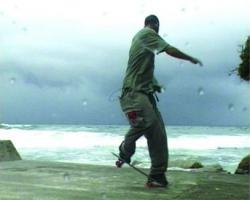
Gladwell is the calm in the storm. In slow motion we are able to grasp his skating ability - he was after all a champion skateboarder for Australia - as well as his ability to demonstrate the beauty in genuine and profound vulnerability. Gladwell was and continues to be fascinated with the slowing down of time and focusing on the beauty that exists in fleeting moments. In skateboarding culture, skaters will spend hours in front of a TV(or computer screen) playing footage in slow motion to learn and later execute various skateboarding techniques. Unsuspecting viewers are introduced to a standard practice of a particular subculture and offered the opportunity to cast a fresh eye over an ?other?. In the Silent, Ambient and Harder Remixes exhibition catalogue essay, Simon Rees rightly states the artist is wearing Turner-esque shaded clothes that are various shades of grey, which includes the heavy silver chain that sways back and forth with his every move. Not only does this work document contemporary skateboard fashion but it complements the stormy and sombre landscape in the background. Storm Sequence was dedicated to the artist?s skateboard trainer and close friend who died in the late 90?s, hence the interpretation of genuine and profound vulnerability. There is a great sadness that underlies this fabulous piece, yet it is peaceful and meditative. Gladwell is an intelligent, well read artist, interested in theories questioning the notion of public and private spaces and notions of the ?other? and this particular case, the ?sub?. Storm Sequence, made in 2000, is one of a four part series comprised of; Storm Sequence, Kick flipping Flaneur, Tangara and Double Line Work. The work was commissioned by Peter Fay and has been the focus of many exhibitions in Sydney, Canberra, Perth, Beirut, New York and London.
SHAUN GLADWELL Born 1972, Western Sydney Shaun Gladwell completed a bachelor of Visual Art (Hons) at the University of Sydney in 1996, followed by a Masters of Visual Art at the College of Fine Arts, University of New South Wales. In 2001, he was awarded a three-month Australia Council residency at the Cité International Des Arts, Paris. An Anne and Gordon Samstag International Scholarship enabled him to undertake associate research at Goldsmiths College, London (2001?02). During this time, he was included in the show, The Mind is a Horse, at Bloomberg Space, London. In 2002, Gladwell was commissioned to present a broadcast work for Netherlands TV network 4DTV and was included in Iain Borden?s first theoretical survey on skateboarding culture. Recent solo exhibitions include New Balance at Perth Institute of Contemporary Art (2004) and two Sherman Galleries? exhibitions, Silent, Ambient and Harder Remixes (2003) and MMXBREAKLESS SESSIONS (2005). Shaun Gladwell has been represented in important national and international group exhibitions, including Primavera 2003: Exhibition of Young Australian Artists, Museum of Contemporary Art, Sydney; 2004: Australian Culture Now, Australian Centre for the Moving Image (ACMI) and The Ian Potter Centre: NGV Australia, Melbourne; and, in 2005, the Anne Landa Art Award, Art Gallery of New South Wales, Sydney; Not Worried: New Art From Australia, Raid Projects, Los Angeles; New Acquisitions, Govett-Brewster Art Gallery, New Plymouth, NZ; and Space Invaders, Museum Kunsthaus Baselland, Basel, Switzerland. Shaun Gladwell is represented by Sherman Galleries, Sydney.
Alexander Glandien
Making of
Experimental doc. | hdv | color | 30:0 | Germany, Austria | 2015
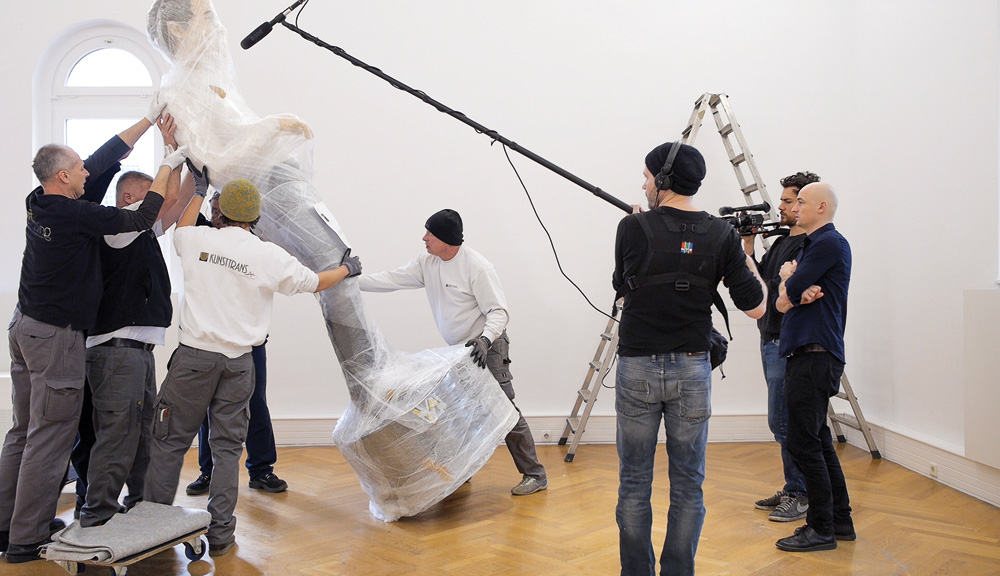
The film "Making of" takes work as a topic into focus, showing the various working areas of a contemporary art museum with all those activities which usually remain invisible for visitors. Shot from the perspective of a small filmcrew different kind of workflows are documented as well as the preparation for an upcoming exhibition, while the crew itself is constantly observed in their efforts to create this film. Director, cameraman and sound operator move through all areas of the The State Gallery in Linz in an almost performative way. The ongoing visible presence of the camera raises questions about the relationship between the documented actions, their authenticity and manipulation. The depicted reality becomes visible as part of a media construction.
Alexander Glandien was born in 1982 in Schwerin (Germany) and he works as an artist in Vienna. Since 2009 he is artistic and scientific assistant at the Art University Linz. After his studies at the University of Wismar he attended studio grants in Indonesia, Italy, the Netherlands and Spain. His works have been awarded with the Talent Award of Upper Austriaand the Klemens Brosch prize and they are part oft the art collections of the federal government of Austria, the province of Upper Austria, the contemporary art collection of the City of Vienna and the Albertina in Vienna. He has had numerous exhibitions, most recently at the State Gallery Linz, Galerie 5020 in Salzburg, at Kadmium Art Centre in Delft, at the Moscow Museum of Modern Art and at the Albuquerque Museum of Art and History.
Ronald Glasbergen, Ronald GLASBERG
air wave
Experimental doc. | dv | color | 5:30 | Netherlands, Chad | 2005
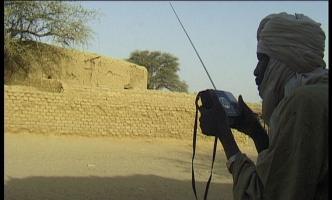
The short video and sound essay Air Wave, is a simple elegant way of showing both : the slowness of daily life in some of the remotest areas of the world, as well as the hunger for news from the other world-, the connected-, the global world, in the areas. Adding some harsh relevance is the fact that the subject of the Sudanese news broadcast is partly about Iraq (which is through all sound deformations also to be heard for non Arabic speakers). The shots were taken in Tchad in the Waddai region and in N?Djamena. The artist was there to assist in a documentary on the Darfur refugee problem. Air Wave, one in a number of artists video focusing on matters in actual culture, is distributed by ?Art for People?.
Jean-luc Godard
De l'origine du XXIe siècle
Experimental film | dv | color | 16:0 | Switzerland, France | 2000
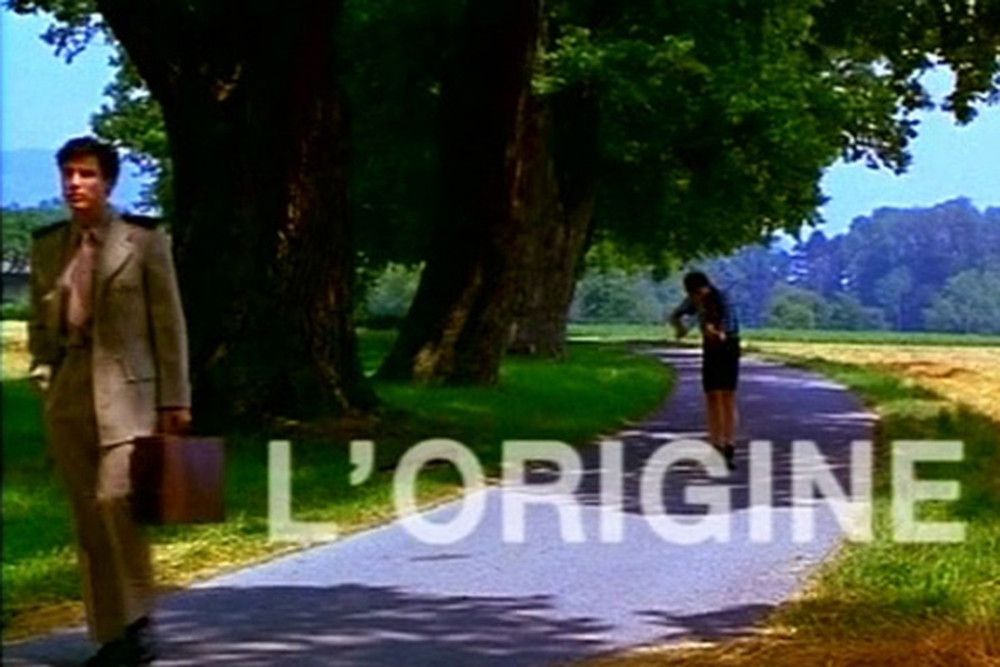
We are, from the start, amazed at so much beauty: a landscape, walkers, a tree, an aria and a young lady riding a bicycle. Short after, a bus silently drives across the night, as if it were floating ; we imagine prisoners being transported during the war in Yugoslavia - a mysterious trail lost in darkness. Here is the origins of the 21st century, a piece of artwork ordered in 2000, for the opening of the Cannes Film Festival - he describes it as an attempt. "I have tried to cover the memories of the atrocious explosions and crimes with children´s faces and the tears and smiles of women". The attempt was of course bound to fail, as there is no cure against all the horrors of the last century in this retrospective. Godard scans the 20th Century in reverse; its major trends include armies and refugees, cannon shots and prisoners, freight trains and mountains of corpses, conquests and occupation, humiliations and torture. And when a scene starts a quest for a lost Century, the aim is not to find again the sweetness of remembrance, but an era lost because it was devastated by violence and wars. The other scene "les plus belles années de notre vie" (after William Wyler's movie "the best years of our life"), is only grim humor. "To me, the 20th Century is - he adds as an excuse -ornament and mass; isolated destinies, lost in bigger trends, unless they find their territory in some story which is at the same time protection and consolidation: "you have to understand that groups of people always play someone else´s game ... and never theirs". In this 17-minute-maelstrom, it is hardly possible to know where the images come from - and maybe it´s better this way. Someone who manages to recognize the little boy from The Shining with his pedal toy car is going to wonder right after where the other passage, where we pass along frozen corpses on snow-covered train tracks, comes from. Movements connect to each other, but their juxtaposition is less futile than it appears to be; on the one hand it´s like a challenge, trying more to remind us not to forget the true horrors beyond fictitious horrors, but on the other hand reminding us not to underestimate cinema when it is about fathoming and capturing the invisible trends of an era. All if a sudden Jerry Lewis, as a Nutty Professor whose metamorphosis tortures him, seems to deliver the comment which is adapted to a century that has been likened to Dr Jekyll, but even more changed into Mr Hyde. Even Jean Seberg doesn´t manage to remain the neutral observer of Godard's world, as his "what is this, disgusting?" is turning against its time. Be it in 1975, 1960, 1945, 1930 or 1915, Godard would be sickened by the last century if it were not for these moments when a child´s face or a woman´s smile prevail. But, the way he shows it, these are only epiphenomena. "Isn´t this happiness?" - "You will at least reckon that this is quite sad" - "but, my dear, happiness isn´t cheerful".
Jean-Luc Godard was born in Paris on the 3d of December 1930. His father was a brilliant doctor and his mother, who belonged to a very well-off family of bankers. They both raised him among books. He first studied in Nyon, Switzerland, and then at the Buffon highschool in Paris. He divided his time between Switzerland and France during his whole youth, and was divided by his parents´ difference in social classes (upper middle class for his mother, average middle-class for his father). In 1949 he studied literature and sciences at the Sorbonne then prepared a certificate in ethnology. He shares his studies between painting, literature, ethnography and cinema (he studies at the Sorbonne´s film institute). At the same time, he could very often be found at the Latin´s district Cine-club, where he met Jacques Rivette, Eric Rohmer and François Truffaut, and at the Cinémathèque Française. He started to write for the Gazette du Cinéma (Cinema magazing), created by Jacques Rivette, in 1950. In 1952, and thanks to his mother who knew Jacques Doniol-Valcroze (Founder, with André Bazin, of the Cahiers du Cinéma), he wrote for the first time in the magazine (8th issue, January 1952), using Hans Lucas as a pseudonym. He was then very good friends with Paul Gégauff and Eric Rohmer. In 1952, Jean-Luc Godard returned to Switzerland in order to avoid military service. Then, to also avoid Swiss enlistment, he went tp South America and Jamaica. When he returned to Switzerland, he worked for the French Switzerland television from which he stole money, thus being briefly sent to prison and then to a mental institute, his father keeping an eye on him. After his mother died in a car accident in 1954, he produced his first short movie, "Opération Béton", the theme of which being the construction of the Grand-Dixence dam. He was then 24, and this movie allowed him to save money. After that, four more personal short movies followed - Le Signe (adapted from Maupassant, shot and produced in Switzerland by JLG), Une Femme Coquette (1955, the story of a woman who writes a friend of hers about cheating on her husband, seducing every man), All the Boys Are Called Patrick (1957, the story of two friends who meet a Casanova), and A Story of Water (A collaboration between JLG and Truffaut, where Truffaut shots the 1958 floodings, and Godard edited and made comments). the meeting between the filmmaker and the producer Pierre Braunberger significantly helped the creation of these short movies. But it is with his fourth fiction short movie, Charlotte and Her Jules, that JLG really gives a glimpse of of the style he is going to use for A Bout de Souffle, Breathless, be it with the aesthetics, the place (the narrow room of the Hôtel de Suède), the characters (the detached young woman and the betrayed young lover). At the same time, JLG played for his friends - for Eric Rohmer in Charlotte et son steak (1953), Jacques Rivette in Paris Is Ours (1958), etc. In 1960, after having shot A bout de souffle, Breathless (thanks to the credits Truffaut who was at the origin of the scenario, and Chabrol. The movie became the flag bearer of the New Wave), he married Anna Karina who became his muse in his following movies (A Woman Is a Woman, It's My Life, The Little Soldier, etc.). He created his own production house, Anouchka Films, with her. A short while after Pierrot le fou was shot, they divorced. In 1966, Anna Karina appears for the last time in one of Godard´s movies, Anticipation (an episode of The Oldest Profession), a futurist fable at the end of which the actress displays a very moving farewell look. In 1967, JLG shoots la Chinoise with Anne Wiazemsky (the granddaughter of François Mauriac, had already appeared in Robert Bresson´s Au Hasard Balthazar). They got married the same year. Still in 1967, he took part in a collective work, Far From Vietnam, for which he left for North Vietnam. In 1968 he collaborated with TV for the first time to shoot Joy of Learning, which was then banned from the program, as the commissioners didn´t like the idea of the director in the end. After he expressed his disagreement when Henri Langlois, then head of the Cinémathèque Française, was fired, he founded the Dziga Vertov group with Jean-Pierre Gorin, Gérard Martin, Nathalie Billard and Armand Marco, Marxist-Leninist militants. Following the events of May 1968, the group dedicated itself to political cinema with strong social claims for several years. Godard´s political years lasted until 1972. In 1973 he started to work with Anne-Marie Miéville, who became his companion. Together they made several movie for six years (including lots of videos) - Here and Elsewhere, Number Two etc. This era showed omnipresent questionings about the relationship between the images and their subject, and movies were really some kind of staged documentaries. In 1979 he returned to "true" cinema, starting to work on a project with Diane Keaton and Robert de Niro, but the project was aborted. His made his real come back with Every Man for Himself (or Slow Motion (UK)), shot in 35mm et the scenario of which was written in collaboration with Anne-Marie Miéville and Jean-Claude Carrière. After having shot Godard's Passion, Jean-Luc Godard started First Name: Carmen. Isabelle Adjani was to play Carmen, but she left after a few days, and was replaced by Maruschka Demeters. In 1984, in order to be able to finish the difficult shooting of Hail Mary, JLG accepted a commissioned movie, Détective, starring Johnny Hallyday, Nathalie Baye and Claude Brasseur. When the movie was screened at the Cannes Festival, JLG was thrown a famous cream cake in the face. Then, inbetween a few video works (including Grandeur et Décadence d`un petit commerce de cinéma, hommage au septième art, On s`est tous défilés, video about Marithé et François Girbaud´s fashion, Le dernier mot (the last word), shot for the 10th anniversary of the Figaro magazine), JLG shot several full-length remarkable movies, from Keep Up Your Right to New Wave and Alas for Me and For ever Mozart. At the same time he started a monumental work - the conception of a huge documentary film aimed at retracing the history of cinema, Histoire(s) du Cinéma ( (Hi)stories of Cinema), made in 1998 (even though the first two episodes date back to 1988), and for which he had to select lots of film images and archives he commented on. He was awarded with a Honor César for this work, at the occasion of the 1998 ceremony. This year, he comes back to cinema as well as the Cannes festival with Eloge de l´Amour after a 5-year-absence, and after having been nominated at Cannes with Every Man for Himself (Slow Motion (UK), 1979), Passion (1982), Détective (1985), Aria (1987, collective movie) and New Wave (1990).
Jean-luc Godard
Je vous salue, Sarajevo
Documentary | dv | color | 2:0 | Switzerland | 1993
What Jean-Luc Godard says in "Je vous salue, Sarajevo" is still true : "there is always culture which is the rule, and there is the exception which is art". as examples, he quotes Flaubert and Dostoïevski, Gershwin and Mozart, Cézanne and Vermeer, Antonioni and Vigo. But before wondering if he refers to the cultural consensus or its patron saints, he scans a photo of the Yugoslavian war, enumerating : Srebrenica, Mostar, Sarajevo. "the rule wants the exception to die. Therefore, the rule of the cultural Europe will be to organize the death of the art of living that is still flourishing". Then we can see the photo in its whole: it represents two patrolling soldiers, one standing up over three passer-bys lying on the bare ground; he has a cigarette in his hand, and, with the motion of one leg, is about to kick one of the women lying down. We can clearly see that he also has good reasons not to have any illusion about what we name culture. All his latest work bears in itself the harsh established fact that Europe can´t have remembered much from one century of wars, now throwing itself in new wars without any second thought. Because of this sole fact, his movies are from any point of view works against forgetfulness. Michael Althen
Jean-Luc Godard was born in Paris on the 3d of December 1930. His father was a brilliant doctor and his mother, who belonged to a very well-off family of bankers. They both raised him among books. He first studied in Nyon, Switzerland, and then at the Buffon highschool in Paris. He divided his time between Switzerland and France during his whole youth, and was divided by his parents´ difference in social classes (upper middle class for his mother, average middle-class for his father). In 1949 he studied literature and sciences at the Sorbonne then prepared a certificate in ethnology. He shares his studies between painting, literature, ethnography and cinema (he studies at the Sorbonne´s film institute). At the same time, he could very often be found at the Latin´s district Cine-club, where he met Jacques Rivette, Eric Rohmer and François Truffaut, and at the Cinémathèque Française. He started to write for the Gazette du Cinéma (Cinema magazing), created by Jacques Rivette, in 1950. In 1952, and thanks to his mother who knew Jacques Doniol-Valcroze (Founder, with André Bazin, of the Cahiers du Cinéma), he wrote for the first time in the magazine (8th issue, January 1952), using Hans Lucas as a pseudonym. He was then very good friends with Paul Gégauff and Eric Rohmer. In 1952, Jean-Luc Godard returned to Switzerland in order to avoid military service. Then, to also avoid Swiss enlistment, he went tp South America and Jamaica. When he returned to Switzerland, he worked for the French Switzerland television from which he stole money, thus being briefly sent to prison and then to a mental institute, his father keeping an eye on him. After his mother died in a car accident in 1954, he produced his first short movie, "Opération Béton", the theme of which being the construction of the Grand-Dixence dam. He was then 24, and this movie allowed him to save money. After that, four more personal short movies followed - Le Signe (adapted from Maupassant, shot and produced in Switzerland by JLG), Une Femme Coquette (1955, the story of a woman who writes a friend of hers about cheating on her husband, seducing every man), All the Boys Are Called Patrick (1957, the story of two friends who meet a Casanova), and A Story of Water (A collaboration between JLG and Truffaut, where Truffaut shots the 1958 floodings, and Godard edited and made comments). the meeting between the filmmaker and the producer Pierre Braunberger significantly helped the creation of these short movies. But it is with his fourth fiction short movie, Charlotte and Her Jules, that JLG really gives a glimpse of of the style he is going to use for A Bout de Souffle, Breathless, be it with the aesthetics, the place (the narrow room of the Hôtel de Suède), the characters (the detached young woman and the betrayed young lover). At the same time, JLG played for his friends - for Eric Rohmer in Charlotte et son steak (1953), Jacques Rivette in Paris Is Ours (1958), etc. In 1960, after having shot A bout de souffle, Breathless (thanks to the credits Truffaut who was at the origin of the scenario, and Chabrol. The movie became the flag bearer of the New Wave), he married Anna Karina who became his muse in his following movies (A Woman Is a Woman, It's My Life, The Little Soldier, etc.). He created his own production house, Anouchka Films, with her. A short while after Pierrot le fou was shot, they divorced. In 1966, Anna Karina appears for the last time in one of Godard´s movies, Anticipation (an episode of The Oldest Profession), a futurist fable at the end of which the actress displays a very moving farewell look. In 1967, JLG shoots la Chinoise with Anne Wiazemsky (the granddaughter of François Mauriac, had already appeared in Robert Bresson´s Au Hasard Balthazar). They got married the same year. Still in 1967, he took part in a collective work, Far From Vietnam, for which he left for North Vietnam. In 1968 he collaborated with TV for the first time to shoot Joy of Learning, which was then banned from the program, as the commissioners didn´t like the idea of the director in the end. After he expressed his disagreement when Henri Langlois, then head of the Cinémathèque Française, was fired, he founded the Dziga Vertov group with Jean-Pierre Gorin, Gérard Martin, Nathalie Billard and Armand Marco, Marxist-Leninist militants. Following the events of May 1968, the group dedicated itself to political cinema with strong social claims for several years. Godard´s political years lasted until 1972. In 1973 he started to work with Anne-Marie Miéville, who became his companion. Together they made several movie for six years (including lots of videos) - Here and Elsewhere, Number Two etc. This era showed omnipresent questionings about the relationship between the images and their subject, and movies were really some kind of staged documentaries. In 1979 he returned to "true" cinema, starting to work on a project with Diane Keaton and Robert de Niro, but the project was aborted. His made his real come back with Every Man for Himself (or Slow Motion (UK)), shot in 35mm et the scenario of which was written in collaboration with Anne-Marie Miéville and Jean-Claude Carrière. After having shot Godard's Passion, Jean-Luc Godard started First Name: Carmen. Isabelle Adjani was to play Carmen, but she left after a few days, and was replaced by Maruschka Demeters. In 1984, in order to be able to finish the difficult shooting of Hail Mary, JLG accepted a commissioned movie, Détective, starring Johnny Hallyday, Nathalie Baye and Claude Brasseur. When the movie was screened at the Cannes Festival, JLG was thrown a famous cream cake in the face. Then, inbetween a few video works (including Grandeur et Décadence d`un petit commerce de cinéma, hommage au septième art, On s`est tous défilés, video about Marithé et François Girbaud´s fashion, Le dernier mot (the last word), shot for the 10th anniversary of the Figaro magazine), JLG shot several full-length remarkable movies, from Keep Up Your Right to New Wave and Alas for Me and For ever Mozart. At the same time he started a monumental work - the conception of a huge documentary film aimed at retracing the history of cinema, Histoire(s) du Cinéma ( (Hi)stories of Cinema), made in 1998 (even though the first two episodes date back to 1988), and for which he had to select lots of film images and archives he commented on. He was awarded with a Honor César for this work, at the occasion of the 1998 ceremony. This year, he comes back to cinema as well as the Cannes festival with Eloge de l´Amour after a 5-year-absence, and after having been nominated at Cannes with Every Man for Himself (Slow Motion (UK), 1979), Passion (1982), Détective (1985), Aria (1987, collective movie) and New Wave (1990).
Jean-luc Godard, Anne-Marie MIEVILLE
Liberté et patrie
Documentary | dv | color | 21:0 | Switzerland | 2002
Cette ?uvre de commande pour l?Expo Suisse 2002 est, à bien des égards, la réalisation la plus insouciante, bien qu?elle commence sur le 11 septembre. De nouveau se pose la question : qu?est-ce qu?est la réalité, qui impose son interprétation ? On assiste à un joyeux va-et-vient de trains le long du lac Léman, entrecoupé par des peintures et l?histoire du peintre Aimé Pache, qui partit pour Paris et revint dans le Vaudois dans les années 1960 pour achever un grand tableau. Là aussi, il y a un de ces moments dont la beauté époustouflant ; par exemple, quand dans un dialogue entre les narrateurs Jean-Pierre Gos et Geneviève Pasquier, on entend soudain : « Il décide de revenir au pays. Elle accepte. Elle pose la tête sur son épaule parce que l?amour est lourd à porter. C?est une fille avec un garçon. » Ces quatre ?uvres sont des symphonies d?images, de citations, de sons et de bandes sonores. C?est comme si le cinéma lui-même nous parlait, en frère de tous les autres arts, s?entretenant aimablement avec la peinture, la littérature, la musique. Par moments, on dirait que quelqu?un ici essaie de penser avec la rétine. « Une forme qui pense », comme le suggèrent ses Histoire(s) du Cinéma : de fait, on a constamment l?impression que Godard incite les formes elles-mêmes à penser. Sans pour autant que la tâche soit facile, ni pour lui ni pour ses spectateurs. Mais qu?il se le permette donc, car le cinéma, après tout, se rend et nous rend bien trop souvent la tâche bien trop facile.
Jean-Luc Godard est né à Paris le 3 décembre 1930. Son père, brillant médecin et sa mère, issue d`une très riche famille de banquiers, lui donnent une éducation au milieu des livres. Il fait ses études d`abord à Nyon, en Suisse, puis au lycée Buffon à Paris. Durant toute sa jeunesse, il sera partagé entre la Suisse et la France et par la différence de classe sociale de ses parents (grande bourgeoisie pour sa mère et moyenne bourgeoisie pour son père). En 1949, il suit des cours de lettres et de sciences à la Sorbonne puis prépare un certificat d`ethnologie. Ses études se partagent entre la peinture, la littérature, l`ethnographie et le cinéma (il suit des cours de l`Institut de filmologie de la Sorbonne). Parallèlement, il est très souvent au Ciné-club du Quartier Latin (où il fait la connaissance de Jacques Rivette, d`Eric Rohmer et de François Truffaut et à la Cinémathèque Française. Dès 1950, il écrit dans La Gazette du Cinéma, créée par Jacques Rivette. En 1952, par l`intermédiaire de sa mère qui connaît Jacques Doniol-Valcroze, le fondateur, avec André Bazin, des Cahiers du Cinéma, il écrit pour la première fois dans la revue (n°8 de janvier 1952) sous le pseudonyme de Hans Lucas. Il est alors très proche de Paul Gégauff et d`Eric Rohmer. En 1952, Jean-Luc Godard retourne en Suisse pour éviter le service militaire. Puis, pour éviter également l`enrôlement suisse, il part en Amérique du Sud et en Jamaïque. De retour en Suisse, il travaille à la télévision suisse romande à laquelle il vole de l`argent, ce qui lui vaut un bref séjour en prison puis en asile psychiatrique, sous la surveillance de son père. En 1954, après la mort de sa mère dans un accident de voiture, il réalise son premier court métrage Opération Béton, ayant pour thème la construction du barrage de la Grand-Dixence. Il a alors 24 ans et ce premier film lui permet d`avoir de l`argent devant lui. Ensuite, il enchaîne quatre courts-métrages plus personnels : Le Signe (adapté de Maupassant, réalisé et produit en Suisse par JLG), Une femme coquette (1955, l`histoire d`une femme qui écrit à une amie qu`elle a trompé son mari en séduisant le premier venu), Tous les garçons s`appellent Patrick (1957, l`histoire de deux amies qui rencontrent un coureur de jupons) et Une histoire d`eau (collaboration entre JLG et Truffaut : Truffaut filme les inondations de 1958 et Godard monte et commente). La rencontre du réalisateur avec le producteur Pierre Braunberger a considérablement aidé la naissance de ces courts-métrages. Mais c`est avec Charlotte et son Jules, son quatrième court-métrage de fiction que JLG annonce le style d`A bout de souffle, tant au niveau de l`image, du lieu (l`étroite chambre de l`hôtel de Suède) ou des personnages (la jeune fille détachée et le jeune homme amoureux trahi). Parallèlement à ces courts-métrages, JLG fait l`acteur pour ses amis : Eric Rohmer dans Charlotte et son steak (1953), Jacques Rivette dans Paris nous appartient (1958)? En 1960, après le tournage d`A bout de souffle (qu`il a pu tourner grâce aux signatures de Truffaut - à l`origine du scénario - et de Chabrol, et qui devient la figure de proue de la Nouvelle Vague), il épouse Anna Karina qui sera l`égérie de ses films suivants (Une femme est une femme, Vivre sa vie, Le Petit soldat?). Avec elle, en 1964, il fonde sa propre maison de production, Anouchka Films. Peu après le tournage de Pierrot le fou en 1965, ils divorcent. En 1966, pour la dernière fois dans un film de Godard, Anna Karina apparaît dans Anticipation (épisode du Plus vieux métier du monde), fable futuriste dans laquelle, à la fin, l`actrice lance à la caméra un regard d`adieu des plus émouvants. En 1967, Jean-Luc Godard tourne La Chinoise avec Anne Wiazemsky (petite fille de François Mauriac que l`on a déjà vu jouer dans Au hasard Balthazar de Robert Bresson). Il se marient à Paris la même année. Toujours en 1967, il participe à un travail collectif, Loin du Vietnam, pour lequel il part dans la partie nord du Vietnam. En 1968, il collabore pour la première fois avec la télévision pour tourner Le Gai Savoir qui sera refusé d`antenne, les commanditaires n`approuvant finalement pas le film du cinéaste. Après avoir manifesté son désaccord avec le limogeage d`Henri Langlois, alors directeur de la Cinémathèque Française, il fonde le groupe Dziga Vertov avec Jean-Pierre Gorin, Gérard Martin, Nathalie Billard et Armand Marco, militants marxistes-léninistes. Dans la mouvance des événements de mai 68, le groupe se consacre pendant plusieurs années à un cinéma politique aux revendications sociales exacerbées. Les années politiques de Godard durent jusqu`en 1972. Dès 1973, il commence à travailler avec Anne-Marie Miéville qui devient sa compagne. Pendant six ans, tous deux réalisent plusieurs films (dont beaucoup en vidéos) : Ici et ailleurs, Numéro deux, Six fois deux?. Cette période est marquée par une interrogation omniprésente sur le rapport entre les images et leur sujet et s`apparente finalement à des sortes de documentaires mis en scène. En 1979, il revient au " vrai " cinéma : il commence par travailler sur un projet qui ne verra jamais le jour avec Diane Keaton et Robert de Niro. Son réel retour se fait avec Sauve qui peut la vie, film tourné en 35 mm et dont le scénario a été écrit en collaboration avec Anne-Marie Miéville et Jean-Claude Carrière. Après le tournage de Passion, Jean-Luc Godard entreprend celui de Prénom Carmen. Isabelle Adjani, qui devait au départ interpréter le rôle de Carmen (finalement pris par Maruschka Detmers), quitte le plateau au bout de quelques jours. En 1984, afin de pouvoir terminer le difficile tournage de Je vous salue Marie, JLG accepte un film de commande. C`est Détective, avec Johnny Hallyday, Nathalie Baye et Claude Brasseur, film qu`il présente à Cannes où il reçoit une désormais fameuse tarte à la crème. Ensuite, entre quelques travails vidéos (dont, en vrac, Grandeur et Décadence d`un petit commerce de cinéma, hommage au septième art, On s`est tous défilés, vidéos sur les défilés de Marithé et François Girbaud, Le dernier mot, tourné pour les dix ans du Figaro Magazine) JLG tourne plusieurs longs-métrages remarqués, de Soigne ta droite à Nouvelle Vague en passant par Hélas pour moi et For ever Mozart. Parallèlement, il entreprend un ouvrage de taille : la conception d`un documentaire gigantesque visant à retracer la grande épopée du cinéma. C`est Histoire(s) du Cinéma qu`il réalise en 1998 (mais dont les deux premiers volets datent de 1988) et pour lesquelles il compile moult images de films et d`archives qu`il monte et commente. Ce document lui vaut un César d`honneur lors de la cérémonie de 1998. Cette année, c`est avec Eloge de l`amour qu`il revient au cinéma à proprement parler (après cinq ans d`absence dans les salles) et au Festival de Cannes, après avoir été nominé pour Sauve qui peut la vie (1979), Passion (1982), Détective (1985), Aria (1987, film collectif) et Nouvelle Vague (1990).