Catalogue > Search
Results for : Tout le catalogue
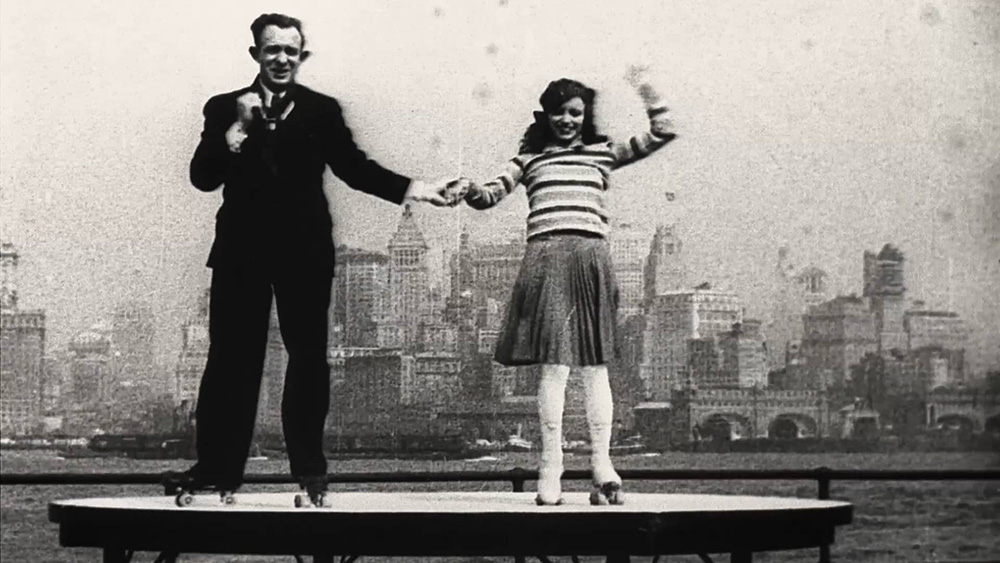
Johan Grimonprez
kiss-o-drome
Video | hdv | color | 1:16 | Belgium, USA | 2016
In 1980 an extraordinary demonstration hit the streets of the Brazilian city of Sorocaba. Under the military dictatorship, a court had outlawed kisses that undermined public morals. The ruling by Judge Manuel Moralles, which punished such kisses with jail terms, described them this way: Some kisses are libidinous and therefore obscene, like a kiss on the neck, on the private parts, etc., and like the cinematographic kiss in which the labial mucosa come together in an unsophismable expansion of sensuality. The city responded by becoming one huge kissodrome. Never had people kissed so much. Prohibition sparked desire and many were those who out of simple curiosity wanted a taste of the unsophismable kiss. "February 8. GENERAL SMOOCH" by Eduardo Galeano. From: "Children of the Days," first edition published in Mexico by Siglo XXI Editores Mexico, 2012.Translation copyright Mark Fried, Pinguin Books, London 2013.
Johan Grimonprez’s critically acclaimed work dances on the borders of practice and theory, art and cinema, documentary and fiction, demanding a double take on the part of the viewer. Informed by an archaeology of present-day media, his work seeks out the tension between the intimate and the bigger picture of globalization. It questions our contemporary sublime, one framed by a fear industry that has infected political and social dialogue. By suggesting new narratives through which to tell a story, his work emphasizes a multiplicity of histories and realties.
Johann Grimonprez
Smell the flowers while yu can...
Experimental video | dv | color | 6:0 | Belgium | 2007
Johan Grimonprez transposes an extract from Meg Stuart`s compelling choreography ?No Longer Ready-Made? to the anonymous waiting room of a railway station. This colourless space along with nameless travellers provides the excellent setting for Stuart`s hectic and intense convulsions. A train ride along the nightly Brussels northern area supports the vitriolic New York City prose of David Wojnarowicz on the soundtrack.
Johan Grimonprez (°1962) studied photography and Mixed Media at the Academie in Ghent, after which he spent several years in New York at the School of Visual Arts through the Whitney Museum Independent Study Program and he obtained his postgraduate degree from the Jan van Eyck Academie in Maastricht. He lives and works both in Ghent and New York, where he is a lecturer at the School of Visual Arts. Grimonprez is best-known for his video work DIAL H-I-S-T-O-R-Y, which became an international success after screenings at the Centre Georges Pompidou (Paris) and during Documenta X in Kassel (1997), transcending the established delineations between visual arts, cinema and television, between fiction, documentary and ?art video?. In this and other work Grimonprez mainly investigates the use of mass media as a political instrument and the construction of realities in an era of infotainment and media saturation. `Zaptitude` is the central idea ? the surreal poetry of `channel hopping`, which enables the spectator to write his/her own story. His work has been shown and awarded, among other places, at the San Francisco Film Festival and Images Toronto, on ARTE TV (Germany/France) and Channel 4 (VK), in the Whitney Museum (New York) and Tate Modern (London).
Johan Grimonprez
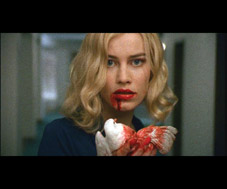
Looking for Alfred
Experimental film | 16mm | color | 10:0 | Belgium | 2005
What?s your favorite Hitchcock film? Obsessed with de/reconstructing our corrupted visions of media, celebrity and appearance, Johan Grimonprez assembled a bewildering gaggle of Hitchcock lookalikes, staggering in girth and exacting in attitude, in a quest to find the most accurate specimen. The extent of such an endeavour is matched only by its fiendish yet stylish plot ? recording them both in and out of character ? whilst the would-be dopplegangers replay a selection of the trademark cameo appearances that Hitch made in his own flicks. The result could be seen as a dethroning of the Master of Suspense or as a celebration of iconography. Just don?t take a shower before you see it!
Praised by the London and the New York Times as ?an eccentric rollercoaster ride through history,? JOHAN GRIMONPREZ? film Dial H-I-S-T-O-R-Y (1997), ?an exploration into the annals of airplane hijacking, garnered ?best director? awards at the SAN FRANSISCO Film Festival and IMAGES TORONTO. Since its acclaimed premiere at CENTRE GEORGES POMPIDOU (Paris) and DOCUMENTA X (Kassel), the film has toured worldwide. The DVD, accompanied by contributions from DON DELILLO and SLAVOJ ZIZEK, is released by OTHER CINEMA (San Francisco), and in distribution with FACETS/MULTIMEDIA (Chicago) and IMAGEFORUM (Tokyo). Johan Grimonprez is currently a faculty member at the SCHOOL OF VISUAL ARTS (New York). Acquisitioned by Trio NBC Universal (New York), ARTE TV (Germany/France), and Channel 4 (UK), his productions traveled the main festival circuit from TELLURIDE, TOKYO to BERLIN. Curatorial projects were host at major exhibitions and museums worldwide such as the WHITNEY MUSEUM (New York) and TATE MODERN (London); and amongst numerous collections they reside at the CENTRE GEORGES POMPIDOU (Paris), the KANAZAWA ART MUSEUM (Japan), and the NATIONALGALLERIE (Berlin). He is published with Hatje/Cantz (Germany) and spends his time between New York and Brussels. In collaboration with ANNA SANDERS FILMS, (Paris), his production company ZAP-O-MATIK, is currently launching ?LOOKING FOR ALFRED? (2006), a journey into the world of doppelgangers, starring Ron Burrage, professional Hitchcock look-alike. A first chapter premiered at the PHOTOGRAPHER?S GALLERY (London) and the PALAIS DES BEAUX-ARTS (Brussels). Acclaimed by the London Times, a.o., it won first price for the INTERNATIONAL MEDIA AWARD 2005 (SWR / ZKM). A forthcoming project ?ZUNK®? retraces the history of HAPPY ENDINGS. Selected for the Rotterdam Cinemart 2003, ?ZUNK®? is now being developed at the MAURITS BINGER FILM INSTITUTE (Amsterdam) with support of the FLEMISH FILMFUND (VAF, Brussels).
Johan Grimonprez
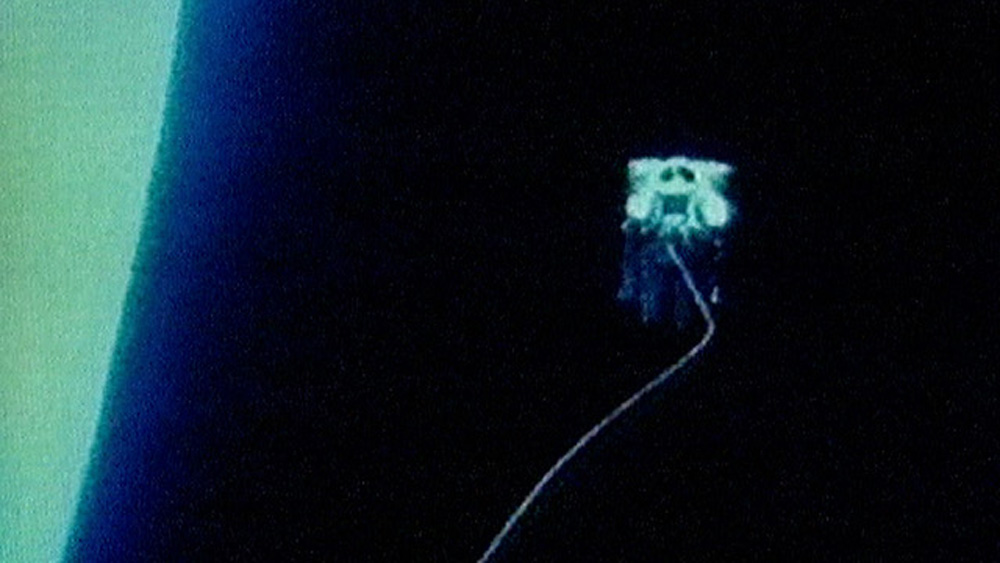
Raymond Tallis | On Tickling
Experimental video | hdv | color | 8:0 | Belgium, Netherlands | 2017
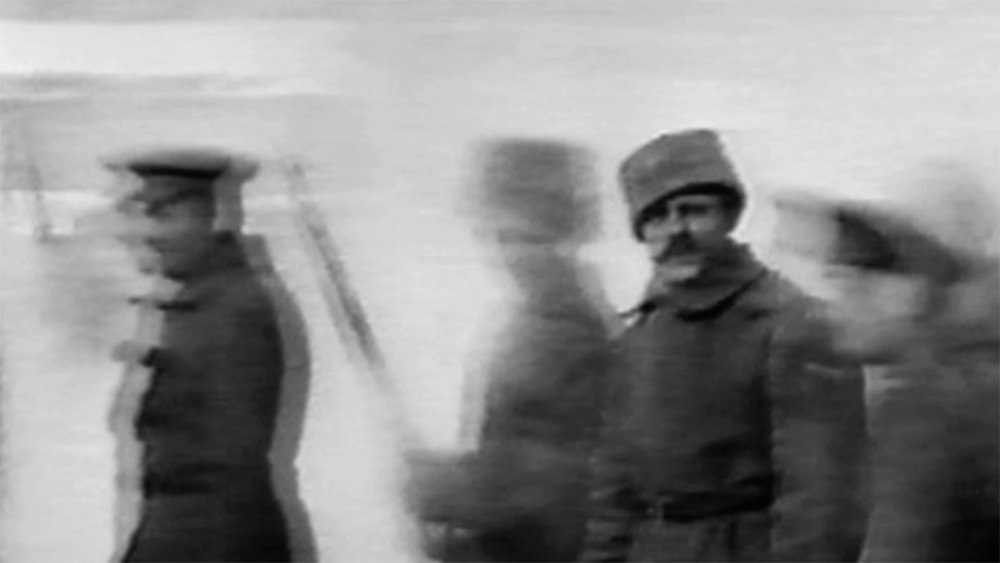
In this short film by Johan Grimonprez, philosopher/neurologist Raymond Tallis argues that consciousness is not an internal construct, but rather relational. Through the intriguing notion that humans are physically unable to tickle themselves, Tallis explores the philosophical notion that we become ourselves only through dialogue with others.
Multimedia artist, filmmaker, curator and writer, Grimonprez was born in Roeselare, Belgium in 1962. He studied Antropology, Photography & Mixed Media at the School of Arts, KASK, Ghent. He also attended the Whitney Museum Independent Study Program in NYC. The artist now lives and works in Brussels, Belgium and New York. Grimonprez critically acclaimed work dances on the borders of practice and theory, art and cinema, documentary and fiction, demanding a double take on the part of the viewer. Informed by an archeology of present-day media, his work seeks out the tension between the intimate and the bigger picture of globalization. It questions our contemporary reality, one framed by a fear industry that has infected political and social dialogue. By suggesting new narratives through which to tell a story, his work emphasizes a multiplicity of realities. His feature films include “dial H-I-S-T-O-R-Y”(1997), “Double Take” (2009) and “Shadow World : Inside the Global Arms Trade” (2016). Traveling the main festival circuit from the Berlinale, Tribeca to Sundance, they garnered several Best Director awards, the 2005 ZKM International Media Award, a Spirit Award and the 2009 Black Pearl Award at the Abu Dhabi Film Festival, and were also acquired by NBC Universal, ARTE, and BBC/FILM 4. “Shadow World: Inside the Global Arms Trade ” went on to win the Best Documentary Feature Award at the 2016 Edinburgh International Film Festival, and the ‘Time of History Award’ for Best Documentary at the Semana Internacional de Cine de Valladolid. The documentary has also première its US broadcast on Independent Lens on PBS in autumn 2017. The multimedia artist’s installations and work in the plastic arts have been presented in numerous exhibitions held in prestigious institutions throughout the world, including the Hammer Museum, Los Angeles; the Pinakothek der Moderne, Munich; and MoMA. His works are in the collections of Centre Georges Pompidou, Paris; the 21st Century Museum of Contemporary Art, Kanazawa; and Tate Modern, London.
Johan Grimonprez
what i will
Experimental film | hdv | color | 1:11 | Belgium, USA | 2015
Reciting her own poetry, Jordanian-American poet Suheir Hammad’s voice carries the powerful force of dissent to find hope between the military parades and anti-aircraft guns. With what i will Johan Grimonprez provides glimpse of his upcoming feature documentary Shadow World based on Andrew Feinstein’s book The Shadow World: Inside the Global Arms Trade.
Johan Grimonprez`s curatorial projects have been exhibited at museums worldwide, such as at the Hammer Museum (LA), the Pinakothek der Moderne (Munich) and, the MOMA (NY). His works are part of the permanent collections of major museums, including the Centre Georges Pompidou (Paris), the Kanazawa Art Museum (Japan) and Tate Modern (London). His award winning films include dial H-I-S-T-O-R-Y (1997) and Double Take (2009). Traveling the main festival circuit from the Berlinale to Sundance, they have garnered several Best Director awards, the 2005 ZKM International Media Award, a Spirit Award and the 2009 Black Pearl Award at the Abu Dhabi Film Festival. They have also been acquired by NBC Universal, ARTE, and FILM 4. In 2011 Hatje Cantz Verlag published a reader on his work entitled "It`s a poor sort of memory that only works backwards" with contributions by Jodi Dean, Thomas Elsaesser, Hans Ulrich Obrist and Slavoj Žižek. His distributors are Soda Pictures and Kino Lorber International. His artwork is represented by the Sean Kelly Gallery (New York) and the gallerie kamel mennour (Paris). His current film project The Shadow World: Inside the Global Arms Trade by author Andrew Feinstein, was awarded a development grant from the SUNDANCE INSTITUTE. His next film project How to Rewind your Dog is in development with the Flanders Audiovisual Fund and the European MEDIA Programme. Grimonprez divides his time between Brussels and New York, where he studied at the Whitney Museum Independent Study Program, and where he now lectures at the School of Visual Arts.
Raphaël Grisey
Minhocao
Experimental video | dv | color and b&w | 31:0 | France, Brazil | 2010
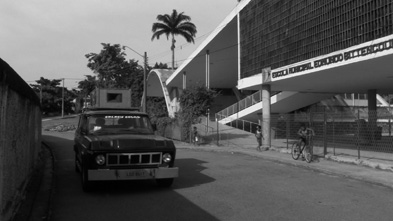
A car with a big sound system broadcasts a text of Eduardo Affonso Reidy on his modern architecture precepts. It drives around the Conjunto Habitacional Pedregulho, a social housing complex build from 1946 by the same architect and also called Minhocão (the big worm) by his inhabitants. The ballet of the driving car, combined with interviews, sound extracts from the fiction film « Lucio Flávio, the passenger of agony » (shot partly in the site) and other scenes, produce a portrait of a major modernist Brazilian building and of the popular northern zone´s context of Rio de Janeiro. The film raises issues about patrimony and memory of social housings in a place which is about to be renovated after 50 years of state´s abandonment and autonomous management.
Raphael Grisey (1979, lives in Paris and Berlin) Raphaël Grisey, artist in the time-based arts, realized experimental films, video installations, video-essays, and documentaries. His work gathers or produces narratives around collective memories, migrations or architecture. www.raphaelgrisey.net
Bart Groenendaal
Sensitivity
Fiction | hdv | color | 10:18 | Netherlands | 2024
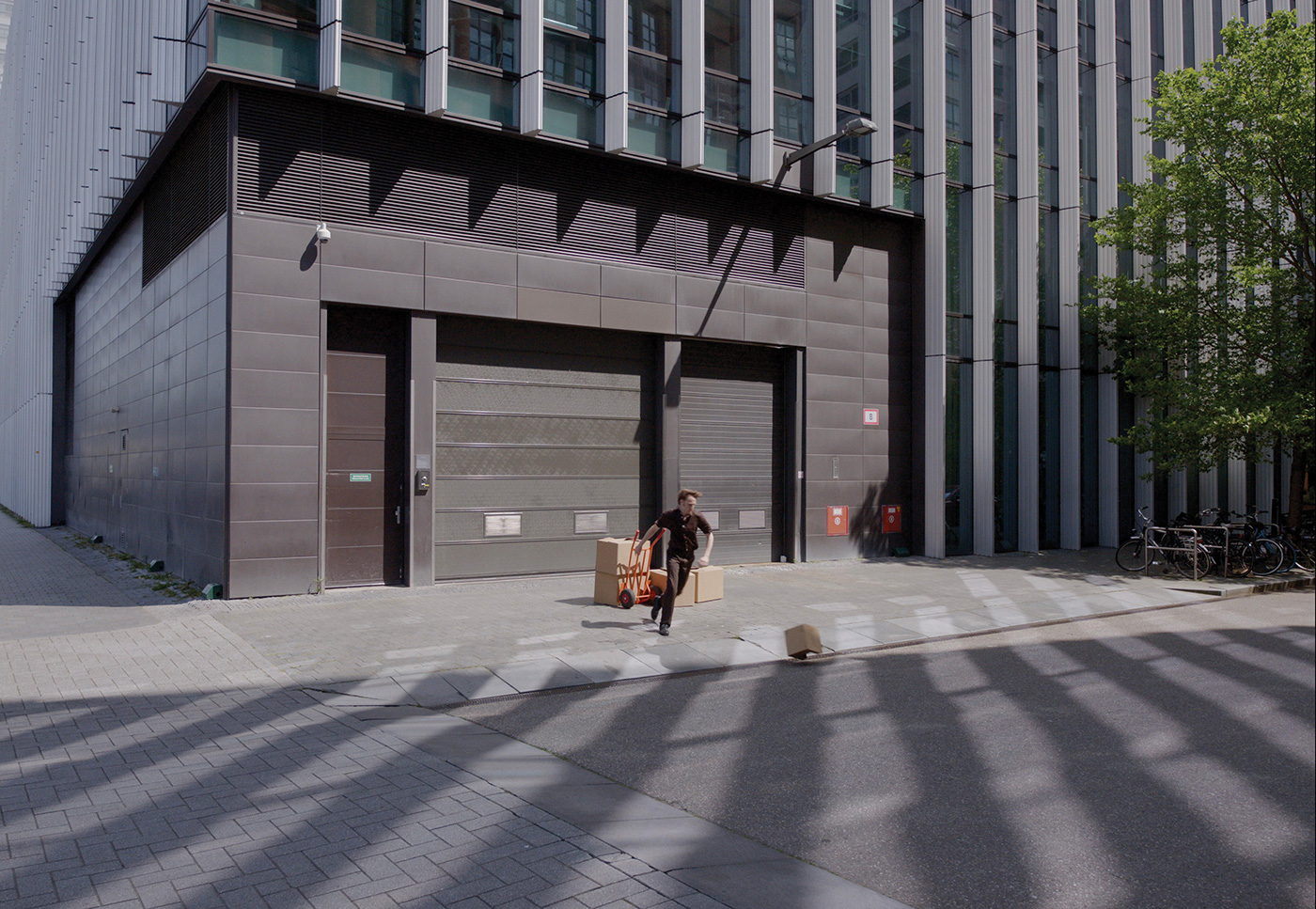
A young woman wanders around a business district at night and at dawn meets seven lonely strangers, who each fall under the thrall of her energy. Inspired by the imagery of the Flemish Primitives and made in collaboration with a real-life quantum-healer, the film is a musing on the longing for connection in a neoliberal urban context.
In short narrative films, documentary and installation work, Bart Groenendaal (Amsterdam, 1975) explores how the cinema shapes our social subjectivity and the world around us as an ever fluctuating expression of ideology.
Sabine Groenewegen
Djo
Documentary | 4k | color | 13:0 | France | 2018
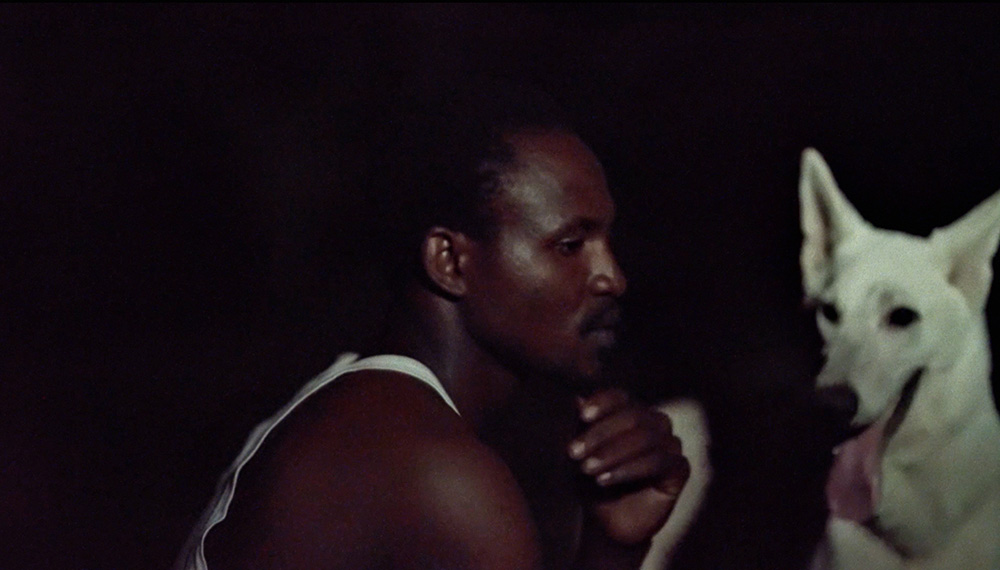
In the Hauts de Mayotte (The Comoro Islands), a secret space, of magic and escape, men and dogs, maintain filial almost intertwined relationships, companion species who share a common land of transformation and autonomy. Smogi has a particular relationship with dogs but also with the power of the elements, nature and the sly spirits that inhabit him (the djinns). “Dio†crosses different belief systems in a wild syncretism where the Muslim call to prayer also marks a moment of reunion with the animist and impure forces of the forest.
Laura Henno is a photographer. Koropa is her first film. She is currently developing her next film M`TSAMBORO which will also take place in the Comoros. Winner of the Prize Découverte of the Rencontres Internationales de Photographie of Arles in 2007, her photographic work is represented by the Galerie Les Filles du Calvaire.

Sagi Groner
Jenin Journal
Experimental doc. | dv | color | 8:10 | Israel, Netherlands | 2006
A personal deconstruction of a war document. A war experienced in exile through images from the news, a correspondence with home, and interviews with fellow ex-patriots. An intuitively collected stock of images, compiled together a few years later, to reflect on mediated-memory.
Sagi Groner was born in Israel in 1971. Since 1996, he has been living and working in Amsterdam.

Maëlle Gross
STRIKE A POSE
Video | hdv | color | 17:20 | Switzerland | 2014
Jouant sur la limite entre documentaire et œuvre vidéo, Strike a pose suit Ariane V., body-buildeuse et Docteur en science de la Vie d’origine belge vivant en Suisse. Durant 9 mois, Maëlle Gross a côtoyé Ariane. Cet investissement dans la durée avait pour but de créer une intimité entre l’artiste et son sujet, afin que ce dernier puisse entrer dans un processus de lâcher prise, gage de confiance. Au moyen d’interviews, de la danse et d’immersion dans le monde du bodybuilding, peu à peu nous nous rendons compte d’un état d’ambïguité du corps. Pousser les limites physiques, se détacher de sa propre enveloppe pour la traiter comme une sculpture. Arrivé au paroxysme de sa métamorphose, la protagoniste devient alors, hors-norme. Hors-norme des critères de beauté stéréotypée du corps genré auxquelles elle est associée. Une invitation à l’introspection subjective dans l’imagerie contrôlée du corps où la limite entre le raisonnable et l’excessif se fait de plus en plus petite au fur et à mesure de la transformation radical qu’Ariane a entrepris sur son corps.
Née le 20 novembre 1988 à Lausanne en Suisse, Maëlle Gross montre très jeune un intérêt particulier pour la photographie et la vidéo. Diplômée en 2013 de la Haute Ecole d’Art et Design de Genève, elle déménage ensuite à Londres et intègre la Goldsmiths University où elle obtient en 2015 son Master of Fine Art avec mention. Son travail a notamment été présenté lors du festival vidéo R4 à Paris, a participé à une performance collective à l’Institute of Contemporary Arts (ICA) de Londres ainsi qu`à la galerie Large Glass à Londres sous le collectif Almosthere. Aujourd’hui, Maëlle Gross vit et travaille entre Londres et Genève.

Eshwarya Grover
Memoirs of Saira & Salim
Documentary | hdv | color | 13:40 | India | 2018
What happens when a family revisit a house they abandoned sixteen years ago? It wasn’t a decision where Saira & Salim had a choice. Would you be able to relive those delightful memories & conversations without the traumatic ones overpowering your emotions?
Eshwarya is a post graduate film student at National Institute of Design, India. She has studied architecture and believes that film is all about capturing the emotion of a space or creating a subconscious space and how people interact with it.

Assaf Gruber
Transient Witness
Experimental fiction | hdv | color | 46:26 | Poland | 2021
Inspired by the children’s book About Two Squares created by El Lisstzky exactly 100 years ago, Transient Witness simultaneously merges and obscures the intimate from the public, in a story where the actions of collecting and stealing function as synonyms and inheritance and loss immerse. It is a fictional story of the transfer of the objects from the private house of avant-garde collector Egidio Marzona in Berlin to their new domicile – the Japanisches Palais, a Rococo building that belongs to the Staatliche Kunstsammlungen Dresden (SKD). The plot is told through the eyes of three main characters: Christina, the manager of the collection; Maurizio, the art mover; and Präsens the collector’s dog. Fiction meets reality: the film takes place on 25 November 2019. On that day, priceless jewelry of immense cultural value was stolen from the Green Vault in Dresden in one of the biggest art heists in history, causing a national shock in Germany. The film unfolds a complex story, navigating between historical facts about the Baroque and the Avant-garde; art and its politics.
Assaf Gruber (b. Jerusalem, 1980) is a sculptor and filmmaker who lives and works in Berlin. The dialectical relationship between the individual and the establishment is at the centre of his work, which explores how political orientations of institutions impact the lives of individuals and how institutions choose to represent and communicate facts and artefacts. Gruber studied at the Cooper Union in New York and is a graduate of the École Nationale Supérieure des Beaux-Arts in Paris and of the Higher Institute of Fine Arts (HISK) in Ghent. His solo exhibitions include the Muzeum Sztuki, ?ód? (2015), the Berlinische Galerie, Berlin (2018), Ujazdowski Castle Center for Contemporary Art, Warsaw (2018), among others. His films have been featured in festivals including the Berlinale Film Festival, FID Marseille (2019), and the International Short Film Festival Oberhausen (2016).
Assaf Gruber
Never Come Back
Experimental fiction | 0 | color | 14:0 | Germany, Austria | 2023
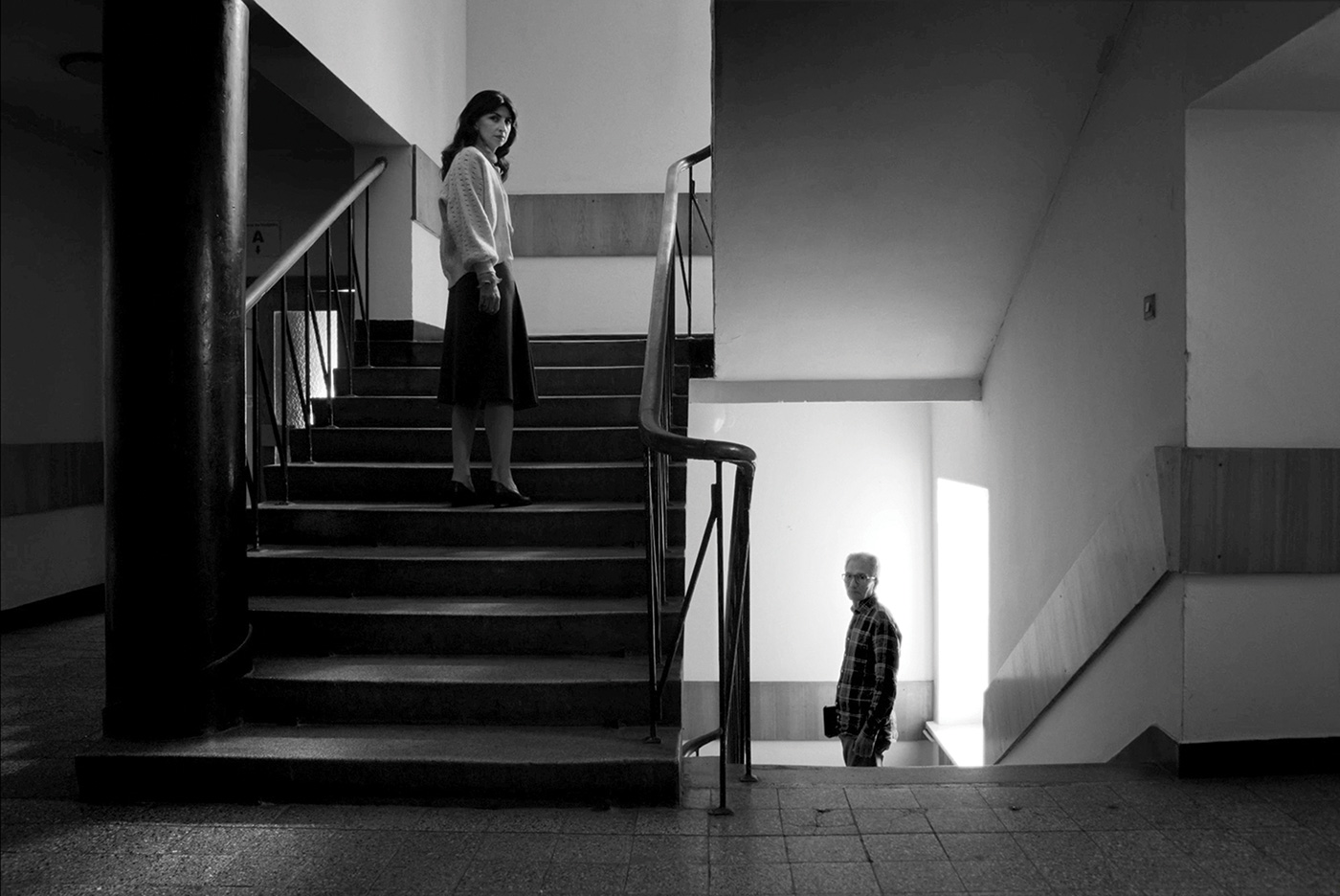
Museum depots are places where things are kept out of sight, but also protected from all-too-schematic historical judgments. In his new film, Assaf Gruber continues his ongoing investigation of the backstage areas of art institutions to engage with Neue Galerie Graz’s holdings. In the cage-like space of the repository, we see a naked musician working intensely on a composition. He is inspired by artists who belong to a gray area between modernist aspirations and enthusiasm for Nazism, and whose works combine a taste for the exotic with local patriotism, religious fervor, and eroticism. Our mysterious protagonist tentatively plays a familiar melody. It's a song known to many of us, recognisable from dance floors across Europe - but how many of us have ever bothered to listen to its remarkably rascist and imperialistic lyrics?
Assaf Gruber (b. Jerusalem, 1980) is a sculptor and filmmaker living and working in Berlin. The dynamic relationship between individuals and institutions is at the center of his practice, which aims to explore both how the political orientation of legacy establishments impact the lives of individuals and how these organizations choose to represent and communicate facts and their attendant artifacts. Gruber’s solo exhibitions include the Berlinische Galerie, Berlin (2018) and the Muzeum Sztuki, ?ód? (2015). His films have been featured in festivals including the International Film Festival Rotterdam (2023) and FID Marseille (2022). He studied at Cooper Union in New York and is a graduate of the École Nationale Supérieure des Beaux-Arts in Paris and of the Higher Institute of Fine Arts (HISK) in Ghent. Gruber is currently one of the fellows of the Berlin Artistic Research Grant Programme 2022/23 (gkfd).
Assaf Gruber
Miraculous Accident
Experimental fiction | 0 | color and b&w | 29:15 | Poland | 2025
Miraculous Accident is a transtemporal film that narrates the love story between Nadir, a Moroccan student at the ?ód? Film School in 1968, his Jewish editing teacher Edyta, and their shared relationship with Jarek, Nadir’s best friend and Edyta’s protégé. Nadir is among a group of North African students sent to study communist filmmaking techniques as part of the Eastern Bloc’s support for anti-imperialist struggles. Despite her opposition to Zionism, Edyta is forced to leave Poland due to the political rift between Poland and Israel following the Six-Day War or the Naksa (The Setback). In 2024, Nadir returns to the school to make a film after discovering a forgotten letter Edyta wrote to him from Haifa in 1989. The film mourns the cruelty of nations, birthing rare miracles—accidental loves—only to crush them before they breathe. Inspired by the life of former Moroccan student, poet, and filmmaker Abdelkader Lagtaâ, who also plays Nadir in the film, Miraculous Accident weaves its plot through original footage and extracts from 1960s student films by Lagtaâ and his peers.
Assaf Gruber (b. Jerusalem, 1980) is a sculptor and filmmaker living and working in Berlin. The dynamic relationship between individuals and institutions is at the center of his practice, which aims to explore both how the political orientation of legacy establishments impact the lives of individuals and how these organizations choose to represent and communicate facts and their attendant artifacts. The absurd biographies of the protagonists in his projects simultaneously reveal and obscure the reasons and motives that lead people to obey or rebel against their inner world or the society in which they live. His photography, sculpture, and installations place the materiality of objects in relation to narrative dimensions, which in turn create fictional spaces where movement and non-movement function as a medium. Gruber’s solo exhibitions include the Berlinische Galerie, Berlin (2018) and the Muzeum Sztuki,Assaf Gruber (b. Jerusalem, 1980) is a sculptor and filmmaker living and working in Berlin. The dynamic relationship between individuals and institutions is at the center of his practice, which aims to explore both how the political orientation of legacy establishments impact the lives of individuals and how these organizations choose to represent and communicate facts and their attendant artifacts. The absurd biographies of the protagonists in his projects simultaneously reveal and obscure the reasons and motives that lead people to obey or rebel against their inner world or the society in which they live. His photography, sculpture, and installations place the materiality of objects in relation to narrative dimensions, which in turn create fictional spaces where movement and non-movement function as a medium. Gruber’s solo exhibitions include the Berlinische Galerie, Berlin (2018) and the Muzeum Sztuki, ?ód? (2015). His films have been featured in festivals including the International Film Festival Rotterdam (2023) and FID Marseille (2022). He studied at Cooper Union in New York and is a graduate of the École Nationale Supérieure des Beaux-Arts in Paris and of the Higher Institute of Fine Arts (HISK) in Ghent. (2015). His films have been featured in festivals including the International Film Festival Rotterdam (2023) and FID Marseille (2022). He studied at Cooper Union in New York and is a graduate of the École Nationale Supérieure des Beaux-Arts in Paris and of the Higher Institute of Fine Arts (HISK) in Ghent.
Katharina Gruzei
Die ArbeiterInnen verlassen die Fabrik
Video | hdv | color | 11:0 | Austria | 2012
Katharina Gruzei combines a sociopolitical issue and a precise formal concept, which is rare in experimental film. Inspired by the Lumière brothers? first film, La sortie de l?usine Lumière à Lyon, which shows a large number of workers leaving their factory?s gate, Gruzei begins in the interior, in a passageway (made to seem incredibly long by the editing) that emerges from the darkness. More and more of them walk down the dark, flickering hallway. By these scenes the weirdness of the space and the menacing quality of a mass of people who could form a resistance movement becomes increasingly evident. All relevant questions concerning the on-the-job reality experienced by these workers, most of whom are women, can be formulated by means of association: Is it nighttime when they leave the factory? What kind of work do they have to do? What do female laborers earn these days? How long does it take them to get home from this monstrous factory, and when will it be moved to a low-wage country?
born 1983 Studies of Experimental Art and Cultural Studies at the University of the Arts in Linz, Austria. Studies abroad at the Art Department of the Universtiy of California Santa Barbara and at the University of Fine Arts Berlin for Visual Cultural Studies in the class of Katharina Sieverding. Katharina Gruzei works with photography, film, video, installations, media-performances, sound and objects. Working conceptually, she experiments between these disciplines and arrives at an unique crossover language.
Milutin Gubash
Language Lesson
Video | 0 | color | 1:42 | Canada, Serbia | 2016
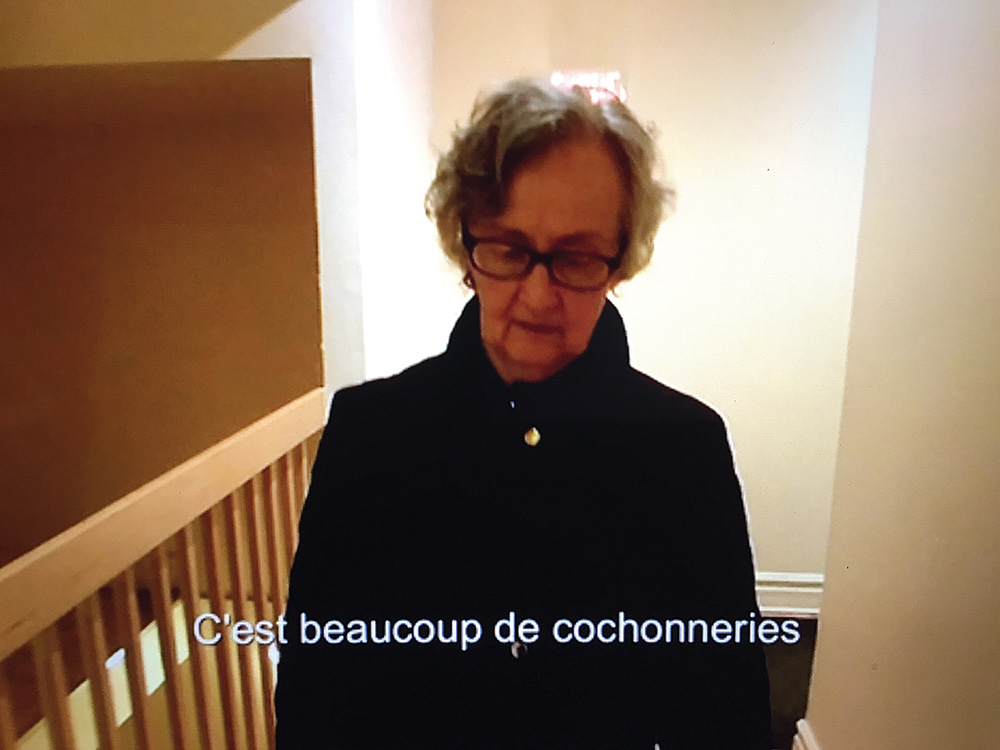
Language Lesson (2016) intercuts two tracking shots -- a shaky handheld approach to the Yugoslav dictator’s mausoleum, with a smooth following shot of my Yugoslav mother walking through her Canadian apartment corridor, and entering the small living quarters in which she will almost certainly pass the remainder of her days. If she’s not exactly an exile, she’s certainly cut off from her past, her friends, the sites where she grew up and feels most familiar, or so we may imagine just upon hearing her accent, which comes in the form of voiceover, where she gives us a little lesson in speaking Serbian. She says things like, “This is here, this is mine, this is shit, I don’t like this…”, alternating in English, then Serbian (subtitled in French). The thoughts expressed range from neutral, to (perhaps) happy, to disappointed or displeased. As she walks, her thoughts seem to change. Similarly, a change happens on the approach to the mausoleum, which at first appears lavish, in sparkling marble. We don’t know at first where we are, other than in a cemetery, the burial site of someone very esteemed, wealthy, important. After short bursts of the approach, we eventually see the name of Tito, which perhaps causes us to reflect on opulence in a land where there was seldom plenty. The camera drops quickly to the ground, where we apprehend a struggle between a colony of ants, which crawl in and out of the cracks in the marble base of the crypt, each fighting for the corpse of a fly. Notions of sacrifice and fellowship in the common pursuit of attaining a progressive, egalitarian social order, rapidly give way to an each-for-their-own, eat-or-be-eaten state of affairs.
Born in Novi Sad (Serbia) and lives in Montréal (Canada) since 2005, Milutin Gubash has presented exhibitions in Québec, Canada, the United States, and Europe, including a solo show at Musée d’art contemporain de Montréal (2007) and a ten year survey exhibition co-produced by six institutions across Canada (Rodman Hall Art Centre 2011, Carleton University Art Gallery 2012, Kitchener-Waterloo Art Gallery 2012, Southern Alberta Art Gallery 2012, Musée d’art de Joliette 2012 and Fonderie Darling 2013). He was the recipient of the Conseil des arts et des lettres du Québec studio residency in Paris for 2016. His practice encompasses photography, video, and performance, and regularly features the participation of his family and friends, who portray versions of themselves in Do-It-Yourself soap operas, historical rewrites and improv theatre pieces. Using simple means and often absurdist gestures, Gubash reconsiders assumptions about the narratives of our identities, histories and environments.
Milutin Gubash
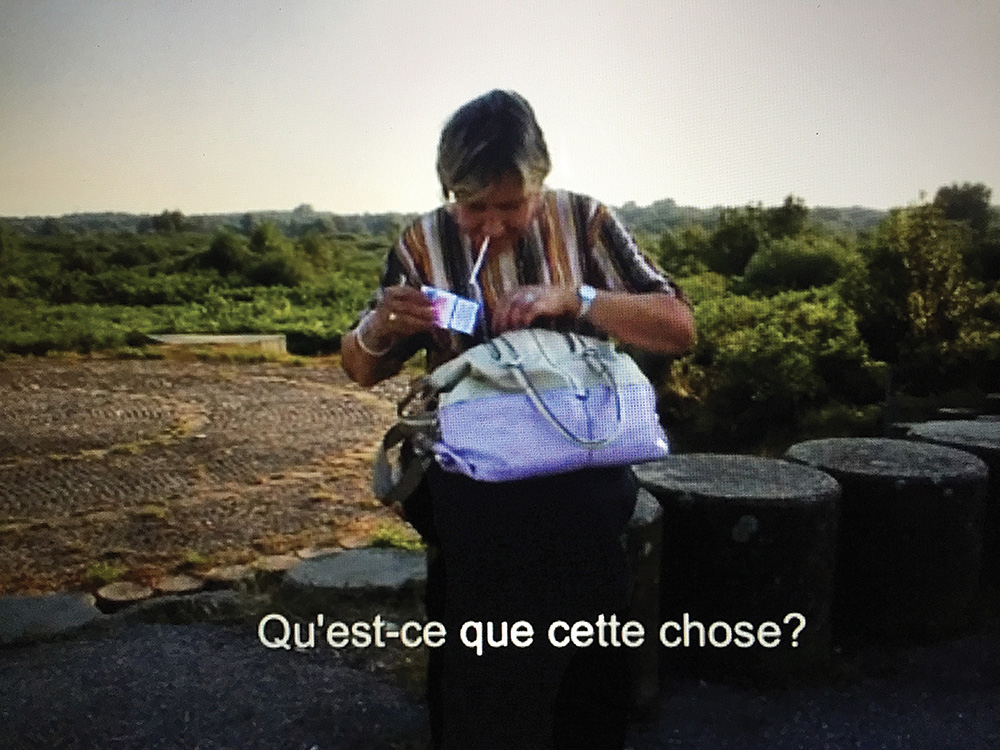
Vesna at Monument
Video | hdv | color | 3:46 | Canada, Serbia | 2016
In Vesna At the Monument (2016), a humble middle aged woman appears on the site of a dilapidated, in-the-middle-of-nowhere monument, erected likely in the time when she was youthful and at her most optimistic. The monument was commissioned in order to commemorate the heroic actions of common citizens in their struggle against fascism, and desire to promote and participate in a progressive, utopic state. She shuffles past the monument, and sits to smoke a cigarette. Off screen, a voice is heard, asking her questions such as what is the meaning of this place, this monument, this moment. She does not answer, as though she does not hear the question, even while acknowledging the camera, and the voice itself. It could, one supposes, be the voice of the cameraman or director, a voice in the subject’s own head, perhaps the voice of the monument itself, trying to ascertain the meaning of itself in this day and age. It gets no reply, and eventually (perhaps fed up with the question), she simply leaves, with the interlocutor left in his own uncertainty. The video seems to reject or deny a past, while expressing grave uncertainty to the future.
Born in Novi Sad (Serbia) and lives in Montréal (Canada) since 2005, Milutin Gubash has presented exhibitions in Québec, Canada, the United States, and Europe, including a solo show at Musée d’art contemporain de Montréal (2007) and a ten year survey exhibition co-produced by six institutions across Canada (Rodman Hall Art Centre 2011, Carleton University Art Gallery 2012, Kitchener-Waterloo Art Gallery 2012, Southern Alberta Art Gallery 2012, Musée d’art de Joliette 2012 and Fonderie Darling 2013). He was the recipient of the Conseil des arts et des lettres du Québec studio residency in Paris for 2016. His practice encompasses photography, video, and performance, and regularly features the participation of his family and friends, who portray versions of themselves in Do-It-Yourself soap operas, historical rewrites and improv theatre pieces. Using simple means and often absurdist gestures, Gubash reconsiders assumptions about the narratives of our identities, histories and environments.
Tito Guedes, Manuel OGANDO
From park to park
Experimental doc. | dv | color | 3:40 | Portugal | 2003
Experimental portrait of the city as a self-experience: the images are too intense and sometimes the sound is unbearable. Independent Cinema festival of Lisbon, 2004.
Gueli
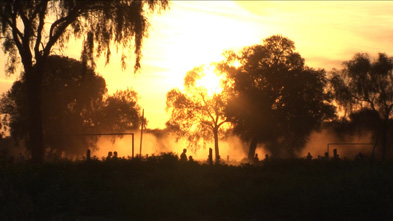
LA FABRIL - work in progress
Experimental doc. | hdv | color | 17:40 | Argentina, Italy | 2012
The images of a virgin Argentina, out from a private photographic archive, become present landscape: the river, the forest, the road: everything seems unchanged... except a ruined cotton factory, ghost of the collapse of a model of development imported from Europe, which is now a few teenager`s playground.
Caterina Gueli an italo-argentinean director/editor based in Paris. ?La Fabril? is a work in progress, through which she deepens the research engaged in her precedent two short films : Resistencia (Premio Avanti! Torino Film Festival 2007, Best Soundtrack Genova Film Festival 2008, etc.) and Somewhere (2009). She has participated to the realization of Il Canto dei Nuovi Emigranti (Best Documentary Torino Film Festival 2005) and In Attesa dell`Avvento (Best Short Film - Mostra del Cinema di Venezia 2011 ? Orizzonti) of Felice D`Agostino and Arturo Lavorato.
Guerreiro Do Divino Amor
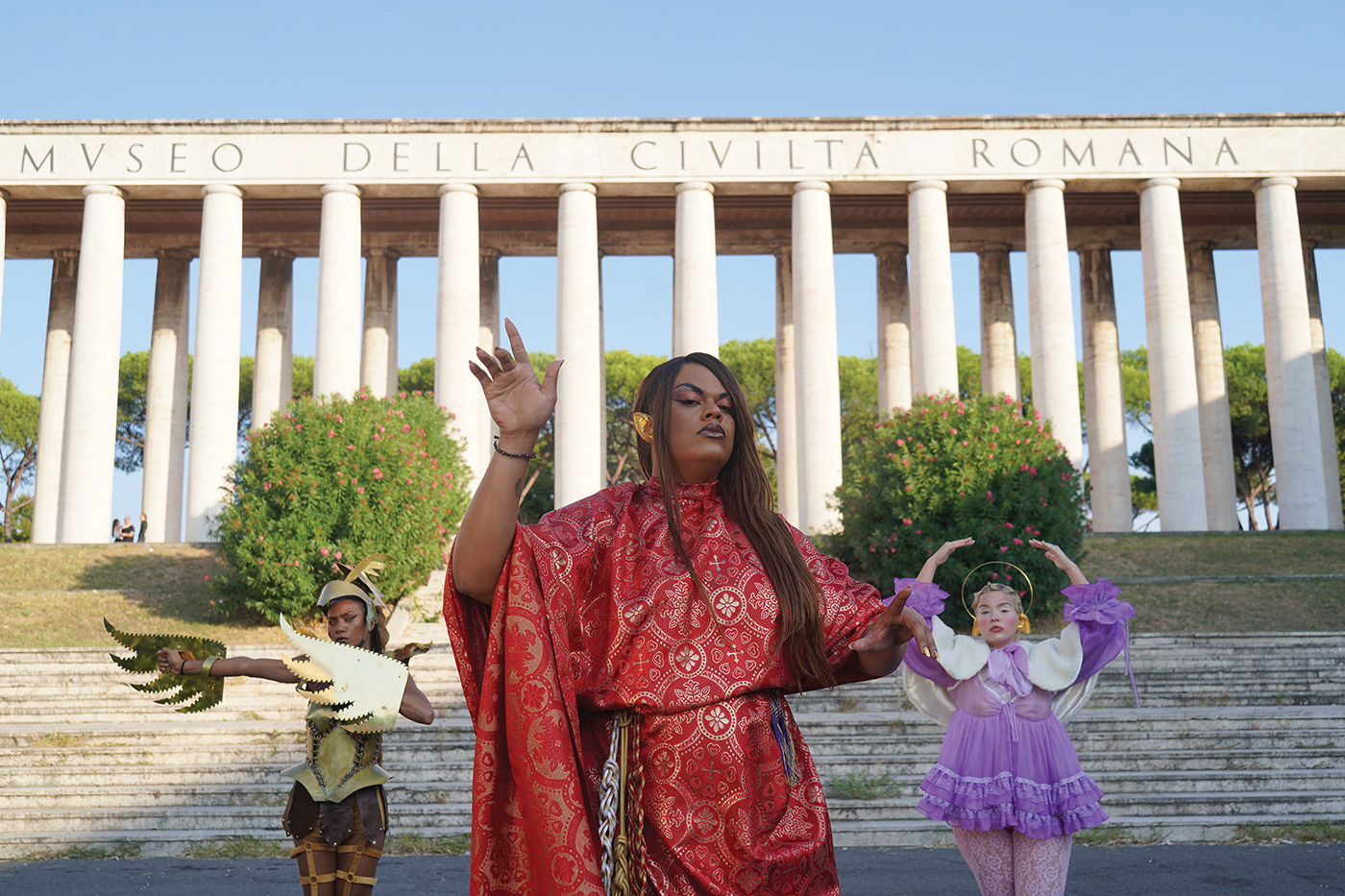
Roma Talismano
Experimental doc. | 4k | color | 9:38 | Brazil | 2024
Roma Talismano, seventh instalment of the ‘Superfictional World Atlas’, explores Rome as the moral and aesthetic talisman of the West. To the sound of opera hymns and arias, the allegorical animals the she-wolf, the eagle and the lamb narrate the endless recycling of Roman aesthetics to create an artificial and pale classical universality, from the Renaissance to fascism to the present day: Roma Talismano, eternal volcano of visual and spiritual bleach.
Guerreiro do Divino Amor holds a master’s degree in architecture from the School of Architecture of Grenoble (France). His since 20 years ongoing research “Superfictional world Atlas” explore the historical, media-related, religious and corporative mythologies that make up the collective imaginary of nations. He creates an universe of science fiction from fragments of reality in the shape of films, publications, and large-scale installations. Divino Amor represented Switzerland in the 2024 Venice biennial, was a fellow of the DAAD Artist-in-Berlin Program in 2021-2022, was awarded the PIPA Prize 2019. In 2022 he presented the retrospective solo show “Superficitional Sanctuaries” at the Centre d’Art Contemporain in Geneva. His work has been presented at the Frestas Trienal in Sorocaba (Brazil) Bangkok Biennale 2024, CAC Vilnius (Lithuania), Pinacoteca de São Paulo, among other institutions. His award-winning films have been screened at various national and international venues and festivals. Guerreiro do Divino Amor lives and works in Rio de Janeiro, Brazil.
Felipe Guerrero
Nelsa
Experimental fiction | hdv | color | 13:0 | Colombia | 2014
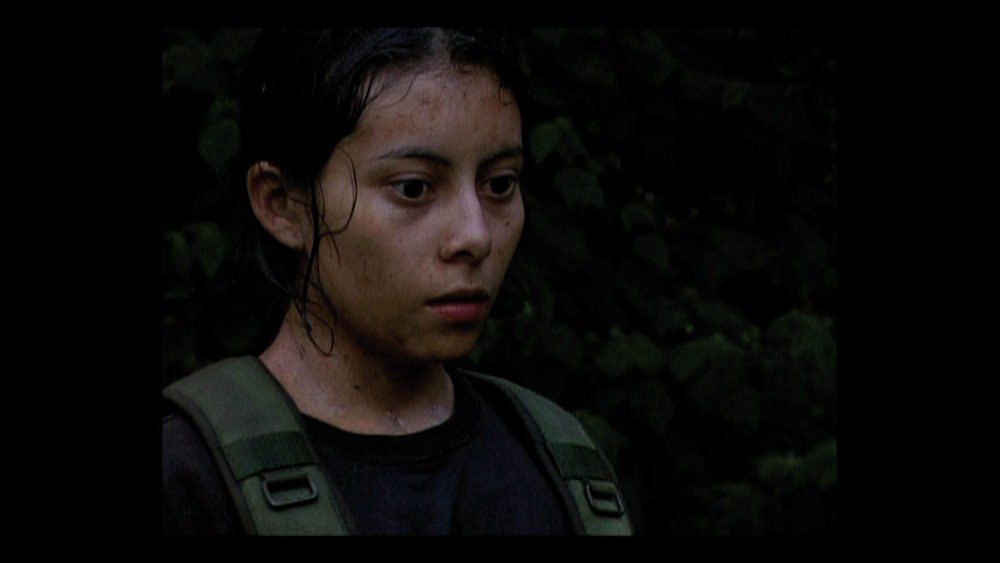
A mission in the middle of the Colombian jungle. Time seems to have stopped. There is something sinister in the air. The ambiance is tense. Hot and humid. A man surrounded by an environment that burns himfrom the inside. Power, poetry, violence. Everything happens in an instant, leaving everyone breathless.
Director and editor Felipe Guerrero was born in Colombia in 1975. His first film Paraíso(2006) received the Mention Spécial for First Films at FIDMarseille. Corta(2012), his second film, premiered in the BrightFuture Section at the Rotterdam FF 2012, and was exhibited in Festivals around the world (FICCICartagena de Indias, BAFICI Buenos Aires, JIFF Jeonju,FIDOCS Santiago de Chile, DISTRITAL México DF, SPLITCroacia, DOKLeipzig, La Habana). As an editor, he worked in films exhibited and awardedinternationally, among them: Los Hongos(2014), La playaDC(2012), El páramo(2011), El vuelco del Cangrejo (2009). In 2011 he founded his own production company Mutokino.