Catalogue > Search
Results for : Tout le catalogue
Jules Lagrange
Orion Aveugle
Experimental fiction | hdv | color | 9:10 | France | 2016
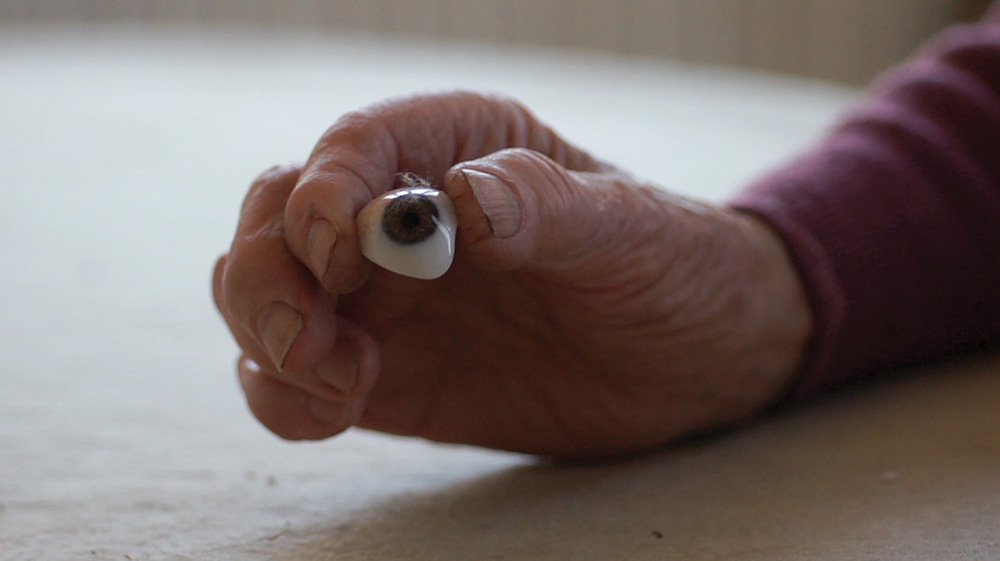
Orion Aveugle, c’est l’histoire d’un rite funéraire vu à travers les yeux poussiéreux d’un cyborg. La temporalité et le contexte précis de cet événement appartenant au passé, lui sont inconnus. Ils ont disparus au profit d’une mémoire dense et disparate. Son implication et sa filiation aux sujets est inaccessible, perdues à jamais, dans la densité d’événements enregistrés au cours des siècles. Sa mémoire est donnée à voir, vidée de son sens. C’est l’histoire d’un être devenu le simple témoin, de sa propre nostalgie.
Jules Lagrange est un artiste français, né en 1989 à Besançon. Son travail se développe principalement dans l’élaboration de film de fiction. Ses recherches s’orientent autour de processus de réécriture et de jeu de réappropriation des codes cinématographique visant à ré-incarner et à re-sentimentaliser les corps et les affects représentés au cinéma. Il a étudié à l’institut of Art, Design and Technology de Dublin et à l’Ecole Nationale Supérieure des Beaux Arts de Lyon dont il est diplômé en 2014. En 2016, il intègre le post diplôme de l’ENSBA Lyon dirigé par François Piron. Son travail a été visible au travers d’expositions, notamment, à la Friche belle de Mai (Marseille), au Creux de l’enfer (Thiers) ou encore au Treize et à Glassbox (Paris). Ses films ont également était projeté au Festival International de Video de Camaguey (Cuba), au Frac Nord pas de Calais (Dunkerque), à Mains d’oeuvres (St Ouen) ou encore aux Musée des Confluences (Lyon). Il vit et travaille à Bruxelles.
Emmanuelle Laine, Benjamin Valenza
Est-on prêtes à endosser les habits de l'artiste ?
Video | 4k | color | 19:0 | France | 2019
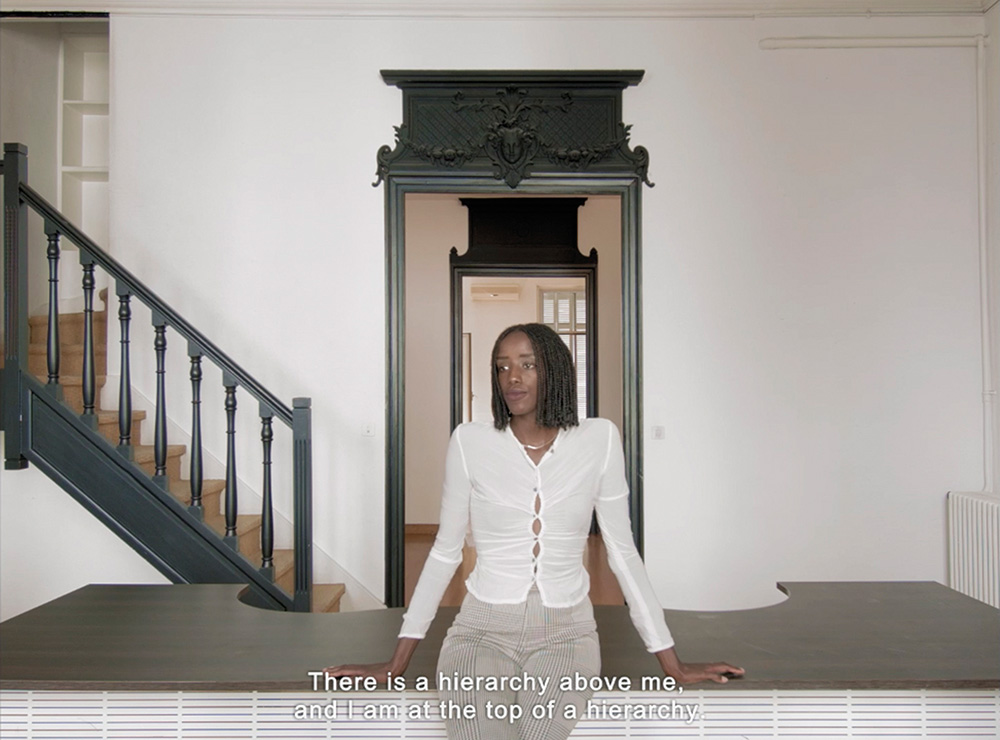
Synopsis court Les paroles de femmes travaillant dans un centre d’art sont jouées en lip-sync par une femme installée dans un intérieur sommairement meublé. Affects et expériences de travail se mêlent à mesure que la protagoniste est habillée de différentes tenues. Synopsis long Les paroles de femmes travaillant dans un centre d’art sont jouées en lip-sync par une femme installée dans un intérieur sommairement meublé. Affects et expériences de travail se mêlent à mesure que la protagoniste est habillée de différentes tenues qui petit à petit contraignent, exhibent puis dissimulent son corps. Une statue se détache sur un ciel bleu, dans le silence d’une rue. Alors que le monologue se poursuit, l’espace vacant devient celui d’une institution imaginaire, traversé de silhouettes de visiteurs et collaborateurs. Aux récits se mêlent des images d’archives, fragments de performances d’artistes femmes, détails d’une pratique collective de l’art.
LAINÉ VALENZA — vit et travaille à Marseille Lainé Valenza est un duo d’artistes, constitué à partir d’une conversation perpétuelle, d’une zone commune à la frontière de leurs recherches respectives. Il se caractérise par un intérêt pour la critique institutionnelle, la mutation des formes d’images et d’une attention visuelle, de ses enjeux culturels subjectifs et politiques. Au fil des projets, le duo emploi des formes visuelles diverses, telles que le cinéma étendu, des installations in situ, de la télévision en direct, des performances, etc. Emmanuelle Lainé est une artiste visuelle déjà bien connue pour ses installations in-situ à grande échelle. Elles montrent souvent une reconstitution précise de l'architecture créant un espace critique pour la perception du spectateur ainsi que pour l’institution qui l’accueil. Ses Installation se caractérisent par une utilisation systématique de la photographie très grand format, associée à un langage sculptural très exigeant. Benjamin Valenza concentre depuis plusieurs années déjà sa pratique artistique sur la création d'un média à part entière. Prenant en compte Internet et le numérique autant que la télévision comme point de départ il s’agit d’une forme critique et intentionnellement non déterminée . Le lieu d'exécution ou la problématique du contexte est central dans son travail, il s'articule avec la sculpture et l'installation afin de créer des situations de micro politique ou l’artiste s’efface au profit du collectif.
Nino Laisne
L'air des infortunés
Experimental fiction | 4k | color | 12:0 | France | 2019
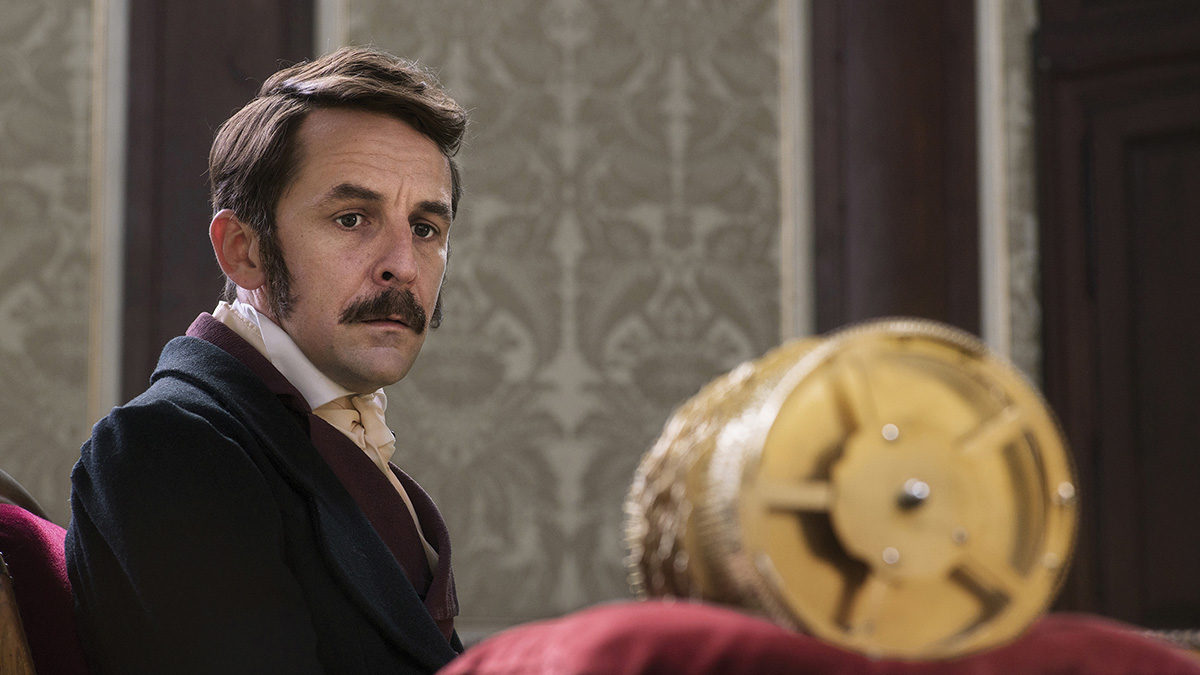
L’air des infortuné reconstructs a scene of the trial of Karl Wilhelm Naundorff, a controversial clockmaker who usurped the identity of Louis XVII, Dauphin of France, and proposes an imaginary narrative inspired by the blurry zones of History.
A 2009 graduate of the Bordeaux Academy of Fine Arts where he majored in photography and video, Nino Laisné also learned to play traditional Latin American music from guitarist Miguel Garau. At that point, his desire to blend film, music, and contemporary art emerged. Laisné takes a special interest in marginals advancing on the borders of official history, as well as in oral traditions in the aftermath of an uprooting. As early as 2010, with Os convidados, Laisné’s images took on sound, suggesting traditional music. In 2013, his film En présence (Piedad Silenciosa) struck a balance between visual and musical writing, around religious reminiscences in Venezuelan folklore. The production also marked the start of a rewarding collaboration with the musicians Daniel and Pablo Zapico, to whom Laisné would return with music written centuries ago. With Folk Songs (2014) et Esas lágrimas son pocas (2015) Laisné adopted forms related to the documentary to trace musical traditions in migratory phenomena. His projects have led to exhibitions in several countries, such as Portugal, Germany, Switzerland, Egypt, China, and Argentina. He is regularly invited to produce new pieces during creative residencies (Casa de Velázquez – Académie de France in Madrid; FRAC Franche-Comté; Park in Progress in Cyprus and Spain; Pollen in Monflanquin, etc). His video productions screen in movie theaters and at festivals, including the FID in Marseille, the FIAC Paris, Papay Gyro Nights Festival in Hong Kong (China), Festival Internacional de Cinema in Toluca (Mexico), Shot Short Films in Moscow (Russia), Digo Festival de Goiás (Brasil) or Boden International Film Festival (Sweden). Nino Laisné also collaborates with many stage artists, including the flamenco choreographer and dancer Israel Galván (El Amor Brujo), the puppet master Renaud Herbin (Open the Owl), or the spanish choreografer Luz Arcas (Toná). In 2017 in La Bâtie-Festival de Genève (Switzerland), he created the show Romances inciertos, un autre Orlando, produced by his encounter with François Chaignaud and presented at the 72nd Avignon Festival. With one hundred performances since its debut, after Australia and Japan, the show will continue to tour in France and internationally during the season 21’22’. In 2018, Laisné and Chaignaud shot the short film Mourn, O Nature!, inspired by the Massenet opera Werther, for an exhibition at the Grand Palais. In October 2019, for his new solo exhibition at the FRAC Franche-Comté, Nino Laisné presented L’air des infortunés, a film revisiting a historical imposture, with Cédric Eeckhout and Marc Mauillon.
Bertrand Lamarche
L Homme aux Etangs
Video | 0 | color | 15:0 | France | 2023
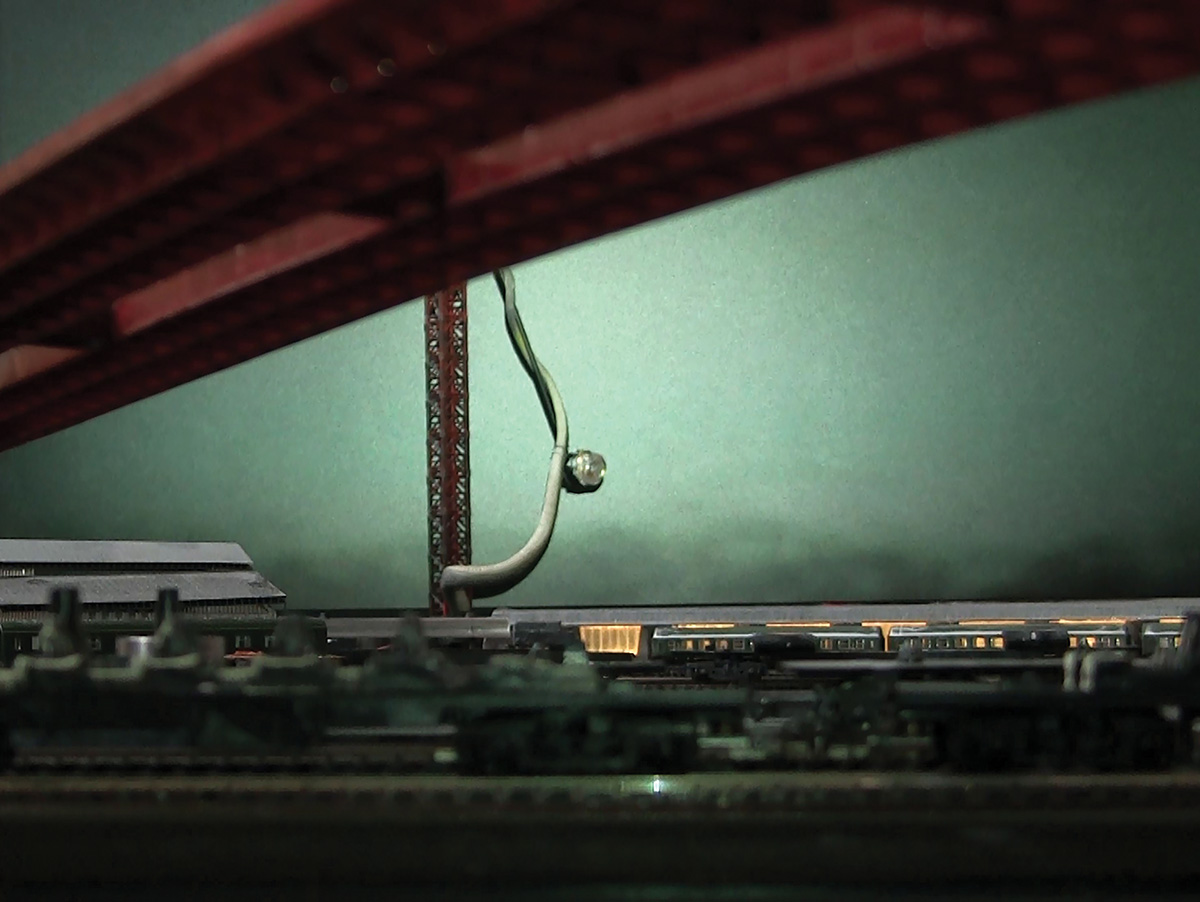
Le film consiste en un nombre de plans fixes basés sur une légende qui décrit un combat entre un géant et un serpent de vase ainsi que l’impact de leur combats sur la météorologie et le climat. Le film met en scène une maquette de ville et des plans qui montrent un paysage où développement urbain, industrie et météorologie sont le cadre qui accompagnent le récit. Le travail met l’accent sur les liens entre maquette et cinéma par la projection d’images sur le paysage à échelle réduite. Un des buts du film est de faire se croiser les genres cinématographiques du réalisme, du fantastique et du film noir par une succession de plans relatifs les uns aux autres et qui cependant peuvent revendiquer leur autonomie comme tableau. Le film pause comme principe l'idée de la cité comme enjeu et comme endroit du politique, là où on organise, où l’on négocie, ou pas. L'idée d'un conflit évité, imminent ou qui advient est aussi présent ici, à travers le décor qui accueille le récit de géants, héritiers des Kaÿju.
Bertrand Lamarche En ayant recours à des distorsions d'échelles spatiales ou temporelles, Bertrand Lamarche construit un ensemble d'hypothèses sculpturales à la fois extatiques et conceptuelles. Son travail s'appuie sur l'amplification et sur le potentiel spéculatif de figures qu'il convoque régulièrement dans ses travaux depuis près de 20 ans : les paysages urbains et industriels, la météorologie, les ombellifères géantes, les vortex ou les platines-vinyles. Une grande part de son travail se caractérise par un désir de subjectivation et d'appropriation de ces différentes portions ou figures du réel. Par un travail de modélisation, l'artiste réinvestit ces figures, et développe un ensemble de propositions, parfois vertigineuses dans le sens où elles procèdent de boucles, qu'elles mettent en scènes des abîmes et procèdent d'une perte de repères spatio-temporels et de distorsions d'échelles. Né en 1966, Bertrand Lamarche vit et travaille à Paris. Il est représenté par la galerie Jérôme Poggi. Il est diplômé de La villa Arson, à Nice. Son travail a été montré dans divers musées et centres d’arts en France, aux USA, au Brésil et en Europe, depuis 1997. Il fait partie de collections privées ainsi que de collections publiques telles que le musée national d’Art moderne - Centre Pompidou (Paris), le FRAC Île-de-France, Les Abattoirs (Toulouse), le MAC VAL (Vitry-sur-Seine) ou le Musée départemental d’art contemporain (Rochechouart). En 2012, Bertrand Lamarche a été nominé pour le prix Marcel Duchamp. Son oeuvre faisait l’objet de deux importantes expositions, au FRAC Centre (Orléans) and au CCC (Tours). Une monographie, the plot, a été publiée récemment en 2018 avec La Maréchalerie-centre d’art contemporain ENSA V, et inclue des textes de Nathalie Leleu et de Ingrid Luquet-Gad.
Salomé Lamas
Gold and Ashes | REDUX
Fiction | 4k | color | 30:0 | Portugal | 2025
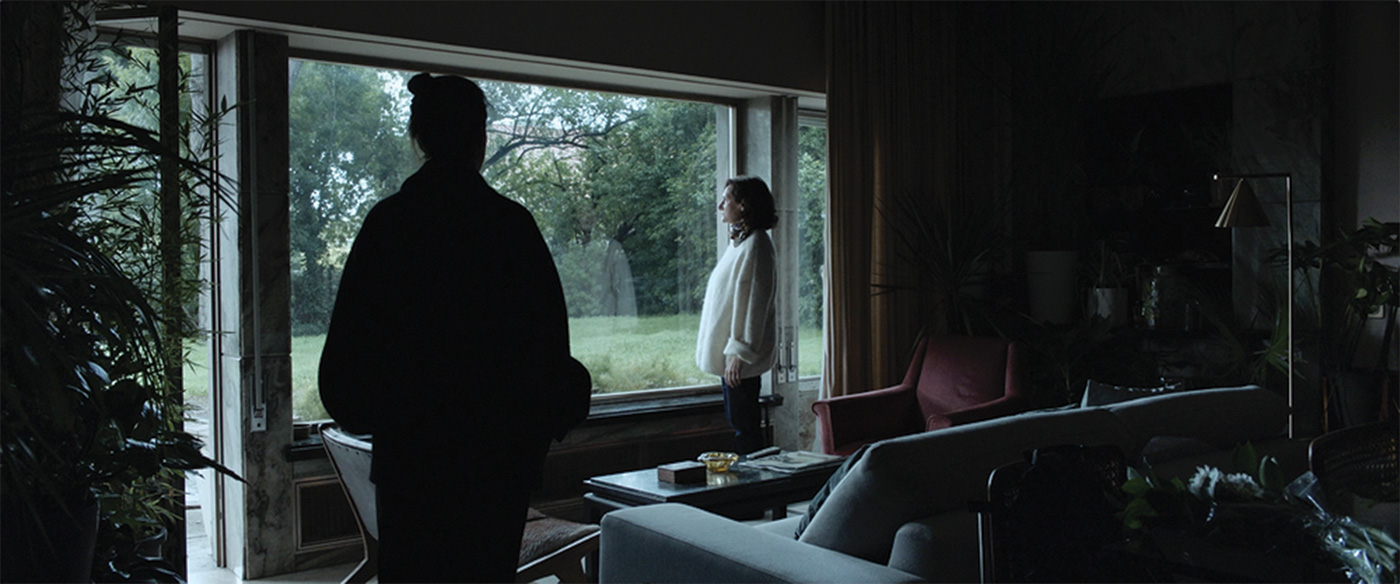
Gold and Ashes is erected upon internal and external — ontological-epistemological — scaling dualities reflected in the characters but also in the time and space where the action is set or in the world they inhabit. It is structured around a concrete plane and an abstract plane as a reference to, human subjectivity. The project features two female actresses. The concrete plane plot is set in filming locations that provide a backdrop for the narrative with direct dialogues and action — mother-and-daughter, placed in the present time. It conveys a social sphere outlined by complex communication models and conventions — such as kinship and existential quests while underlining the artificiality of a constructed reality — an inhabited drawing. The abstract plane plot is set in a film studio that provides a backdrop for the para-philosophical narrative with monologues and no action — two disconnected entities (not sure if aware, of each other), placed in an unknown time. It conveys a mental labyrinth outlined by relational power dynamics and conflicting human emotions — such as humanity’s history and its relation to planet Earth while underlining the speculation of symbolic and imaginary articulations damaged by the loss of the social, political, and spiritual. Overall, the project unfolds around cognitive systems, societal models, and civilizational paradigms, and uses an approach that acknowledges human evolution, simultaneously outlining human limitations to follow the poetics and relational politics of two grand narratives — [a]naturalism, [anti]eco/[geo] constructivism — which usher the mythology of the human impact on Earth (Anthropocene); compelled by two timeless perspectives: progress and apocalypse — questioning our ability to rebuild and pilot the Earth away from the socio-ecological disasters and showing what it means to appreciate the Earth (but also humanity) as an irreplaceable becoming — a trajectory that cannot be replicated, remade or mastered. Gold and Ashes is a powerful exploration of the human condition in the face of devastation, reflecting Lamas’s ongoing commitment to addressing difficult and urgent themes through innovative techniques that often disrupt traditional narrative structures, creating films that are non-linear, fragmented, or that deliberately withhold key information. This technique enhances the parafictional quality of her work, as it mirrors the complexity and uncertainty of real-life events, where truth is often elusive. In the project she explores the idea of subjective memory and how personal and collective histories are constructed. By using parafiction, she highlights the fluidity of memory and the ways in which stories are shaped by the storyteller’s perspective, as well as by political and social contexts. Gold and Ashes symbolizes the duality of destruction and resilience—the “ashes” represent the remnants of war and loss, while the “gold” signifies the hope and strength that survivors cling to in their efforts to rebuild their lives. Lamas uses her distinctive style to blur the lines between reality and fiction, creating a layered and immersive experience that challenges viewers to question their understanding of truth and memory and its impact in both the private and public spheres.
Salomé Lamas has produced over thirty projects, which have been installed and screened internationally, both in cinema auditoriums and contemporary art galleries, and museums. Each of them gives way to a different social reality, usually characterized by its geographical and political inaccessibility. The artist’s interest in impenetrable, politically ambiguous contexts is guided by concerns and the need to problematize reality that otherwise would not be possible. The web of relations making up the socio-political fabric of her projects is made visible through representational strategies, for which she adopted the term parafiction. Rather than complying with a shapeless meaning of parafiction — for which there is no established terminology — she proposes its expansion and resignification. In her artistic practice, parafiction can be read in the light of its prefix “para-”, in which we encounter various disruptive effects that are vital for its comprehension. Derived from the Latin, “para-” indicates “alongside, adjacent to, beyond or distinct from, but analogous to”; in certain word combinations, it can also mean “wrong, irregular,” pointing towards an “alteration” or “modification”; further, “para-” implies “separate, defective, irregular, disordered, improper, incorrect, perversion or simulation.” In this way, parafiction would be something in which fiction has been perverted, altered, modified, or pushed beyond its point of reference, as opposed to remaining within the boundaries of the category of fiction. It can also be understood as a “simulation” of fiction, pointing to a distortion of the border around what is considered fiction, thus reaching what is on the other side of that border: that is, the world of non-fiction or seeking the “real” world. Thus, instead of fiction being used to blur the border with non-fiction, it is used as a way of expanding and transcending those boundaries. Salomé Lamas departs from the principle that we do not have access to a stable reality. Instead, we have an excess of meanings, interpretations, explanations, manipulations, (de)constructions, and evaluations that go into narratives and systems that sustain and occupy us. Consequently, the need for appropriating the idea of parafiction stems from the questioning of how human subjectivity is formed, drawing on psychoanalysis, with the aim of clarifying and expanding concepts such as real (something that is out of reach), reality, symbolic, and imaginary. Thus, she is led to operate at the border between fiction and non-fiction, employing representation and hypothesis generation through certain meditative criteria and a deontological code relative to what is plausible, assuming consciously the “task of the translator” —comparable to illusionism — and pushing its boundaries. In this context, she draws on distinct non-fictional strategies that include ethnographic research, as well as thought experiments, reflexivity, restaging and performativity, among others, to explore the limits of fiction. This is visible in the development of her working methodology, where we find various manifestations of parafiction, such as scenarios where characters and fictional stories intersect with the world as we are experiencing it. The combination of these strategies, to the detriment of other speculative aspects, forms a sort of hypothesis that maintains a level of accuracy with reality but also questions its authority. Through parafiction it is possible to take a convention and deconstruct it, distort it, expose the impossibility of providing evidence for the truth, to the point where doubts are raised about its validity, yet still producing reasons for understanding it as plausible. Salomé Lamas problematizes both sides of the border between historical and imaginary worlds, and records how they have changed over time, by understanding parafiction as a fundamental translation tool for defining identity, language and culture. Intensifying, exaggerating and speculating on how the world is made sensible, by triggering moments that reveal their fabrication, in a post-truth context heightened by the technological and globalized nature of our times. To reveal this transformation is a continuous and thorough undertaking, but also spiritual, having the ability to relate the individual sphere (private) with the social sphere (public) and so introducing new information and perspectives on our past, present and future. Thus, although conscious of its limits and apparent contradictions, parafiction helps give form to the chaos of life and endow it with significance, in a compromise between reality and its fictionalization.

Salomé Lamas
Ubi Sunt
Experimental fiction | hdv | color | 23:0 | Portugal | 2017
Ubi Sunt. Porto. Cartography of an imaginary place attracted by the margins (social and geographical). Hybrid and eclectic project, it is the outcome of a audiovisual research residency of humam and urban exploration of an expanding city. Ubi sunt qui ante nos fuerunt?, meaning "Where are those who were before us?". Reflective essay on mortality and life's transience, it emerges from that dialectic, of a and episodic and fragmented structure with a choreographed cinematography; where the memory intersects the contemporary. The project hosts two performances - 'One Life to Live' and 'Requiem' by Christoph Both-Asmus and counts with the participation of CESA
Salomé Lamas (Lisbon) studied cinema in Lisbon and Prague, visual arts in Amsterdam and is a Ph.D candidate in contemporary art studies in Coimbra. In a fertile occupation of “no man’s land”, Lamas refers to her work as critical media practice parafictions. Rather than conventionally dwelling in the periphery between cinema and the visual arts, fiction and documentary, Lamas has been attempting to make these languages her own, treading new paths in form and content, challenging the conventional methods of film production, modes of exhibition and the lines between various filmic and artistic forms of aesthetic expression. These works of modified ethnography show an interest in the intrinsic relationship between storytelling, memory, and history, while using the moving image to explore the traumatically repressed, seemingly unrepresentable, or historically invisible, from the horrors of colonial violence to the landscapes of global capital.
Salomé Lamas
Hotel Royal
Experimental fiction | 0 | color | 29:0 | Portugal | 2021
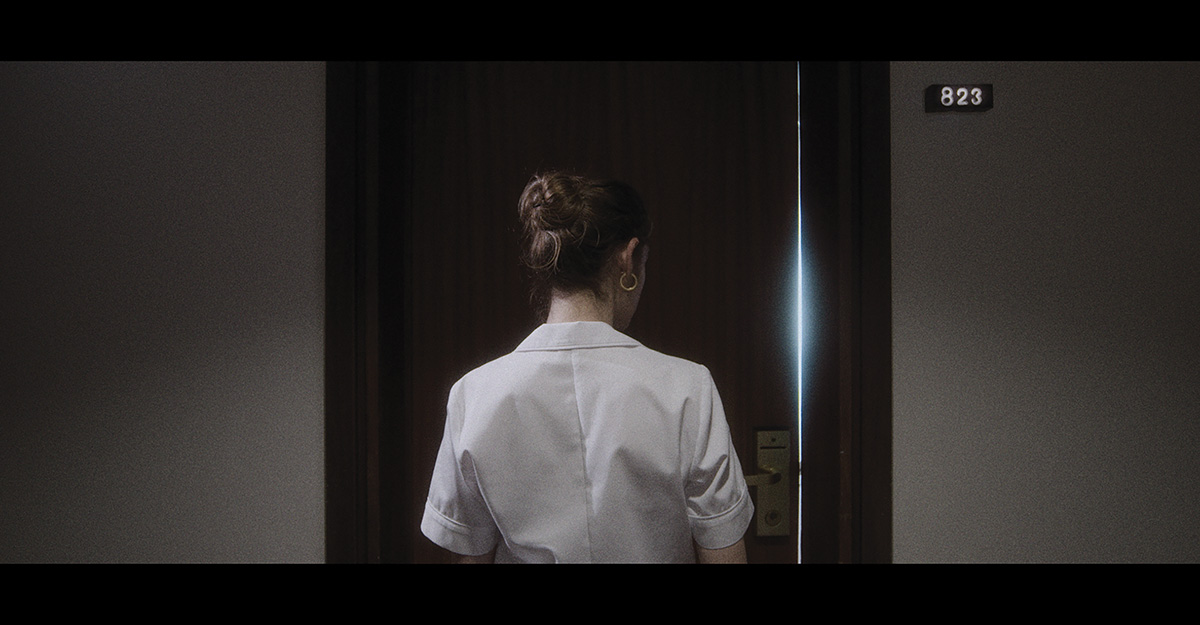
Hotel Royal is fragmented and incomplete mosaic of contemporary societies. It could be dubbed a film about the horrors of the soul, about voyeurs or simply about misfits.
Salomé Lamas (Lisbon) studied cinema in Lisbon and Prague, visual arts in Amsterdam and is a Ph. D candidate in contemporary art studies in Coimbra. Her work has been screened both in art venues and film festivals such as Berlinale, BAFICI, Museo Arte Reina Sofia, FIAC, MNAC – Museu do Chiado, DocLisboa, Cinema du Réel, Visions du Réel, MoMA – Museum of Modern Art, Museo Guggenheim Bilbao, Harvard Film Archive, Museum of Moving Images NY, Jewish Museum NY, Fid Marseille, Arsenal Institut fur film und videokunst, Viennale, Culturgest, CCB - Centro Cultural de Belém, Hong Kong FF, Museu Serralves, Tate Modern, CPH: DOX, Centre d’Art Contemporain de Genève, Bozar , Tabakalera, ICA London, TBA 21 Foundation, Mostra de São Paulo, CAC Vilnius, MALBA, FAEMA, SESC São Paulo, MAAT, La Biennale di Venezia Architettura, among others. Lamas was granted several fellowships such as the Gardner Film Study Center Fellowship – Harvard University, Film Study Center-Harvard Fellowship, The Rockefeller Foundation – Bellagio Center, Brown Foundation – Dora Maar House, Fundación Botín, Fundação Calouste Gulbenkian, Sundance, Bogliasco Foundation, The MacDowell Colony, Yaddo, Camargo Foundation, Berliner Künstlerprogramm des DAAD. She collaborates with Universidade Católica Portuguesa and Elias Querejeta Zine Eskola. She collaborates with the production company O Som e a Fúria and is represented by Galeria Miguel Nabinho and Kubikgallery.
Salomé Lamas
Hangar
Experimental doc. | hdv | black and white | 8:0 | Portugal | 2018
.
Salomé Lamas (Lisbon) studied cinema in Lisbon and Prague, visual arts in Amsterdam and is a Ph.D candidate in contemporary art studies in Coimbra. Her work has been screened both in art venues and film festivals such as Berlinale, BAFICI, Museo Arte Reina Sofia, FIAC, MNAC “ Museu do Chiado, DocLisboa, Cinema du Réel, Visions du Réel, MoMA “Museum of Modern Art, Museo Guggenheim Bilbao, Harvard Film Archive, Museum of Moving Images NY, Jewish Museum NY, Fid Marseille, Arsenal Institut fur film und videokunst, Viennale, Culturgest, CCB - Centro Cultural de Belàm, Hong Kong FF, Museu Serralves, Tate Modern, CPH: DOX, Centre d’Art Contemporain de Genêve, Bozar , Tabakalera, ICA London, TBA 21 Foundation, Mostra de Sào Paulo, CAC Vilnius, MALBA, FAEMA, SESC Sào Paulo, MAAT, La Biennale di Venezia Architettura, among others. Lamas was granted several fellowships such as The Gardner Film Study Center Fellowship “ Harvard University, The Rockefeller Foundation “Bellagio Center, Fundaço Calouste Gulbenkian, Fondacion Botà¬n, Sundance, Bogliasco Foundation, The MacDowell Colony, Yaddo, Berliner Kànstlerprogramm des DAAD. She collaborates with Universidade Catàlica Portuguesa and Elias Querejeta Zine Eskola. She collaborates with the production company O Som e a Féria and is represented by Miguel Nabinho Gallery.
Salomé Lamas
The Tower
Video | hdv | black and white | 8:45 | Portugal | 2015
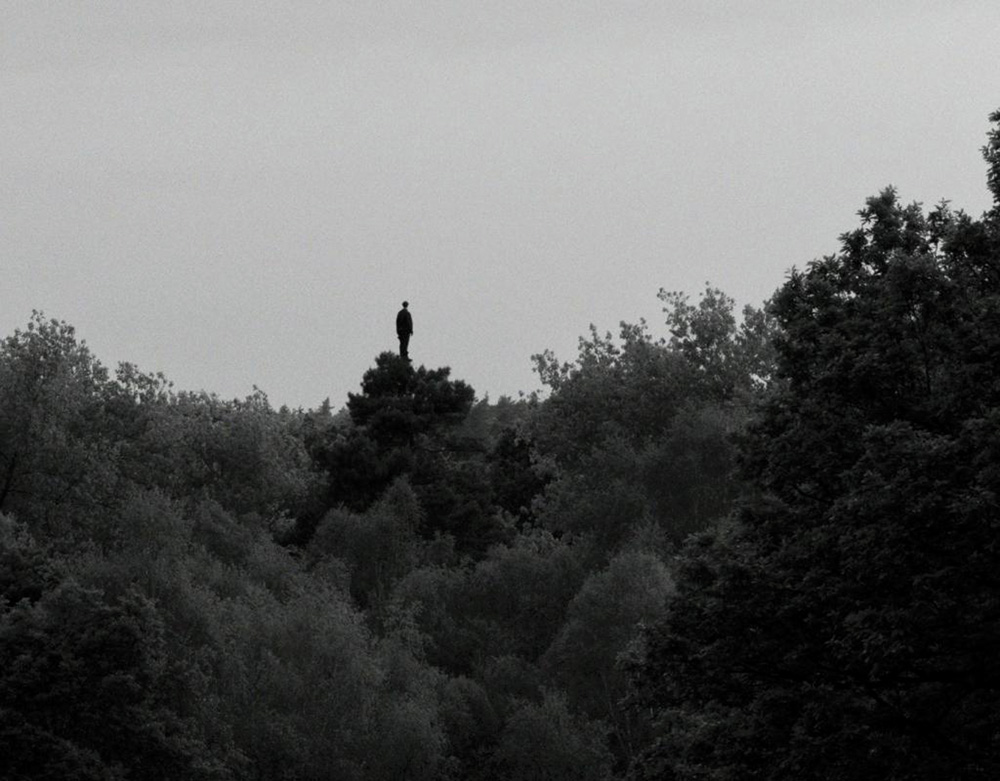
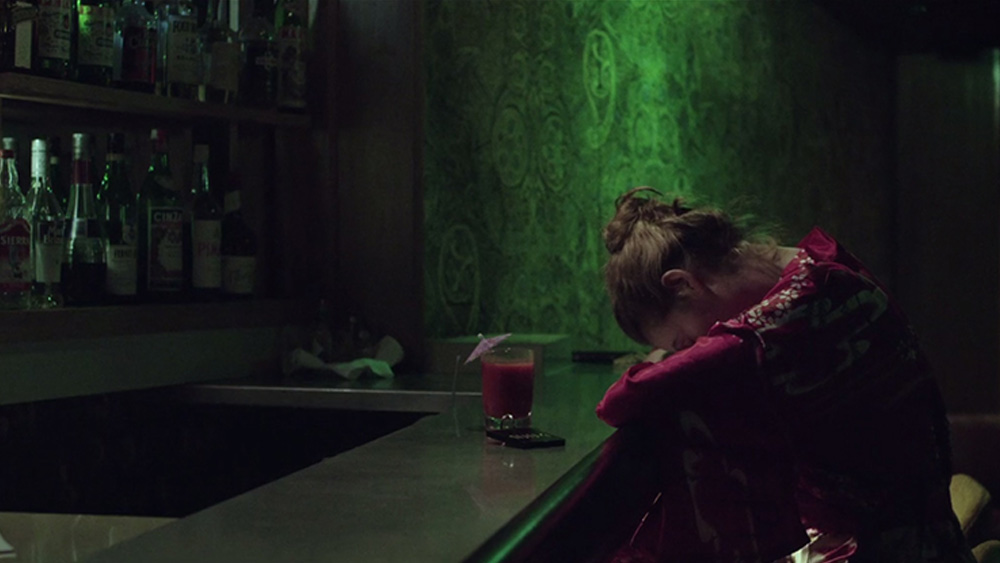
Maybe Kolja’s experiment of merging his body (human) with the tree (nature) venturing into a border zone between the earth and the sky is due to his purity of spirit, to the grandeur of the idiots, or the foolishness of the mystics; or is it all this together? Maybe it is a symptom of the enlightened – or simply an elaborated suicide.
Salomé Lamas (1987, Lisbon, Portugal) studied Cinema in Lisbon and Prague, MFA in Amsterdam and is a Ph.D candidate in film studies in Coimbra. She has been working with time-based image and has exhibited both in art spaces and film festivals. After a couple of short films, her debut film NO MAN’S LAND premiered internationally at Berlinale (Forum) and was exhibited in a number of other festivals. Lamas is a MacDowell Colony fellow, a Rockefeller Foundation Bellagio Center fellow and DAAD Berliner Künstlerprogramm fellow.
Salomé Lamas
Ubi Sunt
Experimental fiction | hdv | color | 23:0 | Portugal | 2017
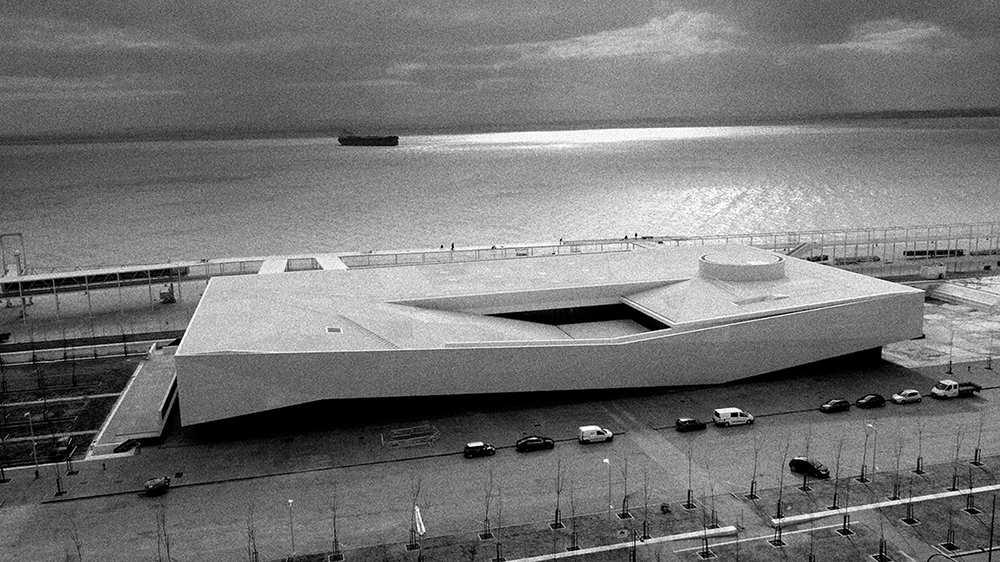
Ubi Sunt. Porto. Cartography of an imaginary place attracted by the margins (social and geographical). Hybrid and eclectic project, it is the outcome of a audiovisual research residency of humam and urban exploration of an expanding city. Ubi sunt qui ante nos fuerunt?, meaning "Where are those who were before us?". Reflective essay on mortality and life`s transience, it emerges from that dialectic, of a and episodic and fragmented structure with a choreographed cinematography; where the memory intersects the contemporary. The project hosts two performances - `One Life to Live` and `Requiem` by Christoph Both-Asmus and counts with the participation of CESA.
Salomé Lamas (b.1987, Portugal) is a filmmaker whose work dissolves the apparent border between documentary and fiction. With an interest in the intrinsic relationship between storytelling, memory and history, Lamas uses the moving image to explore the traumatically repressed, seemingly unrepresentable or historically invisible ‘ from the horrors of colonial violence to the landscapes of global capital. Her debut feature No Man’s Land [Terra de Ninguem] (2012) premiered internationally at Berlinale and went on to screen at many major international film festivals. Her short films have been presented in art and film institutions including Museum of Modern Art, New York; Guggenheim Bilbao; Hammer Museum, Los Angeles; Museo Nacional Centro de Arte Reina Sofia, Madrid; Viennale, Vienna; Bozar Centre for Fine Arts, Brussels; and Biennial of Moving Images, Geneva. Lamas is currently a PhD candidate in film studies at the University of Coimbra, Portugal.
Salomé Lamas
Terminal
Experimental doc. | hdv | black and white | 6:0 | Portugal | 2018
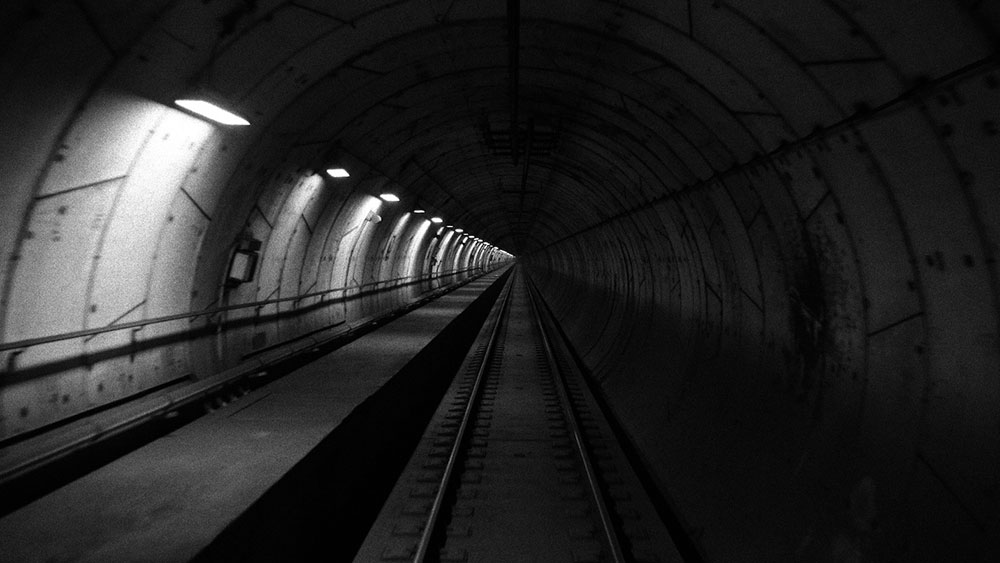
.
Salomé Lamas (Lisbon) studied cinema in Lisbon and Prague, visual arts in Amsterdam and is a Ph.D candidate in contemporary art studies in Coimbra. Her work has been screened both in art venues and film festivals such as Berlinale, BAFICI, Museo Arte Reina Sofia, FIAC, MNAC “ Museu do Chiado, DocLisboa, Cinema du Réel, Visions du Réel, MoMA “Museum of Modern Art, Museo Guggenheim Bilbao, Harvard Film Archive, Museum of Moving Images NY, Jewish Museum NY, Fid Marseille, Arsenal Institut fur film und videokunst, Viennale, Culturgest, CCB - Centro Cultural de Belàm, Hong Kong FF, Museu Serralves, Tate Modern, CPH: DOX, Centre d’Art Contemporain de Genêve, Bozar , Tabakalera, ICA London, TBA 21 Foundation, Mostra de Sào Paulo, CAC Vilnius, MALBA, FAEMA, SESC Sào Paulo, MAAT, La Biennale di Venezia Architettura, among others. Lamas was granted several fellowships such as The Gardner Film Study Center Fellowship “ Harvard University, The Rockefeller Foundation “Bellagio Center, Fundaço Calouste Gulbenkian, Fondacion Botà¬n, Sundance, Bogliasco Foundation, The MacDowell Colony, Yaddo, Berliner Kànstlerprogramm des DAAD. She collaborates with Universidade Catàlica Portuguesa and Elias Querejeta Zine Eskola. She collaborates with the production company O Som e a Féria and is represented by Miguel Nabinho Gallery.
Salomé Lamas
Metro
Experimental doc. | 0 | black and white | 9:0 | Portugal | 2018
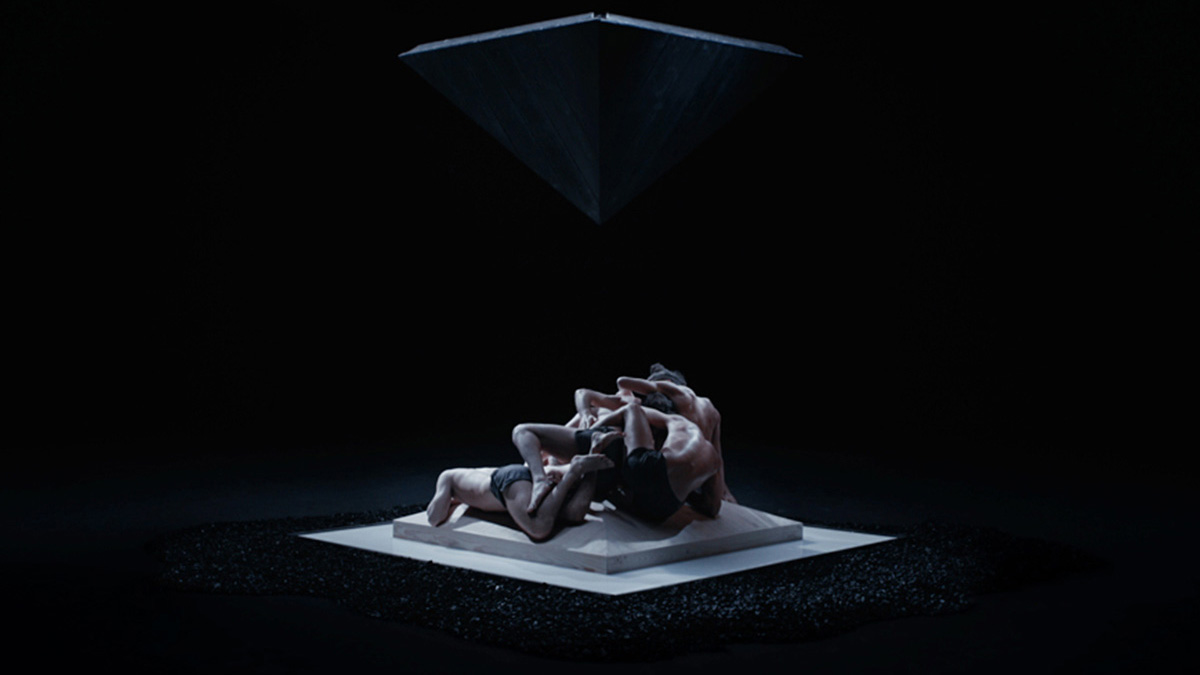
.
Salomé Lamas (Lisbon) studied cinema in Lisbon and Prague, visual arts in Amsterdam and is a Ph.D candidate in contemporary art studies in Coimbra. Her work has been screened both in art venues and film festivals such as Berlinale, BAFICI, Museo Arte Reina Sofia, FIAC, MNAC “ Museu do Chiado, DocLisboa, Cinema du Réel, Visions du Réel, MoMA “Museum of Modern Art, Museo Guggenheim Bilbao, Harvard Film Archive, Museum of Moving Images NY, Jewish Museum NY, Fid Marseille, Arsenal Institut fur film und videokunst, Viennale, Culturgest, CCB - Centro Cultural de Belàm, Hong Kong FF, Museu Serralves, Tate Modern, CPH: DOX, Centre d’Art Contemporain de Genêve, Bozar , Tabakalera, ICA London, TBA 21 Foundation, Mostra de Sào Paulo, CAC Vilnius, MALBA, FAEMA, SESC Sào Paulo, MAAT, La Biennale di Venezia Architettura, among others. Lamas was granted several fellowships such as The Gardner Film Study Center Fellowship “ Harvard University, The Rockefeller Foundation “Bellagio Center, Fundaço Calouste Gulbenkian, Fondacion Botà¬n, Sundance, Bogliasco Foundation, The MacDowell Colony, Yaddo, Berliner Kànstlerprogramm des DAAD. She collaborates with Universidade Catàlica Portuguesa and Elias Querejeta Zine Eskola. She collaborates with the production company O Som e a Féria and is represented by Miguel Nabinho Gallery.
Salomé Lamas
EXTRACTION: THE RAFT OF THE MEDUSA
Experimental fiction | hdv | color | 10:0 | Portugal | 2020
Extraction: The Raft of the Medusa is a meditation on humanity’s massive redesign of the planet and a dystopic pamphlet on the anthropocene. Extraction: The Raft of the Medusa portrays a brief moment of euphoria as the drifting occupants on the raft, hoping and praying to be rescued, appear to glimpse a possibility of salvation. We can almost hear the hoarse cries through which they attempt to draw attention to their desperate plight, mustering a final ounce of strength before the void. This is their last chance of survival. Extraction: The Raft of the Medusa refers to the colonial paradigm, worldview, and technologies that mark out regions of high biodiversity in order to reduce life to its conversion into a resource through capitalism, with an enormous environmental and social impact. It is an allegory for states of emergency in environmental policy, climate and migration, with an ethical-political purpose.
Salomé Lamas (Lisbon) studied cinema in Lisbon and Prague, visual arts in Amsterdam and is a Ph. D candidate in contemporary art studies in Coimbra. Her work has been screened both in art venues and film festivals such as Berlinale, BAFICI, Museo Arte Reina Sofia, FIAC, MNAC – Museu do Chiado, DocLisboa, Cinema du Réel, Visions du Réel, MoMA – Museum of Modern Art, Museo Guggenheim Bilbao, Harvard Film Archive, Museum of Moving Images NY, Jewish Museum NY, Fid Marseille, Arsenal Institut fur film und videokunst, Viennale, Culturgest, CCB - Centro Cultural de Belém, Hong Kong FF, Museu Serralves, Tate Modern, CPH: DOX, Centre d’Art Contemporain de Genève, Bozar , Tabakalera, ICA London, TBA 21 Foundation, Mostra de São Paulo, CAC Vilnius, MALBA, FAEMA, SESC São Paulo, MAAT, La Biennale di Venezia Architettura, among others. Lamas was granted several fellowships such as the Gardner Film Study Center Fellowship – Harvard University, Film Study Center-Harvard Fellowship, The Rockefeller Foundation – Bellagio Center, Brown Foundation – Dora Maar House, Fundación Botín, Fundação Calouste Gulbenkian, Sundance, Bogliasco Foundation, The MacDowell Colony, Yaddo, Camargo Foundation, Berliner Künstlerprogramm des DAAD. She collaborates with Universidade Católica Portuguesa and Elias Querejeta Zine Eskola. She collaborates with the production company O Som e a Fúria and is represented by Galeria Miguel Nabinho and Kubikgallery.
Vianney Lambert
le meilleur age
Documentary | dv | | 9:30 | France | 2007
Récit anonyme d`un exil.
Vianney Lambert est réalisateur de films documentaires. L'image de la vieillesse est au coeur de plusieurs de ses films : Hall, Matricule 1141, mort pour la France, Suzanne. Son travail croise d'autres problématiques comme l'enfermement (Une heure seulement), l'exil (Le meilleur âge) et côtoie des formes parfois à la limite de l'expérimental (Quelque part, un peu partout). En 2001, il fonde avec Mohamed Ouzine et Charlie Rojo l'association Cent Soleils à Orléans, qui programme des films documentaires et organise des ateliers cinéma. Depuis 2007, Cent Soleils développe une production associative de courts métrages documentaires. Vianney Lambert travaille également comme opérateur. Aujourd'hui, il développe plusieurs projets qu'il souhaite réaliser en pellicule.
Luke Lamborn
prepend bunny
Experimental video | dv | color | 6:0 | USA | 2004
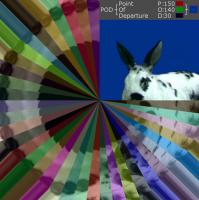
Prepend Bunny was created through a program written in Max/MSP that transforms acronyms into digital color by calculating a letter`s place in the alphabet with the standard RGB color index. Thus, an already compressed piece of information is further reduced to a unique color as means of negotiating the ever-expanding English language. In the past twenty years Three Letter Acronyms have become not only commonplace, but necessary for the management of an ever-growing pool of words. Computer and military terminology as well as terminology for new inventions and consumer products have swelled the English language. To this end, it has become easier to communicate by condensing word strings. Acronyms have crept into our culture and are used in the same manner as normal words. Prepend Bunny realizes this phenomenon and goes a step further by compressing acronyms into single colors. Perhaps technology of the future will give our eyes the ability to decompress bits of color into lengthy strings of written text. Rainbows and color swatches would replace our written language, and visual learning would increase tenfold. Process: There are 26 letters in the alphabet. Each letter is given a number: A=0, B=10, C=20. . . Z=250. This creates a range of numbers from 0 to 250, which is also the numeric range used in the computer?s RGB color index. This index is responsible for creating all the colors on the computer screen from three base colors, or channels: Red, Green and Blue. These three channels are capable of producing millions of different colors depending on the amount or value of red, green, and blue used. A high value number for the red channel will make a bright red; a low number will make a dark red. Then, the first letter of the acronym is assigned to the Red channel, the second letter to the Green channel, and the third letter to Blue. The letter?s number, between 0 and 250, will then determine the value of the channel color. Lastly, the three channels are combined to create the final color. In essence, this is the color of the acronym. Background: Prepend Bunny is influenced by the expanding domain of information visualization. Arranging data into a visual composition assumes a variety of forms: maps, charts, illustrations, diagrams, and graphical software interfaces. These manifestations are vital to the understanding of our universe. Yale University professor, scholar, and artist Edward Tufte has been a pioneer in the field of Cognitive Art?art used to envision information. He has provoked critical attention towards the subject, while attracting creative and artistic thinkers into the arena. Prepend Bunny furthers the discourse by which information?words in particular, may be realized and understood, offering an additional way to see.
Luke Lamborn has exhibited and screened his artwork throughout the US and internationally. He obtained a BFA in digital media at the University of Colorado at Boulder, graduating Summa Cum Laude. He has also worked as a web-designer, graphic designer, and technician in the commercial sector. Currently, Lamborn is pursuing his MFA in computer art at Syracuse University?s Department of Transmedia while working as a teaching assistant and lab technician.
Luke Lamborn
Square millimeter of opportunity: Houses
Experimental video | dv | color | 2:0 | USA | 2005
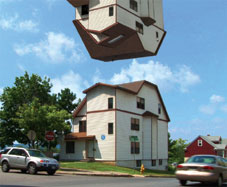
The Square Millimeter video series seeks to emulate the possibility of extraordinary but overlooked occurrences, as if captured by a passing videographer. These videos are informed by the writings of anthropologist Carlos Castaneda, who described rare moments when our normal perceptions of daily life shift dramatically and without warning.
Luke Lamborn is a media artist examining new ways of enhancing perception through digital technologies. He is currently studying art in the USA.
Andrew Lampert
El Adios Largos
Experimental film | 16mm | color | 11:13 | USA | 2013
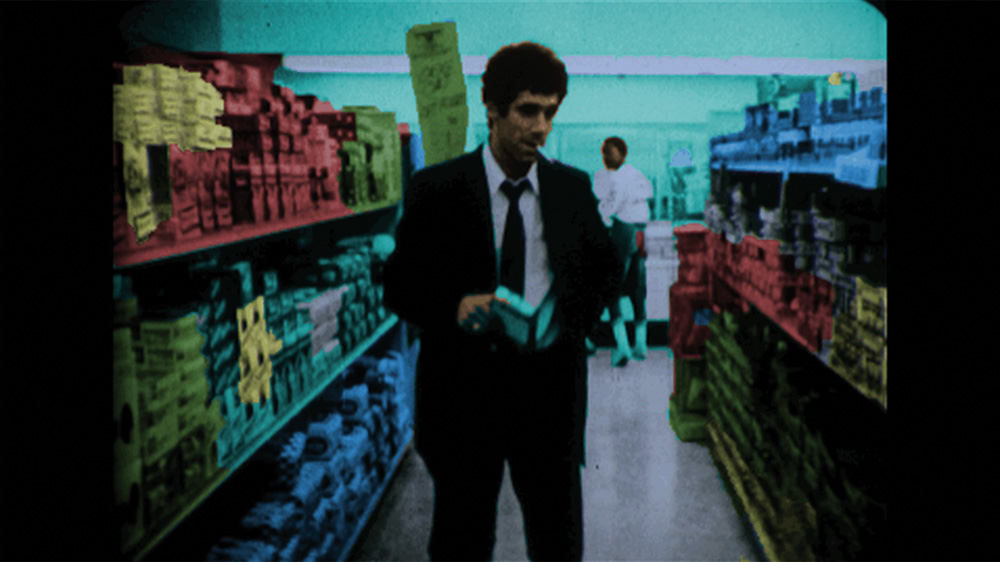
In 1973, Robert Altman`s THE LONG GOODBYE was both a critical and commercial flop. Set in a time transposed, neo-noir Los Angeles, Elliott Gould`s bumbling performance as gumshoe Philip Marlowe left Raymond Chandler aficionados dismayed, as did Vilmos Zsigmond;s kinetic camera work and John Williams` cheeky score. The film quickly disappeared from theaters and was never shown on television. While the film was released on RCA`s short-lived Video Disc format in 1981, the movie has not been seen since. All known prints were destroyed, and the original production elements perished due to a leaky sprinkler system in a Culver City in 1983. THE LONG GOODBYE was written off as permanently lost, an all too important missing link from Altman`s greatest period. It has for years remained a film that is impossible to reassess. Filmmaker and archivist Andrew Lampert’s serendipitously purchased a mysteriously film titled EL ADIOS LARGOS from a collector through the mail in 2002. Closer examination revealed that this 16mm, black and white, cropped, Spanish-language dubbed print was actually a reduction copy of Altman’s 35mm, color, widescreen, English-language masterpiece. Knowing the importance of his discovery, Lampert and a team of volunteer preservationists, including colorization expert Jody Blyer, set out on a decade-plus mission to preserve this unearthed gem using the latest digital technology. Lampert has gone to extensive lengths to painstakingly produce the most authentic, thoroughly accurate version that can be made given the considerable difference in materials.
Andrew Lampert is at the forefront of a new generation of artists engaging with film, video and performance, revisiting and extending the dialogue around an expanded cinema. Lampert pursues the alchemy between artist, art, and audience in a public space, especially that of cinema. Bringing unscripted and chance elements into cinema`s veneer of control, and often working with found material, he foregrounds the contingency of film as a medium. Reveling in cinema as a performative environment, Lampert reclaims this space from a mass media culture to emphasize its potential for immediacy and accident—and to make each of his screenings and performances a one-of-a-kind event. Lampert explores the cinematic experience as content, experimenting with the physical spaces between projector, projectionist, audience and screen, and with the experiences made possible through their convergence. The cinema becomes a site of abstract and magical production in his performances, videos and films, as Lampert investigates the gap between an artwork`s private intent and its public reception. Lampert`s media works defy strict categorization as films or videos. His projects are unified in their emphasis on the frame around the edges of narrative—the genres and clichés in which he cloaks on-screen action, the happy accidents during production, and the unexpected events during a screening that shape the audience`s response and foreground human activity in the cinematic context. Lampert was born in St. Louis, Missouri in 1976. His work has been shown at the 2006 Whitney Biennial; The Getty Museum, Los Angeles; Mitchell Algus Gallery, New York; British Film Institute, London; The Kitchen, New York, and Light Industry, Brooklyn, amongst many other venues. Lampert`s work has also been featured in a number of international festivals, including the New York Film Festival and the Rotterdam International Film Festival. In addition to his work as an interdisciplinary artist, he is the Film Archivist at Anthology Film Archives in New York.
Ane Lan
Afrika
Art vidéo | | color | 4:34 | Norway | 2007
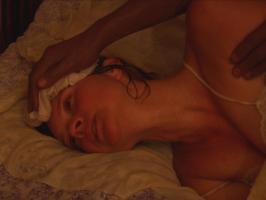
A seemingly native African woman, sitting outside her hut, is preparing a meal for her guest. The guest, a white female lying on her sickbed, is ambiguously accepting the favours given her by her hospitable servant. The ?medicine? provided for her illness however, does not seem to have an effect. Through simple tableaux?s and clichés, this short work is examining the psychological aspects of the post-colonialism relationship Europe- Africa in the face of illegal immigration.
Ane Lan was born in Oslo, Norway in 1972. He graduated from the National College of Art and design in Oslo in 2002 and is working in the field of performance, music and experimental film/video. He has participated in various international exhibitions; The Whitney Museum of American Art, NYC, Paco das Artes, Sao Paolo, the 51th Venice Biennial and the 10th Istanbul Biennial. Lan has also participated in numerous film & video festivals worldwide.
Ane Lan
Vesta
Experimental video | dv | color | 6:13 | Norway | 2006
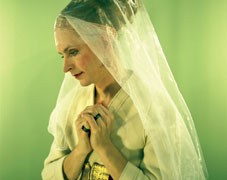
In between the burning flames of Vesta, various "Vestal Virgins" ask questions about the virtue of purity and the past and current state of the female appearance. Staging himself both as the painter and the female sitter, Ane Lan raises questions about the gaze of women in classical painting related to the gaze of the masculine eye.
Ane Lan was born in Oslo, Norway in 1972. He graduated from the National College of Art and design in Oslo in 2002 and is working in the field of performance, music, and experimental film/video. He has participated in shows at The Whitney Museum of American Art, Reiner Roterfelt Gallery and the 2005 Venice Biennial. Lan has also participated in numerous international film & video festivals and screenings worldwide.
Ane Lan
Woman of The World
Art vidéo | dv | color | 7:57 | Norway | 2008
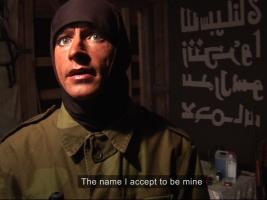
Staging himself as various women of the world, the artist Ane Lan raises questions of the images and ideas of ethnicity and multiculturalism within the concept of a global economy.
Ane Lan was born in Oslo, Norway in 1972. He graduated from the National College of Art and design in Oslo in 2002 and is working in the field of performance, music and experimental film/video. He has participated in various international exhibitions; The Whitney Museum of American Art, NYC, Paco das Artes, Sao Paolo, the 51 th Venice Biennial and the 10th Istanbul Biennial. Lan has also participated in numerous film & video festivals worldwide.
Claire Lance
A Homeward Bound
Experimental fiction | hdv | black and white | 9:9 | France | 2024
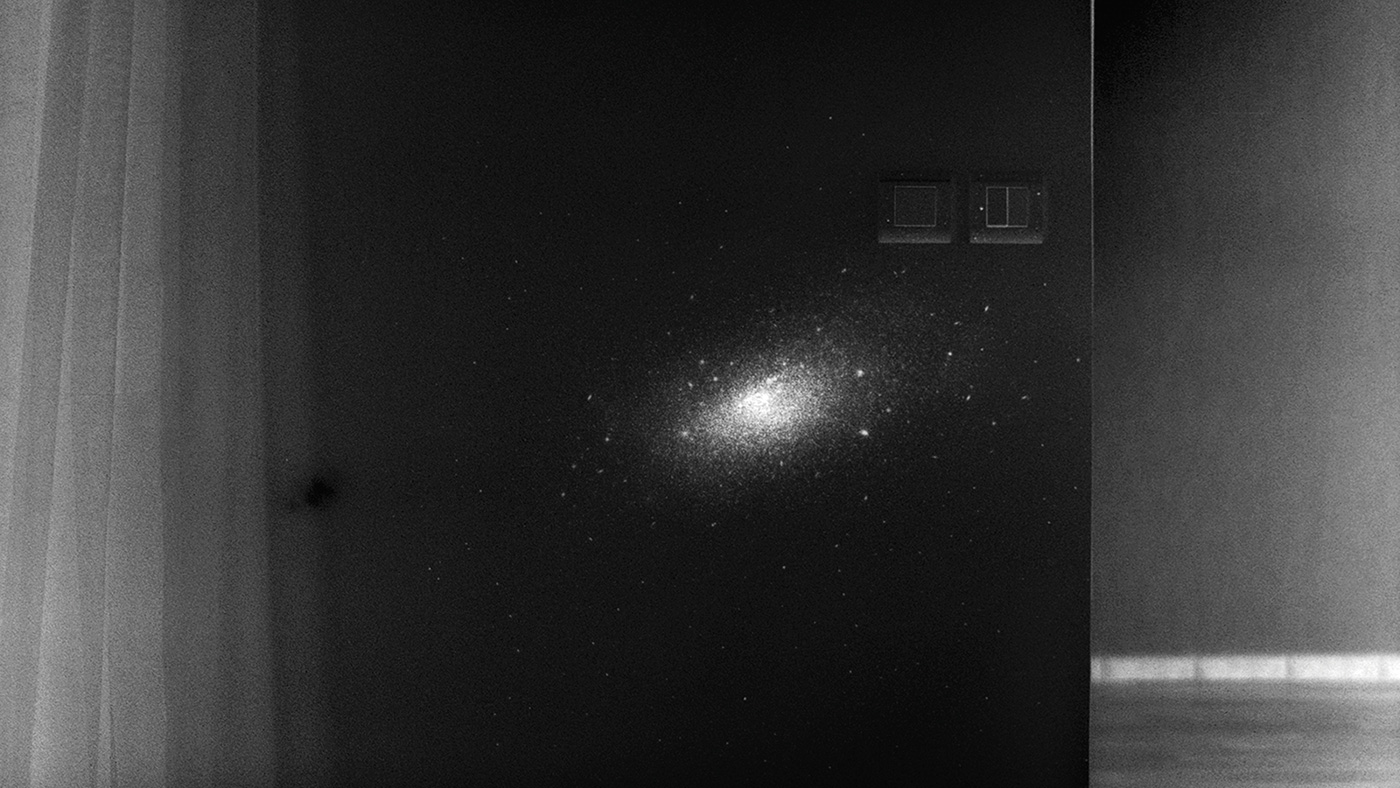
Through a hypnotic single-shot sequence, we are transported to the heart of a house, where negative black and white unveil an indefinite space between memory and bewilderment. Fluctuating beneath the social veneer, the gaze undergoes a metamorphosis as the house reveals its secrets; the walls themselves seem to whisper forgotten tales and unspeakable truths.
Claire Lance (born in 1987, France) is an artist who uses mediums closely related to human optics. Her projects explore cognition and the persistence of cultural images in perception through video, installation, and photography. Evolving over time, Lance's works often operate in a manner reminiscent of Rorschach tests, revealing what is generally invisible or described as intangible or non-objective. The global city, where scales and dimensions intersect in successive layers, creates virtual, intangible spaces accessible only to the eye. These indeterminate yet familiar places invoke the metaphor and persistence of images that we individually and culturally carry within us as viewers. Her works have been exhibited at the Ofr gallery in Paris, at the 39th FIFA in Montreal, Kurzfilmvoche Regesnburg, Germany, and have been featured multiple times in the British magazine Carpark. In 2023, she was invited by the CIRM (Centre International de Recherche Mathématiques) for a workshop titled 'Maths and Art: Common Creation'. She holds a master's degree in Practice and Theory of Contemporary Art from the Université Paris 8 Sorbonne. She has collaborated with various film directors as cinematographer on set, and commissioned works with press titles such as L’Obs, Trax, Technikart.