Catalogue > Search
Results for : Tout le catalogue

Christelle Lheureux
Experimental fiction | 0 | color and b&w | 42:0 | France | 2011
Christelle Lheureux
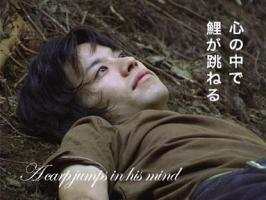
A carp jumps in his mind
Experimental fiction | dv | color | 33:0 | France, Japan | 2005
Inspired by "Barefoot Gen", a manga by Keiji Nakazawa. Of this film, we will not see anything. A voice tells us the story. The voice of a young Japanese man, wandering around the mountains close to Hiroshima, sixty years after the war. The history of the A-Bomb through its representations, what it becomes through the eyes of this young man, and what it convokes in our imagination.
Christelle Lheureux is an artist and a filmmaker. Born in 1972, she lives in Paris and is represented by the "Blancpain Gallery"(Geneva) and "Play Film Production" (Paris). She teaches cinema at the École des Beaux-Arts in Geneva. Since 1997 she has been producing video-installations and films, which are exhibited in areas of Contemporary Art (Grand Palais, Palais de Tokyo, Musée d'Art Moderne in Paris, Espace Paul Ricard in Paris again, Castello di Rivoli in Italy, MAMCO in Geneva, Die Appel in Amsterdam, Pusan Biennale and Art Sonje in South Korea, Hiroshima Art Document in Japan...); and in movie festivals (Rotterdam International Film Festival in Holland, Festival International de Cinéma de Nyon in Switzerland, Festival International du Film Documentaire in Marseilles, Bangkok Experimental Film Festival in Thaïland, Vancouver International Film Festival in Canada...). She is carrying out several residencies in Asia (Villa Kujoyama in Japan, Siam City in Bangkok) and, according to her projects, collaborates with other artists, filmmakers, architects, or writers, both French and foreign, such as Apichatpong Weerasethakul (Thaï filmmaker) and Philippe Rahm (French architect).

Christelle Lheureux
80 000 ans
Fiction | mp4 | color | 28:26 | France | 2020
C’est l’été en Normandie. Céline travaille sur un chantier de fouilles et en profites pour passer un week-end dans son village d'enfance, qu'elle n'a pas revu depuis longtemps. Ses recherches archéologiques se mêlent à des retrouvailles plus ou moins probables au fil de ses promenades.
Originaire de Normandie (France), Christelle Lheureux est cinéaste, artiste et enseignante. Elle vit à Paris (France) et enseigne à la Haute école d’art et de design de Genève (Suisse). Après une formation aux universités d’Amiens (France) et de Paris VIII (France), aux Beaux-Arts de Grenoble (France) et au Fresnoy – Studio national des arts contemporains, Tourcoing (France), elle réalise de nombreuses installations vidéo dans les années 2000, et participe à de nombreuses expositions, biennales et résidences d’art contemporain en Europe et en Asie. Dans les années 2010, elle réalise plusieurs courts et moyens-métrages primés dans des festivals de cinéma. Elle prépare actuellement "Le vent des crocodiles", son premier long-métrage avec Christmas in July (Julie Salvador), "Dans le ventre de la baleine", un moyen métrage en Thaïlande avec Kidam (François-Pierre Clavel), et termine "80 000 ans", un court métrage en diptyque.
Christelle Lheureux
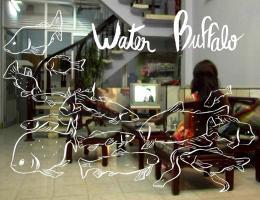
Water Buffalo
| dv | color | 33:0 | France | 2007
This film is build around two stories that interlink. One, a TV soap opera. The other, the story of a young girl in her home of Saigon, watching TV. She is watching the story of a child searching for his father in the Mekong Delta and struggling through the independance war of Indochina. This story crosses the daily life of the yound vietnamese girl that the camera follows. The first story takes the step on the other, and reversly. The film plays with the distance and the overlaping of these two stories, confronting the collective communist (un)consciousness with the contempory daily life of the new emerging urbain life style.
Born in 1972, Christelle Lheureux has Art degrees from University Picardy, Paris VIII, Beaux-Arts and Fresnoy. She lives in Paris and is represented by Blancpain Gallery (Switzerland) and Artericambi Gallery (Italy). She teaches cinema at High School of Art & Design in Geneva and created Third Home Films with Antoine Segovia in 2006. She has created video installations and movies since 1997, which have been presented in contemporary art spaces (Grand Palais, Palais de Tokyo, Musée d`Art Moderne de la Ville de Paris, Espace Paul Ricard in Paris, Castello di Rivoli in Italy, MAMCO in Geneva, Die Appel in Amsterdam, Pusan Biennial & Art Sonje in South Korea, Hiroshima Art Document in Japan...) and in film festivals (Rotterdam International Film Festival, Visions du Réel in Switzerland, FID Marseille, Bangkok Experimental Film Festival, Vancouver International Film Festival... She did residency programs in Asia (Villa Kujoyama in Kyoto, Cite Siam in Bangkok, SOC in Saigon...) and collaborates with other artists, filmmakers, architects and writers, depending on their projects, as Apichatpong Weerasethakul (Thai filmmaker) and Philippe Rahm (architect).
Gaetano Liberti
B.A.T.W.H.N.S.A.Y.H.B.
Experimental doc. | dv | color | 16:25 | Italy | 2009
?I always dream only of houses. Ruined houses to be put in order, new houses to furnish?? G. Truth is the telling of a falsehood. B.A.T.W.H.N.S.A.Y.H.B. ? Blessed Are Those Who Have Not Seen And Yet Have Believed revolves around a first research on the practice of truth and on the action of witnessing. The consistence of the human language, the eloquence of objects and of places, the resistance of things to abandonment, the breaking in of the present. It?s actually impossible to speak the truth, to be a witness form the outside. It?s neither possible to be a witness from within. It seems that this unfeasible position and this tension imbedded in the act of witnessing is to be neither simply within, nor outside, but, paradoxically, both inside and outside at the same time. An abandoned place and dreams are subject to the same rules. Therefore, in these places, it will not matter anymore to speak the truth.
Gaetano Liberti born in Rovereto in 1983 from a Croatian mother and Neapolitan father. In 2004, after finishing the Arts School in Trento, he meets Cesare Ronconi and Mariangela Gualtieri of Cesena?s Teatro Valdoca where he attends the High Training Course for the Actor ? organized by ERT and Teatro Valdoca ? and he begins a personal search on the use of the body, physical movement, voice and sound. Since 2005 he works as an actor, performer and videomaker collaborating with various active realities in the contemporary italian theatrical and artistic panorama (Teatro Valdoca, Motus, Vincenzo Schino, ?) In 2005 he created Brailleway, an identity by which he produces video works as a writer and director, and develops his artistic research in the field of performance, installation and other devices. At the moment part of his investigation focuses on the practice of truth, relics, false statements, intimacy and memory. THEATRE/ACTOR Teatro Valdoca ? Landscape with broken brother (2005); special projects (from 2005). Motus - Pre-paradise sorry now ? Piccoli Episodi di Fascismo Quotidiano ? (video) (2005); A place. [that again] (2006). Vincenzo Schino ? Opera (2006); Operette (2006-2007); Voilà (2008); Limite (2009). GROUP PROJECTS AND COLLABORATIONS PRIMAVERA 2009 ? with Muna Mussie ? for Teatrino Clandestino?s ?Candide? ? Bologna (2009) COLORE - with Sonia Brunelli, Leila Gharib, Luca Mattei, Muna Mussie, Irena Radmanovic - Fies Factory One - Dro (TN) (2008). CROSSING OVER ? with Luca Mattei, Muna Mussie, Irena Radmanovic - Torcito parco danza - Cannole (LE) (2008).
Gaetano Liberti
From the place we don't know
Experimental fiction | dv | color and b&w | 16:18 | Italy | 2010
From the place we don?t know is an unknown chapter part of ?F ? Anthology of failure from a survey on the next desert?. There is no story. The subjects ? which are only subjects ? have no specific or particular experience. They have no past, they are given. The place where they exist is the place where nothing will never happen, and their being in that place defines and generate the failure of the story. Starting from this lack ? having not a story, unable to write it, unable to have a relationship with it, having not received it ? the camera fails its task. The camera is literally outrunned by the untiring running of the subjects without a history, a film without a story. ? I think of two people who run fast, they take a car and I think about a camera left alone, without subjects, outrunned.?
Gaetano Liberti born in Rovereto in 1983. In 2004, after finishing the Arts School in Trento, he meets Cesare Ronconi and Mariangela Gualtieri of Cesena?s Teatro Valdoca where he attends the High Training Course for the Actor, and he begins a personal search on the use of the body, physical movement, voice and sound. Since 2005 he works as an actor, performer and filmaker collaborating with various active realities in the contemporary italian theatrical and artistic panorama (Teatro Valdoca, Motus, Vincenzo Schino, Muna Mussie?) In 2005 he created Brailleway, an identity by which he produces filmworks as a writer and director, and develops his artistic research in the field of performance, installation and other devices. At the moment part of his investigation focuses on the practice of truth, failure, intimacy and the desert.
Gaetano Liberti
SOGLIA I
Experimental doc. | dv | color and b&w | 23:33 | Italy | 2008
THRESHOLD I is the first part of three of the THRESHOLD video cycle about memories recovery. The condition in which I find myself now ? I believe it?s a mind attribute ? is that of forgetfulness, loss, always being at the beginning and having to ?pick up the rope?. To go ? put in order ? have to. To find a score of speeds which allows you to eliminate time and distance could only bring ? for definition, for formula ? to a failure. The threshold from which we observe things has neither location nor duration. The act of remembering always implies a failure and a birth. THRESHOLD I Subjective camera (me) Two places. Two homes. Two dear people. Two grandmothers. The nearness of the objects, things ? the distance from which we look at them. Here time does not exist As though everything is put in place and tidied up ? as happened at the beginning, in that darkness at the entrance ? with that carpet picked up continuously. Than the light which always puts things in place.
Gaetano Liberti born in 1983 from a Croatian mother and Neapolitan father. In 2004, after finishing the Arts School in Trento, he meets Cesare Ronconi and Mariangela Gualtieri of Cesena?s Teatro Valdoca where he attends the High Training Course for the Actor and he begins a personal research on the use of the body, physical movement, voice and sound. In 2005 he sets up BRAILLEWAY and begins a personal artistic investigation using the video media into script and direction. Currently he?s working on the incapacity to reminisce, on the backward movement, on silence and on the concepts of device and eternal. Since 2005 he works as an actor, performer and videomaker collaborating with various active realities in the contemporary italian theatrical and artistic panorama.
Gaetano Liberti
Storm
Experimental film | hdv | color | 20:14 | Italy | 2011
«In this glass air bubbles do not trace any world map.» «It seemed so, at first sight but then?» (from Storm dialogues) FIRST SYNOPSIS Two people (two voices) ? in a hotel room using an unknown language ? are talking about the making of a film. LAST SYNOPSIS Two people (two voices) ? in a hotel room using an unknown language ? are talking about the film that we are watching. They are wondering if a storm could kill. Three ?true images? of three real storms that have been filmed by somebody are interrupting, suspending, breaking up. It feels as if someone is falling down, but the fall is not visible. The characters are trying to reconstruct some kind of truth starting from words, conversations, questions and answers: the language. Their gaze ? in a long subjective shot ? is constantly returning images of crossing over in an endless shifting between the inside and the outside. Storm seems to exist close to something ? a window, a word, the film itself ? neither inside nor outside, constantly swinging between what is happening (or not) inside or outside the room, inside or outside the speech, in the objectivity of the (etymological) rule or in the uncertainty of the insight. (Storm is an unknown chapter part of ?F ? Anthology of failure from a survey on the next desert?.)
Gaetano Liberti. Filmmaker, performer. He collaborates and has worked with various contemporary realities in the Italian and international theatre and the artistic panorama. In 2005 he created Brailleway, an identity by which he produces filmworks, performances, installations and research on new devices. At the moment part of his investigation focuses on the filing systems of the instant, the boundaries of the cinema-device, the remembrance and the frame.
Emanuel Licha
How do we know what we know?
Experimental video | hdv | color | 16:46 | Canada | 2011
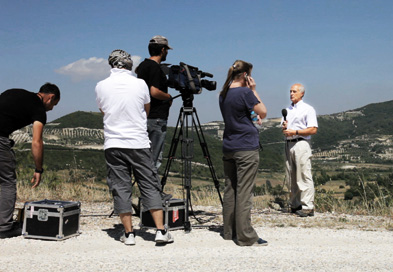
"How Do We Know What We Know?" The journalist in the studio talks to the special correspondent who couldn?t get into the conflict zone that is the topic of the news report he put together out of amateur footage. Just a few years ago, one still heard it said that the media decided when a conflict started: it began the moment journalists arrived on the scene. The rapid growth in the amount of images shot by the protagonists themselves, in combina- tion with their almost immediate broadcast, has modified this equation. Do we still need journalists? Images are the tools and weaponry of warfare. In itself this is not new, but what is undoubtedly new is the way their sources have multiplied. Now, then, is a propitious moment for examining the work of ?classical? journalism, the kind that relies mostly on rarely contested reports from the field by war correspondents. The entire edifice around this media coverage already seems a little out of touch and may soon be left behind: special correspondents, TV crews, satellite trucks, hotels full of war correspondents, news flashes and breaking news, the news show?s dramatic jingle... What is a ?good? image of conflict? Where are they made and how will they be made tomorrow? How can we critique them with other images? Media production and dissemination create systems in which we are caught and to which we contribute more or less voluntarily. What we can try to describe are the details of these systems, sometimes benign in appearance, as a way of thinking about them and perhaps of loosening their grip.
Emanuel Licha is an artist and filmmaker based in Paris. His work focuses on public space and architecture, leading to a reading of the features of the urban landscape as so many social, historical, and political signs. His recent projects investigate the means by which traumatic and violent events are being looked at, and are shown as films and video installations. emanuel-licha.com
Emanuel Licha
Mirages
Video | | color | 19:30 | Canada | 2010
MIRAGES focuses on a mock Iraqi village in the middle of the Mojave desert in California. Conceived and used by the US Army for the training of the troops before being deployed in Iraq, this village was built and is operated by Hollywood professionals. The extras playing the roles of the inhabitants are hired among members of the Iraqi diaspora in the US. This training facility is an optical device. It is used not only to train soldiers for combat, but also as a device to guide their gaze. It familiarizes them with the ?reality? of Iraq, as it is fictionalized by the Army and Hollywood. Soldiers are trained to recognize the enemy, to differentiate the ?good people? from the terrorists and taught that every Iraqi is a potential terrorist. It is also used as a narrative tool to produce a war utopia, through operations of framing and the training of the viewer via the media which are welcome to cover the activities of the facility. The 2-channel video MIRAGES shows images of the camp and interviews of those who work behind the scenes: the set designer, the make up artist, the pyrotechnic artist, as well as actors and extras, all evoking their perception of the reality they`re helping to create. The role played by `war journalists` is also brought up in sequences showing the apparatus helping them to produce the right images.
EMANUEL LICHA lives and works in Paris and Montreal. After earning a Master?s degree in urban geography, he pursued his education in visual arts at Concordia University in Montreal, followed by a post-graduate diploma at the Ecole nationale des beauxarts de Lyon, France, in 2001. His work focuses on public space and architecture, leading to a reading of the features of the urban landscape as so many social, historical, and political signs. His recent projects investigate the means by which traumatic and violent events are being looked at, and are shown as video installations. Recent solo shows include: Why Photogenic?, SBC Gallery, Montreal; War Tourist, LOOP 09, Barcelona; R for Real, galerie Cortex Athletico, Bordeaux; Une autre fête au même instant brille dans Paris, Canadian Cultural Centre, Paris; Agnes & Bruce, Ex-Teresa Arte Actual, México; Nothing Less, Nothing More, Just Transformed, Careof, Milan; In & Out, Galerie B-312, Montreal and YYZ, Toronto. His work has also been exhibited at: NGBK, Berlin; Art Gallery of Ontario, Toronto; Parsons The New School for Design, New York; Musée d?art contemporain de Montréal; University of South Florida Contemporary Art Museum, Tampa; Israeli Center for Digital Art, Holon; MACBA, Barcelona; Fabbrica del Vapore, Milan; Frac Franche-Comté, Besançon; HartWare MedienKunstverein, Dortmund; Witte de With Center for Contemporary Art, Rotterdam; Galerie im Taxispalais, Innsbruck; Tirana Biennial; Steirischer Herbst, Graz; Sarajevo Centre for Contemporary Art; Stiftung Binz39, Zürich; Montreal Biennial; Musée d?art moderne de la Ville de Paris. His work is part of various private and public collections, including: MACBA (Museu d?art contemporani de Barcelona); Musée d?art contemporain de Montréal; Fnac (Fonds national d?art contemporain), Paris; Frac Franche-Comté; University of South Florida Contemporary Art Museum. Emanuel Licha is Assistant Professor at the Ecole nationale supérieure d?architecture de Paris-La Villette. He is a PhD candidate at Goldsmiths College, University of London. www.emanuel-licha.com
Deborah Ligorio
Il Sonno
Video | dv | color and b&w | 6:45 | Italy | 2007
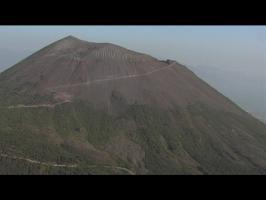
?Il Sonno? features a series of fascinating aerial views of the Mount Vesuvius and the surrounding landscape. The aerial sequences shot in flight during a journey that starts at Naples?s chaotic suburban periphery, located only six miles from the summit of the volcano, and rising to the magnificent crater spiraling along the mountain?s upper flanks. An ascending path that, after over flying the ragged surface of the urban areas, ends up at the top of the volcano. The sound captures fragments of radio broadcasts, speeches, music and interferences ? in a parallel narration that becomes a comment on the flow of images. Ligorio`s multifaceted research on spatial microcosms, here highlights the sprawl of unplanned housing that was illegally constructed after the volcano?s last eruption in 1944, contrasted with the uninhabitable desert of solidified magma that slopes down the other side. The artist?s interest in the transformations of landscape (and her aim to analyze how the landscape can influence habits and lifestyle by being modified by them), with ?Il Sonno? points to the risks taken by human settlements that deliberately ignore the threatening unpredictability of a still-active volcano, which in 79 AD destroyed the neighboring towns of Pompeii and Herculaneum. In ?Il Sonno?, Ligorio envision the human ability to adjust to hostile, even extreme, natural conditions.
Born in Brindisi, Italy, Deborah Ligorio studied in Bologna, Milan and Paris. Among the most recent grants and prices: in 2008 she received the Premio Giovane Arte - 15a Quadriennale di Roma, in 2004 the Special Prize ITALRE-GAI and she was a finalist for the Querini-Furla Price. In 2003 she was in the MAK Schindler Artist and Architects in Residence Program, Los Angeles e received tow prices from the Senatsverwaltung für Wissenschaft Forschung und Kultur, in Berlin. Here work is being exhibited in the contemporary art biennials? MANIFESTA 7 and Sharjah Biennial 8 and in several institutions and art foundations: Signal - Malmö, Bürofriedrich - Berlin, Villa delle Rose - Bologna, DeAppel Filmmuseum - Amsterdam, Foundation Sandretto ReRebaudengo ? Turin, Link project - Bologna, Palazzo della Triennale ? Milan- as well as in public spaces, artist?s studios and web projects. She currently lives and works in Berlin.

Inês Lima
Past Perfect
Experimental video | hdv | color | 23:0 | Portugal | 2019
"Many cities or countries have a distinct malaise. They are places that could be Portugal, so sunk in a painful longing of the past, and where each tension of the present is only the tip of an iceberg that is explained in successive retreats that can go straight until origin of the species, at least. This feeling common to many latitudes is often presented as a diagnosis, a denial of a painful present as opposed to the desire to return to a glorious past." Pedro Penim
Jorge Jácome was born in Viana do Castelo (Portugal) in 1988 and spent is childhood in Macau. He completed is degree in cinema in 2010 at Escola Superior de Teatro e Cinema and in 2016 graduated with ‘felicitations du jury’ from Le Fresnoy - Studio national des Arts Contemporains. His work is based on a strongly intuitive and sensorial process resulting in films made of narrative drifts, unexpected relationships and unusual encounters. His short films have been shown at film festivals in Portugal, Spain, France, Germany, Slovenia, Poland and Israel, and in retrospectives at the New Bedford Whaling Museum, Palais de Tokyo, Maison Européenne de la Photographie, CalArts - California Institute of the Arts and at Georgetown University.
Guillaume Linard-osorio
Os candagos
Art vidéo | dv | color | 8:10 | France | 2010
En 1964, quand Philippe de Broca tourne L?homme de Rio, Brasília est un vaste chantier. Avant d?abriter les hautes classes sociales recherchées, la ville doit composer avec une population indésirable mais indispensable, les constructeurs. Appelés aussi « candagos », cette population immigrée représente 55% de la population active, mais il n?est pas question pour le gouvernement qu?elle s?installe durablement dans le District fédéral. Aussi est-elle logée directement sur le chantier ou dans les villes satellites. La vidéo Os candagos est tirée d?un extrait de L?homme de Rio qui se déroule à Brasilia. Outre la dimension burlesque du film original, ce passage offre un point de vue exceptionnel sur la ville en 1964. La séquence est retravaillée image par image ; Belmondo y est effacé ainsi que toute trace de vie. Par ce geste j?ai voulu fondre les notions de matérialité et d?utopie en un même mouvement pour questionner les enjeux de la réalisation d?un projet tel que Brasilia. Les traces laissées par le processus d?effacement révèlent a fortiori une certaine présence ; celle des acteurs et des ouvriers. Le vent et la poussière règnent. Brasilia, point d?orgue du modernisme, devient ville fantôme.
Né à Montereau (77) en 1978, titulaire d?un Diplôme Supérieur d?Arts Appliqués (Ecole Boulle, Paris, 2002) et d?un DPLG (ENS Malaquais, Paris, 2007), Guillaume Linard-Osorio questionne dans son travail la notion de projet et les outils de représentation du réel. L?acte de déconstruction et l?acte de construction y sont des processus similaires qui permettent de révéler les fondements de notre environnement, la face cachée, l?insondable parfois. Ses compositions, quel que soit le medium utilisé, s?apparentent à des formes architectoniques libérées de toute fonctionnalité ou à des matériaux bruts, en attente de mise en forme. Sa production se situe en quelques sortes dans l?épaisseur même du décor. Partant d?une confrontation du monde des images à celui de la matière, son travail oscille entre documentation du réel et fiction pour finalement s?encrer dans un territoire insolite, à mi-chemin entre mécanique et illusion. S?intéressant davantage aux conditions de l??uvre qu?à l??uvre elle-même, Guillaume Linard-Osorio perçoit le monde physique comme un système d?objets dont les connexions seraient redevenues conceptuelles. Dans son travail l?interprétation vacille, les objets cohabitent avec leur fantôme, le temps est suspendu, étiré, parfois inversé, rien est accompli. Tout reste en puissance.
Fiona Lindron
jacky
Experimental video | dv | color | 3:57 | France | 2008
une femme et sa horde de paparazzis...
Fiona lindron vit et travaille à dijon, elle obtient son dnsep l?ENSA Dijon en 2006. Les vidéos, photographies et installations émanent de rencontres humaines et géographiques. Elles font référence au genre cinématographique mais ne livre aucune explication ni dialogue. Ces images sont le reflet de l?état mental des personnages, de son rapport fantasmé aux rencontres. Elle participe de 1998 à 2002 à des événements collectifs au Point éphémère, au Batofar, à Mainsd?oeuvre Paris(France), à l?emaf festival Osnabrueck (Allemagne). Le travail de fiona lindron a été montré au Wharf centre d?art contemporain Basse Normandie 2007 Hérouville st clair(France), au festival bandits-mages Bourges 2007(France), à Opticafestival 2007 Gijon (Espagne), à Nuitblanche 2007 Paris(France), au Oneminutefestival 2007 Araau(Suisse)... Elle réalise actuellement en résidence à bandits-mages un film fantastique tourné sur un navire dans l?Océan Indien.
Patrick Lindsay
Ego-cycle
Animation | dv | color | 1:50 | France | 2005
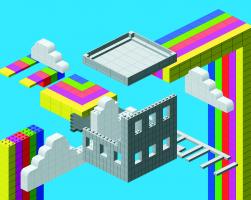
Bricks are gathering and separating to form landscapes in endless motion and recklessly renewed.
Patrick Lindasay is born in Marseille in 1972, he is graduated from the Ensama then Ensad in 1997. Since 1999, he?s back in Marseille, where he works as graphite and typographist. Inspired by his childhood and his games, the game is the main theme of his work. He declines his colourful and funny universe on many supports: posters, illustrations, and animations? From 2001, he is interested in video in real time and takes part in many venues (Friche Belle de Mai, Marseille, Territoire électroniques, Fondation Vasarely, Festival Arborescence, Aix?) In 2005, he creates the Typophone, a sound and typographic experience.
Patrick Lindsay
Trans-cycle
Animation | dv | color | 0:60 | France | 2005
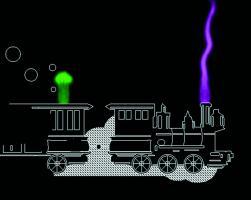
A train passes by in spite of the fream-like smoke that comes out of.
Patrcik Lindsay is born in Marseilles in 1972 and is graduated form the Ensama then the Ensad in 1997. Since 1999, he lives in Marseilles, where he works as a graphic artist and typographer. Inspired by his childhood and his toys, le game is the main theme of his work. He declines his colored universe on many supports: posters, illustrations, animations? Since 2001, he is interested into video in real time and takes part in numerous events (Friche Belle de Mai, Fondation Vasarely, Festival Arborescence, Aix? In 2005, he creates the Typophone, a sound typography experience.
Jeanne Liotta
Eclipse
Experimental film | 16mm | color | 4:0 | USA | 2005
A lunar eclipse event on September 11, 2003, was documented and translated via the light-sensitive medium of Kodachrome film. In the 4th century BC, Aristotle founded The Lyceum, a school for the study of all-natural phenomena pursued without the aid of mathematics, which was considered too perfect for application on the imperfect terrestrial sphere. This film then, in the spirit of...
Jeanne Liotta lives and works in New York City where she makes films and other ephemera, including video and photography, and works on paper and live projection performances. She was represented in the 2006 Whitney Biennial with her 16mm 2005 film "Eclipse". Her work has screened at The New York Film Festival; KunstFilm Biennale, Cologne; The Pacific Film Archives, Berkeley; The Museum of Modern Art; and The Whitney Museum of American Art, among others. She is also a researcher and traveling lecturer for The Joseph Cornell Film Collection at Anthology Film Archives. Her latest project, 'Observando el Cielo' consists largely of 16mm time-lapse recordings of the night sky and encompasses a constellation of mediums in an Emersonian framework at the intersection of art, science, and natural philosophy. She also teaches widely, including at The New School and Pratt Institute in New York City, The San Francisco Art Institute, The Museum School in Boston, and is presently on faculty at the Milton Avery Graduate School for the Arts at Bard College.
Jeanne Liotta
Observando El Cielo
Experimental film | 16mm | color and b&w | 19:0 | USA | 2007
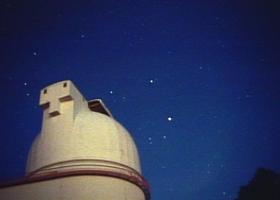
Seven years of celestial field recordings gathered from the chaos of the cosmos and inscribed onto 16mm film from various locations upon this turning tripod Earth. This work is neither a metaphor nor a symbol, but is feeling towards a fact in the midst of perception, which time flows through. Natural VLF radio recordings of the magnetosphere in action allow the universe to speak for itself. The Sublime is Now. Amor Fati!
Jeanne Liotta lives and works in New York City where she makes films and other ephemera. including video, photography, works on paper and live projection performances. Her latest project `Observando El Cielo` takes place in a constellation of mediums investigating the cosmic landscape at a curious intersection of art, science and natural philosophy. She was represented in the 2006 Whitney Biennial with her 16mm film Eclipse and her work been exhibited at The New York Film Festival ; KunstFilm Biennale, Cologne; The Pacific Film Archives, Berkeley; The Museum of Modern Art; and The Whitney Museum of American Art among others. She has been the recipient of awards from The Jerome Foundation, New York State Council on the Arts, and shared the Museum of Contemporary Cinema artist award with Taka Imura in 2006. She also lectures and maintains ongoing research into The Joseph Cornell Film Collection at Anthology Film Archives and teaches widely and variously, including The New School, Pratt Institute, The San Francisco Art Institute, The Museum School, Boston, and is presently on the faculty at the Milton Avery Graduate School for the Arts at Bard College.
Jeanne Liotta
Property
Experimental doc. | 35mm | | 3:45 | USA | 2013
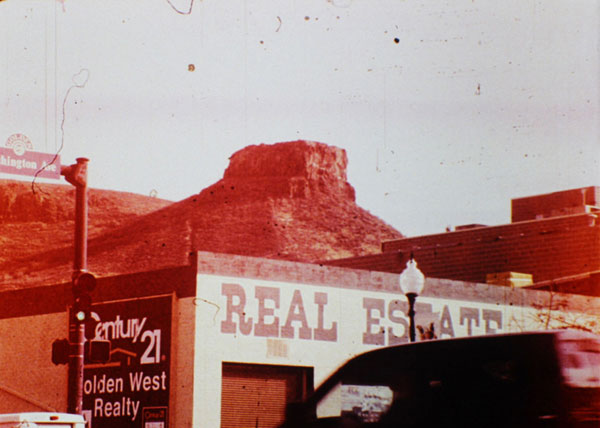
A few simple techniques of the cinema--a direct quotation, a framed location, an actress in costume, a few cuts to the quick--conspire in a compact couple of minutes to produce an image replete with historical and geographic visibility, to wit: an implied and uncontainable expanse of a landscape bought, sold and inhabited. An anti-landscape film and a one-two punch. -JL
Jeanne Liotta was born and raised in New York City. She makes film, video and other cultural ephemera such as works on paper , photographs, projection performances, and intimate installations. Her playful investigations into time, space, and perception itself, are manifested through the observation of various and contingent subjects: the cosmos, landscape, pure abstraction, the body in space, the cinema itself, or knowledge systems such as science and language. Her work encompasses a constellation of mediums often located at a lively intersection of art, science, and natural philosophy, exemplified by her award-winning 16mm films of the night skies Observando El Cielo (2007), Eclipse (2005) as seen in the 2006 Whitney Biennial, and more recently with installations such as Diagram Squared (2013) at Microscope Gallery in Bklyn NY. In 2011 Liotta was voted amongst the top filmmakers of the decade by Film Comment magazine and in 2012 received the Helen Hill Award from the Orphans Film Symposium. Her works have been exhibited at The New York Film Festival, Rotterdam International Film Festival, The Pompidou in Paris, MCA Denver, The Sharjah Biennial, Arthouse Jones Center in Austin, The Exploratorium SF, and the Cornell Astronomical Society at Fuertes Observaotory, amongst numerous others. She also maintains ongoing research into The Joseph Cornell Film Collection at Anthology Film Archives, has worked with public film materials from the New York Public Library for her garden series Firefly Cinema in NYC for over 15 years, and more recently has curated programs of moving image poetics for Counterpath Press in Denver CO. She has taught widely and variously, at The New School, Pratt Institute, The San Francisco Art Institute, The Museum School Boston, and is presently Assistant Professor of Film Studies at The Univ. of Colorado Boulder, as well as film video faculty for the Milton Avery Graduate School of the Arts at Bard College, NY.
Jeanne Liotta
Sutro
Experimental film | dv | color | 3:0 | USA | 2009
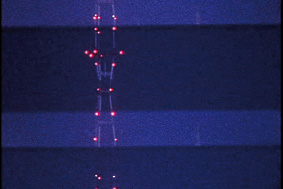
Animated portrait of the eponymous television tower on the hill, guardian of fog and electronic signals in that earthshaking city by the bay San Francisco.
Jeanne Liotta splits her time between her hometown of New York City and Boulder Colorado where she is currently an Assistant Professor of Film.
Tsui-lun Liu
Girls'n guns
Experimental video | dv | color | 4:0 | Taiwan | 2006
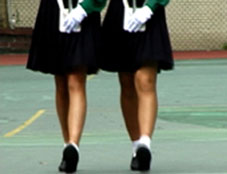
The Girls Honour Guard training is taking place on a Saturday afternoon. Girls gather together, but we hear no giggling. They say: love your rifle, respect the elder members, and fraternize with your sisters. In the late 90s, the artist spent her high school days in a school with the best Girls Honour Guard in Taiwan. The 16 year old girls were convinced that to join the Honour Guard was an experience they would appreciate throughout their lives. To join is voluntary. What the viewer sees in this film is not about blind obedience; the performance is a regimented beauty.
Tsui-lun Liu was born in 1979 in Keelung, Taiwan. She studied history at National Taiwan University and Free University Berlin, and Fine Art at the Dutch Art Institute in the Netherlands, graduating with an MFA in 2006. Her work is shown in numerous screenings and participations internationally. She lives and works in Taipei, Taiwan.