Catalogue > Liste par artiste
Parcourez la liste complète des artistes présentés dans le cadre des Rencontres Internationales depuis 2004. Utilisez le filtre alphabétique pour affiner vos recherches.
Alexander Vaindorf
Catalogue : 2007One particular Sunday | Doc. expérimental | dv | couleur | 14:0 | Suède, Italie | 2006
Alexander Vaindorf
One particular Sunday
Doc. expérimental | dv | couleur | 14:0 | Suède, Italie | 2006
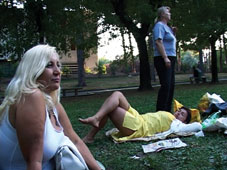
Une fraction de temps dans l'histoire présente de l'Europe unifiée où des personnes ne sont pas seulement exclues, mais aussi assujetties à une "forme moderne d'esclavage". L'illustre, une journée de Dziga Vertov à Moscou, après la Révolution sociale de 1917. Ce film décrit le travail des émigrés de l'ancienne Union Soviétique passant leur seul jour de congé, le dimanche, dans le Parco di Resistenza à Rome.
Né en 1965 à Odessa, f. CCCP, vit et travaille depuis 1987 à Stockholm. Education 2001-2002 Royal Art Academy, Stockholm. Post-Diplômé. 1998-2000 Columbia University, New York. Visual Arts, MFA 1999-2000 Columbia University, New York. Department Sociologie. 1995-1998 Konstfack University, Stockholm, BFA Expositions récentes et scéances: 2006 Exposition solo -Salon of the Museum of Contemporary Art, Belgrade, Exposition Solo - Kunstlerhaus Buchsenhausen Innsbruck. 2005; 10ème Rencontres Internationales Paris/Berlin; 51st Court Métrage Festival Oberhausen. 2004 Venise Architecture Biennale, Russian pavilion; 2003 ?Narration in Swedish Contemporary Art?, Suède; B-fact: Biennale deTirana et Istanbul; `It is hard to touch the real`, Kunstverein Munich, 26ème Festival du Film de Gothenburg.
Catalogue : 2006New romantics | Vidéo expérimentale | dv | couleur | 6:45 | Suède | 2003
Alexander Vaindorf
New romantics
Vidéo expérimentale | dv | couleur | 6:45 | Suède | 2003
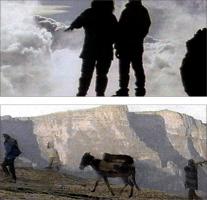
Footage of different remote locations is manipulated to create an experience of one, generic place where two white Westerners, two local guides and a donkey are on an endless search through this ?unknown? landscape.
ALEXANDER VAINDORF Born 1965 in Odessa, f. CCCP, since 1987 lives and works in Stockholm. Education 2001-2002 Royal Art Academy, Stockholm. Postgraduate. 1998-2000 Columbia University, New York. SoA/Visual Arts, Master of Fine Arts. 1999-2000 Columbia University, New York. Sociology Department. 1995-1998 Konstfack University College, Stockholm, BA of Fine Arts.
Cherie Valentina Stocken
Valie Export
Catalogue : 2018Remote… Remote…. | Film expérimental | 16mm | | 10:12 | Autriche | 1973
Valie Export
Remote… Remote….
Film expérimental | 16mm | | 10:12 | Autriche | 1973
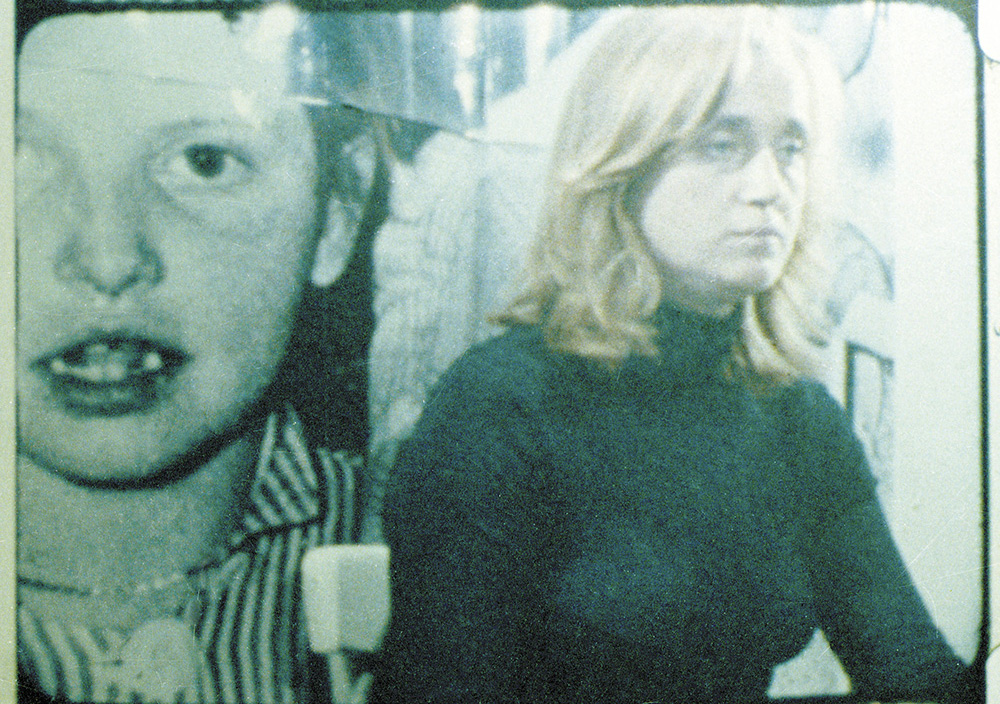
Human behaviour in contrast to machines (animals) is influenced by events in the past, as far back as these experiences may lie. Therefore there exists a psychic paratime parallel to the objective time, where the prayers of anguish and guilt, the inability to win, deformations which rip open the skin, becoming aware of oneself, have their constant effects. I demonstrate something which represents past and present.
VALIE EXPORT, Prof. Dr. h.c.media and performance artist, filmmaker born in Linz, lives and works in Vienna VALIE EXPORT’s artistic work comprises: video environments, digital photography, installation, body performances, feature films, experimental films, documentaries, Expanded Cinema, conceptual photography, body-material interactions, Persona Performances, laser installations, objects, sculptures, texts on contemporary art history and feminism. VALIE EXPORT is one of the most important pioneers on conceptual media art, performance and film. 1967 invention of her artist name VALIE EXPORT: an artistic concept and logo to be written in capital letters only VALIE EXPORT takes part at the documenta 12 2007, and documenta 6, 1977, in Kassel 1985 nomination of EXPORT's feature film “Die Praxis der Liebe”, screenplay and direction, for the Golden Bear at the Berlin International Film Festival Since 1975 curatorial projects, international symposiums, exhibitions and film programmes Her works are in international collections like Centro Pompidou, Paris, Tate Modern, London, Reine Sophia, Madrid, MOMA, New York, MOCA, Los Angeles ect. Since 1968 participation in international exhibitions, for example: Centre Georges Pompidou, Paris; The Museum of Modern Art, New York; Institute of Contemporary Art, London; Venice Biennale, Venezia; documenta, Kassel; MoCA, Los Angeles; Stedelijk Museum, Amsterdam; MUMOK, Vienna; Generali Foundation, Vienna; P.S.1 Contemporary Art Center, New York; Shanghai Art Museum, Shanghai; Palais des Beaux-Arts, Bruxelles; Tate Modern, London; Metropolitan Museum of Art, Seoul, Korea; Metropolitan Museum, New York; ars electronica, Linz/Austria. Screenings at international film and video festivals, for example London Underground Film Festival; London International Film Festival; Filmex, Los Angeles; Berlin International Film Festival as well as film festivals in Cannes, Montréal, Vancouver, San Francisco, Locarno, Hongkong, Sydney, New York, etc.
Catalogue : 2018ASEMIE - die Unfähigkeit, sich durch Mienenspiel ausdrücken zu können (Körper - Material - Interaktion, Body Performance) | Vidéo | 0 | | 6:44 | Autriche | 1973
Valie Export
ASEMIE - die Unfähigkeit, sich durch Mienenspiel ausdrücken zu können (Körper - Material - Interaktion, Body Performance)
Vidéo | 0 | | 6:44 | Autriche | 1973
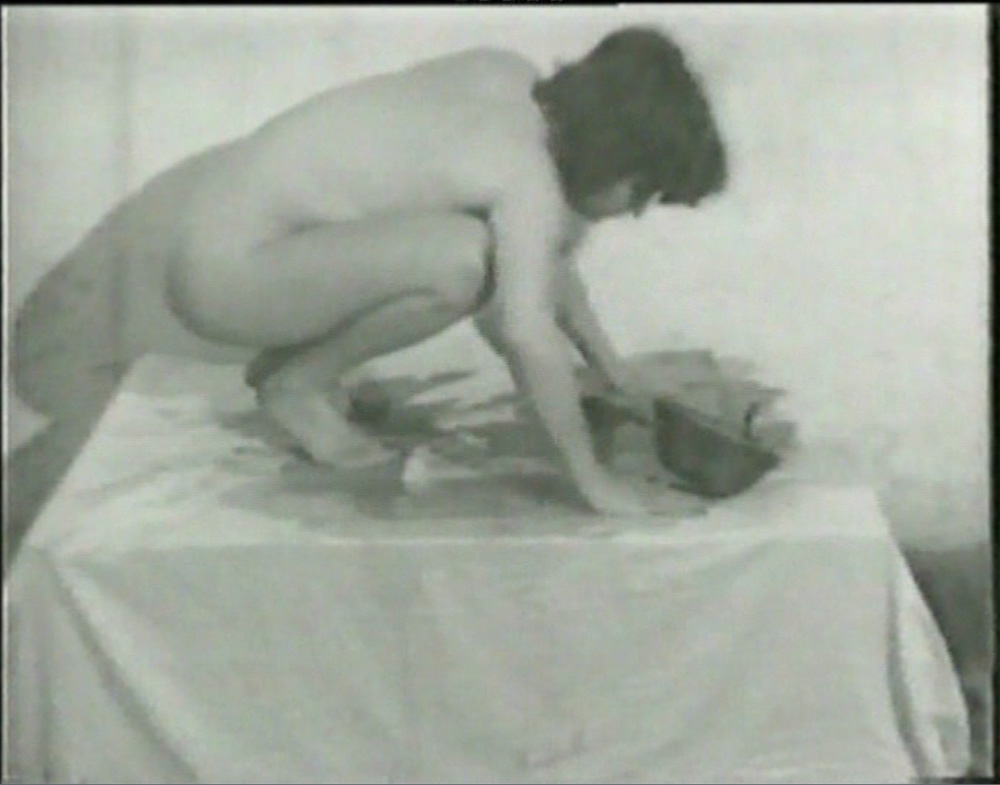
This work documents a ritualistic performance concerned with Ansemia, or the inability to either express or understand gesture. Using symbolic materials - hot wax, a knife, a dead bird - as well as text, VALIE EXPORT investigates human expression, and how communication can fail. "I had used my mouth to take the knife from the podium, holding it in my mouth, (the knife is language, the naming of things, its separates the subject from the object) using it to cut."
VALIE EXPORT, Prof. Dr. h.c.media and performance artist, filmmaker born in Linz, lives and works in Vienna VALIE EXPORT’s artistic work comprises: video environments, digital photography, installation, body performances, feature films, experimental films, documentaries, Expanded Cinema, conceptual photography, body-material interactions, Persona Performances, laser installations, objects, sculptures, texts on contemporary art history and feminism. VALIE EXPORT is one of the most important pioneers on conceptual media art, performance and film. 1967 invention of her artist name VALIE EXPORT: an artistic concept and logo to be written in capital letters only VALIE EXPORT takes part at the documenta 12 2007, and documenta 6, 1977, in Kassel 1985 nomination of EXPORT's feature film “Die Praxis der Liebe”, screenplay and direction, for the Golden Bear at the Berlin International Film Festival Since 1975 curatorial projects, international symposiums, exhibitions and film programmes Her works are in international collections like Centro Pompidou, Paris, Tate Modern, London, Reine Sophia, Madrid, MOMA, New York, MOCA, Los Angeles ect. Since 1968 participation in international exhibitions, for example: Centre Georges Pompidou, Paris; The Museum of Modern Art, New York; Institute of Contemporary Art, London; Venice Biennale, Venezia; documenta, Kassel; MoCA, Los Angeles; Stedelijk Museum, Amsterdam; MUMOK, Vienna; Generali Foundation, Vienna; P.S.1 Contemporary Art Center, New York; Shanghai Art Museum, Shanghai; Palais des Beaux-Arts, Bruxelles; Tate Modern, London; Metropolitan Museum of Art, Seoul, Korea; Metropolitan Museum, New York; ars electronica, Linz/Austria. Screenings at international film and video festivals, for example London Underground Film Festival; London International Film Festival; Filmex, Los Angeles; Berlin International Film Festival as well as film festivals in Cannes, Montréal, Vancouver, San Francisco, Locarno, Hongkong, Sydney, New York, etc.
Catalogue : 2018Raumsehen und Raumhören | Vidéo | mov | | 6:21 | Autriche | 1974
Valie Export
Raumsehen und Raumhören
Vidéo | mov | | 6:21 | Autriche | 1974
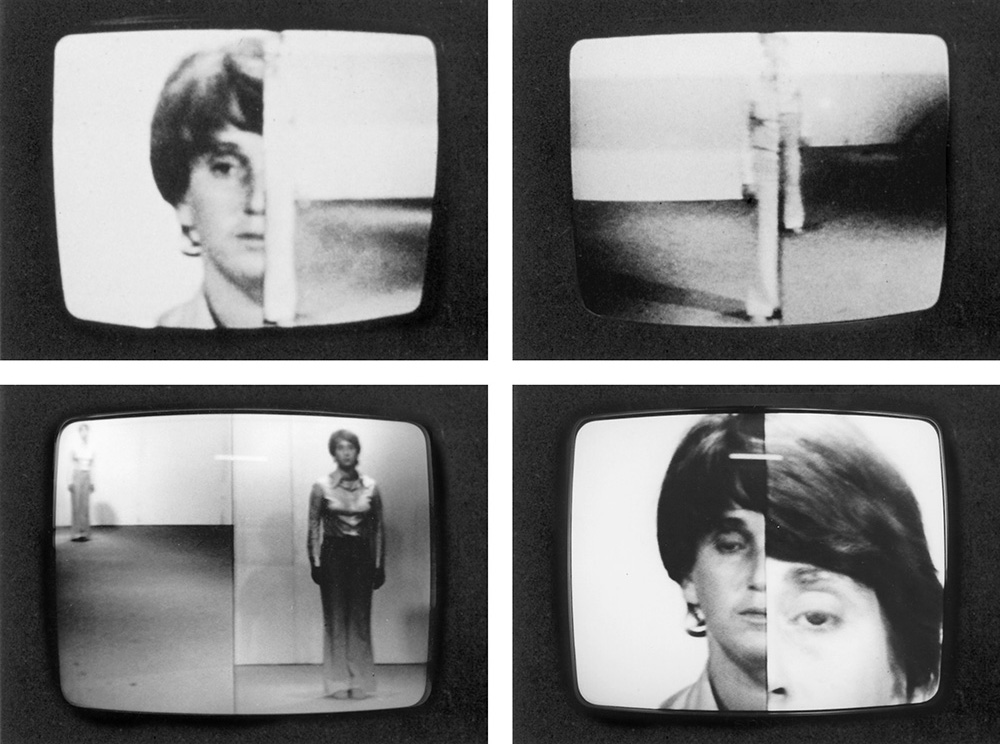
Like in “Split Reality”, the personality conveyed by a medium in this performance tape appears to be schizophrenic. Two video cameras and a mixer make possible a closed-circuit action that demonstrates not only the differences in the way the viewers perceive a person who is physically present in the room and simultaneously electronically reproduced, but also how the image is manipulated by its electronic conveyance. The camera zooms in and out, subjecting the performer's monitor likeness to permanent alteration. Specific synthetic sounds are linked to the picture: optically close = loud sound and rapid tone repetition, optically remote = quiet sound and slow tone repetition. The work is arranged in 6 parts: 1. space position, 2. split images, 3. space position composition, 4. split image composition, 5. body, 6. body composition.
VALIE EXPORT, Prof. Dr. h.c.media and performance artist, filmmaker born in Linz, lives and works in Vienna VALIE EXPORT’s artistic work comprises: video environments, digital photography, installation, body performances, feature films, experimental films, documentaries, Expanded Cinema, conceptual photography, body-material interactions, Persona Performances, laser installations, objects, sculptures, texts on contemporary art history and feminism. VALIE EXPORT is one of the most important pioneers on conceptual media art, performance and film. 1967 invention of her artist name VALIE EXPORT: an artistic concept and logo to be written in capital letters only VALIE EXPORT takes part at the documenta 12 2007, and documenta 6, 1977, in Kassel 1985 nomination of EXPORT's feature film “Die Praxis der Liebe”, screenplay and direction, for the Golden Bear at the Berlin International Film Festival Since 1975 curatorial projects, international symposiums, exhibitions and film programmes Her works are in international collections like Centro Pompidou, Paris, Tate Modern, London, Reine Sophia, Madrid, MOMA, New York, MOCA, Los Angeles ect. Since 1968 participation in international exhibitions, for example: Centre Georges Pompidou, Paris; The Museum of Modern Art, New York; Institute of Contemporary Art, London; Venice Biennale, Venezia; documenta, Kassel; MoCA, Los Angeles; Stedelijk Museum, Amsterdam; MUMOK, Vienna; Generali Foundation, Vienna; P.S.1 Contemporary Art Center, New York; Shanghai Art Museum, Shanghai; Palais des Beaux-Arts, Bruxelles; Tate Modern, London; Metropolitan Museum of Art, Seoul, Korea; Metropolitan Museum, New York; ars electronica, Linz/Austria. Screenings at international film and video festivals, for example London Underground Film Festival; London International Film Festival; Filmex, Los Angeles; Berlin International Film Festival as well as film festivals in Cannes, Montréal, Vancouver, San Francisco, Locarno, Hongkong, Sydney, New York, etc.
Catalogue : 2018Bewegte Bilder über sich bewegende Personen | Film expérimental | 16mm | noir et blanc | 4:44 | Autriche | 1973
Valie Export
Bewegte Bilder über sich bewegende Personen
Film expérimental | 16mm | noir et blanc | 4:44 | Autriche | 1973
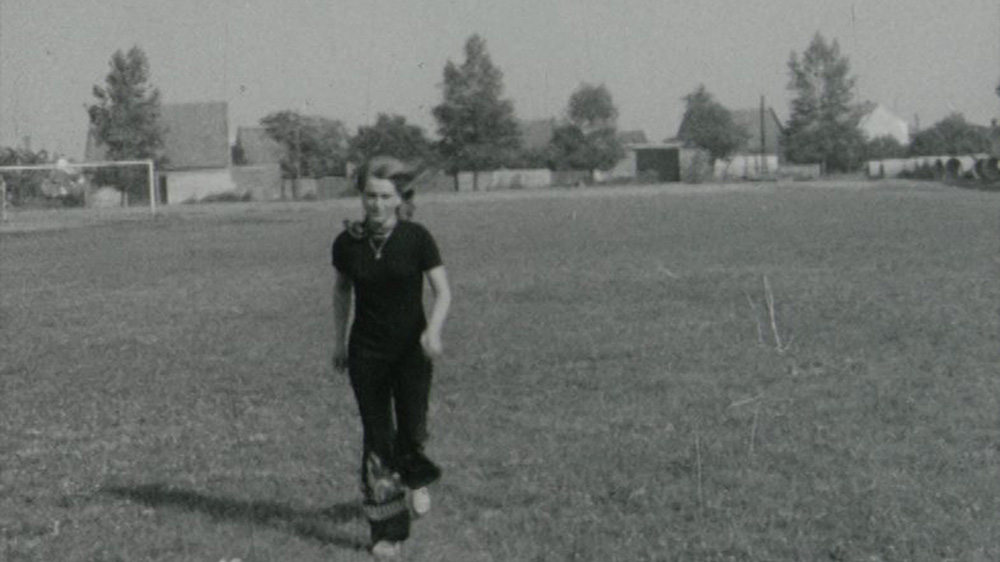
This 16mm film reflects EXPORT`s dialogue with the medium film: "Back then I was occupied with trying to find out how you can use this small machine to do things with various formal, artistic or performance-like sequences on celluloid: cross-fading, rewinding and starting over again, not having any clear pictures. In this project I was interested in moving towards the camera and moving away again."
VALIE EXPORT, Prof. Dr. h.c.media and performance artist, filmmaker born in Linz, lives and works in Vienna VALIE EXPORT’s artistic work comprises: video environments, digital photography, installation, body performances, feature films, experimental films, documentaries, Expanded Cinema, conceptual photography, body-material interactions, Persona Performances, laser installations, objects, sculptures, texts on contemporary art history and feminism. VALIE EXPORT is one of the most important pioneers on conceptual media art, performance and film. 1967 invention of her artist name VALIE EXPORT: an artistic concept and logo to be written in capital letters only VALIE EXPORT takes part at the documenta 12 2007, and documenta 6, 1977, in Kassel 1985 nomination of EXPORT's feature film “Die Praxis der Liebe”, screenplay and direction, for the Golden Bear at the Berlin International Film Festival Since 1975 curatorial projects, international symposiums, exhibitions and film programmes Her works are in international collections like Centro Pompidou, Paris, Tate Modern, London, Reine Sophia, Madrid, MOMA, New York, MOCA, Los Angeles ect. Since 1968 participation in international exhibitions, for example: Centre Georges Pompidou, Paris; The Museum of Modern Art, New York; Institute of Contemporary Art, London; Venice Biennale, Venezia; documenta, Kassel; MoCA, Los Angeles; Stedelijk Museum, Amsterdam; MUMOK, Vienna; Generali Foundation, Vienna; P.S.1 Contemporary Art Center, New York; Shanghai Art Museum, Shanghai; Palais des Beaux-Arts, Bruxelles; Tate Modern, London; Metropolitan Museum of Art, Seoul, Korea; Metropolitan Museum, New York; ars electronica, Linz/Austria. Screenings at international film and video festivals, for example London Underground Film Festival; London International Film Festival; Filmex, Los Angeles; Berlin International Film Festival as well as film festivals in Cannes, Montréal, Vancouver, San Francisco, Locarno, Hongkong, Sydney, New York, etc.
Catalogue : 2018Sehtext: Fingergedicht | 0 | 0 | | 1:46 | Autriche | 1968
Valie Export
Sehtext: Fingergedicht
0 | 0 | | 1:46 | Autriche | 1968
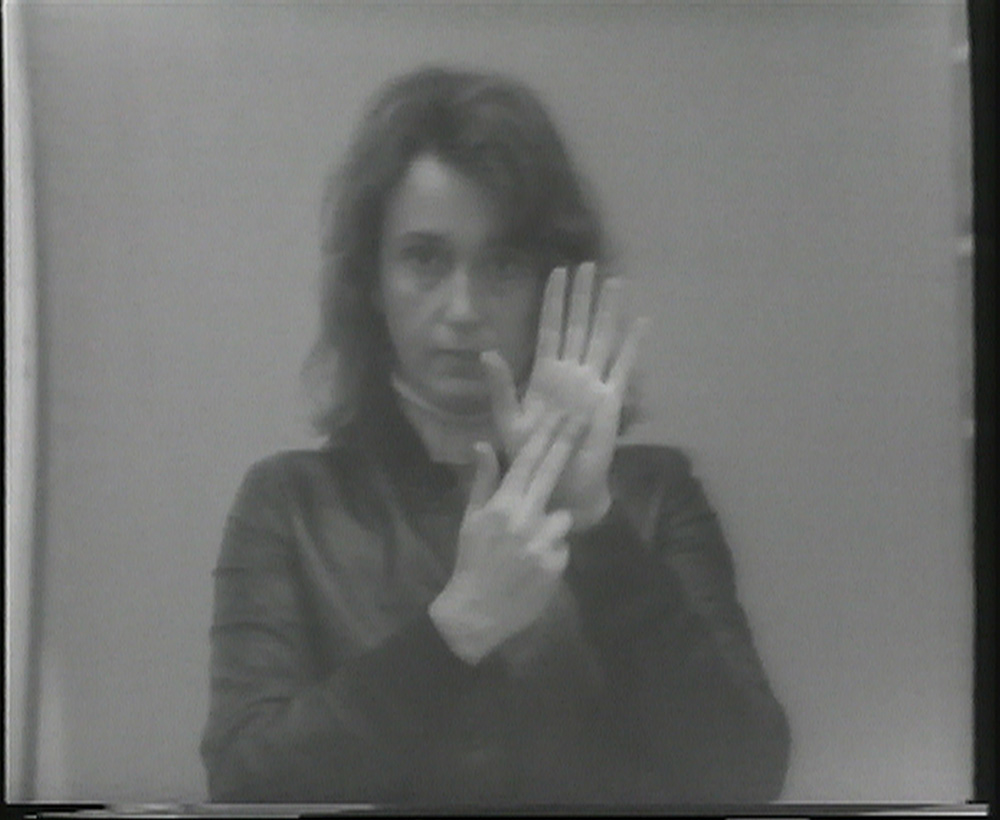
In “Sehtext: Fingergedicht” (Visual Text: Finger Poem) VALIE EXPORT communicates with her fingers. Sign language, as an elision of word and gesture, is investigated in this performance-to-camera work. The artist writes: "The body as carrier of information, in order to convey both spiritual and physical contents, is the reflected image of the internal/psychological and of the external/institutional reality."
VALIE EXPORT, Prof. Dr. h.c.media and performance artist, filmmaker born in Linz, lives and works in Vienna VALIE EXPORT’s artistic work comprises: video environments, digital photography, installation, body performances, feature films, experimental films, documentaries, Expanded Cinema, conceptual photography, body-material interactions, Persona Performances, laser installations, objects, sculptures, texts on contemporary art history and feminism. VALIE EXPORT is one of the most important pioneers on conceptual media art, performance and film. 1967 invention of her artist name VALIE EXPORT: an artistic concept and logo to be written in capital letters only VALIE EXPORT takes part at the documenta 12 2007, and documenta 6, 1977, in Kassel 1985 nomination of EXPORT's feature film “Die Praxis der Liebe”, screenplay and direction, for the Golden Bear at the Berlin International Film Festival Since 1975 curatorial projects, international symposiums, exhibitions and film programmes Her works are in international collections like Centro Pompidou, Paris, Tate Modern, London, Reine Sophia, Madrid, MOMA, New York, MOCA, Los Angeles ect. Since 1968 participation in international exhibitions, for example: Centre Georges Pompidou, Paris; The Museum of Modern Art, New York; Institute of Contemporary Art, London; Venice Biennale, Venezia; documenta, Kassel; MoCA, Los Angeles; Stedelijk Museum, Amsterdam; MUMOK, Vienna; Generali Foundation, Vienna; P.S.1 Contemporary Art Center, New York; Shanghai Art Museum, Shanghai; Palais des Beaux-Arts, Bruxelles; Tate Modern, London; Metropolitan Museum of Art, Seoul, Korea; Metropolitan Museum, New York; ars electronica, Linz/Austria. Screenings at international film and video festivals, for example London Underground Film Festival; London International Film Festival; Filmex, Los Angeles; Berlin International Film Festival as well as film festivals in Cannes, Montréal, Vancouver, San Francisco, Locarno, Hongkong, Sydney, New York, etc.
Catalogue : 2018Anagrammatische Komposition mit Würfelspiel (nach W.A. Mozart, Klavier) für Sopransaxophon von | Vidéo | 0 | couleur | 5:48 | Autriche | 2010
Valie Export
Anagrammatische Komposition mit Würfelspiel (nach W.A. Mozart, Klavier) für Sopransaxophon von
Vidéo | 0 | couleur | 5:48 | Autriche | 2010
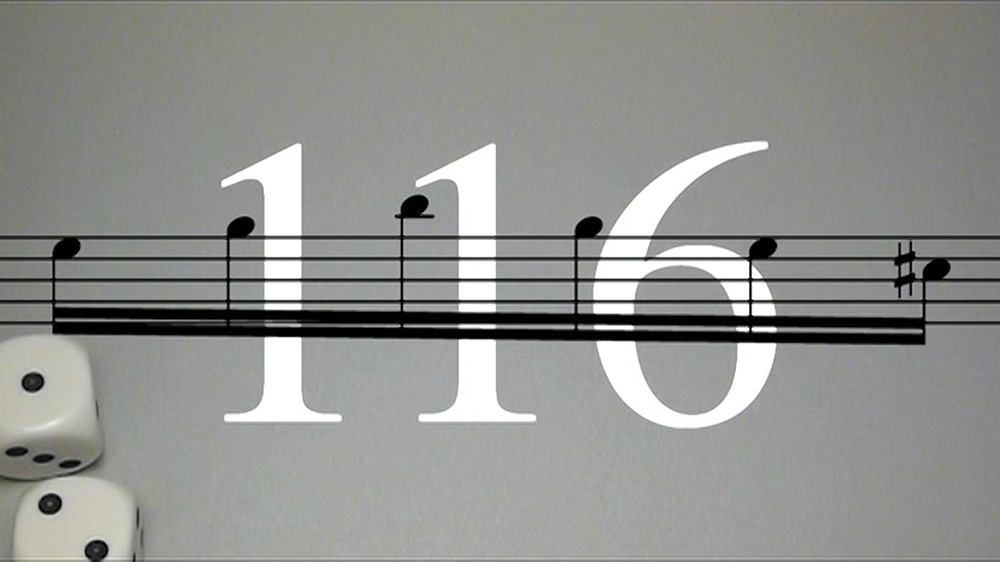
This video was made for a commission EXPORT received from the Theater an der Wien opera house for an installation on the occasion of the Mozart Year 2010. It shows in short intervals various bars of music, behind each one changing number combinations - 13, 167, 123, 16, 4 etc. - and two dice that roll into the picture displaying various numbers of dots. EXPORT's hand can be seen now and then, reaching for the dice. The images are accompanied by melodies played on a soprano saxophone. The springboard for this video work is a manuscript attributed to Wolfgang Amadeus Mozart titled "Anleitung zum Componieren von Walzern vermittels zweier Würfel" ("Instructions for Composing Waltzes Using Two Dice"), published posthumously in 1793. Mozart's interactive composition piece is based on a system for a musical dice game invented in the mid-18th century which is the oldest known method for combining numbers with the help of a random generator, in this case, dice. In this video, EXPORT summons connections to earlier photographic works and installations in which dice and randomness play a central role.
VALIE EXPORT, Prof. Dr. h.c.media and performance artist, filmmaker born in Linz, lives and works in Vienna VALIE EXPORT’s artistic work comprises: video environments, digital photography, installation, body performances, feature films, experimental films, documentaries, Expanded Cinema, conceptual photography, body-material interactions, Persona Performances, laser installations, objects, sculptures, texts on contemporary art history and feminism. VALIE EXPORT is one of the most important pioneers on conceptual media art, performance and film. 1967 invention of her artist name VALIE EXPORT: an artistic concept and logo to be written in capital letters only VALIE EXPORT takes part at the documenta 12 2007, and documenta 6, 1977, in Kassel 1985 nomination of EXPORT's feature film “Die Praxis der Liebe”, screenplay and direction, for the Golden Bear at the Berlin International Film Festival Since 1975 curatorial projects, international symposiums, exhibitions and film programmes Her works are in international collections like Centro Pompidou, Paris, Tate Modern, London, Reine Sophia, Madrid, MOMA, New York, MOCA, Los Angeles ect. Since 1968 participation in international exhibitions, for example: Centre Georges Pompidou, Paris; The Museum of Modern Art, New York; Institute of Contemporary Art, London; Venice Biennale, Venezia; documenta, Kassel; MoCA, Los Angeles; Stedelijk Museum, Amsterdam; MUMOK, Vienna; Generali Foundation, Vienna; P.S.1 Contemporary Art Center, New York; Shanghai Art Museum, Shanghai; Palais des Beaux-Arts, Bruxelles; Tate Modern, London; Metropolitan Museum of Art, Seoul, Korea; Metropolitan Museum, New York; ars electronica, Linz/Austria. Screenings at international film and video festivals, for example London Underground Film Festival; London International Film Festival; Filmex, Los Angeles; Berlin International Film Festival as well as film festivals in Cannes, Montréal, Vancouver, San Francisco, Locarno, Hongkong, Sydney, New York, etc.
Catalogue : 2018Hauchtext : Liebesgedicht | 0 | 0 | | 2:23 | Autriche | 1970
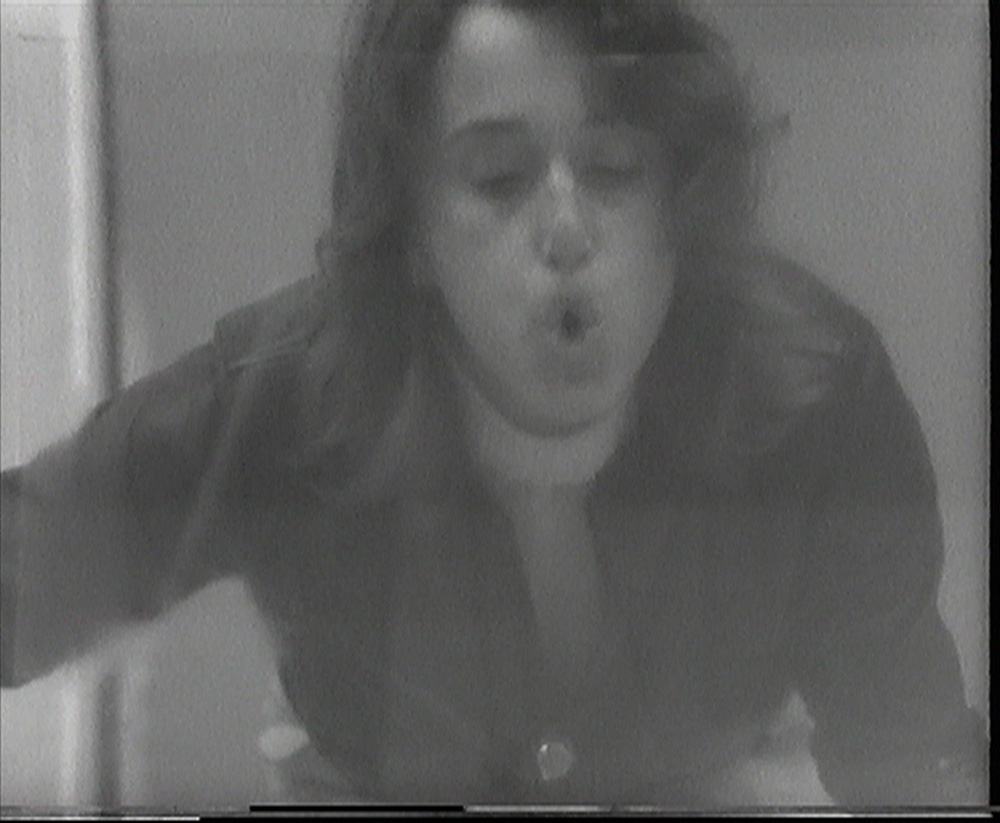
Valie Export
Hauchtext : Liebesgedicht
0 | 0 | | 2:23 | Autriche | 1970
In this video poem VALIE EXPORT speaks to the screen; the body-language action involving her loud, sensual, breathy voice is the main event, while the semantic content as "love-poem" is deliberately more of an afterthought. The focus is instead on the moment of not saying something out loud, of pre-linguistic expression. Only when the viewer follows step-by-step the letters breathed onto the glass pane as well as the performer`s head movements does a sentence become decipherable, which says: "I love you".
VALIE EXPORT, Prof. Dr. h.c.media and performance artist, filmmaker born in Linz, lives and works in Vienna VALIE EXPORT’s artistic work comprises: video environments, digital photography, installation, body performances, feature films, experimental films, documentaries, Expanded Cinema, conceptual photography, body-material interactions, Persona Performances, laser installations, objects, sculptures, texts on contemporary art history and feminism. VALIE EXPORT is one of the most important pioneers on conceptual media art, performance and film. 1967 invention of her artist name VALIE EXPORT: an artistic concept and logo to be written in capital letters only VALIE EXPORT takes part at the documenta 12 2007, and documenta 6, 1977, in Kassel 1985 nomination of EXPORT's feature film “Die Praxis der Liebe”, screenplay and direction, for the Golden Bear at the Berlin International Film Festival Since 1975 curatorial projects, international symposiums, exhibitions and film programmes Her works are in international collections like Centro Pompidou, Paris, Tate Modern, London, Reine Sophia, Madrid, MOMA, New York, MOCA, Los Angeles ect. Since 1968 participation in international exhibitions, for example: Centre Georges Pompidou, Paris; The Museum of Modern Art, New York; Institute of Contemporary Art, London; Venice Biennale, Venezia; documenta, Kassel; MoCA, Los Angeles; Stedelijk Museum, Amsterdam; MUMOK, Vienna; Generali Foundation, Vienna; P.S.1 Contemporary Art Center, New York; Shanghai Art Museum, Shanghai; Palais des Beaux-Arts, Bruxelles; Tate Modern, London; Metropolitan Museum of Art, Seoul, Korea; Metropolitan Museum, New York; ars electronica, Linz/Austria. Screenings at international film and video festivals, for example London Underground Film Festival; London International Film Festival; Filmex, Los Angeles; Berlin International Film Festival as well as film festivals in Cannes, Montréal, Vancouver, San Francisco, Locarno, Hongkong, Sydney, New York, etc.
Catalogue : 2018The voice as performance, act and body. THE PAIN OF UTOPIA. DER SCHMERZ DER UTOPIE | Vidéo | 0 | | 11:34 | Autriche | 2007
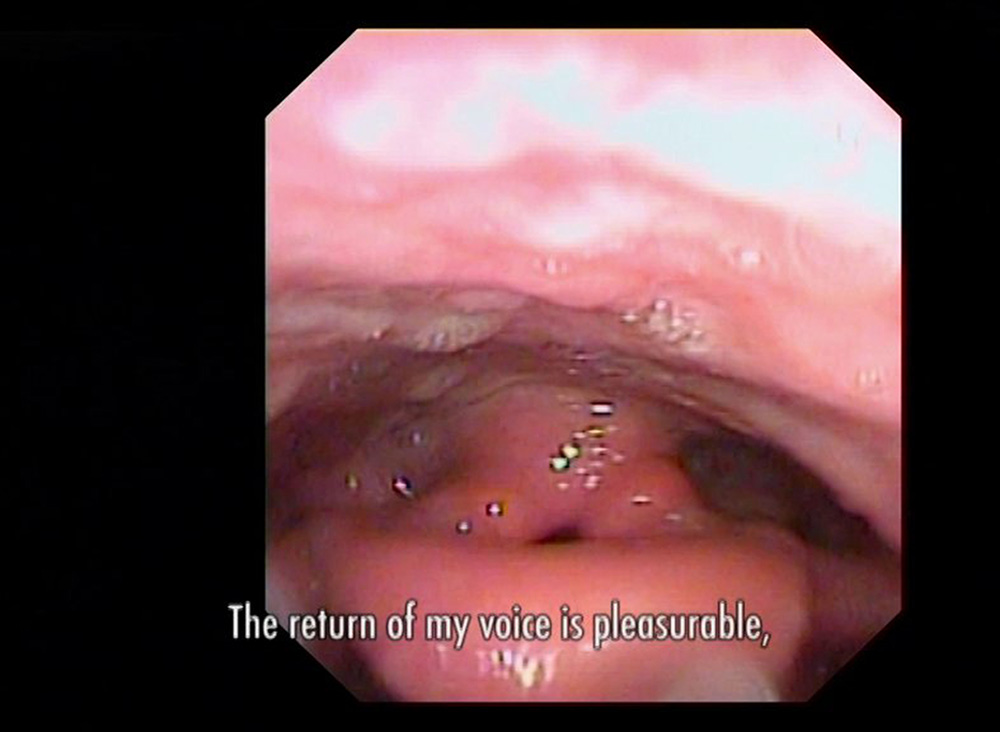
Valie Export
The voice as performance, act and body. THE PAIN OF UTOPIA. DER SCHMERZ DER UTOPIE
Vidéo | 0 | | 11:34 | Autriche | 2007
At the 2007 Venice Biennale, I did a 12-minute performance in the Arsenale that showed the vocal folds of my throat while I was speaking. It was called “the voice as performance, act and body”. After a camera was inserted through my nose, the image was shown on large monitors so that you could see my vocal folds in the process of speaking. It was my own text that I read in German, a poetic text about the origin of language. “What is the anatomy of language?” I asked. My answer was just as much a body performance as any of my earlier works. Whenever we think of the body as a vessel for artistic ideas, we somehow always focus on the surface of the body. But the truth is that there is no surface of the body independent of its interior. It’s obvious that the outside of the body is always connected to the inside, to thought processes and to an internal anatomy. (VALIE EXPORT)
VALIE EXPORT, Prof. Dr. h.c.media and performance artist, filmmaker born in Linz, lives and works in Vienna VALIE EXPORT’s artistic work comprises: video environments, digital photography, installation, body performances, feature films, experimental films, documentaries, Expanded Cinema, conceptual photography, body-material interactions, Persona Performances, laser installations, objects, sculptures, texts on contemporary art history and feminism. VALIE EXPORT is one of the most important pioneers on conceptual media art, performance and film. 1967 invention of her artist name VALIE EXPORT: an artistic concept and logo to be written in capital letters only VALIE EXPORT takes part at the documenta 12 2007, and documenta 6, 1977, in Kassel 1985 nomination of EXPORT's feature film “Die Praxis der Liebe”, screenplay and direction, for the Golden Bear at the Berlin International Film Festival Since 1975 curatorial projects, international symposiums, exhibitions and film programmes Her works are in international collections like Centro Pompidou, Paris, Tate Modern, London, Reine Sophia, Madrid, MOMA, New York, MOCA, Los Angeles ect. Since 1968 participation in international exhibitions, for example: Centre Georges Pompidou, Paris; The Museum of Modern Art, New York; Institute of Contemporary Art, London; Venice Biennale, Venezia; documenta, Kassel; MoCA, Los Angeles; Stedelijk Museum, Amsterdam; MUMOK, Vienna; Generali Foundation, Vienna; P.S.1 Contemporary Art Center, New York; Shanghai Art Museum, Shanghai; Palais des Beaux-Arts, Bruxelles; Tate Modern, London; Metropolitan Museum of Art, Seoul, Korea; Metropolitan Museum, New York; ars electronica, Linz/Austria. Screenings at international film and video festivals, for example London Underground Film Festival; London International Film Festival; Filmex, Los Angeles; Berlin International Film Festival as well as film festivals in Cannes, Montréal, Vancouver, San Francisco, Locarno, Hongkong, Sydney, New York, etc.
Catalogue : 2018I turn over the pictures of my voice in my head | Vidéo | 0 | | 11:39 | Autriche | 2008
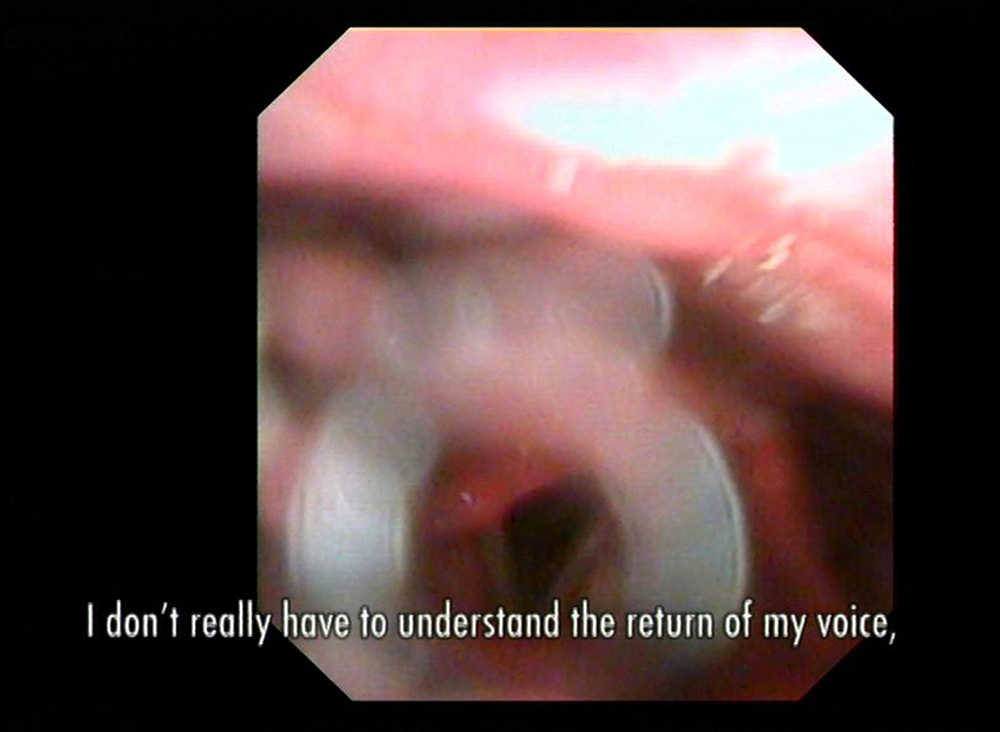
Valie Export
I turn over the pictures of my voice in my head
Vidéo | 0 | | 11:39 | Autriche | 2008
The rebellious voice, the split voice. The voice is suture, the voice is seam, the voice is cut, the voice is tear, the voice is my identity, it is not body or spirit, it is not language or image, it is sign, it is a sign of the images, it is a sign of sensuality. It is a sign of symbols, it is boundary. It speaks the “Split Body”, it is hidden in the clothing of the body, it is always somewhere else. The breath of life is its source. (VALIE EXPORT: Segment from the spoken text)
VALIE EXPORT, Prof. Dr. h.c.media and performance artist, filmmaker born in Linz, lives and works in Vienna VALIE EXPORT’s artistic work comprises: video environments, digital photography, installation, body performances, feature films, experimental films, documentaries, Expanded Cinema, conceptual photography, body-material interactions, Persona Performances, laser installations, objects, sculptures, texts on contemporary art history and feminism. VALIE EXPORT is one of the most important pioneers on conceptual media art, performance and film. 1967 invention of her artist name VALIE EXPORT: an artistic concept and logo to be written in capital letters only VALIE EXPORT takes part at the documenta 12 2007, and documenta 6, 1977, in Kassel 1985 nomination of EXPORT's feature film “Die Praxis der Liebe”, screenplay and direction, for the Golden Bear at the Berlin International Film Festival Since 1975 curatorial projects, international symposiums, exhibitions and film programmes Her works are in international collections like Centro Pompidou, Paris, Tate Modern, London, Reine Sophia, Madrid, MOMA, New York, MOCA, Los Angeles ect. Since 1968 participation in international exhibitions, for example: Centre Georges Pompidou, Paris; The Museum of Modern Art, New York; Institute of Contemporary Art, London; Venice Biennale, Venezia; documenta, Kassel; MoCA, Los Angeles; Stedelijk Museum, Amsterdam; MUMOK, Vienna; Generali Foundation, Vienna; P.S.1 Contemporary Art Center, New York; Shanghai Art Museum, Shanghai; Palais des Beaux-Arts, Bruxelles; Tate Modern, London; Metropolitan Museum of Art, Seoul, Korea; Metropolitan Museum, New York; ars electronica, Linz/Austria. Screenings at international film and video festivals, for example London Underground Film Festival; London International Film Festival; Filmex, Los Angeles; Berlin International Film Festival as well as film festivals in Cannes, Montréal, Vancouver, San Francisco, Locarno, Hongkong, Sydney, New York, etc.
Catalogue : 2018TAPP und TASTKINO, expanded cinema (Tapp und Tastkino, Straßenfilm, Mobiler Film, Körperaktion, social action, TV Produktion) | Vidéo | 0 | | 1:11 | Autriche | 1969
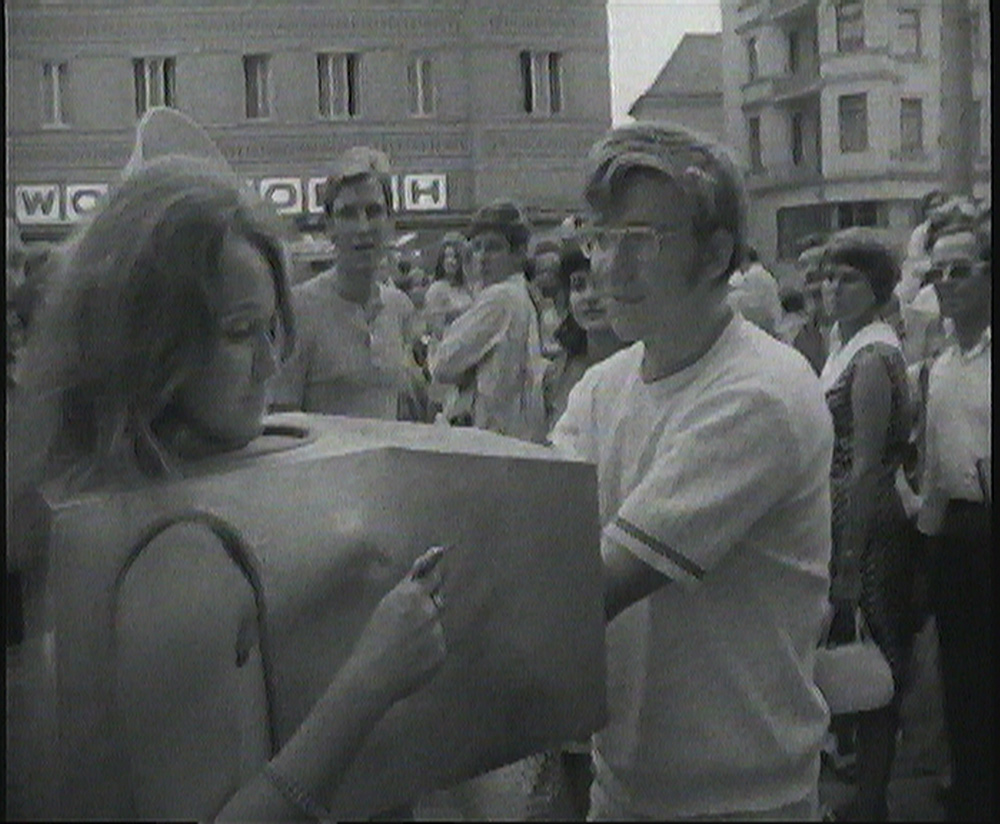
Valie Export
TAPP und TASTKINO, expanded cinema (Tapp und Tastkino, Straßenfilm, Mobiler Film, Körperaktion, social action, TV Produktion)
Vidéo | 0 | | 1:11 | Autriche | 1969
As usual, the film is “shown” in the dark. But the cinema has shrunk somewhat – only two hands fit inside it. To see (i.e. feel, touch) the film, the viewer (user) has to stretch his hands through the entrance to the cinema. At last, the curtain which formerly rose only for the eyes now rises for both hands. The tactile reception is the opposite of the deceit of voyeurism. For as long as the citizen is satisfied with the reproduced copy of sexual freedom, the state is spared the sexual revolution. “Tap and Touch Cinema” is an example of how re-interpretation can activate the public. (VALIE EXPORT) This outdoor action on Munich's Stachus square translates the concept of expanded cinema and the cinema's fairground roots into the “first immediate women’s film”, as the artist describes her “Tap and Touch Cinema”. “Public” accessibility – restricted to 30 seconds per person – is noisily proclaimed by Peter Weibel. A direct demonstration of cinema as a projection space for male fantasies, this still ironic transgression of the border between art and life is an early indication of VALIE EXPORT’s often risky, but always resolute, deployment of her own body in later works.
VALIE EXPORT, Prof. Dr. h.c.media and performance artist, filmmaker born in Linz, lives and works in Vienna VALIE EXPORT’s artistic work comprises: video environments, digital photography, installation, body performances, feature films, experimental films, documentaries, Expanded Cinema, conceptual photography, body-material interactions, Persona Performances, laser installations, objects, sculptures, texts on contemporary art history and feminism. VALIE EXPORT is one of the most important pioneers on conceptual media art, performance and film. 1967 invention of her artist name VALIE EXPORT: an artistic concept and logo to be written in capital letters only VALIE EXPORT takes part at the documenta 12 2007, and documenta 6, 1977, in Kassel 1985 nomination of EXPORT's feature film “Die Praxis der Liebe”, screenplay and direction, for the Golden Bear at the Berlin International Film Festival Since 1975 curatorial projects, international symposiums, exhibitions and film programmes Her works are in international collections like Centro Pompidou, Paris, Tate Modern, London, Reine Sophia, Madrid, MOMA, New York, MOCA, Los Angeles ect. Since 1968 participation in international exhibitions, for example: Centre Georges Pompidou, Paris; The Museum of Modern Art, New York; Institute of Contemporary Art, London; Venice Biennale, Venezia; documenta, Kassel; MoCA, Los Angeles; Stedelijk Museum, Amsterdam; MUMOK, Vienna; Generali Foundation, Vienna; P.S.1 Contemporary Art Center, New York; Shanghai Art Museum, Shanghai; Palais des Beaux-Arts, Bruxelles; Tate Modern, London; Metropolitan Museum of Art, Seoul, Korea; Metropolitan Museum, New York; ars electronica, Linz/Austria. Screenings at international film and video festivals, for example London Underground Film Festival; London International Film Festival; Filmex, Los Angeles; Berlin International Film Festival as well as film festivals in Cannes, Montréal, Vancouver, San Francisco, Locarno, Hongkong, Sydney, New York, etc.
Catalogue : 2018Syntagma | Film expérimental | 16mm | | 17:46 | Autriche | 1983
Valie Export
Syntagma
Film expérimental | 16mm | | 17:46 | Autriche | 1983
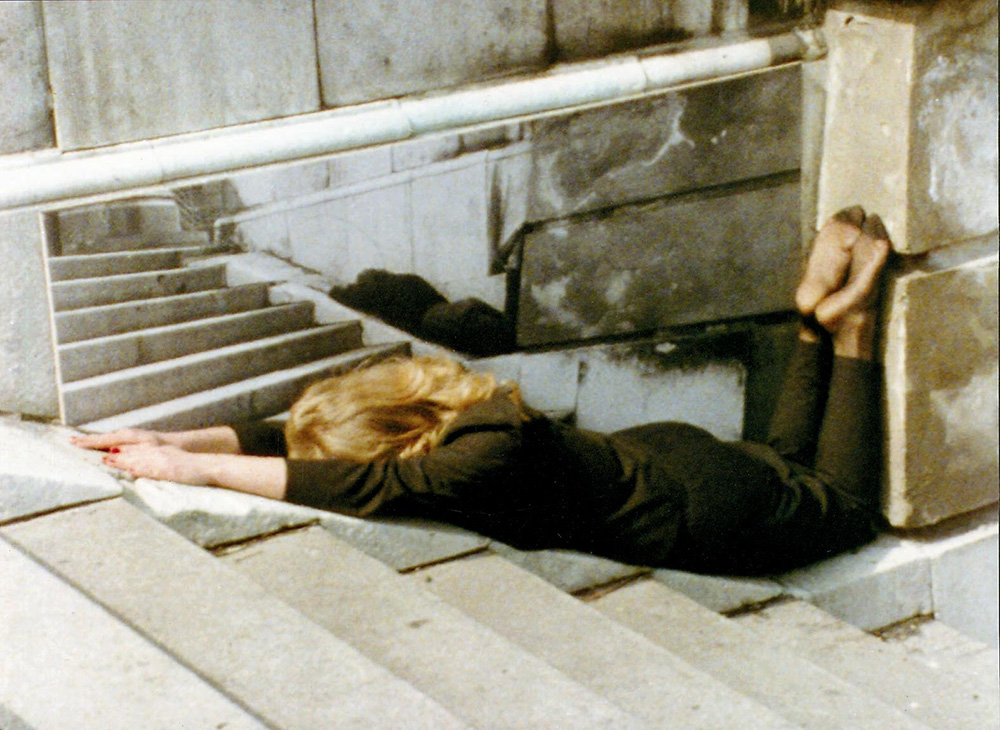
"Syntagma” is like a fixed gaze that someone exchanges with himself/herself as if he/she were two people’s eyes staring at oneself and the unyielding gaze of the camera. All that can be seen through these two sets of eyes is the staring act itself. Identity reflections, the mirror as something impenetrable, like an investigating veil. The more the mirror reflects, the more it moves toward forgetfulness as an impenetrable object, even if it imprints itself with images. (VALIE EXPORT)
VALIE EXPORT, Prof. Dr. h.c.media and performance artist, filmmaker born in Linz, lives and works in Vienna VALIE EXPORT’s artistic work comprises: video environments, digital photography, installation, body performances, feature films, experimental films, documentaries, Expanded Cinema, conceptual photography, body-material interactions, Persona Performances, laser installations, objects, sculptures, texts on contemporary art history and feminism. VALIE EXPORT is one of the most important pioneers on conceptual media art, performance and film. 1967 invention of her artist name VALIE EXPORT: an artistic concept and logo to be written in capital letters only VALIE EXPORT takes part at the documenta 12 2007, and documenta 6, 1977, in Kassel 1985 nomination of EXPORT's feature film “Die Praxis der Liebe”, screenplay and direction, for the Golden Bear at the Berlin International Film Festival Since 1975 curatorial projects, international symposiums, exhibitions and film programmes Her works are in international collections like Centro Pompidou, Paris, Tate Modern, London, Reine Sophia, Madrid, MOMA, New York, MOCA, Los Angeles ect. Since 1968 participation in international exhibitions, for example: Centre Georges Pompidou, Paris; The Museum of Modern Art, New York; Institute of Contemporary Art, London; Venice Biennale, Venezia; documenta, Kassel; MoCA, Los Angeles; Stedelijk Museum, Amsterdam; MUMOK, Vienna; Generali Foundation, Vienna; P.S.1 Contemporary Art Center, New York; Shanghai Art Museum, Shanghai; Palais des Beaux-Arts, Bruxelles; Tate Modern, London; Metropolitan Museum of Art, Seoul, Korea; Metropolitan Museum, New York; ars electronica, Linz/Austria. Screenings at international film and video festivals, for example London Underground Film Festival; London International Film Festival; Filmex, Los Angeles; Berlin International Film Festival as well as film festivals in Cannes, Montréal, Vancouver, San Francisco, Locarno, Hongkong, Sydney, New York, etc.
Catalogue : 2018Selbstportrait mit Kopf | Vidéo | 0 | | 4:8 | Autriche, 0 | 1967
Valie Export
Selbstportrait mit Kopf
Vidéo | 0 | | 4:8 | Autriche, 0 | 1967
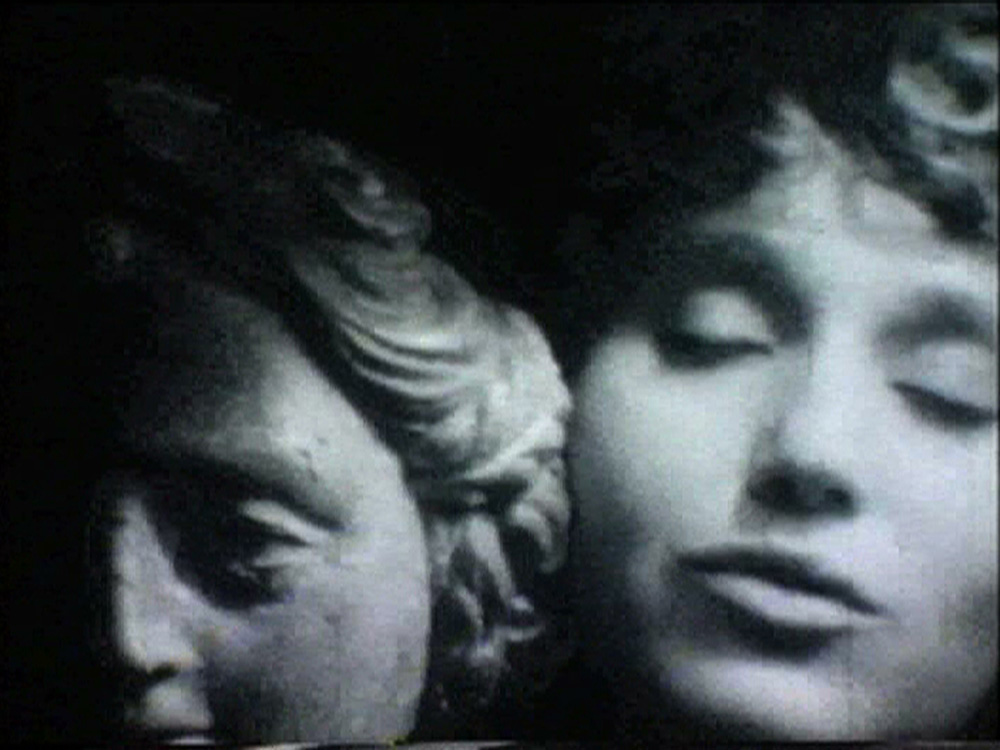
In her first “film self-portrait”, VALIE EXPORT wears an attention-getting curly wig and caresses a woman´s breasts in slow motion, then lasciviously closes and opens her eyes. The carefully applied makeup and wig tell of disguise and acting, and are simultaneously beautiful and terribly stony like the anonymous woman´s head. The brevity and slow speed are reminiscent of Andy Warhol´s Screen Tests, in which every single one of the face´s movements become visible.
VALIE EXPORT, Prof. Dr. h.c.media and performance artist, filmmaker born in Linz, lives and works in Vienna VALIE EXPORT’s artistic work comprises: video environments, digital photography, installation, body performances, feature films, experimental films, documentaries, Expanded Cinema, conceptual photography, body-material interactions, Persona Performances, laser installations, objects, sculptures, texts on contemporary art history and feminism. VALIE EXPORT is one of the most important pioneers on conceptual media art, performance and film. 1967 invention of her artist name VALIE EXPORT: an artistic concept and logo to be written in capital letters only VALIE EXPORT takes part at the documenta 12 2007, and documenta 6, 1977, in Kassel 1985 nomination of EXPORT's feature film “Die Praxis der Liebe”, screenplay and direction, for the Golden Bear at the Berlin International Film Festival Since 1975 curatorial projects, international symposiums, exhibitions and film programmes Her works are in international collections like Centro Pompidou, Paris, Tate Modern, London, Reine Sophia, Madrid, MOMA, New York, MOCA, Los Angeles ect. Since 1968 participation in international exhibitions, for example: Centre Georges Pompidou, Paris; The Museum of Modern Art, New York; Institute of Contemporary Art, London; Venice Biennale, Venezia; documenta, Kassel; MoCA, Los Angeles; Stedelijk Museum, Amsterdam; MUMOK, Vienna; Generali Foundation, Vienna; P.S.1 Contemporary Art Center, New York; Shanghai Art Museum, Shanghai; Palais des Beaux-Arts, Bruxelles; Tate Modern, London; Metropolitan Museum of Art, Seoul, Korea; Metropolitan Museum, New York; ars electronica, Linz/Austria. Screenings at international film and video festivals, for example London Underground Film Festival; London International Film Festival; Filmex, Los Angeles; Berlin International Film Festival as well as film festivals in Cannes, Montréal, Vancouver, San Francisco, Locarno, Hongkong, Sydney, New York, etc.
Catalogue : 2018BODY TAPE | Vidéo | 0 | | 4:2 | Autriche, 0 | 1970
Valie Export
BODY TAPE
Vidéo | 0 | | 4:2 | Autriche, 0 | 1970
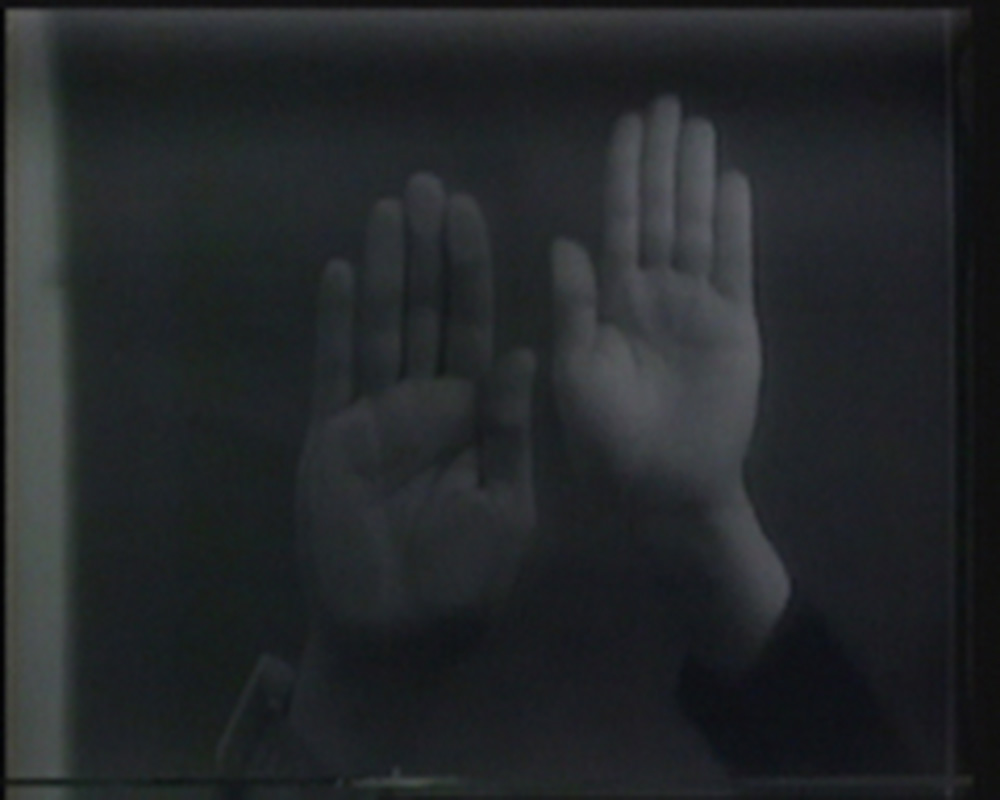
A short videotape showing a frontal view of VALIE EXPORT's semi-figure as she forms various signs by hand and lines them up in a row throughout the tape. It is a sign language using only the fingers and hands, a poem without words or movement of the lips. At the end, the following German text appears which – freely adapting the philosopher Martin Heidegger – suggests a possible theoretical frame of reference: “Ich sage die zeige mit den Zeichen der Sage frei nach Heidegger” (“I say the showing with the signs of the legend”).
VALIE EXPORT, Prof. Dr. h.c.media and performance artist, filmmaker born in Linz, lives and works in Vienna VALIE EXPORT’s artistic work comprises: video environments, digital photography, installation, body performances, feature films, experimental films, documentaries, Expanded Cinema, conceptual photography, body-material interactions, Persona Performances, laser installations, objects, sculptures, texts on contemporary art history and feminism. VALIE EXPORT is one of the most important pioneers on conceptual media art, performance and film. 1967 invention of her artist name VALIE EXPORT: an artistic concept and logo to be written in capital letters only VALIE EXPORT takes part at the documenta 12 2007, and documenta 6, 1977, in Kassel 1985 nomination of EXPORT's feature film “Die Praxis der Liebe”, screenplay and direction, for the Golden Bear at the Berlin International Film Festival Since 1975 curatorial projects, international symposiums, exhibitions and film programmes Her works are in international collections like Centro Pompidou, Paris, Tate Modern, London, Reine Sophia, Madrid, MOMA, New York, MOCA, Los Angeles ect. Since 1968 participation in international exhibitions, for example: Centre Georges Pompidou, Paris; The Museum of Modern Art, New York; Institute of Contemporary Art, London; Venice Biennale, Venezia; documenta, Kassel; MoCA, Los Angeles; Stedelijk Museum, Amsterdam; MUMOK, Vienna; Generali Foundation, Vienna; P.S.1 Contemporary Art Center, New York; Shanghai Art Museum, Shanghai; Palais des Beaux-Arts, Bruxelles; Tate Modern, London; Metropolitan Museum of Art, Seoul, Korea; Metropolitan Museum, New York; ars electronica, Linz/Austria. Screenings at international film and video festivals, for example London Underground Film Festival; London International Film Festival; Filmex, Los Angeles; Berlin International Film Festival as well as film festivals in Cannes, Montréal, Vancouver, San Francisco, Locarno, Hongkong, Sydney, New York, etc.
Jaime Vallaure, Rafael LAMATA, Daniel MUSICCO
Catalogue : 2007El ABC de la Performance | Vidéo expérimentale | dv | couleur | 35:22 | Espagne | 1995
Jaime Vallaure, Rafael LAMATA, Daniel MUSICCO
El ABC de la Performance
Vidéo expérimentale | dv | couleur | 35:22 | Espagne | 1995
Cette première série d'oeuvres donne à voir les relations de base et les conflits mineurs entre les êtres humains. Ce manque d'ambition thématique apparent permet de mieux se concentrer sur les questions essentielles relatives aux variables du temps et de l'espace, qui constituent l'essence même de l'image en mouvement. Le matériel de travail vient directement d'une vidéo amateur. L'une des pièces sélectionnées dans ce catalogue est issue des premiers travaux de l'artiste : ?Tía Berti?. Ce court-métrage est réalisé à partir d'une matière autobiographique qui oppose deux périodes, deux regards, deux sourires; en bref, deux manières d'être au monde. L'axe narratif de la vidéo est fondé sur une pose photographique que la vidéo capture de manière très différente à partir de l'image fixe : attente en silence du moment de la prise, moment qui révèle une partie plus intime du personnage féminin présenté, à son insu. Les titres suivants sont parmi les plus importants des premières oeuvres de l'artiste : ?Yo creí que había que decir algo?, ?Un regalín para la hija del Portero?, ?Las fotos salen mejor sin ojos? and ?Por favor, no me saques?. Toutes ces oeuvres sont faites à partir de vidéos amateur. La période de création suivante est représentée par ?Sería hacia el año 1918?, réalisé en collaboration avec Daniela Músico. Il s'agit d'une oeuvre avec une distribution et une reconnaissance inégales. Elle combine parfaitement les interrogations de l'artiste qui relèvent du champ artistique et celles qui relèvent du champ technique. C'est l'enregistrement de l'errance sans but d'un vieil homme, simultanément à la remémoration d'anciens souvenirs évoqués par un commentaire et projetés au fond de l'image comme si c'était un écran de cinéma géant. Un conteneur pour le recyclage du verre fonctionne comme une métaphore pour le stockage d'une mémoire fragmentaire : les mémoires individuelles finissent par se briser en fragments infinis constituant un amas de mémoire compact bien que discontinu. La troisième période est représentée par ?¿Quién es??, et se caractérise par l'utilisation de vidéos de vacances et de voyages, enregistrements amateurs dont le seul but est de conserver pour l'avenir un moment du présent qui s'enfuit et nous échappe. Dans ce cas, nous voyons à l'écran des ruines romaines, dans un plan fixe qui permet à l'apparence voilée des absences dans l'espace d?acquérir une densité émotionnelle. Le temps laisse ses traces émerger de ruines architectoniques, comme des fragments d'êtres éphémères qui jamais plus ne reviendront, des présences presque incorporelles en train de disparaître, des âmes intangibles sans véritable entité, qui peuvent seulement générer des ombres évanescentes et vacillantes. Le temps passant, les oeuvres vidéos possèdent un caractère qui associe en parallèle art et art social. L'activité continue de l'auteur dans le champ de la performance à partir de 1990, conduit progressivement sa réflexion vidéographique vers des territoires plus complexes, dans une perspective à la fois formelle et structurelle. La vidéo n'est plus considérée comme le résultat d'un processus d'analyse et de réélaboration d'une réalité perçue, mais plutôt comme la synthèse d'une activité performative et communicationnelle au sein de laquelle le discours fonde la construction d'un concept. La vidéo n'est pas le point de départ mais le point d'arrivée, le terme d'un voyage, l'achèvement d'un processus, l'acte d'identité d'une expérience; en bref, la conclusion d'une investigation. Deux oeuvres réalisées ensemble par Rafael Lamata ont été choisies pour cette période "ABC de la Performance" est un dictionnaire raisonné sur les vices et habitudes de cette pratique artistique. La vidéo fut originellement conçue comme une conférence-performance, et fut transformée ultérieurement en vidéo, sa structure s'adaptant au format de l'image en mouvement et prenant le modèle de diffusion de la télévision comme référent. La collaboration avec Daniela Músicco dans le rôle d'hôtesse d'accueil fut cruciale pour la présentation de nombreux concepts interconnectés et tortueux. L'oeuvre suivante ?Siete Cuentos para la Carcel de Carabanchel? fut aussi co-réalisée par Rafael Lamata. Cette vidéo est la conclusion d'un processus d'intervention collective dans la prison de Carabanchel, avec des détenus. Elle a été montrée à la fois à l'intérieur et à l'extérieur de la prison, dans le but de transcender des langages stéréotypées, afin de rechercher des formules inexplorées dans le champ de la délation sociale et personnelle.
Jaime Vallaure (Asturias 1965). BA de beaux-arts à l'Université Complutense de Madrid. Il a commencé son activité artistique officielle en pratiquant l'art vidéo, plus spécifiquement, par des oeuvres à canal unique qui explorent l'esthétique du quotidien et du banal. Jaime Vallaure prépare actuellement avec Rafael Lamata une intervention pour le pavillon espagnol de la 52ème Biennale de Venise, en collaboration avec le duo conceputel/ performatif Los Torreznos.
Michiel Van Bakel
Catalogue : 2023What Wide Web? | Vidéo expérimentale | 4k | couleur et n&b | 5:0 | Pays-Bas | 2022
Michiel Van Bakel
What Wide Web?
Vidéo expérimentale | 4k | couleur et n&b | 5:0 | Pays-Bas | 2022
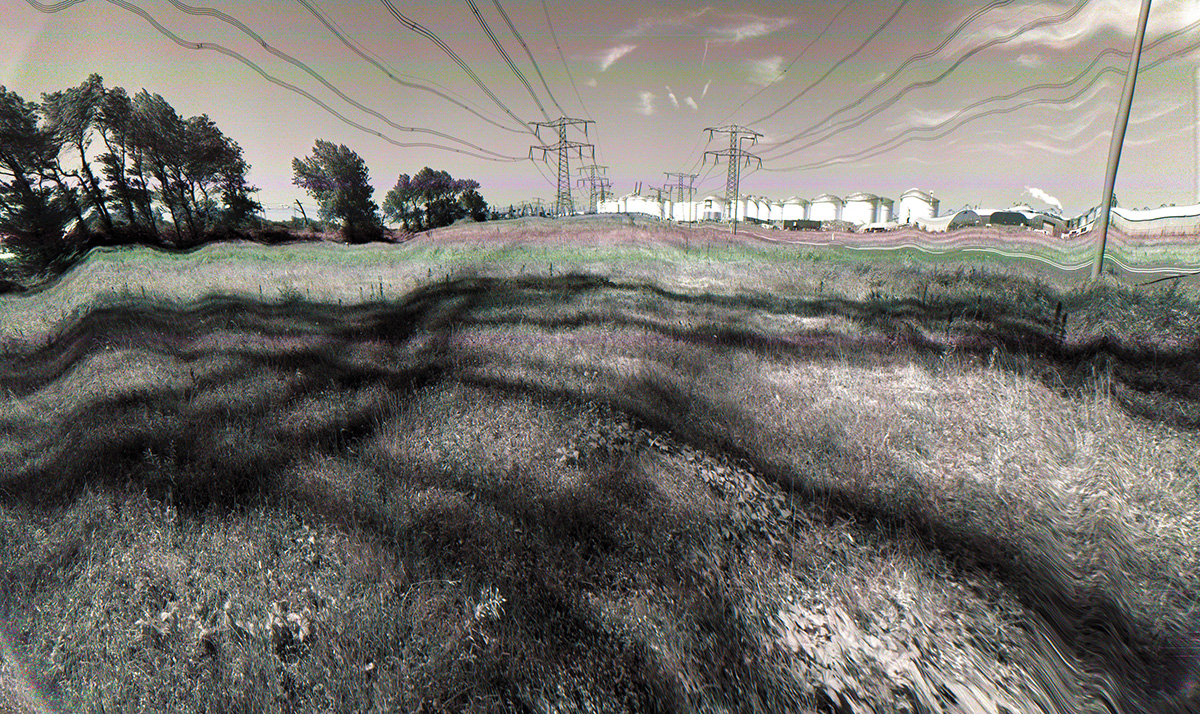
For some years Wood Wide Web is the magic phrase to describe the web of roots, fungi and bacteria helping to connect trees and plants to one another. In ‘What Wide Web?’ Van Bakel depicts the surreal wasteland of Rotterdam Maasvlakte and its forest of pylons. After a bumpy ride we zoom in on the improbable beauty germinating underneath high voltage lines, a living part of our world hardly ever noticed. The plants that grow below the energy-web are shown as in a digital herbarium. We can ask ourselves: are industry and nature evolving more into co-existence? Background info: Location: Rotterdam harbour, Beerweg Maasvlakte, a place that used to be a nature reserve called ‘de Beer’. Sound: Contact mics on humming power-pylons. Geophones in the earth on the spot that record the sound of falling raindrops. Camera: Animation of still photographs made with home-built scannercamera. Instead of bringing plants to a picture-scanner in his studio, the artist dragged the scanner on site over soil and green. “A forest ecology is a delicate one. If the forest perishes, its fauna may go with it. The Atshean word for world is also the word for forest.” Ursula K. Le Guin from The Word for World is Forest.
Michiel van Bakel studied astronomy, film/photography (Psychopolis; Frans Zwartjes) and psychology for several years before he chose for fine art, at art school. Van Bakel expresses himself artistically in film and videos, sculpture and installations. His work focuses on people and their surroundings, often resulting in a poetic reality. It conveys a fascination for the tension between humans and technology, and the perception of time in our disrupted ecosystems. Van Bakel lives and works in Rotterdam.
Catalogue : 2022Bogwaters | Vidéo | 4k | couleur et n&b | 4:30 | Pays-Bas | 2021
Michiel Van Bakel
Bogwaters
Vidéo | 4k | couleur et n&b | 4:30 | Pays-Bas | 2021
In a Dutch wetland nature reserve we move across the water surface.* The images accelerate and change to infrared; we see the nature sanctuary as through the eyes of the dragonfly that can 'see' many times faster than a human being possibly can perceive. The flight ends where several canals meet; by the water at the foot of a silent witness, a timeless, overgrown bunker. *Striking fact: the former peat exploitation waterways of the Peel bog area have grown themselves into protected nature reserves in the midst of extremely industrial livestock production.
Michiel van Bakel (1966, Deurne NL) studied astronomy (Leiden university) and psychology (Nijmegen university) for several years before he chose for autonomous visual art, at art school (Den Haag and Arnhem). Van Bakel expresses himself through film and videos, sculpture and installations. His work focuses on people and their surroundings, often resulting in a poetic reality. It conveys a fascination for the tension between man and technology, perception of time in our delicate man-made ecosystem.
Catalogue : 2008Inner Machine | Vidéo expérimentale | dv | couleur et n&b | 0:0 | Pays-Bas | 2007
Michiel Van Bakel
Inner Machine
Vidéo expérimentale | dv | couleur et n&b | 0:0 | Pays-Bas | 2007
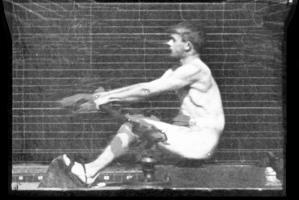
A reflection on relative movements in manipulated time. A visual poem. In comes nightfall Big Dipper is rising Aeon old carbon man burning with oxygen Well drilled soil pale sanded sun Crude black oil of millennia gone Dwellings are moving reflecting the day Blue lights of dawn blown astray
Michiel van Bakel étudia l'astronomie et la psychologie pendant de longues année avant de choisir l'expression libre en école d'art. Van Bakel a fait des films et des vidéos mais aussi des sculpture (bronze, fer et plastique) et des installations multimédia interactives. Dans celles-ci, il combine les fondations élémentaires de la photo et de la vidéo avec des techniques d'animation digitales. Alors que son approche est technique, son travail est concentré sur les gens, résultant souvent en une réalité poétique.
Martijn Van Boven
Catalogue : 2008Interfield | Vidéo expérimentale | dv | couleur | 6:40 | Pays-Bas | 2007
Martijn Van Boven
Interfield
Vidéo expérimentale | dv | couleur | 6:40 | Pays-Bas | 2007
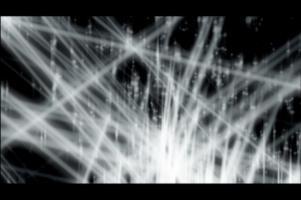
"Interfield" décrit un univers imaginaire, rendu visible par le biais d'une imagerie abstraite et d'un bourdonnement électronique. Le mot "interfield" fait référence à une position des spectateurs depuis laquelle ils perçoivent un environnement dont ils ne font pas partie. De cette position, ils assistent au déploiement des deux médias (image et son) pour former un système de composition autonome. Jusqu'au point où son et image entrent en collision. A partir de cet instant, ils continuent leur douce symbiose, pour se développer à l'infini.
Martijn van Boven est né en 1977 aux Pays-Bas. Il travaille le film expérimental et l'art informatique. Ses recherches portent sur les techniques et les possibilités du processus d'imagerie moderne et de création dans le contexte de films expérimentaux et de films numériques. Les films abstraits de Stan Brakhage ont une influence sur son oeuvre et sur sa conception des images abstraites en relation avec le film. Martijn van Boven a fait ses études à la Royal Art Academy de La Haye, en Hollande, dans la section image et son. Son oeuvre couvre une large palette: installations vidéo, films, collaborations avec des compositeurs et images en temps réel. Son travail a été montré dans de nombreux festivals à travers le monde: IFF Rotterdam, State X New Forms, Sonic Acts, Holland Festival, Five Days Off, FICCO (Mexico City, Mexico), RIKZ (Riga, Latvia),SKIF-9 (St. Pétersbourg, Russie) et Transmediale (Berlin, Allemagne). Depuis 2000, Martijn van Boven travaille comme conservateur free-lance dans le cinéma et la vidéo, en particulier dans le cinéma d'avant-garde et le cinéma abstrait. Il enseigne l'art audiovisuel à la Art Academy of Arnhem (Pays-Bas). En 2003, il a cofondé un centre d'art pour les nouveaux médias à La Haye en Hollande, où il vit et travaille actuellement.
Michael Van Den Abeele
Catalogue : 2009the Sausage Party #2 (the mud club) | Installation vidéo | dv | couleur et n&b | 4:24 | Belgique | 2008
Michael Van Den Abeele
the Sausage Party #2 (the mud club)
Installation vidéo | dv | couleur et n&b | 4:24 | Belgique | 2008
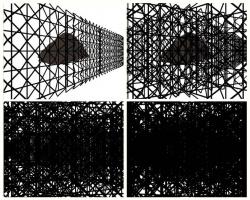
« The Sausage Party #2 » est série de vidéos. Chaque partie montre une certaine atmosphère sociale dans laquelle des actions névrotiques et compulsives sont combinées à des motifs optiques ou des effets. La régression commune et la cohésion sociale se dissolvent l?une dans l'autre. « The Sausage Party # 2 » est la vidéo la plus énigmatique de la série. Elle commence par l?image d?un tas de boue, entouré d?une clôture. Peu à peu obscurci par un nombre croissant de clôtures en mouvement, le tas de boue devient une sorte de trésor/centre, sale et informe. Enfin, il se transforme en combat de rue à l?ancienne (copié à partir d'un des premiers manuels de dessins animés). En zoomant lentement, la lutte tourbillonnante se dissout dans un effet stroboscopique hypnotisant, ressemblant beaucoup à la machine à rêves de Brion Gysin. « The Sausage Party #2 », la vidéo la plus abstraite de la série, travaille avec les effets les plus optiques possible. La clôture revient comme thème visuel dans « The Sausage Party #4 » (Europa Votra), où elle fonctionne comme une clôture classique de paysage arcadien.
Michael Van den Abeele °29-05-74 links: www.pilotlondon.org www.youtube.com/watch?v=4wXzrjVHj_M www.etablissementdenfaceprojects.com Exhibitions (selection) 2008 -Curiosität, galerie Micheline Szwajcer, Antwerp, Belgium -With Love from Brussels, VanAbbe Museum, Eindhoven, NL -CAC, Museo de Arte Moderno Toluca, Mexico -Europa Vostra, Trafu, Budapest, Hungaria -Losing Control, de Garage, Mechelen, B 2007 -Rencontres Internationaux, Centre Pompidou, Paris, FR -18, l?Observatoire, Maison Gregoire, Brussels, B -"Vanaf nu!..", LLS 387 (organised by Ulrike Lindmayer, Willem Oorebeek and Ricardo Brey), Antwerp, B -Breughel`s View (part of Commitment), BKSM Mechelen, B -GHB, Van Abbe museum, Eindhoven, NL 2006 -Choose Choice (with Jos deGruyter & Harald Thys), de Brakke Grond, Amsterdam, NL -Le Bonheur, Brussels, B 2005 -Emergency Biennal, Matrix Art Projects, Brussels -Madrid - Grozny -Ambassador, Public> Paris, F 2004 - Shoner Wohnen, New center for contemporay art Waregem, curated by Moritz Kung, B - Visa for 13, PS1, contemporary art center, curated by Jimena Blasqez, NY, USA - Working ethics, Krinzinger Projecte, curated by Philip Pirotte, Vienna, Austria 2003 - Participant of the PS1 contemporary art center, studio program, NY-USA -Viva Romantica, NICC Free Space - KMSK (museum of fine arts), Antwerp, B -?split pick up?, a group-project with A. Hendrickx, G. Lester, B. Rebetez & K. Dedecker, STUK, Leuven, B 2002 -Le vent à double tranchant, Archetype, Kanal 11, Brussels, B -Permanent installation at the ?house of Flemisch representation in Paris?, F -?Haunted house of Arts? Gallery Outline, Amsterdam, NL - Paramount Basics (extended), Muhka, curated by Richard Venlet and Moritz Kung, Antwerp, B 2001 -Flat Space, architecture & virtual space, de Witte Zaal, Ghent, B -Parcours d?incidents, de Ateliers, Amsterdam, NL -Prix du Jeune peinture Belge, Palais des Beaux Arts (BOZAR), Brussels, B 2000 -Etablissement d?en face, Brussels, B -Orbis Terrarum, Plantyn-Moretus museum, curated by Moritz Kung, Antwerp, B -3-ness, in Museum Dhont-Daenens (MDD), curated by Edith Dove, Deurle, B -SubRosa, Ateliers Iternationaux d?Alsace et de Lorraine, curated by Eva Gonzales Sancho, Phalsbourg, F 1999 -JARS 1, curated by Guilaume Bijl, Kunstcentrum-Sittard, Netherlands, NL -Young @ all.ages, Deweer Art gallery, Otegem, B -Small Stuff (organised by Hans Theys), Klagsbrun gallery, NY, USA -Small Stuff (organised by Hans Theys), Herman Teirlinckhuis, Beersel, B Residencies -Artist residence in France ?Ateliers Iternationaux d?Alsace et de Lorraine?, France, 2000 -PS1, contemporary art center, studio program, NY-USA, 2003 -Platform Garanti, Istanbul, Turkey, 2008
Catalogue : 2008Cargo Cult | Vidéo expérimentale | dv | couleur et n&b | 7:51 | Belgique | 2006
Michael Van Den Abeele
Cargo Cult
Vidéo expérimentale | dv | couleur et n&b | 7:51 | Belgique | 2006
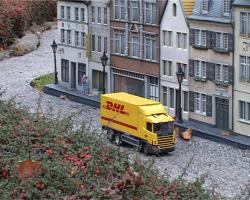
Cargo Cult commence comme un poème vidéo sur la compagnie de transport DHL, montrant des montagnes et des vallées aux contours rudimentaires. Le paysage est traversé par un container portant le logo de DHL. C'est une abstraction romantique du transport de biens, sur les montagnes, dans les vallées, à travers l'univers. Le container DHL est montré en perspective isométrique, les montagnes et les vallées sont la même image montrée dans un sens puis dans l'autre. La distance est réduite (ou maximisée) à la planéité. La deuxième partie de la vidéo montre des avions, des camions et des trains DHL miniatures voyageant dans une mini Europe; un parc à thèmes à Bruxelles qui réunit des maquettes de tous les monuments architecturaux des différents états membres de l'Europe (le mur de Berlin, la tour Eiffel, Big Ben, etc.). Plus qu'un simple sponsor de la mini Europe, le réseau de transport DHL s'étend sur tout le parc comme un monument supra-national. Cargo Cult est un poème de science-fiction dans lequel la compagnie de transport manipule la profondeur et la distance à loisir, et où les biens voyagent pour leur propre intérêt et ont leur propre route. Cargo Cult devrait être projeté ou montré sur un moniteur single channel en boucle infinie.
Michael Van den Abeele est né en 1974 à Bruxelles, en Belgique. C'est un artiste visuel, co-conservateur du centre d'art bruxellois "Etablissement d'en face".
Zeno Van Den Broek
Catalogue : 2020Paranon | Performance multimédia | 0 | | 20:0 | Pays-Bas, 0 | 2020
Zeno Van Den Broek
Paranon
Performance multimédia | 0 | | 20:0 | Pays-Bas, 0 | 2020
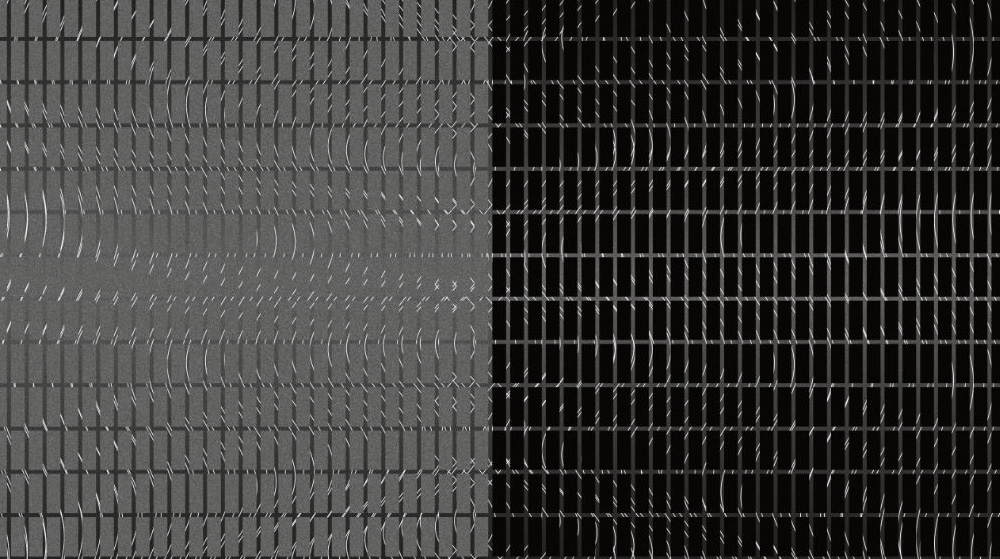
Paranon est constitué de deux compositions parallèles en contrepoint, l'une visuelle et l'autre sonore, fondées sur les propriétés des ondes sinusoïdales. Les générateurs d'ondes sinusoïdales programmés qu'utilise Zeno van den Broek permettent de générer des interférences, de décaler les phases et d'alterner les fréquences avec une grande précision. L'écriture en contrepoint crée une tension et des résultats inattendus entre l'onde sinusoïdale initiale et les répétitions qui suivent. Les deux compositions parallèles introduisent à une beauté du son pur et explorent la richesse des collisions d'ondes sonores, créant des événements visuels et sonores inouis.
Zeno van den Broek est compositeur et artiste, né aux Pays-Bas et basé à Copenhague. Il travaille de manière multisensorielle pour rechercher et interroger des notions physiques, sociales et acoustiques. Il utilise des moyens audiovisuels pour créer des œuvres spécifiques à un lieu et à un concept. Cette méthode transdisciplinaire a une base conceptuelle solide, issue d'une formation en architecture, qui permet à Zeno de comprendre et de révéler la richesse et la complexité de la perception spatiale, viscérale et physique. Il travaille avec un langage artistique caractéristique fondé sur des éléments minimalistes et fondamentaux tels que les sinusoïdes, les lignes, le bruit et les grilles. Il travaille avec des instituts de recherche tels que la Fondation Gaudeamus, la LIMA et la Old Church d'Amsterdam. Son travail est présenté à l'international dans des lieux et des festivals tels que le Festival international du film de Rotterdam, Sonic Acts, les Rencontres Internationales Paris/Berlin. Sa musique est distribuée par des labels tels que Moving Furniture Records, Unsounds et The Tapeworm.
Zeno Van Den Broek
Emmanuel Van Der Auwera
Catalogue : 2025White Cloud | Doc. expérimental | digital | couleur | 19:0 | Belgique | 2024
Emmanuel Van Der Auwera
White Cloud
Doc. expérimental | digital | couleur | 19:0 | Belgique | 2024
Dans une zone industrielle de la Mongolie intérieure, des mineurs extraient une ressource stratégique cruciale pour notre mode de vie, et ce, dans des conditions humaines et environnementales difficiles. C'est ici que proviennent 80 % des minéraux des terres rares, essentiels à la fabrication des technologies numériques. Un mineur travaillant sur le site partage ses réflexions sur sa vie et ses conditions de travail. White Cloud est un film développé avec une IA générative qui offre une perspective unique sur le district minier de Bayan Obo.
Emmanuel Van der Auwera (b. 1982, BE) works multidisciplinary with video, theater, sculpture, printmaking and often in tension between art and technology, reality vs. simulation and the trivialization of violence. Finding his material in the rampant image production of a global screen culture, he is interested in the meaning of images and how they depict reality while at the same time constructing it. Van der Auwera is the winner of the Goldwasserschenking awarded by WIELS and the Belgian Royal Museums of Fine Arts. His work has been featured in exhibitions at the Pinakothek der Moderne, Munich; WIELS, Brussels; Centre Georges Pompidou, Paris; Palais de Tokyo, Paris; Centro per l’Arte Contemporanea Luigi Pecci, Prato and the HeK - House of Electronic Arts, Basel; amongst others. In 2023, Van der Auwera's work was presented in exhibitions at the Biennale internationale des arts numériques de la Région île-de-France (Paris, FR), Z33, House for Contemporary Art, Design & Architecture (Hasselt, BE). In 2024, his work was shown in the Biennale de l’Image en Mouvement 2024 - BIM 24 (Geneva, CH), KW Institute for Contemporary Art (Berlin, DE), 8th Yokohama Triennale (Yokohama, JP), Kunsthal Charlottenborg (Copenhagen, DK), Kunstverein Hamburg (Hamburg, DE), Deichtorhallen Hamburg (Hamburg, DE), and Royal Academy of Fine Arts (Antwerp, BE).
Guido Van Der Werve
Catalogue : 2007Nummer Vier | Fiction expérimentale | 35mm | couleur | 11:45 | Pays-Bas | 2005
Guido Van Der Werve
Nummer Vier
Fiction expérimentale | 35mm | couleur | 11:45 | Pays-Bas | 2005
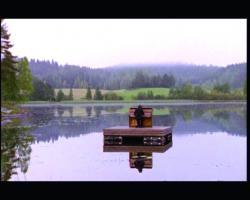
Some things are as inevitable as gravity, no matter how much we would like to avoid them: something with which the subtitle of this short film whole-heartedly agrees. In "Nummer Vier", Guido van der Werve presents a contemporary form of spleen: nineteenth-century melancholy, mixed with Dutch sobriety and conceptual timing. Over and over again, we see an unlikely scene unfolding against a picturesque, serene background. A man playing a piano on a raft in the middle of a smooth lake; a choir and orchestra performing a requiem on a ship under sail; someone falling from the sky. Nothing world-shattering, but these are the ingredients with which "Nummer vier" introduces the important issues: nature, art, beauty, life, death; subjects that no-one can avoid, neither as a human being nor as an artist, but that can be defied ? just as gravity.
Guido Van Der Werve
Catalogue : 2006Nummer drie (take step fall) | Film expérimental | 16mm | couleur | 10:38 | Pays-bas | 2004
Guido Van Der Werve
Nummer drie (take step fall)
Film expérimental | 16mm | couleur | 10:38 | Pays-bas | 2004
"Take step fall", une histoire vraie dans laquelle tout le monde et toute chose redonnent espoir.
Guido van der Werve, né le 7 avril 1977 à Papendrecht, a étudié les arts audiovisuels à la Gerrit Rietveld Academie à Amsterdam où il obtient son diplôme en 2003. Avant cela, il a étudié le piano pendant une courte période au Conservatoire de Rotterdam. Il débute en enregistrant des représentations sur vidéo, et se tourne ensuite vers le travail sur film, avec une équipe, et ses propres morceaux de piano et éléments cinématographiques. Dans ses ?uvres récentes, il réalise de courtes histoires abstraites tirées d'éléments correspondant à son état d'esprit. Les ?uvres de Guido van der Werve sont présentées dans le contexte à la fois artistique et cinématographique. Avec son film de fin d'études, "Nummer twee", il a remporté le prix René Coelho de l'Institut Hollandais des arts et médias. Son film suivant, "Nummer drie" a été sélectionné pour le prix NPS du court-métrage. Et récemment, son ?uvre a été sélectionnée pour le prestigieux Dutch Dtate Art Award, "Le prix de Rome".
Guido Van Der Werve
Catalogue : 2008Nummer zes | Vidéo expérimentale | dv | couleur | 17:9 | Pays-Bas | 2006
Guido Van Der Werve
Nummer zes
Vidéo expérimentale | dv | couleur | 17:9 | Pays-Bas | 2006
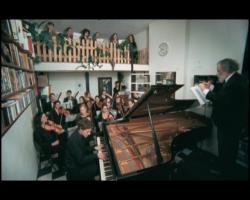
Un texte sur un fond noir un peu sale nous explique que depuis l'âge de 6 ans le réalisateur a l'habitude de décorer sa chambre en noir et blanc ; qu'un rayon de soleil a un jour atteint son mur en se reflétant sur la façade d'un bâtiment en verre situé de l'autre côté de la rue, et que, lorsqu'il n'arrive pas à dormir la nuit, il va marcher et ne voit presque jamais d'étoile. La caméra s'éloigne, et le champ noir devient alors le sol à carreaux noir et blanc de l'appartement de l'artiste. Il est assis à son piano, dos au clavier, dans ses pensées. Une voix off raconte l'histoire du grand piano Steinway & Sons' et rappelle que seul un petit nombre de pianistes a le privilège de jouer sur un tel instrument. On aperçoit alors le quai sur lequel se trouve l'appartement sans grand piano, et Van der Werve, toujours dans ses pensées, apparaît derrière la vitrine d'un pub, près d'un pont, dans un snack chinois, tandis que le Steinway s'éloigne de plus en plus. Pour finir, on le voit regarder la vitrine d'un célèbre magasin de piano qui s'est trouvé pendant longtemps dans le centre d'Amsterdam. A l'intérieur, commence une brève conversation avec un vendeur enthousiaste à propos du piano de concert choisi, de son prix et de ses "possibilités". Puis le rêve semble devenir réalité: la musique s'élève et on voit l'intérieur d'un grand piano noir et brillant. Un orchestre de chambre remplit la pièce noire et blanche et accompagne Van der Werve qui joue le concerto pour piano n°1 de Chopin.
Guido Van Der Werve est né en 1977 à Papendrecht, une banlieue de Rotterdam. Il étudie l'archéologie et le russe à l'université, puis rejoint le Conservatoire de Rotterdam pour s'y adonner au piano. et à la Gerrit Rietveld Academie d'Amsterdam. Il est artiste résidant à la Rijksakademie à Amsterdam. Dès sa première ?uvre, il s'intéresse au support filmique et au langage cinématographique, et mixe séquences narratives et performance. Les clés de ses ?uvres sont toujours la performance, la musique et des scènes atmosphériques. Il travaille à partir de longs plans et ne sollicite jamais d'acteur professionnels.
Catalogue : 2007Nummer vier | Fiction expérimentale | 16mm | couleur | 11:48 | Pays-Bas | 2005
Guido Van Der Werve
Nummer vier
Fiction expérimentale | 16mm | couleur | 11:48 | Pays-Bas | 2005
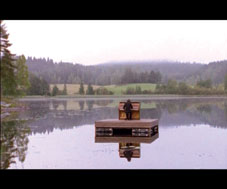
On ne saurait faire fi de la gravité. Dans "Nummer vier" (Numéro quatre), Guido van der Werve suggère une forme contemporaine du spleen : une mélancolie du dix- neuvième siècle, emprunte d'une sobiété hollandaise et conceptuelle dans sa composition. Encore et encore, une scène singulière a lieu, le décor en est pittoresque et serein. Un homme joue du piano sur un radeau au milieu d'un lac calme, quelqu'un tombe du ciel, une chorale et un orchestre exécutent un requiem sur un bateau à voile? Une épure, des séquences simples et denses dans "Nummer vier" introduisent à la nature,l'art,la beauté,la vie, la mort, phénomènes qu'on ne saurait éluder, ni en tant qu'homme ni en tant qu'artiste, mais qui peuvent être bravés.
Guido Van Der Werve est né en 1977 à Papendrecht, une banlieue de Rotterdam. Pianiste, il rejoint le Conservatoire de Rotterdam après l'Université. Il étudie l'archéologie et le russe http://www.art-action.org/proposition/base/traduction/2007_feuilletraduction.php?codeoeuvre=N37139&qui=reali&login=cecile_coà la Gerrit Rietveld Academie d' Amsterdam. Il est actuellement résidant à la Rijksakadémie à Amsterdam. Il s'intéresse au film et au langage cinématographique. Dans sa première ?uvre, il mixait séquences narratives et performance. Les clés de ses ?uvres sont toujours la performance, la musique et des scènes atmosphériques. Il travaille à partir de longs plans et ne sollicite jamais d'acteur.
Guido Van Der Werve
Catalogue : 2007Nummer vier | Fiction expérimentale | dv | couleur | 12:0 | Pays-Bas | 2005
Guido Van Der Werve
Nummer vier
Fiction expérimentale | dv | couleur | 12:0 | Pays-Bas | 2005
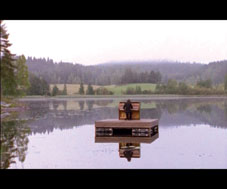
Il y a des choses qui sont inévitables, comme les lois de la gravité, et ce peu importe à quel point on aimerait les éviter, et le sous-titre de ce court-métrage donne totalement raison à cette affirmation. Dans ?Nummer vier?, Guido van der Werve présente une forme contemporaine du ?spleen? : la mélancolie du 19ème siècle mélangée à la sobriété Néerlandaise et le ?timing? conceptuel. Nous voyons sans cesse une scène improbable se dérouler sur un arrière plan pittoresque et serein. Un homme joue du piano sur un radeau au milieu d?un lac d?huile ; une chorale et un orchestre joue un requiem sur un bateau à voile ; une personne tombe du ciel. Rien de bouleversant, mais ce sont les ingrédients grâce auxquels ?Nummer vier? met en place les problèmes importants : la nature, l?art, la beauté, la vie, la mort. Des sujets que personne ne peut éviter, que ce soit en tant qu?être humain ou en tant qu?artiste, mais que l?on peut mettre au défi ? tout comme la gravité.
Guido van der Werve est un artiste né le 7 avril 1977 à Papendrecht, près de Rotterdam aux Pays Bas. Il est installé à Amsterdam où il a étudié l?art à l?Académie Gerrit Rietveld et à la Rijksakademie van Beeldende Kunsten. Il a également étudié le piano classique, la culture et la langue russe et l?archéologie. Il travaille également en tant que conférencier et professeur. Il travaille principalement sur des films basés sur la performance. Les ?uvres de van der Werve ont été exposées bon nombre de fois, dans des endroits dédiés à l?art mais aussi au cinéma. Il a obtenu le prix René Coelho de l?Institut Néerlandais des Arts Médiatiques Montevideo/TBA, en 2003. Il a été nommé en 2004 pour le NPS short film award, et en 2005 pour le Prix de Rome aux Pays Bas. Il est actuellement exposé à la Gallery Olaf Stueber à Berlin, à la Gallery Monitor à Rome et à la Gallery Juliette Jongma à Amsterdam.
Ludivine Van Gaver
Catalogue : 2007La ritournelle | Vidéo expérimentale | dv | couleur | 8:40 | France | 2005
Ludivine Van Gaver
La ritournelle
Vidéo expérimentale | dv | couleur | 8:40 | France | 2005
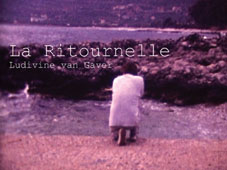
Je me dis : Quand est-ce que je chantonne ? Je dis : Je chantonne en trois occasions. Je chantonne quand je fais le tour de mon territoire et que j?essuie mes meubles. C?est-à-dire quand je suis chez moi. Je chantonne quand je ne suis pas chez moi et que j?essaie de regagner le chez-moi, quand la nuit tombe, l?heure de l?angoisse. Je cherche mon chemin et je me donne du courage en chantant tralala. Je vais vers mon chez-moi. Et puis je chantonne lorsque je dis : Adieu, je pars et dans mon c?ur j?emporterai?
Ludivine van Gaver a étudié le montage à la Fémis après des études à l?École du Louvre et à l?Université de Paris 8 en Arts Plastiques. Elle est monteuse, vidéaste et photographe. Elle vit et travaille à Paris et Berlin.
Bas Van Koolwijk
Catalogue : 2007FBCK/AV - Red flag | Vidéo expérimentale | dv | couleur | 2:59 | Pays-Bas | 2005
Bas Van Koolwijk
FBCK/AV - Red flag
Vidéo expérimentale | dv | couleur | 2:59 | Pays-Bas | 2005
FBCK/AV - Red Flag provoque le spectateur avec un son pénétrant et une image rouge instable dans laquelle on ne peut déterminer de forme reconnaissable. Pour pouvoir créer cette image, Bas van Koolwijk a développé un logiciel qui transforme incessamment les données de signaux sonores et vidéos en des abstractions uniques. Des petites doses de ces signaux peuvent empiéter sur le territoire de l?autre, et vice-versa, de sorte que l?ordinateur transforme une information sonore en image et une image en son ? une question de retour des données. L?interférence qui en résulte ressemble un peu au ?flagging?, un terme et un phénomène qui remonte à l?époque des cassettes vidéo. Il y a ?flagging? lorsque la bande d?une cassette ne passe pas tout à fait correctement dans le magnétoscope et le phénomène est généralement visible en haut de l?image. Grâce à cette référence à l?époque analogique, on ramène les pensées des spectateurs en arrière, vers la nature capricieuse et chaotique des drapeaux qui flottent dans le vent. Mais cela fait également référence à la confusion, comparable à celle de Babel, qui domine l?ère digitale puisque (à cause de tous les codex et les formats) la plupart des logiciels disponibles ne permettent de lire et d?échanger des données que de manière limitée.
Bas Van Koolwijk
Catalogue : 2007FBCK/AV Red Flag | Vidéo expérimentale | dv | couleur | 6:8 | Pays-Bas | 2005
Bas Van Koolwijk
FBCK/AV Red Flag
Vidéo expérimentale | dv | couleur | 6:8 | Pays-Bas | 2005
"FBCK/AV - Red Flag" provokes the observer with a penetrating sound and a flickering red image that refuses to take on a recognizable form. In order to generate this image, Bas van Koolwijk developed software which, again and again, transforms the input of audio and video signals into unique abstractions. Small doses of these signals can poach on each other's preserves, so that the computer converts sound information into image and image into sound ? a matter of data feedback. The resulting interference looks a bit like flagging, a term and phenomenon from the times of video tapes. Flagging occurs when a video tape does not run smoothly through the recorder, and the phenomenon is usually visible in the upper part of the image. With this reference to the analogue era, the viewer's thoughts are taken even further 'back', towards the capricious and chaotic nature of flags fluttering in the wind. But is also refers to the Babel-like confusion that governs this digital era due to the fact that (with all the codecs and formats) much of the software available only provides for limited readability and exchangeability of data.
Jan Van Nuenen
Catalogue : 2006Warning, petroleum pipeline | Vidéo expérimentale | dv | couleur | 4:50 | Pays-bas | 2004
Jan Van Nuenen
Warning, petroleum pipeline
Vidéo expérimentale | dv | couleur | 4:50 | Pays-bas | 2004
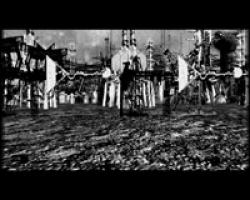
"Un paysage désolé et désertique se transforme peu à peu en un monde industrialisé futuriste. Des machines indéfinissables sont reliées à des mécanismes plus complexes qui produisent en rythme une musique industrielle."
"Après des études en création audiovisuelle à l`académie St. Joost à Breda aux Pays-Bas, de 1997 à 2002, Jan Van Nuenen travaille essentiellement sur des courts métrages animés expérimentaux et des installations vidéo jusqu`en 2005. Ses outils de prédilection sont les logiciels de montage numérique comme After Effects, Photoshop, Premiere, Reactor et FL Studio. Ses films sont surtout réalisés à partir de collages de séquences vidéo récupérées et de photos ensuite découpées, mixées et montées sur ordinateur. Son ?uvre est caractérisée par une action combinée et complexe de boucles, répétitions et rythmes, où le son joue un rôle important. Jan van Nuenen réalise également de courtes animations pour la série de la chaîne néerlandaise VPRO, "Wonderland" (2004), et ses films sont montrés lors de différents festivals internationaux de cinéma, de vidéo et d`art."
Jan Van Nuenen
Catalogue : 2008Evolizer | Vidéo expérimentale | dv | couleur | 15:0 | Pays-Bas, Allemagne | 2007

Jan Van Nuenen
Evolizer
Vidéo expérimentale | dv | couleur | 15:0 | Pays-Bas, Allemagne | 2007
Evolizer NL, 2007, 10`37? In a space that looks like a town or a factory, but could just as well be the inside of a computer, a robot-like figure is moving along. The camera zooms in on a kind of small cabinet that seems to suck the viewer in. Some elements are being added to this technological, geometric environment, which bring about rearrangements and transformations here and there. Spontaneous modulations create a proliferation of colourful, organic forms. With their tentacles grasping around them, these organisms gradually and increasingly take possession of the space. An aquarium-like underworld, in which an aggressive struggle for life is taking place, then replaces the orderly universe where the viewer?s trip began. This (r)evolution, unfolding within a well-defined space, breaks out of the cabinet before the eyes of the little figure, and continues outside it.
Catalogue : 2007Warning Petroleum Pipeline | Animation | dv | noir et blanc | 4:45 | Pays-Bas | 2004
Jan Van Nuenen
Warning Petroleum Pipeline
Animation | dv | noir et blanc | 4:45 | Pays-Bas | 2004
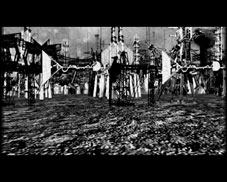
Le déplacement de l?information sur Internet est invisible. Bouts d'information et bytes glissent sans bruit à l?intérieur de câbles très fins et arrivent, en moins d?une fraction de seconde, sur l?ordinateur auquel ils étaient destinés où ils peuvent être réutilisés en un clic de souris. Le mouvement du pétrole, au contraire, est une affaire salissante et pesante qui a des conséquences de taille sur le paysage et les agglomérations urbaines. Des tuyaux encombrants et rouillés traversent les champs alors que des camions-citernes et des pétroliers circulent péniblement sur les routes et les océans, avec leur menaces de pollution et d?explosion. Chacun de ces processus a radicalement changé le monde et garde les relations économiques et politiques sur le qui-vive. Avec ses images en noir et blanc à la manière de collages, ?Warning Petroleum Pipleine? rappelle l?art destiné à dépeindre la force destructrice de l?industrie lourde émergeante au début du vingtième siècle. Des machines mystérieuses tournent et martèlent à un rythme strict et semblent se propager, créant ainsi une forêt de composants en mouvement, de plaques aux rebords affûtés et de câbles imposants. Cette animation numérique très fluide est une vision sombre qui ne montre pas seulement la destruction mais aussi, paradoxalement, une force créatrice incontrôlable grâce à laquelle une industrie se construit.
Wendelien Van Oldenborgh
Catalogue : 2025Of Girls | Doc. expérimental | 4k | couleur | 43:13 | Pays-Bas, Japon | 2023
Wendelien Van Oldenborgh
Of Girls
Doc. expérimental | 4k | couleur | 43:13 | Pays-Bas, Japon | 2023
Filmed in Tokyo and Yokohama, of girls brings a variety of contemporary voices in resonance with two distinct female voices from Japan’s literary and political past. Both popular authors of their time—the period from the late 1920s on—Fumiko Hayashi and Yuriko Miyamoto both died young, in 1951. They each had a strong feminist and class consciousness as well as an impressive literary voice, but came from very different backgrounds and expressed their ideals through different paths. The power and contradictions in both these women’s words reverberate in dialogues and images of an intergenerational cast moving through the various spaces of knowledge, memory and culture, and reflect today’s struggles around gender, politics, and love
Wendelien van Oldenborgh develops works, whereby the cinematic format is used as a methodology for production and as the basic language for various forms of presentation, collaborating with participants in different scenarios, to co-produce the script. With these works, always shown in specially developed architectural settings, she shows widely in the art and museum context. Recent solo presentations include: unset on-set at Museum of Contemporary art Tokyo (MOT) 2022/23, tono lengua boca at CA2M Madrid 2019-20; Cinema Olanda, at the Dutch Pavilion in the 57th Venice Biennial 2017. Her work was recently included in Delinking and Relinking, collection presentation van Abbemuseum 2021-2026; Sonsbeek 20->24,, Arnhem 2021; of bread, wine, cars, security and peace… at Kunsthalle Wien, 2020; Chicago Architecture Biennial 2019, Singapore Biennial 2019. Her films Two Stones (2019) , Hier. (2021) and of girls (2023) premiered in the International Competition of FID Marseille.
Wendelien Van Oldenborgh
Catalogue : 2022Hier. | Doc. expérimental | 4k | couleur | 27:34 | Pays-Bas | 2021
Wendelien Van Oldenborgh
Hier.
Doc. expérimental | 4k | couleur | 27:34 | Pays-Bas | 2021
Hier.(2021) moves seamlessly between politically charged reflections and personal memories through a constellation of voices and lyrical material. In Museum Arnhem (NL) during its renovation - a place of conservation in transition - we meet a cast of young women who express themselves through music, poetry and dialogue. Together they sensitively explore themes such as hybridity, trans-nationality and diasporic sensitivities in the midst of persistent reverberations of colonial history in contemporary society. Alongside the cast, the location Museum Arnhem, is also a meaningful “voice”. Originally built in the late 19th century as an ‘outdoors club’ by people with a colonial past, we see the building stripped down to its foundation, with worn concrete and elegant art nouveau features located next to each other. In this site of rubble and potential we follow three ‘sonic lines’: the band FRED, poet Pelumi Adejumo and historian Lara Nuberg. With music and poetry, we encounter not only socio-political urgencies, but also undercurrents of existentialist and vulnerable themes. Tenderly yet confident, we see the protagonists in friendship and cooperation, we hear about love, the sorrow that comes with it, life questions and certainties, by which they express the basis for a changing possible future.
Wendelien van Oldenborgh develops works, whereby the cinematic format is used as a methodology for production and as the basic language for various forms of presentation, collaborating with participants in different scenarios, to co-produce the script. Recent solo presentations include: work, work, work (work) at Museum Sztuki in Lodz 2021; tono lengua boca at Fabra i Coats, Barcelona 2020 and CA2M Madrid 2019-20; Cinema Olanda, at the Dutch Pavilion in the 57th Venice Biennial 2017. Van Oldenborgh has exhibited widely including the Chicago Architecture Biennial 2019, bauhaus imaginista, HKW Berlin 2019, Stedelijk Museum Amsterdam 2020 and Sonsbeek20->24, Arnhem 2021.
Catalogue : 2021Two Stones | Doc. expérimental | hdv | couleur | 61:15 | Pays-Bas, Allemagne | 2020
Wendelien Van Oldenborgh
Two Stones
Doc. expérimental | hdv | couleur | 61:15 | Pays-Bas, Allemagne | 2020
"Two Stones" explore les trajectoires et les idéaux de Lotte Stam-Beese, architecte allemande formée au Bauhaus, et de Hermina Huiswoud, militante et écrivaine antillaise, à travers des dialogues et des apparitions de protagonistes contemporains. Elles ont toutes deux travaillé en Union soviétique au début des années 30, et ont été actives aux Pays-Bas après la Seconde Guerre mondiale. "Two Stones" a été tourné dans le quartier constructiviste de KhTZ, bâti dans les années 30 à Kharkiv, en Ukraine, le premier grand projet de logement sur lequel Lotte Stam-Beese a travaillé, ainsi que dans le célèbre quartier Pendrecht, datant des années 50, conçu par Lotte Stam-Beese à l'époque où elle était la principale architecte/urbaniste de Rotterdam. Dans les années 70, Hermina Huiswoud s'insurgeait contre la règlementation sur le logement à Rotterdam, qui empêchait les Néerlandais d'origine antillaise de s'installer dans un quartier de la ville si leur présence dépassait 5% de la population. Les résonances et dissonances entre les trajectoires distinctes des deux femmes, et leurs attentes par rapport à l'idéologie communiste, sont perçues à travers les pensées et les expériences des protagonistes, qui ont tous une relation personnelle ou professionnelle avec les questions abordées. "Two Stones" (2020) est le montage d’une même image avec deux bandes sonores jouées séquentiellement.
Wendelien van Oldenborgh développe des œuvres dans lesquelles le format cinématographique est utilisé comme méthodologie de production et comme langage de base pour diverses formes de présentation, en collaborant avec des participants dans différentes situations, pour coproduire le scénario. Avec ces œuvres, qui s'intéressent aux structures qui nous forment et nous entravent, elle a participé à plusieurs grandes biennales et à de plus petites expositions spécialisées. Parmi ses récentes expositions solo, citons: "tono lengua boca" au CA2M – Centro de Arte Dos de Mayo, Madrid (Espagne) [2019-20], et au Fabra i Coats, Barcelone (Espagne) [2020]; et "Cinema Olanda", au pavillon néerlandais à la 57e Biennale de Venise (Italie) [2017]. Elle a présenté son travail à de nombreuses reprises, notamment au Kunsthall Wien, Vienne (Autriche) [2020]; au Stedelijk Museum, Amsterdam (Pays-Bas) [2020]; à la Chicago Architecture Biennial (USA) [2019]; à bauhaus imaginista; à la HKW – Haus der Kulturen der Welt, Berlin (Allemagne); au Zentrum Paul Klee, Bern (Suisse) [2019]; et au SALT Istanbul (Turquie) [2020]. Wendelien Van Oldenborgh est membre de la KNAW - Société (néerlandaise) des arts, et a remporté le Prix d’Art Dr. A.H. Heineken (2014). En 2016, elle a publié une monographie, "Amateur", chez Sternberg Press, Berlin (Allemagne), chez If I Can't Dance, Amsterdam (Pays-Bas), et chez The Showroom, Londres (Royaume-Uni).
Catalogue : 2011Instruction | Doc. expérimental | dv | couleur | 30:0 | Pays-Bas | 2009
Wendelien Van Oldenborgh
Instruction
Doc. expérimental | dv | couleur | 30:0 | Pays-Bas | 2009
The work of Wendelien van Oldenborgh often questions the position of the individual in a larger political framework and in a punitive social environment, challenging notions of personal and collective responsibility. Her film Instruction (2009) begins with William Faulkner`s famous quote from his book Requiem for a Nun: `The past is never dead. It`s not even past`. It addresses the unresolved traumatic events of the Dutch military intervention in Indonesia following World War II, euphemistically called a `police action`. The film casts a group of young cadets from the Royal Netherlands Military Academy who perform a script consisting of excerpts and quotes from different sources: personal diaries, historical broadcast transcripts related to the topic and essays, that all in a more or less direct way tackle collective responsibility and the heritage of the colonial past. The installation includes two photographs taken by the artist`s father during a trip to Indonesia in 1981. This was the first visit to the country by the artist`s mother since she spent four years in an Indonesian concentration camp after wwii. Instruction is located in the space between real people and the imaginary protagonists they represent; the artist leaves in a moment of dislocation in which young cadets stop to obediently follow the instructions of the script whilst spontaneous reactions of laughter or awkwardness are activated by their reading of the dialogue.
Lives and works in Rotterdam She studied at Goldsmiths College and Beaux Arts Paris, and now lives and works in Rotterdam, where she develops complex structures of collaborative work using the cinematic as methodology to focus on small actions and gestures in the public sphere that are taken as displayers of lager social conditions.