Catalogue > Faire une recherche
Résultats pour : Tout le catalogue
Johan Grimonprez
kiss-o-drome
Vidéo | hdv | couleur | 1:16 | Belgique, USA | 2016
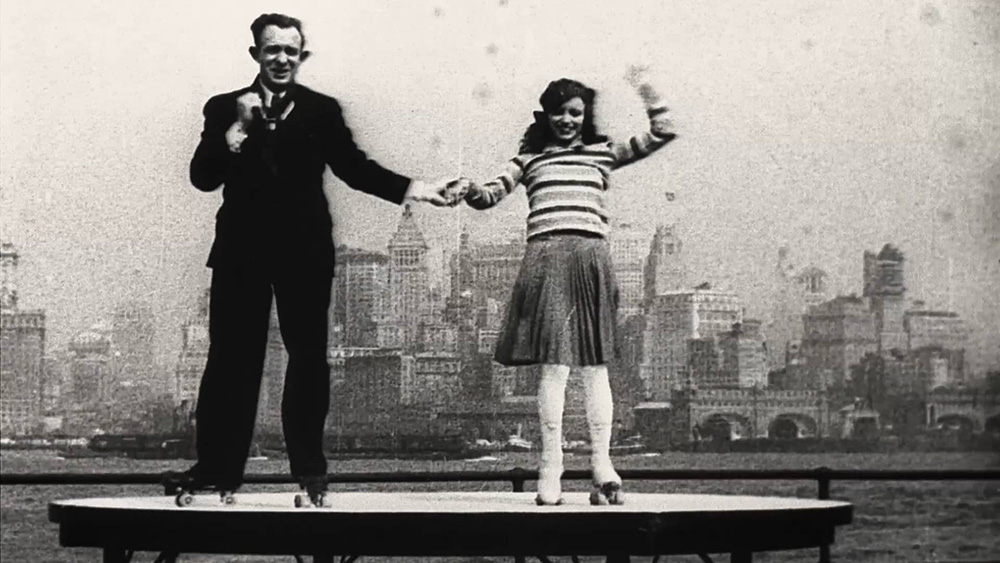
In 1980 an extraordinary demonstration hit the streets of the Brazilian city of Sorocaba. Under the military dictatorship, a court had outlawed kisses that undermined public morals. The ruling by Judge Manuel Moralles, which punished such kisses with jail terms, described them this way: Some kisses are libidinous and therefore obscene, like a kiss on the neck, on the private parts, etc., and like the cinematographic kiss in which the labial mucosa come together in an unsophismable expansion of sensuality. The city responded by becoming one huge kissodrome. Never had people kissed so much. Prohibition sparked desire and many were those who out of simple curiosity wanted a taste of the unsophismable kiss. "February 8. GENERAL SMOOCH" by Eduardo Galeano. From: "Children of the Days," first edition published in Mexico by Siglo XXI Editores Mexico, 2012.Translation copyright Mark Fried, Pinguin Books, London 2013.
Johan Grimonprez’s critically acclaimed work dances on the borders of practice and theory, art and cinema, documentary and fiction, demanding a double take on the part of the viewer. Informed by an archaeology of present-day media, his work seeks out the tension between the intimate and the bigger picture of globalization. It questions our contemporary sublime, one framed by a fear industry that has infected political and social dialogue. By suggesting new narratives through which to tell a story, his work emphasizes a multiplicity of histories and realties.
Johann Grimonprez
Smell the flowers while yu can...
Vidéo expérimentale | dv | couleur | 6:0 | Belgique | 2007
Johan Grimonprez transposes an extract from Meg Stuart`s compelling choreography ?No Longer Ready-Made? to the anonymous waiting room of a railway station. This colourless space along with nameless travellers provides the excellent setting for Stuart`s hectic and intense convulsions. A train ride along the nightly Brussels northern area supports the vitriolic New York City prose of David Wojnarowicz on the soundtrack.
Johan Grimonprez (°1962) studied photography and Mixed Media at the Academie in Ghent, after which he spent several years in New York at the School of Visual Arts through the Whitney Museum Independent Study Program and he obtained his postgraduate degree from the Jan van Eyck Academie in Maastricht. He lives and works both in Ghent and New York, where he is a lecturer at the School of Visual Arts. Grimonprez is best-known for his video work DIAL H-I-S-T-O-R-Y, which became an international success after screenings at the Centre Georges Pompidou (Paris) and during Documenta X in Kassel (1997), transcending the established delineations between visual arts, cinema and television, between fiction, documentary and ?art video?. In this and other work Grimonprez mainly investigates the use of mass media as a political instrument and the construction of realities in an era of infotainment and media saturation. `Zaptitude` is the central idea ? the surreal poetry of `channel hopping`, which enables the spectator to write his/her own story. His work has been shown and awarded, among other places, at the San Francisco Film Festival and Images Toronto, on ARTE TV (Germany/France) and Channel 4 (VK), in the Whitney Museum (New York) and Tate Modern (London).
Johan Grimonprez
Looking for Alfred
Film expérimental | 16mm | couleur | 10:0 | Belgique | 2005
« Je pensais que j?étais en sécurité, jusqu?à ce que vos gars s?amènent, après avoir dégoté tous ces sosies d?Hitchcock. Nous allons maintenant devoir trouver des moyens de nous en défaire » Ron Burrage, sosie professionnel d?Alfred Hitchcock? Intitulée « LOOKING FOR ALFRED» (à la recherche d?Alfred), cette vidéo est en grande partie un hommage à Alfred Hitchcock. La vidéo se centre sur la silhouette de Hitchcock, qui apparaît régulièrement dans ses films, célèbre camée du cinéaste. « LOOKING FOR ALFRED» met au premier plan ces rôles de figuration, avec l?aide des sosies d?Hitchcock. Ces derniers mois, la recherche de l?artiste a été de trouver le doppelganger, le double idéal, à New York, Los Angeles, Londres. La vidéo a été tournée dans l?atmosphère particulière du Centre des Beaux-Arts de Bruxelles, immeuble art nouveau construit par Victor Horta. Cet espace captivant convient parfaitement à cette mise en scène troublante. Le choix de cet arrière-plan, avec le motif récurent de l?homme en costume au chapeau melon, font venir à l?esprit un autre grand auteur moderne ? le peintre surréaliste René Magritte.
Johan Grimonprez est né à Roeselaere, en Belgique, en 1962. Il vit et travaille en Belgique et à New York. En 2005, son travail a été exposé à la Kunsthalle de Cassel, au Hammer Museum de Los Angeles, au Kunst-Werke à Berlin. Il a également participé à des expositions à la Photographers Gallery, Londres, au Palais des Beaux-Arts de Bruxelles, au Stedelijk Museum d?Amsterdam, au Louisiana Museum of Modern Art, Deste Foundation, Centre for Contemporary Art, Athènes, au ZKM | Museum für Neue Kunst, à Karlsruhe, au S.M.A.K. à Gand, Belgique, au Musée d?art moderne de la ville de Paris.
Johan Grimonprez
Raymond Tallis | On Tickling
Vidéo expérimentale | hdv | couleur | 8:0 | Belgique, Pays-Bas | 2017
In this short film by Johan Grimonprez, philosopher/neurologist Raymond Tallis argues that consciousness is not an internal construct, but rather relational. Through the intriguing notion that humans are physically unable to tickle themselves, Tallis explores the philosophical notion that we become ourselves only through dialogue with others.
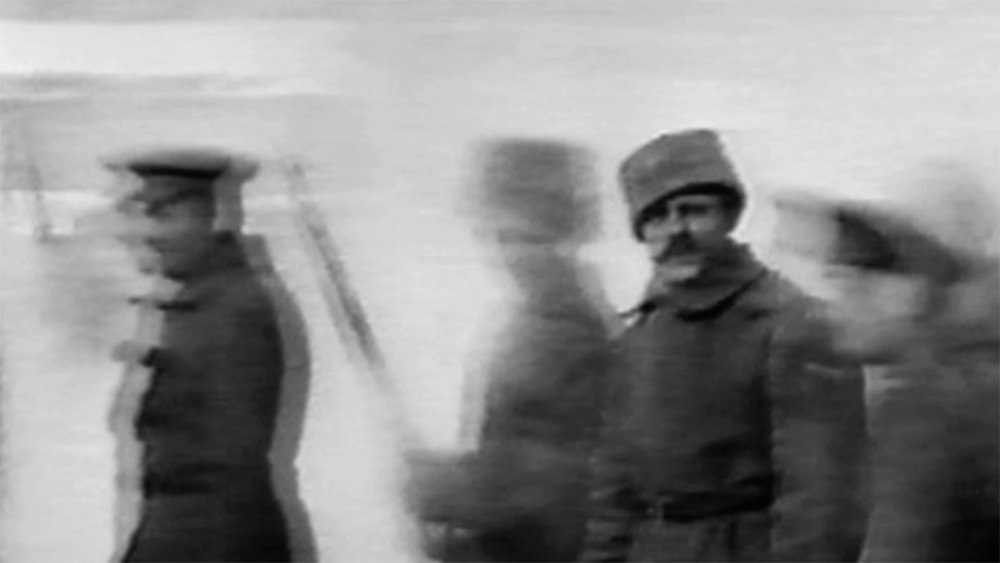
Artiste multimédia, réalisateur, curateur, écrivain, Johan Grimonprez est né à Roeselare, en Belgique, en 1962. Il a étudié l’anthropologie culturelle puis la photographie et les nouveaux médias à l’Académie royale des Beaux-Arts de Gand, en Belgique. Membre de la School of Visual Arts de New York, il a également suivi l’Independent Study Program au Whitney Museum. Actuellement, il vit et travaille entre Bruxelles et New York. Johan Grimonprez travaille aux frontières de l’art et du cinéma, du documentaire et de la fiction. Son travail, acclamé par la critique, sollicite une double analyse de la part du spectateur. Opérant une archéologie des médias contemporains, son travail interroge les tensions de l’intime dans le cadre d’une société globalisée. Il questionne notre réalité, façonnée par l’industrie de la peur, peur qui a envahi le dialogue social et la politique. En proposant de nouvelles écritures à travers lesquelles un récit peut se déployer, son oeuvre met l’accent sur une multiplicité d’histoires et de réalités. Enfant de la première génération télé, l’artiste mélange d’une nouvelle manière fiction et réalité et présente l’histoire comme une dimension multi-perspectiviste ouverte à la manipulation. Il a conquis la critique internationale grâce à son premier film-essai « dial H-I-S-T-O-R-Y » (composez H-I-S-T-O-I-R-E) en 1997, félicité aux festivals de Toronto et de San Francisco. Ses longs métrages « Double Take » (2009) et « Shadow World » (2016) ont reçu de multiples prix dans des festivals internationaux. Grimonprez remporte en 2005 le ZKM International Media Award, le Spirit Award et le Black Pearl Award en 2009 lors de l’Abu Dhabi Film Festival. Son œuvre a également été acquise par NBC Universal, ARTE et BBC/FILM 4. En 2016, son film ‘‘Shadow World’’ (Monde d’ombres) a obtenu une bourse de la part du Sundance Institute et a été diffusé en avant-première au Tribeca International Filmfestival de New-York la même année. Ce film remporte le prix du meilleur long-métrage documentaire au Festival International du film d’Edimbourg ainsi qu’au 61ème Festival International du Film de Valladolid en Espagne. En 2017, il remporte le « Ensor Best Documentary 2017» au Ostend Film Festival, en Belgique. Le travail de Johan Grimonprez a été présenté dans les principales institutions du monde entier, notamment au Hammer Museum (Los Angeles), à la Pinakothek der Moderne (Munich), au MoMA (New York). Ses installations font également partie des collections du Centre Pompidou, du 21st Century Museum of Contemporary Art, à Kanazawa (Japon), ainsi que de celles de la Tate Modern (Londres).
Johan Grimonprez
what i will
Film expérimental | hdv | couleur | 1:11 | Belgique, USA | 2015
Reciting her own poetry, Jordanian-American poet Suheir Hammad’s voice carries the powerful force of dissent to find hope between the military parades and anti-aircraft guns. With what i will Johan Grimonprez provides glimpse of his upcoming feature documentary Shadow World based on Andrew Feinstein’s book The Shadow World: Inside the Global Arms Trade.
Johan Grimonprez`s curatorial projects have been exhibited at museums worldwide, such as at the Hammer Museum (LA), the Pinakothek der Moderne (Munich) and, the MOMA (NY). His works are part of the permanent collections of major museums, including the Centre Georges Pompidou (Paris), the Kanazawa Art Museum (Japan) and Tate Modern (London). His award winning films include dial H-I-S-T-O-R-Y (1997) and Double Take (2009). Traveling the main festival circuit from the Berlinale to Sundance, they have garnered several Best Director awards, the 2005 ZKM International Media Award, a Spirit Award and the 2009 Black Pearl Award at the Abu Dhabi Film Festival. They have also been acquired by NBC Universal, ARTE, and FILM 4. In 2011 Hatje Cantz Verlag published a reader on his work entitled "It`s a poor sort of memory that only works backwards" with contributions by Jodi Dean, Thomas Elsaesser, Hans Ulrich Obrist and Slavoj Žižek. His distributors are Soda Pictures and Kino Lorber International. His artwork is represented by the Sean Kelly Gallery (New York) and the gallerie kamel mennour (Paris). His current film project The Shadow World: Inside the Global Arms Trade by author Andrew Feinstein, was awarded a development grant from the SUNDANCE INSTITUTE. His next film project How to Rewind your Dog is in development with the Flanders Audiovisual Fund and the European MEDIA Programme. Grimonprez divides his time between Brussels and New York, where he studied at the Whitney Museum Independent Study Program, and where he now lectures at the School of Visual Arts.
Raphaël Grisey
Minhocao
Vidéo expérimentale | dv | couleur et n&b | 31:0 | France, Brésil | 2010
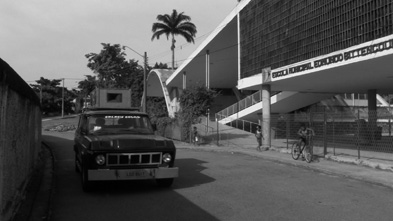
A car with a big sound system broadcasts a text of Eduardo Affonso Reidy on his modern architecture precepts. It drives around the Conjunto Habitacional Pedregulho, a social housing complex build from 1946 by the same architect and also called Minhocão (the big worm) by his inhabitants. The ballet of the driving car, combined with interviews, sound extracts from the fiction film « Lucio Flávio, the passenger of agony » (shot partly in the site) and other scenes, produce a portrait of a major modernist Brazilian building and of the popular northern zone´s context of Rio de Janeiro. The film raises issues about patrimony and memory of social housings in a place which is about to be renovated after 50 years of state´s abandonment and autonomous management.
Raphael Grisey (1979, lives in Paris and Berlin) Raphaël Grisey, artist in the time-based arts, realized experimental films, video installations, video-essays, and documentaries. His work gathers or produces narratives around collective memories, migrations or architecture. www.raphaelgrisey.net
Bart Groenendaal
Sensitivity
Fiction | hdv | couleur | 10:18 | Pays-Bas | 2024
Une jeune femme erre dans un quartier d’affaires la nuit et, à l’aube, rencontre sept inconnus solitaires, qui tombent chacun sous le charme de son énergie. Inspiré par l’imaginaire des Primitifs flamands et réalisé en collaboration avec une véritable guérisseuse quantique, le film est une méditation sur le désir de connexion dans un contexte urbain néolibéral
Dans de courts films narratifs, des documentaires et des installations, Bart Groenendaal (Amsterdam, 1975) explore la manière dont le cinéma façonne notre subjectivité sociale et le monde qui nous entoure, en tant qu’expression toujours changeante d’une idéologie.
Sabine Groenewegen
Djo
Documentaire | 4k | couleur | 13:0 | France | 2018
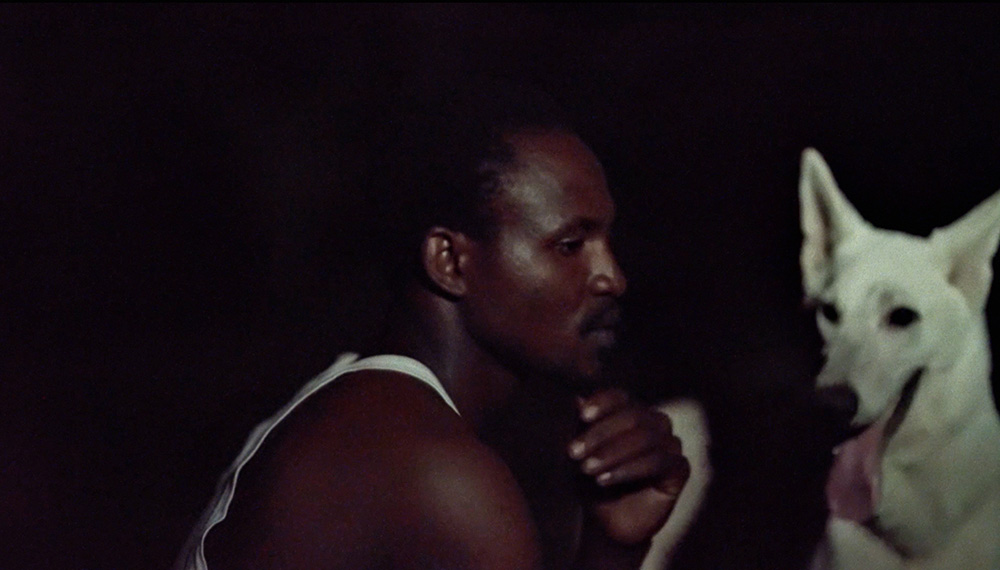
Dans les Hauts de Mayotte, espace du secret, de la magie et de la fuite, hommes et chiens entretiennent un rapport filial, presque fusionnel d`espêces compagnes qui partagent un même territoire de transformation et d`autonomie. Smogi vit une relation particulière avec les chiens mais aussi avec la puissance des éléments, la nature et les esprits malins qui la peuple (les djinns). « Djo» croise différents régimes de croyance dans un syncrétisme sauvage à l`appel de la prière musulmane marque aussi le moment des retrouvailles avec les forces animistes et impures de la forêt.
Laura Henno a initialement une formation de photographe et sâinitie au cinéma au Fresnoy. Elle est lauréate du Prix Découverte des Rencontres Internationales de la Photographie d’Arles en 2007. Depuis plusieurs années, Laura Henno appuie sa démarche photographique et filmique sur les enjeux de la migration clandestine, aux Comores, sur de la réunion ou à Calais. Elle se confronte à la situation des migrants et des jeunes passeurs, avec une ambition documentaire réinvestissant le réel de potentiels de fictions et de récits. Les images qui en résultent provoquent un trouble et puisent dans les codes picturaux et cinématographiques. Elle a obtenu plusieurs prix pour son film Koropa, dont le Prix Egalité Diversité 2017 du Festival de court-métrage de Clermont-Ferrand et le Grand Prix du court-métrage 2016 aux Entrevues de Belfort. Son travail a été montré dans des nombreux musées en France et à l’étranger. Son travail photographique est représenté par la Galerie Les Filles du Calvaire.

Sagi Groner
Jenin Journal
Doc. expérimental | dv | couleur | 8:10 | Israel, Pays-bas | 2006
Une déconstruction personnelle d'un document de guerre. Une expérience de guerre en exil à travers les images des informations, une correspondance avec la maison, et des interviews avec les anciens patriotes. Un stock d'images intuitivement collectées, a été compilé quelques années plus tard, pour refléter la mémoire des médias.
Né en Israel, 1971. Vit et travaille à Amsterdam depuis 1996.

Maëlle Gross
STRIKE A POSE
Vidéo | hdv | couleur | 17:20 | Suisse | 2014
Jouant sur la limite entre documentaire et œuvre vidéo, Strike a pose suit Ariane V., body-buildeuse et Docteur en science de la Vie d’origine belge vivant en Suisse. Durant 9 mois, Maëlle Gross a côtoyé Ariane. Cet investissement dans la durée avait pour but de créer une intimité entre l’artiste et son sujet, afin que ce dernier puisse entrer dans un processus de lâcher prise, gage de confiance. Au moyen d’interviews, de la danse et d’immersion dans le monde du bodybuilding, peu à peu nous nous rendons compte d’un état d’ambïguité du corps. Pousser les limites physiques, se détacher de sa propre enveloppe pour la traiter comme une sculpture. Arrivé au paroxysme de sa métamorphose, la protagoniste devient alors, hors-norme. Hors-norme des critères de beauté stéréotypée du corps genré auxquelles elle est associée. Une invitation à l’introspection subjective dans l’imagerie contrôlée du corps où la limite entre le raisonnable et l’excessif se fait de plus en plus petite au fur et à mesure de la transformation radical qu’Ariane a entrepris sur son corps.
Née le 20 novembre 1988 à Lausanne en Suisse, Maëlle Gross montre très jeune un intérêt particulier pour la photographie et la vidéo. Diplômée en 2013 de la Haute Ecole d’Art et Design de Genève, elle déménage ensuite à Londres et intègre la Goldsmiths University où elle obtient en 2015 son Master of Fine Art avec mention. Son travail a notamment été présenté lors du festival vidéo R4 à Paris, a participé à une performance collective à l’Institute of Contemporary Arts (ICA) de Londres ainsi qu`à la galerie Large Glass à Londres sous le collectif Almosthere. Aujourd’hui, Maëlle Gross vit et travaille entre Londres et Genève.

Eshwarya Grover
Memoirs of Saira & Salim
Documentaire | hdv | couleur | 13:40 | Inde | 2018
What happens when a family revisit a house they abandoned sixteen years ago? It wasn’t a decision where Saira & Salim had a choice. Would you be able to relive those delightful memories & conversations without the traumatic ones overpowering your emotions?
Eshwarya is a post graduate film student at National Institute of Design, India. She has studied architecture and believes that film is all about capturing the emotion of a space or creating a subconscious space and how people interact with it.

Assaf Gruber
Transient Witness
Fiction expérimentale | hdv | couleur | 46:26 | Pologne, 0 | 2021
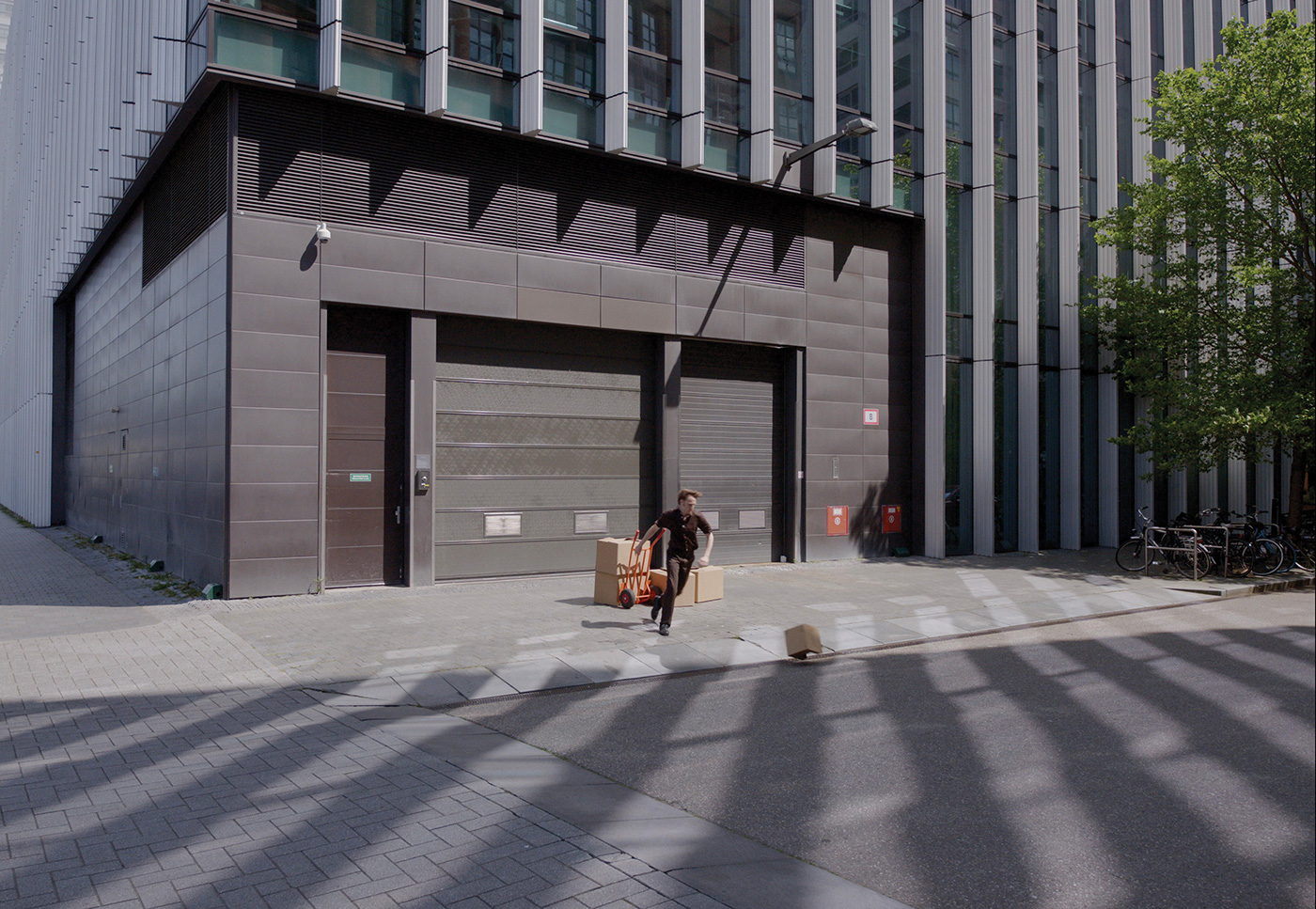
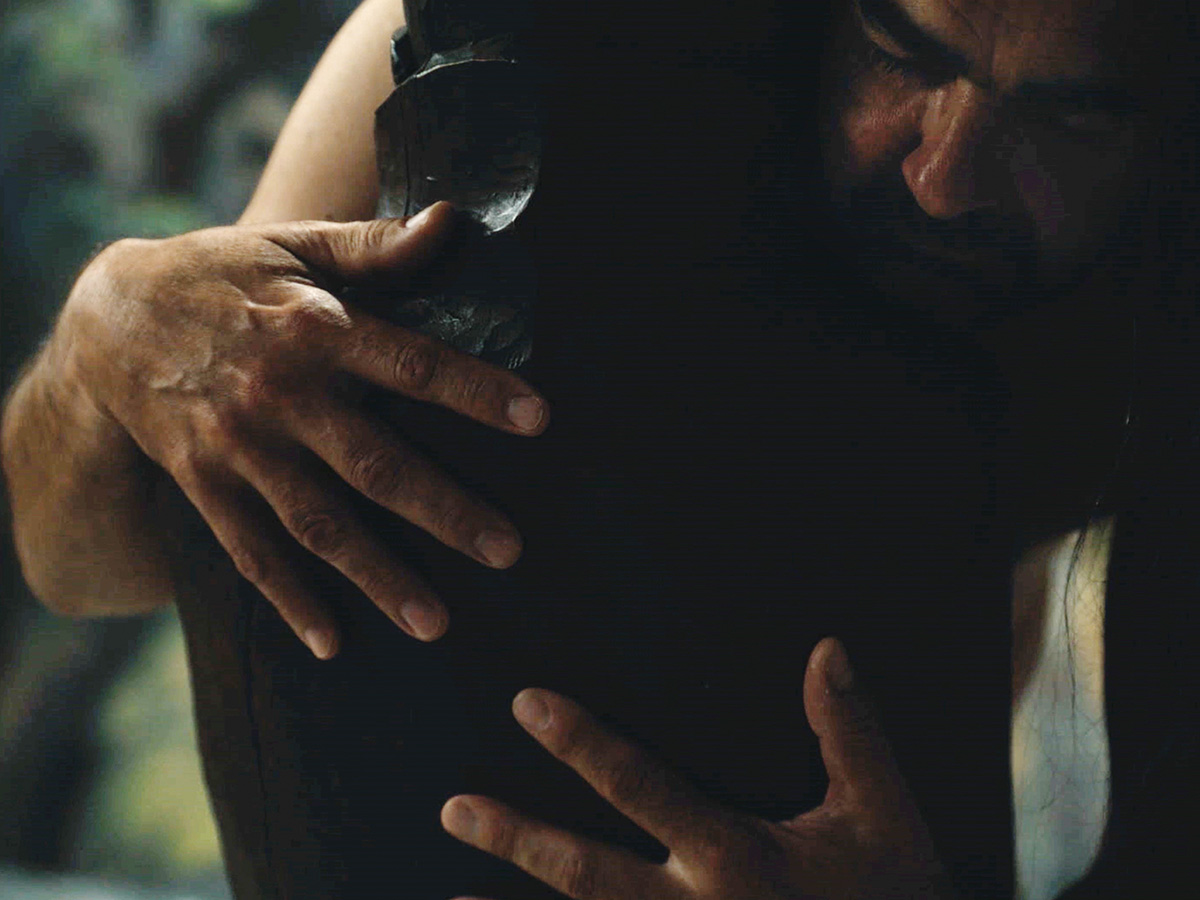
Inspired by the children’s book About Two Squares created by El Lisstzky exactly 100 years ago, Transient Witness simultaneously merges and obscures the intimate from the public, in a story where the actions of collecting and stealing function as synonyms and inheritance and loss immerse. It is a fictional story of the transfer of the objects from the private house of avant-garde collector Egidio Marzona in Berlin to their new domicile – the Japanisches Palais, a Rococo building that belongs to the Staatliche Kunstsammlungen Dresden (SKD). The plot is told through the eyes of three main characters: Christina, the manager of the collection; Maurizio, the art mover; and Präsens the collector’s dog. Fiction meets reality: the film takes place on 25 November 2019. On that day, priceless jewelry of immense cultural value was stolen from the Green Vault in Dresden in one of the biggest art heists in history, causing a national shock in Germany. The film unfolds a complex story, navigating between historical facts about the Baroque and the Avant-garde; art and its politics.
Assaf Gruber (b. Jerusalem, 1980) is a sculptor and filmmaker who lives and works in Berlin. The dialectical relationship between the individual and the establishment is at the centre of his work, which explores how political orientations of institutions impact the lives of individuals and how institutions choose to represent and communicate facts and artefacts. Gruber studied at the Cooper Union in New York and is a graduate of the École Nationale Supérieure des Beaux-Arts in Paris and of the Higher Institute of Fine Arts (HISK) in Ghent. His solo exhibitions include the Muzeum Sztuki, ?ód? (2015), the Berlinische Galerie, Berlin (2018), Ujazdowski Castle Center for Contemporary Art, Warsaw (2018), among others. His films have been featured in festivals including the Berlinale Film Festival, FID Marseille (2019), and the International Short Film Festival Oberhausen (2016).
Assaf Gruber
Never Come Back
Fiction expérimentale | 0 | couleur | 14:0 | Allemagne, Autriche | 2023
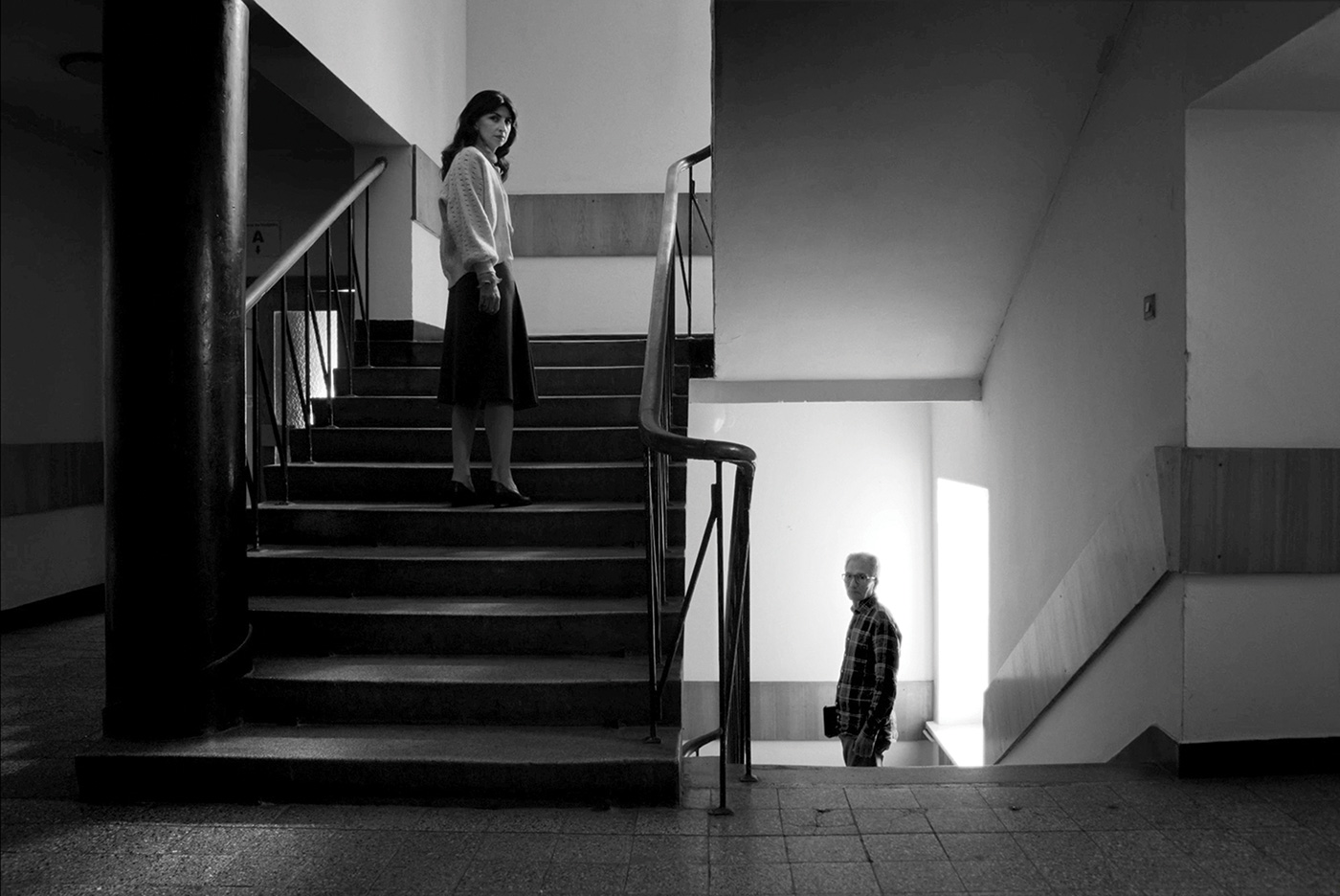
Museum depots are places where things are kept out of sight, but also protected from all-too-schematic historical judgments. In his new film, Assaf Gruber continues his ongoing investigation of the backstage areas of art institutions to engage with Neue Galerie Graz’s holdings. In the cage-like space of the repository, we see a naked musician working intensely on a composition. He is inspired by artists who belong to a gray area between modernist aspirations and enthusiasm for Nazism, and whose works combine a taste for the exotic with local patriotism, religious fervor, and eroticism. Our mysterious protagonist tentatively plays a familiar melody. It's a song known to many of us, recognisable from dance floors across Europe - but how many of us have ever bothered to listen to its remarkably rascist and imperialistic lyrics?
Assaf Gruber (b. Jerusalem, 1980) is a sculptor and filmmaker living and working in Berlin. The dynamic relationship between individuals and institutions is at the center of his practice, which aims to explore both how the political orientation of legacy establishments impact the lives of individuals and how these organizations choose to represent and communicate facts and their attendant artifacts. Gruber’s solo exhibitions include the Berlinische Galerie, Berlin (2018) and the Muzeum Sztuki, ?ód? (2015). His films have been featured in festivals including the International Film Festival Rotterdam (2023) and FID Marseille (2022). He studied at Cooper Union in New York and is a graduate of the École Nationale Supérieure des Beaux-Arts in Paris and of the Higher Institute of Fine Arts (HISK) in Ghent. Gruber is currently one of the fellows of the Berlin Artistic Research Grant Programme 2022/23 (gkfd).
Assaf Gruber
Miraculous Accident
Fiction expérimentale | 0 | couleur et n&b | 29:15 | Pologne | 2025
Miraculous Accident est un film transtemporal qui raconte l’histoire d’amour entre Nadir, un étudiant marocain à l’École de cinéma de ?ód? en 1968, son enseignante de montage, Edyta, de confession juive, et leur relation partagée avec Jarek, le meilleur ami de Nadir et protégé d’Edyta. Nadir fait partie d’un groupe d’étudiants nord-africains envoyés étudier les techniques cinématographiques communistes dans le cadre du soutien du Bloc de l’Est aux luttes anti-impérialistes. Malgré son opposition au sionisme, Edyta est contrainte de quitter la Pologne en raison de la rupture politique entre la Pologne et Israël après la guerre des Six Jours, ou la Naksa (« la Défaite »). En 2024, Nadir retourne à l’école pour réaliser un film après avoir découvert une lettre oubliée qu’Edyta lui avait écrite depuis Haïfa en 1989. Le film pleure la cruauté des nations, capables de faire naître de rares miracles — des amours accidentelles — pour mieux les briser avant qu’ils n’aient le temps de respirer. Inspiré par la vie de l’ancien étudiant marocain, poète et cinéaste Abdelkader Lagtaâ, qui interprète également Nadir dans le film, Miraculous Accident tisse son récit à travers des images originales et des extraits de films d’étudiants des années 1960 réalisés par Lagtaâ et ses camarades.
Assaf Gruber (né à Jérusalem en 1980) est un sculpteur et cinéaste vivant et travaillant à Berlin. La relation dynamique entre les individus et les institutions est au cœur de sa pratique, qui vise à explorer à la fois comment l’orientation politique des établissements hérités impacte la vie des personnes, et comment ces organisations choisissent de représenter et de transmettre les faits ainsi que les artefacts qui les accompagnent. Les biographies absurdes des protagonistes de ses projets révèlent tout autant qu’elles obscurcissent les raisons et les motivations qui conduisent les gens à obéir ou à se rebeller — contre leur monde intérieur ou contre la société dans laquelle ils vivent. Sa photographie, sa sculpture et ses installations placent la matérialité des objets en relation avec des dimensions narratives, créant ainsi des espaces fictionnels où mouvement et non-mouvement fonctionnent comme un médium. Les expositions personnelles de Gruber incluent la Berlinische Galerie, Berlin (2018), et le Muzeum Sztuki, ?ód? (2015). Ses films ont été présentés dans des festivals tels que l’International Film Festival Rotterdam (2023) et FID Marseille (2022). Il a étudié à Cooper Union à New York et est diplômé de l’École Nationale Supérieure des Beaux-Arts de Paris ainsi que du Higher Institute of Fine Arts (HISK) à Gand.
Katharina Gruzei
Die ArbeiterInnen verlassen die Fabrik
Vidéo | hdv | couleur | 11:0 | Autriche | 2012
Katharina Gruzei combines a sociopolitical issue and a precise formal concept, which is rare in experimental film. Inspired by the Lumière brothers? first film, La sortie de l?usine Lumière à Lyon, which shows a large number of workers leaving their factory?s gate, Gruzei begins in the interior, in a passageway (made to seem incredibly long by the editing) that emerges from the darkness. More and more of them walk down the dark, flickering hallway. By these scenes the weirdness of the space and the menacing quality of a mass of people who could form a resistance movement becomes increasingly evident. All relevant questions concerning the on-the-job reality experienced by these workers, most of whom are women, can be formulated by means of association: Is it nighttime when they leave the factory? What kind of work do they have to do? What do female laborers earn these days? How long does it take them to get home from this monstrous factory, and when will it be moved to a low-wage country?
born 1983 Studies of Experimental Art and Cultural Studies at the University of the Arts in Linz, Austria. Studies abroad at the Art Department of the Universtiy of California Santa Barbara and at the University of Fine Arts Berlin for Visual Cultural Studies in the class of Katharina Sieverding. Katharina Gruzei works with photography, film, video, installations, media-performances, sound and objects. Working conceptually, she experiments between these disciplines and arrives at an unique crossover language.
Milutin Gubash
Language Lesson
Vidéo | 0 | couleur | 1:42 | Canada, Serbia | 2016
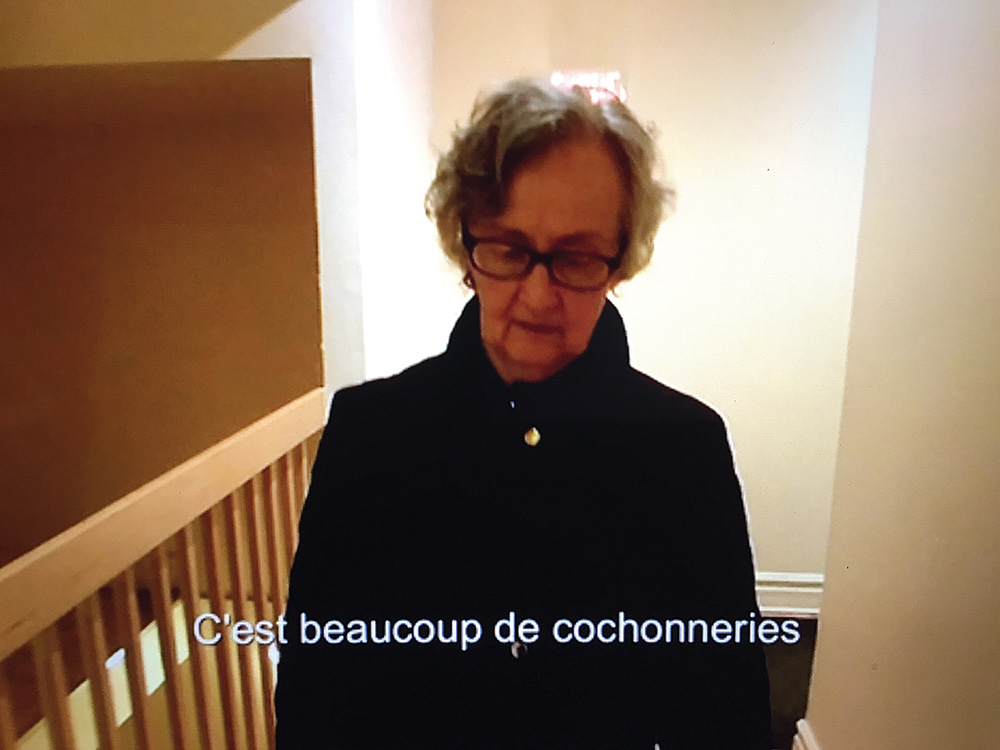
Language Lesson (2016) intercuts two tracking shots -- a shaky handheld approach to the Yugoslav dictator’s mausoleum, with a smooth following shot of my Yugoslav mother walking through her Canadian apartment corridor, and entering the small living quarters in which she will almost certainly pass the remainder of her days. If she’s not exactly an exile, she’s certainly cut off from her past, her friends, the sites where she grew up and feels most familiar, or so we may imagine just upon hearing her accent, which comes in the form of voiceover, where she gives us a little lesson in speaking Serbian. She says things like, “This is here, this is mine, this is shit, I don’t like this…”, alternating in English, then Serbian (subtitled in French). The thoughts expressed range from neutral, to (perhaps) happy, to disappointed or displeased. As she walks, her thoughts seem to change. Similarly, a change happens on the approach to the mausoleum, which at first appears lavish, in sparkling marble. We don’t know at first where we are, other than in a cemetery, the burial site of someone very esteemed, wealthy, important. After short bursts of the approach, we eventually see the name of Tito, which perhaps causes us to reflect on opulence in a land where there was seldom plenty. The camera drops quickly to the ground, where we apprehend a struggle between a colony of ants, which crawl in and out of the cracks in the marble base of the crypt, each fighting for the corpse of a fly. Notions of sacrifice and fellowship in the common pursuit of attaining a progressive, egalitarian social order, rapidly give way to an each-for-their-own, eat-or-be-eaten state of affairs.
Milutin Gubash est né à Novi Sad (Serbie) et vit à Montréal (Canada) depuis 2005. Il a présenté des expositions au Québec, au Canada, aux États-Unis et en Europe y compris au Musée d’art contemporain (2007) et une rétrospective coproduites par six institutions au travers le Canada (Rodman Hall Art Centre 2011, Carleton University Art Gallery 2012, Kitchener-Waterloo Art Gallery 2012, Southern Alberta Art Gallery 2012, Musée d’art de Joliette 2012 et Fonderie Darling 2013). Sa pratique englobe la photographie, la vidéo et la performance et inclut souvent la participation de sa famille et amis qui incarnent une version d’eux-mêmes dans des feuilletons maison, des réinterprétations historiques et de pièces de théâtre improvisées. Par des moyens simples et des gestes souvent absurdes, Gubash questionne nos suppositions au sujet des récits de nos propres identités, histoires et environnements.
Milutin Gubash
Vesna at Monument
Vidéo | hdv | couleur | 3:46 | Canada, Serbia | 2016
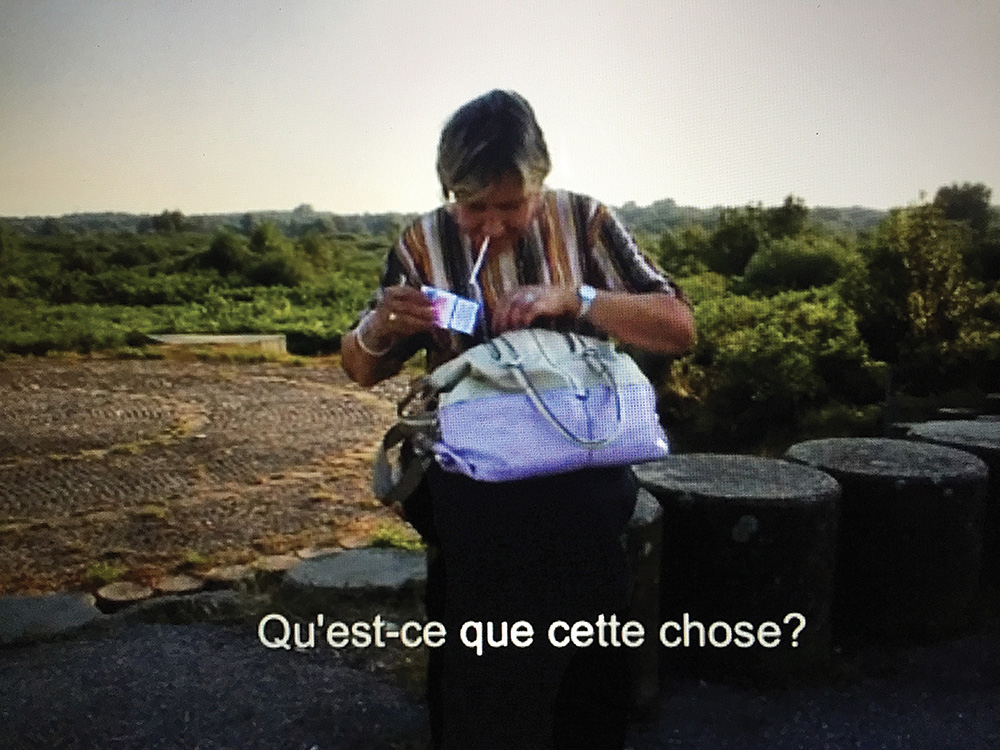
In Vesna At the Monument (2016), a humble middle aged woman appears on the site of a dilapidated, in-the-middle-of-nowhere monument, erected likely in the time when she was youthful and at her most optimistic. The monument was commissioned in order to commemorate the heroic actions of common citizens in their struggle against fascism, and desire to promote and participate in a progressive, utopic state. She shuffles past the monument, and sits to smoke a cigarette. Off screen, a voice is heard, asking her questions such as what is the meaning of this place, this monument, this moment. She does not answer, as though she does not hear the question, even while acknowledging the camera, and the voice itself. It could, one supposes, be the voice of the cameraman or director, a voice in the subject’s own head, perhaps the voice of the monument itself, trying to ascertain the meaning of itself in this day and age. It gets no reply, and eventually (perhaps fed up with the question), she simply leaves, with the interlocutor left in his own uncertainty. The video seems to reject or deny a past, while expressing grave uncertainty to the future.
Milutin Gubash est né à Novi Sad (Serbie) et vit à Montréal (Canada) depuis 2005. Il a présenté des expositions au Québec, au Canada, aux États-Unis et en Europe y compris au Musée d’art contemporain (2007) et une rétrospective coproduites par six institutions au travers le Canada (Rodman Hall Art Centre 2011, Carleton University Art Gallery 2012, Kitchener-Waterloo Art Gallery 2012, Southern Alberta Art Gallery 2012, Musée d’art de Joliette 2012 et Fonderie Darling 2013). Sa pratique englobe la photographie, la vidéo et la performance et inclut souvent la participation de sa famille et amis qui incarnent une version d’eux-mêmes dans des feuilletons maison, des réinterprétations historiques et de pièces de théâtre improvisées. Par des moyens simples et des gestes souvent absurdes, Gubash questionne nos suppositions au sujet des récits de nos propres identités, histoires et environnements.
Tito Guedes, Manuel OGANDO
From park to park
Doc. expérimental | dv | couleur | 3:40 | Portugal | 2003
Portrait expérimental de la ville comme expérience d`elle-même : les images sont trop intenses et parfois le bruit infernal. Indie Lisboa. Festival de Cinema Indépendant de Lisbonne, 2004.
Gueli
LA FABRIL - work in progress
Doc. expérimental | hdv | couleur | 17:40 | Argentine, Italie | 2012
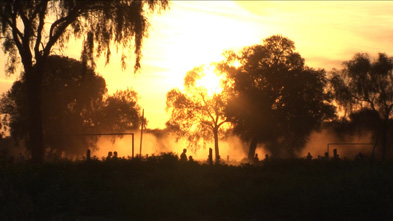
The images of a virgin Argentina, out from a private photographic archive, become present landscape: the river, the forest, the road: everything seems unchanged... except a ruined cotton factory, ghost of the collapse of a model of development imported from Europe, which is now a few teenager`s playground.
Caterina Gueli an italo-argentinean director/editor based in Paris. ?La Fabril? is a work in progress, through which she deepens the research engaged in her precedent two short films : Resistencia (Premio Avanti! Torino Film Festival 2007, Best Soundtrack Genova Film Festival 2008, etc.) and Somewhere (2009). She has participated to the realization of Il Canto dei Nuovi Emigranti (Best Documentary Torino Film Festival 2005) and In Attesa dell`Avvento (Best Short Film - Mostra del Cinema di Venezia 2011 ? Orizzonti) of Felice D`Agostino and Arturo Lavorato.
Guerreiro Do Divino Amor
Roma Talismano
Doc. expérimental | 4k | couleur | 9:38 | Brésil | 2024
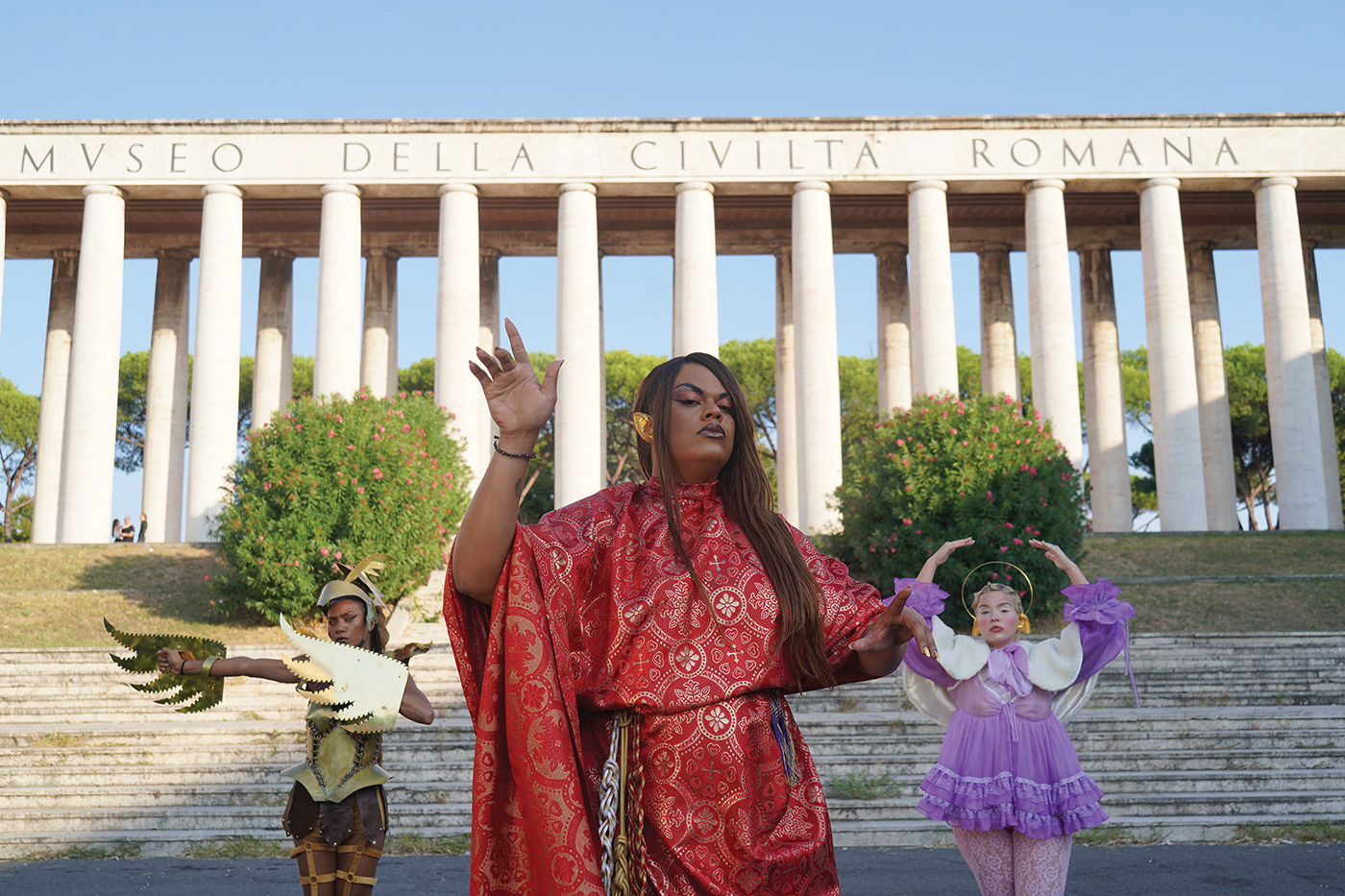
Roma Talismano, septième volet du Superfictional World Atlas, explore Rome comme talisman moral et esthétique de l’Occident. Au son d’hymnes et d’arias d’opéra, trois animaux allégoriques — la louve, l’aigle et l’agneau — racontent l’incessant recyclage de l’esthétique romaine pour fabriquer une universalité classique artificielle et délavée, de la Renaissance au fascisme jusqu’à aujourd’hui : Roma Talismano, volcan éternel de blancheur visuelle et spirituelle.
Guerreiro do Divino Amor est titulaire d’un master en architecture de l’École d’architecture de Grenoble (France). Depuis vingt ans, sa recherche au long cours, Superfictional World Atlas, explore les mythologies historiques, médiatiques, religieuses et corporatives qui composent l’imaginaire collectif des nations. À partir de fragments du réel, il construit un univers de science-fiction sous forme de films, de publications et d’installations de grande envergure. Il a représenté la Suisse à la Biennale de Venise 2024, a été boursier du programme DAAD Artists-in-Berlin en 2021–2022 et a reçu le PIPA Prize en 2019. En 2022, il a présenté la rétrospective Superfictional Sanctuaries au Centre d’art contemporain de Genève. Son travail a été montré, entre autres, à la Triennale Frestas de Sorocaba (Brésil), à la Bangkok Biennale 2024, au CAC Vilnius (Lituanie) et à la Pinacoteca de São Paulo. Ses films primés ont été projetés dans de nombreuses institutions et festivals, en France et à l’international. Guerreiro do Divino Amor vit et travaille à Rio de Janeiro, au Brésil.
Felipe Guerrero
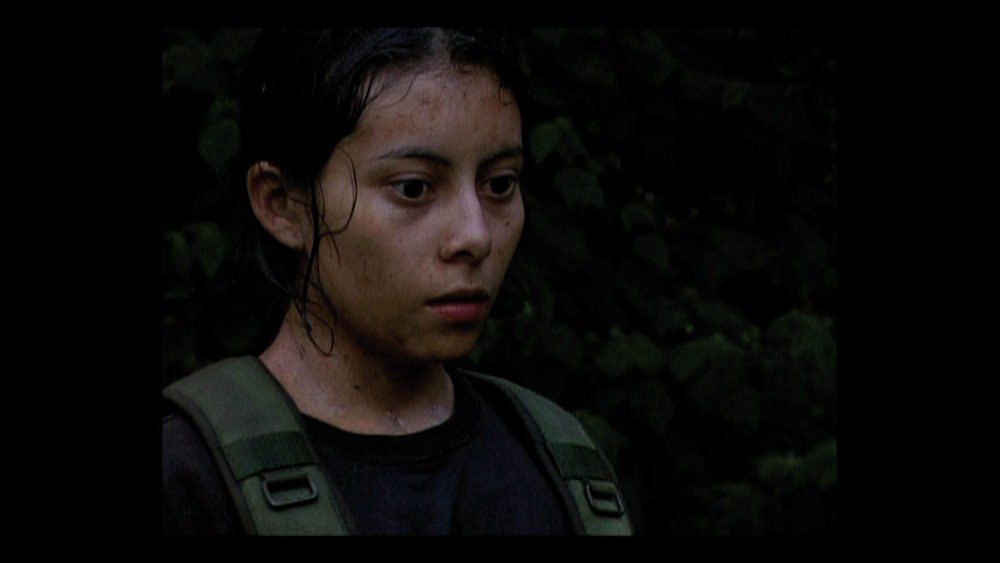
Nelsa
Fiction expérimentale | hdv | couleur | 13:0 | Colombie | 2014
A mission in the middle of the Colombian jungle. Time seems to have stopped. There is something sinister in the air. The ambiance is tense. Hot and humid. A man surrounded by an environment that burns himfrom the inside. Power, poetry, violence. Everything happens in an instant, leaving everyone breathless.
Director and editor Felipe Guerrero was born in Colombia in 1975. His first film Paraíso(2006) received the Mention Spécial for First Films at FIDMarseille. Corta(2012), his second film, premiered in the BrightFuture Section at the Rotterdam FF 2012, and was exhibited in Festivals around the world (FICCICartagena de Indias, BAFICI Buenos Aires, JIFF Jeonju,FIDOCS Santiago de Chile, DISTRITAL México DF, SPLITCroacia, DOKLeipzig, La Habana). As an editor, he worked in films exhibited and awardedinternationally, among them: Los Hongos(2014), La playaDC(2012), El páramo(2011), El vuelco del Cangrejo (2009). In 2011 he founded his own production company Mutokino.