Catalogue > Faire une recherche
Résultats pour : Tout le catalogue
Felipe Guerrero
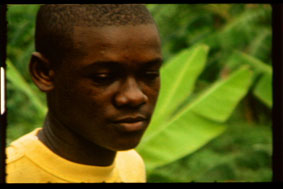
Paraíso
Doc. expérimental | super8 | couleur et n&b | 55:0 | Colombie | 2006
PARAÍSO est une évocation poétique d'un pays et de sa mémoire historique, un portrait intime de la vie contemporaine en Colombie. Le grain doux du Super 8 fait vibrer la réalité d'un pays plongé dans une guerre sans fin.
Felipe Guerrero est né en 1975 en Colombie et vit à Buenos Aires. Il a étudié le montage au Centre Expérimental de Cinématographie de Rome et travaille comme monteur en Europe et en Amérique Latine.

Dor Guez
Qalâat Al-Husan
Installation vidéo | 4k | couleur | 8:0 | Palestine, Royaume-Uni | 2022

Vincent Guilbert
Brutalement, le silence (Savagely, Silence)
Doc. expérimental | hdv | couleur et n&b | 20:30 | France, Japon | 2016
21 décembre 2015. Les images d’une caméra de surveillance montrent un renard à proximité de la cuve de confinement du réacteur no.2 de la centrale nucléaire de Fukushima..
Né en 1976 à Saint-Denis, France. Parallèlement à ses recherches sur la texture de l’image (qu’elle soit en pellicule, ou numérique) et le son, les thèmes développés à travers ses films sont essentiellement liés au Temps, à la mémoire et au fragment.
Vincent Guilbert
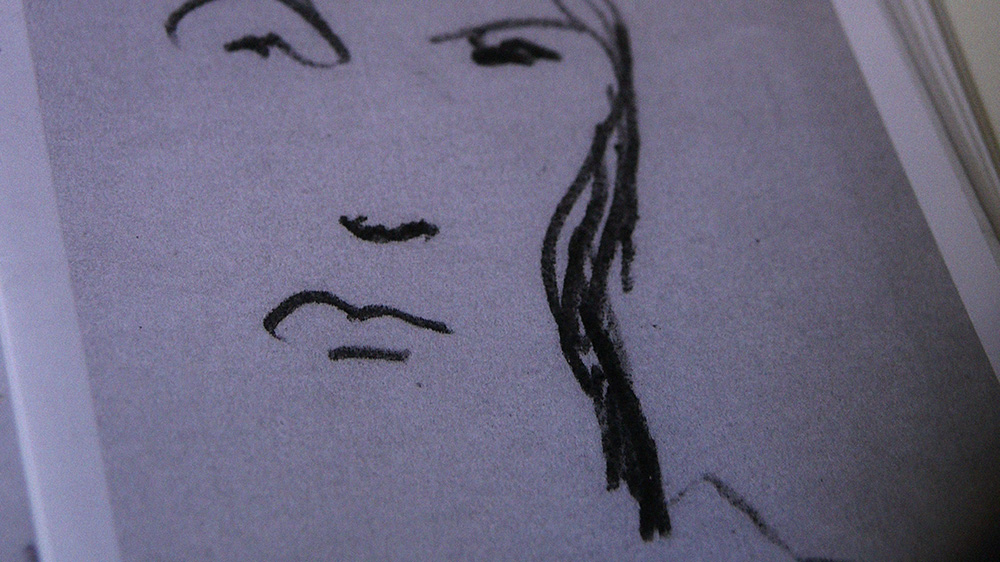
Gestures
Documentaire | hdv | couleur et n&b | 31:0 | France, 0 | 2017
Fragments d'une rencontre avec le musicien américain Loren Connors. Frôler les pulsations du temps, palper la matière, s'attarder sur l'imperceptible fragilité du geste...
Né en 1976 à Saint-Denis, France. Parallèlement à ses recherches sur la texture de l’image, les thèmes développés à travers ses films/photos sont essentiellement liés au Temps, à la mémoire et au fragment.

Mauricio Guillén
Avenida Progreso
Fiction | 16mm | noir et blanc | 20:0 | Mexique | 0
Mr. Jocotot, a philosophy and ethics professor, has just collected final exams from his students and, unlike most other days, decides to take a taxi home. As he turns onto Avenida Progreso, a prominent street in Mexico City, he will come up against corruption and his ignorance will teach him a lesson.
Mauricio Guillén was born in México city in 1971. He studied at Parsons School in Paris, The Cooper Union in New York City and The Royal College of Art in London England. He currently lives in Frankfurt Germany where last summer, as part of an exhibition of his work, he presented the film AVENIDA PROGRESO at MMK (Museum für Moderne Kunst Frankfurt am Main).

Tamar Guimaraes, in collaboration with Luisa Cavanagh and Rusi Milán Pastori
Soap
Fiction | 4k | couleur | 53:50 | Brésil, Allemagne | 2020
"Soap" est un film en quatre épisodes, dans lequel un groupe de citadins de gauche isolés imagine comment créer une telenovela, un soap, pour infiltrer l'extrême droite conspiratrice, dans le Brésil de Bolsonaro. Une coalition de militants, d'artistes et d'écrivains peut-elle éviter de se prendre les pieds dans ses propres préjugés et privilèges, pour créer quelque chose de convaincant? Peuvent-ils unir leurs forces pour battre un système populiste à son propre jeu? "Soap" est une collaboration entre Tamar Guimarães, Luisa Cavanagh et Rusi Millán Pastori. Il a été filmé à Berlin et São Paulo pendant le premier confinement du Covid19, en 2020.
Tamar Guimarães est née à Belo Horizonte (Brésil) en 1967. Elle vit et travaille à Berlin (Allemagne). Elle est artiste visuelle, travaillant le film et d'autres formes de médias basés sur le temps. Elle collabore souvent avec des acteurs et des non-acteurs dans des films semi-fictionnels qui explorent les dynamiques sociopolitiques résiduelles ou contemporaines, ainsi que des problématiques dans l'art, l'architecture et les institutions qui les présentent. Son travail a été présenté aux 29e, 31e et 33e Biennales de São Paulo (Brésil); à la 56e Biennale de Venise (Italie) [Pavillon belge]; à la 55e Biennale de Venise (Italie); au LACMA – Los Angeles County Museum of Art (USA); au Guggenheim Museum, New York (USA); au SculptureCenter, New York (USA); à la Renaissance Society, Chicago (USA); à la 7e Biennale de Gwangju (Corée du Sud); au Frac - Le Plateau, Paris (France); et au Centre d’art contemporain - Synagogue de Delme (France). Parmi ses expositions individuelles, citons le Museo Nacional Centro de Arte Reina Sofia, Madrid (Espagne), et le Jeu de Paume - Satellite, Paris (France). Luisa Cavanagh est née en 1979 à Buenos Aires (Argentine). Elle est artiste visuelle, coloriste et directrice de la photographie. Elle a étudié la cinématographie à la Escuela Nacional de Realización y Experimentacioón Cinematográfica, Buenos Aires (Argentine). Intéressée par le travail collaboratif, elle a rejoint le "Grupo Mexa", afin de développer le film/performance "Cancionero Terminal 10Mg". Elle est co-fondatrice de Eterno work in progress, un ciné-club géré par des artistes qui explore les possibilités de l’exposition de cinéma, de la musique en direct et des images en mouvement. Rusi Millán Pastori est né en 1976 en Argentine. Il est écrivain, réalisateur et directeur de la photographie. Des scénarios politiques réels constituent le dénominateur commun de son travail, sous la forme de chroniques combinant différents personnages et situations. Il a étudié la réalisation à la Escuela Nacional de Realización y Experimentación Cinematográfica, Buenos Aires (Argentine). Il a réalisé des courts et moyens métrages qui ont été présentés dans divers festivals, notamment au BAFICI – Festival international du cinéma indépendant de Buenos Aires (Argentine) et à la 41e Mostra de São Paulo (Brésil).
Tamar Guimaraes
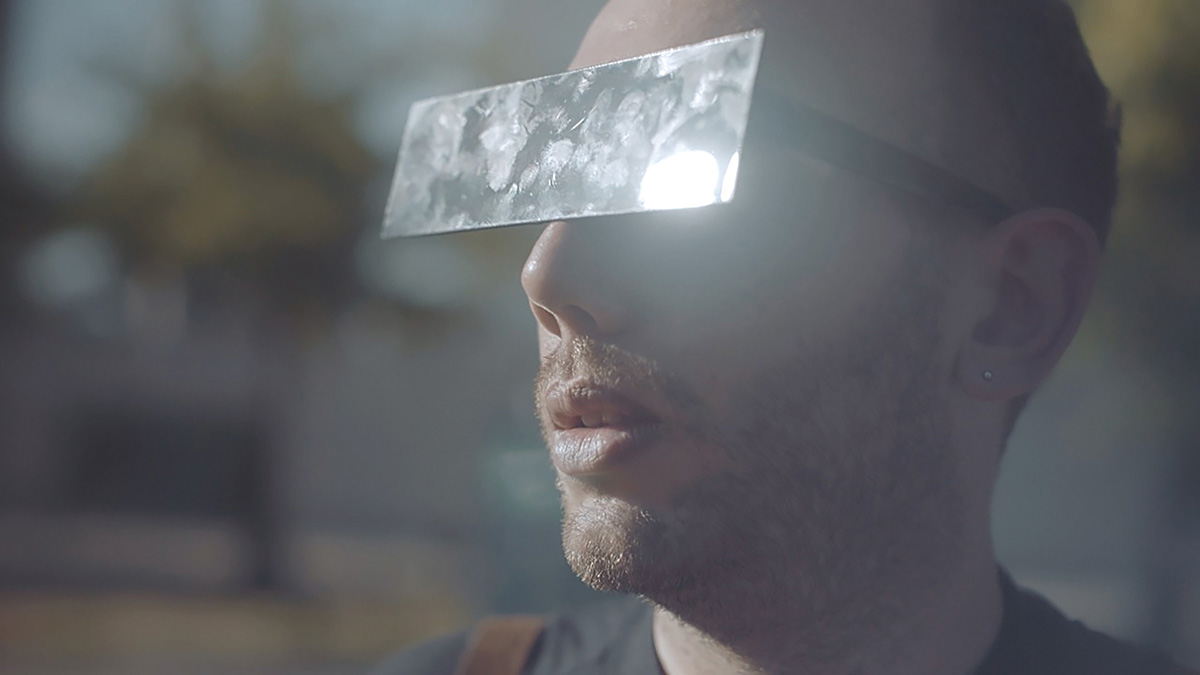
Soap: Epidode 5 - Moses And Monotheism
Vidéo | hdv | couleur | 27:0 | Royaume-Uni, Brésil | 2021
SOAP, 2020-ongoing, imagines what it would take to create a soap opera with which to infiltrate, and influence, the conspiratorial far right in Bolsonaro’s Brazil. A group of idealistic left-wing intellectuals join forces to play a populist system at its own game. Through the initial five episodes, the heroes struggle to chart a course through their own ideas and ideologies by way of quotidian dramas and veiled intrigues. But how can this small group of artists, writers and activists overcome the struggle of principles, their internal bickering and the absurdities of their own privilege to create something that resonates and has real impact with their target audience? IN Episode 5, ‘MOSES AND MONOTHEISM’, concepts clash ferociously, hand puppets scream and pray, renowned Genocide Scholars are accosted and conspiracies bleed across borders. Meanwhile, as the left-wing infiltrators struggle to make sense of their own intentions, entertaining the idea of creating a YouTube series aimed at the evangelic Brazilians, the Querdenkers (a movement that fuses protesters against Covid measures with the far-right scene thriving on a sense of crisis and apocalypse) move through plague-time Berlin like a danse macabre.
Tamar Guimarães (b. Belo Horizonte, BR, lives and works in Copenhagen and Berlin) is a visual artist working with film and other forms of time based media. She often works with actors alongside non- actors in semi-fictional films. Recent solo exhibitions include Museo Nacional Centro de Arte Reina Sofia, Madrid; Jeu de Paume Satellite, Paris; Gasworks, London and the IMA Institute of Modern Art, Brisbane. Guimarães’ works have been included at the 33rd, 31st and the 29th São Paulo Biennial; the Belgian Pavilion at the 56th Venice Biennial; the International Exhibition at the 55th Venice Biennial; at the LACMA - Los Angeles County Museum of Art (USA); Baltimore Museum of Art (USA); the 11th Sharjah Biennial (UAE); the Banff Centre, Alberta (CA); Malmö Museum (SE); the Guggenheim Museum, NY (USA); the SculptureCenter (NY/USA); the 7th Gwangju Biennial (SK); the 3rd Guanghzhou Triennial (CN); the Jumex museum, Mexico (MX); Frac/Le Plateau, Paris (FR); CAC Synagogue de Delme (FR) and at the Haus der Kulturen der Welt, Berlin (DE). Her work has been screened at the Berlinale Forum Expanded (2019); Blackout, International Film Festival Rotterdam (2019); VIDEONALE, Bonn (2018); Anthology Film Archive, New York (2016); CPH:DOX (2013 and 2007); Images Film Festival and Experimental Media Congress, Toronto, Canada (2010); Architektur-Visionen # 1-6, Metropolis Kino, Hamburg (2015); Les Rencontres Internationales, Paris and Berlin (2014); TRAMWAY art film biennial, Glasgow (2012); Viennale Film Festival, Vienna (2011); and Oberhausen Film Festival (2009) among others. Guimarães’ work is represented in the collections of the Tate Modern (UK); the Solomon Guggenheim Foundation, N.Y. (USA); Museo Nacional Centro de Arte Reina Sofía (ES); Kadist Foundation (SF); Inhotim (BR); Frac Lorraine (FR); Guandong Museum (CN) and Cisneros Fontan- als Art Foundation (USA). She was awarded the 2018 Faena Prize for the Arts, Faena Art, Buenos Aires, Argentina; the 2014 Edstrandska Foundation Prize, Malmö, Sweden; the 2012 Cisneros Fontanals Art Foundation Grants and Commissions Prize, Miami, USA; was the receiver of a three-year work grant from the Danish Arts Council and was nominated for the 2018 Prize The Future of Europe, Leipzig, Germany.
Tamar Guimaraes
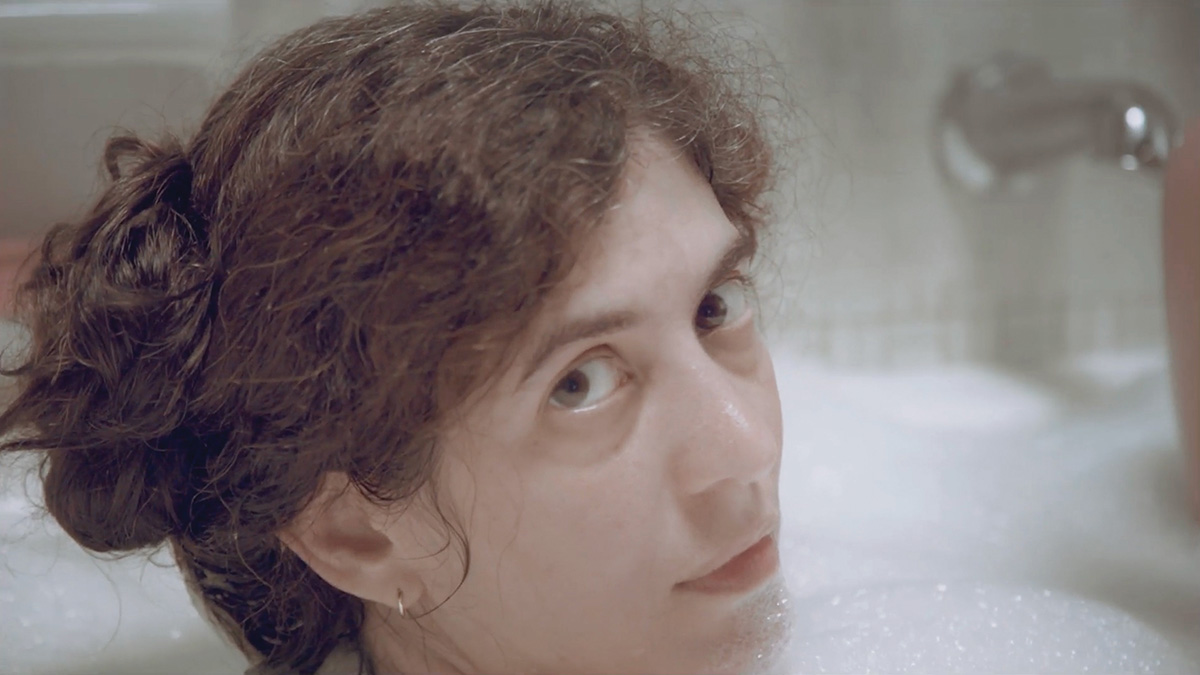
Soap: Episode Six and a Half: Talking Soap
Fiction | 0 | couleur | 23:55 | Brésil | 2023
SOAP is a film in seven episodes following the infiltration attempts of a cluster of left-wing people in right-wing social networks. The tactic chosen by the group is the creation of a YouTube channel aimed at teenagers employing the apparently conservative language of religious devotion and self help through prayer. SOAP asks questions such as can a coalition of artists, writers and activists avoid tripping over their own assumptions and privileges to form something persuasive? Is the white left dead? Or rather, have the forms of appeal and address relied upon by the intellectual Lefts ceased to be effective? Is there a way out of the internal bickering and accusations - that continue to hamper political movements? In episode 'six and a half', Camila narrates the previous episodes, reflecting on the project's aims and fractures from the perspective of a post election moment in which the Left was re-elected to the presidency in Brazil.
Tamar Guimarães (b. Belo Horizonte, BR, lives and works in Copenhagen and Berlin) is an artist working with film and installation. Her work has been included at the 33rd, 31st and the 29th São Paulo Biennial; the Belgian Pavilion at the 56th Venice Biennial; the International Exhibition at the 55th Venice Biennial; the LACMA - Los Angeles County Museum of Art (USA); Baltimore Museum of Art (USA); 11th Sharjah Biennial (UAE); the Banff Centre, Alberta (CA); the Guggenheim Museum, NY (USA); the SculptureCenter (NY/USA); the 7th Gwangju Biennial (SK); the 3rd Guanghzhou Triennial (CN); Frac/Le Plateau, Paris (FR); CAC Synagogue de Delme (FR). Her moving image work has been screened at the Les Rencontres Internationales (2014, 2021, 2022); Berlinale Forum Expanded (2019); Blackout, International Film Festival Rotterdam (2019); VIDEONALE, Bonn (2018); Anthology Film Archive, New York (2016); CPH:DOX (2013 and 2007); Images Film Festival and Experimental Media Congress, Toronto, Canada (2010); Architektur-Visionen # 1-6, Metropolis Kino, Hamburg (2015); TRAMWAY art film biennial, Glasgow (2012); Viennale Film Festival, Vienna (2011); and Oberhausen Film Festival (2009). Guimarães’ work is represented in the collections of the Tate Modern (UK); the Solomon Guggenheim Foundation, N.Y. (USA); Museo Nacional Centro de Arte Reina Sofía (ES); Kadist Foundation (SF); Frac Lorraine (FR) among others.
Alexandra Gulea, Nicu Ilfoveanu
Baiat de lemn
Doc. expérimental | 16mm | couleur et n&b | 9:4 | Allemagne, Roumanie | 2016
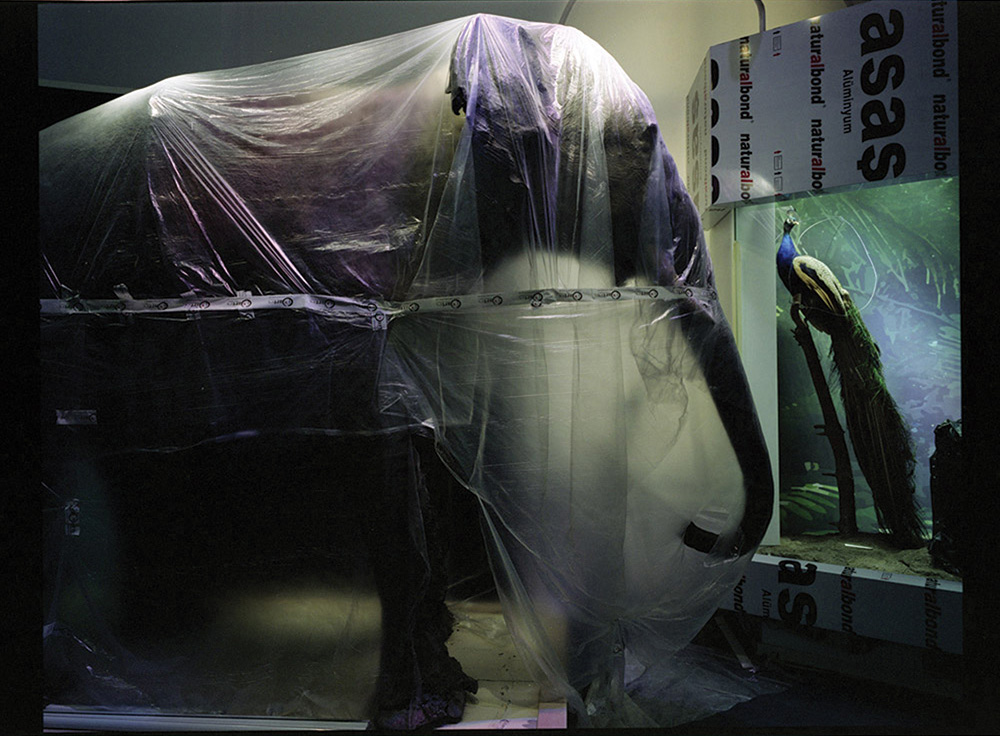
C’est au bout du conte que la sympathique poupée Pinocchio, se transformait en homme après avoir renoncé à faire des bêtises et s’être conformé au bon sens de rigueur. D’abord il s’était réjoui de cette récompense. Mais un beau jour, Pinocchio vit une multitude d’animaux empaillés dans un musée. Des êtres du passe, mais qui en même temps représentent bien plus que ce qu’elles étaient. Plus libres que lui, Pinocchio, libres de peupler son imagination. Mais le garçon en bois réalisa cela bien plus tard, quand, à l’âge adulte, il se rappela ses larmes en rentrant du musée, où, loups et ours l’attendaient le regard fixé sur lui.
Alexandra Gulea Vit et travaille entre la France, l’Allemagne et la Roumanie 1970 - née à Bucarest, Roumanie FORMATION 1988 - Lycée des Beaux-Arts “ N. TONITZA” – Bucarest, Roumanie Baccalauréat « arts plastiques » 1990 - Académie Nationale d’Art – Bucarest, Roumanie 1992/1993 - Ecole Régionale des Beaux-Arts - Rouen 1993/1997 - Ecole Nationale Supérieure des Beaux-Arts (ENSBA) - Paris Diplômé avec les Félicitations du Jury (Atelier J.M Alberola) 1999/2012 – Etudes Film Documentaire, Hochschule für Fernsehen und Film (HFF) - München, Allemagne Diplôme
Alexandra Gulea
Valea Jiului - Notes
Doc. expérimental | 16mm | couleur | 13:30 | Allemagne, Roumanie | 2018
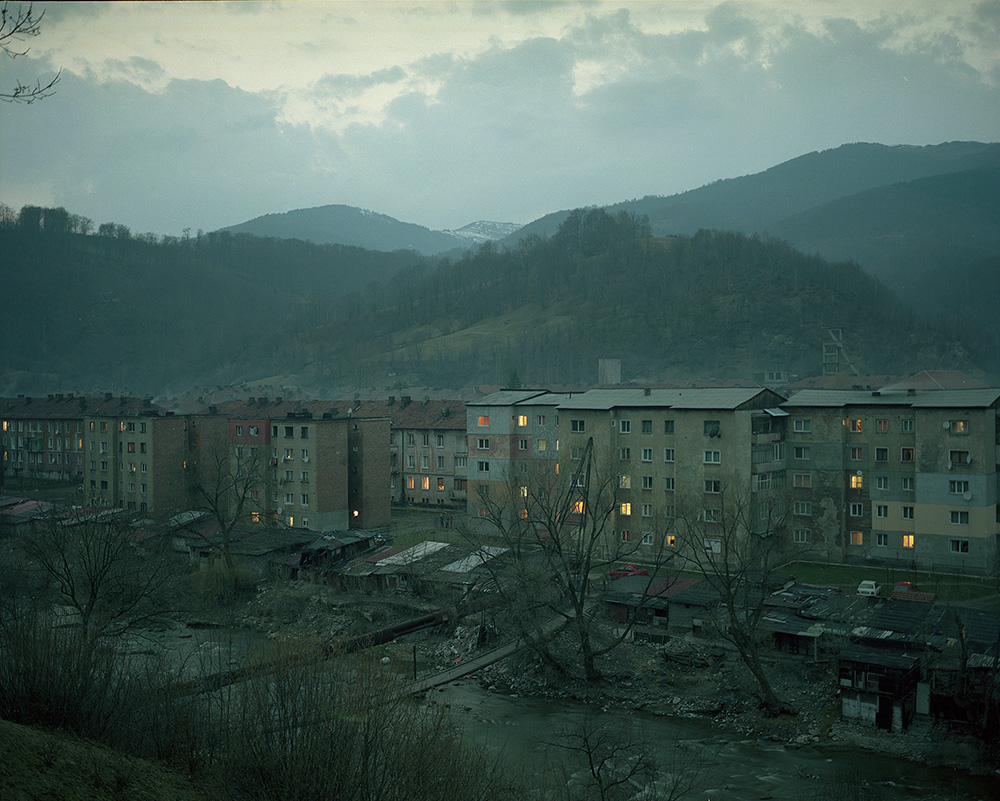
Children of the Jiu Valley are familiar with roads. Theirs but especially those of the adults. Roads through the tunnel, the mountains or the Valley. All the roads seem made to leave as well as to return. The parents of these children, once the inhabitants of an old industrial area of Romania, take now long roads to reach the West, wherever they may find work. They return too seldomly. They send money. Their children are a lot like orphans. Many of them experience depression. Some choose to take the fatal road to Paradise or Hell. Maybe with the hope of coming back to a kinder vale.
ALEXANDRA GULEA (1970, Bucuresti, Romania), graduated in 1997 at ENSBA in Paris. She studied documentary film at Munich Film School and since 1999 directed Documentary Films: “Anonymous”- 11`, 2000 International competition Kurzfilmtage Oberhausen, Prize fff bayern, Munich Documentary FF, Minority Prize Mediawave, Hungary . “God plays Sax, the Devil Violin” 45`, 2004, German Short Film Prize, Golden Key, Kassel, Best Student Film, Molodist, Ukraine, DAAD Prize, Germany, Prix du Film Long, Les Ecrans Documentaires, France, Mention Henry Langlois, Poitiers. IFF Rotterdam, Cinema du Reel Paris, IDFF München, IDAFF Leipzig, IKF Oberhausen, MoMA. “Today I was Young and Pretty” 52`, 2008, Festival dei Popoli, Firenze, Italy , Cronograf, Moldova, IFF Györ, Ungary, TIFF, Romania, MNAC, Romania, Institut Culturel Francais, Romania. Short films : « Wooden Boy » 10’, 2017, Rencontres Internationales Paris - Berlin, IKF Oberhausen. « Valea Jiului - Notes » 13’, 2018, Bucharest Experimental FF, Astra Sibiu, Prize for the Best German Film, IKF Oberhausen. As Fiction films she directed and edited: “The fourth wall"- 17`, 2001 with Werner Schroeter, IKF Oberhausen. “Hacker”, 5 x 52 min. TV-fiction, 2003. She wrote, directed and co-edited her first feature “Matei Child Miner” 2013 Nominated for the “Big Screen Award” IFF Rotterdam, Premio “Lino Micciché”, “Young Critics Award” at Pesaro IFF Italy. Prize at Regiofun IFF, Katowice, Poland. Cinema Jove Valencia IFF Spain, Zlin IFF Czech Republic, TIFF Romania, Anonimul Romania, FF Edu, Evreux, France. IWFF, Köln. Werkstatt Kino, München.
Stephen Gunning
Transmitter
Vidéo expérimentale | dv | couleur | 4:0 | Irlande, Allemagne | 2004
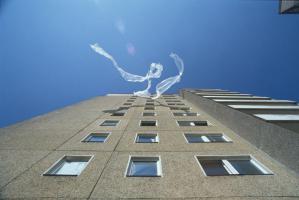
Ce film a été tourné pendant une période où j'ai vécue et travaillé à Berlin. La tour désaffectée où le film a été réalisé, a eu une vie antérieure du temps de la RDA où elle abritait un centre administratif de services sociaux. Le film suit les mouvements de plaques en plastique que j'ai suspendues en haut des fenêtres au dernier étage de l'immeuble. La légèreté des feuilles en plastique fait que ses mouvements, générés par le vent subissent un fort ralentissement. Le jour du tournage, j'ai mis en place une station de radio pirate afin de diffuser une bande-son que j'avais enregistrée dans la cage d'escalier. Celle-ci se caractérise par un multiplexe sonore de rythmes et de bruits acoustiques de l'immeuble. Ces sons sont mixés par ordinateur et diffusés depuis un émetteur du haut d'un immeuble.
Stephen Gunning est né en 1974 à Limerick (Ireland) 1992/1995 - Limerick College of art and Design. 1998/2000 - National College of Art and Design, Dublin. 2001/03 - MFA Virtual Realities, NCAD, Dublin
Devadeep Gupta
Normalisation of a Disaster
Film expérimental | mp4 | couleur | 8:46 | Inde | 2020
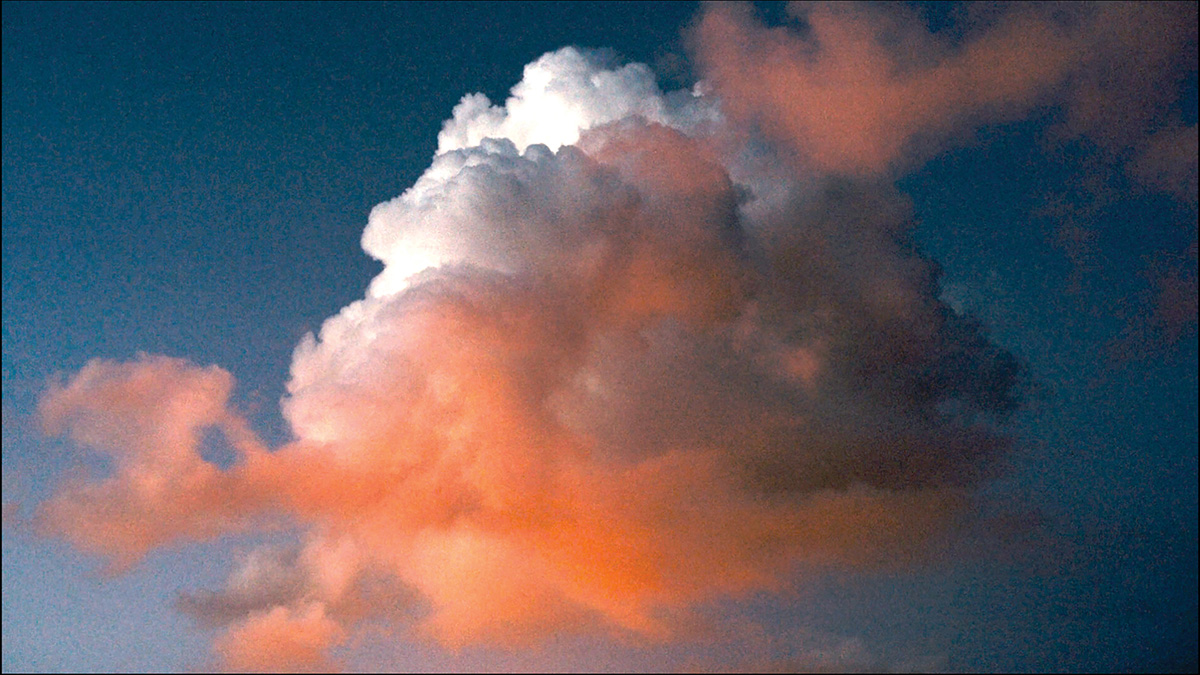
While observing an isolated event of an artificial, industry-facilitated disaster, Normalisation of A Disaster makes a reflective commentary on the psyche of people in the vicinity of the site of disaster, albeit not immediately affected by it. Exploring the ideas of nonchalance, sensitization and casual tourism towards sites of disaster in a region plagued by disasters, this reflection includes the self of the artist, and his family, and hordes of ‘tourists’ attracted towards the light of the morbid spectacle. The Baghjan Oil Blowout happened on 27th of May 2020, which caught fire through a massive explosion on 9th of June 2020 after leaking gas in the atmosphere for two weeks, continued to burn for 6 months, before being finally doused on 15th of November, 2020. This artificial disaster in an Oil-India Limited owned site has caused the displacement of more than 1600 families who were in the vicinity of the site of gas blowout, and were being sheltered in makeshift relief camps in nearby areas.
Devadeep Gupta B. 1989 Guwahati, Assam, India I frame my artistic process as an exploration of regional ecological uncertainties through a critical examination of associated mainstream perspectives. Inspired by site-specific and vernacular occurrences, I delve into the intricate relationship between people and their land. My artistic practice encompasses the realms of film and sculpture, bridging the gap between conceptual and documentary approaches. Within this intersection, I am particularly interested in narratives that emerge from the convergence of mythology and contemporary experiences. Grounded in the rich cultural landscape of Assam, I draw inspiration from pragmatic practices, oral traditions, and folklore. Central to my artistic endeavors are performative processes that pay homage to meta-cultural practices. Through visual and conceptual stimuli, I incorporate elements of local community-led actions to portray the environmental changes specific to each site. Everyday rituals that have organically evolved as meta-cultural actions inspire the forms and expressions within my artistic practice. The outtakes of my process, realized as rhythmic sculptural forms are expressed through mediums of film, image and sculpture to illustrate these outcomes. ?
Crispin Gurholt
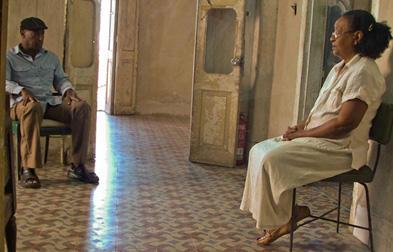
Havanna, Cuba
Vidéo | hdv | couleur | 17:0 | Norvège, Cuba | 2012
.
Crispin Gurholt (f.1965 in Oslo) is a graduate of the National Art Academy in Oslo (1993-98) and New York University Film School (1996). He has had exhibitions in Venice, Rome, Turin, Madrid and Paris, the Henie Onstad Art Centre, Art Copenhagen, Stenersen Museum, Vigeland Museum, the North Norwegian Art Museum, Lillehammer Art Museum and Haugar Art Museum. Gurholt is participating in the 11th Havana Biennial. He has also been a set designer for several films and stage productions, and produced and directed numerous music videos, including videos for the Norwegian band Turbonegro.
Crispin Gurholt
Live Photo III
Art vidéo | dv | couleur | 15:53 | Norvège | 2008
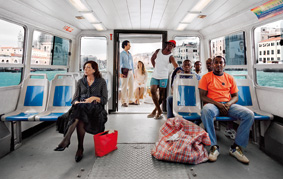
"It`s like you`ve got yesterday, today and tomorrow in the same room. There is no telling what can happen" This line from the Award-winning film "I`m not there", about the life of Bob Dylan, conveys the same sense of a melding of time and place, and the uncertainty of what may happen, that defines Crispin Gurholt`s Live Photo... (Selene Wendt)
born 1965 in Oslo, Norway. Norwegian photo, installation and video artist. Education: Einar Granum Art School, Oslo Drawing and painting school. Was apprenticed to Odd Nerdrum (1992). Educated at the National Art Academy (1993-98) and New York University (Film School 1996). Gurholt is best known for his vivid tableaus "Live Photo", in which he problematized the relationship between reality and what`s beyond what we see. He makes use of the media`s language and exposes the often unpleasant situations, emotions and conditions. His works have been exhibited in Venice, Rome, Madrid, Paris, the Henie Onstad Art Centre, Art Copenhagen, Stenersen Museum, Vigeland Museum, the North Norwegian Art Museum and Haugar Vestfold Kunstmuseum. He has also produced a series of music videos, including for the rock band Turbonegro.

Crispin Gurholt
Live Photo II
Film expérimental | betaSP | couleur | 15:0 | Norvège | 2007
Il y a un silence électrique. Nous assistons à un instant congelé dans une mise en scène de théâtre, avec le suspense d'un film de détective. Un vrai tableau présente deux êtres humains, vivant, respirant, pensant, situés dans l?espace étroit et confiné d'une sortie de secours. L'homme vient de tirer sur la femme. Est-ce l'avenir, le présent et le passé, réunis en un seul instant?
Crispin Gurholt est né en 1965 à Oslo. Il s?est diplômé à l'Académie Nationale Norvégienne des Beaux-arts en 1998 et à la New York University School of Continuing Education Film School (USA) en 1996.
Crispin Gurholt
Livephoto 2011
Vidéo | hdv | couleur | 3:3 | Norvège | 2011
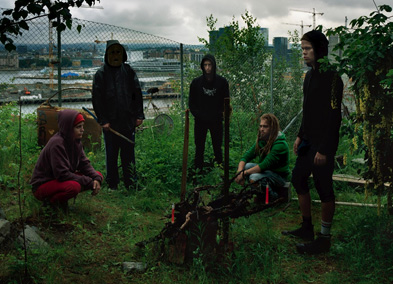
There is an electric silence. We are witnessing a frozen moment in a staged drama with the suspense of a detective film. A real tableau presents living, breathing and thinking human beings located in the hills of Ekebergaasen in Oslo, Is this the future, the present and the past rolled into one single moment? We feel confused. What is happening. is the group of people lost or are they trespassing, Are they a part of the development we see in the background of the greenery, or are they forced out and away from the development? Are they passive or active?
Crispin Gurholt (b. 1965) is an artist working in the fields of photography, installation and video. He was educated at the Einar Granum Art School, Oslo Drawing and Painting School and was an apprentice to master painter Odd Nerdrum in 1992. He then attended National Academy of the Arts (1993-98), and the New York University Film School in 1996. Gurholt is best known for his vivid tableaus Live Photo, in which he problematized the relationship between reality and what`s beyond what we see. He makes use of the media`s language and exposes the often unpleasant situations, emotions and conditions. His works have been exhibited in Venice, Rome, Madrid, Paris, the Henie Onstad Art Centre, Art Copenhagen, Stenersen Museum, Vigeland Museum, the North Norwegian Art Museum and Haugar Vestfold Kunstmuseum. He has also produced a series of music videos, including for the rock band Turbonegro.
Crispin Gurholt
Please Kill Me Live Photo # 27
Vidéo | hdv | couleur | 4:0 | Norvège | 2014
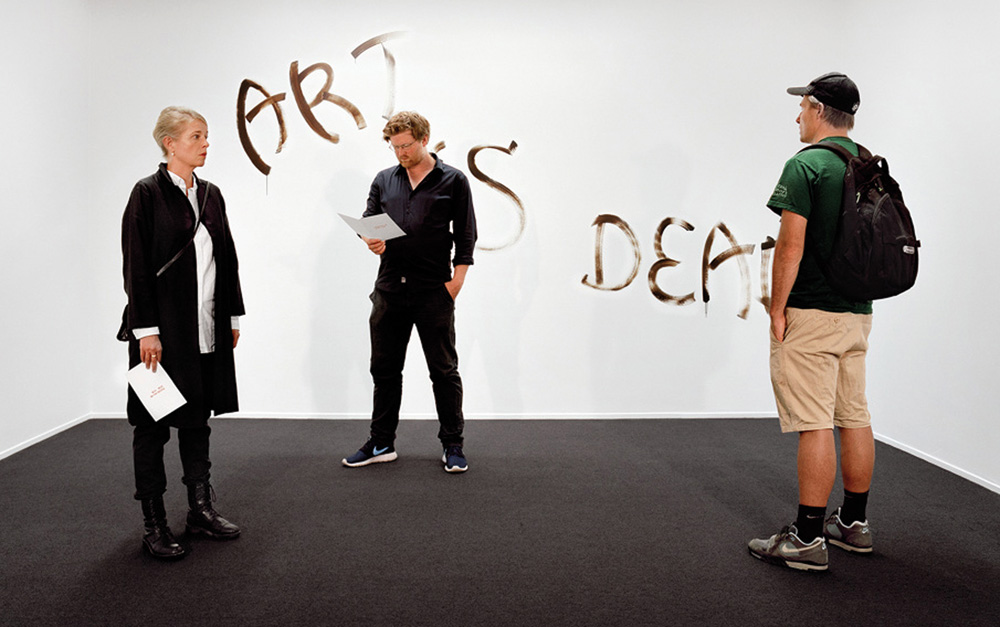
The film Please Kill Me is a personal expression of my own account around the time we live in, pointing out one of our greatest challenges: The market and capital domination in the world. When economic growth is the strongest driving force, we experience increasing economic, social, cultural and, not least, enormous environmental challenges. It is no longer human, ideological or religious ideals that govern, but material growth. The feeling is this: We find ourselves not in a crisis resulting in radical restructuring, but are caught in a loop of repetition and denial, where genuine change appears impossible. In no way whatsoever does art stand outside this static situation. It stands in the midst of it and has no power to act as a genuine opposing force. The constant striving for ‘the new’ cannot expel the feeling that things are at a stand-still; the admonishment to establish micro-utopias in the increasingly sleek art institutions proves merely to repeat the imperative that each and every person should tend his or her own garden – or network; the mantra to summon ‘critical discourse’ does not hinder one’s thoughts from first and foremost revolving complacently around oneself. We know we are sitting in the same boat, and since we all know it is sinking, we try to sit as still as possible, so that at the very least it sinks slower. This is the artist`s confrontation with himself, the art scene and a world gone crazy spinning around itself, trapped in an eternal loop of repetition. In Please Kill Me the staged models have been assigned the same roles as they play in reality: In the gallery space you find the artist, curator, critic and gallerist frozen in a position where they are confronted with the allegation that art is dead.
Crispin Gurholt (b. 1965) is a Norwegian artist based in Oslo and Berlin. The density of his work reflects his versatility and the range of his studies, which in turn are essential to the creation of the highly composite universes of his Live Photos. Gurholt studied at the National Academy of Art in Oslo and The New York Film School SCE. He also has a background in scenography and directing. Since 2012 he has been teaching at The Art School of Rogaland in Norway. His Live Photos represent the sum of a wide-ranging expertise that, combined with social comment, presents a compelling picture of our time. Crispin Gurholt has an international reputation. His work and installations have been shown in Venice, Rome, Paris, Berlin, London, Copenhagen, Turin, Madrid, Cologne and Havana, as well as a number of major Norwegian art institutions. Gurholt is a receiver of the Norwegian Artist Grant since 2010.
Crispin Gurholt
Paris
Vidéo expérimentale | hdv | couleur | 3:4 | Norvège | 2013
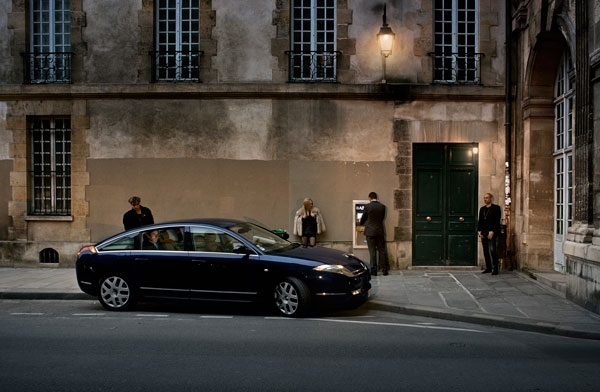
In twilight we see a French limousine parked in front of a doorway next to a cash machine. In the back seat of the parked car is a middle-aged businessman. The private chauffeur is withdrawing money from the cash machine, and the driver`s car door is open. Next to the driver is a transvestite prostitute who is suggestive in his communication. Another transvestite prostitute leans against the limo`s rear window and is looking at the man in the back seat. In the dark doorway in the background we see the shadow of an elegant, masculine, Arab man, the pimp of the two prostitutes. Thematically the film points to the relationship between power, politics, money and sex, suggesting identity conflicts, double standards and hidden desires. The theme is archetypal, Machiavellian, and refers to a tacit acceptance of a system that helps to sustain an outdated patriarchy. As long as you don`t get caught everything is allowed! Recent sex scandals linked to European politicians, does not make the thematic less relevant. An intricate relationship between political and criminal groups is insinuated. The film is open and suggestive and apparently simple, but beneath the surface a complex communication pattern is unfolding.
Crispin Gurholt (f.1965) is a Norwegian artist based Berlin. He is a graduate of the National Art Academy in Oslo (1993-98) and New York University Film School (1996). He has exhibited in Havana, Venice, Rome, Turin, Madrid and Paris, the Henie Onstad Art Centre, Lillehammer Art Museum, Art Copenhagen, Stenersen Museum, Vigeland Museum, the North Norwegian Art Museum and Haugar Art Museum.

Crispin Gurholt
Room 120 live photo
Vidéo | dv | couleur | 3:0 | Norvège | 2010
we see a family in a hospital with a nurse, the scene is frozen in a moment, maybe in real time, maybe from memory, there is noting telling what has happened or what is going to happen, they are all captured in the same moment, they are remote and at the same time together, multiple stories in a shared moment. are we! with our objective view seeing all the truth in the given scene and moment? or are there multiple stories to be told as we float through everyday life.
Crispin Gurholt, born 1965 in Oslo, Norway. Norwegian photo, installation and video artist. Education: Einar Granum Art School, Oslo Drawing and painting school. Was apprenticed to Odd Nerdrum (1992). Educated at the National Art Academy (1993-98) and New York University (Film School 1996). Gurholt is best known for his vivid tableaus "Live Photo", in which he problematized the relationship between reality and what`s beyond what we see. He makes use of the media`s language and exposes the often unpleasant situations, emotions and conditions. His works have been exhibited in Venice, Rome, Madrid, Paris, the Henie Onstad Art Centre, Art Copenhagen, Stenersen Museum, Vigeland Museum, the North Norwegian Art Museum and Haugar Vestfold Kunstmuseum. He has also produced a series of music videos, including for the rock band Turbonegro. http://www.snl.no/Crispin_Gurholt
Crispin Gurholt
Ved Ekebergåsen
| | couleur | 3:0 | Norvège | 2011
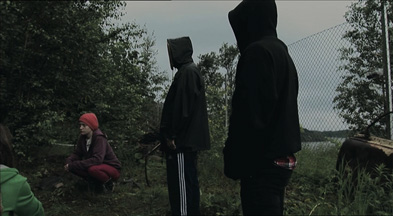
I walked along the road with two friends ? the sun was setting ? I felt a wave of sadness ? suddenly the sky turned blood-red ? I stopped, leaned against the fence, deathly tired ? I saw the clouds flaming like blood and swords, over the deep blue fjord and the city ? My friends walked on ? I stood there trembling with angst and fear ? I felt a great endless scream echo through nature. From Edvard Munch?s diary, 22 January 1892, Nice Five dark figures enclosed in a bushy piece of greenery. A rusty car door, a bicycle wreck, some planks. They are serious and concentrated, like grieving or as if lost in an endless waiting for Godot, gathered around an object that could be the root of a tree, a sculpture or a gravestone. Around them high-rise buildings are shooting up, dark clouds are hanging over the cranes. A threating storm is rolling in over the city and the fjord. One of the figures is holding a scythe; his face is like a dark empty hole, the mask frighteningly dead. Nature has lost its voice. The photograph By Ekebergåsen is a dystopian manifestation of the marginalised position of art and artists in society. The artist, rejected and hunted, has gone into hiding. The shelter is a small patch of uncultivated ground squeezed in between capitalistic and populist political forces. From here they fought their guerrilla war, and lost. Between Bjørvika and Christian Ringnes?s future sculpture park, a small group of art students have gathered. An old bunker serves as their gallery. No one knows they are there.
Crispin Gurholt (f.1965 in Oslo) is a graduate of the National Art Academy in Oslo (1993-98) and New York University Film School (1996). He has had exhibitions in Venice, Rome, Turin, Madrid and Paris, the Henie Onstad Art Centre, Art Copenhagen, Stenersen Museum, Vigeland Museum, the North Norwegian Art Museum, Lillehammer Art Museum and Haugar Art Museum. Gurholt is participating in the 11th Havana Biennial. He has also been a set designer for several films and stage productions, and produced and directed numerous music videos, including videos for the Norwegian band Turbonegro.
Simon Gush
Analogues: Distance
Fiction | hdv | noir et blanc | 17:42 | Afrique du sud | 2011
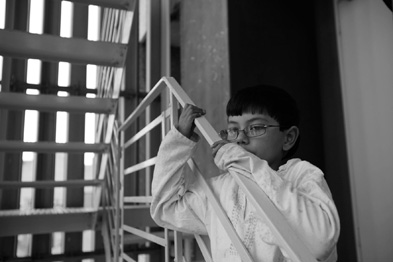
Distance, presents the absence of belief, where labour is estranged and invisibly services ?lifestyle?. Helen stays at a hotel for a conference, and has invited her sister and her nephew (Grant) to join for the weekend. After Helen leaves for the day?s session, Grant grows bored and listless after playing while his mother sleeps and wanders off into the hotel. He amuses himself for a number of hours playing in the corridors and spaces of the hotel, while occasionally voyeuristically watching the staff at work. He returns to the room to find Helen also at the door, her conference finished for the day. They sit in the room and Helen waits for Grant?s mother to return who is not there when they enter. The mother does return briefly, but only to change into something more suitable for dinner, and leaves again, to the silent frustration of Helen. Helen then also abandons Grant to his own devices while she goes off to her evening function.
Simon Gush (b.1981, ZA) is a South African artist currently based Johannesburg. He completed his undergraduate degree at the University of the Witwatersrand in 2003. Gush was a laureate at the HISK (Higher Institute for Fine Arts) in Ghent, Belgium, in 2007/8 and a Gordon Institute of Performing and Creative Arts Fellow at the University of Cape Town, South Africa, in 2011. He has participated in numerous group exhibitions internationally and locally and has held solo shows at the SMAK (Stedelijk Museum voor Actuele Kunst) in Ghent (2010), West, Den Haag, the Netherlands (2010), and the Stevenson Gallery in Cape Town (2009 & 2010) and Johannesburg (2009 & 2011). Gush has been included in two international publications surveying young contemporary artists: the Younger Than Jesus Directory published by the new Museum in New York, USA (2009); and 100 New Artists by Francesca Gavin, published by Laurence King Publishing (2011). Alongside his artistic practice, Gush has collaborated in founding and facilitating a number of alternative temporary exhibition platforms, most notably the Parking Gallery in 2006, which was relaunched in 2012.