Catalogue > Liste par artiste
Parcourez la liste complète des artistes présentés dans le cadre des Rencontres Internationales depuis 2004. Utilisez le filtre alphabétique pour affiner vos recherches.
Gil & Moti, Gil & Moti
Catalogue : 2010Nasser | Vidéo | dv | couleur | 7:8 | Pays-Bas, Israel | 2009
Gil & Moti
Nasser
Vidéo | dv | couleur | 7:8 | Pays-Bas, Israel | 2009
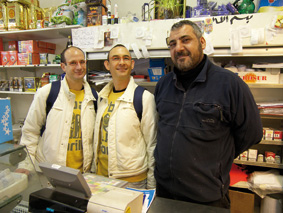
Gil & Moti / `Nasser` / 2008-2009 / 7`:08`` In 2008 the Israeli?Dutch artist duo Gil & Moti started their project Available for You. They offered their services free of charge to immigrants from Arab countries in Copenhagen and Rotterdam and documented their encounters in diary entries, photos and videos. Gil & Moti bridge the barriers of miscom-munication in an intelligent manner. At the same time, they raise themes from an artistic perspective that apply globally: themes such as sociability, integration and exclusion. On the border of the public and private domain and of the art institution and the street, they have created their project as a fascinating vision of an artistic and humanitarian practice in a changing world beset by conflict.
We Gil & Moti, are duo artists living and working together since 1994. Our work moves freely between life, the visual arts and performance. The decision to live life as a performance and to make art a way of living creates a tension, which motivates the work and is presented in the form of: installation, video, painting, writing and performance. With our work we engage in the appropriation of public space and its effect on human relationships. Our projects involve the rehabilitation of the network of associations in a given community. An analytic critique of the relationship of private life and public space constitutes an important facet of our practice. Jewish Israelis by birth, gay and immigrants in Holland we contribute with our work to the contemporary debates about being different and the rules of social coexistence. We express these concerns with vulnerable poetic narratives, suspended between reality and fantasy visualized in a range of images from mundane to highly theatrical.
Catalogue : 2009Fiddler on the Roof | Vidéo | dv | couleur | 2:30 | Pays-Bas | 2008
Gil & Moti, Gil & Moti
Fiddler on the Roof
Vidéo | dv | couleur | 2:30 | Pays-Bas | 2008
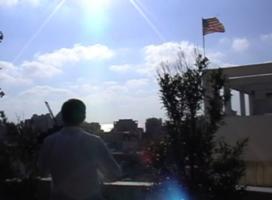
Au cours d'une après-midi ensoleillée, négligeant la silhouette de Tel-Aviv qui se détache à l?horizon, un violoniste joue avec expression une composition hybride, reconstruite à partir d?hymnes tant israéliens que palestiniens. Les heures de dur travail, ainsi que de la douleur mentale, laissent leurs traces sur le cou du violoniste, comme le montre la toute dernière scène de la vidéo. Cette blessure est une métaphore de la longue et douloureuse lutte entre les deux peuples et les deux cultures. Prenant comme point de départ la nationalité des auteurs et la situation actuelle en Israël, des concepts tels que l'humanité, l'expiation et de pardon acquièrent une importance accrue, et ce sont précisément les thèmes récurrents de cette ?uvre en duo. Dans la vidéo, les artistes formulent le souhait utopique que les deux ennemis réussissent à vivre en paix côte à côte.
Gil Nader est né à Rishon LeZion (Israël), en 1968, Moti Porat à Ganey Yehuda (Israël) en 1971. Ils vivent et travaillent ensemble en duo depuis 1994, sous le nom de « Gil & Moti », et sont basés à Rotterdam (Pays-Bas) depuis 1998. Ils se sont tous deux diplômés de l'Académie Bezalel d'Art et de Design de Jérusalem (Israël) en 1997, puis ont poursuivi leurs études, en 1998-2000, au Master des Beaux-Arts de l'Institut Piet Zwart, de Rotterdam et à l'Université de Plymouth (Royaume-Uni). Parmi leurs récentes expositions individuelles, signalons notamment « Sleeping With the Enemy à Jack the Pelican Presents » à New York (USA) en 2005, « Love Grows Free » à la galerie Eric Dupont de Paris (France) en 2006, « Dating Gil & Moti » à la Mucsarnok Kunsthalle de Budapest (Hongrie) en 2006, et « Available for You » à la Kunsthallen Nikolaj de Copenhagen (Danemark) en 2008. Le gouvernement israélien et néerlandais ont soutenu financièrement leurs projets. Leurs ?uvres sont exposées dans des collections privées et publiques, telles que le Musée d?Art de Tel-Aviv (Israël), le Musée d?Art d?Haifa (Israël) ou le Mumok de Vienne (Autriche). En 2008, ils ont reçu une bourse de deux ans de la part de la Fondation Néerlandaise pour les Arts Visuels, le Design et l?Architecture.
Wojciech Gilewicz
Catalogue : 2011Intrude | Art vidéo | dv | couleur | 6:5 | Pologne, Chine | 2008
Wojciech Gilewicz, -
Intrude
Art vidéo | dv | couleur | 6:5 | Pologne, Chine | 2008
When I was invited to China at the end of 2008, in my contract with Zendai MoMA in Shanghai, I was bounded to realize 6 to 8 oil paintings there. While painting, I am often using my video camera as well, which is kind of registering in a cold eye the process of the ?emergence? of my urban-based paintings. I did so also when working for the museum on this series of paintings. However, in this very project the camera is slightly drifting away from the actual paintings and is showing fragments of reality as if they were autonomous paintings themselves. The reality appears in this video quite neurotic and nervous as well as a bit hectic. It is mysterious, very much fragmented and somehow jagged. The paintings coming off the reality leave a strange tear to it or maybe rather quite a philosophic dilemma.
Wojciech Gilewicz (1974) Polish American painter, photographer, author of installations and videos. In his works, which usually combine all these disciplines, Gilewicz explores the phenomenon of illusion and the blurring of distinctions between reality and its artistic representation. He also shows how relative and changeable our perception of the surrounding world is. Gilewicz?s practice invites a reflexion on the mechanisms governing our perception and on the cultural determinants of the way we see things. www.gilewicz.net
Catalogue : 2010In Practice | Vidéo | dv | couleur | 3:15 | Pologne, USA | 2009
Wojciech Gilewicz
In Practice
Vidéo | dv | couleur | 3:15 | Pologne, USA | 2009
Wojciech Gilewicz: In Practice, 2009 (video) A series of oil paintings were installed outside the SculptureCenter building. The surfaces and forms of the canvases were designed to make them appear completely invisible while they were on site. A video documentating the process of placing the works in their environment encouraged visitors to explore the periphery of the building. Using a map I prepared, visitors were invited to search for the hidden paintings in the surrounding city space. I was primarily interested in challenging visitors` perception of space, reality and their surroundings. (by Wojciech Gilewicz) -------------- fragment of InPractice review by Lori Cole (ArtForum, 02.15.2009) "(...)While artists such as Peter Simensky, Carey Ascenzo, and Amy Patton struggle to reinvent site specificity, Wojciech Gilewicz defies its logic entirely in his deadpan installations-painted imitations of everyday surfaces, intended to go unnoticed in public space. In the video documentation of his project, Gilewicz nonchalantly installs the work in broad daylight, thereby performing the slight visual shifts between the trash on the surface of a garbage can and its painted replica, between a construction panel and its crafted double, and drawing attention to the way art can undermine even its own subversive rhetoric to make site both more and less noticeable." http://www.sculpture-center.org/pressSpecific.htm?id=61697
CV (narrative) Wojciech Gilewicz (1974) Polish American painter, photographer, author of installations and videos graduated from Academy of Fine Arts in Warsaw, Poland (1999) obtaining a Master?s Degree in Painting (Minor in Photography). In his works, which usually combine all these disciplines, Gilewicz explores the phenomenon of illusion and the blurring of distinctions between reality and its artistic representation. He shows also how relative and changeable our perception of the surrounding world is. Gilewicz?s practice invites a reflexion on the mechanisms governing our perception and on the cultural determinants of the way we see things. Selected soloexhibitions: Foksal Gallery Warsaw, Poland (2009); Contemporary Art Museum Saint Louis (2008); Museum of Fine Arts Ivano-Frankivsk, Ukraine (2007); Foksal Gallery Warsaw, Poland (2005), Fondation Deutsch de la Meurthe Paris, France (2004), CCA Ujazdowski Castle Warsaw, Poland (2001) Selected groupshows: MoCA Belgrade, Serbia (2009); MoBY Bat Yam, Israel (2009); CoCA, Torun, Poland (2009); Zendai MoMA Shanghai, China (2009); SculptureCenter New York (2009); Pianissimo Milan, Italy (2008); Museum of Art Lodz, Poland (2007); Zacheta National Gallery of Art Warsaw, Poland (2007) Selected artisticresidencies: TAV Taipei, Taiwan (2009); Zendai MoMA Shanghai, China (2008); ISCP New York (2008); Galichnik Macedonia (2005); Fundation Deutsch de la Meurthe Paris, France (2004) --------------- CV (detailed) Wojciech Gilewicz (www.gilewicz.net) EDUCATION 1999 Master?s Degree in Painting, Minor in Photography 1996 - 1999 Academy of Fine Arts Painting Department Warsaw, Poland 1994 - 1996 Academy of Fine Arts Painting Department Poznan, Poland SOLO EXHIBITIONS (selected) 2009 Lubelskie Towarzystwo Zachety Sztuk Pieknych, Lublin, Poland 2009 Foksal Gallery, Warsaw, Poland 2008 Contemporary Art Museum Saint Louis, USA 2007 Biala Gallery, Lublin, Poland 2007 Museum of Fine Arts, Iwano-Frankiwsk, Ukraine 2007 BWA Gallery Revitalisations, Sanok, Poland 2006 / 2007 Entropia Gallery The Aporia of Painting, Wroclaw, Poland 2005 TR Warszawa, Warsaw, Poland 2005 Foksal Gallery, Warsaw, Poland 2005 WAA (Warsaw Artists? Action) Them, Warsaw, Poland 2004 Fondation Deutsch de la Meurthe, Paris, France 2002 Arsenal Gallery, Bialystok, Poland 2001 Centre for Contemporary Art Ujazdowski Castle / Laboratorium Gallery City ? Estate ? Studio ? Apartment, Warsaw, Poland 2000 Biala Gallery Lublin, Poland 1999 Academy of Fine Arts, Warsaw, Poland GROUP EXHIBITIONS (selected) 2009 castillo/corrales Hello Goodbye Thank You Again, Paris, France 2009 Museum of Contemporary Art BELGRADE: NONPLACES. Art in public space, Belgrade, Serbia 2009 Aspen Art Museum Monitaur, Aspen, USA 2009 MoBY (Museum of Bat Yam) Factory, Bat Yam, Israel 2009 Centre of Contemporary Art Znaki Czasu Lucim żyje, Torun, Poland 2009 Zendai Museum of Modern Art Starting Point: Intrude Art & Life 366, Shanghai, China 2009 SculptureCenter In Practice, New York, USA 2008 Istituto Polacco di Roma Transfert Gallerie Polacche a Roma #6, Roma, Italy 2008 BWA Gallery External artists. OUT OF STH, Wroclaw, Poland 2008 Biala Gallery Remont generalny, Lublin, Poland 2008 White Box Gallery DiVA (Digital & Video Art), New York, USA 2008 Pianissimo Distortion of an Unendurable Reality, Milan, Italy 2008 Istituto Polacco di Roma Transfert Gallerie Polacche a Roma #2, Roma, Italy 2007 appendix2 Artyści polecają się nawzajem, Warsaw, Poland 2007 Museum of Art in Lodz Multi-way Street annex to the exhibition Beautiful Losers, Lodz, Poland 2007 Paul Robeson Galery Imago: The Drama of Self-Portraiture In Recent Photography, Newark, USA 2007 Zacheta National Gallery of Art / Kordegarda Gallery Here a Change Occurs, Warsaw, Poland 2006 Real Art Ways POZA, Hartford, USA 2006 Centre for Contemporary Art Laznia Love and Democracy, Gdansk, Poland 2006 LiveBox at Ravenswood, Chicago, USA 2006 Zacheta National Gallery of Art On Their Own, Warsaw, Poland 2003 National Museum / Krolikarnia, Warsaw, Poland 2002 Bunkier Sztuki, ZPAP Festival of Young Art novart.pl, Cracow, Poland 2001 BWA Galery Goscinna Pracownia Malarstwa Leona Tarasewicza goscinnie w Galerii BWA w Zielonej Gorze, Zielona Gora, Poland
Wojciech Gilewicz, -
Catalogue : 2011Intrude | Art vidéo | dv | couleur | 6:5 | Pologne, Chine | 2008
Wojciech Gilewicz, -
Intrude
Art vidéo | dv | couleur | 6:5 | Pologne, Chine | 2008
When I was invited to China at the end of 2008, in my contract with Zendai MoMA in Shanghai, I was bounded to realize 6 to 8 oil paintings there. While painting, I am often using my video camera as well, which is kind of registering in a cold eye the process of the ?emergence? of my urban-based paintings. I did so also when working for the museum on this series of paintings. However, in this very project the camera is slightly drifting away from the actual paintings and is showing fragments of reality as if they were autonomous paintings themselves. The reality appears in this video quite neurotic and nervous as well as a bit hectic. It is mysterious, very much fragmented and somehow jagged. The paintings coming off the reality leave a strange tear to it or maybe rather quite a philosophic dilemma.
Wojciech Gilewicz (1974) Polish American painter, photographer, author of installations and videos. In his works, which usually combine all these disciplines, Gilewicz explores the phenomenon of illusion and the blurring of distinctions between reality and its artistic representation. He also shows how relative and changeable our perception of the surrounding world is. Gilewicz?s practice invites a reflexion on the mechanisms governing our perception and on the cultural determinants of the way we see things. www.gilewicz.net
Catalogue : 2010In Practice | Vidéo | dv | couleur | 3:15 | Pologne, USA | 2009
Wojciech Gilewicz
In Practice
Vidéo | dv | couleur | 3:15 | Pologne, USA | 2009
Wojciech Gilewicz: In Practice, 2009 (video) A series of oil paintings were installed outside the SculptureCenter building. The surfaces and forms of the canvases were designed to make them appear completely invisible while they were on site. A video documentating the process of placing the works in their environment encouraged visitors to explore the periphery of the building. Using a map I prepared, visitors were invited to search for the hidden paintings in the surrounding city space. I was primarily interested in challenging visitors` perception of space, reality and their surroundings. (by Wojciech Gilewicz) -------------- fragment of InPractice review by Lori Cole (ArtForum, 02.15.2009) "(...)While artists such as Peter Simensky, Carey Ascenzo, and Amy Patton struggle to reinvent site specificity, Wojciech Gilewicz defies its logic entirely in his deadpan installations-painted imitations of everyday surfaces, intended to go unnoticed in public space. In the video documentation of his project, Gilewicz nonchalantly installs the work in broad daylight, thereby performing the slight visual shifts between the trash on the surface of a garbage can and its painted replica, between a construction panel and its crafted double, and drawing attention to the way art can undermine even its own subversive rhetoric to make site both more and less noticeable." http://www.sculpture-center.org/pressSpecific.htm?id=61697
CV (narrative) Wojciech Gilewicz (1974) Polish American painter, photographer, author of installations and videos graduated from Academy of Fine Arts in Warsaw, Poland (1999) obtaining a Master?s Degree in Painting (Minor in Photography). In his works, which usually combine all these disciplines, Gilewicz explores the phenomenon of illusion and the blurring of distinctions between reality and its artistic representation. He shows also how relative and changeable our perception of the surrounding world is. Gilewicz?s practice invites a reflexion on the mechanisms governing our perception and on the cultural determinants of the way we see things. Selected soloexhibitions: Foksal Gallery Warsaw, Poland (2009); Contemporary Art Museum Saint Louis (2008); Museum of Fine Arts Ivano-Frankivsk, Ukraine (2007); Foksal Gallery Warsaw, Poland (2005), Fondation Deutsch de la Meurthe Paris, France (2004), CCA Ujazdowski Castle Warsaw, Poland (2001) Selected groupshows: MoCA Belgrade, Serbia (2009); MoBY Bat Yam, Israel (2009); CoCA, Torun, Poland (2009); Zendai MoMA Shanghai, China (2009); SculptureCenter New York (2009); Pianissimo Milan, Italy (2008); Museum of Art Lodz, Poland (2007); Zacheta National Gallery of Art Warsaw, Poland (2007) Selected artisticresidencies: TAV Taipei, Taiwan (2009); Zendai MoMA Shanghai, China (2008); ISCP New York (2008); Galichnik Macedonia (2005); Fundation Deutsch de la Meurthe Paris, France (2004) --------------- CV (detailed) Wojciech Gilewicz (www.gilewicz.net) EDUCATION 1999 Master?s Degree in Painting, Minor in Photography 1996 - 1999 Academy of Fine Arts Painting Department Warsaw, Poland 1994 - 1996 Academy of Fine Arts Painting Department Poznan, Poland SOLO EXHIBITIONS (selected) 2009 Lubelskie Towarzystwo Zachety Sztuk Pieknych, Lublin, Poland 2009 Foksal Gallery, Warsaw, Poland 2008 Contemporary Art Museum Saint Louis, USA 2007 Biala Gallery, Lublin, Poland 2007 Museum of Fine Arts, Iwano-Frankiwsk, Ukraine 2007 BWA Gallery Revitalisations, Sanok, Poland 2006 / 2007 Entropia Gallery The Aporia of Painting, Wroclaw, Poland 2005 TR Warszawa, Warsaw, Poland 2005 Foksal Gallery, Warsaw, Poland 2005 WAA (Warsaw Artists? Action) Them, Warsaw, Poland 2004 Fondation Deutsch de la Meurthe, Paris, France 2002 Arsenal Gallery, Bialystok, Poland 2001 Centre for Contemporary Art Ujazdowski Castle / Laboratorium Gallery City ? Estate ? Studio ? Apartment, Warsaw, Poland 2000 Biala Gallery Lublin, Poland 1999 Academy of Fine Arts, Warsaw, Poland GROUP EXHIBITIONS (selected) 2009 castillo/corrales Hello Goodbye Thank You Again, Paris, France 2009 Museum of Contemporary Art BELGRADE: NONPLACES. Art in public space, Belgrade, Serbia 2009 Aspen Art Museum Monitaur, Aspen, USA 2009 MoBY (Museum of Bat Yam) Factory, Bat Yam, Israel 2009 Centre of Contemporary Art Znaki Czasu Lucim żyje, Torun, Poland 2009 Zendai Museum of Modern Art Starting Point: Intrude Art & Life 366, Shanghai, China 2009 SculptureCenter In Practice, New York, USA 2008 Istituto Polacco di Roma Transfert Gallerie Polacche a Roma #6, Roma, Italy 2008 BWA Gallery External artists. OUT OF STH, Wroclaw, Poland 2008 Biala Gallery Remont generalny, Lublin, Poland 2008 White Box Gallery DiVA (Digital & Video Art), New York, USA 2008 Pianissimo Distortion of an Unendurable Reality, Milan, Italy 2008 Istituto Polacco di Roma Transfert Gallerie Polacche a Roma #2, Roma, Italy 2007 appendix2 Artyści polecają się nawzajem, Warsaw, Poland 2007 Museum of Art in Lodz Multi-way Street annex to the exhibition Beautiful Losers, Lodz, Poland 2007 Paul Robeson Galery Imago: The Drama of Self-Portraiture In Recent Photography, Newark, USA 2007 Zacheta National Gallery of Art / Kordegarda Gallery Here a Change Occurs, Warsaw, Poland 2006 Real Art Ways POZA, Hartford, USA 2006 Centre for Contemporary Art Laznia Love and Democracy, Gdansk, Poland 2006 LiveBox at Ravenswood, Chicago, USA 2006 Zacheta National Gallery of Art On Their Own, Warsaw, Poland 2003 National Museum / Krolikarnia, Warsaw, Poland 2002 Bunkier Sztuki, ZPAP Festival of Young Art novart.pl, Cracow, Poland 2001 BWA Galery Goscinna Pracownia Malarstwa Leona Tarasewicza goscinnie w Galerii BWA w Zielonej Gorze, Zielona Gora, Poland
John Gillies
Catalogue : 2026Scentdia | Vidéo | 0 | couleur | 5:20 | Australie | 2025
John Gillies
Scentdia
Vidéo | 0 | couleur | 5:20 | Australie | 2025
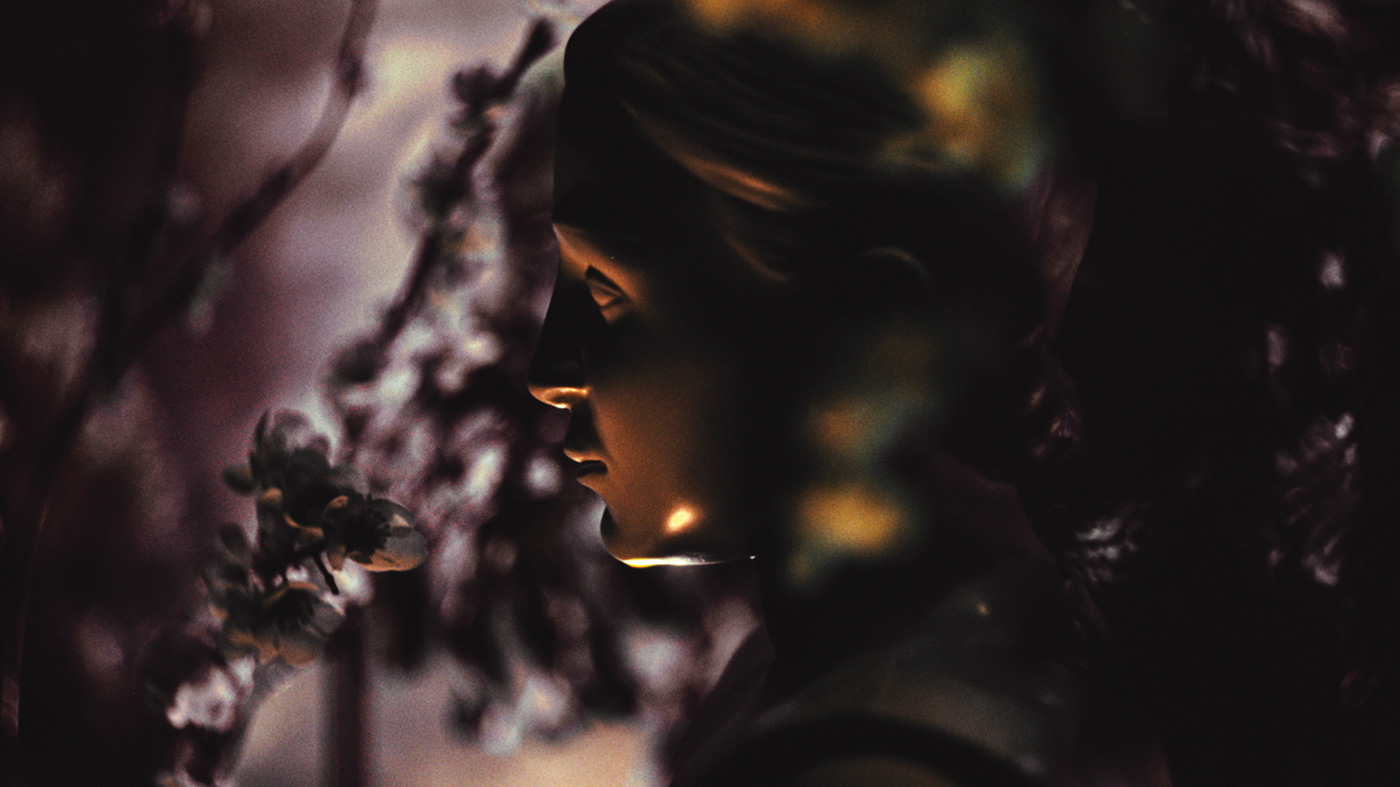
Au cours de ses errances dans une forêt nocturne, un robot croise différentes fleurs et plantes, se confrontant au monde naturel et tentant de respirer le parfum d’une fleur sauvage.
John Gillies est un artiste basé à Sydney (Eora) qui crée depuis les années 1980 des œuvres utilisant les médias temporels, notamment la performance, l’image en mouvement, l’installation, la musique et le son. S’inspirant du théâtre expérimental et des langages de la vidéo et du cinéma, sa pratique artistique est souvent improvisée et collaborative.
Pierre-jean Giloux
Catalogue : 2026Biomimetic Stories # 3. Dholera | Fiction expérimentale | 4k | couleur | 7:0 | France | 2024
Pierre-jean Giloux
Biomimetic Stories # 3. Dholera
Fiction expérimentale | 4k | couleur | 7:0 | France | 2024
Dholera dévoile la vision dystopique de cette ville éponyme, imaginée au cœur du paysage désertique de l’État indien du Gujarat. Son immense réseau d’autoroutes, de voies ferrées surélevées, de pylônes électriques et de châteaux d’eau s’étend à perte de vue sur un terrain aride, sans végétation, balayé par des tourbillons de poussière. Ce vaste projet urbain — dont les travaux ont débuté il y a plus de dix ans — est aujourd’hui pratiquement à l’arrêt. Des prises de vue in situ réalisées par drone révèlent l’ampleur de ce chantier inachevé, où certains bâtiments symboliques du plan initial réapparaissent virtuellement sous forme de nuages de points. Le film fait surgir le fantôme de la ville de Dholera : un chantier spectral où des ruines du futur fissurent l’idée même d’utopie.
Pierre Jean Giloux, né en 1965, est lauréat de la Villa Kujoyama, Kyoto en 2015 et lauréat du Grand Prix Art Vidéo au Festival Côté Court de Pantin en 2016. Pratiquant une forme de réalité augmentée, il montre ses installations dans des musées et centres d’art tels que le Museum du Botanique à Bruxelles, la Criée, Centre d’art contemporain de Rennes, le Barbican à Londres, le Moma d’Hiroshima et le Musée national d’Osaka au Japon ainsi que dans les galeries DNA à Berlin, Sophie Scheidecker et Christophe Gaillard à Paris, Cristina Guerra à Lisbonne, la Bank MABsociety à Shanghai. Ses œuvres sont présentes dans des collections privées (à Paris, Rennes, Bruxelles et Tokyo, Pierre Darier en Suisse, An-Sammlung à Munich) et publiques (Fonds d’art contemporain - Paris collection et Ville de Marseille).
Catalogue : 2018Invisible Cities | Vidéo | hdv | couleur | 0:0 | France, Japon | 2017
Pierre-jean Giloux
Invisible Cities
Vidéo | hdv | couleur | 0:0 | France, Japon | 2017
Comme dans le roman éponyme d’Italo Calvino, ces Invisible Cities ravivent un imaginaire utopique, qui entrelace les villes et leur mémoire, les villes et le désir, le regard, les signes. La part invisible révélée par l’artiste et qui instaure un lien de connivence entre les quatre volets de cette tétralogie évoque la vision d’une autre planification urbaine, intimement liée aux architectures prospectives des Métabolistes. À la fin des années 50, ce groupe tenta de redéfinir la ville durable, en combinant l’esthétique brutaliste et la modularité organique, en liant intimement le bâti au cycle biologique de la croissance, de la pourriture et de la régénération.
Le travail de Pierre Jean Giloux se situe à la convergence de plusieurs pratiques : l’espace / volume et les images. Ses vidéos sont les résultats d’associations et hybridations d’images. Il développe par le biais des techniques numériques un travail de collage, montage, de compositions visuelles et sonores qui incluent parfois des séquences animées en 2 et 3 d. Les interventions graphiques sur les images lui permettent ainsi de modifier la perception du réel et ainsi de créer des “ mondes reconstruits “. Il aime faire cohabiter le virtuel et le réel dans le dessein d’établir un dialogue et de les questionner.
Catalogue : 2016Metabolism | Fiction | hdv | couleur | 11:0 | France, Japon | 2015
Pierre-jean Giloux
Metabolism
Fiction | hdv | couleur | 11:0 | France, Japon | 2015
Metabolism : “Le point de départ est la découverte d’un photomontage de Arata Isozaki intitulé “Re-ruined Hiroshima”. Cette image est une énigme : dans ce paysage dévasté, deux grandes formes architecturées se dessinent : ces structures constituées (on le suppose) par des débris récupérés dans les alentours, surplombent une ville mise à terre. Les métabolistes (un groupe d’urbanistes et d’architectes japonais autour d’une même vision : la ville du futur ) ont projeté de reconstruire ce pays, de (lui) façonner une nouvelle identité. Ce fut une sorte d’élan tendu vers l’avenir, vers un futur développement de l’espace urbain qui devait répondre aux flux des populations vers les centres urbains. Ils s’inscrivirent néanmoins dans une continuité idéoloqique ‘traditionnelle’ faisant référence à l’image iconique du temple d’Ise . Le métabolisme fût la dernière utopie moderniste du XXème siècle, cette découverte m’a passionné et a suscité le désir de faire ce film. Certains de leurs projets non réalisés sont introduits dans ce film par le truchement des techniques numériques, dans le Tokyo de 2015. Jalons historiques et présences fantomatiques inscrites dans les strates urbaines de la mégapole japonaise.
Qu’il soit filmique ou photographique, le travail de Pierre Jean Giloux débute par le stade préparatoire du dessin, phases de recherches où la pensée s’organise par strates, avant de passer à la réalisation. Ses installations photographiques composées de suites d’images peuvent être qualifiées de « storyboards agrandis ». Ces dernières -le plus souvent exposées en milieux urbains- se confrontent aux rapports d’échelles et questionnent le statut de l’image au sein même de la cité. Ses travaux vidéo sont les résultats d’associations et hybridations d’images. Il développe par le biais des techniques numériques un travail de collage, montage, de compositions visuelles et sonores qui incluent des séquences animées en 2 et 3 d. Il aime à faire cohabiter le virtuel et le réel dans le dessein d’établir un dialogue et de questionner notre rapport au réel et vice versa. En 2015, Pierre-Jean Giloux à la Villa Kujoyama (Kyoto, Japon) où il réalise le quatrième et dernier volet de “Invisible Cities” intitulé “Station to Station”. Ses installations vidéos et ses films ont été exposés dans de nombreuses institutions et festivals, notamment le Centre Pompidou, le MAC VAL, le CREDAC, Comix Home Base de Hong Kong, au Kyoto Art Center, au Pavillon de l’Arsenal à Paris.
Charlotte Ginsborg
Catalogue : 2010Over The Bones | Film expérimental | 16mm | couleur | 30:0 | Royaume-Uni | 2008
Charlotte Ginsborg
Over The Bones
Film expérimental | 16mm | couleur | 30:0 | Royaume-Uni | 2008
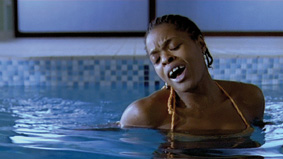
The film interweaves documentary and fiction to depict two characters, a truck driver and a singer. Filmed in their separate working environments their stories converge until they meet through an accident at a swimming pool. The driver witnesses the singer crashing into the end of the pool and passing out. He performs mouth-to-mouth resuscitation. Waking the next day the driver discovers he has developed a desire to write music. For the next six months his singing career develops at a rapid pace. The singer temporarily looses her voice, on regaining it she discovers that it has dramatically altered in tone. Although the tale is told retrospectively no conclusion is reached. Is he continuing to sing, did she regain her career, have they permanently swapped voices? He continues on his journey. By combining voice over, interview footage and dramatic tableaux, questions arise as to whether the events are true and to what extent the cast are acting. The film investigates what happens to people once placed in front of a camera and subsequently how a filmmaker can attempt to capture individuals continually shifting performances in real life. How we adjust ?self? in relationship to ?other? and what role storytelling has in the everyday are developed into key questions. By combining voice over, interview footage and dramatic tableaux, questions arise as to whether the events unfolding are true and to what extent the cast are acting. Are the characters figments of each other?s imaginations? Or in fact each other?s alter egos? The film investigates what happens to people once placed in front of a camera and subsequently how a filmmaker can attempt to capture the subtlety of individuals continually shifting performances in real life. How and why we adjust ?self? in relationship to ?other? and what role storytelling has in the everyday are developed into key questions.
Charlotte Ginsborg graduated from MA Fine Art at Goldsmiths College, London in 2002 where she specialized in film and video. Her films interweave documentary and fictional elements to explore people?s psychological relationship to their architectural environments. She has exhibited her 16mm and digital films in galleries and festivals both nationally and internationally, including the Venice Biennale, the Serpentine Gallery and the ICA, London, the Pompidou Centre, Paris and the Walker Arts Centre, USA. She won the Oriel Mostyn Open 03 for her film ?Spade? and had a solo exhibition at the Jerwood Foundation, London. Her films are distributed by The Lux and she is currently artist in residence at The London Chest Hospital.
Catalogue : 2009The Mirroring Cure | Film expérimental | 16mm | couleur | 28:0 | Royaume-Uni | 2006
Charlotte Ginsborg, Ginsborg
The Mirroring Cure
Film expérimental | 16mm | couleur | 28:0 | Royaume-Uni | 2006
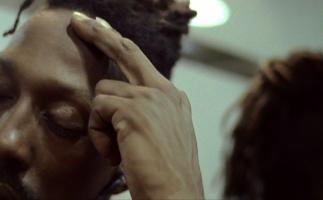
Tout en retraçant la vie d'un grand chantier de construction, de la démolition à la réalisation de nouveaux bureaux, « The Mirroring Cure » met l'accent sur la secrétaire de la société, qui décide d'interroger les personnes qui travaillent autour d'elle. Elle veut comprendre leur relation au travail, leurs espoirs, leurs craintes et angoisses. Nous sommes spectateur de sa fascination pour l'un des architectes qui, découvre-t-elle, souffre d'une perte de l?équilibre, exacerbée par les grandes dimensions du site. Apparaissant tout d'abord comme un documentaire sur la complexité de l'identité formée par le fait d?être « au travail », ainsi que sur les effets de l'architecture sur le comportement, le film commence à intégrer des éléments de fiction en laissant le spectateur indécis sur le moment où commence la réalité. Dans quelle mesure les personnages sont-ils vraiment en train de jouer, cette question reste ambiguë.
Charlotte Ginsborg est née en 1974 à Londres (Royaume-Uni), où elle vit et travaille. Après une licence en Beaux-Arts du Central Saint Martins College of Art and Design (1998) elle obtient une Maîtrise en Beaux-Arts du Goldsmith College de l'Université de Londres (2002). Elle réalise des films et des vidéos, et ses ?uvres ont été projetées au Royaume-Uni et à l'étranger.
Charlotte Ginsborg, Ginsborg
Catalogue : 2010Over The Bones | Film expérimental | 16mm | couleur | 30:0 | Royaume-Uni | 2008
Charlotte Ginsborg
Over The Bones
Film expérimental | 16mm | couleur | 30:0 | Royaume-Uni | 2008
The film interweaves documentary and fiction to depict two characters, a truck driver and a singer. Filmed in their separate working environments their stories converge until they meet through an accident at a swimming pool. The driver witnesses the singer crashing into the end of the pool and passing out. He performs mouth-to-mouth resuscitation. Waking the next day the driver discovers he has developed a desire to write music. For the next six months his singing career develops at a rapid pace. The singer temporarily looses her voice, on regaining it she discovers that it has dramatically altered in tone. Although the tale is told retrospectively no conclusion is reached. Is he continuing to sing, did she regain her career, have they permanently swapped voices? He continues on his journey. By combining voice over, interview footage and dramatic tableaux, questions arise as to whether the events are true and to what extent the cast are acting. The film investigates what happens to people once placed in front of a camera and subsequently how a filmmaker can attempt to capture individuals continually shifting performances in real life. How we adjust ?self? in relationship to ?other? and what role storytelling has in the everyday are developed into key questions. By combining voice over, interview footage and dramatic tableaux, questions arise as to whether the events unfolding are true and to what extent the cast are acting. Are the characters figments of each other?s imaginations? Or in fact each other?s alter egos? The film investigates what happens to people once placed in front of a camera and subsequently how a filmmaker can attempt to capture the subtlety of individuals continually shifting performances in real life. How and why we adjust ?self? in relationship to ?other? and what role storytelling has in the everyday are developed into key questions.
Charlotte Ginsborg graduated from MA Fine Art at Goldsmiths College, London in 2002 where she specialized in film and video. Her films interweave documentary and fictional elements to explore people?s psychological relationship to their architectural environments. She has exhibited her 16mm and digital films in galleries and festivals both nationally and internationally, including the Venice Biennale, the Serpentine Gallery and the ICA, London, the Pompidou Centre, Paris and the Walker Arts Centre, USA. She won the Oriel Mostyn Open 03 for her film ?Spade? and had a solo exhibition at the Jerwood Foundation, London. Her films are distributed by The Lux and she is currently artist in residence at The London Chest Hospital.
Catalogue : 2009The Mirroring Cure | Film expérimental | 16mm | couleur | 28:0 | Royaume-Uni | 2006
Charlotte Ginsborg, Ginsborg
The Mirroring Cure
Film expérimental | 16mm | couleur | 28:0 | Royaume-Uni | 2006
Tout en retraçant la vie d'un grand chantier de construction, de la démolition à la réalisation de nouveaux bureaux, « The Mirroring Cure » met l'accent sur la secrétaire de la société, qui décide d'interroger les personnes qui travaillent autour d'elle. Elle veut comprendre leur relation au travail, leurs espoirs, leurs craintes et angoisses. Nous sommes spectateur de sa fascination pour l'un des architectes qui, découvre-t-elle, souffre d'une perte de l?équilibre, exacerbée par les grandes dimensions du site. Apparaissant tout d'abord comme un documentaire sur la complexité de l'identité formée par le fait d?être « au travail », ainsi que sur les effets de l'architecture sur le comportement, le film commence à intégrer des éléments de fiction en laissant le spectateur indécis sur le moment où commence la réalité. Dans quelle mesure les personnages sont-ils vraiment en train de jouer, cette question reste ambiguë.
Charlotte Ginsborg est née en 1974 à Londres (Royaume-Uni), où elle vit et travaille. Après une licence en Beaux-Arts du Central Saint Martins College of Art and Design (1998) elle obtient une Maîtrise en Beaux-Arts du Goldsmith College de l'Université de Londres (2002). Elle réalise des films et des vidéos, et ses ?uvres ont été projetées au Royaume-Uni et à l'étranger.
Anton Ginzburg
Catalogue : 2017Turo | Fiction expérimentale | hdv | couleur | 35:0 | USA | 2016
Anton Ginzburg
Turo
Fiction expérimentale | hdv | couleur | 35:0 | USA | 2016
“Turo” is a film exploring post-Soviet geography and Constructivist architecture. It is made up four chapters and an introduction-index. Each chapter is exploring a different Constructivist building as a stage for past utopias. The buildings are landmarks of Soviet modernism: Melnikov House (architect Konstantin Melnikov), Narkomfin Building (architect Moisei Ginzburg), ZIL (Automobile factory designed by Vesnin brothers) and also recording of a “ghost mode” of a video game exploring ruins of Pripyat’ (Soviet town affected by Chernobyl catastrophe) featuring unrealized Tatlin’s Tower. Since a lot of Constructivist projects were never realized and existed as potential designs, they are placed into the virtual environments of the video game, positioning utopia within dystopia. It’s an atemporal collective territory, where past dreams coincide with current consumer culture. Modernity could be interpreted as an updated Babel Tower project where the universal tongue would have been imposed over the rest of the world. It still resonates deeply with contemporary culture, but today it exists as an archive of ruins, the record of fragmentation. Exploring various methods of representation the video’s structure combines cinematic approach with layering and digital abstraction. Each part of the film is a metaphorical tower that gets deconstructed throughout the duration of the chapter. Some parts are direct cinematic narratives, like an enormous blaze, while others show use projected images, deconstruction of an image and shaping its potential meanings on the basis of technological reproduction.
Anton Ginzburg is a New York–based artist and filmmaker who uses an array of historical and cultural references as starting points for his investigations into art’s capacity to penetrate layers of the past and reflect on the contemporary experience. Born in 1974 in Saint Petersburg, Russia, Ginzburg received a classical arts education before immigrating to the United States in 1990. He earned a BFA from Parsons The New School for Design and MFA degree from Bard College (Milton Avery Graduate School). His art has been shown at the 54th Venice Biennale, Blaffer Art Museum, Lille3000, Palais de Tokyo in Paris, the San Francisco Museum of Modern Art, White Columns, the first and second Moscow Biennales, and the Smithsonian Cooper-Hewitt, National Design Museum. Screenings included IFFR, NYFF/Projections, Les Rencontres Internationales Moscow International Film Festival, Arkipel/Jakarta, Exis/Korea and Images/Toronto.
Catalogue : 2015Pan | Film expérimental | 16mm | couleur | 5:45 | USA | 2014
Anton Ginzburg
Pan
Film expérimental | 16mm | couleur | 5:45 | USA | 2014
The film Pan (2014) by Anton Ginzburg, explores the genealogy and interactions of reproduction technologies from 16mm film to video formats. It examines variations of the mechanical gaze and its disembodiment in relation to the architectural representation and historical context. The hybrid aura offers an interplay and reconsideration of temporal and spatial relationships.
Anton Ginzburg is a New York–based artist and filmmaker who uses an array of historical and cultural references as starting points for his investigations into art’s capacity to penetrate layers of the past and reflect on the contemporary experience. Born in 1974 in Saint Petersburg, Russia, Ginzburg received a classical arts education before immigrating to the United States in 1990. He earned a BFA from Parsons The New School for Design in 1997 and MFA degree from Bard College, Milton Avery Graduate School of Arts, Annandale-on-Hudson, New York. His art has been shown at the fifty-fourth Venice Biennale, Blaffer Art Museum at the University of Houston, Palais de Tokyo in Paris, the San Francisco Museum of Modern Art, White Columns in New York, Lille3000 in Euralille, France, the first and second Moscow Biennales, and the Cooper-Hewitt, Smithsonian Design Museum in New York. His work is represented in the permanent collections of the San Francisco Museum of Modern Art and the Moscow Museum of Modern Art, as well as in private collections around the world.
Catalogue : 2013Hyperborea | Fiction expérimentale | hdv | couleur | 45:0 | USA, Russie | 2011
Anton Ginzburg
Hyperborea
Fiction expérimentale | hdv | couleur | 45:0 | USA, Russie | 2011
Dans son film Hyperborea, Anton Ginsburg construit des points d?intersection entre la mémoire individuelle ou collective, et l?imagination. Parcourant les histoires nombreuses au sujet de la région mythique d?Hyperborea, il s?y est installé et a voyagé jusqu?aux territoires les plus lointains au Nord. Son expédition l?a conduit des des forêts du Nord Ouest Pacifique américain, aux palais abandonnés de Saint Petersburg, jusqu?aux Goulags de la Mer Blanche. Sur la trace d?anciens vestiges, forêts primaires, fossiles de mammouths et ruines, l?explorateur est accompagné par un mystérieux nuage de fumée rouge.
Anton Ginzburg is a New York?based artist and filmmaker who uses an array of historical and cultural references as starting points for his investigations into art?s capacity to penetrate layers of the past. Born in 1974 in Saint Petersburg, Russia, Ginzburg received a classical arts education before immigrating to the United States in 1990. He earned a BFA from Parsons The New School for Design in 1997 and is currently working on his MFA degree at Bard College. His art has been shown at the 54th Venice Biennale, Lille3000, Palais de Tokyo, the San Francisco Museum of Modern Art, White Columns, the first and second Moscow Biennales, and the Smithsonian Cooper-Hewitt, National Design Museum. His work is represented in the permanent collections of the San Francisco Museum of Modern Art and the Moscow Museum of Modern Art, as well as in private collections around the world.
Anton Ginzburg
Catalogue : 2023ML_CRSH | Vidéo expérimentale | 4k | couleur | 3:26 | USA | 2021
Anton Ginzburg
ML_CRSH
Vidéo expérimentale | 4k | couleur | 3:26 | USA | 2021
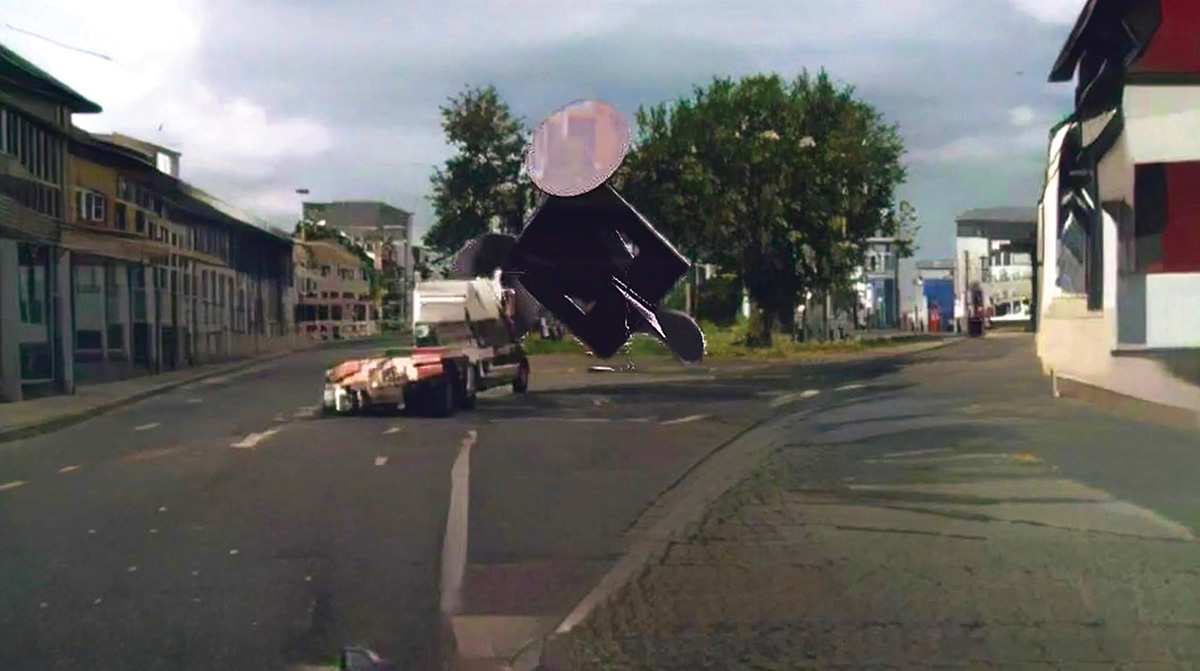
“ML CRSH” is a video work that was developed using a 3D gaming engine environment for self-driving vehicles. The AI algorithm was used to apply the database collection of photo materials and textures of Dresden to the 3D models, causing unpredictable digital artifacts. The initial video was inspired by the “Media Burn” 1975 performance organized by Ant Farm collective, where a customized Cadillac drove into a wall of flaming television sets. Translating it into today’s digital environment of “database logic” of new media objects and employment of AI, it features a montage of crashes of autonomous vehicles into digital replicas of art objects. The artwork turns its focus on the proliferation of database and AI technologies and disrupts its patterns with an iconoclastic gesture of a crash.
Anton Ginzburg is a New York–based artist and filmmaker who uses an array of historical and cultural references as starting points for his investigations into art’s capacity to penetrate layers of the past and reflect on the contemporary experience. Born in 1974 in Saint Petersburg, Russia, Ginzburg received a classical arts education before immigrating to the United States in 1990. He earned a BFA from Parsons The New School for Design and MFA degree from Bard College (Milton Avery Graduate School). His art has been shown at the 54th Venice Biennale, Blaffer Art Museum, Lille3000, Palais de Tokyo in Paris, the San Francisco Museum of Modern Art, White Columns, and the Smithsonian Cooper-Hewitt, National Design Museum. Screenings included IFFR, NYFF/Projections, Ann Arbor, Go Shorts and Images/Toronto.
Eva Giolo
Catalogue : 2018Remote | Film expérimental | hdv | couleur | 23:41 | Belgique | 2016
Eva Giolo
Remote
Film expérimental | hdv | couleur | 23:41 | Belgique | 2016
Remote is a suggestive story. Portrait of a tender companionship in a secluded Irish countryside. Residing in the simplicity of the moment, the waiting and the repetition of days. This is a place where there is no space for imagining a future other than the perpetual repetition of the present. This is a place for survival, to be strong, alone with the wind, eyes burnt by the light. A place of unspoken tenderness, a landscape of silence and solitude in which there will always be someone.
Eva Giolo (b.1991 Brussels) is an audio visual artist. Her practice is predominantly made of filmic portraits that weave between fiction and documentary. They focus on individuals, almost always facing a certain kind of loneliness. She mainly focus on those individuals in their daily life, scripting and observing their actions and daily gestures through the camera. They often touch upon universal human themes and explore the relationship between loss, time and memory. But also the in-between language of the camera and the subject. Presenting memories, images and portraitures as something that can be manipulated and seen with multi-perspectives. Questioning the power of images is a recurrent theme and memories often stand as a central narrative. Giolo obtained a BA and MA in Fine Arts at the Media Arts department of the Royal Academy of Arts (KASK), Ghent. She completed her music education at the Institute of Contemporary Music in London. Recent screenings and exhibitions include: Imagine Science Film Festival, New York; TAZ#17, Ostend; Côté court, Paris; International Film Festival Rotterdam; Blaa Galleri, Copenhagen; BOZAR, Brussels; Courtisane Film Festival, Ghent; Ishibiki Gallery, Kanazawa; In Out Film Festival, Gdansk among others. Giolo won the VAF Wildcard for experimental film (2016) and is a founding member of the small distribution and production platform elephy. Eva Giolo is a post-grad art resident at HISK in Ghent (2018-2020). She currently works and lives in Brussels.
Eva Giolo
Catalogue : 2026Memory Is an Animal, It Barks with Many Mouths | Film expérimental | 16mm | couleur | 24:0 | Belgique | 2025
Eva Giolo
Memory Is an Animal, It Barks with Many Mouths
Film expérimental | 16mm | couleur | 24:0 | Belgique | 2025
Le dernier film de Eva Giolo nous conduit dans le Val Gardena, où l’on parle encore le ladin, une langue rhéto-romane. Giolo renverse les représentations habituelles des communautés montagnardes pour offrir le portrait d’un patrimoine culturel précieux, en constante évolution. Ici, les habitants préservent et cultivent leur culture pour les générations futures, avec une conscience du monde et une grande créativité. Tourné en 16 mm, sensible à la fois à la grandeur et à la fragilité de la nature, Memory Is an Animal, It Barks with Many Mouths est un essai délicat sur l’importance vitale de la diversité linguistique.
Eva GIOLO (1991, Belgique) est une artiste travaillant le film, la vidéo et l’installation. Son œuvre accorde une attention particulière à l’expérience féminine, mobilisant des stratégies expérimentales et documentaires pour explorer l’intimité, la permanence, la mémoire, ainsi que l’analyse du langage et de la sémiotique. Ses films, installations et autres projets ont été largement présentés à l’international — festivals, musées et galeries — notamment à Sadie Coles HQ, la Viennale, FIDMarseille, l’IFFR, le New York Film Festival, entre autres. Son film Flowers blooming in our throats (2020) a été nommé pour l’European Film Award et a remporté le Top Prize à THIS IS SHORT 2021. Elle a également reçu la Mention spéciale du Jury national au Lago Film Fest 2021, la Mention spéciale du Jury au First Crossings Festival, ainsi que le Prix du Jury des Critiques au 25FPS Festival. Elle est lauréate du HISK (2018–2020) et a été en résidence artistique au SeMA NANJI (2020), à la résidence annuelle de film-écriture Conversation #4 (CVB, GSARA et Beursschouwburg), au programme CASTRO (2021), à WIELS (2021), ainsi qu’à RU Unlimited New York et Fogo Island Arts (2022). Ses films sont distribués par elephy et Light Cone.
Catalogue : 2025Stone, Hat, Ribbon and Rose | Film expérimental | 16mm | couleur | 16:0 | Belgique | 2024
Eva Giolo
Stone, Hat, Ribbon and Rose
Film expérimental | 16mm | couleur | 16:0 | Belgique | 2024
Part of the YOURS project, an assemblage of five short films dedicated to Chantal Akerman, STONE, HAT, RIBBON AND ROSE offers a strictly personal and decidedly fragmented guide to Brussels; this idiosyncratic city symphony takes us across different urban terrains and unveils each location’s visual and sonic wonders. Amplifying the film’s elusive, drifting quality are a series of one-person performances involving disparate objects in the city. Playful and sombre, quotidian and fantastic, Eva Giolo’s film is a tender love letter to Akerman’s work. (Hyun Jin Cho)
Eva Giolo is an artist working across film, video, and installation. Her work has been exhibited at Sadie Coles HQ, Harlan Levey Project, WIELS centre for Contemporary Art , MAXXI–National Museum of 21st Century Art, Kunstmuseum Den Haag, BOZAR Centre for Fine Arts, Palazzo Strozzi, Museum of Contemporary Art Antwerp, Kunsthalle Wien, and major film festivals like International Film Festival Rotterdam, Viennale, FIDMarseille and Vision du Réel among others. She is a founding member of the production and distribution platform elephy.
Marina Gioti
Catalogue : 2010To Krifo Scholio | Film expérimental | 16mm | noir et blanc | 10:0 | Grèce | 2009
Marina Gioti
To Krifo Scholio
Film expérimental | 16mm | noir et blanc | 10:0 | Grèce | 2009
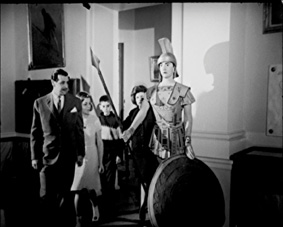
Greece, the early 70?s. A family visits the museum of the 1821 Greek Revolution and War against the Turks. As they wander inside the museum, one of the paintings comes to life ... ?Sabotaged? version of a rare -found- propaganda film,produced during the Greek military junta in the 70s, supporting a largely debated fact -for many a national myth- related to the birth of the modern Greek nation and the construction of its ethnic identity.
Born in Athens, Greece, Marina Gioti has studied Chemical Engineering, Environmental Management (MSc), Filmmaking and Media and Communication (MA) in Greece and the UK. Since 1999 she lives and works in Athens as a filmmaker/ video artist working mainly with found footage and animation. She has presented work at festivals and galleries in Athens, Europe and the United States, notably at the Toronto International Film Festival, The Rencontres Internationales, Cinematexas, New York Underground Film Festival and Transmediale festival in Berlin. She is also working as an independent curator and film programmer organizing art exhibitions and experimental film and documentary screenings around Athens.
Catalogue : 2007b-alles | Vidéo expérimentale | dv | couleur | 2:0 | Grèce | 2005
Marina Gioti
b-alles
Vidéo expérimentale | dv | couleur | 2:0 | Grèce | 2005
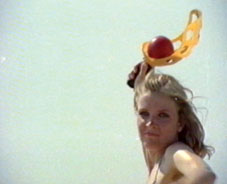
A Greek TV-commercial from the 80s of a product-action racquet game- that failed to become a success in the local market, is being manipulated anew in terms of image and sound. Apart from a funny rhythmical reworking of a rather trite found footage, this work aims at presenting a comical and simplistic view of how American products and trends have been implanted on our collective subconscious through advertising.
Marina Gioti is a filmmaker based in Athens, Greece. Her film and video work has been presented at various festivals and special screenings around Europe and the United States. Her most recent video "B-alles" was an official selection at: New York and Chicago Underground Film Festivals, Cinematexas 11, Hi/Lo Film Festival, Hull International Short Film Festival, among others. She also works as an independent film and video curator, programming and organizing experimental film and video screenings at various venues around Athens, mainly under the name "novaXpress". She has also programmed for Synch Festival (artistic director Synch Cinema 2005) and Cinematexas. She is the co-curator of the art exhibition "Anathena", which recently opened at the Deste Foundation (Athens, Greece).
Christoph Girardet, Matthias Müller
Catalogue : 2026One Hundred Years Later | Film expérimental | mov | noir et blanc | 7:55 | Allemagne | 2025
Christoph Girardet
One Hundred Years Later
Film expérimental | mov | noir et blanc | 7:55 | Allemagne | 2025
En 1939, une seconde équipe, avec une doublure et des figurants, a tourné des scènes pour le classique hollywoodien Mr. Smith Goes to Washington au Lincoln Memorial. La succession de longues séquences éliminées du montage final sape la narration cinématographique classique : l’intrigue ne semble pas avancer. L’architecture néoclassique demeure le décor d’un rituel récurrent et troublant, dans lequel le protagoniste se perd.
Christoph Girardet, né en 1966, est un artiste vidéo et cinéaste allemand. Son travail prend pour matière à la fois des images trouvées par hasard et d’autres issues de recherches approfondies dans les archives de l’histoire du cinéma. Par le montage, les ellipses et les répétitions, il met au jour les structures profondes et les mécanismes internes de la réalité filmique représentée. Au-delà de l’analyse du matériau et de ses clichés, son œuvre explore en essence un état mélancolique d’absence, construisant ainsi un monde visuel singulier. De 1988 à 1994, Girardet étudie les arts visuels à la Hochschule für Bildende Künste de Braunschweig, dans la classe cinéma de Birgit Hein. Depuis 1989, il réalise films, vidéos et installations vidéo — parfois en collaboration avec l’artiste vidéo Volker Schreiner (1994–2004), et plus fréquemment avec le cinéaste Matthias Müller (depuis 1999). Girardet a participé à de nombreuses expositions collectives, notamment au Stedelijk Van Abbemuseum d’Eindhoven, au MoMA PS1 à New York, au Palais de Tokyo à Paris, au Hirshhorn Museum de Washington et à l’Eye Filmmuseum d’Amsterdam. Il a également bénéficié d’expositions personnelles dans des institutions telles que FACT (Liverpool), le Kunstverein Hannover ou West (La Haye). Ses œuvres ont été présentées dans les grands festivals internationaux — Cannes, Venise, Berlin, Toronto, Locarno, Oberhausen ou Rotterdam — et figurent dans des collections publiques et privées. Il a reçu de nombreuses distinctions, dont une bourse pour le programme International Studio and Curatorial Program à New York (2000) et une résidence à la Villa Massimo à Rome (2004). Il vit et travaille à Hanovre, en Allemagne.
Catalogue : 2025Jishin | Film expérimental | hdv | noir et blanc | 8:0 | Allemagne | 2022
Christoph Girardet
Jishin
Film expérimental | hdv | noir et blanc | 8:0 | Allemagne | 2022
Jishin (Japanese: earthquake) shows an archaic-looking special effect for a Hollywood film of the 1940s: a house begins to sway, stone lanterns fall over, an actor loses his grip. Finally, mountains of debris fill the screen. The drama is repeated in five successive, slightly varied camera perspectives. The uncut raw material allows an analytical view of the clichéd and scenery-like setting: the disaster is not due to a natural event but to a precalculated performance.
born in Langenhagen, Germany, in 1966, studied Visual Arts at the Braunschweig University of Art (HBK). Since 1989 he has produced films, videos and video installations, some of them in collaboration with video artist Volker Schreiner (1994 – 2004), and, more frequently, in collaboration with filmmaker Matthias Müller (1999 – 2022). He lives and works in Hanover, Germany.
Catalogue : 2022Misty Picture | Film expérimental | 4k | couleur | 16:32 | Allemagne | 2021
Christoph Girardet, Matthias Müller
Misty Picture
Film expérimental | 4k | couleur | 16:32 | Allemagne | 2021
Twenty years ago, the towers of the New York World Trade Center collapsed. The endlessly repeating television images of this event were preceded by manyfold stagings of the building, either as a highly symbolic icon, a speculative destruction fantasy or merely as a spectacular backdrop. In Misty Picture, such fictional motifs string together: city symphony, disaster movie and medial trauma therapy become one.
Christoph Girardet, born in Langenhagen, Germany, in 1966. Lives in Hannover. Studied at the Braunschweig HBK. Matthias Müller, born in Bielefeld, Germany, in 1961. Lives in Bielefeld and Cologne. Studied at the Bielefeld University and at the Braunschweig HBK. Collaborative works since 1999
Catalogue : 2018It Was Still Her Face | Film expérimental | hdv | noir et blanc | 8:0 | Allemagne | 2017
Christoph Girardet
It Was Still Her Face
Film expérimental | hdv | noir et blanc | 8:0 | Allemagne | 2017
Portraits of women. And men, who are spellbound by them. The painted portraits, a recurring motif of film noir as well as European postwar cinema, aesthetically stand in a tradition of an outmoded academic style that is bent on striking likeness with the model. They are revenants, omens of absence, metaphors for loss and death, objects of desire and fixation, which mesmerize both the viewer in the movie and in front of the screen.
Christoph Girardet, born in Langenhagen, Germany, in 1966. Lives in Hannover. Studied at the Braunschweig HBK. filmography (single channel, selection) 1991 Schwertkampf 1993 Fieberrot 1996 Release 2001 Scratch 2002 Absence 2004 Fiction Artists (with Volker Schreiner) 2007 Pianoforte | Storyboard 2012 The Eternal Lesson | Dirigible 2014 Fabric 2015 Synthesis 2017 It Was Still Her Face collaborations with Matthias Müller 1999 Phoenix Tapes 2002 Manual | Beacon 2003 Play | Mirror 2006 Kristall 2009 Contre-jour | Maybe Siam 2011 Meteor 2013 Cut 2016 personne
Catalogue : 2015Fabric | Film expérimental | hdv | noir et blanc | 9:52 | Allemagne | 2014
Christoph Girardet
Fabric
Film expérimental | hdv | noir et blanc | 9:52 | Allemagne | 2014
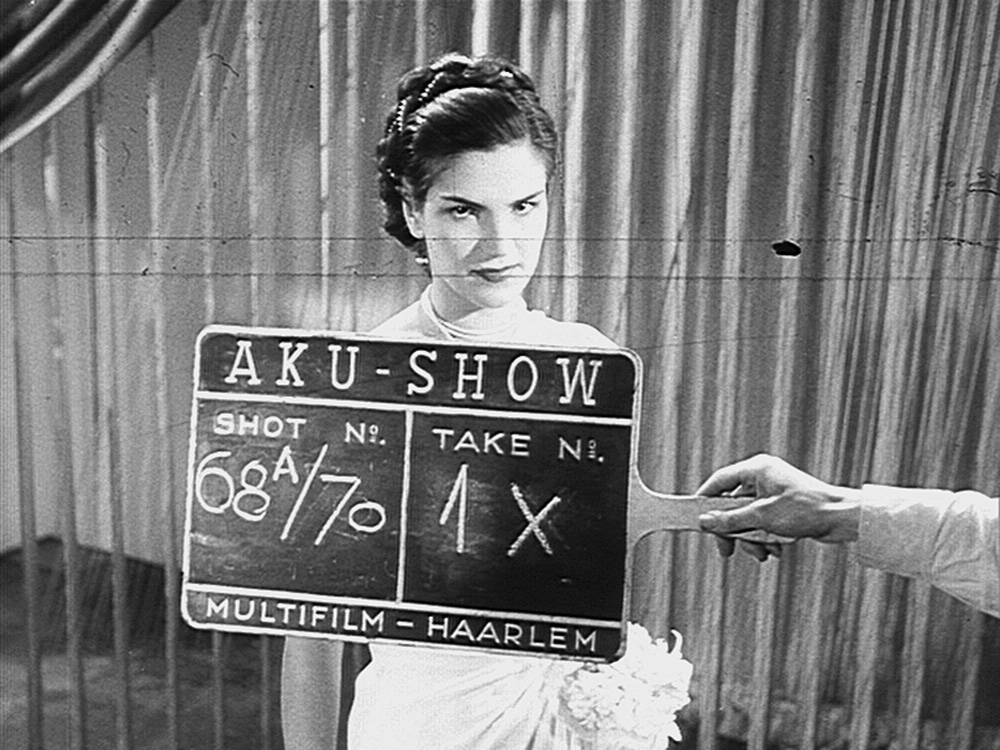
Fabric is a montage based on remaining workprints from a commercial film about viscose that no longer exists. The original attempt of the film to visualize perfect images of a young tailor and models dressed in sensual fabric while acting within a decorative modernist setting is mirrored in its shortcoming. The leftovers only show the preliminaries, faulty repetitions and aborted takes, thus all footage which was thrownout. Clapper boards indicating each take by numbers allowed to reconstruct a part of the film’s original storyboard. The new montage shows all of the remaining snippets from the related scenes including the clapper boards, the repeated takes and the glitches in the film material. However, all parts which probably have been used to edit the original film are missing, the gaps are marked with beeps on the otherwise silent soundtrack. While following a fragile new narrative, Fabric also generates a counterpart of an artefact that was lost.
Christoph Girardet, born in Langenhagen, Germany, in 1966. He studied Fine Arts at the Braunschweig School of Art (Master’s degree in 1994). Since 1989 he has produced video tapes, video installations and films, some of them in collaboration with video artist Volker Schreiner beginning in 1994 and as of 1999 with filmmaker Matthias Müller. He was awarded a stipend for the International Studio and Curatorial Program in New York (2000) and the Villa Massimo stipend in Rome (2004). He lives and works in Hanover.
Catalogue : 2011Maybe Siam | Film expérimental | betaSP | couleur et n&b | 12:20 | Allemagne | 2009

Christoph Girardet, Matthias Müller
Maybe Siam
Film expérimental | betaSP | couleur et n&b | 12:20 | Allemagne | 2009
They call me a dreamer, well maybe I am. / But I know that I`m burnin` to see / Those far away places with the strange-soundin` names / Callin`, callin` me. (no translation, English only, please)
Christoph Girardet, born in Langenhagen, Germany, in 1966. Lives in Hannover. Works in video, film and installation since 1987. Studied at the Braunschweig HBK. Selected works: 1991 Schwertkampf, 1997 Release, 2001 Scratch, 2001 7:48, 2002 Absence, 2007 Pianoforte, 2010 Silberwald Matthias Müller, born in Bielefeld, Germany, in 1961. Lives in Bielefeld and Cologne. Works in film, video and photography since 1980. Studied at the Bielefeld University and at the Braunschweig HBK. Selected works: 1990 Home Stories, 1994 Alpsee, 1998 Vacancy, 2000 nebel, 2004 Album. Joint projects of Christoph Girardet and Matthias Müller: Phoenix Tapes 1999, Manual 2002, Beacon 2002, Play 2003, Mirror 2003, Ray 2004, Catch 2005, Ground 2005, Hide 2006, Kristall 2006, Locomotive 2008, Contre-jour 2009, Maybe Siam 2009
Catalogue : 2009Storyboard | Art vidéo | betaSP | couleur | 5:0 | Allemagne | 2007
Christoph Girardet
Storyboard
Art vidéo | betaSP | couleur | 5:0 | Allemagne | 2007
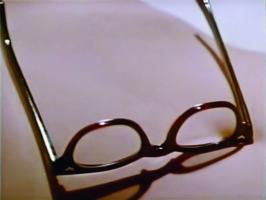
« Storyboard » est un collage réalisé à partir d'une variété d?images trouvées au hasard : des espaces vides, des gestes énigmatiques, des environnements artificiels. Ceci est-il la vie, selon une mémoire cinématographique?
Christoph Girardet est né en 1966 à Langenhagen et vit à Hanovre en Allemagne. Il a étudié les Beaux-Arts à l?Ecole d?arts de Braunschweig. Il travaille depuis 1987 sur les supports vidéo, film et installations. Il commence une collaboration en 1994 avec le vidéaste Volker SCHREINER, puis avec Matthias Müller depuis 1999 (Phoenix Tapes) avec qui il réalise de nombreux projets communs ayant recours aux techniques numériques. Il explore entre autres les poncifs du cinéma industriel. Girardet a participé à des expositions collectives dans des institutions aussi prestigieuses que le Stedelijk Van Abbemuseum (Eindhoven) ou le P.S.1 Contemporary Art Center de New York. Des expositions personnelles de ses travaux ont eu lieu au Kunstverein de Hanovre ou à la Sean Gallery de New York. Il a déjà reçu de nombreuses récompenses.
Christoph Girardet
Catalogue : 2026One Hundred Years Later | Film expérimental | mov | noir et blanc | 7:55 | Allemagne | 2025
Christoph Girardet
One Hundred Years Later
Film expérimental | mov | noir et blanc | 7:55 | Allemagne | 2025
En 1939, une seconde équipe, avec une doublure et des figurants, a tourné des scènes pour le classique hollywoodien Mr. Smith Goes to Washington au Lincoln Memorial. La succession de longues séquences éliminées du montage final sape la narration cinématographique classique : l’intrigue ne semble pas avancer. L’architecture néoclassique demeure le décor d’un rituel récurrent et troublant, dans lequel le protagoniste se perd.
Christoph Girardet, né en 1966, est un artiste vidéo et cinéaste allemand. Son travail prend pour matière à la fois des images trouvées par hasard et d’autres issues de recherches approfondies dans les archives de l’histoire du cinéma. Par le montage, les ellipses et les répétitions, il met au jour les structures profondes et les mécanismes internes de la réalité filmique représentée. Au-delà de l’analyse du matériau et de ses clichés, son œuvre explore en essence un état mélancolique d’absence, construisant ainsi un monde visuel singulier. De 1988 à 1994, Girardet étudie les arts visuels à la Hochschule für Bildende Künste de Braunschweig, dans la classe cinéma de Birgit Hein. Depuis 1989, il réalise films, vidéos et installations vidéo — parfois en collaboration avec l’artiste vidéo Volker Schreiner (1994–2004), et plus fréquemment avec le cinéaste Matthias Müller (depuis 1999). Girardet a participé à de nombreuses expositions collectives, notamment au Stedelijk Van Abbemuseum d’Eindhoven, au MoMA PS1 à New York, au Palais de Tokyo à Paris, au Hirshhorn Museum de Washington et à l’Eye Filmmuseum d’Amsterdam. Il a également bénéficié d’expositions personnelles dans des institutions telles que FACT (Liverpool), le Kunstverein Hannover ou West (La Haye). Ses œuvres ont été présentées dans les grands festivals internationaux — Cannes, Venise, Berlin, Toronto, Locarno, Oberhausen ou Rotterdam — et figurent dans des collections publiques et privées. Il a reçu de nombreuses distinctions, dont une bourse pour le programme International Studio and Curatorial Program à New York (2000) et une résidence à la Villa Massimo à Rome (2004). Il vit et travaille à Hanovre, en Allemagne.
Catalogue : 2025Jishin | Film expérimental | hdv | noir et blanc | 8:0 | Allemagne | 2022
Christoph Girardet
Jishin
Film expérimental | hdv | noir et blanc | 8:0 | Allemagne | 2022
Jishin (Japanese: earthquake) shows an archaic-looking special effect for a Hollywood film of the 1940s: a house begins to sway, stone lanterns fall over, an actor loses his grip. Finally, mountains of debris fill the screen. The drama is repeated in five successive, slightly varied camera perspectives. The uncut raw material allows an analytical view of the clichéd and scenery-like setting: the disaster is not due to a natural event but to a precalculated performance.
born in Langenhagen, Germany, in 1966, studied Visual Arts at the Braunschweig University of Art (HBK). Since 1989 he has produced films, videos and video installations, some of them in collaboration with video artist Volker Schreiner (1994 – 2004), and, more frequently, in collaboration with filmmaker Matthias Müller (1999 – 2022). He lives and works in Hanover, Germany.
Catalogue : 2022Misty Picture | Film expérimental | 4k | couleur | 16:32 | Allemagne | 2021
Christoph Girardet, Matthias Müller
Misty Picture
Film expérimental | 4k | couleur | 16:32 | Allemagne | 2021
Twenty years ago, the towers of the New York World Trade Center collapsed. The endlessly repeating television images of this event were preceded by manyfold stagings of the building, either as a highly symbolic icon, a speculative destruction fantasy or merely as a spectacular backdrop. In Misty Picture, such fictional motifs string together: city symphony, disaster movie and medial trauma therapy become one.
Christoph Girardet, born in Langenhagen, Germany, in 1966. Lives in Hannover. Studied at the Braunschweig HBK. Matthias Müller, born in Bielefeld, Germany, in 1961. Lives in Bielefeld and Cologne. Studied at the Bielefeld University and at the Braunschweig HBK. Collaborative works since 1999
Catalogue : 2018It Was Still Her Face | Film expérimental | hdv | noir et blanc | 8:0 | Allemagne | 2017
Christoph Girardet
It Was Still Her Face
Film expérimental | hdv | noir et blanc | 8:0 | Allemagne | 2017
Portraits of women. And men, who are spellbound by them. The painted portraits, a recurring motif of film noir as well as European postwar cinema, aesthetically stand in a tradition of an outmoded academic style that is bent on striking likeness with the model. They are revenants, omens of absence, metaphors for loss and death, objects of desire and fixation, which mesmerize both the viewer in the movie and in front of the screen.
Christoph Girardet, born in Langenhagen, Germany, in 1966. Lives in Hannover. Studied at the Braunschweig HBK. filmography (single channel, selection) 1991 Schwertkampf 1993 Fieberrot 1996 Release 2001 Scratch 2002 Absence 2004 Fiction Artists (with Volker Schreiner) 2007 Pianoforte | Storyboard 2012 The Eternal Lesson | Dirigible 2014 Fabric 2015 Synthesis 2017 It Was Still Her Face collaborations with Matthias Müller 1999 Phoenix Tapes 2002 Manual | Beacon 2003 Play | Mirror 2006 Kristall 2009 Contre-jour | Maybe Siam 2011 Meteor 2013 Cut 2016 personne
Catalogue : 2015Fabric | Film expérimental | hdv | noir et blanc | 9:52 | Allemagne | 2014
Christoph Girardet
Fabric
Film expérimental | hdv | noir et blanc | 9:52 | Allemagne | 2014
Fabric is a montage based on remaining workprints from a commercial film about viscose that no longer exists. The original attempt of the film to visualize perfect images of a young tailor and models dressed in sensual fabric while acting within a decorative modernist setting is mirrored in its shortcoming. The leftovers only show the preliminaries, faulty repetitions and aborted takes, thus all footage which was thrownout. Clapper boards indicating each take by numbers allowed to reconstruct a part of the film’s original storyboard. The new montage shows all of the remaining snippets from the related scenes including the clapper boards, the repeated takes and the glitches in the film material. However, all parts which probably have been used to edit the original film are missing, the gaps are marked with beeps on the otherwise silent soundtrack. While following a fragile new narrative, Fabric also generates a counterpart of an artefact that was lost.
Christoph Girardet, born in Langenhagen, Germany, in 1966. He studied Fine Arts at the Braunschweig School of Art (Master’s degree in 1994). Since 1989 he has produced video tapes, video installations and films, some of them in collaboration with video artist Volker Schreiner beginning in 1994 and as of 1999 with filmmaker Matthias Müller. He was awarded a stipend for the International Studio and Curatorial Program in New York (2000) and the Villa Massimo stipend in Rome (2004). He lives and works in Hanover.
Catalogue : 2011Maybe Siam | Film expérimental | betaSP | couleur et n&b | 12:20 | Allemagne | 2009
Christoph Girardet, Matthias Müller
Maybe Siam
Film expérimental | betaSP | couleur et n&b | 12:20 | Allemagne | 2009
They call me a dreamer, well maybe I am. / But I know that I`m burnin` to see / Those far away places with the strange-soundin` names / Callin`, callin` me. (no translation, English only, please)
Christoph Girardet, born in Langenhagen, Germany, in 1966. Lives in Hannover. Works in video, film and installation since 1987. Studied at the Braunschweig HBK. Selected works: 1991 Schwertkampf, 1997 Release, 2001 Scratch, 2001 7:48, 2002 Absence, 2007 Pianoforte, 2010 Silberwald Matthias Müller, born in Bielefeld, Germany, in 1961. Lives in Bielefeld and Cologne. Works in film, video and photography since 1980. Studied at the Bielefeld University and at the Braunschweig HBK. Selected works: 1990 Home Stories, 1994 Alpsee, 1998 Vacancy, 2000 nebel, 2004 Album. Joint projects of Christoph Girardet and Matthias Müller: Phoenix Tapes 1999, Manual 2002, Beacon 2002, Play 2003, Mirror 2003, Ray 2004, Catch 2005, Ground 2005, Hide 2006, Kristall 2006, Locomotive 2008, Contre-jour 2009, Maybe Siam 2009
Catalogue : 2009Storyboard | Art vidéo | betaSP | couleur | 5:0 | Allemagne | 2007
Christoph Girardet
Storyboard
Art vidéo | betaSP | couleur | 5:0 | Allemagne | 2007
« Storyboard » est un collage réalisé à partir d'une variété d?images trouvées au hasard : des espaces vides, des gestes énigmatiques, des environnements artificiels. Ceci est-il la vie, selon une mémoire cinématographique?
Christoph Girardet est né en 1966 à Langenhagen et vit à Hanovre en Allemagne. Il a étudié les Beaux-Arts à l?Ecole d?arts de Braunschweig. Il travaille depuis 1987 sur les supports vidéo, film et installations. Il commence une collaboration en 1994 avec le vidéaste Volker SCHREINER, puis avec Matthias Müller depuis 1999 (Phoenix Tapes) avec qui il réalise de nombreux projets communs ayant recours aux techniques numériques. Il explore entre autres les poncifs du cinéma industriel. Girardet a participé à des expositions collectives dans des institutions aussi prestigieuses que le Stedelijk Van Abbemuseum (Eindhoven) ou le P.S.1 Contemporary Art Center de New York. Des expositions personnelles de ses travaux ont eu lieu au Kunstverein de Hanovre ou à la Sean Gallery de New York. Il a déjà reçu de nombreuses récompenses.
Christoph Girardet, Matthias MÜLLER
Catalogue : 2019Screen | Vidéo | hdv | couleur et n&b | 17:30 | Allemagne | 2018
Christoph Girardet, Matthias Müller
Screen
Vidéo | hdv | couleur et n&b | 17:30 | Allemagne | 2018
"While he mused on the effect of the flowing sands, he was seized from time to time by hallucinations in which he himself began to move with the flow." -Kobo Abe Liminal zones. Floating particles. Fire, water, earth, air. Voices of fictional characters: sometimes suggestive, sometimes strict, leading the viewer away from the here and now. Who`s talking? The relationship between the hypnotized subject and the hypnotist is mirrored in the spectator`s relationship to the screen.
CHRISTOPH GIRARDET was born in Langenhagen, Germany, in 1966. He studied Fine Arts at the Braunschweig School of Art (Master´s degree in 1994). Since 1989 he has produced video tapes, video installations and films, some of them in collaboration with Volker Schreiner beginning in 1994 and as of 1999 with Matthias Müller. He was awarded a stipend for the International Studio and Curatorial Program in New York (2000) and the Villa Massimo stipend in Rome (2004). He lives and works in Hanover. MATTHIAS MÜLLER was born in Bielefeld, Germany in 1961. Müller is an artist working in film, video and photography. He is based in Bielefeld and Cologne, Germany. Studied Arts and German Literature at Bielefeld University and Fine Arts at HBK Braunschweig. Master’s degree. Since 2003, Professor in Experimental Film at Academy of Media Arts, KHM, Cologne. Müller organized numerous avant-garde film events such as the "Found Footage Film Festival" (1996 & 1999) and the first German festival of autobiographical films "Ich etc." (1998) and various touring programs. With his films and videos he has taken part in major film festivals worldwide, including the festivals at Cannes, Venice, Berlin and Rotterdam. His work has also been featured in several group and solo exhibitions. His films and videos are part of the collections of institutions such as Centre Georges Pompidou, Paris, Museu d’Art Contemporani, Barcelona, Nederlands Film Museum, Amsterdam, Australian Centre For The Moving Image, Melbourne, Kunsthalle Bielefeld, the Goetz Collection, Munich, the collection of Isabelle and Jean-Conrad Lemaître, London, and Tate Modern, London.
Catalogue : 2017Personne | Film expérimental | hdv | couleur et n&b | 15:4 | Allemagne | 2016
Christoph Girardet, Matthias MÜLLER
Personne
Film expérimental | hdv | couleur et n&b | 15:4 | Allemagne | 2016
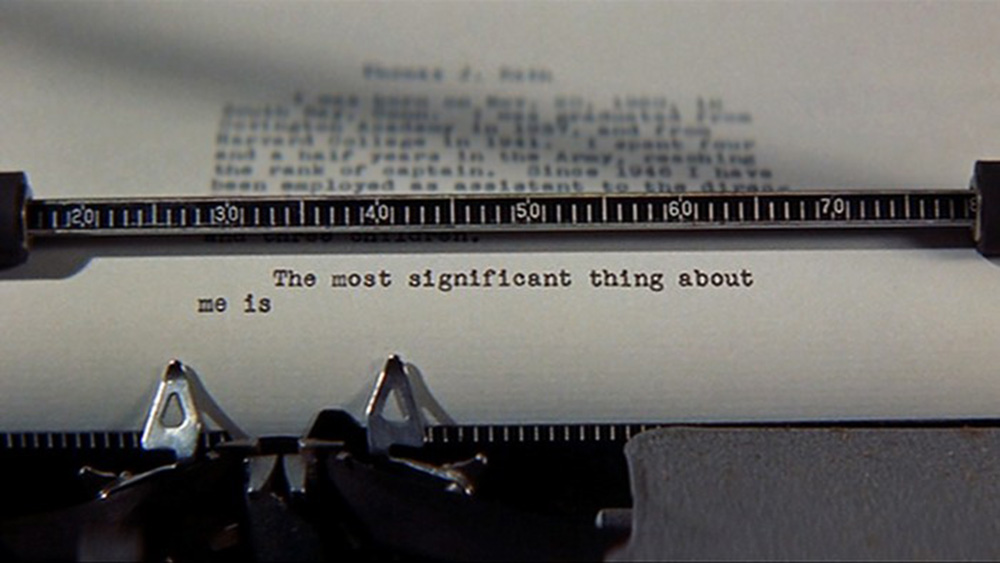
A broken bottleneck lies on the ground. An analogue telephone with a blank dial plate. The hero of the film, Jean-Louis Trintignant, in younger years – in older years. A man huddled on an elevator floor. Skewered butterflies. He is all alone in the world. The external is sealed off. The internal barricaded. He shifts between times. His focus is always trained on the other. Is he wanted, condemned, persecuted? The man whom we observe from the rear, is only able to see his back in the mirror. His face cannot be recognised. All the actions and movements, all the seeking and striving, all the alterations and associations revolve around the view and excerpt from “La reproduction interdite”, painted by Belgian surrealist René Magritte in 1937. The mirror axis of the film, and yet, and simply for that reason, one becomes the other. The other becomes many. “personne – that is somebody and nobody and anyone. That is us in the course of time. Persistently, in vain. The self is the need for permanent self-assertion”.
Christoph Girardet & Matthias Müller are directors, known for Cut (2013), Contre-jour (2009) and Personne (2016).
Fabien Giraud
Catalogue : 2006Thes Straight Edge | Vidéo expérimentale | betaSP | couleur | 13:8 | France | 2005
Fabien Giraud
Thes Straight Edge
Vidéo expérimentale | betaSP | couleur | 13:8 | France | 2005
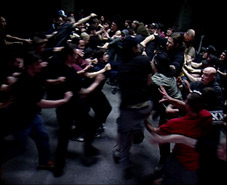
Une foule danse au son d`une musique que l`on n`entend pas devant un groupe que l`on ne voit pas. Reste le son des corps et de leurs mouvements, l`image d`un ordre changeant. The Straight Edge est une expérience appliquée à un concert de musique punk-hardcore. La foule et son intensité en sont le matériau. Les expressions communes de joie, de violence ou d`ennui sont les éléments d`une même fiction culturelle à travailler. Des formes y sont tentées, déplacées et répétées. J`envisage la communauté comme un jeu complexe où s`inventent les individus. C`est dans le partage des règles, des postures et des vitesses que chacun se construit et constuit un monde. C`est ce mouvement de production qui est l`objet de mon travail. Je veux croire qu`il est toujours flexible et modifiable, qu`il peut être altéré et recréé. Je veux croire en la fiction et la possibilité de sa réinvention.
Fabien Giraud, né en 1980, a étudié à l?Ecole Nationale Superieure des Arts Décoratifs de Paris, et au National Institute of Design en Inde. Il vit et travaille actuellement au Fresnoy, Studio National des Arts Contemporains à Tourcoing.
Helena Girón Vázquez, Samuel M. Delgado
Catalogue : 2026Un dragón de cien cabezas | Doc. expérimental | 16mm | couleur | 14:50 | Espagne | 2025
Helena GirÓn VÁzquez, Samuel M. Delgado
Un dragón de cien cabezas
Doc. expérimental | 16mm | couleur | 14:50 | Espagne | 2025
Dans le jardin des Hespérides poussait jadis un fruit capable d’accorder l’immortalité à quiconque le mangeait. Ce jardin, situé quelque part au large de l’Afrique de l’Ouest, était gardé par un dragon aux cent têtes. À travers la bio-sonification des bananiers — culture de monoculture emblématique des îles Canaries — se révèle un récit d’éternité surgissant à l’endroit même où ce jardin mythique aurait existé.
Leur travail explore les relations entre mythologie, histoire et matérialisme. Leur premier long métrage, Eles transportan a morte (2021), a été présenté en avant-première aux festivals de Venise et de Saint-Sébastien, remportant des prix dans les deux. Il a ensuite circulé dans des festivals internationaux tels que Rotterdam, Le Caire, Mar del Plata, la Viennale, Hambourg et São Paulo. Leurs courts métrages ont été montrés dans des festivals comme Toronto, Locarno, New York, Ann Arbor, entre beaucoup d’autres. Ils ont également réalisé des installations et des performances dans des centres d’art tels que le CCCB (Barcelone), le BAM (New York), le TEA (Tenerife) ou Solar (Vila do Conde).
Peter Gizzi, Natalia ALMADA
Catalogue : 2010Threshold Songs | Film expérimental | super8 | couleur | 10:0 | Maroc | 2009
Peter Gizzi, Natalia ALMADA
Threshold Songs
Film expérimental | super8 | couleur | 10:0 | Maroc | 2009
"Threshold Songs," by Natalia Almada and Peter Gizzi is part of "The Tangier 8," a film-poetry project that took place in Tangier, Morocco in June 2009. Working under tight time constraints-they had just four days to film, four days for sound, and four days for editing, the artists took inspiration from the city of Tangier-its history, architecture, people, politics, as well as from each other, to produce these short film-poems.
Natalia Almada- Born in 1974 in Mexico. She graduated with a Masters in Fine Arts in photography from the Rhode Island School of Design and shares her time between Mexico City and Brooklyn, New York. Her directing credits include All Water Has a Perfect Memory, an experimental short film; Al Otro Lado, her award winning debut feature documentary about immigration, drug trafficking and corrido music; and her most recent film, EL GENERAL, a family memoir and portrait of Mexico past and present which premiered at the 2009 Sundance Film Festival and won the best documentary director award. Her films have been shown at The Museum of Modern Art, The Guggenheim Museum, The Whitney Biennial, as well as at several film festivals around the world. She has received support for her work from numerous foundations including The Creative Capital Foundation, The Tribeca Film Institute, The Sundance Institute Documentary Film Program, PBS and others. Almada is a MacDowell Colony Fellow and a 2008 Guggenheim Fellow. 2) Peter Gizzi- Born in 1959 in Massachusetts. Gizzi attended Brown University, NYC and SUNY Buffalo. His books include The Outernationale (Wesleyan, 2007), Some Values of Landscape and Weather (Wesleyan, 2003), Artificial Heart (Burning Deck, 1998), and Periplum (Avec Books, 1992). In 2004 Salt Publishing of England reprinted an expanded edition of his first book as Periplum and other poems 1987-92. He has also published several limited-edition chapbooks, folios, and artist books. His work has been translated into numerous languages and anthologized here and abroad. His honors include the Lavan Younger Poet Award from the Academy of American Poets (1994) and fellowships in poetry from The Fund for Poetry (1993), The Rex Foundation (1993), Howard Foundation (1998), The Foundation for Contemporary Arts (1999), and The John Simon Guggenheim Memorial Foundation (2005).
Shaun Gladwell, -
Shaun Gladwell
Catalogue : 2006Storm Sequence | Art vidéo | dv | couleur | 5:37 | Australie | 2000
Shaun Gladwell
Storm Sequence
Art vidéo | dv | couleur | 5:37 | Australie | 2000
Gladwell est le calme pendant l'orage. Au ralenti, nous pouvons entrevoir son talent sur une planche - il fut après tout un champion d'Australie de Skateboard - ainsi que son talent a montré une beauté authentique et une profonde vulnérabilité. Gladwell était et continue à être fasciné par le ralentissement du temps et l'attention sur la beauté qui existe dans ces moments de flottements. Dans la culture skateboard, des skateur vont passer des heures devant la TV (ou devant un écran d'ordinateur) à passer un film au ralenti pour apprendre et exécuter plus tard plusieurs figure de skateboard. Les spectateurs crédules sont introduits dans la pratique d'une subculture donnée et ont l'opportunité d'une jeter un ?il neuf sur unautre . Dans l'essai du catalogue d'exposition Silent, Ambient, and Harder Remixes, Simon Rees déclare à juste titre que l'artiste porte des habits sombres à la Turner en différentes teintes de gris, et qui inclue une grosse chaîne en argent qui se balance d'avant en arrière à chacun de ses mouvements. Mais ce documentaire ce se ne limite pas à cela, il vient en complément de l'arrière plan orageux et sombre. Les séquences d'orages sont dédiées à l'ami et entraîneur du skateboeardeur décédé à la fin des années 90, ce qui rehausse l'interprétation de vérité et de vulnérabilité. Il y une grande tristesse sous-jacente dans cette fabuleuse vidéo néanmoins calme et amène à la méditation. Gladwell est un artiste intelligent et très lu, qui s'intéresse aux théories questionnant les notions d'espace public et privé la la notion de l'" autre" dans ce cas en particulier, le "sous". "Storm Sequence", tourné en 2000 est l'une d'une série de quatre, composée de "Storm Sequence", de "Kick flipping Flaneur", de "Tangara" et "Double Line Work". Le travail fut commissionné par Pete Fay et fut au centre de l'attention de nombreuses expositions à Sydney, Camberra, Perth, Bierut, New York et Londres.
SHAUN GLADWELL Né en 1972, Western Sydney. Shaun Gladwell a été diplômé d'un Bachelor en Art Visuels (Hons) à l'Université de Sydney en 1996, suivit par un master en Arts Visuels au College of Fine Arts de la University of New South Wales. En 2001, il a été récompensé par une résidence de trois mois dans la Cité Internationale Des Arts de Paris. Il a aussi reçu la Anne and Gordon Samstag International Scholarship qui lui a permis d'entreprendre une recherche associée au Goldsmith College de Londres (2001-2002). A cette époque, il a pris part au spectacle "The Mind is a Horse" à Bloomberg Space, Londres. En 2002, Gladwell fut commissionné pour présenter un travail diffusé en Nouvelle-Zélande sur la chaîne 4DTV et fut inclus dans la première étude de Iain Borden sur la culture skateboard. Ses dernières expositions en solo comprennent New Balance au Perth Institute of Contemporary Art (2004) et deux autres aux Sherman Galleries?, Silent, Ambient and Harder Remixes (2003) et MMXBREAKLESS SESSIONS (2005). Shaun Gladwell fut représenté dans d'importantes expositions collectives internationale dont la primavera 2003: Exhibition of Young Australian Artists, Museum of Contemporary Art, Sydney; 2004: Australian Culture Now, Australian Centre for the Moving Image (ACMI) et au Ian Potter Centre: NGV Australia, Melbourne; ainsi qu'en 2005, la Anne Landa Art Award, Art Gallery of New South Wales, Sydney; Not Worried: New Art From Australia, Raid Projects, Los Angeles; New Acquisitions, Govett-Brewster Art Gallery, New Plymouth, NZ; aussi à Space Invaders, Museum Kunsthaus Baselland, Basel, Switzerland. Shaun Gladwell est présenté aux Sherman Galleries, Sydney.
Alexander Glandien
Catalogue : 2016Making of | Doc. expérimental | hdv | couleur | 30:0 | Allemagne, Autriche | 2015
Alexander Glandien
Making of
Doc. expérimental | hdv | couleur | 30:0 | Allemagne, Autriche | 2015
The film "Making of" takes work as a topic into focus, showing the various working areas of a contemporary art museum with all those activities which usually remain invisible for visitors. Shot from the perspective of a small filmcrew different kind of workflows are documented as well as the preparation for an upcoming exhibition, while the crew itself is constantly observed in their efforts to create this film. Director, cameraman and sound operator move through all areas of the The State Gallery in Linz in an almost performative way. The ongoing visible presence of the camera raises questions about the relationship between the documented actions, their authenticity and manipulation. The depicted reality becomes visible as part of a media construction.
Alexander Glandien was born in 1982 in Schwerin (Germany) and he works as an artist in Vienna. Since 2009 he is artistic and scientific assistant at the Art University Linz. After his studies at the University of Wismar he attended studio grants in Indonesia, Italy, the Netherlands and Spain. His works have been awarded with the Talent Award of Upper Austriaand the Klemens Brosch prize and they are part oft the art collections of the federal government of Austria, the province of Upper Austria, the contemporary art collection of the City of Vienna and the Albertina in Vienna. He has had numerous exhibitions, most recently at the State Gallery Linz, Galerie 5020 in Salzburg, at Kadmium Art Centre in Delft, at the Moscow Museum of Modern Art and at the Albuquerque Museum of Art and History.