Catalogue > Liste par artiste
Parcourez la liste complète des artistes présentés dans le cadre des Rencontres Internationales depuis 2004. Utilisez le filtre alphabétique pour affiner vos recherches.
Pink Twins
Catalogue : 2011Defenestrator | Vidéo expérimentale | dv | couleur | 8:30 | Finlande | 2008
Pink Twins
Defenestrator
Vidéo expérimentale | dv | couleur | 8:30 | Finlande | 2008
A spectacle of grandiose spaces, monumental halls and majestic architecture. Overpowering architectural constructions disintegrate, deform and transform into a flowing stream of lava, creating new distorted spaces as building blocks of a new order.
Pink Twins, brothers Juha (b.1978) and Vesa Vehviläinen (b.1974) are Helsinki-based visual artists and musicians working with digital music and video. The video works by Pink Twins are usually processed on Framestein, a video software developed by Juha, and combined to a soundtrack of Pink Twins music. Live Pink Twins deliver improvised digital soundscapes, often with video screenings.
Catalogue : 2007Live Paris Villette | Performance | 0 | couleur | 40:0 | Finlande | 2006
Pink Twins
Live Paris Villette
Performance | 0 | couleur | 40:0 | Finlande | 2006
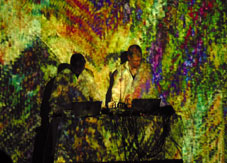
Pink Twins est un duo d'artistes musiciens et vidéastes, constitué par les frères Juha et Vesa Vehviläinen, originaires d?Helsinki, en Finlande. Actifs depuis 1997, les Pink Twins se sont produits en Europe et en Asie, dans des festivals, des clubs, des musées, des églises et des manifestations en plein air. Fondée sur l?improvisation et la collaboration symbiotique des deux frères, la musique des Pink Twins est un ensemble chaotique d?explosions sonores, de mélodies et sons très élaborés. Dans leurs concerts, les Pink Twins créent un mur de sons, complexe, en perpétuelle mutation, et visent une expérience à la fois physique, mentale et spatiale. Les Pink Twins introduisent souvent des projections vidéo dans leurs concerts. Créées la plupart du temps à partir d?un logiciel qu?ils ont eux-mêmes inventé, leurs vidéos sont abstraites et picturales, oscillant entre des compositions formelles et de violentes tempêtes informelles de pixels.
Pink Twins is a duo of musicians and video artists, brothers Juha and Vesa Vehviläinen from Helsinki, Finland. Active since 1997, Pink Twins have displayed their video works and played their music to audiences in Europe and Asia, in festivals, art spaces, clubs, churches, and outdoor events. Mostly created with their self-made software, Pink Twins' video works are abstract and painterly, from formal compositions to extremely fast shapeless pixel storms. Music of Pink Twins, based on improvisation and the brothers' symbiotic collaboration, is a chaotic whole of intense soundbursts, melodies, and infinitely detailed sounds. In their concerts, Pink Twins create a constantly changing multi-layered wall of sound, and aim for a physical, mental, and spatial experience. The live music is normally accompanied by video projections. During 2005 and 2006 Pink Twins performed actively in Europe and Asia. Their most notable performances have been the Venice Biennial Music Festival and a tour in China. Pink Twins has also had several solo and group exhibitions, for example, in Sweden, Luxembourg, China, and Mongolia. Pink Twins have released five CDs on their own label Pink Twins Media. A double DVD compilation will have been released in late 2006.
Catalogue : 2007Splitter | Vidéo expérimentale | dv | couleur | 6:0 | Finlande | 2006
Pink Twins
Splitter
Vidéo expérimentale | dv | couleur | 6:0 | Finlande | 2006
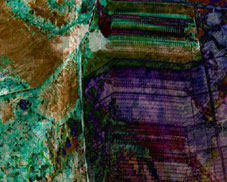
"Splitter" est un macrocosme de flots de couleurs entremêlées, l'univers numérique d'une surface en perpétuelle transformation. Créé à partir de simples photos de satellite et transformé en un paysage complexe et richement détaillé, le mouvement statique de "Splitter" donne naissance à un espace sacramental qui joue avec les différents niveaux de notre perception et de notre conscience.
Pink Twins est un duo d?artistes musiciens et vidéastes, constitué par les frères Juha et Vesa Vehviläinen originaires d?Helsinki, en Finlande. Actifs depuis 1997, les Pink Twins ont montré leurs vidéos et joué leur musique en Europe et en Asie, dans des festivals, des espaces dévolus à l'art, des clubs, des églises et des manifestations de plein air. Créées la plupart du temps à partir d?un logiciel qu?ils ont eux-mêmes inventé, les vidéos sont abstraites et picturales, oscillant entre des compositions formelles et de violentes tempêtes informelles de pixels. Fondée sur l?improvisation et la collaboration symbiotique des deux frères, la musique des Pink Twins est un ensemble chaotique d?explosions sonores, de mélodies et sons très élaborés. Dans leurs concerts, les Pink Twins créent un mur de sons, complexe, en perpétuelle mutation, et visent une expérience à la fois physique, mentale et spatiale. La musique est généralement accompagnée de projections vidéo. En 2005 et 2006, les Pink Twins se sont produits en Europe et en Asie. Les évènements les plus importants furent le Festival de Musique de la Biennale de Venise et une tournée en Chine. Les Pink Twins ont aussi participé à plusieurs expositions personnelles et expositions de groupe, notamment en Suède, en Chine et en Mongolie. Ils ont sorti 5 CD sous leur propre label Pink Twins Media. Une compilation en double CD sortira fin 2006.
Catalogue : 2007Splitter 2 | Vidéo expérimentale | dv | couleur | 10:0 | Finlande | 2006
Pink Twins
Splitter 2
Vidéo expérimentale | dv | couleur | 10:0 | Finlande | 2006
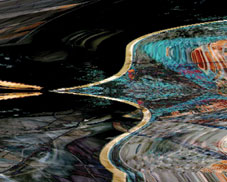
"Splitter 2" est une épopée de science-fiction abstraite, dans laquelle des photos de satellite prises à partir de la surface de la Terre sont transformées en un courant cosmique. "Splitter 2" donne à voir un espace statique, gelé, mouvant et se transformant, dans lequel la matière, la lumière et la couleur s'entremêlent avec l'obscurité du néant pour faire émerger un nouvel univers.
Pink Twins est un duo d?artistes musiciens et vidéastes, constitué par les frères Juha et Vesa Vehviläinen originaires d?Helsinki, en Finlande. Actifs depuis 1997, les Pink Twins ont montré leurs vidéos et joué leur musique en Europe et en Asie, dans des festivals, des espaces dévolus à l'art, des clubs, des églises et des manifestations de plein air. Créées la plupart du temps à partir d?un logiciel qu?ils ont eux-mêmes inventé, les vidéos sont abstraites et picturales, oscillant entre des compositions formelles et de violentes tempêtes informelles de pixels. Fondée sur l?improvisation et la collaboration symbiotique des deux frères, la musique des Pink Twins est un ensemble chaotique d?explosions sonores, de mélodies et sons très élaborés. Dans leurs concerts, les Pink Twins créent un mur de sons, complexe, en perpétuelle mutation, et visent une expérience à la fois physique, mentale et spatiale. La musique est généralement accompagnée de projections vidéo. En 2005 et 2006, les Pink Twins se sont produits en Europe et en Asie. Les évènements les plus importants furent le Festival de Musique de la Biennale de Venise et une tournée en Chine. Les Pink Twins ont aussi participé à plusieurs expositions personnelles et expositions de groupe, notamment en Suède, en Chine et en Mongolie. Ils ont sorti 5 CD sous leur propre label Pink Twins Media. Une compilation en double CD sortira fin 2006.
Catalogue : 2006Pink Twins Live | performance | | | 35:0 | Finlande | 2005
Pink Twins
Pink Twins Live
performance | | | 35:0 | Finlande | 2005
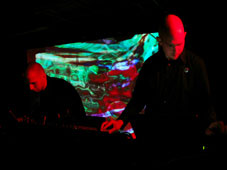
PINK TWINS est un duo d'artistes multimédias parmi les plus novateurs actuellement. Invité à la Biennale de Venise cette année où ils ont donné un concert exceptionnel au Théâtre de la Fenice début octobre, PINK TWINS est formé par les frères Juha et Vesa Vehviläinen, nés en 1978 et 1974. Ils vivent et travaillent à Helsinki. Ils collaborent depuis 1997. Artistes plasticiens s?exprimant au travers d?entités sonores et, parallèlement, artistes sonores qui s?expriment au travers du visuel, les PINK TWINS ont construit un tissu de connections entre leur travail sonore et leur travail visuel, essayant de joindre intimement des fragments du quotidien a priori disjoints. Ils partent de fragments d?images, de sons, de sensations auxquels notre existence est soumise quotidiennement, pour les décomposer en petites particules, et les réunir à nouveau dans des constructions audacieuses qui partent du chaos, le pulvérise et le rende abstrait, selon une sensibilité artistique unifiée. Les particules multiformes sont insérées dans des combinaisons chromatiques étonnantes et des collusions sonores fascinantes, qui, à la différence du chaos auquel nous sommes soumis quotidiennement, est abouti, et correspond à une profonde nécessité, sans aucun superflu. Ils travaillent sur l?expérience physique de perception des sons, et la sensibilité temporelle, fabriquent des sons abstraits, des bruits, qui ont une part active dans l?acte d?écoute. Ces dernières années, grâce au développement des technologies numériques, l?assemblage des sons a dépassé les limites du médium audio, pour déborder sur des espaces et des visions, modifiant ainsi la perception de l?espace lui-même. Le background des PINK TWINS dans les arts visuels, et la création du logiciel Framestein par Juha, les a certainement aidés à se déplacer vers une organisation visuelle du temps, du son et de l?espace.
Pink Twins (brothers Juha and Vesa Vehvilainen from Helsinki) have been working together since 1997. Working as computer musicians and video artists, Pink Twins perform live as well as show video and sound installations in exhibitions.
Pink Twins
Catalogue : 2026Firewalk | Animation | dcp | couleur | 9:35 | Finlande | 2025
Pink Twins
Firewalk
Animation | dcp | couleur | 9:35 | Finlande | 2025
Une marche nocturne pré-apocalyptique vous entraîne à travers une forêt en flammes pour être témoin d’une destruction imminente. Le feu, dans la forêt, annonce soit un désastre sur le point de survenir, soit une porte métaphysique ouvrant sur d’autres réalités.
Le duo Pink Twins, composé de Juha et Vesa Vehviläinen et basé à Helsinki, œuvre depuis 1997 dans les domaines de l’art médiatique, de l’image en mouvement et de la musique électronique. Les limites de la perception humaine, l’immersion et la physicalité sont au cœur de leurs recherches. Leurs animations complexes sont réalisées grâce au design paramétrique et à la programmation. Leurs œuvres ne se déploient pas seulement dans des expositions et des festivals, mais aussi sous forme de performances live mêlant musique et projections vidéo. Pink Twins se sont produits sur tous les continents, dans des lieux aussi variés que des salles de concert, des festivals, des théâtres ou des églises. Ces dernières années, ils ont également créé des œuvres audio et vidéo spécifiquement en ligne, comme la pièce sonore Infinity pour la collection d’art numérique du Kiasma.
Pink Twins
Catalogue : 2009Pink Twins Live | 0 | 0 | | 30:0 | Finlande | 2008
Pink Twins
Pink Twins Live
0 | 0 | | 30:0 | Finlande | 2008
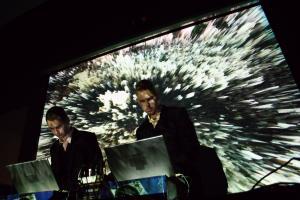
Les Pink Twins travaillent au croisement de l'art visuel et de la musique. Leur traitement par ordinateur des images et du son, qui procède souvent grâce à des logiciels qu?ils ont développés eux-mêmes, se concentre sur la perception humaine, sur ses fonctionnalités et ses limites. Dans leurs exécutions publiques, les Pink Twins mélangent de la musique électronique live à un mixage live d??uvres vidéo. La musique des Pink Twins est basée sur l'improvisation de sons, constitués de sonorités concrètes et électroniques, de bruits et d?éléments musicaux. Le mixage des sons et des projections vidéo provoque une expérience du temps et l'espace hyperactive, extrêmement minutieuse et en constante évolution.
Les Pink Twins sont formés des frères Juha et Vesa Vehviläinen. Ces musiciens et artistes vidéo, qui vivent à Helsinki , construisent un tissu de liens entre leur travail sonore et leur travail visuel, en essayant de joindre de façon intime des fragments quelconques, habituellement disjoints. Ils travaillent à partir de fragments d'images, de sons et de sensations auxquels est soumise notre vie quotidienne, afin de les décomposer en petites particules et de les réunir à nouveau dans des constructions audacieuses formées à partir du chaos, en les pulvérisant et les rendant abstraits, selon une sensibilité artistique unifiée. Leurs concerts sont de surprenantes combinaisons chromatiques, avec de fortes collusions sonores qui correspondent à un besoin profond, et ne sont en rien superflues. Actifs depuis 1997, les Pink Twins ont donné des concerts en Europe, en Asie et dans le continent américain, dans des festivals, des musées d'art, des clubs, des églises et des manifestations en plein air. Ils ont présenté leurs travaux vidéo dans tous les continents.
Catalogue : 2006Box | Vidéo expérimentale | dv | couleur | 8:0 | Finlande, Fidji (Îles) | 2004
Pink Twins
Box
Vidéo expérimentale | dv | couleur | 8:0 | Finlande, Fidji (Îles) | 2004
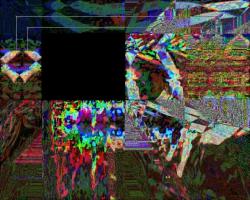
Box is based on photographs from Tunguska, Siberia, where a large area of land was destroyed when a huge meteorite exploded above the ground in 1908. The video is a slow composition, where landscape images go through several stages of transformation. The video material which was further developed into "Box" was originally made for a stage version of Stalker, produced by Circus Maximus at Helsinki City Theater in 2003.
The Finnish duo Pink Twins, the brothers Vesa and Juha Vehviläinen, started to work together in 1997. Since then they have been exploring visual and sonic noise combined in a most physical experience. Sampling the everyday images and tearing them apart to pixels then putting them together again to a chaotic and blasting unity. In Pink Twins` music and video works "the logical and analytic thematic developments surrender to the frenetic and non-repetitive information overflow.
Jörg Piringer
Catalogue : 2006SIG/B | Vidéo expérimentale | dv | couleur | 2:0 | Autriche | 2005

Jörg Piringer
SIG/B
Vidéo expérimentale | dv | couleur | 2:0 | Autriche | 2005
Jörg Pringler est né en 1974, et vit actuellement à Vienne en Autriche. Pringler est membre de l´institut pour la recherche trans-acoustique et du vegetable orchestra (l´orchestre de légumes/das erste Wiener gemüseorchester). Il a étudié à la Schule für Dichtung à Vienne, et a obtenu un Mastère en informatique. On peut le considérer comme un poète du son.
Sasha Pirker
Catalogue : 2014Paperwork | | | | 15:0 | Autriche | 2013
Sasha Pirker
Paperwork
| | | 15:0 | Autriche | 2013
Factory and office?these two architectural poles characterize Sasha Pirker?s Paperwork. On the one hand is the paper factory in the Italian town of Verzuolo whose largely automated processes the film captures in its first and final thirds in mainly static takes. On the other hand, Paperwork leads us into, around, and through the company headquarters of the Burgo Group, located in San Mauro near Turin, whose production sites include the aforementioned paper factory. The administrative building, which has largely been preserved in its original state, was built in the late 1970s according to plans drawn up by Oscar Niemeyer, a star architect in today?s terms. The building sits in the landscape like an elegant, curved, circular space ship, bearing witness to an era in which the administrative and service sector began to overtake industrial work.
Born in Vienna in 1969. Studied Linguistics. Artist and Filmmaker.Born in 1969 in Vienna, studied linguistics. Teaches at the Academy of Fine Arts Vienna. Video and video installation THINKING THE FORM at the Viennale in 2011. Sasha Pirkeris not just a filmmaker but a philosopher of space: Her architectural explorations of public and private buildings by eminent architects, such as Lautner, Schindler and Niemeyer aren?t documentaries on buildings but dialogues with these structures? social, political and societal dimensions. Pirker?s close look at detail speaks for the whole: with a downright affectionate understanding of space, she looks out from the inside (less often the other way round), foregoes the big picture of overall views for a gaze into interiors, as if into the bowels of utopias and sanctuaries cast in stone. The power of her films is frequently due to the interplay of images and sounds, when, for instance, the weird and wonderful stories told by people off camera make the architectural space come alive with astonishing tales.
Sasha Pirker
Catalogue : 2013THE FACE - Storefront for Art & Architecture | Vidéo | 16mm | couleur | 4:30 | Autriche, USA | 2011
Sasha Pirker
THE FACE - Storefront for Art & Architecture
Vidéo | 16mm | couleur | 4:30 | Autriche, USA | 2011
The face is usually the expressive surface which marks a person`s identity. "Face" does not, however, just refer to the human face, but could also mean the face of a building: the façade that "adorns" a building. In Sasha Pirker`s so-named short film, shot on 16 mm using a hand-held camera, these two meanings come at one another from diametrically opposed positions. On one hand Pirker is trying to show the building as a whole, plucking out individual fragments in an entirely subjective manner; fragments which the viewer then has to piece together. One clue to this interpretation is a quote by the artist Birgit Baldasti which flashes up right at the start: "If I was a poet I?d say that pleasure lies in other people refining your own imagination." On the other hand Pirker selects the clips of the building such that the individual faces of the passers-by remain hidden. In THE FACE all entities, both architectural and human, exist without their primary identifying feature: their face. Metaphorically only the eyes, mouth, nose and ears of the architecture can be seen, while people are generally cut off, or are filmed in silhouette from behind. The framing means that each image in the film just shows a clipping: here, there is no longer any suggestion of anything being shown as a whole. In Sasha Pirker`s view, the architectural elements are also given sculptural accents. At the same time, Pirker juggles with views from within and without, bringing out the limited, snippet-like view and precisely thus firing the imagination. Almost incidentally she also succeeds in connecting the gallery space and the street ? the primary aim of the two men of action Vito Acconci and Steven Holl when they renovated the façade of the Storefront for Art and Architecture (NYC) in 1993. (Dietmar Schwärzler) Translation: Anne Koth
Sasha Pirker, artist/filmmaker, born 1969 in Vienna, Austria. Studies in Linguistics in Vienna/Austria. From 1995-2000 she worked as a curator of contemporary architecture at the Architecture Center Vienna (Az W). Since 2006 she is a teaching member at the department ?Video and Videoinstallation? at the University of Fine Arts in Vienna, Austria. Her films are distributed by sixpackfilm Vienna, www.sixpackfilm.com (selection) 2011 Retrospective ?Philosopher of Space? at the VIENNALE - Vienna International Filmfestival 2010 67. Mostra Internazionale d?Arte Cinematografica, La Biennale di Venezia/I
Catalogue : 2010Once at Miracle Mile | Doc. expérimental | dv | couleur | 9:10 | Autriche | 2009
Sasha Pirker
Once at Miracle Mile
Doc. expérimental | dv | couleur | 9:10 | Autriche | 2009
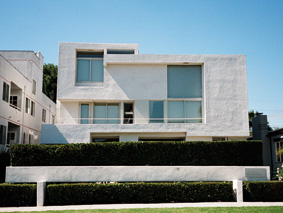
?Once at Miracle Mile? The Pearl M. Mackey Apartment House in Los Angeles, built in 1939 by Rudolph M. Schindler, is completely compelling to Sasha Pirker. In her work, she doesn?t strive to merely capture architecture on film, nor to simply record and document what she sees, but rather to work with the building itself (albeit in a restrained and respectful way), indeed to map it. Intriguingly, Sasha Pirker takes what would seem awkward in a conventional feature film and makes it her own: the idiosyncratic use of cross dissolves in this short film becomes in fact its main stylistic principle, and ? stunningly ? it works. In ?Once at Miracle Mile,? several calm, steady and yet at times even hesitant circular camera pans are intertwined, playing with the gaze and the expectations of the audience. Into the background of one pan enters a second, although this one refuses to displace the first ? at least not initially ? but rather, the two camera pans exist simultaneously, allowing the viewer?s attention to move between the coming and going of the images, jumping ? no, gliding ? back and forth. A slow-motion dance through the building, a dance with the building, a fusion of inside and out, a simultaneity of views ? as if we were passing the house and just happened to catch a glimpse of ourselves in one of the windows. Why not? Everything is possible at Miracle Mile on this mild Californian afternoon. This film is a declaration of love, made with solemn and tender affection for the house it?s also a remembrance of: Once ? (Bernhard Seiter) Translation: Janet Grau
Sasha Pirker, artist, born 1969 in Vienna/Austria. Studied linguistics and architecture in Vienna. She lives in Vienna. Since 2006 she is a teaching member of the department ?Video and Videoinstallation? at the University of Fine Arts in Vienna.
Sasha Pirker, Lotte Schreiber
Catalogue : 2016Exhibition Talks | Doc. expérimental | 16mm | noir et blanc | 9:0 | Autriche | 2014
Sasha Pirker, Lotte Schreiber
Exhibition Talks
Doc. expérimental | 16mm | noir et blanc | 9:0 | Autriche | 2014
Wenn, wie Walter Benjamin behauptet hat, Gebäude auf doppelte Art, durch Gebrauch und Wahrnehmung rezipiert werden, d.h. taktil und optisch, dann könnte man Sasha Pirkers und Lotte Schreibers Exhibition Talks als Versuch verstehen, diese doppelte Rezeptionsweise ein Stück weit zu entkoppeln. Während auf der Tonspur vom Gebrauch der Ausstellungsräume des Tiroler Architekturforums aut die Rede ist, von den Gegebenheiten der einzelnen Räume und den Möglichkeiten, sie für eigene Bedürfnisse zu adaptieren, liefert die Bildspur fragmentarische, statische und in Schwarzweiß gehaltene Ansichten derselben Räume, die allein schon deshalb im optischen Register verharren, weil sie über die Montage zu keinem kohärenten Raumganzen verbunden werden. Anstatt die Größe der Räume und ihre gebaute Anordnung etwa über einen Rundgang durch das Gebäude zu "erzählen", fängt die Kamera Details der Fassade und der Innenräume ein, die zum einen mit ihren klar gezogenen Linien und den vielfältigen Gelegenheiten zu Ein-, Aus- und Durchblicken von der Formensprache der klassischen Moderne zeugen, zum anderen diese Formensprache einem optischen Spiel von Licht und Schatten, von Grauwerten und Schwarzweiß aussetzen, das die drei Dimensionen des Bauwerks grafisch auflöst. Bestand die Pointe der doppelten Rezeptionsweise von Gebäuden bei Benjamin in der Übertragung auf die Wahrnehmungsbedingungen am Ort des Kinos (Zerstreuung statt Kontemplation), scheint die experimentelle Entkopplung von optischer Wahrnehmung und taktilem Gebrauch in Exhibition Talks einer anderen Logik zu folgen. Obwohl vom Bild strikt getrennt, suchen die Möglichkeiten des Gebrauchs nach Wegen ins Sichtbare. "Normalerweise ist der Eingang hier": Zu sehen ist eine Öffnung, durch die Licht auf eine Wand fällt, während der übrige Raum im Schatten versinkt. Die Öffnung ist ein Fenster, sie könnte aber auch eine Tür sein bzw. ist sie gerade im Begriff, zu einer solchen zu werden. Von solchen Übergängen handelt Exhibition Talks: vom Offenen, vom Beweglichen und Veränderlichen des gebauten Raums. (Vrääth Öhner)
Sasha Pirker was born in Vienna, Austria in 1969 and works there as an artist and filmmaker. She studied Linguistics in Vienna and Paris. From 1995-2000 she worked as a curator of contemporary architecture at the Architecture Center Vienna (Az W). Since 2006 she has been a teaching member in the Video and Videoinstallation department at the University of Fine Arts in Vienna, Austria. Her films are distributed by sixpackfilm Vienna. She had a retrospective “The Thinking Form” at the VIENNALE – International Film Festival in Vienna in 2011 and she is represented in “Breaking Ground – 60 years Experimental Cinema in Austria “, which has toured as a film programme internationally since 2012. In 2010 her film “The Future will not be Capitalist” was part of the competition Orrizonti at the 67th Film Festival in Venice, Italy (Mostra Internazionale d’Arte Cinematografica, Venice/I). Other screenings and exhibitions include: Centre Georges Pompidou “HORS PISTES 2011 – Un Autre Mouvement des Images”, the opening exhibition of 21er Haus/Belvedere Vienna “Greater Prospects”, Anthology Films Archives, New York/USA, Image Forum Festival, Tokyo/JPN, International Documentary Film Festival, London/UK, IFFR International Film Festival Rotterdam/NL, Antimatter Film Festival, Victoria, BC/CDN, Diagonale – Festival of Austrian Film, Graz/A, Istanbul International Short Film Festival, Corona Cork Film Festival/IRL, 25 FPS International Short Experimental Film and Video Festival, Zagreb/HR, VIS Vienna Independent Shorts/A (Audience Award 2008), Iowa City Documentary Film Festival, Iowa/USA, Nashville Film Festival, Tennessee/USA, Dortmund/Köln – Internationales Frauenfilmfestival/D, Cinéma du Réel, Paris/F, Transmediale, Berlin/D, Denver International Film Festival, Colorado/USA, Uppsala – International Short Film Festival/S, and Leeds – International Film Festival/UK.
Pascal Piron, Karolina Markiewicz
Catalogue : 2023Metamorphosis | VR expérimental | 4k | couleur | 24:0 | Luxembourg | 2021
Pascal Piron, Karolina Markiewicz
Metamorphosis
VR expérimental | 4k | couleur | 24:0 | Luxembourg | 2021
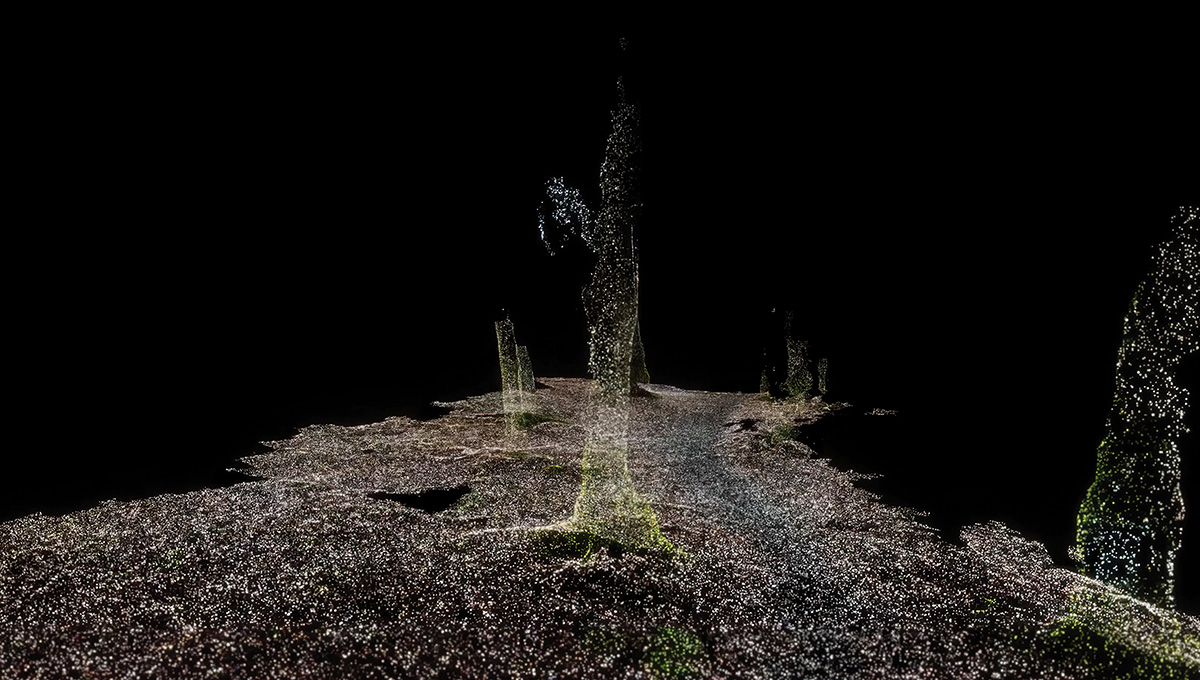
METAMORPHOSIS is a location based experience in virtual reality. It thematises the state of fear, astonishment and need for human exchange, as well as the the new comprehension and the physical reduction of the world during an ontological rupture such as the Coronavirus pandemic. In History (from the Antique with the first plague to Modern times with the Spanish flu) every kind of epidemic or pandemic has brought significant changes in societies, people had to adapt and reinvent their lives exchanging as they could. The experience refers to this kind of societal metamorphosis that imply on one hand the awareness of a reduced and different environment as well as related to the exchange of different ideas about the future . For METAMORPHOSIS, different nature and urban places (outside and inside) have been scanned and recreated as 3D scenes in a point cloud aesthetic. These eight scenes form a large corridor that brings the visitor slowly through different stories and ideas. From naive, stunned to more elaborate projections about the future of existence.
Since 2013 Karolina Markiewicz (born in 1976 in Luxembourg, lives and works in Luxembourg) and Pascal Piron (born in 1981 in Luxembourg, lives and works in Luxembourg) have been developing a collaborative body of work that stretches across cinema, visual arts and theatre. At its centre lies the individual as part of the human community, torn between resignation and hope. In their poetically charged investigations, the two artists question contemporary myths and construct metaphorical narratives based on past events.
Catalogue : 2020Fever | VR expérimental | 0 | couleur | 8:0 | Luxembourg | 2019
Pascal Piron, Karolina Markiewicz
Fever
VR expérimental | 0 | couleur | 8:0 | Luxembourg | 2019
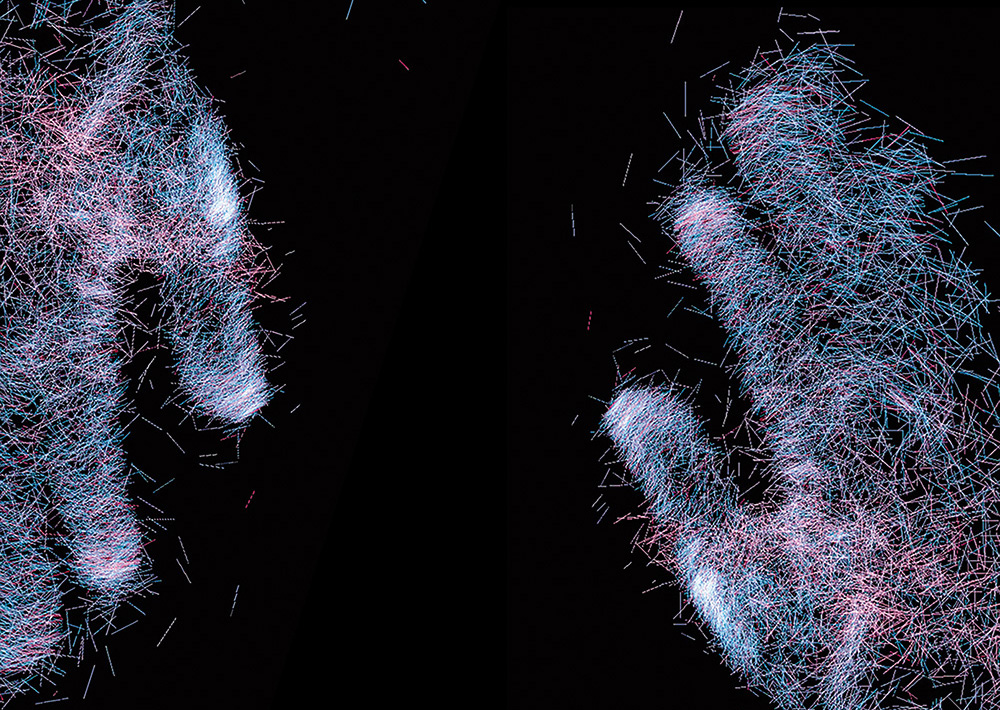
FEVER (8-10 minutes) is an experience in virtual reality. For both adults and children, a high fever can mean hallucinations — mainly auditory and visual, lucid and in dreams. As a VR experience, FEVER refers to this brief hallucinatory state, acknowledging and interpreting the metaphysical process that occurs when one is within and yet removed from one’s own body, and the limits presented herein vis-à-vis body/environment and self/other. FEVER is also a virtual poem about illness and body fictions. FEVER is written and created by Karolina Markiewicz and Pascal Piron, in technical collaboration with Fabrizio Palmas, Antoine Thiry and Stefan Laimer (D). The music is created by Kevin Muhlen (L) joined by the voice of Ásta Fanney Sigurdardottir (IS) and by the narration of Elisabet Johannesdottir (L/IS).
Karolina Markiewicz and Pascal Piron’s collaborative work creates links between film, visual arts and theatre. At the center is the individual person as part of a human community, oscillating between resignation and hope. Karolina studied political science, philosophy and theatre and works as a film and theatre director. Pascal studied visual arts and works as an artist and film director. Both work also as teachers. They are currently working on several cinematographic and artistic projects. Sublimation – an interactive installation based dance interactive VR piece with butoh dancer Yuko Kominami, was part of College Biennale Cinema VR by the Mostra di Venezia in 2019 and had its premiere at the festival. The duo also works on My Identity is this expanse!, a location based VR piece on exile and resilience through poetry. The Living Witnesses, a feature documentary about anti-Semitism is currently in post-production and will be released this year.
Catalogue : 2017Artis | Vidéo | hdv | couleur | 5:12 | Luxembourg, Pays-Bas | 2016
Pascal Piron, Karolina Markiewicz
Artis
Vidéo | hdv | couleur | 5:12 | Luxembourg, Pays-Bas | 2016
In Amsterdam, there once was a zoo, lions, elephants, people and Nazis. The elephants, who never forget, tell the story to the young lions. During the Second World War, the story goes, eighteen Jews hid above the lion’s cages. The Nazis, who loved the zoo, cared about the lions and bought them the best meat, usually lamb. The old lions couldn’t eat all they were given, so they left some of it to their new “roommates” for three years.
Karolina Markiewicz and Pascal Piron’s collaborative work creates links between film, visual arts and theatre. At the center is the individual person as part of a human community, oscillating between resignation and hope. Karolina Markiewicz studied political science, philosophy and theatre and works as a film and theatre director. Pascal Piron studied visual arts and works as an artist and film director. Both work as teachers. Their cooperation started in 2013, with an exhibition for Aica Luxembourg entitled Everybody should have the right to die in an expensive car. In 2014, they made a first documentary called Les Formidables, which tells the story of five young migrants in Luxembourg. In 2014, they found the video blog kulturstruktur.com. In 2015 they worked on the project Philoktet, which includes the homonymous play by Heiner Müller and an exhibition relating the Greek tragedy to Robert Oppenheimer and the atomic bomb. At the same time they released their second documentary Mos Stellarium, produced by Tarantula and supported by Film Fund Luxembourg. Part of this project is the installation of Mos Stellarium, which offers different parts of the movie simultaneously, thus giving a non-linear reading of the film. Their current work includes a video series entitled Side-effects of reality. It consists in a number of short films and video installations. Our reality is a vague and imprecise thing, hardly accessible. The core idea of Side-effects of Reality is to push this inaccessible reality to a poetic level, thus creating through video and text a new image of reality. This image is not the same as its content, it has its own mythology, and by this offers a different take on understanding our reality.
Leonardo Pirondi
Catalogue : 2023Visão do Paraíso | Doc. expérimental | 16mm | couleur et n&b | 16:0 | Brésil, Royaume-Uni | 2022
Leonardo Pirondi
Visão do Paraíso
Doc. expérimental | 16mm | couleur et n&b | 16:0 | Brésil, Royaume-Uni | 2022
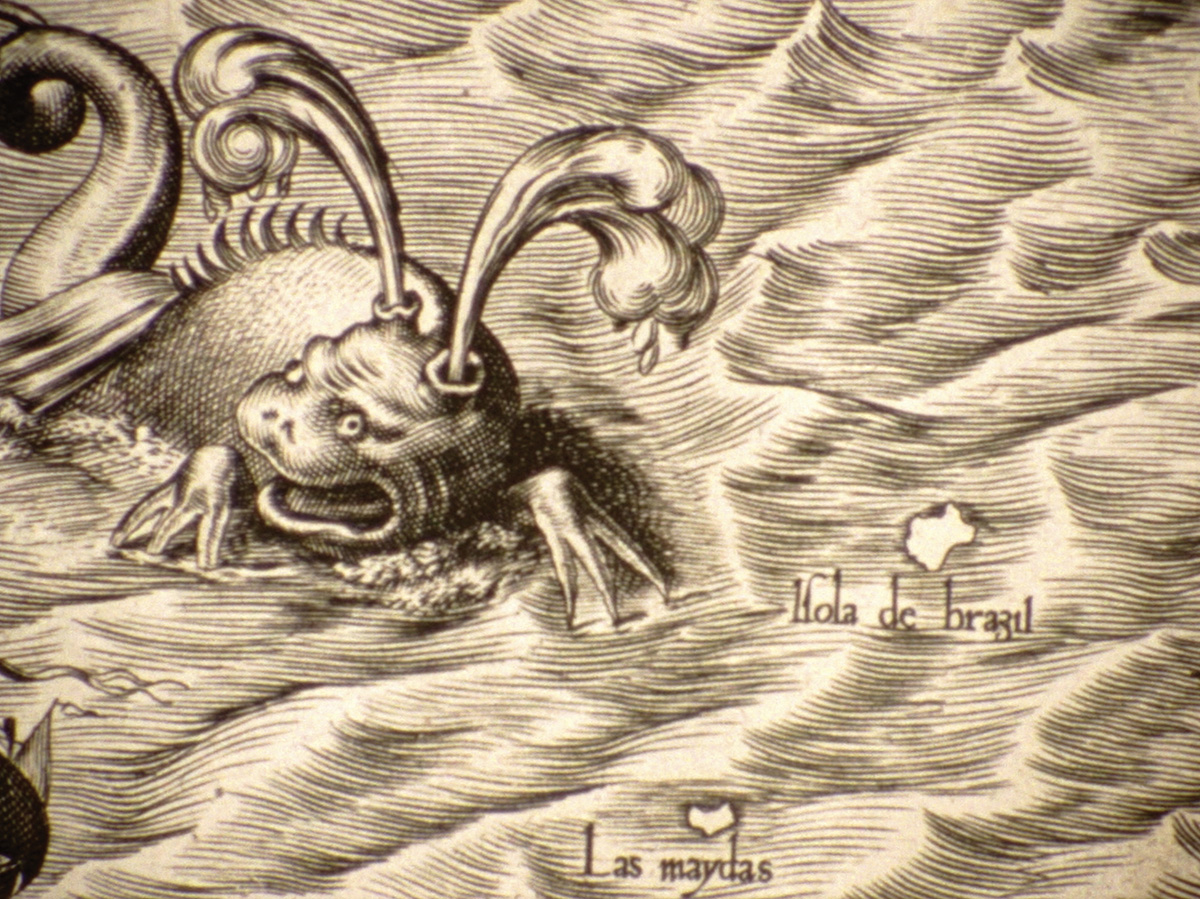
The great voyages to the "New World" were seen as expanding the frontiers of the visible and displacing those of the invisible. Therefore maps from that time render the real and imaginary. The film follows a voyage of the Brazilian Military in search of an imaginary island with the same name as their country. In the myth from 1483 Brazil, or Hy-Brazil, is known to exist to the west of Ireland and above the Fortunate Islands. ‘Visão do Paraíso’ is an examination of the capacity of the human imagination and computer simulations to construct environments. Amidst the fine threshold of the real, simulated, and imagined, the film analyzes the contemporary ideas of virtual reality and their ambition to expand the frontiers of the physical world into a "New World."
Leonardo Pirondi is a Brazilian filmmaker based in Los Angeles, São Paulo, and Porto. His films explore the infinite abyss between the multiple derived versions of reality through documentary, experimental, and narrative modes. Much of his work uses analog and digital manipulations on celluloid to examine the sociopolitical unfoldings of the intersections between imagination, science, myth, and technology. His films have been exhibited at various film festivals, institutions, and venues internationally, such as the International Film Festival Rotterdam, New York Film Festival, BFI London, Melbourne, Edinburgh, True/False, Ambulante, Curtas Vila do Conde, Guanajuato, Wexner Center, REDCAT, and others. Some of his work exists in the collection of Cinematheque of the Museum of Modern Art in Rio de Janeiro and The Film-Makers' Cooperative in New York. He holds a Film/Video degree from CalArts, is a Sundance Ignite Fellow, and is the recipient of the Allan Sekula Social Documentary Fund and the Tim Disney Prize for Excellence in the Storytelling Arts.
Piscine, Bergman & Salinas
Catalogue : 2019Be A Pattern For The World | Vidéo | hdv | couleur | 5:48 | Danemark | 2018
Piscine, Bergman & Salinas
Be A Pattern For The World
Vidéo | hdv | couleur | 5:48 | Danemark | 2018
Be a Pattern for the World is acollaboration between artist group Piscine (consisting of Mark Tholander, Jens Settergren & Ida Thorhauge) and the artist duo Aeron Bergman & Alejandra Salinas. Be a Pattern for the World circulates around the concept of the chameleon. The chameleon as an abstract machine: "The chameleon, maybe. It hovers, as a turbine. An object can be monitored better by the turbine. These days anything can be imitated." The chameleon most of all stands for shape-shifting and adaptability. Adapting patterns of a given environment, while at the same time creating new patterns in the given space. The ability of changing one's appearance as a response to one's surroundings. What can be seen and what cannot; blending in and standing out; becoming distinct while also becoming part of the given space. The chameleon is the abstract machine which initiates a production of subjectivity in the relation between the individual and the surroundings, the figure and the background, the shape and the pattern, as well as the singular and the univocal.
Piscine is an exhibition phenomenon that handles solo, group and collaborative situations: a hybrid apparatus that sometimes acts as an artist group and at other times acts as a curatorial unit. Current members are: Mark Tholander, Ida Sønder Thorhauge, and Jens Settergren. Aeron Bergman and Alejandra Salinas are an artist duo who co-founded Institute for New Connotative Action: an artist run initiative, and INCA Press.
Bojana Piskur
Catalogue : 2007Ljubljana Modern Art Museum | 0 | 0 | | 0:0 | Slovénie | 2007

Bojana Piskur
Ljubljana Modern Art Museum
0 | 0 | | 0:0 | Slovénie | 2007
La Moderna Galerija (Musée d?Art Moderne) est l?institution nationale slovène pour l?art moderne et contemporain. Un musée qui a une double vocation, explorer et présenter l?art moderne slovène et sa tradition depuis le début du XXème siècle, explorer et exposer l?art contemporain, sa pratique et son contexte. Situé dans la ville de Ljubljana, la capitale de la Slovénie, La Moderna Galerija opère sur trois sites différents, un bâtiment principal, la Moderna Galerija proprement dite, une ancienne caserne de l?Armée Yougoslave, le Metelkova et la Mala Galerija. Une telle organisation, une telle délocalisation géographique, permet à la Moderna Galerija de spécialiser chaque bâtiment. Le Metelkova est un haut lieu de la culture alternative slovène. La Mala Galerija est un espace d?innovation où sont réalisées des expositions personnelles. Quand au bâtiment principal, il héberge la collection permanente du musée, des expositions temporaires, une bibliothèque et un centre de formation. La Moderna Galerija se voit comme un intermédiaire entre le national et l?international, entre local et global. Un lieu où se cristallise les réalités de la société moderne, à mi-chemin entre les différentes réalités géopolitiques et culturelles de l?Europe contemporaine, entre Est et Ouest, entre Nord et Sud.
Née en 1970, Bojana Pi?kur a étudié à la Faculté de Philosophie de l?Université de Ljubljana, en Slovénie, et à la Charles University de Prague, en République Tchèque, où elle obtenu un PhD en Théorie Artistique. Elle est commissaire d?exposition à la Moderna Galerija, le Musée d?Art Moderne de Ljubljana et elle effectue des recherches sur le phénomène de l?art contemporain.
Marianne Pistone, Gilles DEROO
Catalogue : 2010Hiver (les grands chats) | Fiction | 16mm | couleur | 55:0 | France | 2008
Marianne Pistone, Gilles DEROO
Hiver (les grands chats)
Fiction | 16mm | couleur | 55:0 | France | 2008
Les enfants s?en tapent de l?hiver qui arrive A se marrer sous les grands chats, à s?embrasser Sous de pauvres abris Il fera nuit de plus en plus tôt L`hiver tombé comme une sentence, Ça y?est faut allumer. J?aurais voulu que Mimi soit intact, rien n?aurait dû l?atteindre... Ni l?hiver.
Marianne Pistone et Gilles Deroo Vivent et travaillent à lille
Platoniq, -
Cameron Platter
Catalogue : 2011The Old Fashion | Vidéo | dv | couleur | 16:7 | Afrique du sud | 2010
Cameron Platter
The Old Fashion
Vidéo | dv | couleur | 16:7 | Afrique du sud | 2010
The Old Fashion, is an adventure in humour, love, loss and longing for something more? a mélange of The Third Man, an advertisement for Prince Barrack Hussein?s sports water/ penis combo, strip club dance montages, mysterious villains and co-conspirators, and a certain fast food restaurant on Asstropolis. It pays homage to movie remakes and sequels, franchise food, dumbed-down politics, and mundane beauty. It is a portrait of contemporary South Africa, through the eyes of a deranged cat dictator bent on world domination.
Cameron Platter (born 1978 Johannesburg) His work is an intoxicating vision of Good vs. Evil, documenting contemporary morality through the telling of simple stories drawn and appropriated from the media, TV, films, art, history, pornography, battle scenes, politics, music, and religion. His targets and influences include Lamborghinis, Kawasakis and beautiful women in fishnets; megalomania and the mass media; James Bond and Richard Pryor; corrupt politicians; penis extension machines and strip clubs; children?s stories, crime fiction and gangster films; Southern African woodcut and craft masters; tabloid horror stories; wildlife, real life and things falling apart? Mixing traditional and new mediums, Platter creates a tableau that is a sincere homage to historical themes, an ironical take on contemporary Africa, and an ultra primitive, anti-aesthetic view on what it means to be alive today in South Africa. Recent projects include: Hard Times Great Expectations, Whatiftheworld Gallery, Cape Town; I Am Lonelyness, Hilger Contemporary, Vienna; The Old Fashion, Volta NY, New York; Black Up That White Ass II, Youngblackman, Cape Town; Dak?Art, Biennale de Dakar, 1910-2010: Pierneef to Gugulective, South African National Gallery and Art 39 Basel, Switzerland. His work is included in the permanent collection of the Museum of Modern Art (MoMA) New York.
Michael Poetschko
Catalogue : 2015Zona (Fragment I und II) | Fiction expérimentale | hdv | couleur | 51:16 | Autriche | 2012
Michael Poetschko
Zona (Fragment I und II)
Fiction expérimentale | hdv | couleur | 51:16 | Autriche | 2012
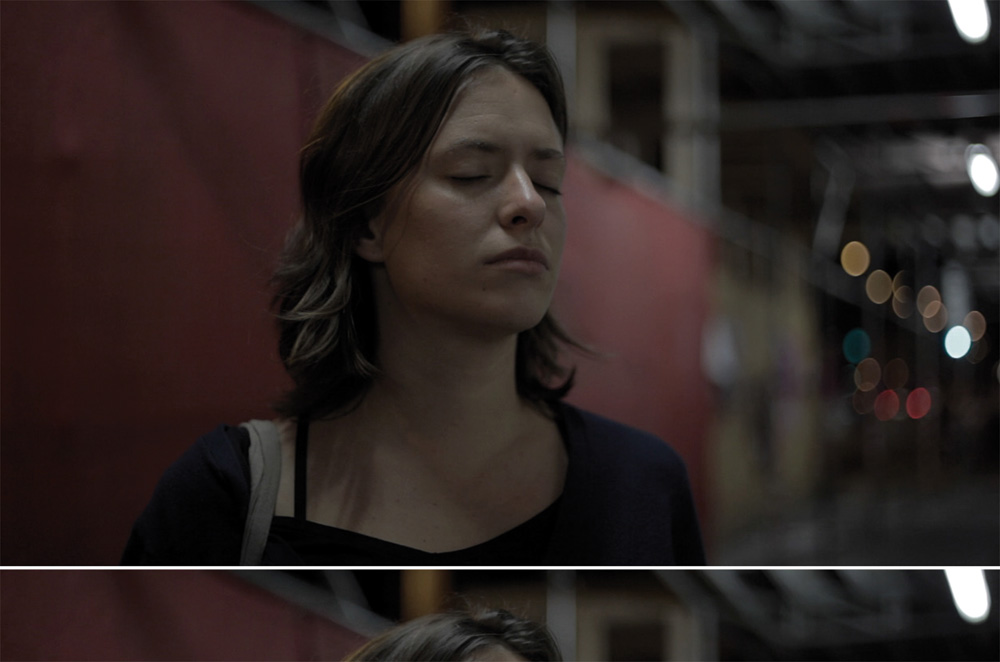
The topological narrative follows the routes of an itinerant photographer and a young philosophy student, their searching movements in-between the fractures and folds of the spatio-temporal fabric of the contemporary city. These fragments started with a rereading of Andrei Tarkovsky and the brothers Strugacky’s concept of the zone, as depicted in their late 1970s science fiction script Сталкер (Stalker). We suggest that the zone — a structure outside and closed off in Сталкер — has now entered the very heart of the urban fabric. We aim to explore the precarity, porosity and violence of this biopolitical space-time, as an immanent part of the city, our bodies and desires. The narrative presents itself as an open structure, in which staged miniatures, image and sound collages, dialogue, and different searching movements meet each other; open, rampant, unresolved and contradictory — oscillating constantly between poetic meditation and discourse, diversion and gravity, quotation and philosophical speculation.
Michael Poetschko explores narratives of living/laboring/traveling/resisting within post-fordist and transnational realities, working with experimental forms of filmmaking and installation. His work has been exhibited and projected internationally, most recently at the Wexner Center for the Arts in Columbus, the Uferhallen in Berlin and Temp Art Space in New York City.
Sascha Pohle
Catalogue : 2013Reframing the Artist | Vidéo | hdv | couleur | 35:0 | Allemagne, Pays-Bas | 2010
Sascha Pohle
Reframing the Artist
Vidéo | hdv | couleur | 35:0 | Allemagne, Pays-Bas | 2010
REFRAMING THE ARTIST deals with the stereotypical representations of visual artists in movies. The role of the artist both in fictional films and in biopics, classics of the twentieth century or recent popular films, is focused on the artist?s idiosyncratic behavior, his love affairs, his self-destruction associated with a mystification of his creative production or on encounters with other protagonists of the art world such as the collector, the art dealer, the model or the art student. Artists are almost solely painters, which reconfirms a predominant inadequate representation of visual artists in movies. In the video REFRAMING THE ARTIST fragments from approximately 50 different movies such as ?The Moderns? ?Surviving Picasso? or Vincent and Theo? are reset in the Dafen Oil Painting Village. Dafen, situated in Shenzhen, China, is the world`s largest producer of mass-produced handmade oil-on-canvas copy paintings supplying a global market. The video takes place in unmodified settings of the painters` own homes, studios, shops or galleries. There we see Dafen painters re-enacting movie scenes, in which they take over the role of a Picasso, a Van Gogh, a Pollock or several fictional artists, art collectors, critics, muses and lovers. In the ?Reframing the Artist? mass reproduction of oil paintings from Dafen and the recurrent use of artist stereotypes in the mass media film converge to a new narrative overlapping fiction and documentary. The Chinese painter is neither represented as a mere copyist nor does he apply to the notion of the ?original? artist according to our predominant definitions. REFRAMING THE ARTIST raises questions about authenticity in the context of global cultural exchange and it challenges the view of the ?exotic? Other, both the visual artist and the Chinese copy painter. The video is structured into five chapters: Artist and Authenticity, Artist and Market, Artist and Crisis, Artist and Student, Artist and Model. Painting props taken from the same original movies re-appear as copies in REFRAMING THE ARTIST.
Education 2002 B.A. Staatliche Hochschule für Bildende Künste (Städelschule), klasse Ayse Erkmen, Frankfurt am Main, DE 2007 Rijksakademie van beeldende kunsten, NL (Selected) solo exhibitions 2013 Rongwrong, Amsterdam, NL 2012 Art space Apguyeong, open in November en gecureerd door Ji Yoon Yang (De Appel CP 2008/09), Seoul, KR, (aanstaand) (exhibited works: Noire et Blanche + new production) 2012 Lothringer_13_Halle, gecureerd door Felix Ruhöfer, München, DE (exhibited works: Noire et Blanche, Statues Also Die, German Indian, Reframing the Artist, The Mad Masters) 2012 Gallery Weingrüll, Karlsruhe, DE (exhibited works: Noire et Blanche, Reframing the Artist, Statues Also Die) (Selected) group exhibitions 2013 ?Transfer Korea-NRW?, Kunsthalle Düsseldorf and Kunstmuseum Bonn, National Museum of Korea, Arko, (upcoming) - new production: Ornaments of Property 2012 Monitoring/ Kasseler Dokumentarfilm und Videofest, (upcoming), DE - Statues Also Die 2012 ?Generation Loss?, Green Papaya Art Projects, Manila, PHL 2012 ?Signals: For Real?, IFFR, 41st International Film Festival Rotterdam, gecureerd door Edwin Carels, NL - Reframing the Artist 2011 Museum der Moderne Salzburg, ?role models-role playing?, AUT - The Mad Masters 2010 Arti et Amicitae, Amsterdam, ?Villains and Heroes?, Sascha Pohle/Marco Pando, NL - German Indian 2010 Dafen International Contemporary Art Exhibition, ?Convection? Dafen Sub-Venue, Shenzhen Case Pavillion, 2010 Shanghai EXPO, CN - Reframing the Artist 2010 Taipeh International Art Center, Urban Nomad Video Art Section, TW - Reframing the Artist 2010 ?works?, basis, Frankfurt, DE 2008 PARA/SITE art space, ?Terminus?, gecureerd door Christina Li (De Appel CP 2008/09), Hong Kong - The Swimmer 2008 ?Beyond Paradise?, SMBA Stedeljik Museum Bureau Amsterdam, gecureerd door Delphine Bedel and Ayako Yoshimura , NL - The Swimmer 2008 ?Vertrautes Terrain?, ZKM - Center for Art and Media, Karlsruhe, gecureerd door Gregor Jansen and Thomas Thiel - German Indian 2008 Schirn Kunsthalle, Frankfurt am Main, DE, `All-Inclusiv A Tourist World - The Swimmer (Selected) Filmfestivals 2012 BIEFF, Bukarest, RO, Reframing the Artist 2012 58. Internationale Kurzfilmtage Oberhausen, DE, Reframing the Artist 2012 41st International Film Festival Rotterdam, NL, Reframing the Artist 2011 HomeShop, Jue Festival, Beijng, CN, Reframing the Artist 2009 Videonale 12, Bonn, DE, The Mad Masters¬ 2008 International Film Festival, 16th Curtas Vila do Conde, PT, If I were you ? LAS VEGAS NEW YORK BLACKPOOL, The Mad Masters 2008 37th International Filmfestival Rotterdam, NL If I were you ? LAS VEGAS NEW YORK BLACKPOOL Residencies 2006-2007 Rijksakademie van beeldende kunsten/Dutch Ministry of Education, Culture and Science, 2009 Meetfactory, Prague, CZ 2011 Incheon Art Platform, KR 2012 Changdong Studios, Seoul, KR (upcoming) Prices, Awards 2012 Principal Price, 58th International Short Film Festival Oberhausen, for Reframing the Artist, Netherlands, 2010 Fellowships/stipends 2011/12 The Netherlands Film Fund, research subsidy on DVD movie piracy 2011/12 Fonds BKVB, standard werkbudget for Noire et Blanche in combination with a residency in Incheon Art Platform, Korea 2010 Fonds BKVB, werkbudget for Detective project ? The Student of Prague 2009 Fonds BKVB, standard werkbudget for MeetFactory artist residency 2009 The Netherlands Film Fund, NL for Reframing the Artist 2008 Fonds BKVB, basis stipend, NL 2007 Hessische Kulturstiftung, DE, for The Mad Masters and If I were you ? LAS VEGAS NEW YORK BLACKPOOL 2006 DAAD, Berlin, DE 2006 Kunststiftung NRW, DE 2003 Kunststiftung NRW, DE, for Safety Hour 2003 Kulturstiftung Dresden der Dresdner Bank, DE, studio stipend `dynamo.eintracht`
Ben Pointeker
Catalogue : 2018Impassenger | Vidéo expérimentale | hdv | couleur | 6:0 | Autriche | 2017
Ben Pointeker
Impassenger
Vidéo expérimentale | hdv | couleur | 6:0 | Autriche | 2017
Impassenger présente un espace de résonance émotionnelle et, ce faisant, permet au cinéma de devenir haptique. Ce film explore la relation entre la proximité et la distance, et permet à l’objet de l’enquête de figer sa soumission.
Ben Pointeker is a visual artist and filmmaker based in Vienna. His work often sets in between film and photography and is concerned with poetics, patterns of narrative cinema, the notion of time, ambiguous realities and fantasy. Previously based in The Netherlands he graduated from Piet Zwart Institute and won the Prix de Rome basic award. He is also a graduate of the University of applied arts Vienna and was artist in residence at Wiels in Brussels, in Shanghai and most recently at Bòlit in Girona in the framework of The Spur. He has exhibited at institutions such as Secession Vienna, Kunstpavillon Innsbruck, Contemporary Art Center Vilnius, Filmmuseum Amsterdam and major film festivals.
Catalogue : 2008. ..... .:.:...:::ccccoCCoooo:: | Film expérimental | dv | couleur | 9:30 | Autriche | 2006
Ben Pointeker
. ..... .:.:...:::ccccoCCoooo::
Film expérimental | dv | couleur | 9:30 | Autriche | 2006
Solution bien pratique au problème de l?orientation dans une salle de théâtre ou de cinéma, de petites lampes dissimulées ça et là montrent aux gens où mettre les pieds et où ne pas les mettre, leur indiquant leur fauteuil ou la sortie. Imagine maintenant l?obscurité totale. Entre. Arrête d?imaginer et regarde . ..... .:.:...:::ccccoCCoooo:: Alors qu?on regarde, la question se pose de ce que c´est regarder. Les petites balises de guidage nous reviennent à l?esprit. D?habitude, c?est en regardant que nous nous orientons. En réaction à cela, ou peut-être par conséquence, maintes formes d?art se proposent de nous désorienter. Mais la question de l?essence même du « regard » reste sans réponse. Or cette question est au centre de l??uvre de Ben Pointeker. Pour y répondre, tout en gardant ses distances vis-à-vis du langage conventionnel du cinéma et de la photographie, il renoue néanmoins avec celui-ci. La manière dont il procède rappelle la poésie concrète. Mais il ne s?agit ici que d?une réminiscence. La poésie concrète n?était dans l?ensemble qu?une réaction à quelque chose d?autre : ce que nous connaissions déjà. Et de ce fait, elle était limitée sur le plan dialectique à ce que nous connaissions déjà. Dans son approche cinématographique, Pointeker sait comment sortir de cette ornière. Mais il ne le montre pas. Ce qu?il montre, c?est ce qui apparaît. Nous nous trouvons dans l?obscurité totale. Une lumière brille. Plusieurs lumières brillent : une voiture se fraie son chemin. Au sens littéral du terme : une voiture se fraie son chemin. Cette voiture n?amène personne de A à B. En projetant sa lumière, elle se fraie son propre chemin. D?autres images suivent, qui se fraient leur propre chemin. Nous regardons, captivés par la lumière de ce qu?on nous montre, et nos sens commencent à deviner ce que c´est regarder. (Frans-Willem Korsten)
Ben Ponteker studierte u.a. Literaturwissenschaft und Kunst in Wien, Kopenhagen und Rotterdam, zuletzt MA Fine Art, Piet Zwart Institute Rotterdam; experimentelles Kino und filmische Installationen, Textpublikationen; daneben Bühnenvideos für Theater- und Tanzproduktionen und dramaturgische Beratung; in der Beschäftigung mit suggestiven Bildsphären interessiere ich mich für Rhetorik und Substanz des visuellen Erzählens
Fernanda Polacow
Catalogue : 2025Big Bang Henda | Doc. expérimental | digital | couleur | 22:0 | Brésil, Portugal | 2023
Fernanda Polacow
Big Bang Henda
Doc. expérimental | digital | couleur | 22:0 | Brésil, Portugal | 2023
Renversant statues et symboles, construisant de nouveaux souvenirs, encadrant le paysage détruit, écrivant des lettres pour l'avenir, inversant les dynamiques de pouvoir : BIG BANG HENDA est un documentaire-poésie-manifeste sur le travail de l'artiste angolais Kiluanji Kia Henda. Il nous emmène dans un voyage à travers ses créations et réflexions, qui sont à l'avant-garde de la pensée anticoloniale, nous exhortant à réfléchir sur la manière dont les générations qui ont grandi pendant ou à la suite de la guerre réinterprètent cet événement.
Fernanda is a screenwriter and director, living between Brazil and Portugal. She has been working in the intersections between Brazil, Portugual and the African Portuguese speaking countries and former colonies of Portugal for decades. Her first feature as a writer, Mosquito, was the opening film at the Rotterdam FF (2020) and won the Critics Prize at the São Paulo International FF (2020) besides touring dozens of festivals. Her second feature, The Last Summer, is currently in production after being selected for the Script Station at Berlinale 2023 and RACCONTI. She has been developing, writing, and directing for TV, streaming and cinema, and some of her works have received awards and nominations at the Brazilian Cinema Academy, New York TV&Film Festival, Hollywood Woman’s FF, among others. She is part of the Torino Film Lab 2023. She is a co-founder of MUTIM, a woman in film association in Portugal.
Wiktor Polak
Catalogue : 2011Blisko | Art vidéo | dv | couleur | 5:49 | Pologne | 2008
Wiktor Polak
Blisko
Art vidéo | dv | couleur | 5:49 | Pologne | 2008
?Blisko? (?Close?) ? about alienation in the big city. The artificial light inside the night trams creates a new reality.
I was born in 1979. Between 1998 and 2004, I studied at the Władysław Strzemiński Academy of Fine Arts in Łódź. In 2004, under the tutelage of prof. Grzegorz Przyborek, I obtained the certificate and title of Master of Fine Arts in asvertising photography. Since 2003, I have also participated in multimedia workshops held by prof. Konrad Kuzyszyn and Łukasz Ogórek, MFA. I was a post-graduate, free participant there. Since that time, my interests hav revolved around film and video. In 2007, I went on a three-month scholarship to France, organised by the Strasbourg Klub, the City of Strasbourg as well as the CAAC.
Esther Polak, Ivar Van Bekkum
Catalogue : 2017A Collision of Sorts | Doc. expérimental | hdv | couleur | 17:0 | Pays-Bas, USA | 2017
Esther Polak, Ivar Van Bekkum
A Collision of Sorts
Doc. expérimental | hdv | couleur | 17:0 | Pays-Bas, USA | 2017
In A Collision of Sorts, inhabitants of the City of Philadelphia, (Pennsylvania, US) go there way, as discontinuous moving dots on a flat surface. The world in which this film plays is Google Earth: an alienating landscape of almost seamlessly stitched-together satellite images of the familiar planet we humans are moving around on. On Google Earth, nothing moves. Buildings, bridges and cars seem warped and flattened and compete for attention with the black weirdness of their own shadows. A virtual camera shows this frozen flattened landscape, reconnoitring the cityscape of the city. Meanwhile we hear sounds and voices. People and animals are down there, crossing the country. It is them who share a physical reality: we hear very intimately their breath, the rustling of clothes, traffic, their vehicles. They travel from one place to another giving the suggestion of a destination. They talk about encounters, visual, economic, political, social and personal but never the main characters seem to meet. Until a bad dream of one of them seems to come true.
Esther Polak and Ivar van Bekkum work together as artist-couple under the name PolakVanBekkum. Routed in the history of the Dutch realistic landscape depiction, they express personal experiences of moving and space. Their projects are often informed by collaborations with participants, be it humans, animals, or even the rays of the sun. Their work has been shown at amongst others: FID Marseille, Transmediale Berlin, Ars Electronica Linz, ZKM Karlsruhe, Media-Lab Prado Madrid; INIVA London, IMAL Brussels, Rento Brattinga | Galerie Amsterdam, Pixelache Helsinki, Lagos, Biennale Marrakech, Philadelphia and Los Angeles. 2016 Special Mention for the film Once We Get There Riga 2015 Expanded Media Preis For Network Culture at Stuttgarter Filmwinters - for “The Mailman’s Bag” 2005 Golden Nica for Interactive Art at Ars Electronica together with Ieva Auzina, with MILKproject. Esther Polak studied at the Rijksakademie for visual Arts in Amsterdam and the Royal Academy of Visual Arts in The Hague, NL Ivar van Bekkum studied journalism at the School for Journalism, Kampen, NL
Ulrich Polster
Catalogue : 2006Frost (I) | Art vidéo | dv | couleur | 5:51 | Allemagne, Russie | 2003
Ulrich Polster
Frost (I)
Art vidéo | dv | couleur | 5:51 | Allemagne, Russie | 2003