Catalogue > List by artist
Browse the entire list of Rencontre Internationales artists since 2004. Use the alphabetical filter to refine your search. update in progress
Lasse Raa
Catalogue : 2006Recode | Experimental video | dv | color | 6:50 | Norway | 2004
Lasse Raa
Recode
Experimental video | dv | color | 6:50 | Norway | 2004
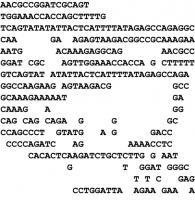
RECODE is A video written in a string of dna code. VIDEO: LASSE RAA AUDIO: LASSE MARHAUG DNA-SEQUENCING: TOM KRISTENSEN, PROFESSOR IN BIOCHEMISTRY FINANCE: THE NORWEGIAN ARTS COUNCIL, ART AND NEW TECHNOLOGY LENGTH: 06.50 MIN. DNA & COPYRIGHT 2004: LASSE RAA
BIOGRAPHY OF LASSE RAA Contemporary artist, live and work in Norway. Work in a free flow of mediums and communicative devices and use video as a final outcome. Teach in timebased mediums at Robert Meyer Art College in Oslo.
Julian Rabus
Catalogue : 2025Sunstrokes - Kevin | Experimental fiction | hdv | color | 10:38 | Switzerland, USA | 2024
Julian Rabus
Sunstrokes - Kevin
Experimental fiction | hdv | color | 10:38 | Switzerland, USA | 2024
SUNSTROKES is a method-driven and improvisation based film project produced and directed by Julian Rabus. Twenty-year-old Rachel moves from New York to Los Angeles in order to reinvent herself. Still attached to classical role models at first, she increasingly comes into conflict with them in her new environment and, in conversations with her new friends, begins to redefine her expectations of life and discover other sides to herself. This film was created in close collaboration between the director and the actors over a period of two years and a total of 32 days of shooting in Los Angeles and the surrounding area. The work consists of several chapters, of which this one focuses on the relationship between Rachel and Kevin.
Julian Rabus, born and raised in Berlin, Germany, was an assistant cameraman and assistant director in film and television before beginning a degree in fine arts / media art under Prof. Julian Rosefeldt at the Academy of Fine Arts Munich, which he received with honours in 2021. Since then he has been studying at the Berlin University of the Arts in Prof. Thomas Arslan’s class on narrative film. In between, he also attended the Karlsruhe University of Arts and Design under Prof. Serpil Turhan and the California Institute of Arts under Prof. James Benning.
Julian Rabus
Catalogue : 2023Magma | Experimental fiction | 0 | color | 14:0 | Switzerland, Germany | 2022
Julian Rabus
Magma
Experimental fiction | 0 | color | 14:0 | Switzerland, Germany | 2022
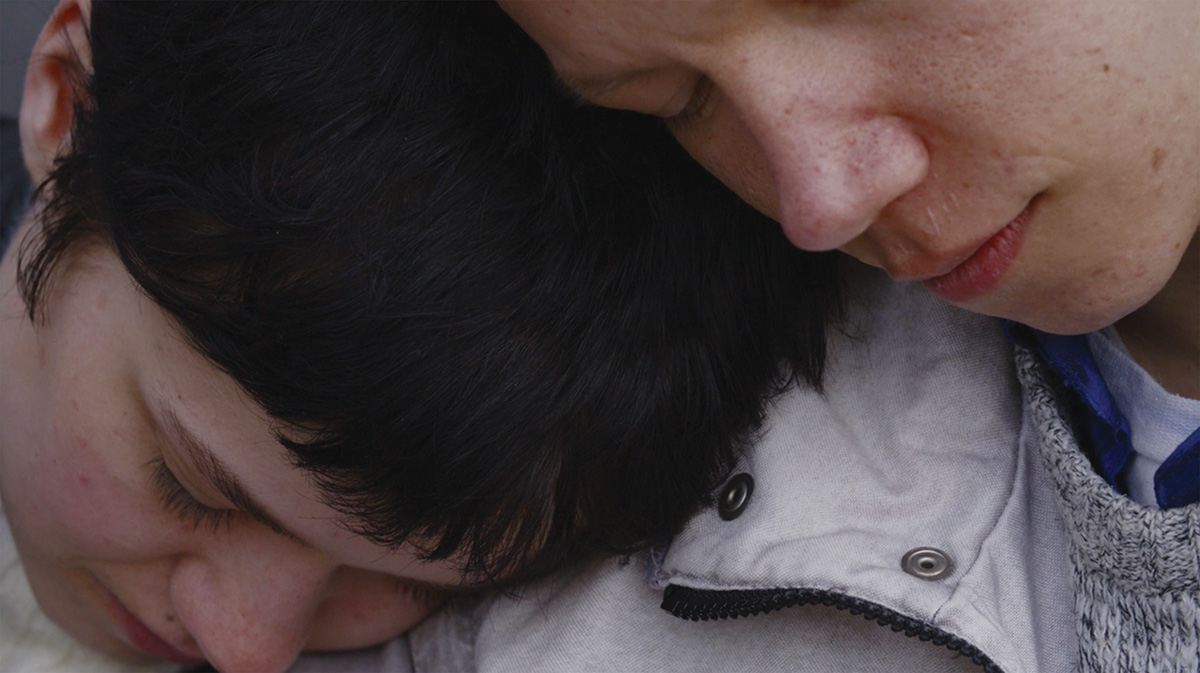
MAGMA is a method driven and improvisation based film project produced and directed by Julian Rabus. The shoot consists of long situations that last up to several hours and are filmed with up to four cameras. Actors are given space to behave without dramatic functions. Following intuitions opens a way to engage with certain psychological patterns and find narrative structures, which then manifest themselves in the editing and the viewer’s perception. In the film couples and peer groups try to find their way in everyday situations: they perform, reveal themselves, make themselves vulnerable, are insecure, fall in love or pretend to the others.
Julian Rabus works as a director and producer in the field of media art and narrative film since 2016. After he graduates from Academy of Fine Arts Munich in the class of Julian Rosefeldt he studied Film Directing at the California Institute of the Arts in Los Angeles and moved back to his hometown Berlin to finish his studies at the University of Arts in the Narrative Film class of Thomas Arslan.
Andrii Rachynskyi, Daniil Revkovskyi
Catalogue : 2025Civilians. Invasion | Documentary | hdv | color | 56:38 | Ukraine | 2023
Andrii Rachynskyi, Daniil Revkovskyi
Civilians. Invasion
Documentary | hdv | color | 56:38 | Ukraine | 2023
"Civilians. Invasion", created in 2023. The film documents the experiences of Ukrainians during the Russian aggression against Ukraine. This invasion led to extensive documentation by civilians, soldiers, and journalists, resulting in a wealth of photo and video materials that made their way onto social media platforms. While some of this content went viral through Telegram channels and other social networks, many photos and videos remained relatively unknown with minimal views. The film is structured around a specific storyline, starting from the initial days of the invasion and unfolding the events related to how people navigate a new reality: how to live and survive, the risks faced by civilians during the conflict, episodes of housing destruction, and stories of those who have lost their loved ones. In 2024 "Civilians. Invasion" represents Ukraine at the 60th Venice Biennale.
Andrii Rachynskyi and Daniil Revkovskyi are the Kharkiv (Ukraine) artists who are fusing different formats of artistic practices (installations, reenactment, video, archives), researching the contexts and landscapes of the industrial regions of Ukraine. They graduated from the Kharkiv State Academy of Design and Art with a degree in graphic design. Nominated for the PinchukArtCentre Prize in 2018, 2020 and 2022, the winners of the 2020 PinchukArtCentre Prize Audience Award for the project “Hooligans.” Allegro Prize 2022 winners. In 2024, Andrii Rachinskyi and Daniil Revkovskyi represent Ukraine at the 60th Venice Biennale. https://revkovskyirachynskyi.com
Catherine Radosa
Catalogue : 2025Rues de la Fraternité | Experimental doc. | mov | color | 65:30 | France | 2023
Catherine Radosa
Rues de la Fraternité
Experimental doc. | mov | color | 65:30 | France | 2023
In an urban march, around fifty people trace a symbolic route, supporting banners that carry the power of words. The walk ends on the Square of the Brotherhood, which is transformed into a place for listening and artistic occupation. Seventeen women's voices consider the word "brotherhood" in a polyphony of emancipated testimonies: they open up as many plural, interdisciplinary and intersectional perspectives. The voices are superimposed on a multiplicity of faces, projecting the possibilities of fluid portraits. Letters and words thrown onto the « Place de la Fraternité » interlock, pierce the concrete and give birth to new, forward-looking visions.
Catherine Radosa works at the intersection of places and images, words and situations, whether she encounters them or provokes them, often in public space, notably through video-projection on the scale of architecture, performance, installation. Her works, often contextual and participative, question individual and collective representations on the subject of borders, memory, identity, environment and gender. Between investigation and reverie, through the montage of images, voices, contexts and moments, she constructs figures of collective witnesses who touch the spirit of the place (Prague, Paris, Lima and many other residencies and invitations) and the moment with a distance that is her own, sensitive without effusion, direct, delicate, sometimes grating. Depending on the piece, she borrows and crosses several languages. Her processual works consist of participative situations and performances on the scale of landscape and architecture, but also films for screening in theatres, for diffusion on screens, for installation, images for printing and publishing, sound pieces for installation or radio broadcasting. Text by Christophe Domino, art critique
Catalogue : 2013DERRIERE LA LUMIERE | Experimental doc. | hdv | color | 31:49 | France | 2012
Catherine Radosa
DERRIERE LA LUMIERE
Experimental doc. | hdv | color | 31:49 | France | 2012
DERRIERE LA LUMIERE (2012) Vidéo HD, 30 ?, son/couleur, mono bande, présentation en vidéo projection En français, sous-titres anglais Derrière la lumière parle de la singularité d?une personne et de la distance entre son identité administrative et son identité personnelle. Les voix ont été enregistrées en divers moments, en côtoyant la communauté du collectif des personnes sans papiers à Paris (CSP 75). Dans l?échange, les uns et les autes, (ici deux femmes et un homme), évoquent des sujets tels que le sentiment du temps, de l?espace et de la distance, le plaisir et l?image, questions qui ne renvoient pas directement à leur situation administrative. Parallèlement, le travail photographique, alors que la question de l?image est particulièrement sensible dans ce contexte, rendant nécessaire la prudence, est constitué de portraits photographiques et d?images contextuelles en n/b argentique. Le film Derrière la lumière montre dans l?univers plus ou moins reconnaissable de la chambre noire du labo photo, la lente révélation sous lumière rouge de trois portraits en n/b. Ces images mouvantes apparaissent en écho de la parole. D?autres images sur la lutte pour la reconnaissance administrative et l?intégration apparaissent : documents administratifs, scènes d?actions collectives. La forme visuelle hétérogène, mais basée les trois fois sur le même procédé, laisse apparaître, à travers la parole, la singularité et l?imaginaire de chaque personne. L?image mentale de ces personnes se crée petit à petit, tandis que celle de leur présence ?physique? reste en flottement. L?unique tirage de chaque portrait photographique, réalisé pendant le tournage du film, a été remis à chacun des trois protagonistes.
Née en 1984 à Prague, Catherine Radosa déménage en 2005 en France pour y faire des études supérieures en art. Récemment diplômée de l?ESBA TALM (Le Mans) avec félicitations du jury à l?unanimité, elle vit et travaille à Paris et dans d?autres lieux du monde où elle va à la rencontre des sujets et des contextes, historiques et sociopolitiques.
Vojislav Radovanovic, Kristina Draskovic
Catalogue : 2006Picnic | Art vidéo | dv | color | 3:0 | Serbia | 2005
Vojislav Radovanovic, Kristina Draskovic
Picnic
Art vidéo | dv | color | 3:0 | Serbia | 2005
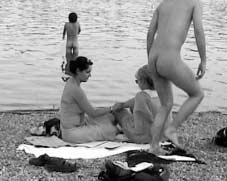
Scene from the beach, at the first look can be connected with famous Manet?s painting ?Dejeuner sur l?herbe?, but what makes this version of the famous composition provocative is inversed gender relation. Projecting of this video in the public space would pick voajeristic attitude on unexpected consummating territories. This time gaze isn?t faced to female body, instead, it is inversed to the male body. Contextualizing of this kind of complete change could be queered.
Oleksiy Radynski
Catalogue : 2026Special Operation | Documentary | mp4 | color and b&w | 65:0 | Ukraine | 2025
Oleksiy Radynski
Special Operation
Documentary | mp4 | color and b&w | 65:0 | Ukraine | 2025
The Chornobyl Zone - the site of the worst nuclear disaster in history - had been occupied by the Russian troops on February 24, 2022, in the very first hours of their all-out invasion of Ukraine. The Russians had turned the territory of the Chornobyl Nuclear Power Plant into a military base for their troops in an attempt to occupy the Ukrainian capital of Kyiv, located just a hundred miles away. They had captured the personnel of the nuclear plant who were forced to perform their duties without proper rest or sleep. The Russian plan was to stay in Chornobyl for just three days: this was their imagined time span for Ukraine’s downfall. Instead, the Russians were stuck at the radioactive site for five weeks, only to see their army collapse in the battle for Kyiv. Most of their illegal activities during these five weeks had been captured by the nuclear plant’s CCTV system, which the Russians had failed to prevent from filming. Special Operation is entirely based on these recordings. This film offers a unique perspective into the inner workings of the Russian military machine in Ukraine - and into one of its most grandiose failures. The CCTV cameras have recorded every aspect of Russian criminal presence at the contaminated Chornobyl Nuclear Power Plant - from the gross violations of nuclear safety to the staged visits by the Russian TV propagandists. We have obtained these unique materials - which had never been disclosed to the public before - from the Ukrainian law enforcement as part of our team’s long-term effort to document Russian war crimes in Chornobyl, and to help bring their perpetrators to justice. Each shot of this film is a piece of evidence representing a war crime of nuclear terror. With this film, we wish to make this evidence visible - and by doing so, to expose the profound, and frightening, incompetence of the Russian army.
Oleksiy Radynski is a filmmaker and writer based in Kyiv. His films experiment with documentary forms and practices of political cinema. They have been screened at film festivals and exhibitions worldwide including Berlinale, International Film Festival Rotterdam, Doclisboa, Thessaloniki IFF, Dokufest, the Institute of Contemporary Arts (London), e-flux (New York), Taipei Biennial, Docudays (Kyiv), Sheffield Doc Fest, Krakow IFF, DOK Leipzig etc. His films received multiple awards, including the Grand Prix at the Oberhausen International Short Film Festival for Chornobyl 22. Since the beginning of the full-scale Russian invasion of Ukraine, he has collaborated with The Reckoning Project.
Janis Rafa
Catalogue : 2017Requiem to a Fatal Incident | Experimental fiction | 4k | color | 5:0 | Greece | 2015
Janis Rafa
Requiem to a Fatal Incident
Experimental fiction | 4k | color | 5:0 | Greece | 2015
A car travels through a desolate industrial area at night. It stops near an overturned truck that was carrying pigs. Dead animals lie scattered across the road; a fatal incident, a huge loss of animal life. A premature death ironically, since the pigs had been on their way to the slaughterhouse. The subtle camera movement switches from the subjective view of the handheld camera to the objective and contemplative view of the rising camera that is mounted on a crane and surveys the scene from a great height. Finally, a big firework is set off, seemingly dedicated to the dead animals, as though it was a requiem. The scene is a recreation from news coverage.
Lives and works between Amsterdam and Athens. She completed her education in Fine Art (BA, MA, PhD) at the University of Leeds in Britain with scholarship by the Arts & Humanities Research Council. Her body of work spans from experimental-documentary practices, to video-essays, archival footage and most recently cinematic narratives and medium length films. She has recently completed the Rijksakademie van beeldende kunsten residency (2013-2014) in Amsterdam, with a scholarship by Onassis Foundation (GR). Her first solo exhibition was presented at Martin van Zomeren Gallery, Amsterdam, 2014. Currently her work will be presented at EYE Film Institute, Close-Up: A New Generation of Film and Video Artists in the Netherlands (Jan-May 2015). She has participated in group exhibitions: VISIO European Program on Artists’ Moving Images 2015; 1st Research Pavilion, Venice Biennial, 2015; Art Rotterdam Projections, Kunstvereniging Diepenheim, 2015; Ce que raconte la solitude, ART-O-RAMA, 2014; Rijksakademie OPEN, 2013 – 2014, Manifesta 8, 2010; No Soul For Sale, Tate Modern, 2010. Her films and video works were screened at: Netherlands Film Festival, International Film Festival Rotterdam, BFI London, Cinema de la Nouvelle Lune, Curtas Vila do Conde, Gulf Film Festival Dubai, Capalbio Cinema, Project Space Leeds, and as part of Rencontres Internationales, 2010, at Centre National d’Art Moderne – Centre Georges Pompidou, Reina Sofia National Museum and Haus der Kulturen der Welt. Her work is part of Stedelijk Museum Amsterdam collection. Her films and videos balance between an empirical perception of landscapes and events and an authentic representation of them. Her narratives are located at the margins of the urban, haunted by stray dogs, roadkills, fatal accidents and dissipated death. The cryptic and universal nature of these cinematic worlds is initiated by a certain realism that has very little to do with its usual representation. Dead and living, human and non-human coexist in an accord of dream and sensuality. This is the land of her semi-autobiographic narrations; returns to personal histories that reveal something of the subsequent carving of a place’s fiction and not necessarily of the place itself.
Catalogue : 2016Three Farewells: The Last Burial | Experimental fiction | 4k | color | 24:0 | Greece, Netherlands | 2013
Janis Rafa
Three Farewells: The Last Burial
Experimental fiction | 4k | color | 24:0 | Greece, Netherlands | 2013
SYNOPSIS Three Farewells: The Last Burial Janis Rafa The Last Burial proposes a visual approach on the concept of death and the fear of losing, outside the rigid anthropocentric understanding on human / non-human existence. It describes the moment of loss within the intimate space of a family house. The father and mother of this familial environment are silenced, in a state of mourning. Their sorrow is expressed through the form of water, rain or onions; visual symbolisms that take the characters into a timeless state of being and awareness, reflecting on the house’s past. The Last Burial consists part of the Three Farewells (2013), a trilogy of burials produced by Janis Rafa, with the support of Amsterdams Fonds voor de Kunst Alexander S. Onassis Foundation Rijksakademie van beeldende kunsten.
BIO Janis Rafa Lives and works between Amsterdam and Athens. She completed her education in Fine Art (BA, MA, PhD) at the University of Leeds in Britain with scholarship by the Arts & Humanities Research Council. Her body of work spans from experimental-documentary practices, to video-essays, archival footage and most recently cinematic narratives and medium length films. She has recently completed the Rijksakademie van beeldende kunsten residency (2013-2014) in Amsterdam, with a scholarship by Onassis Foundation (GR). Her first solo exhibition was presented at Martin van Zomeren Gallery, Amsterdam, 2014. She currently presents work at EYE Film Institute, Close-Up: A New Generation of Film and Video Artists in the Netherlands (Jan-May 2015). She has participated in group exhibitions: VISIO European Program on Artists’ Moving Images 2015; 1st Research Pavilion, Venice Biennial, 2015; Art Rotterdam Projections, Kunstvereniging Diepenheim, 2015; Ce que raconte la solitude, ART-O-RAMA, 2014; Rijksakademie OPEN, 2013 – 2014, Manifesta 8, 2010; No Soul For Sale, Tate Modern, 2010. Her films and video works were screened at: Netherlands Film Festival, International Film Festival Rotterdam, BFI London, Cinema de la Nouvelle Lune, Curtas Vila do Conde, Gulf Film Festival Dubai, Capalbio Cinema, Project Space Leeds, and as part of Rencontres Internationales, 2010, at Centre National d’Art Moderne – Centre Georges Pompidou, Reina Sofia National Museum and Haus der Kulturen der Welt. Her work is part of Stedelijk Museum Amsterdam collection.
Janis Rafailidou
Catalogue : 20112755 miles | Documentary | dv | color | 17:0 | Greece | 2009
Janis Rafailidou
2755 miles
Documentary | dv | color | 17:0 | Greece | 2009
The film is based on forms of experimental documentary practice. Its title reflects the distance between Pakistan and Greece that clandestine migrants have to cover through their movement from the East to the West. The opening and closing scenes of the film take place inside a car and present footage of the journey that Pakistani men and myself made to the centre of Athens to covertly receive a newly arrived migrant who entered the country through smuggling networks. The narrative of the film is located on the outskirts of Athens where Pakistani male communities live and work undercover within a horse-riding club next to the city?s airport. The project attempts to question notions of travel, movement and distance outside a westernised perspective by concentrating on a terrain vague. Through the travelling camera, the film documents the ?invisible? sub-geographies of the urban landscape in one of Europe?s capitals.
Janis Rafailidou (1984, Athens) the last nine years lives in UK. She studies as a PhD researcher on contemporary forms of video-installation art and experimental documentary practice in Fine Art, at the University of Leeds; awarded by the Arts and Humanities Research Council. She has participated in exhibitions in Greece and UK, with her latest participation at the Thessaloniki Biennial of Contemporary Art 2009. Her practice-based PhD research is presented this year in Manifesta 8, Murcia. Further information on her work can been found at: www.janisrafailidou.co.uk
Jon Rafman
Catalogue : 2018Poor Magic | Experimental film | hdv | color | 7:7 | Canada | 2017
Jon Rafman
Poor Magic
Experimental film | hdv | color | 7:7 | Canada | 2017
Jon Rafman’s Poor Magic is a vision of a post-human dystopia featuring animated 3-D bodies continuously tortured in abstract digital space. The video presents the viewer with a haunting programme of repeating motifs: a blue featureless avatar, a view from a colonoscopy, and ranks of identical figures crashing and toppling over each other, made with the help of crowd-simulation software. While a poetic lament, Poor Magic addresses the fragmented consciousness of a post-physical existence. The film shows a terrifying image of a future where all humanity is uploaded to a virtual purgatory and endlessly abused. Or perhaps it is also a brutal representation of the present moment and the effect that technology has on our flesh and psyche.
Rafman was born in 1981 in Canada. He works and lives in Montreal. Artist, filmmaker and essayist, he holds an M.F.A. from The School of the Art Institute of Chicago and a B.A. in Philosophy and Literature from Mcgill University. His work centers around the emotional, social and existential impact of technology on contemporary life. He is widely known for exhibiting found images from Google Street View in his online artwork “9-Eyes”. Much of his work focuses on melancholy in modern social interactions, communities and virtual realities. His videos utilize personal moments to reveal how pop culture ephemera and subcultures shape individual desires, defining those individuals. The artist’s recent solo exhibitions include Stedelijk Museum, Amsterdam (2016); Westfälischer Kunstverein, Munster (2016); Museum of Contemporary Art, Montreal (2015); the Zabludowicz Collection, London (2015), and the Centre for Contemporary Art, Tel Aviv. His work has also been featured in numerous international group exhibitions, including Berlin Biennial 9 and Manifesta 11 in 2016, The Future of Memory, Kunsthalle Wien, Vienna (2015), Speculations on Anonymous Materials, Fridericianum, Kassel, Germany (2015), and the Lyon and Moscow Biennial in 2015. He was also presented at Saatchi Gallery in London and at Palais de Tokyo in 2012. The artist was rewarded for excellence in the visual arts at the Montreal Museum of Fine Arts in 2015, and has been nominated for the Tiger Award for short Film, the Mainsqueeze and the Sobey Art Award.
Ella Raidel
Catalogue : 2015Play Life Series | Documentary | hdv | color | 11:0 | Austria | 2011
Ella Raidel
Play Life Series
Documentary | hdv | color | 11:0 | Austria | 2011
Ella Raidel’s video Play Life Serie exposes its own methods right from the start. We see film shoots and film sites where Chinese soap operas are produced. As the camera pans to film teams and cameramen, the fictional content of the rehearsed scenes is interrupted and revealed as the process of making-of. At the same time, through editing, Raidel replays particular movements, handholds, and gestures of the characters, thus intensifying their serial level. The repetitions make clear the extent to which sword fights, wine, love, and revolt are part of a medially represented repertoire of gestures. Ella Raidel’s work deals ironically with the Chinese soap opera as fake-factory of collective desires, which in the interplay of fiction and making-of, forces its way through reality, scrutinizing it—as site of image making and image controlling.
Ella Raidel, born 1970 in Austria, studied at Art University Linz, lives and works in Taipei. She is currently Post-doc Researcher at Academia Sinica in Taipei/Taiwan. Ella Raidel is artist, filmmaker, presents her works internationally at Video- and Filmfestivals as well as exhibitions, such as Transmediale 2013 (Haus der Kulturen der Welt, Berlin), Floating Islands (Shanghai Biennale 2012/13 Kinmen/Taiwan), Asian Triennale Manchester, Discovering the Other (National Palace Museum Taipei), Based Upon: True Stories (Witte de Wit Rotterdam) Filmfestivals: CPH:DOX, Dok Leipzig, International Filmfestival Rotterdam, Crossing Europe, Duisburger Filmwoche, etc.
Ella Raidel
Catalogue : 2022We'll Always Have Paris | Experimental doc. | 4k | color | 3:36 | Austria, China | 2021
Ella Raidel
We'll Always Have Paris
Experimental doc. | 4k | color | 3:36 | Austria, China | 2021
Paris is not necessarily the first choice as the setting for a ghost story. The excessive romance of the French metropolis’ cultural symbols renders them simply unsuitable as backdrop for horror stories. But that’s not the case in Ella Raidel’s four-minute short film, which arose in the course of her extensive research project Of Haunted Spaces and refers to an upcoming feature film project. In We’ll always have Paris, the Eifel Tower, Champs-Élysées, magnificent fountains, and trimmed hedges stand as faux French in the hazy rain of Tianducheng. The residential complex located in the suburbs of the Chinese megapolis Hangzhou is one of the countless, largely unpopulated pop-up sites that sprung up overnight through high-speed real-estate speculation. In Raidel’s film, the Eifel Tower is the anti-gravity center of a phantom zone furnished with stark high-rises, parking areas, and gardens—an urban proposition that amounts to nothing. As the camera focuses on the building clone and its surroundings from various perspectives, the film suddenly changes tone. A woman who at first is visible only from behind enters the urban planning remake. Through a construction site corridor, she enters a conference space, improvised by partition walls, from which the view of the tower’s base condenses to an image of the uncanny. Like the pastiche in Tianducheng, We’ll always have Paris also contradicts the logics of representation; the film itself becomes a simulation of an architecture film, of a capitalism critique, of a ghost story: as they say in the film classic Casablanca, "We’ll always have Paris." But what do we have here? (Esther Buss)
Ella Raidel, is an Austrian filmmaker, artist and researcher who has lived in Taiwan for the past 20 years. In her interdisciplinary works – films, videos, research and discourses – she focuses on the socio-cultural aspects of globalization, urbanization and the representation of images. Her hybrid practice is to create a discursive space for filmmaking, art and research. She is currently Asst. Professor at NTU Singapore, lives and works in Singapore. In recent years, she has been concerned with China’s unprecedented growth and rapid urban changes, in experimenting with new documentary modes, narrations and methods. Raidel’s works has participated in international biennials, exhibitions, conferences, and presented at numerous International film festivals.
Ella Raidel
Catalogue : 2022A Pile of Ghosts | Video | hdv | color | 70:0 | Austria, China | 2021
Ella Raidel
A Pile of Ghosts
Video | hdv | color | 70:0 | Austria, China | 2021
The real estate broker cruises around the rambling speculation landscape on a golfcart and adds names, numbers, and products. The marketing tour is somewhat like a performance whose words circulate through various bodies and objects. A Pile of Ghosts shows construction workers and real estate brokers at work—in authentic and also staged settings, in casting scenes and in changing roles. The so-called reality, at the same time, turns out to be increasingly porous, also hard lines of rupture become increasingly apparent in the retort-like surroundings. Dead new buildings and ruins, brokers and actors, documentation and fiction, simulation and lived experience, the sounds of a jackhammer and the romantic melody of an old Hollywood film. In the tumbledown “Swallow Hotel” in the hills of Chongqing, amidst persistent noises the dandyesque hotel owner Charles defies the turbo-capitalist urbanization process. A Pile of Ghosts layers the seemingly disparate building blocks to form the title’s “pile.” In the end, one ghost story absorbs the other.
Ella Raidel is a filmmaker, artist and researcher. She is Assistant Professor at NTU Singapore at ADM School of Art, Design and Media and WKWSCI School of Communication and Information. In her interdisciplinary work – films, videos, writings – she focuses on the socio-cultural impact of globalization with a focus on urbanization and Asian cinemas. She is interested in reflexive forms of narration in questioning the representation in documentary films. Her film-making corresponds with her writings on Sinophone cinema for researching the poetics in image-making. Her work has been presented and distinguished in numerous international film festivals, exhibitions and biennials.
Yvonne Rainer
Catalogue : 2023Journeys from Berlin/1971 | Experimental fiction | 16mm | color | 125:0 | USA | 1979
Yvonne Rainer
Journeys from Berlin/1971
Experimental fiction | 16mm | color | 125:0 | USA | 1979
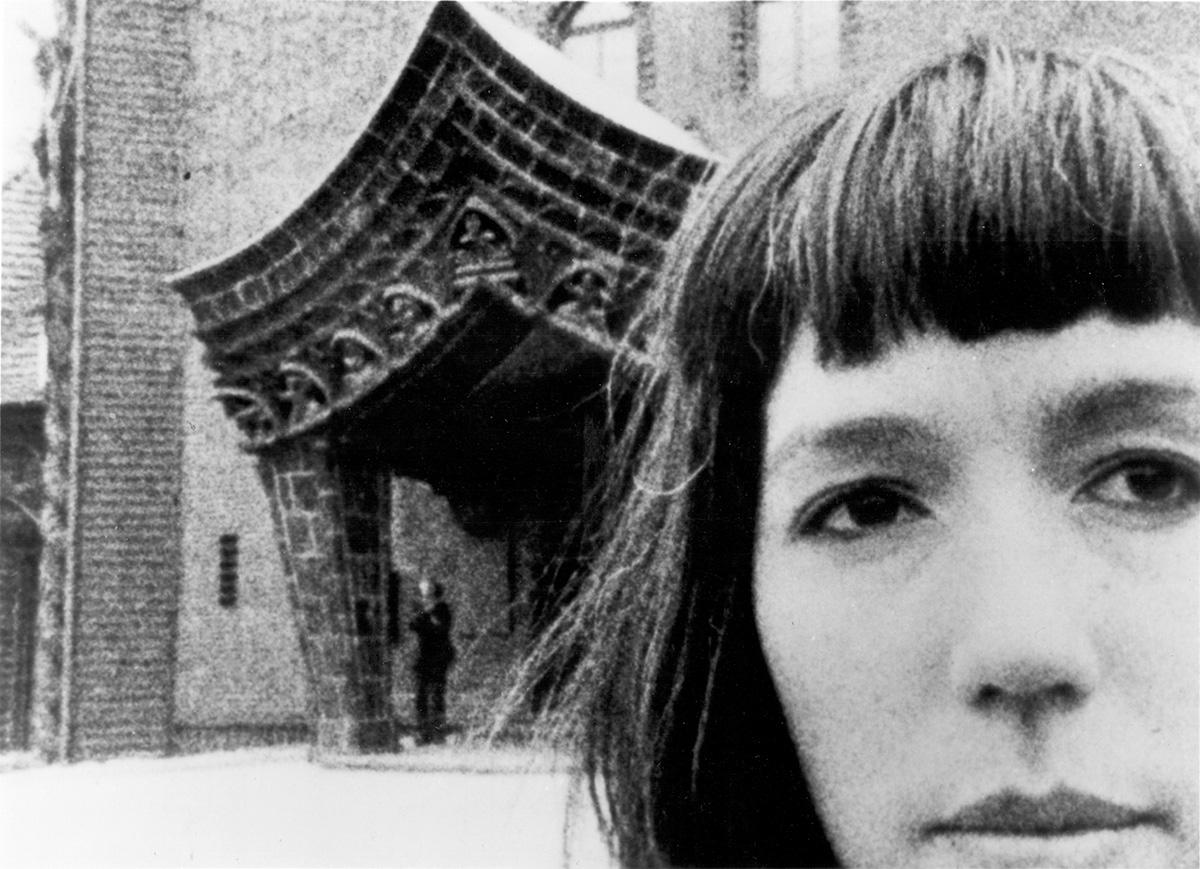
“Without a doubt the most ambitious, most risk-taking work of Rainer’s cinematic career.”—B. Ruby Rich. Rainer’s fourth feature, inspired by her experiences living in West Berlin in 1976 and ’77, when the activities of right-wing terrorists were at their height, offers an audacious, collage-like meditation on state power, repression, violence, and revolution. Vaulting between aerial images of British landscapes, intertitles, fragments of Rainer’s teenage diary, and one unseen couple’s debate (voiced by Amy Taubin and Vito Acconci) over the demise of the RAF, the film is illuminated by a lead performance from the late art and film critic Annette Michelson as a patient undergoing psychoanalysis, whose every gesture was choreographed elaborately by Rainer over a nine-month period. (Synopsis courtesy of The Metrograph)
When Yvonne Rainer made her first feature-length film in 1972, she had already influenced the world of dance and choreography for nearly a decade. From the beginning of her film career she inspired audiences to think about what they saw, interweaving the real and fictional, the personal and political, the concrete and abstract in imaginative, unpredictable ways. Her bold feminist sensibility and often controversial subject matter, leavened with a quirky humor, has made her, as the Village Voice dubbed her in 1986, "The most influential American avant-garde filmmaker of the past dozen years, with an impact as evident in London or Berlin as in New York. Rainer was born in San Francisco in 1934. She trained as a modern dancer in New York from 1957 and began to choreograph her own work in 1960. She was one of the founders of the Judson Dance Theater in 1962, the beginning of a movement that proved to be a vital force in modern dance in the following decades. Between 1962 and 1975 she presented her choreography throughout the United States and Europe, notably on Broadway in 1969, in Scandinavia, London, Germany, and Italy between 1964 and 1972, and at the Festival D'Automne in Paris in 1972. In 1968 she began to integrate short films into her live performances, and by 1975 she had made a complete transition to filmmaking. In 1972 she completed a first feature-length film, LIVES OF PERFORMERS. In all she has completed seven features: FILM ABOUT A WOMAN WHO... (1974), KRISTINA TALKING PICTURES (1976), JOURNEYS FROM BERLIN/1971 (1980, co-produced by the British Film Institute and winner of the Special Achievement Award from the Los Angeles Film Critics' Association), THE MAN WHO ENVIED WOMEN (1985), PRIVILEGE (1990, winner of the Filmmakers' Trophy at the Sundance Film Festival, Park City. Utah, 1991, and the Geyer Werke Prize at the International Documentary Film Festival in Munich, 1991), and MURDER and murder (1996). Rainer's films have been shown extensively in the U.S. and throughout the world, in alternative film exhibition showcases and revival houses (such as the Bleecker St Cinema, Roxy-S.F., NuArt-L.A, Film Forum-NYC, et al), in museums and in universities. Her films have also been screened at festivals in Los Angeles (Filmex), London, Montreux, Toronto, Edinburgh, Mannheim, Berlin, Locarno, Rotterdam, Creteil, Deauville, Toulon, Montreal, Hamburg, Salsa Majori, Figueira da Foz, Munich, Vienna, Athens (Ohio), Sundance, Hong Kong, Yamagata, and Sydney. A half-hour video tape entitled YVONNE RAINER: STORY OF A FILMMAKER WHO... was aired on Film and Video Review, WNET-TV in 1980. THE MAN WHO ENVIED WOMEN was aired on Independent Focus, WNET-TV in, 1989, and PRIVILEGE on the same program in 1992 and during the summer of 1994. In the Spring of 1997—to coincide with the release of MURDER and murder—complete retrospectives of the films of Yvonne Rainer were mounted at the Museum of Modern Art in San Francisco and at the Film Society of Lincoln Center in New York City.
Catalogue : 2023Privilege | Experimental fiction | 16mm | color and b&w | 103:0 | USA | 1990
Yvonne Rainer
Privilege
Experimental fiction | 16mm | color and b&w | 103:0 | USA | 1990
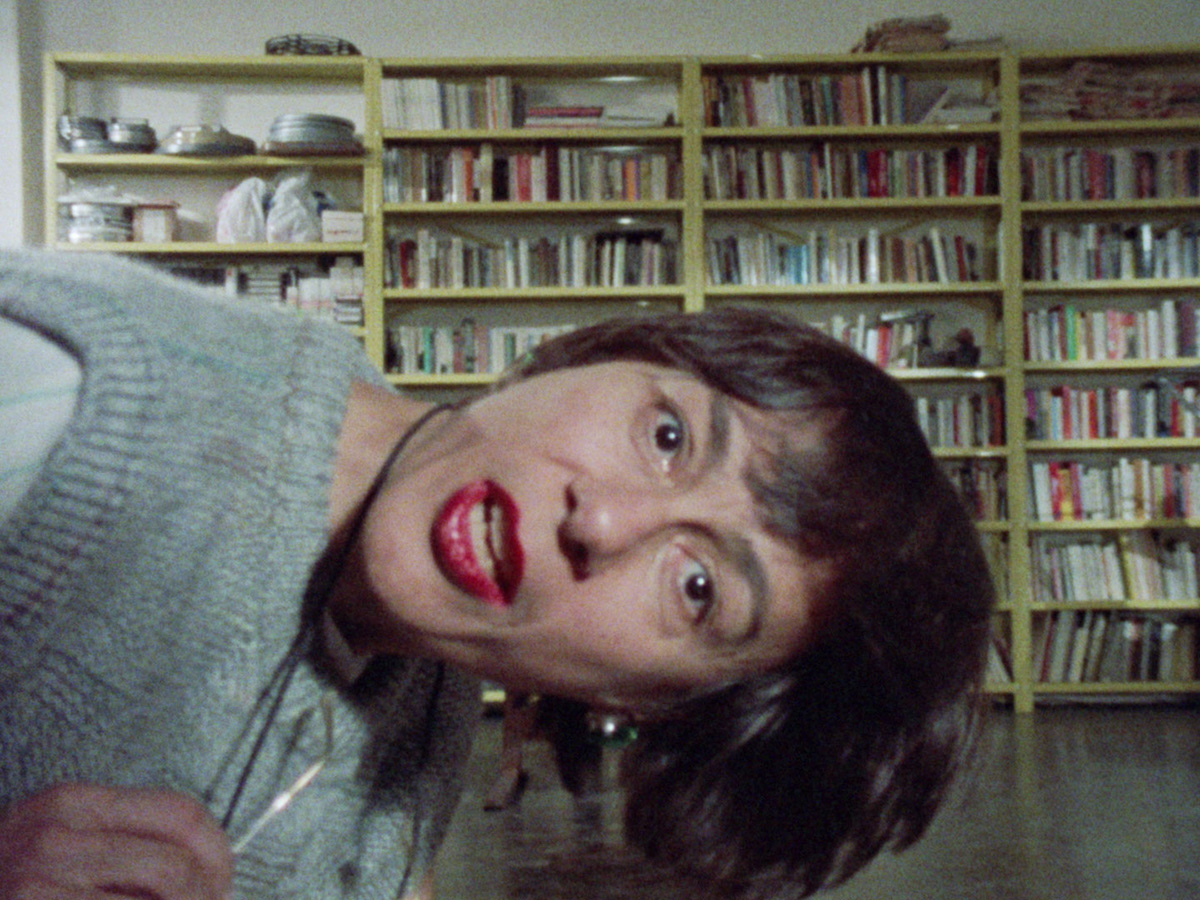
“For Rainer, drama and style aren’t innocent, and the very concept of a story, and the way it’s told, is political”—Richard Brody. One of Rainer’s most narratively complex films, Privilege shifts from a documentary about women going through the process of menopause to a deadpan and delightfully anarchic autobiographical meta-film exploring the power dynamics underpinning experience, memory, and the manner in which women’s stories are told. Synopsis courtesy of The Metrograph.
When Yvonne Rainer made her first feature-length film in 1972, she had already influenced the world of dance and choreography for nearly a decade. From the beginning of her film career she inspired audiences to think about what they saw, interweaving the real and fictional, the personal and political, the concrete and abstract in imaginative, unpredictable ways. Her bold feminist sensibility and often controversial subject matter, leavened with a quirky humor, has made her, as the Village Voice dubbed her in 1986, "The most influential American avant-garde filmmaker of the past dozen years, with an impact as evident in London or Berlin as in New York. Rainer was born in San Francisco in 1934. She trained as a modern dancer in New York from 1957 and began to choreograph her own work in 1960. She was one of the founders of the Judson Dance Theater in 1962, the beginning of a movement that proved to be a vital force in modern dance in the following decades. Between 1962 and 1975 she presented her choreography throughout the United States and Europe, notably on Broadway in 1969, in Scandinavia, London, Germany, and Italy between 1964 and 1972, and at the Festival D'Automne in Paris in 1972. In 1968 she began to integrate short films into her live performances, and by 1975 she had made a complete transition to filmmaking. In 1972 she completed a first feature-length film, LIVES OF PERFORMERS. In all she has completed seven features: FILM ABOUT A WOMAN WHO... (1974), KRISTINA TALKING PICTURES (1976), JOURNEYS FROM BERLIN/1971 (1980, co-produced by the British Film Institute and winner of the Special Achievement Award from the Los Angeles Film Critics' Association), THE MAN WHO ENVIED WOMEN (1985), PRIVILEGE (1990, winner of the Filmmakers' Trophy at the Sundance Film Festival, Park City. Utah, 1991, and the Geyer Werke Prize at the International Documentary Film Festival in Munich, 1991), and MURDER and murder (1996). Rainer's films have been shown extensively in the U.S. and throughout the world, in alternative film exhibition showcases and revival houses (such as the Bleecker St Cinema, Roxy-S.F., NuArt-L.A, Film Forum-NYC, et al), in museums and in universities. Her films have also been screened at festivals in Los Angeles (Filmex), London, Montreux, Toronto, Edinburgh, Mannheim, Berlin, Locarno, Rotterdam, Creteil, Deauville, Toulon, Montreal, Hamburg, Salsa Majori, Figueira da Foz, Munich, Vienna, Athens (Ohio), Sundance, Hong Kong, Yamagata, and Sydney. A half-hour video tape entitled YVONNE RAINER: STORY OF A FILMMAKER WHO... was aired on Film and Video Review, WNET-TV in 1980. THE MAN WHO ENVIED WOMEN was aired on Independent Focus, WNET-TV in, 1989, and PRIVILEGE on the same program in 1992 and during the summer of 1994. In the Spring of 1997—to coincide with the release of MURDER and murder—complete retrospectives of the films of Yvonne Rainer were mounted at the Museum of Modern Art in San Francisco and at the Film Society of Lincoln Center in New York City. In 2006 MIT Press published Yvonne Rainer's memoir Feelings Are Facts: A Life
Catalogue : 2023The Man who Envied Women | Experimental fiction | 16mm | color | 125:0 | USA | 1985
Yvonne Rainer
The Man who Envied Women
Experimental fiction | 16mm | color | 125:0 | USA | 1985
The Man Who Envied Women sees Rainer, in her own words, “throw down the gauntlet to psychoanalytic feminist film theory,” interrogating and responding to contemporary debates over notions such as the male gaze with a drolly provocative hybrid essay film. Rainer’s account of the break-up of a marriage between a womanizing blowhard Manhattan professor (played alternately by William Raymond and Larry Loonin) and his artist wife, who exists only as voice-over (choreographer Trisha Brown), soon galaxy brains outwards to address concerns as divergent as the housing crisis facing New York artists and political struggles in Latin America. (Synopsis courtesy of The Metrograph)
When Yvonne Rainer made her first feature-length film in 1972, she had already influenced the world of dance and choreography for nearly a decade. From the beginning of her film career she inspired audiences to think about what they saw, interweaving the real and fictional, the personal and political, the concrete and abstract in imaginative, unpredictable ways. Her bold feminist sensibility and often controversial subject matter, leavened with a quirky humor, has made her, as the Village Voice dubbed her in 1986, "The most influential American avant-garde filmmaker of the past dozen years, with an impact as evident in London or Berlin as in New York. Rainer was born in San Francisco in 1934. She trained as a modern dancer in New York from 1957 and began to choreograph her own work in 1960. She was one of the founders of the Judson Dance Theater in 1962, the beginning of a movement that proved to be a vital force in modern dance in the following decades. Between 1962 and 1975 she presented her choreography throughout the United States and Europe, notably on Broadway in 1969, in Scandinavia, London, Germany, and Italy between 1964 and 1972, and at the Festival D'Automne in Paris in 1972. In 1968 she began to integrate short films into her live performances, and by 1975 she had made a complete transition to filmmaking. In 1972 she completed a first feature-length film, LIVES OF PERFORMERS. In all she has completed seven features: FILM ABOUT A WOMAN WHO... (1974), KRISTINA TALKING PICTURES (1976), JOURNEYS FROM BERLIN/1971 (1980, co-produced by the British Film Institute and winner of the Special Achievement Award from the Los Angeles Film Critics' Association), THE MAN WHO ENVIED WOMEN (1985), PRIVILEGE (1990, winner of the Filmmakers' Trophy at the Sundance Film Festival, Park City. Utah, 1991, and the Geyer Werke Prize at the International Documentary Film Festival in Munich, 1991), and MURDER and murder (1996). Rainer's films have been shown extensively in the U.S. and throughout the world, in alternative film exhibition showcases and revival houses (such as the Bleecker St Cinema, Roxy-S.F., NuArt-L.A, Film Forum-NYC, et al), in museums and in universities. Her films have also been screened at festivals in Los Angeles (Filmex), London, Montreux, Toronto, Edinburgh, Mannheim, Berlin, Locarno, Rotterdam, Creteil, Deauville, Toulon, Montreal, Hamburg, Salsa Majori, Figueira da Foz, Munich, Vienna, Athens (Ohio), Sundance, Hong Kong, Yamagata, and Sydney. A half-hour video tape entitled YVONNE RAINER: STORY OF A FILMMAKER WHO... was aired on Film and Video Review, WNET-TV in 1980. THE MAN WHO ENVIED WOMEN was aired on Independent Focus, WNET-TV in, 1989, and PRIVILEGE on the same program in 1992 and during the summer of 1994. In the Spring of 1997—to coincide with the release of MURDER and murder—complete retrospectives of the films of Yvonne Rainer were mounted at the Museum of Modern Art in San Francisco and at the Film Society of Lincoln Center in New York City. In 2006 MIT Press published Yvonne Rainer's memoir Feelings Are Facts: A Life.
Catalogue : 2023MURDER and murder | Experimental fiction | 16mm | color | 113:0 | USA | 1996
Yvonne Rainer
MURDER and murder
Experimental fiction | 16mm | color | 113:0 | USA | 1996
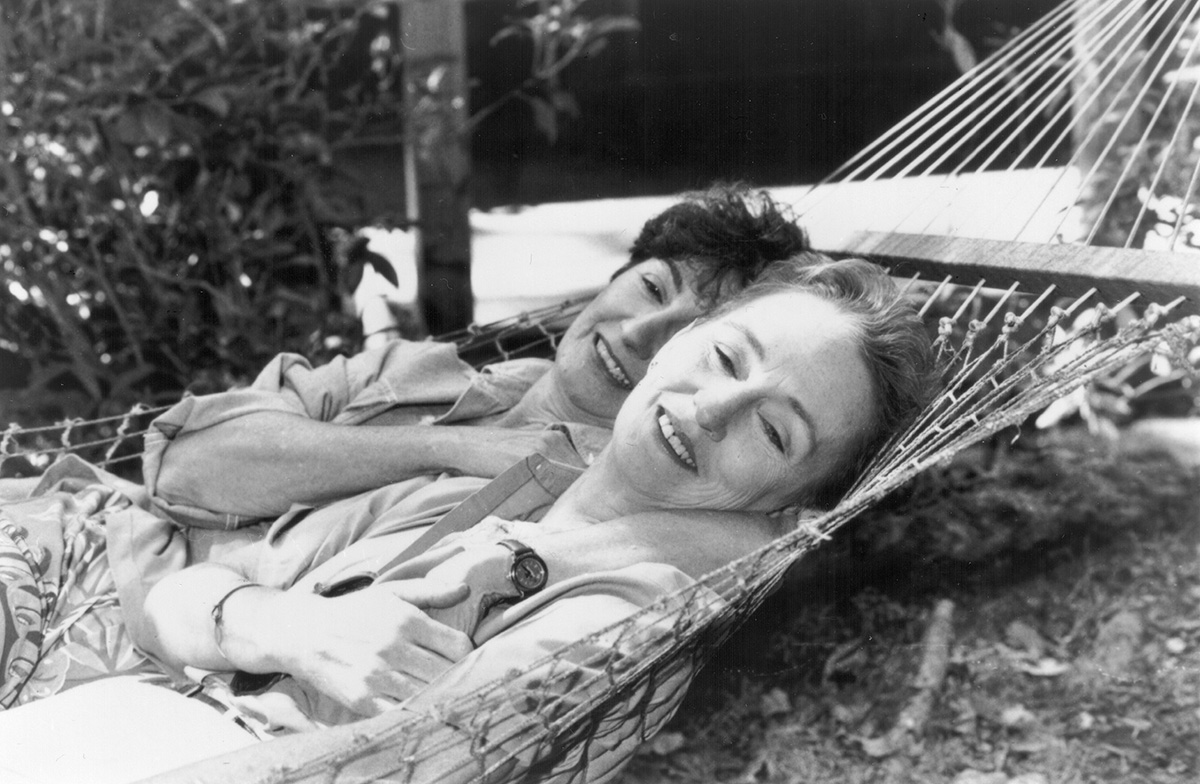
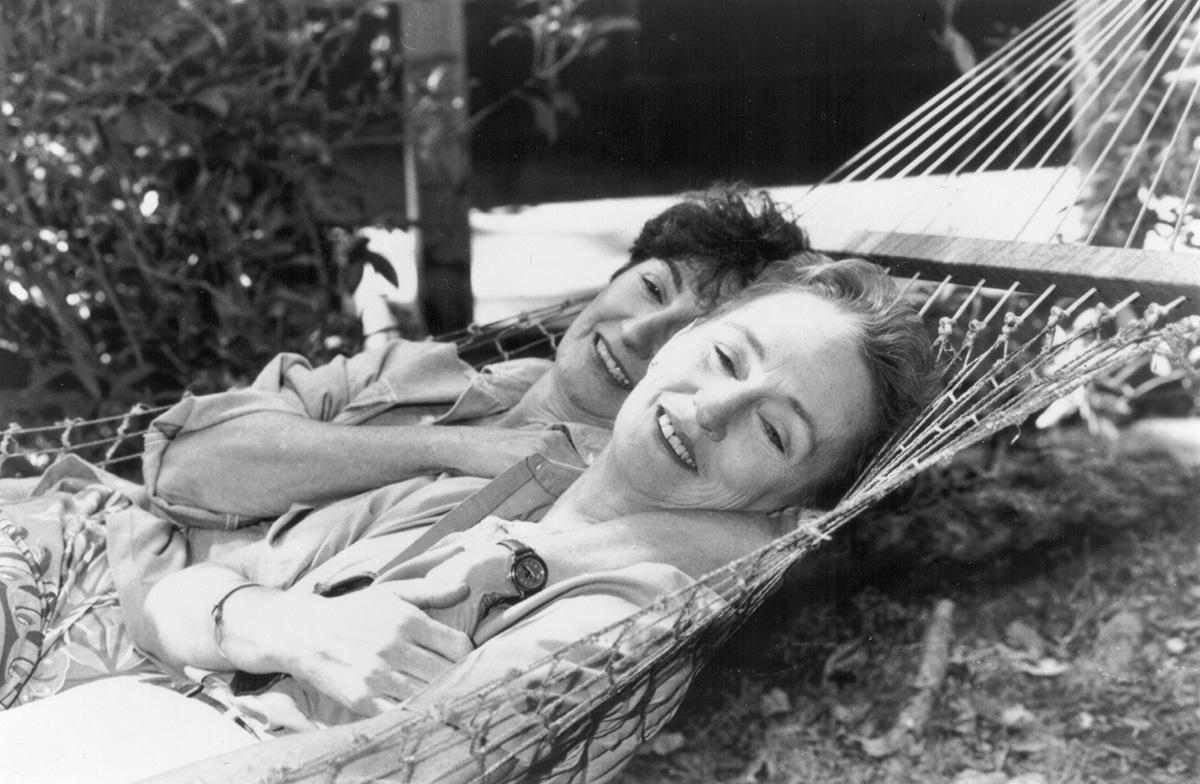
Rainer’s last feature is also one of her most personal, inspired by the lows and highs of a breast cancer diagnosis in the early 1990s, and the surprise of a burgeoning lesbian relationship. The latter is playfully refracted here through the love story of two women from very different backgrounds: Yvonne’s sixty-something screen counterpart Doris (Joanna Merlin) who gleefully announces that she “loves eating pussy,” and the younger academic she’s soon to move in with, Mildred (Kathleen Chalfant). A comic romance whose emotions are amplified by Rainer’s structural tomfoolery and signature intellectual rigor—with the director providing running commentary and appearing intermittently to address the camera—MURDER and murder probes the pleasures, and attendant questions, of late-in-life love affairs. (Synopsis courtesy of The Metrograph.)
When Yvonne Rainer made her first feature-length film in 1972, she had already influenced the world of dance and choreography for nearly a decade. From the beginning of her film career she inspired audiences to think about what they saw, interweaving the real and fictional, the personal and political, the concrete and abstract in imaginative, unpredictable ways. Her bold feminist sensibility and often controversial subject matter, leavened with a quirky humor, has made her, as the Village Voice dubbed her in 1986, "The most influential American avant-garde filmmaker of the past dozen years, with an impact as evident in London or Berlin as in New York. Rainer was born in San Francisco in 1934. She trained as a modern dancer in New York from 1957 and began to choreograph her own work in 1960. She was one of the founders of the Judson Dance Theater in 1962, the beginning of a movement that proved to be a vital force in modern dance in the following decades. Between 1962 and 1975 she presented her choreography throughout the United States and Europe, notably on Broadway in 1969, in Scandinavia, London, Germany, and Italy between 1964 and 1972, and at the Festival D'Automne in Paris in 1972. In 1968 she began to integrate short films into her live performances, and by 1975 she had made a complete transition to filmmaking. In 1972 she completed a first feature-length film, LIVES OF PERFORMERS. In all she has completed seven features: FILM ABOUT A WOMAN WHO... (1974), KRISTINA TALKING PICTURES (1976), JOURNEYS FROM BERLIN/1971 (1980, co-produced by the British Film Institute and winner of the Special Achievement Award from the Los Angeles Film Critics' Association), THE MAN WHO ENVIED WOMEN (1985), PRIVILEGE (1990, winner of the Filmmakers' Trophy at the Sundance Film Festival, Park City. Utah, 1991, and the Geyer Werke Prize at the International Documentary Film Festival in Munich, 1991), and MURDER and murder (1996). Rainer's films have been shown extensively in the U.S. and throughout the world, in alternative film exhibition showcases and revival houses (such as the Bleecker St Cinema, Roxy-S.F., NuArt-L.A, Film Forum-NYC, et al), in museums and in universities. Her films have also been screened at festivals in Los Angeles (Filmex), London, Montreux, Toronto, Edinburgh, Mannheim, Berlin, Locarno, Rotterdam, Creteil, Deauville, Toulon, Montreal, Hamburg, Salsa Majori, Figueira da Foz, Munich, Vienna, Athens (Ohio), Sundance, Hong Kong, Yamagata, and Sydney. A half-hour video tape entitled YVONNE RAINER: STORY OF A FILMMAKER WHO... was aired on Film and Video Review, WNET-TV in 1980. THE MAN WHO ENVIED WOMEN was aired on Independent Focus, WNET-TV in, 1989, and PRIVILEGE on the same program in 1992 and during the summer of 1994. In the Spring of 1997—to coincide with the release of MURDER and murder—complete retrospectives of the films of Yvonne Rainer were mounted at the Museum of Modern Art in San Francisco and at the Film Society of Lincoln Center in New York City. In 2006 MIT Press published Yvonne Rainer's memoir Feelings Are Facts: A Life.
Catalogue : 2023Kristina Talking Pictures | Experimental fiction | 16mm | color | 90:0 | USA | 1976

Yvonne Rainer
Kristina Talking Pictures
Experimental fiction | 16mm | color | 90:0 | USA | 1976
“What Rainer was up to, after all, was the reinvention of melodrama as a genre, accented for the contemporary psyche.”—B. Ruby Rich. Namechecking both Virginia Woolf and Jean-Luc Godard in the film’s opening segment, Rainer continues to experiment in her elegiac, hybrid third feature with unshackling narrative from conventional representation, using the paradoxical feminine figure of a lion tamer, Kristina (played by several women, including Rainer herself), and a disjunctive audiovisual syntax that pushes avant-garde film grammar into thrillingly novel, expressive realms. Kristina arrives from Budapest to 1970s New York City, harboring hopes of becoming a dance choreographer, as well as romantic affections for an elusive sailor named Raoul.(Synopsis courtesy of The Metrograph.)
When Yvonne Rainer made her first feature-length film in 1972, she had already influenced the world of dance and choreography for nearly a decade. From the beginning of her film career she inspired audiences to think about what they saw, interweaving the real and fictional, the personal and political, the concrete and abstract in imaginative, unpredictable ways. Her bold feminist sensibility and often controversial subject matter, leavened with a quirky humor, has made her, as the Village Voice dubbed her in 1986, "The most influential American avant-garde filmmaker of the past dozen years, with an impact as evident in London or Berlin as in New York. Rainer was born in San Francisco in 1934. She trained as a modern dancer in New York from 1957 and began to choreograph her own work in 1960. She was one of the founders of the Judson Dance Theater in 1962, the beginning of a movement that proved to be a vital force in modern dance in the following decades. Between 1962 and 1975 she presented her choreography throughout the United States and Europe, notably on Broadway in 1969, in Scandinavia, London, Germany, and Italy between 1964 and 1972, and at the Festival D'Automne in Paris in 1972. In 1968 she began to integrate short films into her live performances, and by 1975 she had made a complete transition to filmmaking. In 1972 she completed a first feature-length film, LIVES OF PERFORMERS. In all she has completed seven features: FILM ABOUT A WOMAN WHO... (1974), KRISTINA TALKING PICTURES (1976), JOURNEYS FROM BERLIN/1971 (1980, co-produced by the British Film Institute and winner of the Special Achievement Award from the Los Angeles Film Critics' Association), THE MAN WHO ENVIED WOMEN (1985), PRIVILEGE (1990, winner of the Filmmakers' Trophy at the Sundance Film Festival, Park City. Utah, 1991, and the Geyer Werke Prize at the International Documentary Film Festival in Munich, 1991), and MURDER and murder (1996). Rainer's films have been shown extensively in the U.S. and throughout the world, in alternative film exhibition showcases and revival houses (such as the Bleecker St Cinema, Roxy-S.F., NuArt-L.A, Film Forum-NYC, et al), in museums and in universities. Her films have also been screened at festivals in Los Angeles (Filmex), London, Montreux, Toronto, Edinburgh, Mannheim, Berlin, Locarno, Rotterdam, Creteil, Deauville, Toulon, Montreal, Hamburg, Salsa Majori, Figueira da Foz, Munich, Vienna, Athens (Ohio), Sundance, Hong Kong, Yamagata, and Sydney. A half-hour video tape entitled YVONNE RAINER: STORY OF A FILMMAKER WHO... was aired on Film and Video Review, WNET-TV in 1980. THE MAN WHO ENVIED WOMEN was aired on Independent Focus, WNET-TV in, 1989, and PRIVILEGE on the same program in 1992 and during the summer of 1994. In the Spring of 1997—to coincide with the release of MURDER and murder—complete retrospectives of the films of Yvonne Rainer were mounted at the Museum of Modern Art in San Francisco and at the Film Society of Lincoln Center in New York City. In 2006 MIT Press published Yvonne Rainer's memoir Feelings Are Facts: A Life.
Catalogue : 2023Film About a Woman Who... | Experimental fiction | 16mm | black and white | 0:0 | USA | 1974
Yvonne Rainer
Film About a Woman Who...
Experimental fiction | 16mm | black and white | 0:0 | USA | 1974
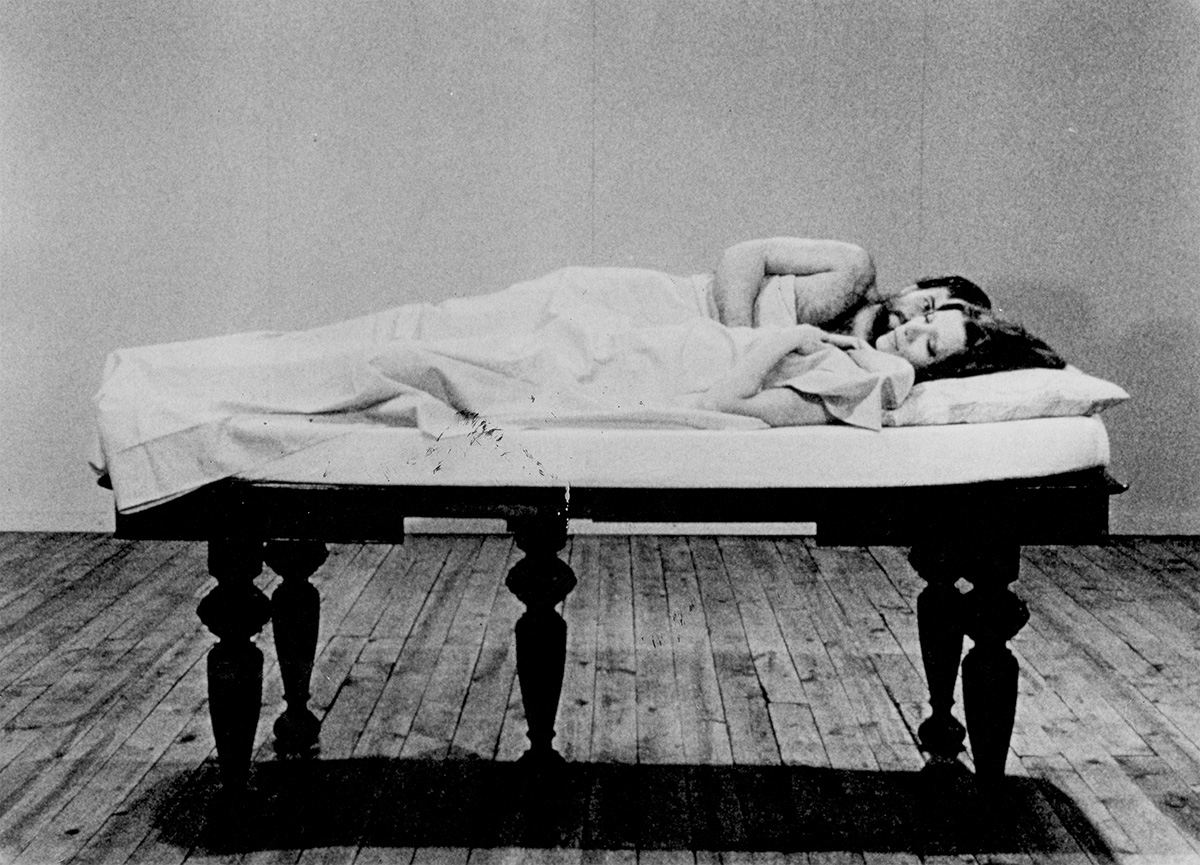
Picking up where Lives of Performers left off, Rainer’s second, landmark feature tells the story of a woman whose sexual dissatisfaction masks an enormous anger, with Rainer needling at questions raised by contemporary feminism about the relationship between the representation of romantic clichés and sexual repression. Borrowing techniques from soap opera, the formally fractured yet exuberant Film About a Woman Who… combines voiceover, intertitles, simulated “still” images, and dinner-table discussions to provocative, often contradictory effect. Long silences and Babette Mangolte’s fluid black-and-white images only heighten the darting, doubt-ridden, highly dislocating drama. (Synopsis courtesy of The Metrograph.)
When Yvonne Rainer made her first feature-length film in 1972, she had already influenced the world of dance and choreography for nearly a decade. From the beginning of her film career she inspired audiences to think about what they saw, interweaving the real and fictional, the personal and political, the concrete and abstract in imaginative, unpredictable ways. Her bold feminist sensibility and often controversial subject matter, leavened with a quirky humor, has made her, as the Village Voice dubbed her in 1986, "The most influential American avant-garde filmmaker of the past dozen years, with an impact as evident in London or Berlin as in New York. Rainer was born in San Francisco in 1934. She trained as a modern dancer in New York from 1957 and began to choreograph her own work in 1960. She was one of the founders of the Judson Dance Theater in 1962, the beginning of a movement that proved to be a vital force in modern dance in the following decades. Between 1962 and 1975 she presented her choreography throughout the United States and Europe, notably on Broadway in 1969, in Scandinavia, London, Germany, and Italy between 1964 and 1972, and at the Festival D'Automne in Paris in 1972. In 1968 she began to integrate short films into her live performances, and by 1975 she had made a complete transition to filmmaking. In 1972 she completed a first feature-length film, LIVES OF PERFORMERS. In all she has completed seven features: FILM ABOUT A WOMAN WHO... (1974), KRISTINA TALKING PICTURES (1976), JOURNEYS FROM BERLIN/1971 (1980, co-produced by the British Film Institute and winner of the Special Achievement Award from the Los Angeles Film Critics' Association), THE MAN WHO ENVIED WOMEN (1985), PRIVILEGE (1990, winner of the Filmmakers' Trophy at the Sundance Film Festival, Park City. Utah, 1991, and the Geyer Werke Prize at the International Documentary Film Festival in Munich, 1991), and MURDER and murder (1996). Rainer's films have been shown extensively in the U.S. and throughout the world, in alternative film exhibition showcases and revival houses (such as the Bleecker St Cinema, Roxy-S.F., NuArt-L.A, Film Forum-NYC, et al), in museums and in universities. Her films have also been screened at festivals in Los Angeles (Filmex), London, Montreux, Toronto, Edinburgh, Mannheim, Berlin, Locarno, Rotterdam, Creteil, Deauville, Toulon, Montreal, Hamburg, Salsa Majori, Figueira da Foz, Munich, Vienna, Athens (Ohio), Sundance, Hong Kong, Yamagata, and Sydney. A half-hour video tape entitled YVONNE RAINER: STORY OF A FILMMAKER WHO... was aired on Film and Video Review, WNET-TV in 1980. THE MAN WHO ENVIED WOMEN was aired on Independent Focus, WNET-TV in, 1989, and PRIVILEGE on the same program in 1992 and during the summer of 1994. In the Spring of 1997—to coincide with the release of MURDER and murder—complete retrospectives of the films of Yvonne Rainer were mounted at the Museum of Modern Art in San Francisco and at the Film Society of Lincoln Center in New York City. In 2006 MIT Press published Yvonne Rainer's memoir Feelings Are Facts: A Life
Catalogue : 2023Lives of Performers | Experimental fiction | 16mm | black and white | 89:0 | USA | 1972
Yvonne Rainer
Lives of Performers
Experimental fiction | 16mm | black and white | 89:0 | USA | 1972
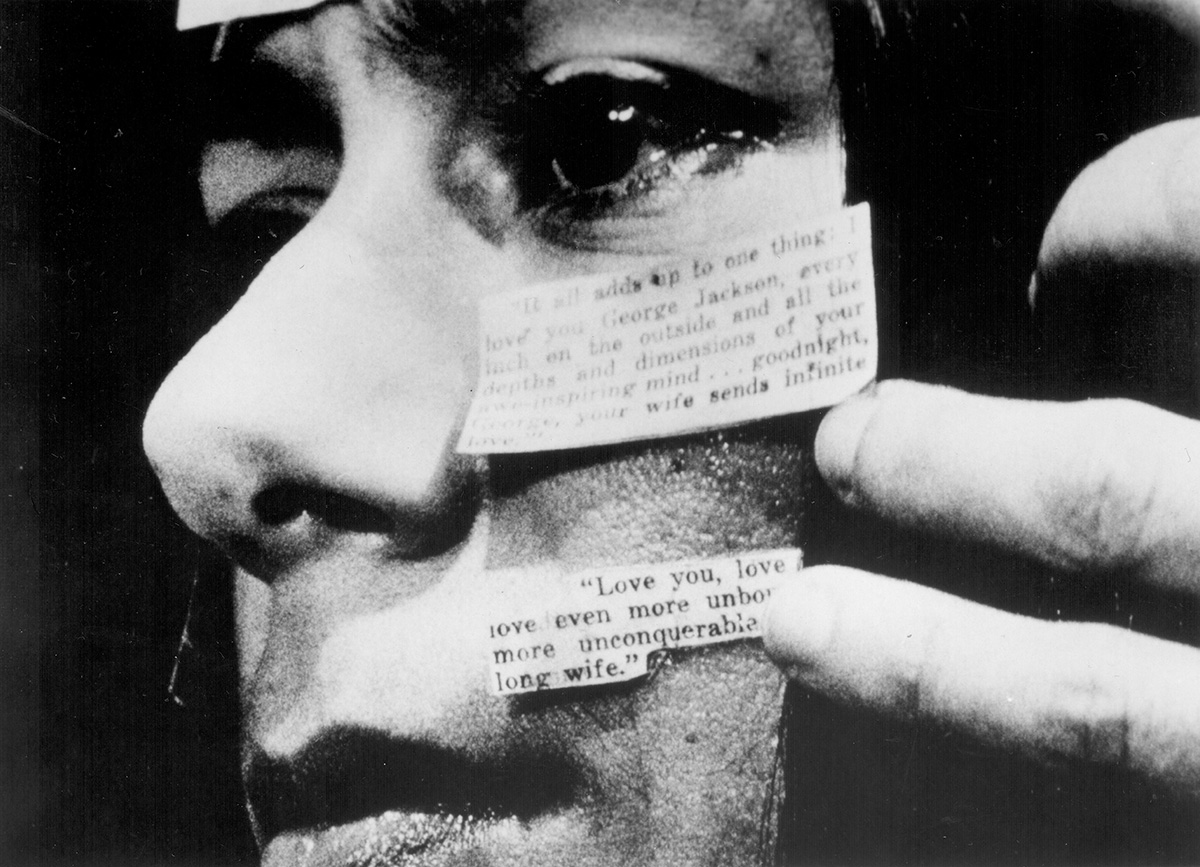
Rainer’s debut feature film announced both her shift from the world of dance towards avant-garde cinema, and what would become a career-long interest in “women’s stories” and the teasing machinations of melodrama. The familiar tale of a man who can’t choose between two women and makes everyone suffer is reworked by Rainer as a jolting and radically austere, anti-illusionist spectacle, comprising dance rehearsals, photography, tableaux, and a flurry of fragments of text, both onscreen and not. Off-camera, multiple voices can be heard—including that of cinematographer Babette Mangolte, who was at the time just beginning work with a young Chantal Akerman. (Synopsis courtesy of The Metrograph.)
When Yvonne Rainer made her first feature-length film in 1972, she had already influenced the world of dance and choreography for nearly a decade. From the beginning of her film career she inspired audiences to think about what they saw, interweaving the real and fictional, the personal and political, the concrete and abstract in imaginative, unpredictable ways. Her bold feminist sensibility and often controversial subject matter, leavened with a quirky humor, has made her, as the Village Voice dubbed her in 1986, "The most influential American avant-garde filmmaker of the past dozen years, with an impact as evident in London or Berlin as in New York. Rainer was born in San Francisco in 1934. She trained as a modern dancer in New York from 1957 and began to choreograph her own work in 1960. She was one of the founders of the Judson Dance Theater in 1962, the beginning of a movement that proved to be a vital force in modern dance in the following decades. Between 1962 and 1975 she presented her choreography throughout the United States and Europe, notably on Broadway in 1969, in Scandinavia, London, Germany, and Italy between 1964 and 1972, and at the Festival D'Automne in Paris in 1972. In 1968 she began to integrate short films into her live performances, and by 1975 she had made a complete transition to filmmaking. In 1972 she completed a first feature-length film, LIVES OF PERFORMERS. In all she has completed seven features: FILM ABOUT A WOMAN WHO... (1974), KRISTINA TALKING PICTURES (1976), JOURNEYS FROM BERLIN/1971 (1980, co-produced by the British Film Institute and winner of the Special Achievement Award from the Los Angeles Film Critics' Association), THE MAN WHO ENVIED WOMEN (1985), PRIVILEGE (1990, winner of the Filmmakers' Trophy at the Sundance Film Festival, Park City. Utah, 1991, and the Geyer Werke Prize at the International Documentary Film Festival in Munich, 1991), and MURDER and murder (1996). Rainer's films have been shown extensively in the U.S. and throughout the world, in alternative film exhibition showcases and revival houses (such as the Bleecker St Cinema, Roxy-S.F., NuArt-L.A, Film Forum-NYC, et al), in museums and in universities. Her films have also been screened at festivals in Los Angeles (Filmex), London, Montreux, Toronto, Edinburgh, Mannheim, Berlin, Locarno, Rotterdam, Creteil, Deauville, Toulon, Montreal, Hamburg, Salsa Majori, Figueira da Foz, Munich, Vienna, Athens (Ohio), Sundance, Hong Kong, Yamagata, and Sydney. A half-hour video tape entitled YVONNE RAINER: STORY OF A FILMMAKER WHO... was aired on Film and Video Review, WNET-TV in 1980. THE MAN WHO ENVIED WOMEN was aired on Independent Focus, WNET-TV in, 1989, and PRIVILEGE on the same program in 1992 and during the summer of 1994. In the Spring of 1997—to coincide with the release of MURDER and murder—complete retrospectives of the films of Yvonne Rainer were mounted at the Museum of Modern Art in San Francisco and at the Film Society of Lincoln Center in New York City. In 2006 MIT Press published Yvonne Rainer's memoir Feelings Are Facts: A Life
Tuomo Rainio
Catalogue : 2009City | Art vidéo | dv | black and white | 2:46 | Finland | 2006
Tuomo Rainio
City
Art vidéo | dv | black and white | 2:46 | Finland | 2006
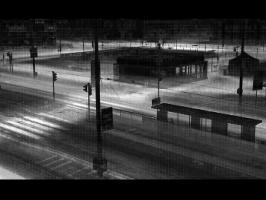
In the urban space every person?s behaviour is observed and controlled by the others and by themselves. Yet everyone has a possibility to step out from formal and differ from the crowd. In the video work CITY I have used a self-made computer program to draw the image out of movements on the video, so that anything that moves leaves a trace in the image. The video visualizes the slow process of an image appearing from the accumulating changes. In the end the unchanged landscape is revealed and the moving image is seemingly transformed into a still. The most common pathways are multiplied in brightness as more movement occurs. By performing in the video, I have drawn my own trace as opposite to regular movements; I have tried to make my presence visible among the crowd.
Tuomo Rainio was born in Espoo, Finland, in 1983. He is currently living and working in Helsinki. He has graduated as Bachelor of Arts from the Photographic Department of University of Art and Design Helsinki and is continuing his studies within MA program at the same university. In year 2007-08, he has been studying at Musashino Art University in Tokyo. Rainio is mainly working with digital video and photography exploring universal themes such as existense, individuality and evanescense. His work combines a conceptual approach with new technical solutions. Rainio tries to connect the visual representation with logic of process of creating images, and use both of these as a means of expression. Rainio?s works have been shown in several group exhibitions in eight different European coutries. Last year he held his first solo exhibition in Finland and was also taking part in an exhibition at the Finnish Museum of Photography. In the year 2008 he is exhibiting in the group show at Museum of Contemporary Art Kiasma in Finland and with ?The European Month of Photography?, an exhibition organized in nine capital cities in Europe. In the summer 2008 Rainio will exhibit his works in a solo show in a private art museum in Finland.
Sara Rajaei
Catalogue : 2026City Of Poets (Dir. By Sara Rajaei) | Documentary | 4k | color | 21:22 | Netherlands | 2024

Sara Rajaei
City Of Poets (Dir. By Sara Rajaei)
Documentary | 4k | color | 21:22 | Netherlands | 2024
Through a collage of personal archive footage and photographs, the history emerges of a small, metaphorical city where all the streets are named after poets. The town’s psychogeography defines the mental and emotional state of its inhabitants, who live in a utopian illusion founded on poetry. When the system changes, and war begins, new neighborhoods emerge to accommodate the refugees, and the existing street names are replaced by new ones. Abrupt and sweeping upheavals lead to confusion among the city’s residents, who soon find themselves lost amid the memories of the forgotten poets.
Sara Rajaei is an Iranian-Dutch video artist and filmmaker based in The Netherlands. In her work, she studies the notion of time by reflecting on the absence of image, memory psychology, oral history, narrative techniques, and physical/psychological space. Her artistic oeuvre consists of short films and video installations, which remain in-between storytelling and imagery. After her graduation from the Royal Academy of Art The Hague in 2002, Rajaei attended a 2-year residency at the Rijksakademie van Beeldende Kunsten Amsterdam. In 2009, she was shortlisted for the Prix de Rome. She is currently developing her first feature film with support of the funding scheme The Imagination (De Verbeelding) of Netherlands Film Fund.
Sara Rajaei, Rajaei, Sara
Catalogue : 2008Charismatic fates & Vanishing dates | Art vidéo | dv | color | 3:0 | Iran, Netherlands | 2006
Sara Rajaei, Rajaei, Sara
Charismatic fates & Vanishing dates
Art vidéo | dv | color | 3:0 | Iran, Netherlands | 2006
There are moments of déjà vu in our lives, moments of intense recall. Here, the characters of the film are in a continual state of déjà vu. Kids are pure and immortal like ideas and concepts ? they remain and remind, break the border between real and unreal. Those who are older retain the memories of their old home to comfort them, but memories are memories, without solidity to support.
Sara Rajaei, born 05.09.1976, Abadan/Iran is a video artists based, in The Netherlands since 1998. She studied Handicrafts at the university of art in Tehran, for 2 years and then left Iran for the Netherlands, where she obtained her bachelors as a video artist from The Royal academy of art in The Hague in 2002. Her graduation followed by getting accepted at the Rijksakademie in Amsterdam where she did a 2 years residency. Since 2004, she?s been working as freelance video artist, editor and writer. She often works in between Iran and the Netherlands, not to lose track being an inhabitant of both countries. Her work since has been shown in various festivals and exhibitions around the world.
Raul Rajangu, Rajangu Kalev, Kolberg Jaan
Catalogue : 2021Digital Survivalism By Rajangu | Experimental video | mp4 | color | 5:3 | Estonia | 2018

Raul Rajangu, Rajangu Kalev, Kolberg Jaan
Digital Survivalism By Rajangu
Experimental video | mp4 | color | 5:3 | Estonia | 2018
Extremely strange and slightly Gothic video filmed in Estonian rural cemetery in the midst of my own land art, space installations, and objects (glass house, golden-glass transparent coffin, lectern of the US president). I focus on the relationships between politics and pornography, the mysterious and morbid, and exhibitionism and ritualism, making all our sacred cows into hamburgers. It is a commentary about omni-everything (omni-presence/potency/science) of acidic and creepy digital mass culture, dominated by the terror of images, which does not leave you alone even in the netherworld. Biopolitics has quite smoothly mutated into thanatopolitics (Foucault). Erotization and pornification of death has made us into zombie-like entities, and our lives into voyeuristic and necrolatric showbiz. Our culture regards life from the perspective/necrospective of the death, only so it can ensure a perfect control over its denizens. This is my vision of perfect post-ideological/humanist digital survivalist Paradise led by no one, i.e. asking the question: "Who is in control?", the only answer will be: "No one is in control", which actually means, that "we all are in control". The Message we are being indoctrinated into is as comforting as it is vulgar: "Stay private and dead enough, in your echo chamber, enjoy yourself cause you can’t change anything anyway. Any counter act is in advance doomed".
Raul Rajangu. aka Luminoso, called also the father of Estonian postmodern art, entered the international art scene in the late 80´s. He is equally perfect as painter,performer, actionalist, creator of spatial & video installations, 3D aesthetician and transmedia activist. He is interested in all kinds of observables/appearances/splendors (cf "Luminoso" as his pseudonym). In his art/transformances he seems to be, consistently and somewhat paradoxically, guided by Oscar Wilde: "The true mystery of the world is the visible not the invisible". Nevertheless, Rajangu also - and even more comprehensively - fascinates the spectators with the invisible. Throughout his career, Rajangu has been keen to (re)use - what a lovely Grünepunkt! -, twist, subvert, and of course mock and taunt any kind of massive, total and fossilized ideological, aesthetic, moral, therapeutic, and metaphysical schemes and systems, our entire paternalistic, sexist, and misogynist digital prosumer paranoia. Rajangu is a liminoid artist who constantly stands on the boundary between very many worlds, mediating between them. His works provide a meeting point for East and West, public and personal, sacred and profane, consciousness and non-consciousness, life and death. He lives in a lonely countryside in Estonia.
Frédéric Ramade
Catalogue : 2017Les Bonnes | Video | hdv | color | 8:0 | France | 2015
Frédéric Ramade
Les Bonnes
Video | hdv | color | 8:0 | France | 2015
Le long de la nuit. Deux jeunes garçons sont dehors. Ils gardent un studio de cinéma. Ils sont frères. Seuls, la lune et un tigre les accompagnent pour traverser ce temps.
Soufiane Adel est né en 1981 en Algérie. Il arrive en France à 8 ans. C’est en faisant une école de design, l’ENSCI, Les Ateliers, qu’il découvre le cinéma. Pas par hasard, toute son enfance il s’est nourri des films de Jean Claude Van Damme et du Nouvel Hollywood. Il rencontre à 20 ans le néoréalisme italien et le cinéma expérimental, et amorce alors une longue cinéphilie, autodidacte, aléatoire, et compulsive. En 2004, il décide de filmer son père, lui demande de rejouer une scène qu’ils ont vécue ensemble. Ce sera son premier court métrage : « Nuits closes ». Après il y aura « La Cassette » puis « Kamel s’est suicidé six fois, son père est mort ». À partir de 2009, il co-réalise ses films avec Angela Terrail, avec qui il travaille depuis « La Cassette ». Ils réaliseront « Sur la tête de Bertha Boxcar » et prépare actuellement un long métrage, l’adaptation contemporaine d’un roman de Jack London « Martin Eden ».
Catalogue : 2015Go Forth | Documentary | hdv | color | 62:0 | France | 2014
Frédéric Ramade
Go Forth
Documentary | hdv | color | 62:0 | France | 2014
À travers le portrait d’une femme de 79 ans, Taklit Adel, ma grand-mère, née en Algérie et vivant en France depuis 60 ans, se noue à la fois le fil de la petite et de la grande Histoire et l’exploration de la banlieue et de son ensemble. Une histoire personnelle prise dans l’histoire collective.
Soufiane Adel est né en 1981 en Algérie. Il arrive en France à 8 ans. C’est en faisant une école de design, l’ENSCI, Les Ateliers, qu’il découvre le cinéma. Pas par hasard, toute son enfance il s’est nourri des films de Jean Claude Van Damme et du Nouvel Hollywood. Il rencontre à 20 ans le néoréalisme italien et le cinéma expérimental, et amorce alors une longue cinéphilie, autodidacte, aléatoire, et compulsive. En 2004, il décide de filmer son père, lui demande de rejouer une scène qu’ils ont vécue ensemble. Ce sera son premier court métrage : « Nuits closes ». Après il y aura « La Cassette » puis « Kamel s’est suicidé six fois, son père est mort ». A partir de 2009, il co-réalise ses films avec Angela Terrail, avec qui il travaille depuis « La Cassette ». Ils réaliseront « Sur la tête de Bertha Boxcar » et prépare actuellement un long métrage, l’adaptation contemporaine d’un roman de Jack London « Martin Eden ».
Frédéric Ramade
Catalogue : 2007Ode pavillonnaire | Experimental fiction | 16mm | color and b&w | 47:47 | France | 2005
Frédéric Ramade
Ode pavillonnaire
Experimental fiction | 16mm | color and b&w | 47:47 | France | 2005
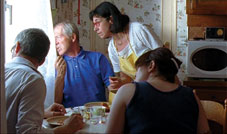
Returning to his childhood suburban home, the director puts his relatives on camera and leads them to use a critical approach to think about the beginnings of their home and about the desires that guided their aesthetic and technical choices. A humoristic and symbolic reconstruction of the past between political criticism and civil disobedience.
Frédéric Ramade is both a writer and film director. In 2006, he achieved "Ode Pavillionnaire", a first medium-length personal film mixing fiction and documentary, on life in suburbian estates. Before "Ode pavillonnaire ", Frédéric Ramade directed numerous documentary films among which: "Raconte Moi... », animation films on fairy tales' characters, France 5, 2006, "Le Dessous Des Cartes", more than fifty issues of the geopolitical magazine, ARTE, 1999 to 2006, "Court-Circuit", portraits of film directors within the magazine - Patrick Bokanovski, Michael Snow, the Quay brothers, Jan Svankmaje, ARTE, 2001 to 2004, "Voyage au Féminin", portraits of towns on the outskirts of the Mediterranean sea through the points of view of women, Escale, 2002-2003. Aside from these, Frédéric Ramade has directed several experimental films: "Dernières représentations", video, 2000, a tribute to the French writer Bernard Lamarche-Vadel, screened during the Paris-Berlin festival, 2003, "Olhos Fechados", video, 2001, a reflexion on death through the picture of the famous Brazilian thief, Lampião, "En l'attente", S8 transfered on video, 2002, essay on photography through the work of the French photographer Magdi Senadji, screened at the Arthotèque of Caen, June 2002, "Un tombeau for Senadji", video, 2003, tribute to the dead photographer, screened in the Centre National de la Photographie. Frédéric Ramade has also published several illustrated books on Iran, Brazil, Vietnam, and Mexico, for Le Chêne and Flammarion, and has translated contemporary Iranian short stories for Gallimard. Frédéric Ramade is currently developing his first long feature film, "Rodeo", and an experimental documentary film, "Bienvenue à Charleworld", exploring the life and work of the American musician & artist Charlemagne Palestine.
Jules Ramage
Catalogue : 2025The Bird | Experimental doc. | 0 | color | 11:39 | France | 2023

Jules Ramage
The Bird
Experimental doc. | 0 | color | 11:39 | France | 2023
During her incarceration, Gauche described her daily life in pages that she slammed in the prison yard. On these occasions, she also invited her fellow inmates to sit in a circle and share their stories, which she noted in her notebook. Six months later, she performs these documents on the film set, testifying for the institutional control over bodies and sexualities, the violence of imposed medical treatments, and the absolute strenght of sorority as a condition for survival.
Jules Ramage (1987, France) is an intersex visual artist and researcher. Associated with the CERILAC laboratory at the University of Paris, he is also a member of the Cité du Genre, interdisciplinary research institute in gender studies. He explores the complex relationships of power at play in disciplinary and institutional structures. Since 2013, he has conducted in-depth fieldwork in the prison space, where he implements collaborative protocols with inmates. Their work has been exhibited in France, the United States, Argentina, England, Spain, and Germany.