Catalogue > List by artist
Browse the entire list of Rencontre Internationales artists since 2004. Use the alphabetical filter to refine your search. update in progress
Robbie C. Williamson
Catalogue : 2026God Teeth | Experimental fiction | hdv | color | 60:0 | USA, Costa Rica | 2024

Robbie C. Williamson
God Teeth
Experimental fiction | hdv | color | 60:0 | USA, Costa Rica | 2024
“God Teeth” is a wildly original and fantastical odyssey about four recently deceased souls who find themselves on an abandoned ship at sea. Part confessional, part elegy, the narrators must recount the circumstances which led to their untimely deaths, before a marauding gang of sting rays destroys their memories, banishing them to an eternity in purgatory. Created entirely from found internet footage, “God Teeth” offers the viewer a new and profound experience culled from the infinite digital world and turns it into a thought provoking, cinematic song of mourning and acceptance - The glory of life and death.
Going under the moniker Double Diamond Sun Body, Robbie C. Williamson produces large concepts. Starting with found material, he imposes his will and asks the material to live in a brighter universe. It’s a place where it has a chance to have a new lease on life. His film and music work take off where people like Steve Reich and Andrei Tarkovsky only touched upon. The work has been featured at LACMA, MOCA, Sundance, Tokyo International Film Festival and International film festival Rotterdam to name a few. As a composer he has written scores ranging from WU Tang’s Wildness, premiering at the MoMo Documentary Fortnight, to Ryuhei Kitamura’s Midnight Meat train (starring Bradley Cooper) that won the SCFI Jury award at Gérardmer film festival. Forbes online described Double Diamond Sun Body as “The personified astral projection of its creator’s interior world; a physically manifested concept."
Sergio Caballero
Catalogue : 2012Finisterrae | Experimental fiction | hdv | color | 80:0 | Spain | 2010
Sergio Caballero
Finisterrae
Experimental fiction | hdv | color | 80:0 | Spain | 2010
Sergio Caballero
Catalogue : 2020Je te tiens | Experimental fiction | hdv | color | 21:30 | Spain | 2019
Sergio Caballero
Je te tiens
Experimental fiction | hdv | color | 21:30 | Spain | 2019
The road trip of a mother and her daughter through strange worlds. The daughter wants to kill herself and the mother will try to talk her out of it.
Sergio Caballero is the co-director and art director of Sónar, festival of music, creativity & technology. His creativity and artistic restlessness has manifested itself across many creative fields, such as the composition of electronic music, visual arts and conceptual art, cinema and has found its platform across the media in the ever controversial and powerful Sónar advertising campaigns.
Ricardo Caballero
Catalogue : 2007Organezizied | Experimental video | dv | black and white | 5:32 | Mexico | 2006
Ricardo Caballero
Organezizied
Experimental video | dv | black and white | 5:32 | Mexico | 2006
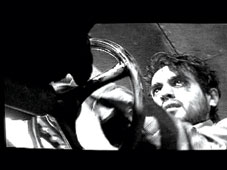
If we considered the new narrative ways that raise the nonlinear edition systems; the manipulation of the image and the sound from the digital data flow; and the speeches that make reference to these concepts and reasons that they sustain in disciplines like video or contemporary film, we would realize that they have all been obviously dramatically modified. In this case we can analyze an example of visual experiment/transition in the absurd action of controlling a mechanical electric car and a discussion inspired in the dialogue between Travis Bickle and Betsy, taken from the movie "Taxi Driver". At the beginning, "Organezizied" recalls a love affair that ended in the void created in strange relationship. The dialogue operates as the true driver of the electric car, and the actions described during the video, like a tool, govern and control all the dynamics as an apparent axis of the work. It treats and manipulates the image in movement extending and amplifying the signs in a primary and linear speech, or else it simply locates these functions before the total cancellation and silence.
Ricardo Caballero lives and works in Mexico City. He studied Psychology for two years and later he studied Plastic Arts. He has also taken composition courses in electro-acoustic music and programming of Max/Msp. He has collaborated in the foundation of experimental groups like Domestica and PORO, and is a pioneer of "Noise" in Mexico, creating the "Reallovedestroys" concept. He held a Fonca scholarship in 2002 and one at the Institute of Culture in 2001. His sonorous improvisations and experimental videos have appeared at the Universities of Mexico, Barcelona, Lisbon, Houston, and Erlangen, and in numerous festivals around the world.
Cabello/carceller, CABELLO/CARCELLER
Catalogue : 2012Off Escena: Si yo fuera... | Video | hdv | color | 16:30 | Spain | 2011
Cabello/carceller
Off Escena: Si yo fuera...
Video | hdv | color | 16:30 | Spain | 2011
A scaffold and a wooden stage were designed by Cabello/Carceller and built in the cold store of the old slaughterhouse at Matadero Art Centre. A graffiti, ?Ask and tell?, dominated the platform where something had happened: the shooting of a musical short film where the leading characters were prisoner women from one of Madrid most important Penitentiaries. Off Escena: If I Were... suggests a reflection and collective action that works around the poetics of inclusion and exclusion in current neoliberal capitalist societies. Freedom, gender, economy and social violence are visually present on this video that ends with a version of the song If I Were a Rich Man, sung in the film Fiddler on the Roof by the character of patriarch Teyve. If I were.., is an incomplete sentence that, when recreated with new lyrics an music by four prisoner women, invites to reflect: would they be in prison if they had been men and rich? A critical approach to the current situations of domination that avoids the original film pro-system assimilationism, and which is now related to the experience of alternative lives and to the knowledge that we should not abandon the dream of achieving a more egalitarian world.
Cabello/Carceller (Helena Cabello and Ana Carceller) currently live and work in Madrid. Primarily concerned with issues of gender (de)construction and their intersection with space and cinema as contexts in which patterns of behaviour and the regulation of the gaze are built, Cabello/Carceller have been working together as a team on a regular basis since 1993. During the last years, their work has been included in group exhibitions such as Reality and Fiction in MMOMA in Moscow, 2011; Handlung: On Producing Possibilities, Bucharest Biennale 4 in Romania, 2010, Nuevas Historias. New View of Spanish Photography, at Kulturhuset (Stockholm, 2008), Stenersen Museum (Oslo, 2009) and Kuntsi Museum of Modern Art (Vaasa, Finland, 2010), Cooling Out at the Lewis Glucksman Gallery in Cork (Ireland, 2008), The Screen Eye or The New Image, at Casino Luxembourg (Luxemburg, 2007) or Global Feminisms at the Brooklyn Museum, New York, 2007. Among their solo shows: Off Escena: Si yo fuera? in Abierto x Obras, Matadero Madrid (2011) or Archivo: Drag Modelos at Joan Prats gallery, Barcelona and CAAM, Las Palmas de Gran Canaria (2011); Suite Rivolta, at Elba Benítez gallery (2011), A/O (Caso Céspedes), Sevilla, 2010.
Catalogue : 2009After Apocalypse Now: Martin Sheen (The Soldier) | Art vidéo | dv | color | 9:54 | Spain | 2007
Cabello/carceller, CABELLO/CARCELLER
After Apocalypse Now: Martin Sheen (The Soldier)
Art vidéo | dv | color | 9:54 | Spain | 2007
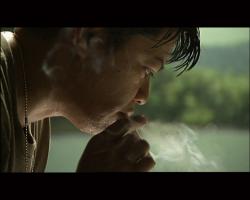
After Apocalypse Now: Martin Sheen (The Soldier) deconstructs the masculine ideal of the anti-hero, here interpreted by a Filipino woman, and places him/her in the original location of the film Apocalypse Now, reviewing the problems and contradictions present in identity processes of a post-colonial era. During the 70s, Francis Ford Coppola chose Filipino landscapes as an ideal background for his renowned film. These landscapes were used to represent other Asian countries such as Vietnam or Cambodia, and were converted into a scenario that would act as the representation of a Western image of Asiatic exoticism. In the end, The Philippines are transformed in the oriental no-place and their particular identity goes unnoticed. ?My film is not about Vietnam. It is Vietnam?, stated Coppola during the presentation of the film. In the original tape, Martin Sheen (Captain Willard) travels upriver in Pagsanjan through a dangerous journey into the jungle that will take him to a remote place where he has to encounter Colonel Kurtz (Marlon Brando). In this version, the mechanisms of representation act in favour of a different heroic character, a new and solitary Captain Willard, whose gender identity is in dispute with the dominant identities and who inhabits and tries to unveil the ambiguities present in a fake landscape made of western fantasies. If we can convey that cinema is the mirror in which many generations have looked to construct their identitary roles, this trilogy would discuss the unquestioned equivalence between the different models of masculinity and a specific biological body, an equivalence that mainstream cinematic discourses intensify, limiting our possibilities of individual election.
Cabello/Carceller (Helena Cabello and Ana Carceller) currently live and work in Madrid. After graduating in Fine Arts and Art Theory in Madrid, they travelled to Glasgow and then to San Francisco, where they studied at the San Francisco Art Institute. Primarily concerned with issues of gender (de)construction and their intersection with space and cinema as contexts in which patterns of behaviour and the regulation of the gaze are built, Cabello/Carceller have been working together as a team on a regular basis since 1993. They work in video, photography, installation and drawing, and have published essays and reviews about topics ranging from the place of feminist discourses in contemporary art or the artistic collaboration and the role of the artist as critic. Their work has been recently included in Nuevas Historias. New View of Spanish Photography, at Kulturhuset (Stockholm), The Screen Eye or The New Image, at Casino Luxembourg (Luxemburg), Global Feminisms at the Brooklyn Museum, New York, or Everyday Utopias at La Centrale Electrique, Brussels. They have also participated in different group shows such as: Cine y casi cine at MNCARS, (Madrid, 2007), Cooling Out at the Glucksman Gallery in Cork (Ireland, 2006) or Don?t Call it Performance, Museo del Barrio in New York (2004). Among their solo shows: This is Not Vietnam, at Suffix Gallery, Sevilla, Ejercicios de poder, at Elba Benítez gallery, Madrid; No es él, Joan Prats gallery, Barcelona or En construcción (cap_2), Centre d?art la Panera, Lleida.
Catalogue : 2008Ejercicios de poder . Casos: Liam Neeson (La lista | Art vidéo | betaSP | black and white | 8:15 | Spain | 2005
Cabello/carceller
Ejercicios de poder . Casos: Liam Neeson (La lista
Art vidéo | betaSP | black and white | 8:15 | Spain | 2005
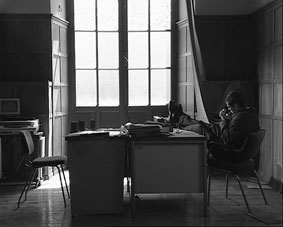
?Exercises of Power. Cases: Liam Neeson (Schindler?s List), Fred MacMurray, John Lemmon (The Apartment)? ?Exercises of Power? explores the dynamics of power and subordination that lie behind the gender structures in capitalism. Shot in an abandoned tobacco factory, the project analyses the display and mise en scene of masculine behaviour in a working environment by recreating some significant film scenes played by Liam Neeson (?Schindler?s List?), Fred MacMurray and John Lemmon (?The Apartment?), and reinterpreted in this occasion by two amateur actresses. The result is ambiguous, dealing with issues of sexual organization in capitalist societies and at the same time suggesting an underlying attraction generated by power strategies and offering new readings of beauty, far from stereotypes of femininity. This work is part of a wider research that deals with contradictory aspects of masculinity contributing to deconstruct Hollywood?s ideal of beauty, a model that has seduced and subjugated many other societies. The trilogy composed by ?Casting: James Dean (Rebel Without a Cause)?, ?Exercises of Power?, and ?After Apocalypse Now: Martin Sheen (The Soldier)? deepens in these ideas using some emblematic Hollywood films as their point of departure.
CABELLO/CARCELLER Helena Cabello and Ana Carceller started to work in collaboration in the beginning of the nineties. Since then, they have developed a multidisciplinary body of work that uses different media to question the hegemonic means of representation, and suggest critical alternatives to them. An important part of their work is related to contradictory aspects in the construction of masculinity and to the deconstruction of Hollywood prevalent models of beauty which have seduced so many societies. They have participated recently in ?Global Feminisms? at the Brooklyn Museum, NY, ?The Screen Eye or The New Image? at Casino Luxembourg, ?Cooling Out? at the Lewis Glucksman Gallery (Cork, Ireland) and ?Utopies Quotidiennes? at La Centrale Électrique, Brussels, among others.
Cabello/carceller
Catalogue : 2012Off Escena: Si yo fuera... | Video | hdv | color | 16:30 | Spain | 2011
Cabello/carceller
Off Escena: Si yo fuera...
Video | hdv | color | 16:30 | Spain | 2011
A scaffold and a wooden stage were designed by Cabello/Carceller and built in the cold store of the old slaughterhouse at Matadero Art Centre. A graffiti, ?Ask and tell?, dominated the platform where something had happened: the shooting of a musical short film where the leading characters were prisoner women from one of Madrid most important Penitentiaries. Off Escena: If I Were... suggests a reflection and collective action that works around the poetics of inclusion and exclusion in current neoliberal capitalist societies. Freedom, gender, economy and social violence are visually present on this video that ends with a version of the song If I Were a Rich Man, sung in the film Fiddler on the Roof by the character of patriarch Teyve. If I were.., is an incomplete sentence that, when recreated with new lyrics an music by four prisoner women, invites to reflect: would they be in prison if they had been men and rich? A critical approach to the current situations of domination that avoids the original film pro-system assimilationism, and which is now related to the experience of alternative lives and to the knowledge that we should not abandon the dream of achieving a more egalitarian world.
Cabello/Carceller (Helena Cabello and Ana Carceller) currently live and work in Madrid. Primarily concerned with issues of gender (de)construction and their intersection with space and cinema as contexts in which patterns of behaviour and the regulation of the gaze are built, Cabello/Carceller have been working together as a team on a regular basis since 1993. During the last years, their work has been included in group exhibitions such as Reality and Fiction in MMOMA in Moscow, 2011; Handlung: On Producing Possibilities, Bucharest Biennale 4 in Romania, 2010, Nuevas Historias. New View of Spanish Photography, at Kulturhuset (Stockholm, 2008), Stenersen Museum (Oslo, 2009) and Kuntsi Museum of Modern Art (Vaasa, Finland, 2010), Cooling Out at the Lewis Glucksman Gallery in Cork (Ireland, 2008), The Screen Eye or The New Image, at Casino Luxembourg (Luxemburg, 2007) or Global Feminisms at the Brooklyn Museum, New York, 2007. Among their solo shows: Off Escena: Si yo fuera? in Abierto x Obras, Matadero Madrid (2011) or Archivo: Drag Modelos at Joan Prats gallery, Barcelona and CAAM, Las Palmas de Gran Canaria (2011); Suite Rivolta, at Elba Benítez gallery (2011), A/O (Caso Céspedes), Sevilla, 2010.
Catalogue : 2009After Apocalypse Now: Martin Sheen (The Soldier) | Art vidéo | dv | color | 9:54 | Spain | 2007
Cabello/carceller, CABELLO/CARCELLER
After Apocalypse Now: Martin Sheen (The Soldier)
Art vidéo | dv | color | 9:54 | Spain | 2007
After Apocalypse Now: Martin Sheen (The Soldier) deconstructs the masculine ideal of the anti-hero, here interpreted by a Filipino woman, and places him/her in the original location of the film Apocalypse Now, reviewing the problems and contradictions present in identity processes of a post-colonial era. During the 70s, Francis Ford Coppola chose Filipino landscapes as an ideal background for his renowned film. These landscapes were used to represent other Asian countries such as Vietnam or Cambodia, and were converted into a scenario that would act as the representation of a Western image of Asiatic exoticism. In the end, The Philippines are transformed in the oriental no-place and their particular identity goes unnoticed. ?My film is not about Vietnam. It is Vietnam?, stated Coppola during the presentation of the film. In the original tape, Martin Sheen (Captain Willard) travels upriver in Pagsanjan through a dangerous journey into the jungle that will take him to a remote place where he has to encounter Colonel Kurtz (Marlon Brando). In this version, the mechanisms of representation act in favour of a different heroic character, a new and solitary Captain Willard, whose gender identity is in dispute with the dominant identities and who inhabits and tries to unveil the ambiguities present in a fake landscape made of western fantasies. If we can convey that cinema is the mirror in which many generations have looked to construct their identitary roles, this trilogy would discuss the unquestioned equivalence between the different models of masculinity and a specific biological body, an equivalence that mainstream cinematic discourses intensify, limiting our possibilities of individual election.
Cabello/Carceller (Helena Cabello and Ana Carceller) currently live and work in Madrid. After graduating in Fine Arts and Art Theory in Madrid, they travelled to Glasgow and then to San Francisco, where they studied at the San Francisco Art Institute. Primarily concerned with issues of gender (de)construction and their intersection with space and cinema as contexts in which patterns of behaviour and the regulation of the gaze are built, Cabello/Carceller have been working together as a team on a regular basis since 1993. They work in video, photography, installation and drawing, and have published essays and reviews about topics ranging from the place of feminist discourses in contemporary art or the artistic collaboration and the role of the artist as critic. Their work has been recently included in Nuevas Historias. New View of Spanish Photography, at Kulturhuset (Stockholm), The Screen Eye or The New Image, at Casino Luxembourg (Luxemburg), Global Feminisms at the Brooklyn Museum, New York, or Everyday Utopias at La Centrale Electrique, Brussels. They have also participated in different group shows such as: Cine y casi cine at MNCARS, (Madrid, 2007), Cooling Out at the Glucksman Gallery in Cork (Ireland, 2006) or Don?t Call it Performance, Museo del Barrio in New York (2004). Among their solo shows: This is Not Vietnam, at Suffix Gallery, Sevilla, Ejercicios de poder, at Elba Benítez gallery, Madrid; No es él, Joan Prats gallery, Barcelona or En construcción (cap_2), Centre d?art la Panera, Lleida.
Catalogue : 2008Ejercicios de poder . Casos: Liam Neeson (La lista | Art vidéo | betaSP | black and white | 8:15 | Spain | 2005
Cabello/carceller
Ejercicios de poder . Casos: Liam Neeson (La lista
Art vidéo | betaSP | black and white | 8:15 | Spain | 2005
?Exercises of Power. Cases: Liam Neeson (Schindler?s List), Fred MacMurray, John Lemmon (The Apartment)? ?Exercises of Power? explores the dynamics of power and subordination that lie behind the gender structures in capitalism. Shot in an abandoned tobacco factory, the project analyses the display and mise en scene of masculine behaviour in a working environment by recreating some significant film scenes played by Liam Neeson (?Schindler?s List?), Fred MacMurray and John Lemmon (?The Apartment?), and reinterpreted in this occasion by two amateur actresses. The result is ambiguous, dealing with issues of sexual organization in capitalist societies and at the same time suggesting an underlying attraction generated by power strategies and offering new readings of beauty, far from stereotypes of femininity. This work is part of a wider research that deals with contradictory aspects of masculinity contributing to deconstruct Hollywood?s ideal of beauty, a model that has seduced and subjugated many other societies. The trilogy composed by ?Casting: James Dean (Rebel Without a Cause)?, ?Exercises of Power?, and ?After Apocalypse Now: Martin Sheen (The Soldier)? deepens in these ideas using some emblematic Hollywood films as their point of departure.
CABELLO/CARCELLER Helena Cabello and Ana Carceller started to work in collaboration in the beginning of the nineties. Since then, they have developed a multidisciplinary body of work that uses different media to question the hegemonic means of representation, and suggest critical alternatives to them. An important part of their work is related to contradictory aspects in the construction of masculinity and to the deconstruction of Hollywood prevalent models of beauty which have seduced so many societies. They have participated recently in ?Global Feminisms? at the Brooklyn Museum, NY, ?The Screen Eye or The New Image? at Casino Luxembourg, ?Cooling Out? at the Lewis Glucksman Gallery (Cork, Ireland) and ?Utopies Quotidiennes? at La Centrale Électrique, Brussels, among others.
Eduardo Cachucho
Catalogue : 2016Flatland | Video | hdv | color and b&w | 8:5 | South Africa, Belgium | 2014
Eduardo Cachucho
Flatland
Video | hdv | color and b&w | 8:5 | South Africa, Belgium | 2014
Hendrik Verwoerd in an experiment he carried out in the 1930’s named ‘A Method for the Experimental Production of Emotions’ uses various combinations of colours and symbols to elicit in his test subjects various emotions. Verwoerd studied as a psychologist before ever entering into politics, even achieving a doctorate magna cum laude. His highly mediatic experiment goes on to succeed in its ambitions in creating: “compassion, shame, embarrassment, malicious joy, anger and vexation.” Flatland emerges from research into this experiment and how its outcomes could be overlaid onto the propaganda and media manipulation during the apartheid regime. Flatland takes the audience through a performance-lecture that traverses the research into the psychological experiments while overlaying juxtaposing them onto South Africa’s past and present. Simultaneously it makes a case for how language and emotion is used by politics today to control the masses.
Eduardo Cachucho is an artist and architect based in Brussels and Johannesburg. He is interested in how national, and trans-national, infrastructural developments can have long lasting rippling effects from their implementation. Delving into detailed historical research into specific topics, he collects references of historical events, documents, catalytic events, archival materials. These elements often find themselves in critical events that over time lose their importance, or blur their meanings and effects, or even change in their meaning of significance over the decades. His works act as interventions that reinforce or put into question these elements. Simultaneously his interest in performance and video work allow another entry-point into said research material and works, often being condensed into a performative action symbolising core elements of the research, presented as performance and video pieces within an installation.
John Cage
Catalogue : 2013One11 and 103 | Documentary | | black and white | 94:0 | USA | 1992
John Cage
One11 and 103
Documentary | | black and white | 94:0 | USA | 1992
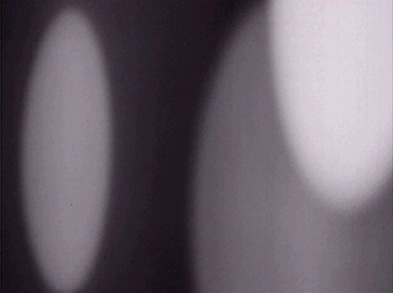
John Cage created his only feature-length film in the year he died. A sublime performance for camera person and light, One11 is a film without subject, in black and white. There is light but no persons, no things, no ideas about repetition and variation. The final impression is of another, timeless place - freely roaming the clouds or, perhaps, under the sea. Chance operations were used with respect to the lighting, camera shots and the editing of the film. The light environment was designed and programmed by John Cage and Andrew Culver. The orchestral work 103 musically accompanies One11. Like the film, 103 is 90-minutes long, divided into seventeen parts - its density varies from solos, duos, trios to full orchestral tuttis.
John Milton Cage (1912-1992) was an experimental music composer and writer, possibly best known for his piece 4′ 33″, often described (somewhat erroneously) as "four and a half minutes of silence." He was an early writer of aleatoric music (music where some elements are left to chance), used instruments in non-standard ways and was an electronic music pioneer. Cage was born in Los Angeles. His father was a somewhat eccentric inventor of largely useless devices who told him "that if someone says 'can't' that shows you what to do." Cage described his mother as a woman with "a sense of society" who was "never happy." It was not obvious from his early life that he would become a composer; he was born into a Episcopalian family, and his paternal grandfather regarded the violin as the "instrument of the devil". Cage himself planned to become a minister at an early age and later a writer..
Daya Cahen
Catalogue : 2011Birth of a Nation | Experimental video | | color | 10:54 | Netherlands | 2010
Daya Cahen
Birth of a Nation
Experimental video | | color | 10:54 | Netherlands | 2010
Fascinated by mass psychology and indoctrination, Dutch artist Daya Cahen has been making work in Russia for years now. In 2006, she went looking for Stalin`s grandson in The Stalin that Was Played by Me, and in 2008 she got the rare opportunity to film in a summer camp of Putin`s youth movement for the film Nashi. This time around, Cahen goes to Cadet School Number 9, a unique military academy in Mosow, where girls age 11-17 learn how to become the ideal Russian patriot and the ideal Russian woman. She does not interview anyone, but tells the story by placing as many as six different images on the screen at the same time. We see girls doing their hair, cooking, ironing, marching and learning to use weapons. The footage reveals various aspects of their personalities while simultaneously posing the question of how all those aspects can be seen independently of one another. While they sing the praises of the great Russian nation, we cannot help but notice the contrast between military indoctrination and youthful innocence. Does patriotism require us to renounce any form of independent thought and action? Do these girls really know what they are doing, and is that even possible at their age?
Daya Cahen was born in Amsterdam (The Netherlands). She makes photographs, videos and video installations. She studied photography at the Gerrit Rietveld Academy in Amsterdam (2002-2006) and was selected in 2009 as one of the 4 most promising recent graduates to have the opportunity to present her work at ?Rietveld Arsenale? that was held during the Venice Biennale. Cahen?s work revolves around propaganda, indoctrination and and the manipulative powers of the media. She investigates the representation of political icons, symbols of power and the role of the masses versus the individual. In her work she links the political with the everyday and personal, combines archive material with contemporary images and blurrs the border between fact and fiction. Her work was shown at the Moscow MoMa, The Hague Photomuseum (The Hague), De Appel Arts Centre (Amsterdam), Wiels Contemporary Art Centre (Brussels), Platform Garanti (Istanbul), Institut Néerlandais (Paris), Rencontres Internationales (2006/2008), Short Film Festival Oberhausen (2006/2008) and was nominated for a Golden Bear (short film) at the Berlin International Film Festival in 2007.
Catalogue : 2009Nashi | Art vidéo | betaSP | color | 26:14 | Netherlands | 2008
Daya Cahen
Nashi
Art vidéo | betaSP | color | 26:14 | Netherlands | 2008
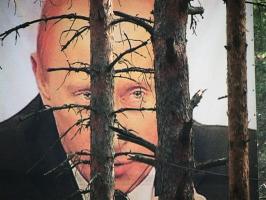
SYNOPSIS ?nashi? 10,000 Russian boys and girls are preparing themselves for a heroic future in the summer camp of `Nashi`, Vladimir Putin?s rapidly growing youth movement. They are the future elite of Russia. They will make Russia the global leader of the 21st Century. Every morning, 5.000 girls exercise while 5.000 boys go running. Pretty girls are encouraged to let themselves be kissed, alcohol is prohibited and they train their fighting skills in Nashi-army. Red banners and loudspeakers hanging from the dome tents in the woods tell the children what their future will be. As the only outsider, Daya Cahen was allowed to pitch her tent in the Nashi summer camp for a week. Filming with two camera?s, she reveals in a double-screen projection her fascination with the complexity of political manipulation and indoctrination. In Nashi or ?Ours? Cahen focuses on the direct relation between propaganda and a large audience. Using camera positions that refer subtly and with restrained irony to those in Leny Riefenstahl?s Triumpf des Willens, she gives an impression of how a seemingly playful summer camp in the spirit of patriotism can function as an instrument in a frightening process of radicalization.
Biography daya cahen (Amsterdam, NL) Daya Cahen studied at the Gerrit Rietveld Academy in Amsterdam at the departement of photography. She works with photography and video. In 2006 she graduated with the short film `The Stalin that was played by me`, about her visit with Stalin?s grandson, that was screened at various international festivals and art institutions. It was also screened at the Rencontres Internationales Paris/Berlin/Madrid in 2007/2008. With the 2008 work `Nashi`, about Vladimir Putin?s youth movement, Cahen follows her artistic strategy of visiting indoctrinated and manipulated people she has encountered in the media, and capturing them in their own environment. Both the Nashi and Stalin project reveal Cahen?s fascination with the complexity of political manipulation and indoctrination. She investigates the use of visual language of propaganda and the mechanisms underlying the representation of political icons and symbols of power. `Nashi` premieres at IDFA 2008. Cahen works and lives in Amsterdam.
Catalogue : 2008The Stalin that was played by me | Experimental film | dv | color and b&w | 15:17 | Netherlands | 2006
Daya Cahen
The Stalin that was played by me
Experimental film | dv | color and b&w | 15:17 | Netherlands | 2006
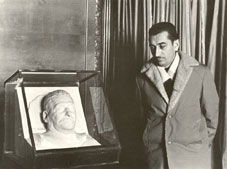
A scene from a Russian propaganda film, a TV in the background and a handful of family pictures ? that is all we need for an intriguing encounter with Yevgeni Jugashvili, the grandson and the spitting image of Joseph Stalin. Jugashvili adores the Man of Steel. Still, the latter never wanted to meet him, and the party leader mercilessly sacrified his own son, Jugashvili?s father, in the Second World War. Manipulation, propaganda and social compulsion have spun a web of stories that have erased Yevgeni`s personal identity. Still the filmmaker runs the risk of getting carried away by his enthusiasm. For the sake of her film, she conceals her own Jewish roots. More than a glimpse into the life of Stalin?s grandson it is a film about manipulation and being manipulated and about how the individual relates to existential questions.
Daya Cahen born in Amsterdam, The Netherlands Lives and works in Amsterdam 2002-2006 Study Gerrit Rietveld Academy in Amsterdam (department of photography) 2006 The Stalin that was played by me (Directing debut) Has taken part in several international exhibitions and filmfestivals The Stalin that was played by me (exhibitions/screenings): 2007 International Short Film Festival Oberhausen (GERMANY), International Competition 2007 Doublespeak. (solo-exhibition), outLINE, Amsterdam, (NL) 2007 Among photographers, (group-exhibition), Hague Museum of Photography, The Hague (NL) 2007 Berlin International Film Festival (GERMANY) Short Film Competition 2007 Distorted Fabric, De Appel, Institute for Contemporary Art, Amsterdam (NL) 2007 Distorted Fabric, Platform Garanti Contemporary Art Center, Istanbul (TURKEY) 2007 Borderline Moving Images, Bejing (CHINA) 2007 Intothepill at Her(his)tory, Museum of Cycladic Art, Athens (GREECE) 2007 Dokufest, Prizren, (KOSOVA) Short Film Competition 2006 IDFA, International Documentary Filmfestival Amsterdam (NL)
Daya Cahen
Catalogue : 2013We lived our ordinary lives | Experimental doc. | hdv | color | 19:0 | Netherlands | 2012
Daya Cahen
We lived our ordinary lives
Experimental doc. | hdv | color | 19:0 | Netherlands | 2012
How does one transform during wartime? In WE LIVED OUR ORDINARY LIVES excerpts from guilty pleas from the International Criminal Tribunal for the former Yugoslavia are combined with childhood memories of the siege of Sarajevo. By asking a moslim girl that lived through the war, now in her early 20s, the same questions about her sense of belonging before, during and after the war, the film shows the transformation people go through during wartime. Without ever mentioning the actual context, the story becomes timeless and universal. In 2012 it is exactly 20 years ago the siege of Sarajevo began.
Daya Cahen studied photography at the Gerrit Rietveld Academy in Amsterdam. Her THE STALIN THAT WAS PLAYED BY ME was her film directing debut.
Guillaume Cailleau
Catalogue : 2013Lucile's Ghosts on Atlas Top, Bruxelles | Experimental film | 16mm | black and white | 2:30 | France, Belgium | 0
Guillaume Cailleau
Lucile's Ghosts on Atlas Top, Bruxelles
Experimental film | 16mm | black and white | 2:30 | France, Belgium | 0
Guillaume Cailleau, Russell Ben
Catalogue : 2025Direct Action | Documentary | hdv | color | 216:0 | France, Germany | 2024
Guillaume Cailleau, Russell Ben
Direct Action
Documentary | hdv | color | 216:0 | France, Germany | 2024
Direct action is a tactical strategy of protest that seeks to achieve an end directly and by the most effective means. DIRECT ACTION is a contemporary portrait of one of the most high-profile militant activist communities in France: a 150-person strong rural collective that successfully resisted an international airport expansion project in 2018, created an autonomous zone between 2012 and 2018, survived multiple violent eviction attempts by the French state and spawned a new ecological movement in 2021. Using a collaborative and immersive observational approach, the film documents the everyday lives of a diverse ecosystem of activists, squatters, anarchists, farmers and those labelled by the government as “eco-terrorists”. Can the success of a radical protest movement offer a path through the climate crisis?
Born in 1978, the Berlin-based artist and filmmaker produces films with his own company CASKFILMS. His work explores new forms to address political and social issues. His films have screened at festivals including in Berlin, New York, Rotterdam and Edinburgh. His short film Laborat won a Silver Bear at the 2014 Berlinale. The artist and filmmaker was born in the USA in 1976 and is currently based in Marseille, France. His works focus on the intersection between ethnography and psychedelia and has been presented around the world. He was an exhibiting artist at documenta 14 in 2017 and his work has already been shown at the Berlinale several times, most recently in 2018 with The Rare Event in Forum Expanded.
Kenny Cairo
Catalogue : 2026Urgence: Paris/Berlin | Multimedia performance | mp4 | color | 30:0 | France | 2024
Kenny Cairo
Urgence: Paris/Berlin
Multimedia performance | mp4 | color | 30:0 | France | 2024
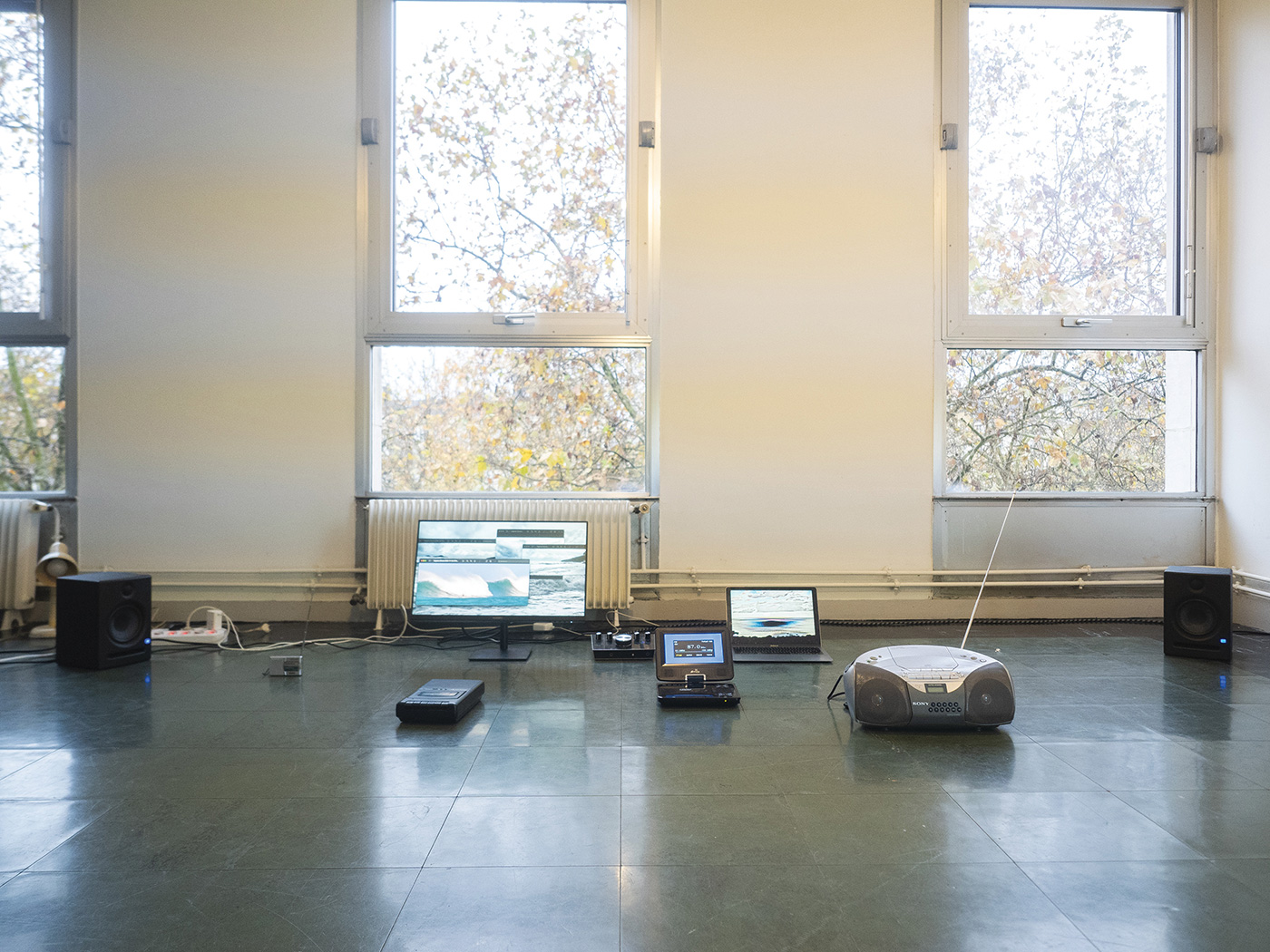
Urgence is a multimedia performance of about thirty minutes built around an orchestra of second-hand loudspeakers positioned in each corner of a room. The performer moves through the space, successively activating a pair of stereo speakers, a cassette player, a Bluetooth speaker, and two radios. The sounds emitted by each device then overlap: a composition and musical remixes, live radio broadcasts, as well as testimonies and conversations recorded in Guadeloupe. This layering of sound sources creates an unstable sonic field that oscillates between music, information, and noise. By manipulating the objects as instruments, the performer allows the audience to drift through sound toward different realities, whether recorded or unfolding live during the performance. Special attention is given to sonic porosity: the performer even invites the sound of police sirens echoing along the Quais de l’Hôtel de Ville in Paris into the work, embracing the unruly nature of sound and the possibilities that emerge from what is unplanned or undesired.
Kenny Cairo (1996, Guadeloupe) is an artist based between Guadeloupe and Paris. His work explores the intersections of human relations, recording practices, and the experience of landscape. Through composition, multimedia performances, installations, and writing, he investigates how individuals connect with each other — through friendship, international solidarities, and acts of mutual support — as well as with their environments and the objects that inhabit them. His recent work about the Caribbean region has mostly focused on the experience of natural hazards, and how local communities respond to emergency situations. Rooted in his trajectory of mobility between the Caribbean and Europe, Cairo also practices painting, often works with fragile materials such as paper, ceramics, second-hand machines, or recordings, and questions their resistance, obsolescence, and capacity to carry biographies. This material engagement extends to colonial archives and research-based practices, through collaborations with Coco Fusco, Contemporary & Magazine, the Caribbean digital library Manioc.org, and the Université des Antilles.
Maite Cajaraville
Catalogue : 2007Cyborgs, Hombres y Drag Queens | Experimental video | dv | color | 13:0 | Spain | 2007
Maite Cajaraville
Cyborgs, Hombres y Drag Queens
Experimental video | dv | color | 13:0 | Spain | 2007
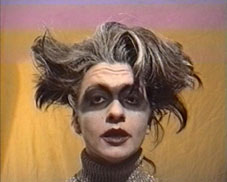
Playing with clothes, make-up, and attitude, Maite Cajaraville produces a sort of virtual era masquerade in this performance video. Comparing the title, "Cyborgs, Hombres y Drag Queens", and the unfolding of the video, it is possible to establish an ambiguous irony between the roles and their representation. To start off with, the author disguises herself; she takes on a man's voice and recounts a monologue on the bodies and communities of cyberspace. Her attitude is one of a data processing expert, of a digital technocrat, of a "cyborg". Then, she starts a public prosecutor's charge against a character of the cyberpunk culture, an "hombre" (man), which exposes a feminist point of view on the cybernetics world. Finally, the third character, a "Drag Queen" lingers on the eroticism of virtual simulations.
Born in 1967 in Badajoz, Sapin, Maite Cajaraville obtained a MFA in theory and pratice of contemporary art from the Universidad Complutense of Madrid. She also has a diploma in information technology and finished her multidisciplinary training at the Ecole Supérieure des Arts Visuels in Frankfurt under the direction of Peter Weibel and Thomas Bayrle. She has taken part in several competitions, exhibitions, and festivals in Spain and throughout Europe. Her work revolves around video and interactive pieces. She is the co-founder and coordinator of the artistic platform "coneXion.madrid", a pioneer initiative created in 1996 for the diffusion of digital culture on the Internet, and she is also the founder and director of Peninsulares Video, an annual, accessible online, of video works and artists. She is the commissioner of the Festival of Arts and New Technologies, desired by the Junta de Andalucia, and has collaborated on various reviews on arts and new media as well as conferences.
Sam Calafiore
Catalogue : 2025Same Old, Same Old | Fiction | 16mm | color | 11:32 | Australia | 2024
Sam Calafiore
Same Old, Same Old
Fiction | 16mm | color | 11:32 | Australia | 2024
A team of night workers arrive at the factory for another night of labour, and wait for their shift to begin.
Sam Calafiore is an Italian-Australian filmmaker based in Naarm (Melbourne). He is interested in telling stories about working-class people. Same Old, Same Old is his debut short film. He is currently in development on his next short film, to be shot late-2024, and is currently writing his debut feature film, which concerns the casualization of the workforce.
Sophie Calle, Fabio Balducci
Catalogue : 2008Unfinished | Experimental video | dv | black and white | 30:14 | France, USA | 2005

Sophie Calle, Fabio Balducci
Unfinished
Experimental video | dv | black and white | 30:14 | France, USA | 2005
Upon receiving a series of photographs taken from an ATM security camera, Calle becomes involved in a perplexing fifteen-year investigation. She manages to steal three surveillance tapes, and interacts with strangers, bank employees, and a pawn-shop merchant in an attempt to clarify the meaning of money, security, and the anonymous photographs. The images, originally exhibited in an installation entitled Cash Machine, are now presented as the central narrative in this ultimately unresolved investigation into the creative process. Directors: Sophie Calle, Fabio Balducci. English Adaptation: Charles Penwarden. Mixing: Nicolas Joly. Grading: Didier Coudray. Production Manager: Myriam Bezdjian.
French conceptual artist Sophie Calle has redefined through personal investigation the terms and parameters of subject and object, the public versus the private, and role-playing. In her conceptual projects, Calle immerses herself in examinations of voyeurism, intimacy and identity. In the process of secretly investigating, reconstructing or documenting strangers` lives, Calle manipulates situations and individuals, and often adopts guises. Thus, in the act of pursuing a stranger to Venice, or taking the position of a chambermaid to surreptitiously observe hotel guests, Calle conditions and recasts her own identity for that period of time. The documents or "evidence" that result from these conceptual projects are presented as photographs, photo-text installations and books. Calle`s works often focus on the nature of desire, and on the relationships between the artist-observer and the objects of her investigations, as in her earlier project Double-Blind (1992.) Produced in collaboration with Gregory Shepard, this conceptual road movie was released theatrically in Europe as a feature film entitled No Sex Last Night.
Catalogue : 2007Unfinished | Experimental video | dv | color | 30:14 | France, USA | 2005
Sophie Calle, Fabio BALDUCCI
Unfinished
Experimental video | dv | color | 30:14 | France, USA | 2005
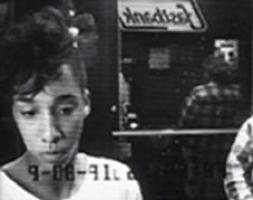
Upon receiving a series of photographs taken from an ATM security camera, Calle becomes involved in a perplexing fifteen-year investigation. She manages to steal three surveillance tapes, and interacts with strangers, bank employees, and a pawn-shop merchant in an attempt to clarify the meaning of money, security, and the anonymous photographs. The images, originally exhibited in an installation entitled "Cash Machine", are now presented as the central narrative in this ultimately unresolved investigation into the creative process.
French conceptual artist Sophie Calle has through personal investigation redefined the terms and parameters of subject and object, the public versus the private, and role-playing. In her conceptual projects, Calle immerses herself in examinations of voyeurism, intimacy and identity. In the process of secretly investigating, reconstructing or documenting strangers' lives, Calle manipulates situations and individuals, and often adopts guises. Thus, in the act of pursuing a stranger to Venice, or taking the position of a chambermaid to surreptitiously observe hotel guests, Calle conditions and recasts her own identity for that period of time. The documents or 'evidence' that result from these conceptual projects are presented as photographs, photo-text installations, and books. Calle's works often focus on the nature of desire, and on the relationships between the artist-observer and the objects of her investigations, as in her earlier project "Double-Blind" (1992). Produced in collaboration with Gregory Shepard, this conceptual road movie was released theatrically in Europe as a feature film entitled "No Sex Last Night".
Joël Calmettes
Catalogue : 2007L'Art et la Manière - Mario Botta | Documentary | betaSP | color | 26:0 | France | 2006
Joël Calmettes
L'Art et la Manière - Mario Botta
Documentary | betaSP | color | 26:0 | France | 2006
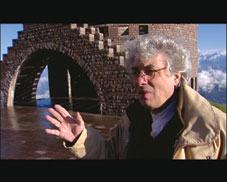
All of Mario Botta's projects, from watch designing to big museums like the MOMA of San Francisco, or the small private houses of the region of Tessin, are ruled by the same determination: to reconcile geometry, order and functionality with imagination, symbolism and poetry. As the artist explains, he defends the idea that architecture has to distinguish itself from nature. Primary forms and geometry help him emphasize the difference between reason, poetry of the frame, and nature.
Joel Calmette is a French director. He studied philosophy. Interested in theatre and video, he directed documentaries for humanitarian organizations. Since the 1980's, he has been devoting himself entirely to video. His works include: "Tableaux noirs" (1990), "Lucky punch, le premier combat" (1994), "Les enfants d'abord : l'Ethiopie" (1997), "Albert Camus, une tragédie du bonheur" (1999), "AhmadouKourouma", "collection A Mi-Mots" (2001), "Histoires secrètes du Biafra" et "Foccard s'en va-t-en guerre" (2002), "Le soldat inconnu vivant" (2004) et "Les routes du coton" (2006).
Clemente Calvo
Adina Camhy
Catalogue : 2025Crater | Experimental doc. | mov | color | 14:29 | Austria | 2022

Adina Camhy
Crater
Experimental doc. | mov | color | 14:29 | Austria | 2022
It starts with a sudden hole in the ground. As the narrator’s voice explains at the beginning of Adina Camhy’s Crater, a hole in the floor of her apartment opened up overnight – a negative space, the trace or scar of a mysterious event. Accompanying this narration, as in the rest of this stringently composed film essay, we see appropriated images of initially unexplained origin. Only at the end of the work, which was created out of a cooperation with Dan Robert Lahiani, do we learn that the material comes primarily from NASA sources, a geo-information producer, various YouTube channels, and the Yad Vashem Holocaust memorial. What connects all of these finds is, on the one hand, the voiceover narrative, which draws a reflective arc based on various crater appearances on earth and in space: depth and abyss as evidence of past moments of violence. On the other hand, the frequently coarse-grained images, which are also interlocked through their surface structure, often reveal flaws: visual gaps as counterparts to a supposedly omnipotent vision. The musically subtly accentuated network (with sound design by Margarethe Maierhofer-Lischka) spreads out over far-flung materials – and yet is held together concisely by the narrow encircling and multi-perspective illumination of the crater phenomenon. Key roles are played by the Ramon crater in the Negev desert, the Israeli astronaut Ilan Ramon, who named himself after this same crater, and a drawing by the Shoah victim Petr Ginz, who depicted the earth as seen from the craters of the moon. All of this and much more is congenially interwoven in this meditation on “dynamic memorials”, whose negativity continues to keep us focused. Getting used to the real hole in the ground at some point may have proved possible, but the intractable facets of the mental phenomenon have us feeling continually uneasy, and rightly so. (Christian Höller)
Adina Camhy, born in Graz, lives in Vienna and Graz (AT). Camhy studied architecture at TU Graz and UPV Valencia (ES) and Master Critical Studies at the Academy of Fine Arts Vienna (ongoing). Adina Camhy’s works are shown in public spaces, swimming pools and coffee houses as well as at film festivals, cinemas and exhibitions in Austria and abroad. Exhibition venues include MIT Massachusetts (2024), Belvedere 21 (2023), Steiermarkschau (2023), Leopold Museum Vienna (2022), Kunsthaus Graz (2021), Amos Rex, Helsinki (2020), Art Cube Artists’ Studios / Manofim Jerusalem Contemporary Art Festival, Jerusalem (2020), Botanique, Brussels (2020). Camhy’s short films have been screened at film festivals such as BFI London Film Festival, Diagonale – Festival of Austrian Film, Doclisboa, Curtocircui?to Festival International De Cine Santiago de Compostela, Milano Film Festival, Uppsala International Short Film Festival or Werkleitz Festival. She has received scholarships, grants and prizes such as the Art Promotion Award of the City of Graz (2017), the Graz Kulturjahr 2020 grant for the collaborative project GrazRand, Pixel, Bytes + Film (2022) or the annual scholarship of the Province of Carinthia for interdisciplinary art forms (2023). In 2023 spent two months in Trieste for an artist residency (AiR Trieste, funded by the Province of Styria) and researched the topic of Karst/ Karso/Kras in the Capitalocene.
Caroline Campbell, Fionn Kidney
Catalogue : 2011MusicVideo | Art vidéo | dv | black and white | 3:23 | Ireland | 2010
Caroline Campbell, Fionn Kidney
MusicVideo
Art vidéo | dv | black and white | 3:23 | Ireland | 2010
In the mid-nineties, the violent reality of Dublin gangster Martin Cahill`s activities seemed to fade into the background as he undertook his own peculiar brand of Disneyfication. Cahill, aka `The General`, often posed for press photographers clad only in Mickey Mouse boxer shorts, a Mickey Mouse t-shirt and balaclava. Crime and violence became reconciled within the imagery of the cartoon character criminal. It was easily forgotten that this was a man who could brutally nail his enemies to the floor. MusicVideo features a gang of Martin Cahill look alikes, Mickey Mouse clad and choreographed in lo-fi Hollywood Busby Berkeley style. They dance beneath the beautiful crumbling stucco work of the big house of the ascendancy. Half boy band, half Martin Cahill fetish party; an undercurrent of strange violence makes its presence visible
Tu Me Tues are Caroline Campbell and Fionn Kidney. They have been working together since 2009. Composer Philip Stewart produced the soundtrack to MusicVideo and is a collaborator of Tu Me Tues across a range of projects.
Michael Campbell, Janice Rahn
Catalogue : 2014Elephant's Graveyard Redux | Experimental video | dv | color | 5:32 | Canada | 2013
Michael Campbell, Janice Rahn
Elephant's Graveyard Redux
Experimental video | dv | color | 5:32 | Canada | 2013
The Elephant?s Graveyard Redux conflates 18th century polar exploration with early space exploration. It was filmed in the Canadian Rocky Mountains and shifts in scale throughout the sequence. The mountain sequence was filmed hanging outside the open window of a Cessna aircraft. The vessel is a constructed model based on Sir John Franklin?s Terror, lost in the arctic in 1847, and Ernest Shackleton?s Endurance, which sunk in the Antarctic in 1915. The audio compiles conversations between Ground Control and the Apollo 11 crew during the 1969 moon landing.
Janice Rahn and Michael Campbell are Canadian artists who work between studios on a small island in the west coast of British Columbia and the South of France. They frequently collaborate on video and installation projects. They recently installed a large-scale installation in Nepal for the Kathmandu International Art Fair 2012 and will be building an outdoor project in an 18th Century Heritage Chateau in Anduze, France in 2015. They are both professors at the University of Lethbridge.