Catalogue > Search
Results for : Tout le catalogue

Yana Osman, Anton Khamchishkin
Shared Univers
Video | hdv | color | 15:0 | Afghanistan, Russia | 2024
This is a poetic contemplation on the state of the world, as well as a reflection of the times in the authors' homeland, when under the influence of censorship they are forced to seek an alternative language to discuss significant issues. In this work, diverse realms intertwine: the game setting, ancient Greek tragedy, social utopia, and our contemporary era. It is a shared universe, enriched by the voices of many authors.
Yana Osman, Anton Khamchishkin (Afghanistan, Russia) Filmmakers and audiovisual artists. Their artistic practice, including video, photography, sound, performance, and poetry, delves into how personal, social, and political documentary contexts become anentry point to the fantasy worlds we live. Their works have been exhibited at festivals, museums, and contemporary art spaces in Armenia, China, Finland, Germany, Hong Kong, India, Ireland, Italy, Kazakhstan, the Netherlands, Russia, Turkey, and even Antarctica, as well as in France, supported and showcased by CNC, Cité Internationale des Arts – Paris, Usage du Monde au 21ème siècle, Maison Européenne de la Photographie – Paris, Institut Français, Théâtre Nouvelle Génération (TNG) – Lyon, among other.
Yana Osman, Anton Khamchishkin
Pwéra úsog
Experimental doc. | mov | color and b&w | 19:50 | Afghanistan, Russia | 2025
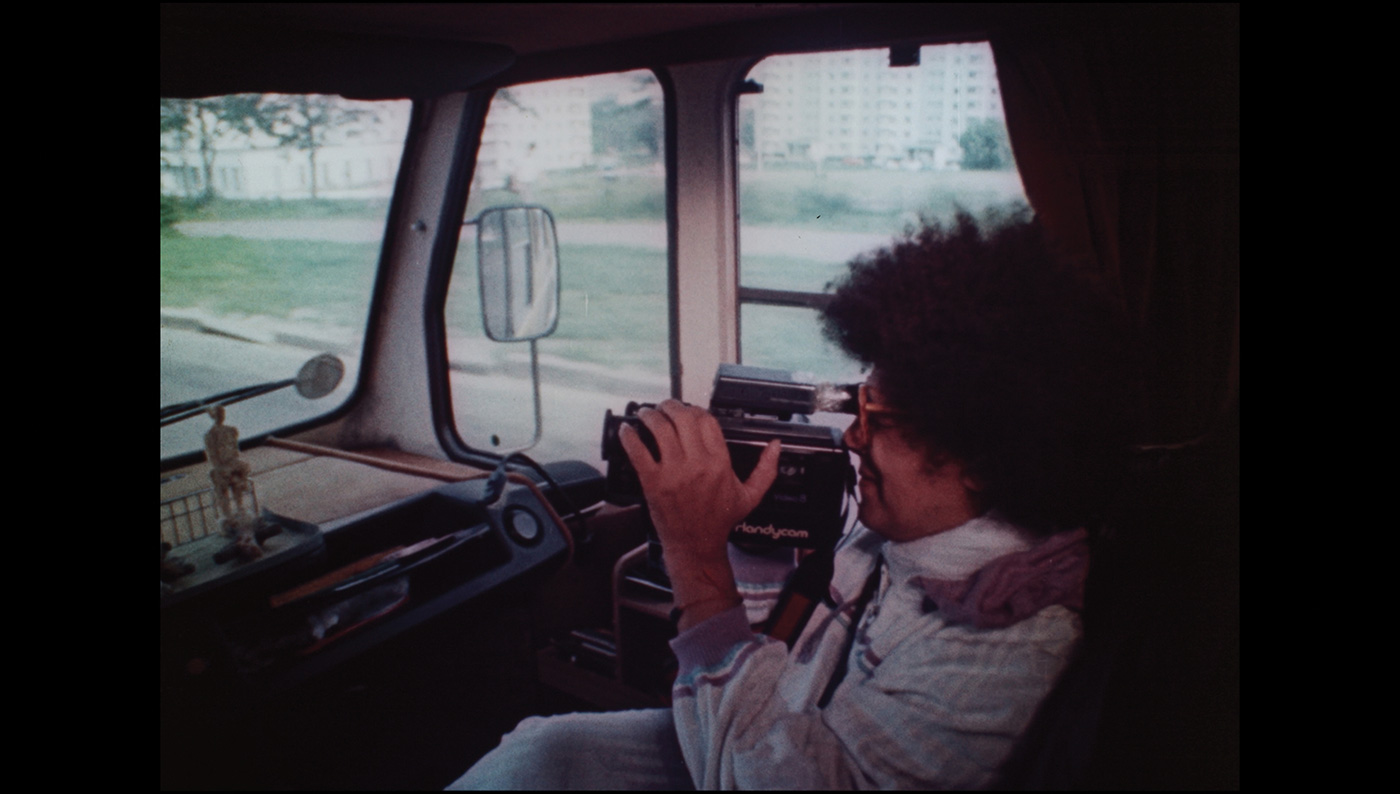
Pwe?ra u?sog (2025). 19 min dir. Yana Osman, Anton Khamchishkin In 1945, in Paris, the Women’s International Democratic Federation (WIDF) was founded. According to historian Francisca de Haan, it was “the largest and probably the most influential international women’s organization of the post–World War II era.” Today, assessments of the organization’s legacy remain contested. Some scholars, citing reports from the FBI and the House Un-American Activities Committee, describe WIDF as a communist attempt to manipulate women. Others view it as a movement advocating for women’s rights, and researchers like Elizabeth Armstrong note WIDF’s role in anti-colonial and anti-racist struggles led by women in Asia, Africa, and Latin America. In 1987, during the Perestroika era, WIDF organized the World Congress of Women in Moscow, under the slogan: “Toward 2000 — Without Nuclear Weapons! For Peace, Equality, Development!” The congress brought together 2,800 women from 150 countries. Among them, there was the protagonist’s grandmother, an interpreter who collected words from global conversations that had no equivalents in other languages. Revisiting her notes, archival footage, and sites of official delegations, the protagonist is guided by these fragments to a question: what words can capture the present, when language itself slips away, dissolves, and borrowed slogans drown out one’s voice?
Yana Osman, Anton Khamchishkin (Afghanistan, Russia) — artists and filmmakers. Work with gaps in storytelling, filling in the unsaid and uncovering narratives suspended between real and imaginary, facts and speculation. Their films were selected at Hong Kong Film Festival, DOK Leipzig, Slamdance, Rencontres Internationales Paris/Berlin, as well as supported by CNC, Cité Internationale des Arts, Usage du Monde au 21ème siècle, Institut Français, among others.

Noemi Osselaer
Erpe-Mere
Experimental doc. | dcp | | 20:44 | Belgium | 2020
Surrounded by the sound of nocturnal animals, a girl falls into a deep sleep. Gradually we are drawn into her dream, which unfolds into a cosmic journey through the meadows of Erpe-Mere, a rural community in Belgium.
Noemi Osselaer was born in Aalst, Belgium. She studied audiovisual arts at the Royal Academy of Fine Arts Ghent. Her graduation film ‘Erpe-Mere’ screened at several festivals including Dok Leipzig and IFFR. From January 2021 till December 2022 she will be a resident at the Higher Institute for Fine Arts (HISK) in Ghent.
Vivian Ostrovsky
Ice/Sea
Experimental film | super8 | color and b&w | 32:0 | USA, France | 2005
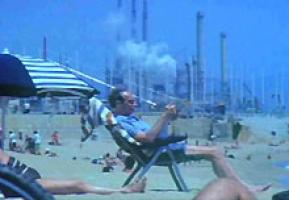
"Play collage of sun and ice for an aquatic fantasy filled with crazy surfers, swimming tigers and plunging mermaids... "Why shouldn't I make a beach movie for a change? (...) I used images I filmed with my Super 8 camera and a mini DV when I was traveling and then added existing footage. It is a kind of diary. This is pure entertainment." (Vivian Ostrovsky)
Vivian Ostrovsky was born in New York and studied psychology and pursued film studies at the Sorbonne. She started her career as a filmmaker in 1980 and at first shot films about dance. In her works, she shows places where urbanism dominates and points out our failings and little passions. Her work is represented in the permanent collections of several renowned cultural institutions establishing her as a key visual artist.
Vivian Ostrovsky
Mais ailleurs c’est toujours mieux
Experimental doc. | super8 | color | 4:9 | France, USA | 2016
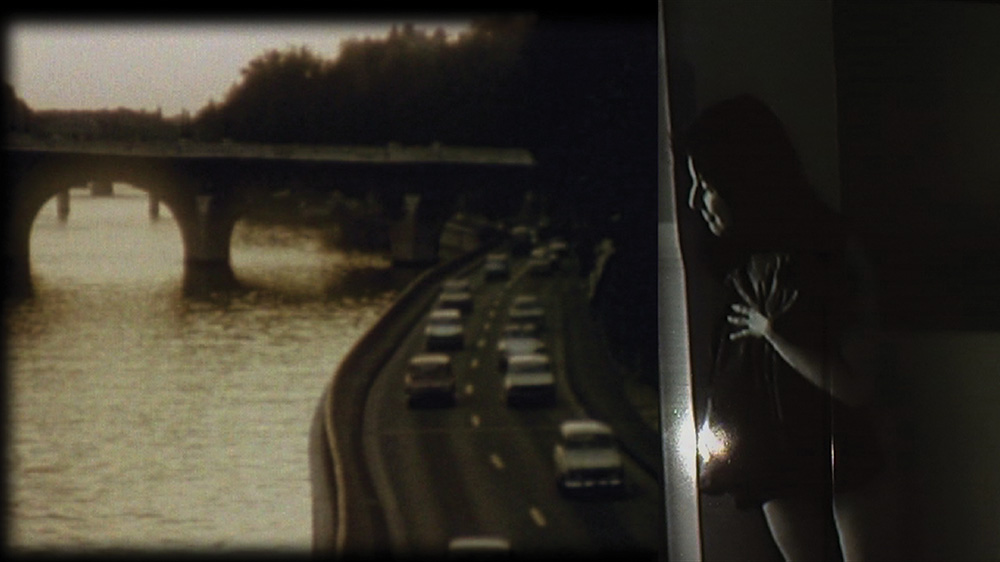
A new short film by Vivian Ostrovsky remembering Chantal Akerman, beginning with their first meeting in the early 1970s. Using her own footage of Chantal Akerman, the filmmaker remembers a few moments that illustrate Chantal`s personality. Forty years of friendship condensed into four minutes…
Vivian Ostrovsky, (b.1945, New York) grew up in Rio, studied film studies and psychology in Paris. When she started filming in 1980, she focused on using analog formats - especially Super8 - for experimental cinema. Her signature collage shorts and avant-garde documentaries have been shown at the main film festivals (Berlin, Rotterdam, Viennale, Tribeca) and have been part of collections such as the MOMA, NY, the Centre Pompidou in Paris and the Freunde der Deutschen Kinemathek in Berlin. Her moving image work is noted for its span of super 8, 16mm, video and digital media, found footage and immersive installations. This screening includes films connected to Latin America and more particularly Brazil. Whether more personal or historical projects, they are always infused with dreamlike playfulness and intimate nostalgia.
Vivian Ostrovsky
P.W.- Pincéis e Painéis
Experimental doc. | dv | color and b&w | 15:51 | France, USA | 2010
The video was made for an exhibition in Rio on Paulo Werneck one of Oscar Niemeyer?s collaborators. Werneck was the first to introduce mosaics in Brazilian Modernist architecture. P.W. shows the context of the artist?s work in Rio and Belo Horizonte in the 50s and the 60s as well as Brasilia at the time of its construction in 1960. It?s an inventive collage of archival footage, music and Werneck?s modernist mosaics.
Manhattan, New York was where I happened to be born. After 6 months of stress, I boarded the first plane to Rio de Janeiro, Brazil, to meet my parents and sister. My primary and secondary school was not too far from Copacabana Beach. My university years were spent in Paris, suffering from a Psychology major (Institut de Psychologie). To make life more pleasurable, I ended up seeing more films around the corner from the Sorbonne than attending classes. After my B.A. in Psychology I enrolled in Film Studies courses at Sorbonne- Paris 3, at the Institut d?Art et Archeologie ( Eric Rohmer?s classes) and at the Cinemathèque Française ( Henri Langlois? classes). In the early 70s I traveled throughout Europe in a rundown Renault pick-up, organizing women?s film festivals and distributing films made by women (the distribution company was called Cine-Femmes International). My debut as an experimental filmmaker came in 1980, when I co-directed CAROLYN 2 with Martine Rousset (starring choreographer/dancer Carolyn Carlson). It was an expanded cinema film/slide installation. Many films came afterwards, mostly shot in super-8 then blown-up to 16mm. These films have been shown in festivals worldwide (Toronto, Berlin, Locarno, Rotterdam, Tribeca, Vienna and others), in cinematheques and in art fairs such as the Sao Paulo Biennale and Arco in Madrid. Other venues have also screened them, such as : M.O.M.A., Lincoln Center, NY, Hirshhorn Museum, Washington DC, Centre Georges Pompidou, Paris, Anthology Film Archives, NY, Pacific Film Archives, Berkeley, CA. Simultaneously my film-related activities have expanded to curating programs for venues such as the Jerusalem Film Festival. My main interests are in Avant-Garde work and documentaries. My home is wherever I feel at home ? and that is usually in a plane on my way to an unknown destination with my camera and DAT recorder in my carrier bag.
Vivian Ostrovsky
DizzyMess
Experimental film | super8 | color and b&w | 7:43 | France, USA | 2017
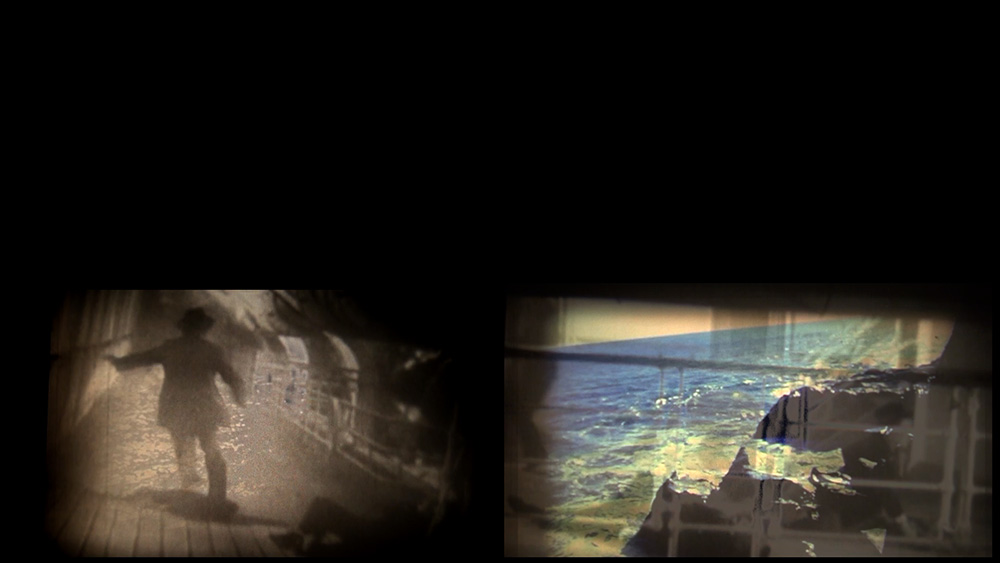
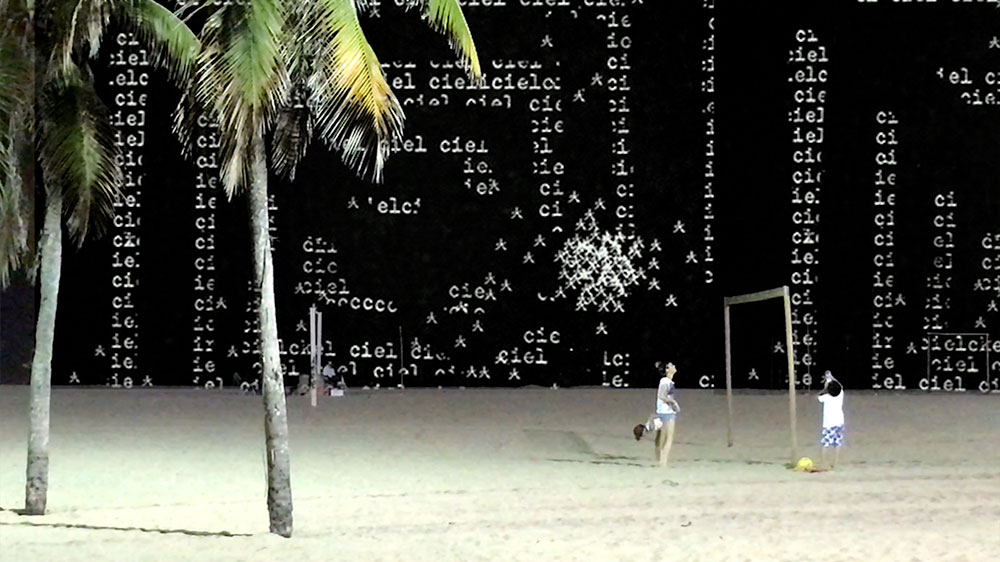
Dizziness, in the sense that it inspires artists and filmmakers to move beyond their known borders. Or how a state of altered perception, instability, and confusion can be a catalyst for exploring new surroundings. Let go of the ground and attain giddiness or perhaps even foolishness?
Vivian Ostrovsky, (b.1945, New York) grew up in Rio, studied film studies and psychology in Paris. When she started filming in 1980, she focused on using analog formats - especially Super8 - for experimental cinema. Her signature collage shorts and avant-garde documentaries have been shown at the main film festivals (Berlin, Rotterdam, Viennale, Tribeca) and have been part of collections such as the MOMA, NY, the Centre Pompidou in Paris and the Freunde der Deutschen Kinemathek in Berlin. Her moving image work is noted for its span of super 8, 16mm, video and digital media, found footage and immersive installations. Her films are connected to Latin America and more particularly Brazil. Whether more personal or historical projects, they are always infused with dreamlike playfulness and intimate nostalgia.
Vivian Ostrovsky
Hiatus
Experimental doc. | hdv | black and white | 6:20 | France, USA | 2018
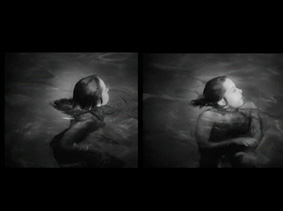
The protagonist of this film is the reclusive, introspective Ukrainian - Brazilian writer Clarice Lispector (1920 - 1977). What she says in the 1977 interview is still very pertinent and corresponds to a feeling of ‘in-betweenness’ which I myself feel today.
Vivian Ostrovsky, (b.1945, New York) grew up in Rio, studied film studies and psychology in Paris. When she started filming in 1980, she focused on using analog formats - especially Super8 - for experimental cinema. Her signature collage shorts and avant-garde documentaries have been shown at the main film festivals (Berlin, Rotterdam, Viennale, Tribeca) and have been part of collections such as the MOMA, NY, the Centre Pompidou in Paris and the Freunde der Deutschen Kinemathek in Berlin. Her moving image work is noted for its span of super 8, 16mm, video and digital media, found footage and immersive installations. Her films are connected to Latin America and more particularly Brazil. Whether more personal or historical projects, they are always infused with dreamlike playfulness and intimate nostalgia.
Vivian Ostrovsky
THE TITLE WAS SHOT
Experimental video | dv | | 9:0 | France | 2009
THE TITLE WAS SHOT was commissioned for a conference of film theoreticians in Berlin in 2009 entitled: The Cinematic Configurations of the ?I? and ?We?. Composed of fragments from over 25 films dating from the 1920s to the 90s, this whimsical short features cowboys, Indians and damsels in distress. Tarzan, Jane, a transgender gorilla, and a menacing lion tango from frame to frame, prodded by Wittgenstein, Gilles Deleuze and Slavoj Zizek?s philosophical considerations. A fast-paced, heart-pounding cinephilic farce. Date: April 2009 Length: 9? Sound: Mono Color and B&W 4/3 1.33 Shooting format : Mini-DV Screening format : Beta SP pal / MINI DV pal / DV CAM pal / DVD Language : English, French English subtitles JET LAG Productions Director: Vivian Ostrovsky Editing: Vivian Ostrovsky, Ruti Gadish, Claude Mercier Sound: Vivian Ostrovsky, Claude Mercier
Vivian Ostrovsky www.vivianostrovsky.com BIOFILMOGRAPHY Born Nov. 17 in New York (USA) High school in Rio de Janeiro (Brazil) University : Paris-Sorbonne (Psychology, Film studies) Film-related activities : - Festival programmer - Curator Avant-garde film - Filmmaker Filmography : - Carolyn 2, 1980, (expanded cinema) with Carolyn Carlson, co-directed with Martine Rousset - Top Ten Stylists, 1981, documentary on Thierry Mugler, Karl Lagerfeld, Issey Miyake, etc., co-directed with Soft Ware Prod. - Movie (VO), 1982 - Copacabana Beach, 1983 - Allers-Venues, 1984 - Stalingrad, 1984, film installation - U.S.S.A. 1985 - * * * ( Trois étoiles), 1987 - Propos Décousus, 1987, expanded super 8 (Galerie J & J Donguy) - Eat, 1988 - M.M. in Motion, 1992 - Uta Makura ( Pillow Poems) , 1995 - Public Domain, 1996 - American International Pictures 1997 - Interview with Woody Allen for Jerusalem Film Festival, 1997 - Work and Progress, 1999, co-directed with Yann Beauvais. - Nikita Kino, 2002 - Ice/Sea , 2005 - Telepattes, 2007 - Fone Fur Follies, 2008 - Ne Pas Sonner, 2008 - P.W.- Pincèis e Panèis, 2008 - The title was shot, 2009 - Tatitude, 2009 Main venues : - Museums: Centre Pompidou, Louvre, Paris ; MOMA, New York ; M.A.M. Rio de Janeiro ; Hirshhorn Museum, Washington, Kunsthalle, Basel - Film Festivals: Berlin, Rotterdam, Toronto, London, Jerusalem, Rio de Janeiro, etc. - Universities : Berkeley (Pacific Film Archives), Yale, Paris VI , Ecole des Beaux Arts - International Art Fairs : Arco (Madrid) ; Biennales : São Paulo, Paris - Anthology Film Archives (New York), London Filmmakers Coop, Scratch Projections (Paris)- Other: Sydney, Montreal, Chicago, San Sebastian, Sorrento, Osnabrück, Copenhagen, Brussels, Frankfurt, Vienna, Tokyo, etc. Acquisitions: - Centre Georges Pompidou, Paris - Forum des Images, Paris - Israel Film Archives - Ministry of Foreign Affairs for French Institutes worldwide. - MOMA, New York - Freunde der Deutschen Kinemathek e.V., Berlin
Vivian Ostrovsky
WHEREVER WAS NEVER
Experimental video | super8 | | 6:0 | France, USA | 2011
An intimate film made on the occasion of the 30th annniversary of her father, Rehor Ostrovsky?s death. Re-collecting snippets of my first 8m and super 8 films, old photos, letters, and other memorabilia. À slow pan through my adolescent years, family trips, holidays and everyday scenes. Listening for lost accents, impromptu songs at the dinner table, and bits of conversation.A landscape of flickering memories somewhere between home movies and photo albums.
Manhattan, New York was where I happened to be born. After 6 months of stress, I boarded the first plane to Rio de Janeiro, Brazil, to meet my parents and sister. My primary and secondary school was not too far from Copacabana Beach. My university years were spent in Paris, suffering from a Psychology major (Institut de Psychologie). To make life more pleasurable, I ended up seeing more films around the corner from the Sorbonne than attending classes. After my B.A. in Psychology I enrolled in Film Studies courses at Sorbonne-Paris 3, at the Institut d?Art et Archeologie (Eric Rohmer?s classes) and at the Cinemathèque Française (Henri Langlois? classes). In the early 70s I traveled throughout Europe in a rundown Renault pick-up, organizing women?s film festivals and distributing films made by women (the distribution company was called Cine-Femmes International). My debut as an experimental filmmaker came in 1980, when I co-directed CAROLYN 2 with Martine Rousset (starring choreographer/dancer Carolyn Carlson). It was an expanded cinema film/slide installation. Many films came afterwards, mostly shot in super-8 then blown-up to 16mm. These films have been shown in festivals worldwide (Toronto, Berlin, Locarno, Rotterdam, Tribeca, Vienna and others), in cinematheques and in art fairs such as the Sao Paulo Biennale and Arco in Madrid. Other venues have also screened them, such as : M.O.M.A., Lincoln Center, NY, Hirshhorn Museum, Washington DC, Centre Georges Pompidou, Paris, Anthology Film Archives, NY, Pacific Film Archives, Berkeley, CA. Simultaneously my film-related activities have expanded to curating programs for venues such as the Jerusalem Film Festival. My main interests are in Avant-Garde work and documentaries. My home is wherever I feel at home ? and that is usually in a plane on my way to an unknown destination with my camera and DAT recorder in my carrier bag.
Matthew Ostrowski
Atopia:levigation and apophenia
Multimedia installation | 0 | color | 0:0 | USA | 2004
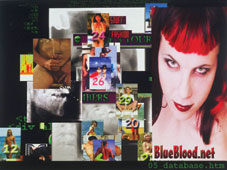
Atopia is the non-existence of place, an experience masquerading as an environment - a set of pointers to sets of data which only exist in the encoded and mediated universe whose sole occupant is information - the World Wide Web. Our habits of speech lead us to believe that there is a destination at the end of a link, but there is no actual place - there is only a flow of data, an act of accumulation and disposal. This installation crawls the web from several randomly selected starting points, downloading all data, storing and representing it without regard for its intended structure. Levigation: the smoothing out of differences. We can only make sense out of this pseudo-environment because of a set of rules dividing a stream of zeroes and ones into files of different types. The heavily mediated nature of this project is all but invisible to us - we simply accept this mode of consuming information into our construction of 'nature'. In this project, all the structure and complexity of the encoded information is returned to the simplicity of the bitstream in the form of sound. The downloaded information is interpreted entirely as audio samples. The 'true' form of information, the foundation stone of atopia, remains insubstantial and always unreal. Apophenia: the imaginary perception of the meaningfulness of unrelated phenomena. The technologies we use to gather information from the World Wide Web are designed to move us through paths of meaning, which limit, define, and direct signification. If this information is simply taken en masse and at face value, devoid of its contextualization, we find ourselves in a wholly different mental environment. As one hears the files in sound form, they are simultaneously displayed: HTML code, images, etc., disassociated from the links and instructions which create the illusion of a unifying context, assemble and disassemble themselves in a constantly shifting collage.
A New York City native, Matthew Ostrowski has been working with electronics since the early 1980s, in improvised music, music theatre, and audio installations; with a continuing interest in density of micro events, rapid change, and using technology to stretch the bounds of perception and experience. His work has been exhibited or performed at festivals on four continents, including the Vienna Modern Festival, the Krakow Audio Art Festival, Sonic Acts in Amsterdam, PS 1 and The Kitchen in New York, the Melbourne Festival, and Unyazi, the first festival of electronic music on the African continent. His work appears on over a dozen recordings. Recently, after returning from an extensive concert and workshop series in the Balkans, the Czech Republic, and South Africa, he exhibited Draden, a work for amplified and processed fluorescent light bulbs, and is presently a member of Fair Use, a trio whose work orbits around spontaneous soundtracks to highly sped-up film classics.

Halima Ouardiri
Clebs
Documentary | 4k | color | 18:11 | Canada | 2019
Les pelages bruns, beiges, blancs et noirs se fondent à l’ocre de la terre et des murs inondés de soleil. Calme à l’heure du repos, l’endroit devient assourdissant quand vient le moment de nourrir les bêtes, qui entament alors leur concert d’aboiements. Dans le refuge pour chiens errants d’Agadir au Maroc, plus de 750 animaux trouvent aide et protection en attendant d’être adoptés par une famille. Chaque journée ressemble à la suivante, rythmée par la seule distraction des repas. Avec un regard aussi empathique qu’alerte aux jeux de lumière et de textures, Halima Ouardiri observe la chorégraphie qui régit la vie de la population animale, dont le quotidien suspendu évoque l’attente bien plus tragique de millions d’êtres humains à la recherche d’une terre d’accueil.
Halima Ouardiri est cinéaste. Suisso-Marocaine, elle travaille entre le Canada, le Maroc et la Suisse. Elle a obtenu un B.A. en Science Politique et un B.F.A. en Production filmique à la Mel Hoppenheim School of Cinema à Montréal (Canada). Son premier film, "Mokhtar", tourné en Super 16mm, a reçu un très bon accueil dans une centaine de festivals internationaux tels que le TIFF – Toronto International Film Festival (Canada); la Berlinale, Berlin (Allemagne); le Festival international du film de Rotterdam (Pays-Bas); et le Festival international du film de Dubaï (Émirats arabes unis), avant d’être diffusé sur France 3, sur CBC et sur la TSR. Le film a remporté de nombreux prix, dont deux Prix de la Meilleure Réalisation et cinq Prix du Meilleur Film. Tourné dans un petit village du sud du Maroc, le film met en scène les villageois, beaucoup de chèvres et un hibou. De tous les interprètes, seul le hibou est un acteur professionnel. Aujourd’hui, Halima Ouardiri passe au long-métrage avec "Nico", un récit initiatique inspiré de son expérience comme garde du corps à Genève (Suisse), sa ville natale, et avec le développement du scénario de "La Camel Driving School".
Ouazzani Carrier
Old School
Video | hdv | color | 8:12 | France, Netherlands | 2012
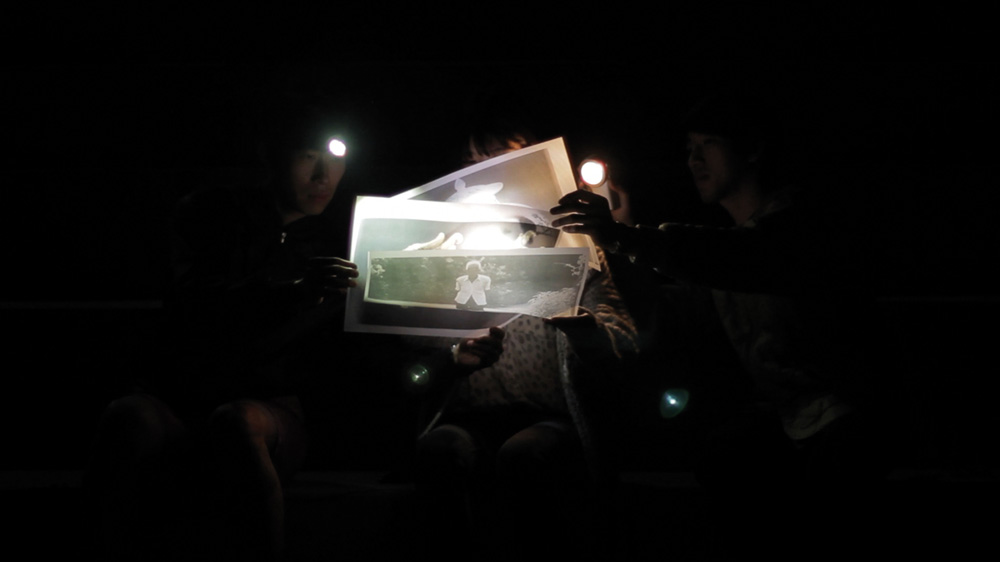
An old school used by an artist-cooperative during the 90s and the 2000s and before being recovered by the city to become a new place for gentrification.
Graduated from the National High School of Arts Paris-Cergy and from La Sorbonne Nouvelle in Cinema Studies, Nicolas Carrier develop his work on the edges of cinema, tourism and ethnography. Through short elliptical films, found footage pieces and photographs, he explores our relation to time and memory by creating floating and repetitive temporalities, minimal fictions, rituals or games. Inspired by the history of places that he used as playgrounds, his work reveals traces of human and nature and their way to appropriate them. It questions the themes of leisure, exploration and animism. Born in 1981, lives in Paris.
Ouazzani Carrier, Marie Ouazzani
Tracing Ghosts
Video | hdv | color | 9:22 | France, Korea, South | 2015
During the Japanese colonization of Korea, this school aimed to recruit orphan kids for the occupying forces. Now an artists residency, one says that it’s haunted. By playing with some tracing papers of artistic, historical and touristic images, three young koreans awaken the memories and past of this place.
The artist duo Marie Ouazzani (b. 1991) and Nicolas Carrier (b. 1981) was formed in 2015. Through travels that bring them to monuments and historical landscapes, they engage with the context of those places and re-contextualize images to highlight their memories. Their installations, films and publications confront those cultural objects to investigate their spiritual and phantasmagorical potential. By handling images, their work offers a critical reflection around the representations induced by our time.
Ouazzani Carrier
Exposition périphérique
Video | hdv | color | 52:0 | France | 2018
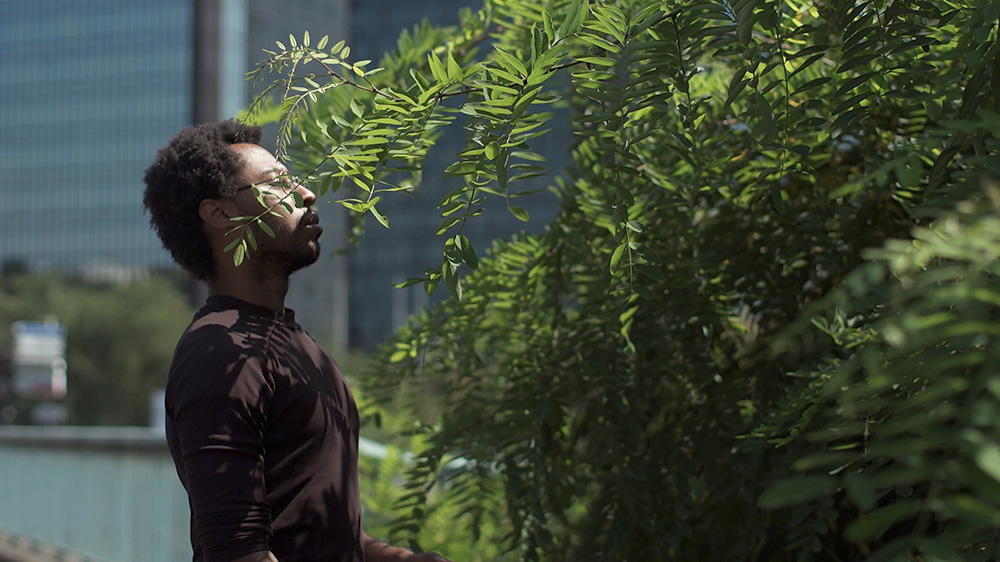
"Exposition périphérique" est un voyage en voiture autour du périphérique extérieur parisien et des villes qui le bordent. Tel un inventaire des plantes qui habitent ce paysage de proche banlieue en pleine transformation du Grand Paris, cette fiction suit des jardiniers qui prennent soin des mauvaises herbes et plantes en pot, comme autant de propositions de résistance à l'urbanisation, et qui vivent dans les interstices laissés par la densification urbaine.
Vivant ensemble depuis 2015, Marie Ouazzani & Nicolas Carrier sont attentifs aux détails et aux ressources du quotidien. Qu`ils séjournent en Asie de l'Est, au Moyen-Orient ou en Europe, ils explorent chaque contexte à la recherche de fictions où se mêlent pollution, fantômes, ruines et économie. A partir de gestes et de situations simples, leurs vidéos et installations confrontent environnement et urbanisation afin de rééquilibrer les tensions de ces paysages. Récemment, leur travail a été présenté aux centres d'art de Mains d'Oeuvres, de la Villa Arson et du 3 bis f, au 61e Salon de Montrouge, à la 5e Biennale d'Odessa et à Darat al Funun en Jordanie.
Akosua Adoma Owusu
Drexciya
Experimental video | dv | color | 11:30 | USA, Ghana | 2010
A portrait of an abandoned public swimming facility located in Accra, Ghana set on the Riviera. The Riviera at one time was an upscale development, consisting of luxury high-rises and five star hotels. Since the 1970s, the Riviera has fallen into a disheveled state. This short documentary was inspired by afro-futurist myths propagated by the underground Detroit-based band Drexciya. They suggest that Drexciya is a mythical underwater subcontinent populated by the unborn children of African women thrown overboard during the Trans-Atlantic slave trade. These children have adapted and evolved to breathe underwater.
Akosua Adoma Owusu (born January 1, 1984) is a Ghanaian-American avant-garde filmmaker and producer whose films have screened worldwide in prestigious film festivals, museums, galleries, universities and microcinemas since 2005. Her work addresses the collision of identities, where the African immigrant located in the United States has a "triple consciousness.” Owusu interprets Du Bois’ notion of double consciousness and creates a third identity or consciousness, representing the diverse consciousness of women and African immigrants interacting in African, white American, and black American culture. Named by Indiewire as one of the 6 Avant-Garde Female Filmmakers Who Redefined Cinema, and one of The Huffington Post‘s Black Artists: 30 Contemporary Art Makers Under 40 You Should Know, Akosua Adoma Owusu is a MacDowell Colony Fellow and a Guggenheim Fellow. Founded in 2007, her company, Obibini Pictures, LLC has produced award-winning films including Reluctantly Queer and Kwaku Ananse, which received the 2013 African Movie Academy Award for Best Short Film. Reluctantly Queer was nominated for the Golden Bear and Teddy Award at the Berlinale, Berlin International Film Festival in 2016. In 2010, Owusu was a featured artist at the 56th Robert Flaherty Film Seminar. Artforum listed Me Broni Ba as one of 2010’s top ten films. Her work is included in the permanent collections of the Whitney Museum of American Art, the Fowler Museum, Yale University Film Study Center, and Indiana University Bloomington, home of the Black Film Center/Archive. She’s received support from Creative Capital, Tribeca All Access, IFP, Focus Features Africa First, the Art Matters Foundation, the Camargo Foundation and the Berlinale World Cinema Fund. Owusu holds MFA degrees in Film & Video and Fine Art from California Institute of the Arts and received her BA in Media Studies and Studio Art with distinction from the University of Virginia, where she studied under the mentorship of prolific avant-garde filmmaker, Kevin Jerome Everson.
Akosua Adoma Owusu
Reluctantly Queer
Experimental doc. | super8 | black and white | 8:0 | Ghana | 2016
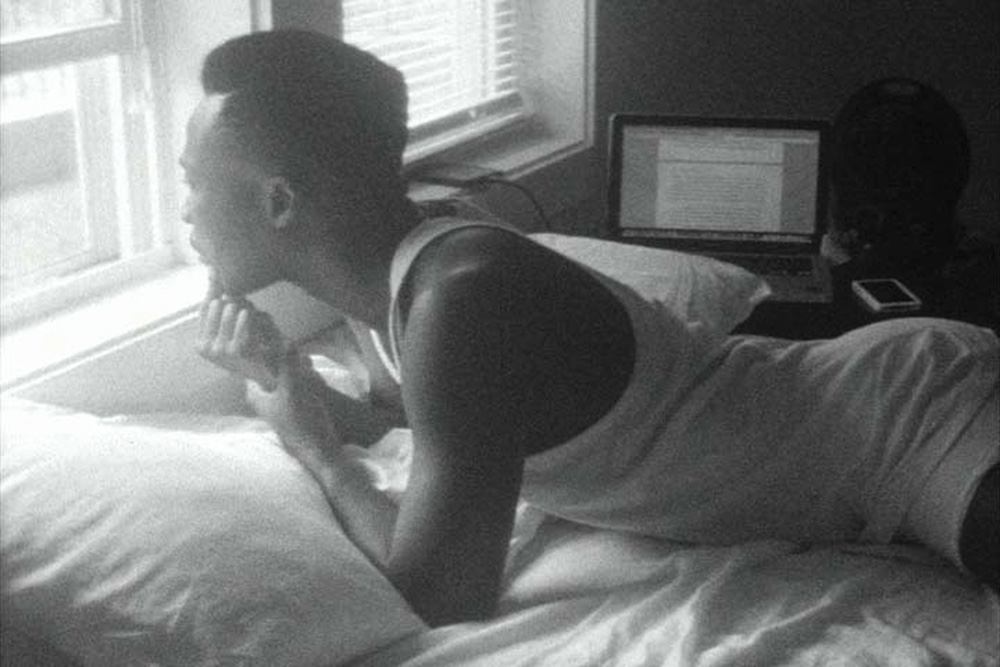
This epistolary short film invites us into the unsettling life of a young Ghanaian man struggling to reconcile his love for his mother with his love for same-sex desire amid the increased tensions incited by same-sex politics in Ghana. Focused on a letter that is ultimately filled with hesitation and uncertainty, Reluctantly Queer both disrobes and questions what it means to be queer for this man in this time and space.
Akosua Adoma Owusu (b. 1984) is a Ghanaian-American filmmaker, producer and cinematographer whose films address the collision of identities. Interpreting the notion of "double consciousness" coined by sociologist and civil rights activist W.E.B. Du Bois to define the experience of black Americans negotiating a sense of selfhood in the face of discrimination and cultural dislocation, Owusu aims to create a third cinematic space or consciousness. In her works, feminism, queerness and African identities interact in African, white American, and black American cultural environments. Owusu's films have screened internationally in festivals like Rotterdam, Locarno, Toronto, New Directors/New Films (New York) and the BFI London Film Festival. Her work is included in the collections of the Whitney Museum of American Art, the Centre Georges Pompidou, the Fowler Museum and the Indiana University Bloomington, home of the Black Film Center/Archive. Named by IndieWire as one of 6 pre-eminent Avant-Garde Female Filmmakers Who Redefined Cinema, she was a featured artist of the 56th Robert Flaherty Seminar programmed by renowned film curator and critic Dennis Lim. Her film "Kwaku Ananse" won the 2013 African Movie Academy Award. She has received fellowships and grants from the Guggenheim Foundation, the Knight Foundation, Creative Capital, the MacDowell Colony, the Camargo Foundation and most recently Goethe-Institut Vila Sul in Salvador-Bahia. Currently, she divides her time between Ghana and New York, where she works as a Visiting Assistant Professor at the Pratt Institute in Brooklyn.

Ivan Ozetski
1#Art Karaoke
Experimental video | dv | color | 3:0 | Croatia | 2005
"Art karaokes PROPOSAL FOR FIRST ART KARAOKE PROJECT BY IVAN OZETSKI Project`s concept; My idea was to transfer my life research and work into a medium witch is not considered to be an art medium. That was the reason why I started to use the karaoke medium, witch was working perfectly for something that could be interpreted also as transferring project into propaganda for my research. Through this propaganda, I was actually building the base for my ideas in the easiest possible way, as a painter needs good canvas. Just to create some distance between my work and real karaoke, here is short history of how was karaoke invented. Real Karaoke videos have an obscure existence, it is actually replica of original video, but since its purpose is singingof and presenting in pubs, it has to be made like that. They are private production so practically they have to make money with smallest possible investment. They have also different language in submenu, so they can be sung and sold everywhere. I think that main concept of karaoke is SELL&SING!!! Since my videos doesn`t have function to sell, and they are not commercial at all, I can use original songs for my videos under excuse of an art project. Just to explaine the main difference beetween real karaoke and my art-work ; real karaoke videos are so stereotypical on every part of the world, in China, Vietnam, and Thailand- It`s almost a concept and to create them, you need few rules, or I make a joke and utter seven commandments (or mortal sins) of real karaoke ; 1. make the production as cheap as possible 2. use amateur videos for background 3. choose and create replica of a familiar song 4. put lonely women into sad songs 5. put in a couple for happy songs 6. put familiar image of some city in background video; or a sand beach! 7. subject has to be extremely happy, in love, or sad (depending on song) My karaoke videos use these rules, but not always. My work carries personal issues about unknown artist, or art history books. With my texts, as karaoke subtitle I am trying to comment on a particular artists work, as they belong in art history, built in random order, without logical approach."
Ferhat özgür
I CAN SING
Experimental video | dv | color | 7:0 | Turkey | 2008
The video ?I Can Sing? shows an Islamic woman who wears headscarf, singing a song in front of a new settlement buildings in Ankara, where the urban transformation process is tangible. In some aspects the video is related with the people who are forcing their way between the minarets that have traditionally dominated the city. Against the backtop of the recontructed home, a headscarf-wearing Anatolian woman sways to a lament. Her lips to move. But the soundtrack is Jeff Buckley?s bitter, defiant version of Leonard Cohen?s classic ?Hallelujah?. ?Well it goes like this / The fourth, the fifth / The minor falls and the major shift?: The major keys, characteristic o Western music, become a symbol of uprooting; traditional Turkish music relies on the softer, minor tonalities. Swaying to ?Hallelujah?, the woman spreads her arms to the sky, lays her hands on her heart. What god is she singing to? The staging alternates between praise and lament, its reference to the global idiom of karaoke giving it an ironic touch.
Ferhat Özgür (1965-Ankara-Lives and works in Ýstanbul / TURKEY) He graduated from Gazi University, Education Faculty, Department Of Painting in 1989. Having completed his master and doctorate studies in Hacettepe University Fine Arts Faculty, Department of Painting in 1997, he was appointed to the same department as an assistant to the same department as professor where he taught for more than a decade. He currently works and teaches in Istanbul Culture University, Art and Design Faculty, Department of Communication Design. selected group shows and upcoming events 2011?Un?espressione Geografica? Fondazione Sandretto Re Rebaudengo, Turin ? Italy (curator: Francesco Bonami) 2011 ?Festival of Confusion?BEURSSCHOUWBURG, Brussels (curator: Cis Bierinckx) 2010 ?Spartacus?, video screening in Public Square Dublin-(curator: Vaari Claffey) selected recent group events 2010: `PastPresentFuture:Higlights of The UniCredit and Yapi Kredi Collection`, Yapi Kredi Culture Center, Istanbul-Turkey. 2010 ?6th Berlin Biennale?, Germany (curator: Kathrin Rhomberg, catalogue) 2010?Are You A Lucky Artist??Fondazione Fotografia, Casa Di Risparmio di Modena, Italy (curator: Francesca Lazzarini) 2009?That Women Running With The Wolves? Stimultania, Strasbourg-France(Curators: Çelenk Bafra, Murat Alat, catalogue) 2009 ?Seriously Ironic? CentrePasquart Kunsthaus Centre d?Art-Switzerland (curators: Dolores Denaro, Iþýn Önol, catalogue) 2009 "Politics of Redistribution" Magazin 4 Kunstverein, Bregenz-Austria (curator: Sabine Winkler, catalogue) 2009 ?Soft Manipulation, Who Is Afraid Of The New Now? Casino Luxembourg Forum d?Art Contemporain-Luxembourg Stiftelsen 3, 14, Bergen-Norway (curators: Zoran Eric-Maria Lind-Enrico Lunghi, catalogue) 2007 ?10th Istanbul Biennial, ?Not Only Impossible But Also Necessary, Optimism In The Age of Global War?-Turkey (curator: Hou Hanru, catalogue)
Ferhat özgür
METAMORPHOSIS CHAT
Experimental video | dv | color | 9:25 | Turkey | 2009
"Metamorphosis Chat" cites the narrative frame of Turkish soap operas. The artist?s mother, who has never worn a headscarf, meets a neighbour a teacher in modern dress, for tea. The two woman decide to switch roles and begin to Exchange their clothes to become one another. Artist influence as director recedes as the women, letting themselves be carried away by the merriment of dress up, become their own authors. Their hearty friendliness, their opennes in dealing with what might otherwise be embarrising, their giggling at each other and themselves ?all poke fun at the fear and agrresive moralizing other found in debates on symbols with religious connotations.
Ferhat Özgür (1965-Ankara-Lives and works in Ýstanbul / TURKEY) He graduated from Gazi University, Education Faculty, Department Of Painting in 1989. Having completed his master and doctorate studies in Hacettepe University Fine Arts Faculty, Department of Painting in 1997, he was appointed to the same department as an assistant to the same department as professor where he taught for more than a decade. He currently works and teaches in Istanbul Culture University, Art and Design Faculty, Department of Communication Design.
Thomas østbye
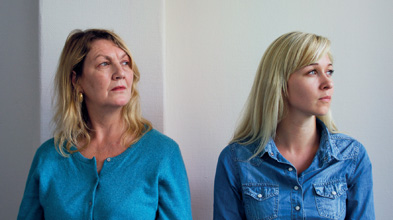
Take#2
| | color | 7:0 | Norway | 2012
2 ladies in a room: a casting agent and an actress. This hybrid documentary deals with empathy, acting and authentisity. Marie starts: When I enter into a role, I imagine that every individual has a core, with the same potential emotional life.
Thomas A Østbye is a distinctive voice among Norwegian directors. He`s known to combine artistic reflections on the documentary genre with contemporary political dilemmas. He made his mark with formally challenging documentaries like Imagining Emanuel, HUMAN, and In your dreams, which received a dozen of art and film awards. He also makes art installations, and runs PlymSerafin production company.