Catalogue > Search
Results for : Tout le catalogue
Ouazzani Carrier
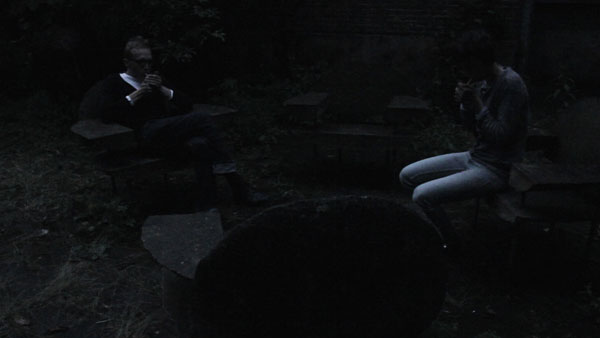
Old School
Video | hdv | color | 8:12 | France, Netherlands | 2012
An old school used by an artist-cooperative during the 90s and the 2000s and before being recovered by the city to become a new place for gentrification.
Graduated from the National High School of Arts Paris-Cergy and from La Sorbonne Nouvelle in Cinema Studies, Nicolas Carrier develop his work on the edges of cinema, tourism and ethnography. Through short elliptical films, found footage pieces and photographs, he explores our relation to time and memory by creating floating and repetitive temporalities, minimal fictions, rituals or games. Inspired by the history of places that he used as playgrounds, his work reveals traces of human and nature and their way to appropriate them. It questions the themes of leisure, exploration and animism. Born in 1981, lives in Paris.
Ouazzani Carrier, Marie Ouazzani
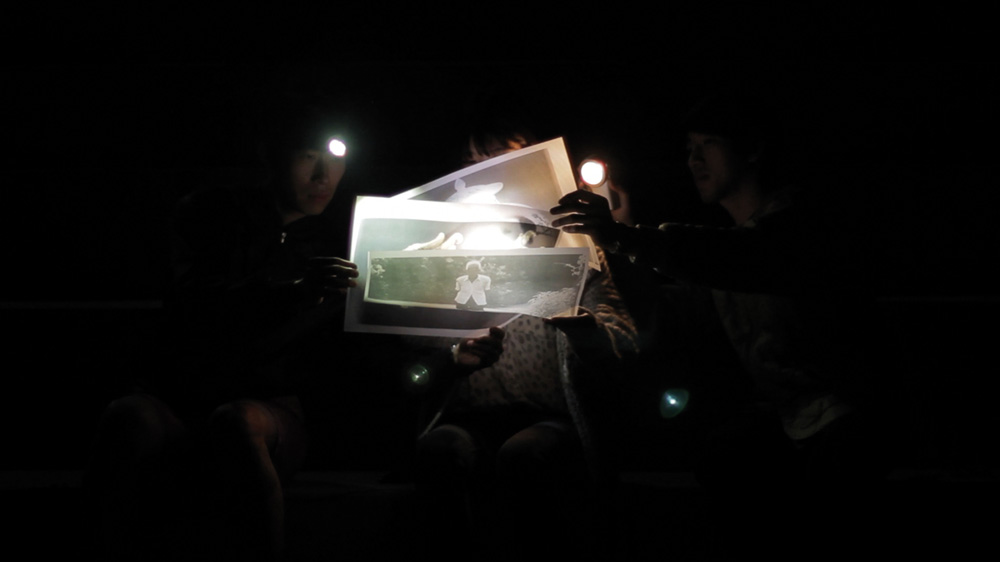
Tracing Ghosts
Video | hdv | color | 9:22 | France, Korea, South | 2015
During the Japanese colonization of Korea, this school aimed to recruit orphan kids for the occupying forces. Now an artists residency, one says that it’s haunted. By playing with some tracing papers of artistic, historical and touristic images, three young koreans awaken the memories and past of this place.
The artist duo Marie Ouazzani (b. 1991) and Nicolas Carrier (b. 1981) was formed in 2015. Through travels that bring them to monuments and historical landscapes, they engage with the context of those places and re-contextualize images to highlight their memories. Their installations, films and publications confront those cultural objects to investigate their spiritual and phantasmagorical potential. By handling images, their work offers a critical reflection around the representations induced by our time.
Ouazzani Carrier
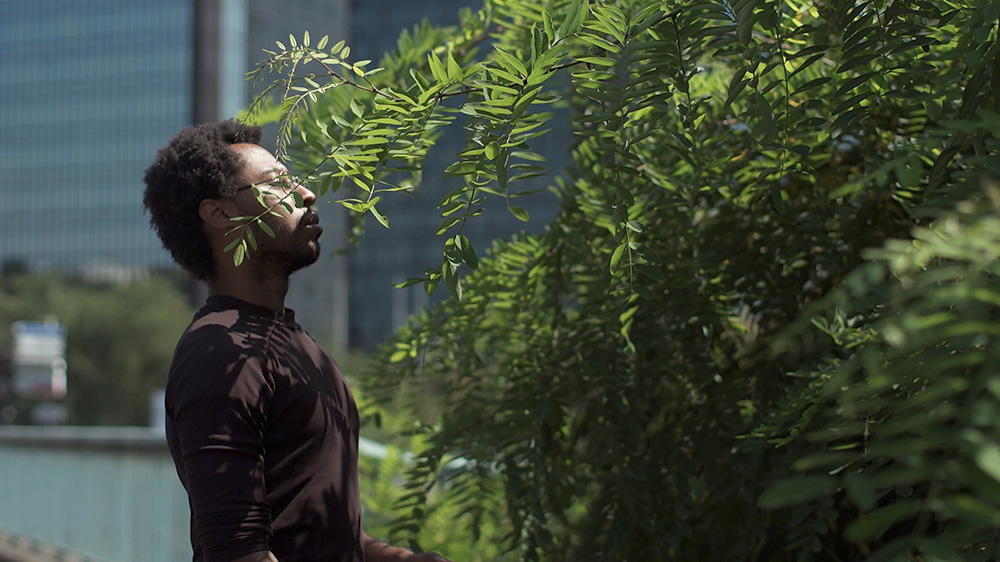
Exposition périphérique
Video | hdv | color | 52:0 | France | 2018
"Exposition périphérique" est un voyage en voiture autour du périphérique extérieur parisien et des villes qui le bordent. Tel un inventaire des plantes qui habitent ce paysage de proche banlieue en pleine transformation du Grand Paris, cette fiction suit des jardiniers qui prennent soin des mauvaises herbes et plantes en pot, comme autant de propositions de résistance à l'urbanisation, et qui vivent dans les interstices laissés par la densification urbaine.
Vivant ensemble depuis 2015, Marie Ouazzani & Nicolas Carrier sont attentifs aux détails et aux ressources du quotidien. Qu`ils séjournent en Asie de l'Est, au Moyen-Orient ou en Europe, ils explorent chaque contexte à la recherche de fictions où se mêlent pollution, fantômes, ruines et économie. A partir de gestes et de situations simples, leurs vidéos et installations confrontent environnement et urbanisation afin de rééquilibrer les tensions de ces paysages. Récemment, leur travail a été présenté aux centres d'art de Mains d'Oeuvres, de la Villa Arson et du 3 bis f, au 61e Salon de Montrouge, à la 5e Biennale d'Odessa et à Darat al Funun en Jordanie.
Akosua Adoma Owusu
Drexciya
Experimental video | dv | color | 11:30 | USA, Ghana | 2010
A portrait of an abandoned public swimming facility located in Accra, Ghana set on the Riviera. The Riviera at one time was an upscale development, consisting of luxury high-rises and five star hotels. Since the 1970s, the Riviera has fallen into a disheveled state. This short documentary was inspired by afro-futurist myths propagated by the underground Detroit-based band Drexciya. They suggest that Drexciya is a mythical underwater subcontinent populated by the unborn children of African women thrown overboard during the Trans-Atlantic slave trade. These children have adapted and evolved to breathe underwater.
Akosua Adoma Owusu (born January 1, 1984) is a Ghanaian-American avant-garde filmmaker and producer whose films have screened worldwide in prestigious film festivals, museums, galleries, universities and microcinemas since 2005. Her work addresses the collision of identities, where the African immigrant located in the United States has a "triple consciousness.” Owusu interprets Du Bois’ notion of double consciousness and creates a third identity or consciousness, representing the diverse consciousness of women and African immigrants interacting in African, white American, and black American culture. Named by Indiewire as one of the 6 Avant-Garde Female Filmmakers Who Redefined Cinema, and one of The Huffington Post‘s Black Artists: 30 Contemporary Art Makers Under 40 You Should Know, Akosua Adoma Owusu is a MacDowell Colony Fellow and a Guggenheim Fellow. Founded in 2007, her company, Obibini Pictures, LLC has produced award-winning films including Reluctantly Queer and Kwaku Ananse, which received the 2013 African Movie Academy Award for Best Short Film. Reluctantly Queer was nominated for the Golden Bear and Teddy Award at the Berlinale, Berlin International Film Festival in 2016. In 2010, Owusu was a featured artist at the 56th Robert Flaherty Film Seminar. Artforum listed Me Broni Ba as one of 2010’s top ten films. Her work is included in the permanent collections of the Whitney Museum of American Art, the Fowler Museum, Yale University Film Study Center, and Indiana University Bloomington, home of the Black Film Center/Archive. She’s received support from Creative Capital, Tribeca All Access, IFP, Focus Features Africa First, the Art Matters Foundation, the Camargo Foundation and the Berlinale World Cinema Fund. Owusu holds MFA degrees in Film & Video and Fine Art from California Institute of the Arts and received her BA in Media Studies and Studio Art with distinction from the University of Virginia, where she studied under the mentorship of prolific avant-garde filmmaker, Kevin Jerome Everson.
Akosua Adoma Owusu
Reluctantly Queer
Experimental doc. | super8 | black and white | 8:0 | Ghana | 2016
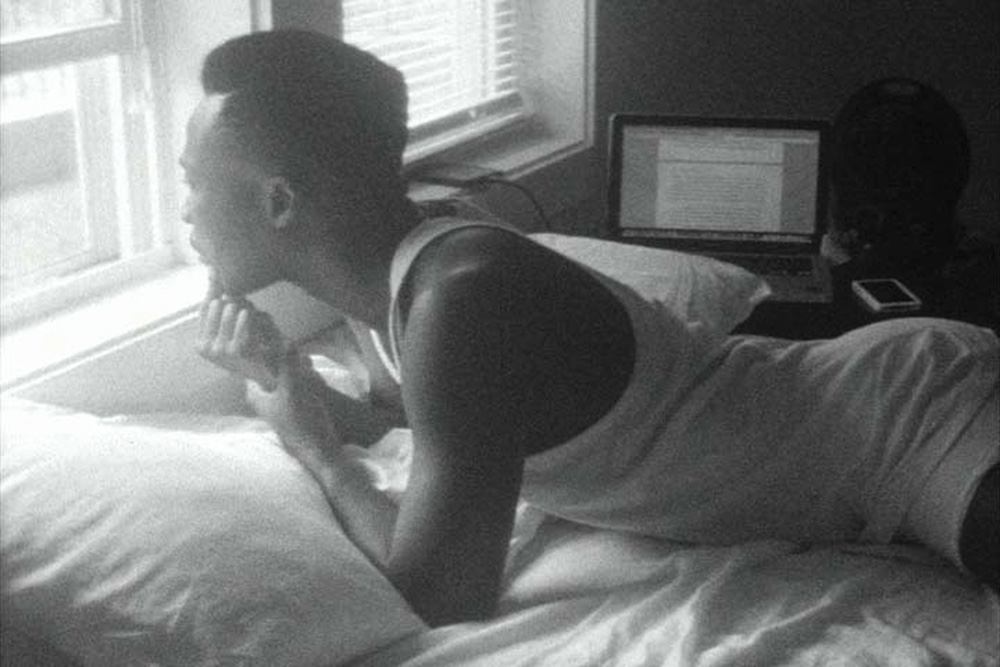
This epistolary short film invites us into the unsettling life of a young Ghanaian man struggling to reconcile his love for his mother with his love for same-sex desire amid the increased tensions incited by same-sex politics in Ghana. Focused on a letter that is ultimately filled with hesitation and uncertainty, Reluctantly Queer both disrobes and questions what it means to be queer for this man in this time and space.
Akosua Adoma Owusu (b. 1984) is a Ghanaian-American filmmaker, producer and cinematographer whose films address the collision of identities. Interpreting the notion of "double consciousness" coined by sociologist and civil rights activist W.E.B. Du Bois to define the experience of black Americans negotiating a sense of selfhood in the face of discrimination and cultural dislocation, Owusu aims to create a third cinematic space or consciousness. In her works, feminism, queerness and African identities interact in African, white American, and black American cultural environments. Owusu's films have screened internationally in festivals like Rotterdam, Locarno, Toronto, New Directors/New Films (New York) and the BFI London Film Festival. Her work is included in the collections of the Whitney Museum of American Art, the Centre Georges Pompidou, the Fowler Museum and the Indiana University Bloomington, home of the Black Film Center/Archive. Named by IndieWire as one of 6 pre-eminent Avant-Garde Female Filmmakers Who Redefined Cinema, she was a featured artist of the 56th Robert Flaherty Seminar programmed by renowned film curator and critic Dennis Lim. Her film "Kwaku Ananse" won the 2013 African Movie Academy Award. She has received fellowships and grants from the Guggenheim Foundation, the Knight Foundation, Creative Capital, the MacDowell Colony, the Camargo Foundation and most recently Goethe-Institut Vila Sul in Salvador-Bahia. Currently, she divides her time between Ghana and New York, where she works as a Visiting Assistant Professor at the Pratt Institute in Brooklyn.

Ivan Ozetski
1#Art Karaoke
Experimental video | dv | color | 3:0 | Croatia | 2005
"Art karaokes PROPOSAL FOR FIRST ART KARAOKE PROJECT BY IVAN OZETSKI Project`s concept; My idea was to transfer my life research and work into a medium witch is not considered to be an art medium. That was the reason why I started to use the karaoke medium, witch was working perfectly for something that could be interpreted also as transferring project into propaganda for my research. Through this propaganda, I was actually building the base for my ideas in the easiest possible way, as a painter needs good canvas. Just to create some distance between my work and real karaoke, here is short history of how was karaoke invented. Real Karaoke videos have an obscure existence, it is actually replica of original video, but since its purpose is singingof and presenting in pubs, it has to be made like that. They are private production so practically they have to make money with smallest possible investment. They have also different language in submenu, so they can be sung and sold everywhere. I think that main concept of karaoke is SELL&SING!!! Since my videos doesn`t have function to sell, and they are not commercial at all, I can use original songs for my videos under excuse of an art project. Just to explaine the main difference beetween real karaoke and my art-work ; real karaoke videos are so stereotypical on every part of the world, in China, Vietnam, and Thailand- It`s almost a concept and to create them, you need few rules, or I make a joke and utter seven commandments (or mortal sins) of real karaoke ; 1. make the production as cheap as possible 2. use amateur videos for background 3. choose and create replica of a familiar song 4. put lonely women into sad songs 5. put in a couple for happy songs 6. put familiar image of some city in background video; or a sand beach! 7. subject has to be extremely happy, in love, or sad (depending on song) My karaoke videos use these rules, but not always. My work carries personal issues about unknown artist, or art history books. With my texts, as karaoke subtitle I am trying to comment on a particular artists work, as they belong in art history, built in random order, without logical approach."

Ferhat özgür
I CAN SING
Experimental video | dv | color | 7:0 | Turkey | 2008
The video ?I Can Sing? shows an Islamic woman who wears headscarf, singing a song in front of a new settlement buildings in Ankara, where the urban transformation process is tangible. In some aspects the video is related with the people who are forcing their way between the minarets that have traditionally dominated the city. Against the backtop of the recontructed home, a headscarf-wearing Anatolian woman sways to a lament. Her lips to move. But the soundtrack is Jeff Buckley?s bitter, defiant version of Leonard Cohen?s classic ?Hallelujah?. ?Well it goes like this / The fourth, the fifth / The minor falls and the major shift?: The major keys, characteristic o Western music, become a symbol of uprooting; traditional Turkish music relies on the softer, minor tonalities. Swaying to ?Hallelujah?, the woman spreads her arms to the sky, lays her hands on her heart. What god is she singing to? The staging alternates between praise and lament, its reference to the global idiom of karaoke giving it an ironic touch.
Ferhat Özgür (1965-Ankara-Lives and works in Ýstanbul / TURKEY) He graduated from Gazi University, Education Faculty, Department Of Painting in 1989. Having completed his master and doctorate studies in Hacettepe University Fine Arts Faculty, Department of Painting in 1997, he was appointed to the same department as an assistant to the same department as professor where he taught for more than a decade. He currently works and teaches in Istanbul Culture University, Art and Design Faculty, Department of Communication Design. selected group shows and upcoming events 2011?Un?espressione Geografica? Fondazione Sandretto Re Rebaudengo, Turin ? Italy (curator: Francesco Bonami) 2011 ?Festival of Confusion?BEURSSCHOUWBURG, Brussels (curator: Cis Bierinckx) 2010 ?Spartacus?, video screening in Public Square Dublin-(curator: Vaari Claffey) selected recent group events 2010: `PastPresentFuture:Higlights of The UniCredit and Yapi Kredi Collection`, Yapi Kredi Culture Center, Istanbul-Turkey. 2010 ?6th Berlin Biennale?, Germany (curator: Kathrin Rhomberg, catalogue) 2010?Are You A Lucky Artist??Fondazione Fotografia, Casa Di Risparmio di Modena, Italy (curator: Francesca Lazzarini) 2009?That Women Running With The Wolves? Stimultania, Strasbourg-France(Curators: Çelenk Bafra, Murat Alat, catalogue) 2009 ?Seriously Ironic? CentrePasquart Kunsthaus Centre d?Art-Switzerland (curators: Dolores Denaro, Iþýn Önol, catalogue) 2009 "Politics of Redistribution" Magazin 4 Kunstverein, Bregenz-Austria (curator: Sabine Winkler, catalogue) 2009 ?Soft Manipulation, Who Is Afraid Of The New Now? Casino Luxembourg Forum d?Art Contemporain-Luxembourg Stiftelsen 3, 14, Bergen-Norway (curators: Zoran Eric-Maria Lind-Enrico Lunghi, catalogue) 2007 ?10th Istanbul Biennial, ?Not Only Impossible But Also Necessary, Optimism In The Age of Global War?-Turkey (curator: Hou Hanru, catalogue)
Ferhat özgür
METAMORPHOSIS CHAT
Experimental video | dv | color | 9:25 | Turkey | 2009
"Metamorphosis Chat" cites the narrative frame of Turkish soap operas. The artist?s mother, who has never worn a headscarf, meets a neighbour a teacher in modern dress, for tea. The two woman decide to switch roles and begin to Exchange their clothes to become one another. Artist influence as director recedes as the women, letting themselves be carried away by the merriment of dress up, become their own authors. Their hearty friendliness, their opennes in dealing with what might otherwise be embarrising, their giggling at each other and themselves ?all poke fun at the fear and agrresive moralizing other found in debates on symbols with religious connotations.
Ferhat Özgür (1965-Ankara-Lives and works in Ýstanbul / TURKEY) He graduated from Gazi University, Education Faculty, Department Of Painting in 1989. Having completed his master and doctorate studies in Hacettepe University Fine Arts Faculty, Department of Painting in 1997, he was appointed to the same department as an assistant to the same department as professor where he taught for more than a decade. He currently works and teaches in Istanbul Culture University, Art and Design Faculty, Department of Communication Design.
Thomas østbye
Take#2
| | color | 7:0 | Norway | 2012
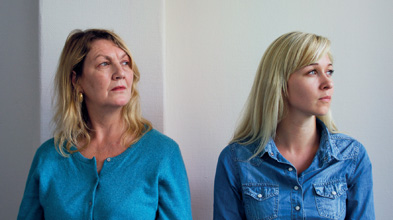
2 ladies in a room: a casting agent and an actress. This hybrid documentary deals with empathy, acting and authentisity. Marie starts: When I enter into a role, I imagine that every individual has a core, with the same potential emotional life.
Thomas A Østbye is a distinctive voice among Norwegian directors. He`s known to combine artistic reflections on the documentary genre with contemporary political dilemmas. He made his mark with formally challenging documentaries like Imagining Emanuel, HUMAN, and In your dreams, which received a dozen of art and film awards. He also makes art installations, and runs PlymSerafin production company.
Florencia P. Marano
binder
Video | betaSP | black and white | 4:58 | Spain | 2009
Binder. Many people modify, hide, show off or retouch parts of their bodies in order to have certain social treatment. The experimental video ?binder? is an interpretation of the look and feel of trans FTM (female to male) whom want to be treated by everyone, in the role, which they desire. They are finding their own physical and social comfort by modifying a particular zone of their body. The routine fashion for Michael is to put on and take of the ?binder? daily in order to hide his chest and modify his body.
Florencia P. Marano Filmografía Documentales: Test de la vida real Documental Guión, realización, cámara y montaje. SF Producciones-Xarxa tv 2009 Lucha tradicional senegalesa en Barcelona Programa tv RTS Senegal Documental/reportaje Realización, cámara y montaje. 20 minutos SF Producciones 2008 Mère Guión, realización y montaje Documental 30 minutos Magoproductions-SF Producciones 2008 Salah Azzaz Guión, realización, cámara y montaje Documental experimental 24 minutos- Programa DO XTVL Xarxa Tv- Magoproduction 2008 Le corps de Mouhamadou Guión, realización y montaje Documental experimental 16:33 minutos Beca Generación 2008 Obra Social Caja Madrid. SF Producciones 2008 Jazz Guión y dirección Documental 30 minutos TV3 ? Parallel 40 Programa Taller.doc canal 33 2007 Un día mes Guión y dirección Documental 30 minutos Programa Taller.doc canal 33 TV3 ? Parallel 40 2006 La Makabra Guión y dirección Documental 30 minutos TV3 ? Parallel 40 Programa Taller.doc canal 33 2006 Videoarte: Cloe Realización, cámara y montaje 5 minutos SF Producciones 2006 The Sect Realización y montaje 7 minutos SF Producciones 2007 Recetas para la mujer moderna Realización, cámara y montaje 2 minutos SF Producciones 2007 Festivales y exposiciones: ?Le corps de Mouhamadou?: -Premios y Becas de Arte GENERACIÓN 08 Obra Social Caja Madrid. Exposición colectiva La Casa Encendida, actual muestra por España. -Exposición galería LA FABRICA Barcelona 09. -Ptimer Premio FESTIVAL INTERNACIONAL BERRIOZAR MEJOR DOCUMENTAL SOCIAL. -ARCO 08 -Sección Oficial ALCANCES 08 Festival Internacional cinematográfico -Sección Oficial VAD 08 Festival Internacional de Video y Artes Digitales -Sección Oficial CANARIASMEDIAFEST Festival Internacional documental de autor -Sección Oficial OPTICA 08 Festival Internacional de videoarte. -Sección Oficial ALCINE 08 Sección Nacional Festival de cortometrajes. -Sección Oficial CERTAMEN INTERNACIONAL SORIA. -Sección Oficial ZINEBI EX IS Sección documental experimental. -Selección Videoteca OVNI 09 CCCB Barcelona. -Selección Videoteca Zemos 09 Valencia. -Sección oficial ISANTILLA CINEFORUM ANDALUCÍA. 09 -Sección Oficial de CINESPAÑA Tolouse, Francia 09 ?La Makabra?: -Muestra de cine documental OVNI 08 CCCB ?Jazz?: -Muestra de jóvenes creadores de Catalunya 08 Apolo ?The Sect? -Loop Festival de Videoarte de Barcelona 08 ?Recetas para la mujer moderna:? -Loop Festival de Videoarte de Barcelona 08 ?Cloe?: -Loop Festival de Videoarte de Barcelona 06 Nau Ivannov
Andrés Pachón
Sombras de Nueva Guinea
Experimental doc. | | | 1:50 | Spain | 2011
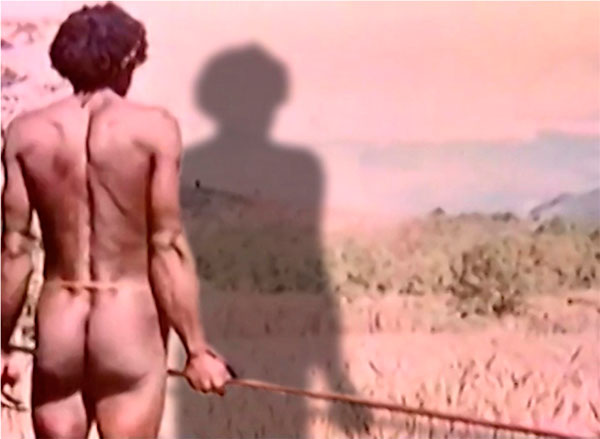
In 1964 Robert Gardner filmed the documentary ?Dead Birds?, this film explored the Dani people of New Guinea, one of the last areas in the World to be colonized at that time. Gardner was knowing for his work in visual anthropology and ethnographic documentary. ?Dead Birds? was criticized in the anthropological community for its inauthenticity, Gardner edited the sound and he recreated battle scenes. They also said that the movie did not make sense, because he broked the distance with the portrayeds. ?Shadows of New Guinea? makes a step in this inauthenticity. Andrés Pachón makes a rotoscoping (redrawn manually frame by frame) on original film`s fragments, creating shadows to the protagonists. The nature where actions are developed, the original context of New Guinea highland whose referent was recorded on camera, it becomes a huge background, a trompe l`oeil revealed by shadows. These shadows, and its consequent fictional effect, want to disclose the fantasy contained in the european imaginary of an exotic and tribal world. The shadows disclosed a background, a wall, that separates us from the ?other?.
Andrés Pachón born in 1985 in Madrid, where he currently resides. In 2008 he was graduated in Fine Arts from the UCM. Since 2005 he has been selected in several national contests, among them being prize "e-Crea 2010", Lleida, purchase prize 2012 in the "V International Prize Foundation María José Jove", Galicia, and finalist of the "Premi Miquel Casablancas" 2013 Barcelona. In 2010 he was part of the exhibition "Drug of the real" in Angeles Baños Gallery, Badajoz, gallery that currently represents him. In 2012 he has his first solo exhibition in Angeles Baños Gallery, entitled "In Memoriam". He has participated in international fairs such as "ArteSantander 2010", "JustMad 4", where he was finalist in the best emerging artist award, or "ARCO 2014". Also he has shown his photographs and videos on Berlin, ?Wege ums Kino? exhibition, or Lisboa, ?Que a dor nao seja mais do que uma recordaçao? exhibition. In the last year he has shown his last and fourth solo exhibition, ?Tropologías? in the Art Center of Alcobendas, Madrid; and his video works in Lázaro Galdiano Museum, Madrid, in ?VIVA Collections on Tour? show.
Katarzyna Pacura, Jan Szewczyk
Ocean
Video | hdv | color | 4:9 | Poland | 2014
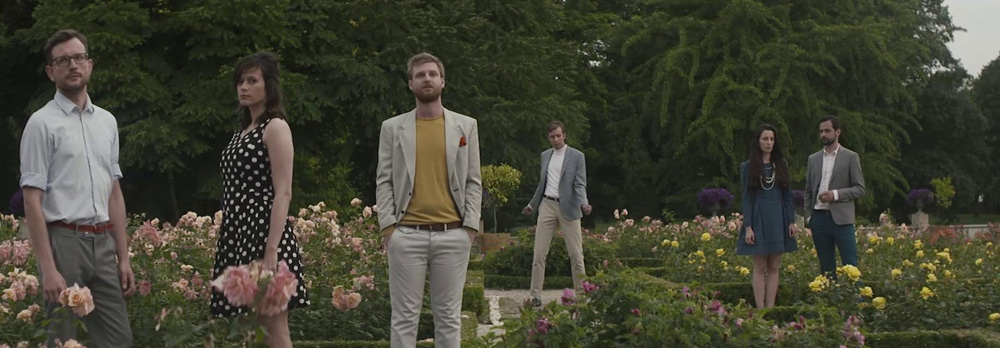
The piece "Ocean" was originally a conceptually designed, visual statement for a song by dutch musician, Olivier Heim. Looking for a connection between lyrics and aesthetics, we found main inspiration in the masterpiece by Alain Resnains "Last year in Marienbad". As we didn't want to copy and repeat exactly the same sequences of shots, we were just searching for an universal code, which made that kind of poetics legendary and original. The most important became, how to transfer contemporary sound and looks (meaning ; cinematography, style) into something classic and the other way round. What makes the classics attractive? We consider elegance in filmmaking as our motto and something that should be popular again.
Katarzyna Pacura, born 1986 in Lodz, Poland. Studied at University of Arts in Poznan, Poland, Douglas Gordon Filmclass at Stadelschule, Frankfurt am Main and German Film and Television Academy in Berlin (Dffb - directing). Film and video maker, scriptwriter and visual artists. Jan Szewczyk - born 1986 in Bialystok, Poland. Graduated from University of Arts in Poznan, Poland where currently he continues his Phd studies in contemporary art. Film and video maker, visual artists, cinematographer.
Laura J. Padgett
Solitaire
Experimental film | 16mm | color and b&w | 2:19 | USA, Germany | 2017
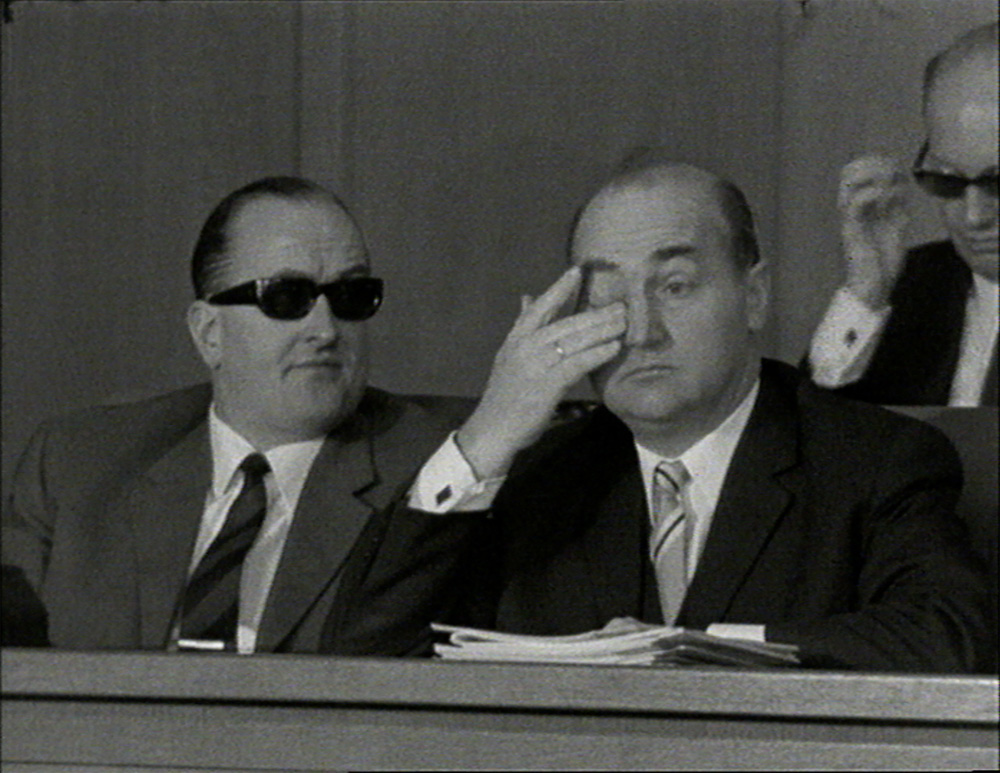
We see Max Horkheimer buying newspapers, we hear Hannah Arendt speaking about the mother tongue and making the invisible tangible. We also see Frankfurt am Main during the great (re)construction boom of the 1960s. We see demonstrations on the Römerberg and the presence of the American Forces in the Federal Republic of Germany during the cold war as well as scenes after the apprehension of members of the Red Army Faction. Housing shortages, urban development, youth and their future, guest workers, consumer society: these topics are repeatedly presented and discussed in the Hessen Schau news program from this period. The film deals with the concept of democracy, of having a voice and the contiguity between private and public space. These boundaries, which are in the process of dissolving, are made clear the storytelling in this film as fundamental strands of our social being. Laura J. Padgett’s found footage film SOLITAIRE is made from documentary film material and radio broadcasts of the late 1950s until 1972. It was culled exclusively from the Hessian Broadcasting Corporation’s (hr) archives.
The artist’s work explores unoccupied spaces, both real and imaginary, to reveal truths that are often overlooked. Like her subject, her work itself occupies the spaces between photographic storytelling and installation, between language and image, between history and current affairs. While she uses photographic media the results are always more than photographic objects. Since the nineties Padgett has produced a wide-ranging body of work, adopting various genres such as architectural photography, still life and urban street photography while exploring our ideas of communal and cultural identity. Laura J. Padgett’s work is often displayed in public spaces and plays with scale, material and the way we interpret images and their relation to history. The breadth of her work demonstrates an ability to move fluidly between genres, based on her background in painting, art history and architecture. Born in Cambridge, USA, Laura J. Padgett studied painting, film and photography at Pratt Institute in Brooklyn New York. Her conceptual approach to her projects stems from this background. Her further studies in film and art history, with Peter Kubelka at the Städelschule and at the Goethe University in Frankfurt am Main, respectively, broadened her approach. Laura J. Padgett exhibits internationally, and her work can be found in state and corporate collections such as the DZ-Bank ArtCollection, Frankfurt am Main. Her work is in the permanent collections of Museo Museion, Bolzano, Museum für Kunst und Gewerbe Hamburg, Museum Wiesbaden and the Städel Museum, Frankfurt am Main. She is the 2017 recipient of the Marielies-Hess-Art Award. Laura J. Padgett lives and works in Frankfurt am Main.
Dirk Paes, Joan HEEMSKERK, Dirk PAESMANS
Composite club
Multimedia installation | | color | 99:99 | Belgium, Netherlands | 2007
Dans cette ?uvre JoDi détourne et réinterprète les jeux vidéos grand publics utilisant la reconnaissance optique et les système de captation du mouvement, eux mêmes issus de travaux de recherche militaire des années 80. Le code des jeux vidéo est réécrit puis confronté à d`autres situations visuelles que celles prévues dans le scénario du jeu. En même temps qu`une réflexion sur les stratégies de contrôle et l`archaïsme du dispositif ludique proposé par l`industrie du jeu vidéo, JoDi met en réflexion le dispositif narratif du jeu vidéo et ses stratégies d`interaction. Le jeu altéré est confronté à des extraits de film de cinéma, ou de reportage TV, produisant une nouvelle trame narrative et renversant le rapport d`interaction. Le joueur devient observateur du dispositif, le jeu vidéo se trouve alors confronté à un scénario complexe soulignant les limites du schéma d`interaction du jeu initial.
JODI est un collectif formé par deux artistes, Joan Heemskerk (Pays-Bas) et Dirk Paesmans (Belgique). Ils ont débuté avec de la photographie et la vidéo, et au milieu des années ?90, ils ont été les premiers à créer des oeuvres en ligne. Ils explorent et subvertissent les conventions de l?Internet, des logiciels informatiques et des jeux vidéos. Dans leurs travaux récents, ils ont modifié des jeux comme Wolfenstein 3D, Quake, Jet Set Willy, et Max Payne 2. Ils désorganisent radicalement le langage même de ces systèmes, en incluant des interfaces, des commandes d?erreurs et des codes. JODI effectue des interventions numériques extrêmes qui déstabilisent la relation entre la technologie informatique et ses utilisateurs. JODI mène une réflexion critique sur nos perceptions et usages de l?informatique. Ils transforment et transportent à la surface les processus qui apparaissent habituellement dans le background, comme on peut le voir sur leur site, jodi.org : des crashes, les fichiers log-in, les certificats de sécurité de logiciels, le refus des services de garanties. Le travail de JODI a été présenté dans de nombreuses expositions internationales, et des festivals, comme la Documenta X. Ils ont reçu le Webby Award dans la catégorie art (UCSOB). JODI a été formé en 1994 par les deux artistes Joan Heemskerk et Dirk Paesmans. Joan Heemskerk est née en 1968 à Kaatsheue, aux Pays-Bas. Dirk Paesmans est né en 1965 à Bruxelles, en Belgique. Ils vivent et travaillent aux Pays-Bas. Heemskerk et Paesman ont tous les deux fréquenté le laboratoire d`art numériques CADRE, rattaché à l`université de San José de Californie, dans la Silicon Valley. Paesmans a également étudié sous la direction de Nam June Paik à la Kunstakademie de Dusseldorf. Le travail de JODI est réalisé spécifiquement pour être vu en ligne. Leur exposition inividuelle récente inclut INSTALL.EXE at Eyebeam, à New York, qui a été itinérante [plug-in], à Bâle, au BuroFriedrich, à Berlin; et Computing 101B au FACT Centre, Liverpool, Royaume-Uni. Leur travail a également été exposé, entre autre, au Centre for Contemporary Art, Glasgow; au Kunstverein à Bonn; au Stedelijk Museum d`Amsterdam; au Zentrum fur Kunst und Medientechnologie de Karlsruhe, en Allemagne, et à la Documenta X, de Kassel, en Allemagne.
Dirk Paes
GeoGoo 2010
Multimedia installation | | | 0:0 | Belgium, Netherlands | 2010
Dirk Paes, Joan HEEMSKERK, Dirk PAESMANS
Max Payne Cheats Only
Video installation | dv | color | 0:0 | Belgium, France | 2006
For this work, JODI has undertaken modifications on the ultra violent video game "Max Payne", in which the character has to kill a great number of criminals on his way. Using the video game as a starting point, JODI compiled a series of cheats. These cheatings modify the behavior of the video game. They are often created by the programmers themselves, in order to help the players who find themselves stuck in a dead-end. JODI changed the structure of the program so that absurd perspectives and a few effects alter the realistic graphics of the game: we can see the muscular main character repeating idiotic movements. For instance, he sticks his angular head into a virtual matrix, his body appears semi-transparent ... This new treatment of the game can be seen as a free interpretation of the temporal effect of ultra-rapidity which makes Max Payne stand out from other games, slow motions allowing for a new perception of space and time.
JODI are two artists who pioneered Web art in the mid-1990s. Based in The Netherlands, JODI were among the first artists to investigate and subvert conventions of the Internet, computer programs, and video and computer games. Radically disrupting the very language of these systems, including interfaces, commands, errors and code, JODI stages extreme digital interventions that destabilize the relationship between computer technology and its users. JODI (Joan Heemskerk and Dirk Paesmans) was formed in 1994. Joan Heemskerk was born in 1968 in Kaatsheue, The Netherlands. Dirk Paesmans was born in 1965 in Brussels, Belgium. Heemskerk and Paesman both attended Silicon Valley`s electronic arts laboratory CADRE at San Jose State University in California; Paesmans also studied with Nam June Paik at the Kunstakademie in Dusseldorf. JODI's works can be seen online. Their recent solo exhibitions include INSTALL.EXE at Eyebeam, New York, which toured to [plug-in], Basel, and BuroFriedrich, Berlin; and Computing 101B at FACT Centre, Liverpool, England. Their works have also been exhibited at the Centre for Contemporary Art, Glasgow; Kunstverein Bonn; Stedelijk Museum, Amsterdam; Zentrum fur Kunst und Medientechnologie, Karlsruhe, Germany, and Documenta X, Kassel, Germany, among others.
Dirk Paes
44 Shorts
VR 360 video | hdv | | 10:0 | Belgium, Netherlands | 2019
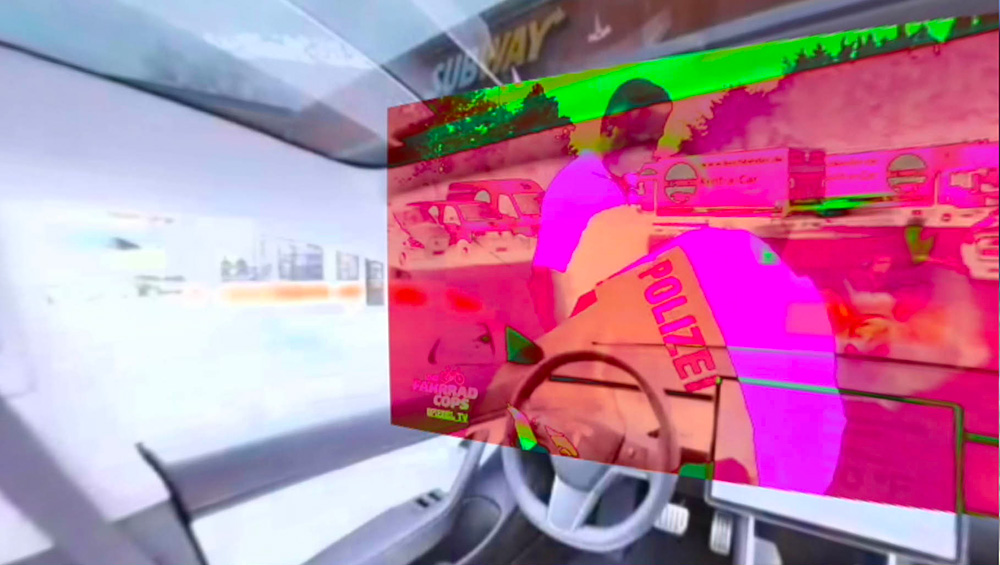
Made of 360 fragments of found footage 360° videos, “- f(OO)f -” explores and recycles sequences recorded from cars, planes, video games, reports and home videos. Images are intertwined, intricated and edited, questionning both spaces of perception and representation, building a radical criticism of our contemporary visual culture.
Dirk Paes was born in Brussels, he lives and works in the Netherlands. He is one of the members of the JODI duo, who pioneered web-based art in the mid-90s. For a few years now, in parallel to their collective work, each of them is developing specific artistic researches on their own. Jodi’s work is featured in most art historical volumes about digital art, media art, and net art, and has been exhibited widely at venues such as documenta X, Kassel; Stedelijk Museum, Amsterdam; ZKM, Center for Art and Media, Karlsruhe; Bonner Kunstverein and Artothek, Bonn; InterCommunication Center, Tokyo; Centre Pompidou, Paris; Center for Contemporary Arts, Glasgow; Guggenheim Museum, New York; MoMA, New York; Eyebeam, New York; and Museum of the Moving Image, New York, among many others. Jodi is regularly seen as part of an international group of artists, including Vuk Cosic, Alexei Shulgin, and Olia Lialina, who pioneered art on the web, usually referred to as net.art. In contrast to working in the institutionalized art world, they chose to work on the net because it gave freedom. The internet was a free space to experiment and communicate. This network of artists influenced each other and communicated using mailing lists such as Rhizome and Nettime (which was founded by Dutch media theorist Geert Lovink). After they met at the Jan van Eyck Academy in Maastricht, where they studied photography and video, they moved to Silicon Valley (San Jose, California) to learn about digital media. It was in Silicon Valley that they became familiar with the internet. Since 1995 they have been working together as Jodi, creating art on the World Wide Web. Although they are most famous for their web-based work, they also work in a wide variety of media and techniques like software, performances, installations, and exhibitions. JODI were among the first artists to investigate and subvert conventions of the Internet, computer programs, and video and computer games. Radically disrupting the very language of these systems, including interfaces, commands, errors and code, JODI stages extreme digital interventions that destabilize the relationship between computer technology and its users. They received a 1999 Webby Award in the category Net Art. In 2014, Jodi was awarded the inaugural Prix Net Art Award by Rhizome, a leading art organization dedicated to born-digital art and culture affiliated with the New Museum in New York. The influence of the work can not only be seen in the art world, but in internet culture too: the work is spoken about on forums of hacker sites and on YouTube many videos can be found reviewing, explaining, and researching wwwwwwwww.jodi.org with titles such as “weirdest website of all time” and “wwwwwwwww.jodi.org: secrets?”.
Simon(e) Jaikiriuma Paetau, Nadia Granados
Mojana
Video | mov | color | 18:9 | Germany, Colombia | 2021
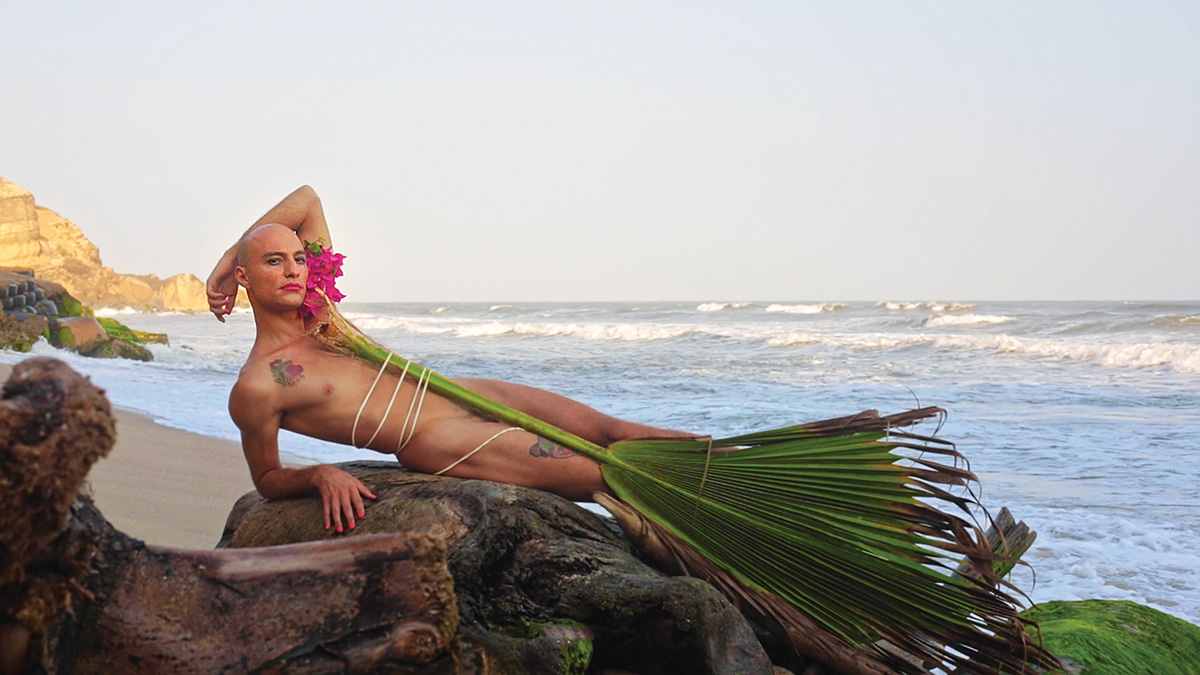
"Mojana" is an associative re-imagining of a Colombian myth and traditional song. A mermaid-monster, who is desired and punished: the man-eating, seductive Mojana. Agressions against this free and rare spirit are justified by obsessive love and desire. The film denounces the naturalized violence against this mythical female creature and reappropiates her as a symbol of trans-feminine resilience. Kinematic bodies and animal-human hybrids. An absent body, which returns into representation. A history of dissident bodies who resist dying in a necropolitical system.
Simon(e) Jaikiriuma Paetau is a German-Colombian artist. Their artistic projects are located between film and performance, dealing with queer cultures and decoloniality. Simon(e) studied Media Art at the KHM Cologne and Film at the EICTV Cuba. Simon(e)’s films have premiered at Documenta14, Cannes Directors Fortnight, MoMA, Rotterdam and has been awarded the prize for Best Director at the International Cartagena Film Festival Colombia and won the first prize (MuVi Award) at kurzfilmtage Oberhausen, among others. Simon(e)’s performance works have premiered at Studio ? of Maxim Gorki Theater, Ballhaus Naunynstrasse, Hebbel am Ufer, as well as the 11th Berlin Biennale. Nadia Granados Using my body in combination with multi-media technologies, my artistic practice illuminates the relationships between the representation of state violence in mainstream media, institutionalized machismo, heterosexual pornography, and violence against women. My work is both performative and technological, both art and activism, and a mix of cabaret, public intervention, and video transmission. Five years ago I created La Fulminante, a character who invites her audience into the world of auto-representation and meta-pornography, using internet information strategies to condemn globalized society. La Fulminante dismantles the language used in the discourse of emancipation by bringing together in her body eroticism and social criticism. La Fulminante is a character inspired by sexually provocative stereotypes of Latin American women. She embodies erotic fantasies built by the mass media, using reggaeton and pornography. She uses her body as a tool to disseminate information, as an element of attraction to make visible alternative political strategies, a resistance against mass media and a struggle against imperialism. In 2015, I was awarded the 3rd Visual Arts Biennial Bogotá Prize Acquisition Award as well as a FONCA scholarship to create a political multimedia cabaret laboratory in Mexico. In 2013 I was selected for a Franklin Furnace Fund Award for the performance Your Car Is Clean, Your Conscience is Dirty, which I performed in New York City 2015. In 2013, I participated as an invited performer at the Hemispheric Institute’s annual meeting in Sao Paulo, and in 2012 I was invited to Canada for La Rencontre Internationale D’art Performance De Québec (RIAP), taking place throughout four cities in Canada. Additionally, my work has been presented in Canada?, Venezuela, Spain, Argentina, Chile, Costa Rica, Germany, Ecuador, Argentina, Peru?, the United States, Mexico, Korea, Brazil, Nicaragua, Guatemala, Estonia, Italy, France, and Colombia.

Simon(e) Jaikiriuma Paetau, Laura Ruiz Paetau
Las Hermosas Invisibles
Experimental doc. | hdv | color | 9:5 | Germany | 2024
The video performance Las Hermosas Invisibles proposes a post-mortem connection between Simon(e) Jaikiriuma Paetau and her/their recently deceased trans sister, Aérea Negrot. For many years, Aérea had been collaborating with Simon(e)’s artistic works with versatile sound creations. In Las Hermosas Invisibles, Simon(e) gathers and assembles all of these sounds present in previous collaborations, and responds to them in a new video-performance piece shot in the territory of the tum xula7xw of the sn??ay?ckstx people. The performance invokes Aérea’s spirit, memories, and the impact she had on Simon(e)’s life and work. Aérea’s artistic and emotional legacy continues to exist and communicate with Simon(e) through sound, music, and memory. The title ‘Las Hermosas Invisibles,’ directly references the term “hermosos invisibles” (beautiful invisibles) coined by Wayuu poet Vito Apüshana. This term represents the human and non-human entities that make up the living and thinking territory of the Wayuu people, with whom Simon(e) became acquainted through their collaboration with Wayuu artist Elizabeth Pirela. While the piece is dedicated to the memory of Aérea Negrot, it also encompasses a broader exploration of the legacy of other trans-ancestors spanning from Tibira do Maranhão to Sylvia Rivera.
Simon(e) Jaikiriuma Paetau is a German-Colombian interdisciplinary artist whose work spans video art, installations, experimental cinema, and performance, with a focus on decolonial themes and queer cultures. In recent years, Simon(e) has focused on inventing myths and utopias inspired by rural and urban cultures in Latin America, challenging hegemonic discourses. In this way, they have created interdisciplinary works and collaborations with racialized artists and historically marginalized communities, especially Emberá & Wayúu, non-binary sexual dissident bodies (including themselves), and rebellious LatinX trans women. Simon(e) studied Media Art at KHM Cologne and Film at EICTV Cuba. Their films and videos have premiered and won awards at prestigious festivals and exhibitions like documenta14, Cannes Directors Fortnight, New Directors/New Films MoMa & Lincoln Center, Berlin Biennale 11, BFI London, and the New York Film Festival. Notable awards and recognitions include the Emerging Talent Award at International Short Film Festival Oberhausen 2022, the Norman Award at Stuttgarter Filmwinter 2023, the Best Director Award at the Cartagena de Indias International Film Festival Colombia (FICCI) 2018, and a nomination for the Queer Palm at Cannes Directors’ Fortnight 2022. Simon(e) has presented their performances and video installations at renowned venues such as the Wexner Center of the Arts, HKW, Martin Gropius Bau, Kasseler Kunstverein, nGbK, Ballhaus Naunynstraße, Shedhalle Zurich, HAU, the Sharjah Art Foundation, and the Cinemateca de Bogotá. In 2023, Simon(e) held their first solo exhibition at the IBB Video Space of the Berlinische Galerie—Museum of Modern Art. The National Museum of Colombia recently acquired several of their works for its permanent collection. Since 2024, Simon(e) is co-founder and artistic director of the transnational German-Colombian experimental artistic laboratory, Atelier Lapaetau.

Daniela Paglione
Sinking Line
Experimental film | hdv | black and white | 6:30 | Canada, United Kingdom | 2024
A son revisits his old home, a place he once knew, searching for a lobster to prove to his father. An exploration of the complexity of masculinity and a letter to my father.
Born in Montréal, Québec, Daniela Paglione is an experimental artist and undergraduate Communications student at Concordia University. She was captivated by filmmaking at a young age and pursued that passion in her studies. Her films “The Earth was Formless and Void” and "Where Old Voices Go" were featured in Concordia’s Film and Media Vernissage 2023 (Montréal, Québec). Her new film “Sinking Line”, was recently screened at the Moving Images Alliance Collective, as well as in the 33rd edition of Vidéo de Femmes dans le parc in Montréal. Currently, she works at Groupe Intervention Vidéo (GIV), an artist-run distribution centre dedicated to promoting works made by women. Daniela has been creating short films independently since 2019. Her work is experimental and focuses on themes of the self, death, and the unconscious.

Jongkwan Paik
La Noche Cíclica (Cyclical Night)
Experimental doc. | hdv | color and b&w | 17:0 | Korea, South | 2016
The time is out of joint. The ghost appears again in the dark of the night. “ The chain of memorial light is not absolutely broken, it is rather knotted in a different way ”
Born in 1982, South Korea. Studied Psychology and Electronics in college and received MFA in Film from the Graduate School of Communication and Arts at Yonsei University. Jongkwan continues to produce experimental films based on research with in-depth study of images.