Catalogue > Search
Results for : Tout le catalogue
Jonathan Cummins
Christy
Experimental doc. | dv | color | 3:10 | Ireland | 2006
"Christy" is one of three short documentary films by Jonathan Cummins screening at this year's festival. Filmed at a prison in Ireland, the films are part of "Landings" an emerging film archive of conversations with prisoners. Employing a methodology that is both educational and collaborative, the project uses video as a tool to explore identity and memory within incarcerated space. Informed by recollections and statements, the films serve as a testimony that marks a time and place between the rarefied interior of prison and inmates' lives outside. In the atomised environment of prison life, the dialogue afforded by such an engagement has much to reveal about the lives of inmates, prison-institutions, and society. The project aims to return a glimpse of the 'total-institution' to civic space and in so doing raise questions about the ownership society takes for its institutions and those held within.
Jonathan has worked with prisoners since 2000 as both a teacher and practitioner. Prior to developing his own film and media-based practice, he worked in the film, TV and interactive industries in various production and creative capacities in Ireland, Asia and the US. He has produced award winning short drama films, which have been screened and at festivals around world. Jonathan studied sociology at Trinity College Dublin. He completed an MFA in Media Art in 1998 at UCLA and studied screen writing through UCLA's School of Film, Theatre and Television. He teaches part-time in the National College of Art and Design (Ireland) Prison Art Programme and University of Ulster.
Jonathan Cummins
Flowers
Experimental doc. | dv | color | 4:0 | Ireland | 2006
"Flowers" is one of three short documentary films by Jonathan Cummins screening at this year's festival. Filmed at a prison in Ireland, the films are part of "Landings" an emerging film archive of conversations with prisoners. Employing a methodology that is both educational and collaborative, the project uses video as a tool to explore identity and memory within incarcerated space. Informed by recollections and statements, the films serve as a testimony that marks a time and place between the rarefied interior of prison and inmates' lives outside. In the atomised environment of prison life, the dialogue afforded by such an engagement has much to reveal about the lives of inmates, prison-institutions, and society. The project aims to return a glimpse of the 'total-institution' to civic space and in so doing raise questions about the ownership society takes for its institutions and those held within.
Jonathan has worked with prisoners since 2000 as both a teacher and practitioner. Prior to developing his own film and media-based practice, he worked in the film, TV and interactive industries in various production and creative capacities in Ireland, Asia and the US. He has produced award winning short drama films, which have been screened and at festivals around world. Jonathan studied sociology at Trinity College Dublin. He completed an MFA in Media Art in 1998 at UCLA and studied screen writing through UCLA?s School of Film, Theatre and Television. He teaches part-time with the National College of Art and Design (Ireland) Prison Art Programme and University of Ulster.
Jonathan Cummins
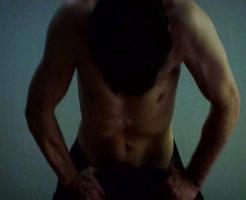
Powerful
Art vidéo | dv | color | 2:17 | Ireland | 2005
Powerful, was filmed at Portlaoise Prison in Ireland. Designed as a looped projection, the short video work observes a prisoner practicing yoga in the fading evening light. His rhythmic breathing and gestures become tense as the practitioner forces his stomach through a series of complex contractions. The unsettling meditation echoes the practitioner?s self control in dealing with issues of physical captivity and institutionalization. If, as Foucault suggests, the soul of the condemned is what is on trial in contemporary prison institutions, these yogic gestures can be viewed as a direct action to retake a sense of self and place. Through physio-meditative practice the prisoner generates a new place, one beyond the remit of the institution?s body of knowledge and its systems of surveillance.
Jonathan Cummins studied Sociology at Trinity College Dublin before working in film, television and interactive media production in Ireland, Hong Kong and the United States. He studied at the School of Art and Architecture in the University of California Los Angeles (UCLA) where he completed a Master of Fine Art in Media Art in 1998. Over the past four years Jonathan has helped to develop an experimental digital film programme at Portlaoise Prison, Ireland for the Department of Fine Art at the National College of Art and Design. Jonathan also works as a lecturer in moving image at University of Ulster, School of Art and Design in Northern Ireland. In recent years Jonathan has produced short films for Irish broadcasters and the Irish Film Board. Recoil produced in 2004 has been screened internationally at many film festivals, and was Winner Best Irish Short, Galway Film Fleadh 2005 and the Boston Irish Film Festival 2005; Limbo, produced in 2001, has been screened and broadcast internationally and was Winner, Best Irish Short, Foyle Film Festival 2001. Apart from Jonathan?s narrative based film work, he also creates more intimate exhibition-based video works such as Powerful. Jonathan has previously shown video works at Rencontres Internationales such as Jennifer?s Cross in 2004 and a collaborative work, Pigeons, in 2003.
Jonathan Cummins
Letter Home
Experimental doc. | dv | color | 8:3 | Ireland | 2006
"Letter Home" is one of three short documentary films by Jonathan Cummins screening at this year's festival. Filmed at a prison in Ireland, the films are part of "Landings" an emerging film archive of conversations with prisoners. Employing a methodology that is both educational and collaborative, the project uses video as a tool to explore identity and memory within incarcerated space. Informed by recollections and statements, the films serve as a testimony that marks a time and place between the rarefied interior of prison and inmates' lives outside. In the atomised environment of prison life, the dialogue afforded by such an engagement has much to reveal about the lives of inmates, prison-institutions, and society. The project aims to return a glimpse of the 'total-institution' to civic space and in so doing raise questions about the ownership society takes for its institutions and those held within.
Jonathan Cummins has worked with prisoners since 2000 as both a teacher and practitioner. Prior to developing his own film and media-based practice, he worked in the film, TV, and interactive industries in various production and creative capacities in Ireland, Asia, and the US. He has produced award winning short drama films, which have been screened at festivals around the world. Jonathan studied sociology at Trinity College Dublin. He completed an MFA in Media Art in 1998 at UCLA and studied screen writing through UCLA's School of Film, Theatre, and Television. He teaches part-time in the National College of Art and Design (Ireland) Prison Art Programme and at the University of Ulster.
Jonathan Cummins
When I Leave These Landings, Film E2-1B
Documentary | dv | color | 5:8 | Ireland | 2009
`When I Leave These Landings` is the result of a highly intimate dialogue with Irish political-prisoners, which took place between 2004 and 2009. The five-film installation, of which `Film E2-1B` is a part, explores the impact of incarceration and extreme ideological conviction on self as experienced through the conflicting demands of paramilitary, prison, family and personal life. Focusing on personal experience rather than an organisation or the prison institution, the films have a contemporary and universal immediacy addressing as they do themes of incarceration, identity, ideology and political violence. Exploring the role of the prison in society and the ethics of representation are fundamental aspects of the practice.
Jonathan?s practice has been exhibited at Le Centre Culturel Irlandais; Rencontres Internationales; Darklight Film Festival; events such as ?I Confess I Was There?, Interface Research in Art Technologies and Design; Interface?s seminar series ?Through a Lens Darkly?; ISEA pre-symposium seminar on Filmmaking in Contested Spaces; and various conferences. Award-winning short films he has produced have been screen and broadcast internationally such as ?Limbo?, winner Best Irish Short, Foyle Film Festival, 2001; and ?Recoil? winner Best Short at the Galway Film Fest `05, the Boston Irish Film Festival `05 and CourMayeur Noir `05. He has worked with prisoners as part of the National College of Art and Design (NCAD) Prison Art Programme, developing an approach to filmmaking in this context that combines education, participation and dialogue. Jonathan studied sociology at Trinity College Dublin. He has an MFA in Media Arts from the University of California Los Angeles (UCLA) and he studied screenwriting at UCLA?s film school. Jonathan teaches with the NCAD Prison Art Programme and the University of Ulster. Jonathan worked in the film, television and the online industries in Ireland, Asia and the US prior to developing his film and video-based practice.
Merce Cunningham, Charles ATLAS
Coast Zone
Video | | color | 27:7 | USA | 1983
Raphaël Cuomo, IORIO Maria
SUDEUROPA
Art vidéo | dv | color | 40:0 | Switzerland, Netherlands | 2007
Sudeuropa examines the ways in which European and Italian immigration policies materialize on location by reconfiguring space, time and the daily life of the Italian island Lampedusa. It portraits several workers involved in the tourism economy who arrived in Italy before the Schengen agreement, and evokes the presence on the island of undocumented migrants, caught far off at sea by the police and coast guards, excluded from social life and made invisible in their detention in a camp, by showing the places of their arrival, enclosure and deportation. These sites, such as the airport and the port, are the same as those crossed at other moments by the tourists or goods. Sudeuropa foregrounds the conditions of production of the imagery of emergency: journalists and cameramen complement the police dispositif which lines up the bodies, presents them in front of cameras, stages them, gives shape to the usual figures of "clandestine immigrants in the southern borders of Europe". Two voice over narratives - one relating anecdotes told by islanders, the other describing the representations of migrants produced in the same location at the spectacularized instance of debarkation and deportation - problematize both invisibilization of migrants on the island generated by the political will, which is expressed in official discourses, and their over-visibility in national and European media.
Raphaël Cuomo (CH), born in 1977, and Maria Iorio (IT), born in 1975, collaborate since their student years in Geneva. From 2006 to 2007, they have been researchers in the Fine art department of Jan van Eyck Academie, Maastricht (NL). They investigate the distribution of time and space, which configures our contemporary world, and the function of economies of visibilities within this distribution, while privileging the use of photography and video. Their body of works ?SUDEUROPA? examines the movements of North-South tourism/South-North migration and focuses on places where both these movements overlap, like the Italian island Lampedusa. Since 2002, their works have been shown in festivals and exhibitions, including ?The Maghreb Connection?. They received the Swiss art award in 2007.
Raphaël Cuomo, Maria IORIO
Twisted Realism
Video | hdv | color and b&w | 75:45 | Switzerland, Italy | 2012
Twisted Realism takes Pier Paolo Pasolini?s film Mamma Roma (1962) as starting point to research the intertwined histories of urbanisation, migration and cinema in the period of "economic miracle" in Italy. It investigates the forms and conditions of "a new life" ? in the process of modernisation that Pasolini addressed in his film, and also in the current status of Pasolini`s film itself, recently restored and commercialised in a digital form. A polyphony of voices recounts the scenario of the film as well as different aspects of its production and diffusion, which manifest political moments within the broader cinema agency. Twisted Realism revisits some locations from the filming of Mamma Roma and embodies a new geography of contemporary Rome. It investigates various "aesthetics of reality" in the cinematographic depictions of the urban development of the INA-Casa Tuscolano district, a large-scale social housing project instigated by the Christian democratic government and built in 1950-1960. Twisted Realism evokes the commodification of 1960s Italian art cinema as a result of the privatisation of culture and the monopolisation of the mediascape, as well as how Mamma Roma was appropriated in order to write a unifying version of the national history.
Maria Iorio and Raphaël Cuomo is an artist duo living and working in Berlin. They have worked together since their student days studying fine arts in Geneva, CH. In 2006-2007, both were researchers in the fine art department of Jan van Eyck Academie, Maastricht, NL. Their recent long-term and collaborative projects, carried out on both southern and northern shores of the Mediterranean Sea, investigate the economies of visibility in relation to past and present mobility regimes over the shores of the Mediterranean Sea. The resulting body of works manifests divergent histories or unfinished negotiations that account for an entangled modernity. Twisted Realism, their ongoing project in Roma, researches the reconfiguration of urban space after WWII and its depiction in Italian cinema in the period of post-war reconstruction and "economic miracle". By critically examining various "aesthetics of reality" and the merging of political power and cinema, the project proposes a convergence of past and present to question the intertwined histories of migration, urbanisation and cinema. They have shown their work in various exhibitions, projects and festivals including ?The Maghreb Connection ? Movements of Life Across North Africa? and in the framework of ?Chewing the Scenery? at the 54th Venice Biennale. www.parallelhistories.org

Raphaël Cuomo, Maria IORIO
The Interpreter
| | color | 36:0 | Switzerland | 2009
The Interpreter propose une perspective sur la mobilité vers l?Europe, telle que celle-ci peut être perçue et éprouvée depuis le Maghreb. La vidéo évoque la période entre une traversée clandestine de la Méditerranée à la fin des années ?90s et un récent retour forcé. Elle est basé sur des éléments d?une recherche en cours du géographe Makrem Mandhouj. Dans la vidéo, la voix du narrateur reconstruit un récit fragmentaire et suggère les différents actes de traduction qui lui ont donné forme. Il se fait l?interprète des paroles de deux jeunes pêcheurs et anciens passeurs rencontrés dans un village près de Monastir, dans le Sahel tunisien. Il indique les conditions dans lesquelles ces rencontres ont eu lieu, aussi bien qu?il commente le processus du film lui-même. The Interpreter rend compte de la difficulté de mettre en récit sa propre histoire, ou encore de la possibilité de témoigner à visage découvert dans un contexte de criminalisation de la migration et de privation de la liberté d?expression. Le film re-parcourt les lieux significatifs du récit, en faisant un détour par un studio d?enregistrement à Tunis où ont été enregistrées les voix du film. Il se termine là où le projet de traversée avait été projeté puis mis en ?uvre plusieurs années plus tôt: dans une plantation d?oliviers ? refuge des ?brûleurs?*, des consommateurs d?alcool et des amoureux ? qui est progressivement recouverte par l?expansion de la ville et les imposantes maisons que construisent des émigrés vivant en Europe. *le nom arabe donné à ceux qui tentent de traverser les frontières sans documents

Emily Curtis
All that Love Allows
Experimental doc. | hdv | color and b&w | 14:0 | France | 2023
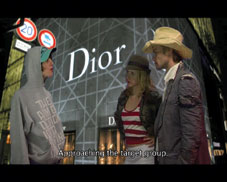
The incredible true story of 18th-century pirates Mary Read and Ann Bonny. The day Ann saw Mary for the first time, her legs could hardly keep from shaking.
After studying philosophy and art history, Emily Curtis turned to film and did a Masters before joining the editing department at La Fémis. She edits documentary and fiction films, stories about bodies, finding pleasure in experimenting with different forms of writing.
Frederic D
Miss baghdad
Fiction | dv | color | 77:0 | Germany | 2005
Images from Iraq motivate a girl to protest against the war. But Berlin's lifestyle of film sets and glossy advertising images cover any meaningful effort. The disillusions start to make her physically sick. Her hopes return when she meets a renowned advertising guru that turns her into the star of a worldwide peace-show. Yet, again, all she gets is a hollow spectacle, designed to entertain and reassure. Together with another disappointed girl she decides to take radical measures.
Frederic D. was born 14.02.1974 in Hamburg. He studied film and theatre from 1996 to 1998, and was director for MTV Networks London from 1998 to 2001. He did various video clips for Jamie Lidell, Soffy O, Terranova, Mocky, Mia, etc. From 2003 to 2006, he prepared and shot the movie "Miss Baghdad". In 2005 he participated in the WARDISCO exhibition, Brunnen 13, Berlin.
Eddie D
Nice and fresh and greasy
Experimental video | dv | color | 4:50 | Netherlands | 2006
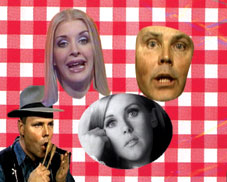
"Nice and Fresh and Greasy" is a video-opera about beauty, commercialism, and the freshness of grease (or the greasiness of fresh). It is a musical video-collage in which found footage elements and music are tightly integrated to form a dynamic, uplifting composition. With this work, Eddie D again shows that he is the master of rhythmical video. He worked in collaboration with Dutch composer Jaap Dercksen, and the music is composed in conjunction with Eddie D's video-editing process. After selecting and pre-editing some video and sound, Eddie D sent his work to Jaap the composer, who then wrote a ground layer of music. He then sent the score to Eddie D who edited more video and again sent his work to Jaap, and so on and so forth, until the piece was ready. The images are from tell-sell TV and a 1960's television commercial. All this is rhythmically accompanied by a man who plays the spoons and likes to use his mouth as a musical instrument. The work shows that, when you have guests, a nice tablecloth is always appropriate.
Eddie D's work consists of photos, videotapes and video/computer installations. His themes include deconstruction of language, rhythm, and the relation between image and sound. His videotapes are musical compositions in which he uses his nearly perfect editing technique to build rhythmical structures with repetition as a striking element. Music is a basic influence - as a formal starting point as well as a source of structures and patterns. His work is internationally considered the standard in this genre of video art. He uses found footage combined with self-shot video and animated photos, and mixes layers of cut-out images in a collage-like technique that combines video and animation.
Eddie D
Pas de deux
Experimental video | dv | color | 1:55 | Netherlands | 2007
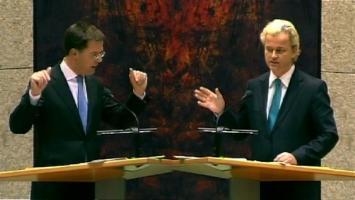
Pas de Deux (directors cut) 2007 Pas de Deux is a choreography for two Dutch right-wing politicians, or better, for their hands. The two are from different parties, one moderately right wing, the other more populist. They are trying to appeal to the same voters, the nationalistic islamophobics, without sounding too extreme. And of course, like all politicians, without really saying anything. The work is edited on rhythm and hand movements with a selection of words taken from the raw footage (a parliament discussion about people having two nationalities and two passports).
eddie d (1963-2049) graduated at AKI Videoartdepartment in 1991. His work consists of photos, videotapes and video/computer installations. Themes are deconstruction of language, rhythm and the relation between image and sound. His videotapes are musical compositions in which he uses his very exact editing technique to build rhythmical structures with repetition as a striking element. Music is a basic influence; as a formal starting point as well as a source of structures and patterns. His work is internationally considered the standard in this genre of video art. He uses found footage combined with self-shot video and animated photos. Working with language (as seen in his videopoems) has evolved into the de-construction of words and sounds. This transforms into compositing sounds from single letters, that would be almost unpronounceable. He is also further exploring the concept of still live in video/computer installation. These still lives have their roots in movie scenes and a photo archive that he build over the past 15 years. The photos, made during his travels, show a search for the exceptional in the ordinary; table-lamps, furniture and household wares are favorite subjects. Mr d did also several `live music` projects were he worked together with composers to create works in which video and sound are tightly integrated in the work. He wants to prevent the one from being illustrative to the other and make the video an extra musician on stage. Mr d also occasionally presents "the eddie d lecture", where he talks about his influences and shows favorite film and tv fragments, cartoons and music clips that relate to his own work. He tries to make the lecture he himself would want to see, which means less talk and more image and sound.
Eddie D
Sonatina
Experimental video | dv | color | 2:5 | Netherlands | 2004
Felice D'agostino, Felice D'AGOSTINO
In attesa dell'avvento
Experimental doc. | hdv | color and b&w | 22:20 | Italy | 2011
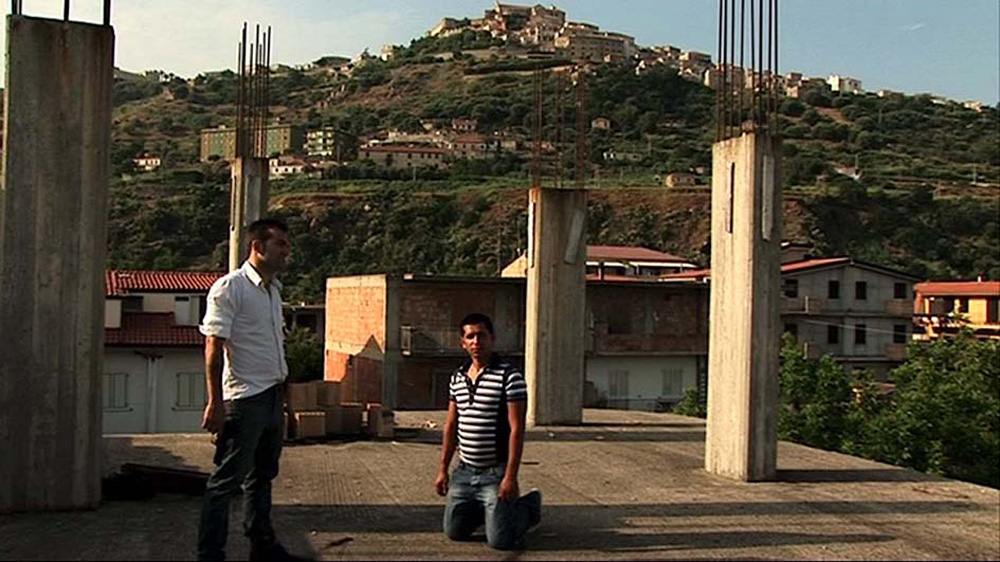
1861 - 1971 – 2011. Dates, but also firm props of the official rhetoric that formulates and reformulates the interpretation of actual history. 1861’s celebrations of Italian Unification see us now in this tough 2011, disclosing a strong emphasis that clashes against the unresolved Italian past. Playing with the banality of historical dates, the film wedges a third date Reggio Calabria’s 1971 revolt. Unsettling shadows coming back to disturb the order with which politicians wish to govern the present crisis.
Arturo Lavorato, born in 1974, and Felice d’Agostino, born in 1978, are film directors, directors of photography and editors. They co-directed all of their work in their home region, Calabria. Their films have been shown in many festivals (Cinéma du réel 2005 and 2006) and won awards around the world, including the Orrizonti prize at the 68th Mostra de Venezia and Best documentary at the Torino Film Festival in 2005.
Kurt D'haeseleer
Fossilization
Experimental video | s-vhs | color and b&w | 9:1 | Belgium | 2005
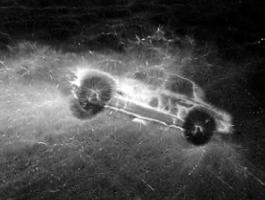
"For fossilization, d`Haeseleer used video as a kneading machine. Layers of images are moulded into a stickymess that absorbs and attractys everything it touches. It`s an apocalyptic endgame, starring several cars and some human remains and maybe even some wishful thinking on a moody. Rainy day."
Kurt D`HAESELEER was born in 1974 in Anderlech. He studied Audiovisual Arts at the Hogeschool Sint-Lukas in Brussels and Modern History in Leuven and in Vienna. Since 2001 he has been a member of the artist collective De Filmfabriek with realisation of several projects, for example live performances together with Tuk (aka Guillaume Graux) in the Beurrschouwburg in Brussels or the World Wide Video Festival Amsterdam.
Kurt D'haeseleer
Rock
Experimental video | dv | color | 7:6 | Belgium | 2007
Rock BE, 2007, 7`02? Underneath a water surface or in an underwater world, we can see people floating. They could be a concert audience; listeners to music by TUK perhaps, for which Rock serves as a music video. But they are lying still, floating, beyond their earthly existence. Mesmerizing noise accompanies them through a channel of a pixel-infected nature that swallows them up and spits them out in a parallel universe where an artificial landscape of rocks and stones unfolds along a sea. In the worlds of Rock, it is impossible to distinguish digital from analogue, virtual from real, natural from artificial.
Kurt D'haeseleer
_imovie_ [2] In between/shifting
Experimental video | dv | color | 13:52 | Belgium | 2004
_Imovie_[2] in-between/ shifting is the second video Opsomer made with the amateur software package ?iLife?, supplied with Apple computers. The video consists of photography of cities in Brazil and Senegal, which Opsomer visited. The photos of views from and onto high-rise buildings were later transferred to video in such a way that the urban structures appear to have been filmed right there on the spot. Nothing but the unnatural halted appearance of these images indicates we are in fact dealing with photography. During the film subtitles appear onscreen, constituting a video letter. The letter contains an investigation into the assimilation of Opsomer?s personal ambivalent impressions during her stays in the various cities.
ELS OPSOMER, *1968, lives and works in Brussels. She is a visual artist and graphic designer and for a couple of years she was an artist-in-residence at the Rijksacademie in Amsterdam. In collaboration with people like Johan Grimonprez, Herman Asselberghs and Ronny Vissers she realized a couple of multimedia installations. She draws from her constantly growing archive of urban images, puts together a commentary on and reinterpretations of global reality and at the same time she questions the contrast with the safekeeping of personal integrity in this reality.
Josef Dabernig
River Plate
Experimental film | 35mm | black and white | 16:0 | Austria, Italy | 2013
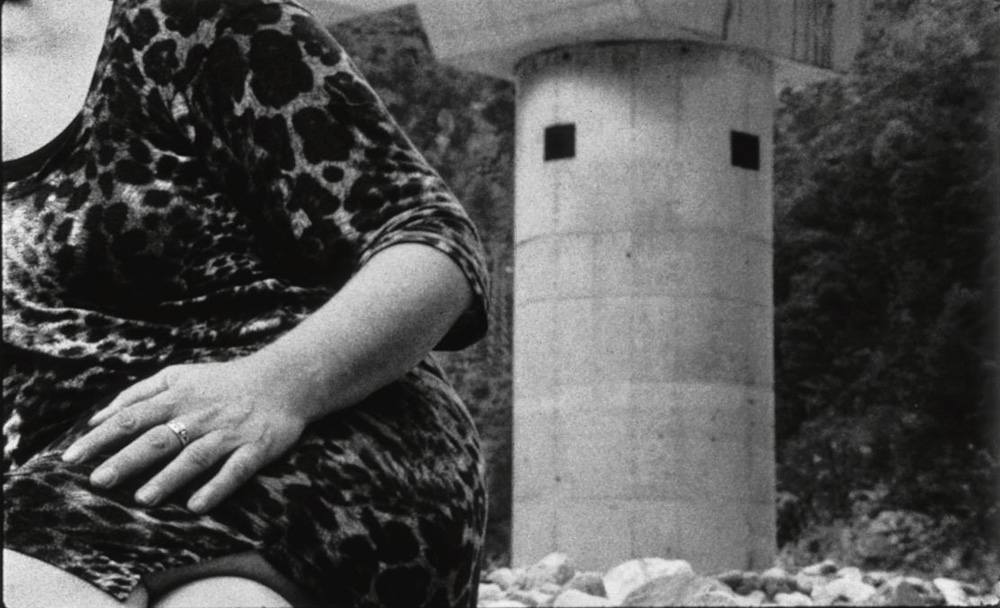
River Plate displays a micro society in a fragmented body-narration. Knees, shoulders, feet and bellies are signifiers of articulated human presence, revealing nothing else against a claustrophobic background of cement, stone and water.
Born 1956 in Kötschach-Mauthen, Austria. Visual artist, studied sculpture at the Academy of fine Aers, Vienna. Short films since 1994. Lives in Vienna Exhibitions include among others the 9. Gwangju Biennial (2012), the Venice Biennials (2003, 2001) and Manifesta 3, Ljubljana (2000). Film Festival participations at Locarno International Film Festival (2008, 2002), London Film Festival (2009), Mar del Plata International Film Festival (2011, 2007), Melbourne International Film Festival (2001), International Short Film Festival Oberhausen (2009, 2006), International Film Festival Rotterdam (2011, 2000), Toronto International Film Festival (2009, 2006) and Venice Film Festival (2011), where his short film Hypercrises has been nominated for the European Film Academy Award Monographs have been published by Kerber PhotoArt (2013), JRP|Ringier, Zurich (2008) and Verlag der Buchhandlung Walther König (2005).
Dagmar Dachauer
Competing for Sunlight: Ash
Video | 4k | color | 4:43 | Austria | 2017
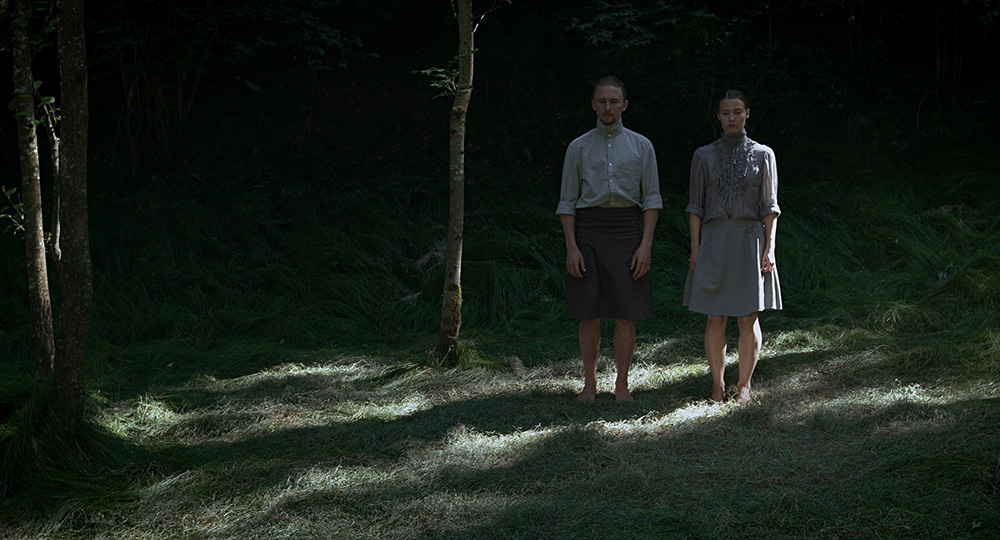
`Competing for Sunlight` is a Short Dance Film Series, featuring protagonists of a range of different tree species and Dance, telling individual short stories. “The death of a species, especially a species as significant as the Ash, punches a hole not only in nature, but also in our culture”. - George Monbiot Starting in the early nineties in Eastern Europe, an Asian fungus has gradually conquered the European continent, infecting almost all ash trees. The symptoms are very severe, many cases leading to the death of most trees. As aresult, it is assumed that the ash tree in Europe will soon be close to extinct. Choreographer and dancer Dagmar Dachauer was inspired by the sad faith of the European ash tree, and linked it to personal loss in her own life. Finis est cinis: Ash is what remains. Ash is a eulogy for the ash tree and for Prasthan Dachauer, who passed away in 2016.
Dagmar Dachauer is a dancer, choreographer and filmmaker born in Linz, based in Brussels. She grew up in a lonely house in the Upper Austrian forest, a place that continuously inspires her work. She has studied Dance at Amsterdamse Hogeschool voor de Kunsten as well as at P.A.R.T.S. in Brussels. She founded the Austrian art association UMFUG, in which she realizes dance and theatre performances as well as film projects with collaborators coming from various backgrounds such as Ecology, Cinema, Theatre, Music and Sound Design. Her solo works about the Viennese Waltz (“Wunderbare Jahre” and “Wie soll ich das erklären”), as well as her dance films have received several awards and are touring internationally.
Don Hai Phú Daedalus
Celilo Falls in Quarantine
Experimental doc. | 4k | color | 10:0 | USA | 2021
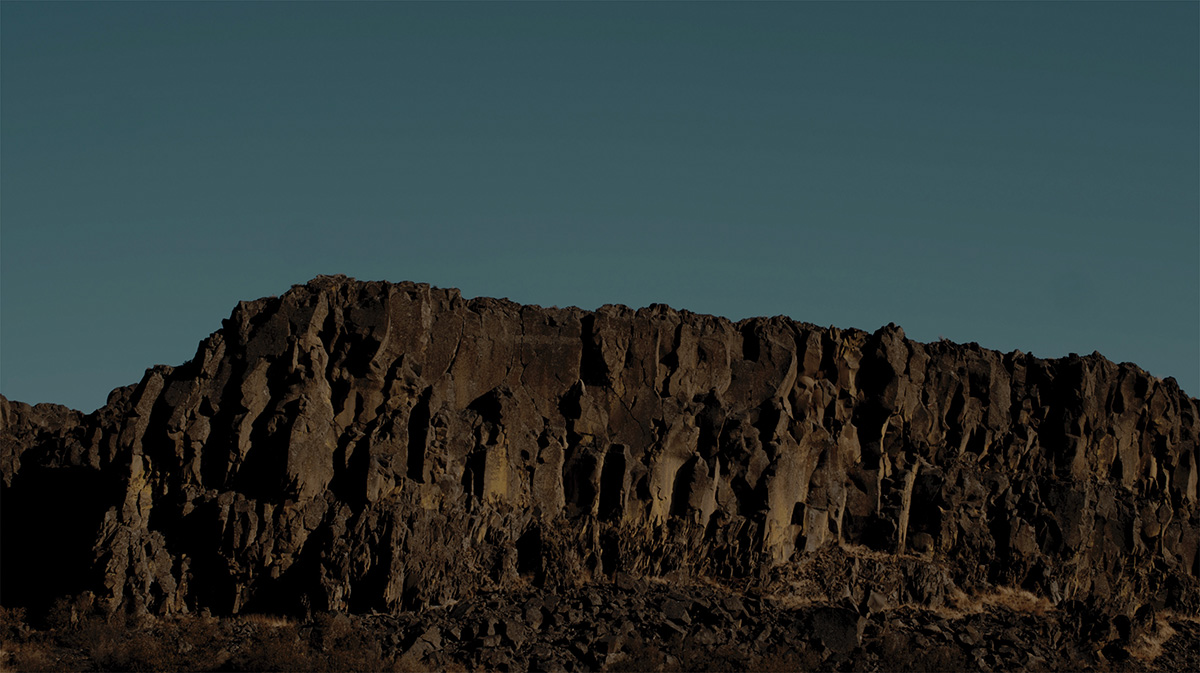
Celilo Falls is the oldest continuously inhabited community in North America, the site of a traditional fishery on the Columbia River. For 15,000 years, the cascading waters sustained the lives of many indigenous tribes. In 1957, the completion of the Dalles Dam–a massive hydroelectric generator–inundated the falls, displaced most of the families that subsisted at the site and obstructed the migrating salmon, white sturgeon and other anadromous fish. Today, only a few families reside at what is now a man-made lake. Shot from Horsethief Butte, an outcropping of basalt, we see the petroglyphs and pictographs created by indigenous people who once came here, communing here above the tumbling waters. An ethnographer records the spoken language–Chinookan–of the community just five years before they were displaced. The butte was carved out by the glacial activity of the last ice age, and stands in defiance to the signature winds wailing up the Columbia Gorge. This is a vignette of Celilo Falls during the 2020, SARS-COV-2 pandemic.
Don H?i Phú Daedalus (b. 1983) grew up in the shadow of the country's largest public observatory—an area so remote and sparsely populated that it served as the first plutonium-processing plant for the Manhattan Project. Shortly after the oldest human remains in North America were discovered near his hometown, Daedalus left to attend the University of Washington, where, coincidentally, the remains were to be held during the decade-long legal dispute between the Kennewick tribe and anthropologists. He lives and works in New York.