Catalogue > Search
Results for : Tout le catalogue
Tobias Daemgen
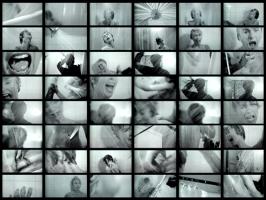
Duschszenarium
Experimental video | dv | color | 1:44 | Germany | 2007
In der Videoarbeit "Duschszenarium" wird die lineare, filmische Abfolge der Einstellungen der Duschszene aus dem Film "Psycho" von Alfred Hitchcok durch das Element der Gleichzeitigkeit erweitert. Die ursprüngliche Struktur der aufeinanderfolgenden Schnitte wird aufgebrochen und ein Blick in die Mechanik der Szene wird geöffnet. Jede der Einstellungen behält ihre zeitliche Position innerhalb des Erzählstrangs aber bleibt nach ihrem Einsatz für die restliche Dauer des Clips als Loop erhalten. Durch die serielle, gleichzeitige Anordnung der Einstellungen bleibt es sowohl möglich dem Verlauf der Szene zu folgen als auch etwas über das Verhältnis und die Zeitlichkeit der Schnitte und Einstellungen zueinander im direkten Vergleich zu erfahren.
Tobias Daemgen, geboren 12.07.1980 in Braunschweig, 2001 bis 2008 Studium an der Fachhochschule Düsseldorf. Lebt und arbeitet in Düsseldorf.

Emanuele Dainotti
Prossimo
Experimental video | mp4 | black and white | 4:20 | Italy, Belgium | 2020
May 2020, Limburg (Belgium). A peasant family is vaccinating their animals.
Emanuele Dainotti (b. 1987 in Milano, Italy. Lives and works in Antwerpen, Belgium) is an artist and filmmaker. Recent exhibitions include: Museum of the Moving Image (USA); Louvre Museum (France); Reykjavík International Film Festival (Iceland); Rencontres Internationales Paris (France); Museu de Arte Moderna do Rio de Janeiro (Brazil); CGAI (Spain); Hudson Valley MOCA (USA); Museu Nacional de Arte Contemporânea (Portugal); Festival Miden (Greece); FIVAC (Cuba). In 2018 he won the “International Competition for the Intermedia Artwork” organized by the Academy of Fine Arts in Kraków, The Faculty of Intermedia and the Foundation for Development of Intermedia Artwork. In 2019 a jury presided by Anish Kapoor and Anda Rottenberg awarded him with the “Now You See Me award” at Louvre Museum in Paris. In 2020 he is among the artists of Loops Expanded, an international network, dedicated to exhibiting and researching the concept and the form of the Loop.

Catherine Dalfin
L'âge du Bronze
Experimental doc. | dv | color | 6:20 | France | 2009
Sur une petite île au large de la Baltique, une idylle douce-amère entre l?homme qui tente de se faire une place et la nature qui n`en a cure.
"Dans le désordre, Catherine Dalfin a fait des études de lettres et d'histoire de l'art, s'est glissée à la radio pendant un certain temps, a croisé la route d'un collectif d'artistes, a été critique d'art pensant que ça valait la peine, a cru pouvoir participer à la création d'une revue et a finalement persévéré dans la vie après avoir touché une caméra." (Catherine Dalfin, juin 2009).
Charlotte Dalia
Speechloss
Experimental film | 4K | color | 15:0 | France | 2023
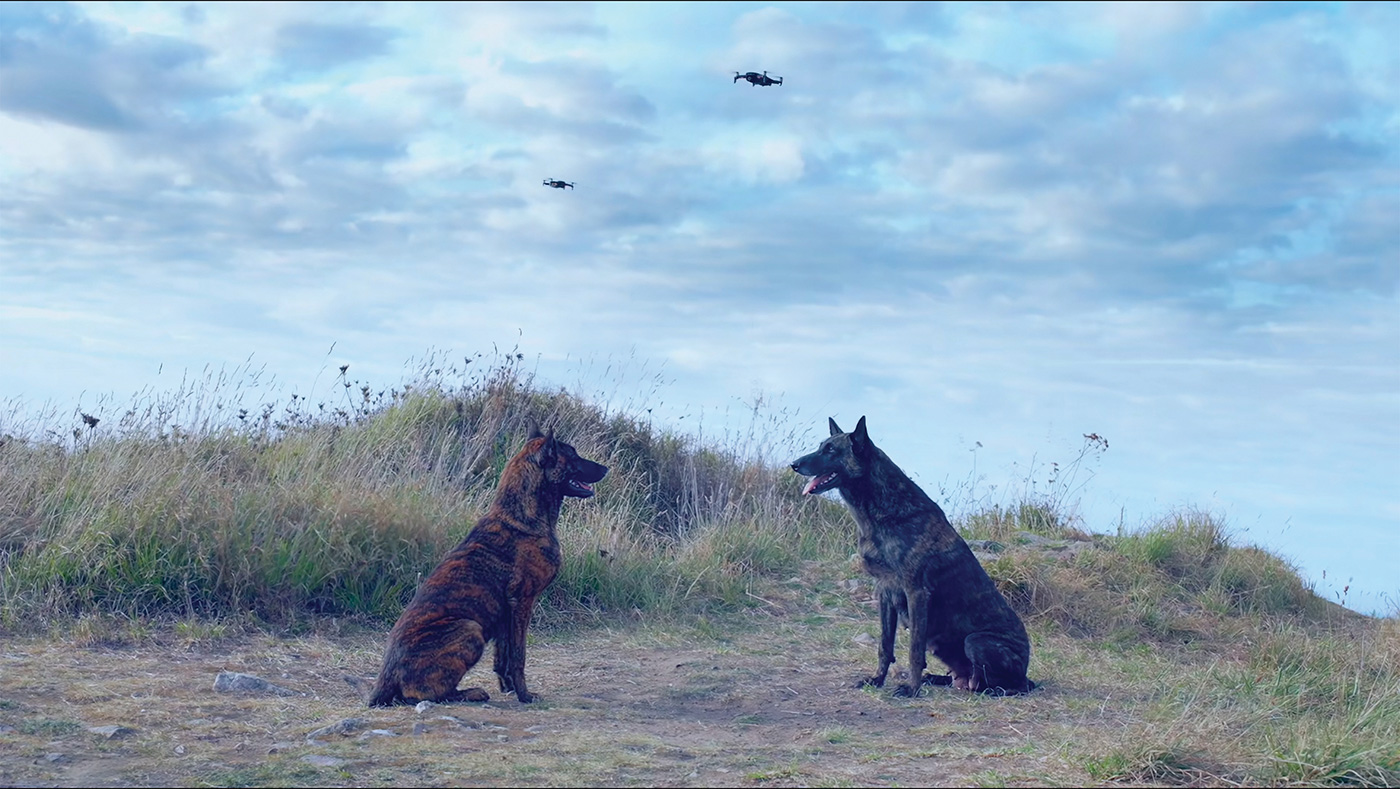
SPEECHLOSS is a film inhabited by isolated characters, out of sync and searching for direction. In an eerie seaside atmosphere, we come across a jogger, a bodybuilder, dogs and a strange giant organ. Speechloss is a progression of four scenes in which both the wind and a powerful desire to feel alive blow. For each of them is an abandoned AI, waiting to be activated.
Charlotte Dalia was born in 1993. She graduated from the Institut Supérieur des Arts de Toulouse. A visual artist, video maker and film director, her research focuses on both the formal and narrative effects of cinema. Steeped in the principle of the “cinémonde” theorised by Jean-Luc Nancy, she uses cinema as a repertoire of signs that “opens the inside onto itself.” She has taken part in numerous group exhibitions and has been invited to produce two solo shows. Continuing her investigations into the writings of reality through the forms of fiction, she trained in documentary writing with Ty Films and Films en Bretagne. She is currently developing ALMERICA, a project combining climate crisis and film sets, as well as writing a medium-length film following on from SPEECHLOSS, in order to pursue and expand its universe.
Walwin Dan
Second Unit
Experimental video | hdcam | color | 9:0 | Netherlands, United Kingdom | 2010
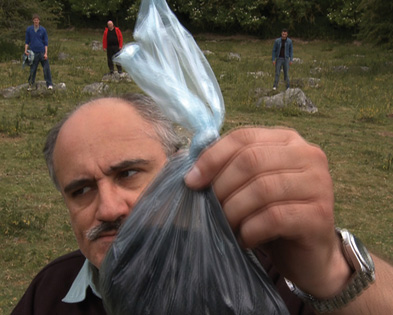
The title refers both to a fictional unit of soldiers and their role in detaining the men standing on the stones in the field, and also to the role of a team in commercial film production to the role of shooting material without the requirement of the main cast and crew. The presence of the camera in observing events, and the characters awareness of it, in front of and behind the camera, lends the video a functional aesthetic that suggests it is made for tactical or intelligence purposes, but is made complicated by the soundtrack, where all the extraneous sounds of the surroundings are audible apart from the dialogue, which further obscures its reading.
Dan Walwin studied Fine Art at Goldsmiths College, London, and begins a residency at the Rijksakademie van Beeldende Kunsten, Amsterdam in 2012. Recent presentations include European Media Art Festival, Osnabruck in 2011, Rencontres Internationales in 2010/11 and Festarte Video Art Festival (Museum of Contemporary Art, Rome) in 2010. A solo exhibition of his, tele-, begins in November 2011 at ZAAL5, Filmhuis Den Haag, Netherlands. More information can be found at www.danwalwin.co.uk
Walwin Dan
Water is a burned body
Video | dv | color | 11:45 | Netherlands, United Kingdom | 2009
Water is a burned body is an attempt to evoke a dystopia by economic means. A couple wake to find a boat colliding with wall of the flooded house they are in. The man goes to investigate, only to find the body of a woman, which he discards into the water. They set off in the boat into the open water, coming across an obstruction that puts an end to their attempts.
Dan Walwin is an artist working primarily in video, having studied Fine Art at Goldsmiths College, London, graduating in 2007. Recent shows include For the sake of the image at Jerwood Space, London, 2010, Verena Klary, Iwan van`t Spijker, Dan Walwin at Walden Affairs, The Hague, 2009, and Nature Untouched at Tou Vindu, Stavanger, 2007.

Levy Dana
Eden Without Eve
Documentary | hdv | color | 5:2 | Israel, USA | 2014
A short documentary about life in the Everglades National Park’s with it’s few residents. Living in the midst of a national park, they learn to exist with the the wild. As a woman filmmaker I observe these men almost like an anthropologist, observing how they interact with their surroundings. The only women that appear in the film are as still images in Lucky`s photographs, . He believes that women like having themselves put in a romantic, exotic, dangerous setting to be photographed.
Dana Levy was born in Tel Aviv and Lives and works in New York. She completed her Post graduate in Electronic Imaging at the Duncan of Jordanston College of Art Dundee University, Scotland, and holds a BA from Camberwell Art College London Awards include 2013 Beatrice Kolliner Young Artist Award from the Israel Museum, 2010 Dumbo Arts Festival best studio award, 2008 Young Israeli Artist Award, 2006 Hamburg Short Film festival jury award. Solo shows include at The Israel Museum, CCA Tel Aviv, Nicelle Beauchene Gallery New York . Her work has been screened at Tate London, Tribeca Film Festival,Oberhausen Film Festival and more. group shows include at the Biennial of Contemporary Art of Cartagena 2013, Bass Museum, Miami, Florida, Invisible Exports Gallery NYC , MOCA Cleveland, EVA International Bienniel , Israel Museum Jerusalem, Harn Museum of Art ,OK Contemporary Art, Linz Au and more Artist Residencies include AIRIE Everglades National Park, Wave Hill Workspace residency New, LMCC Workspace NYC, Le Havre/ New York. Regards croisés Art Omi NY, I-park, Connecticut, Triangle Arts Association NY and more

Daniel & Clara
Notes from a Journey
Experimental fiction | hdv | color | 72:30 | United Kingdom | 2019
"Notes From A Journey" uses images and sound captured whilst on a journey through the British landscape as the material for an exploration of the acts of looking/seeing listening/hearing. More than simply mapping a journey across the country, this film presents a map of the filmmakers' engagement with the images of the landscape. By reducing them to impressions, fragments, fictions and forms, the recorded images/sounds are transformed into “artefacts” which, when presented in the sequence of a film, activate narratives, ideas and sensations in the viewer. Central to the film are scenes shot at the Neolithic mound and stone circle of Avebury, motifs that speak of the long and complex relationship humans have to their environment and how through art and ritual we seek to understand our place in relation to it. Ultimately this film is a journey in itself – a first person encounter with the limits of perception, it exists in a place where both the recording device and the human senses are tested.
Daniel & Clara, two humans one artist on a journey of exploration of dimensions real and imagined, the results of which consist of moving image, photography and performance. In their current work they have been exploring the British landscape as a site for encounters with the mysterious, the eerie, the otherworldly and the unknown. As they say, “we seek to see with one eye open and one eye closed, sight turned simultaneously out towards the world and inward to the depths of the human experience.” In their work, images and sounds of the landscape become activators of narratives where past, present and the imagination intermingle. Their work has been exhibited and screened internationally at galleries and film festivals including Whitechapel Gallery, Kettle’s Yard, Fabrica Gallery, Close-up Cinema, BFI, Alchemy Film & Moving Image Festival, Doclisboa, Microcinema Artist Moving Image, Museu de Arte Moderna Rio de Janeiro, Black Box Farnham, Film Mutations Zagreb. In 2019 they launched Moving Image Artists (MIA), an organisation dedicated to supporting and cultivating contemporary moving image art and experimental film. This includes an online magazine, screenings and the Moving Image Salon, a monthly gathering for artists to meet, share and discuss their work. The Moving Image Salon takes place at Film and Video Umbrella, London. Several of their films are distributed online by Tao Films and Kinoscope. Films by Daniel & Clara are also included in the BFI National Archive.

Jérémie Danon
Plein Air
Experimental doc. | hdv | color | 26:30 | France | 2020
Surrounded by landscapes extracted from video games, people in rehabilitation testify. In front of the camera, they talk about their hopes, doubts and difficulties since leaving prison.
Ariani Darmawan
A City of Desire
Fiction | dv | color | 4:0 | Indonesia | 2006
An interpretation of Italo Calvino's Zobeide: a tale of a city where the inhabitants constantly build their places upon their dreams... which never come true. Calvino names it 'an ugly city', we call it 'a reality'.
Ariani Darmawan is a video artist/filmmaker who lives and works in Bandung, Indonesia. She studied Fine Arts at the School of the Art Institute of Chicago after finishing her bachelor degree in Architecture at the Parahyangan Catholic University in her hometown. Most of her works comment on power/identity and language along with its construction of meanings, where she constantly erases and re-draws the lines of actuality. Ariani has participated in numerous film festivals and art exhibitions in North America, Europe, Australia, and Asia. She recently finished her short film called "The Anniversaries" after receiving a special mention at the Jakarta International Film Festival Script Competition.
Kenan Darwich
Do the Bambi
Animation | dv | color | 2:15 | Syria, Germany | 2005
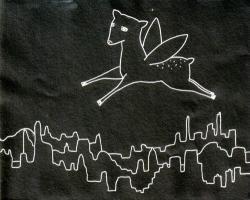
"Do the Bambi" est une vidéo musicale expérimentale sur la chanson du groupe Stereo Total. Le film se compose de 2000 images individuelles, dessinées à la main, et relie ainsi des ambiances au visuel poétisé en se basant sur une ancienne technique de dessin animé et en utilisant les nouveaux médias.
Kenan Darwich est né en 1982 à Damas, Syrie. Il vit depuis 2001 à Hambourg. En 2003 il commence ses études à la Kunsthochschule de Kiel, section design de la communication.

Adheep Das
Half-Portrait of Dadu
Experimental film | hdv | color | 5:15 | India | 2023
Like many people in their later years, my grandfather had a set of oft-repeated stories. Towards the last few months of his life, a brand new person,'Chetan' started populating his life. This poem-film is an attempt to understand the feeling.
Adheep Das likes mixing various mediums and finding out what comes of them. Fascinated by science and arts alike, his interests take him to places that merge the two. As part of a 3 person collective, he got the ThinkArts Grant for Children in 2022. 'Moonless', a film he directed and animated, has competed at DokLeipzig and Dharamshala Intl. Film Festival, amongst others. His documentary 'Khaalti Kaay Varti Kaay' competed at IDSSFK, Kerala. Some of his work has also been exhibited as part of the Kochi-Muziris Students' Biennale and the Wrong Biennale. He has worked on a live shadow puppetry production called ‘Zig Zags to Earth’, and has performed at venues such as Max Muller Bhawan, Delhi, and Kiran Nadar Museum of Arts, Delhi. He has also been part of the Serendipity Arts Foundation Residency 2024.

Bhaskar Jyoti Das, Waribam Dorendra
I Don't Want to Be Born Again for Poem
Experimental doc. | hdv | color | 22:0 | India | 2019
During 1970’s and 80’s there were many revolutionary uprising happening, near and far, all around the world. In this period, amidst this protest and revolutionary uprising, a poet symbolically expresses his feelings to capture the complexity of human existence. Constant financial pressure in his family life is also evident in his words. At one point, words become distorted and absurd. One evening, the poet, Abani Chakravarty disappears and left many confusions.
we are two Directors 1. Bhaskar Jyoti Das, I am currently based in Assam. I’m an independent film maker and Screenplay writer. Recently two of my scripted feature films got Best film award, one, in Los Angeles Indian Film Festivals 2017, “SONAR BORON PAKHI”, another in MAMI 2016, india,”HANDUK” and National Film Award 2016. Last 10 yrs I worked for 3 UCLA projects under a professor from University of California, LA, USA. 2. Waribam Dorendra, studied basic film making in his native state of Assam in India. He explored film making process for some years with a mini DV camera. He has edited few short and long, video and documentaries of his fellow native filmmakers. He has worked with a new media group called Desire Machine Collective from 2007 till 2010 on a project called "periferry" in Guwahati city. He has made many short and long videos and documentaries since the year 2007. He finds cinema as a tool to reflect upon life as well as playful desire.

Silvia Das Fadas
A casa, a verdadeira e a seguinte, ainda está por fazer
Experimental doc. | 16mm | color | 35:52 | Portugal | 2018
A travelogue to places which defy the surface of the world. In order of appearance: an ideal palace built by a postman after each of his daily rounds; a red house designed by a socialist agitator; a pacifist tower erected against the movements of History; an exuberant garden engendered in the feminine; and a merry cemetery, which conjures a community of equals in the outskirts of Europe. To ensure we risk our joy for those who act in their own time.
Short Bio: Sílvia das Fadas is a filmmaker, a researcher, a teacher, a wanderer. She is interested in the politics intrinsic to cinematic practices and in cinema as a way of being together in restlessness and brokenness. Long Bio: Sílvia das Fadas is a filmmaker, a researcher, a teacher, a wanderer. She studied cinema and aesthetics, committing herself to the material learning of film at The Portuguese Moving Image Archive and the Portuguese Cinematheque in Lisbon. Driven by a militant nostalgia, she moved to Los Angeles where she continued to craft her personal films in 16mm, at the California Institute of the Arts. She worked as a visual history researcher for the Academy of Motion Picture Arts and Sciences and collaborated with Los Angeles Filmforum until her visa expired and she moved to Vienna in search of a lively film culture. There she worked as a film projectionist for the Austrian Film Museum, while teaching at the Academy of Fine Arts, where she is currently a participant in the PhD in Practice program. She is the recipient of a Fundação Calouste Gulbenkian/ FLAD Scholarship, a CalArts School of Film/Video Scholarship, an Akademie Schloss Solitude Cooperation Fellowship with Staatliche Akademie der Bildenden Künste Stuttgart, and a FCT Doctoral Fellowship. Her films have been shown at numerous festivals, cinematheques and minor cinemas. She is interested in the politics intrinsic to cinematic practices and in cinema as a way of being together in restlessness and brokenness.
Jaime Davidovich
Reality Properties : Fake estates
Experimental doc. | 16mm | black and white | 7:0 | USA | 1975
Gordon Matta-Clark's Fake Estates project, which dates from 1973-74, addresses issues of property, ownership, and urban spaces. For this project, Matta-Clark purchased fifteen small, unusable odd lots ? termed "gutterspaces" ? that were being auctioned off by the city of New York. Although the artist collected extensive archival documents relating to the properties, his plans for using them were never realized; after his death the lots reverted to the city. This recently rediscovered footage, shot by video artist and cable television pioneer Jaime Davidovich, documents Matta-Clark as he visits one of the sites in Queens.
Jaime Davidovich is a conceptual, video and installation artist, as well as a pioneering activist for the potential of artist-run, local cable television programming. Davidovich was a founding member of Cable SoHo (1976) and president of the Artists' Television Network (1978). His own cable access show, a weekly variety program called The Live! Show, aired on Manhattan Cable Television from 1979 until 1984. In the guise of his alter-ego, Dr. Videovich, Davidovich hosted the show, which featured performances by and interviews with art world personalities, live phone-ins and a home-shopping segment from which he sold his collection of TV-related kitsch.
Katie Davies
The Separate System
Experimental doc. | hdv | color | 23:9 | United Kingdom | 2017
At the end of 2014 the Ministry of Justice released an announcement stating that from January 2015, “ every prisoner coming into custody will be asked if they have been a member of the armed forces ” and that “ prisons will be given new guidance about helping them during their sentence”. The announcement followed wide debate over the percentage of veterans in prison. Behind these policy contexts there also sits a wider public perception of the identity of the “ veteran ” which exists in tension with the notion of the “ offender ”. The Separate System was collaboratively produced by veterans through workshops at two local prisons with artist Katie Davies. The piece investigates the spaces of the military, custody and “ civilian ” life through the notion of work, an everyday activity that unites these worlds and is familiar to us all. The film communicates what we, as a civilian audience, perhaps do not understand about the unique set of relations, actions and responsibilities held by the people within these spaces. Created through FACT`s Adults Learning Programme, our work within the criminal justice system aims to approach the context of the prison system from a critically engaged position.
Katie Davies is a video artist exploring the construction of identities, their reflections and manipulations. Nationalism, violence and democracy form a central critique for her videos and installations, often focusing upon individuals and communities whose identities are dictated by the state; their agency to self-identify snared between political agendas and Sovereign violence. Katie is a Royal West of England Academician and was nominated for the 2016 Paul Hamlyn Award. She is a Jury member for the International competition, Short Film Festival Oberhausen, 2018 and has exhibited nationally and internationally including FACT Liverpool 2018, Kassel Dokfest, Bratislava International Film Festival and Oberhausen International Film Festival 2017 & 2015, Sarajevo Film Festival 2015, Border Visions, Connecticut, USA 2012 and The Istanbul Biennial 2009. She has contributed to several publications and her writing on practice-led research has been included in US and British publications. Katie is Senior Lecturer in Media & Cultural Production at The University of The West of England.

Andrés Davila
Sour Lake
Experimental doc. | hdv | color | 14:40 | Colombia | 2019
From the name given by the Texaco Oil Company to a recondite village of the Amazon, "Sour Lake" explores the confluences, disagreements and geographical, social and imaginary movements arose throughout the Ecuadorian jungle and the Colombian Andes.
Andrés Dávila is a Colombian filmmaker. In 2013 he obtained a Master?s degree in Cinema and Audiovisual Studies at the Sorbonne Nouvelle University. Currently lives in Ecuador.
Jonathas De Andrade
Olho da Rua
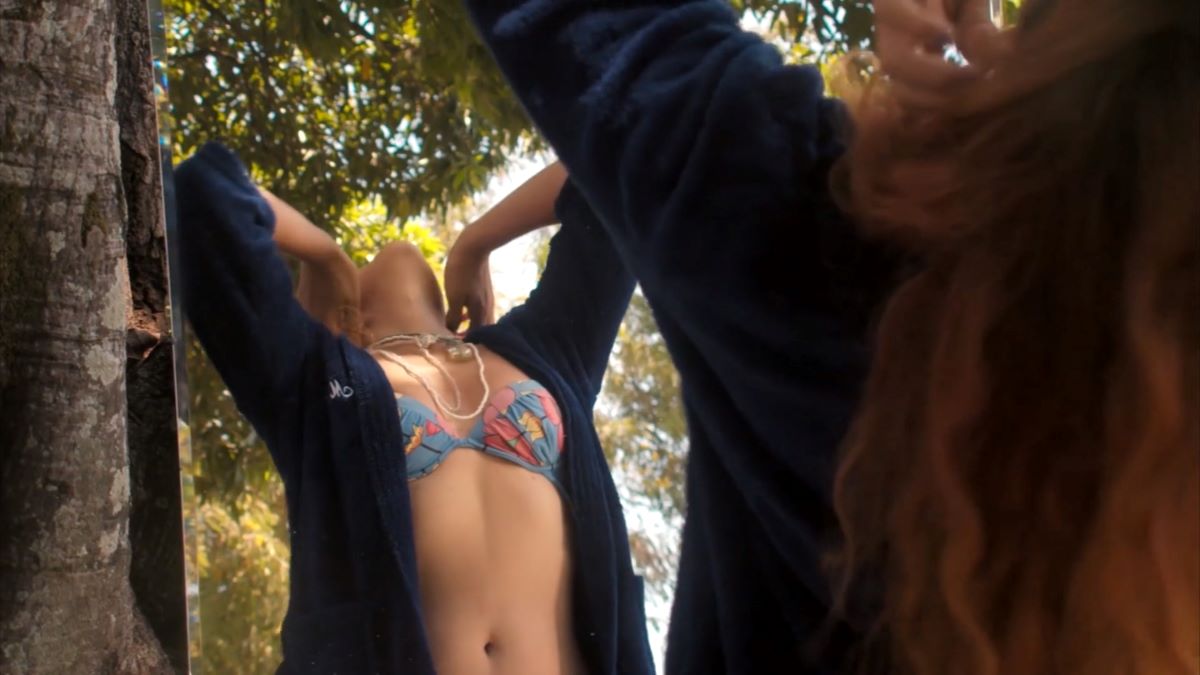
Experimental film | 4k | color | 25:13 | Brazil | 2022
Starring a cast of 100 people, Olho da Rua (Out Loud) is divided into eight acts and presents performance propositions in front of the camera as exercises of the gaze. Simple actions are presented, such as looking and admiring oneself in front of a mirror, improvising an assembly and saying messages to the camera, representing a collective party making the public square a great stage, or facing the camera lens that it's the eye of the beholder, whether on the streets or on the movie screen when it's ready. Made in two days at Praça do Hipódromo, in Recife, the film is made up of a cast of homeless people, linked to public shelters and non-governmental initiatives to support the vulnerable population.
Jonathas de Andrade was born in Maceió, Brazil, in 1982, and studied communications at the Universidade Federal de Pernambuco, Recife. He works with installation, photography, and video to explore constructs of love and the process of urbanization, with particular emphasis on Brazil’s vibrant but often ignored northeast region. De Andrade’s series Love and Happiness in Marriage (Amor e Felicidade no Casamento, 2007) juxtaposes photographic portraits of a young couple with pages from a 1960s psychiatric textbook on love and marriage. What appear to be vintage shots are actually new images of contemporary actors, their treatment and combination framing the popular ideals of romance and family as bourgeois fictions. In 2 in 1 (2 em 1, 2010), diagrams and photographs of carpenters illustrate the process of converting two single beds into a double and also seem to offer functional instruction on how to “make” a couple. Tropical Hangover (Ressaca Tropical, 2009) also employs found material, in this case a salvaged diary that forms the basis for an installation in which a book’s pages are illustrated with original, vintage, and found photographs, offering a reflection on memory, modernity, and urban space. Since 2007, many of de Andrade’s ideas have been developed in collaboration with A Casa como Convém (The House as It Should Be), an artists’ collective that he founded with Cristiano Lenhardt and others in Recife. The group, which focuses on issues around tropical modern architecture, offers a valuable counterpoint to the dominant cultural axis of São Paulo and Rio de Janeiro. One example of the influence of collectivity and local community on de Andrade’s work is The Uprising (O Levante, 2012), for which the artist organized a horse-drawn cart race in the center of Recife. Also inspired by the town is De Andrade’s mural Nostalgia, a Class Sentiment (Nostalgia, Sentimiento de Classe, 2012). This work, constructed from 340 primary-colored geometric fiberglass tiles displayed in a segmented composition, reproduces a tiled panel in a Recife tropical modern house, and is shown opposite a vinyl text that quotes manifestos about modern life composed by two Brazilian architects of the 1960s and ’70s. Some of the tiles interrupt these texts, the suggestion of loss offering pointed comment on the failure of Brazil’s modernist project. De Andrade has had solo exhibitions at Instituto Cultural Itaú, São Paulo (2008); Instituto Cultural Banco Real, Recife (2009); Centro Cultural São Paulo (2010); Kunsthalle Lissabon, Lisbon (2013); and Musée d’art Contemporain de Montréal (2013). He participated in the group exhibitions When Attitudes Became Form Become Attitudes, CCA Wattis Institute for Contemporary Art, San Francisco; and Salvajes: Digesting Europe Piece by Piece, Traneudstillingen Exhibition Space, Copenhagen (both 2012); and EXPO 1: Rio, Museu de Arte Moderna de Rio de Janeiro; Love and Hate to Lygia Clark, Zach?ta National Gallery, Warsaw; HIWAR, Conversations in Amman, Darat al Funun, Amman, Jordan; My Third Land, Frankendael Foundation, Amsterdam; Imagine Brazil, Astrup Fearnley Museet, Oslo; La Bienal 2013: Here is where we jump, El Museo del Barrio, New York; and Moving: Norman Foster on Art, Carré d’Art, Musée d’Art Contemporain, Nîmes (all 2013). He participated in the Mercosul Biennial, Porto Alegre, Brazil (2009); São Paulo Biennial (2010); Sharjah Biennial, United Arab Emirates (2011); Istanbul Biennial (2011); New Museum Triennial: The Ungovernables, New York (2012); and Lyon Biennial (2013). De Andrade lives and works in Recife.
Yentl De Baets
Burning Clouds
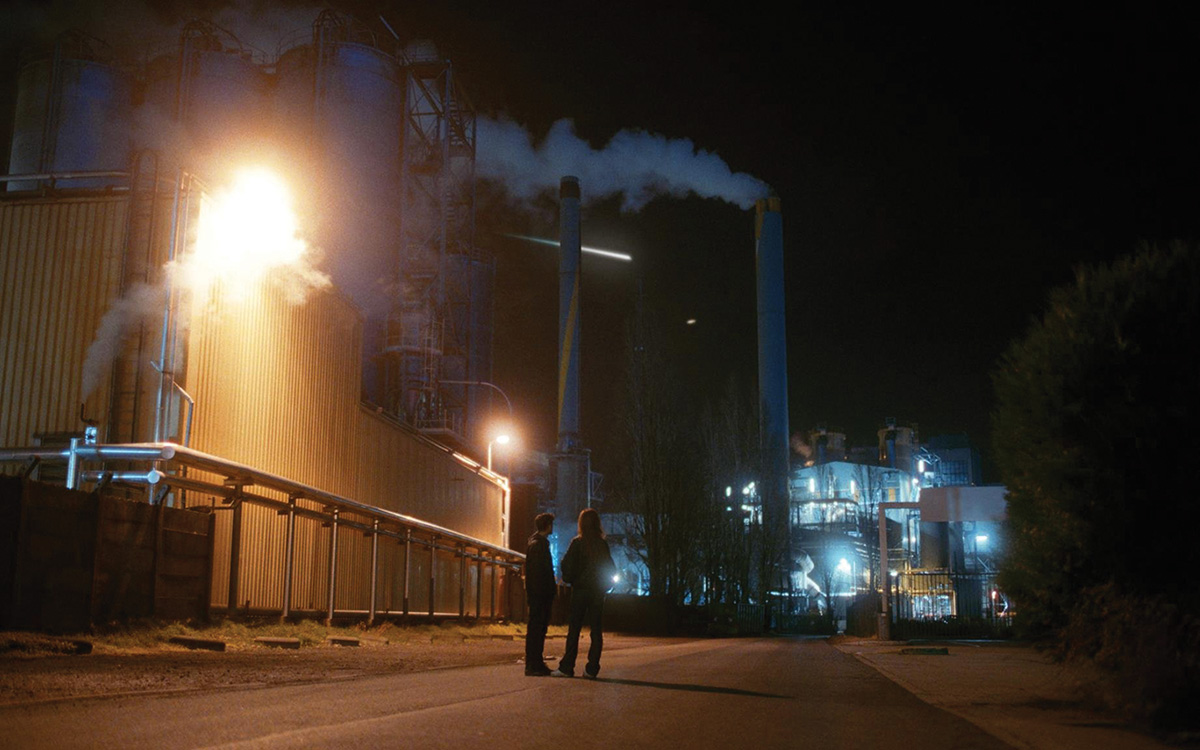
Experimental fiction | 0 | color | 17:24 | Belgium | 2021
A passing meteorite connects a roaming young woman, a burned-out factory worker and an unemployed young man during a long winter night. A portrait of the night and the people in it.
Yentl De Baets is a Ghent based director and cinematographer. He graduated at the film department of the KASK School of Arts in 2021 with his short experimental fiction film 'Burning Clouds'.
Antonin De Bemels
Au quart de tour
Experimental video | dv | color | 8:0 | Belgium | 2005
A man is moving along, accompanied by a restless and compelling rhythm; we see him in profile against a black background. His legs and arms are stepping out. As if the camera is also managing to penetrate his inner motives, each movement is fragmented, repeated, and multiplied. Every thought about, memory of, impulse towards, and hesitation over, his walking is incorporated in his stride. It should be driving him crazy, but he seems to be oblivious to all the excitement. When the camera slowly zooms in on his face, we can see that his lips are moving, but the words dry up in half syllables which, when repeated and multiplied, cannot mean anything. The walk continues, the tapping and ticking of the soundtrack carries on, and almost imperceptibly it becomes clear that he has, in fact, only made a quarter of a turn.
Antonin de Bemels was born in 1975 in Brussels and studied in the Visual Communication and Narration section of the ERG (Ecole de Récherche Graphique). His work has been shown throughout the world and has received various prizes. He frequently collaborates with musicians, and many of his works fall under a category that he refers to as 'non-commercial music videos'. Formally, de Bemels' works rely heavily on various editing techniques ranging from direct manipulation of super-8 film to 'scrubbing', a digital technique that can be described as the visual equivalent of audio scratching. The images de Bemels edits are of bodies or body parts, found objects and various natural or architectural settings, often lit in ways that are reminiscent of caravagesque painting. The footage is edited into sped-up, rhythmic patterns whose pace is set in time with the soundtrack. This technique alienates everyday objects and actions by arresting and abstracting them, highlighting the processes of sensory perception through which the embodied subject gains knowledge of the material world.
Antonin De Bemels
Light body corpuscles
Experimental video | dv | color | 5:24 | Belgium | 2005
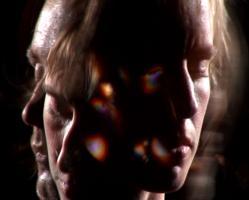
From a swarm of bright moving patches obviously disordered, an inaccurate figure of a man?s body appears. We only see his head, his arms, his trunk. It seems the features will never fix. This incomplete body is repeating the same simple movements? sequence. Then, the face is gradually taking more and more space, until it totally invades the screen. The features are now going disordered; some shadows are digging the pleated skin. The face details are going isolated each one from each other so that they transform themselves in light patches, like skinless body peaces...
Antonin De Bemels is a video and audio artist, born in 1975 in Brussels. He discovered video art and experimental cinema at Erg (Ecole de Recherche Graphique), from 1993 to 1997. At about the same period, he started getting interested in electronic music, and initiated his personal approach of videography, based on the representation of body movements and the dynamic relationship between sounds and images. Since 1997, he has made a dozen of short videos that were screened in many festivals around the world. He also creates video backgrounds for dance and theatre pieces, and regularly performs live visuals during electronic music shows. As an audio artist, he created original soundtracks for some contemporary dance pieces, and for some of his own videos. He released his first record on the Austrian label Tonto Records in 2004.