Catalogue > Search
Results for : Tout le catalogue

Eléonore De Montesquiou
Relatively Small Circles
Experimental doc. | hdv | color and b&w | 9:35 | Estonia, Russia | 2015
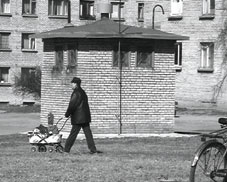
The film is a portrait or rather a monologue of Kyril Zinovieff. He was almost 100 years old when we discussed his feelings and opinions about Russia. Kyril left us last year, when he 105 years old, and it is about time that I share these momentsand thoughts of his. Kyril Zinovieff was born in 1910 in Saint Petersburg. He was a child during the Russian Revolution, when his family fled to Estonia and then moved to England. A British intelligence officer, Kyril Zinovieff wrote historical essays about Russia and translated Russian novels.
Eleonore De Montesquiou
Sillamäe
Experimental doc. | dv | color | 18:0 | France, Estonia | 2006
During the Soviet period, from 1944 until Estonia's independence in 1991, Sillamäe was a secret and closed town built to house Russian scientists and workers who would extract uranium and do nuclear research. Sillamäe was closed even to the Estonian people, it had only a code name and did not figure in film or photo and map archives in Estonia. Since 1991, Sillamäe has become an open city with a capitalist organization replacing the former centralised socialist system. These new circumstances meant that working conditions changed in no time, the factory was closed, and the very reason for this city to exist vanished. The Russian people who had settled there became a minority, unable to speak the official language, in an independent Estonia. Some have Estonian citizenship, others have Russian passports, most of them have the grey non-citizen's passport, and they are not, or little, integrated in the socio-economic life of Estonia. They don't speak Estonian, but their home is here, where they were born, here life is easier than in Russia, and Estonia is a door to Europe.
Eléonore de Montesquiou was born in 1970 in Paris. She lives in Berlin. Her films explore the relationship between geographic borders and identities, using a minimal formal vocabulary and a dreamlike aesthetic. The artist, having lived a long time in Austria, Estonia, and Germany, constantly finds herself between two languages, two cultures, two generations, two stories. She interviews the people who live in border areas, urban intervals, and forgotten cities, and gathers their testimonies in a sensitive way. Her videos, subtle and poetical, attest to the love she bears for these inhabitants through the careful attention given to their particular stories of every day life.
Eléonore De Montesquiou
Eksperiment Katja
Experimental doc. | mov | black and white | 9:26 | Estonia | 2020
Katja’s generation was an experiment for the new Republic of Estonia. She was born in 1992 in Narva, in the Eastern part of Estonia bordering Russia. Her birth coincides with the creation of the new Republic of Estonia and she received Estonian citizenship. Katja's mother tongue is Russian, but her grandfather was Estonian and taught her the language at home. The film suggests several metaphors to describe the trauma of this generation - from Little Red Riding Hood to the keyword of experiment.
French-Estonian, born in 1970 in Paris Eléonore de Montesquiou’s work revolves around the articulation between private and official histories, personal and national identities. It tackles the intricacies and ambiguities of living in the margins, based on her personal experience of up rootedness. Eléonore is primarily working with video, she tapes testimonies, creating prosthetic memories of repressed histories. In her documentary-informed works, her camera becomes the voice of these voiceless people. Her work is based on a documentary approach, translated in films, drawings and texts; it deals mainly with issues of integration/immigration/meaning of a nation in Estonia, giving voice to the Russian community. A few years ago, she started working with asylum seekers from French speaking countries in Estonia.

Eléonore De Montesquiou
Phoenix Katja
Experimental doc. | hdv | color and b&w | 12:0 | Estonia | 2024
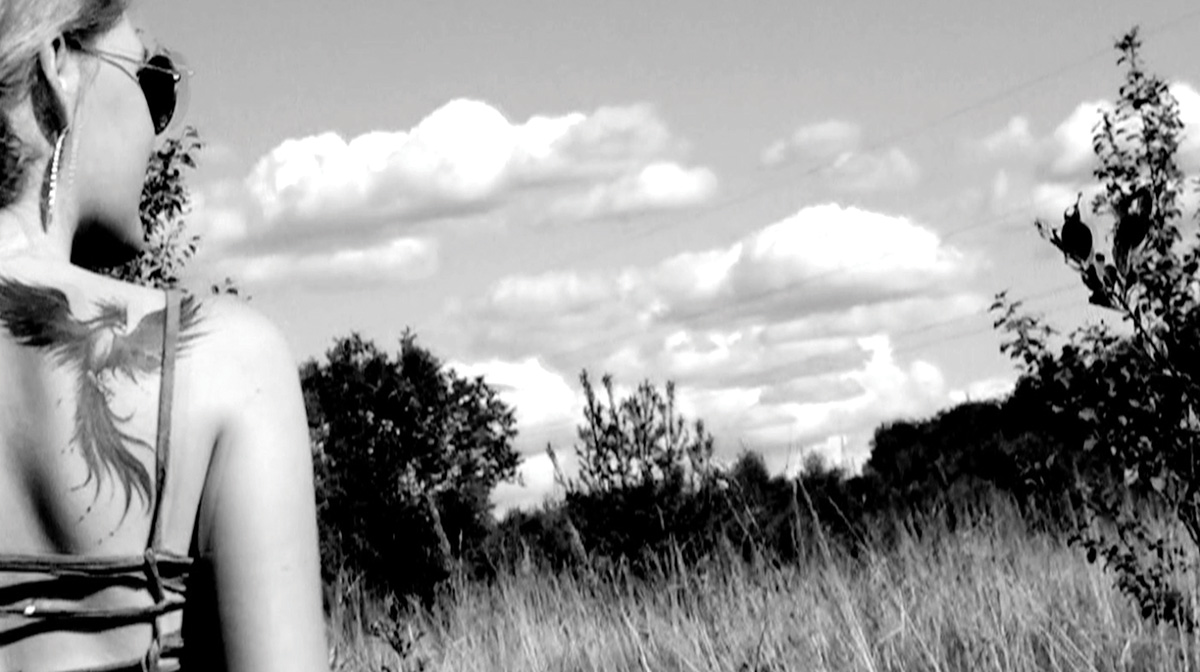
“I am a phoenix bird. It's hard for me take off and fall.” writes Katja. She is a kindergarten teacher in Narva, a border town between Estonia and Russia. She was born in 1992, with the new Estonian Republic, in a Russian speaking family and environment. Katja considers that her generation was an experiment for the new republic. Today she is trapped between languages that reflect opposite positions about war and peace and freedom.
Eleonore de Montesquiou is French-Estonian, she was born in 1970 in Paris. Her work revolves around the articulation between private and official histories, personal and national identities. It tackles the intricacies and ambiguities of living in the margins, based on her personal experience of up rootedness. Eleonore is primarily working with film, she tapes testimonies, creating prosthetic memories of repressed histories. In her documentary-informed works, her camera becomes the voice of these voiceless people. Her work is based on a documentary approach, translated in films, drawings and texts; it deals mainly with the search for freedom, issues of integration/immigration/meaning of a nation in Estonia, giving voice to the Russian community. Since 2007, she films women living on the Estonian-Russian border town of Narva: “Na Grane”, in 2016, she started working with asylum seekers from French speaking countries in Estonia: “Hope is no home” while pursuing a long time film project in France with peasants in the Haute-Alpes : “Traverses”.
Gianluca & Massimiliano De Serio
Zakaria
Fiction | 35mm | color | 15:0 | Italy | 2006
The Arab-Italian boy Zakaria meets a namesake during prayer preparations. The third part in a series about alternative cultures in Italy focuses on the language and culture lessons of the Arabic boy Zakaria.
Gianluca and Massimiliano De Serio, born in Turin, 1978, are twins. Since 1999 they have made several shorts, including Maria Jesus (2003), Mio fratello Yang (2004), and Zakaria (2005), which have appeared in a number of international festivals and won several prizes: Candidates at the European Academy Awards 2006, three Silver Nasters for Best Italian Short Film, Best European Short Film at Biennial of Stuttgart, and Candidates of the David of Donatello, awarded in Oberhausen, Huesca, Edinburgh, Turin, Siena, Belo Horizonte. At the same time they have had intense activity in art exhibitions: T1, Turin Triennial, Fondazione Merz; Fondazione Olivetti, Roma; Galleria Civica di Trento; Maison Rouge, Parigi, etc.
Susana De Sousa Dias
Natureza Morta - Visages d'une dictature
Experimental doc. | betaSP | color and b&w | 72:0 | Portugal | 2005
Within one image, another one is always hiding. Wordless and using only archive footage, "Still Life" aims to rediscover and delve into the opacity of images (news, war footage, propaganda documentaries, photos of political prisoners and never seen before rushes) made during the 48 years (1926-1974) of Portuguese dictatorship in order to foster new interpretations.
Susana de Sousa Dias was born in Lisbon in 1962. She completed a thesis in Aesthetics and Art Philosophy (Lisbon University), and holds University degrees in Painting (Lisbon Faculty of Fine Arts) and Cinema (National School of Theatre and Cinema). She studied music at the National Conservatory of Music and is currently a lecturer at Lisbon University of Fine Arts. In 2001 she founded the production company KINTOP.
Abri De Swardt
Ridder Thirst
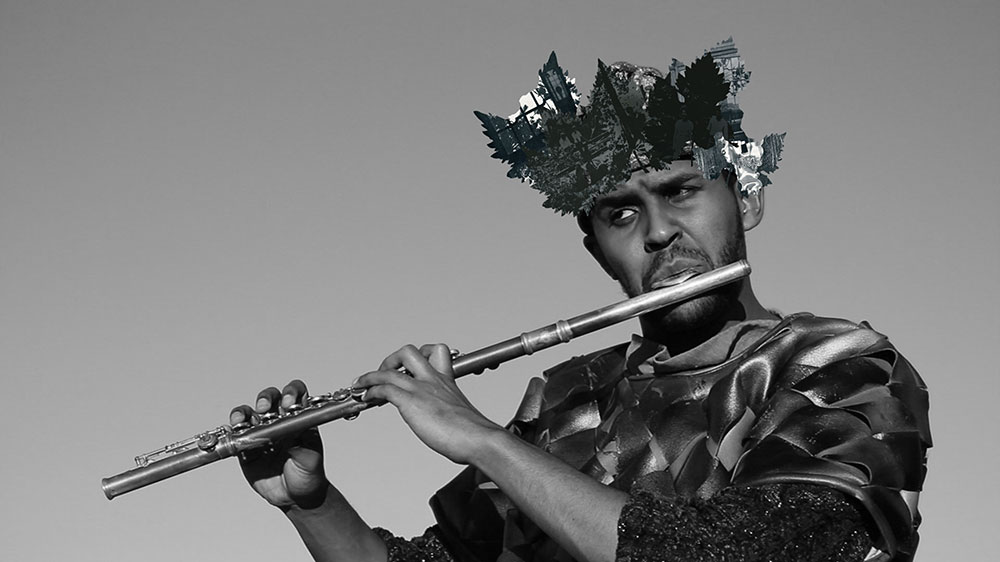
Experimental fiction | hdv | color and b&w | 13:38 | South Africa | 2018
“Ridder Thirst” explores the restorative agency and limits of queer youth, facing white supremacist denialism with an inventory of its continued effects. De Swardt fantasises the First River, a primary marker of settler colonial inhabitation in South Africa, into disappearance, perceiving that “if the ocean is the space of coloniality, the river is that of settlement”. The work takes the span of the river as witness of extreme socio-political discrepancies: snaking from the mouth of the river at Macassar Beach - a former separate amenity for brown people - to Stellenbosch, the affluent university town central to the formulation of apartheid. Photographs of Afrikaner student couples captured at the river in the sixties and seventies by Alice Mertens, a Namibian-German ethnographic photographer who was the first tertiary tutor of the lens in South Africa, are reworked and called into question through a series of anti-monumental gestures, motion-tracked data on spatial and gender traumas, and dense voice-over narration that `unwrites` place. Here the vagaries of the archival gaze is met with the insatiability of eroticism as De Swardt occupies and inverts the “straight” canons of documentary photography and essay film, asking how we can unlearn historic images that seek to define us.
Abri de Swardt (b. 1988) is an artist and writer based in Johannesburg. He holds a MFA in Fine Art with distinction from Goldsmiths, University of London (2014), and was named one of the inaugural Young African Artists by Wanted Magazine. Recent exhibitions and screenings include “phula! phula!”, Africa Open Institute, Stellenbosch (2019); “The Difficulty of Saying I”, Rupert, Vilnius; “Coded Encounters”, Galeria Graça Brand?o, Lisbon; “writing for the eye, writing for the ear”, The Centre for the Less Good Idea, Johannesburg (all 2018); “These Rotten Words”, Chapter, Cardiff (2017); “Blend the Acclaim of Your Chant with the Timbrels”, Jerwood Space, London (2016); and “Men Gather, in Speech”, Cooper Gallery, Dundee (2015). De Swardt has held solo exhibitions at POOL, Johannesburg (2018); White Cubicle, London (2015); MOTInternational Projects, London (2013); and blank projects, Cape Town (2011). He has taught at Wits School of the Arts, and been published in Art Africa, How to Sleep Faster and Adjective. In 2019 he will contribute to “Radicalise Bauhaus - Perspectives from the Global South”, forthcoming from iwalewabooks, Bayreuth, and is a 2019/2020 artist-in-residence at Hordaland Kunstsenter, Bergen.
Abri De Swardt
Kammakamma
Video installation | 4k | color | 16:54 | South Africa | 2024
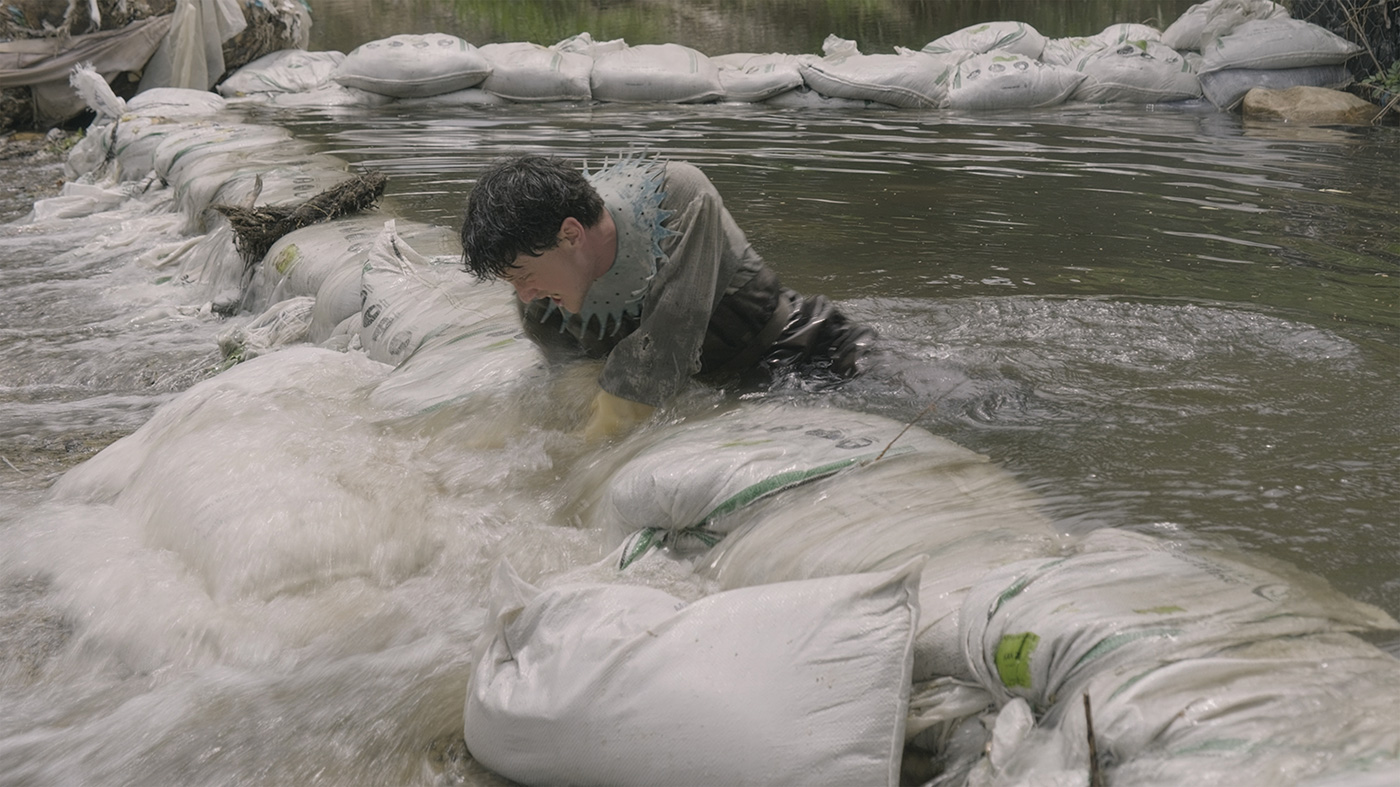
If the river’s mouth could speak, what would it say? Enacting the possibility of river mouths as storytellers and historiographers, Kammakamma is the opening episode of the second work in a moving-image trilogy exploring the Eerste River in South Africa as witness and carrier of submerged narratives. Its title evokes slippages between the Khoekhoe terms for water (//amma) and similitude (khama), with 'kamma' absorbed into Afrikaans as 'make believe.' Through three interconnected chronicles by Abri de Swardt, poet Ronelda S. Kamfer, and historian Saarah Jappie, the river becomes a saturation point for understanding climate and catastrophe. In this episode, De Swardt probes a founding myth of Afrikanerdom through Hendrik Biebouw, a teenage idler who in 1707 attacked a Dutch East India Company watermill at the river, drunkenly declaring himself an “Africaander” – then a term reserved for enslaved, manumitted, or indigenous peoples. Biebouw’s declaration is inextricable from the river where it was spoken, from wine as settler-colonial agent, and from the instability of language itself. Recast in purgatory, he sifts sand from sandbags mined around the river mouth back into the blocked confluence of the Eerste and Plankenbrug Rivers, his delirious oratory jumbling Afrikaans, Dutch, German, and Malagasy. Interludes filmed after flooding show the river as both wild and engineered, while tableaux drawn from swimming and life-saving manuals foreground burden and suffocation. Through double synchronisation De Swardt frames perception itself as intoxicating disorientation.
Abri de Swardt (b. 1988, Johannesburg) is an artist based in Johannesburg, South Africa. Working across video, photography, sculpture, and performance, De Swardt’s practice challenges the ongoing effects of settler-colonial whiteness and masculinity in Southern Africa, and perceptions of queerness as ‘unnatural’ and ‘unAfrican’, through joining historiography with fiction, auto-ethnography, ecology, desire, and the fantastical. De Swardt’s work has been exhibited, performed, and screened at the Norval Foundation, Cape Town; Kunstverein Braunschweig; Goldsmiths Centre for Contemporary Art, London; Rupert Museum, Stellenbosch; National Gallery of Art, Vilnius; Institute of Contemporary Arts, London; and The Centre for the Less Good Idea, Johannesburg, amongst others. Solo exhibitions include POOL x Field Station, Cape Town (2024); POOL, Johannesburg (2018); MOT International Projects, London (2013); and blank projects, Cape Town (2011). De Swardt has undertaken residencies at Rupert, Vilnius; Hordaland Kunstsenter, Bergen; and the Nirox Foundation, Cradle of Humankind. In 2022, he was awarded a Social Impact Arts Prize and nominated for the Foam Paul Huf Award. He holds an MFA in Fine Art from Goldsmiths, University of London, and is currently a 2025–2026 artistic fellow at Braunschweig Projects, Hochschule für Bildende Künste Braunschweig.

Bea De Visser
Chairs Missing
Experimental film | | color | 19:45 | Netherlands | 2010
The last days of a swimming pool, just before the demolition. Regular visitors are isolated by mysterious encounters, nowhere to be seen in the film. We see the decline of a social meeting place unfold in sequential patterns. Without dramatic event, no music, no dialogue, this film is in relation with the `minimal` art cinema. ... A man walks through the hallways past lockers and cubicles. A boy plays in one of the lockers. A girl walks into a dressing room, opens the door, but does not enter. A boy walks past the grandstand where a young woman stares into the water. A woman swims her baby to the edge of the pool. The building is filled with sounds: water, machinery, leaking outside noise like the sound of emptiness. And old man steps off the high dive ... We come to know anything about the people we `follow` or meet. Everyone seems calm and happened to come by. It derives the film its quality as stylized documentary observation or film essay. Yet there is turmoil and tangible threat.
Bea de Visser works as a autonomous visual artist and filmmaker. She started her career in the early 1980-s; she works as a sound and performance artist in the trendy club scene and artists spaces. Today, her work is shown at international exhibitions, her movies shown at international film festivals worldwide. Bea de Visser manages to present the independent production studio Anotherfilm. In the recent past Anotherfilm has become an initiative that participates in hard to realize projects of a small group of artists and filmmakers. Since 2010 Bea de Visser works as guest advisor at Rijksakademie van Beeldende Kunst in Amsterdam. She is art consultant of the Collection Lievensberg in Bergen op Zoom. Occasionally she gives workshops and lectures at home and abroad in various disciplines such as film, scenario, drama, visual arts and theater design. Her films include: Mama Superfreak (2009), Roses and Fall (2006), Just a Minute Yoko (2004), The Second Memory (2004), The Barren Land (2001), Another Another (1999), A Breath Hush (1996). Besides she made music videos, films for theatre design and wrote scenarios for feature film projects.
Bea De Visser
MAMA SUPERFREAK
Experimental fiction | | color | 14:0 | Netherlands | 2009
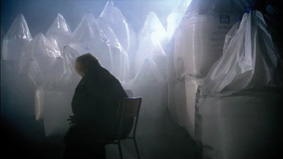
In one long shot this adaptation of La Mamma Fricchettona, a monologue by Nobel Prize winner Dario Fo, shows Viviane De Muynck in a humorous elucidation of a woman? s odyssey from doting motherhood to a state of independence whilst addressing an invisible and anonymous man. In an ambiance of a warehouse filled with white sacks the protagonist vociferously relates her non-existent relationship to husband and child and her escape to the alternative underground of squatters and punks, who are more of a family to her than her own brood.
She starts her career as a performance artist; beginning the 1980ies she performs on the podia of the trendy club circuit and the alternative art spaces with sound work, live installations and `noise` performances. Afterwards she returns to painting and works for two years at the Rijksakademie van Beeldende Kunst in Amsterdam (1993-1995). As from that time film is her medium. The work that she develops since then is shown worldwide in museums and art spaces, the theatre, the public space and especially the cinema. Her short films are: SSST?, Roses and Fall, Just a Minute Yoko, The Second Memory, The Barren Land, Another Another and A Breath Hush. `Cold` is her first feature film (in production 2009).
Bea De Visser
The Sonic Gaze
Multimedia installation | 0 | color | 6:10 | Netherlands | 2025
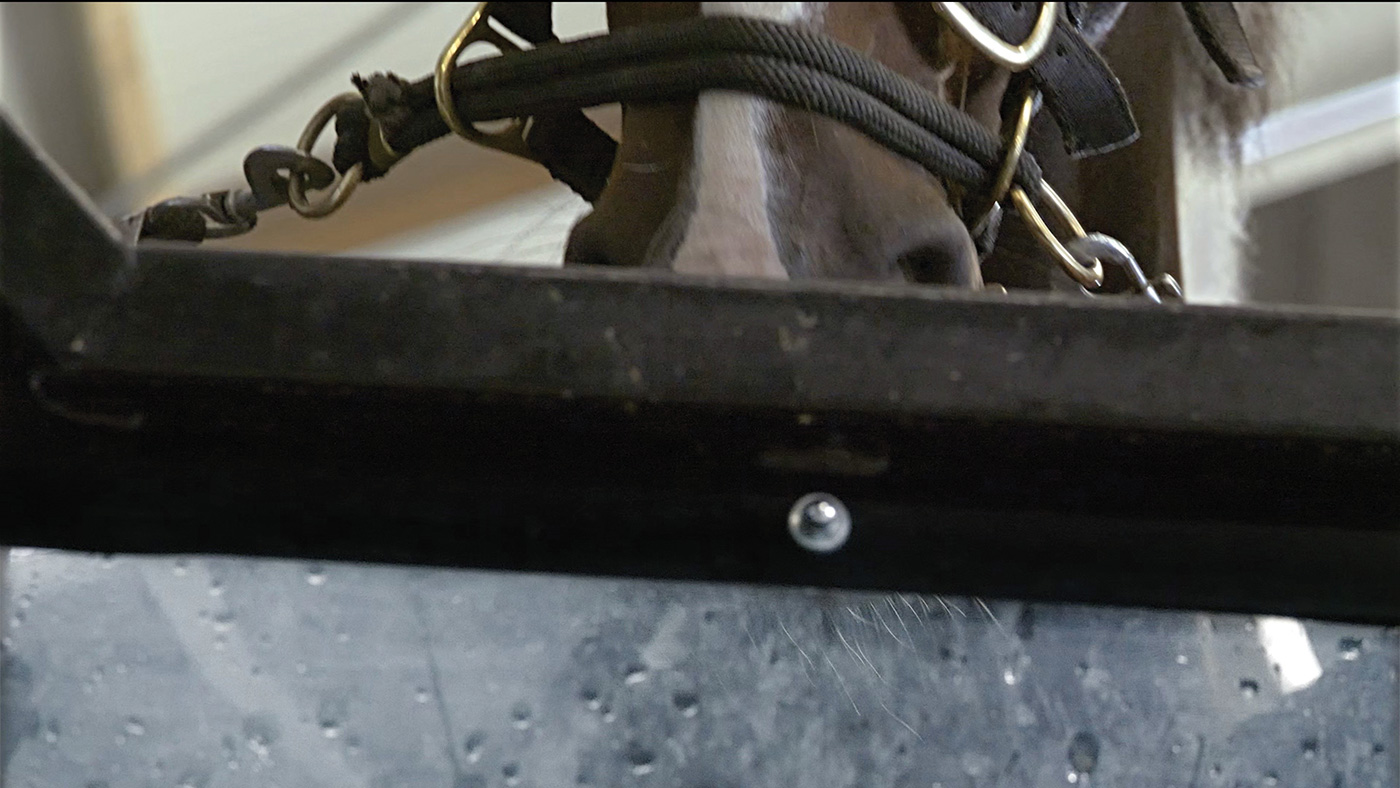
A horse is placed in an enclosed space on an aqua trainer treadmill, doubly enclosed by only the sound of splashing water. We hear much more than we see due to the recorded frequencies and the ambient range of the horse's hearing. Through pitch compression, specialized recording equipment and sound recordings far from the set, the horse's auditory experience has been made audible to humans. Its result is an acoustic representation of the animal's subjective perspective. Through the horse's sonic filter, we hear a different world, yet equally real, than the one we see on screen. While we watch with our human gaze, we hear the horse's complex sonic reality.
Bea de Visser is known for her film art, installation work and sound performances. Her work can best be described as a digital media-based practice -from the perspective of a painter and storyteller who sees the world through different lenses. AnimaIs are a recurring motif in her work. Her latest works focus on non-anthropocentric storytelling. She mixes fiction with the everyday and emphasizes structures of power, dominance and control. Her work seduces the viewer through a rich audiovisual language, exploratory in its narrative. Bea de Visser comes from a background of painting and a study electro acoustic sound. She initially began her career as a sound and performance artist in the trendy club scene and artist’s spaces, early 1980-ies. Bea de Visser attended the Rijksakademie van Beeldende Kunsten in Amsterdam (1993-1995).
Guzman De Yarza
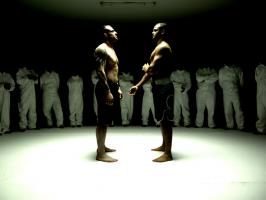
COMBATE
Art vidéo | dv | color | 6:30 | Spain | 2007
The projects tries to construct a visual metaphor in order to rethink the concept of conflict that lies beneath every human form of relation, and also to study violence as an organized mass media spectacle in contemporary society. We have recently observed the rapid growing of contact sports and all kind of brutal martial arts, from which one stands out above all, the so called Extreme Fighting, in which two contestants fight with almost no limits in the ring, using a mixture of all martial art disciplines. The work tries to investigate in the relation between the mechanisms of knowledge transmission both in the martial arts world and in University, relating the competitivity that is taught daily to the art of killing what is different form you?
Guzmán de Yarza Blache. Zaragoza, Spain. 1976 Architect by Universidad de Navarra. Spain After working at Andres Perea Office of Architecture in Madrid, founds J1 Architects in 2002, a Madrid based office of architecture that currently projects and directs works in several parts of Spain. He develops simultaneously a career as a video artist in a disciplinary mixture that in his own words enriches both practises and allows an exchange of sensitivity that eventually aims to somehow illuminate our perception of human condition. His interests as an artist are basically related to the act of portraying and to the description of contemporary society, for what he performs public art pieces and documental like productions that pose questions on a range of things that vary from the very intimate scale to that one national or transnational, with constant references to architecture and urbanism and the way they both dramatically affect our lives.
Guzman De Yarza
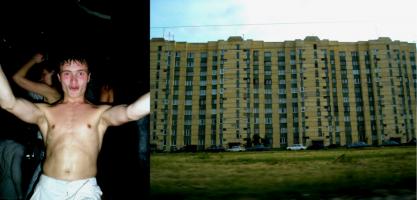
No les Hables de Lenin
Art vidéo | dv | color | 6:3 | Spain | 2006
Selection of portraits taken late at night in different clubs and after hours in major Russian siberian cities in the summer of 2006. A collective portrait of the first generation of Russians born free that have learned amazingly fast those western rituals of leisure and hedonism through global television networks and that, supported by extremely flexible opening times, are currently developing a sensuality and a joie de vivre that somehow tries to compensate all that stolen time to previous generations. The project is indeed a documentary approach to three big industrial Russian cities, located within the Trans Siberian Route, Yekaterimburg, Novosibirsk and Irtkusk, where more than four hundred portraits where taken during a five week trip, from which around sixty have been chosen with the intention of achieving some knowledge about a generation of Russians whose life conditions have changed dramatically compared to those from their parents. The portraits are presented in a diptic with pictures of buildings belonging the cities where these main characters live, creating a catalogue of both soviet architecture and of the new mall-like constructions and ? western ? looking architectures. The project not only intends to investigate on how much of architectonical can lie in a face or how much of anthropomorphic can there be in a building, but also points out one of the main aspects of contemporary society which is the assumption of global trends by younger generations, always related to leisure time and hedonism, that are beginning to define a social battle field in which the new revolutionary attitude is to see how hard you can party and how little you can sleep?
Architect by Universidad de Navarra. Spain After working at Andres Perea Office of Architecture in Madrid, founds J1 Architects in 2002, a Madrid based office of architecture that currently projects and directs works in several parts of Spain. He develops simultaneously a career as a video artist in a disciplinary mixture that in his own words enriches both practises and allows an exchange of sensitivity that eventually aims to somehow illuminate our perception of human condition. His interests as an artist are basically related to the act of portraying and to the description of contemporary society, for what he performs public art pieces and documental like productions that pose questions on a range of things that vary from the very intimate scale to that one national or transnational, with constant references to architecture and urbanism and the way they both dramatically affect our lives.
Arthur Debert
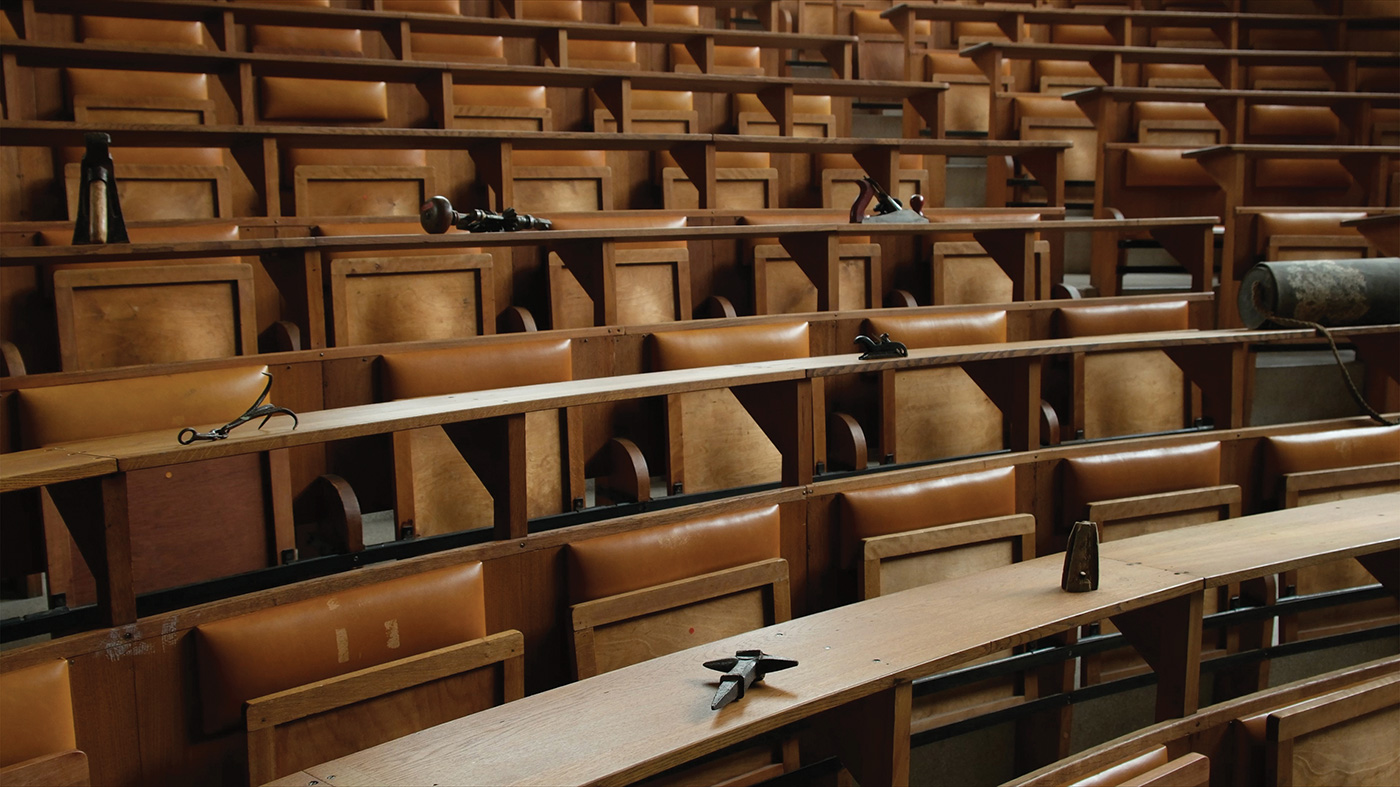
La Conférence des Instruments Savants
Experimental video | 4k | color | 9:1 | France | 2024
In a wooden amphitheatre built in 1933 for the study of animals and plants, a group of ancient tools attend a lecture. The talk seems to be about animals and their movements, but the tools gradually come to understand that it’s about the living beings that have given them their names and sometimes even their shapes.
Born in Paris in 1990, Arthur Debert lives and works between Nancy and Berlin. Arthur Debert’s protean practice is rooted in collective work and exchange. Anchored in a contextual approach, his work takes shape through travel, encounters and multiple collaborations. Central to these exchanges is the question of the transmission and survival of knowledge. Objects encountered in the field are seen as both witnesses and bearers of epistemological narratives to be deciphered. To reveal the different cultural layers sedimented within them, the artist disrupts their temporal linearity through shifting spatial settings and collective activations. Installations, videos and editions then fix the ephemeral, indeterminate state of the resulting lived experiences. Arthur Debert is a graduate of the École de l’Image in Épinal (2011), the École Supérieure d’Art de Lorraine in Metz (2013) and participated in the École Offshore in Shanghai (2014-2015), a research program of the École Nationale Supérieure d’Art et de Design in Nancy. His work has been shown at Centre Dürrenmatt Neuchâtel (2025), Triennale de la Jeune Création (Luxembourg, 2013 and 2021), Koraï (Cyprus, 2023), Ann Arbor Film Festival (Michigan, 2022), Berlin Art Prize (2018) and Berlin Independent Film Festival (2023).
Edouard Decam
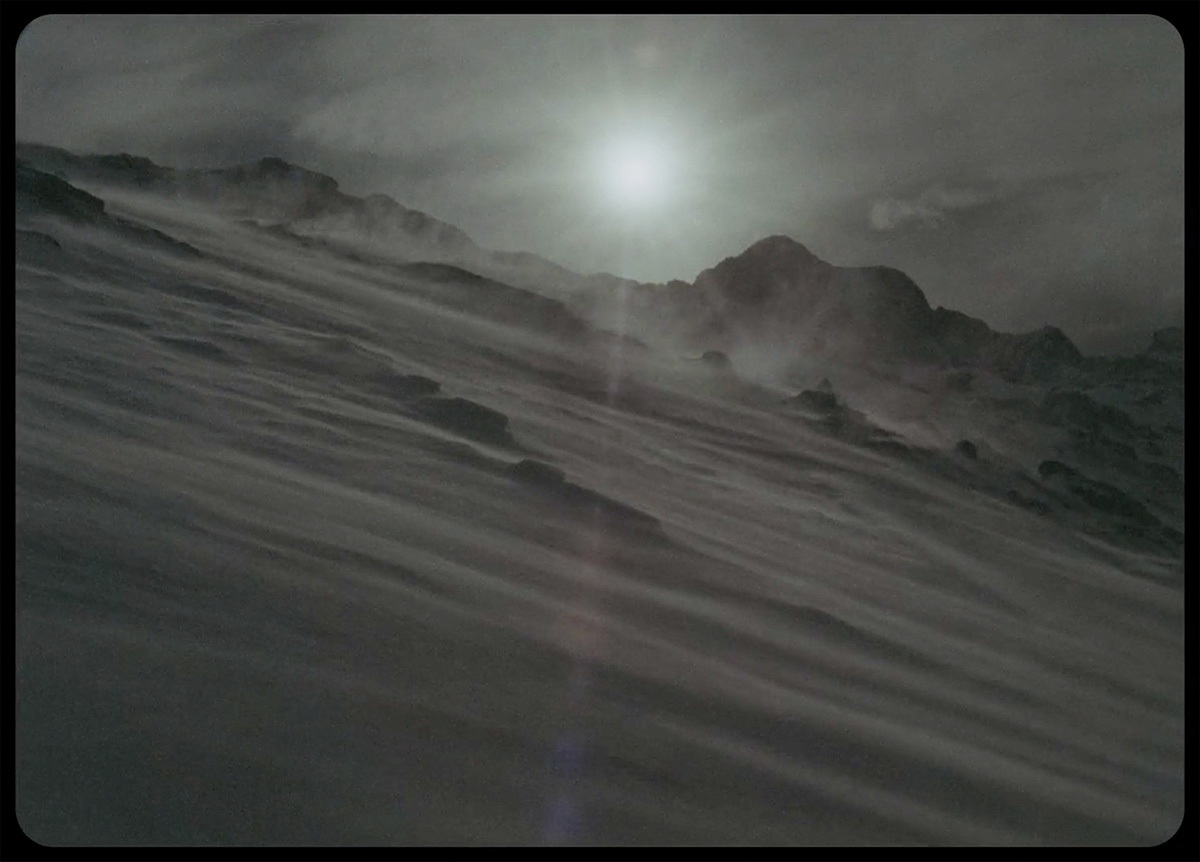
Calibration
Experimental film | 16mm | color | 15:49 | France, Spain | 2023
« Tout a tendance à dériver avec le temps et perd de sa précision de façon périodique. Un ajustement assure que la précision reste au niveau requis. » Comme une invocation, une nécessité de calibration du paysage qui perdrait petit à petit sa condition naturelle, le film projette une nature mouvante, en constante modification et réajustement. Les niveaux de vents, hauteurs de neiges, les compositions physiques, géologiques, morphologiques et temporelles s’étalonnent lentement, la montagne s’équilibre. Dans la continuité de « Volva », film tourné en 2016 à l’observatoire astronomique du Pic du Midi, « Calibration » est une expérience physique de la nature, d’un temps vécu, en plein hiver, isolé dans un refuge de haute montagne durant trois semaines, au contact des aléas du vent, de la neige, des lumières et du temps.
Architecte de formation il collabore dans diverses agences avant de se consacrer exclusivement à sa pratique artistique. En 2006 il est lauréat de la bourse de la Fondation EDF pour les jeunes architectes. Il réalise le projet photographique Landscape scale sur les barrages des Pyrénées qui marquera la direction de ses futurs projets. Il centre ses recherches sur les relations qui se tissent entre l’architecture et le paysage, entre l’homme et la nature. Ses recherches tentent de construire la part impalpable de notre relation au naturel. Ses installations se développent entre photographies, vidéos et volumes construits. En 2016 il réalise son premier film, Volva à l’observatoire astronomique du Pic du Midi. Durant 3 semaines passées à 2871m, il capte inlassablement les traces du temps imprimés dans les expériences scientifiques, l’architecture du lieu et le paysage environnant. Nominé dans divers festivals, Volva est lauréat du prix LOOP Discover à Barcelone. Il intègre la collection du MACBA et du FRAC Normandie Caen. Il a été résident de la Casa de Velázquez et de l’Institut français. Ses travaux sont exposés en Europe, aux Etats-Unis et intègrent diverses collections publiques, FRAC, musées et Fondations. Il vit et travaille à Argut-Dessus, dans les Pyrénées.
Alain Declercq, Jeanne SUSPLUGAS
Protection civile
Experimental video | 0 | color | 15:44 | France, Switzerland | 2011
PROTECTION CIVILE seems the obvious continuation of the first film made by Alain Declercq and Jeanne Susplugas PLAN IODE (which questions the distribution of potassium iodide, vital drug in case of a nuclear attack). After the pharmacies backrooms, it is the under ground Swiss shelters the two artists went to explore. The country abounds of those shelters and each inhabitant has a space. Individual or collective, from particular cellar to enormous medicalized shelters, they all answer a strict and effective organization. The film then questions a possible presence under ground, the limits of the cohabitation, promiscuity and the inevitable problems of organization what raises such a plan of protection. In panoptical and systematic form, appear dormitories, kitchens, surgical unit, medical and emergency material. However in some of these spaces, transformations are taking place, changes of affectation or use. So, certain shelters can serve as heterogeneous storage places which can sometimes take an improper aspect... The artists testify through this movie of the singular and unique architectural heritage of Switzerland.
Alain Declercq is a french artist, born in Moulin in 1969. He works and lives in Paris, his work has been exhibited since 1996. He's represented by the Hervé Loevenbruck art gallery in Paris, and by the Elaie Levy Project Gallery in Belgium (Brussels).Jeane Susplugas is a french artist, born in Montpellier in 1974. She works and lives in Paris. She's represented in Paris by the JamoisArtPartners Gallery, in Brussels by the Charles de Jonghe Gallery, in Copenhagen by the Poulsen Gallery and in Tokyo by the Mizuma Art Gallery.
Alain Declercq, Jeanne Susplugas
Pill-boxes
Video | dv | color | 10:0 | France, Switzerland | 2012
En Suisse, plus de trois-mille bunkers ont été construits entre 1882 et 1995. En 1914, l?aviation entre pour la première fois dans l?histoire d?un conflit armé et engendre des changements de stratégies : il devient nécessaire de se cacher, c?est la naissance du camouflage. Les ouvrages militaires suisses ont été camouflés par d?étonnantes décorations, si bien intégrés au paysage que personne ne les remarque: du sapin métallique de Fort Pré-Giroud (Vallorbe) au porte rocher de Gütsch (Uri). Cette singulière architecture témoigne de la neutralité Suisse et questionne la relation entre architecture et paysage. Aujourd?hui, la plupart de ces fortins sont désaffectés et posent la question du devenir de cet important patrimoine.
De la vidéo à la photographie, de l?installation au dessin, Jeanne Susplugas évolue dans un univers aussi séduisant qu?inquiétant avec comme préoccupations principales nos addictions. Elle crée des espaces pénétrables, des « maisons » qui questionnent le spectateur sur des comportement sociaux et intimes. Susplugas est représentée par la galerie Valérie Bach (Bruxelles), Mizuma Art Gallery (Tokyo) et Rewind (New York). Alain Declercq explore les différentes structures du pouvoir et les oppressions qu`elles engendrent - schizophrénie sécuritaire, surveillance, manipulations médiatiques. Sa technique de l`inversion transforme Declercq en chasseur d`indices, provocateur de dysfonctionnements, renverseur de situations ou empêcheur de tourner en rond. Declercq est représenté par les galeries Elaine Lévy (Bruxelles) et Loevenbruck (Paris).
Jason Dee
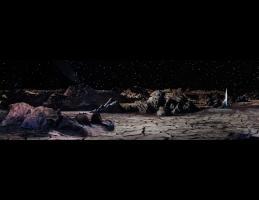
Moonscape
Experimental video | dv | color | 2:30 | United Kingdom | 2007
Moonscape is a continuously looping panorama, made by digitally stitching together painted backdrops from numerous 1950?s sci-fi films. These films looked forward to the future ? yet created their futuristic effects by returning to cinemas roots. They were shot in Cinemascope, at the time, cutting-edge technology , yet it?s format and the use of painted landscapes harked back to 19th Century panoramas. ?Moonscape?, merging paint, celluloid and pixels, continues this sense of simultaneously looking back and forward. In the 1950?s, these landscapes had to be imagined; yet they also contained scientific details from a society on the verge of space travel. Hand-painted backdrops, blended with lens-based imagery, fantasy merged with scientific facts, as the imagined paintings become infused with film?s reality effect. Viewing these landscapes now, after manned lunar exploration appears to have come and gone, the pioneering optimism (expressed in the use of Technicolor and Panovision) has given way to a more desolate and directionless viewpoint. This panorama shows a distant suspended world, sealed off and preserved from the world and time. Distant ghostlike spacemen look isolated and without purpose, caught in limbo on an imagined future landscape of celluloid and paint that became reality and is now slipping back into memory.
Jason Dee is a graduate from Glasgow School of Art`s MFA programme. He continues to live in the city, working on his art practice while occasionally teaching New Media skills and lecturing at the Art School. His work has been exhibited and screened at venues throughout Europe and the USA.
Jason Dee
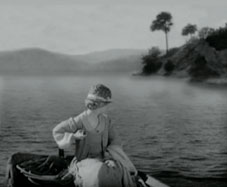
We're going for a trip across the water
Experimental video | dv | black and white | 2:0 | United Kingdom | 2006
A couple in a rowboat are caught in a never ending circle. They appear to be trapped within the mechanisms of the film itself. The looped rowing action of the man gives him the appearance of an automaton, while the flickering image of the woman frozen at the boat's rudder has a ghostly quality. The actors, or rather their images, are caught in a state of limbo between past and present, movement and stasis, life and death. Differing forms of recorded time are brought together in this work, forcing different perceptual rules to combine. The merger of still images and film motion acts to deform cinematic narrative. The ceaseless forward motion of the storyline has been caught in a loop, creating a film requiring a contemplative approach from viewers more akin to photography or painting. The past and present merge together preventing the possibility of a narrative ending, creating a work complete within itself, yet forever unresolved. Technologies from several different eras are referenced. The lakeside backdrop spinning around the couple is actually a still image created by digitally stitching together individual film frames into a 360-degree panorama, while the man's looped animation resembles a 19th century Zoetrope sequence.
Jason Dee studied photography at Northumbria University and completed a Masters in Fine Art at Glasgow School of Art. His current art practice investigates connections between modern media from the mid 19th century to the present day. He uses digital software to alter film scenes originally shot on celluloid, assessing how new media has reconfigured and re-contextualised the way we perceive 20th century cinema. His work has been exhibited in Europe and the United States. Dee is currently undertaking a year long new-media residency at the University of Abertay funded by the Scottish Arts Council. He lives in Dundee, Scotland.
Olivier Degorce, Christophe GRISEAU
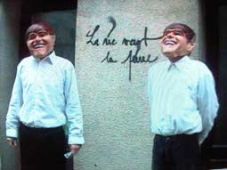
Wall Street (épisode 1)
Experimental video | dv | color | 4:3 | France | 2004
Après l?échec d?un avenir radieux annoncé par le communisme, nos amis les clones, chantres du capitalisme, décident la mise en faillite délibérée d?entreprises. EXTRAIT D?UN ENSEMBLE DE FILMS REGROUPÉS SOUS LE TITRE : « In The World Of Opulence » Les films se jouent des sujets épineux et calamiteux de nos sociétés contemporaines. Les thèmes récurrents qui ont influencé OBSESSION 27 (l?isolement social, l?exclusion, la jet set, la perversité, certains fléaux planétaires?) sont illustrés avec légèreté ou tragique, humour ou ironie, parfois sous forme purement documentaire et généralement engagée. Tout à la fois ludiques et humoristiques, les vidéos participent autant de la critique sociale que du divertissement. Toute lourdeur de production écartée,a favorisé une grande souplesse de réalisation et les moyens réduits furent propices à la spontanéité : Matériel minimum (caméra DV), logiciel de montage de base, séances improvisées et intervenants évidemment non professionnels
Olivier Degorce & Christophe Griseau sont nés à Niort, France. Ils vivent et travaillent à Paris et près de l`Atlantique. Au gré de ses collaborations, on retrouve Olivier DEGORCE sous différents pseudos : M&M?S, OBSESSION 27, NOWHERE, ou encore WHAT?S FOR DINNER. Sa production polymorphe associe la vidéo, la musique électronique, la photographie, et l?écriture. Il revendique une approche ludique, touche-à-tout, iconoclaste et un certain militantisme. Les thématiques récurrentes qui traversent sa pratique et constituent des sources d?inspiration sont aussi variées que les médias qu`il utilise : l?environnement, la question de la célébrité, les sociétés d?opulence, les fléaux planétaires, etc? Ses installations photographiques ont été exposées à Paris [ American Center, Passage de Retz, Centre Georges Pompidou...], à l`étranger [Nikolai Comtemporary Art Center de Copenhague, Traders Pop Gallery à Maastricht, Speak For Gallery à Tokyo] et dans plusieurs galeries de province [Confort Moderne de Poitiers, C.A.P.C de Bordeaux , Le rectangle à Lyon...]. Dès 1988, M&M`S a été partie prenante de la scène électronique française. En 1998, il a publié l?ouvrage de référence sur la culture DJ, « NORMAL PEOPLE » compilant 180 portraits photographiques de Dj`s français et internationaux (Crash Editions). Ses productions musicales ont été signées sur des labels tels que TEKNOTIKA ? Detroit / USA, MENTAL GROOVE Records?Genève /Suisse SKAM Records-Manschester/UK MAZZO Music (Pays-Bas), B-Cool (Japon), Sony France, BMG?.. En 2004 et 2005, il se consacre notamment, avec Christophe Griseau, à la réalisation d`une série de vidéos illustrant leur pièce sonore : OBSESSION 27 "In the World of Opulence" Ce projet est réalisé avec le soutien de la DRAC Ile-de-France. *Articles et textes engagés avec Amandine Geers sur l`alimentation et l?écologie pour le magazine CRASH / Paris, pour lequel il a été également photographe.
Stéphane Degoutin, Gwenola Wagon
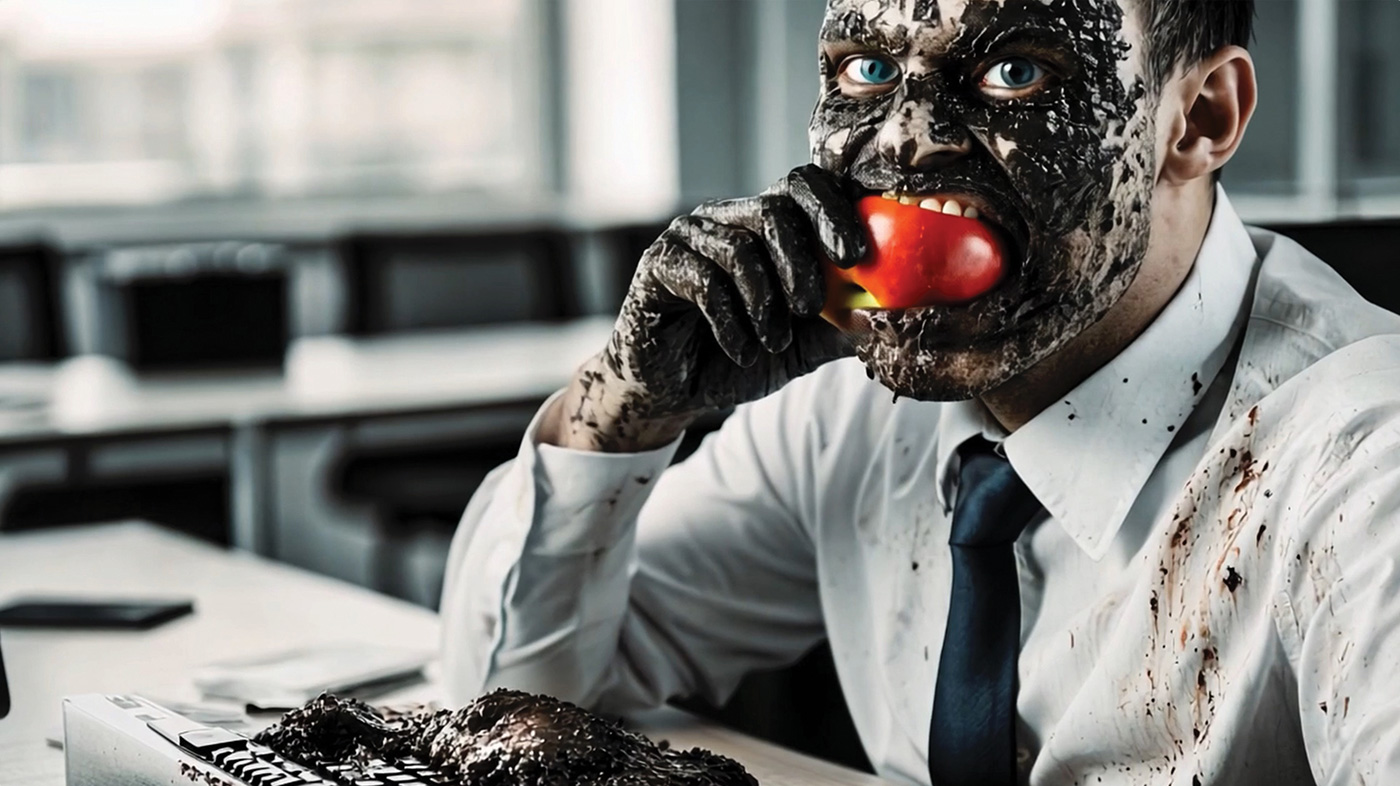
Apple
Experimental film | mov | color | 4:0 | France | 2025
Everything is Real shows the reddest apples, the greenest call centers, the server rooms with the most cables, the smiliest employees, the delivery drivers with their most beautiful parcels, the most efficient volunteers, the biggest mountains of waste - but pushes them to the extreme of stereotyping: insensitively, stereotypes go to extremes.
Stéphane Degoutin is an artist and researcher. His work explores “dark systems,” the structures that often go unnoticed yet organize our lives: from air conditioning to international airports, from music for houseplants to urban infrastructures. He undertakes a form of reverse engineering of these hidden logics, in order to imagine other ways of thinking and acting. Gwenola Wagon is an artist and researcher. She is a University Professor and teaches at the Sorbonne School of Arts at Paris 1 University. Through installations, films, performances and books, she imagines alternative and paradoxical narratives for thinking about the contemporary digital world.