Catalogue > Search
Results for : Tout le catalogue
Stéphane Degoutin, Gwenola Wagon
La maison qui vous veut du bien
Experimental doc. | mov | color | 20:4 | France | 2022
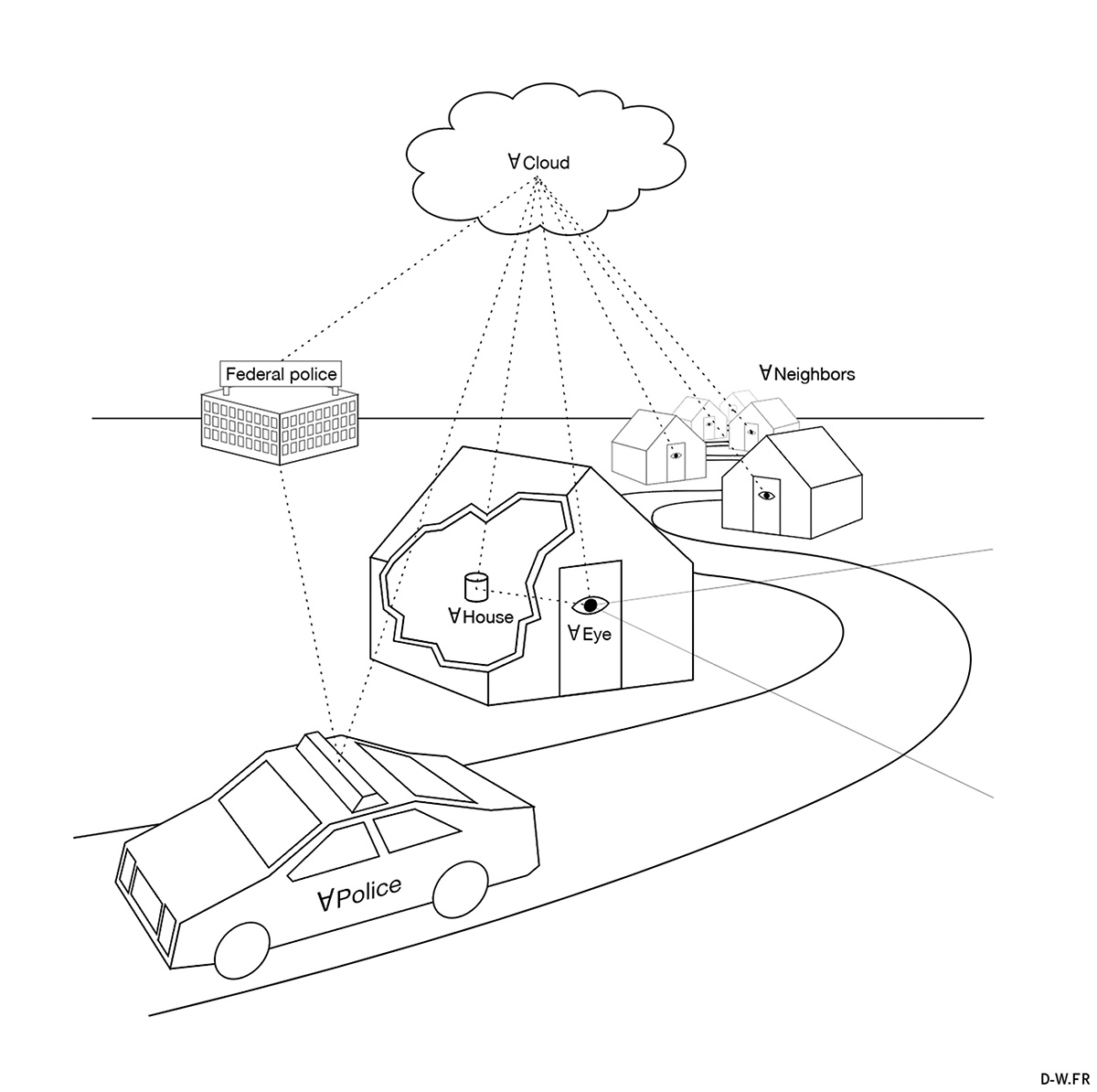
La maison qui vous veut du bien La maison qui vous veut du bien est un film-essai sur l'histoire de la sonnette caméra de la société Ring rachetée par Amazon devenant en quelques années l'épicentre des objets connectées dits smart. Elle se voit envahie d'innombrables produits, éclairages, capteurs, caméras, aspirateurs, ours en peluche « intelligents » qui deviennent autant de témoins aux points de vue improbables. Des logiciels associés au réseau de surveillance des quartiers sont programmés pour analyser des comportements, ou encore des réseaux de neurones sont entraînés à reconnaître des visages captent, annotent, data minent, transforment la masse de données, filtrent par la détection biométrique assistée par du deep learning, en fonction de listes de gestes suspects, balancent leurs résultats aux officiers des polices publiques ou autres agences de sécurité... La capture sans autorisation du voisinage, l'espionnage organisé entre voisins et la disponibilité des vidéos privées pour les polices municipales font basculer le grand rêve de la maison automatisée en un cauchemar paranoïaque. Le moindre signe capté – vol d'un papillon, chien perdu, ombre d'un promeneur... – devient suspect, vient hanter les occupants de la petite maison blanche. Il se constitue progressivement un réseau d'espionnage privé en peer to peer. La bunkerisation des maisons entre dans sa phase «deep».
Stéphane Degoutin est artiste et chercheur. Ses thèmes de recherche portent sur l'humanité après l'homme, la ville après l'espace public, l'architecture après le plaisir. Ses projets enquêtent sur des situations d'ambivalence, entre la guerre et la danse, entre le plaisir sexuel et le non-lieu, entre la ville et son potentiel, entre le posthumain et l'obsolescence de l'homme. Il enseigne à l'École des Arts Décoratifs à Paris. Site internet : https://d-w.fr/ Gwenola Wagon est artiste et enseigne à l'université Paris 8 à Saint-Denis. Son travail imagine des alternatives et des récits paradoxaux pour déconstruire le monde numérique contemporain. Elle a réalisé des films et des installations pour des festivals et des expositions en France et à l'étranger. Elle a publié Psychanalyse de l'aéroport international avec Stéphane Degoutin, et le livre Planète B aux éditions 369. Site internet : https://d-w.fr/
Michelle Deignan
A Glimpse of Common Territory
Experimental fiction | hdv | color | 8:47 | Ireland, United Kingdom | 2015
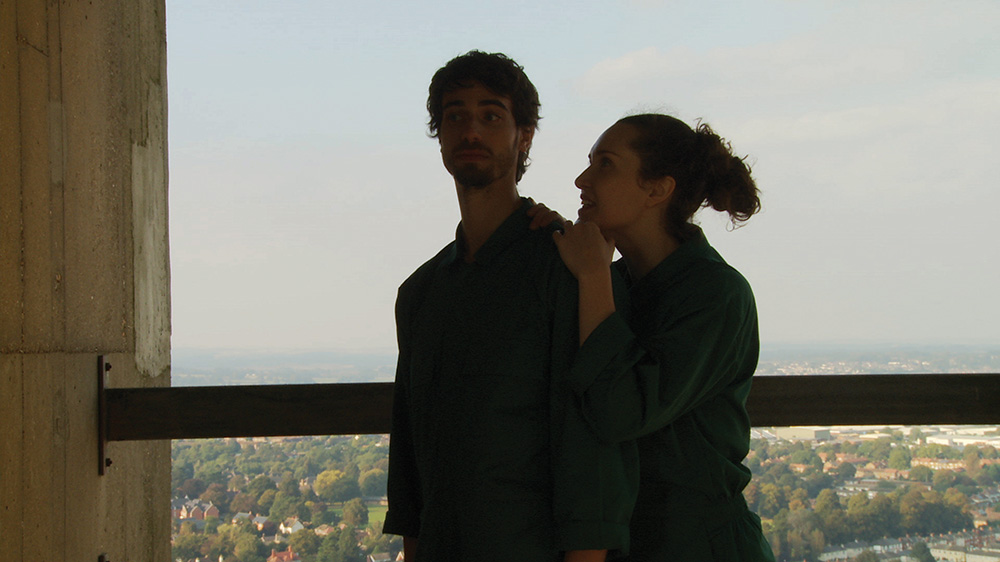
By exploring representation of time, movement, fact and fiction, `A Glimpse of Common Territory` tells of the unsettling distance between what we see, what we assume and what we know. Two aristocratic characters from an 1827 sci-fi novel, "The Mummy: a Tale of the Twenty Second Century", are invoked through the words of their author. We see them overlooking the landscape from an open platform within an uncanny architectural anomaly, a 127 metre cast concrete building in the centre of a housing estate. Together they confront a crisis, their new found awareness that what they perceive, see and control are completely fictitious. Though their negotiations are precarious they reach an understanding about how they can retain a semblance of control.
Deignan has exhibited her work in over 100 exhibitions, screenings and film festivals including: ‘New Work UK - Trust Yourself’, Whitechapel Gallery, London; ‘Europart - New Contemporary Art from Europe’, Vienna; ‘Terror and the Sublime: Art and Politics in an Age of Anxiety’, Crawford Art Gallery, Cork; ‘transmediale.08’, House of Cultures, Berlin; ‘Les Rencontres Internationale’, Gaîté Lyrique, Paris; Cork International Film Festival; ‘This Fanciful Digression’, CAN, Neuchatel, Switzerland; ‘Black Box Programme’ at the Edinburgh Film Festival. Michelle Deignan’s moving image work is distributed by LUX.
Michelle Deignan
Her Fanciful Digression
Experimental fiction | hdcam | color | 10:54 | Ireland, United Kingdom | 2012
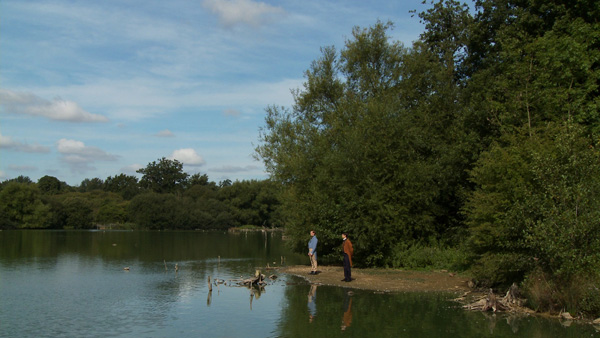
`Her Fanciful Digression` imagines a meeting between 19th Century Irish feminist Anna Doyle Wheeler and English landscape painter John Constable. It is set in Hatfield Forest, formerly The Houblon Estate, in South East England. Two apprentice romantics dressed in period costume repeatedly walk through the vistas of the landscape as the film`s voice over talks about the events that contribute to Constable and Wheeler`s meeting. The film considers the aesthetics of romanticism within the context of cultural, political and economic changes of the time and the application of those aesthetics in film now.
Michelle Deignan`s is an artist and filmmaker. Her work is represented by Maria Stenfors, London. She has exhibited in over 50 national and international exhibitions and festivals including: `New Work UK - Trust Yourself`, Whitechapel Gallery, London; `Europart - New Contemporary Art from Europe`, Vienna; `transmediale.08`, House of Cultures, Berlin; `Her Fanciful Digression`, Crawford Art Gallery, Cork; `Film Programme 1`, Badischer Kunstverein, Karlsruhe; `Black Box Programme` at the Edinburgh Film Festival.
Michelle Deignan
Ways to Speculate
Video | hdv | color | 3:44 | Ireland, United Kingdom | 2014
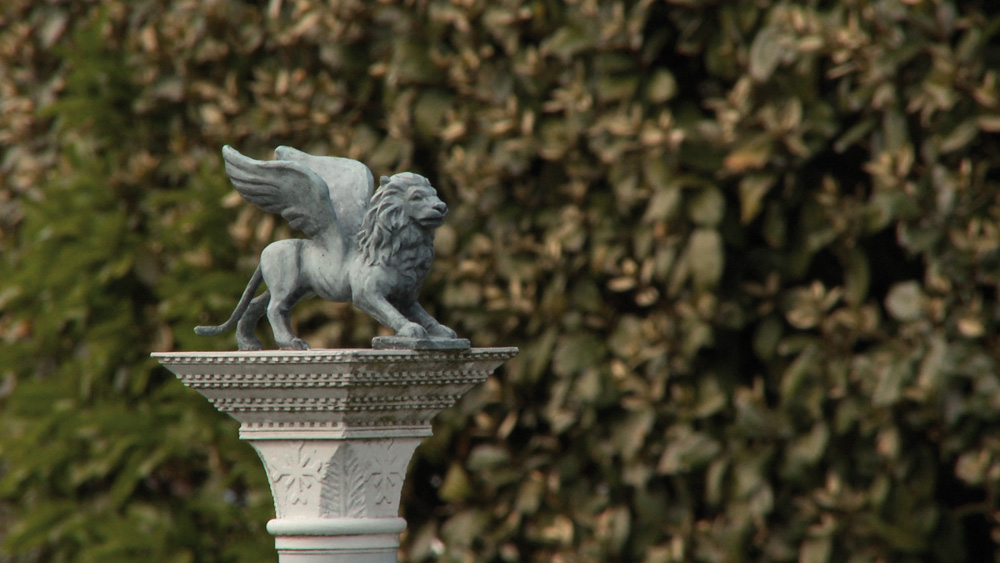
Actual and virtual simulacra of historical European buildings, monuments and recreational spaces are presented in a tumultuous and fluctuating sonic landscape. This uncanny vision of past and present, depicting the instrumentalisation of places, is framed by two distinct voices. One languidly quotes lyrics from Kraftwerk’s Europe Endless (1977) the other earnestly performs excerpts from the introduction to the sci-fi novel, “The Mummy: A Tale of the Twenty Second Century” by Jane Webb Loudon (1827). Between them they proposes a progressive but unstable future where past dramas can easily be re-enacted.
Michelle Deignan (b. Dublin 1970) is an artist and filmmaker based in London. She has exhibited her work in over 60 national and international exhibitions, screenings and festivals including: `Public Space Ltd.`, Athens Media Art Festival;`transmediale`, House of Cultures, Berlin; `India Art Summit`, Delhi; The LUX and Cranford Collection Present: The World Turned Upside Down, Camden Arts Centre, London; `Terror and the Sublime: Art and Politics in an Age of Anxiety`, Crawford Art Gallery, Cork; `This Fanciful Digression`, CAN, Neuchatel, Switzerland. Michelle Deignan`s moving image work is distributed by LUX.

Michelle Deignan
Idiots
Animation | mov | black and white | 2:7 | Ireland, United Kingdom | 2020
Idiots combines words and beats into an apoplectic symphony. It's language is raw and jagged, stuttering onto the screen into rants, shouts and screams. This film is angry on your behalf.
Michelle Deignan makes moving image, photographic and print works, for gallery exhibition, for cinema and for other screening contexts. With moving images she creates factual and fictional narratives that present alternative experiences and understandings of identity and place. These films often feature the triumphs and failures of protagonists struggling to be seen, remembered or heard as they fight for agency. Michelle's moving image work is distributed by LUX. She is one of a group of international women artists who collectively produce The Crown Letter, online participatory art project that began in April 2020.
Fernando Del Cubo
EL MOTIN DEL MOSCA
Experimental doc. | dv | color | 3:42 | Spain | 2008
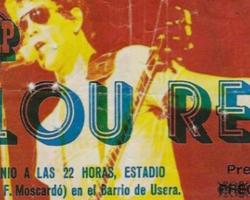
1980 Madrid,Lou Reed makes a concert in "usera" neighborhood. Too much yonkees,too much violence !!!
Cubo 1967 video-performance video art Sculpture http://es.geocities.com/cuboart/index.htm

Fernando Del Cubo
Madera 22
Experimental doc. | dv | color | 3:8 | Spain | 2009
My experience as a DJ in the eighties has provided me whith first-hand material to be abe to ofer an alternative version of the "Movida Madrileña" through events that were the general trend of group bahavoir. Violence and Drugs are one of the aspects concealed in the official history,Which insists on remembering the most playful and banal aspects. Employing a process of re-writing musical films and the appropiation of soundtracks,the video plays with the reconstruction of memory,showing up the present-day manipulation of the "nostalgia for the not experienced". Assembling real and fictitious images,Madera 22 recreates teh presentations of the first record of a "cult band ",during which the public took an LSD cocktail without teir knowledge,whith the resulting general high.
2009:Para/site-Hong Kong "Misery flae market" 2009:?Chupa-Chapa? BELLAMATIC :RIGA (Lituania)2009:?Feria? película 3m (Video ) 2009 :?Te calientan la cabeza ?? esculpture 2009: ?Trilogía de los tres minutos? 2008:?EL MOTIN DEL MOSCA? centre du art POMPIDÚ (PARIS) Rencontres internacionales Paris/Berlin/Madrid/ 2008: EL MOTÏN DEL MOSCA dentro de LHFA (Explorando Usera) MADRID ABIERTO 2007: Instalatión : MADRID HA-BIERTO 2007:?AMOR DE MOTERO?Proyect art. 2007:?MOLLERUSSA art fair ?MERCADILLO DE LA MISERIA 2007:sound sculpture?NO TE METAS DONDE NO TE LLAMAN? Proyect-film 2007: Instalatión video esculpture :MERCADILLO DE LA MISERIA (working process ) 2007:LAMASBELLA ARCO07 2006: Instalation for Art Palace 2006:PROHIBICION:Street art 2006:Aparca-coches:Sculpture street art 2005:Ape-DREAM-e: ARCO 05 2005: Performance "SUJETO VIOLENTADO" 2005:PerformanceHOAX:Video-performance 2004:?La mujer inventada? esculturas relacionadas 2004:? MeCaGo`NL amorrr? Sculpture.
Diego Del Pozo Barriuso
APRENDER FÍSICA
Video | hdv | color | 13:23 | Spain | 2012
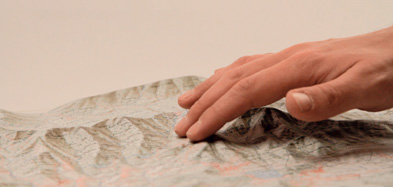
Learning Physics Video HD. 13´ 23´´ Single Channel Color, Stereo 2012 Learning Physics raises the importance of reinterpreting history, and to read in the present its possible transformations as an exercise of questioning what is experienced, and of the vision and of how we see? What do we see? Who has the privilege of handling various points of view and why? Why some people blind others or why some people deliberately covers their eyes? It addresses the problem of vision when agreeing the boundaries of the territories and their organization, the boundaries between variable and invariable in the imagination and construction of futures. In the video essay there is a connection between the current financial crisis, the contemporary scientific revolutions and experiences of Huesca and Jaen collectivists at the time of the Spanish Civil War.
Lives and works in Madrid. Artist and cultural producer, member of the collective CASITA and professor at the Faculty of Fine Arts at the University of Salamanca. Among of his solo exhibitions include those in the CAB of Burgos in 2011, ECAT in Toledo in 2009, at the Cultural Center Montehermoso of Vitoria in 2007 and at the Contemporary Art Center of Salamanca, DA2 in 2006. He has participated in group exhibitions including: Educating Knowledge, MUSAC, Leon (2010); Apres la fin / valeur travail, Haus der Culturen der Welt, Berlin, Germany (2009); Heterotopías, Oktogon HFBK, Dresden, Germany (2007 ) Destination future, Royal Botanic Gardens, Madrid (2007), Terraplane blues, The Burning House, Madrid (2006); Radicáis free, Auditorio de Galicia in Santiago (2005). His videos have been programmed into the International Video Rencontres Paris / Madrid / Berlin, Theatre du Chatelet, Paris, MNCA Reina Sofia, Madrid and Jeu de Paume, Paris in 2008 and 2011. His work is also in collections such as the Leon MUSAC or Domus Artium 2002 Salamanca (DA2). Villaplana.!

Diego Del Pozo Barriuso
ACCIONES SINUOSAS
Art vidéo | dv | black and white | 5:6 | Spain | 2010
Sinuous actions reflects a memory of the most important disagreements that have been pronounced by various social and political movements in different contexts. It shows different strategies of these movements using disguises and changes of indentity in order to get their goals or to put in evidence the contraditions of the system. Sinuous actions proposes a set of multiple clashes. Not only for the use of two screens but for showing different types of masks which operate on different levels of power (patriarchal heteronormativity, globalization, intolerance for ideas policies,...). At the same time this work visualizes unconscious gestures of any person which present different ways of hiding. We can hide ourself, by imposed cause or by incidental situation. These gestures could suggest different ways of understanding and changing subjectivities from individual position to collectives positions.
Diego del Pozo Barriuso lives and works in Madrid. He studied at the Faculty of Fine Art in Salamanca and Madrid, and at the Gerrit Rietveld Academie in Amsterdam. Artist and cultural producer, he develops projects about the social production of the body and identity. His work is based on his concern about affection and desire and the way in which these emotions, associated with subjective, private experience are conditioned by our social environment, by power and by production methods. His work is based on the idea that social control mechanisms are interiorised by individuals, and he shows how the cracks in these tools of power come into conflict and create contradictions within us. He also works with the group C.A.S.I.T.A. (www.ganarselavida.net) His work forms part, among other collections, of the collection of the MUSAC of León, Spain, and of the collection of DA2, the Centre of Contemporary Art of Salamanca, Spain.
Diego Del Pozo Barriuso
EL TOPO Y LA ANGUILA
Art vidéo | dv | color | 5:2 | Spain | 2007
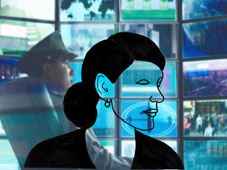
THE MOLE AND THE EEL This is a piece about Exchange, affective work and the relationship between Economy and Affection. It is the story of two clandestine groups that have invented another economy in a period of war. The individuals who belong to these two groups choose a somewhat precarious existence within an economy of supposed abundance. It is the story of two groups of anonymous people who belong to different levels of production and class. They look for subjective action through emancipation in the chain of exchange of affections. The city, the river, the island and the people?s networks work symbolically in the movie and force one to think about contemporary contradictions and problems. For the ?Rencontres Internationales festival? The Mole and the Eel is in an only monocanal version, but it also works on video ? installation format, together with another video and several series of drawings.
DIEGO DEL POZO BARRIUSO Valladolid (Spain), 1974. He lives and works in Madrid, Spain. He studied at the Faculty of Fine Art in Salamanca and Madrid, and at the Gerrit Rietveld Academie in Amsterdam. Artist and cultural producer, he develops projects about the social production of the body and identity. His work is based on his concern about affection, love and desire and the way in which these emotions, associated with subjective, private experience are conditioned by our social environment, by power and by production methods. His work is based on the idea that social control mechanisms are interiorised by individuals, and he shows how the cracks in these tools of power come into conflict and create contradictions within us. Using different techniques and media- drawing, installations, video?- he brings us face to face with a reality in which our desires, which we assume to be our own and private, are exposed as constructions that prompt consumption or social control. He also works with the group C.A.S.I.T.A. His work forms part, among other collections, of the collection of the MUSAC of León, Spain, and of the collection of DA2, the Centre of Contemporary Art of Salamanca, Spain.
Diego Del Pozo Barriuso
PIEZA PARA ORGÍA Y FÁBRICA
Animation | dv | black and white | 6:42 | Spain | 2006
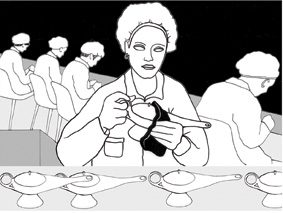
This is a piece about loneliness, about the need for affection and about how the contemporary subject is submerged in the strive for a resolution of these lacks in the context of the work and production system. The images represent a number of different individuals in two completely different situations, and some of them participate in both: some people have just taken part in an orgy, while others are at work, in different working environments (an office, a production line, a workshop, a school, a hospital). We witness the interior monologues of all these people. They are never alone in these situations, but they feel lonely. Their intimate thoughts come in succession, never simultaneously.
Diego del Pozo Barriuso lives and works in Madrid. He studied at the Faculty of Fine Art in Salamanca and Madrid, and at the Gerrit Rietveld Academie in Amsterdam. Artist and cultural producer, he develops projects about the social production of the body and identity. His work is based on his concern about affection and desire and the way in which these emotions, associated with subjective, private experience are conditioned by our social environment, by power and by production methods. His work is based on the idea that social control mechanisms are interiorised by individuals, and he shows how the cracks in these tools of power come into conflict and create contradictions within us. He also works with the group C.A.S.I.T.A. (www.ganarselavida.net) His work forms part, among other collections, of the collection of the MUSAC of León, Spain, and of the collection of DA2, the Centre of Contemporary Art of Salamanca, Spain.
Liryc Dela Cruz
Santelmo
Experimental fiction | hdcam | black and white | 52:28 | Philippines | 2021
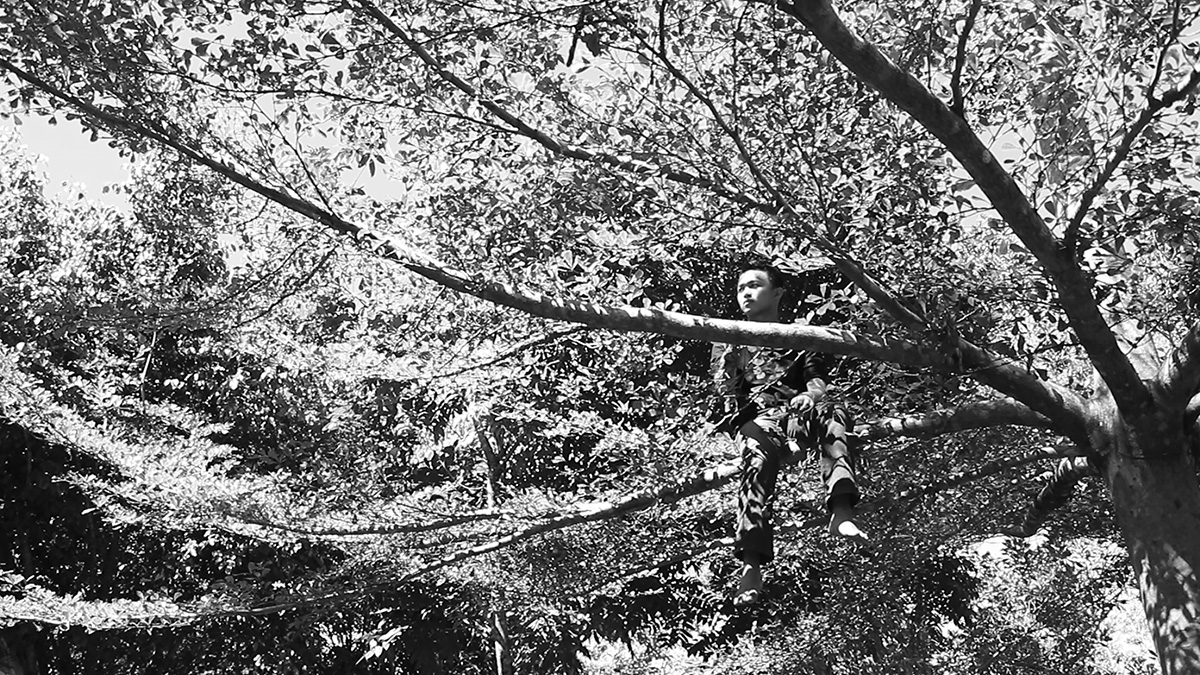
Encyclopaedias describe St. Elmo's fire as a harmless meteorological phenomenon caused by a strong static discharge. In Philippine mythology, a "santelmo" is a wandering soul of a deceased person who has not found peace yet. Three young men wandering through countryside seeking in vain reconciliation with the world. Their aimless journey is accompanied by rustling of leaves and grass, chirping of insects, and singing of birds, conversations about people for whom they have suffered and whom they plan to take revenge on. Yet, they are prevented from freeing themselves by memories that cannot be killed.
Liryc Dela Cruz (1992) is an artist and filmmaker from Tupi, South Cotabato in Mindanao, Philippines and now based in Rome, Italy. His works were selected and screened in different international film festivals and art events. His debut short film “The Ebb of Forgetting” premiered at the prestigious 68th Locarno Film Festival. His films are thematically related to his origins, history, and personal psychology. His works outside cinema focuses on care, indegenous practices, decolonial practices, post-colonial Philippines, transpacific slave trade, hospitality and reconnecting the colonized and slave body to the soil. Dela Cruz was one of the key collaborators of Philippine independent master filmmaker Lav Diaz. He is also considered as one of the representatives of the slow cinema movement (Ji.hlava IDFF ‘18). In 2019, he represented Italy at the UK Young Artist in Nottingham, he was selected as one of the artists of AtWork Venice mentored by Simon Njami and was the Editor in Chief of the Where is South exhibition at the Palazzo Querini, Fondazione Ugo e Olga Levi as part of the “Rothko in Lampedusa'' initiative during the 58th Venice Biennale. In 2020, he was selected as one of the young emerging filmmakers to represent Italy in Berlinale Talents during the 70th Berlin International Film Festival. Dela Cruz was also mentored by French Political Scientist and Activist, Françoise Vergès during the Mediterranean Ecofeminist Decolonial Union for Self-Education in Lecce, Italy. Recently, he debuted a performance in Teatro di Roma - Teatro Nazionale in Rome as part of his ongoing research project “Il Mio Filippino/a,” a project about “gestures of care and cleaning methods” of Filipino cleaning workers. The same project was also a recipient of Artissima - Torino Social Impact Art Award for the year 2020 and has been selected by Cité internationale des arts Paris for their residency program in 2022 and by Mattatoio di Roma for its Prender-si Cura residency programme. Currently, Dela Cruz is developing “Ocean as a Space of Perpetual Care '' a project based on indigenous care and hospitality of pre-colonial Filipinos and from the diary of Antonio Pigafetta.
Marion Delaballe
Tour(s)
Video installation | dv | color | 10:0 | France | 2005
A scenery - an attempt promontory for his stabiles. A 360° of two camera that take a relay of images from one to the other, forming a 16/9 centring. Capturing the spectator's attention in an initial vision of a smooth and attractive image. Then, this image dilates in its centre : a junction of pixels. Shocks are created, disturbing the harmony of the plan-sequence. The bodies divide in two or disappear, tallying the faults of a apparatus that has established itself on a screen form, shot, a circumference of images: the trompe l'oeil of a decor in a film pre-narration.
At 26 years old, Marion Delabelle lives and works in Paris, where she was born. She studied at the Beaux Arts in Valence and received a D.N.S.E.P. Art diploma in June 2005. She is specialized in videographic installations which are based on specific film processes (morphing, double camera, chrono-photography,...).
Mathias Delfau
8
Animation | | color | 17:13 | France | 2010
8 Un film d?animation de Mathias Delfau (2010 ? 17mn) Après avoir travaillé avec Noëlle Renaude à la mise en page d?Une belle journée et de Topographie, où la recherche portait sur une mise en espace du déroulement du texte sur la page, j?ai cherché à mettre en scène une partie de sa pièce 8 dans l?espace 3D et le temps d?un film d?animation. Ce travail est la rencontre entre une recherche picturale abstraite et une situation incarnée par les 5 personnages de la pièce. 8 est avant tout un procédé, celui de ne pas donner à voir, ni à entendre la pièce telle qu?elle pourrait être jouée sur scène, mais à montrer les traces qu?elle pourrait produire. Ne pas chercher le sens mais le laisser apparaître dans les traces laissées par ces phrases qui sont dites sans trop réfléchir à leurs portées, au gré de l?action, mais qui restent et influent sur le déroulement, dans les méandres des traces laissées par les déplacements de ces cinq personnages qui s?attirent et se repoussent au sein de ce qu?on pourrait appeler un groupe. Juste garder la subjectivité de l?axe de la caméra, comme celle des didascalies dans la pièce, le mouvement de la caméra crée un second plan détaché de l?action. 8 est une sorte d?observatoire où l?action se déroule en même temps qu?elle est observée, dans ce qu?elle est et dans ce qu?elle produit.
Je travaille avec des créateurs dans des domaines différents et c`est de ce va-et-vient entre l`art plastique, l`art numérique, le spectacle vivant et la littérature, qu`est né le film 8.
Mathias Delfau
Blahblah
Experimental video | dv | black and white | 4:16 | France | 2005
Blah Blah is a film behind closed doors where each protagonist is reduced to one action. This is also a redundant merry go a round of Muppet that go up and down. As jack in the box, but there is no sound in Blah blah. The only thing that unfolds et that is told are words, not in their meaning but in the shifting. Blah Blah is a society parody where life is born from interaction, a word flipper which flood as more importance than sound.
Mathias Delfau is born in 1968. He is working as a graphic artist, a plastic artist and video artist in the same time. From 87 to 92, he studied plastic of environment of architecture at the Arts Appliqués of Paris and paintings at the Beaux-Arts of Paris. Then, for two years, he staged three shows of images manipulation. Unitl 2005, he continued his work of painter through digital video and makes numerous films of animation. From 97 to 03, he kept also a part time job in a graphic agency. Starting 2000 for five years, the artist decided to collaborate with a group, Accès Local, which goal was to switch the artistic research into a social context. He also worked for three years (2000-2003) independently for printed works (posters, booklets, editing, illustration), animated movies (websites, clothing, video) and spacing (signs, welcome sites, events). This last year, he took part into Madame T installation which space faces installation, still image and motion image in the same place.
Mathias Delfau
HA
Animation | 0 | color | 5:0 | France | 2006
The animation "HA" seems to be an outcome of the films produced since 1991. Video images meet their digital manipulation, a game of hidden/shown, that led to the disappearance and the recovery of extra-work by the 3-D image ("C'est Clair", 2003), only the drawing and the line remained. "HA" is also the balancing point between narration and pattern; as animation does not really have a beginning and an end, it can be glanced at or watched throughout its duration. It is also meant to have the viewer, thanks to a fun activity (following the line like Russian mountains), spend some time before this line that is being drawn according to the look that we give it, continuously changing from a physical impression of space to the drawing that comes to life on the screen.
Mathias Delfau, born 1968. He works as a graphist, plastician, and video artist. 1985-1994 Through painting he sees that the image as a finite surface can embody the most infinite of spaces. The image as vocabulary for a non-demonstrative speech. 1987-1992 He pursues plastician studies in the field of architectural environment at the Applied Arts School of Paris (BTS), and painting at the Fine Arts School of Paris, to think about the paradoxical notion of applied art. 1992-1995 Works part-time as exhibition assistant at the Galerie Nationale du Jeu de Paume, Paris. 1993-1994 Conception and production of exhibitions for the French film library. 1992-1995 Directs three shows involving manipulation of images. 1994-2006 Pursues painting through digital video and produces several animation films. 1997-2003 Works part-time as a creator in a graphist agency specialized in cultural communication. 2000-2006 Collaborates and exhibits with the artists' group "Accès Local", the goal of which is to put artistic research back into a social context. 2003-2006 Works independently with print works (posters, tablets, editing, artwork), animated works (internet sites, casing, videos), and directing (signage, seat of reception, factual). 2003-2006 Fixed images using large colour prints, and apparently simple sculptural forms reconstructed from hundreds of macro-photographs. 2004-2005 With the installation "Madame T", video is placed into space and at the heart of another identical installation confronts different medias, each one taking charge of one facet of history. 2006 Foundation of the OA association, a legal structure giving artists complementary know-how by working together to conceive, produce, and distribute original communication forms that are light and mobile and that can be easily integrated into varying public spaces.
Mathias Delfau
MUR
Animation | 0 | color | 6:26 | France | 2006
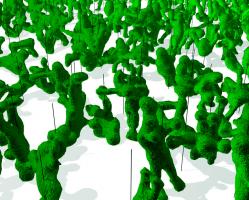
Mur, c?est la rencontre violente de deux points de vue. De l?extérieur, c?est un motif, sorte de treille végétale plus ou moins régulière. Dans la violence des percussions, la caméra semble hésiter face au mur, puis elle est projetée contre le motif. De l?intérieur, silence, le motif se découvre en volume, construit à partir de formes anthropomorphes, postures figées et épinglées de façon régulière sur le tracé du motif. La caméra découvre la particularité de chacun de ces corps, le motif est oublié, il est vu dans l?accumulation d?individualité dont il est formé. C?est de la répétition de ce passage entre le bruit et le silence, la forme et son sens que va naître MUR.
Mathias Delfau (1968) : je travaille comme designer graphique, plasticien et artiste numérique. Mon travail sur l?image s?est développé au moyen de différents médias. D?abord la peinture (1988/1999). Puis avec la scénographie et le spectacle, l?image est pensée dans l?espace (de 1995 à 1999 j?ai monté trois spectacles confrontant l?acteur à l?image). Enfin la vidéo en 1997 avec l?arrivée du numérique, parce qu?elle est le support parfait pour une recherche sur le montage, sur le passage progressif d?une image fixe à 25 images seconde. Pendant 7 ans, j?ai travaillé la vidéo sur ordinateur comme la peinture, couche après couche par superposition. Au service de la composition plus que de l?histoire. J?ai mâché cette matière numérique en produisant beaucoup de petites choses qui n?avaient d?autres buts que le temps passé à les faire. Depuis 2000, je travaille aussi avec le groupe d?artiste Accès local dont le but est de replacer la recherche artistique dans un contexte social et professionnel. Aujourd?hui, je n?utilise plus la vidéo mais l?animation 3D qui me permet de continuer ma recherche sur le dessin dans l?espace.
Daniela Delgado Viteri
Monstruo
Experimental film | 16mm | black and white | 15:6 | Ecuador, Argentina | 2013
There are mass suicides and there are mass naps. They seem pretty close but they actually have different ontological dimensions. This film is about a mass nap and some mysterious acts of violence that are not taken very seriously. There is not much more to say. However, I would like to add the fact that I believe this film is very serious due to the fact that doesn?t take itself seriously.
Daniela Delgado was born in Ecuador in 1987. She studied film at Universidad del Cine in Buenos Aires. She wrote and directed short films screened at Rotterdam Film Festival, Split Film Festival, Bienal of Moving Image in Buenos Aires, Museum of Modern Art in Buenos Aires and Semana del Cine Experimental in Madrid. She participated at the Berlinale Talent Campus #10 (2012). She is currently a scholarhip holder at the Centre of Investigation of the Arts in Buenos Aires.
Alix Delmas
commencement
Art vidéo | dv | color | 7:0 | France | 2010
Dans cette vidéo inspirée du cinéma muet, dans une forêt, des ouvriers aidés de leurs machines creusent un trou en pleine forêt. Pour déplanter un arbre? Le trou s`allonge. Mais que creusent-ils ? Une tombe, une fosse septique, les fondations d?une maison ?
Vit et travaille à Paris. Diplômée de l?Ecole supérieure des Beaux-Arts en 1987, sa pratique artistique réunit le dessin, la photgraphie, la vidéo, l'installation in situ. Son travail a été exposé notamment au FRAC Auvergne, au Musée d?Art Moderne de la Ville de Paris, à la Biennale d?Art Contemporain du Littoral à Anglet, au Salon du dessin contemporain de Paris, à la Galerie Yvon Lambert à Paris. Son travail fait partie de collections notamment du FNAC Fonds National d?Art Contemporain, du FRAC Auvergne, du Landes Museum de Linz en Autriche, du Albertina Museum à Vienne en Autriche, de la Collection Weil, Gotshal and Manges à New York.
Alix Delmas
SALSAS EN LAS BARDENAS REALES
Experimental fiction | | color | 13:50 | France, Spain | 2007
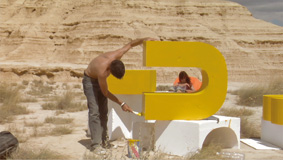
Synopsis It is very early in the morning. Four people are driving through the desert. Three men embark on an expedition to unload a set. They form, paint and put up polystyrene shapes in a location worthy of the classic Westerns. And all the time, a strawberry blonde is lounging around doing her crosswords. At the centre of the three handsome young workers, she rotates her deckchair like the hands of a watch linked to the path of the sun, until dusk, when the installation is unveiled.
Alexandra Dementieva
Do you remember
Experimental film | dv | black and white | 6:6 | Belgium | 2005
Stories and legends about numbers are very popular in human history. What does mean following the numbers and what kind of associations could be spelled by some of them? Personage of subjective camera is chasing magic combination becoming the part of strange and fragile world of dreams and loosing the control over the reality.
Alexandra Dementieva?s main interest is application of social psychology and perception in multimedia interactive installations. Her video work integrates different elements, including behavioral psychology and developing narrative through a point of view of subjective camera. Her interactive installation projects attempt to widen mind`s perception possibilities by different production means: computers, video projections, use of sound bands, slides, photography, etc. By making certain historical, cultural and political allusions her exhibition sites create the frame within which the idea develops. The projects explore spectator?s depths of perceptional experience and interaction of an individual spectator with the exhibition proper, as well as with other visitors. The object on an installation or its production means become less important to her than the mind of a user. Thus the latter becomes the center of the project or the main actor of the performance. Her installations resemble questionnairs that may or may not be answered only with spectator?s participation.