Catalogue > Search
Results for : Tout le catalogue
Alexandra Dementieva
Mad Professor
Experimental fiction | dv | color | 4:42 | Belgium | 2005
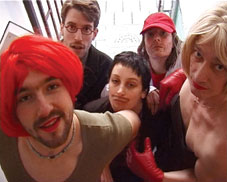
"Mad Professor" was made during a one week residence at Netwerk Art Center in Aalst, Belgium. It is a part of a Paul Deschanel Movement Research Group project. The theme was 'Humour & Gender'. The film can be viewed as a collaboration of all the participants. Tinkering with the borders between art and life, between an institutionalised art world and pop culture, between high and low, performance invokes strategies of humour and plays with gender issues. Humour serves as the jester?s vehicle to puncture decorum and create idiosyncratic forms and hierarchies. Gender pervades our taste and manners as well, often unnoticed or unspoken, as a persistent cultural residue that haunts the so-called formal aspects of life. Can humour and gender reinforce one another on this point, as a critical artistic strategy? Or do they have different interests? Since it concerns ourselves, whether we like it or not, doesn?t gender prompt us beyond irony? Humour on the other hand might be a comfortable practice of distancing, but isn?t it also an essential exercise in lightness?
Alexandra Dementieva studied journalism and fine arts. Her main interests are focused on social psychology and perception and their application in multimedia interactive installations. Her video work integrates different elements including behavioural psychology, developing narrative through the point of view of a subjective camera. Her video and multimedia works have been exhibited internationally. Paul Deschanel Movement Research Group The Paul Deschanel Movement Research Group tinkers with a process-oriented approach of movement research, claiming fundamental research as a prerequisite for artistic sustainability. Particular attention is devoted to collaboration and exchange, environmental awareness and a consciousness of physical and cultural borders.

Stijn Demeulenaere, Jan Locus
Murmur
Experimental doc. | 4k | black and white | 10:21 | Belgium | 2019
Brussels was built on a swamp. Today, only one tiny part of Brussels is still officially a swamp. Although continually threatened by development the area stayed intact, largely due to being ensnared between two railroad tracks. Further enclosed by high-rise social housing and industrial areas just behind these railroads, the swamp is a mix of damp prairies and patches of bushes and trees. It’s home to a lot of small wildlife such as birds, rodents, bats, amphibians and even ringed snakes. A small green oasis, in the middle of a concrete landscape. Murmur is a collaboration between film maker Jan Locus and sound artist Stijn Demeulenaere. Just before first light, Jan and Stijn recorded the dawn chorus at the swamp. The city drone permeates the sound of the swamp, and a strange mix enfolds between the sound of an awakening nature and a human presence. Urban drone and bird song merge into an (un)familiar murmur presence in the twilight hour of the morning.
JAN LOCUS The long-term projects of photographer and filmmaker Jan Locus study the complexity of worldwide, socio-political issues. He had exhibitions at FOMU Antwerp, Noorderlicht Photo Festival Groningen, Iklectik Art Lab London, De Brakke Grond Amsterdam, and Les Rencontres d’Arles. His photography books include “Mongolia”, “De Bewegende Stad”, and “Devoted.” Jans films have been shown at film festivals including IFFR Rotterdam, DokFest Kassel and International Short Film Festival Oberhausen. He lives and works in Brussels. STIJN DEMEULENAERE Stijn Demeulenaere is sound artist and field recordist. He creates installations, soundscapes, performances, and does sound design for dance and theatre. Stijn researches the relationship between identity, sound and listening. His work was shown at, among others, Concertgebouw Bruges, NIMk (NL), Den Frie (DK), STUK (BE), Kaaitheater (BE), New adventures in Sound Art (CA), and IFFR Rotterdam. His work was nominated for the LOOP Discovery Award, the European Sound Art Award, and it won prizes at the Engine Room International Sound Art Award and the Musica Soundscape Award. He lives and works in Brussels.
Stefan Demming
Conzerrrt in streifen
Art vidéo | dv | color | 3:23 | Germany, Mexico | 2005
Conzerrrt in Streifen 3`23``, DVD, stereo, couleur, 2005 Musique: Brigitta Muntendorf Vidéo: Stefan Demming Un touriste prend la pose dans une station thermale, jusqu'à ce qu'il se passe une chose dans laquelle sont impliqués une noyée et un sauveur masqué - jusqu'à une douteuse happy end. L'image est continuellement découpée en de nouvelles bandes et combinée avec elle-même.
Stefan Demming (* 1973) Licence d'art et d'histoire (1999), travail sur des bandes vidéo et des installations à l'Atelier für Zeitmedien à Brême (A;1999 -2005), chez V2_Organisation, Rotterdam (PB: 2002/3), séjour d'études à Marseille (F: 2005) http://stemming.free.fr
- Democracia
Ne vous laissez pas consoler
Art vidéo | 16mm | color | 17:4 | Spain | 2009
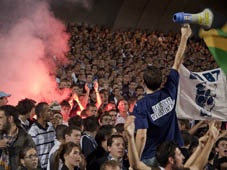
In Ne vous laissez pas consoler Democracia collaborates with the Ultramarines, hooligans of the football team Girondins from Bourdeaux, intervening with the introduction of political sentences (via banners and merchandising paraphernalia) into a completely unusual context: a football stadium in full activity, questioning the logical structure of the spectacle. The protagonist of the film are the spectators, from entering the stadium until they leave, the game is never filmed.
After having founded the group El Perro (1989-2006), Pablo España and Iván López (1970, Madrid, Spain) formed Democracia (2006), a name synonymous with an artistic approach committed to exchanging ideas and practices along strong ethical and social lines. Their projects bear witness to an interest in scenes from social and everyday life, marked by the growing importance of images and the notion of â??simulacraâ?�, from the political, technological and cultural perspectives. Democracia had been participated at Evento 2009, Burdeos, France; X Bienal de la Habana (2009), Cuba; Taipei Biennial 2008, Taiwan; 10 Estambul Biennial, Turkey; 3rd Goteborg Biennial, Sweden . The Democracia collective is also the brains behind the magazine Nolens Volens and is the organizing body for numerous curatorial projects (Madrid Abierto 2008, No Futuro, ONG, Caracas, 2007).

Martine Dempsey
Showertime
Art vidéo | dv | color | 2:25 | United Kingdom | 2005
In my videos I have been using appropriation as a sort of blue print or ?toolbox? from which to mine. In the same way the DJ samples and remixes music, I am interested in methods of reproducing and recontextualising images. Rather than seemly creating something from scratch, I am interested in editing and shaping what already exists in the world. Through exploring the use of found footage the role of the director is replaced with that of the editor. I actively manipulate the medium through looping, erasing and compressing moving images. I am interested in manipulating moving images in a way that `work for us` rather than passively `working on us`. I use this methodology in my video Showertime. This film explores homosexual eroticism/pornography where feelings of ecstasy extend outwards beyond the screen to the viewer. The work also hints at the notion of the sublime ? the kind of pleasure that can only be experienced indirectly, that which defies logic and rationality.
Born 1967, England Living and working in London BA (Hons) Fine Art Chelsea College of Art and Design, London
Martine Dempsey
Why Are They All Going Mad?
Art vidéo | dv | color | 2:4 | United Kingdom | 2004
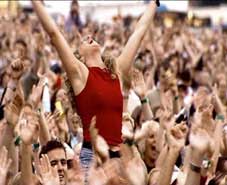
In my videos I have been using appropriation as a sort of blue print or ?toolbox? from which to mine. In the same way the DJ samples and remixes music, I am interested in methods of reproducing and recontextualising images. Rather than seemly creating something from scratch, I am interested in editing and shaping what already exists in the world. Through exploring the use of found footage the role of the director is replaced with that of the editor. I actively manipulate the medium through looping, erasing and compressing moving images. I am interested in manipulating moving images in a way that `work for us` rather than passively `working on us`. I use this methodology in my video Why Are They All Going Mad? This work hints at the notion of the sublime ? the kind of pleasure that can only be experienced indirectly, that which defies logic and rationality.
Born 1967, England Living and working in London BA (Hons) Fine Art Chelsea College of Art and Design, London
Claire Denis
High Life
Fiction | 4k | color | 110:0 | France | 2018
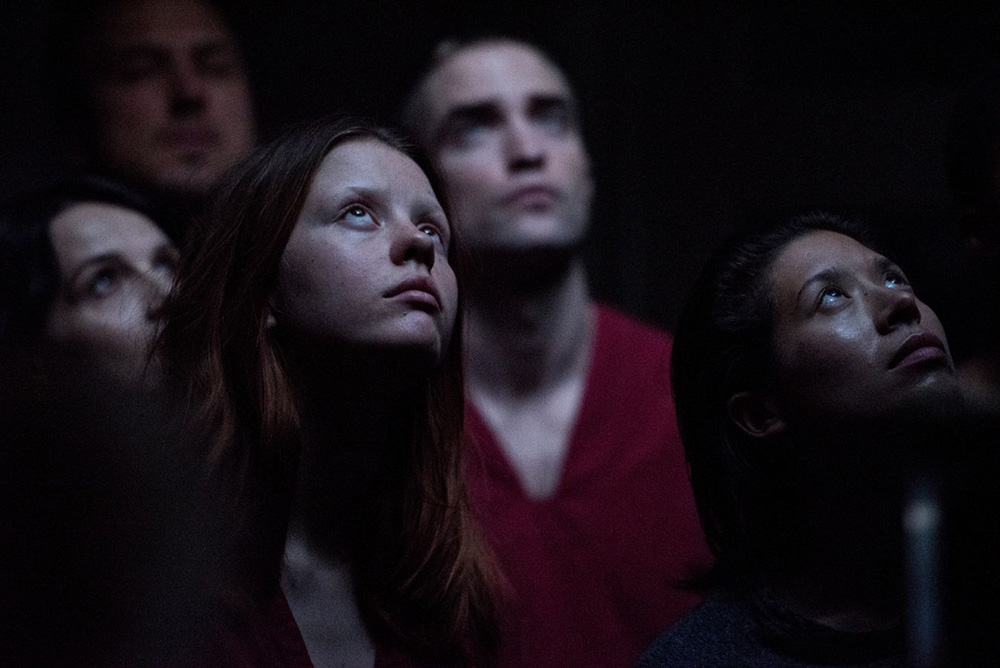
Deep space. Monte and his daughter Willow live together aboard a spacecraft, in complete isolation. A man whose strict self-discipline is a shield against desire, Montefathered her against his will. His sperm was used to inseminate the young woman who gave birth to her. They were members of a crew of prisoners –death row inmates. Guinea pigs sent on a mission. Now only Monte and Willow remain. Through his daughter, he experiences the birth of an all-powerful love. Together, father and daughter approach their destination –the black hole in which time and space cease to exist.
Claire Denis is director and screenwriter, renowned for films including Chocolat, Beau Travail, Trouble Every Day, 35 Shots of Rum, and Bastards. Born in Paris, Claire Denis lived in a number of African countries until the age of 12. Having returned to France, she studied at the IDEHEC (Institut des Hautes Etudes Cinématographiques), where she met cinematographer Agnès Godard, who would later work on the majority of her films. She began her professional life in the cinema as assistant to major directors like Robert Enrico, Wim Wenders, Costa Gavras and Jacques Rivette. She later worked with Jim Jarmusch on his film Down by Law.In 1987, Claire Denis wrote and directed her first film, Chocolat. A semi-autobiographical story of racial tension in the colonial Africa of the 1950s at the moment of independence, the film premiered In Competition at the 1988 Cannes Film Festival, was nominated at the César Awards and met with widespread critical acclaim in the US. In 1996, she was awarded the Golden Leopard at the Locarno Film Festival for Nenette and Boni. Beau Travail (1999), Trouble Every Day (2001), Vendredi soir (2002), 35 Shots of Rum (2008), White Material (2009), and Bastards (2013) – presented in Un Certain Regard at the Cannes Film Festival in 2013 –, followed. In 2017, Claire Denis returned to Cannes when Bright Sunshine In, featuring Juliette Binoche, Xavier Beauvois, Nicolas Duvauchelle, Alex Descas and Gérard Depardieu, screened as the opening film in Directors’ Fortnight. Her latest film, High Life, starring Robert Pattinson and Juliette Binoche, has been released in November 2018. Claire Denis has co-written the majority of her films with Jean-Pol Fargeau, but has also collaborated on scripts with Emmanuèle Bernheim (Vendredi Soir), Marie NDiaye (White Material) and Christine Angot (BrightSunshine In).
Kieron Dennis
oo oo wow wee (nostalgia is coming back)
Experimental video | | color | 5:0 | United Kingdom | 2004
"Oo oo wow wee" (nostalgia is coming back) is a expressive video poem that uses a range of acoustic and visual signs to create an experimental narrative. The film echoes a stream of consciousness where thoughts and images collide, connecting and disconnecting meaning. The video uses a complex layering of still image sequences merging subjects such as hairdresser signs, bikes and fireworks.

Shrutiman Deori, Dharmendra Prasad
Aadara
Experimental film | 4k | color | 29:52 | India | 2024
When cracked seasons passes through the materials and life’s goal then how long a dream can sustain? How long urgencies can take to transfer into pleasing weathers of now? How long a season can sustain in the desertification of care? Aadara - a Bhojpuri sub season of 16 days at the time of monsoon is the beginning of the paddy plantation and rains in the Bhojpur region of India. The title is referred from the presence of season which symbolises life and dreams through cyclic toil. The work is an audio visual/seasonal conversation between the agrarian urgencies of Nadaon village in Bihar and the extracted forests and contaminated water bodies of Rani forest of Brahmaputra valley. The crucial goal of the work is to place the viewer into the friction between multi-layered fragments of times and ecologies by creating a space of contemplation.
Dharmendra Prasad- Rolling through orality, toil, winds, dimensions, horizon and deteriorating seasons and sites, Dharmendra Prasad harvests imagination, memories, times, change and toil, that are stored as residue in the backyard of life's goal. Through the medium of need, time, toil and soil Dharmendra's practice gets cultivated and tilledup in the form of installations, videos, paintings, photography, texts, events, and travelogue and beyond. Born in-between stories, discrimination, hierarchies, chaos and silence, full of winds and dusts, without any address, Dharmendra practices between the fields of Gangatic plains to the villages, water bodies and rainforests of northeast India, and in extension co-founding the Guwahati based Anga Art Collective. Shrutiman Deori is a filmmaker based out of Guwahati, North East India. He has worked on documentaries, narrative films as well as video art installations. While for the most part he works as a cinematographer, Shrutiman has also directed films that have received critical acclaim in film festivals around the world including International Documentary Film Festival Amsterdam(IDFA) and Camden international Film Festival. He is the recipient of IDFA Bertha Fund 2023 for his ongoing feature documentary "Shadows of the Forest". He works in the audio-visual medium wherein he explores the politics of indigeneity , community and environment. Shrutiman studied sound engineering from School of Audio engineering, Chennai and was also selected for the cinematography mentorship program by the Indian Society of Cinematographers(ISC).

Thomas Depas
Hasbannium
Experimental fiction | 16mm | color | 0:0 | Belgium | 2018
A kid on an overboard, a camgirl setting up the show, a stranger sneaking trucks, while a gamer’s spleen resonate in a virtual dungeon. Hasbannium is a series of impressionist evocations drawing elliptic sequences in a metaphorical desert, an experimental fiction which has it’s root in Hesbaye, an agricultural region in Belgium with open horizons, devoid of forests or rivers. Through these landscapes, a choral film comes into being, with figures seeking out a humanity that reinvents itself in a universe of signs and meanings that are increasingly confused. The result is an impressive evocation of the temptation to disappear in which absence to self and world sketches out granular motifs.
Bieke Depoorter, Mattias De Craene
Dvalemodus
Experimental doc. | 4k | color | 9:0 | Belgium, Germany | 2017
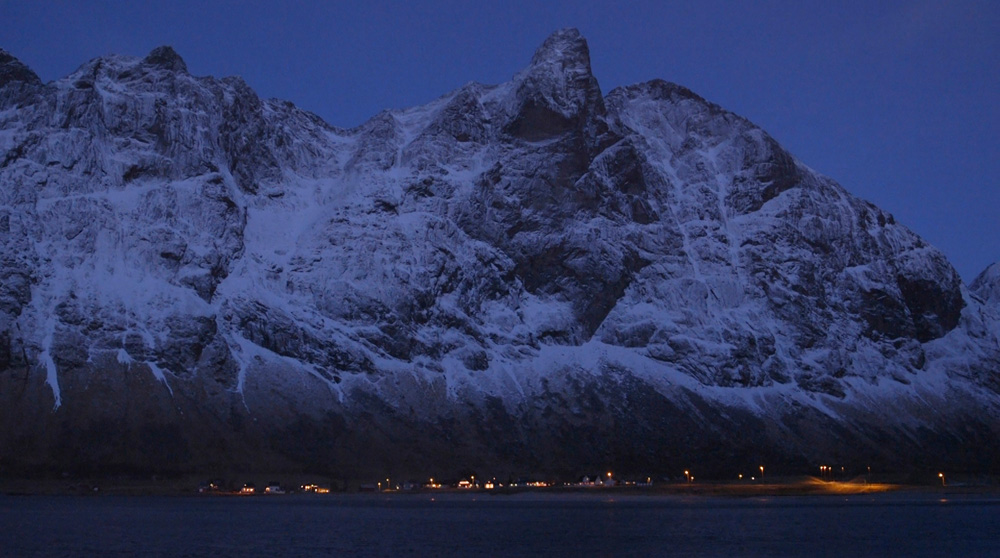
In states of endless slumber, people endure the stifling dark. Powerful forces of nature rage relentlessly, sometimes soothing and sometimes menacing. The roar of the factory thunders on without halt, steadily eroding the surrounding landscape. Sluggish shapes seemingly abide the desolate waste around them. These Mountains, these waves and our people, carry the darkness, lies and slowness within. For he who can`t take no more only laughter can bring salvation.
Bieke Depoorter was born in 1986 in Kortrijk, Belgium. She received a Master’s Degree in Photography at the Royal Academy of Fine Arts in Ghent in 2009. Her early colour photography work is the result of a unique approach: she captures the privacy of people whom she meets by chance and she gets to invite her into their homes. She captures indescribable, fragile and intense moments, always with kindness. Depoorter finalized her first short film Dvalemodus in 2017, which she directed together with musician Mattias De Craene. The film talks about the everlasting darkness in a small village in the Northern Norway. When she was just 25 years old, she joined the Magnum agency, of which she became a nominee in 2012 and a full member in 2016. In 2017 she won the Prix Levallois. Mattias De Craene was born 1989 in Belgium. He is a saxophone player and composer. His musical language is often described as unique and genre-defying. He is often linked with the free improvisational scene, and is also a founding member of several bands, such as Nordmann. In an everlasting quest of making abstract things more specific, he has recently started to combine music with visual arts.

Derive Imaginaire
| | | 180:0 | France | 0
.
.

Robbrecht Desmet
Am Egelsberg
Experimental film | 16mm | color and b&w | 26:0 | Belgium | 2014
Am Egelsberg is shot in Krefeld, a town in the Ruhr area in Germany. In the rolling landscape around this former industrial city, Robbrecht & Daem architects realized a striking pavilion, a temporary objet d’architecture based on a design for a golf course clubhouse by Mies van der Rohe, dating from 1930, which was never built. The film plays with the idea that the model leads the gaze towards the landscape but by doing so actually looks back at itself. The huge frames, windows without glass, ‘pull’ the landscape ‘inside’. But our gaze is also thrown back ‘inside’, via the textures and drawings in the wooden plates. These plates remind one of the original marble stone plates that Mies had in mind. The walls become screens as ‘masks’, as André Bazin wrote, ‘whose function is no less to hide reality than it is to reveal it’. The spaces in the film, through the device of the model, become extensions of cinematic space, (far) beyond the boundaries of the image. The 360° degree panorama that is at the heart of the film, showing the landscape without the model, unites ‘before’ and ‘after’ in the present. This film tries to be an imaginative, geo-temporal map of the intimate relationship between cinema and architecture.
Robbrecht Desmet (°1985) is a filmmaker. He studied Cinema and Fine Arts at the Sint Lukas College of Art & Design in Brussels. His films are portraits of landscapes, places and spaces that are in one way or another a substantial part of the memory of a specific artwork. His filmmaking is dedicated to a documentation of the life and afterlife of these artworks, their meaning and their history. His work was presented in screenings and exhibitions as Beyond The Picturesque (S.M.A.K. & Artcinema OFFoff), Documented Now! (de Brakke Grond, Amsterdam), Splav Meduze (Centre for Contemporary Art Celje) and filmfestivals like International Filmfestival Hamburg, Festival for Experimental Film in New York, ISELP Festival du Film sur l’Art Brussels and Courtisane Festival, International Film Festival Rotterdam and BFI London Film Festival. He has participated in residency programs such as Capacete Int. in Rio de Janeiro and Sao Paolo (Br), SIC SoundImageCulture workspace and FLACC workspace for visual artists (Genk, Belgium). He is a lecturer Film Studies at LUCA School of Arts in Brussels. Desmet is currently working on a new film under the working title Close Up in collaboration with Brussels based production platform Auguste Orts.
Juan Desteract
Souviens-toi
Experimental video | mov | black and white | 1:31 | France, Argentina | 2022
La persistance d’une image fatidique et le besoin de s'y accrocher impliquent le dédoublement d’un souvenir. Ce dernier se trouve ainsi suspendu entre les multiples versions d’un même évènement, entre les représentations d’un passé et un présent déjà vécu, entre figuration et abstraction, entre mouvement et immobilité, entre film et photographie. Des impressions intrusives d'autres vies se superposent au souvenir, nous exposant ainsi à une réalité surveillée où nous nous demandons qui voit et que voir.
Juan Desteract est né à Saint-Germain-en-Laye (France) en 1997. Il vit actuellement à Buenos Aires, en Argentine. Il a étudié le design graphique à l’Université de Buenos Aires. Il a poursuivi sa formation en photographie et arts visuels au cours de divers séminaires, ateliers et résidences artistiques à Buenos Aires. Parallèlement, il s'est formé en écriture, composition musicale puis en improvisation musicale. A partir de 2021, il participe à des expositions collectives dans des espaces artistiques et des musées d'art contemporain en Argentine, au Chili, Uruguay, Espagne et en France. Son travail associe des disciplines diverses telles que la post-photographie, l'audiovisuel expérimental, le design graphique et l'improvisation musicale, en se focalisant sur certains traits distinctifs du cinéma structurel et du réemploi d’archives. Depuis 2020, Juan travaille dans le domaine du design graphique en tant que Professeur à l’Université de Buenos Aires et en tant que graphiste au Musée d'art moderne de Buenos Aires.
Sandrine Deumier
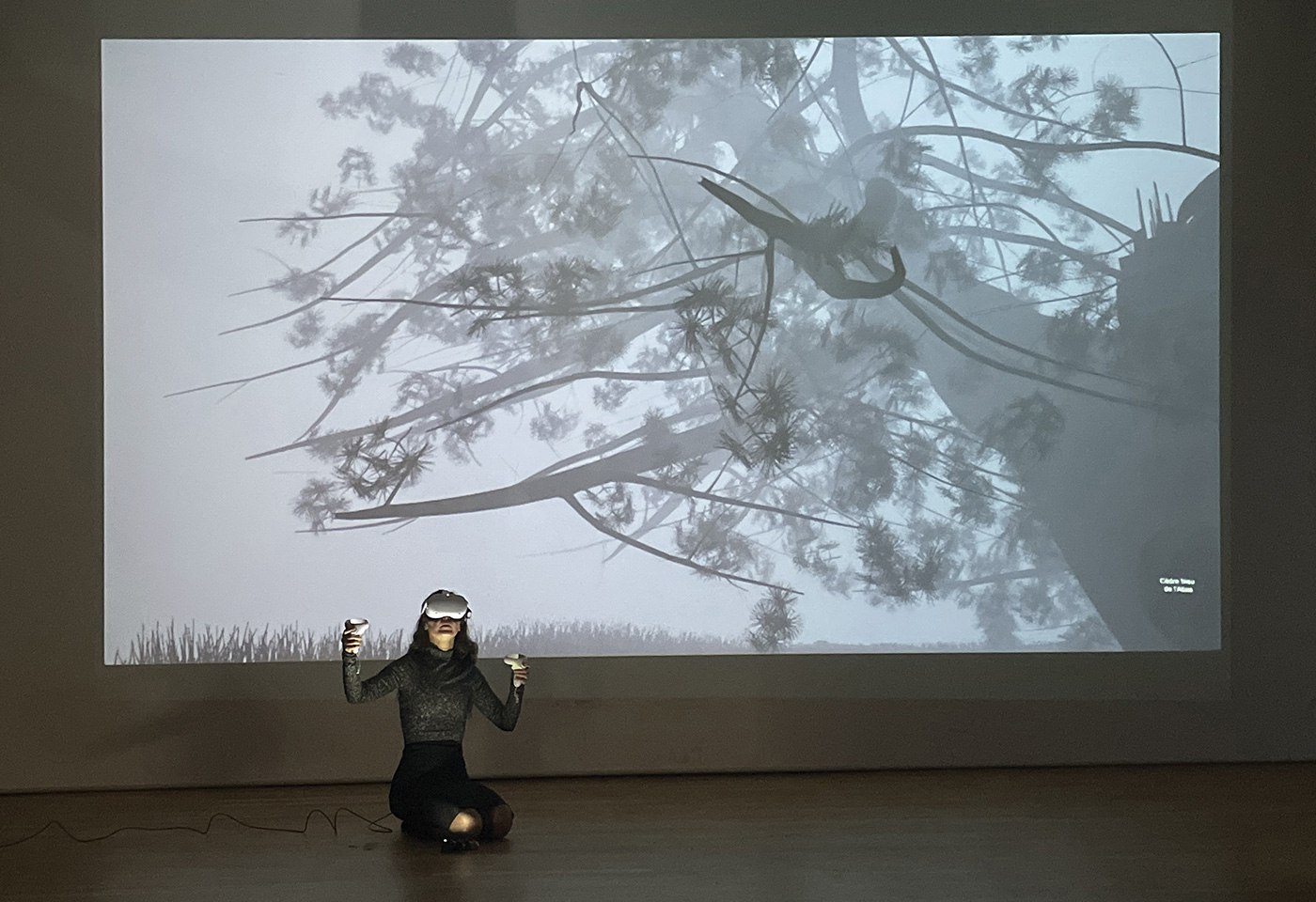
Le Jardin d'acclimatation
Experimental VR | 0 | color | 0:0 | France | 2023
At first glance presenting itself as a mysterious botanical garden shrouded in mist and dotted with interactive panels and tactile objects, Le Jardin d’acclimatation is an anthropised space, shaped by human perception and systems of thought. As the viewer explores this virtual environment — freely accessible yet offering only limited visibility — it gradually branches into adjacent spaces, opening onto other modes of visualisation. These successive stages reveal the enigmatic complexity of plant organisms in interaction with their environments. Each layer of perception functions as a threshold to be crossed, highlighting in particular the often-invisible complexity of root systems and mycorrhizal processes, as well as the diverse modes of nutrition, communication and interaction (associations, symbioses, mutual aid, and not least predation strategies). Available through three distinct yet complementary modes (exploratory, intuitive–emotional, and scientific), the journey through this botanical garden unfolds into multiple parallel scenes, expanding our perceptual capacities and allowing for a deeper understanding of the plant world. Original music: Sonia Paço-Rocchia A work produced at the public agricultural institution Chartres–La Saussaye as part of a partnership between the DRAAF, the DRAC, and the Centre–Val de Loire Region (France).
Sandrine Deumier is a multidisciplinary artist working across performance, poetry and video art. Her practice explores post-futurist themes through the development of aesthetic forms shaped by digital imaginaries. Driven by an interest in digital storytelling and immersive artistic experiences, she has spent several years developing poetic and visual fictions centred on speculative visions of the living world. Ecological concerns and imagined futures lie at the heart of her research. Her work focuses primarily on how new technologies might allow us to imagine alternative ways of inhabiting the world from an animist perspective — one in which the preservation of natural balances takes precedence over predation, accumulation and limitless growth.
Lili Reynaud Dewar
TGMFS
Experimental doc. | 4k | color | 36:0 | France, USA | 2016
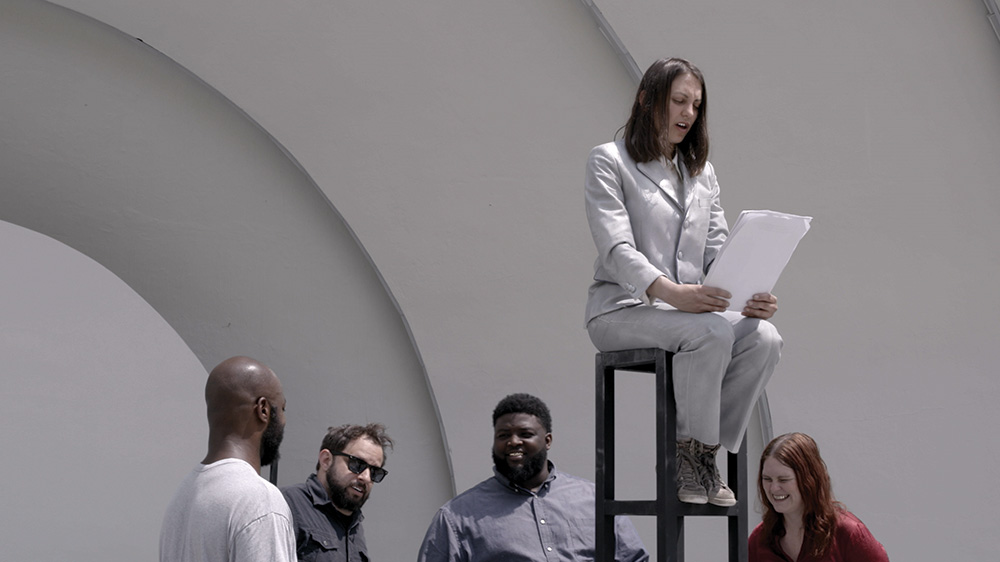
"In her first film, the artist brings together elements of science fiction and rap with discourses on emancipation and colonialism in an installation that pushes against the boundaries of its space. A film that depicts the before and during of a performance in Memphis, Tennessee. On a shell-shaped concrete stage a woman recites excerpts from a socialist-feminist manifesto while four local stand-up-comedians improvise alongside her. This chorus of voices is further accompanied by a noise-musician. Reynaud Dewar chose the place of the performance for its particularly controversial and diverse background. The metropolis, situated on the Mississippi delta, is on the border between the affluent Midwest and the poorer South of the United States. This city was the epicenter of the American slave trade and the later Civil Rights Movement. The latter culminated in the Sanitation Strike of 1968, which was further intensified by the assassination of Martin Luther King, Jr. after he took an active role in these demonstrations. Memphis is also an iconic location in the history of American music in the United States. It is widely known for its Blues music and as the final resting place of Elvis Presley. In more recent years, the city has evolved into a vital center of rap culture in the US. Working alongside the local comedians, Reynaud Dewar uses this specific historical and socio-political backdrop to negotiate the appropriation of a certain cult object. A central element of the film is the so-called grill—a jewelry worn over the teeth, which is typically made of precious metals. In Black music, especially in rap and hip-hop, the grill functions as a sort of relic and status symbol. Through her adoption of these objects as a white, European artist, Reynaud Dewar knowingly raises provocative questions of cultural appropriation, impression, and transformation, as well as the legitimization of these acts. The connective link in this work is Donna Haraway’s 1985 text, A Cyborg Manifesto. This treatise—a feminist essay that employs, albeit in a partly ironical sense, a cyborg as a metaphor for the dissolution of conservative borders between humans, machines, and animals—propagandizes a state of chimerical fusion in which normative categories like class, gender, or race are discarded.
Bertrand Dezoteux
Le Corso
Animation | 0 | color | 14:0 | France | 2008
At the beginning of this project, I wanted to make a rural video, without any anthropomorphism, as if it had been shot from the point of view of an animal. This statement is obviously stupid (animals don?t make either video, or 3D), and the movie becomes similar to an animal documentary. The camera seems to be held by an amateur, who tries to follow the furious race of the impassive creatures. Their characters are taken from different races (cattle, cat, insect), but these beasts seem to observe some rules, some rituals. Their behaviours deal with primitive intelligence (getting in a circle and turning round), and their reactions are linked with our recent past (the Creutzfeldt-Jakob disease).
Born in 1982 in Bayonne (France), Bertrand Dezoteux is a young basque artist who repeatedly leaves his native country. He first moved to Angoulême (2001 ? 2003) to study the graphic novel. Then, in 2004, he learned the rigorous art of Korean Painting in Pusan. He finally got his diploma (DNSEP) in Strasbourg in 2006. There, he worked with the Bulgarian artist Plamen Dejanoff, who commissioned 5 collages. These pictures were exhibited in The MuMok of Vienna, then in the gallery La Chaufferie, in Strasbourg, where one of the collages mysteriously disappeared. Bertrand Dezoteux finished his studies in Le Fresnoy, studio national des arts contemporains. He currently continues to observe, as an amateur anthropologist, the behaviours of the homo digitalus.
Bertrand Dezoteux
Picasso Land
Animation | hdv | color | 11:6 | France | 2015
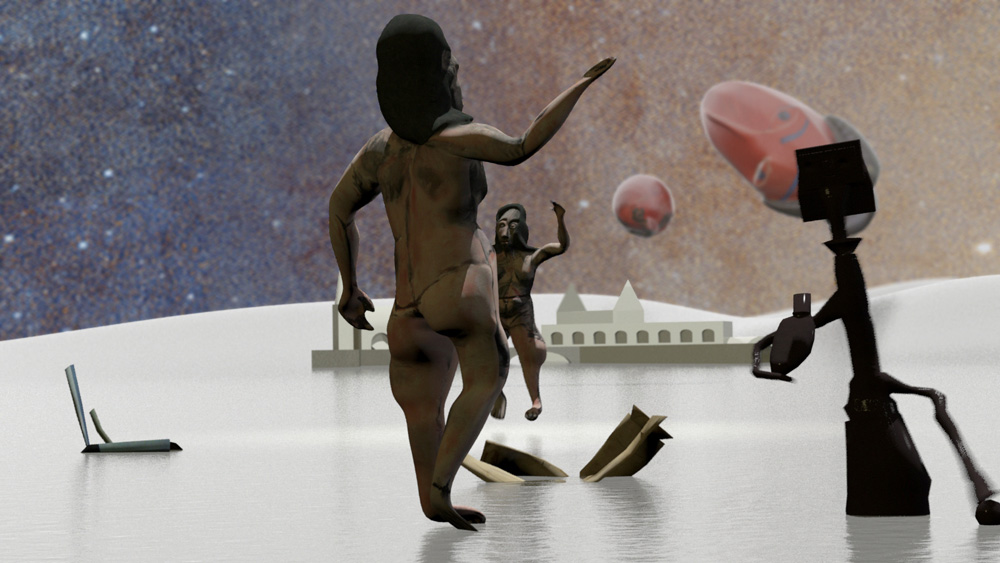
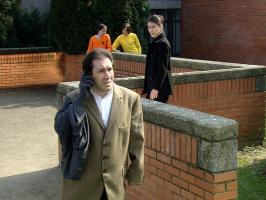
Ce projet a pour origine le célèbre ballet Parade (1917), dont les costumes et décors avaient été créés par Picasso, sur un texte de Cocteau, musique de Satie, et chorégraphie de Massine. En 1980, ce monument de l’avant-garde européenne est adapté à la télévision par Jean-Christophe Averty, réalisateur héritier du surréalisme, et pionnier de la technique d’incrustation (chroma key) en France. Picasso Land tente de perpétuer cet esprit d’avant garde en proposant un troisième opus, en 3D. Décors et personnages ont été modélisés à partir de peintures et sculptures de Picasso, formant un petit peuple hétéroclite et dansant. Pour mettre en action ces corps singuliers, leur donner vie, une chorégraphie a été créée en collaboration avec le danseur Yaïr Barelli. Il a développé un vocabulaire de gestes, de pas et d’attitudes qui furent numérisés puis injectés dans les personnages. Cette relecture de l’oeuvre de Picasso dévoile un “ Pays “, qui se construirait d’oeuvre en oeuvre, qui aurait ses propres moeurs, sa culture, son territoire.
Bertrand Dezoteux. Né en 1982, formé au Fresnoy Studio national des arts contemporains, il développe sa pratique autour de nouvelles formes audiovisuelles. À la frontière du documentaire, de la fiction et de la science-fiction, ses films s’inspirent des logiciels de modélisation 3D, pour créer des objets visuels hybrides. Il réalise ainsi “ Le Corso ” en 2008, “ L`Histoire de France en 3D ” en 2012, “ Animal Glisse ” en 2015, “ Picasso Land ” en 2016 ou encore "Super-règne" en 2017. Présenté en France et à l’étranger, le travail de B. Dezoteux interroge notre rapport aux autres, au travail ou au quotidien, notre imaginaire du futur et notre désir d’ailleurs. En 2015, il est lauréat du prix Audi talents awards pour le projet “ En attendant Mars ”, mené en collaboration avec l`Observatoire de l`espace du CNES (Centre national d`études spatiales). En 2017, l’artiste a été exposé au Palais de Tokyo (Paris) et à la Station (Nice), ses films ont été montrés au New York Film Festival et au Toronto International Film Festival. En mars 2018, il est programmé au théâtre des Amandiers (Nanterre) ; en avril, la galerie Édouard Manet (Gennevilliers) lui consacre une exposition personnelle.
Bertrand Dezoteux
Roubaix 3000
Fiction | | color | 9:0 | France | 2007
Roubaix 3000 est un film de famille d?anticipation politique. Je suis descendu dans le Sud avec un magnétophone pour enregistrer mes proches. J?ai récolté là-bas beaucoup de voix et dès mon retour dans le Nord, je les ai entendues des heures durant. J?ai tenté d?adopter une écoute flottante, et de sélectionner les éléments paraboliques, ceux qui semblaient au premier abord anodins, mais qui au final dessinaient une géopolitique familiale. Il apparaît alors une structure où les générations cohabitent et évoluent avec leurs préoccupations et leurs langages singuliers. Le montage fut mon outil d?écriture. J?élaborai un scénario par l?agencement des paroles, l?assemblage des phonèmes, le chevauchement des interjections. Il m?importe que les voix ne soient pas jouées, qu?elles soient spontanées, rythmées, que les dialogues ne soient pas écrits pour être interprétés. Il y a deux forces qui luttent dans ce système de conception : les voix d?un côté sont souveraines et indomptables, obéissant aux lois de leurs propriétaires. De l?autre côté, les acteurs, tous Roubaisiens et amateurs, tentent par le play-back de jouer leur partition, de donner corps à ces paroles qui ne sont pas les leurs. Ces deux expressions se rassemblent lors du tournage, à Roubaix, où l?architecture est riche en collages, en assemblages, en greffes, en citations antiques.
Né le 22 février 1982 à Bayonne (64), Bertrand Dezoteux est un jeune artiste basque qui n?a cessé dès lors de s?éloigner de sa terre natale. Il s?exile à Angoulême pour étudier la narration graphique entre 2001 et 2003, puis migre en 2004 à Pusan, en Corée du Sud, où il apprend les exigences et la rigueur de la peinture Coréenne. Enfin, il achève sa scolarité à Strasbourg pour passer son DNSEP en juin 2006. En ce moment étudiant au Fresnoy, il vit et travaille à Roubaix, où il a réalisé le projet « Roubaix 3000 » (www.roubaix3000.com).
Caroline Déodat
Sous le ciel des fétiches
Experimental doc. | 0 | color | 16:53 | France, Mauritius | 2023
Sous le ciel des fétiches répond à la difficulté de montrer l’ubiquité des archives coloniales dans l’histoire du séga mauricien. Née pendant la colonisation et l’esclavage au sein de communautés de fugitif.ves, cette pratique de danse et de poésie chantée survit aujourd’hui principalement sur les scènes touristiques des hôtels. Travaillant la relation d’emprise avec le passé colonial, le film réinvestit les spectres d’un regard qui hante. Comment projeter – littéralement faire sortir de soi – le récit de nos agresseurs ?
Caroline Déodat est artiste et chercheure. Docteure en anthropologie de l'EHESS, elle a été formée à l'École des Beaux-Arts de Lyon dans le cadre du post-diplôme Art. Par le biais de films et d'installations, elle explore les dimensions spectrales de l'image en mouvement dans une circulation entre fiction et ethnographie. De ses obsessions pour les processus d'archivage et d'aliénation, l'histoire et les mythes de la violence, elle exhume des récits par la convocation de mémoires hantologiques, d'archives en différé et d'images orales. Son travail a été montré au Musée Reina Sofía à Madrid, dans les Résonances de la Biennale d'art contemporain de Lyon, à la Fondation Sandretto Re Rebaudengo à Turin, et prochainement au Salon de Montrouge, au Ji.hlava International Documentary Film Festival à Prague, au Magasin à Grenoble et à l'IFAN à Dakar.
Bertram Dhellemmes, Ines BIRKHAN
Klang zur Stille zum Klang
Experimental fiction | dv | color | 64:0 | France, Austria | 2005
In "Klang zur Stille zum Klang" ? a composite storytelling video installation ? are superimposed the meeting of the she-Krampus (a legendary character from the Austrian Alps), the new inhabitants of the mountains, and the tribulations of Tchumuki, a rebel employee of the silence factory...
Choreographer, dancer, and writer, Ines Birkhan, and stage and video director, musician, and art critic Bertram Dhellemmes, have collaborated on several projects since 2002 and are currently co-directing the Berlin-based performance company Real Dance Super Sentai. Being both multimedia artists, their collaboration has led them to the field of multimedia, with a predilection for the exploration of alternative narrative, on stage or in videos. Amongst their recent works are: "den kreisrunden Todengwalzer tanzen", which so far consists of three forms of an on-going project; a video installation, a dance performance, and a book by Ines Bikhan - released in Peter Lang Verlag, March 2007.