Catalogue > Liste par artiste
Parcourez la liste complète des artistes présentés dans le cadre des Rencontres Internationales depuis 2004. Utilisez le filtre alphabétique pour affiner vos recherches.
Yalda Afsah
Catalogue : 2019Tourneur | Film expérimental | mov | couleur | 14:25 | Allemagne | 2018
Yalda Afsah
Tourneur
Film expérimental | mov | couleur | 14:25 | Allemagne | 2018
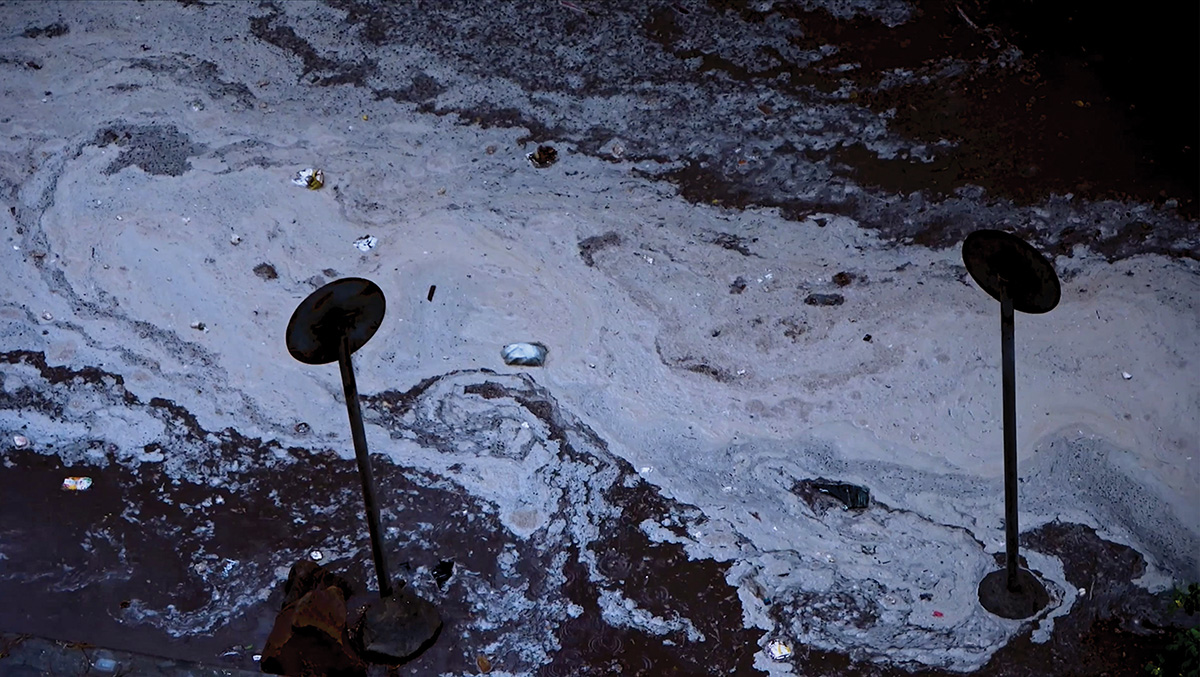
The short movie Tourneur documents a bull fight in the South of France and comments in a subtle manner the disparity between the young, adrenaline rushed participants and the physically superior bull, which gets cornered by the participants. The unpredictability of the situation is increased by foam, which affects the view of the participants and the audience therefore, the encounter of humans and animal seem like an alienation in this abstract landscape of foam.
Growing up in Berlin, Yalda Afsah studied at the University of Arts Berlin, Burg Giebichenstein College of Art in Halle, and the California Institute of the Arts. She has received several awards and scholarships for her artistic work. In 2018 she received the Karl Schmidt-Rottluff scholarship and participates in the BPA // Berlin Program for Artist. She lives and works in Berlin.
Yalda Afsah
Catalogue : 2023SSRC ( Secret Society Roller Club) | Documentaire | 4k | couleur | 20:0 | Allemagne | 2022
Yalda Afsah
SSRC ( Secret Society Roller Club)
Documentaire | 4k | couleur | 20:0 | Allemagne | 2022
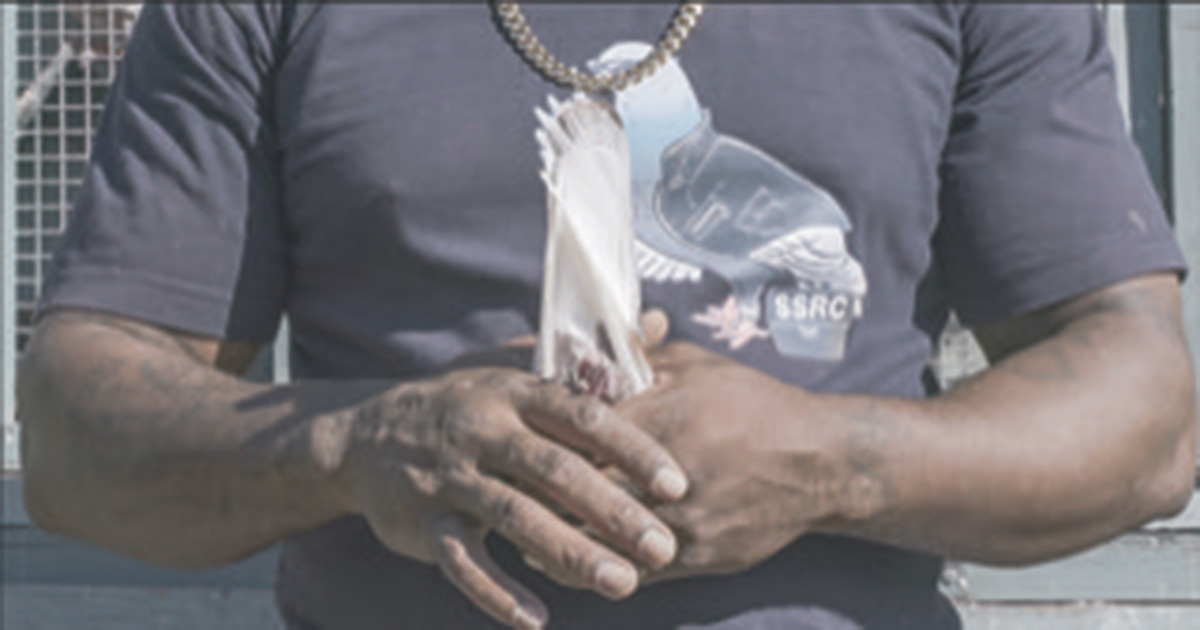
A group of men is fixing their eyes onto the sky. High above, a swarm of pigeons is moving in an unrecognizable formation, when suddenly individual birds drop in mid-air, spinning backwards with their wings extended and tumbling down in a circular motion before resuming their ordinary flight path. Yalda Afsah’s short film SSRC slowly dissects this aerial choreography, revealing its nature as a form of animal training and gradually zooming into the at times almost intimate details of this interspecies relationship. Focusing on the specific social context of the Los Angeles-based „Secret Society Roller Club“ and its members’ identification with and through the animals, Afsah’s film negotiates positions of co-dependency and care, domestication and dominance – calling into question the ambivalence reflected in the symbol of the soaring bird free in its flight, yet simultaneously bound to human will.
German-Iranian artist and filmmaker Yalda Afsah (b. 1983, Berlin) explores how space can be cinematically constructed as her films profoundly explore the interface between reality and staging. This formal characteristic of Afsah’s work is conceptually mirrored in her recent portraits of human-animal relationships that reveal an ambivalence between care and control, physical strength and broken will, instinct and manipulation. Despite their documentary focus, her films and video installations seem to capture symbiotic choreographies on screen – equally portraying and fictionalising their human and non-human protagonists. Afsah has presented her work at various exhibitions and festivals including Manifesta 13, Locarno Film Festival, New York Film Festival, Berlinische Galerie, Institute of Contemporary Arts London, Neuer Berliner Kunstverein and recent solo exhibitions at Kunstverein München and Halle für Kunst Steiermark. Since 2019 she is a mentor for the Berlin program for artists (BPA).
Yalda Afsah
Catalogue : 2021Vidourle | Documentaire | mov | couleur | 10:0 | Allemagne | 2019
Yalda Afsah
Vidourle
Documentaire | mov | couleur | 10:0 | Allemagne | 2019
Le film de Yalda Afsah, tirant son nom du Vidourle, un fleuve français, documente une chorégraphie étrange et subtilement troublante. Il met en scène un groupe de jeunes hommes, qui prennent part à ce qui pourrait être un rituel, un spectacle, un jeu ou un combat. Dans leurs mouvements collectifs, ainsi que dans les moments individuels de concentration, d'anticipation et parfois d'insouciance, les protagonistes, des adolescents pleins d'adrénaline, semblent incarner la fragilité de la condition humaine dans l'attente d'un changement environnemental, semblable à un courant de rivière d'une force inattendue.
Yalda Afsah explore la façon dont l'espace peut être construit de manière filmique, et le caractère documentaire de ses œuvres tend souvent vers des formes de théâtralité. Cette caractéristique formelle de sa pratique se reflète conceptuellement dans ses portraits documentaires à propos de relations entre l'être humain et l'animal, qui révèlent une ambivalence entre soins et contrôle, force physique et volonté brisée, instinct et manipulation. Il cherche à remettre en question et à dissoudre ces dichotomies, tout en créant un espace pour réfléchir à la possibilité d'une empathie globale entre les espèces.
Mahshid Afzali, Mirshakkak Mahoor
Catalogue : 2025A Moment of Exposure | Doc. expérimental | hdv | couleur | 20:0 | Iran | 2024
Mahshid Afzali, Mirshakkak Mahoor
A Moment of Exposure
Doc. expérimental | hdv | couleur | 20:0 | Iran | 2024
A moment of exposure is about observing the experience of living an idea and gathering materials for an art installation. The camera, as an attentive observer, collects memories and associations related to the "Safe & Sound" multimedia interactive exhibition. Following the process of preparation, presentation, and dismantling of the installation, we seek visual and sensory origins. In the first part of the exhibition, a spatial arrangement features elements such as metal fence sculptures, archived photos of fences in graveyards, and videos of deceased creatures floating in water. These elements are gently dissected to uncover the roots of safety and any remnants of movement left after death. In the second part, different sounds can be heard by interactive audiences resting in bed-shaped sound boxes, prompting questions about the origins of these sounds. Each sound carries the weight of a past incident, reverberating in the space and creating an immersive experience. Ultimately, the film invites viewers to reflect on the connections between memory, loss, and the lingering echoes of life. It encourages an exploration of how we find safety in remembrance and the ways in which our past shapes our present.
Mahshid Afzali: Mahshid Afzali is an Iranian Video Artist and Filmmaker, based in Tehran. She graduated from University of Tehran with a B.A. degree of Scenic Design in 2018. Throughout her studies, she developed a passion for video art as a medium for self-expression. In the past few years she specialized in independent film production and post-production and created several documentary films and videos. Mahshid is also an archivist, and documents her life through videos and photographs that often serve as the foundation for her artworks. / Mahoor Mirshakkak: Mahoor Mirshakkak, Iranian freelance Filmmaker & Sound designer. Graduated in Painting from Tehran Fine Arts University. Currently Working on Multidisciplinary installations Based on Archived sound and videos.
Marcos Agudelo, Róger Gómez
Catalogue : 2018Fata Morgana | Animation | hdv | noir et blanc | 0:57 | Nicaragua | 2017
Marcos Agudelo, Róger Gómez
Fata Morgana
Animation | hdv | noir et blanc | 0:57 | Nicaragua | 2017
“Fata Morgana” is a critical vision of a mega-project of infrastructure, an interoceanic channel crossing the entire country that is going to be built in Nicaragua by the transnational Chinese enterprise HKND. The negative impact over the local population and the environment represents a real danger for their sustainability. Thousands of citizens from the affected areas have protested against this project, which was approved without their consideration. “Fata Morgana” is an optical illusion where one perceives objects floating on the horizon, such as cars on a highway or ships at sea; we´re playing with such symbols in this drawn stop motion animation.
Marcos lives and survives in Managua, Nicaragua. He trained as an architected at the National Engineering University in Managua (1995-1999) and later specialized in the field in Barcelona with an emphasis on urban planning and sustainable tropical architecture (2005-2009). In 2006 he won the II Exhibit of Emerging Art in Central America organized by the Museum of Contemporary Art and Design in San José, Costa Rica and in 2008 he won first place at the VI Central American Visual Art Biennial. His pieces have been exhibited in the Latin American Pavilion at the Arsenale during the 55th International Art Exhibition in Venice, Italy (2013), the García Lorca Great Theatre of Havana during the 11th Havana Biennial (2012), New York?s Museo del Barrio as part of the ?The Street Files? exhibit (2011), Santo Domingo?s Museum of Modern Art during the I Caribbean International Triennial (2010), in two editions of the Central American Contemporary Art Biennial (Tegucigalpa 2008 and Managua 2010) as well as in several editions of the Nicaraguan Visual Art Biennial Fundación Ortèz-Gurdión (2005, 2007 and 2009), with mentions in 2007 and 2009. He has appeared in magazines like Exit-Express (Spain), Código (México) and ArtNexus (Colombia) and in anthologies like Us and Them, Young Ibero-American Artists (2010).
Sandro Aguilar
Catalogue : 2019Mariphasa | Fiction | 4k | couleur | 87:0 | Portugal | 2018
Sandro Aguilar
Mariphasa
Fiction | 4k | couleur | 87:0 | Portugal | 2018
Paulo works as a night guard in a building site. He lost his daughter in dramatic circumstances and no regret would ever give him a sense of closure . He often sleeps in his lover`s house where he witnesses the repeated transgressions of an unstable neighbor. Everything threatens to crack.
Born in 1974 in Portugal, Sandro Aguilar studied film at the Escola Superior de Teatro e Cinema, in Lisbon. In 1998 he founded the production company O Som e a FuÌria. His first fiction feature film was UPRISE (2008). MERCURY (2010) was in competition for the Tiger Awards for Short Films at IFFR 2011. His films have won awards at festivals, such as La Biennale di Venezia, GijoÌn, Oberhausen and Vila do Conde, and have been screened in Torino, Belfort, Montreal, Clermont-Ferrand among others. Besides being a director, Aquilar is an editor and a producer. MARIPHASA is his second feature film.
Catalogue : 2017Undisclosed Recipients | Vidéo | hdv | couleur | 25:0 | Portugal | 2015
Sandro Aguilar
Undisclosed Recipients
Vidéo | hdv | couleur | 25:0 | Portugal | 2015
Avant et après ce second baiser.
Born in 1974 in Portugal, Sandro Aguilar studied film at the Escola Superior de Teatro e Cinema. In 1998 he founded the production company O Som e a Fúria. His films have won awards at festivals, such as La Biennale di Venezia, Gijón, Oberhausen and Vila do Conde, and have been shown in Torino, Belfort, Montreal, Clermont-Ferrand among others. Retrospectives of his work have been programmed at Rotterdam IFF and BAFICI.
Sandro Aguilar
Catalogue : 2023O Teu Peso Em Ouro | Fiction | hdv | couleur | 26:0 | Portugal | 2022
Sandro Aguilar
O Teu Peso Em Ouro
Fiction | hdv | couleur | 26:0 | Portugal | 2022
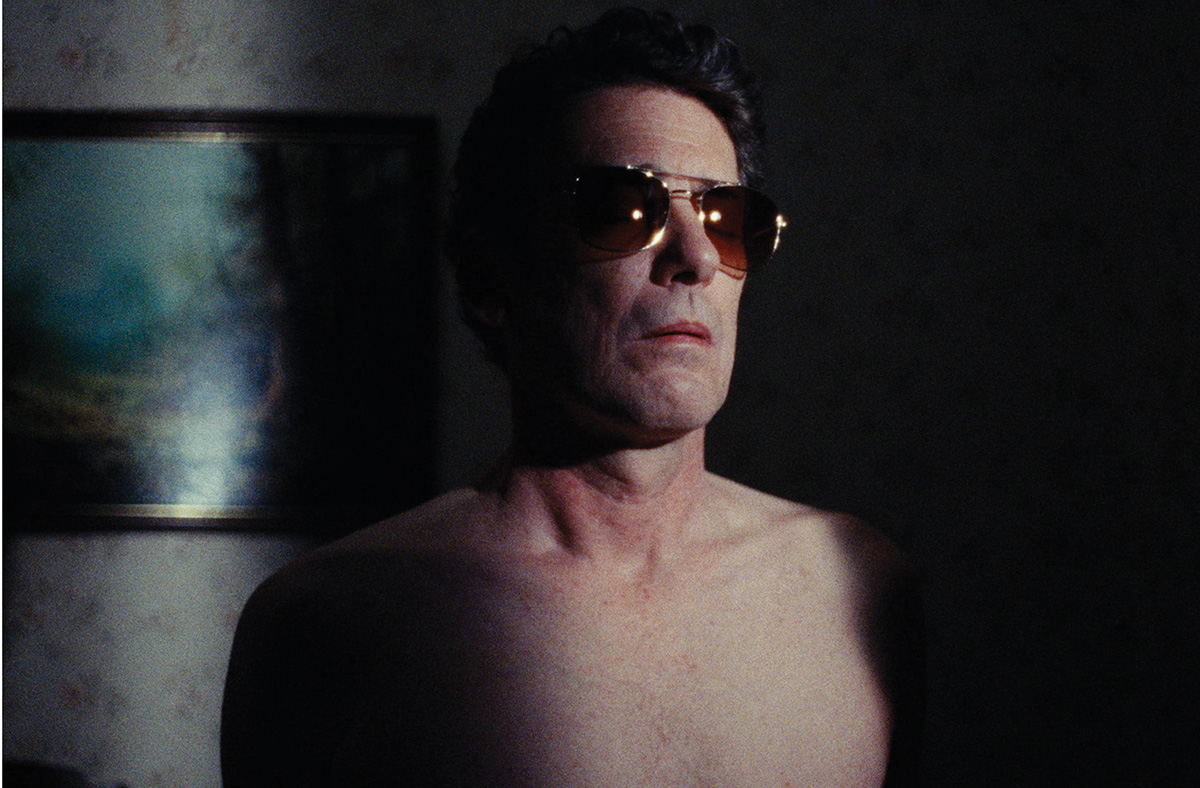
Oscar, a renowned hypnotherapist, takes advantage of the last moments in his hotel room to say goodbye to the dazzling Mercedes and relieve old Norberto of his sorrows
Born in 1974 in Portugal, Sandro Aguilar studied film at the Escola Superior de Teatro e Cinema. In 1998, he founded the production company O Som e a Fúria. His films have won awards at festivals such as La Biennale di Venezia, Locarno FF, Gijón, Oberhausen,Vila do Conde, Indielisboa FF and have been shown in the most relevant film festivals worldwide. Two times nominated for the EFA – Best European Short Film Award. Retrospectives of his work have been programmed at Rotterdam IFF, BAFICI, New York Film Festival, Arsenal-Berlin and Oberhausen FF. In 2013, he was invited into the renowned DAAD Artist Residency, Berlin
Catalogue : 2015FALSE TWINS | Fiction | hdv | couleur | 21:0 | Portugal | 2014
Sandro Aguilar
FALSE TWINS
Fiction | hdv | couleur | 21:0 | Portugal | 2014
Hidden memories and lost treasures of our primeval inhabitants.
Born in 1974 in Portugal, Sandro Aguilar studied film at the Escola Superior de Teatro e Cinema. In 1998 he founded the production company O Som e a Fúria. His films have won awards at festivals, such as La Biennale di Venezia, Gijón, Oberhausen and Vila do Conde, and have been shown in Torino, Belfort, Montreal, Clermont-Ferrand among others. Retrospectives of his work have been programmed at Rotterdam IFF and BAFICI.
Catalogue : 2014Dive : approach and exit | | | | 12:13 | Portugal | 0
Sandro Aguilar
Dive : approach and exit
| | | 12:13 | Portugal | 0
Before the assault, feel the weight of the body.
Born in 1974 in Portugal, Sandro Aguilar studied film at the Escola Superior de Teatro e Cinema. In 1998 he founded the production company O Som e a Fúria. His films have won awards at festivals, such as La Biennale di Venezia, Gijón, Oberhausen and Vila do Conde, and have been shown in Torino, Belfort, Montreal, Clermont-Ferrand among others. Retrospectives of his work have been programmed at Rotterdam IFF and BAFICI.
Catalogue : 2011VOODOO | Fiction | 35mm | couleur | 30:0 | Portugal | 2010
Sandro Aguilar
VOODOO
Fiction | 35mm | couleur | 30:0 | Portugal | 2010
All sympathetic magic is based upon two principles: the first called the Law of Similarity says that likes produce likes, or that an effect resembles its cause; the second, called the law of contagion or contact says that all things having been in contact with each other continue to react upon one and another at a distance even after they have been severed or disconnected. A fearful man meets a disquiet woman. Do you believe in magic?
Born in 1974 in Portugal, Sandro Aguilar studied film at the Escola Superior de Teatro e Cinema. In 1998 he founded the production company O Som e a Fúria, which has been since then one of the most prominent Portuguese production structures, recognized by the long list of films, produced within its tutelage, that are selected and awarded at the most prestigious internacional film festivals. The short films directed by Sandro Aguilar have won awards at festivals, such as La Biennale di Venezia, Locarno, Vila do Conde, and have been shown in Rotterdam, Belfort, Montreal, Clermont-Ferrand among others. He has also directed a feature film in 2008, entitled A ZONA.
Sandro Aguilar
Sandro Aguilar
Catalogue : 2013Sinais de Serenidade por coisas sem sentido | Fiction | hdv | couleur | 28:0 | Portugal | 2012
Sandro Aguilar
Sinais de Serenidade por coisas sem sentido
Fiction | hdv | couleur | 28:0 | Portugal | 2012
"Signs Of Stillness Out Of Meaningless Things" Sandro Aguilar Une comptine : « Quand les braises où les étincelles du feu atteignent la marmite d?eau, cela signifie qu?il vente... » Et toujours ce climat mystérieux qui hante toute l?oeuvre de Sandro Aguilar.
Sandro Aguilar (1974, Portugal) studied film at the Escola Superior de Teatro e Cinema. In 1998 he founded the production company O Som e a Fúria. His first fiction feature film was Uprise (2008). Aguilar's short films have won awards at festivals such as La Biennale di Venezia, Locarno and Vila do Conde. Mercury (2010) is in competition for the Tiger Awards for Short Films at the IFFR 2011.
Sandro Aguilar
Catalogue : 2022The Detection Of Faint Companions | Vidéo expérimentale | 0 | couleur | 14:0 | Portugal | 2021
Sandro Aguilar
The Detection Of Faint Companions
Vidéo expérimentale | 0 | couleur | 14:0 | Portugal | 2021
Full Moon. Inside. Perhaps not alone.
Born in 1974 in Portugal, Sandro Aguilar studied film at the Escola Superior de Teatro e Cinema. In 1998, he founded the production company O Som e a Fúria. His films have won awards at festivals such as La Biennale di Venezia, Locarno FF, Gijón, Oberhausen,Vila do Conde, Indielisboa FF and have been shown in the most relevant film festivals worldwide. Two times nominated for the EFA – Best European Short Film Award. Retrospectives of his work have been programmed at Rotterdam IFF, BAFICI, New York Film Festival, Arsenal-Berlin and Oberhausen FF. In 2013, he was invited into the renowned DAAD Artist Residency, Berlin.
Sandro Aguilar
Catalogue : 2016Bunker | Fiction | hdv | noir et blanc | 30:17 | Portugal | 2015
Sandro Aguilar
Bunker
Fiction | hdv | noir et blanc | 30:17 | Portugal | 2015
A young girl spending time with her parents (a swinger couple) in a camping site meets an emotionally unstable recruit and becomes fascinated by his special powers. He falls in love with her, but he soon finds out his love is unrequited.
Born in 1974 in Portugal, Sandro Aguilar studied film at the Escola Superior de Teatro e Cinema. In 1998 he founded the production company O Som e a Fúria. His films have won awards at festivals, such as La Biennale di Venezia, Gijón, Oberhausen and Vila do Conde, and have been shown in Torino, Belfort, Montreal, Clermont-Ferrand among others. Retrospectives of his work have been programmed at Rotterdam IFF and BAFICI.
Roberto Aguirrezabala
Catalogue : 2007Easyfriend | Création numérique | 0 | | 0:0 | Espagne | 2007
Roberto Aguirrezabala
Easyfriend
Création numérique | 0 | | 0:0 | Espagne | 2007
Vous êtes-vous déjà demandé ce que serait la compagnie d'un ami virtuel ? Quand Elisabeth Vogler perdit sa voix en plein flux alors qu'elle interprétait Electre, elle ignorait qu'elle avait été volée par Alma qui sera son alter-ego dans le tortueux procès de la recouvrance. Elles déménagent toutes les deux dans une maison près de la mer afin qu'Elisabeth puisse retrouver sa voix, retrouver son identité. Une recherche duale de l'identité par deux personnages qui progressivement se fondent en un seul. Le dialogue-monologue agit tel un véhicule fragile pour le temps de la rencontre qui les attend. C'est "Persona" de Ingmar Bergman, un film qui définit le cinéma et marqua Oriol, le protagoniste de "Easyfriend". "Easyfriend" provient d'une recherche de l'identité à travers la conversation. L'utilisateur ne définit pas son identité ni ne décide comment il souhaite apparaître aux autres. Il n'aura pas une face visible. L'auteur dit ne pas être interessé par ce qu'il dit de lui-même. Il se préoccupe plus de son inconscient et de ce qu'il prétend ne pas être. "Easyfriends" est une communauté grandissante constituée de robots. Le projet utilise l'Artificial Emotional Intelligence pour générer des identités virtuelles dynamiques. L'utilisateur, en entrant pour la première fois, projette son désir, ce qu'il attend d'une relation : amitié, amour, sex, etc. Lorsqu'il in-forme l'identité de son ami virtuel dans un processus psycho analytique, il construit un futur, des attentes et une expérience. A partir de là, il pourra se débrouiller dans sa relation ainsi que sa volonté le lui dicte : il peut s'y raccrocher ou abandonner. Son ami virtuel demeurera actif aussi longtemps que cette relation existera et lui procurera de la conversation. L'effort de parole est la condition requise pour que son robot soit maintenu en vie. Quand le créateur cesse de discuter, son robot demeure inactif. En cela, "Easyfriend" devient un scénario de vie artificiel, reconstruisant les paramètres de la vie humaine réinterprétés à travers des entités virtuelles. Simultanément comme un projet à l'intérieur d'un projet, un plan fictif est développé où figurent deux personnages poursuivant le moment auquel ils ont tant aspiré, quand ils fusionnent dans la projection de leur désir. Ce qui fait défaut à leur désir, ce n'est pas une relation conventionnelle mais une situation qui les favorise et réponde à leurs besoins en tant qu'individus incomplets et instables. En ce sens, "Easyfriend" est un projet hybride entre le cinéma et le net art, explorant la narration par internet. A travers une structure vidéo en chapitres, un plan fictif fractionné évolue. Oriol est un artiste qui travaille dans la vidéo et vient en ville pour exposer son travail lors d'un festival. Alors qu'il vient d'arriver, il se retrouve avec Laura, une journaliste d'art. La conversation devient éprouvante. Elle attaque férocement son oeuvre, l'accusant d'avoir une perception distante de l'art pendant qu'il voit en elle l'évocation d'une relation passée dont il n'est pas encore guéri et qui a marqué sa vie. Dès le début de l'interview, tout va très vite. Ils appréhendent la relation avec des intentions différentes et la confrontation qui s'ensuit déclenche un concert d'événements auxquels ils doivent faire face la tête haute. Le récit tout entier est construit en une forme fragmentée. Ils sont des restes de la vie passée des personnages, de leurs relations passées, d'actions dont on ne peut témoigner mais qui peuvent être rappelées. Il y a d'autres moments quand Oriol parle à la caméra, au spectateur dans un acte de confession introspective. Nous pouvons garder un oeil sur le bureau de Laura pour déceler des indices qui puissent nous aider à découvrir ce qu'elle cherche en Oriol. Nous voyons la mise en corrélation, le dire, le silence, le mensonge, la feinte, le fait de dire la vérité, les dissimuler et les révéler. L'utilisateur est un élément actif du projet en ce qu'il ou elle a à chercher, connecter et reconstruire les flux narratifs de l'histoire. Le récit ne se déroule pas en séquences, tout advient plutôt abruptement. L'histoire peut commencer au milieu de façon à pouvoir avancer, et ensuite recommencer à nouveau à un autre point. Les variations sont infinies. L'utilisateur devra constamment avancer et reculer dans une action qui requiert qu'il prenne l'initiative de se rendre la logique des scènes intelligible. Pour cela il disposera de plusieurs outils désignés afin de pouvoir utiliser cette expérience narrative. Il aura un guide à sa disposition pour organiser la séquence des chapitres en une opération qui le transforme en monteur de l'histoire. D'autres instruments existent aussi : un conseiller pour les usagers et les robots, un moyen de communiquer pour que les usagers puissent interagir avec d'autres qui surfent simultanément et pour donner vie à une expérience collective, une messagerie électronique, etc. A un point particulier du récit, les deux façons d'expérimenter "Easyfriend", la population robot et le plan fictif s'entrecroisent inévitablement, jamais plus pour être séparés. La conversation avec l'easybot devient un mécanisme narratif à la disposition de l'utilisateur, où le flot de l'histoire est plus profond. L'easybot peut être interrogé sur les personnages, sur ce à quoi ils pensent et il deviendra alors possible d'atteindre une connaissance de haut niveau de "Easyfriend"
Roberto Aguirrezabala est né en 1971 à Bilbao. Il est diplômé en Audiovisuel et Peinture. Après s'être consacré à la peinture et à la sculpture de 1990 à 1995, il concentre son activité artistique sur le net art et les média audiovisuels. Depuis 1995 il travaille comme directeur artistique pour l'Internet. Il a fondé en 1999, l' Agencia Interactiva Adclick, une agence spécialisée dans la réalisation de projets pour l'Internet et la communication digitale. Actuellement il axe sa recherche sur le développement des systèmes narratifs cinématographiques sur Internet, sur la photographie, la vidéo et le cinéma.
Idrisse Ahamada Madi
Catalogue : 2026Mvoulana | Fiction expérimentale | mp4 | noir et blanc | 5:0 | France | 2023

Idrisse Ahamada Madi
Mvoulana
Fiction expérimentale | mp4 | noir et blanc | 5:0 | France | 2023
Mbadjini en Grande Comores. Un homme nous mène vers une mystérieuse cabane, loin de son village, dans laquelle il a accompli un pacte il y a 30 ans.
Né à Saint-Denis de La Réunion, Idrisse AHAMADA MADI est cinéaste et artiste. Diplômé de l’École Supérieure d’Art de La Réunion, il inscrit sa pratique à la croisée du réel et de la fiction, explorant les zones d’ombre où les perceptions vacillent. Son œuvre, présentée notamment à la Cité des Arts de La Réunion, au Centre Wallonie-Bruxelles à Paris et à la Biennale de Mulhouse, interroge les formes de croyance, de mémoire et de transmission à travers une esthétique mêlant mysticisme et métamodernité. Entre cinéma et art visuel, Idrisse AHAMADA MADI compose des récits sensibles, des images habitées, où le visible se double sans cesse d’une présence invisible. Il vit et travaille actuellement à Paris.
Ashim Ahluwalia
Catalogue : 2025We/Us | Fiction expérimentale | 0 | couleur | 12:24 | Inde | 2022

Ashim Ahluwalia
We/Us
Fiction expérimentale | 0 | couleur | 12:24 | Inde | 2022
Indian director Ashim Ahluwalia and designer Little Shilpa joined forces for a dark and mysterious film that turns sociocultural conventions of beauty, desire, and sophistication on their head. HUM ?? (We/Us) is a strange beast of a film that lives somewhere between avant-garde performance film, narcotic fashion parade, Bollywood wedding freakout and Toshio Matsumoto’s underground cinema. The film commences amidst a fever dream on a particularly stifling afternoon. A modern-day Cinderella toils endlessly, exposing the tedious labour that maintains the grandeur of the space within which she is trapped. Tragedy and despair follow as this Cinderella is brutally rejected from the hallowed inner halls by its gatekeepers - the latter present themselves as spiritually (and materially) superior. From the nightmare’s shadows, glorious phantoms emerge as if to exact revenge, disrupting the stale splendour at a typical heterosexual wedding party. In the aftermath, contradictory energies coalesce in a riotous, maximalist rave of third-world proportions. Nothing is the same ever again. Despite its gothic beginnings, the campy dystopian fairy tale is fundamentally about the joy, humour, and boundless imagination of the marginalised. The performance and theatricality of high avant-garde fashion are strategically subverted to challenge the notion that the wealthy have a total monopoly over beauty. Glamour here emerges from the gutter in the dead of night. Workers, drag performers and queer outsiders, acid attack and gender-based violence survivors, people who are deemed undesirable or remain invisible before beauty and fashion standards - an entire community shows up to exact vengeance from the stuffy and the conventional. Led by Cinderella, the wedding crashers unabashedly take their space, stirring the party-goers to let loose in an anarchic, hypnotic frenzy.
Ashim Ahluwalia is a director, writer, and producer. His debut, JOHN & JANE, premiered at the Berlin and Toronto Film Festivals. His subsequent film, MISS LOVELY, explored the underbelly of India's sex-horror film industry and was selected as an official entry at the Cannes Film Festival. Ahluwalia's first two films, recognized for their tone and themes, won multiple Indian and International Awards, reshaping the perception of contemporary Indian cinema. This was followed by DADDY, starring Arjun Rampal and Farhan Akhtar, an unconventional biopic on real life Mumbai crime lord Arun Gawli, narrated through varied, fractured viewpoints. His short film EVENTS IN A CLOUD CHAMBER, created in collaboration with modernist painter Akbar Padamsee and shot entirely on Super 8 film, premiered at the Venice Film Festival. The film was screened at Experimenta (BFI London Film Festival), New Directors/ New Films and Punto De Vista, amongst others. Ahluwalia’s distinctive works, straddling the line between pulp and high art, and between disparate formats and scales, have been showcased at venues like the Tate Modern, the Museum of Modern Art, and the Centre Pompidou. His latest series, CLA$$, delves into wealth disparity and social dynamics at an elite New Delhi school. Released in February 2023 on Netflix, it ranked as the No. 1 show in over 22 countries, including India, Brazil, and Mexico. Ahluwalia was named "one of the ten best emerging film directors working today" by Phaidon Press in "Take 100: The Future of Film”, and is the sole Indian filmmaker to have had films premiere in the official selections of Cannes, Berlin, Venice, Toronto, and SXSW festivals.
Noureldin Ahmed
Catalogue : 2023Letters of Confinement | Doc. expérimental | digital | couleur et n&b | 20:0 | Egypte | 2021
Noureldin Ahmed
Letters of Confinement
Doc. expérimental | digital | couleur et n&b | 20:0 | Egypte | 2021
The Letters of Confinement is an essay film filmed entirely within the confinement of the filmmaker’s house during the quarantine. The first half of the film covers the story of creation according to the the ancient Egyptian genesis. The second half introduces the counter-narrative of creation based on a poem by Ibn Al-Farid, A Sufi master. The film goes on to cover stories like the deluge, the annual inundation, the nature of names, and perversions dictated by the confinement, like voyeurism and eavesdropping. During the documentation process, the surroundings work in accordance to the will of the filmmaker as if the exterior reflects his interior desires. The film follows a collage-like format. Collecting different stories and unrelated footage within the frame of the film. In doing so, an alternative narrative is created where fiction and reality overlap.
Noureldin Ahmed is an independent filmmaker, film curator, translator and visual artist; born, raised and based in Cairo, Egypt. He studied Media Design at the faculty of Applied Arts and Sciences at the German University in Cairo. In his work, Nour questions the notion of self identity within the urban context, namely in Cairo, opening up his self-centered pieces to public viewership and interpretation. Nour has participated in a number of group exhibitions in the past years. His first film, Summertime Dreams, was screened at Ismailia International Film Festival for Shorts and Documentaries in 2019. In 2020 he held his first solo exhibition, A Self-Portrait with a Halo and a Pomegranate. Nour is one of the recipients of a number of grants, including: The Self Organization Grant from Mophradat, 2021, and On the Road Again, Again from Pro Helvetia Cairo, 2022. He is a member of a cinematic collective, A Kiss in the Desert, and a research group, cifrcifrcifr. He worked as a programmer & programme co-ordinator for the short film competition at Cairo International Film Festival, a coordinator of the Arabic publications at Gouna Film Festival, in addition to working as an assistant director, assistant producer, editor and translator. Nour is currently undertaking his master's degree in Film and Screen Studies at the University of Cambridge, UK.
Shaheen Ahmed
Catalogue : 2026Nazar, a diary | Doc. expérimental | mp4 | couleur | 25:58 | Inde, Grèce | 2025
Shaheen Ahmed
Nazar, a diary
Doc. expérimental | mp4 | couleur | 25:58 | Inde, Grèce | 2025
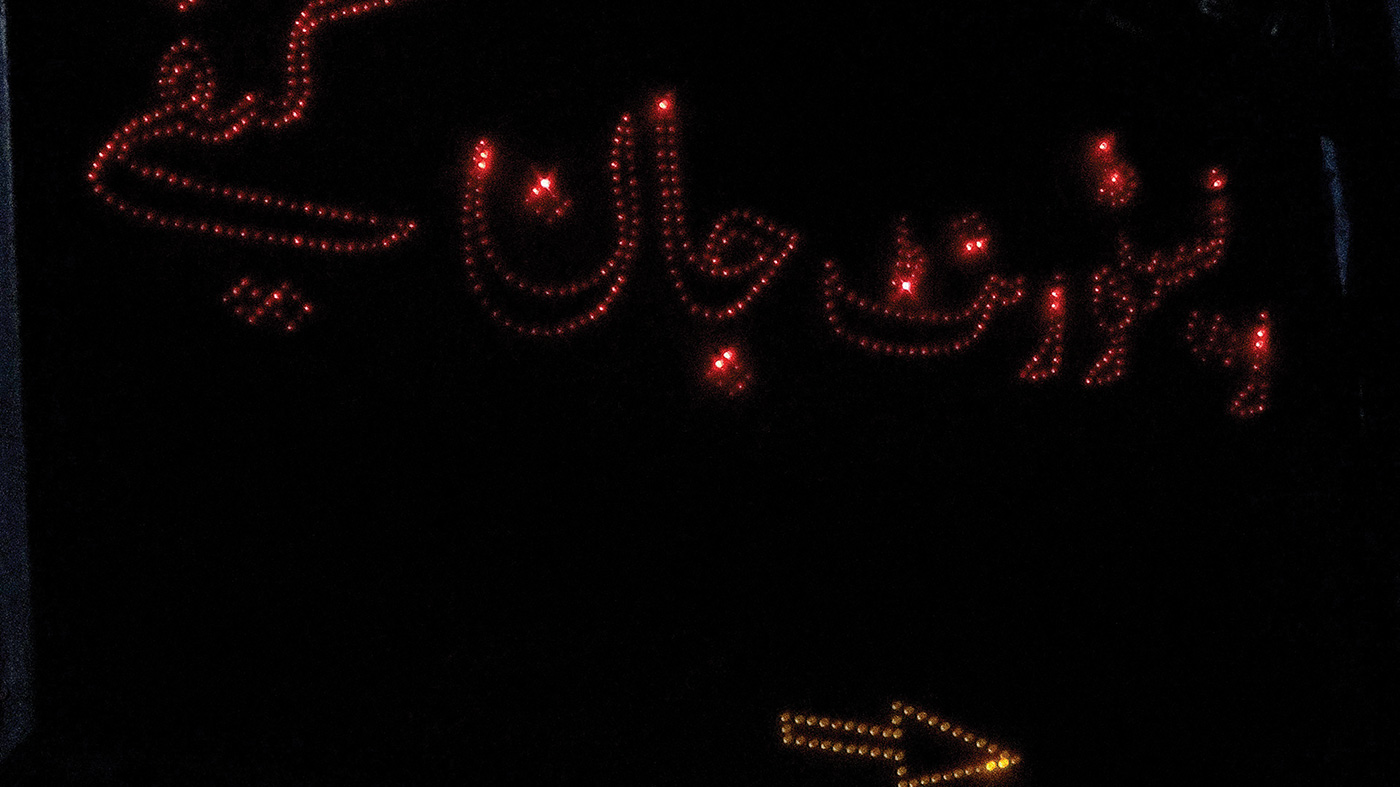
An audio-visual diary on the afterlives of encounters with South Asian Muslim migrants in Athens. Traces of exchanges in neighborhood cafés, makeshift mosques, Ramadan evenings, and half-sung songs ? held in fragments of sound, image, and text. Through stories, rituals, and everyday gestures, it listens to echoes of displacement and longing, tracing the ways in which memory, faith, and intimacy are held.
Shaheen Ahmed is a filmmaker from the Malabar Coast of Kerala, South India. His work explores memory and identity, often at the intersection of faith, intimacy, and collective spiritual imagination.
Abdalla Ahmed, N/A
Catalogue : 2014Khalf Al-zakera | Fiction | | couleur et n&b | 7:59 | Soudan | 2012
Abdalla Ahmed, N/A
Khalf Al-zakera
Fiction | | couleur et n&b | 7:59 | Soudan | 2012
For the sake of freedom she leaves the door to her memory open. So Omer enters her room every day healing her broken heart through his word and spirit.
My Name is Abdalla Mohamed Gaffar Ahmed, a young and aspiring Sudanese film director who shot and directed my first short feature entitled ?Beyond Memory? ON 11-2012, And second short documentary film about " US Technology Sanctions on Sudan" ON 1-2014 . Born in the United Arab Emirates Since 1990, I moved back to Sudan in 2002, when my family resettled back to my native land. I am currently enrolled in a local undergraduate study program undertaking a media degree in ALMASHREQ Universty of Science and Technology. I consider my recent found interest and work in film making to be the crowning of my collective long running interests in photography and creative writing. Throughout my childhood and early youth, living in diverse spaces, has helped increase and develop my sensitivities towards international cultures all which seem to feature in the pattern of my arts. As a young artist I hope to retain my experimental and dependent artistic nature, being the sole mode of which I can express myself and the dynamic and vibrant context around me. Abdalla Ahmed 00249910112202 a.nirmen@hotmail.com
Stella Ahn
Catalogue : 2014Curriculum | Doc. expérimental | hdv | couleur | 8:34 | USA | 2013
Stella Ahn
Curriculum
Doc. expérimental | hdv | couleur | 8:34 | USA | 2013
Curriculum is a tiny scale documentary set in Los Angelescentered around the larger theme of knowledge. It loosely follows a character, a tutor for the No Child Left Behind Act implemented by the Los Angeles Unified School District. Running through a few simple ideological questions rather than investigatingcharacters, facts, or events (as one would expect of a documentary), the film was made to open up the matter of education in Los Angeles in relation to socio-economic as well as subjective positions.
Stella Ahn is a Los Angeles native. With a B.A. in Film & Media Studies from the University of California, Irvine, she went on to California Institute of the Arts, where she received her MFA in Film/Video. She likes to make experimental narratives, essay films, and video loops. Her work focuses on unsteadily dismantling the intersections of image, fiction/reality, and politics.
Catalogue : 2013Newhall Loop | Vidéo | 16mm | couleur | 13:0 | USA | 2012
Stella Ahn
Newhall Loop
Vidéo | 16mm | couleur | 13:0 | USA | 2012
A single channel video piece, looped. The piece is about 13 minutes long, with 1 minute of black over silence at the end. It features two characters, no dialogue, and depending on how one looks at it, either no narrative or a countless number of narratives. The soundscape is equally as important as the visuals. It is immersive, taken from everyday life, containing the bellows of trains to automobile traffic to background music at a shopping mall. Newhall is the district in Southern California in which the piece was conceived and shot.
Stella Ahn is a Los Angeles native. With a B.A. in Film & Media Studies from the University of California, Irvine, she went on to California Institute of the Arts, where she received her MFA in Film/Video. She likes to make experimental narratives, essay films, and video loops. Her work focuses on unsteadily dismantling the intersections of image, fiction/reality, and politics.
Mehdi Ahoudig, Anna Salzberg
Catalogue : 2016On ira à Neuilly inch'Allah | Doc. expérimental | hdv | couleur | 20:0 | France | 2015
Mehdi Ahoudig, Anna Salzberg
On ira à Neuilly inch'Allah
Doc. expérimental | hdv | couleur | 20:0 | France | 2015
Eija-liisa Ahtila
Catalogue : 2018Tutkimuksia draaman ekologiasta (Studies on the Ecology of Drama) | Fiction expérimentale | 4k | couleur | 26:26 | Finlande | 2017
Eija-liisa Ahtila
Tutkimuksia draaman ekologiasta (Studies on the Ecology of Drama)
Fiction expérimentale | 4k | couleur | 26:26 | Finlande | 2017
The film uses the methods of presentation as a path to the company of other living beings. It expands upon the issues of ecological moving image narrative, the focus being on presentation, imaging and imagination in the context of the moving image.
Née en Finlande en 1959, Eija-Liisa Ahtila vit et travaille à Helsinki. Elle a étudié à l’Université de Californie à Los Angeles, au London College of Priting et à l’Université d’Helsinki. Le travail d’Eija-Liisa Ahtila, installation et film, s’organise conceptuellement autour de la manière dont se construisent images, langages, fils narratifs et espaces. Après avoir examiné les aspects existentiels de l’adolescence et de la découverte de la sexualité, les difficultés des relations familiales, la désintégration mentale et la mort, dans travaux les plus récents, l’artiste questionne les procédés de perception et d’attribution de sens, entre autres à travers des thématiques liant réflexions sur la culture et aspects et existentiels, telles que le colonialisme, la foi et le post-humanisme. Elle a obtenu le prix ARTE Award pour le meilleur film européen au Festival International du Court Métrage d’Oberhausen (2012), le Grand prix du Festival Curtas Vila do Conde (2002), le Prix du meilleur court métrage nordique au Nordisk Panorama (2000). En 2011, elle a été membre du jury du Festival du film de Venise. En 2013, elle a été présidente du jury au FID Marseille. Son travail a été montré dans des musées et festivals, notamment au Musée Guggenheim de Bilbao, au Monderna Museet (Stokholm), à la DHC/Art Foundation for Contemporary Art (Montréal), au Jeu de Paume (Paris), au Museum of Modern Art (New York), au Museo d’Arte Moderna e Contemporanea (Bolzano, Italie), et à la Tate Modern (Londres). Ses films ont été projetés notamment au Festival international du film de Berlin, au Festival du film de Sundance, au Festival international du film de Venise.
Eija-liisa Ahtila
Catalogue : 2013Marian Ilmestys | Vidéo | hdv | couleur | 34:44 | Finlande | 2011
Eija-liisa Ahtila
Marian Ilmestys
Vidéo | hdv | couleur | 34:44 | Finlande | 2011
The Annunciation is a film in which one of the central motifs of Christian iconography is constructed and re-enacted through moving image.
Eija-Liisa Ahtila Born in 1959 in Hämeenlinna, Finland, Eija-Liisa Ahtila is visual artist and filmmaker. Her films and multi-screen installations explore and experiment with narrative storytelling, creating extraordinary tales out of ordinary human experiences.
Catalogue : 2010MISSÄ ON MISSÄ? | Film expérimental | 35mm | couleur et n&b | 55:50 | Finlande | 2009
Eija-liisa Ahtila
MISSÄ ON MISSÄ?
Film expérimental | 35mm | couleur et n&b | 55:50 | Finlande | 2009
WHERE IS WHERE? (S-16 mm/ HD; 1:1:85; DD 5.1) Crystal Eye ? Kristallisilmä Oy ONE LINER La Mort et La Poétesse transposent dans la réalité d?aujourd?hui un fait divers de l?époque de la guerre d?Algérie : deux petits garçons ont tué leur meilleur ami, un garçon français. BRIEF SYNOPSIS WHERE IS WHERE? est un film expérimental et une installation, basé sur un fait divers de l?époque de la guerre d?Algérie. Réagissant aux atrocités perpétrées par les Français, deux petits garçons ont alors assassiné leur camarade de jeux, un petit garçon français du même âge. Le film débute dans le monde contemporain, quand la Mort entre dans la maison de la poétesse. Celle-ci se met à explorer l?événement passé qui se confond petit à petit avec l?instant présent. Dans le jardin de l?arrière-cour, la brume se lève, laissant apparaître une barque d?une couleur éclatante qui flotte dans la piscine. Adel et Ismael y sont installés. SYNOPSIS WHERE IS WHERE? explore le colonialisme et la coexistence de deux cultures différentes. Le point de départ est un fait réel de l?époque de la guerre d?Algérie, à la fin des années cinquante. Le pays était alors sous la tutelle de l?administration française et venait d?entamer une longue lutte pour l?indépendance, contre l?Etat colonisateur. Cette époque fut d?une violence extrême, marquée par les attentats des indépendantistes et par la dure répression de l?administration française. En réaction à, ou par conséquence des atrocités commises par les Français, deux petits garçons algériens ont tué leur camarade de jeu, un petit garçon français du même âge. Malgré ce point de départ ancré dans la réalité, c?est la relation de l?évènement au monde d?aujourd?hui qui est au c?ur de l?histoire. La narration débute dans l?instant présent, le geste des garçons et les événements de l?Algérie s?y confondant petit à petit. Le meurtre est examiné à la lumière de la situation mondiale actuelle d?une part, et d?autre part en tentant d?apporter une perspective historique aux conflits arabo-occidentaux ? tout en abordant les événements du point de vue de l?individu, à travers son expérience propre. L?histoire comporte trois personnage principaux : Adel et Ismael, les deux jeunes Arabes auteurs du meurtre, et une poétesse européenne, une femme d?une quarantaine d?années. La narration débute avec l?arrivée de la mort dans la maison de la poétesse. L?expérience de la mort est mise en parallèle avec l?arrivée dans un nouveau pays, et avec une remise en question de l?existence et de l?identité. Dans ses activités de poète, à l?aide de mots, la femme se met à décortiquer le fait divers et les éléments qui y sont liés : les différences religieuses, la culpabilité, la recherche de la ressemblance et de la communion. Petit à petit, le point d?ancrage se déplace du monde de la poétesse vers la réalité des garçons. Le meurtre se détache de son époque et est transposé dans monde d?aujourd?hui. Dans le jardin de l?arrière-cour, la brume se lève et laisse apparaître une barque qui flotte dans la piscine et où sont installés Adel et Ismael. La poétesse passe en arrière-plan, et c?est la parole des garçons et le caractère inévitable de leur geste, ses raisons et ses conséquences, qui se trouvent au centre de l?histoire. L?action se déroule dans une réalité fictive interne au film, ainsi que dans un décor référentiel aux airs de théâtre. L?effet recherché est de rendre la narration plus vivante, mais aussi d?explorer la façon dont les différents niveaux de narration fonctionnent ensemble. Le mode de narration est donc expérimental ? l?information est fournie non seulement de façon traditionnelle par ce qui se passe directement sur l?écran, mais aussi par les images et les sons qui acquièrent une plus grande importance. L?objectif est de donner une autonomie aux éléments expressifs de l?image en mouvement, afin qu?ils ne soient plus simplement subordonnés à l?histoire mais pour qu?ils transmettent une information sensorielle propre (ex. scène avec les danseurs soufis, paysages de pays différents, scènes de chants). Ainsi, l?histoire gagne en ampleur, en dimension personnelle et en charge émotionnelle, la chronologie traditionnelle se brise sans pour autant perdre le fil de la narration. La présence des acteurs suit cette même logique : l?accent dans le dialogue entre la Mort et la Poétesse n?est pas tant dans l?information transmise par les mots que dans les expressions et les postures (ainsi que dans les contacts entre les acteurs et dans l?action, bien évidemment).
EIJA-LIISA AHTILA Born in 1959 in Hämeenlinna, Finland, Eija-Liisa Ahtila is visual artist and filmmaker. Her films and multi-screen installations explore and experiment with narrative storytelling, creating extraordinary tales out of ordinary human experiences. Her works deal with separation, loss, sexuality, relationships among family members, mental disintegration, and death. They investigate the processes of perception and the attribution of meaning, with breaking down the story on several screens around the viewer in the space. Making installations and films has become for her a process of identifying the links between images, sounds, rhythms, light, characters and words, and using them to approach and construct the story. Eija-Liisa Ahtila was the recipient of the Artes Mundi of Cardiff, Wales in 2006, the Vincent Van Gogh Biannual Award for Contemporary Art in Europe, Maastricht, The Netherlands, as well as the Coutts Contemporary Art Foundation Award, Switzerland, both in 2000, and the Edstrand Art Prize, Sweden in 1998. Ahtila attended Helsinki University, Faculty of Law (1980-85); Independent Art School, 198184; and London College of Printing, School of Media and Management, Film and Video (1990-91). She received a Certificate from U.C.L.A. in Film, TV, Theater and Multimedia Studies, Los Angeles (1994-95) and attended special courses at the America Film Institute, Advanced Technology Program, Los Angeles (1994-95). Ahtila has exhibited extensively at numerous museums and film festivals around the world and her films have received distinctive film awards and prizes over the years. Her work has also been widely seen on television in Europe. British Film Institute has published a home DVD box of her films titled The Cinematic Works of Eija-Liisa Ahti/a. Eija-Liisa Ahtila currently lives and works in Helsinki.