Catalogue > Liste par artiste
Parcourez la liste complète des artistes présentés dans le cadre des Rencontres Internationales depuis 2004. Utilisez le filtre alphabétique pour affiner vos recherches.
Graeme Arnfield
Catalogue : 2022Pervading Animal | Doc. expérimental | 0 | couleur | 30:0 | Royaume-Uni | 2021
Graeme Arnfield
Pervading Animal
Doc. expérimental | 0 | couleur | 30:0 | Royaume-Uni | 2021
Equal parts systems literacy and kaleidoscopic ecological fantasia, “Pervading Animal” is a film about butterflies, computer viruses and all the things they touch. Tracing the creation, spread and destructive legacy of the first ransomware computer virus the film finds in its wake surprising connections between the US invasion of Panama, the aesthetics of pioneering computational art and the construction of a butterfly conservatory in New York.
Graeme Arnfield (b. 1991, UK) is an artist filmmaker and composer living in London, raised in Cheshire, UK. Producing sensory essay films from networked imagery his films use methods of investigative storytelling to explore issues of circulation, spectatorship and history. Research topics have included: the politics of digital networks, the distribution of ecological matter such as peat and asbestos and the adaptive circulation of global and local histories. His work has been presented worldwide including Berlinale Forum Expanded, International Film Festival Rotterdam, Courtisane Festival, Berwick Film & Media Arts Festival, Sonic Acts Festival, European Media Arts Festival, Transmediale, IMPAKT Festival, Kasseler Dokfest, Plastik Festival, Internationale Kurzfilmtage Winterthur, LUX, Institute of Contemporary Arts (ICA), Berlinische Gallerie, Signal Gallery, Whitechapel Gallery and on e-flux & Vdrome. He graduated with a Masters in Experimental Cinema at Kingston University.
Phuttiphong Aroonpheng
Catalogue : 2011Sukati | Fiction expérimentale | dv | couleur | 5:40 | Thaïlande | 2010

Phuttiphong Aroonpheng
Sukati
Fiction expérimentale | dv | couleur | 5:40 | Thaïlande | 2010
My mother dreamed that my late father came back home to see her. She strongly believes that It wasn`t dream.
Phuttiphong AROONPHENG was born in Bangkok in 1976. He obtained a B.F.A at Silpakorn University and also studied at The Digital Film Academy of New York. He is particularly interested in avant-garde and experimental film. In 2007, his film project ?We all know each other?, an experiment documentary film in collective storytelling, which utilises investigation and dialogue about the nature of film as a medium, was supported by Fukuoka Asian Art museum and Irish Museum of Modern Art. And also his short film ?Our monument? won Vichitmatra Award at the 12th Thai Short Film and video Festival. Phuttiphong?s films have been showed both international film festivals and art exhibitions, including the International Film Festival Rotterdam 2009, Ybor the moving images festival USA, International Short Film Festival Hamburg, Interfilm Berlin Germany, 25Fps Croatia, Singapore International Short Film Festival, Asian gallery 4A Sydney, Escape Art gallery England, Silverlens gallery Philippines and many others. In 2009, He also was selected as a fellow of Asian Film Academy organized by Pusan International Film Festival and was one of an Asian Public Intellectuals fellows by the Nippon Foundation. As a Filmmaker, Phuttiphong has practice and skill in many different levels of the storytelling process, from narrative to experimental to documentary filmmaking. He had worked, as a cinematographer, together with well-known director?s films such as Nick Deocampo and Kongkiat Khomsiri. Recently, his new film project ?Departure Day? has been supported by Office of Contemporary Art and Culture, Ministry of Culture of Thailand and also won award for the script development in the Asian Cinema Funds (ACF), Pusan South Korea.
Driss Aroussi
Catalogue : 2025Borj el mechkouk | Doc. expérimental | mov | couleur | 32:20 | France | 2023
Driss Aroussi
Borj el mechkouk
Doc. expérimental | mov | couleur | 32:20 | France | 2023
Taking the form of a fable-cinematography, Borj el mechkouk follows in the footsteps of a man sent by the village chief to observe and eventually un-sand a system of underground water galleries used by villagers to irrigate farmland. The story takes place in a pre-desert area of Morocco, where water management is a central element of oasis life. The system of underground drainage galleries is called “Khettara”. These man-made structures allow groundwater to be mobilized on a continuous basis. In this film, we follow the man on his journey through these vast, dry spaces. Once there, he settles in and applies his knowledge and dexterity to his work. In this charged and mysterious space, we discover the culmination of his mission. Commissioned by his oasis village, a man sets off into the desert to observe and eventually restore a system of underground water galleries known as Khettara. We follow his journey to Borj el mechkouk, where he works and lives for a time in this arid zone. What will he discover?
Born in Morocco in 1979, Aroussi lives and works in Marseille, France. Driss Aroussi's artistic work is polysemic, borrowing from several lines of research and navigating between experimentation and documentary form. In his practice, Driss Aroussi uses whatever enables him to reproduce reality, such as photography, or to capture it, such as video. In recent years, he has photographed construction sites, spending time with workers, sharing their daily lives, considering men, tools, objects and places. For him, reality also bears the mark of work, the stigma of its contradictions, the signs of the transformation it wrought on our reality.
Fernando Arrocha
Catalogue : 2008Piedad | Art vidéo | dv | couleur | 5:35 | Espagne | 2005
Fernando Arrocha
Piedad
Art vidéo | dv | couleur | 5:35 | Espagne | 2005
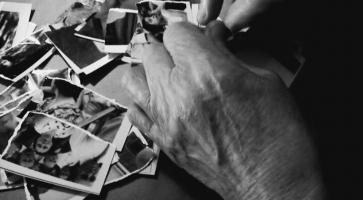
Piedad faces the pass of time through the memories of the love story and execution of Milagros, her best friend.
Born in Valladolid in 1977, he studies Music and Fine Arts in Madrid. He works at the area of painting, installation, videoart and new technologies. From 2005, he co-manages Calipsofilms, a platform of audio-visual experimentation in several fields, such as videocreation, video clips, spots, documentaries, digital image, internet projects... He has taken part in individual and collective exhibitions, in different spaces, as Mirador (Madrid 2003), Photoespaña (Madrid 2005), Loop Festival (Barcelona 2007), Baluarte (Pamplona 2007). One of his most recent exhibitions is Líneas de mira (Lines of sight), at Centro Atlántico de Arte Moderno (Gran Canaria 2007). Fernando Arrocha investigates the diving of contemporary man in the incessant flow of images of all kinds in which he is submited. His work is based on image recreation and intervention, specially propaganda content in historical films and documents. That process of recreation and intervention invites to think about manipulation, not only technical but also political and sociological, as well as about the psychological derivations of such procedures.
Victor Arroyo
Catalogue : 2025Disappearance in Three Acts | Act l | Doc. expérimental | hdv | couleur | 15:0 | Canada | 2024
Victor Arroyo
Disappearance in Three Acts | Act l
Doc. expérimental | hdv | couleur | 15:0 | Canada | 2024
Disappearance in Three Acts | Act One is an ethnography of violence reflecting on a history of conflict in Central Mexico. The video piece posits a decolonial approach to the visual representation of violence in Mexico, transporting us beyond the realm of suffering into a space for quiet contemplation as the violent terrain of occupation enters the frame. Following the pictorial European Romantic landscape tradition with its depiction of the uncontrollable power of nature, this piece is an investigation on enforced disappearance in rural Mexico, reclaiming undermined histories of everyday violence and economic struggle. The video piece appropriates visual motifs from 18th century European Romantic landscape tradition with its depiction of the uncontrollable power of nature and cataclysmic extremes, echoing violent occupation of land in rural Mexico. Through a poignant testimony of a kidnapping survivor, intertwined with the pastoral rural landscapes of her captivity, the video documents geographies of disappearance at the threshold of detectability.
Victor Arroyo is a video artist working in the crossfield between cinema and contemporary art. His films are informed by various modes of listening and seeing, emerging from long periods of observation and documentation. His practice is situated at the intersection between aesthetics, knowledge production and community-based research, often concerned with the encounters and tensions between lived experiences, knowledge regimes and the politics of display. His work is regularly programmed in museums and festivals internationally, including Kasseler Dokfest, Sheffield Doc/Fest, RIDM, Canadian Centre for Architecture CCA, BIENALSUR, Cinemateca de Bogotá, Cinémathèque Québécoise, Cinémathèque Pacific, Museu de Arte Moderna do Rio de Janeiro, Museo Chileno de Arte Precolombino, Leonard & Bina Ellen Art Gallery, Center for Contemporary Arts Santa Fe, among others. Born in Mexico in 1977, and based in Montréal, Canada.
Jessica Arseneau
Catalogue : 2022Aubes | Vidéo | mov | couleur | 40:0 | Canada, Allemagne | 2021
Jessica Arseneau
Aubes
Vidéo | mov | couleur | 40:0 | Canada, Allemagne | 2021
Dawns takes us to a time when sleep is disrupted and insomnia becomes a collective condition. Captured before sunrise, with non-actors in a variety of outdoor environments, the multi-channel work consists of a series of continuous shots and long takes. The slow cinematographic images are reminiscent of tableau vivants where people, in groups or alone, find themselves in an urban environment or the transformed wasteland of a former industrial area. Exhaustion is conveyed by the bodies’ postures and their near immobility, composing at the same time an atmospheric landscape of fragility and endurance at the limit of the perceptible. While the videos look still images, they allow us to see the slow, luminous transition of night into day.
Jessica Arseneau (originally from Tilley Road, Canada) obtained a Bachelor of Fine Arts at Université de Moncton in 2011 and a Master’s Degree in New Media at the Academy of Fine Arts Leipzig in 2020, both completed with distinction. She received a grant from the Salzburg International Summer Academy of Fine Arts in 2017 and a scholarship from Saas-Fee Summer Institute of the Arts in 2021.?? Her solo exhibitions include Surrounding Uncaring Skies as part of the Festival International du Cinéma Francophone en Acadie, Moncton, Dawns, a storefront exhibition organized by Ringlokschuppen Ruhr, Mülheim an der Ruhr, The Screen Under My Eyelids at Helmut, Leipzig, Nothing but a Constant Glow at Spinnerei Archiv Massiv, Leipzig, and Lost Idyll, at Galerie d’art Louise-and-Reuben-Cohen, Moncton. ??Other public presentations of her work occurred at Galerie Sans Nom, Moncton, Struts Gallery, Sackville, Darling Foundry, Montreal, Maison de la Culture du Plateau-Mont-Royal, Montreal, BronxArtSpace, New York, Agora Collective, Berlin, Traverse Vidéo, Toulouse, Friche la Belle de Mai, Marseille, D21 Kunstraum, Leipzig, and a&o Kunsthalle, Leipzig.
Rebecca Jane Arthur
Catalogue : 2025Barefoot Birthdays on Unbreakable Glass | Film expérimental | 16mm | couleur | 18:20 | Belgique | 2023
Rebecca Jane Arthur
Barefoot Birthdays on Unbreakable Glass
Film expérimental | 16mm | couleur | 18:20 | Belgique | 2023
In Barefoot Birthdays on Unbreakable Glass, three women reflect on art creation, immigration, and their own mother-daughter relationships: relationships cut short, relationships evolving, relationships to treasure. Following insights of independent experiences of love and loss, they unite in one space to celebrate a new chapter of life and friendship.
Rebecca Jane Arthur (b.1984, Edinburgh) is a visual artist working predominantly with the moving image and text. Her works often transpire as experimental film portraits of people and places, and her interest lies in how personal stories depict a socio-political context and history, giving particular attention to class politics, education and women’s experiences. She is co-founder of the Brussels-based, artist-run production and distribution platform elephy, contributor to the online film criticism platform Sabzian, and a PhD in the Arts candidate at KASK & Conservatorium/School of Arts Ghent where she teaches in the visual arts department and lectures on art and feminist theory.
Rebecca Jane Arthur
Catalogue : 2021Liberty: an ephemeral statute | Doc. expérimental | super8 | couleur | 37:0 | Royaume-Uni, Belgique | 2020
Rebecca Jane Arthur
Liberty: an ephemeral statute
Doc. expérimental | super8 | couleur | 37:0 | Royaume-Uni, Belgique | 2020
À travers le récit personnel d’une quête de libération aux États-Unis au début des années 70, "Liberty: an ephemeral statute" se penche sur les désirs d'émancipation, d'émigration et d'éducation de l'après-68. Le film esquisse un portrait de la mère de la réalisatrice, aujourd'hui de retour en Écosse, sous le prisme de d’une autobiographie impressionniste.
Rebecca Jane Arthur (née en 1984 à Édimbourg) est une artiste visuelle dont la pratique est principalement liée aux images en mouvement et à l’écriture. Elle a étudié les Beaux-Arts à la LUCA School of Arts, campus Sint-Lukas, Bruxelles (Belgique), et à l’Académie des Beaux-Arts de Vienne (Autriche), puis elle a obtenu son MFA à la KASK - Royal Academy of Fine Arts de Gand (Pays-Bas) en 2017. Suite à l’invitation d’Ingrid Cogne, Rebecca Jane Arthur a travaillé comme chercheuse pour Six-Formats (financé par FWF-Peek), un projet de recherche axé sur les arts et accueilli par l’Académie des Beaux- Arts de Vienne (Autriche), sous le format Screening en 2017-18. En 2019-20, elle a développé son travail d’écriture au sein du programme de résidence Conversation #4, une initiative du CVB - Centre Vidéo de Bruxelles (Belgique) et du GSARA, Bruxelles (Belgique), en partenariat avec le Beursschouwburg, Bruxelles (Belgique). Elle a également participé à SIC - SoundImageCulture, Bruxelles (Belgique). Elle a été artiste résidente à WIELS, Bruxelles (Belgique), en 2019, et sera résidente à la Cité internationale des arts de Paris (France) en 2021. Parallèlement à ses activités artistiques, Rebecca Jane Arthur travaille à Bruxelles (Belgique) chez Auguste Orts en tant que coordinatrice du projet "On & For Production and Distribution" (2018-2021). Elle est aussi la co-fondatrice de Elephy, une plateforme de production basée à Bruxelles (Belgique).
Mali Arun
Catalogue : 2022MUTATIS | VR vidéo 360 | mp4 | couleur | 12:0 | France | 2019
Mali Arun
MUTATIS
VR vidéo 360 | mp4 | couleur | 12:0 | France | 2019
La nuit, des hommes étranges, en combinaisons jaunes, pénètrent dans un jardin botanique. La nature est foisonnante et fascinante. Le gardien des lieux rejoint l’équipe des « chercheurs » pour les emmener plus loin, vers l’étang aux nénuphars. Le corps in- animé d’une jeune femme est retrouvé là. Le jardin en cache d’autres, enfouis dans ses trésors végétaux puis une lumière étrange apparaît du corps de ses femmes.
À la suite de ses études aux Beaux-Arts de Paris, de Tianjin (Chine) et de Bruxelles (La Cambre), Mali Arun développe un travail situé entre la fiction, le cinéma documentaire et la vidéo d’art qui questionne à la fois les espaces en marges, en mouvements ou en conflits. Elle observe aussi le corps, ses géographies, ses désirs et ses contradictions. Elle interroge la façon dont l’Homme en exil arpente des zones de passages et de frontières, transforme l’espace, le paysage en territoire en se l’appropriant. Elle explore les croyances, les rituels et les mythes dont les hommes se nourrissent pour vivre et survivre. Elle présente ses films dans de nombreux festivals de cinéma, dont Clermont-Ferrand -Cabourg – St. Petersbourg – Pantin – Cinémathèque française – Festival Tous Courts d’Aix-en Provence où elle obtient le Prix du Jury – Le coup de coeur du jury au Festival Point Doc ou encore la Mention Spéciale au Festival de Contis. Elle vend ses films à Arte et au programme Le Radi. En 2019 elle présente son film La maison à Visions du Réel, Nyon, lauréat du Sesterce d’Or Canton de Vaud, meilleurs film de la compétition internationale long-métrages Burning Lights. Elle réalise Paradisus pour la collection La première Image commandité par le CNAP et le G.R.E.C. Elle expose son travail lors d’un solo show à la Galerie T66 à Freibourg en Allemagne ainsi qu’à la Villa Emerige en 2017 et au Salon de Montrouge en 2018 où elle obtient le Grand Prix du Jury, Palais de Tokyo. En 2019 elle présente une sélection de ses travaux lors d’un solo show au sein de l’exposition Futur, ancien, fugitif au Palais de Tokyo avec la collaboration de Claire Moulène. Elle réalise une création vidéo pour Rituels, création musicale de l’Orchestre National de Jazz présentée à la Maison de la Radio et lauréat des Victoires du Jazz et d’une Victoire d’honneur 2020. En 2020 elle montre son travail vidéo au Centre Phi, Montréal – CEAAC, Strasbourg – Art Genève, Suisse – FRAC Champagne-Ardenne – Manifesta, Marseille – Institut Français du Japon, Kyoto – Elle présente une exposition personnelle au FOAM Museum à Amsterdam, Hollande. Elle est également lectrice pour le CNC (aide avant réalisation au court-métrage), pour l’aide à l’écriture de la Région Grand – Est et pour le G.R.E.C.
Miguel Arzabe
Catalogue : 2018Reel Roll | Vidéo | hdv | couleur | 3:46 | USA | 2016
Miguel Arzabe
Reel Roll
Vidéo | hdv | couleur | 3:46 | USA | 2016
Discarded audio reels unfurl and weave together against a digital backdrop. A narrator tells the story of a Navajo boy who learns to weave from his grandmother.
Miguel Arzabe is a San Francisco-based visual artist who works across media, including painting, video, and paper weaving. Arzabe`s work has been featured in such festivals as Hors Pistes (Centre Pompidou, Paris) and the Festival du Nouveau Cinéma (Montreal); and in museums and galleries including RM Projects (Auckland), FIFI Projects (Mexico City), Marylhurst University (Oregon), Berkeley Art Museum, Albuquerque Museum of Art, the de Young Museum, and the San Francisco Museum of Modern Art. He has held many residencies including Headlands Center for the Arts, Montalvo Arts Center, and Santa Fe Art Institute. His work is included in the permanent collections of Facebook, YouTube, and the San Francisco Arts Commission, among others. He holds a BS from Carnegie Mellon University, an MS from Arizona State University, and an MFA from UC Berkeley.
Carsten Aschmann
Catalogue : 2023Sonnenland Nr. 62 | Film expérimental | 4k | couleur | 23:50 | Allemagne | 2022
Carsten Aschmann
Sonnenland Nr. 62
Film expérimental | 4k | couleur | 23:50 | Allemagne | 2022
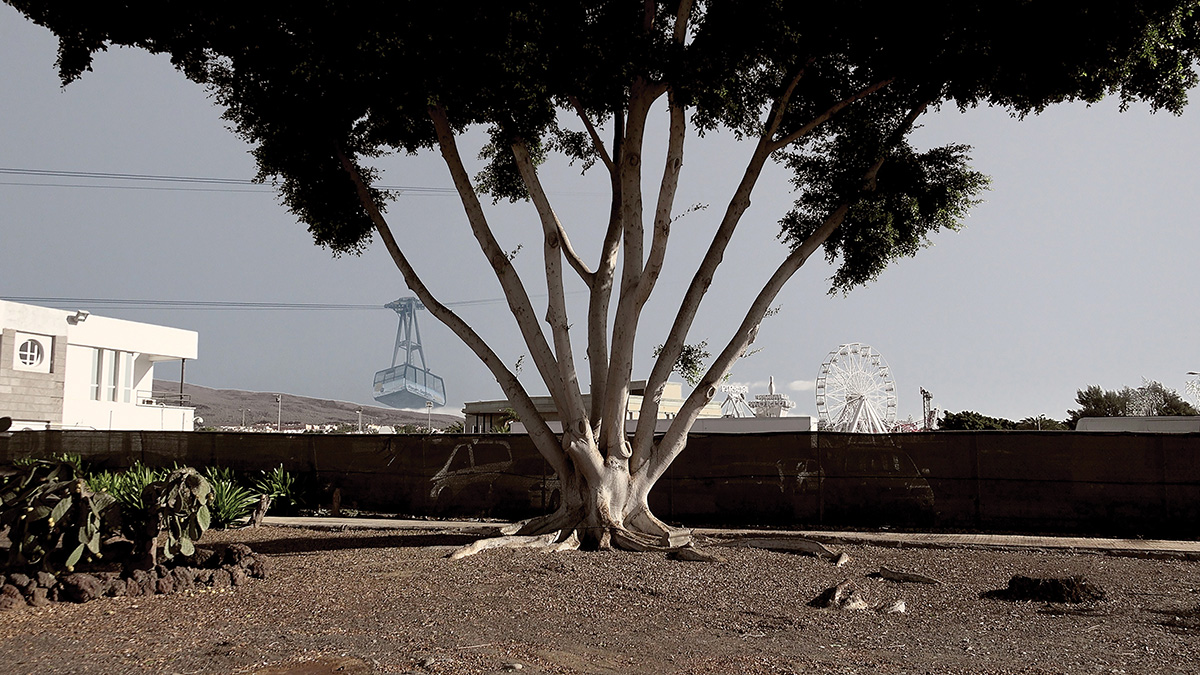
Landing approach to an island. The camera observes and traverses public space, on foot and in the air. Shots from the past and future intersect the vacation images. While filmmaker Aschmann speaks unadorned about his difficulty in finishing a film, we hear voice messages left by a colleague, eloquent and satirically pointed - on the subject of film and their ambitions. In a dune landscape, naked people stand and wait for their fortune.
Carsten Aschmann is a freelance filmmaker, producer, editor and curator of film series, for festivals and seminars. From 1993 - 97 he set up the film workshop Sector 16. In 2003 he created the label "Hula-Offline". Since 2006 also producer for documentaries and active as scriptwriter. He lives and works in Hanover. Studied philosophy and German language and literature, 1987 - 1988 Studied fine arts at the HBK-Braunschweig film class, 1989 - 1996 Master student of the film class with Prof. Birgit Hein
Catalogue : 2019Stardust | Doc. expérimental | hdv | couleur | 14:0 | Allemagne, 0 | 2018
Carsten Aschmann
Stardust
Doc. expérimental | hdv | couleur | 14:0 | Allemagne, 0 | 2018
In a few billion years, the sun goes down. Time enough to leave the inhospitable places of the earth. The flight ends with a crash in Paradise, which has been provide with a decay data by the manufacturer. The search of an angel produces a lot of stardust.
Catalogue : 2018Updating Death | Film expérimental | 4k | couleur | 14:30 | Allemagne | 2017
Carsten Aschmann
Updating Death
Film expérimental | 4k | couleur | 14:30 | Allemagne | 2017
The actors Ledger, Walker & Hoffman try to establish contact with each other. In a volatile state between mind and consistent figure, they navigate—at once helpless and aggressive—through the that can no longer be changed.the actors Ledger, Walker & Hoffman try to establish contact with each other. In a volatile state between mind and consistent figure, they navigate “at once helpless and aggressive” through the that can no longer be changed.
carsten aschmann lives and works in hannover. he has studied at the hbk-braunschweig in the filmclass by büttenbender and birgit hein. Mainly he is a filmmaker, and a screenwriter. more info www.hula-offline.de
Catalogue : 2012GAS AVALON | Fiction expérimentale | hdv | couleur | 14:0 | Allemagne | 2011
Carsten Aschmann
GAS AVALON
Fiction expérimentale | hdv | couleur | 14:0 | Allemagne | 2011
Penetrating an interactive surface, we encounter the world of Gas Avalon, where completely different rules apply. Bullets serve as forms of locomotion; artistic genres depict a landscape of placelessness. Man and art transcend to vapor in a power station. As atoms of a soul that has the gift of reason, we return to reality.
Carsten Aschmann lives and works in Hannover. He has studied experimental-film at the hbk-braunschweig in the filmclass by büttenbender and birgit hein. The last years he worked a lot as an editor and producer for documentary projects by hula-offline. Mainly he is a filmmaker, and a screenwriter. His films are screening worldwide.
Catalogue : 2010Ketamin - Hinter dem Licht Video Tagebuch IV | Doc. expérimental | dv | couleur | 20:38 | Allemagne | 2009
Carsten Aschmann
Ketamin - Hinter dem Licht Video Tagebuch IV
Doc. expérimental | dv | couleur | 20:38 | Allemagne | 2009
"What kind of road that i choosen?" asking a voice. "Our Earth is beautiful" reply an old man from the void. Ahead the sunset two boys playing frisbee. places and elements alternate. Through long and winding tunnels we had a trip to venice that seem to be outspent and empty. Gondoliers swinging their helm, meanwhile time is passes by. "Ketamin" is a film about sounds, beauteousness, Art and Life without wrong comforts and bluff on their imminence.
Vita Carsten Aschmann Filmmaker aka Hula-Offline (Department for Film, Video & Art) 1996 Meisterschüler Filmclass HBK-Braunschweig/Germany by Birgit Hein & Gerhard Büttenbender carsten aschmann lives and works in hannover. he is study experimental-film at the hbk-braunschweig in the filmclass by büttenbender and birgit hein. the last years he worked a lot as an editor and producer for documnetary projects by hula-offline for documentary project. at last with agnieszka jurek for "does that hurt you?" a mystery feature about & with david lynch. Mainly he is a filmmaker, and a screenwriter. his films are screening worldwide. Festivals worldwide among other things: Berlin Montreal Kelibia St.Petersburg Arnhem Breslau Krakau Edinburgh Glasgow Manchester Rotterdam Valencia Utrecht Lissabon Mexico-City Oberhausen Osnabrück HongKong Paris Bangalore Basel Madrid New York Kyoto New York
Daniel / Conny Aschwanden / Zenk, Zenk Conny
Catalogue : 2015LABADI RISING | Doc. expérimental | hdv | couleur | 3:33 | Autriche, Ghana | 2014
Daniel / Conny Aschwanden / Zenk, Zenk Conny
LABADI RISING
Doc. expérimental | hdv | couleur | 3:33 | Autriche, Ghana | 2014
Labadi Rising an urban sprawl, a gigantic, close-knit urban conglomerate along the westafrican coast from Abidjan to Lagos? The prediction of urbanist Mike Davis ( planet of slums) for 2050 could easily become reality long before. Labadi, located at the periphery of Accra where the city just merges with neigbouring portcity Tema is fitting exactly into this scheme. Thats where Daniel Aschwanden, Conny Zenk und Mat Hurtl meet the performancegroup GOLOCAL around visual artist Serge Attukwei Clottey, all of them inhabitants of Labadi. They demonstrate a new african self-consciousness through their way of trashy posing and improvise in public space along the beach. "The digital gaze belongs to all!" they seem to say, looking back through the displays of their gadgets, creating their own images. They stand for many young Africans facing the challenges of everyday life: poverty, violence , environmental pollution, rivalry, corruption and exploitation through global capital and own elites. The collage as a principle of life, seemingly omnipresent tool to appropriate symbolic and real territories serves as a matrix also for the videoshooting. The big themes are to be found in microspaces and depict themselves in surprizing transitions; locations, things, humans, actions, smells, realities, sounds, continuously measured, built-in, destroyed, rearranged and applied again, the construction of a future.
Daniel Aschwanden is experimenting with transdisciplinary methods in urban contexts departing from body related agendas applying a choreographic gaze to urban surroundings. His works articulate themselves in a wide range of formats reaching from interventions in public spaces to installations and performances in Gallery spaces and theatres and relating social with art agendas. Lecturer at the university of applied arts Vienna, since 2013 at the social design studio. Collaborations with media artist Conny Zenk since 2009. Urban seed, urban performative installation Vienna , PARCOURS I-IV 2010-13 urban performances Vienna, Path of money Beijing, Berlin,Vienna, system_m, Bastard crowding,urban media performance Accra, Beijing, Vienna, SUPERSUIT Vienna Conny Zenk is media artist with the focus on generative video art, installation and performance. she explores hybrid contexts between projection, digital gadgets, bodies and urban environments. Active as a live visual improviser she works chiefly with software that allows her to investigate digital processes and to translate them into videos of abstract landscapes. collaboration with Daniel Aschwanden since 2009. WEAVE (Installation), urban seed (Performance), scope (visual Live Performance), Art of Reading Maps (Urban Performance), Bastard crowding (Workshops and Performances)
Knut Asdam
Catalogue : 2015EGRESS | Fiction expérimentale | hdv | couleur | 41:0 | Norvège | 2013
Knut Asdam
EGRESS
Fiction expérimentale | hdv | couleur | 41:0 | Norvège | 2013
Egress is a narrative set in a gas station in the edgelands of Oslo. The main characters work at the bottom of the oil company hierarchy and are engulfed in the everyday and the dark economic and psychological shadows of their society. Egress is the story of a young woman who deals with her every day work situation with independence and stubbornness in her work and life in the periphery of the city. The film shows relationships between control and independence, about labour, class and work, but it is also a poetic film about a socially insecure edgeland of the city—and about a psychological flipside or cost of the everyday, somewhere near the bottom of the huge economic ladder of the oil industry which secures Norway's stability. Egress' world is a world of social instability and economic insecurity as part of a society undergoing major changes. Egress is shot entirely on "location" in Oslo's Groruddalen, mainly between an apartment complex and a gas station. The film is an experimental fiction built up from documentary material which mixes the environment- and character-based to talk about contemporary society.
Knut Åsdam (1968) is a filmmaker, installation artist and photographer. Åsdam established his international work through the art scene in New York after finishing studies at Wimbledon School of Art (London, 88-89), Goldsmiths College (London, 89-92), Jan van Eyck Akademie (Maastricht, 92-94) and at the Whitney Museum Independent Study Program (NYC 94-95). Expressed in diverse forms, the main interest of Åsdam’s work remains a concern for contemporary society and its psychological and material effects, and the toll of every day life; e.g. how individuals constructs and negotiates his or her identity in reaction to the rules and organizations of contemporary society. Åsdam investigates the usage and perception of public urban spaces, including their structures of political power and authority. The themes in Åsdam’s work can be thought of relating to four essential categories; ‘Speech’, ‘Living’, ‘Sexualities’ and ‘Struggle’. These concerns often relate to themes of dissidence and to analysis of space in terms of desire, usage and history. The idiosyncrasy of Åsdam’s approach to the cinematic field is created by transposing the resources of spatial and place-oriented discourses from the Fine Arts context into film. Furthermore, he uses a plotless narrative and an oscillation between documentary and fictional narrative elements in the films. Åsdam´s work has been shown widely at i.e. Tate Modern; Bergen Kunsthall; Tate Britain; Boijmans van Beuningen Museum, Rotterdam; Venice Biennial; Kunsthalle Bern; Istanbul Biennial; FRAC Bourgogne; MACRO, Rome; Museum of Contemporary Art, Oslo; Manifesta7; Moderna Museet, Stockholm; P.S.1 MOMA, NYC: and Musee d’Art Moderne de la Ville de Paris, among others.
Catalogue : 2011Abyss | Fiction expérimentale | 35mm | couleur | 43:0 | Norvège, Myanmar | 2010
Knut Asdam
Abyss
Fiction expérimentale | 35mm | couleur | 43:0 | Norvège, Myanmar | 2010
Abyss portrays an urban reality characterised by migration and change ? the movement of people, the movement of money and power, and the drift of the imagination. Filmed in East London, including the 2012 Olympic construction site the film is set within spaces of the modern city ? markets, gyms, parking lots, parks, squares, streets and stores. The main character, O, negotiates her material world but the city?s economical, political and social demands appear to have been absorbed into her movements, speech and psychology. The film drifts between a material world and its psychological effects.
Knut Åsdam was born in Trondheim (1968). He currently lives and works in Oslo. Åsdam established his international work as an artist through the New York context where he lived from 94-04 and attended the Whitney Museum Independent Study Program, NYC (94-95). Previously he studied at the Jan van Eyck Akademie (92-94), Goldsmiths College, London (89-92) and Wimbledon School of Art, London (88-89) after preparatory studies in Psychology, Philosophy and Linguistics at the University of Oslo and Maui Community College, University of Hawaii (86-89). Though expressed in very diverse forms, the main interest of Åsdam?s work remains a consistent concern for the manner in which each individual constructs and negotiates his or her identity in relation to the change and organizations of contemporary society. This sensitivity to the instability of the self often expands on the merits of queer theory and feminism, as well as psychology of language and (lacanian) psychoanalysis. His investigation of the relationship between language, the body and the usage and perception of public urban spaces, includes a look at structures of political power and authority, and has taken the diverse form of audio, film, video, photography and installation. The themes in Åsdam?s work can be seen through four categories; ?Speech?, ?Living?, ?Sexualities? and ?Struggle?. These concerns are often related to themes of deviation or crisis and to analysis of space in terms of desire, usage and history. The idiosyncracy of Åsdam?s approach to the cinematic field is created by transposing the resources of the discussions of place and subjectivity and the keen attention to the politics of language from the Fine Arts context into film. Åsdam has been active with exhibitions, publications and broadcast internationally for the last 15 years at i.e. Tate Britain and Tate Modern, London; Venice Biennial; Künsthalle Bern; Istanbul Biennial; Bergen Kunsthall; MACRO, Rome; The Astrup Fearnley Museum, Oslo; Manifesta7; Moderna Museet, Stockholm; P.S.1 MOMA, NYC; FRAC Bourgogne, Dijon and Musee d?Art Moderne de la Ville de Paris, among others.
Catalogue : 2011Tripoli | Fiction expérimentale | 0 | couleur | 24:0 | Norvège | 2010
Knut Asdam
Tripoli
Fiction expérimentale | 0 | couleur | 24:0 | Norvège | 2010
A Tripoli, ville du nord du Liban, se trouve ce qui reste de l?un des projets architecturaux les plus distinctifs au monde : un centre international d?exposition, conçu par l?architecte brésilien Oscar Niemeyer en 1966, et laissé à l?abandon depuis le déclenchement de la guerre civile en 1975. Dans une forme qui oscille entre le documentaire d?architecture et une représentation théâtrale incohérente, le film décrit tout à la fois le lieu et, comme un sous entendu, l?histoire violente qui a laissé ce site dans un état d?inachèvement et de délabrement. Les vestiges modernistes apparaissent déboîtés, et fonctionnent comme un monument à une époque optimiste au Moyen Orient, qui semble maintenant bien distante.
Knust Åsdam est né à Trodheim en 1968. Il vit et travaille actuellement à Oslo. Knut Åsdam s?est imposé comme artiste international à New York, où il a vécu de 1994 à 2004. Il a suivi dans cette ville le Whitney Museum Independent Study Program, NYC (94-95). Auparavant, il a étudié aux Pays-Bas, à la Jan van Eyck Akademie (92-94), au Goldsmiths College de Londres (89-92) et à la Wimbledon School of Art, Londres (88-89). Il a par ailleurs étudié la psychologie, la philosophie et la linguistique à l?université d?Oslo et au Maui Community College de l?université de Hawaii (86-89). Exprimée sous de multiples formes dans son travail, l?attention de Knut Åsdam est constamment tendue par la manière dont chaque individu construit et négocie son identité, en relation avec l?organisation et les modifications de la société contemporaine. Cette sensibilité à l?instabilité du soi est nourrie des valeurs portées par les théories queer et féministes, aussi bien que de la psychologie du langage et la psychanalyse lacanienne. La recherche de l?artiste sur les relations qu?entretiennent le langage, le corps, la perception des espaces publics urbains et l?usage qui en est fait, inclut un examen des structures du pouvoir et de l?autorité, et prend des formes diverses : audio, film, vidéo, photographie et installation. Les thèmes du travail de Knut Åsdam peuvent être vus au travers de quatre catégories : le discours, la vie, les sexualités et la lutte. Ces préoccupations sont souvent reliées aux thèmes de la déviance, de la crise, et à l?analyse de l?espace, en termes de désir, d?usages et d?histoire. Le caractère idiosyncratique de l?approche de Knut Åsdam du champ du cinéma est créé par la transposition des ressources de l?analyse des lieux et de la subjectivité, par une attention soutenue au caractère politique du langage, le déplaçant du contexte des beaux arts vers le champ du film. Ces dernières années, le travail de Knut Åsdam a été exposé, publié, et diffusé, notamment à la Tate Britain et à la Tate Modern, Londres; à la Biennale de Venise; à la Künsthalle de Berne; à la biennale d?Istanbul; au Kunsthall de Bergen; au MACRO, Rome; à l?Astrup Fearnley Museum, Oslo; à la Manifesta7; au Moderna Museet, Stockholm; au P.S.1 MOMA, NYC; au FRAC Bourgogne, Dijon et au Musée d?Art Moderne de la Ville de Paris.
Catalogue : 2009Oblique | Film expérimental | 35mm | couleur | 13:0 | Norvège | 2008
Knut Asdam
Oblique
Film expérimental | 35mm | couleur | 13:0 | Norvège | 2008
Les environnements urbains et leurs sites hétérogènes sont les lieux des explorations de Knut Asdam, qui s?intéresse au design social, aux modèles de comportement et aux modes de subjectivité en mettant l?accent tout particulièrement sur les troubles de l'identité et les pathologies spatiales. Asdam perçoit la ville comme une machine à désir, sa géographie comme un système de désir et son architecture comme un générateur pour pratiques désirantes. « Oblique », dont la première a eu lieu à Manifesta 7, est un récit hybride cinématographique et architectural, qui révèle des espaces publics ou semi-publics à l?intérieur de la ville. L'artiste invite le spectateur à un voyage à travers une « ville » en mouvement, construite à partir de villes et de régions de divers paysages politiques, économiques, culturels et sociaux. Asdam parle de lieux intensément chargés au niveau psychologique : des banlieues nouvellement construites en périphérie, des chantiers de construction, des immeubles institutionnels, des bureaux, des lieux de transition, entre construction et effondrement, marqués par les processus presque contradictoires de progrès économique et de développement des bidonvilles. Cependant, en même temps, il construit un espace critique objectif sur l?urgence politique.
Knut Åsdam est né en 1968 à Trondheim (Norvège) et vit actuellement à Oslo (Norvège). Il est actif sur la scène internationale depuis plus de dix ans, avec ses expositions, ses publications et ses émissions. Il a largement exposé à la Tate (Grande-Bretagne), à la Biennale de Venise (Italie), à la Kunsthalle de Berne (Suisse), à la Biennale d'Istanbul (Turquie), au Museum of Contemporary Art, au Moderna Museet, au PS1, et au Musée d'Art Moderne de la Ville de Paris (France), entre autres. Des articles de fond sur son ?uvre ont été publiés dans la revue « Artforum », « Gray Room », « Le Monde Diplomatique », « Untitled Magazine », notamment. D?une manière très visuelle et spatiale, Åsdam se sert du son, du film, de la vidéo, de la photographie et de l?architecture pour travailler avec la politique de l'espace et les limites de la subjectivité. Souvent, ces préoccupations sont liées au thème du désaccord, ainsi qu?à l'analyse de l'espace en termes de désir, d'usage et d?histoire. Il existe quatre catégories essentielles dans l??uvre d?Åsdam : le « Discours », la « Vie », la « Sexualité » et la « Lutte ».
Knut Asdam
Catalogue : 2008Finally | Vidéo expérimentale | dv | couleur | 18:0 | Norvège, France | 2007
Knut Asdam
Finally
Vidéo expérimentale | dv | couleur | 18:0 | Norvège, France | 2007
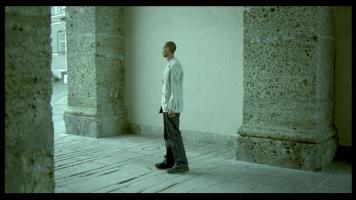
"Finally" traite d'histoire et de violence et explore les limites entre le film narratif et l'histoire. Le film a été filmé dans un contexte historique à Salzbourg en Autriche. Dans "Finally", les trois personnages principaux se battent violemment et répétitivement sans que de causes ne soient données dans la narration. Cette violence semble d'ailleurs être une réaction envers, ou bien une demande de, un lieu qui est aussi bien historique que contemporain. Le film fonctionne plus comme un jeu entre le placement architectural et spatial et le langage utilisé par les protagonistes, plutôt qu'une histoire linéaire.
Knut Åsdam vit et travaille entre New York, Paris et Berlin. Depuis 10 ans, ses oeuvres sont exposées, projetées et diffusées dans le monde entier. Il a notamment exposé à la Tate Britain, à la Biennale de Venise, au Museum of Contemporary Art, au Moderna Museet, au PS1 et au Musée d?Art Moderne de la Ville de Paris. Des articles sur son oeuvre ont entre autres été publiés dans Artforum, Grey Room, Untitled Magazine.
Mario Asef
Catalogue : 2008revolution after revolution | Doc. expérimental | dv | couleur | 14:0 | Argentine, Roumanie | 2006
Mario Asef
revolution after revolution
Doc. expérimental | dv | couleur | 14:0 | Argentine, Roumanie | 2006
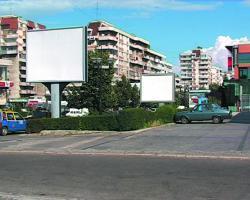
Le court-métrage "Revolution after Revolution" a été tourné dans trois villes roumaines (Sibiu, Pitesti, Bucarest). Il montre comment les stratégies des médias sont assimilées et intégrées dans la société et font ainsi partie de la vie de tous les jours. L'architecture moderne des années 1960 est le scénario dans lequel les habitants agissent en tant qu'acteurs. Les idéologies d'une célébration utopique donnent un contenu aux formes, qui représentent la vie moderne et sont l'allégorie de la "révolution".
Mario Asef est né en 1971 à Córdoba, en Argentine. Il vit à Berlin. Parcours éducatif: en 1991, il est apprenti en conception d'arts graphiques à Córdoba, en Argentine. 1990-1995: Université d'Architecture et de Développement urbain à Córdoba, en Argentine. 1998-2000: Académie des Arts Visuels, Karlsruhe, Allemagne. 2003: Chelsea College of Art and Design, à Londres. 2000-2004: Université d'Art à Berlin, Master of Art.
Leo Asemota
Catalogue : 2014Count Off for Eo ipso: Replay Only Memory | Performance multimédia | hdv | couleur | 23:0 | Nigeria, Royaume-Uni | 2012
Leo Asemota
Count Off for Eo ipso: Replay Only Memory
Performance multimédia | hdv | couleur | 23:0 | Nigeria, Royaume-Uni | 2012
Carles Asensio Monrabà
Catalogue : 2010CINEMA MUNDIAL 1957-2007 | Doc. expérimental | dv | couleur et n&b | 21:0 | Espagne | 2008
Carles Asensio MonrabÀ
CINEMA MUNDIAL 1957-2007
Doc. expérimental | dv | couleur et n&b | 21:0 | Espagne | 2008
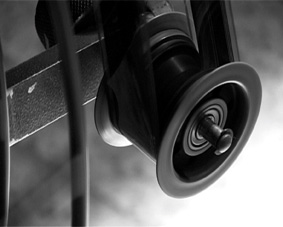
Grandeur et décadence d?un petit commerce de cinéma. Cinema Mundial 1957-2007 is a 21-minute short film that reflects the life of the celluloid via a digital camera and reveals the real essence of cinema. Cinema Mundial 1957-2007 shows the magnanimity and decadence of a small commercial movie theater in Sant Celoni, a village located in the province of Barcelona. In the projection room, Félix, the projectionist, and Juan, his assistant, carry out their work using traditional methods. They keep on working even though they know that it might be their last showing due to the warnings on the imminent closing of the movie theater. Some months later, we can still appreciate the demolition of this movie theater and its marks recall a history and a memory of cinema.
Carles Asensio Monrabà, was born on September 30th 1979 in Sant Celoni, a village in the province of Barcelona His studies and audiovisual works were carried out between Barcelona and Madrid. In Barcelona, he studied Direction in the Centre d?Estudis Cinematogràfics de Catalunya (CECC); after that, he got a grant by the Escuela de Cinematografía y Audiovisuales (ECAM) to study in Madrid. Among his fiction short films stands out Revival (finalist in the Fifth Edition of Notodofilmfest), Kiss me, fool or For Ever Lola (a false documentary that pays tribute to Basilio Martín Patino.) Other audiovisual works fall within the category of experimental documentaries, such as the short film Cinema Mundial 1957-2007 or 01 one, a feature film project inspired in Abbas Kiarostami´s film-making experience with his film Five. His artistic interests led him to study at the Col·legi de Teatre in Barcelona; in connection with theater, he establishes the group called Irma Vep in 2007, together with the actress Clara Macías Carcedo, who also takes an active part in his audiovisual works. In 2008 he takes the Documentary Master?s Program at Pompeu Fabra University in Barcelona. The Museum of Modern Art (MoMA) in New York city has just acquired Cinema Mundial 1957-2007 for its Permanent Collection. This short film was selected by New Directors/New, organized by MoMA and the Film Society of Lincoln Center to be screened in the last edition which took place in April 2008. As a result of his participation in this Film Festival, the Museum showed its interest in acquiring a copy of his work for its Permanent Collection, where we can find some of the most representative works from the world history of film. MoMA was the first museum that acquired films as works of art for debating and broadcasting purposes. In its collection we can find films by Charles Chaplin, Eisenstein, F.W. Murnau, John Ford, Carl T. Dreyer, Fritz Lang, Orson Welles, Roberto Rossellini, Federico Fellini, Yasujiro Ozu, Jean-Luc Godard, Andy Warhol, Stanley Kubrick, Francis F. Coppolla, Lars von Trier, Jia ZhangKe, David Lynch or Jim Jarmusch. Up until now, the only Spanish film-makers included in this collection were Luis Buñuel: El perro andaluz, La Edad de Oro, Los Olvidados, Belle de jour and El discreto encanto de la burguesía and Pere Portabella: Vampir cuadecuc and El silencio antes de Bach. In March 2009, his short movie was selected to be screened at the International Film Festival of Las Palmas de Gran Canaria (Canary Islands) as part of the Cinema Cycle DGeneraciones II. Presently, Carles Asensio is writing a script for a fiction feature film and is working in the creation of video art works based on 20th Century Painters such as Francis Bacon and screen-art.
Karimah Ashadu
Catalogue : 2025Machine Boys | Vidéo expérimentale | 4k | couleur | 8:50 | Nigeria, Allemagne | 2024
Karimah Ashadu
Machine Boys
Vidéo expérimentale | 4k | couleur | 8:50 | Nigeria, Allemagne | 2024
“Machine Boys” is a short film which explores the informal economy of motorcycle taxis; colloquially known as “Okada”, in the mega city of Lagos. Banned due to the government’s inability to regulate it, “Machine Boys” portrays a hardy group of bikers who continue this work, seeking to attain financial autonomy and independence. “Machine Boys” dwells on the consequences of this ban, meanwhile portraying the daily rituals and challenges faced by Okada riders. The riders embody though their stylish attire, and self-assured, powerful behavior, a particular branch of masculinity, and in this performance a beautiful vulnerability emerges, questioning Nigeria’s patriarchal culture. Through this exploration of Nigerian patriarchal ideals, Ashadu relates its performance of masculinity to the vulnerability of a precarious class of workers. With its innovative, cutting-edge style and sartorial references, it engages in a dialogue around post-colonial informal economy structures in Nigeria, as well as opening a window into the socio-cultural nuances of its most populated city.
Karimah Ashadu (b. London 1985) is a British-born Nigerian Artist and Film Director living and working between Hamburg and Lagos. Ashadu’s work is concerned with labour, patriarchy and notions of independence pertaining to the socio-economic and socio-cultural context of Nigeria and its diaspora. Her work has exhibited and screened at institutions internationally, including the 60th Venice Biennale, where she was awarded the Silver Lion for a Promising Young Participant in the International Exhibition. She has shown at Kunsthalle Bremen, Tate Modern, London, Secession, Vienna, Kunstverein in Hamburg, South London Gallery, London, Museum of Modern Art, New York and Centre d’Art Contemporain Genève. Ashadu is the recipient of other awards such as the Prize of the Bötterstraße in Bremen (2022) and the ars viva prize (2020). Public collections include MoMA, the City of Geneva Contemporary Art Collection and the Federal Collection of Contemporary Art, Germany. She was named Abigail R. Cohen 2021 Fellow at the Columbia Institute for Ideas and Imagination, Paris. In 2020, Ashadu established her film production company Golddust by Ashadu, specialising in Artists’ films on black culture and African discourses.
Oreet Ashery
Catalogue : 2008Back in 5 minutes | Art vidéo | dv | couleur | 8:7 | Royaume-Uni | 2007
Oreet Ashery
Back in 5 minutes
Art vidéo | dv | couleur | 8:7 | Royaume-Uni | 2007
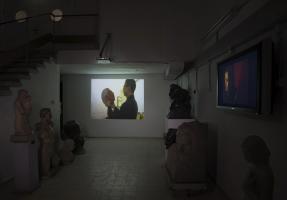
?Back in Five Minutes? est un bref thriller du monde de l?art qui se contient lui-même et ne comporte pas de solution. Un curator visite un studio et le trouve absolument vide. Les seuls éléments rappelant l?existence des artistes sont leurs téléphones portables et une note indiquant qu?ils sont partis chercher du lait et des biscuits, et reviennent immédiatement. Le curator commence alors à explorer la pièce de manière invasive, et découvre finalement un sac contenant du lait et des biscuits fraîchement achetés. Un peu plus tard, lors d?une conversation sur l?oreiller, le curator se demande si sa visite du studio n?était pas une mise en scène orchestrée par l?artiste, qui aurait ainsi essayé de l?inclure dans son travail. Néanmoins, sa partenaire suggère qu?il est peut-être réellement arrivé quelque chose à l?artiste, et qu?il serait bon de contacter la galerie. "Back in Five Minutes" explore le fossé potentiellement dangereux existant entre l?art et la vie, les sentiments privés et les soupçons professionnels, l?art fondé sur des objets et celui fondé sur des corps (performances), enfin sur les dynamiques du pouvoir dans le monde de l?art.
Oreet Ashery est une artiste pluridisciplinaire qui vit à Londres. Elle s?intéresse à l?art vivant, à la vidéo, au graphisme 2-D. Elle emploie également les objets, le texte et l?internet comme supports de son ?uvre. Son art vivant tend à prendre la forme d?un événement pluridisciplinaire in situ, prenant les gens du public comme participants. Ce travail se penche sur les politiques ayant trait aux questions personnelles, et leurs relations complexes avec les réalités sociales. Ashery s?intéresse à la rencontre de la vie et de l?art, des domaines de l'intime et du professionnel. Les ?uvres d?Ashery ont été présentées dans le monde entier et notamment : à la Tate Modern, London ; au OK Centre for Contemporary Art, Linz (Autriche) ; au Schwules Museum Berlin ; au Freud Museum, London ; à la galerie Foxy Production, New York ; à la galerie Arnolfini, Bristol ; à la Biennale de Liverpool ; à la galerie Kapelica, Ljubljana (Slovénie) ; au Musée d?Herzliya, Israël ; au FABO, Toronto ; au Brooklyn Museum, New York ; au Manchester Look 07 Image festival ; à la Galeria de Arte Mexicano (Mexcio City) ; à la galerie NGBK, Berlin et au Centre of Attention, Londres. Son travail a suscité de nombreuses rétrospectives, comptes-rendus et réflexions dans des livres et des magazines culturels, artistiques et académiques.
Catalogue : 2007Journey Palestine Israel | Doc. expérimental | dv | couleur | 25:0 | Royaume-Uni, Israel | 2006

Oreet Ashery
Journey Palestine Israel
Doc. expérimental | dv | couleur | 25:0 | Royaume-Uni, Israel | 2006
Cette vidéo est le journal d´un voyage réalisé en Israel et en Palestine en 2005. Au centre du récit, une femme de ménage arabe filmée alors qu'elle travaille dans l´appartement des parents de l'auteur à Jérusalem, puis lorsqu'elle traverse le point de contrôle de Qalandia, et rencontre un ami À Ramallah, et aussi lorsqu'elle marche avec le père de l'auteur dans le vieux Jérusalem puis visite Peqiin, seul village indigène où druzes, musulmans, chrétiens et juifs vivent ensemble paisiblement. Cette vidéo est un carnet de voyage personnel dont le but est d´explorer certains des enjeux complexes générés par le conflit dans la région, et, en particulier,d'explorer ce qui rapproche monde juif et arabe plutôt que ce qui les sépare.
Ashery est un artiste interdisciplinaire qui travaille avec les performances et l´art live, la vidéo et autres media numériques. L´oeuvre d´Ashery explore les relations entre la politique personnelle et les réalités sociales et politiques. Le travail d´Ashery s´est récemment concentré sur la notion de Non/Retour ("Non/Returning"), d´un point de vue politique, intérieur et psychologique. Son oeuvre est largement diffusée internationalement, dans des musées, galeries, cinémas, des sites spécifiques et des festivals. Elle fait l´objet d´articles dans des magazines d´art aussi bien que des écrits académiques.
Oreet Ashery
Catalogue : 2023Selfish Road | Doc. expérimental | hdv | couleur | 30:48 | Royaume-Uni | 2022
Oreet Ashery
Selfish Road
Doc. expérimental | hdv | couleur | 30:48 | Royaume-Uni | 2022
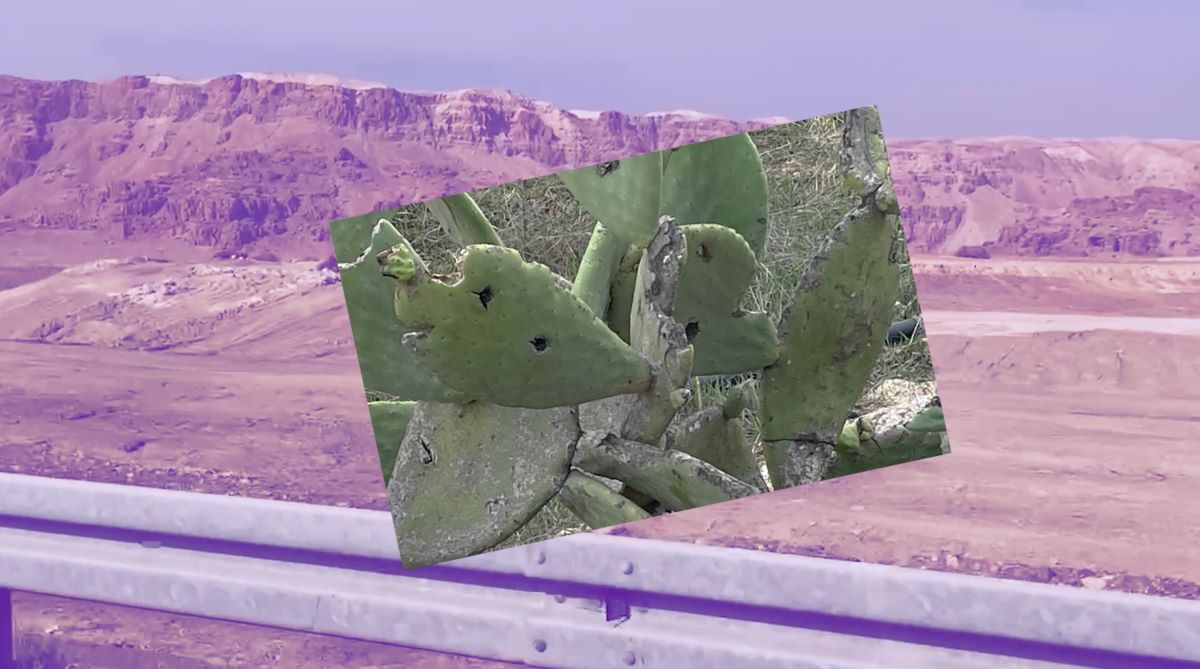
Selfish Road (2022) A 30-minute film by artist and filmmaker Oreet Ashery. Journeying through their homeland and recalling autobiographical memories along the way, Ashery observes how both senses of belonging have and continue to fuse with the vertiginous and winding flows of nation-building, infrastructure and land use. Turning a camera onto the contested land in and around Jerusalem, Selfish Road draws upon the genres of science-fiction, stand-up comedy, the family photo album, and the implicit privilege of the slacker road movie. The film reveals a composite portrait of a rapidly changing landscape: roads collapse into sinkholes, diseased cacti line highways, and location-monitoring apps map circuitous routes to flag “high risk” and “prohibited” areas. This episodic reflection of space and place attempts to work through the paradox: How can you own something that is stolen? Selfish Road depicts a contradictory environment of industrial extraction obscured by spiritual wellness practices. With anger, grief, hope, and resistance, it dreams of material ecological visions for indigenous life away from settler occupation and seeks out an ethics in and beyond the beauty of the region. Commissioned by A KW Production Series. Text by Mason Lever-Yap
Oreet Ashery is a visual artist and an experimental film maker whose practice navigates established, institutional and grassroots contexts. The work engages with bodies, community, worldbuilding, autoethnography, Thanatos, gender and technology. Ashery’s practice manifests through distinct multiplatform projects that span video, 2D image-making, performance and assemblage. Characterised by the use of speculative fiction and humour, the work often occupies utopian, discursive and incongruous spaces. Ashery was a Turner Bursary recipient in 2020 (replacing the Turner Prize during the pandemic) and won the prestigious Jarman Film Award in 2017 for her web-series Revisiting Genesis, interfacing documentary and fiction and looking at the emergent field of digital death. In this context Ashery published her book How We Die Is How We Live Only More So, Mousse Publishing, 2019. Ashery is Professor of Contemporary Art at the Ruskin School of Art, University of Oxford
Asya Ashman, Konstantin Koryagin
Catalogue : 2025Angel | Fiction expérimentale | digital | couleur | 14:55 | Russie, Allemagne | 2023

Asya Ashman, Konstantin Koryagin
Angel
Fiction expérimentale | digital | couleur | 14:55 | Russie, Allemagne | 2023
A couple in an apartment, antiquated interior. She suffers from a mysterious disease, sapping her strength and will. He takes care of her. As their fight against the inevitable seems increasingly futile, they resign themselves to the final measure. The film reflects on power dynamics, feeling of apathy and the quest to find one's place in the reality of impending societal catastrophe. This film was shot in the brief interlude between two profound catastrophes: the coronavirus pandemic and Russia's full-scale invasion of Ukraine. In January 2022, Asya and I got COVID-19 during a winter vacation in St. Petersburg, in the antique apartment where her grandmother, who passed away before Asya was born, once lived. A pervading sense of fatigue, ghostly echoes of past generations’ life, disturbing news that heralded the imminent outbreak of war, and a desire to find some way out of it all came together in a very strange foreboding atmosphere that we decided to capture. A few weeks post-shooting, as war erupted, we left Russia for Germany. The footage was edited in Berlin a year after filming.
Asya Ashman - dance artist and performer as well as a facilitator and creator of educational programs for young people. She was born in Moscow, Russia, 1994. She studied fine arts at BHSAD Moscow, and later focused on performance and dance. She is currently completing her degree in Dance, Context, Choreography at HZT Berlin. Since 2015, she has been creating her own artistic work, presenting it in various spaces (museums, theaters, parks, apartments) and working for other choreographers and artists. In her works, she explores artistic strategies to interact with personal and social issues, and question them through dance and spoken word, using humor, pop culture, magic, and collaboration. Konstantin Koryagin - independent researcher, video editor and filmmaker. He was born in Moscow, Russia, 1994. MA in philosophy, BA in political science. Since 2018 he is an editor of syg.ma – community-run media on philosophy, society and contemporary art. In 2021 he graduated the Moscow School of New Cinema, film directing laboratory. In 2023 he was a student at the Art and Media program at the Berlin University of the Arts (prof. Thomas Arslan). Currently based in Berlin.