Catalogue > Faire une recherche
Résultats pour : Tout le catalogue
Florencia P. Marano
binder
Vidéo | betaSP | noir et blanc | 4:58 | Espagne | 2009
Binder. Many people modify, hide, show off or retouch parts of their bodies in order to have certain social treatment. The experimental video ?binder? is an interpretation of the look and feel of trans FTM (female to male) whom want to be treated by everyone, in the role, which they desire. They are finding their own physical and social comfort by modifying a particular zone of their body. The routine fashion for Michael is to put on and take of the ?binder? daily in order to hide his chest and modify his body.
Florencia Pietrapertosa Marano née à Madrid en 1978 vit en Argentine où elle étudie Beaux Arts à l'école Fernando Arranz et réalisation cinematographique au C.I.E.V.Y.C jusqu'à ses 23 ans . C'est à Buenos Aires qu'elle commence sa carrière en tant que réalisatrice adjointe pour la télévision mais aussi le cinema et la publicité pendant plus de cinq ans. Elle écrit et dirige en parallèle plusieurs court métrages de fiction. En 2002 elle s'installe à Barcelone où elle continu sa carrière de réalisatrice et se tourne alors vers le film documentaire et l'art video Elle collabore avec la télévision, expose dans plusieurs galeries, participe a de nombreux festivals espagnols et gagne plusieurs prix internationaux. En 2008 elle remporte la bourse d'art " Generaciónes" de "Obra Social Caja Madrid" qui lui permet de tourner le court métrage Le Corps de Mouhamadou qui aura pour première l'exposition international d'art contemporain ARCO MADRID 08.
Andrés Pachón
Sombras de Nueva Guinea
Doc. expérimental | | | 1:50 | Espagne | 2011
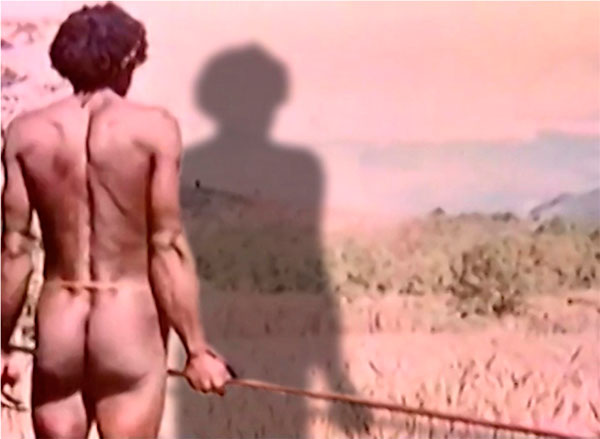
In 1964 Robert Gardner filmed the documentary ?Dead Birds?, this film explored the Dani people of New Guinea, one of the last areas in the World to be colonized at that time. Gardner was knowing for his work in visual anthropology and ethnographic documentary. ?Dead Birds? was criticized in the anthropological community for its inauthenticity, Gardner edited the sound and he recreated battle scenes. They also said that the movie did not make sense, because he broked the distance with the portrayeds. ?Shadows of New Guinea? makes a step in this inauthenticity. Andrés Pachón makes a rotoscoping (redrawn manually frame by frame) on original film`s fragments, creating shadows to the protagonists. The nature where actions are developed, the original context of New Guinea highland whose referent was recorded on camera, it becomes a huge background, a trompe l`oeil revealed by shadows. These shadows, and its consequent fictional effect, want to disclose the fantasy contained in the european imaginary of an exotic and tribal world. The shadows disclosed a background, a wall, that separates us from the ?other?.
Andrés Pachón born in 1985 in Madrid, where he currently resides. In 2008 he was graduated in Fine Arts from the UCM. Since 2005 he has been selected in several national contests, among them being prize "e-Crea 2010", Lleida, purchase prize 2012 in the "V International Prize Foundation María José Jove", Galicia, and finalist of the "Premi Miquel Casablancas" 2013 Barcelona. In 2010 he was part of the exhibition "Drug of the real" in Angeles Baños Gallery, Badajoz, gallery that currently represents him. In 2012 he has his first solo exhibition in Angeles Baños Gallery, entitled "In Memoriam". He has participated in international fairs such as "ArteSantander 2010", "JustMad 4", where he was finalist in the best emerging artist award, or "ARCO 2014". Also he has shown his photographs and videos on Berlin, ?Wege ums Kino? exhibition, or Lisboa, ?Que a dor nao seja mais do que uma recordaçao? exhibition. In the last year he has shown his last and fourth solo exhibition, ?Tropologías? in the Art Center of Alcobendas, Madrid; and his video works in Lázaro Galdiano Museum, Madrid, in ?VIVA Collections on Tour? show.
Katarzyna Pacura, Jan Szewczyk
Ocean
Vidéo | hdv | couleur | 4:9 | Pologne | 2014
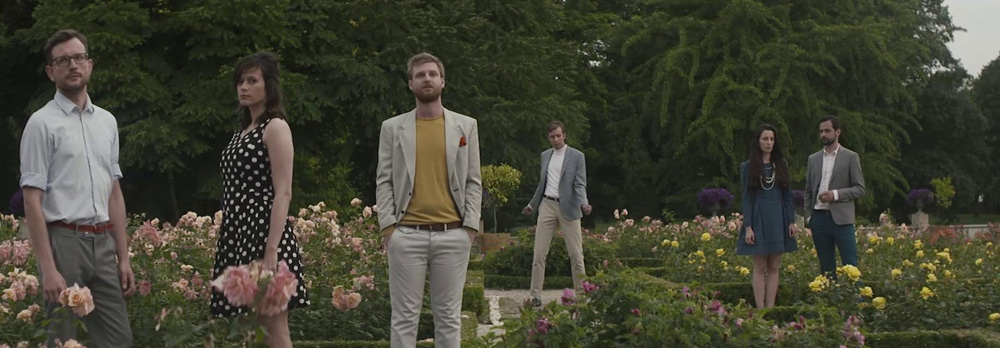
The piece "Ocean" was originally a conceptually designed, visual statement for a song by dutch musician, Olivier Heim. Looking for a connection between lyrics and aesthetics, we found main inspiration in the masterpiece by Alain Resnains "Last year in Marienbad". As we didn't want to copy and repeat exactly the same sequences of shots, we were just searching for an universal code, which made that kind of poetics legendary and original. The most important became, how to transfer contemporary sound and looks (meaning ; cinematography, style) into something classic and the other way round. What makes the classics attractive? We consider elegance in filmmaking as our motto and something that should be popular again.
Katarzyna Pacura, born 1986 in Lodz, Poland. Studied at University of Arts in Poznan, Poland, Douglas Gordon Filmclass at Stadelschule, Frankfurt am Main and German Film and Television Academy in Berlin (Dffb - directing). Film and video maker, scriptwriter and visual artists. Jan Szewczyk - born 1986 in Bialystok, Poland. Graduated from University of Arts in Poznan, Poland where currently he continues his Phd studies in contemporary art. Film and video maker, visual artists, cinematographer.
Laura J. Padgett
Solitaire
Film expérimental | 16mm | couleur et n&b | 2:19 | USA, Allemagne | 2017
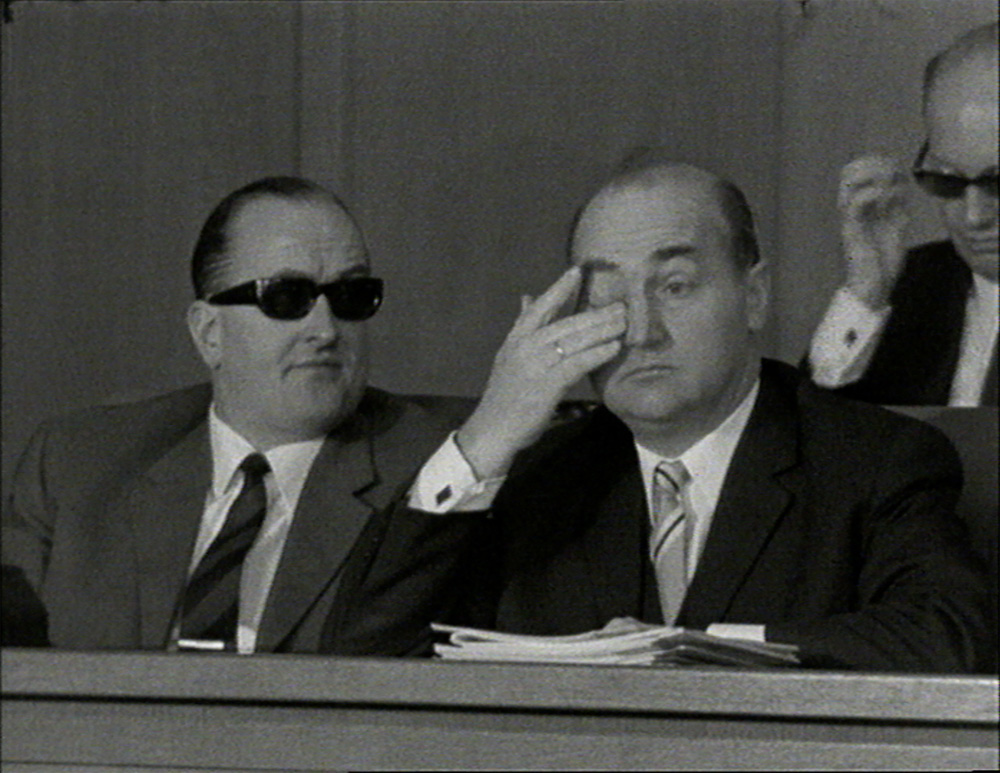
We see Max Horkheimer buying newspapers, we hear Hannah Arendt speaking about the mother tongue and making the invisible tangible. We also see Frankfurt am Main during the great (re)construction boom of the 1960s. We see demonstrations on the Römerberg and the presence of the American Forces in the Federal Republic of Germany during the cold war as well as scenes after the apprehension of members of the Red Army Faction. Housing shortages, urban development, youth and their future, guest workers, consumer society: these topics are repeatedly presented and discussed in the Hessen Schau news program from this period. The film deals with the concept of democracy, of having a voice and the contiguity between private and public space. These boundaries, which are in the process of dissolving, are made clear the storytelling in this film as fundamental strands of our social being. Laura J. Padgett’s found footage film SOLITAIRE is made from documentary film material and radio broadcasts of the late 1950s until 1972. It was culled exclusively from the Hessian Broadcasting Corporation’s (hr) archives.
The artist’s work explores unoccupied spaces, both real and imaginary, to reveal truths that are often overlooked. Like her subject, her work itself occupies the spaces between photographic storytelling and installation, between language and image, between history and current affairs. While she uses photographic media the results are always more than photographic objects. Since the nineties Padgett has produced a wide-ranging body of work, adopting various genres such as architectural photography, still life and urban street photography while exploring our ideas of communal and cultural identity. Laura J. Padgett’s work is often displayed in public spaces and plays with scale, material and the way we interpret images and their relation to history. The breadth of her work demonstrates an ability to move fluidly between genres, based on her background in painting, art history and architecture. Born in Cambridge, USA, Laura J. Padgett studied painting, film and photography at Pratt Institute in Brooklyn New York. Her conceptual approach to her projects stems from this background. Her further studies in film and art history, with Peter Kubelka at the Städelschule and at the Goethe University in Frankfurt am Main, respectively, broadened her approach. Laura J. Padgett exhibits internationally, and her work can be found in state and corporate collections such as the DZ-Bank ArtCollection, Frankfurt am Main. Her work is in the permanent collections of Museo Museion, Bolzano, Museum für Kunst und Gewerbe Hamburg, Museum Wiesbaden and the Städel Museum, Frankfurt am Main. She is the 2017 recipient of the Marielies-Hess-Art Award. Laura J. Padgett lives and works in Frankfurt am Main.
Dirk Paes, Joan HEEMSKERK, Dirk PAESMANS
Composite club
Installation multimédia | | couleur | 99:99 | Belgique, Pays-Bas | 2007
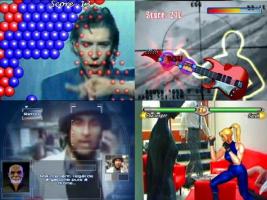
Dans cette ?uvre JoDi détourne et réinterprète les jeux vidéos grand publics utilisant la reconnaissance optique et les système de captation du mouvement, eux mêmes issus de travaux de recherche militaire des années 80. Le code des jeux vidéo est réécrit puis confronté à d`autres situations visuelles que celles prévues dans le scénario du jeu. En même temps qu`une réflexion sur les stratégies de contrôle et l`archaïsme du dispositif ludique proposé par l`industrie du jeu vidéo, JoDi met en réflexion le dispositif narratif du jeu vidéo et ses stratégies d`interaction. Le jeu altéré est confronté à des extraits de film de cinéma, ou de reportage TV, produisant une nouvelle trame narrative et renversant le rapport d`interaction. Le joueur devient observateur du dispositif, le jeu vidéo se trouve alors confronté à un scénario complexe soulignant les limites du schéma d`interaction du jeu initial.
JODI est un collectif formé par deux artistes, Joan Heemskerk (Pays-Bas) et Dirk Paesmans (Belgique). Ils ont débuté avec de la photographie et la vidéo, et au milieu des années ?90, ils ont été les premiers à créer des oeuvres en ligne. Ils explorent et subvertissent les conventions de l?Internet, des logiciels informatiques et des jeux vidéos. Dans leurs travaux récents, ils ont modifié des jeux comme Wolfenstein 3D, Quake, Jet Set Willy, et Max Payne 2. Ils désorganisent radicalement le langage même de ces systèmes, en incluant des interfaces, des commandes d?erreurs et des codes. JODI effectue des interventions numériques extrêmes qui déstabilisent la relation entre la technologie informatique et ses utilisateurs. JODI mène une réflexion critique sur nos perceptions et usages de l?informatique. Ils transforment et transportent à la surface les processus qui apparaissent habituellement dans le background, comme on peut le voir sur leur site, jodi.org : des crashes, les fichiers log-in, les certificats de sécurité de logiciels, le refus des services de garanties. Le travail de JODI a été présenté dans de nombreuses expositions internationales, et des festivals, comme la Documenta X. Ils ont reçu le Webby Award dans la catégorie art (UCSOB). JODI a été formé en 1994 par les deux artistes Joan Heemskerk et Dirk Paesmans. Joan Heemskerk est née en 1968 à Kaatsheue, aux Pays-Bas. Dirk Paesmans est né en 1965 à Bruxelles, en Belgique. Ils vivent et travaillent aux Pays-Bas. Heemskerk et Paesman ont tous les deux fréquenté le laboratoire d`art numériques CADRE, rattaché à l`université de San José de Californie, dans la Silicon Valley. Paesmans a également étudié sous la direction de Nam June Paik à la Kunstakademie de Dusseldorf. Le travail de JODI est réalisé spécifiquement pour être vu en ligne. Leur exposition inividuelle récente inclut INSTALL.EXE at Eyebeam, à New York, qui a été itinérante [plug-in], à Bâle, au BuroFriedrich, à Berlin; et Computing 101B au FACT Centre, Liverpool, Royaume-Uni. Leur travail a également été exposé, entre autre, au Centre for Contemporary Art, Glasgow; au Kunstverein à Bonn; au Stedelijk Museum d`Amsterdam; au Zentrum fur Kunst und Medientechnologie de Karlsruhe, en Allemagne, et à la Documenta X, de Kassel, en Allemagne.

Dirk Paes
GeoGoo 2010
Installation multimédia | | | 0:0 | Belgique, Pays-Bas | 2010
Dirk Paes, Joan HEEMSKERK, Dirk PAESMANS
Max Payne Cheats Only
Installation vidéo | dv | couleur | 0:0 | Belgique, France | 2006
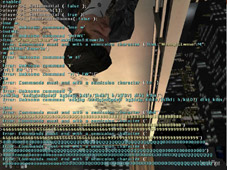
Pour cette pièce, JODI a opéré des modifications sur le jeu vidéo "Max Payne", jeu ultra violent dans lequel le personnage doit tuer un grand nombre de malfrats sur sa route. JODI a compilé à partir du jeu toute une série de cheats (truquages, tromperies). Ces trucages sont des altérations du comportement d`un jeu vidéo. Ils sont souvent construits dès l`origine par les programmateurs eux-mêmes, pour aider les joueurs qui se trouvent dans une impasse. JODI est intervenu dans la structure du programme de manière telle que des perspectives absurdes et certains effets altèrent le graphisme réaliste du jeu : nous voyons le héros massif répéter des mouvements idiots. Il plonge par exemple sa tête angulaire dans une matrice virtuelle, son corps apparaît semi-transparent... Ce retraitement peut être lu comme une interprétation libre de l`effet temporel d`ultra rapidité qui distingue Max Payne des autres jeux, les mouvements lents permettant une nouvelle perception de l`espace et du temps.
JODI est composé de deux artistes net art renommés. JODI est pionnier dans le net art, depuis le milieu des années 90. Basé aux Pays-Bas, JODI fait partie des premiers artistes qui ont exploré et subverti les conventions de l`Internet, des programmes d`ordinateurs, et des jeux vidéos et informatiques. Ils désorganisent radicalement le langage même de ces systèmes, en incluant des interfaces, des commandes d`erreurs et des codes. JODI effectue des interventions numériques extrêmes qui déstabilisent la relation entre la technologie informatique et ses utilisateurs. JODI mène une réflexion critique sur nos perceptions et usages de l`informatique. Ils transforment et transportent à la surface les processus qui apparaissent habituellement dans le background, comme on peut le voir sur leur site, jodi.org : des crashes, les fichiers log-in, les certificats de sécurité de logiciels, le refus des services de garanties. JODI a exposé et a réalisé des conférences partout dans le monde.
Dirk Paes
44 Shorts
VR vidéo 360 | hdv | | 10:0 | Belgique, Pays-Bas | 2019
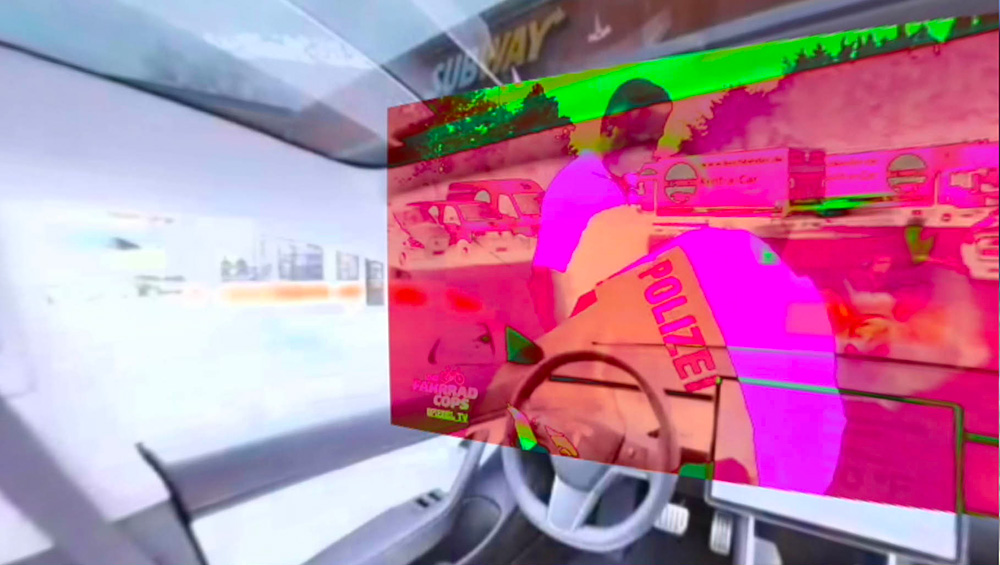
Made of 360 fragments of found footage 360° videos, “- f(OO)f -” explores and recycles sequences recorded from cars, planes, video games, reports and home videos. Images are intertwined, intricated and edited, questionning both spaces of perception and representation, building a radical criticism of our contemporary visual culture.
Dirk Paes was born in Brussels, he lives and works in the Netherlands. He is one of the members of the JODI duo, who pioneered web-based art in the mid-90s. For a few years now, in parallel to their collective work, each of them is developing specific artistic researches on their own. Jodi’s work is featured in most art historical volumes about digital art, media art, and net art, and has been exhibited widely at venues such as documenta X, Kassel; Stedelijk Museum, Amsterdam; ZKM, Center for Art and Media, Karlsruhe; Bonner Kunstverein and Artothek, Bonn; InterCommunication Center, Tokyo; Centre Pompidou, Paris; Center for Contemporary Arts, Glasgow; Guggenheim Museum, New York; MoMA, New York; Eyebeam, New York; and Museum of the Moving Image, New York, among many others. Jodi is regularly seen as part of an international group of artists, including Vuk Cosic, Alexei Shulgin, and Olia Lialina, who pioneered art on the web, usually referred to as net.art. In contrast to working in the institutionalized art world, they chose to work on the net because it gave freedom. The internet was a free space to experiment and communicate. This network of artists influenced each other and communicated using mailing lists such as Rhizome and Nettime (which was founded by Dutch media theorist Geert Lovink). After they met at the Jan van Eyck Academy in Maastricht, where they studied photography and video, they moved to Silicon Valley (San Jose, California) to learn about digital media. It was in Silicon Valley that they became familiar with the internet. Since 1995 they have been working together as Jodi, creating art on the World Wide Web. Although they are most famous for their web-based work, they also work in a wide variety of media and techniques like software, performances, installations, and exhibitions. JODI were among the first artists to investigate and subvert conventions of the Internet, computer programs, and video and computer games. Radically disrupting the very language of these systems, including interfaces, commands, errors and code, JODI stages extreme digital interventions that destabilize the relationship between computer technology and its users. They received a 1999 Webby Award in the category Net Art. In 2014, Jodi was awarded the inaugural Prix Net Art Award by Rhizome, a leading art organization dedicated to born-digital art and culture affiliated with the New Museum in New York. The influence of the work can not only be seen in the art world, but in internet culture too: the work is spoken about on forums of hacker sites and on YouTube many videos can be found reviewing, explaining, and researching wwwwwwwww.jodi.org with titles such as “weirdest website of all time” and “wwwwwwwww.jodi.org: secrets?”.
Simon(e) Jaikiriuma Paetau, Nadia Granados
Mojana
Vidéo | mov | couleur | 18:9 | Allemagne, Colombie | 2021
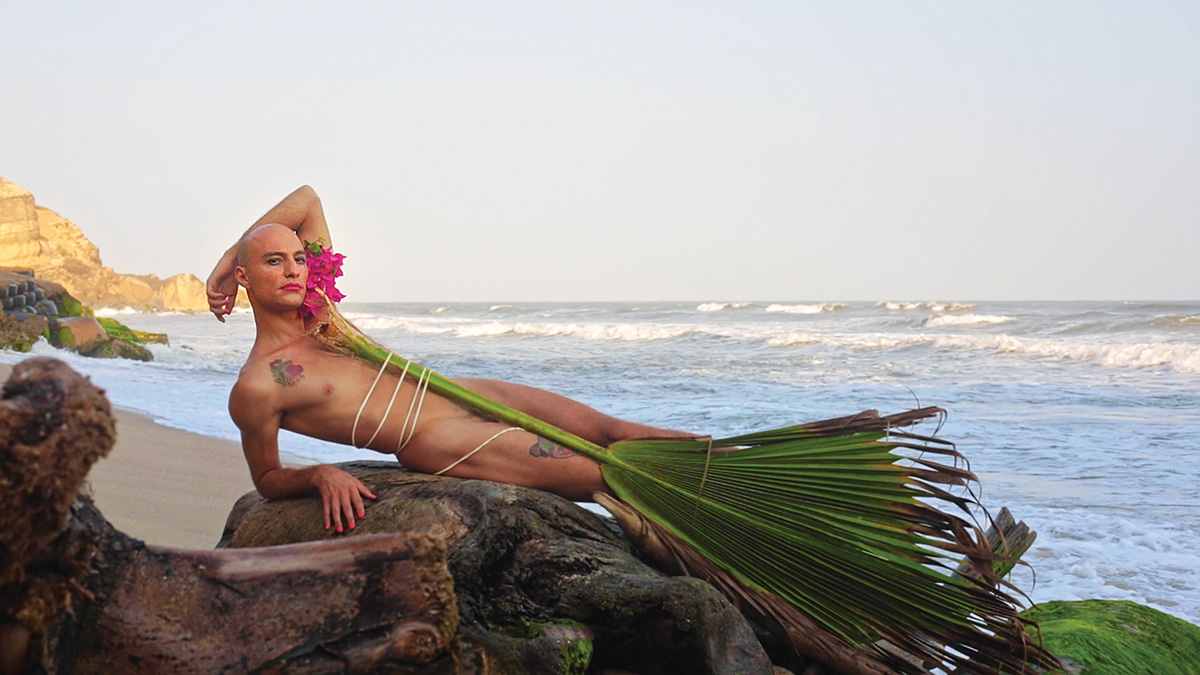
"Mojana" is an associative re-imagining of a Colombian myth and traditional song. A mermaid-monster, who is desired and punished: the man-eating, seductive Mojana. Agressions against this free and rare spirit are justified by obsessive love and desire. The film denounces the naturalized violence against this mythical female creature and reappropiates her as a symbol of trans-feminine resilience. Kinematic bodies and animal-human hybrids. An absent body, which returns into representation. A history of dissident bodies who resist dying in a necropolitical system.
Simon(e) Jaikiriuma Paetau is a German-Colombian artist. Their artistic projects are located between film and performance, dealing with queer cultures and decoloniality. Simon(e) studied Media Art at the KHM Cologne and Film at the EICTV Cuba. Simon(e)’s films have premiered at Documenta14, Cannes Directors Fortnight, MoMA, Rotterdam and has been awarded the prize for Best Director at the International Cartagena Film Festival Colombia and won the first prize (MuVi Award) at kurzfilmtage Oberhausen, among others. Simon(e)’s performance works have premiered at Studio ? of Maxim Gorki Theater, Ballhaus Naunynstrasse, Hebbel am Ufer, as well as the 11th Berlin Biennale. Nadia Granados Using my body in combination with multi-media technologies, my artistic practice illuminates the relationships between the representation of state violence in mainstream media, institutionalized machismo, heterosexual pornography, and violence against women. My work is both performative and technological, both art and activism, and a mix of cabaret, public intervention, and video transmission. Five years ago I created La Fulminante, a character who invites her audience into the world of auto-representation and meta-pornography, using internet information strategies to condemn globalized society. La Fulminante dismantles the language used in the discourse of emancipation by bringing together in her body eroticism and social criticism. La Fulminante is a character inspired by sexually provocative stereotypes of Latin American women. She embodies erotic fantasies built by the mass media, using reggaeton and pornography. She uses her body as a tool to disseminate information, as an element of attraction to make visible alternative political strategies, a resistance against mass media and a struggle against imperialism. In 2015, I was awarded the 3rd Visual Arts Biennial Bogotá Prize Acquisition Award as well as a FONCA scholarship to create a political multimedia cabaret laboratory in Mexico. In 2013 I was selected for a Franklin Furnace Fund Award for the performance Your Car Is Clean, Your Conscience is Dirty, which I performed in New York City 2015. In 2013, I participated as an invited performer at the Hemispheric Institute’s annual meeting in Sao Paulo, and in 2012 I was invited to Canada for La Rencontre Internationale D’art Performance De Québec (RIAP), taking place throughout four cities in Canada. Additionally, my work has been presented in Canada?, Venezuela, Spain, Argentina, Chile, Costa Rica, Germany, Ecuador, Argentina, Peru?, the United States, Mexico, Korea, Brazil, Nicaragua, Guatemala, Estonia, Italy, France, and Colombia.

Simon(e) Jaikiriuma Paetau, Laura Ruiz Paetau
Las Hermosas Invisibles
Doc. expérimental | hdv | couleur | 9:5 | Allemagne | 2024
The video performance Las Hermosas Invisibles proposes a post-mortem connection between Simon(e) Jaikiriuma Paetau and her/their recently deceased trans sister, Aérea Negrot. For many years, Aérea had been collaborating with Simon(e)’s artistic works with versatile sound creations. In Las Hermosas Invisibles, Simon(e) gathers and assembles all of these sounds present in previous collaborations, and responds to them in a new video-performance piece shot in the territory of the tum xula7xw of the sn??ay?ckstx people. The performance invokes Aérea’s spirit, memories, and the impact she had on Simon(e)’s life and work. Aérea’s artistic and emotional legacy continues to exist and communicate with Simon(e) through sound, music, and memory. The title ‘Las Hermosas Invisibles,’ directly references the term “hermosos invisibles” (beautiful invisibles) coined by Wayuu poet Vito Apüshana. This term represents the human and non-human entities that make up the living and thinking territory of the Wayuu people, with whom Simon(e) became acquainted through their collaboration with Wayuu artist Elizabeth Pirela. While the piece is dedicated to the memory of Aérea Negrot, it also encompasses a broader exploration of the legacy of other trans-ancestors spanning from Tibira do Maranhão to Sylvia Rivera.
Simon(e) Jaikiriuma Paetau is a German-Colombian interdisciplinary artist whose work spans video art, installations, experimental cinema, and performance, with a focus on decolonial themes and queer cultures. In recent years, Simon(e) has focused on inventing myths and utopias inspired by rural and urban cultures in Latin America, challenging hegemonic discourses. In this way, they have created interdisciplinary works and collaborations with racialized artists and historically marginalized communities, especially Emberá & Wayúu, non-binary sexual dissident bodies (including themselves), and rebellious LatinX trans women. Simon(e) studied Media Art at KHM Cologne and Film at EICTV Cuba. Their films and videos have premiered and won awards at prestigious festivals and exhibitions like documenta14, Cannes Directors Fortnight, New Directors/New Films MoMa & Lincoln Center, Berlin Biennale 11, BFI London, and the New York Film Festival. Notable awards and recognitions include the Emerging Talent Award at International Short Film Festival Oberhausen 2022, the Norman Award at Stuttgarter Filmwinter 2023, the Best Director Award at the Cartagena de Indias International Film Festival Colombia (FICCI) 2018, and a nomination for the Queer Palm at Cannes Directors’ Fortnight 2022. Simon(e) has presented their performances and video installations at renowned venues such as the Wexner Center of the Arts, HKW, Martin Gropius Bau, Kasseler Kunstverein, nGbK, Ballhaus Naunynstraße, Shedhalle Zurich, HAU, the Sharjah Art Foundation, and the Cinemateca de Bogotá. In 2023, Simon(e) held their first solo exhibition at the IBB Video Space of the Berlinische Galerie—Museum of Modern Art. The National Museum of Colombia recently acquired several of their works for its permanent collection. Since 2024, Simon(e) is co-founder and artistic director of the transnational German-Colombian experimental artistic laboratory, Atelier Lapaetau.

Daniela Paglione
Sinking Line
Film expérimental | hdv | noir et blanc | 6:30 | Canada, Royaume-Uni | 2024
Un fils revisite son vieux foyer, un endroit qu'il a connu autrefois, à la recherche d'un homard. Une exploration de la complexité de la masculinité et une lettre à mon père.
Née à Montréal, au Québec, Daniela Paglione est une artiste expérimentale et une étudiante de premier cycle en communication à l'Université Concordia. Elle a été captivée par la réalisation de films dès son plus jeune âge et a poursuivi cette passion dans le cadre de ses études. Ses films « The Earth was Formless and Void » et « Where Old Voices Go » ont été présentés dans le cadre du Vernissage 2023 du cinéma et des médias de Concordia (Montréal, Québec). Son nouveau film, Sinking Line, a récemment été projeté au Moving Images Alliance Collective, ainsi que dans le cadre de la 33e édition de Vidéo de Femmes dans le parc à Montréal. Elle travaille actuellement au Groupe Intervention Vidéo (GIV), un centre de distribution géré par des artistes qui se consacre à la promotion d'œuvres réalisées par des femmes. Daniela crée des courts métrages de manière indépendante depuis 2019. Son travail est expérimental et se concentre sur les thèmes du soi, de la mort et de l'inconscient.

Jongkwan Paik
La Noche Cíclica (Cyclical Night)
Doc. expérimental | hdv | couleur et n&b | 17:0 | Coree du Sud | 2016
The time is out of joint. The ghost appears again in the dark of the night. “ The chain of memorial light is not absolutely broken, it is rather knotted in a different way ”
Born in 1982, South Korea. Studied Psychology and Electronics in college and received MFA in Film from the Graduate School of Communication and Arts at Yonsei University. Jongkwan continues to produce experimental films based on research with in-depth study of images.
Baden Pailthorpe
Formation V
Création numérique | hdv | couleur | 20:39 | Australie | 2012
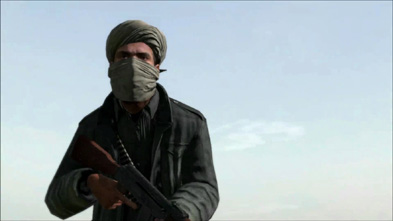
Made using an Afghanistan-based war simulator, Baden Pailthorpe?s Formation V explores the aesthetics and dynamics of military movement. In the work, two opposing forces of US soldiers and Taliban combatants follow invisible way-points side-by-side. Oblivious to each other?s presence thanks to a hacked game setting, the usual violence of this relationship is transformed into a poetic rhythm that repeats and amplifies the avatars? movement.
Baden Pailthorpe (b. 1984) is an Australian media artist, writer and curator. His work engages with the political and conceptual potential of technologies and cultural content. His recent international exhibitions have been focused on the politics and aesthetics of military technologies, including simulators, cinema and video games. Baden Pailthorpe is currently undertaking a Ph.D in New Media Aesthetics at UNSW, Sydney. He holds a MFA from l`Université Paris VIII and a MA from the College of Fine Arts, UNSW. His work is held in private and public collections. Some recent solo and group exhibitions include Gap Year: New Sydney Art, ARTSPACE, Sydney; Formations, Martin Browne Contemporary, Sydney; Yes, We`re Open, The Netherlands Media Art Institute (NIMk), Amsterdam; FILE 2012, Sao Paulo, Brazil; Game Change, Telfair Museum of Art, Savannah, USA; Lingua Franca, Firstdraft Gallery, Sydney & Monobandes II, Les Territoires, Montréal, Canada. Baden Pailthorpe is currently curating an ambitious exhibition in partnership with Screen Space, Melbourne, around the theme of military vision to be held in April 2013.

María Palacios Cruz
Argos
0 | 0 | | 0:0 | Belgique | 2007
Argos est un centre pour l?art et les media basé à Bruxelles fondé en 1989. Au fil des ans, l?organisation s?est développée, au départ elle distribuait des vidéos et des films d?artistes puis elle s?est transformée en centre artistique avec des fonctions plus variées comme l?organisation d?expositions, de projections et d?événements, la production, le conservation et la préservation, la publication et le développement d?une médiathèque publique. En tant que centre interdisciplinaire pour l?art et les media audiovisuels, le but d?Argos est de créer une plateforme de production, de présentation, de distribution et de préservation de l?art audiovisuel et de l?art visuel contemporain belge et international, et de façon plus générale, toutes les formes d?expression artistiques qui ont un lien avec les media audiovisuels. Dans un paysage socioculturel qui évolue rapidement, Argos veut suivre les développements caractéristiques de l?art visuel et de l?art audiovisuel ? et de la culture visuelle et médiatique en tant que phénomène social dans son ensemble ? de manière critique, fournissant ainsi au public un cadre de référence et d?interprétation.
Argos est un centre pour l?art et les media basé à Bruxelles fondé en 1989. Au fil des ans, l?organisation s?est développée, au départ elle distribuait des vidéos et des films d?artistes puis elle s?est transformée en centre artistique avec des fonctions plus variées comme l?organisation d?expositions, de projections et d?événements, la production, le conservation et la préservation, la publication et le développement d?une médiathèque publique. En tant que centre interdisciplinaire pour l?art et les media audiovisuels, le but d?Argos est de créer une plateforme de production, de présentation, de distribution et de préservation de l?art audiovisuel et de l?art visuel contemporain belge et international, et de façon plus générale, toutes les formes d?expression artistiques qui ont un lien avec les media audiovisuels. Dans un paysage socioculturel qui évolue rapidement, Argos veut suivre les développements caractéristiques de l?art visuel et de l?art audiovisuel ? et de la culture visuelle et médiatique en tant que phénomène social dans son ensemble ? de manière critique, fournissant ainsi au public un cadre de référence et d?interprétation.
Jean Jacques Palix
CE DISQUE EST LE MEME QUE L'AUTRE
Vidéo | dv | couleur | 9:0 | France | 2009
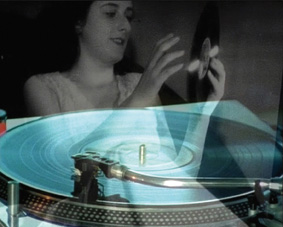
Film multi-écrans de 9 minutes utilisant des rushes de longs métrages représentant des tourne-disques ou des personnes manipulant des disques. La bande sonore est constituée du mixage naturel des sons originaux de ces rushes.
Compositeur et arrangeur de musiques de films et de chorégraphies, scénographe sonore pour des installations, collecteur et archiviste de musiques rares, chasseur de sons, Jean Jacques Palix est toujours attentif aux expérimentations. À la suite de ses années de productions et de réalisations de programmes radiophoniques à Radio France puis à Radio Nova dont il fut un des fondateurs en 81, il crée Tapage Atypique, puis, en 1991, le label de disques Song Active, pour répondre à son désir d`un studio ouvert aux rencontres artistiques, musicales et sonores. Il compose les musiques pour de nombreuses chorégraphies ainsi que des films d`artistes et documentaires parmi lesquels, récemment, "A l?infirmerie" de Fleur Albert, "Ode pavillonaire" de Frédéric Ramade.... En 2002, il réalise le film "Conférence sur rien" autour d`une lecture d`Eve Couturier, d`après "Lecture on nothing" de John Cage. En 2007, il crée 16`33", 33 hommages de 30" à 33 compositeurs et expose cette pièce à la galerie IN SITU / Fabienne Leclerc à Paris. En 2009, il réalise le film "Ce disque est le même que l`autre" pour une exposition personnelle ?Staccato? à la galerie Michel Journiac à Paris. Il est commissaire de l`exposition "Cornelius Cardew et la liberté de l`écoute" au CAC de Brétigny sur Orge.
Ursula Palla
Flowers IV
Vidéo expérimentale | dv | couleur | 7:0 | Suisse, Pays-Bas | 2004
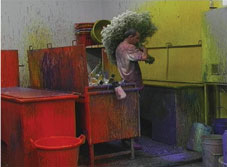
Flowers IV, un travail vidéo appartenant à la série flowers (I ? XVII), est né en Hollande sur la place de la criée aux fleurs d?Aalsmeer. On y montre des ouvriers en train de colorer les fleurs et les plantes. Les fleurs blanches, de préférence les oeillets, les asters, les roses, les tulipes et les gypsophiles, sont plongés manuellement dans des bains de couleur, puis séchés et emballés. A partir de quatre heures du matin, des ouvriers et des ouvrières, clandestins pour la plupart, s'occupent de combler les souhaits en matière de couleur d'une clientèle difficile. Les fleurs dont la couleur est à la mode sont de cette façon livrées plus exactement et plus rapidement, et peuvent être adaptées plus efficacement aux changements de saisons alors que les cultiver demande du temps. La vidéo accompagne les coloristes et offre un bref aperçu de leur quotidien dans lequel le parfum des fleurs se mélange à l'odeur des couleurs synthétiques alors qu'en arrière-plan on entend une station FM vanter les mérites de l'authenticité. (son original de l'atelier de colorisation) Les murs couverts des traces d'un dur travail mettent en évidence les rapports entre les envie de décoration et les abus économico-éthiques. Les fleurs, le symbole de la beauté naturelle, deviennent une métaphore de l'artificiel. Ce qui est précieux se transforme en marchandise et en déchets. Une vidéo qui évoque et mélange les niveaux les plus différents. Ce travail fait à la main, dans notre monde électrodigital, où tout semble possible, et où on peut d'un seul clic modifier une couleur, nous donne une impression particulière et rappeller des temps que l'on croyait depuis longtemps révolus. De plus, la vidéo présente à un autre niveau une histoire esthétique de la peinture, de la joie sensuelle née du plaisir des couleurs en continuité avec la performance de Jackson Pollock ?Action Painting?, au pays des fleurs. Les situations fragiles, la multiplication des différentes façons de voir et les réalités sont ainsi rendues visibles.
Ursula Palla de Suisse et Haut- Adige/Italie, née en 1961 à Chur/ Suisse vit et travaille à Zurich/Suisse Etudes et projets: 1989 ? 1992 F+F Zürich, Ecole d'art et de Design des Médias Depuis 1992 travaille en indépendance dans l'Art des Médias, 1992 ? 1999 Professeur de Vidéo à F+F Zurich, 1994 - 2002 Membre du groupe de performance média cpx Zurich, depuis 1998 travaille avec différents artistes; Doris Schmid; Walter Pfeiffer, Franz Gratwohl, Victorine Müller, Fabrice Gygi, montage sonore? Projet Pro Helvetia, Ventura Dance Comp., etc web-works - www.on-out.info, net-work 2004 - MES, www.mars-patent.org, Hambourg 2004 ? Oktober 2005 Festivals vidéos sélection: - Viper, Luzerne / CH (Suisse) 1996 - San Francisco / USA 1997 - Centre Culturel Suisse, Paris 1998 - experiMental Zurich / CH 2000 -Festival vidéo, Guadaljaro, Mexico 2000 - Festival vidéo Reithalle Berne / CH 2003 - Viper Kunsthalle Bâle / CH 2006 - Balkan TV Zurich / CH 2006 Bourses et prix: -Bourse 1997 et 1999 canton AR/ CH -Bourse 2000 canton GR/ CH -Bourse canton de Zurich / CH 2004 -Bourse Art in Residence die Höge / ALL (Juin - Août 2001) -Bourse Stiftung Binz 2002 ? 2004 Zürich / CH récompenses: -CynetART Award 2004 Dresde/ ALL pour flowers I Travail permanent en lieu public: Reconversion d'appartement ABZ Jasminweg Zurich / CH 2003 Collections publiques: - Kunsthaus Zurich/CH - Stadt Zurich / CH - Zentrum für neue Medien Karlsruhe / ALL- Seedammkulturzentrum Pfäffikon / CH - ArtEastFoundation Tirgu Mures / ROU
Manuel Palma
Noche día
Vidéo | hdv | couleur | 11:25 | Espagne | 2015
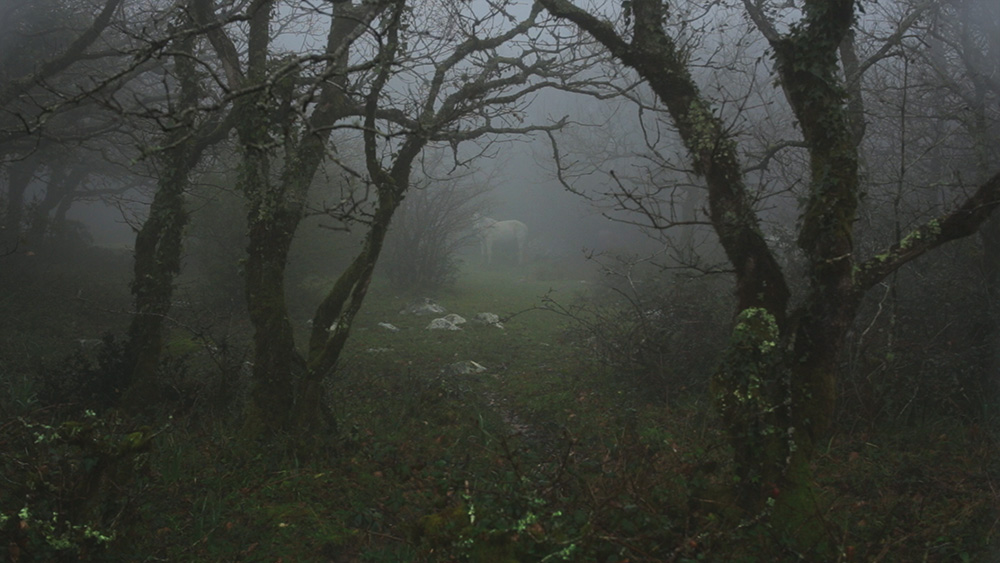
A path and someone walking. We observe several atmospheric phenomena such as: the thick haze of mist gradually reveals the way, various intensities of rain falling waved by wind gusts. We move between a haunting and strange serenity which is interrupted by sounds of creatures who live in this place. A way of looking that is used to link space and thought. We move at same time as the landscape with a movement of camera that slides between the natural rhythms of the forest.
Manuel Palma was born in Cadiz in 1986. His audiovisual work has been seen in centers and festivals such as V Festival de MARGENES "Film Letters" in Madrid, ZINEBI57 "Zinergentziak15" in Bilbao, FIVA International Video Art Festival in Buenos Aires, "Music and Visual Arts Sens meeting" in Rambleta, Valencia, CINEMISITICA "Art Cinematheque Cinemistica 7" in Granada, "XXIV Muestra Abierta de videoartistas 18D" in Neomudejar, Madrid. He studied Fine Arts in Sevilla and Valencia were he was strongly influenced by classical painting and drawing. He combined his knowledge in drawing and painting with video and sound art education. Manuel Palma complete his audiovisual education with the exchange program at Lietuvas Dailes Akademija in Lithuania, ECAM: Film School in Madrid and VideoLab Master in Madrid. He has developed courses and workshops with artists and filmmakers like James Benning, Lois Patio, Victor Erice, Mercedes Alvarez. Currently he resides in Madrid.
Riley Pam-grant, Abi Meekel, Claire Meekel
Tomato Sauce Takeaway
Film expérimental | hdv | couleur | 4:13 | Afrique du sud, 0 | 2018
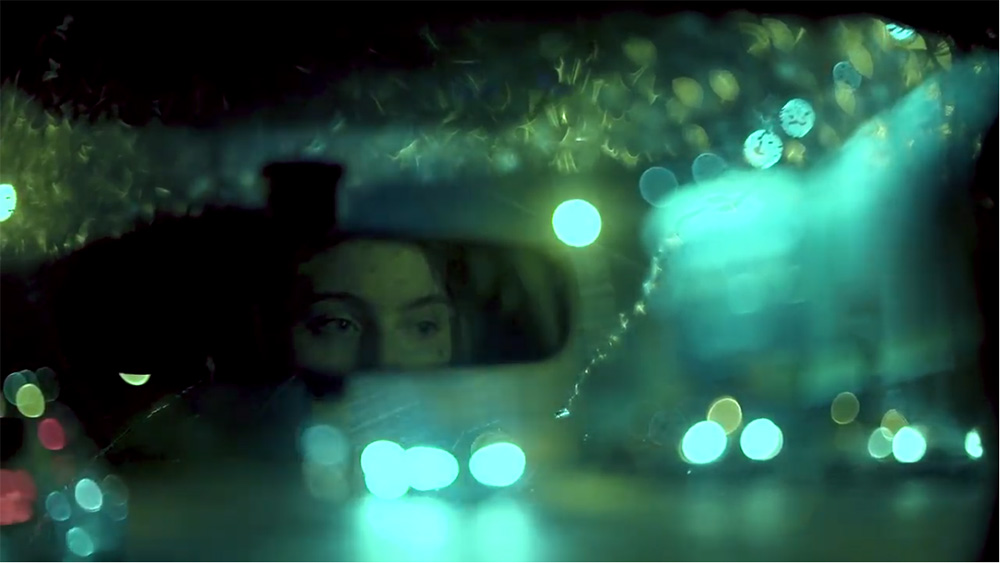
Tomato Sauce Takeaway is a four minute short film, shot in Johannesburg, South Africa. The film documents the final evening routines of a few urban life forms in Johannesburg city. It does so in a way that is observational, introspective and personal given our own relations to space, routines and urban loneliness. The mundanity of these acts highlights an absurdity in the city life routines we take for granted. The people and the city itself become characters in a narrative of the last things we do before retreating to residential respite.
Terrace House is a Johannesburg based artist collaboration between Abi Meekel, Riley Pam-Grant and Claire Meekel that began in early 2017 with an immersive video and sound installation titled "The Blue Exhibition". They predominantly but not exclusively work in video, light and sound installations. Since the collaboration's inception, Terrace House has exhibited "The Blue Exhibition" twice in Johannesburg, with the first iteration at a trendsetting club and exhibition space called Glory, and then again at the Fak'ugesi African Innovation Festival. In January 2018, Terrace House exhibited "The Blue Exhibition" in a solo show at Gallery MOMO Cape Town. Their most recent video and sound installation titled "Monument" was also shown at Gallery MOMO Cape Town in July 2018 as part of the gallery's forth annual video exhibition, Transmissions, and again in Johannesburg where they were invited to show "Monument" in launching the 99 Juta design showrooms space situated in Braamfontein, which is the cultural melting pot of Johannesburg. The short film, Tomato Sauce Takeaway, was filmed in 2018 and has not been screened as of yet.
Stefan Panhans, Andrea Winkler
Anima Overdrive
Vidéo expérimentale | hdv | couleur | 4:19 | Suisse, Allemagne | 2023
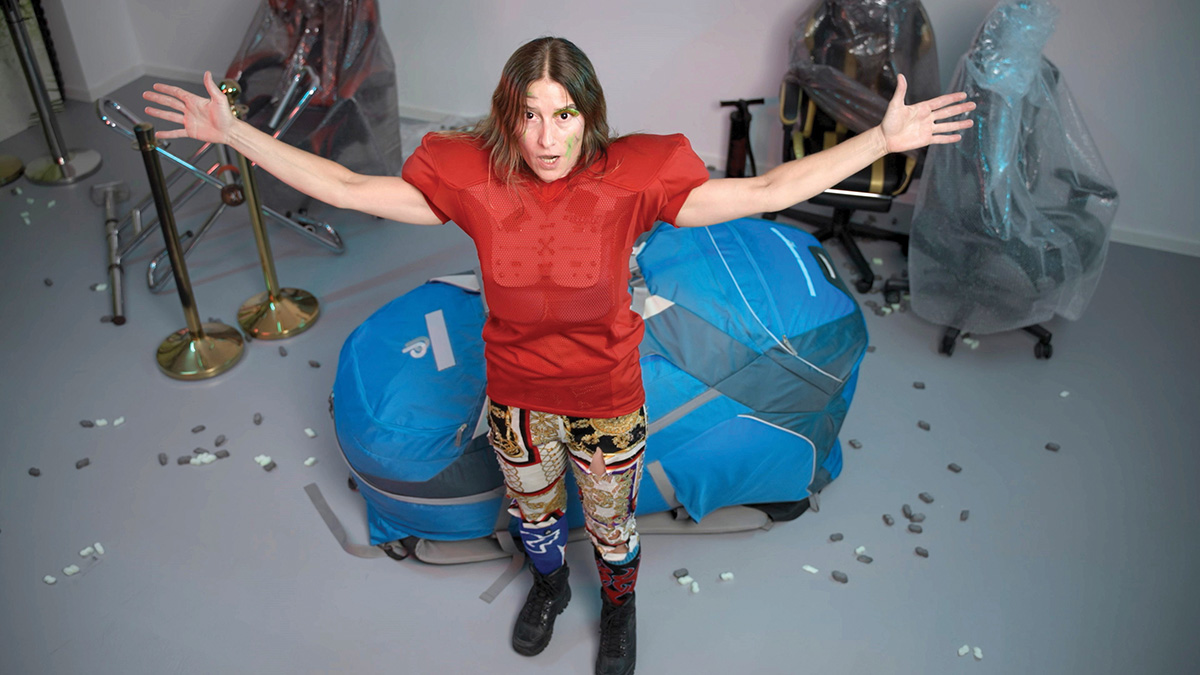
I deliver everything! raps the 'delivery-anti-heroine' and 'delivers' the sound of a rebellious exhaustion in a world increasingly defined by algorithms and AI where everything seems to become a commodity and we all breathless suppliers
Stefan Panhans & Andrea Winkler are artists and filmmakers collaborating on films and video installations that are shown internationally at film and media festivals and in numerous solo and group exhibitions.
Tassos Papatsoris
Vanitas
Animation | dv | noir et blanc | 4:0 | Grèce, Royaume-Uni | 2004
"Vanitas" est un film d'animation avec une peronnage très expérimental. C'est un effort pour créer une contradiction entre le style du 2D, l'animation traditionnelle (noir et blanc) et une histoire,caractérisée par un concept choquant et inhabituel pour un tel type d'oeuvre. La représentation explicite et détaillée d'un acte très choquant (comme l'est le suicide) en utilisant le dessin animé et des personnages comiques, crée au final une oeuvre étrange et dure qui choque le public. Le projet souligne le fait que la vie éternelle prometteuse après la mort n'existe peut-être pas, et que les théories religieuses soutenant ce concept sont aussi irréelles que le sont les dessins animés.
ETUDES 1996-2002 : Ecole des Beaux-Arts d'Athènes - Licence des Beaux-Arts (Peinture) 2004-2005 : University of West England - Maîtrise d'Animation. EXPERIENCES 1996-2000 : Dessin d'après modèle à la N.Stefos foundation art school (17 Kallifrona Street, 11256 Athènes) 1997-2002 : Dessin d'après modèle à la D.Giotakis foundation art school (8 S.Merkouri Street, 11632 Athènes)
Guillaume Paris
Bad Anima
Animation | hdv | couleur | 2:50 | France | 2012