Catalogue > Faire une recherche
Résultats pour : Tout le catalogue
Barbara Noiret
Verrière
Vidéo expérimentale | dv | couleur | 2:32 | France | 2006
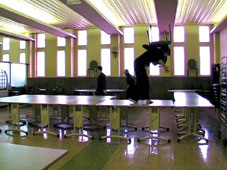
Cette vidéo résulte d?une performance réalisée pendant le déjeuner des patients et des soignants au restaurant de Institut Marcel Rivière, hôpital psychiatrique de la Verrière. Elle a été réalisée en collaboration avec Régis Bouchet-Merelli et Dominique Larcher, de la compagnie de danse contemporaine K-Denza. La performance a duré 25 min, seules 2?32?? ont été retenues pour créer cette vidéo, basée sur les mouvements des corps en lien avec l?architecture. La vidéo de cette performance est rythmée par le bruit ambiant du repas (assiettes, couverts, discussions?). Cette performance a été conçue en relation avec le contexte historique et architectural du restaurant : la salle dans laquelle se déroule la performance était réservée au repas des soignants dans les années 60. Cette pièce carrée est séparée par de grandes baies vitrées d?une autre salle de plus grande dimension, où déjeunaient les patients. A l?époque, ces baies vitrées servaient pour l?observation et le diagnostic des patients pendant le déjeuner. Aujourd?hui ces pratiques ne sont plus exercées, mais les soignants déjeunent dans cette même salle et les patients dans l?autre salle. La performance avait pour but que tous déjeunent dans le même espace, que l?espace à la fois ouvert et fermé par les verrières devienne un espace de performance, où les objets perdent leur fonction : Les tables sont assemblées - désassemblées, pour former un « plateau de danse », les chaises ne servent plus à s?assoire. Une tentative de perturber l?espace du repas, les habitudes de chacun, en créant une architecture mentale.
Je suis née en 1976, je vis et travaille à Paris. La galerie Frédéric Giroux représente mon travail depuis 2004. J?y ai réalisé une exposition personnelle en mai 2005 et la galerie m?a fait participer à plusieurs expositions collectives et foires d?art contemporain : Artissima, Turin ; FIAC 2004, 2005 et 2006 Paris. J?ai réalisée des projets d?exposition et de résidences dans deux centres d?art contemporain : Le Domaine départemental de Chamarande m?a invité en 2005 à réaliser un travail photographique et vidéo autour de la mémoire du château du domaine. Quelques oeuvres ont été montrées dans le cadre des journées du patrimoine, en septembre 2005 et seront exposées dans l? exposition « L?esprit des lieux » du 25 novembre 2006 au 5 février 2007. Le Domaine de Kerguéhennec, Bignan, m?a permis de présenté à l?issue de ma résidence de 3 mois un projet personnel, l?espace de l?image, dans les étages délaissés du château (en 2000). Le Fonds National d?art contemporain a fait l?acquisition de deux photographies réalisées au Domaine de Chamarande en 2006. J?ai déjà exposé en Allemagne, à Brême, à l?école d?art et de Musique (Hochschule für Künste Bremen). L?école m?avait conviée à participer à la présentation des ?uvres des étudiants de l?école, Hochschultage. J?y ai réalisée une installation vidéo in situ spécialement conçue pour l?occasion. Concernant d?autres interventions, L?Institut Marcel Rivière, hôpital psychiatrique situé à la Verrière (78), met actuellement à ma disposition un pavillon en friche depuis 2 ans. Mon projet consiste à travailler dans les différents espaces de l?hôpital et en relation avec les patients et soignants. Dans le cadre de ce projet, j?ai obtenu en 2005 l?aide individuelle à la création de la DRAC Ile-de-France et l?allocation d?installation (aide matérielle). J?ai effectué une courte résidence à La Casa de Vélasquez, Madrid, dans le cadre du projet de mise en scène Sin Escenario1 Identité et Image de David Ferré. Je suis intervenue en tant que scénariste photographe du projet (en 2001).
Simon Norfolk, Tate Films
Burke + Norfolk: Photographs From The War In Afghanistan
Documentaire | hdv | couleur | 17:12 | Royaume-Uni | 2011
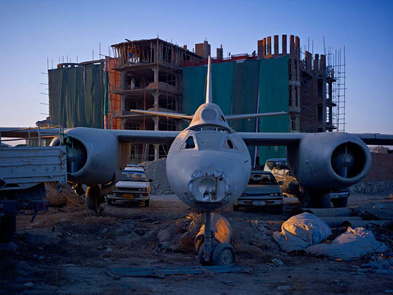
In October 2010, Simon Norfolk began a series of new photographs in Afghanistan, which takes its cue from the work of nineteenth-century British photographer John Burke. Norfolk?s photographs reimagine or respond to Burke?s Afghan war scenes in the context of the contemporary conflict. Conceived as a collaborative project with Burke across time, this new body of work is presented alongside Burke?s original portfolios. The exhibition takes place in conjunction with an earlier complementary exhibition in March 2011 at the Queen?s Palace in the Baghe Babur garden in Kabul, supported by The World Collections Programme and the Aga Khan Trust for Culture, which resulted from a series of workshops with Afghan photographers, featuring work by Fardin Waezi and Burke alongside Norfolk?s own work.
Simon Norfolk was born in Lagos, Nigeria, in 1963 and educated in England, finishing at Oxford and Bristol Universities with a degree in philosophy and sociology. After leaving a documentary photography course in Newport, South Wales, Norfolk worked for far-left publications specializing in work on anti-racist activities and fascist groups, in particular the British National Party. In 1994 he gave up photojournalism in favor of landscape photography. His book For Most of It I Have No Words: Genocide, Landscape, Memory, about the places that have witnessed genocide, was published in 1998. The work was exhibited at many venues, including the Imperial War Museum in London, the Nederlands Foto Instituut, and the Holocaust Museum in Houston, Texas. Photographs of the war in Afghanistan in 2001, published as Afghanistan: Chronotopia, won the European Publishers` Award for Photography and an award from the Foreign Press Club of America and was nominated for the Citibank Prize. In 2004, Norfolk won the Infinity Award from the International Center of Photography in New York and in 2005 Le Prix Dialogue in Arles. His most recent book, Bleed, about the aftermath of war in Bosnia, was published in 2005. His work appears regularly in the New York Times Magazine and the Guardian Weekend.
Kristina Norman
THIRST
Fiction expérimentale | 4k | couleur | 16:7 | Estonie | 2022
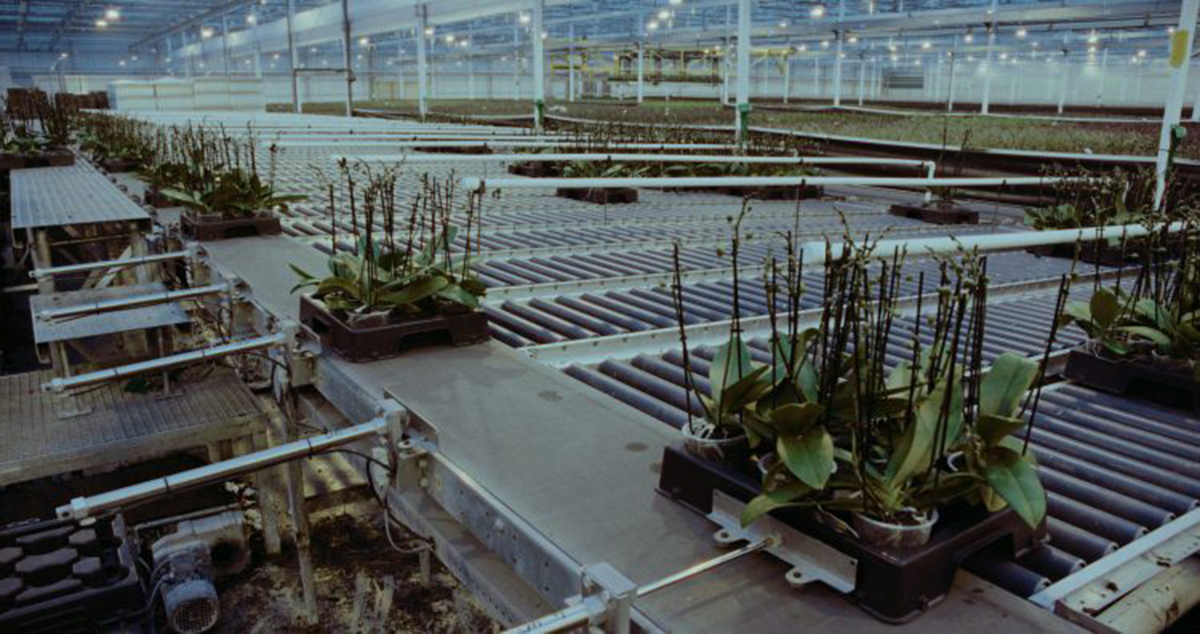
The film Thirst is a post-human choreography of machines and displaced plants. Millions of tons of Estonian peat end up in greenhouses in the Netherlands, where it is used as a soil substrate for tropical Phalaenopsis orchids. Meanwhile, local communities in Estonia are left with dry wells and a lack of drinking water as their fragile wetlands are drained for peat extraction. The orchids from the Netherlands then find their way back to supermarkets and homes in Estonia. It is a thirst for luxury and abundance that keeps the capitalist machinery running. Thirst is one episode from Kristina Norman’s Orchidelirium film trilogy. Commissioned for the Estonian Pavilion at the 59th International Art Exhibition – La Biennale di Venezia. Author and director: Kristina Norman Cinematographer: Erik Norkroos Composer: Märt-Matis Lill Choreographer and cast: Mari Mägi Produced by Rühm Pluss Null in collaboration with CCA Estonia
Kristina Norman (b.1979, lives and works in Tallinn) is an artist whose interdisciplinary work includes video installations, sculpture, and projects in the city space, as well as documentaries and performance. She is interested in the issues of collective memory, the memorial uses of the public space, but also the subtle sphere of the body politic that transgresses the boundaries between the public and the private. In 2009 she represented Estonia at the 53rd International Art Exhibition – La Biennale di Venezia, with a solo project; a multilayered mixed media installation entitled After-War. The project was a study of a conflict around the relocation of a Soviet monument in Tallinn. In 2022 at the 59th edition, the artist again represented Estonia with an ecocritical exhibition “Orchidelirium. An Appetite For Abundance”, a duo show with Bita Razavi, curated by Corina Apostol. Norman’s experimental film trilogy commissioned for the Estonian Pavilion, offers multiple ways to reflect on the legacies of colonialism from a specifically Eastern European perspective.
Jussie Nsana Banimba
Bimbambukila
Vidéo | hdv | couleur | 6:1 | Congo (Brazzaville) | 2012
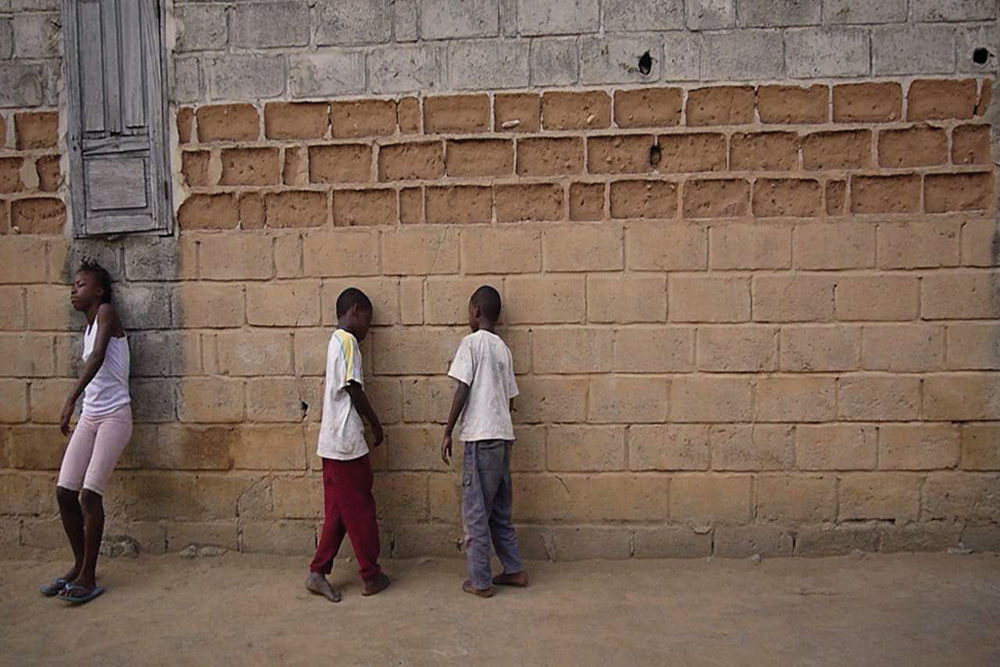
Réalisée lors des Ateliers Sahm (Rencontre Internationale d’Art Contemporain, qui se sont tenus du 15 novembre au 15 octobre 2012 à Brazzaville, « Bimbanbukila », première vidéo de Jussie Nsana pose le problème de mémoire. Cette première réalisation de l’artiste nous emmène au cœur de Brazzaville où l’artiste magnifie le mur sous toutes ses coutures. Des murs qui deviennent des espaces témoins, de ponts entre le passé et le présent.
Jussie Nsana Banimba est née à Brazzaville en 1984 et elle vit et travaille actuellement à Pointe-Noire. Elle est diplômée de l`École Nationale des Beaux Arts de Brazzaville, en arts plastiques. Elle se considère comme une artiste à part entière et crée des peintures, des bandes dessinées, et des vidéos. Jussie à participé octobre 2015 au Festival International de la Bande Dessiné d’Alger en Algérie. Elle a exposée ses œuvres en novembre 2015 à l`exposition «Soul Power» au Musée-Galerie du Bassin du Congo à Brazzaville, en 2014 à l`exposition "Butselé" au Centre Culturel Basango à Pointe-Noire; en 2013 à l`Institut Français du Congo (IFC) à Pointe-Noire; en 2012 et 2013et 2015 elle a participé à la 1ère, 2e et 4e édition de la "Rencontre d`Art contemporain de Brazzaville" aux Ateliers SAHM. Comme elle-même le dit, Jussie transporte dans son « sac à arts », ses passions les plus artistiques, la BD, la peinture et la vidéo. Engagée avec la jeunesse, Jussie, avec une générosité hors du commun, transmet son savoir-faire et son amour pour l’art aux enfants et aux jeunes dans son espace Nsana – Arts’ Butsilé.
Monika Nuber
Duette Chöre Formationen
Animation | 0 | couleur | 11:20 | Allemagne | 2005
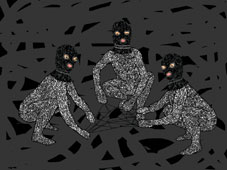
Duette Chöre Formationen Des formes masquées chantent un hymne, des personnages incertains célèbrent l'amitié, des filles chantent l'amour et le sexe, un chien à trois têtes et sa maîtresse font des rimes, un groupe de gamins entonne dans la forêt une mystérieuse mélodie et deux pendus s'apportent leur aide mutuelle pour présenter une chanson.
Monika Nuber vit et travaille comme artiste plasticienne et musicienne à Stuttgart. Elle a étudié à l'Académie des Arts de Stuttgart avec Joseph Kosuth et Joan Jonas, et à l'École Supérieure des Arts à Prague avec Milan Knizak. Des bourses d'études l'ont successivement conduite en Mongolie, en Chine et au Pakistan.

Christof Nuessli
Under The Skin
Vidéo | hdv | couleur | 16:40 | Suisse, Royaume-Uni | 2019
Zooming into two books containing mug shots from around 1880–1935, Under the Skin, draws lines from historical events to contemporary developments of control and surveillance. While describing what she sees in the books, the narrator intertwines subject areas like; how time changes perspectives on historical events, the role of archives as foundations for power and control, the possible brutality of bureaucracy, the current state of facial recognition and personal experience with the law enforcement. Under the Skin questions given structures of power and asks how we can take back the sovereignty of information.
Christof Nüssli (*1986, Zurich) is a visual artist, whose interdisciplinary approach involves moving images, photography, sculpture, installation, text and artist books. His work has been exhibited in various institutions and off-spaces. In 2019 his work was shown at Photoforum Pasquart (CH), Swiss Institute New York (US), Glue Factory (UK) and VideoEx (CH). Nüssli authored three artist books (Miklos Klaus Rozsa, Withheld due to:, googly eyes) which won international prizes. Since 2014 Christoph Oeschger and Christof Nüssli run the publishing project cpress, focusing on artist books. In 2018, Nüssli was an artist in residence at the Swiss Institute New York, the Andreas Zuest Library and in 2016 at the Istituto Svizzero di Roma. In 2013, Nüssli received a Master of Design from Werkplaats Typografie. Since 2018 he attends the Master of Fine Arts program at the Glasgow School of Arts.
Eko Nugroho
Ma Ling
Vidéo expérimentale | dv | couleur | 4:0 | Indonésie | 2006
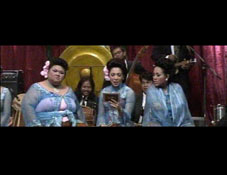
"Ma Ling" (in Bahasa Indonesian can be mean: Thief) is an instant canned food from China. This work talks about stealing back terrors that have already been produced by television. Inspired by what happened in China for a pirated business product; taking something from a thing that already exists and reproducing it as something "new".
Eko Nugrono
Bercerobong
Animation | dv | noir et blanc | 4:0 | Indonésie | 2006
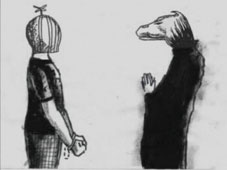
Etant donné qu'Eko Nugroho est un dessinateur de bande déssinée (comic book) excellent et productif, il utilise intelligemment des dessins simple ainsi que l'animation pour sa vidéo "Bercerobong" (le tuyau à fumée). Il tente de dépeindre ce qu'il se passe dans une communauté, en pariculier lorsque le programme politique change en Indonésie suite à la chute du régime de Soeharto. Tout le monde semble être tour à tour hommes politiques, soldats, officiers gouvernementaux, professeurs religieux ou autres. Tels des caméléons, il ont vite changé leur style de vie, leur façon de parler et leurs actes, s'ajustant ainsi à l'environnement et aux personnes à qui ils parlent.
Bettina Nürnberg, Dirk Peuker
Franzosensand
Documentaire | hdv | couleur | 8:30 | Autriche, Allemagne | 2016
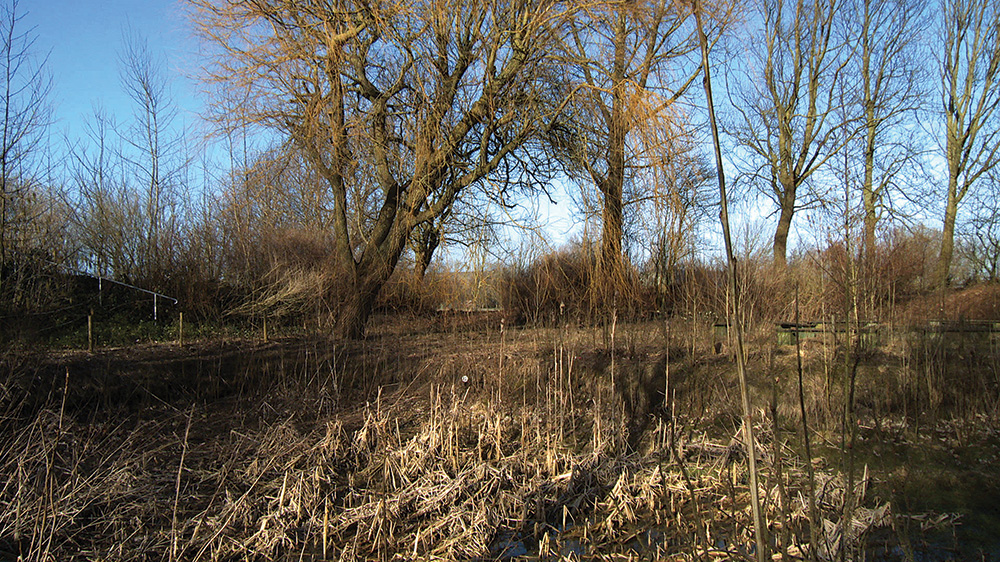
The film “Franzosensand” centers on agricultural settlements founded by theGerman National Socialitst on newly built dikes on the mudflat of the Wadden Sea (North Sea). Of the settlements, the so-called “Adolf-Hitler-Koog”, was meant to be a prototype for a national socialist community.Today, the bleak and tidy landscape does not offer much testimony to its history. Excerpts of archived materials that are interwoven with present-day images make the present appear as a surface built on complex, deeper layers of the past.
Bettina NUERNBERG (1976, Germany) was educated in art and film in Hamburg, Berlin and Toulouse. The work of the Berlin-based artist has been screened and exhibited worldwide. She founded the internet platform vestibuel-film. Dirk PEUKER (1970, Germany) studied film and art in Berlin and Vienna. The work of the experimental filmmaker and artist has been screened and exhibited worldwide.
Bettina Nürnberg, Dirk PEUKER
Zement
Documentaire | hdv | couleur | 12:38 | Allemagne, Autriche | 2014
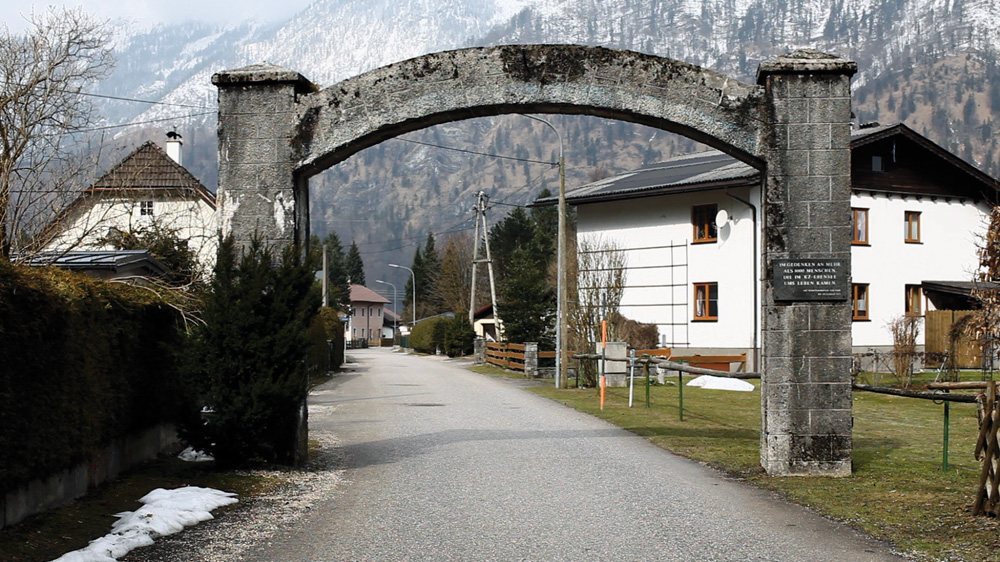
The Nazis set up a concentration camp in Ebensee. Nürnberg and Peuker wonder what conclusions they can draw from the topography about dealing with the past. The takes remain static; a woman’s voice dryly contributing information from off screen is all that clarifies the context within contemporary history. A site that looks like a dirt road turns out to be the “Löwengang (Lion’s Walk),” which the camp’s prisoners were driven down like animals to reach a tunnel that had to be dug. As soon as the film moves to the residential area that was founded on the site of the concentration camp shortly after the end of the war, surprise at the lack of sensitivity in dealing with the past mixes into the off-screen commentary. What Zement aims to get at is the ambiguity of this proximity of commemorative site and settlement.
Dirk Peuker * 1970 in Friedrichroda 1998 – 2005 Studium experimentelle Filmgestaltung an der Universität der Künste Berlin und bildende Kunst an der Akademie der bildenden Künste Wien. 2006 Stipendium der Stiftung Kulturregion Hannover und der Nordmedia Filmförderung, Villa Minimo. 2007 DAAD Jahresstipendium 2008 Postgraduiertenstipendium des Freistaates Thüringen 2008 Meisterschüler der Universität der Künste Berlin 2009 NaFÖG Stipendium des Berliner Senats seit 2009 künstlerischer Mitarbeiter an der Kunsthochschule Berlin Weißensee
Mark O'connell
All Broke Up
Art vidéo | dv | couleur | 3:58 | USA | 2004
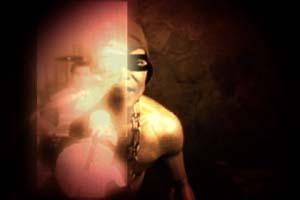
"What? Torture!?! I didn`t see any torture. Did you see some torture? Nobody saw any torture....."
Mark O`Connell probes and pushes the emerging representational, juxtapositional possibilities afforded by today`s expanding range of digital media. After a score of years in music--as a performer, composer, and producer--he now works with a variety of media: still images, video, film, music and text; all manipulated as digital information. The finished pieces are generally delivered via videotape or Quick Time computer files. His work has been exhibited in a wide range of venues.
Alison O'daniel
Deep Woods
Vidéo expérimentale | dv | couleur | 5:30 | Royaume-Uni | 2005
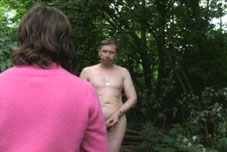
Le dos d'une femme quelque peu à gauche du centre, remplit l'image. Elle se tient juste devant la caméra, qui de temps en temps enregistre un aperçu de l'homme qui se tient face à elle à quelques mètres de distance, quelque part dans une forêt. La caméra, l'homme et la femme bougent à peine tandis u'un voix off éclaire le contexte de ce qui est en train de se passer. La voix appartient probablement à l'homme duquel nous avons vu juste assez pour être capable d'estimer qu'il doit être un vieux gentleman. Il explique qu'il est sans cesse à l'affût de nouveaux défis, expériences et limites. Il se demande comment cela va l'affecter, quelque soit ce qu'il fera plus tard, ce dont le spectateur ne peut qu'avoir une idée. La voix off semble être basée sur une conversation ou correspondance qui se joue entre lui et la femme avant l'enregistrement. Il admet qu'il se sent embarrassé, gêné par cette situation et dans l'idée qu'il va faire une telle chose en sa présence, en la présence de l'équipe caméra et éventuellement d'un public. Puis, alors que la caméra se déplace un peu, nous pouvons voir qu'il commence à se dévêtir calmement. Il remet ses vêtements à la femme. Comment son corps va-t-il réagir en ces circonstances, va-t-il coopérer élégamment ou cela va-t-il l'embarrasser ? Il n'est pas un modèle ou un acteur, dit-il. Il regarde alternativement vers la femme ou la caméra, comme si il ne voyait pas la femme, ou sur les côtés ou vers le haut. Très calmement il exécute les actions acceptées et ce sur quoi elle lui remet un morceau de tissu et ses vêtements. "Deep Woods" pourrait être interprété comme une performance qu'effectue O'Daniel à travers quelqu'un d'autre. C'est une action pour laquelle elle a besoin de l'autre et s'implique en entier dans ce dont elle est en premier lieu témoin : elle se tient clairement entre l'homme et la caméra, et le spectateur. Derrière son dos on peut voir ce qu'elle voit mais seul celui qui est face à elle peut voir son visage. Et ce n'est pas elle mais vous qui êtes le voyeur, sûrement pour le moins gêné par ce que vous êtes en train de voir.
Doireann O'malley
Prototype I: Quantum Leaps in Trans* Semiotics through Psycho-Analytical Snail Serum
Vidéo | 4k | couleur | 36:35 | Irlande, Allemagne | 2018
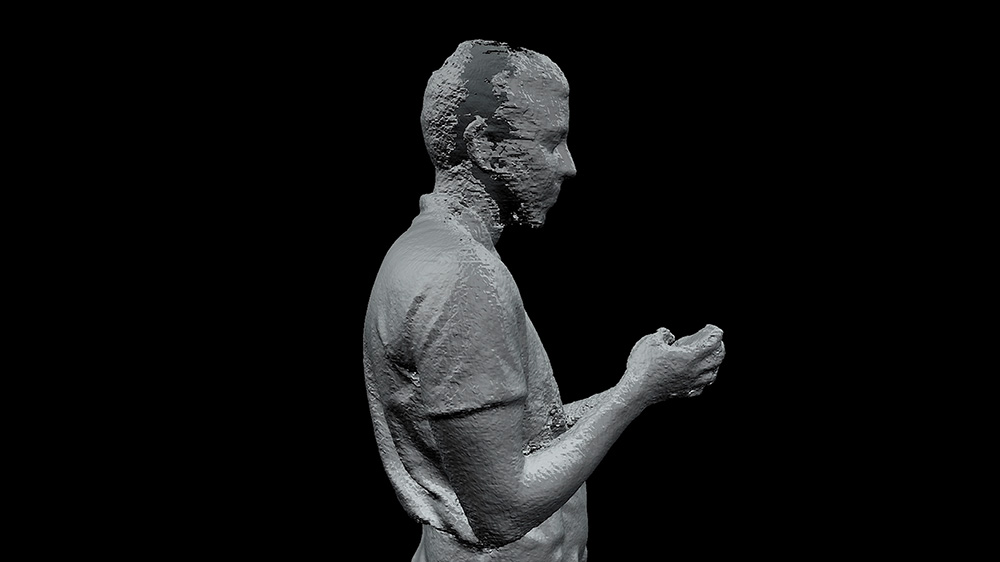
In Prototypes the viewer is guided sonically and visually through various dream- and land-scapes, observing psychoanalytic references to both shamanistic pasts and speculative futures that evoke alternate modes of existence. We meet the protagonists who interact with undefined technologies and it appears ambiguous as to whether they are rendering themselves in a virtual world, a potential future, or creating their present. In fact, throughout Prototypes there is little to distinguish between “the symbolic, the imaginary, and the real”. Psychoanalytic sessions emphasise a transgression of boundaries. The viewer becomes increasingly disoriented between the physical and dream worlds, where the psyche presents symbols as metaphors for psychological obstacles to overcome. Working with a cast of almost entirely non-professional actors in a collaborative process was integral to the work. Several of whom attended a dream workshop and shared their own dreams, which were then, too, woven into the script. In an exquisite corpse of unconscious connection, one protagonist’s dream depicts a tongue, abstracted and contrasted against the director’s own dream of tentacles growing from a stomach. One of the protagonists, Pol, professes that the experience of taking testosterone feels like being in a science fiction movie. Through an experiential understanding of the pliant body made available through bio-hacking, the protagonists begin to sense a form of liberation, a way to indirectly denounce systems of control. They experience an expanded potentiality to create for themselves new meanings and languages, new architectures. Pol’s analogy concretes what is alluded to throughout the film, that this depicted version of reality is one formerly unimaginable, consequently allowing us to further speculate on an abundance of potential futurities. A gay cruising scene suggests that the result of Pol’s bio-hacking allows him access into this formerly unimaginable reality.
Doireann O’Malley, born Limerick, Ireland 1981. Lives and works in Berlin, Germany. Prototypes was the winner of The Berlin Art Prize 2018 and has been exhibited in The Hugh Lane Gallery, Dublin, Edith Russ Haus für Medienkunst, Oldenburg and has been screened in Bobs Pogo Bar, KW, Berlin. Doireann is currently participating on The Berlin Program for Artists and has upcoming shows in Mexico City and the Göteborg Biennial.

Doireann O'malley
New Maps of Hyperspace
VR vidéo 360 | 4k | couleur | 6:44 | Irlande | 2020
The work is a parable on Alan Turing’s technological disembodiment, drawing on concepts from Terrence McKenna’s Hyperspace, an undoing of the matter of consciousness and technologies empty promises of liberation and progress. Imagining a future self calls for a dreaming of the kind Terence McKenna evokes in his essay New Maps of Hyperspace (1989) and from which this work formed the research. For McKenna the dream is “zero time” and “outside of history.” It is analogous to the speculative experience of hyperspace, a scifi term given to the space-time continuum in which it is possible to travel faster than light. In both states, time appears to stand still (Einstein’s theory of relativity tells us that the closer an object travels to the speed of light the slower time becomes). Dreaming can quickly turn to nightmare however, and the episodic repetition of history-as-nightmare can, at times, feel like farcical simulation. Finally this work touches on the yawning gaps between our wish for escape, human connection and approval — and our seemingly Sisyphean task of achieving any of it. Hyperspace is a notion from science fiction of a superluminal method of travel. It is typically described as an alternative “sub-region” of space co-existing with our own universe which may be entered using an energy field or otherdevice. In most fiction, hyperspace is described as a physical place that can be entered and exited. Whereas in the VR work the viewer is essentially trapped in blue screen of death, unable to escape. (Text by Thomas Butler)
Doireann O’Malley (born 1981 in Limerick, IE) is a multidisciplinary artist based in Berlin. Their research-led practice unites collaborative methodologies, healing and reparative movement, writing, and theory, with a strong technological emphasis on new media, virtual Reality, 3Dand film installation. O’Malley holds an MFA from University of Ulster in Belfast, UK. From 2021- 2022 held the position of Professor of Gender & Space at Akademie der bildenden Künste Wien. They were a research fellow at the Berliner Förderprogramm Künstlerische Forschung (2020-2021) and a participant of the BPA// Berlin programme for artists (2019-2020). They acted as a guest mentor on the The Live Arts MA / AdBK Nuremberg (2001) Their exhibitions, talks and screenings have been presented at IMMA, Dublin, IE; Art Institute, Basel, CH; Biennale Zielona Góra, PL; Goethe-Institut Montreal, CA; Goethe-Institut, NY, USA; Neuer Berliner Kunstverein (n.b.k.), Berlin, DE; National Sculpture Factory/Cork Film Festival, Cork, IE; GöteborgInternational Biennial for Contemporary Art, SE; Rencontres Internationales, Forum des Archives, Paris, FR & HKW, Berlin, DE; Mumok Kino, Vienna, AT; Dublin City Gallery, Dublin, IE; KW Institute for Contemporary Art, Berlin, DE; Berlin Art Prize, 2018, Berlin, DE; Edith-Russ-Haus für Medienkunst, Oldenburg, DE.
Chris Oakley
Sight/Seeing
Vidéo expérimentale | dv | couleur | 6:0 | Royaume-Uni, Allemagne | 2005
SIGHT/SEEING explore notre relation avec les notions d?étendue sauvage dans une ère mondialisée. A mi-chemin ente le court-métrage touristique et le documentaire sur la vie sauvage, ce travail étudie la relation que nous avons avec notre environnement naturel fondé sur des idées reçues véhiculées par les media. Le tourisme a déclanché un processus qui fait du monde naturel un simple produit, l?exemple typique étant le safari qui permet de vivre quelque chose de spectaculaire, immortalisé par l?objectif d?un caméscope. La vidéo étudie un phénomène dans lequel le spectacle nous fait passer à côté de la véritable expérience et où voir devient moins important qu?enregistrer. Des défauts photographiques de plus en plus absurde et la présence du touriste, caché derrière son objectif, nous conduisent vers un monde où le regard romantique du touriste devient concret grâce à l?image enregistrée ; un monde vu à travers un filtre qui ne peut être enlevé.
Chris Oakley est un artiste qui travaille avec l?imagerie vidéo et numérique, ses préoccupations se concentrent sur l?expérience biaisée par les media, que ce soit les principaux media, la photographie amateur, les communications de masse et la réalité accrue. A travers une analogie critique des méthodes employées par les principaux media, il utilise des processus de fictionalisation des matériaux qu?il a récolté au quotidien afin d?essayer de définir un espace entre la réalité et la représentation ; essayer de définir à quel moment l?expérience vécue si intensément doit se conformer à un récit purement linéaire. Durant ces trois dernières années, le travail d?Oakley a suscité l?intérêt des media européens mais pas seulement. Ces ?uvres ont été exposées aux côtés de celles de Tony Oursler, Jozef Robakowski, et Pipilotti Rist. Parmi ses récentes réussites, on peut compter des sélections pour de nombreux festivals d?arts médiatiques majeurs et des expositions. On peut citer entre autres la Transmediale 05 de Berlin, une exposition au musée d?art contemporain de Los Angeles et des panneaux publicitaires via video sur Sunset Strip. Il a également remporté un prix au Media Forum du Festival International du Film de Moscou en 2005. Il est le premier artiste vidéo à vendre ses ?uvres sur internet grâce au téléchargement. http://www.chrisoakley.com
Chris Oakley
The Catalogue
Art vidéo | dv | couleur | 5:42 | Royaume-Uni | 2004
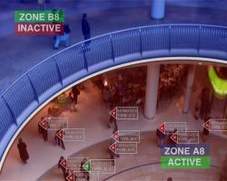
Le Catalogue explore les nomenclatures de l'humanité élaborées par les sociétés commerciales dans l'environnement de la consommation. En tant que consommateurs, nos modes de vie sont minutieusement analysés par les grands groupes. La carte de fidélité, la puce RFID (Identification par Fréquence Radio) et les logiciels de reconnaissance faciale sont autant de moyens de collecte de données qui leur permettent de réaliser le traçage des individus en temps réel. Les sociétés spécialisées dans le négoce de bases de données peuvent montrer où nous nous trouvons, ce que nous achetons, ce que seront nos volontés futures. Techniquement, elles pourraient déjà élargir ces données au delà de la sphère des habitudes de consommation et de nos modes de vie pour atteindre celles concernant notre intégrité physique, en prédisant notre santé future par le croisement de statistiques et ce grâce à l'analyse des données tirées de nos courses hebdomadaires. Le Catalogue propose une analogie à ce processus, contraignant le spectateur à prendre la position d'une agence, froide et distante, et en considérant l'humanité comme une série d'entités dont la valeur de chacune est définie par sa capacité à dépenser et par ses besoins futurs.
Les centres d'intérêt de Chris Oakley concernent aussi bien les média de masse que la photographie amateur, les moyens de communication de masse, le recueil de données, et l'influence de ces phénomènes hétérogènes sur nos comportements, les interactions, et les relations qui en découlent sur notre corps. Pour Oakley, la caméra amateur, la caméra de surveillance, et le reportage télévisé sont regardés comme procédant d'un même phénomène ; chacun fournit un point de vue représentant un univers médiatisé, une réalité limitée, coupée de toute véracité. Dans une comparaison critique des procédés employés par les mass-média, il est fasciné par les processus de fictionnalisation, essayant de définir l'espace entre réalité et représentation, le point à partir duquel le caractère aléatoire de l'expérience humaine est standardisé pour se conformer à un cliché narratif. Influencé à ses tout débuts par le Process Art, et par les cinéastes matérialistes et structuralistes, il a développé un vocabulaire combinant une approche orientée "processus" avec des références culturelles plus larges. S'appropriant des techniques de plateau de télévision et de production de film et les combinant avec le point de vue du cinéma Vérité, le processus s'intéresse autant à observer le spectateur que le sujet. Depuis deux ans, le travail de Oakley recoit une attention de plus en plus importante de la part des media en Europe, voire au delà. Ses créations ont été exposées au côté de celle de Tony Oursler, Jozef Robakowski, Kutlug Ataman et de Pipilotti Rist. De ses récentes réalisations, on mentionnera la circulation d'une exposition dans un grand nombre de festival internationaux d'arts multimedia notamment au festival Exit à Paris, au Transmediale .05 à Berlin, l'exposition de ses travaux au Musée d'Art comtemporain de Los Angeles, des projections video au Sunset Strip, ainsi qu'un prix au Festival international du Film de Moscou en 2005. Biographie sommaire : 1971 Naissance à Chester 1988 - 1990 North East Wales Institute 1990-93 School of Art & Design, University of Wolverhampton 1993-95 Kent Institute of Art & Design

Damir Ocko
The Dawn Chorus
Vidéo | 4k | couleur | 17:43 | Croatie | 2023
"The Dawn Chorus" is an outbreak of birdsong at the start of a new day, depicted in the film as the inspiration for a dream-like gathering of the artists local queer community in Zagreb. This joyous celebration of queer bodies pays homage to the kingdom of birds through voguing, dancing, drag and costumes. It is a transposition that imagines the potential in the intersection between our own identities and the inclusive spaces that are open for other species. Filmed without the predictable popular electronic beats typically associated with ballroom, the film solely features the sounds of bodies in motion, the rhythmic impact of dancing, resounding percussive noises created by bodies, and chanting. These elements are accompanied by polyphonic sounds of birdsong onomatopoeias, sourced from ornithological manuals and sung by ”Le Zbor” a lesbian-antifascist choir from Zagreb accompanied by subtle gravity-like pedal tones played on Organ.
Damir Ocko (b. 1977, Zagreb) Graduate from the Academy of Fine Arts in Zagreb, O?ko has exhibited on solo exhibitions at Kunsthalle Krems, Museum of Contemporary Art Zagreb, Jeu de Paume, Paris, National Gallery in Prague, Museum of contemporary Art Bordeaux, Museo Amparo, Mexico, DAZIBAO, Montreal, Palais de Tokyo in Paris, Yvon Lambert Gallery in Paris, Künstlerhaus Halle für Kunst und Medien in Graz, Kunsthalle Dusseldorf, Temple Bar Gallery and Studios in Dublin, Kunstverein Leipzig among other places. He participated in numerous group exhibitions internationally with institutions such as, OFF Biennale Budapest, MUDAM in Luxembourg, FRAC le Plateau, Württembergischer Kunstverein Stuttgart, Kunsthalle Vienna, Louis Vuitton foundation among others. Damir O?ko represented Croatia in the 56th Venice Biennale with a solo exhibition "Studies on Shivering / The Third Degree. His works are included in many public and private collections such as FRAC le Plateau, Foundation Louis Vuitton, CNAP – Centre national des arts plastiques in Paris, MUDAM in Luxembourg and Museum of contemporary Art in Zagreb, among others.
Damir Ocko
The Boy with a magic Horn
Art vidéo | dv | couleur | 16:0 | Croatie | 2007
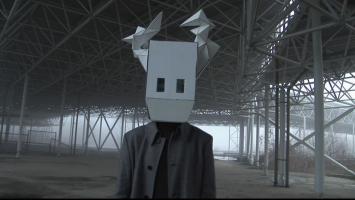
"Un grand rêve allait être réalisé mais quelque chose se passa pendant le réveil." Pendant la période de transition, la Croatie abandonna un des plus gros projets qui allai être construit sur cet hémisphère, un hôpital universitaire qui allait occuper 250000m2. L'hôpital a été planifié dans la fin des années 70 et était en construction dans les années 80 mais jamais fini. De nos jours, ce hall vide, ces murs de béton, ce labyrinthe de pièces sans noms et la nature envahissant tout l'environnement peut lui donner l'allure d'une quelconque construction mais, le fait de savoir ce que cet endroit devrait être, transforme cette réalité en une expérience presque mélodramatique; être bloqué dans un lieu et à une époque, quelque part entre ce que c'était, ce que ça devrait être et ce que c'est. Une vision romantique de la transition nous amène à l'intérieur de l'architecture fantôme et nous participons au voyage a travers une intrigue Wagnérienne, où la fiction rentre dans la réalité, transformé et perdue dans un lieu où le héros arrive trop tard. Extrait des synopsis de Wagner, l'intrigue devient un jeu rêveur et hallucinogène auquel les personnages jouent pour décrire leur nouveau déplacement social et émotionnel vers un lieu qui existe quelque part entre l'espoir et l'oubli. Mais pourtant, il se dit que la corne magique a un tel effet que celui qui l'entend va croire presque tout.
Damir Očko was born in 1977 in Zagreb, Croatia and studied at the Academy of Fine Arts, Zagreb. He was a resident artist at Tirana Institute of contemporary art, Tirana, Albania and Kulturkontakt Vienna, Austria. He also received a Academie schloss solitude fellowship. He is working in diverse medias, like video, installation, site specific projects and music. His recent solo exhibitions include: Why does Gravity make things fall?, Tirana Institute of Contemporary Art, Tirana, Albania, The Missing Mountain, Barutana, Osijek, Croatia, Compositions, Museum of Contemporary Art, Zagreb, Croatia. Recent group exhibitions include: The post Cinema experience, Australian centre for photography, Sydney, Australia, New revelations, Spectrum project space, Perth, Australia, Heroes in Transition, Angel Row Gallery, Nottingham, UK, and 2WP at Art Point Gallery Vienna, among others. His films where recently screened at Chavoul cinema, Sydney, Australia, 52nd Venice Biennale as part of a video program selected by Edi Muka on the PS1&PAN boat and International center for culture Arbnori, Tirana, Albania among others. Currently he is living and working in Zagreb.
Damir Ocko
The Third Degree
Vidéo | hdv | couleur | 10:30 | Croatie | 2015
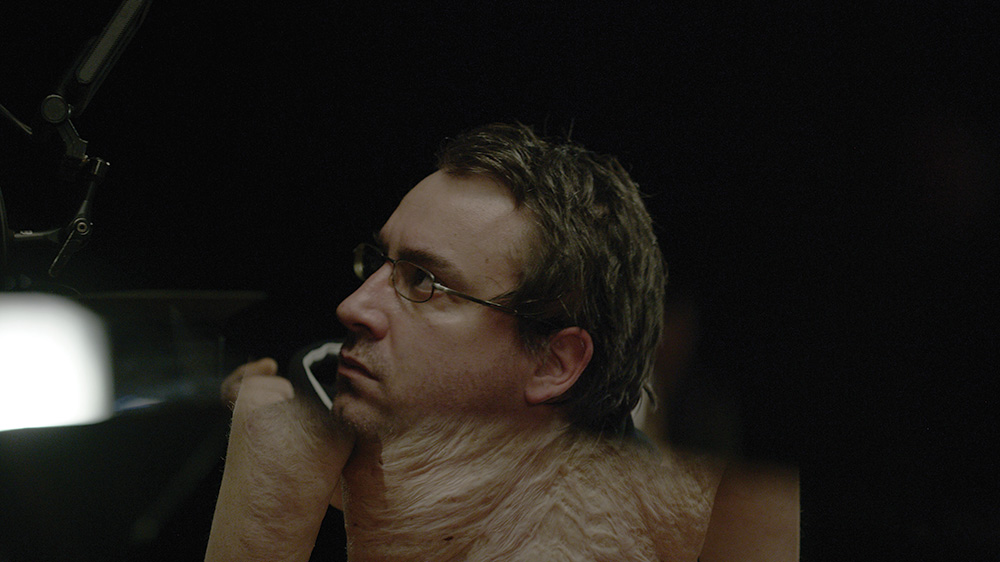
The Third Degree is a single scene film exploring a close-ups of skin scars resulting from third degree burns filmed through an installation of broken mirrors reflecting the crew and the whole background process while filming the scars, thus integrating the subject of the camera with the process of filming itself. The Third Degree was made as a response to questions that emerged due the particularly violent way the previous film TK was filmed. The term "Third Degree" has an ambiguous meaning in the English language: it is a way to classify a burn of a very strong degree, but it can also signify a process of extorting a confession under violence. Set in motion by such violent interpretations and perspectives, film tries to critically, yet poetically, cut through the collective haze that blurs relations between means of production, control and the subject itself, giving rise to alternative methods of understanding as a reflection determined at the same time by social, political and aesthetic parameters.
Damir Očko was born in 1977 in Zagreb, where he lives and works. A graduate from the Academy of Fine Arts in Zagreb. Očko has exhibited on solo exhibitions at DAZIBAO, Montreal, Palais de Tokyo in Paris, Künstlerhaus Halle für Kunst und Medien in Graz and Kunsthalle Dusseldorf, Temple Bar Gallery and Studios in Dublin among other places. He participated in numerous group exhibitions internationally with institutions such as, MUDAM in Luxembourg, FRAC le Plateau, Württembergischer Kunstverein Stuttgart, Germany, Kunsthalle Vienna, among others. His works can be found in the collections of Louis Vuitton Foundation for Creation and CNAP – Centre national des arts plastiques in Paris or at the MUDAM in Luxembourg. Damir Očko was representing Croatia in the 56th Venice Biennale with a solo exhibition "Studies on Shivering / The Third Degree.
Damir Ocko
TK
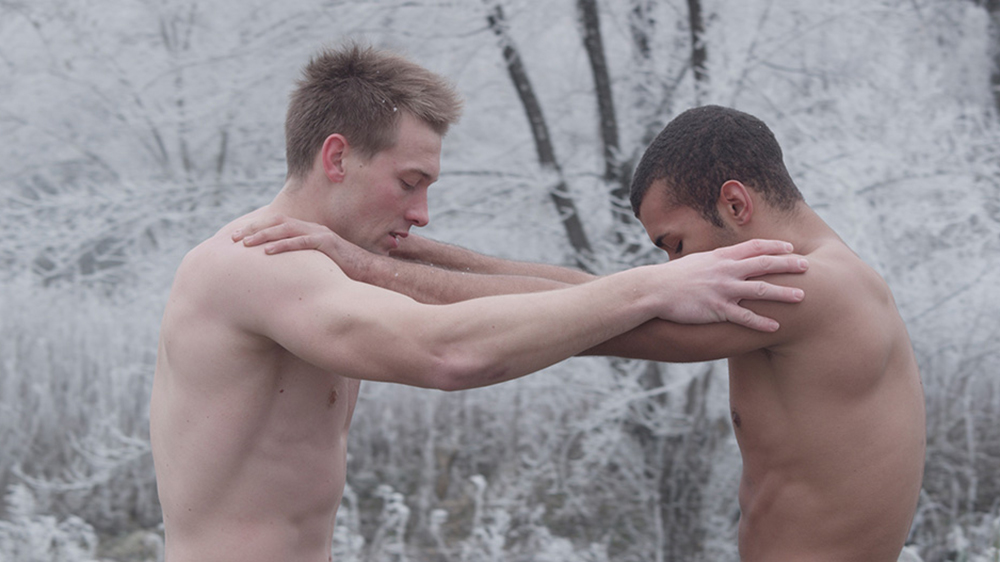
Film expérimental | 4k | couleur | 19:46 | Croatie | 2015
Departing form an eight part poem the artist constructs a complex polyphonic work in which poetry meets movements, sounds, silences, bodies, and ¬endurability in order to project the ideas behind the work. Several topics constantly reoccurring through out the work are brought forward by a meticulously scored narration, in which pause and silence are equally important as the spoken or written word. Poem itself depicts on various images, starting as a morning song in which a question of a routine and a rotation turns the engine on for work to move towards more difficult imagery. People gather in dangerous constellations to act in violence, to observe silently, or to setup the false feeling of tranquillity which is constantly turned upside down by the various mechanisms of the film itself. Heavy things get stuck in the throat, stones used as tools and voices come to unrest.
Damir Očko (b. 1977, lives and works in Zagreb) is one of the most prominent Croatian artist of his generation. His videos, films, poetry and works on paper have been exhibited recently in Temple Bar Gallery in Dublin (2014), KM - Künstlerhaus Halle für Kunst & Medien in Graz (2014), Yvon Lambert gallery in Paris (2013), Palais de Tokyo in Paris (2012), Galleria Tiziana Di Caro in Salerno (2012), and Kunsthalle Dusseldorf (2011). He participated in numerous collective exhibitions with institutions such as MUDAM, Luxembourg, FRAC Le Plateau in Paris, Kunsthalle Wien, and Museum of Contemporary Art in Zagreb among others. His works are part of many public and private collections around the world.
Christoph Oertli
Cairo
Vidéo expérimentale | dv | couleur | 11:0 | Suisse | 2006
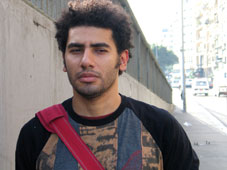
La vidéo se concentre sur les chemins parcourus dans la ville. Les chemins que chaque habitant doit effectuer, pour lui-même et seul parmi les autres. Dans la réalité quotidienne, cela constitue un "déplacement de masse" dense et permanent, pour que chacun puisse s'assurer un logement et un travail. On peut voir un jeune homme qui marche très lentement. Il prend neuf visages différents, et son cheminement s'étend sur toute une enfilade de rues et de quartiers du Caire. Tout autour de lui, du bruit et beaucoup d'autres gens. Puis il se retrouve soudain seul, mais continue, sans y prêter attention, à marcher lentement. Quelques personnages isolés qui croisent son chemin.
Né en 1962, vit à Bâle et à Paris. Etudes: HGK (Ecole supérieure d'art et création) de Zurich, design graphique télévision suisse, design scénique HGK Bâle, design audiovisuel.