Catalogue > Faire une recherche
Résultats pour : Tout le catalogue
Sascha Pohle
Reframing the Artist
Vidéo | hdv | couleur | 35:0 | Allemagne, Pays-Bas | 2010
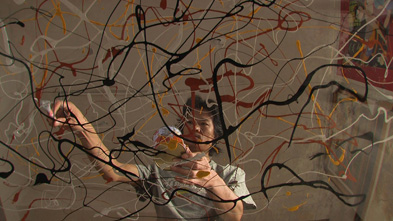
REFRAMING THE ARTIST deals with the stereotypical representations of visual artists in movies. The role of the artist both in fictional films and in biopics, classics of the twentieth century or recent popular films, is focused on the artist?s idiosyncratic behavior, his love affairs, his self-destruction associated with a mystification of his creative production or on encounters with other protagonists of the art world such as the collector, the art dealer, the model or the art student. Artists are almost solely painters, which reconfirms a predominant inadequate representation of visual artists in movies. In the video REFRAMING THE ARTIST fragments from approximately 50 different movies such as ?The Moderns? ?Surviving Picasso? or Vincent and Theo? are reset in the Dafen Oil Painting Village. Dafen, situated in Shenzhen, China, is the world`s largest producer of mass-produced handmade oil-on-canvas copy paintings supplying a global market. The video takes place in unmodified settings of the painters` own homes, studios, shops or galleries. There we see Dafen painters re-enacting movie scenes, in which they take over the role of a Picasso, a Van Gogh, a Pollock or several fictional artists, art collectors, critics, muses and lovers. In the ?Reframing the Artist? mass reproduction of oil paintings from Dafen and the recurrent use of artist stereotypes in the mass media film converge to a new narrative overlapping fiction and documentary. The Chinese painter is neither represented as a mere copyist nor does he apply to the notion of the ?original? artist according to our predominant definitions. REFRAMING THE ARTIST raises questions about authenticity in the context of global cultural exchange and it challenges the view of the ?exotic? Other, both the visual artist and the Chinese copy painter. The video is structured into five chapters: Artist and Authenticity, Artist and Market, Artist and Crisis, Artist and Student, Artist and Model. Painting props taken from the same original movies re-appear as copies in REFRAMING THE ARTIST.
Education 2002 B.A. Staatliche Hochschule für Bildende Künste (Städelschule), klasse Ayse Erkmen, Frankfurt am Main, DE 2007 Rijksakademie van beeldende kunsten, NL (Selected) solo exhibitions 2013 Rongwrong, Amsterdam, NL 2012 Art space Apguyeong, open in November en gecureerd door Ji Yoon Yang (De Appel CP 2008/09), Seoul, KR, (aanstaand) (exhibited works: Noire et Blanche + new production) 2012 Lothringer_13_Halle, gecureerd door Felix Ruhöfer, München, DE (exhibited works: Noire et Blanche, Statues Also Die, German Indian, Reframing the Artist, The Mad Masters) 2012 Gallery Weingrüll, Karlsruhe, DE (exhibited works: Noire et Blanche, Reframing the Artist, Statues Also Die) (Selected) group exhibitions 2013 ?Transfer Korea-NRW?, Kunsthalle Düsseldorf and Kunstmuseum Bonn, National Museum of Korea, Arko, (upcoming) - new production: Ornaments of Property 2012 Monitoring/ Kasseler Dokumentarfilm und Videofest, (upcoming), DE - Statues Also Die 2012 ?Generation Loss?, Green Papaya Art Projects, Manila, PHL 2012 ?Signals: For Real?, IFFR, 41st International Film Festival Rotterdam, gecureerd door Edwin Carels, NL - Reframing the Artist 2011 Museum der Moderne Salzburg, ?role models-role playing?, AUT - The Mad Masters 2010 Arti et Amicitae, Amsterdam, ?Villains and Heroes?, Sascha Pohle/Marco Pando, NL - German Indian 2010 Dafen International Contemporary Art Exhibition, ?Convection? Dafen Sub-Venue, Shenzhen Case Pavillion, 2010 Shanghai EXPO, CN - Reframing the Artist 2010 Taipeh International Art Center, Urban Nomad Video Art Section, TW - Reframing the Artist 2010 ?works?, basis, Frankfurt, DE 2008 PARA/SITE art space, ?Terminus?, gecureerd door Christina Li (De Appel CP 2008/09), Hong Kong - The Swimmer 2008 ?Beyond Paradise?, SMBA Stedeljik Museum Bureau Amsterdam, gecureerd door Delphine Bedel and Ayako Yoshimura , NL - The Swimmer 2008 ?Vertrautes Terrain?, ZKM - Center for Art and Media, Karlsruhe, gecureerd door Gregor Jansen and Thomas Thiel - German Indian 2008 Schirn Kunsthalle, Frankfurt am Main, DE, `All-Inclusiv A Tourist World - The Swimmer (Selected) Filmfestivals 2012 BIEFF, Bukarest, RO, Reframing the Artist 2012 58. Internationale Kurzfilmtage Oberhausen, DE, Reframing the Artist 2012 41st International Film Festival Rotterdam, NL, Reframing the Artist 2011 HomeShop, Jue Festival, Beijng, CN, Reframing the Artist 2009 Videonale 12, Bonn, DE, The Mad Masters¬ 2008 International Film Festival, 16th Curtas Vila do Conde, PT, If I were you ? LAS VEGAS NEW YORK BLACKPOOL, The Mad Masters 2008 37th International Filmfestival Rotterdam, NL If I were you ? LAS VEGAS NEW YORK BLACKPOOL Residencies 2006-2007 Rijksakademie van beeldende kunsten/Dutch Ministry of Education, Culture and Science, 2009 Meetfactory, Prague, CZ 2011 Incheon Art Platform, KR 2012 Changdong Studios, Seoul, KR (upcoming) Prices, Awards 2012 Principal Price, 58th International Short Film Festival Oberhausen, for Reframing the Artist, Netherlands, 2010 Fellowships/stipends 2011/12 The Netherlands Film Fund, research subsidy on DVD movie piracy 2011/12 Fonds BKVB, standard werkbudget for Noire et Blanche in combination with a residency in Incheon Art Platform, Korea 2010 Fonds BKVB, werkbudget for Detective project ? The Student of Prague 2009 Fonds BKVB, standard werkbudget for MeetFactory artist residency 2009 The Netherlands Film Fund, NL for Reframing the Artist 2008 Fonds BKVB, basis stipend, NL 2007 Hessische Kulturstiftung, DE, for The Mad Masters and If I were you ? LAS VEGAS NEW YORK BLACKPOOL 2006 DAAD, Berlin, DE 2006 Kunststiftung NRW, DE 2003 Kunststiftung NRW, DE, for Safety Hour 2003 Kulturstiftung Dresden der Dresdner Bank, DE, studio stipend `dynamo.eintracht`
Ben Pointeker
. ..... .:.:...:::ccccoCCoooo::
Film expérimental | dv | couleur | 9:30 | Autriche | 2006
Solution bien pratique au problème de l?orientation dans une salle de théâtre ou de cinéma, de petites lampes dissimulées ça et là montrent aux gens où mettre les pieds et où ne pas les mettre, leur indiquant leur fauteuil ou la sortie. Imagine maintenant l?obscurité totale. Entre. Arrête d?imaginer et regarde . ..... .:.:...:::ccccoCCoooo:: Alors qu?on regarde, la question se pose de ce que c´est regarder. Les petites balises de guidage nous reviennent à l?esprit. D?habitude, c?est en regardant que nous nous orientons. En réaction à cela, ou peut-être par conséquence, maintes formes d?art se proposent de nous désorienter. Mais la question de l?essence même du « regard » reste sans réponse. Or cette question est au centre de l??uvre de Ben Pointeker. Pour y répondre, tout en gardant ses distances vis-à-vis du langage conventionnel du cinéma et de la photographie, il renoue néanmoins avec celui-ci. La manière dont il procède rappelle la poésie concrète. Mais il ne s?agit ici que d?une réminiscence. La poésie concrète n?était dans l?ensemble qu?une réaction à quelque chose d?autre : ce que nous connaissions déjà. Et de ce fait, elle était limitée sur le plan dialectique à ce que nous connaissions déjà. Dans son approche cinématographique, Pointeker sait comment sortir de cette ornière. Mais il ne le montre pas. Ce qu?il montre, c?est ce qui apparaît. Nous nous trouvons dans l?obscurité totale. Une lumière brille. Plusieurs lumières brillent : une voiture se fraie son chemin. Au sens littéral du terme : une voiture se fraie son chemin. Cette voiture n?amène personne de A à B. En projetant sa lumière, elle se fraie son propre chemin. D?autres images suivent, qui se fraient leur propre chemin. Nous regardons, captivés par la lumière de ce qu?on nous montre, et nos sens commencent à deviner ce que c´est regarder. (Frans-Willem Korsten)
Ben Ponteker studierte u.a. Literaturwissenschaft und Kunst in Wien, Kopenhagen und Rotterdam, zuletzt MA Fine Art, Piet Zwart Institute Rotterdam; experimentelles Kino und filmische Installationen, Textpublikationen; daneben Bühnenvideos für Theater- und Tanzproduktionen und dramaturgische Beratung; in der Beschäftigung mit suggestiven Bildsphären interessiere ich mich für Rhetorik und Substanz des visuellen Erzählens

Ben Pointeker
Impassenger
Vidéo expérimentale | hdv | couleur | 6:0 | Autriche | 2017
Impassenger présente un espace de résonance émotionnelle et, ce faisant, permet au cinéma de devenir haptique. Ce film explore la relation entre la proximité et la distance, et permet à l’objet de l’enquête de figer sa soumission.
Ben Pointeker is a visual artist and filmmaker based in Vienna. His work often sets in between film and photography and is concerned with poetics, patterns of narrative cinema, the notion of time, ambiguous realities and fantasy. Previously based in The Netherlands he graduated from Piet Zwart Institute and won the Prix de Rome basic award. He is also a graduate of the University of applied arts Vienna and was artist in residence at Wiels in Brussels, in Shanghai and most recently at Bòlit in Girona in the framework of The Spur. He has exhibited at institutions such as Secession Vienna, Kunstpavillon Innsbruck, Contemporary Art Center Vilnius, Filmmuseum Amsterdam and major film festivals.

Fernanda Polacow
Big Bang Henda
Doc. expérimental | digital | couleur | 22:0 | Brésil, Portugal | 2023
Renversant statues et symboles, construisant de nouveaux souvenirs, encadrant le paysage détruit, écrivant des lettres pour l'avenir, inversant les dynamiques de pouvoir : BIG BANG HENDA est un documentaire-poésie-manifeste sur le travail de l'artiste angolais Kiluanji Kia Henda. Il nous emmène dans un voyage à travers ses créations et réflexions, qui sont à l'avant-garde de la pensée anticoloniale, nous exhortant à réfléchir sur la manière dont les générations qui ont grandi pendant ou à la suite de la guerre réinterprètent cet événement.
Fernanda is a screenwriter and director, living between Brazil and Portugal. She has been working in the intersections between Brazil, Portugual and the African Portuguese speaking countries and former colonies of Portugal for decades. Her first feature as a writer, Mosquito, was the opening film at the Rotterdam FF (2020) and won the Critics Prize at the São Paulo International FF (2020) besides touring dozens of festivals. Her second feature, The Last Summer, is currently in production after being selected for the Script Station at Berlinale 2023 and RACCONTI. She has been developing, writing, and directing for TV, streaming and cinema, and some of her works have received awards and nominations at the Brazilian Cinema Academy, New York TV&Film Festival, Hollywood Woman’s FF, among others. She is part of the Torino Film Lab 2023. She is a co-founder of MUTIM, a woman in film association in Portugal.

Wiktor Polak
Blisko
Art vidéo | dv | couleur | 5:49 | Pologne | 2008
?Blisko? (?Close?) ? about alienation in the big city. The artificial light inside the night trams creates a new reality.
I was born in 1979. Between 1998 and 2004, I studied at the Władysław Strzemiński Academy of Fine Arts in Łódź. In 2004, under the tutelage of prof. Grzegorz Przyborek, I obtained the certificate and title of Master of Fine Arts in asvertising photography. Since 2003, I have also participated in multimedia workshops held by prof. Konrad Kuzyszyn and Łukasz Ogórek, MFA. I was a post-graduate, free participant there. Since that time, my interests hav revolved around film and video. In 2007, I went on a three-month scholarship to France, organised by the Strasbourg Klub, the City of Strasbourg as well as the CAAC.
Esther Polak, Ivar Van Bekkum
A Collision of Sorts
Doc. expérimental | hdv | couleur | 17:0 | Pays-Bas, USA | 2017
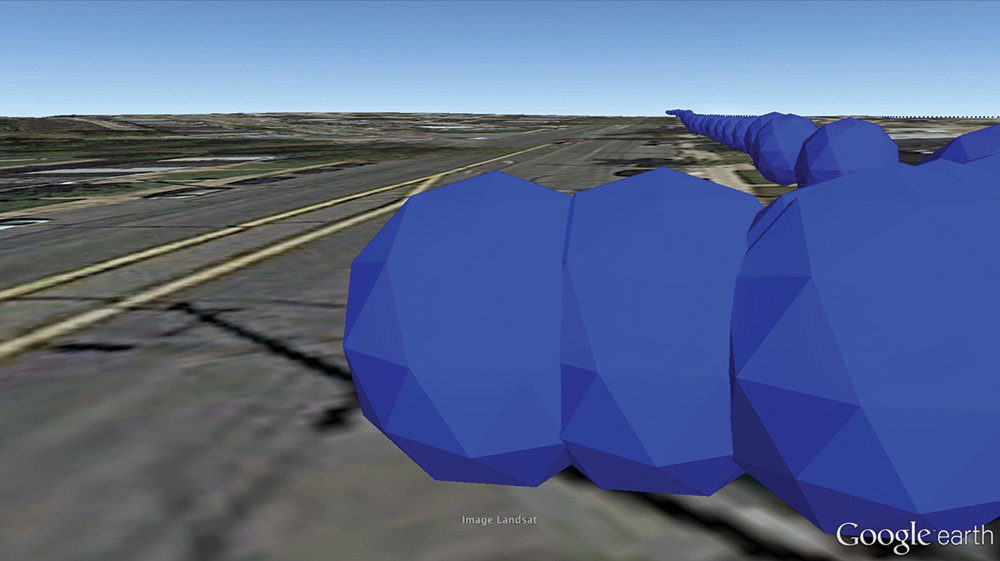
In A Collision of Sorts, inhabitants of the City of Philadelphia, (Pennsylvania, US) go there way, as discontinuous moving dots on a flat surface. The world in which this film plays is Google Earth: an alienating landscape of almost seamlessly stitched-together satellite images of the familiar planet we humans are moving around on. On Google Earth, nothing moves. Buildings, bridges and cars seem warped and flattened and compete for attention with the black weirdness of their own shadows. A virtual camera shows this frozen flattened landscape, reconnoitring the cityscape of the city. Meanwhile we hear sounds and voices. People and animals are down there, crossing the country. It is them who share a physical reality: we hear very intimately their breath, the rustling of clothes, traffic, their vehicles. They travel from one place to another giving the suggestion of a destination. They talk about encounters, visual, economic, political, social and personal but never the main characters seem to meet. Until a bad dream of one of them seems to come true.
Esther Polak and Ivar van Bekkum work together as artist-couple under the name PolakVanBekkum. Routed in the history of the Dutch realistic landscape depiction, they express personal experiences of moving and space. Their projects are often informed by collaborations with participants, be it humans, animals, or even the rays of the sun. Their work has been shown at amongst others: FID Marseille, Transmediale Berlin, Ars Electronica Linz, ZKM Karlsruhe, Media-Lab Prado Madrid; INIVA London, IMAL Brussels, Rento Brattinga | Galerie Amsterdam, Pixelache Helsinki, Lagos, Biennale Marrakech, Philadelphia and Los Angeles. 2016 Special Mention for the film Once We Get There Riga 2015 Expanded Media Preis For Network Culture at Stuttgarter Filmwinters - for “The Mailman’s Bag” 2005 Golden Nica for Interactive Art at Ars Electronica together with Ieva Auzina, with MILKproject. Esther Polak studied at the Rijksakademie for visual Arts in Amsterdam and the Royal Academy of Visual Arts in The Hague, NL Ivar van Bekkum studied journalism at the School for Journalism, Kampen, NL
Ulrich Polster
Frost (I)
Art vidéo | dv | couleur | 5:51 | Allemagne, Russie | 2003
Léonard Pongo
Tales From The Source
Vidéo expérimentale | mov | couleur | 38:19 | Belgique, Congo (RDC) | 2024
Tales from the Source propose un regard sur les paysages de la République démocratique du Congo afin de traduire quelque chose de leur puissance, de leur diversité et de leur savoir insondables. Le paysage y apparaît comme un personnage à part entière — une entité vivante, habitée par les symboles des traditions congolaises. L’approche visuelle emprunte aux techniques de l’imagerie multispectrale, produisant une expérience d’un autre monde, traversée de lumières et de couleurs surréelles. Associée à une composition musicale originale de Bear Bones, Lay Low, l’œuvre nous plonge dans un dialogue sensoriel avec le paysage, un être intelligent et sans âge, en transformation constante, qui vient défier notre perception.
Léonard Pongo (né en 1988 à Liège, Belgique) est un artiste visuel et cinéaste vivant et travaillant entre la Belgique et la République démocratique du Congo. Son travail explore les complexités de la perception et de la représentation, tout en remettant en question les représentations conventionnelles de la RDC, en s’attachant aux récits et symboles traditionnels et à leur relation au territoire. Formé à l’origine au photojournalisme, Pongo entame son parcours artistique en 2011 lorsqu’il se rend en RDC pour couvrir les élections présidentielles. Cette expérience transforme profondément son approche : il passe d’une documentation objective à une pratique plus subjective et expérientielle. Sa famille et les communautés locales l’encouragent alors à dépasser sa perspective initiale pour développer un regard plus nuancé et intime sur la vie congolaise. Pongo est reconnu pour ses installations multimédias combinant textiles, photographie, techniques d’impression variées et images en mouvement. Son travail s’enracine dans les cosmologies et traditions orales congolaises, en particulier dans l’idée que « tout n’est pas visible ». Grâce à des techniques spécialisées — dont la photographie en spectre complet, qui capte des longueurs d’onde invisibles à l’œil humain — il révèle des dimensions du paysage et de l’expérience habituellement dissimulées. Son projet au long cours The Uncanny (2011–2017) explore le quotidien en RDC à travers des images en noir et blanc empreintes d’une atmosphère onirique, tandis que Primordial Earth (2017–en cours) se concentre sur le territoire, mobilisant photographie couleur, textiles et installations vidéo pour évoquer une sensation de spiritualité et d’interconnexion. Son dernier film, Tales from the Source (2021–2024), prolonge cet ancrage dans les récits traditionnels, en s’attachant aux cultures luba et en soulignant l’imbrication profonde entre culture et environnement. Sa démarche collaborative implique un travail étroit avec les communautés à travers la RDC, puisant dans leurs savoirs, récits et traditions, afin de créer des formes visuelles qui prolongent la lignée des traditions luba en forgeant des expressions contemporaines liées aux concepts et visions ancestraux. Son travail a été exposé à l’international dans des institutions majeures telles que le Bozar – Palais des Beaux-Arts de Bruxelles, la Tate Modern à Londres, la Biennale de Dakar (Sénégal) ou encore le Nasher Museum of Art à Duke University. En 2023, sa première monographie The Uncanny est publiée chez Gost Books, et en 2025 il est sélectionné parmi les « Future Greats » d’ArtReview par le photographe Roger Ballen.
Penka Popova
On the 16-th of February 2005
Art vidéo | dv | couleur | 11:8 | Bulgarie | 2005
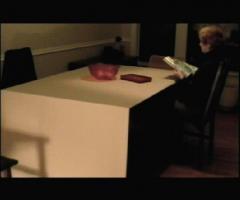
Le travail de vidéo "On the 16-th of February 2005" ressemble à une peinture basée sur le temps (documentaire) décrivant une femme assise à une table. Au premier regard, le regard semble complètement immobile. L?image éveille la curiosité et la contemplation plus que ce qui se passe vraiment, plus le temps avance. Par conséquent, le spectateur pourrait déceler que les objets changent de place, bien que leur processus de mouvement reste inaperçu. Á la fin, le temps bouge ?plus vite?, révélant un peu de ce qui l?entoure et de l?auteur en train d?enregistrer ce qui se passe devant ses yeux. La pellicule vidéo n?a pas été retouchée afin d?atteindre cet effet "immobile", tout est absolument véridique au lieu réel et au temps.
Je suis né et j?ai été élevé à Plovdiv, en Bulgarie. J?ai commencé ma formation aux beaux-arts à l?âge de douze ans avec des cours de peinture et de dessin. J?ai été diplômé du College of Theater and Fine Arts à Plovdiv, en Bulgarie en 1991. Plus tard, j?ai étudié à la National Academy of Fine Arts, à Sofia en Bulgarie où je me suis spécialisé en esthétique de la scène dans le cours du professeur Svetoslav Kokalov. Je me suis concentré principalement sur la dramaturgie classique comme Sophocle, Shakespeare et Tchekhov. J?ai été diplômé en 2001 du MFA Photo and Digital Imaging program du Maryland Institute College of Art, à Baltimore aux Etats-Unis. J?y ai suivi la classe du professeur William Larson et du théoriste des médias Timothy Druckrey. J?explore dans mon travail actuel les limites de la perception, tentant d?exprimer les différentes formes de présence du visible et de l?invisible. Depuis 2001, je vis à Chicago, dans l?Illinois.
Pere Portabella
La tempesta
Doc. expérimental | 35mm | couleur et n&b | 3:0 | Espagne | 2003
Naked bodies are buffeted by water accompanied by the music Il Temporale from the opera La Cenerentola and the overture to Il Barbiere di Siviglia both by Gioacchino Rossini. The film is part of a show by Carles Santos: El compositor, la cantante, el cocinero y la pecadora (The composer, the Singer, the Cook and the Sinner).
Ever since the 1960s, Pere Portabella involved himself in the movements against the Franco dictatorship and in support of liberties. In 1977, he was elected senator in the first democratic elections, and took part in the drafting of the Spanish constitution (1978). Since 2001, he has chaired the Fundación Alternativas. Before working as a director, with Films 59, he produced some of the most emblematic spanish films: Los golfos (1959) by Carlos Saura, El cochecito (1960) by Marco Ferreri and Viridiana (1961) by Luis Buñuel wich provoked a scandal that obliged him to move to Italy. In 1964, he wrote the screenplay for Il momento della verità with Francesco Rosi. He began directing in 1967 with No compteu amb els dits followed by his first feature-length film, Nocturno 29 (1968). Vampir-Cuadeduc (1970) is a key work in his filmography, togheter with Umbracle (1972), represents a phase of radical rupture with the production of those years and marked him as one of the most original forces in underground and avantgarde cinema of the time. After Informe General of 1976 he only returned to directing in 1989, with Pont de Varsòvia. In 2001, his films became part of the collection of the Barcelona Museum of Contemporary Art (MACBA). In 2002, he was the only Spanish artist to be invited to Documenta 11 in Kassel. In 2008, the Museum of Modern Art of New York (MoMA) acquires a copy of Vampir-Cuadecuc and Die Stille vor Bach (2007).
Pere Portabella
Miró l?altre
Doc. expérimental | 16mm | noir et blanc | 12:0 | Espagne | 1969
As publicity for the exhibit Miró L`altre, organized by the Colegio de Arquitectos de Catalunya in 1969, the Board commissioned Pere Portabella to film Miró painting the "poster" for the exhibit on the ground floor windows of the building. Portabella was not interested in simply filming a testimonial documentary. However, he said he would do the film if after the exhibit Joan Miró himself, with the help of the cleaning staff erased his own painting. Joan Miró accepted the idea without a doubt. The complicity between the film maker and the painter is evident in the filming.
Ever since the 1960s, Pere Portabella involved himself in the movements against the Franco dictatorship and in support of liberties. In 1977, he was elected senator in the first democratic elections, and took part in the drafting of the Spanish constitution (1978). Since 2001, he has chaired the Fundación Alternativas. Before working as a director, with Films 59, he produced some of the most emblematic spanish films: Los golfos (1959) by Carlos Saura, El cochecito (1960) by Marco Ferreri and Viridiana (1961) by Luis Buñuel wich provoked a scandal that obliged him to move to Italy. In 1964, he wrote the screenplay for Il momento della verità with Francesco Rosi. He began directing in 1967 with No compteu amb els dits followed by his first feature-length film, Nocturno 29 (1968). Vampir-Cuadeduc (1970) is a key work in his filmography, togheter with Umbracle (1972), represents a phase of radical rupture with the production of those years and marked him as one of the most original forces in underground and avantgarde cinema of the time. After Informe General of 1976 he only returned to directing in 1989, with Pont de Varsòvia. In 2001, his films became part of the collection of the Barcelona Museum of Contemporary Art (MACBA). In 2002, he was the only Spanish artist to be invited to Documenta 11 in Kassel. In 2008, the Museum of Modern Art of New York (MoMA) acquires a copy of Vampir-Cuadecuc and Die Stille vor Bach (2007).
Pere Portabella
Mudanza
Documentaire | betaSP | couleur | 20:0 | Espagne | 2008
Pere Portabella
Miró forja
Doc. expérimental | 16mm | couleur et n&b | 24:0 | Espagne | 1973
The film was conmissioned by the Galeria Maeght to commemorate the Joan Miró exhibit organized by the French Minsitry of Cultural Affairs in the Grand Palais in Paris that opened on May 17, 1974. The film, that took five days to shoot, shows the smelting and casting process of the work known as Puertas Mallorquinas by Joan Miró. The filming team travelled to the foundry owned by the Parellada family in Llinars de Munt. The bronze sculptures weigh 1200, 800 and 650 kilos respectively and were cast in one piece in a kiln specially constructed for the occasion.
Ever since the 1960s, Pere Portabella involved himself in the movements against the Franco dictatorship and in support of liberties. In 1977, he was elected senator in the first democratic elections, and took part in the drafting of the Spanish constitution (1978). Since 2001, he has chaired the Fundación Alternativas. Before working as a director, with Films 59, he produced some of the most emblematic spanish films: Los golfos (1959) by Carlos Saura, El cochecito (1960) by Marco Ferreri and Viridiana (1961) by Luis Buñuel wich provoked a scandal that obliged him to move to Italy. In 1964, he wrote the screenplay for Il momento della verità with Francesco Rosi. He began directing in 1967 with No compteu amb els dits followed by his first feature-length film, Nocturno 29 (1968). Vampir-Cuadeduc (1970) is a key work in his filmography, togheter with Umbracle (1972), represents a phase of radical rupture with the production of those years and marked him as one of the most original forces in underground and avantgarde cinema of the time. After Informe General of 1976 he only returned to directing in 1989, with Pont de Varsòvia. In 2001, his films became part of the collection of the Barcelona Museum of Contemporary Art (MACBA). In 2002, he was the only Spanish artist to be invited to Documenta 11 in Kassel. In 2008, the Museum of Modern Art of New York (MoMA) acquires a copy of Vampir-Cuadecuc and Die Stille vor Bach (2007).
Pere Portabella
Miró Tapís
Doc. expérimental | 16mm | couleur et n&b | 22:0 | Espagne | 1973
The film was commissioned by the Galeria Maeght for the Joan Miró exhibit organized by the French Ministry of Cultural Affairs in the Grand Palais in Paris that opened on May 17, 1974. The film was shot in six days in Montroig del Camp (the Miró country home) and in Tarragona during the process of elaboration of an original tapestry for eight months using 1200 kilos of wool and 600 kilos for the warp. The tapestry was 6 meters wide and 11 meters long and weighed a total of 3,500 kilos. A special loom had tobe built to weave it. The day the twin towers of the World Trade Center in New York were attacked, September 11, 2001, the tapestry was hanging in the hall of the one of the towers and was destroyed along with it.
Ever since the 1960s, Pere Portabella involved himself in the movements against the Franco dictatorship and in support of liberties. In 1977, he was elected senator in the first democratic elections, and took part in the drafting of the Spanish constitution (1978). Since 2001, he has chaired the Fundación Alternativas. Before working as a director, with Films 59, he produced some of the most emblematic spanish films: Los golfos (1959) by Carlos Saura, El cochecito (1960) by Marco Ferreri and Viridiana (1961) by Luis Buñuel wich provoked a scandal that obliged him to move to Italy. In 1964, he wrote the screenplay for Il momento della verità with Francesco Rosi. He began directing in 1967 with No compteu amb els dits followed by his first feature-length film, Nocturno 29 (1968). Vampir-Cuadeduc (1970) is a key work in his filmography, togheter with Umbracle (1972), represents a phase of radical rupture with the production of those years and marked him as one of the most original forces in underground and avantgarde cinema of the time. After Informe General of 1976 he only returned to directing in 1989, with Pont de Varsòvia. In 2001, his films became part of the collection of the Barcelona Museum of Contemporary Art (MACBA). In 2002, he was the only Spanish artist to be invited to Documenta 11 in Kassel. In 2008, the Museum of Modern Art of New York (MoMA) acquires a copy of Vampir-Cuadecuc and Die Stille vor Bach (2007).
Pere Portabella
Miró, Aides l?Espagne
Documentaire | 16mm | noir et blanc | 8:0 | Espagne | 1969
The Colegio de Arquitectos de Catalunya commissioned Pere Portabella to make this film for the Joan Miró retrspective exhibit in 1969. There wew heated discussions on whether it would be rudent to screen the film during the exhibit. Portabella took the following stante: "either both films are screened or ther don`t screen any" and, finally, both Miro l`Altre and Aidez l`Espagne were shown. The film was made by combining newsreels and film material from the Spanish Civil War with prints by Miró from the series "Barcelona" (1939-1944). The film ends with the painter`s "pochoir" known as Aidez l`Espagne.
Ever since the 1960s, Pere Portabella involved himself in the movements against the Franco dictatorship and in support of liberties. In 1977, he was elected senator in the first democratic elections, and took part in the drafting of the Spanish constitution (1978). Since 2001, he has chaired the Fundación Alternativas. Before working as a director, with Films 59, he produced some of the most emblematic spanish films: Los golfos (1959) by Carlos Saura, El cochecito (1960) by Marco Ferreri and Viridiana (1961) by Luis Buñuel wich provoked a scandal that obliged him to move to Italy. In 1964, he wrote the screenplay for Il momento della verità with Francesco Rosi. He began directing in 1967 with No compteu amb els dits followed by his first feature-length film, Nocturno 29 (1968). Vampir-Cuadeduc (1970) is a key work in his filmography, togheter with Umbracle (1972), represents a phase of radical rupture with the production of those years and marked him as one of the most original forces in underground and avantgarde cinema of the time. After Informe General of 1976 he only returned to directing in 1989, with Pont de Varsòvia. In 2001, his films became part of the collection of the Barcelona Museum of Contemporary Art (MACBA). In 2002, he was the only Spanish artist to be invited to Documenta 11 in Kassel. In 2008, the Museum of Modern Art of New York (MoMA) acquires a copy of Vampir-Cuadecuc and Die Stille vor Bach (2007).
Pere Portabella
No al no
Doc. expérimental | 35mm | couleur | 3:0 | Espagne | 2006
Carles Santos plays one of his pieces on the piano. This film was made for the exhibit on Carles Santos ¡Visca el piano! held at the Miro Foundation in the summer of 2006.
Ever since the 1960s, Pere Portabella involved himself in the movements against the Franco dictatorship and in support of liberties. In 1977, he was elected senator in the first democratic elections, and took part in the drafting of the Spanish constitution (1978). Since 2001, he has chaired the Fundación Alternativas. Before working as a director, with Films 59, he produced some of the most emblematic spanish films: Los golfos (1959) by Carlos Saura, El cochecito (1960) by Marco Ferreri and Viridiana (1961) by Luis Buñuel wich provoked a scandal that obliged him to move to Italy. In 1964, he wrote the screenplay for Il momento della verità with Francesco Rosi. He began directing in 1967 with No compteu amb els dits followed by his first feature-length film, Nocturno 29 (1968). Vampir-Cuadeduc (1970) is a key work in his filmography, togheter with Umbracle (1972), represents a phase of radical rupture with the production of those years and marked him as one of the most original forces in underground and avantgarde cinema of the time. After Informe General of 1976 he only returned to directing in 1989, with Pont de Varsòvia. In 2001, his films became part of the collection of the Barcelona Museum of Contemporary Art (MACBA). In 2002, he was the only Spanish artist to be invited to Documenta 11 in Kassel. In 2008, the Museum of Modern Art of New York (MoMA) acquires a copy of Vampir-Cuadecuc and Die Stille vor Bach (2007).
Pere Portabella
Play Back
Doc. expérimental | 16mm | noir et blanc | 8:0 | Espagne | 1970
Playback is presented as a short rehearsal in a double sense. It is a satellite of the constellation of works that Portabella dedicates to the analysis of the "materiality" of aesthetic and cultural languages (Vampir-Cuadecuc and Miró l`Altre among others can also be understood in this manner). At the same time, he analyzes the rehearsals that Carles Santos carries out for the playback recording of a film on the work of Antoni Gaudi. The choir of the Gran Teatro del Liceu of Barcelona reads fragments from Wagner`s Tannhauser, Lohengrin and the Valkyries. The film was shot in the theater "Lluïsos de Gràcia".
Ever since the 1960s, Pere Portabella involved himself in the movements against the Franco dictatorship and in support of liberties. In 1977, he was elected senator in the first democratic elections, and took part in the drafting of the Spanish constitution (1978). Since 2001, he has chaired the Fundación Alternativas. Before working as a director, with Films 59, he produced some of the most emblematic spanish films: Los golfos (1959) by Carlos Saura, El cochecito (1960) by Marco Ferreri and Viridiana (1961) by Luis Buñuel wich provoked a scandal that obliged him to move to Italy. In 1964, he wrote the screenplay for Il momento della verità with Francesco Rosi. He began directing in 1967 with No compteu amb els dits followed by his first feature-length film, Nocturno 29 (1968). Vampir-Cuadeduc (1970) is a key work in his filmography, togheter with Umbracle (1972), represents a phase of radical rupture with the production of those years and marked him as one of the most original forces in underground and avantgarde cinema of the time. After Informe General of 1976 he only returned to directing in 1989, with Pont de Varsòvia. In 2001, his films became part of the collection of the Barcelona Museum of Contemporary Art (MACBA). In 2002, he was the only Spanish artist to be invited to Documenta 11 in Kassel. In 2008, the Museum of Modern Art of New York (MoMA) acquires a copy of Vampir-Cuadecuc and Die Stille vor Bach (2007).
Pere Portabella
Uno de aquellos
Doc. expérimental | 35mm | couleur | 5:0 | Espagne | 2009
Ever since the 1960s, Pere Portabella involved himself in the movements against the Franco dictatorship and in support of liberties. In 1977, he was elected senator in the first democratic elections, and took part in the drafting of the Spanish constitution (1978). Since 2001, he has chaired the Fundación Alternativas. Before working as a director, with Films 59, he produced some of the most emblematic spanish films: Los golfos (1959) by Carlos Saura, El cochecito (1960) by Marco Ferreri and Viridiana (1961) by Luis Buñuel wich provoked a scandal that obliged him to move to Italy. In 1964, he wrote the screenplay for Il momento della verità with Francesco Rosi. He began directing in 1967 with No compteu amb els dits followed by his first feature-length film, Nocturno 29 (1968). Vampir-Cuadeduc (1970) is a key work in his filmography, togheter with Umbracle (1972), represents a phase of radical rupture with the production of those years and marked him as one of the most original forces in underground and avantgarde cinema of the time. After Informe General of 1976 he only returned to directing in 1989, with Pont de Varsòvia. In 2001, his films became part of the collection of the Barcelona Museum of Contemporary Art (MACBA). In 2002, he was the only Spanish artist to be invited to Documenta 11 in Kassel. In 2008, the Museum of Modern Art of New York (MoMA) acquires a copy of Vampir-Cuadecuc and Die Stille vor Bach (2007).
Stuart Pound
Birdsong Marimba
Vidéo expérimentale | dv | couleur et n&b | 7:5 | Royaume-Uni | 2005
Après une décision irréversible, un débat politique est plongé dans une ambiance de marimba, chants d´oiseaux, et de photographies.
Stuart Pound a un passé de réalisateur et travaillait sur le calcul par ordinateur. La vidéo numérique lui a permis de conjuguer ces deux domaines. Il débuta la réalisation en 1970 en tant que membre de la London Film-makers Co-op et enseigna la réalisation à l´Université Nottingham Trent par la suite, jusqu´en 1979. Ses oeuvres ont été exposé lors de festivals à Londres entre autres.
Stuart Pound
Tehran Trace
Art vidéo | dv | couleur | 7:25 | Royaume-Uni | 2005
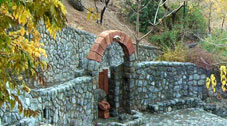
Tehran Trace emprunte le même chemin en mouvement, le pas lent et silencieux, à travers quatre photographies figées: le vestibule de l'Hotel Laleh, le Mirror Hall of the Golestan Palace, un arche en pierre tourné vers le nord de la ville et un bazar avec vue sur des montagnes. Chaque "piste" commence en gros plan, s'éloigne en courbe de son sujet d'ouverture et finit avec l'image initiale cadrée intégralement.
Stuard Pound a reçu une formation en réalisation et en informatique,la vidéo numérique réunissant les deux activités. Il fait ses débuts dans la réalisation en 1970 comme membre de la London Film-makers Co-op et enseigne par la suite la réalisation à la Nottingham Trent University jusqu'en 1979. Son oeuvre a été présentée dans des festivals à Londres et ailleurs ainsi que via internet. Des projections ont eu lieu notamment à MoMA (Paris),Tate Modern, Impakt Festival Utrecht, London Film Festival, Split International Festival of New Film, VIPER (Basel), International Media Art Biennale Wroclaw, Vidéoformes Clermont-Ferrand , Media Forum, Moscow International Film Festival , prog:ME, Centro Cultural Telemar, Rio de Janeiro, KunstFilmBiennale Köln, Microwave International Media Art Festival, Hong Kong
Yvan Pousset
9°N
Vidéo expérimentale | dv | couleur | 4:30 | France | 2006
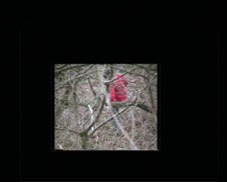
La fenêtre de la video s`ouvre sur un personnage vêtu de rouge, errant dans une forêt, en quête d`un quelque chose dont le commencement serait antérieur à celui de la video. Aveugle de l`oeil qui le scrute, le personnage poursuit son activité sans relâche tel un Sisyphe d`une époque récente. L`épaisseur de la forêt s`insère entre une perception éloignée du personnage et une proximité enveloppante produit par la netteté des bruits de son déplacement (craquement de branches, respiration). La fenêtre balaye l`espace de la forêt autour du personnage qui se révèle être un point fixe dans la surface de projection. Cet espace, cette distance créée entre sa perception éloignée et sa présence sonore (et celle de l`outil de projection) laisse apparaître le flottement d`une image et de son auteur (celui qui filme) semblant plus être perdu dans son intention de filmer que le protagoniste assumant tel Sisyphe sa destinée. Déstructurer, disloquer chacun des éléments composant une illusion, serait une façon de replacer le spectateur dans sa position réelle.
Né en 1977 à Rennes, après des études dans le milieu artistique, Yvan pousset a poursuivi aux Beaux-Arts d'Angers en tant que sculpteur et s'exprime depuis 4 ans avec la vidéo. Tout son travail est larecherche d'une matérialité dans la vibration des pixels de ce médium.