Catalogue > Faire une recherche
Résultats pour : Tout le catalogue

Lois Patiño
Montaña en sombra
Doc. expérimental | | couleur | 14:0 | Espagne | 2012
A poetic view into the relationship of immensity, between man and landscape. We contemplate, from the distance, the activity of the skiers on the snowy mountain. The pictorial image and the dark and dreamlike atmosphere transforms the space into something unreal, imprecise, converting it also in a tactile experience.
Lois Patiño was born in Vigo (Spain) in 1983. He combined his Psychology studies in the Complutense University of Madrid with cinema studies at TAI School. He followed his cinema education at NYFA, in New York and with the Master in Cinema Documentary at Pompeu Fabra University in Barcelona. He has developed courses of videocreation in the UdK of Berlin, and in different ateliers with artist and filmmakers such as Joan Jonas, Donald Kuspit, Pedro Costa, Víctor Erice, José Luis Guerín or Daniel Canogar. He has worked in collaboration with the director Mercedes Álvarez in her second feature film ?Futures Market?. His works have been shown in art centres screens such as Centro Cultura San Martín (Buenos Aires), Casa Encendida (Madrid), MARCO (Vigo), Luis Seoane Foundation(A Coruña)... and in international festivals as Locarno, Rotterdam, New York Film Festival, BAFICI, Oberhausen, Rome, Vila do Conde, Media City, Viennale, Clermont-Ferrand, Punto de Vista... With his work "Mountain in Shadow" won a Prize at the Oberhausen IFF, and at the Locarno IFF he recieved the prize for the best emerging director with his work "Costa da Morte", among others.
Lois Patiño
NA VIBRACIÓN
Doc. expérimental | hdv | couleur | 12:30 | Espagne, Islande | 2012
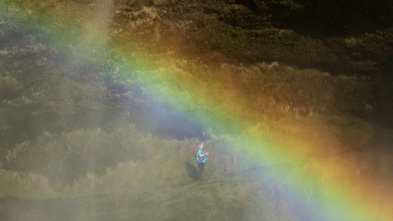
A poetic journey through a primitive landscape, where the processes of formation of the Earth are present. The earth beats and vibrates. The human being, insignificant, is overwhelmed and reduced to a spectator of this natural force.
Lois Patiño was born in Vigo (Spain) in 1983. He combined his Psychology studies in the Complutense University of Madrid with cinema studies at TAI School. He followed his cinema education at NYFA, in New York and with the Master in Cinema Documentary at Pompeu Fabra University in Barcelona. He has developed courses of videocreation under the guidance of Katherin Sieverding and different ateliers with artist and filmmakers such as Joan Jonas, Donald Kuspit, Pedro Costa, Víctor Erice, José Luis Guerín and Daniel Canogar.
Lois Patiño
PAISAJE-DISTANCIA
Vidéo expérimentale | dv | couleur | 14:0 | Espagne | 2010
Distance-Landscape. The connection between observer and landscape at the contemplative experience. From the crossing of the proximity and the remoteness appears the notion of aura, following Walter Benjamin´s theories. The gaze is here building the landscape from the necessary distance. Defining it´s limits withLois Patiño Filmmaker and videoartist born in Vigo (España) in 1983. Currently he lives and works at Madrid. During his university years he combine psicolgy and cinema studies at Madrid. Subsequently he move to NY and Berlin to complety his training on cinema direction and videoart at the NYFA and the UdK respectively. In Barcelona he made a master´s degree in documentary films at the UpF. He have done workshops with filmmakers as Víctor Erice, Jose Luis Guerín, Isaki Lacuesta... and artists as Joan jonas, Bill Viola or Donald Kuspit. He collaborate with the cinema director Mercedes Álvarez in her second film. the total continuity of the Nature. An observer submerged in the trip of the look around the landscape. Resting the gaze on the details that makes up it´s totally. Focusing, approaching the look to the center of the image and coming back again with distance. In this doble way we aproach to the notion of aura.
Lois Patiño Filmmaker and videoartist born in Vigo (España) in 1983. Currently he lives and works at Madrid. During his university years he combine psicolgy and cinema studies at Madrid. Subsequently he move to NY and Berlin to complety his training on cinema direction and videoart at the NYFA and the UdK respectively. In Barcelona he made a master´s degree in documentary films at the UpF. He have done workshops with filmmakers as Víctor Erice, Jose Luis Guerín, Isaki Lacuesta... and artists as Joan jonas, Bill Viola or Donald Kuspit. He collaborate with the cinema director Mercedes Álvarez in her second film.
Ranko Paukovic
90 Seconds in North Korea
Doc. expérimental | hdv | couleur | 14:57 | Croatie | 0
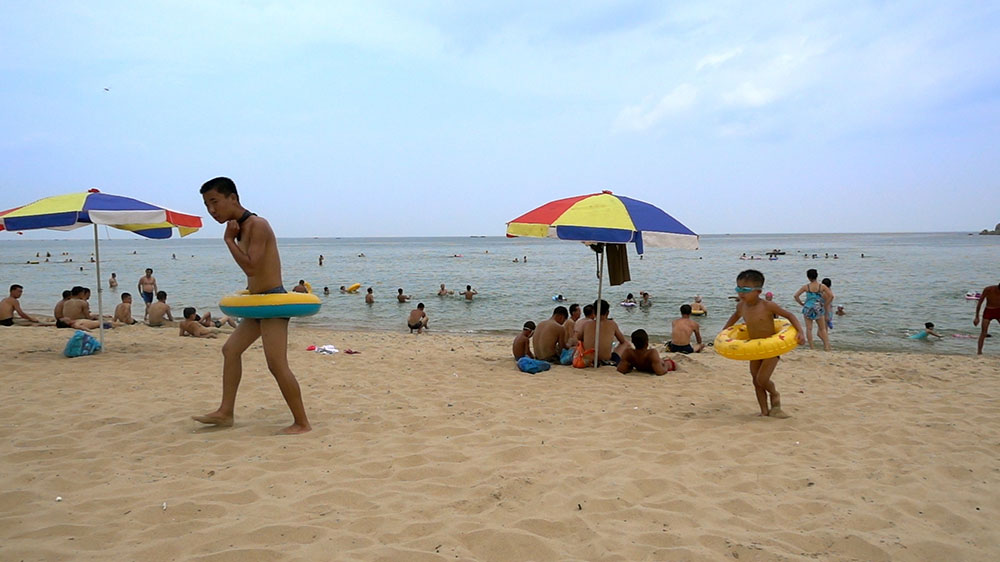
How do you shoot a documentary when you know that filming is not allowed? In 90 Seconds in North Korea, Ranko Paukovic filmed in slow motion, shooting secretly in 2-second intervals on a hi-speed camera that everyone else around him believed was an ordinary tourist stills camera. Each 2-second fragment created 20 seconds of slow motion footage. The result is a dreamlike yet breathtakingly normal montage of everyday street, road and beach life in a state that strictly controls what outsiders are allowed to see. A child plays with a toy car in the park, adults enjoy a game of cards in the park's picnic area; trucks drive along an empty road, the rays of the setting sun lend warmth to lush countryside, and a shower of rain falls on the streets of Pyongyang… As it was impossible to record any interviews or ambient sound, the soundtrack features a haunting and evocative sound design composed by the director, an accomplished sound editor. The pragmatic, necessary decision to shoot in slow motion lends the film a poetic quality: in Ranko's own words, "the form is born out of need".
Ranko Paukovic studied film at the Academy of Dramatic Art in his hometown of Zagreb, Croatia. After graduating, he worked as an assistant editor on large international co-productions. He moved to The Netherlands in 1991 and worked as a sound editor with prominent Dutch directors. In 1993 he set up his own sound studio, Editson, specialising in sound design, sound editing and film mixing for artistically ambitious projects. Still based in Amsterdam, Ranko is now in demand internationally. He has built up an impressive back catalogue of work including feature films, high-end television drama and documentaries. A few years ago, he made his debut as a director with the feature-length documentary Bijela Kuca (White House), about the unique white stone found on the island of Brac, Croatia and the people who earn a living from quarrying it. White House was shown at several international film festivals and broadcast by Croatian national television (HRT) and Al-Jazeera Balkans. His last documentary "The End of Darkness" about the last European female mine workers just premiered at Al-Jazeera Balkans Docs in Sarajevo. The film was supported by the Croatian Film Fund (HAVC). Ranko is also a visiting professor for the University of Zagreb, where he teaches sound design.
Nova Paul
Still Light
Vidéo | 16mm | couleur | 6:35 | Nouvelle-Zélande | 2015
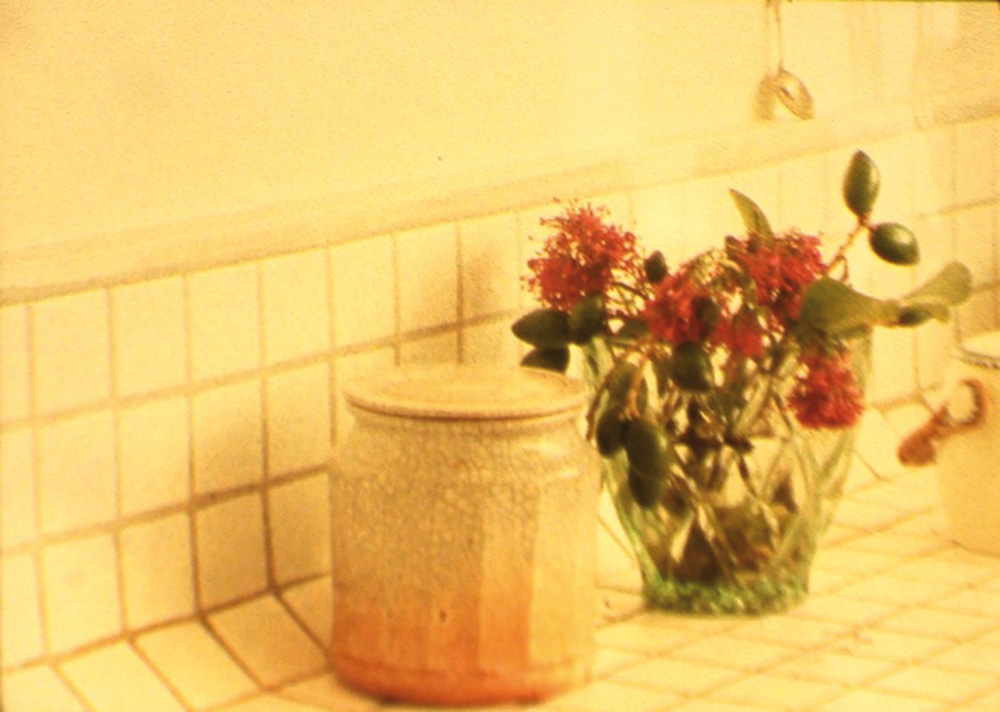
Six Artists respond to the work of Joanna Margaret Paul is a programme of short moving image works by Nova Paul, Rachel Shearer, Sonya Lacey, Miranda Parkes, Shannon Te Ao and the collective Popular Productions. A prolific film-maker, poet, photographer and painter, the work of Joanna Paul (1955-2003) quietly observed the intimate poetics of the domestic and the modest grace of her bucolic surroundings. This programme presents an ambitious range of new moving image commissions shot at home, in industrial space, nature and using a microscope within salt letter form – each film celebrating the resonance of Paul’s work and offering the catalyst for a collection of new work by a range of contemporary New Zealand artists.
Nova Paul teaches studio moving image and art theory in the Visual Arts Department. Her film-making practice draws from early cinema, experimental film histories and fourth wave film discourse to consider the poetics and politics of place, self-determinacy and the image and the role of story telling in talking back to neo-liberal hegemonies. Her writing practice has focused on lens-based media and its relationship to whenua (land). In 2008 she co-edited PLACE: Local Knowledge and New Media Practice (Cambridge Scholars Publishing), a book that examines how on how long-held attachments to place are transforming in the new media context. In 2012 she published Form Next to Form Next to Form (Dent De Leone, UK and Clouds, NZ) this artist book won the 2013 Most Beautiful Book in Australisia (Monash University, Australia) Nova Paul`s 16mm films have screened nationally and internationally in film festivals and gallery programmes. This is not Dying (2010) has screened at Recontres Internationale, George Pompidou Centre, France, (2011), Rotterdam International Film Festival, (2011), New Zealand International Film Festival, (2010) City Gallery Wellington, (2010). Pink and White Terraces has screened at Whitechapel Gallery (UK) and was selected by Whitechapel Gallery for Artists` Films International at the Venice Biennale in 2013. The film has toured to Ballroom Marfa (USA), Fundacion Proa (Argentina), GAMeC - Galleria d`Arte Moderna e Contemporanea (Italy), Henie Onstad Kunstsenter (Norway), The Institute for the Readjustment of Clocks at the Koç Foundation (Turkey) from 2009-2010. Pink and White Terraces premiered at the Telecom International Film Festival, (2006) and was Telecom Prospect New Art, City Gallery, Wellington, New Zealand, 2007. Other film commissions include Our Future is in the Air (2007) for Martini Shot; New Artists Show, Artspace, Auckland and the World of Interiors (2008) for New Zealand Film Archive, Wellington. Nova Paul is of Te Uri Ro Roi and Te Parawhau /Ngā Puhi descent.
Thomas Paulot
Le ciel des bêtes
Doc. expérimental | hdv | couleur | 35:49 | France, Suisse | 2018
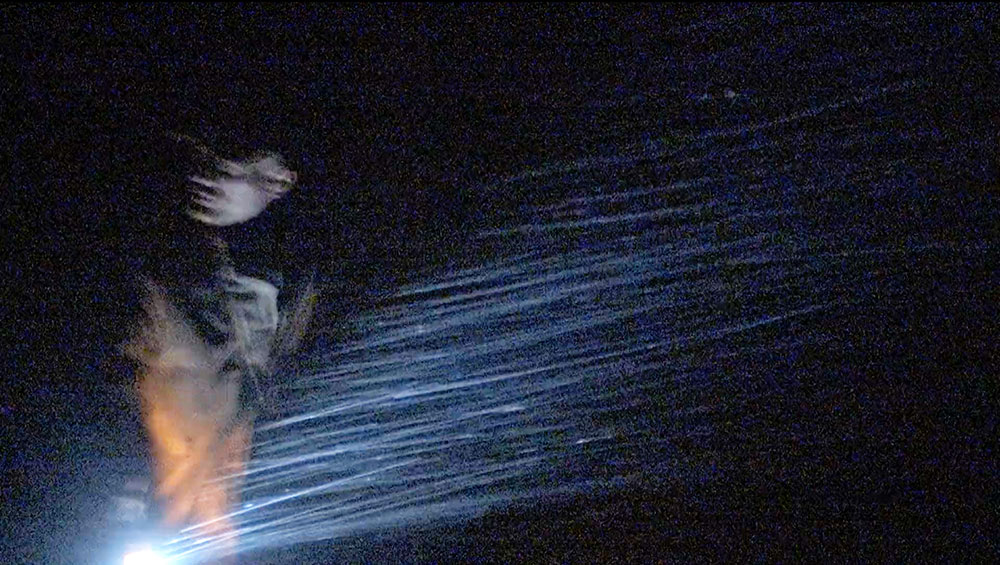
Le chasseur ardennais part à la recherche d’images nocturnes grâce à ses pièges photographiques. L’astrophysicien au milieu du désert, utilise ses télescopes géants pour sonder les fins fonds du cosmos. Tous deux, à travers leurs territoires et leurs images partent à la quête de nouveaux mythes.
Thomas Paulot est né à Paris en 1991. Il obtient un Bachelor en fine art à Central Saint Martins de Londres lors duquel il développe une pratique interdisciplinaire principalement autour d’installations, de vidéos et de constructions scénographiques. Il dirige en 2016 un atelier avec des mineurs pluri-exclus à Paris durant lequel il réalise un film Au début du chemin de notre vie. Il coréalise le film Stardom lors de l’atelier Grand voyage à Bombay en Octobre 2016. il coréalise en 2017, Anarchie à Buchillon dans le cadre d’un atelier avec la Manufacture de Lausanne. Il sera diplômé du Master cinéma ECAL/HEAD en 2018 avec son film, Le ciel des bêtes.
Michael Paulus
A View of Above
Vidéo | mov | couleur | 3:53 | USA | 2021
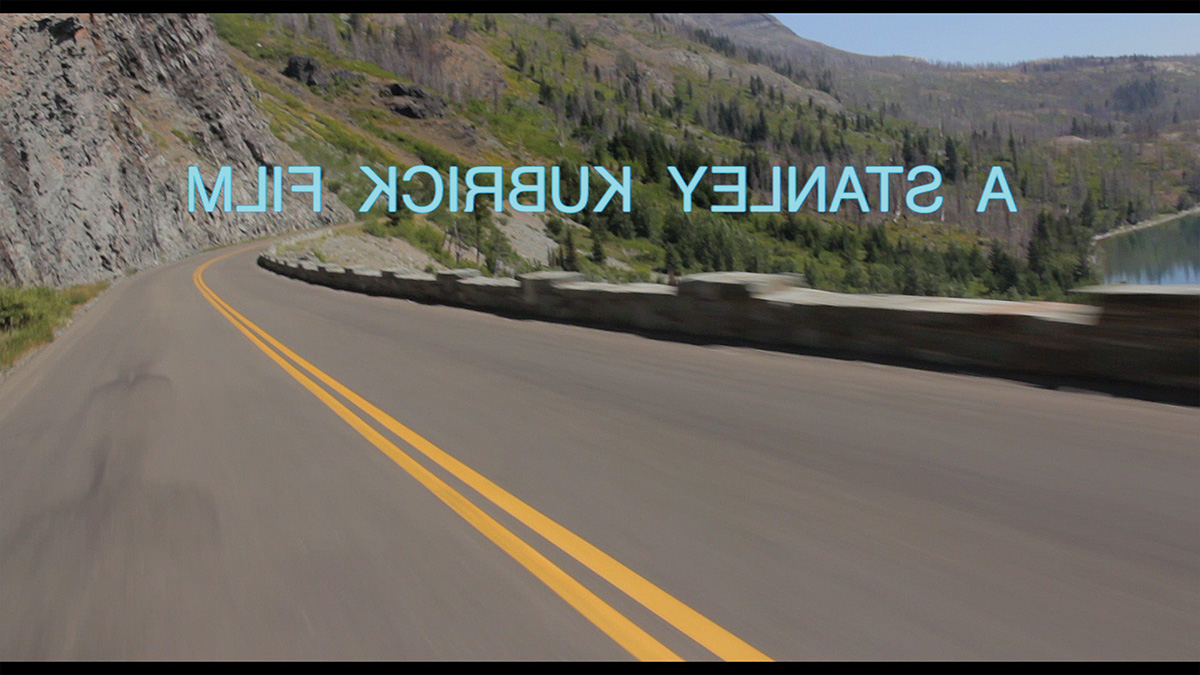
A reconstructed assemblage of the opening title sequence from the feature film The Shining (1980) by Stanley Kubrick, “A View of Above” was shot in reverse perspective at the actual locations used in the feature film. The original viewpoint is now inverted, looking up, and back at the ominous "eye in the sky" which shadows the yellow Volkswagen as it winds its way up the American Rockies to the Overlook Hotel. The framing, movement, and pacing of the original, feature film sequence is replicated shot by shot in duration and in relationship to the sun and weather. The intent is to recreate the original, but from an altogether different perspective: the gaze defiantly flipped, the viewer is no longer a complicit voyeur of the hapless victim.
Michael Paulus is an interdisciplinary artist living in Portland, Oregon. USA Exploring potential connections between often disparate relationships, his video work often attempts to reveal the hidden, censored, or unassumed in culture, cartography, mechanisms and commonplace conventions. Films and videos have screened at the NW film festival, PDX film festival, various domestic and international film festival as well as the Taipai Biennial, Scope Basel, various gallery installations and recently as part of CORE, -the Nagasaki-Hanford project as part of an installation at Whitman College in Walla Walla, WA in 2018
Denis Pavlovic
Zwischen Gestern und Morgen (Between Yesterday and Tomorrow)
Documentaire | 16mm | couleur | 25:15 | Allemagne | 2016
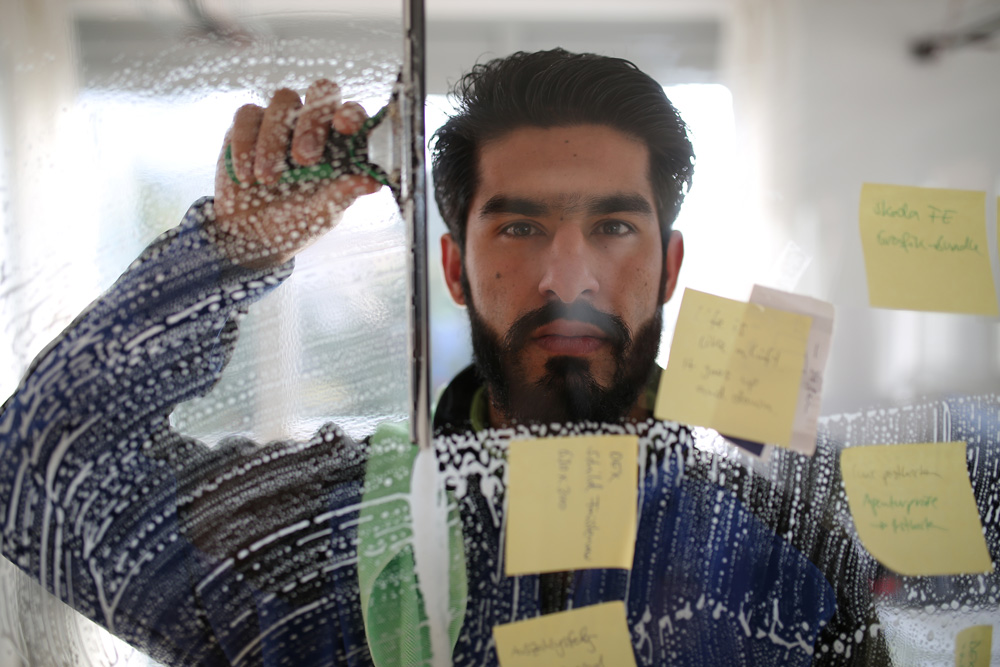
The story of a man who came to Germany 17 years ago. It’s the 31.12.2017, a day in the life of Niaz Ahmadzai from Afghanistan. A never ending story of work, existence, love, familiy and an unfulfilled personality. The perfect integration of a fully functioning machine.
Denis Pavlovic, born in 1987 in Stuttgart, presented his first film "Smoother in 350ml" at the No Budget Festival in Tubingen in 2008. Thereupon he studied 3 years Film & Video at the Merz Akademie in Stuttgart. After his graduation he worked as an interne at the Documentary Production Company "Kloos und Co. Medien" in Berlin. In 2011 Denis accomplished his first long movie called "Paranoid Places" and in 2013 his second full-length documentary „Wo tanzen wir morgen" which celebrated its Premiere at the 19th Filmschau Baden-Wurttember Festival. In order to its success it was distributed via Teamwerk Stuttgart. Today Denis is studying documentary direction at the Filmakademie Baden- Wurttemberg and works as a freelancer filmmaker and artist. The main themes his films are about modern society in the midst of globalism and industrialism.
Temra Pavlovic
On all fours
Doc. expérimental | | couleur | 6:40 | Pays-Bas, Mexique | 2013
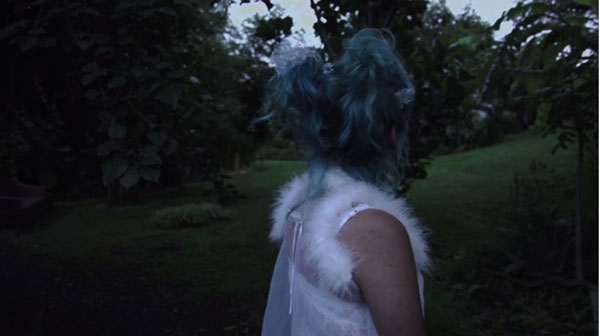
There is a German Shepherd in Tepoztlan who guards a brick villa where the walls are painted white and the furniture is modern. In the kitchen there are people chatting, the TV is on and the German Shepherd is waiting by the door. The villa is enclosed by a wall and you can hear church singing from the mountains, especially in the garden, where there is a sprinkler, purple flowers on the lawn and a woman dressed in Baby Blue.
Temra Pavlovic was born in the Netherlands and received her BFA in Film/Video from California Institute of the Arts (CalArts). She combines documentary and fiction, and uses materials from her direct surroundings. Her work has shown in different contexts, i.e. at Otras Obras in Tijuana, the RedCat theater and Human Resources in Los Angeles and the Sensory Ethnography Lab at Harvard University. She is currently living in Mexico City, working on a series of narrative documentary scenes under the umbrella title `Soluciones,` and she is a member of the three-headed collective Oa4s.
Carlos Pazos
Escenario vaciado
Art vidéo | betaSP | couleur | 2:42 | Espagne | 2008
Présentation du travail La vidéo «Décor vidé», montre la transition d?un décor avec un scénario et des personnages à un décor vidé et sans vie. Le texte ci-joint, nous parle du scénario et des personnages impliqués, l?un desquels es mon épouse et la personne qui a écrit ce texte. Le soir de Noël de l?an 2006, au premier étage de cet immeuble de la rue Pau Claris de Barcelona, est décédé ma mère, Emilia Foix. Elle avait quatre-vingt-dix ans. Quand elle s?y est installée, à la fin du mois de janvier de 1951, avec son époux, Claudi Cuchillo et ses quatre enfants, elle était lourdement enceinte. Je suis née dans cet appartement, au début du printemps. Dans le même endroit, nous étions ensemble quand je suis née, nous étions ensemble quand elle est décédée. Pendant toutes ces années, son appartement a été un décor plein, parfois bondé. La soudaine mort de mon père a laissé muets, pendants quelques mois, les meubles et les murs. Assez vite, d?abord avec le c?ur gros, plus tard en tournant une page, les feux, le piano et les chambres se sont remis en marche. Il y avait toujours quelqu?un, il y avait toujours un lit, il y avait toujours un plat à table. Le «petit asile de maman Cuchillo», comme l?appelait Carlos, ne fermait jamais. Depuis qu?elle est tombée malade, quelques espaces se sont lentement vidés. Mais elle a maintenu le décor à point jusqu?à la fin. Elle a encore donné les ordres de repasser les nappes et de sortir la vaisselle, les verres et les couverts pour le repas de Noël. Cuchillo de Pazos Collioure, août 2008
Né à Barcelona en 1949. Prix National des Arts Visuels de la Catalogne, 2008, Prix National des Arts Plastiques, 2004, Ministère de la Culture espagnol et Prix Villa de Madrid, 2003. Fait des études d?architecture à l?Universidad Politécnica, philosophie à l?Universidad de Barcelona et design à l?Ecole EINA. Il a fait sa première exposition individuelle en janvier 1970, à l?age de vingt ans. En 2007 il a fait l?exposition rétrospective «No me digas nada» au MACBA (Museo Arte Contemporáneo de Barcelona) et au Museo Nacional Centro de Arte Reina Sofía (Madrid), dont il prépare une version pour le Musée d?Art Contemporain de Sao Paulo, en 2009. Il a exprimé son amour pour la musique et la nuit en dirigeant le Salon de bal Cibeles (1978-1982), le cocktail bar Bijou (1983-1986) et le bar musical (Je-rrix, 1994-1995). Dans ce dernier local il a établi le siège de son Club de Fans, le "CP FANS CLUB". En 1987 il est le protagoniste du film « Es quan dormo que hi veig clar » de Jordi Cadena sur des textes du poète Catalan J.V. Foix. En 1998, il dirige et réalise la scénographie de la pièce de théatre "El bell lloc", de Joan Brossa. Cette même année est publié "El Mundo del Ritmo" (Tabelaria), en collaboration avec Eduardo Mendoza et il est le protagoniste du vidéo "Pianito", de Jordi Colomer. L?année 2002 il publie le scénario du film, en attente de producteur "Aquí en la tierra como en el infierno", en décembre 2004 il publie son texte ?Garabatos y Zarpazos?, édité par l?Université de Barcelona (2ème édition 2007) et en 2008 il a publié «Diodrama», avec textes d?Eduardo Lago, dans une édition de l?Atelier Clot, Paris.
Carlos Pazos
En blanc i negre, une vez mas
Film expérimental | 35mm | couleur | 10:30 | Espagne | 2006
La rencontre entre un chimpanzé albinos (habillé en noir) et une vierge romaine noire (en chocolat blanc).
S`il vous plaît, voyez le catalogue de l`exposition "No me digas nada" ("Ne me dis rien", 2007, dont les coordonnées sont indiqués bas. Please, see the catalogue of the exhibition "No me digas nada" ("Tell nothing"), 2007, cited below. Nouvelle biographie: Né à Barcelona le 23 décembre 1949. Prix National des Arts Plastiques, 2004, Ministère de la Culture espagnol et Prix Villa de Madrid, 2003. Fait des études d?architecture à l?Universidad Politécnica, philosophie à l?Universidad de Barcelona et design à l?Ecole EINA de Barcelona. Il a exprimé son amour pour la musique et la nuit avec la direction d?un salon de bal (Salón Cibeles, 1978-1983), d?un cocktail bar (Bijou, 1983-1986) et d?un bar musical (Je-rrix, 1994-1995). Dans ce dernier local il a établi le siège de son Club de Fans, le "C.P.FANS CLUB", fondé en décembre 1994. En 1987 il est le protagoniste du film « Es quan dormo que hi veig clar » de Jordi Cadena sur des textes du poète Catalan J.V. Foix. En 1998, il dirige et réalise la scénographie de la pièce de theatre "El bell lloc", de Joan Brossa, au Espai Joan Brossa de Barcelona. Cette même année est publié "El Mundo del Ritmo" (édité par Tabelaria + Antojos), en collaboration avec Eduardo Mendoza et il est le protagoniste du video "Pianito", de Jordi Colomer. L?année 2002 il publie le scénario du film, en attente de producteur, "Aquí en la tierra como en el infierno" et en décembre 2004 il publie son livre ?Garabatos y Zarpazos?, édité par l?Université de Barcelona, dans la collection ?Les arts i els artistes?, en 2007 il publie « Fidelidad Total », en collaboration Ramón de España, édité par Raina Lupa et en 2008 « Diodrama », avec textes d?Eduardo Lago, edité par Atelier Clot. Il a fait sa première exposition individuelle en janvier 1970, à l?age de vint ans. En 2007 il a fait l?exposition rétrospective «No me digas nada» au MACBA (Museo Arte Contemporáneo de Barcelona) et au MNCARS (Museo Nacional Centro de Arte Reina Sofía), dont il prépare une version pour le Musée d?Art Contemporain de Sao Paulo, en 2009. Pour son exposition rétrospective il a réalisé le film « Mnemocine. Film à découper », un collage audiovisuel constitué par 11 épisodes, d?une durée de 26 minutes.
Rune Peitersen
Cross003
Art vidéo | dv | couleur | 4:0 | Danemark, Pays-bas | 2004
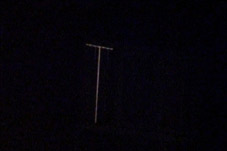
Dans Cross003, on peut voir une image ressemblant à une croix, dans un premier temps comme une apparente manifestation tangible (une croix brillante ou brûlante) mais dans un second temps, comme une brèche dans un rideau ou une glace. La croix est faite de lumière pure et n?est évidente que comme une interprétation des contours sombres, un manque d?information visuelle. Quand les gens (ombres) apparaissent et bloquent la lumière, ma croix disparaît momentanément et la scène change de personnalité et de sens. Dans une tentative de décryptage et de catégorisation de l?imagerie changeante, le spectateur doit engager ses propres points de vue sur le voyeurisme et l?iconographie.
Rune Peitersen est né au Dannemark en 1971. Il vit et travaille à Amsterdam. Parcours Scolaire : 1999-2001 MFA, Frank Mohr Instituut, Groningen, www.mohr-i.nl 1995-1999, BA, Royal Academy of Art, La Hague, www.kabk.nl Exposé par : Gallery Ellen de Bruijne Projects
Artavazd Pelechian
Fin
Doc. expérimental | 35mm | noir et blanc | 8:0 | Arménie | 1992
Dans le train de Moscou à Erevan, Pelechian filme, caméra à l`épaule, des hommes et des femmes, d`âges et d`ethnies différentes (www.artavazd-pelechian.net).
Le cinéma d`Artavazd Pelechian - dont Jean-Luc Godard assure qu?il est le plus grand cinéaste du monde - reste encore aujourd`hui assez peu connu en Occident. Le réalisateur, d`origine arménienne, formé au VGIK entre 1963 et 1968, vit et travaille à Moscou, qu`il ne quitte que très rarement. Son ?uvre, qui se construit film après film, dans un souci de recherche et d`expérimentation, suppose qu`on la découvre, paliers par paliers, dans le mouvement de son évolution. Pelechian tourne peu et court. La densité de tout nouvel opus en fait à chaque fois une oeuvre rare.
Artavazd Pelechian
Les saisons
Doc. expérimental | 35mm | noir et blanc | 30:0 | Arménie | 1972
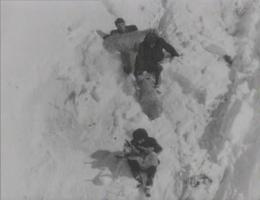
Les Saisons est un très beau poème où sont évoqués, en une vaste parabole, les moments déterminants de l`histoire arménienne, depuis les origines volcaniques, jusqu`à la période industrielle (www.artavazd-pelechian.net).
Le cinéma d`Artavazd Pelechian - dont Jean-Luc Godard assure qu?il est le plus grand cinéaste du monde - reste encore aujourd`hui assez peu connu en Occident. Le réalisateur, d`origine arménienne, formé au VGIK entre 1963 et 1968, vit et travaille à Moscou, qu`il ne quitte que très rarement. Son ?uvre, qui se construit film après film, dans un souci de recherche et d`expérimentation, suppose qu`on la découvre, paliers par paliers, dans le mouvement de son évolution. Pelechian tourne peu et court. La densité de tout nouvel opus en fait à chaque fois une oeuvre rare.
Artavazd Pelechian
Les habitants
Doc. expérimental | 35mm | noir et blanc | 10:0 | Arménie | 1970
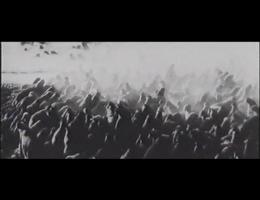
" Le film est construit sur l`idée d`une relation pleine d`humanité avec la nature et le monde animal. Il est question bien sûr des agressions perpétrées par l`homme contre la nature, et de la menace que constitue la destruction de l`harmonie naturelle " (Artavazd Pelechian, Mon cinéma, 1988).
Le cinéma d`Artavazd Pelechian - dont Jean-Luc Godard assure qu?il est le plus grand cinéaste du monde - reste encore aujourd`hui assez peu connu en Occident. Le réalisateur, d`origine arménienne, formé au VGIK entre 1963 et 1968, vit et travaille à Moscou, qu`il ne quitte que très rarement. Son ?uvre, qui se construit film après film, dans un souci de recherche et d`expérimentation, suppose qu`on la découvre, paliers par paliers, dans le mouvement de son évolution. Pelechian tourne peu et court. La densité de tout nouvel opus en fait à chaque fois une oeuvre rare.
Artavazd Pelechian
Notre siècle
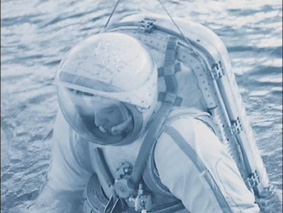
Documentaire | 35mm | couleur | 30:0 | Russie | 1982
Artavazd Pelechian
Nous
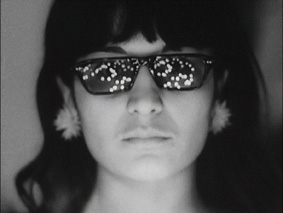
Documentaire | 35mm | noir et blanc | 30:0 | Russie | 1969
Artavazd Pelechian
Vie
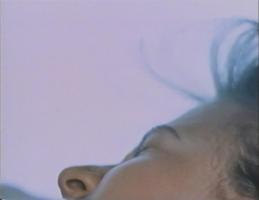
Doc. expérimental | 35mm | couleur | 6:30 | Arménie | 1993
" Le profil d`une femme, tendu, défiguré - comme dans la jouissance - ainsi qu`en amorce, des gestes ancestraux. Le port de l`enfant qui vient de naître, magnifié par un ralenti, une contreplongée et l`abstraction de l`espace qui l`entoure, évoque une iconographie religieuse tout comme le portrait de la mère et l`enfant " (Jacques Kermabon).
Le cinéma d`Artavazd Pelechian - dont Jean-Luc Godard assure qu?il est le plus grand cinéaste du monde - reste encore aujourd`hui assez peu connu en Occident. Le réalisateur, d`origine arménienne, formé au VGIK entre 1963 et 1968, vit et travaille à Moscou, qu`il ne quitte que très rarement. Son ?uvre, qui se construit film après film, dans un souci de recherche et d`expérimentation, suppose qu`on la découvre, paliers par paliers, dans le mouvement de son évolution. Pelechian tourne peu et court. La densité de tout nouvel opus en fait à chaque fois une oeuvre rare.

Sini Pelkki
Sheet N°4
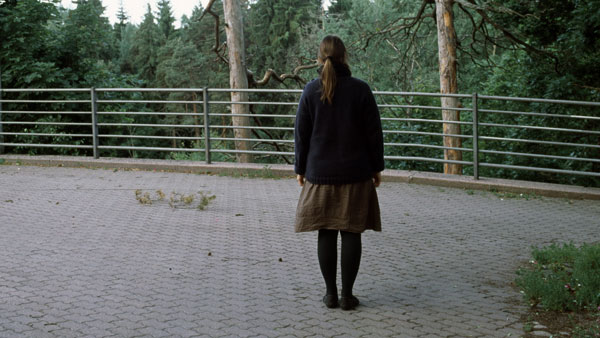
Film expérimental | 16mm | couleur | 12:0 | Finlande | 2018
Sheet No4 examines the outlines and borders of a photograph -and a human being. How to look, how to see, how to move. Using repetition and reinterpretation to both construct and deconstruct the image and its boundaries. A Conflict between outlines and content. One of the starting points of the work was the dialogue between Pelkki and the four multidisciplinary artists, whom she invited to collaborate; Emma Hammarén, Magnús Logi Kristinsson, Johan Jonason and Keiko Yamamoto. The interaction and diverse interpretations embodied in those exchanges becomes the core of Sheet No4. The name of the work refers to a contact sheet, a proposal for a photograph, where all the options are there with possible re-framing and remarks.
Sini Pelkki (b. 1978 Helsinki) works with photography and moving image. She is interested in the subjectivity of seeing, introspective lives of spaces within spaces. In her works landscapes, figures and objects turn into layered narratives that lead to various paths and ambiguous readings. Recent years her work has been going towards different kind of collaborations. Her first work in book form Arranged Lines was released in 2018. Sini Pelkki (b. 1978 Helsinki) works with photography and moving image. She is interested in the subjectivity of seeing, introspective lives of spaces within spaces. In her works landscapes, figures and objects turn into layered narratives that lead to various paths and ambiguous readings. Recent years her work has been going towards different kind of collaborations. Her first work in book form Arranged Lines was released in 2018. Pelkki gained her Bachelor degree in Fine Art from Chelsea College of Art and Design, London (UK) in 2002 and MA from the Academy of Fine Arts Helsinki in 2008. Her works have been shown in exhibitions and film festivals internationally.
Sini Pelkki
Embarkation
Film expérimental | 16mm | couleur | 7:10 | Finlande | 2012
Embarkation is a moving image that is framed like a photograph. Through repetition it builds up into a single image, like a photograph that consists of countless images. With simultaneous presence and absence, the work explores the realtionship between still and moving image.
Sini Pelkki is an artist working with photography and moving image. Her work derives and evolves around photography and the photographic image. Her film works are often based on photographic images. Focusing on the subjectivity of seeing and the relation between a human and different physical and psychological environments and spaces. Her work has been shown across Europe in exhibitions and festivals. Pelkki was born 1978 in Helsinki, Finland. She studied fine art in Chelsea College of Art and Design in London (UK) and at the Academy of Fine Arts in Helsinki. She is currently based in Helsinki.
Caroline Pellet
Oblique
Doc. expérimental | hdv | couleur | 13:24 | France | 2010
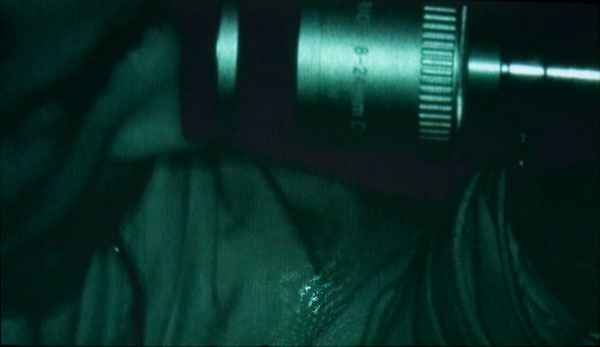
OBLIQUE (Texte de Gabrielle Reiner) Oblique est un documentaire expérimental sur un groupe d'astronomes. L'artiste filme ces chercheurs d'étoiles et entrecoupe ces plans avec ceux des «objets » (le nom donné aux étoiles par les astronomes) observés au travers de l'oculaire. La prise de vue adopte les caractéristiques de la caméra de surveillance(1) et une voix-off évoque les techniques utilisées pour améliorer la vision scotopique (2). Les astronomes se documentent avec des photographies d'astres génériques ce qui leur permet à l'observation de mieux discerner les détails des astres. On peut parler d'« expérience améliorée ». Le spectateur est invité à une « expérience esthétique » (Cf. Jauss) paradoxale qui oscille entre deux points de vue: l?exploration optique des observants répond à celle sensible et relative de l'?uvre artistique. En confrontant théories scientifiques et théories esthétiques de la perception, la vidéaste interroge de manière critique la normativité de l'expérience perceptive. 1. Le night shot est le procédé qui permet de filmer la lumière infra-rouge, invisible à l'?il nu. Fait à l ́origine pour les caméras de surveillance, il a été transposé sur les caméras amateurs. 2. Il faut en effet entre vingt et quarante cinq minutes à l'?il pour basculer en scotopique, perception qui sollicite des cellules appelées bâtonnets situées non pas au centre de l'?il mais en périphérie. A cause de cette répartition des cellules ayant la plus grande sensibilité, les astronomes utilisent un regard « oblique » ou décalé, c'est à dire qu'ils visent à coté de l'objet qu'ils veulent voir afin d'obtenir une perception plus détaillée.
BIOGRAPHIE Vit et travaille à Saint-Ouen (France) née en 02/02/1984 en France